

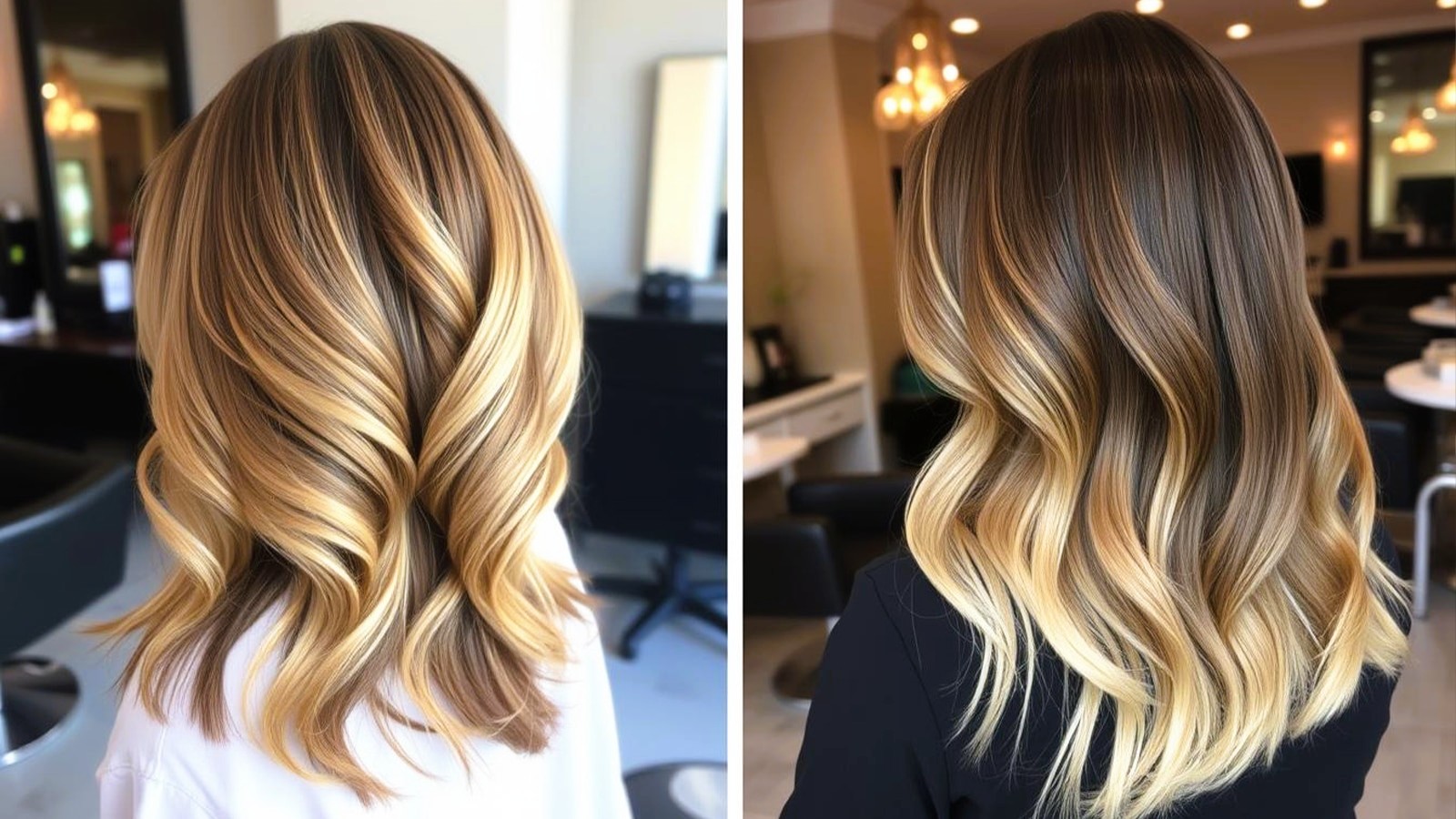
A licensed colorist breaks down the real difference between balayage and ombré — how each is applied, what it costs, and which technique flatters which hair type.
Balayage is a hand-painting technique; ombré is a two-toned gradient effect. Most people use the terms interchangeably, but in the chair they mean different things — balayage refers to how color is applied (swept onto the hair with a brush, section by section, no foils needed), while ombré describes how the finished color looks (natural darkness on top, dramatic lightness at the ends). You can use balayage to create an ombré, but balayage doesn’t have to be ombré, and ombré can also be created with foils rather than freehand painting.
This guide covers how each technique is actually performed at the salon, which one suits your hair type and face shape, realistic maintenance and cost expectations, and exactly what to ask for at your consultation so you walk out with the color you had in mind.
Balayage vs. Ombré: The Core Distinction
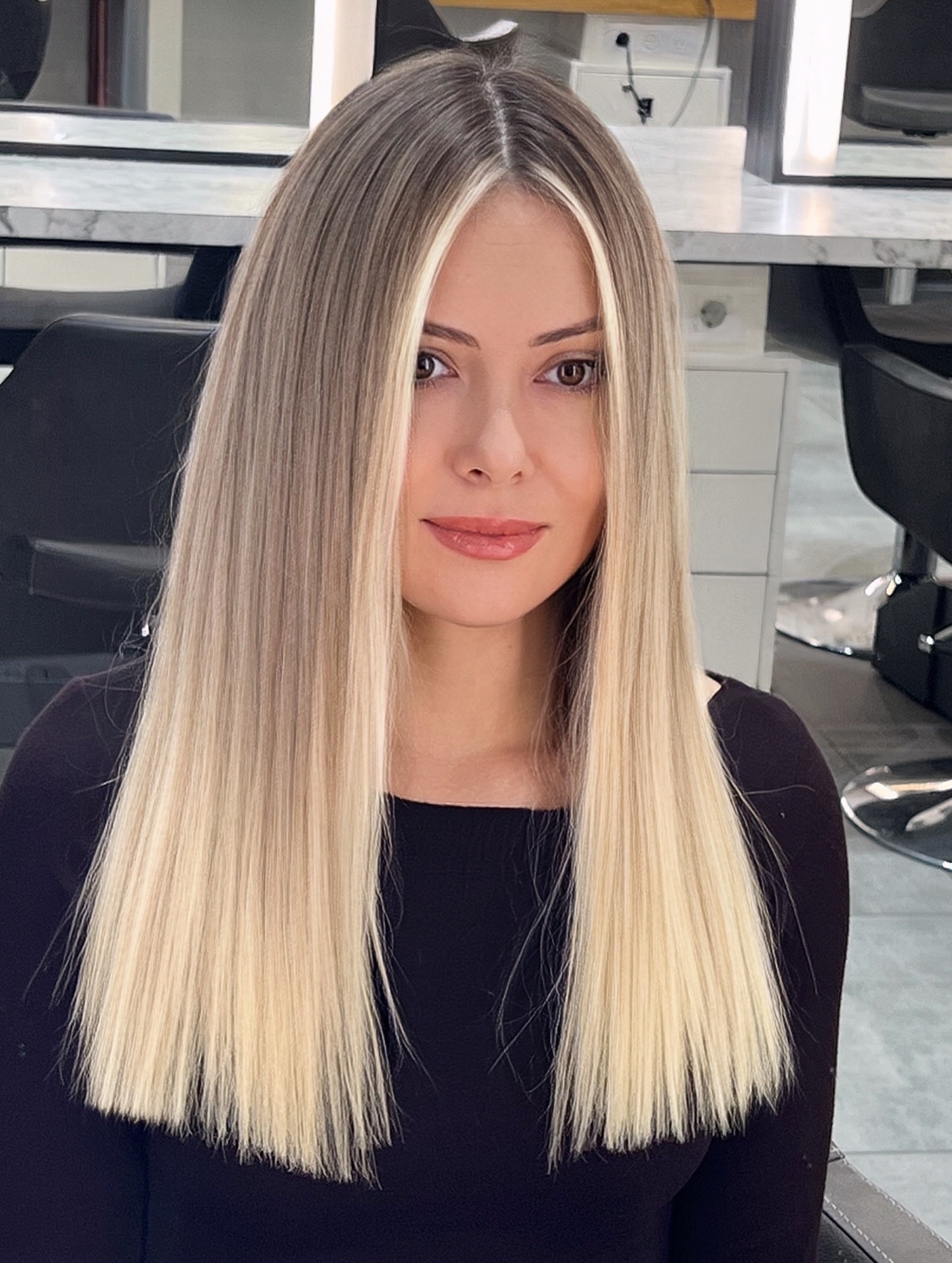
The clearest way to understand these two is to separate the verb from the noun. Balayage is something a colorist does — it’s a French word meaning “to sweep,” and it describes the act of hand-painting lightener directly onto the hair surface without foils. Ombré is something the hair looks like — also French, meaning “shade” or “shadow,” and it describes a gradient that runs from dark roots to light ends.
This distinction matters because it’s where most consultation miscommunication happens. A client asks for “balayage ombré” expecting one specific look, but without specifying the level of contrast, the placement of lightness, and the root depth, two colorists could deliver completely different results. Professional colorist education reinforces the point: ombré names the finished visual (a two-toned gradient), while balayage names the application method (the hand-painting itself). The first describes where the color sits; the second describes how it got there.
How Balayage Works: The Technique Explained
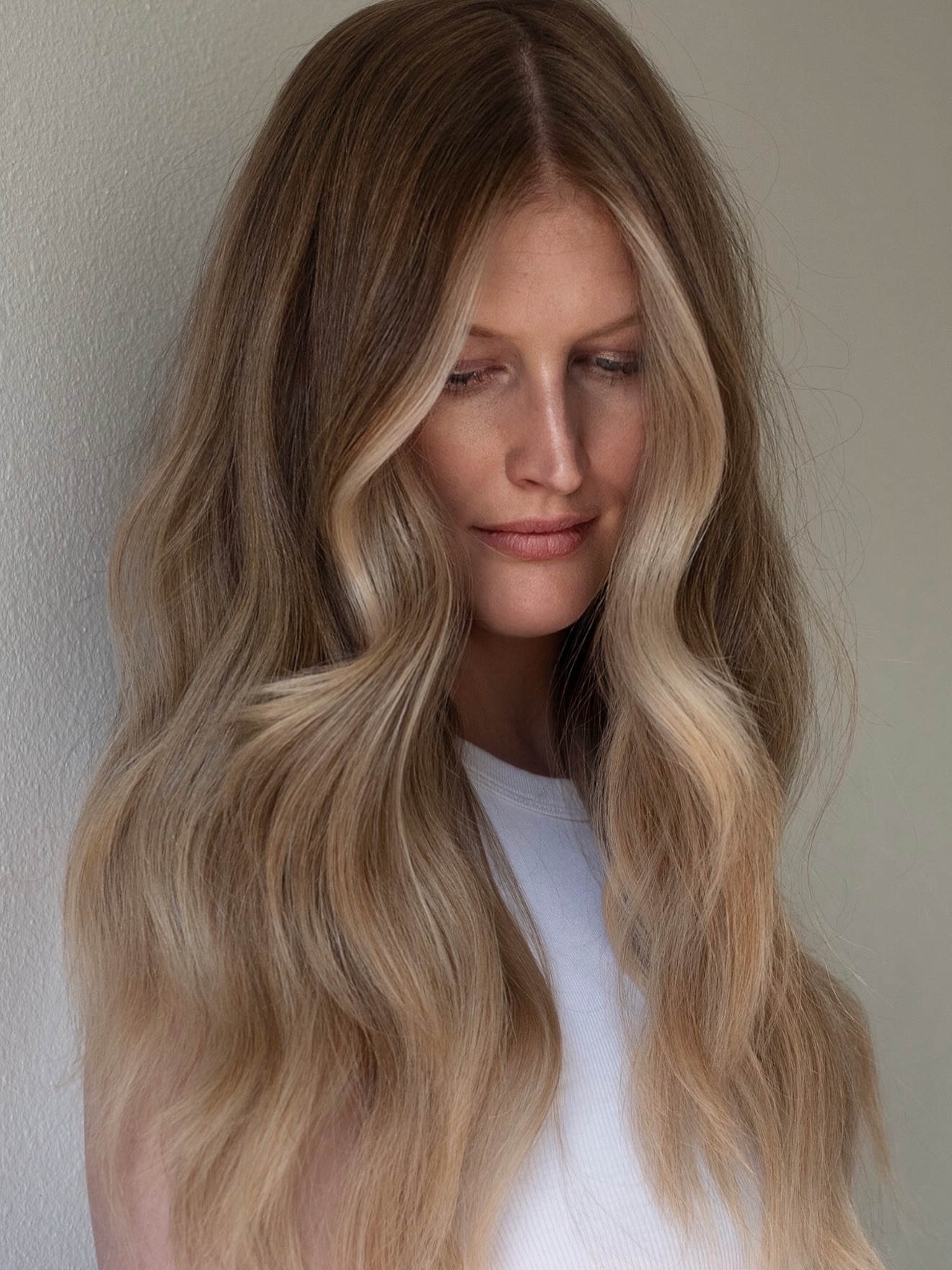
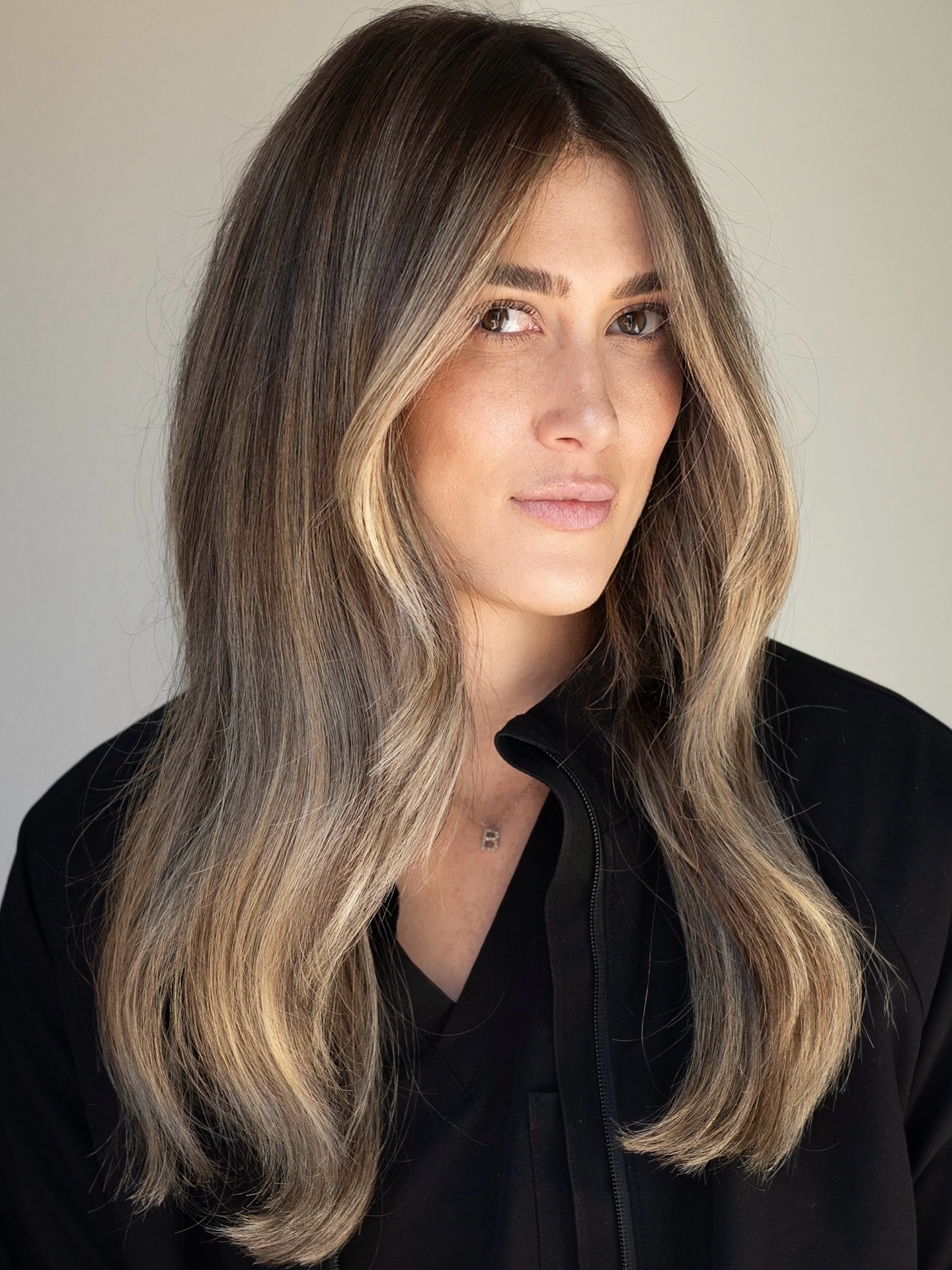
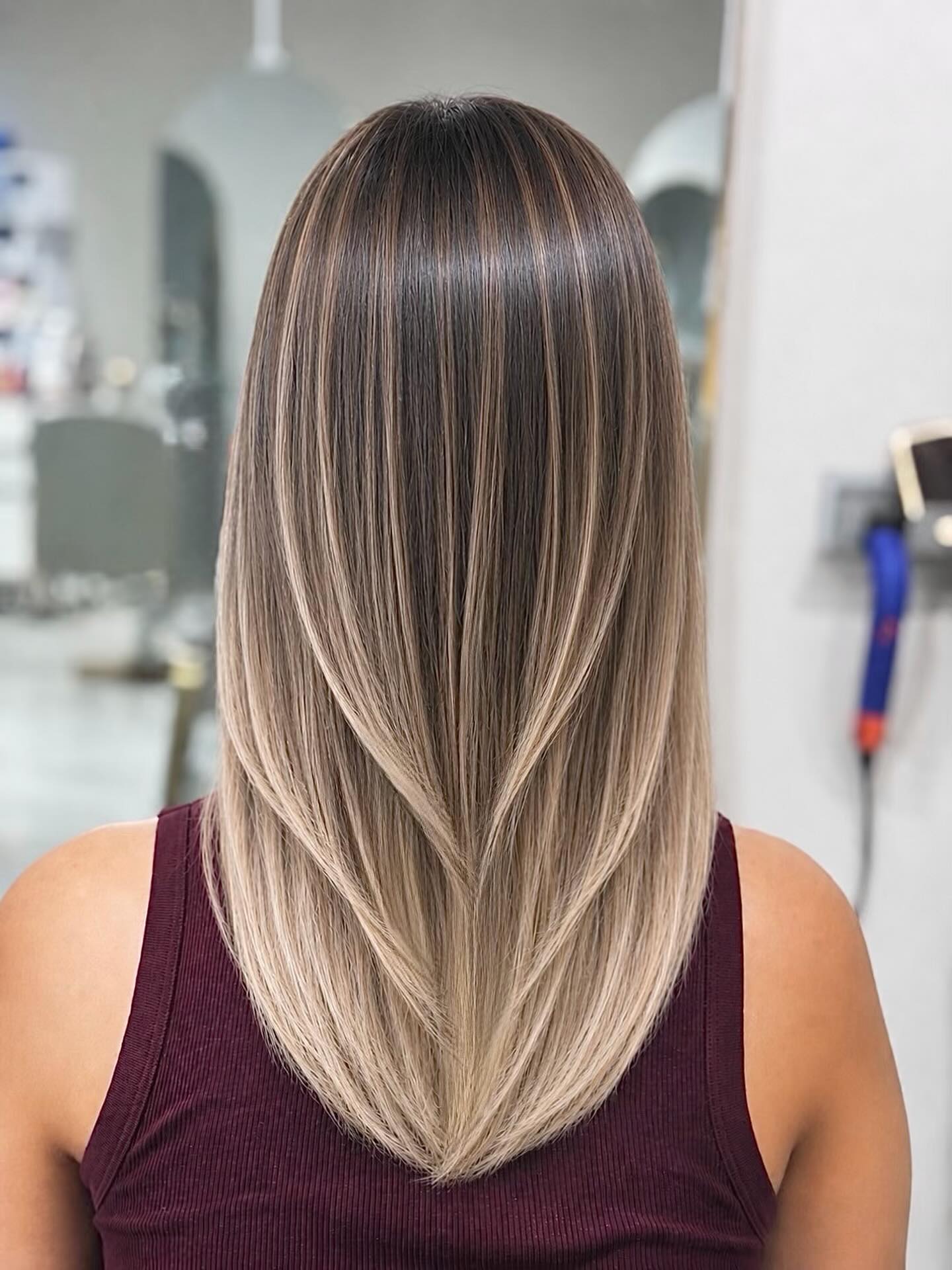
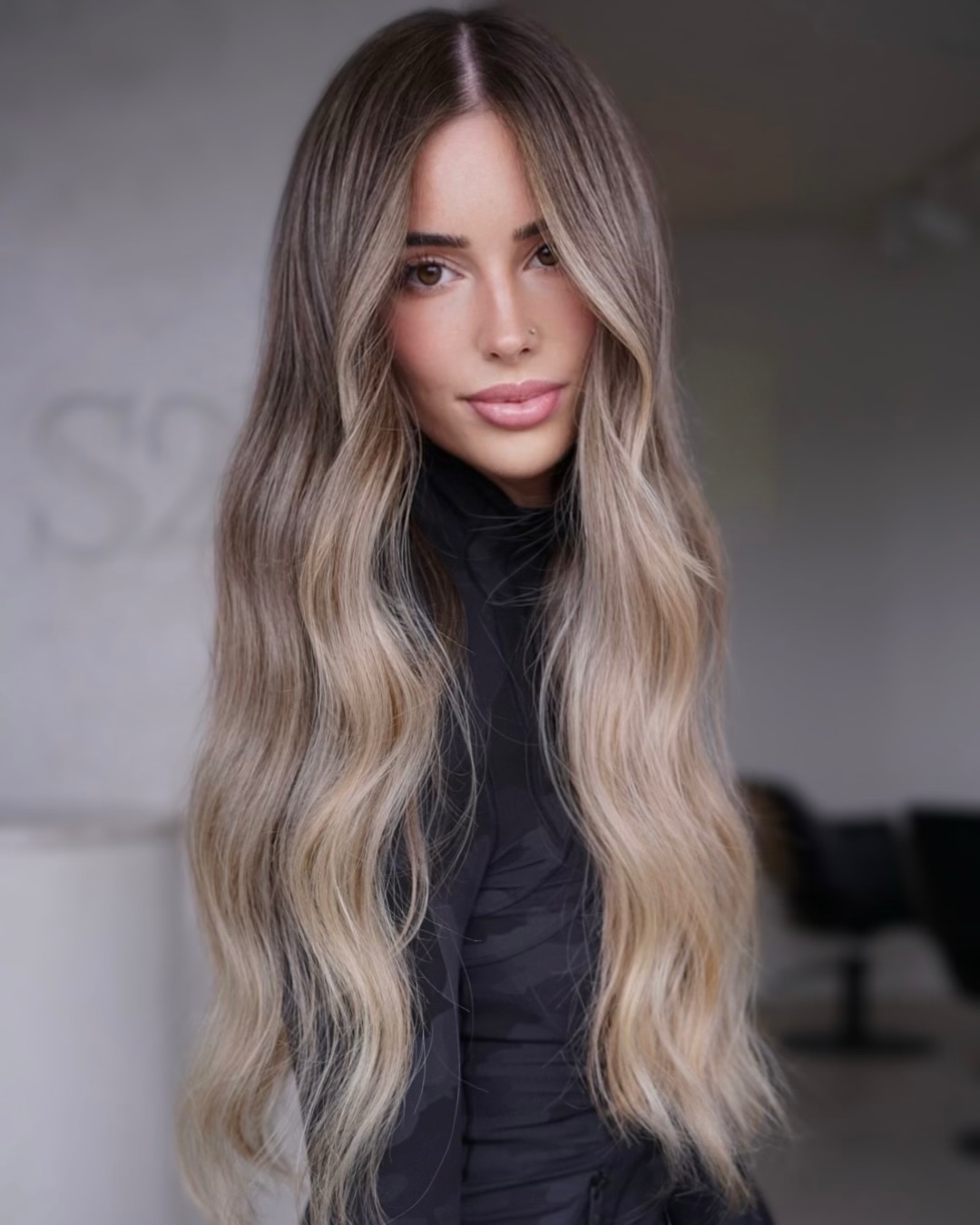
Balayage is a freehand application. The colorist sections the hair, then uses a brush (and sometimes their hands) to paint lightener directly onto the surface of each section, typically starting one to two inches below the root. The saturation gets heavier as they move down the strand, with the densest application at the ends. Because the color sits on the surface rather than being saturated fully through each section, the underside of each piece stays darker — which is what creates that dimensional effect when hair moves.
Traditional balayage is processed in the open air without foils, although modern variations like foilayage wrap the painted sections in foil for extra lift. Foilayage is especially useful on dark or resistant hair that won’t lift pale enough from air processing alone. A typical session runs 2–4 hours for short to medium hair and 4–7 hours for long or thick hair, including consultation, application, processing, toning, cutting, and styling.
Because balayage starts away from the root and fades softly into the ends, it grows out without a visible line of regrowth. This is its most practical advantage: most clients only need a full refresh every 12–16 weeks, with an optional toner refresh around the 8-week mark to knock out brassiness.
How Ombré Works: The Effect Explained
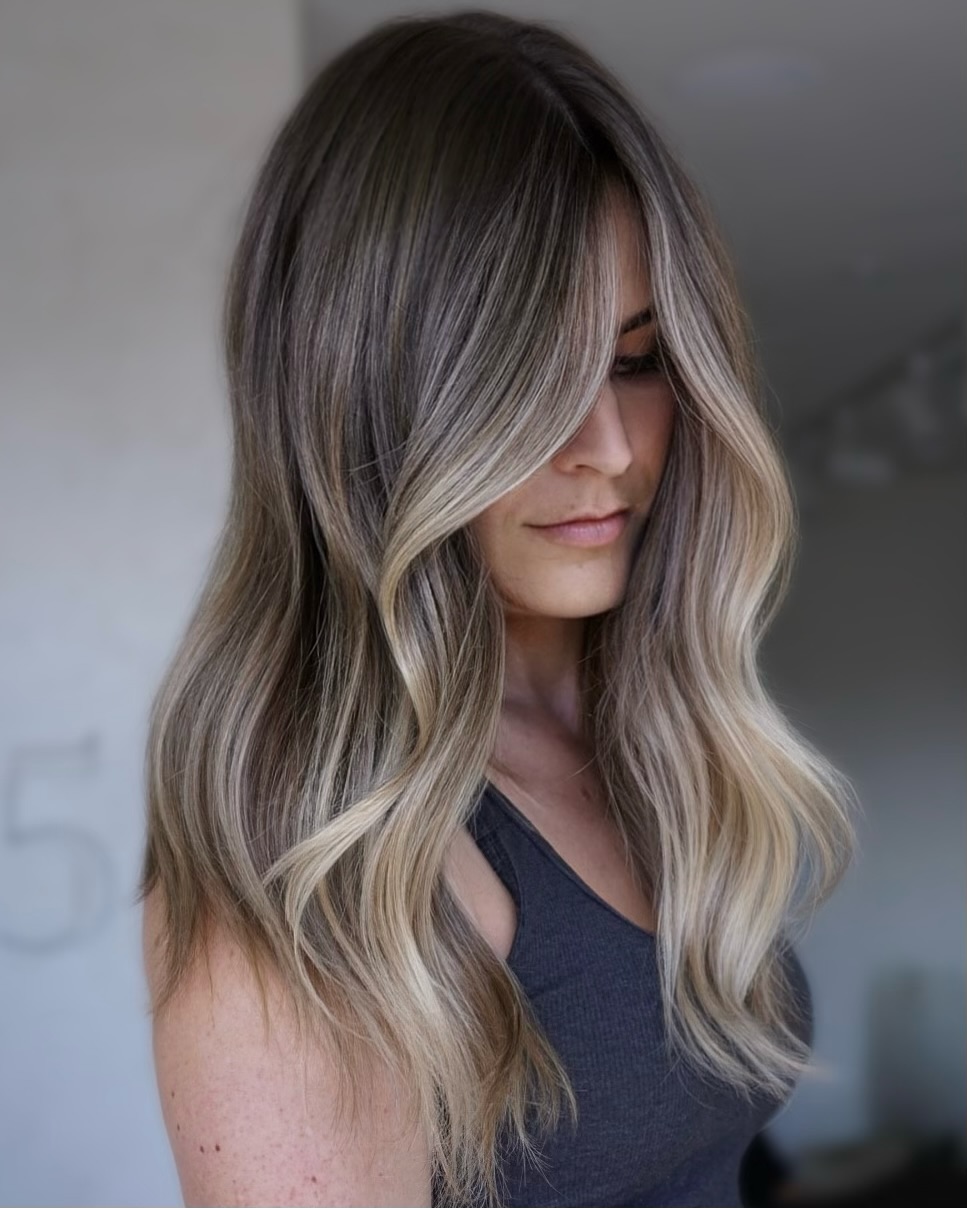
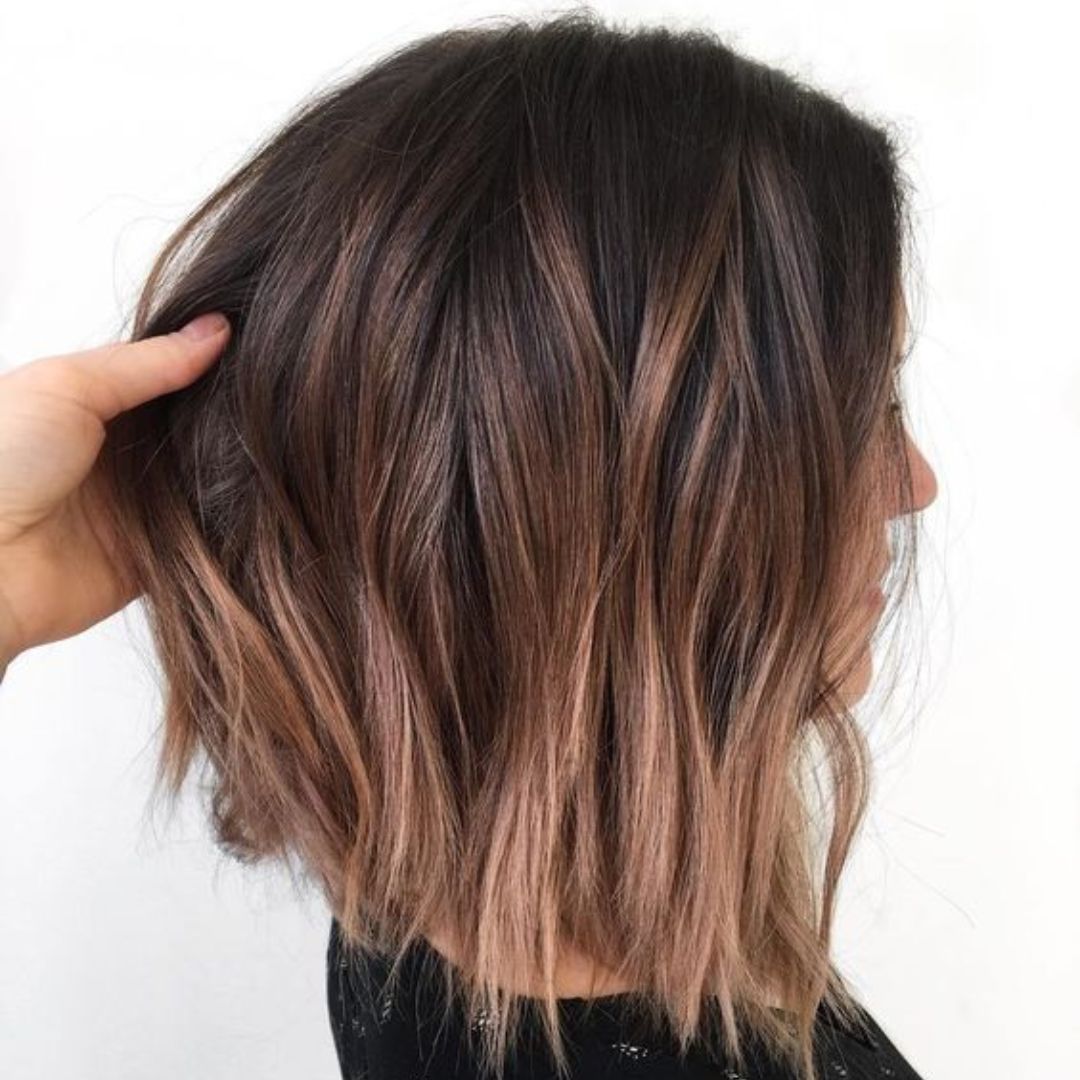
Ombré is about the final gradient, not the tool used to create it. The classic application places full-saturation lightener horizontally — fully coating the hair from roughly the mid-lengths down to the ends, then blending upward with a brush or comb to soften the transition point. Many colorists use foils during this process to isolate the bottom half of the hair and push a higher level of lift than balayage alone can achieve. The goal is a clear contrast: dark, undisturbed root area, light ends, and a seamless (but visible) blend zone in between.
Classic ombré is bolder than balayage by design. Where balayage blends dimension throughout the entire length, ombré draws a deliberate visual line from where the darkness ends and the lightness begins. That’s part of its appeal — it reads as “styled” rather than “natural,” which is exactly what some clients want. A softer variation called sombré uses less contrast and a higher blend point, landing closer to a natural balayage look while keeping the gradient structure.
Because the roots stay at your natural shade, ombré has the longest grow-out tolerance of any lightening service — roots never show regrowth because they were never touched. What does need attention is tone. Lightened ends oxidize and fade to warmth over time, so most ombré clients need a toner refresh every 6–10 weeks even if they’re not ready for a full rework.
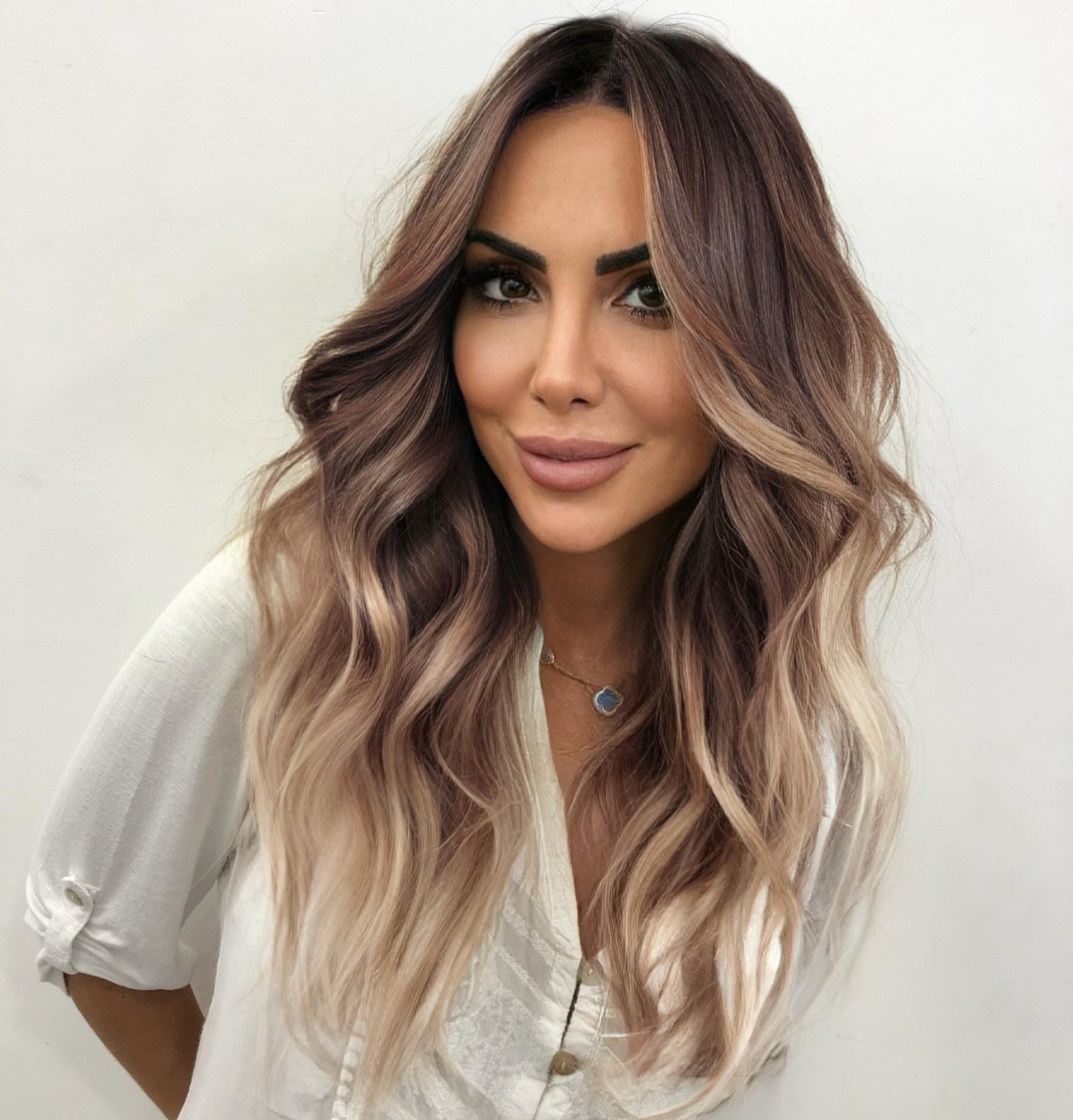
Balayage vs. Ombré: Side-by-Side Comparison
The fastest way to see the real differences is to put both techniques next to each other across the decisions that actually matter at a salon visit — application method, cost, maintenance, grow-out behavior, and damage profile.
| Factor | Balayage | Ombré |
|---|---|---|
| What it is | A freehand hand-painting technique | A two-toned gradient effect (dark roots to light ends) |
| Application | Lightener painted on the surface, section by section, starting 1–2 inches below the root | Full saturation horizontally from mid-lengths down, often isolated in foils |
| Final look | Soft, dimensional, sun-kissed — blended throughout | High-contrast gradient with a defined transition zone |
| Chair time | 2–4 hours (short/medium); up to 7 hours (long/thick) | 2–4 hours for most lengths; often less labor-intensive than a full balayage |
| Typical cost (US) | $150–$450 full; $70–$250 partial | $120–$350 depending on length and contrast |
| Touch-up frequency | Every 12–16 weeks (full refresh); optional toner gloss at 8 weeks | Full rework every 4–6 months; toner every 6–10 weeks |
| Grow-out | Extremely soft — no visible line of regrowth | Roots untouched, so no regrowth — but the transition line drops lower over time |
| Damage profile | Lower — lightener avoids roots and doesn’t fully saturate each section | Higher on the ends — full saturation means more processing on the same section |
| Best for | Clients who want a natural, low-maintenance look with dimension throughout | Clients who want a bold, styled look with minimal root upkeep |
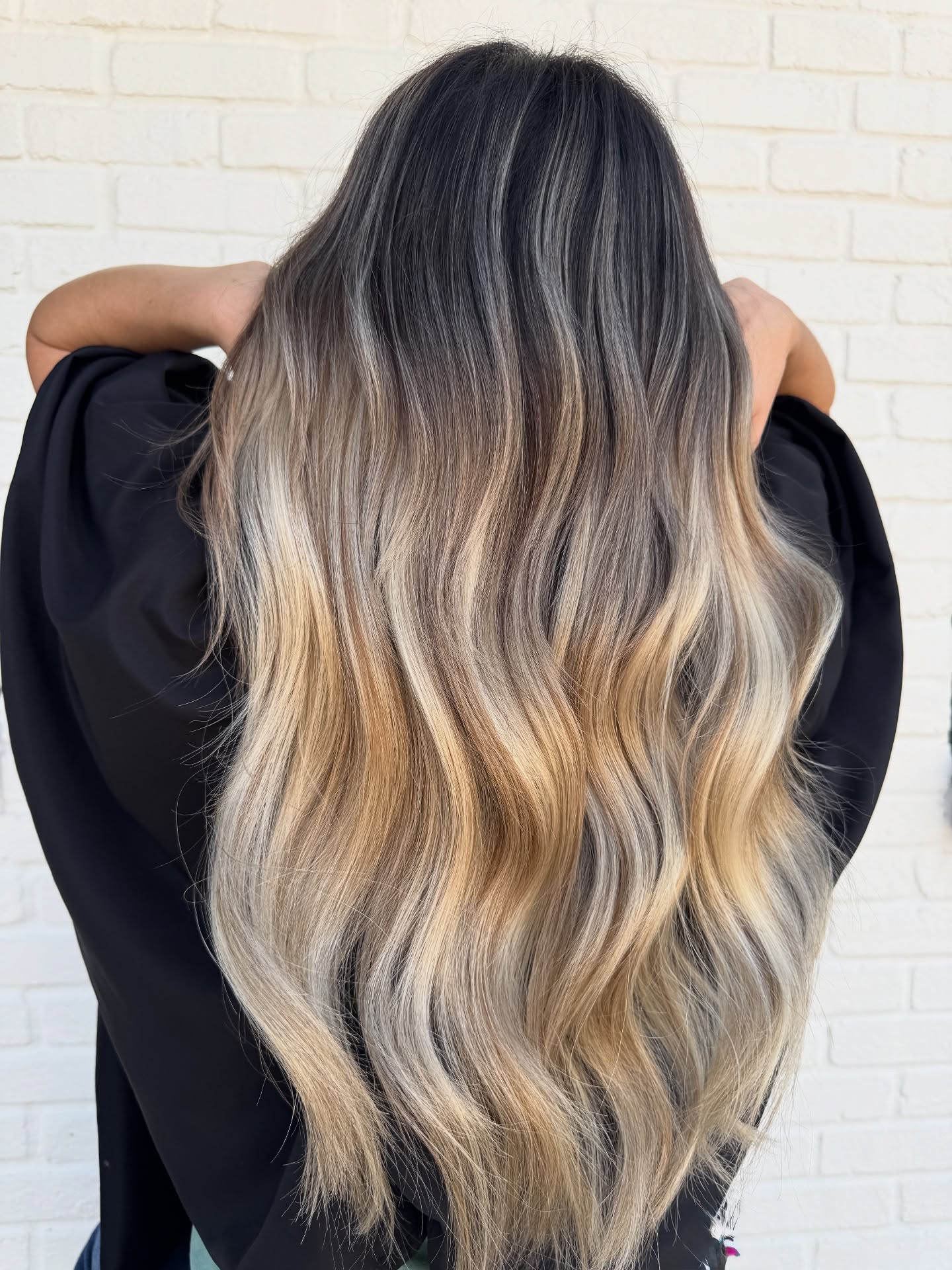
Which One Suits You? Hair Type and Face Shape Considerations
Both techniques can technically be done on almost any hair, but they photograph and wear differently depending on length, texture, and face shape. Stylists often steer clients toward the option that makes the most of their existing features and lifestyle, not just the one that’s trending on social media.
| You have… | Better fit | Why |
|---|---|---|
| Short hair (chin-length or above) | Balayage | Ombré needs length to establish a gradient; balayage can add dimension even on a bob or pixie |
| Long hair (past shoulder) | Either works | Long hair is the ideal canvas for both — the choice depends on how bold you want the contrast |
| Fine hair | Balayage | Dimensional highlights create the illusion of density; heavy ombré ends can emphasize thinness |
| Thick or coarse hair | Either | Both techniques work; foilayage is often needed to lift thick dark hair sufficiently |
| Curly or coily hair | Balayage (with a curl specialist) | Color painted to follow the curl pattern reads as natural; horizontal ombré lines can visually distort curl shape |
| Dark virgin hair | Ombré or foilayage | Lifting dark hair to light usually needs the sectioned saturation that ombré provides — and may still require multiple sessions |
| Round or heart-shaped face | Balayage with face-framing | Strategic lightness around the face elongates and sharpens; a horizontal ombré line can shorten the face visually |
| Oval or oblong face | Either works | Proportional face shapes carry both looks well; choose based on drama preference, not flattery |
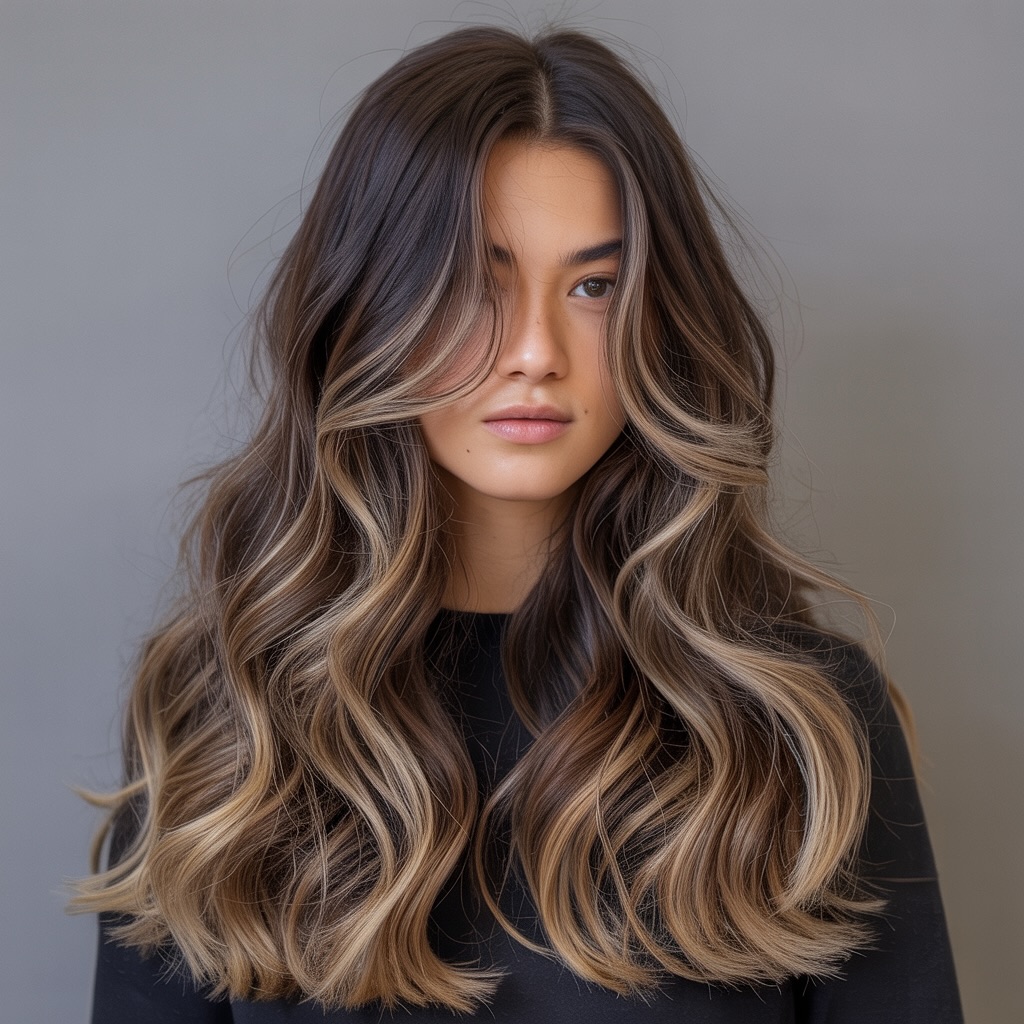
Maintenance Reality: What Each Technique Requires Between Visits
This is the section most balayage-vs.-ombré articles skip, and it’s where most regrets start. Both techniques get marketed as “low maintenance,” but that phrase means different things for each.
Balayage’s low-maintenance claim is about grow-out. Because the lightener stops short of your natural root, new growth blends in without creating a visible line — so you don’t need to book an emergency appointment when a few weeks pass. But the ends still oxidize, the tone still warms up, and the brightness still dulls. A typical balayage client books a toner refresh or gloss around 6–8 weeks ($50–$100 in most US salons) and a full balayage touch-up every 12–16 weeks ($150–$400+ depending on the salon and stylist).
Ombré’s maintenance trade-off runs in the opposite direction. Root grow-out is a non-issue — your natural color is the root, so it can grow out indefinitely without looking unkempt. But the contrast zone starts to sit lower on the hair as it grows, which changes the proportion of the look. And the heavily lightened ends tend to be the most damaged part of any lightening service, so you’ll likely need more frequent trims to keep the line clean and the ends healthy.
For both techniques, home care matters more than people expect. Sulfate-free shampoo, a bond-repair treatment (Olaplex, K18, or similar) every one to two weeks, a purple or blue toning shampoo for cool-blended ends, and a heat protectant on everything are the baseline. Sulfate-based shampoos are frequently flagged by professional colorists as a cause of accelerated color fade, which is why new color can look dull within a month of a service.
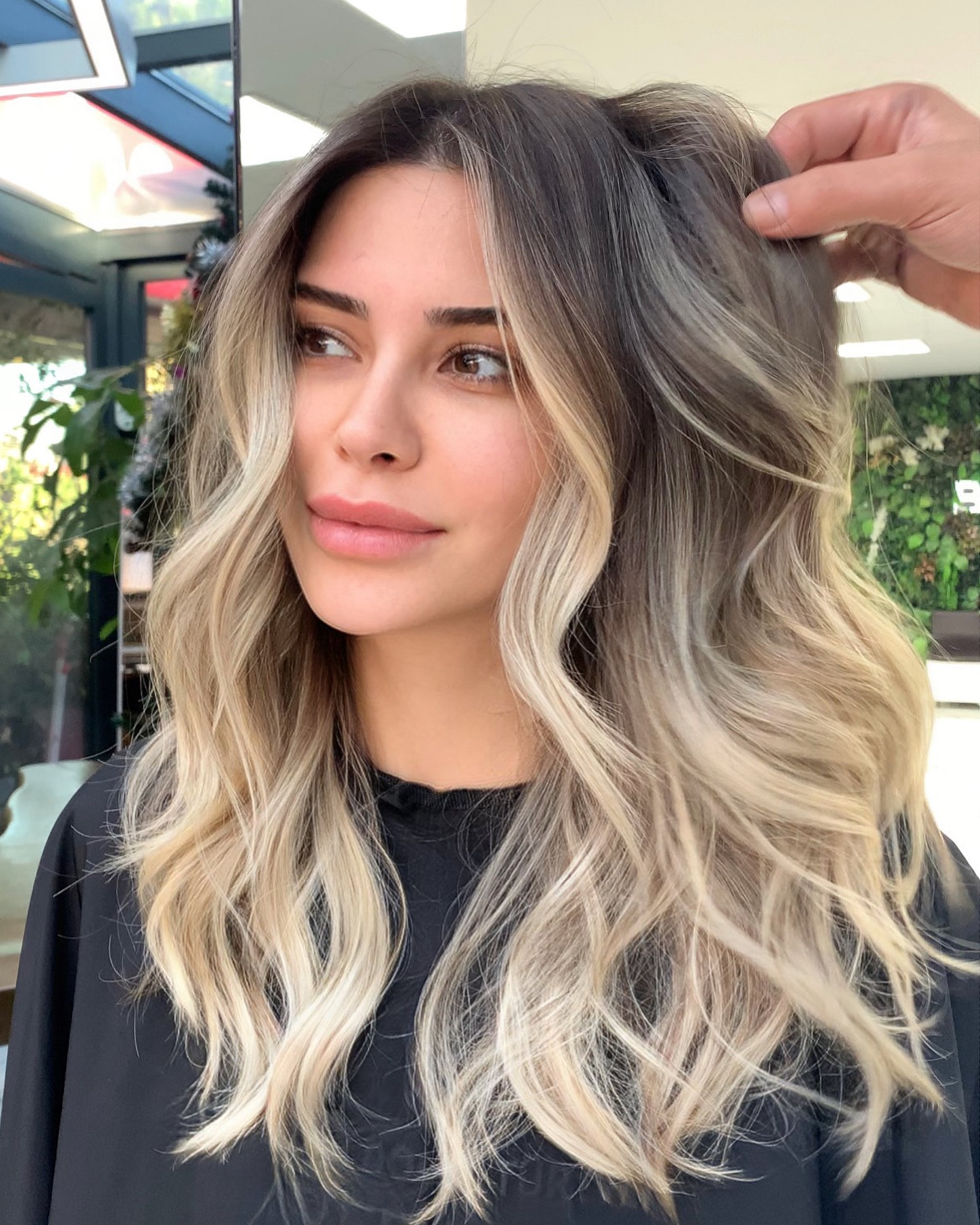
What to Ask Your Stylist at the Consultation
The consultation is where miscommunication happens, and it’s typically free — treat it like the planning session it is, not a formality before booking. Bring 3–5 reference photos, ideally of someone with a similar starting color and hair texture to yours. Then work through these questions with your colorist:
- “Is this realistic in one session on my hair?” Going from dark virgin hair to bright blonde ends rarely happens in a single visit. An honest colorist will tell you upfront whether you need two or three sessions to reach your reference photo.
- “Where will the lightness start?” For balayage, the answer should be a specific distance from the root in inches. For ombré, it should be a visual landmark — for example, “transition zone starting at your earlobe, fully light by your collarbone.”
- “What toner are you planning to use, and is it included?” Toner is what takes raw lightener from brassy-orange to the actual color you want. Some salons price it separately, and it can add $50 or more to the total.
- “How often do I need to come back?” Get specifics: full touch-up interval, toner refresh interval, and whether the stylist wants to see you for a gloss in between.
- “What home products do I need?” A good colorist is upfront about what you’ll need to protect the investment — typically a color-safe shampoo, a bond-builder, and a heat protectant.
Related Techniques Worth Knowing
The balayage-vs.-ombré conversation has expanded well beyond those two terms. If any of these come up during your consultation, here’s what they actually mean:
- Sombré — “soft ombré.” Same gradient structure with much less contrast and a higher blend point. Reads almost like a balayage.
- Foilayage — Balayage painted, then wrapped in foil for additional lift. Used on dark or resistant hair to push the ends brighter than freehand processing allows.
- Color melt — Two or three shades blended vertically on each section so they “melt” into each other with no visible transition. Often used to soften an existing ombré line.
- Money piece — Brighter pieces concentrated around the face, usually layered on top of a balayage or base color. Adds pop without committing to overall lightness.
- Babylights — Very fine, delicate foil highlights placed closely together for a natural-brightening effect. Often combined with balayage as “balayage babylights” for clients who want maximum softness.
These aren’t competing techniques — most colorists combine them routinely on a single head to customize the result. Your consultation photos and your stylist’s read on your hair determine the blend.
FAQ
Is balayage always ombré, or can they be separate?
They can absolutely be separate. Balayage is a hand-painting technique, so it can create many different effects — including a subtle dimensional highlight that looks nothing like ombré. An ombré look, in turn, can be created with foils rather than balayage. You can have balayage that isn’t ombré, ombré that wasn’t applied with balayage, or a balayage-ombré hybrid. They overlap, but they aren’t the same thing.
Which is more damaging, balayage or ombré?
Ombré is typically harder on the ends because it uses full-saturation lightener on the bottom section of the hair, often under heat in foils. Balayage applies lightener to the surface of each section, so the cuticle is exposed to processing less uniformly. That said, damage depends heavily on the colorist’s skill, developer strength, and whether bond-building products are used — a rushed balayage can cause more breakage than a careful ombré.
How much will it cost in a typical US salon?
Expect $150–$450 for a full balayage at a mid-range salon, with partial balayage running $70–$250. Ombré pricing is similar, usually landing $120–$350 depending on length and lift required. High-end metropolitan salons can charge $500 or more, and virgin-to-blonde transitions often require multiple sessions, each priced separately. Always get a written quote at consultation before booking.
Can I do balayage or ombré at home with a box kit?
Drugstore kits exist for both, and the results are unpredictable at best. These techniques rely on the colorist’s judgment about lift, placement, processing time, and toner selection — there’s no way for a box to assess your hair’s porosity or base level. At-home attempts most often produce brassy, uneven, or banded color that costs more to correct than the original salon service would have. If budget is the issue, ask a salon about a partial or face-framing service rather than going fully DIY.
How long does a balayage or ombré appointment take?
Plan for 2–4 hours for short to medium hair and 4–7 hours for long or thick hair. The timeline includes consultation (15–20 minutes), sectioning and application (60–90 minutes), processing (30–60 minutes, sometimes longer for dark hair), toner (15–30 minutes), plus a wash, gloss, cut, and blow-dry. Bring something to read or a charged phone — you’ll be in the chair a while.
Does balayage or ombré work on gray or silver hair?
Both can blend with gray, but balayage is generally the more flexible option. A colorist can paint dimensional lowlights and highlights through gray strands to soften the contrast between silver and pigmented hair, which creates a smooth blending effect as the hair continues to gray. Ombré on gray hair works best when the gray is concentrated at the ends or you’re deliberately going lighter from root to tip — it’s less forgiving on mixed salt-and-pepper patterns.
If I hate the result, can I reverse it?
Only partially. Lightener removes pigment and can’t be undone the way a deposit-only color can be. A colorist can darken lightened sections by adding low-lights or depositing color back in, but this requires a separate corrective appointment and isn’t usually permanent — deposited color fades as you wash, sometimes revealing the underlying lightness again. The safest approach is catching concerns before you leave the chair, during the toning step, when adjustments are still straightforward.
Hair results vary based on your natural hair type, texture, density, and condition. Always consult with a licensed hairstylist before making significant changes, especially with chemical treatments or dramatic length changes. Photos may show styled results that require professional tools and products to replicate.
1 response