

A face-shape-by-face-shape breakdown of which bangs actually work, which ones backfire, and what nobody tells you about the maintenance before you sit in the chair.
Bangs change the visual proportions of your face more than almost any other single cut decision — a blunt fringe shortens a long face by up to an inch optically, while curtain bangs widen a narrow one by drawing the eye outward at cheekbone level. The right style rebalances your features; the wrong one emphasizes exactly what you were hoping to minimize.
This guide covers which bang type pairs best with each face shape, how your hair texture and density affect the outcome, realistic daily styling and trimming commitments, the grow-out timeline if you change your mind, and the exact salon language to use so your stylist cuts what you actually want.
What Bangs Actually Do to Your Face
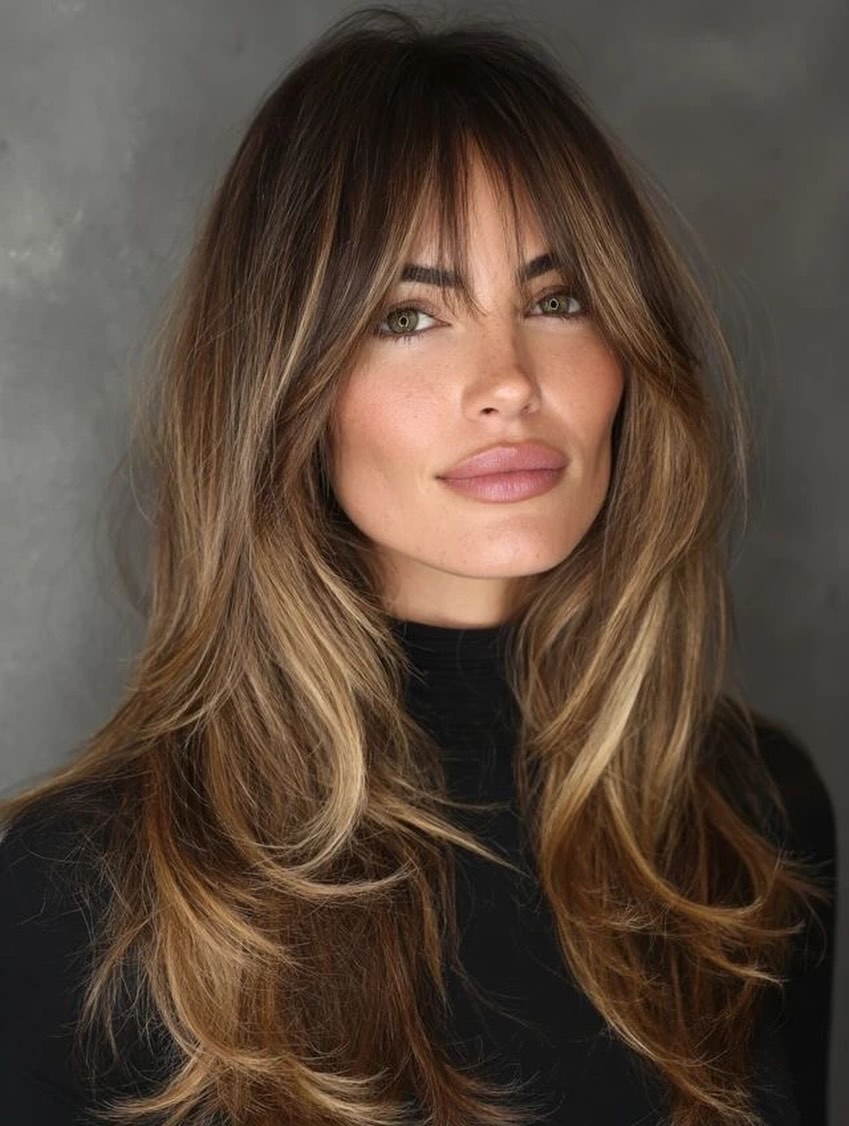
Every bang style works by redirecting where the eye lands first. A horizontal line across the forehead (blunt bangs) creates width and shortens vertical length. A parted, angled line (curtain bangs) opens up the center of the face and draws attention to the cheekbones. Side-swept bangs create diagonal movement that softens strong angles at the jaw or forehead.
This is why face shape matters more than personal taste when choosing a bang type — you’re not picking a trend, you’re choosing a visual correction tool. A style that looks effortless on someone with an oval face can overwhelm a round face or expose too much forehead on a heart-shaped one.
Stylist tip: Before committing, pull your hair forward over your forehead in front of a mirror and note where your eye goes. If you instinctively look at your eyes, bangs will enhance that. If your eye goes straight to your jaw or chin, you may need a longer, face-framing style rather than a traditional fringe.
The Best Bangs for Each Face Shape
These recommendations follow a simple principle: bangs should balance your proportions, not echo them. Round faces need length-creating angles, long faces need horizontal width, and angular faces need softness.
Oval Faces Have the Most Flexibility
Oval faces are roughly 1.5 times longer than they are wide, with a forehead and jaw that are close in width. This balanced proportion means most bang styles work — blunt, curtain, wispy, side-swept, and micro bangs all complement the shape without creating visual distortion. The one exception is very heavy, thick bangs that sit below the eyebrow on a shorter forehead, which can make an oval face look round by hiding the proportionally balanced upper third.
Round Faces Need Angles, Not Straight Lines
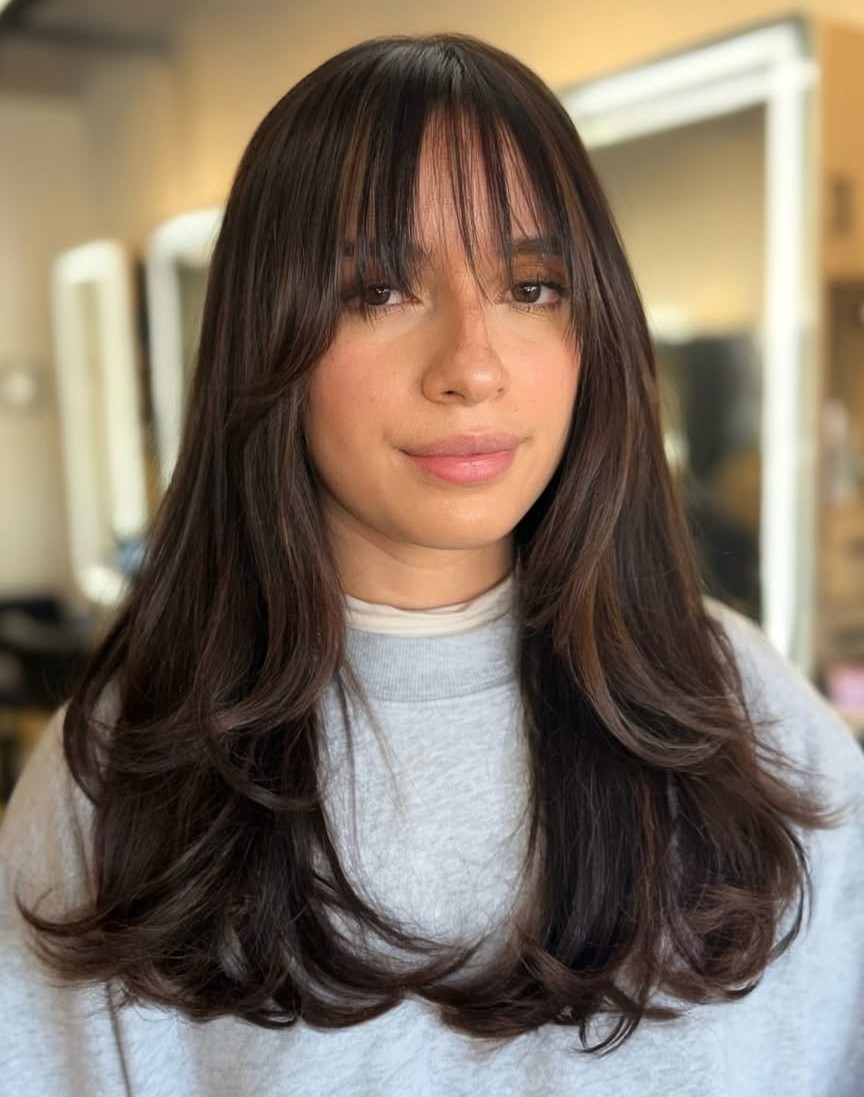
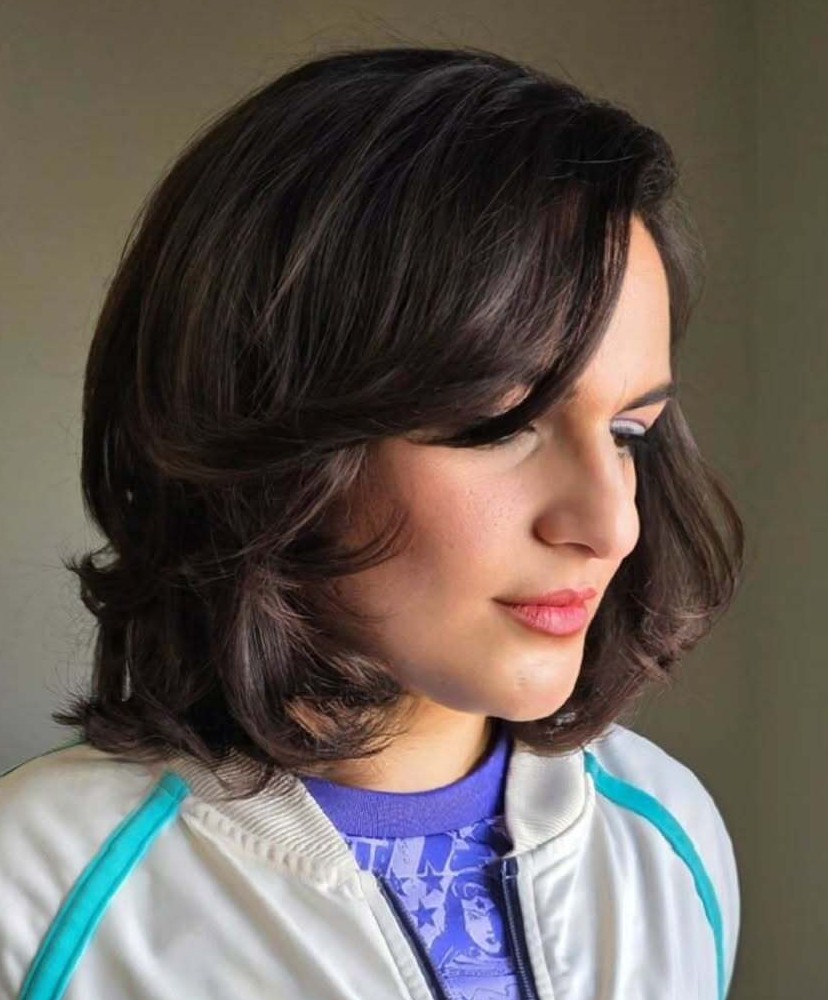
The goal for round faces is to add vertical length and break up the circular outline. Curtain bangs parted in the center create a V-shape that visually elongates. Side-swept bangs that angle from eyebrow level to cheekbone add diagonal lines that counteract roundness. The length should hit just past the cheekbone — shorter than that and they emphasize the face’s widest point.
Avoid heavy, straight-across blunt bangs. A solid horizontal line at forehead level cuts the face’s visible length in half and amplifies the circular shape. If you want a fuller fringe on a round face, ask your stylist to cut it with an arc — slightly longer at the outer edges — rather than a ruler-straight line.
Square Faces Benefit from Soft, Textured Styles
Square faces have a strong jawline and forehead that are roughly equal in width, with minimal tapering. Bangs should soften the forehead’s angular corners without introducing another hard line. Wispy bangs with textured, uneven ends break up the horizontal line of the forehead. Curtain bangs that start at eye level and blend into face-framing layers soften the overall shape by adding curves where the face has straight lines.
Blunt, thick bangs with a sharp horizontal edge can work if the forehead is on the longer side, but they risk making the face look boxy by creating two parallel horizontal lines — one at the bangs and one at the jaw. If you want a fuller bang on a square face, point-cut the ends so they’re slightly broken up rather than ruler-straight.
Heart-Shaped Faces Need Width Below the Forehead
Heart-shaped faces are widest at the forehead and taper to a narrower chin. Heavy bangs that cover the entire forehead can actually help by reducing the visual width of the upper face. Wispy, eyebrow-grazing bangs and curtain bangs that start at cheekbone length both work by shifting attention to the middle and lower thirds. Side-swept bangs are another strong option — they angle across the wide forehead and direct the eye toward the cheekbone and jaw.
Avoid very short bangs (micro bangs or baby bangs) on heart-shaped faces. They expose the full width of the forehead and emphasize the taper toward the chin, exaggerating the inverted triangle effect.
Long or Oblong Faces Need Horizontal Width
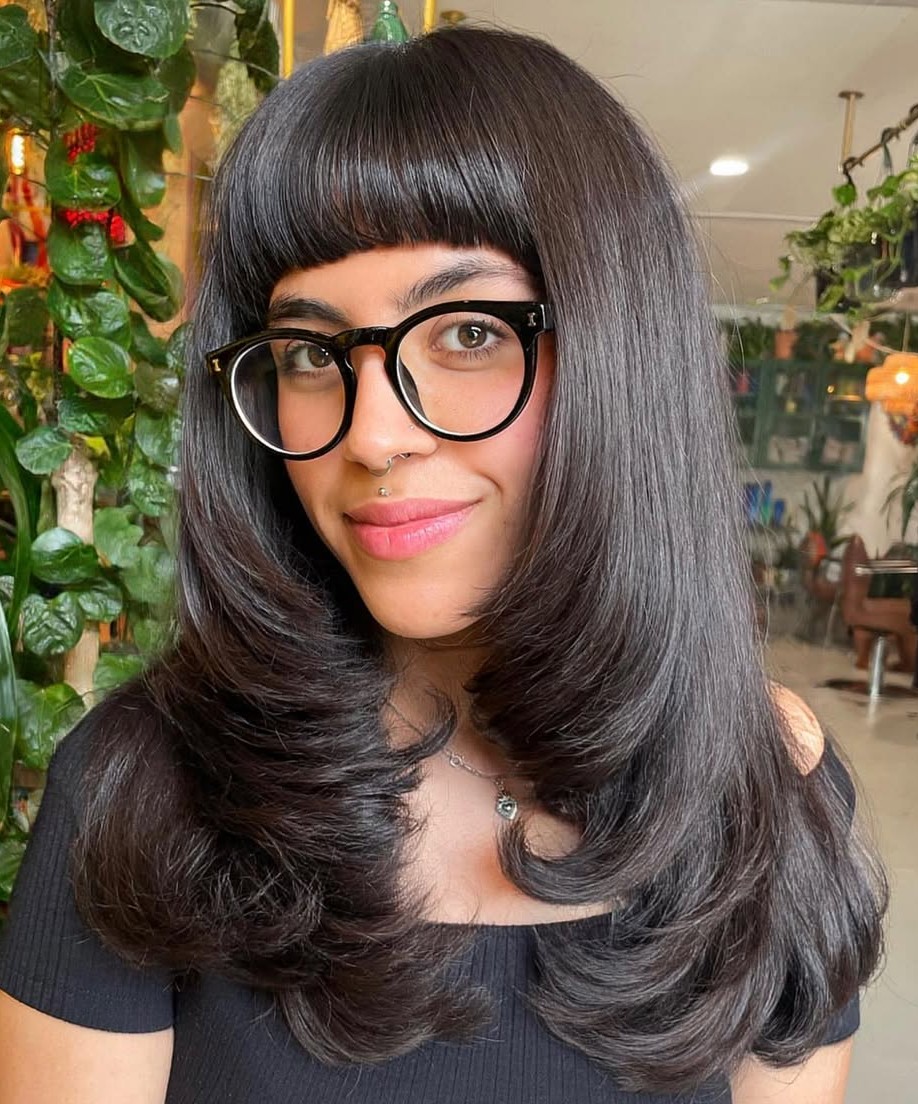
If your face is noticeably longer than it is wide, you want bangs that create a strong horizontal element to add visual width and shorten the vertical length. Thick, blunt bangs that sit at eyebrow level are the most effective — they create a decisive horizontal line that makes the face look shorter and wider. Straight-across bangs with slight texture achieve the same effect with a less dramatic commitment.
Curtain bangs can also work on long faces, but only if they’re cut short enough — cheekbone-length curtain bangs on a long face just add more vertical emphasis. Keep them eyebrow-grazing or shorter, with the center section sitting above the brow line.
Diamond Faces Pair Well with Side-Swept and Curtain Styles
Diamond faces are narrow at the forehead and jaw with wide cheekbones. Side-swept bangs add width to the narrow forehead area while softening the cheekbone prominence. Curtain bangs that part in the center and fall at cheekbone level draw the eye outward rather than to the face’s widest point. Wispy fringe with a bit of volume at the forehead also helps balance the narrower top third.
Avoid very short blunt bangs on diamond faces — they sit above the narrow forehead and draw attention to the abrupt width change at the cheekbones.
How Your Hair Texture Changes the Outcome
Face shape tells you which direction to go. Hair texture determines what’s actually achievable without fighting your hair every morning.
Straight hair (type 1a–1c) is the easiest texture for precision bang styles — blunt bangs, micro bangs, and wispy fringe all fall predictably. The trade-off is that straight, fine bangs can look flat or stringy without volume. Use a small round brush (1-inch barrel) while blow-drying to create a slight curve inward at the ends, and apply a pea-sized amount of volumizing mousse at the roots before drying.
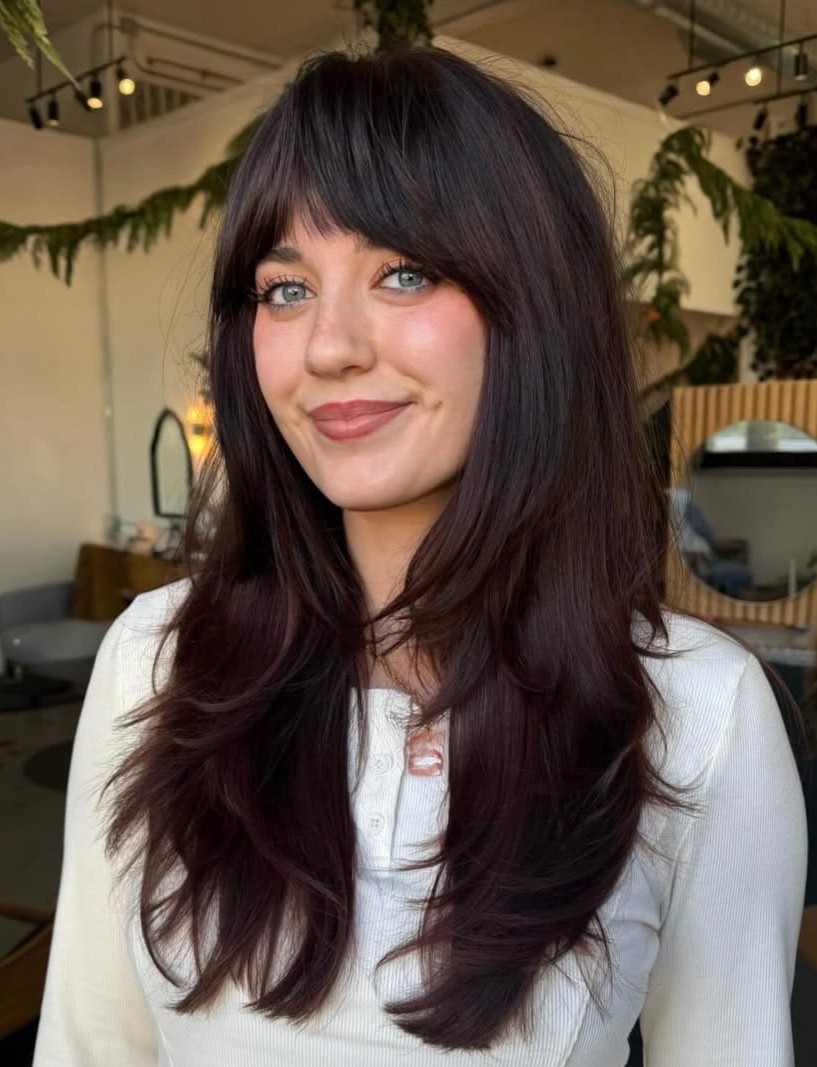
Wavy hair (type 2a–2c) works well with curtain bangs and longer side-swept styles that use the natural wave as built-in texture. Blunt bangs on wavy hair require blow-drying and a flat iron almost every day to stay straight — if that sounds like too much effort, skip them. Ask your stylist to cut your bangs dry so they can see how the wave pattern falls naturally and adjust the length accordingly. Wavy bangs shrink about 10–15% from wet to dry.
Curly hair (type 3a–3c) changes the game entirely because of shrinkage. Curly bangs can lose 25–40% of their length when they dry, which means your stylist needs to cut significantly longer than the desired final length. A dry curl cut by a stylist experienced with textured hair is non-negotiable — wet cutting curly bangs almost always results in bangs that are too short once they spring up. Curtain bangs and longer fringe styles tend to be the most practical because they’re more forgiving on shrinkage variation day to day.
Coily hair (type 4a–4c) has the most dramatic shrinkage — up to 75% — and the tightest curl pattern, which means bangs sit differently every day depending on humidity, product, and styling. Shaped fringe cut to enhance the curl pattern rather than straighten it creates the most sustainable result. Work with a stylist who specializes in natural hair and can shape the fringe while the hair is in its natural state.
Fine hair benefits from textured, wispy, or curtain bangs rather than thick, blunt styles. There simply isn’t enough hair volume for a heavy fringe — it’ll look sparse and separate into visible sections. If you want fuller-looking bangs with fine hair, your stylist can take hair from slightly farther back on the head to create more density in the fringe section, but this also means more hair to style and maintain.
Thick hair can pull off almost any bang style, but the risk is overwhelm — heavy blunt bangs on very thick hair can look like a curtain dropping over your forehead. Ask your stylist to thin the interior of the bangs using point cutting or internal texturizing so the fringe lies flat without excessive bulk. Avoid razor cutting on thick bangs, which can create too much volume and puffiness.
The Maintenance Reality Nobody Talks About
This is where most people underestimate bangs. The cut itself takes 10 minutes. Living with it takes 10 minutes every morning plus a salon visit every few weeks.
Trimming schedule: Bangs need a trim every 3–4 weeks to maintain their shape. This is faster-growing than any other part of your cut because forehead hair sits in the growth phase (anagen) for a shorter period and reaches its visible length limit faster. Some salons offer complimentary bang trims between full appointments — ask when you first get them cut.
Daily styling time: Budget 5–10 minutes each morning. For straight-across bangs, this means a quick blow-dry with a round brush to set the direction and prevent a flat, stuck-to-forehead look. For curtain bangs, a few passes with a round brush to train the part and create the outward flip. If you’re a wash-and-go person who doesn’t own a blow dryer, bangs will require a lifestyle adjustment.
The oil factor: Bangs sit directly on the oiliest part of your face. They get greasy faster than the rest of your hair, especially if you have combination or oily skin. Many people with bangs wash just the fringe section between full washes — wet the bangs at the sink, apply a drop of shampoo, rinse, and blow-dry. Keep a travel-size dry shampoo in your bag for midday refreshes.
Products you’ll need: At minimum, a lightweight volumizing mousse or texture spray, a heat protectant, and dry shampoo. For curly bangs, add a curl-defining cream. For straight bangs, a mini flat iron for touch-ups is useful. Total product cost: roughly $30–$50 to get set up if you don’t already own these.
Cowlick complications: If you have a cowlick at the front of your hairline, bangs won’t lie flat without effort. Your stylist can work with the growth pattern by adjusting the starting point of the bangs slightly, but you’ll need to blow-dry against the cowlick’s direction every morning while the hair is still damp. If you’re not willing to do that consistently, a cowlick will fight you every day.
When You Should Skip Bangs Entirely
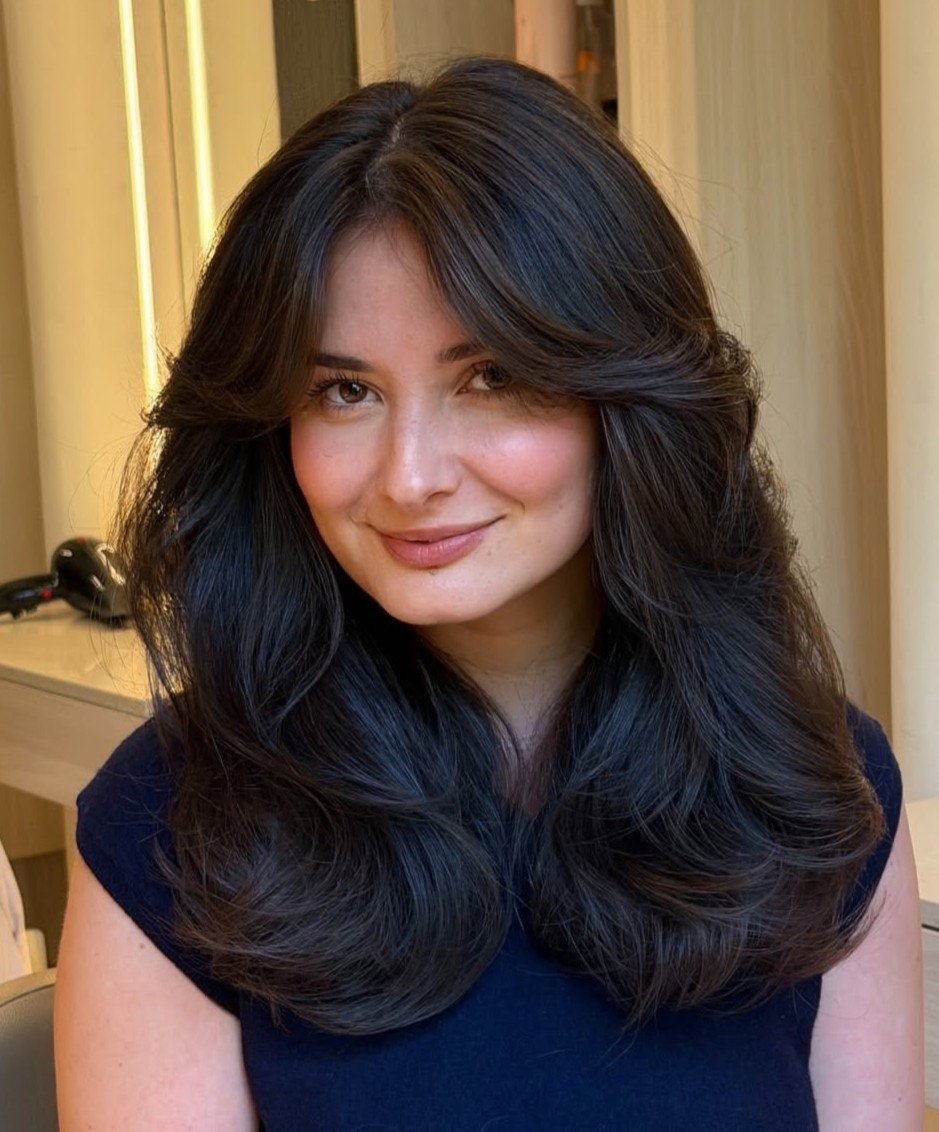
Not every face or lifestyle is right for bangs, and a good stylist will tell you that. Here are the honest reasons to reconsider:
You never blow-dry your hair. Some bang styles (especially curtain bangs on wavy hair) can air-dry acceptably, but most require at least a quick round-brush blowout. If your entire routine is wash, towel-dry, and leave the house, bangs will consistently look messy by midday.
You exercise heavily and sweat from the forehead. Daily gym sessions mean daily bang washing. Sweat-soaked bangs dry in random directions and can cause forehead breakouts from trapped moisture and product residue. Headbands help during the workout, but the post-workout restyle adds time.
You’re growing out a previous cut and patience is thin. Adding bangs while growing out a bob or pixie creates a second grow-out timeline to manage simultaneously. It’s simpler to finish one transition before starting another.
You have active forehead acne or skin conditions. Bangs trap oil and product residue against the forehead, which can worsen breakouts. If you’re currently treating forehead acne, wait until it’s under control. Bangs also make it harder to apply topical treatments to the forehead consistently.
You’re not willing to commit to trims. Bangs that grow past the eyes look unkempt, not intentional (unless you’re growing them out on purpose). If you frequently cancel salon appointments or tend to stretch haircuts past the recommended interval, bangs will frustrate you.
The Grow-Out Plan: What Happens When You’re Done
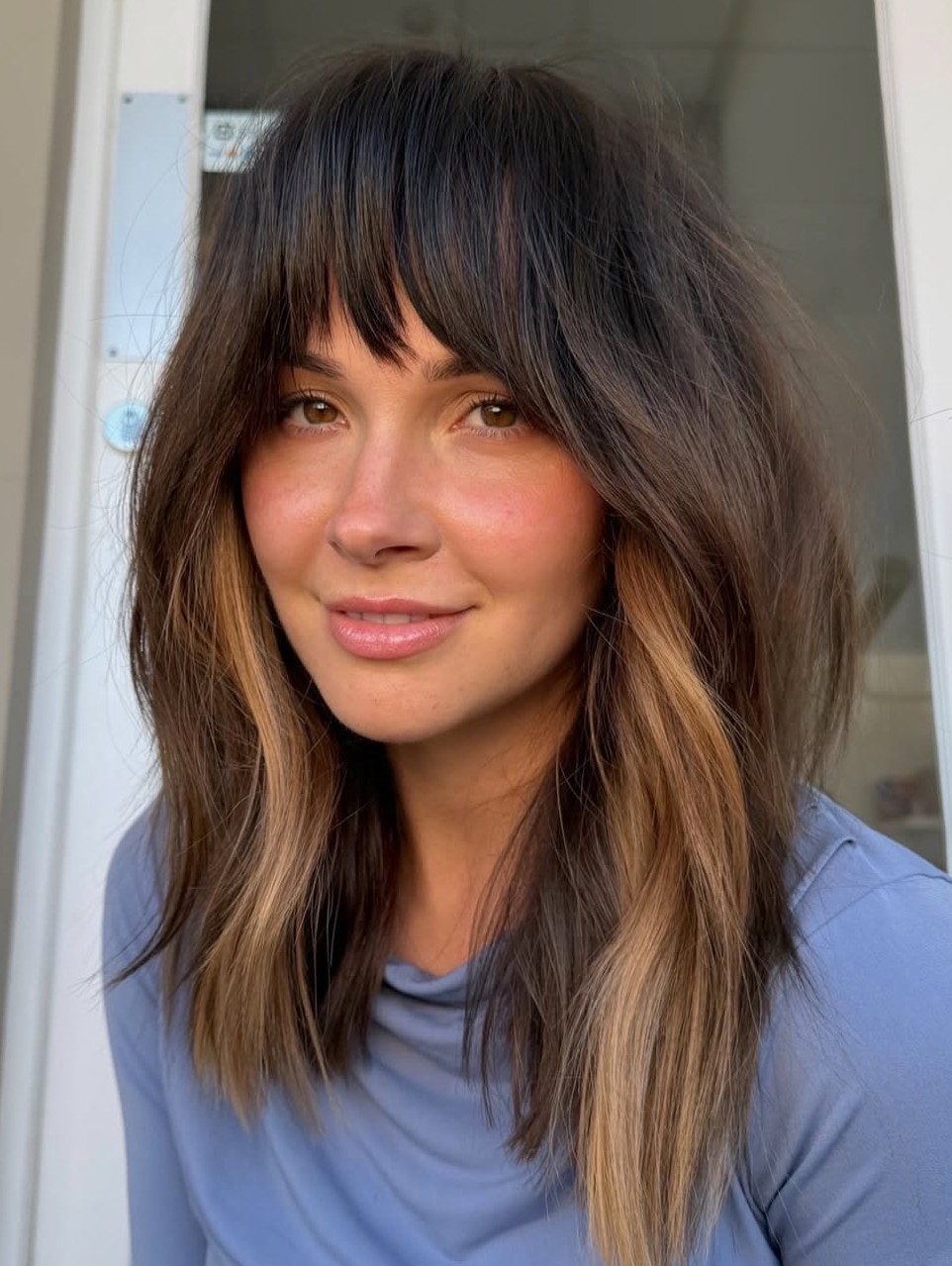
Growing out bangs takes 4–8 months depending on your starting length and how fast your hair grows (average is about half an inch per month). The awkward stage hits around month 2–3, when bangs are too long to sit on the forehead but too short to tuck behind the ears.
Weeks 1–4: Bangs still look intentional. No intervention needed beyond regular styling.
Weeks 5–8: The fringe starts poking into your eyes. This is where most people panic and re-cut. Instead, start training them to the side by blow-drying in the new direction. Bobby pins and small clips are your friends here.
Weeks 9–16: The worst phase. Bangs are past the eyes but won’t stay behind the ears. Use a deep side part to fold them into the rest of your hair, or pin them back with a single barrette positioned at the temple. Texturizing spray helps blend them into face-framing layers.
Weeks 17–24: Bangs finally reach cheekbone to chin length and start blending into your haircut. Ask your stylist to cut them into face-framing layers at this point to integrate them into the rest of your hair rather than leaving them as a distinct section growing out unevenly.
Stylist tip: If you’re not sure whether you want to commit to permanent bangs, try clip-in bangs first — they cost $15–$40 and let you test the look for a day before making an irreversible cut. Alternatively, ask your stylist for a “trial fringe” — a longer, curtain-bang style that you can part and push back as if they don’t exist when you want a break.
What to Tell Your Stylist
The biggest mistake clients make is bringing a photo and saying “I want this” without discussing the technical details. Your stylist needs specific information to translate an inspiration image into a cut that works on your particular hair.
Here’s what to communicate:
For curtain bangs: “I want a center-parted fringe that starts at [eyebrow/cheekbone/chin] length at the center and blends into face-framing layers at [jaw/collarbone] length. I want the ends [texturized/blunt/point-cut].”
For blunt bangs: “I want a straight-across fringe that sits at [mid-forehead/eyebrow/just below the eyebrow]. I want the density [thick and heavy/medium/wispy at the edges]. I want the corners [squared off/softened with a slight arc/tapered into the sides].”
For side-swept bangs: “I want a bang that sweeps from [right to left/left to right], starting at [above the brow/brow level] on the short side and hitting [cheekbone/jawline] on the long side.”
For wispy bangs: “I want a lightweight, see-through fringe at [eyebrow/mid-forehead] length with vertical texture so individual pieces are visible through the fringe.”
Always mention your cowlick direction, your typical part, and whether you blow-dry daily. These three details change how a stylist approaches the cut more than almost anything else.
FAQ
Can I Cut My Own Bangs at Home?
You can trim existing bangs between salon visits — hold them straight out from your forehead, twist the section once, and cut below where you want them to land (hair springs up when released). Never cut bangs straight across while they’re lying flat against your forehead, because the center section ends up shorter than the sides. For a first-time bang cut, go to a professional. The starting point, density, and angle of the initial cut set the foundation that you’ll be working with for months.
Will Bangs Make My Forehead Break Out?
They can, especially if you use styling products in your bangs (mousse, dry shampoo, hairspray) and don’t wash them frequently. The combination of product residue, natural oil, and friction against the skin creates a clog-friendly environment. Wash your bangs every day or every other day even when you skip full washes, and avoid applying heavy products directly to the underside of the fringe where it contacts skin. If breakouts appear, a lightweight salicylic acid cleanser used on the forehead each night usually keeps them in check without affecting your hairstyle.
Do Bangs Work on Receding Hairlines or Thinning Hair?
It depends on where the thinning is happening. If density is lower at the temples but adequate at the front center, curtain bangs and side-swept styles can actually camouflage the thinner areas. If the hairline has receded significantly at the center, pulling hair forward into bangs may expose the thinning rather than conceal it — there’s not enough density to create a full fringe. A consultation with your stylist is the safest first step, because they can assess your actual hair density at the front and tell you honestly whether bangs will help or backfire.
Are Curtain Bangs Really Lower Maintenance Than Other Styles?
Lower maintenance, yes. Low maintenance, no. Curtain bangs grow out more gracefully than blunt bangs because they’re already long and blended, so the 3–4 week trim cycle can stretch to 6–8 weeks before they start looking shapeless. But they still need daily direction — without a round brush and blow-dryer, curtain bangs on most hair types fall flat against the face rather than sweeping outward. They’re the best option if you want bangs with the least rigid upkeep schedule, but they’re not a zero-effort style.
How Do I Keep Bangs Looking Good in Humidity?
Humidity causes bangs to frizz, curl, and lose their shape, especially on wavy and curly textures. A lightweight anti-humidity serum applied to bangs after styling creates a barrier against moisture. In extreme humidity, a quick pass with a mini flat iron and a flexible-hold hairspray before leaving the house adds another layer of protection. Keep a small styling brush and travel hairspray in your bag for midday touch-ups — 30 seconds of restyling beats an entire day of limp or frizzy fringe.
What’s the Cheapest Way to Test Bangs Before Committing?
Clip-in bangs cost $15–$40 and attach to your existing hair with small combs or clips near the hairline. They’re available in synthetic and human hair options, in a range of colors and styles from blunt to curtain. Wear them for a full day — not just a mirror check — to see how they feel at lunch, during a meeting, and after a workout. If you like the look but find them annoying by 4 p.m., that’s useful information before making a permanent cut.
Hair results vary based on your natural hair type, texture, density, and condition. Always consult with a licensed hairstylist before making significant changes, especially with chemical treatments or dramatic length changes. Photos may show styled results that require professional tools and products to replicate.