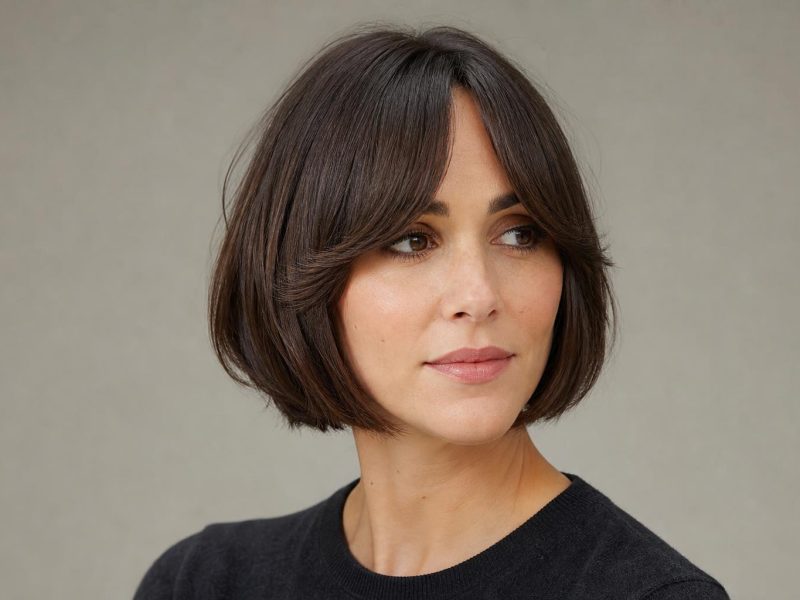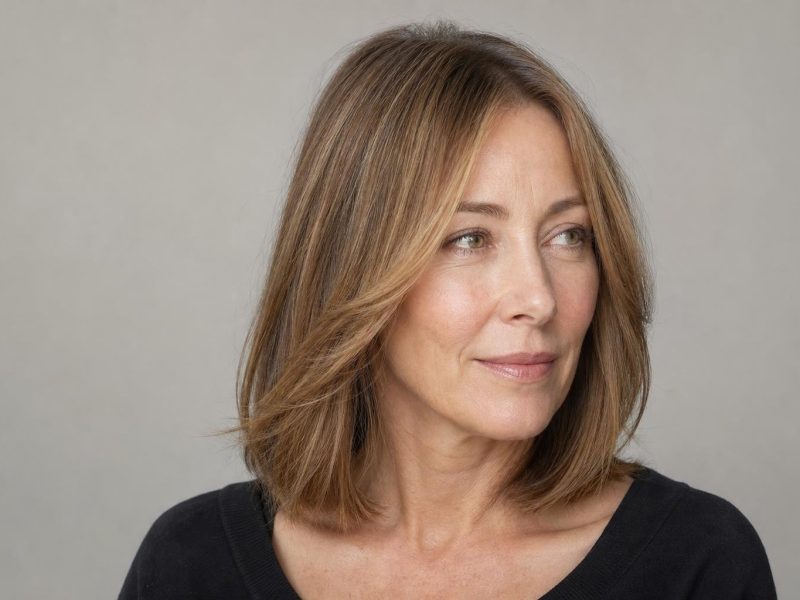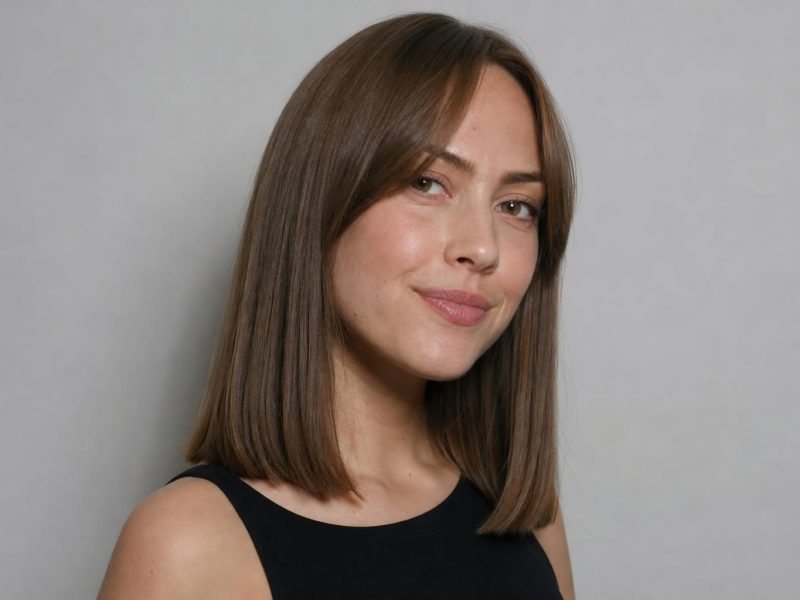

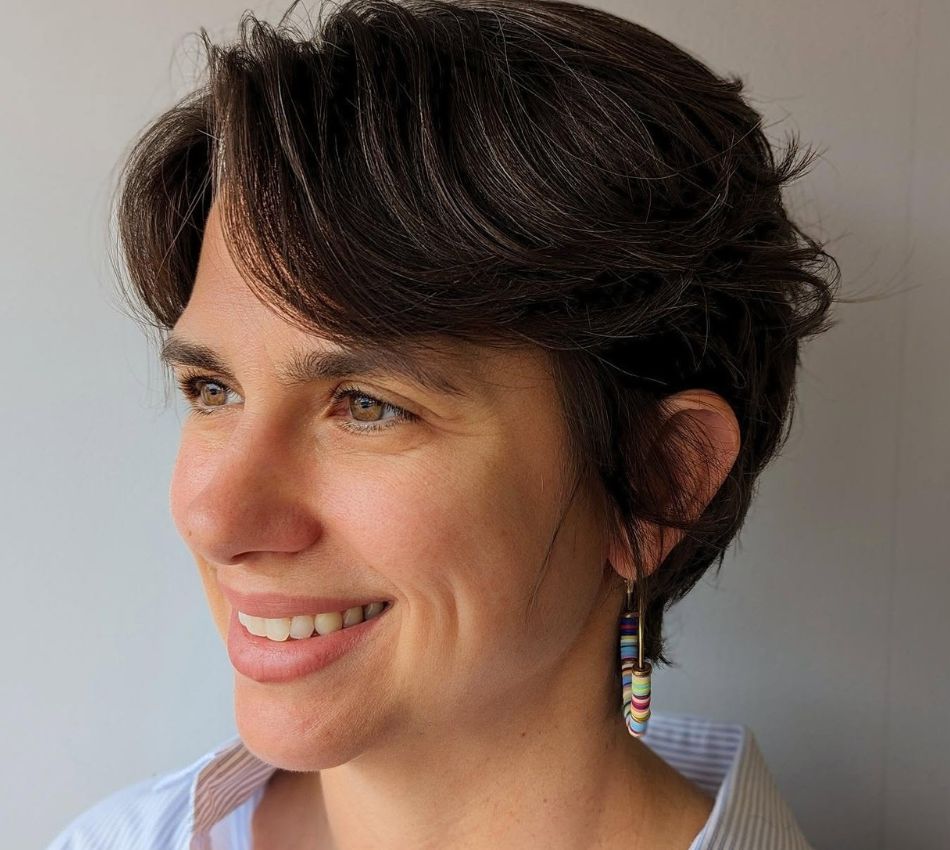
Thick hair and a pixie cut can work together when the layering, texturing, and shaping are built around your volume instead of against it.
Thick hair at pixie length needs a different cutting approach than fine or medium strands. Without strategic layering and weight removal, the result looks bulky, helmet-like, or impossible to style flat. The 25 pixie cuts in this collection are specifically selected for high-density hair , each one uses techniques like internal thinning, razored ends, undercuts, or graduated layering to make your volume an asset rather than a problem. If you have been eyeing pixie cuts for women but worried about your thick strands, this is your shortlist.
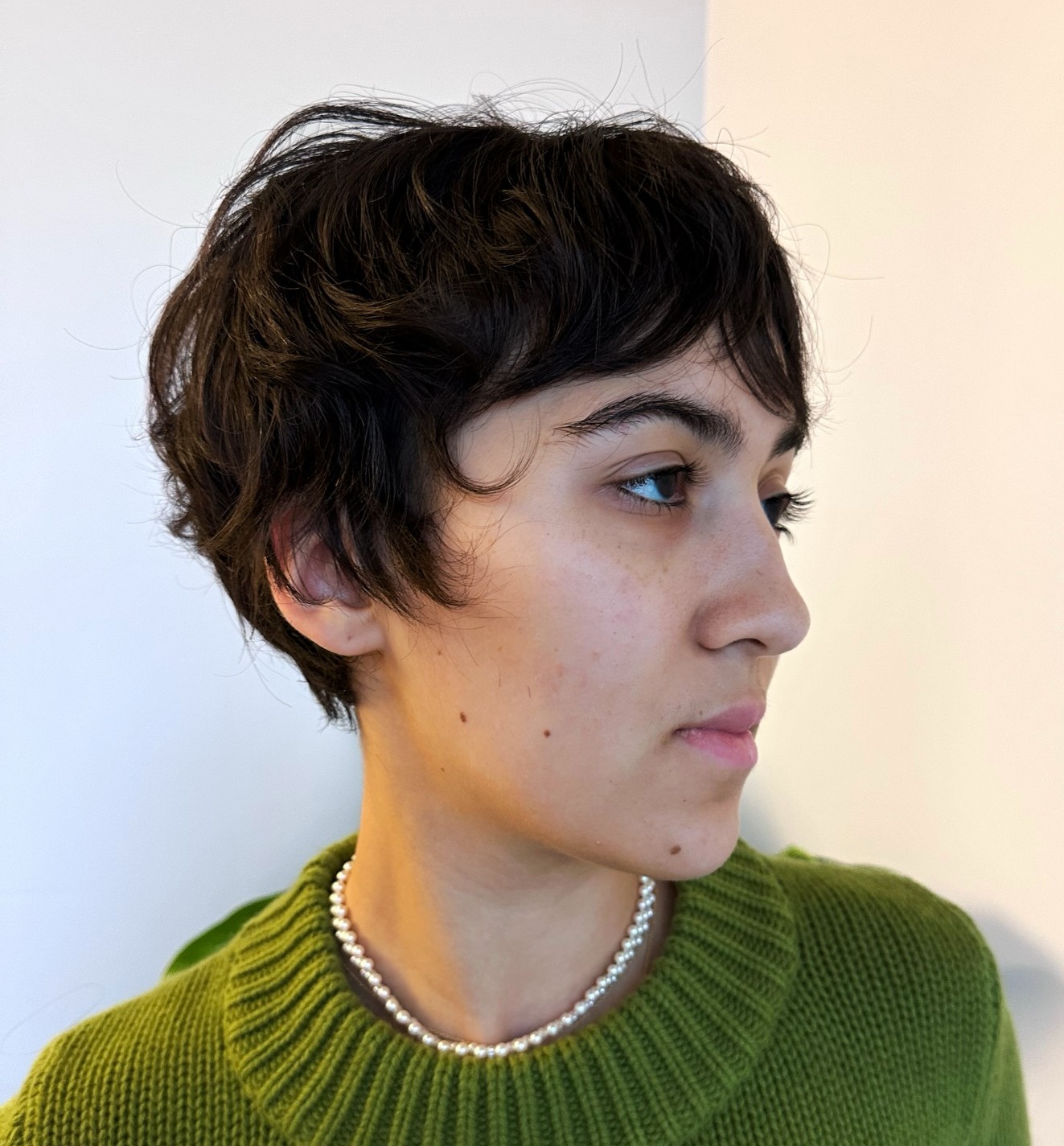
You will find options organized by cutting technique: layered shapes that reduce bulk at the right spots, textured crops that create movement, pixie bobs that ease the transition, edgy undercuts that eliminate weight on the sides, and face-flattering variations matched to specific face shapes. Every entry includes what to ask your stylist and what the daily styling commitment looks like.
Layered Pixie Cuts for Thick Hair
Layers are the primary tool for managing bulk at pixie length. The cuts in this section use internal thinning, point cutting, and graduated layering to remove weight from the mid-shaft and ends while keeping enough density at the crown for shape and volume. If your thick hair tends to push outward rather than lying where you want it, start here.
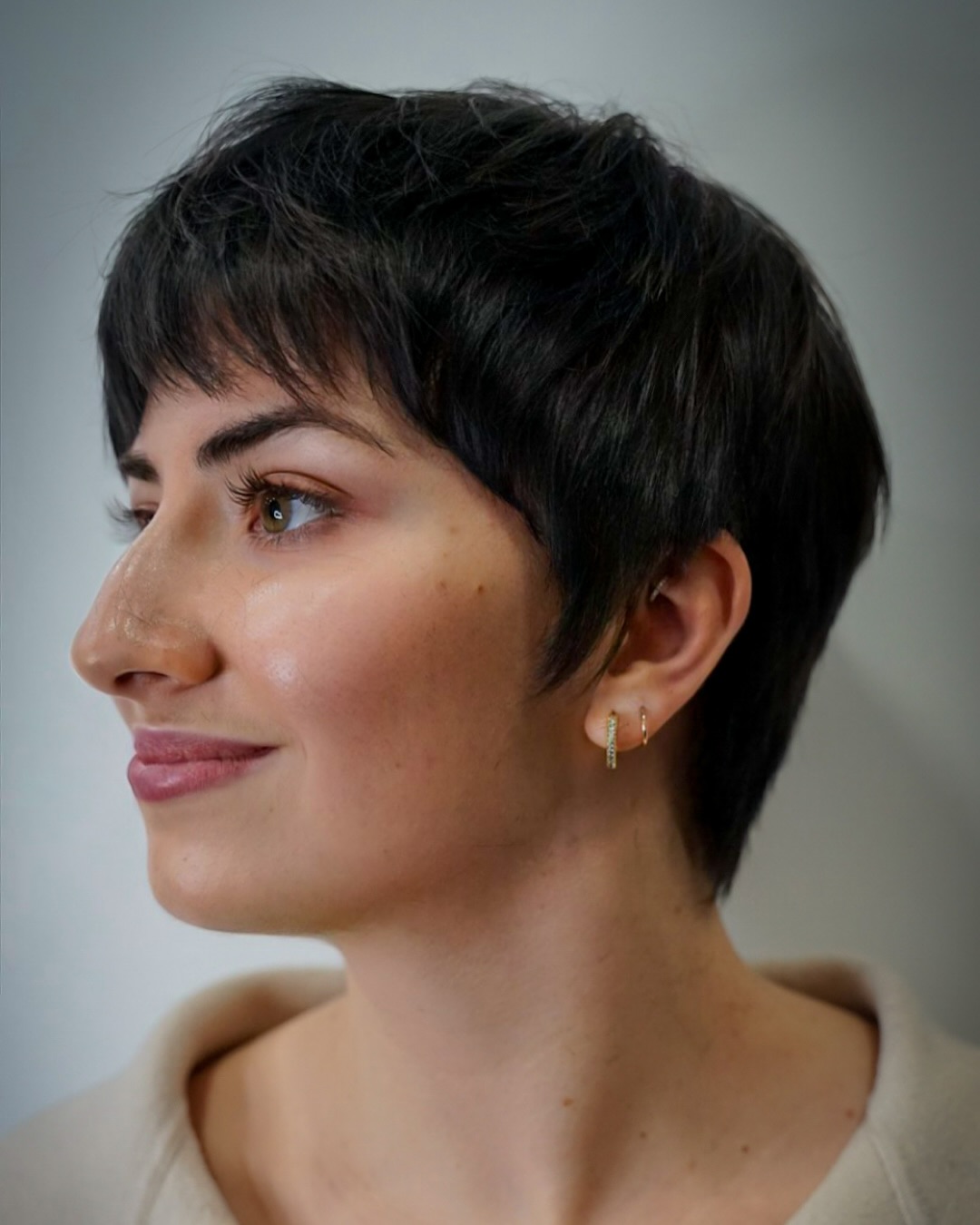
1. Internally Thinned Layered Pixie
Thinning shears remove weight from the mid-shaft down, keeping the outer layer smooth while the underneath feels lighter and moves more freely. The silhouette stays full at the crown and tapers at the sides, which gives thick hair a controlled shape without the helmet effect. Ask your stylist for internal thinning rather than surface thinning , the difference matters on thick hair.
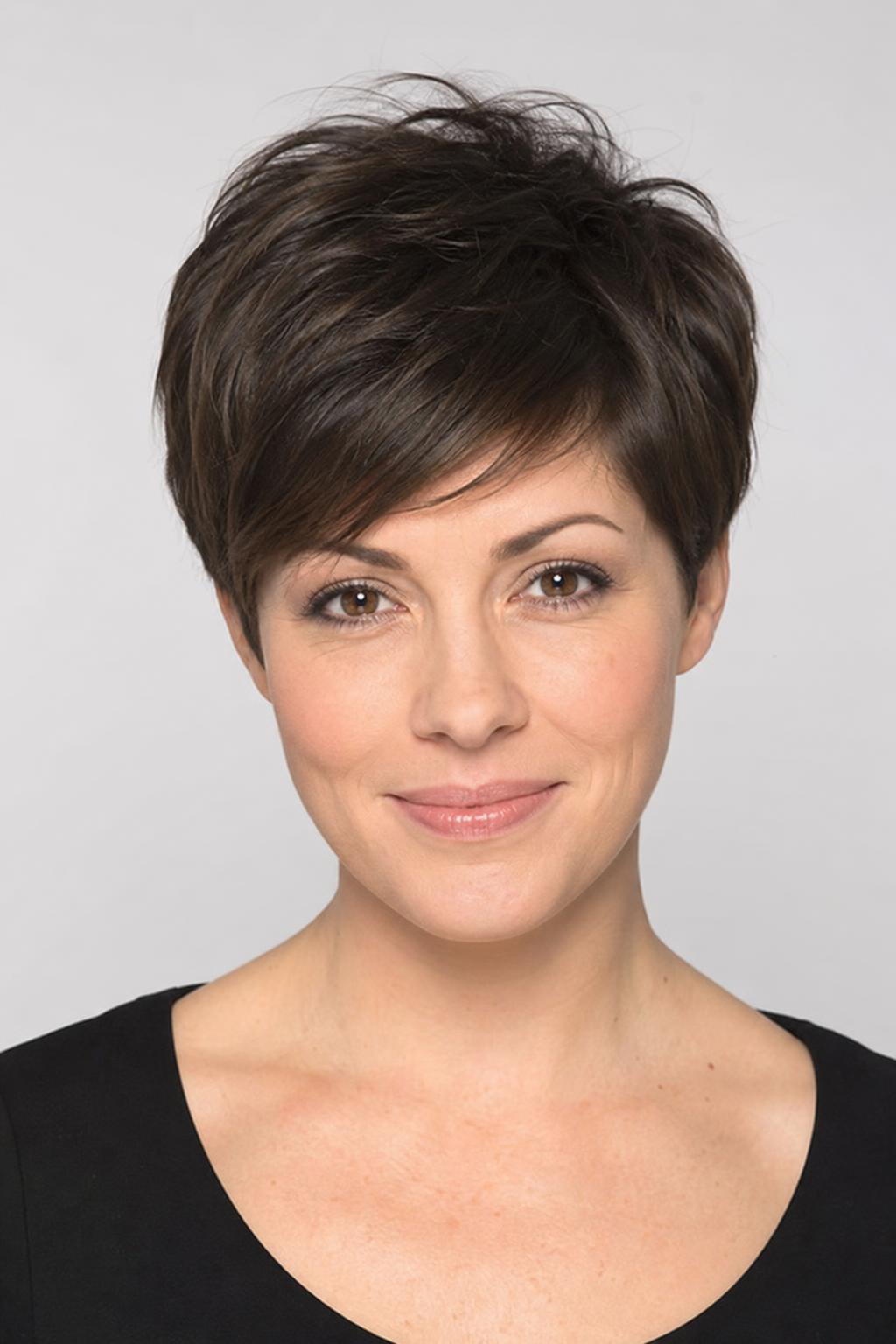
2. Point-Cut Crop with Tapered Nape
Point cutting the ends creates a softer, less blunt perimeter that lets thick hair fall with some irregularity instead of forming a solid block. The graduated taper at the nape reduces the bulk that tends to pile up at the back of the head on dense hair. Five minutes with a light wax and you are out the door.
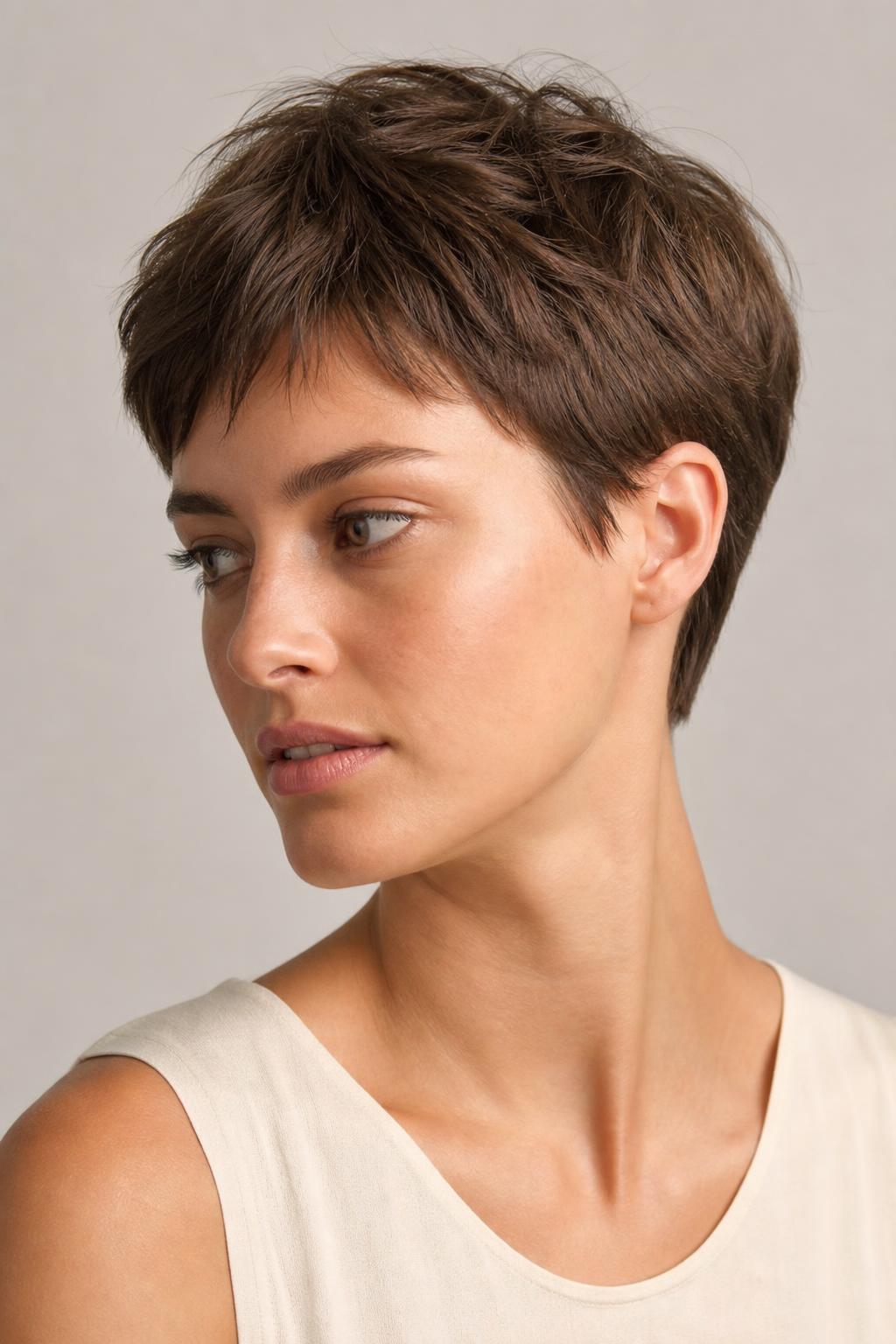
3. Long Layered Pixie with Side Sweep
Keeping 3-4 inches on top with graduated layers underneath gives thick hair room to move without losing its natural fullness. The side-swept fringe draws the eye diagonally across the face and works especially well on round and square face shapes where asymmetry creates a slimming effect. Blow-dry with a small round brush for lift, or finger-style with a texturizing paste for a more casual result.
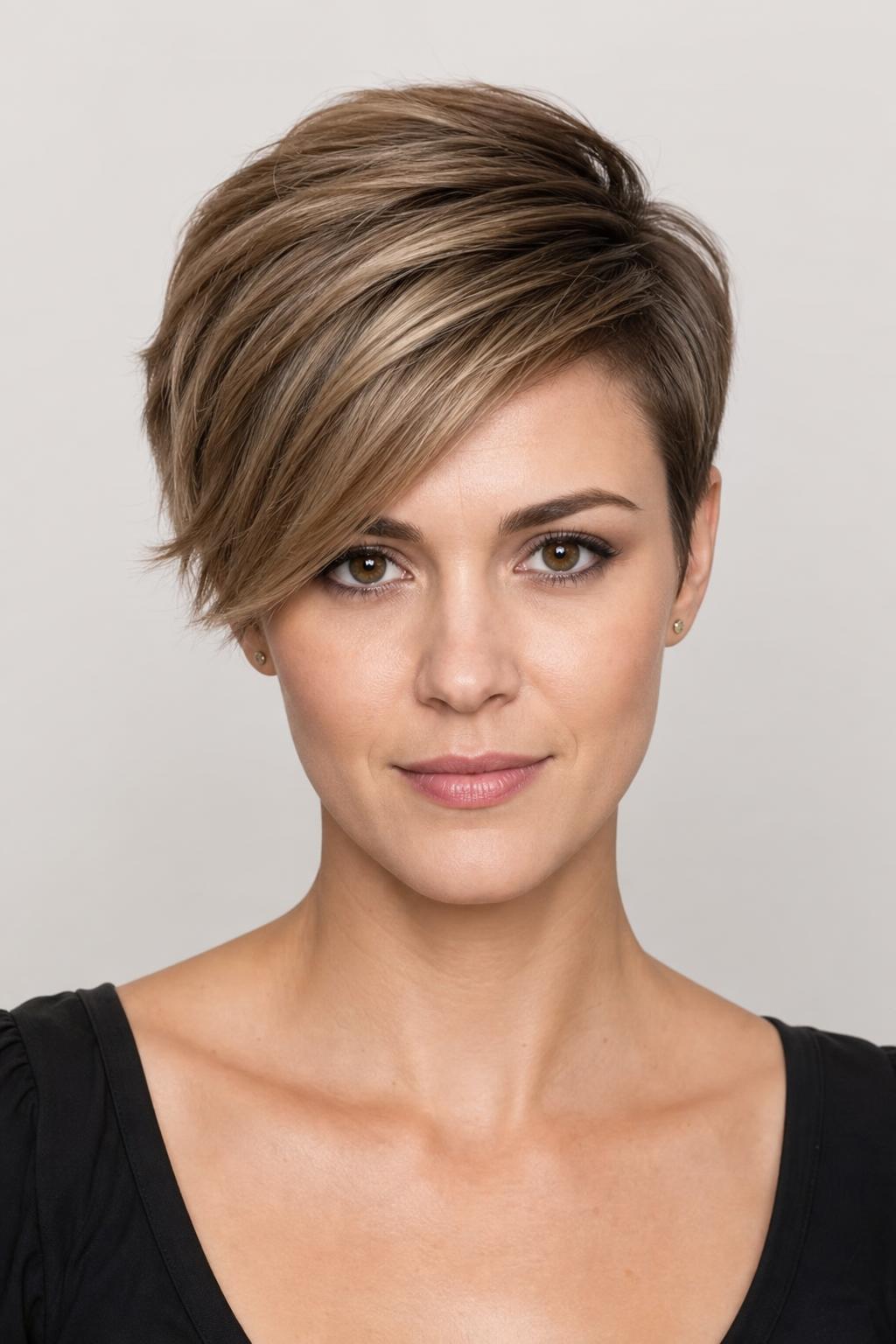
4. Graduated Pixie with Stacked Back
Shorter layers stacked over longer ones at the nape create built-in volume at the crown , something thick hair delivers naturally but often needs shaping to control. The graduation keeps the back from getting bulky, which is the spot where dense hair causes the most problems at pixie length. Trims every 4-5 weeks keep the stacking visible.
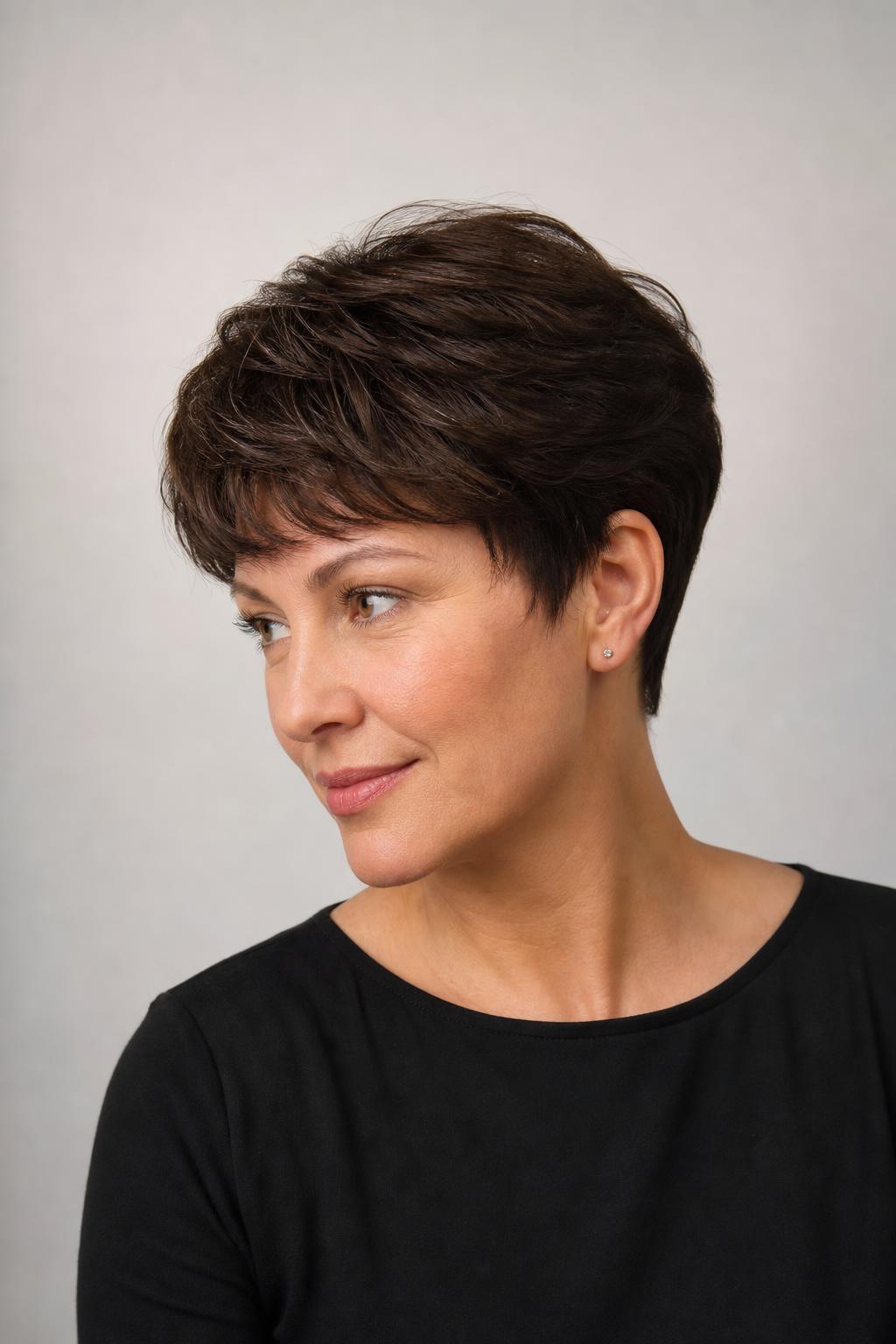
5. Feathered Pixie with Wispy Fringe
Feathered layers fan outward from the crown, creating a wing-like shape at the sides that softens the density of thick hair. The wispy fringe above the eyebrows keeps the front light and open. Heart-shaped faces benefit here because the width through the top balances a narrower chin. A volumizing mousse at the roots during blow-drying gives the feathered sections their signature lift.
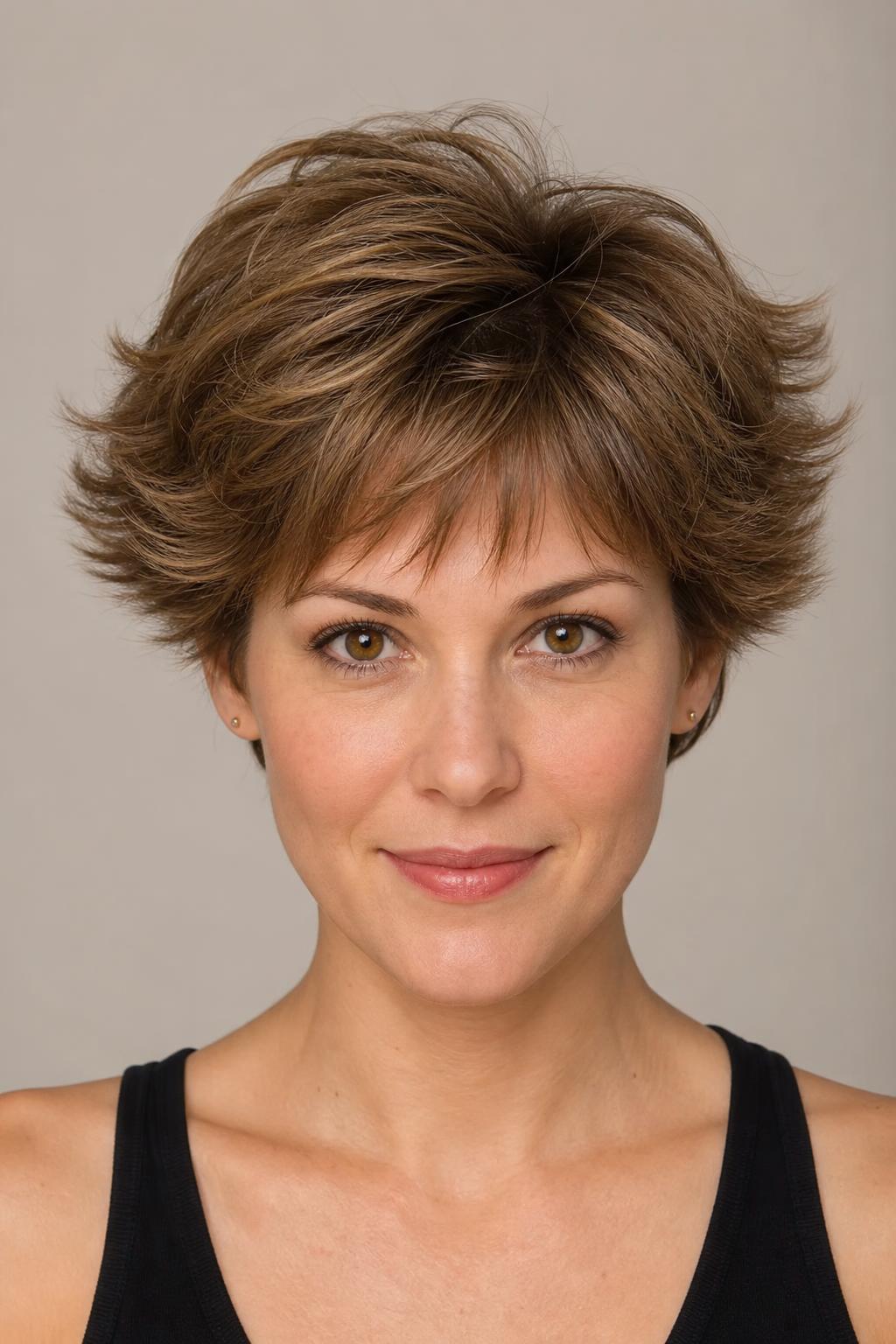
6. Razored Layered Pixie
A razor produces softer, more tapered ends than scissors, which translates to a pixie cut for thick hair that moves rather than sitting in a fixed shape. The trade-off is faster grow-out , razored cuts lose their definition sooner, so plan for trims every 3-4 weeks. Stylists often recommend this technique when thick hair also has a slight wave, because the tapered ends enhance the natural bend.
Textured and Choppy Pixie Cuts
Texture techniques , razoring, point cutting, slide cutting , turn thick hair’s natural density into visible movement and dimension. These cuts look deliberately rough and deconstructed, which works in your favor because the volume fills the shape rather than fighting it.
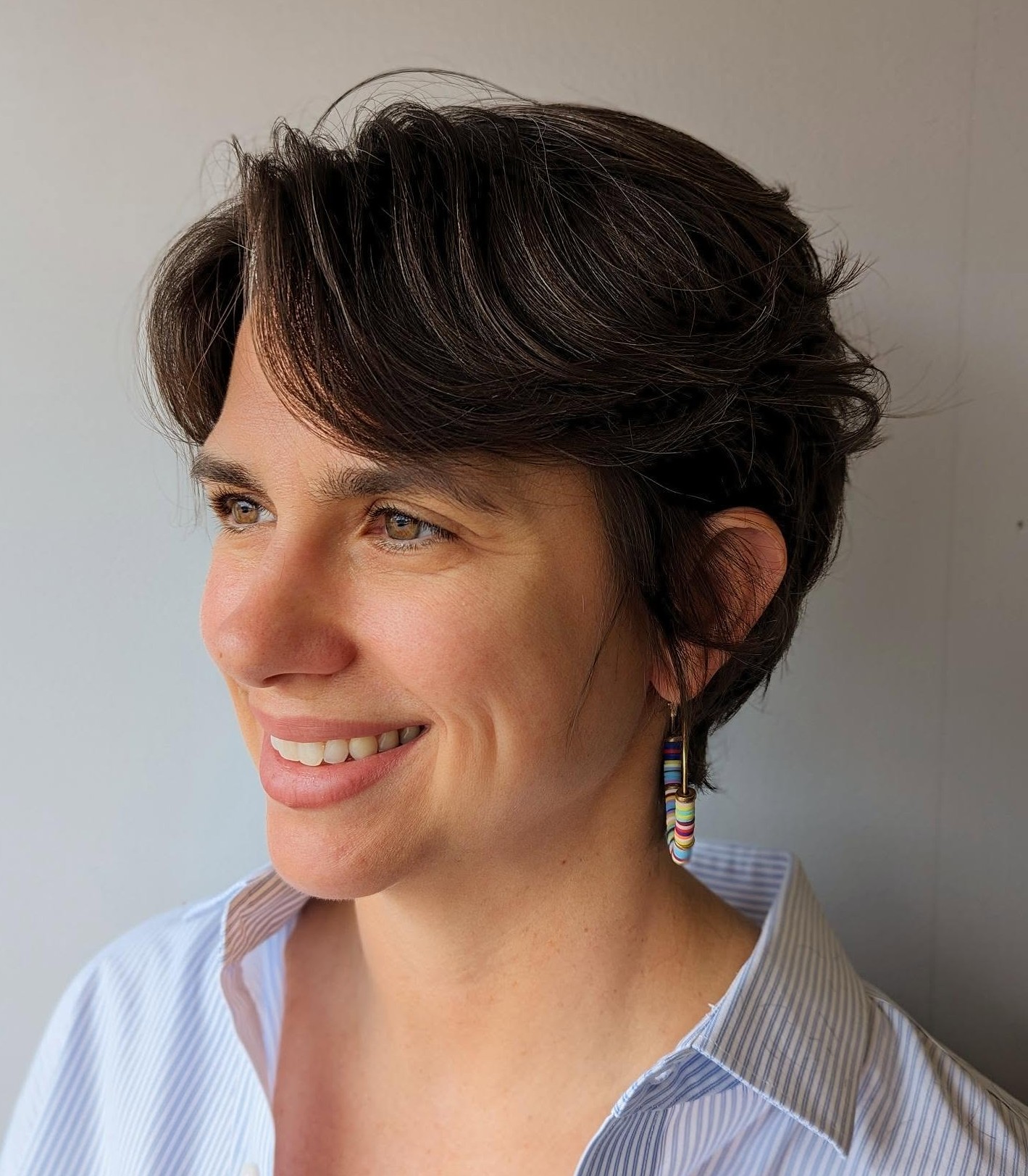
7. Choppy Deconstructed Pixie
Razored layers throughout create a deliberately rough texture that makes thick strands look lighter and more mobile. The weight concentrates at the crown while the sides and back stay close. Coarse or high-density hair gets the most dramatic result here because there is enough material for the choppy ends to catch light and create depth.
8. Piece-y Textured Pixie with Matte Finish
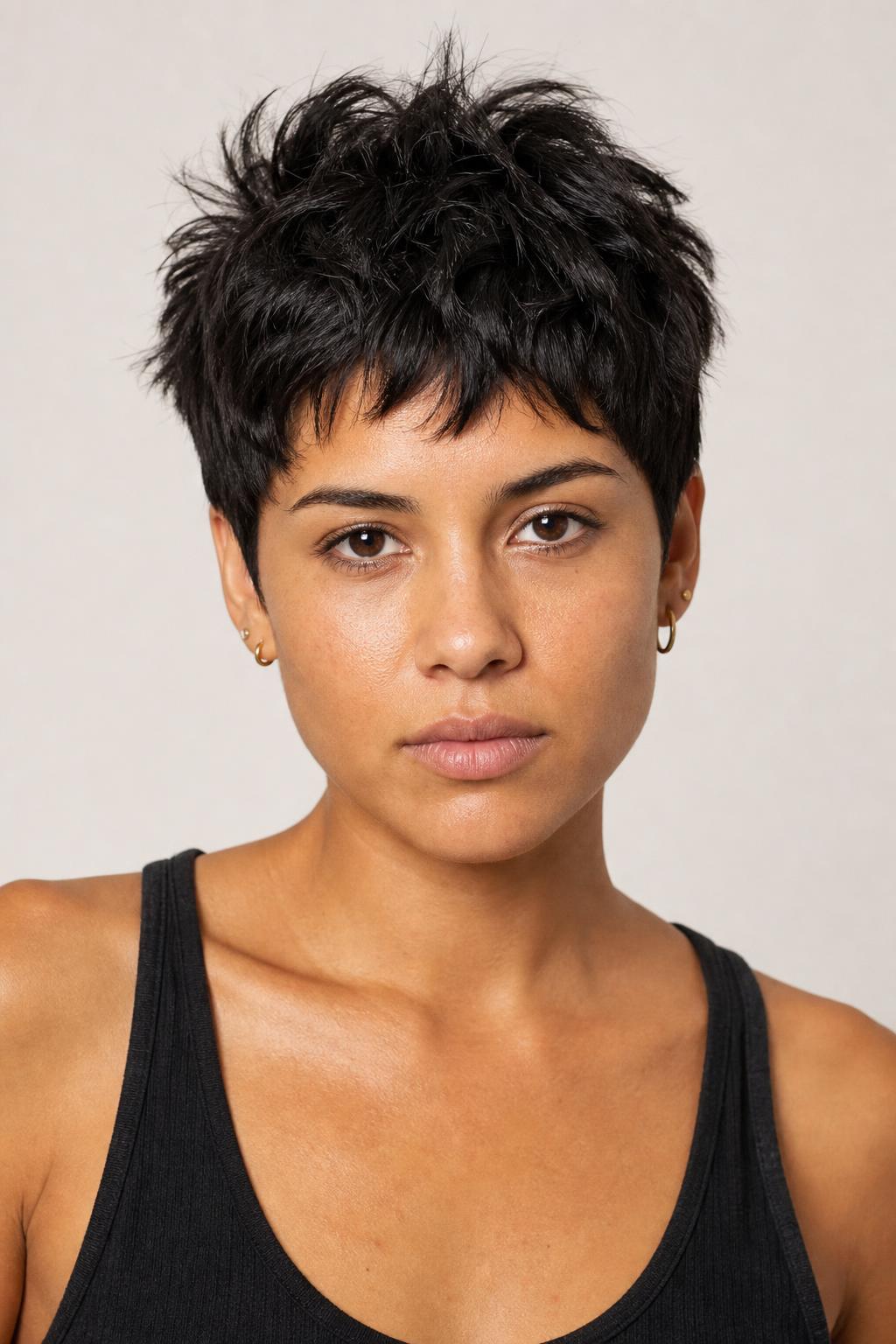
Individual sections cut at different lengths and styled to separate visibly give thick hair a dimensional, lived-in quality. Apply a matte clay to dry hair and twist pieces between your fingers. The intentional messiness means this cut looks better on day two or three , thick hair holds product longer than fine hair, which works to your advantage.
9. Tousled Bedhead Pixie
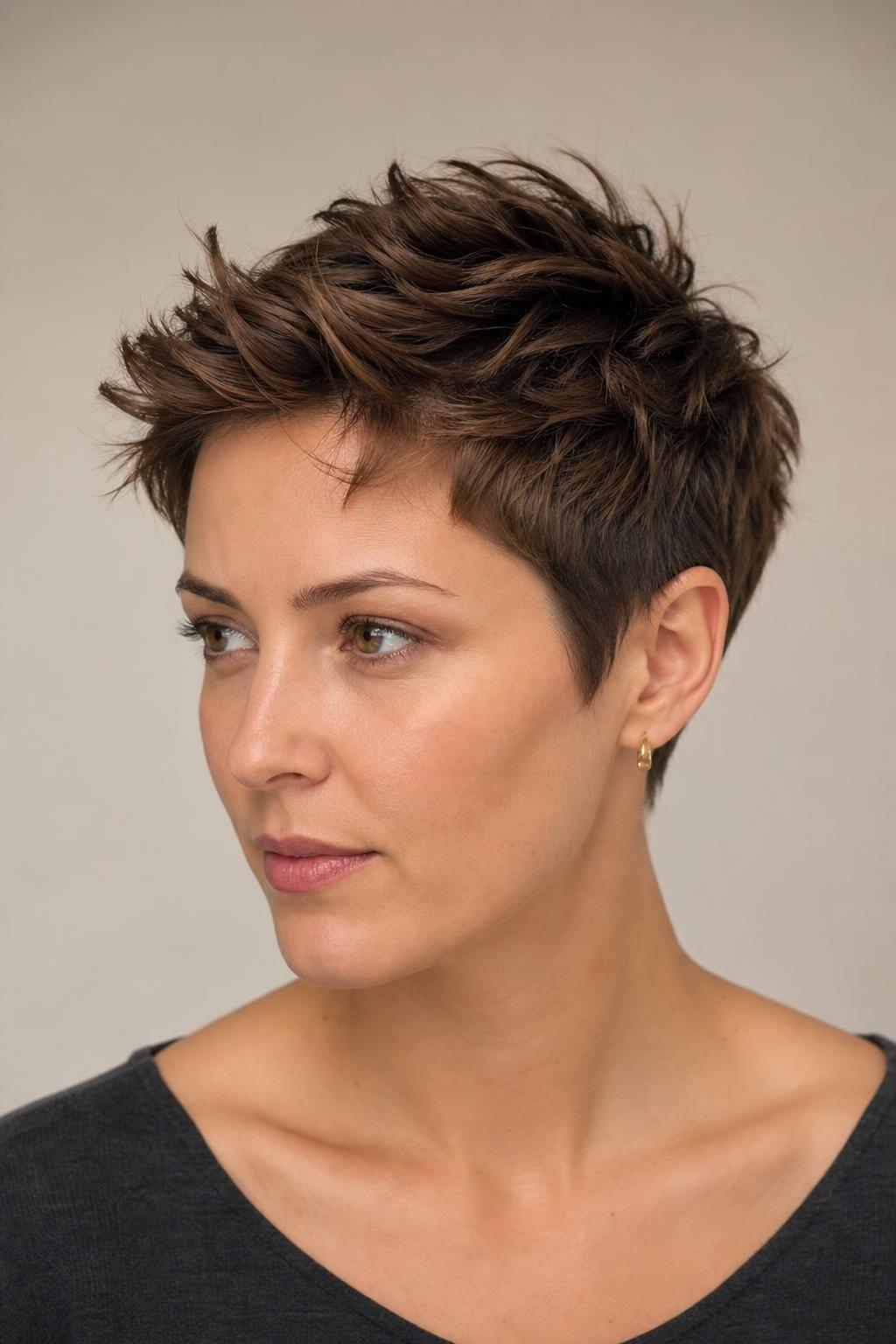
Scrunch a salt spray through towel-dried hair, shake it out, and leave it. The cut needs at least 2-3 inches on top so the texture has something to grab onto. A common mistake on thick hair is over-thinning the crown, which turns bedhead into flat-head. Tell your stylist you want density through the top with the lightness concentrated at the sides and back.
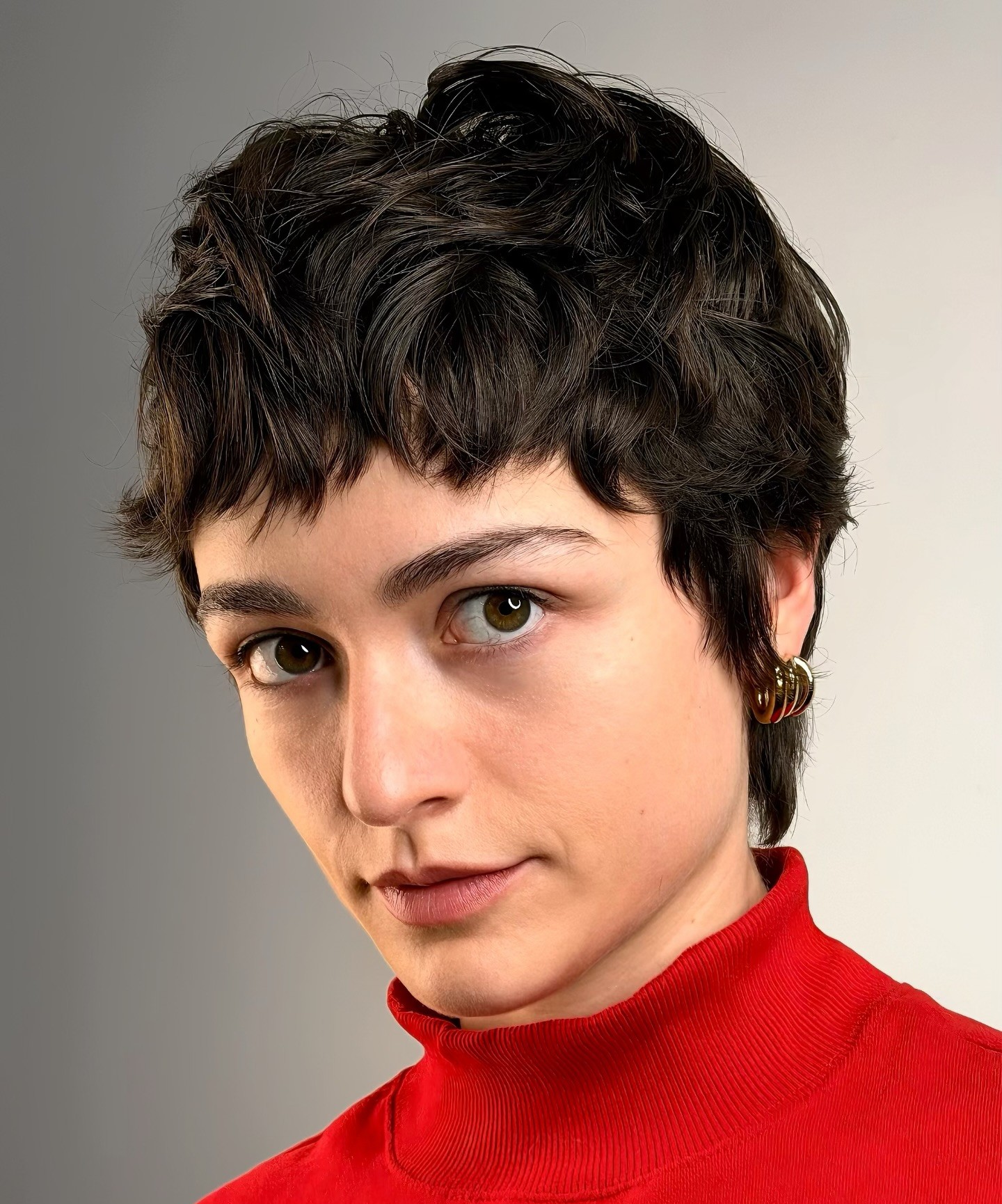
10. Shaggy Pixie with Curtain Bangs
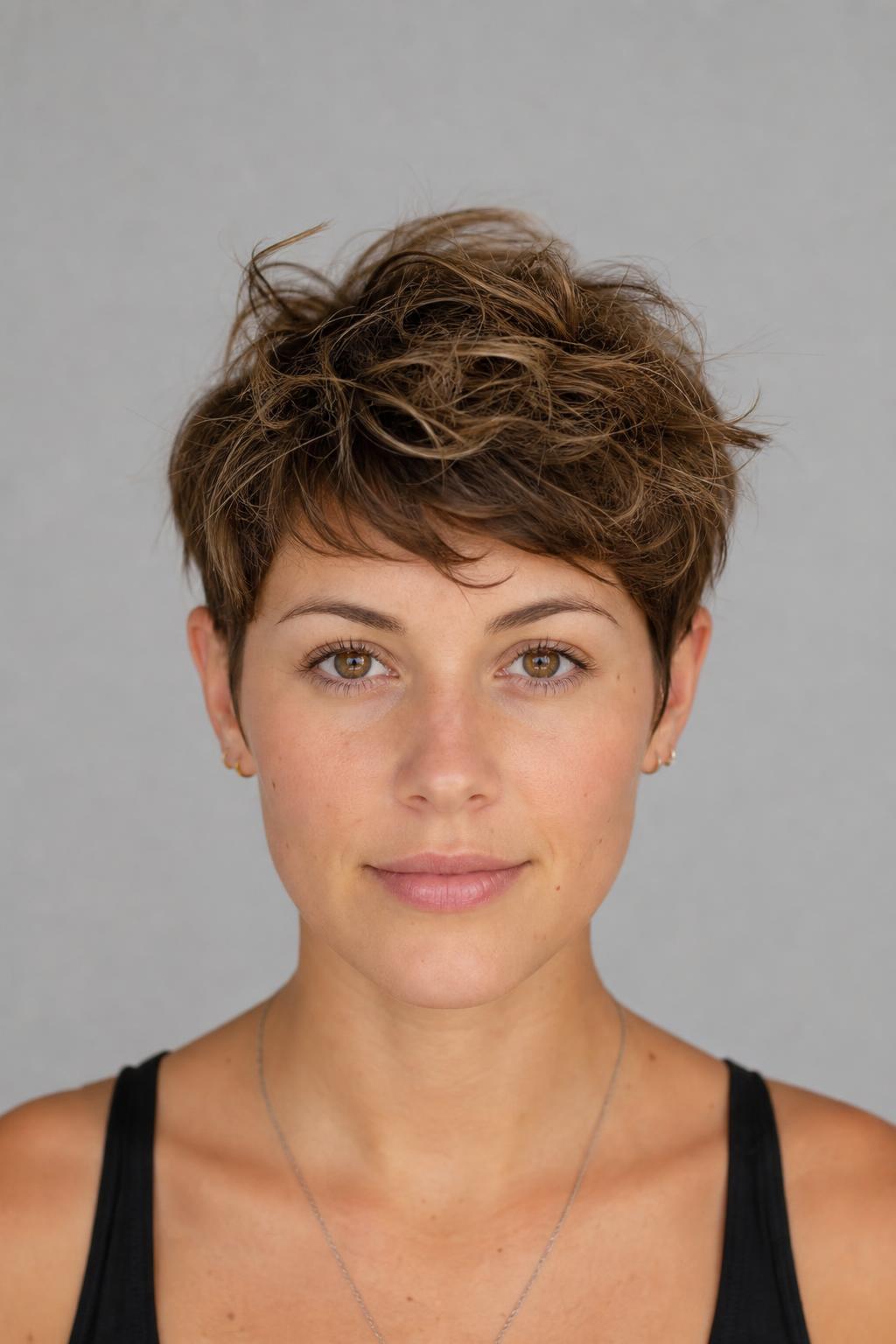
A hybrid between a pixie and a shag, with curtain bangs that split at the center and frame each side of the face. The back and sides stay short but not buzzed. Thick hair gives this cut natural body through the layers, so you can skip the volumizing products entirely. The grow-out is forgiving , it transitions into a short shag naturally over 8-10 weeks.
11. Disconnected Textured Pixie
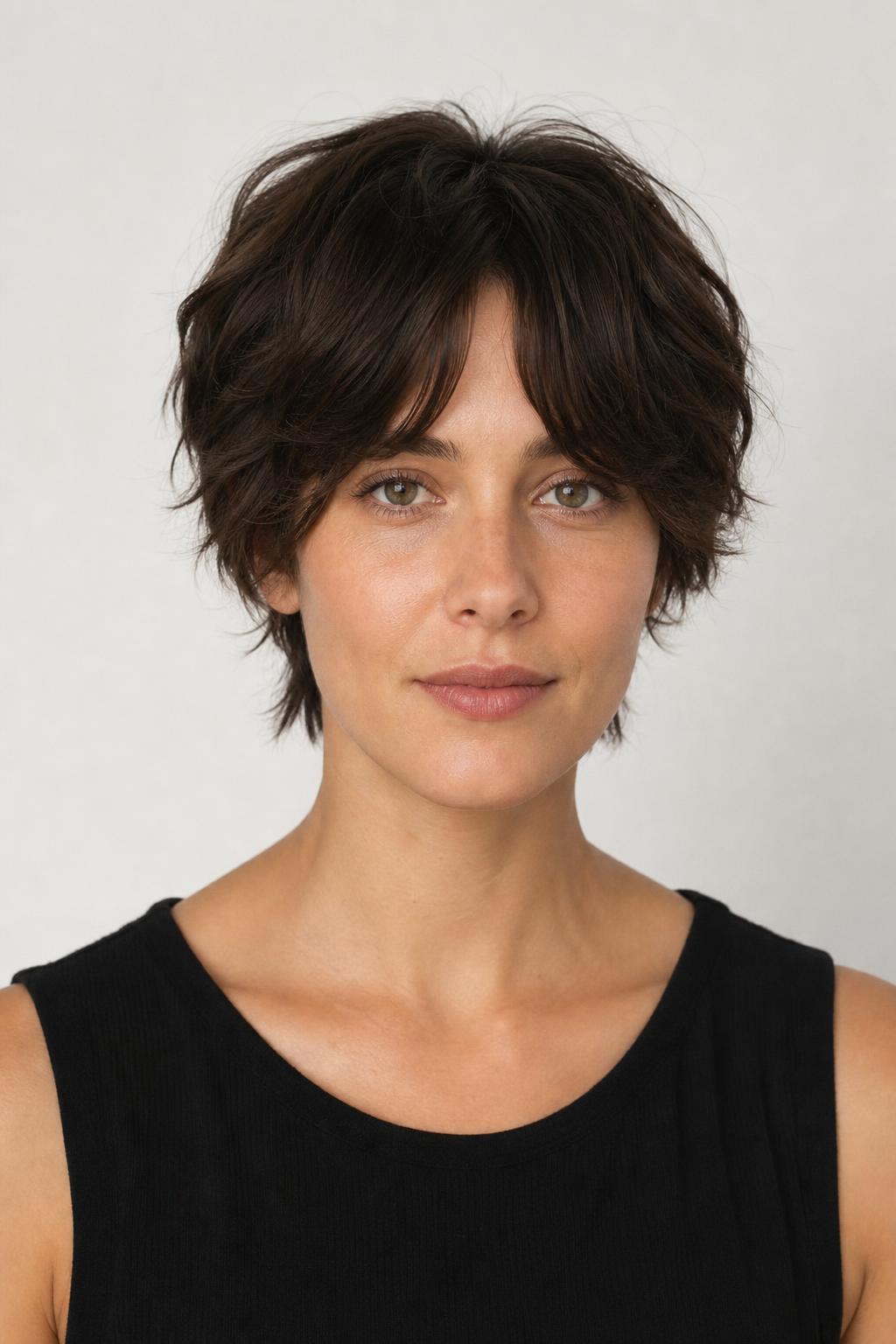
A deliberate contrast between very short sides and a longer, heavily textured top gives this cut a fashion-forward edge. On thick hair, the disconnection does double duty: it removes bulk at the sides entirely while letting the crown retain its natural fullness. Style the top forward or to the side depending on your face shape , square jawlines benefit from directing the length forward.
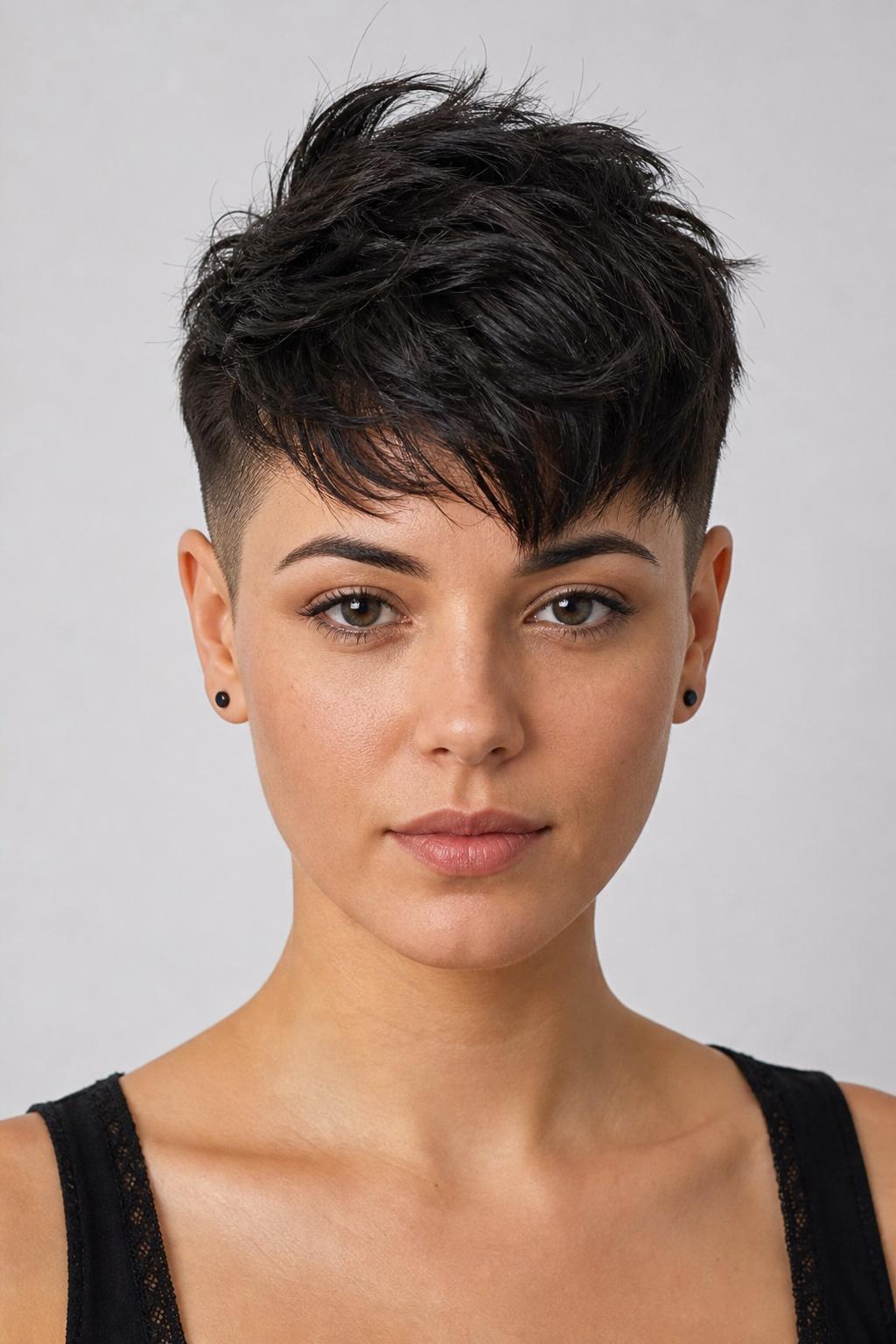
12. Spiky Textured Pixie
Spiked ends through the crown, achieved with a strong-hold fiber paste worked through dry hair in an upward motion. Thick hair has an advantage here , fine strands struggle to hold vertical texture, while dense hair maintains the spikes all day. Avoid gel; it dries hard and shiny. Fiber paste keeps the shape flexible and matte.
Pixie Bobs and Bixies for Thick Hair
The bixie , halfway between a pixie and a bob , gives thick-haired clients more coverage and an easier grow-out path. These sit between ear and jaw length with enough room for layers to manage density without feeling too exposed. A good entry point if you are cutting from a bob or lob and want to test shorter territory.
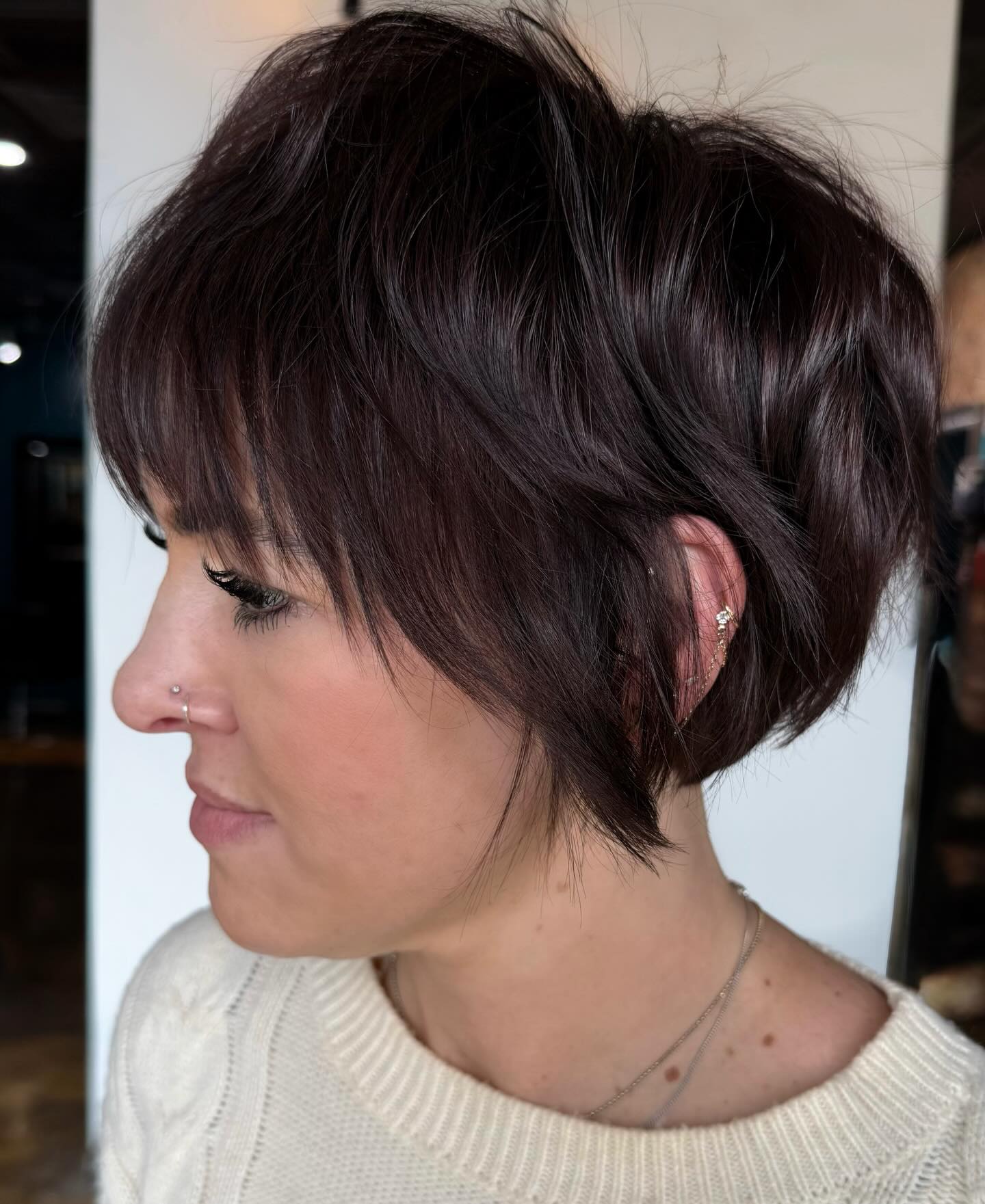
13. Classic Bixie with Textured Perimeter
Shorter than your jaw, longer than a traditional pixie, with a textured perimeter that prevents the blunt, heavy look thick hair defaults to at this length. The textured ends let the hair swing slightly and create an air of effortlessness. Stylists generally recommend the bixie as a first step for thick-haired clients nervous about committing to a full pixie.
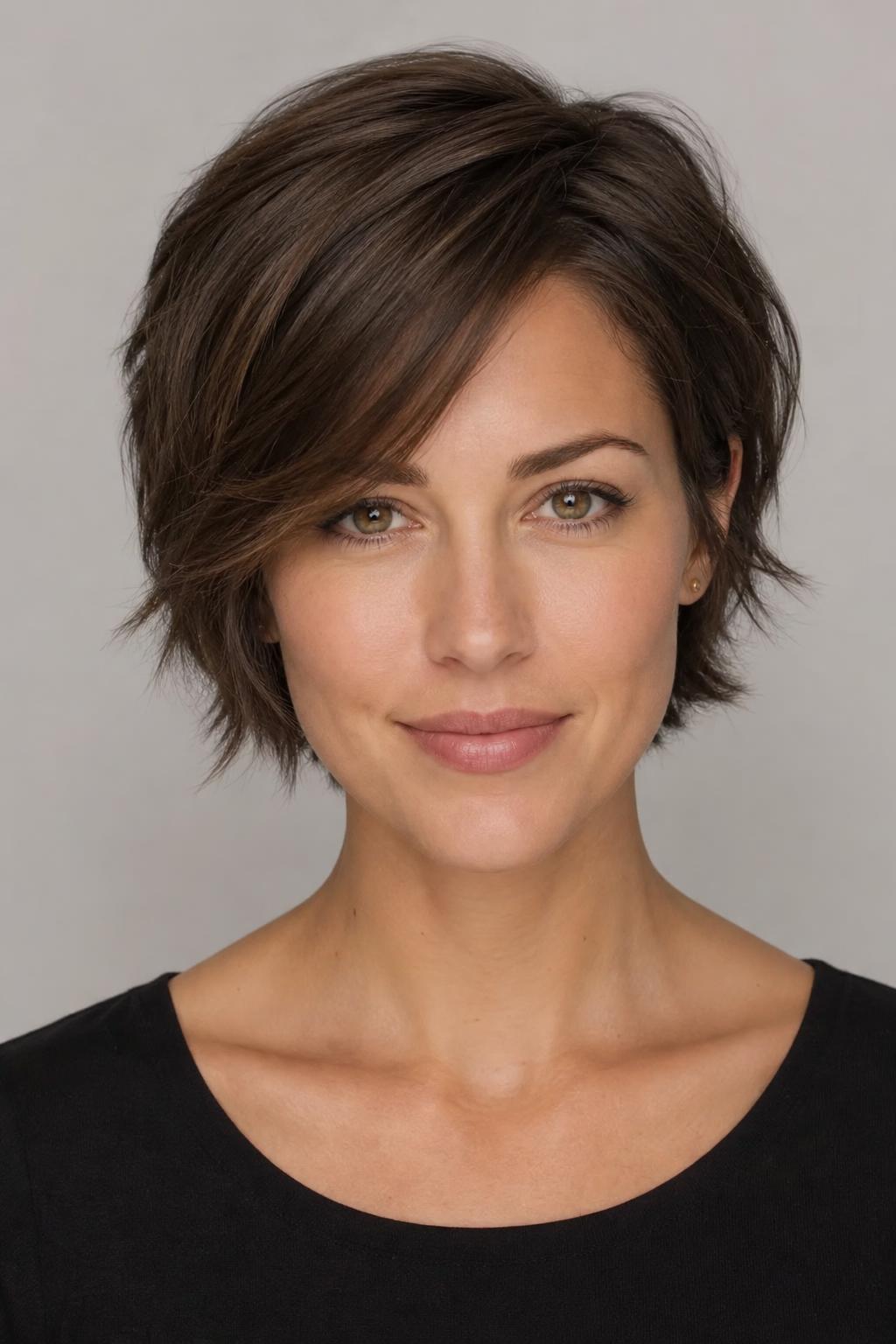
14. Stacked Bixie with Volume at Crown
Graduated layers at the back create a stacked effect that builds volume at the crown and occipital bone. On thick hair, this stacking happens naturally , your stylist is directing the volume rather than creating it from scratch. The front pieces hang just below the ear and can be tucked back or left to frame the face. Maintenance runs about 5-6 weeks between trims.
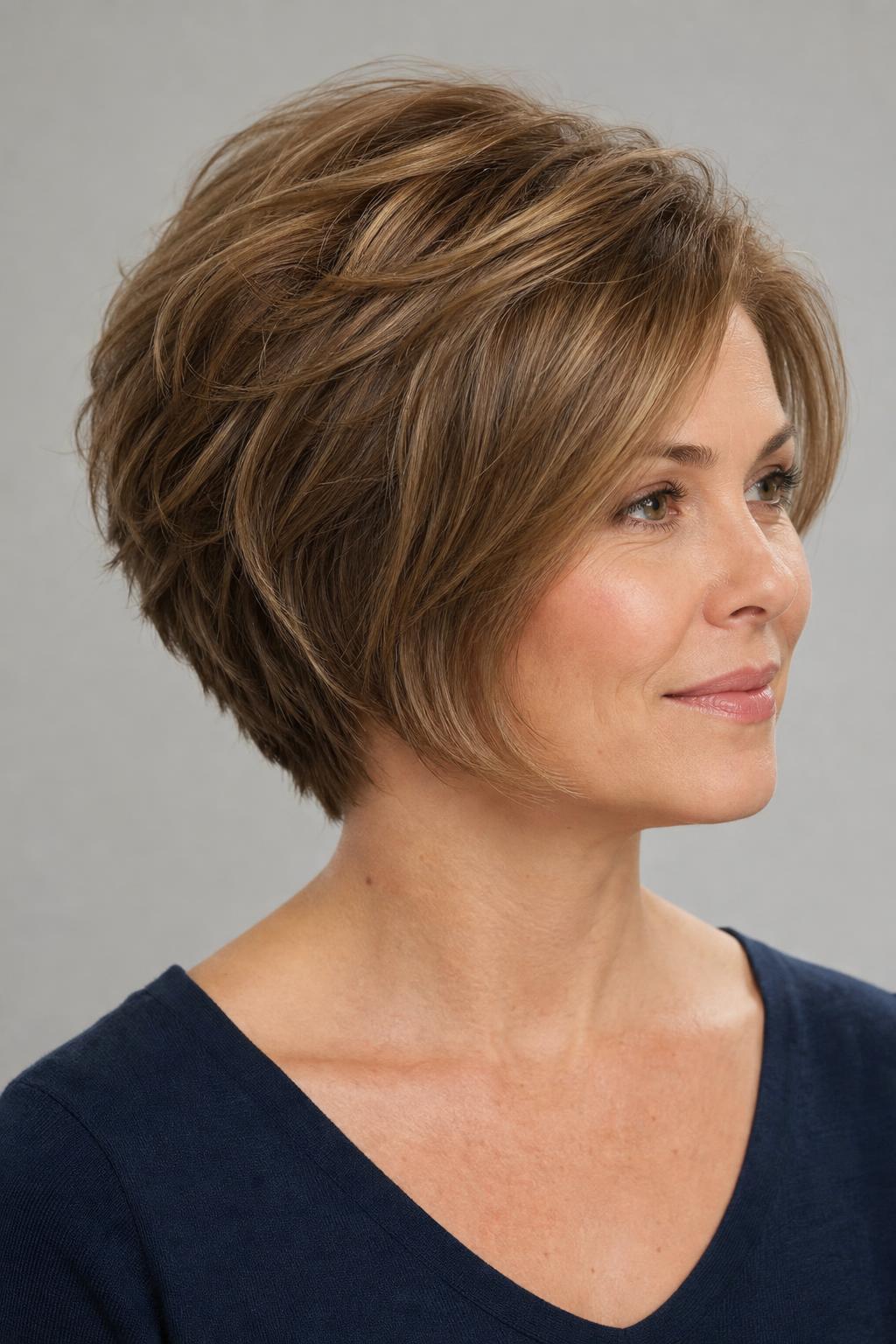
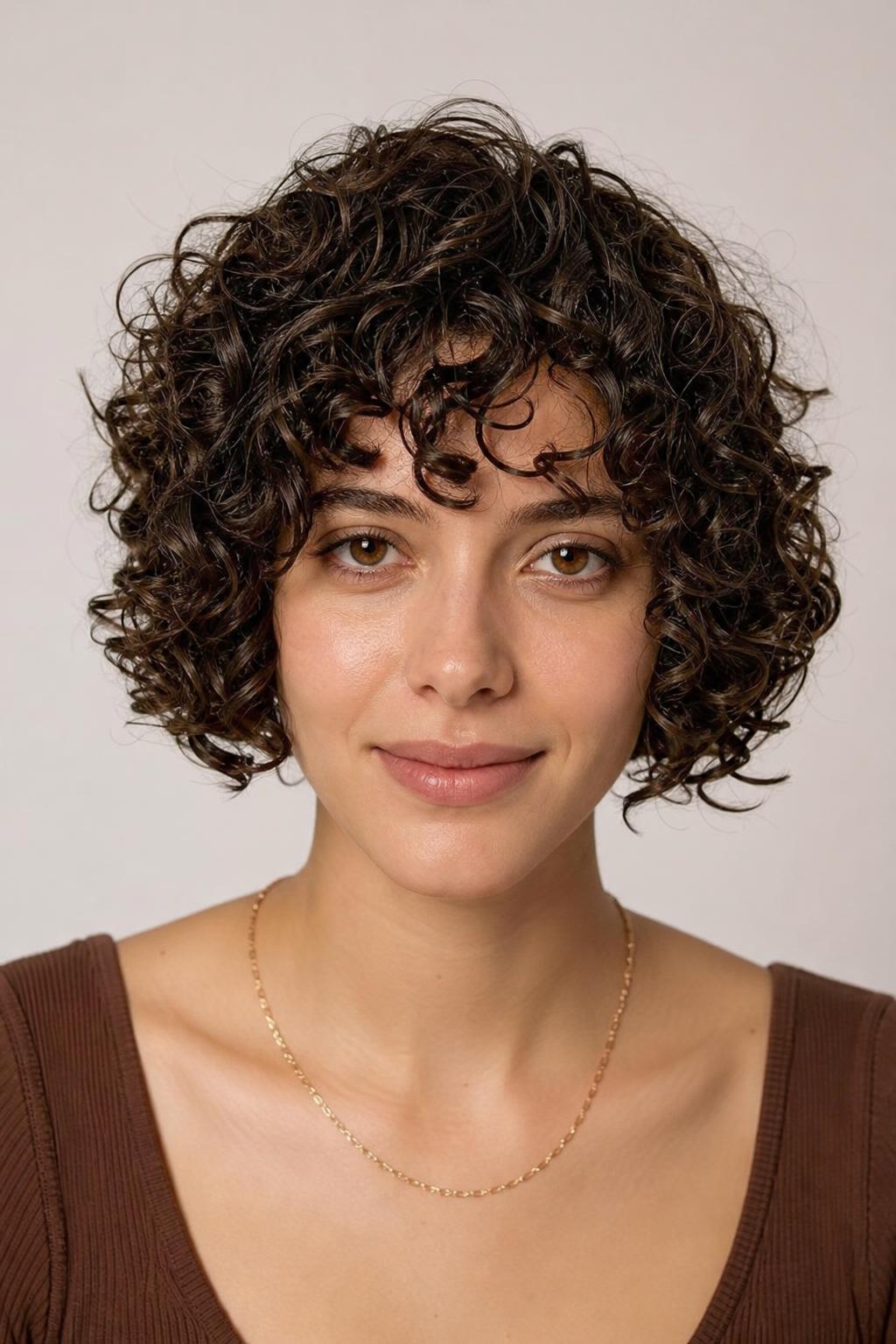
15. Curly Bixie for Thick Wavy Hair
Curly or wavy thick hair and bixie length are a strong match when the stylist cuts dry and respects the curl pattern. Wet cutting at this length almost always results in a too-short surprise once the curls spring up. The extra length lets ringlets frame the jawline without shrinkage anxiety, and a lightweight curl cream plus low-heat diffusing is all the styling you need.
16. Messy Bixie with Side Bangs
Chin-brushing length at the front, cropped at the back, with a long side bang you can tuck behind the ear or let fall across the forehead. The styling is intentionally imperfect , work a texturizing paste through the mid-lengths and scrunch. Round faces get visual elongation from the asymmetric length.
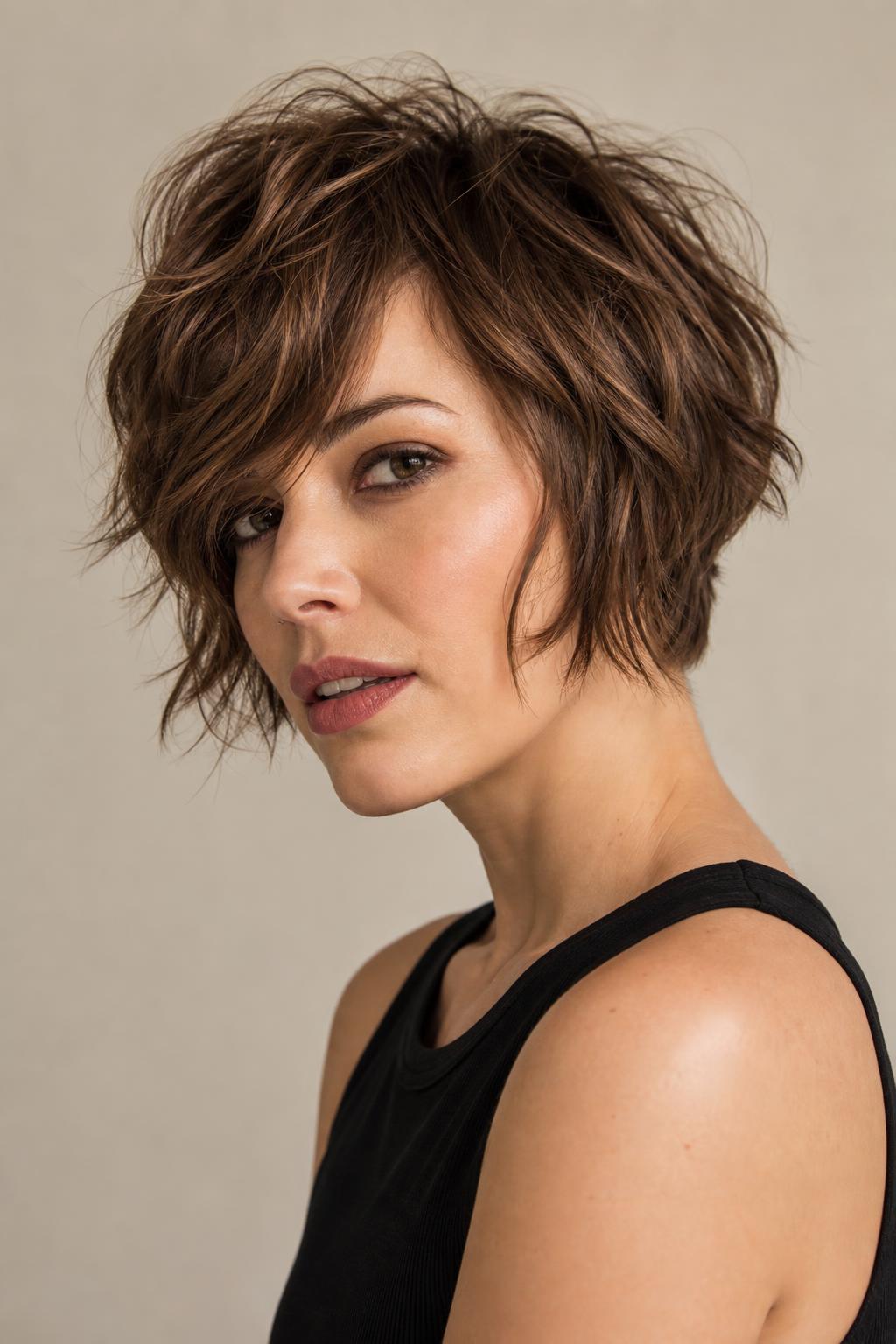
17. Layered Bixie with Undercut Detail
A hidden undercut at the nape removes a significant layer of bulk while the outer hair covers it completely when worn down. This gives thick-haired clients the best of both worlds , a manageable amount of hair to style on top, with the weight gone underneath. Pull the hair up or back, and the undercut becomes a visible design element.
Edgy and Bold Pixie Cuts for Thick Hair
Undercuts, fades, and shaved designs are practical solutions for thick hair, not just style choices. Removing hair at the sides and nape through clipper work instantly reduces the density you have to manage, and the contrast with longer textured hair on top creates impact that draws attention for the right reasons.
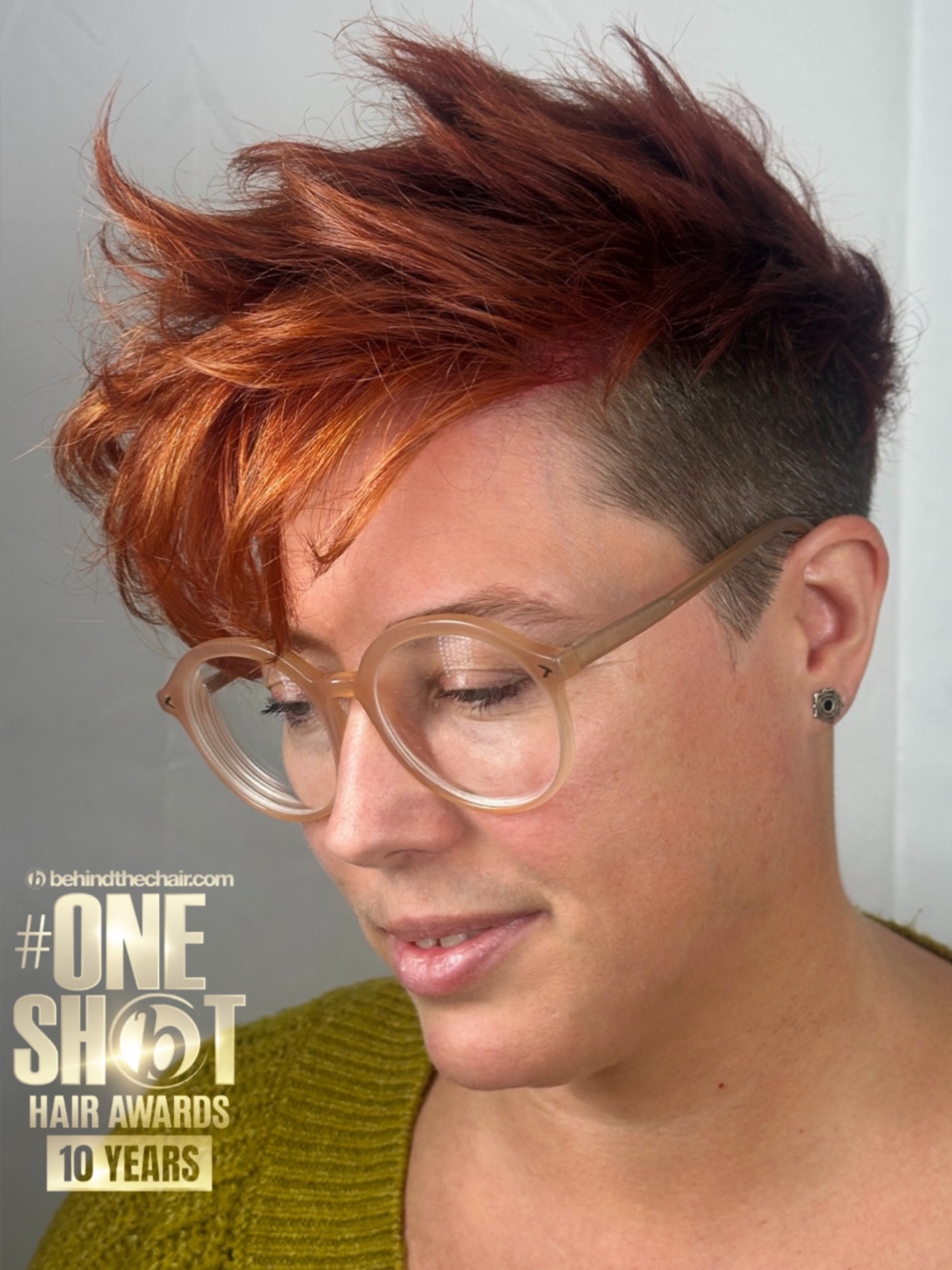
18. Undercut Pixie with Long Textured Top
Buzzed sides and back with 3-4 inches of textured length on top. On thick hair, the undercut is functional , it removes the bulk that sits heaviest at the sides and nape, making the remaining hair dramatically easier to manage. Hair down, it reads as a standard pixie; pull it back, and the shaved section is visible. The undercut needs a clipper touch-up every 2-3 weeks.
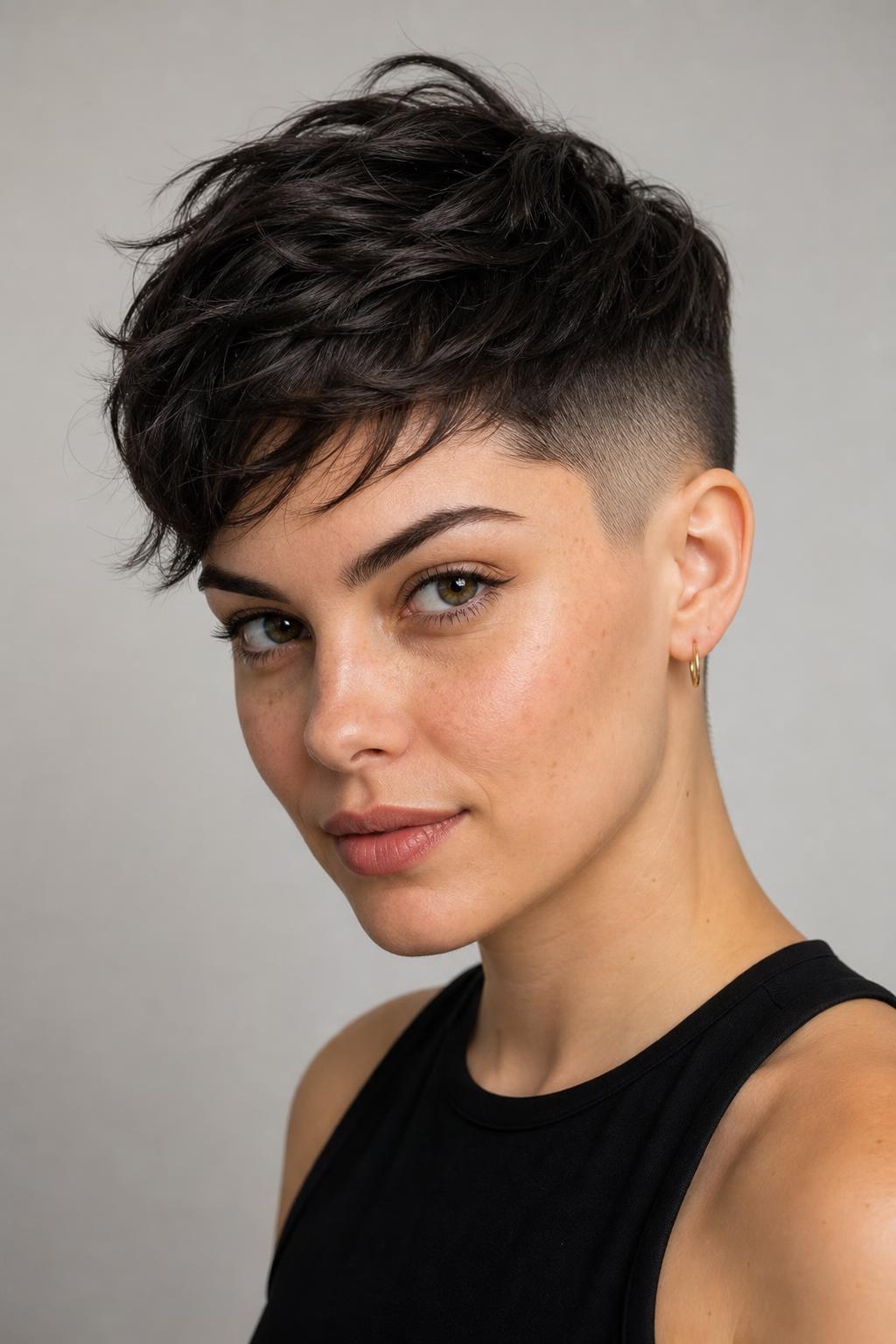
19. Faded Pixie with Tapered Sides
A skin fade at the temples transitions into longer hair at the crown, borrowing clean geometric lines from barbershop culture. On thick hair, the fade eliminates the puffiness that often develops at the temples within a week of a standard cut. Ask for a low or mid fade , a high fade reads too severe on most face shapes.
20. Mohawk-Inspired Pixie
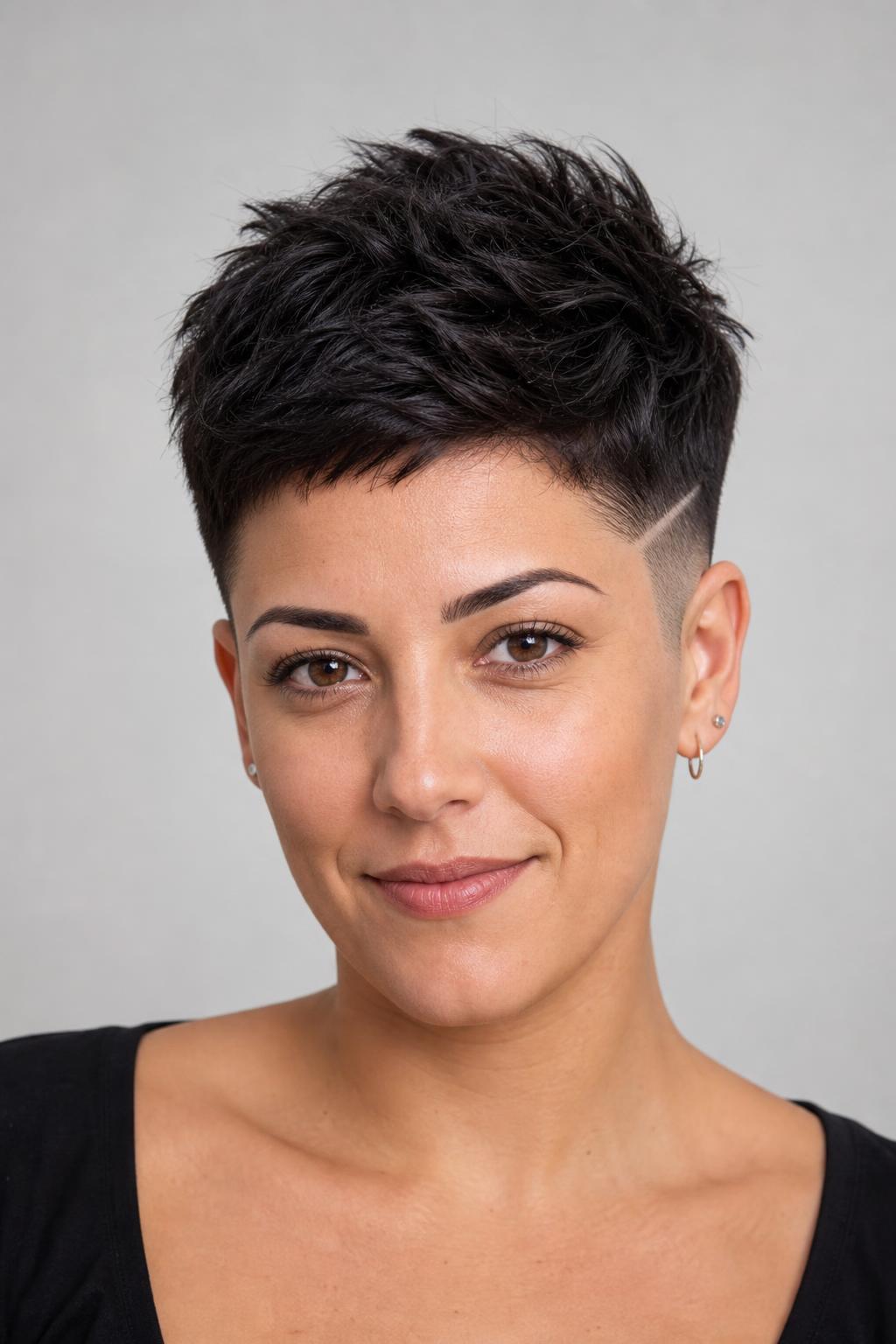
Closely cropped sides with exaggerated height and texture through a central strip from forehead to crown. Thick hair has a natural advantage here , fine strands struggle to maintain vertical volume, while dense hair holds the height with just a strong-hold mousse and upward blow-drying. Wearable in professional settings because the sides are faded, not shaved to skin.
21. Asymmetrical Pixie with Shaved Side
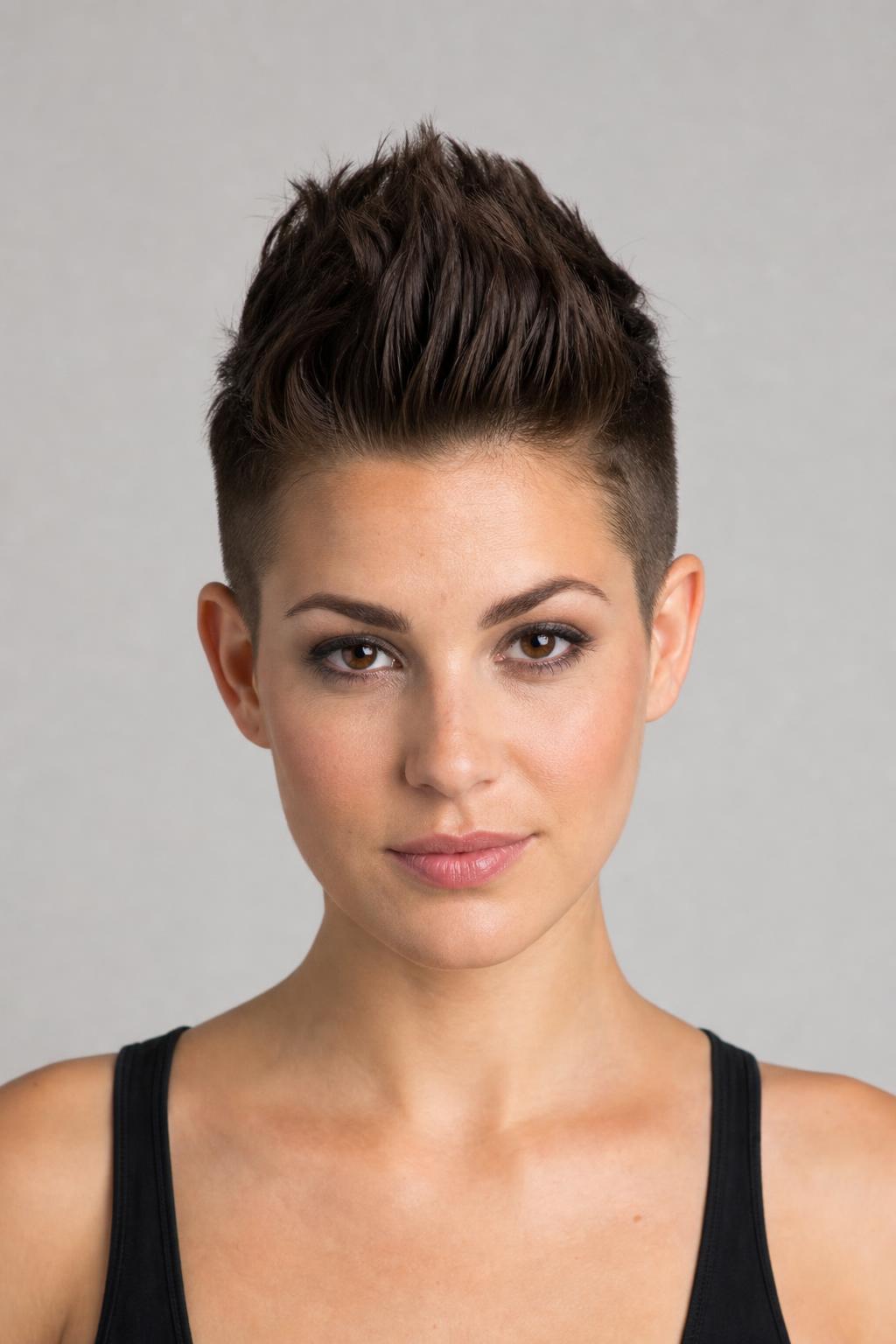
One side cropped close or shaved, the other left longer with textured layers. The asymmetry creates a bold diagonal line across the face and removes weight from one side entirely, cutting your thick-hair styling workload nearly in half. Oblong and rectangular faces benefit from the horizontal visual weight the asymmetry provides.
Face-Flattering Pixie Cuts for Thick Hair
Thick hair adds natural volume to any pixie, which means face shape considerations shift slightly compared to fine-haired clients. You already have fullness , the question is where to direct it and where to remove it to complement your proportions.
22. Pixie for Round Faces with Thick Hair
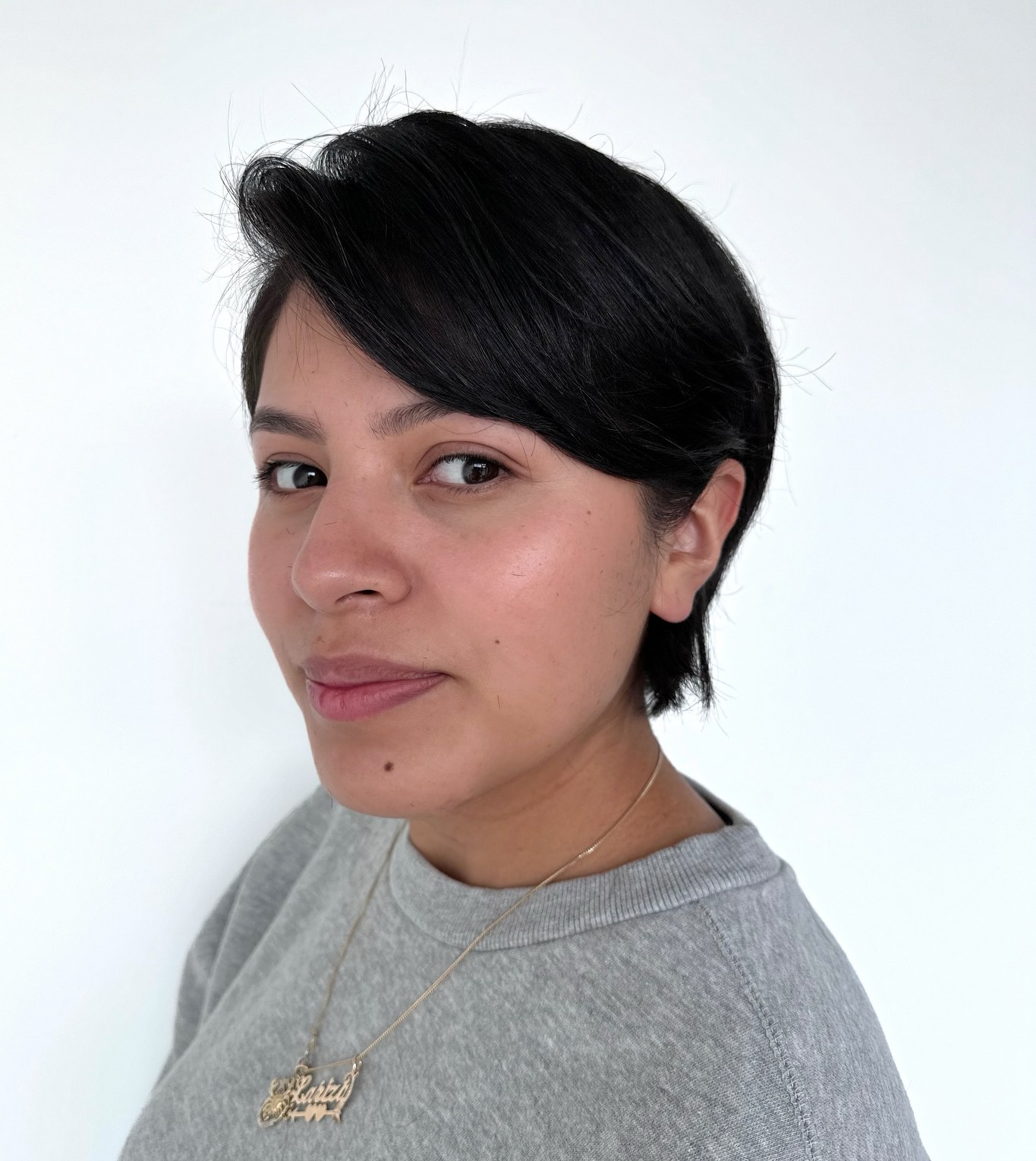
Volume at the crown and closely tapered sides create vertical lines that counteract roundness. Thick hair gives you the crown height automatically, so your stylist’s job is mostly about keeping the sides flat and structured. A side part is almost always more flattering than a center part here because it introduces asymmetry that breaks up the circular shape.

23. Pixie for Square Faces with Thick Hair
Wispy, textured layers soften a strong jawline without hiding it. On thick hair, this means razored or point-cut ends rather than blunt lines , blunt geometric cuts on dense hair mirror the angular bone structure and can look severe. A side fringe that grazes the cheekbone introduces a curve that offsets the straight jaw, and the thick hair’s natural body fills out the textured layers without product.
24. Pixie for Heart-Shaped Faces with Thick Hair
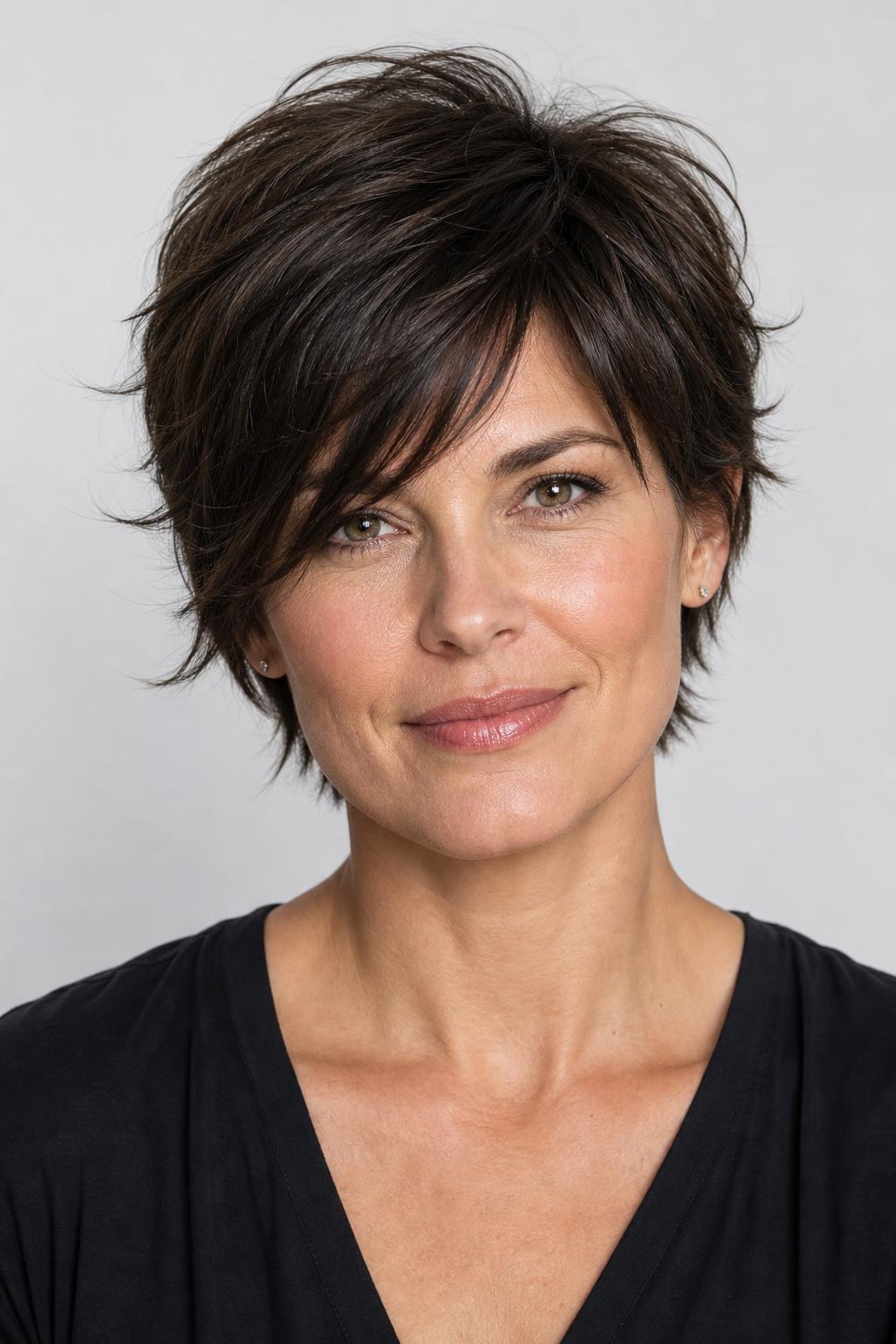
A wider forehead and narrower chin mean the goal is to add visual weight below the cheekbones while keeping the top relatively close. On thick hair, keep the crown layers shorter than you might on fine hair , the density will still create enough volume. Side-swept bangs draw the eye away from forehead width, and a little extra length at the sideburns balances the bottom.
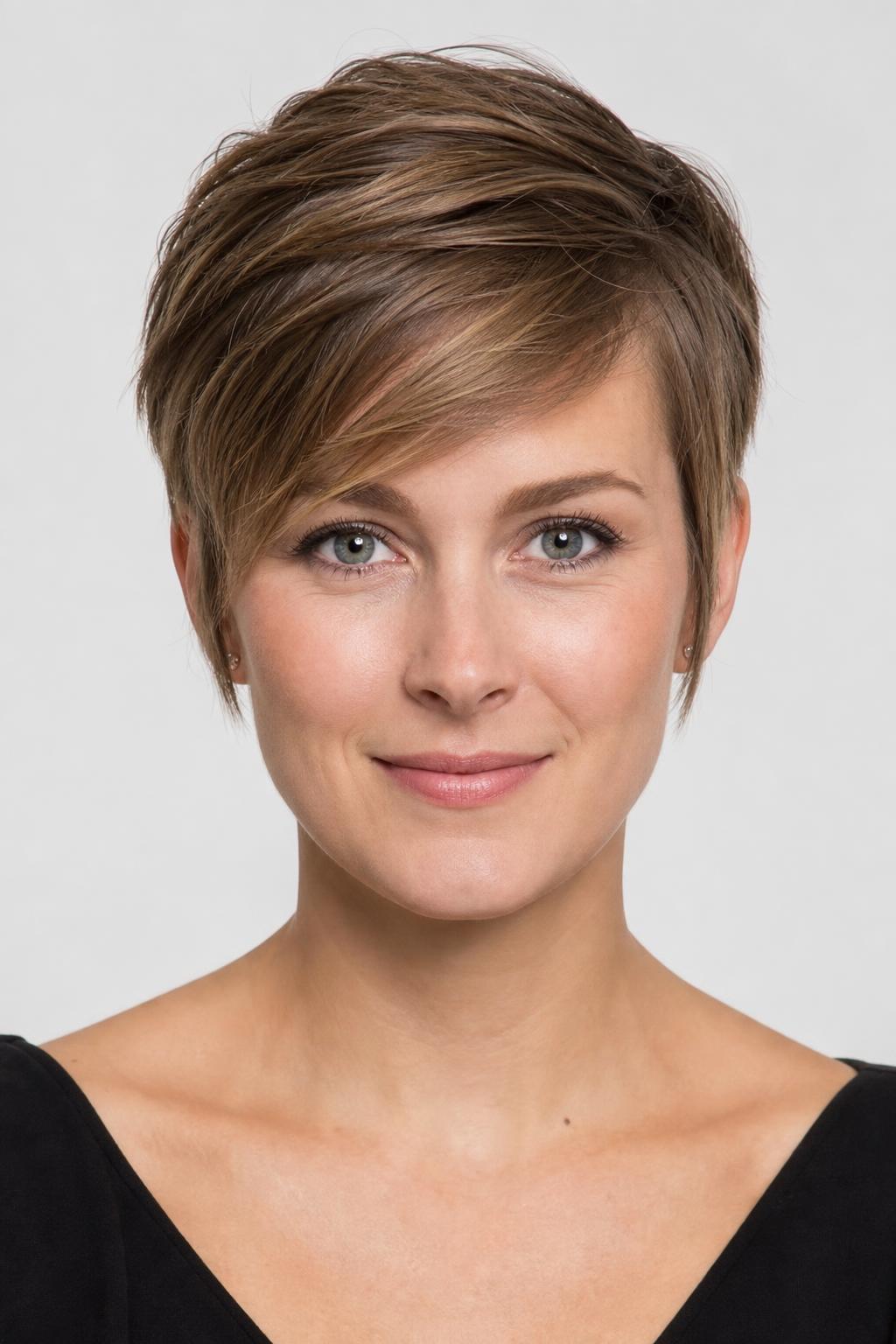
25. Pixie for Oval Faces with Thick Hair
Oval faces and pixies are a well-documented match, and thick hair expands the options further. The balanced proportions mean you can go ultra-short, long on top, textured, slicked back , the face shape supports all of it. Use this as an opportunity to pick a variation based on your lifestyle and styling preferences rather than face-shape compensation. A textured French pixie or a choppy deconstructed crop both sit well on oval features with dense hair.
What to Tell Your Stylist
The words you use at the salon matter more when you have thick hair, because the default cutting approach for a pixie often assumes medium density. Here is salon-ready phrasing for the most common requests.
For a layered pixie on thick hair: “I need internal thinning through the mid-shaft and razored or point-cut ends. I want to see the outline of layers, not a solid mass. Keep the crown full but reduce weight through the sides and back.”
For a textured pixie: “I want visible texture and separation through the top , razored or slide-cut ends that look like they have movement even without product. Take weight out underneath, not on the surface.”
For an undercut pixie: “Clipper the sides at a number 2 or 3 guard, leave 3-4 inches on top. I want the undercut to remove bulk, not just be decorative.”
Stylist tip: Bring at least two reference photos showing the cut from different angles , front and side at minimum. On thick hair, the back and nape are where most miscommunication happens, so include a rear-angle photo if you can find one.
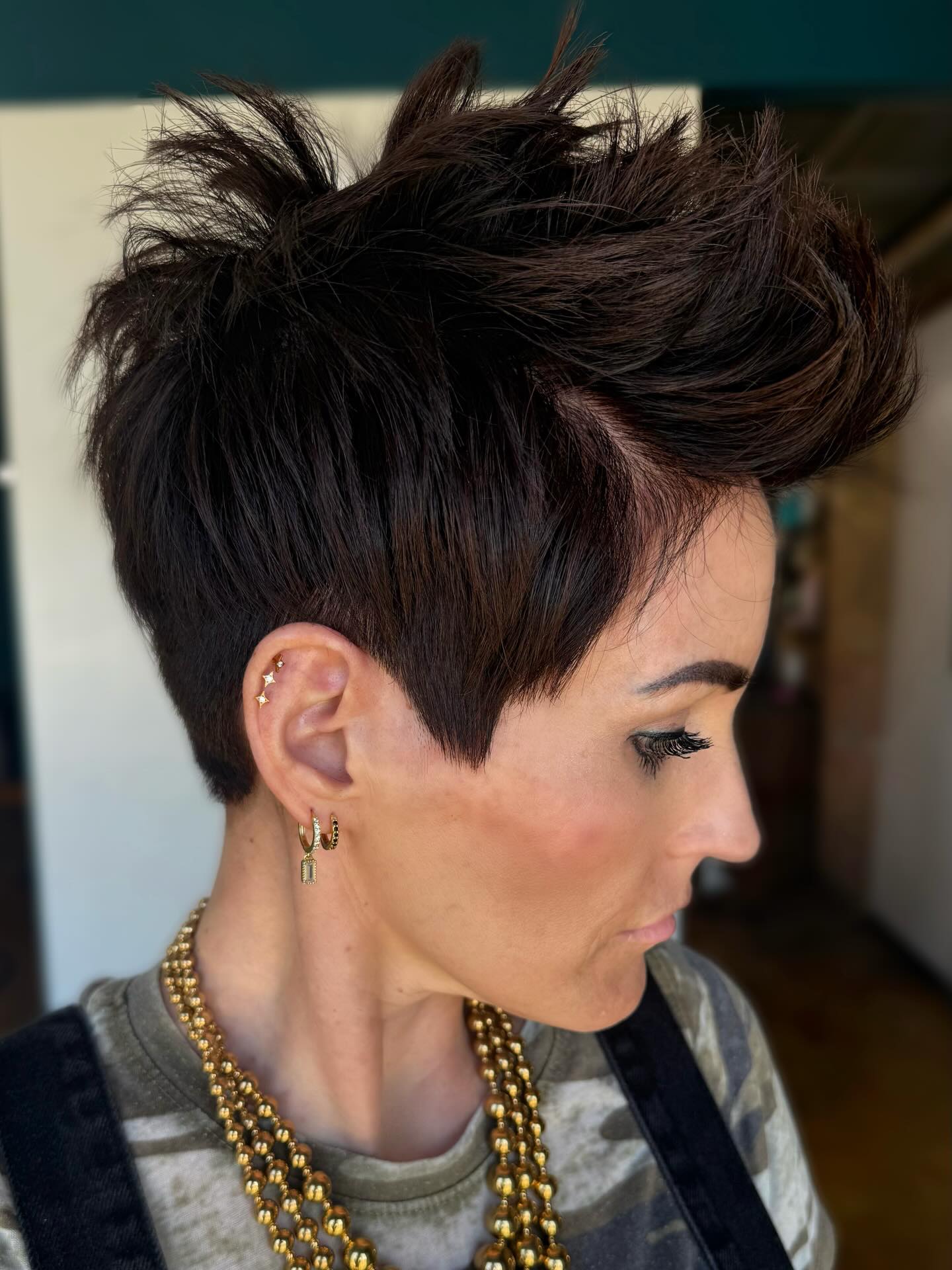
Styling Products for Thick Hair Pixie Cuts
Styling a pixie cut on thick hair depends less on the cut alone and more on the products used to control density, separation, and hold. Because thick hair naturally carries more volume and resistance, the right styling products help shape the silhouette rather than fight it. Lightweight texturizers, matte finish stylers, and controlled hold formulas are especially important for creating definition without heaviness or buildup. This guide outlines the most effective product types for achieving different pixie finishes, from soft and piece-y to sleek and structured, while keeping thick hair manageable throughout the day.
| Style Goal | Recommended Product Type | Result |
|---|---|---|
| Texture & separation | Matte clay / fiber paste | Piece-y definition |
| Volume control | Lightweight mousse | Soft lift without heaviness |
| Sleek finish | Light gel / spray | Controlled shape |
| Heat styling | Heat protectant spray | Prevents damage |
FAQ
Here are the most commonly asked questions about pixie cuts for thick hair.
Is a Pixie Cut Good for Thick Hair?
A pixie cut works well on thick hair when the stylist uses internal thinning and layering techniques to manage the volume. Without these, thick hair at pixie length can look bulky and helmet-like. The key is choosing a variation designed for density , layered, textured, or undercut styles all handle thick strands effectively. Expect the silhouette to be fuller and more structured than the same cut on fine hair, which is often a benefit.
How Do You Thin Out a Thick Pixie Cut?
Your stylist can use thinning shears on the mid-shaft, point cutting at the ends, or a razor to reduce weight without removing visible length. Internal thinning removes bulk from underneath the surface layer, so the cut looks full but feels lighter. Avoid surface thinning , it creates visible short hairs that stick up through the outer layer and look frizzy.
How Often Should You Trim a Pixie Cut on Thick Hair?
Most thick-hair pixies need a shape-up every 3-5 weeks depending on the variation. Undercuts and fades need attention every 2-3 weeks because the dense regrowth is visible sooner. Skipping trims beyond the recommended window does not just look messy , on thick hair, the bulk returns fast and can make your next appointment longer and more expensive.
What Products Work Best for a Thick-Hair Pixie?
Matte clays and fiber pastes are the workhorses for textured and choppy pixie styles on thick hair. They provide hold and separation without adding shine or weight. For sleeker styles, a light-hold mousse with medium-hold hairspray does the job. Avoid heavy serums and oils at this length , they flatten the shape within hours. A heat protectant spray is worth using even if you only blow-dry occasionally.
Can Thick Curly Hair Pull Off a Pixie Cut?
Thick curly hair , types 2C through 4C , handles a pixie cut well when the stylist cuts dry and builds the shape around the curl pattern. Wet cutting curly thick hair at this length leads to unpredictable shrinkage and excess volume in the wrong places. Plan for a slightly longer initial length than you think you want, because curl shrinkage will take at least an inch off the visible length.
Will a Pixie Cut Make Thick Hair Look Even Bigger?
Only if the cut is wrong. A blunt, same-length-all-over pixie on thick hair will puff outward. Layered, textured, and undercut variations control where the volume sits and where it is removed. The right pixie on thick hair actually appears more streamlined than a midlength cut because there is less hair to manage and the shape is more defined.
How Do You Grow Out a Thick Pixie Cut?
The grow-out phase takes 6-12 months and goes through an awkward stage around months 3-5. On thick hair, the mullet phase can be more pronounced because the back grows faster and thicker. Regular trims during this period , every 4-5 weeks , let your stylist shape the growth intentionally. Transitioning through a bixie or pixie bob first makes the process feel less drastic. Headbands, clips, and texturizing products help manage the in-between lengths.
A pixie cut for thick hair is not about fighting your volume , it is about choosing a shape and technique that channels it. Save this guide, bring your reference photos, and give your thick hair the short cut it has been waiting for.
Hair results vary based on your natural hair type, texture, density, and condition. Always consult with a licensed hairstylist before making significant changes, especially with chemical treatments or dramatic length changes. Photos may show styled results that require professional tools and products to replicate.