
A stylist-backed guide to the blunt bob — which face shapes, hair types, and lifestyles it actually works for, plus the real maintenance commitment involved.
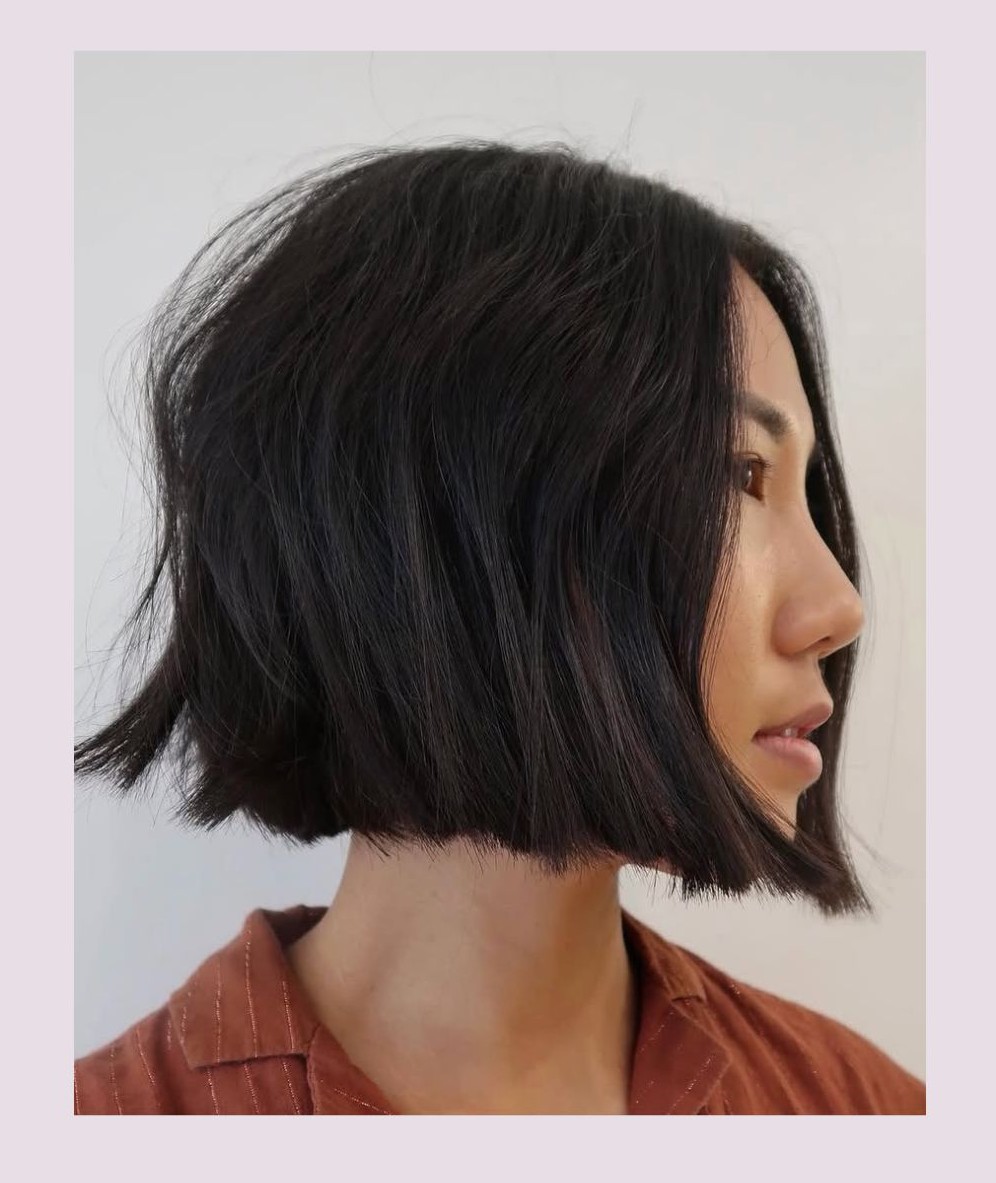
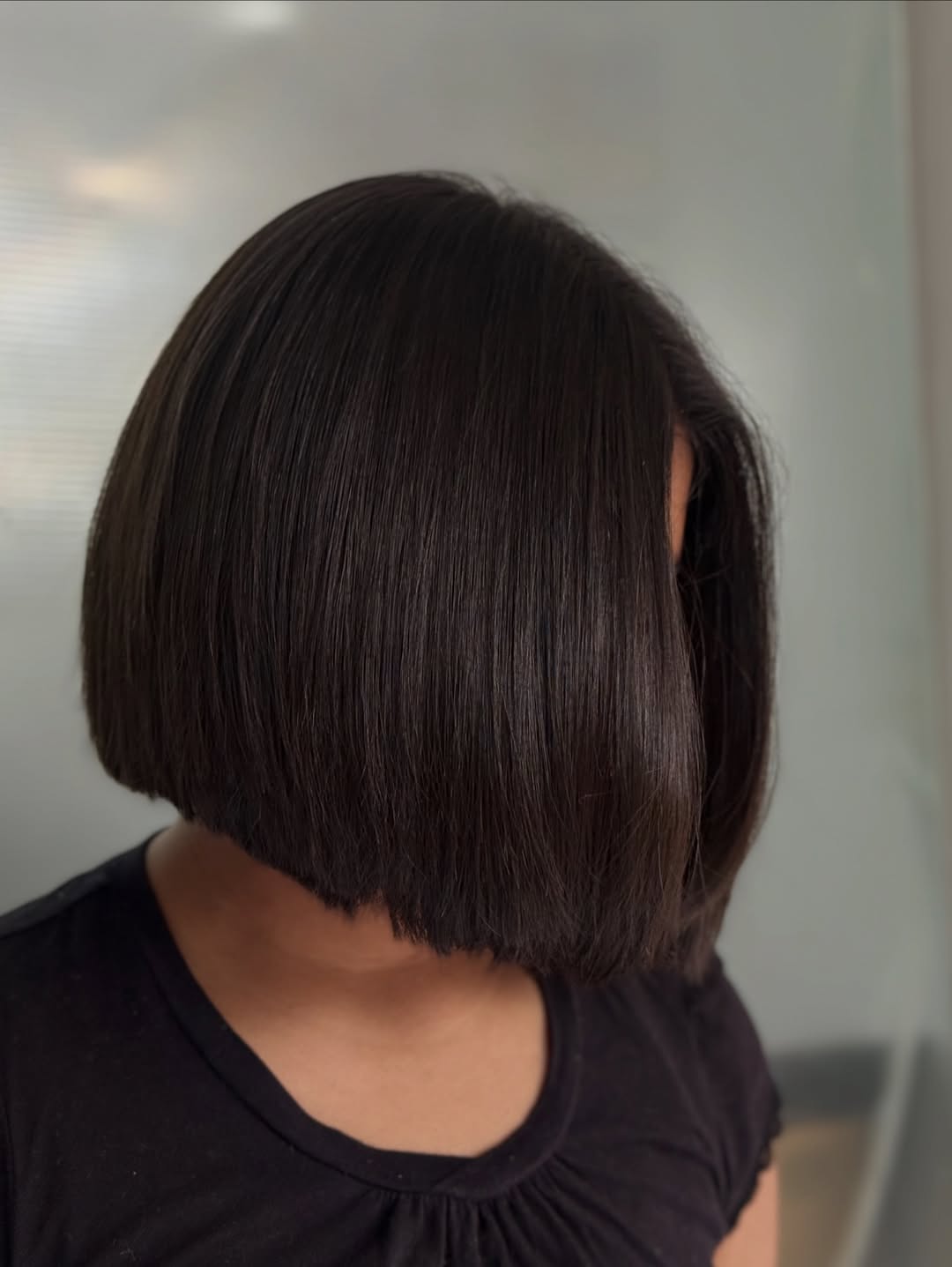
A blunt bob is a single-length cut with no layers, where all the hair ends at the same point — typically between chin and collarbone. It works best on straight to slightly wavy hair with medium to thick density, and it flatters oval, heart-shaped, and oblong faces most reliably. This guide covers exactly who should get one, who should consider alternatives, how to maintain the cut’s signature sharp edge, and what to tell your stylist at the consultation.
Here’s what you’ll find below: a face shape compatibility breakdown, a hair type reality check, a full maintenance schedule with product recommendations, common blunt bob myths that lead to salon regrets, and the exact salon language to use when requesting this cut.
| Aspect | Details |
|---|---|
| Best for | Straight to slightly wavy hair (1a–2b), medium to thick density, oval/heart/oblong faces |
| Trim frequency | Every 5–6 weeks — the blunt perimeter shows split ends and uneven growth faster than layered cuts |
| Daily styling time | 10–15 minutes with a blow-dryer and round brush; 5 minutes with a flat iron on day-two hair |
| Key products | Heat protectant, smoothing serum or light cream, lightweight hairspray for humidity |
| Grow-out behavior | Loses its clean line visibly by week 5–6; less forgiving than layered bobs on grow-out |
| Avoid if | Very fine/thin hair (looks flat without daily styling), very curly hair (3b–4c), zero-effort lifestyle |
What Makes a Blunt Bob Different from Other Bobs
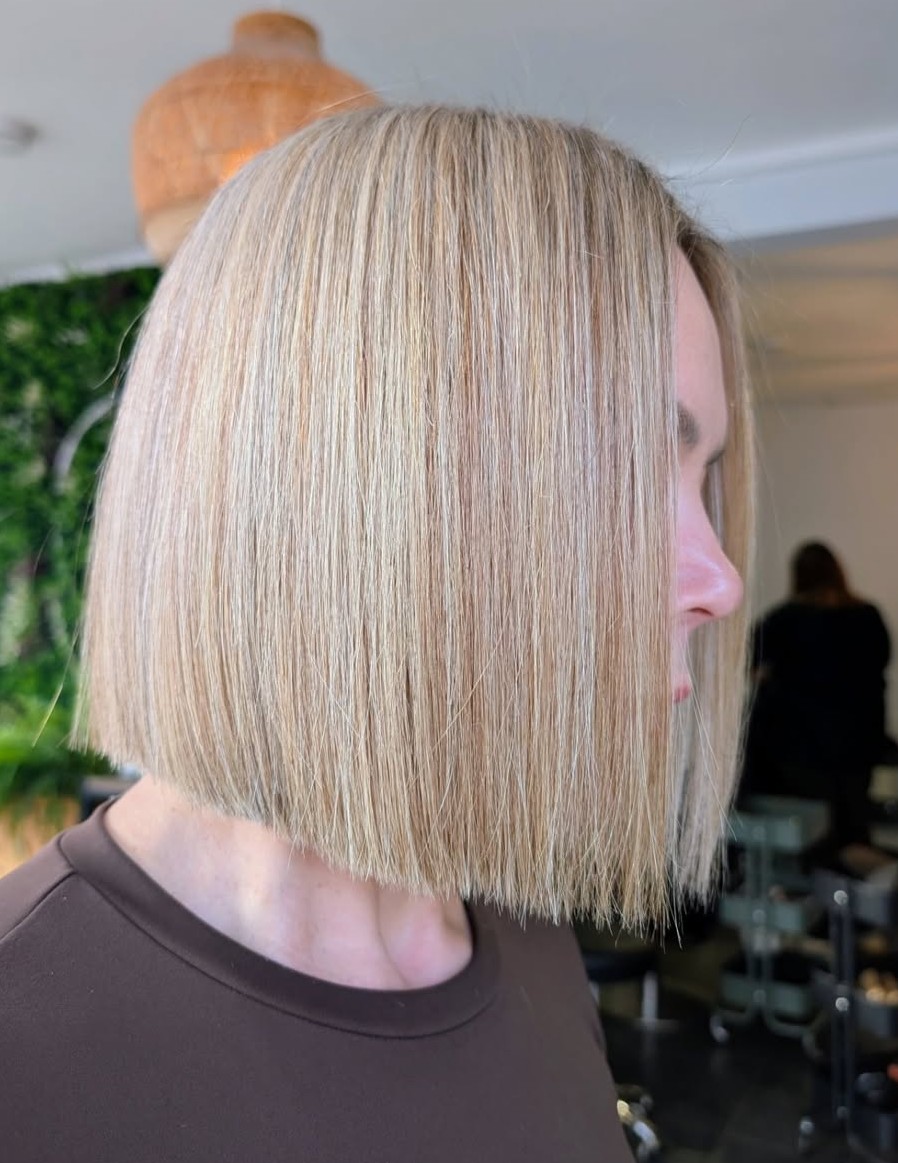
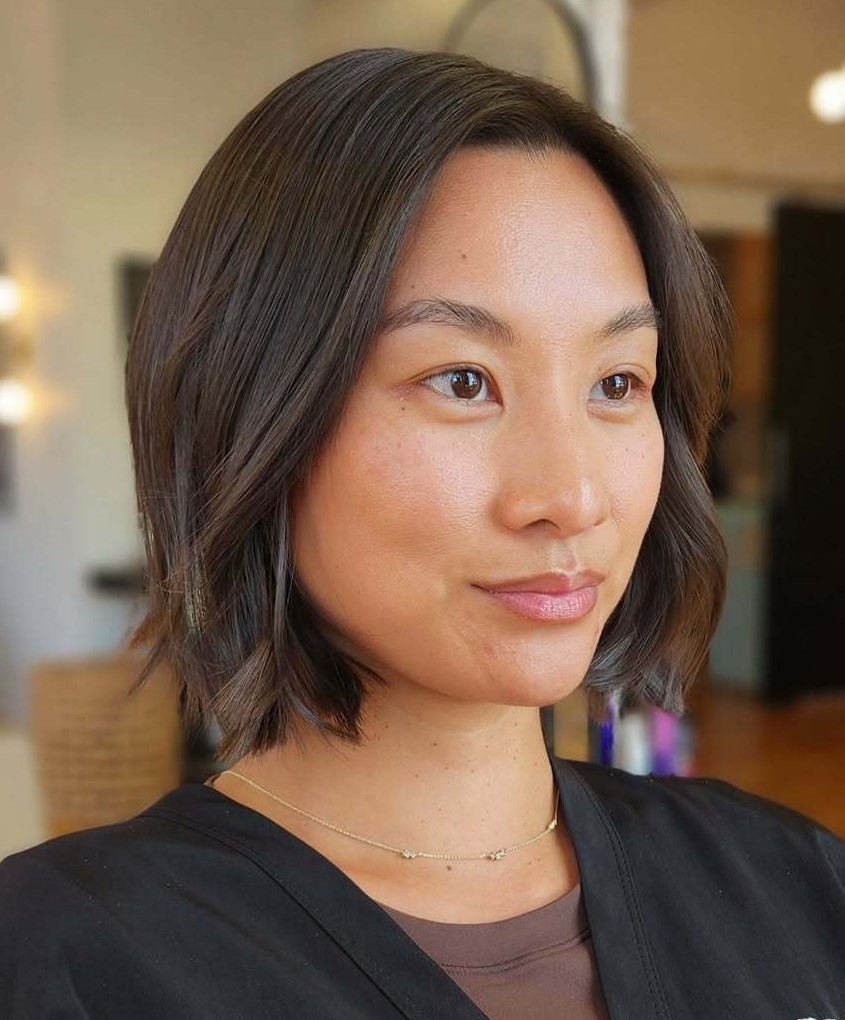
A blunt bob has no graduation, no layering, and no texturizing at the perimeter — the bottom edge is cut in a single straight line. This is what gives it that sharp, graphic silhouette. Every strand falls to the same length, so the ends stack on top of each other and create a sense of weight and density at the bottom of the cut.
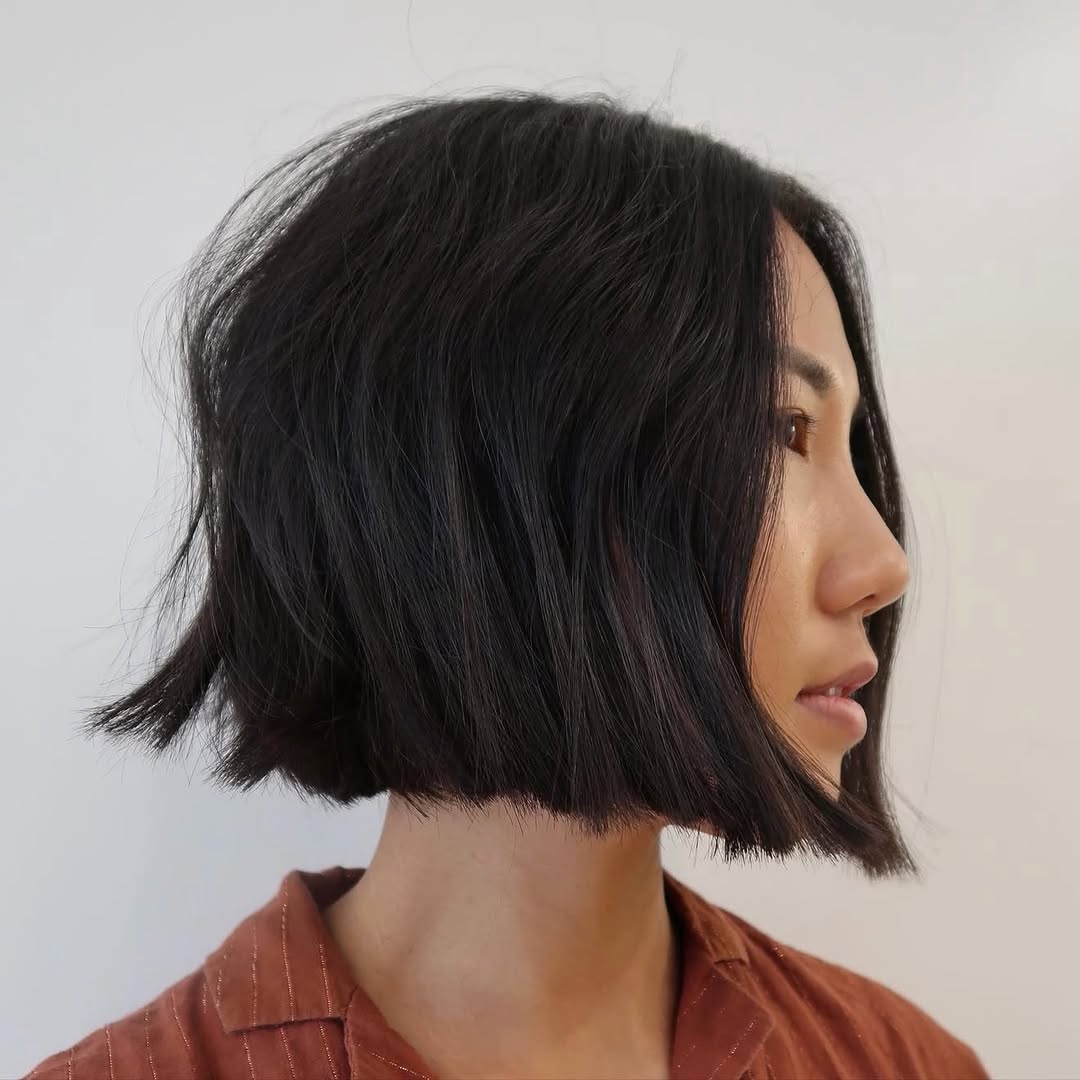
Compare that to a layered bob, where the stylist removes weight throughout the interior, or a choppy bob, where the ends are point-cut or razor-cut for deliberate unevenness. A blunt bob’s clean edge is its entire identity — and also its biggest maintenance demand. Any split end, any uneven growth, any breakage shows immediately because there’s no texture to camouflage imperfections.
Stylists generally approach this cut by working with zero elevation — the hair hangs naturally at the desired length, and the cutting line follows gravity. This means the precision of the cut depends heavily on sectioning and tension control. A slightly uneven hand or inconsistent finger angle creates visible asymmetry that you can’t blend away with layers.
Blunt Bobs Suit These Face Shapes Best
The blunt bob’s strong horizontal line interacts differently with each face shape. The key principle: the cut draws the eye to wherever the ends fall, so the length you choose either balances or emphasizes your widest point.
| Face Shape | Best Blunt Bob Length | Why It Works | Adjustment to Make |
|---|---|---|---|
| Oval | Any — chin, jaw, or collarbone | Balanced proportions mean the horizontal line flatters at every level | None required — experiment with parting instead (center for symmetry, side for drama) |
| Heart | Chin-length | The weight at chin level balances a wider forehead and narrows the visual line at the jaw | Add a side part to avoid emphasizing forehead width |
| Oblong | Chin-length with bangs | The horizontal line shortens long face proportions; bangs reduce visible forehead length | Avoid collarbone-length — it elongates further |
| Diamond | Chin-length | Adds fullness at the jawline, balancing the widest point at cheekbones | Use a side part to add visual width at the forehead |
| Round | Below jaw (proceed with caution) | A longer blunt bob can work, but chin-length adds width at the widest point | Deep side part is essential; consider a longer angled bob instead |
| Square | Below jaw or collarbone | Avoiding chin-length prevents the blunt line from reinforcing strong horizontal jawline | If set on chin-length, offset with a soft side part and slight face-framing pieces |
The most important detail to communicate to your stylist is where you want the blunt line to fall relative to your jawline — half an inch higher or lower changes how the cut frames your face entirely. Bring a reference photo, but also ask your stylist to hold the hair at the proposed length before cutting so you can see it in the mirror.
How Hair Type and Texture Affect the Result
Straight to slightly wavy hair (types 1a through 2b) produces the cleanest blunt bob result. These textures hang in a way that lets the blunt line read as intentional and precise. The weight of the hair at the ends naturally pulls the cut into shape, which means less daily effort to maintain the silhouette.
Medium to Thick Hair Gets the Best Payoff
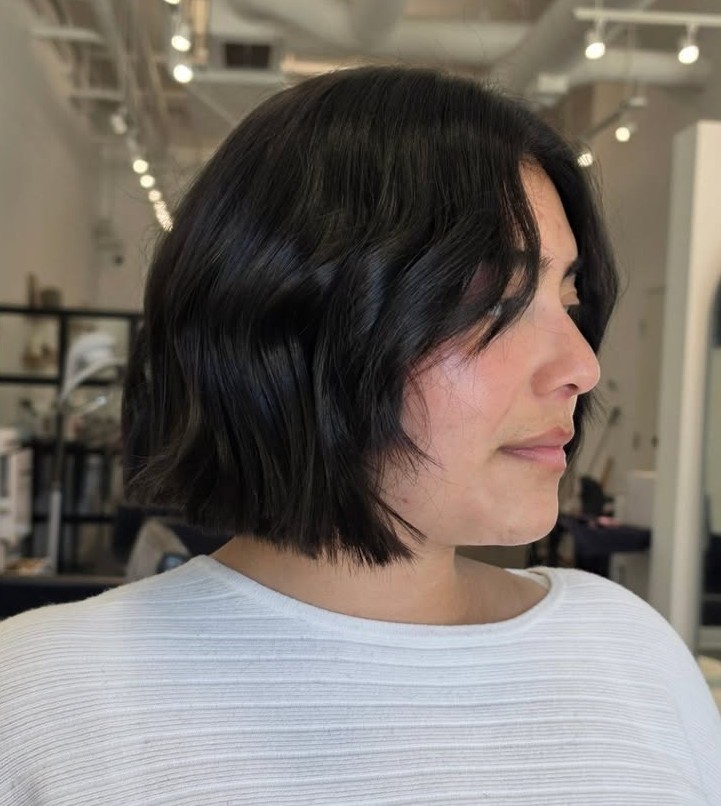
Thick hair is the ideal canvas for a blunt bob because the density creates that satisfying weight at the bottom edge. The cut looks substantial and deliberate without any product assist. Stylists may thin the interior slightly to reduce bulk — that’s fine as long as the perimeter line stays untouched. Point-cutting the ends on thick hair removes the sharp finish, so make it clear you want those ends left blunt.
Fine Hair Can Work — with a Trade-Off
A blunt perimeter on fine hair creates the illusion of thickness because all the ends stack at one level, making the bottom edge look denser than it is. That’s the upside. The trade-off: fine hair without styling can look limp and one-dimensional in a blunt cut. You’ll need a volumizing mousse at the roots and a round brush blow-dry to give the cut shape. If you exclusively air-dry, a textured bob with point-cut ends is a more forgiving choice for fine strands.
Wavy and Curly Hair Needs a Different Approach
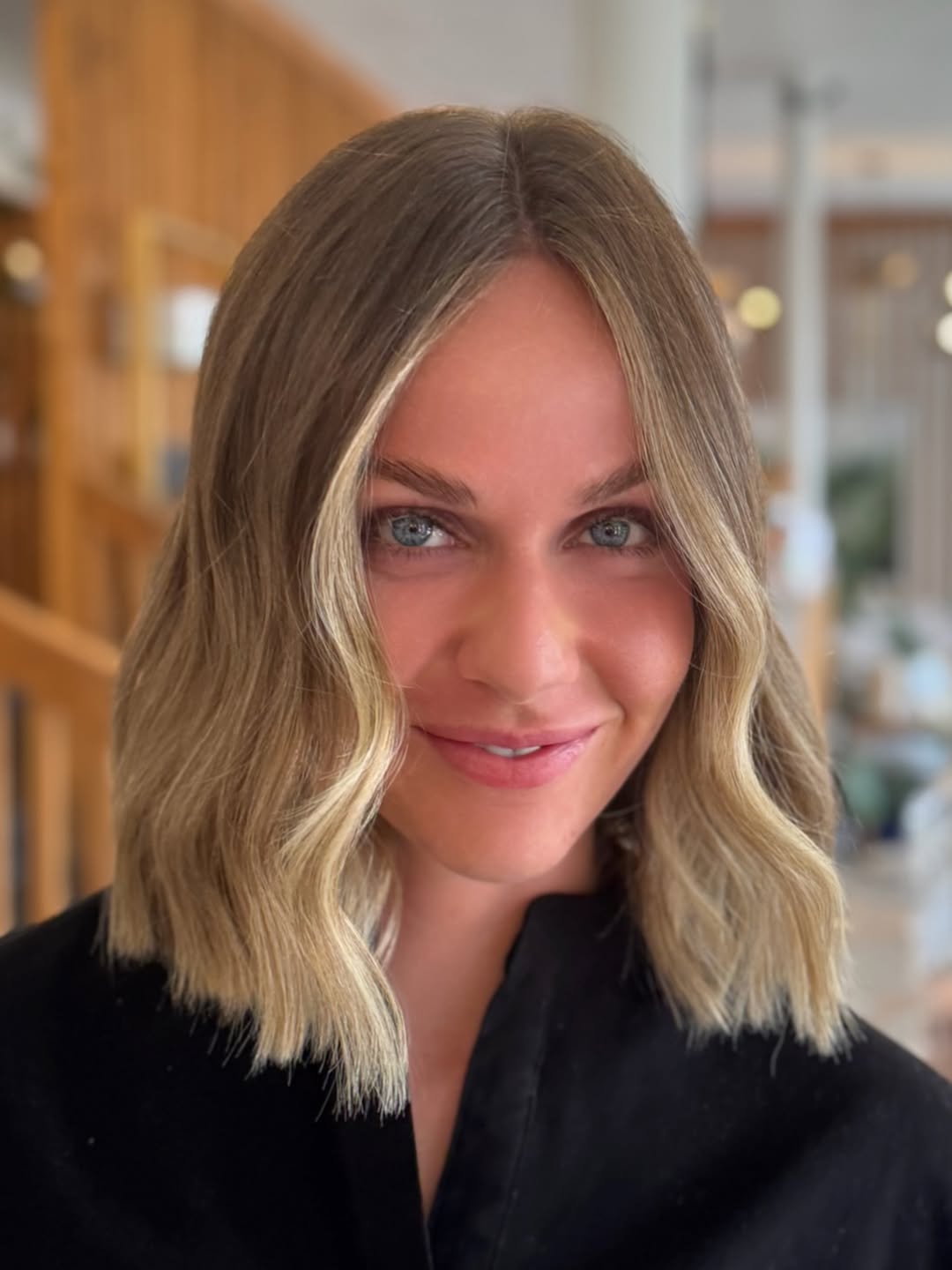
Wavy hair (2b–2c) can pull off a blunt bob if you’re willing to straighten the ends periodically. Left natural, the wave pattern disrupts the blunt line, which isn’t necessarily bad — but it’s a different look than the sharp edge most people picture when they request this cut. Curly hair (3a and above) shouldn’t be cut blunt. The curl pattern causes each strand to spring up at different rates, creating a triangular silhouette rather than the straight-across line you’re after. A dry cut with shape built in for your specific curl pattern is the professional approach.
The Real Maintenance Commitment
A blunt bob is not a wash-and-go cut. The clean perimeter line that makes this style compelling is also what makes it high-maintenance compared to textured or layered alternatives. Here’s what the upkeep actually involves.
Blunt Bobs Need Trimming Every 5–6 Weeks
Hair grows roughly half an inch per month. On a blunt bob, that half-inch shows as uneven ends, visible split ends, and a perimeter that starts to look ragged rather than intentional. Layered bobs can stretch to 8–10 weeks between trims because the layers mask grow-out. A blunt bob doesn’t have that cushion — after week 5, the shape visibly deteriorates. Budget for trims every 5–6 weeks if you want to keep the line sharp. Annual cost estimate: $480–$960 depending on your salon’s pricing.
Daily Styling Takes 10–15 Minutes
The ideal blunt bob routine: apply heat protectant to damp hair, rough-dry to about 80%, then use a medium-barrel round brush (1.5-inch works for chin to jaw length) to blow-dry each section smooth, directing the ends under slightly. Finish with a pea-sized amount of smoothing serum on the ends. On day-two hair, a quick pass with a flat iron on the ends restores the line in under 5 minutes.
Products That Actually Matter for This Cut
| Product Type | What It Does for a Blunt Bob | When to Apply |
|---|---|---|
| Heat protectant spray | Prevents damage at the ends — critical because split ends ruin the blunt line | On damp hair before blow-drying |
| Smoothing serum or cream | Controls frizz and flyaways; keeps the perimeter looking polished | On dry hair after styling — focus on mid-lengths and ends |
| Lightweight hairspray | Locks the shape without stiffness; essential in humid climates | As a finishing step, light mist from 10 inches away |
| Volumizing mousse (fine hair only) | Adds body and lift so the cut doesn’t look flat | Golf-ball-sized amount on damp roots before blow-drying |
Avoid heavy oils and thick leave-in conditioners — they weigh down the ends and make the blunt line look droopy rather than sharp. If your hair tends toward dryness, use a lightweight argan oil only on the last inch of the ends.
When a Blunt Bob Is Not the Right Choice
This cut isn’t for everyone, and knowing when to choose an alternative saves you a frustrating grow-out period.
- Very fine, thin hair without styling commitment: A blunt perimeter on fine hair can look flat and lifeless if you air-dry only. If you won’t commit to daily blow-drying, a textured bob with point-cut ends creates the illusion of thickness without the styling obligation.
- Very curly or coily hair (3b–4c): Blunt cutting on curly hair creates a triangular shape as the curls expand at different rates. A specialized curly cut (dry cut) with shape built in for your specific curl pattern produces a much better result.
- Active lifestyles with no styling time: A blunt bob requires at least 10 minutes of daily styling to look intentional. If you air-dry only, a layered or shaggy bob is more forgiving of the natural way your hair dries.
- Round face with chin-length preference: A chin-length blunt bob places the widest visual line at the widest part of a round face, adding perceived width. If you want short, an angled bob or a longer blunt lob below the jaw is more flattering.
- Tight budget for salon visits: Stretching trims past 6 weeks visibly degrades this cut. If you can only afford trims every 10–12 weeks, a layered bob or shag grows out more gracefully.
Common Blunt Bob Myths That Lead to Salon Regrets
Myth: A Blunt Bob Is Low Maintenance Because It’s Short
Reality: Short doesn’t mean low effort. A blunt bob needs more frequent trims than long hair — every 5–6 weeks versus 8–12 weeks for longer cuts. It also requires a blow-dry or flat iron most days to maintain the clean edge. The trade-off is faster daily styling (10–15 minutes versus 20–30 for long blowouts), not fewer salon visits.
Myth: Blunt Bobs Only Work on Straight Hair
Reality: Slightly wavy hair (up to type 2b) can carry a blunt bob well — the wave adds body and movement without disrupting the perimeter line. What doesn’t work is highly textured or curly hair, where the curl pattern overrides the blunt edge entirely. A stylist experienced with your texture can tell you where that line falls for your specific hair.
Myth: A Blunt Bob Will Make Thin Hair Look Thicker
Reality: Partially true, partially misleading. The blunt perimeter does create the illusion of density at the ends because all the hair terminates at the same point. But if the overall density is very low, the cut can look sparse rather than intentionally sharp. Fine hair with decent density benefits from a blunt bob. Fine hair with low density looks better with subtle internal layers that create the impression of fullness through movement.
What to Tell Your Stylist When Requesting a Blunt Bob
Salon communication is where blunt bobs go right or wrong. The word “bob” alone covers dozens of variations — if you don’t specify, you’re leaving the interpretation entirely to your stylist’s default, which may not match your vision.
Use this language: “I’d like a blunt bob at [chin/jaw/collarbone] length with no layers and no texturizing on the perimeter. I want the bottom edge completely straight across. Internal layers are fine only if needed for weight removal on the interior.”
Bring 2–3 reference photos that show the length and finish you want. Ask your stylist to hold a section of hair at the proposed length before cutting — this is especially important if you have any wave to your hair, because wet hair hangs longer than dry hair, and you may end up shorter than expected. Discuss your daily routine honestly: if you tell your stylist you’ll blow-dry daily but you actually won’t, the cut may not perform the way either of you expect.
Blunt Bob Variations Worth Considering
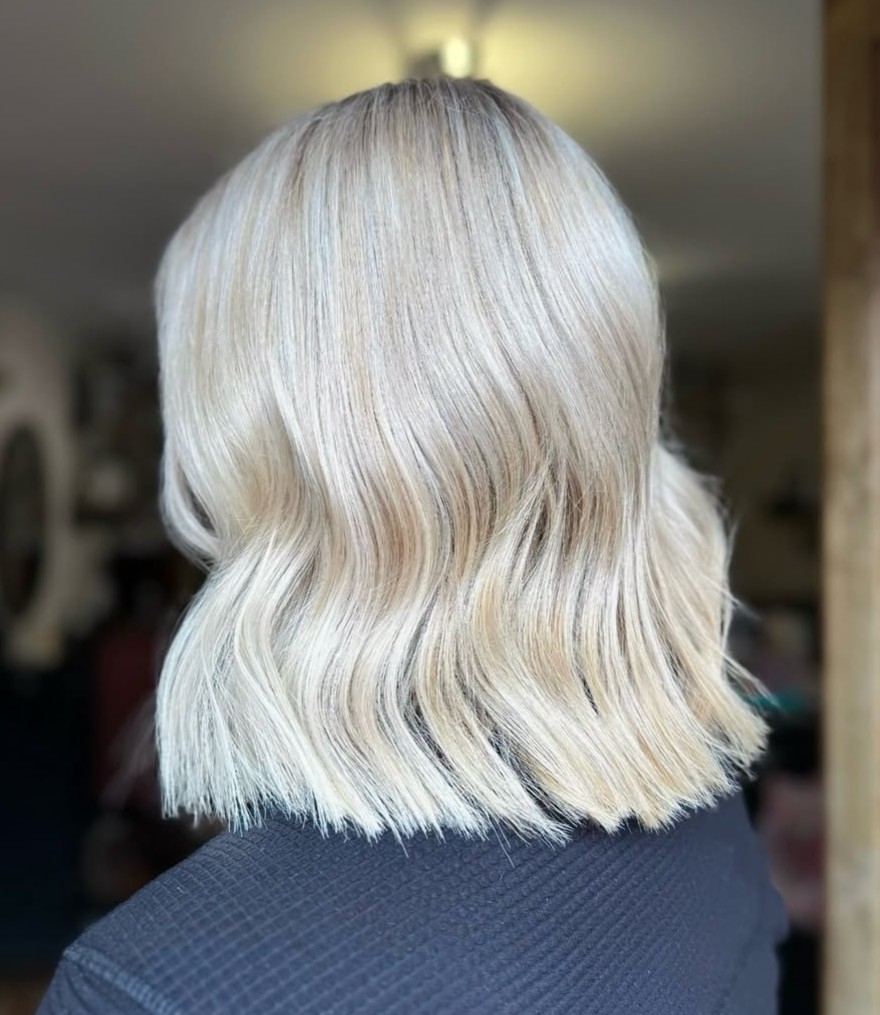
The Blunt Lob Extends the Same Principle to Shoulder Length
If you want the clean-line aesthetic but aren’t ready for chin-length, a blunt lob (long bob) at collarbone level gives you the same graphic edge with more versatility — you can still pull it into a low ponytail. The maintenance schedule is slightly more forgiving because the longer length masks grow-out better, and you can typically stretch trims to 6–7 weeks.
A Blunt Bob with Bangs Adds a Framing Element
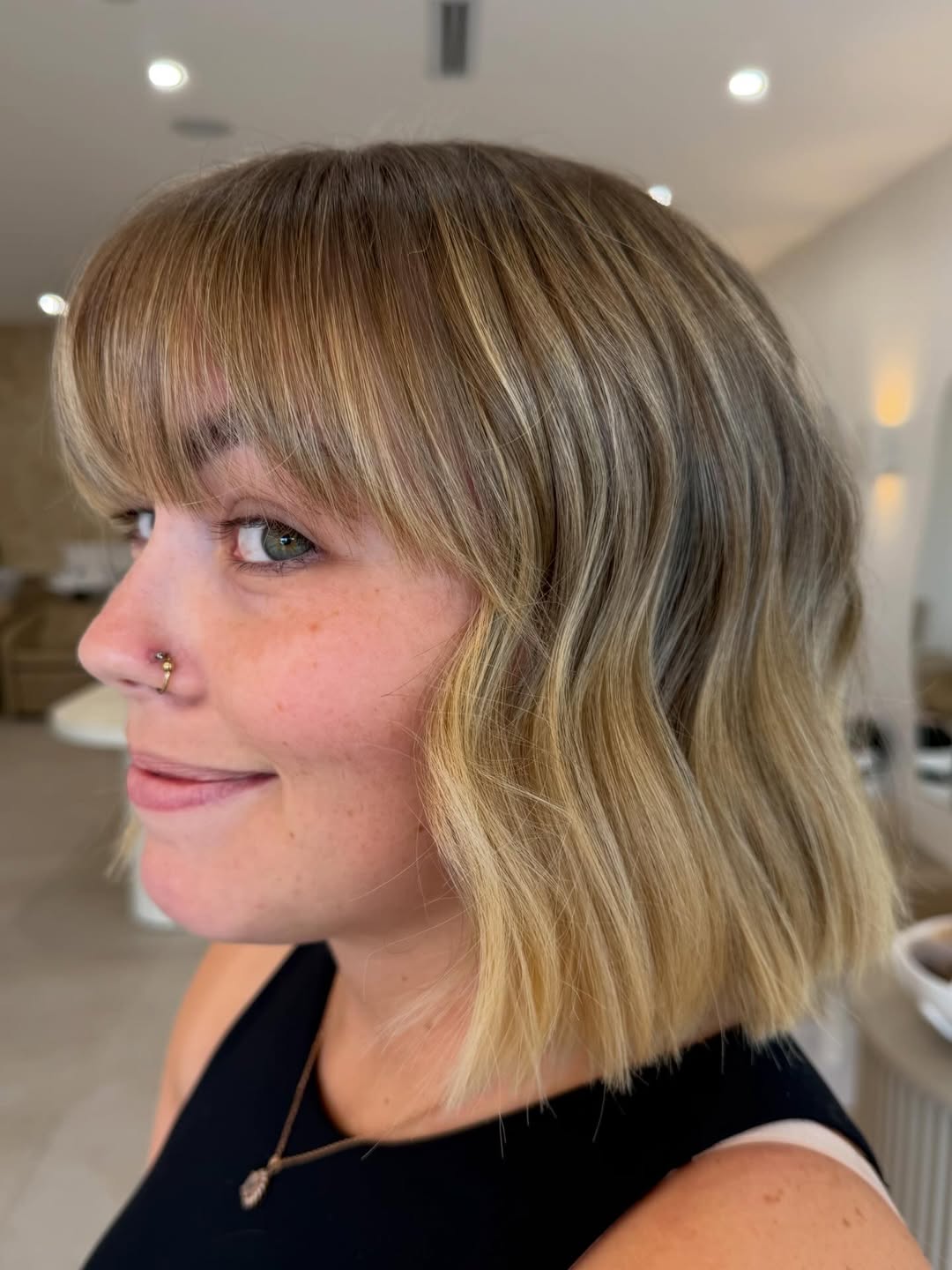
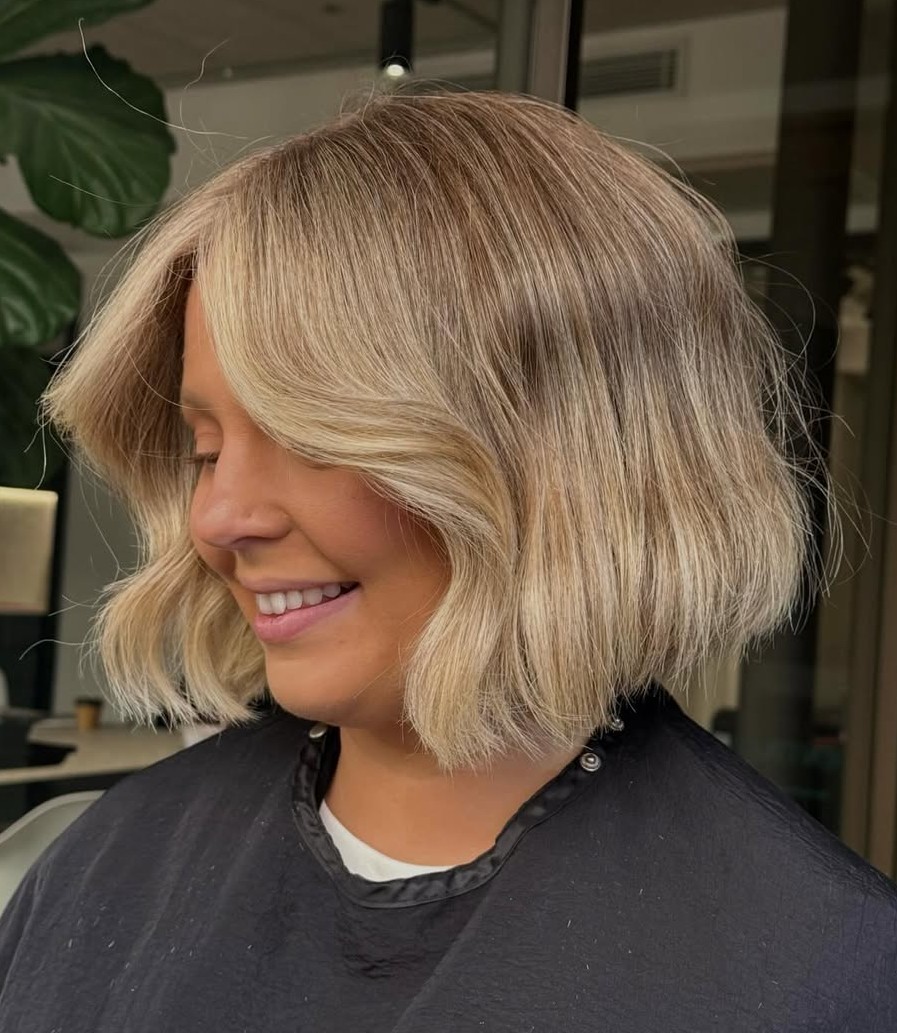
Pairing a blunt bob with blunt bangs creates a strong geometric frame around your face. This combination works particularly well for oblong and heart-shaped faces, where the horizontal bangs line shortens the visual length of the face. Be aware that bangs add a second maintenance layer — they need trimming every 3–4 weeks separately from the bob itself.
A Blunt Bob with a Deep Side Part Softens the Effect
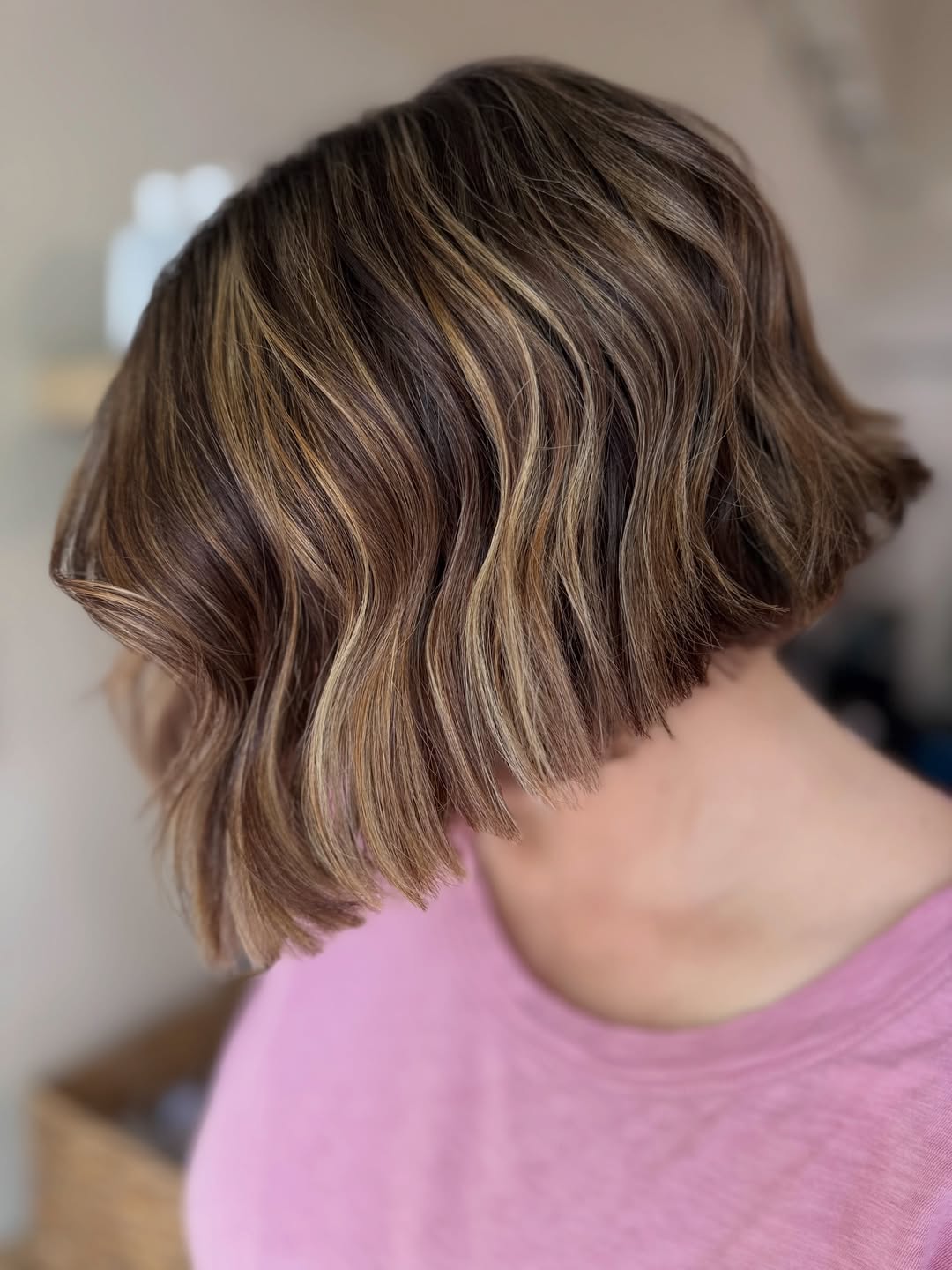
If you love the clean ends but find a center-parted blunt bob too severe, shifting to a deep side part creates asymmetry that softens the overall effect. The longer side sweeps across the face while the shorter side tucks behind the ear. This is the adjustment that makes a blunt bob work for round and square faces — the diagonal line of the part counteracts the horizontal line of the cut.
FAQ
How Often Does a Blunt Bob Need Trimming?
Every 5–6 weeks to maintain the sharp perimeter line. After week 5, hair growth and split ends start to blur the clean edge that defines this cut. If you stretch to 8 weeks, the cut will look like a grown-out bob rather than an intentional blunt one. Budget accordingly — this is the most trim-intensive bob variation.
Can I Get a Blunt Bob If My Hair Is Wavy?
Yes, if your wave pattern falls in the 2a–2b range. Slight waves add body without disrupting the blunt perimeter. Tighter waves (2c and above) will override the straight edge, giving you a different silhouette than what you see in most blunt bob reference photos. If you’re between categories, bring your natural texture to the consultation so your stylist can assess how the wave will interact with the cut line.
What’s the Difference Between a Blunt Bob and a French Bob?
A French bob is a specific type of blunt bob — it sits at or just above the chin, often with brow-length bangs, and has an intentionally effortless, slightly undone finish. A blunt bob is broader: it describes any bob with a uniform, unlayered perimeter, at any length from ear-level to collarbone. A French bob is always blunt; a blunt bob isn’t always French.
Will a Blunt Bob Make My Face Look Rounder?
It depends on the length. A chin-length blunt bob draws the eye to the widest part of a round face, which can emphasize fullness. Moving the length below the jaw — even by an inch — shifts the focal point and creates a more elongating effect. A deep side part also helps by introducing a diagonal visual line that counteracts the horizontal one.
Is a Blunt Bob Good for Fine Hair?
Fine hair with adequate density (meaning you have a lot of individual strands, even if each strand is thin) actually benefits from a blunt cut — the stacked ends create visible thickness at the perimeter. Fine hair with low density (fewer strands overall) can look sparse in a blunt bob. Your stylist can assess your density during the consultation and recommend whether a blunt or subtly textured finish will look better.
How Do I Style a Blunt Bob Without Heat?
No-heat styling is possible but limited. Wrap damp hair around large velcro rollers and let it air-dry completely for a smooth, voluminous finish — expect this to take 45–60 minutes. Alternatively, apply a smoothing cream to damp hair and twist each side under while it dries. Neither method produces the same precision as a blow-dry, but both keep the blunt line cleaner than air-drying without any intervention.
Can I Color My Hair with a Blunt Bob?
Absolutely — and color choices interact meaningfully with this cut. Single-process color or a root melt keeps the clean-line aesthetic intact. Balayage or highlights can add dimension, but heavy contrast at the ends can visually blur the blunt perimeter. If you’re combining color with a blunt bob, ask your colorist to keep the lightest pieces away from the very last half-inch of hair so the blunt line reads as sharp rather than diffused.
Hair results vary based on your natural hair type, texture, density, and condition. Always consult with a licensed hairstylist before making significant changes, especially with chemical treatments or dramatic length changes. Photos may show styled results that require professional tools and products to replicate.