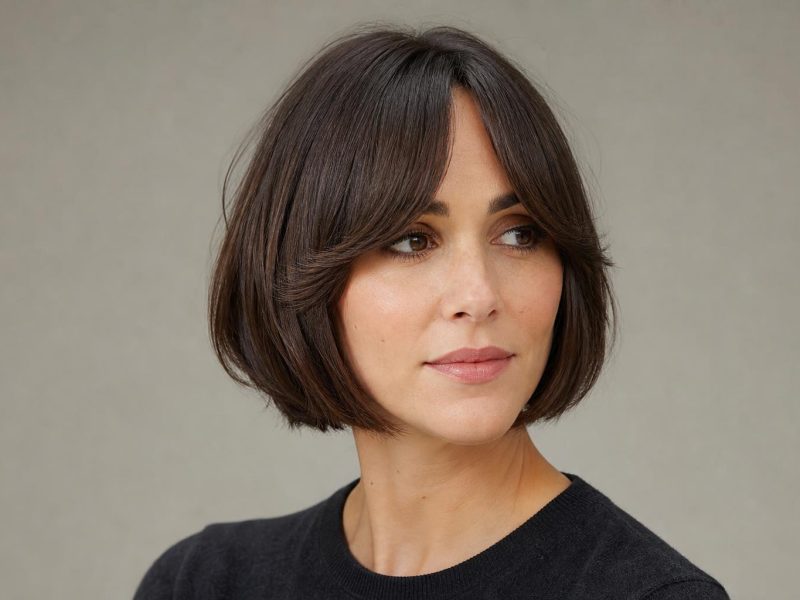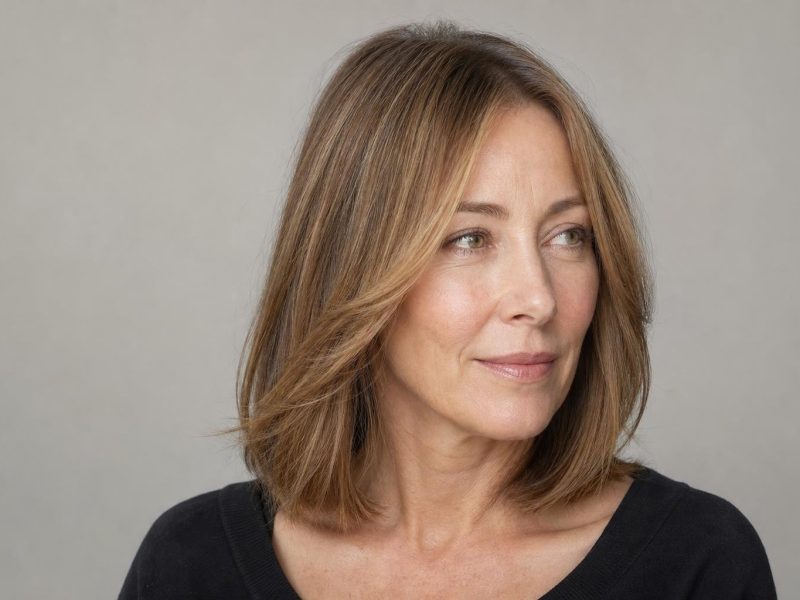

Stylist-approved bob variations for thick hair, organized by length and technique — with face shape guidance and salon communication tips
Thick hair gives a bob natural fullness that finer textures need products and styling to achieve, but without the right layering and weight removal, that same density turns a bob into a helmet. These 30 bob variations are selected specifically for thick hair, covering chin-length crops to collarbone lobs, blunt cuts to heavily layered shapes — each with a note on who it suits, how it handles bulk, and what makes it work on dense hair.
Below the gallery, you’ll find a face shape compatibility guide adapted for thick-haired bobs, a section on exactly what to communicate to your stylist about bulk removal and layering, and a realistic maintenance breakdown so you know what you’re committing to before you sit in the chair.
| Factor | Details |
|---|---|
| Best for | Medium-to-thick density, coarse or medium texture, straight/wavy/curly patterns |
| Key technique | Internal layering, point cutting, or texturizing to reduce bulk without thinning the perimeter |
| Trim frequency | Every 5–7 weeks for short bobs; every 6–8 weeks for lobs |
| Daily styling time | 5–15 minutes depending on variation (blunt requires more; textured/shaggy requires less) |
| Avoid if | You want zero layering and your hair is extremely thick — a one-length blunt bob on very dense hair can look bulky without internal weight removal |
Chin-Length and Short Bobs for Thick Hair
Short bobs on thick hair create a concentrated, structural shape that lighter textures struggle to hold without product. The challenge at this length is controlling where the volume sits — too much weight at the jaw can widen the face, while the right layering focuses fullness exactly where you want it. All of the cuts in this section fall between ear and chin level.
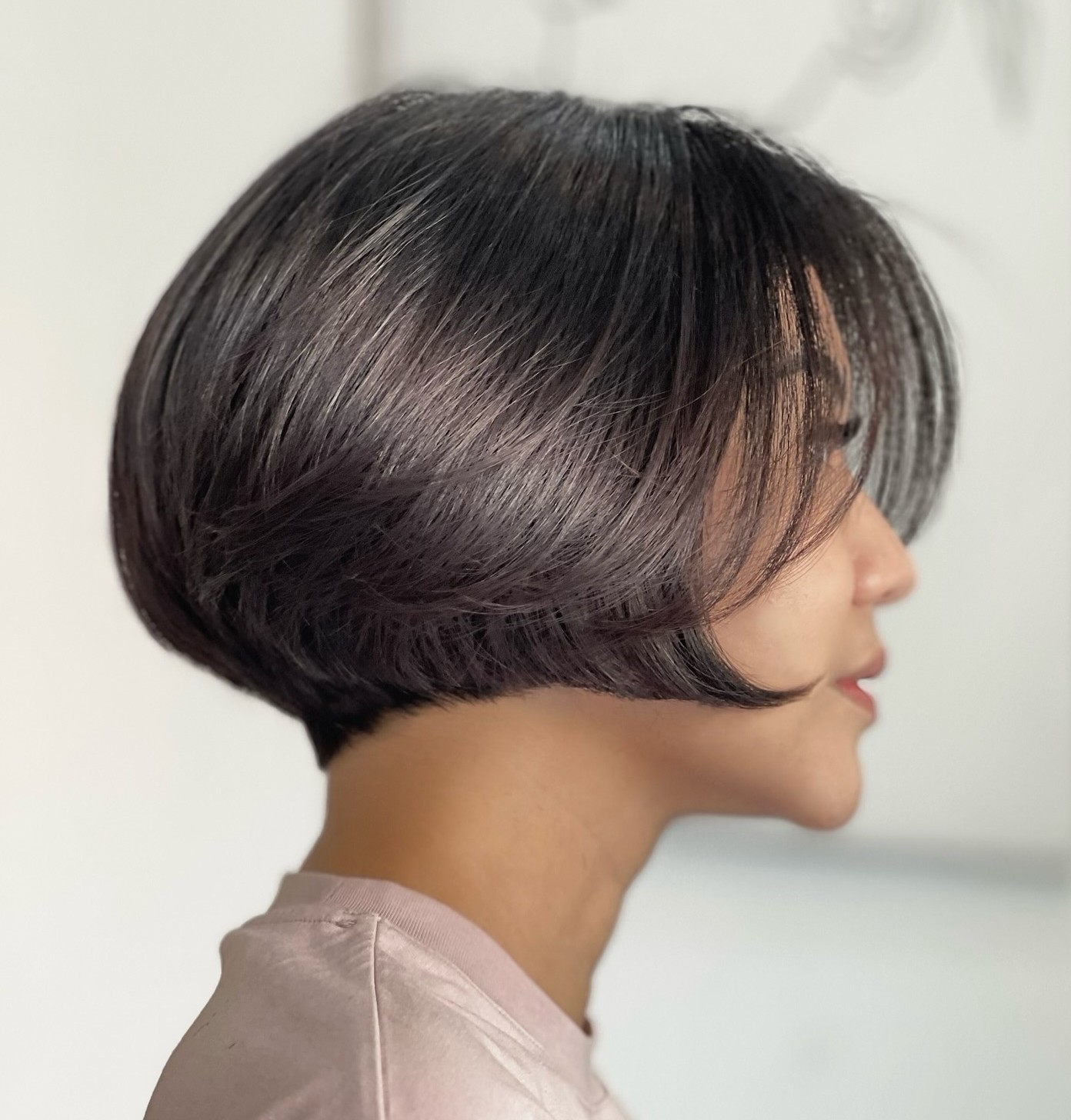
1. Blunt Chin-Length Bob
A sharp, single-length perimeter at the chin creates a clean geometric shape that thick hair holds better than any other texture. The weight of dense strands keeps the line from looking wispy or uneven, which is the main reason blunt bobs look so polished on thick hair. Ask your stylist for internal point cutting to remove bulk from the mid-shaft without disrupting that crisp perimeter line.
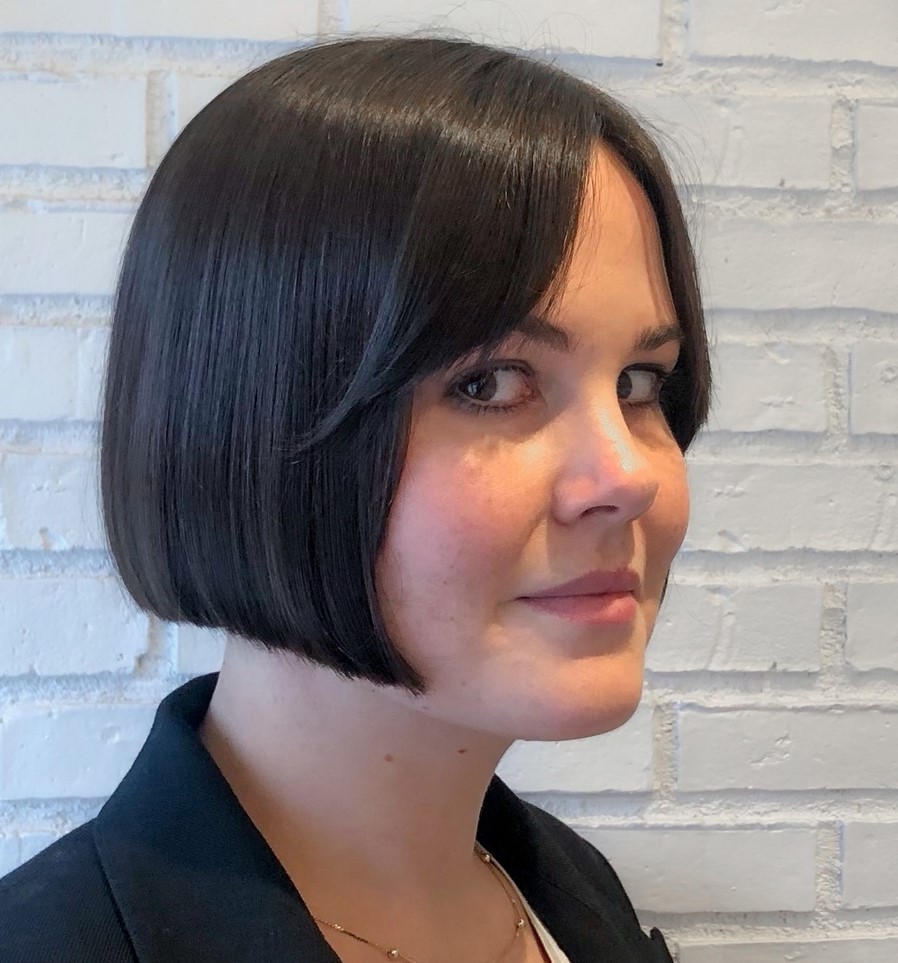
2. French Bob with Curtain Bangs
Sitting right at earlobe level, this French bob variation pairs a rounded silhouette with cheekbone-length curtain bangs that open up the face. Thick wavy hair gives this cut its natural body without needing a round brush — the density does the shaping work. Expect a trim every 5–6 weeks, as the short length shows growth quickly and the bangs will start falling into your eyes around week 4.
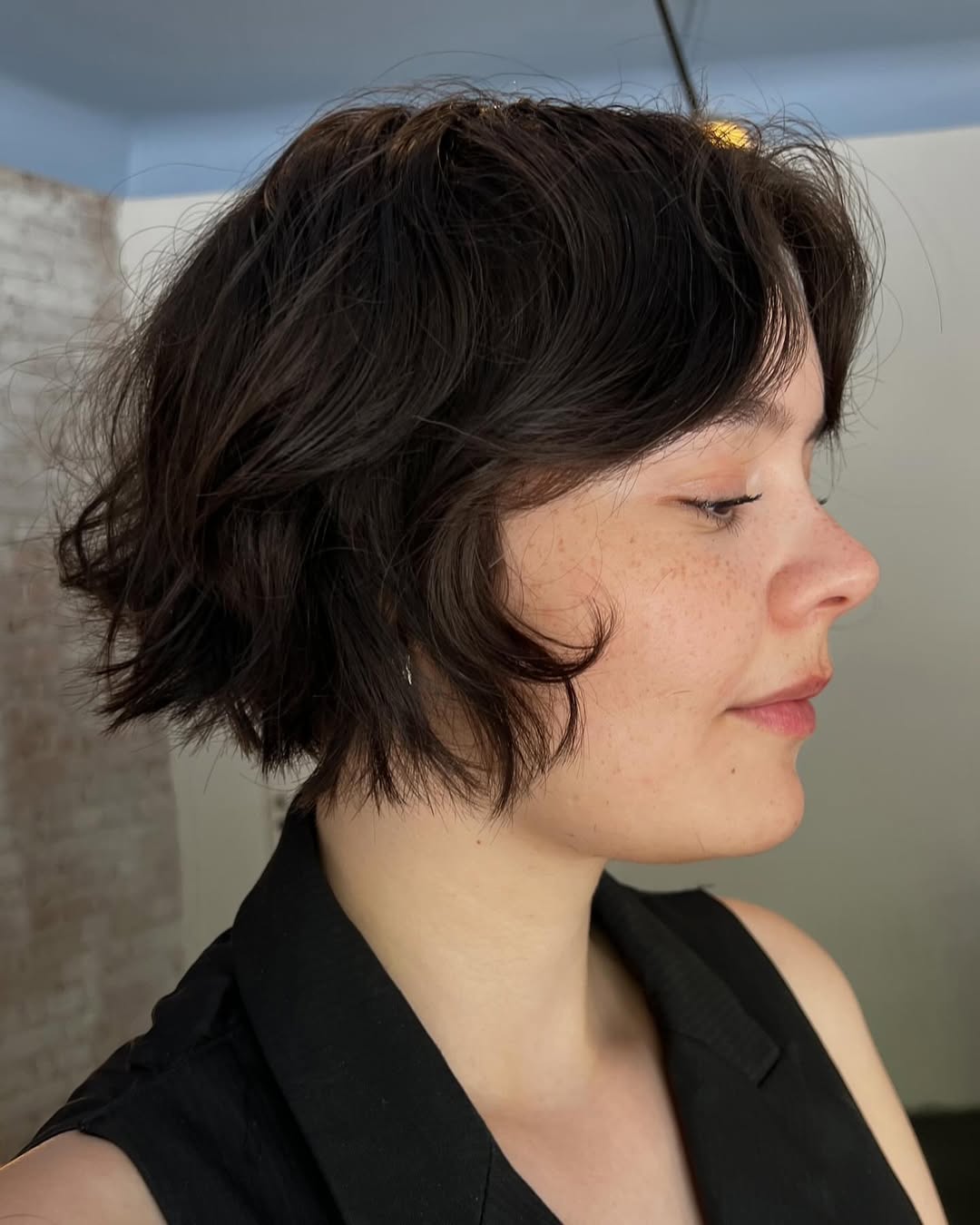
3. Stacked Bob with Graduated Back
Graduated layers at the nape build a lifted, rounded shape at the back while the front stays longer and heavier. On thick hair, this stacking creates dramatic volume without any product — the density pushes the crown upward naturally. Oval and heart-shaped faces benefit most from this silhouette, as the shorter back elongates the neck while the longer front pieces frame the jawline.
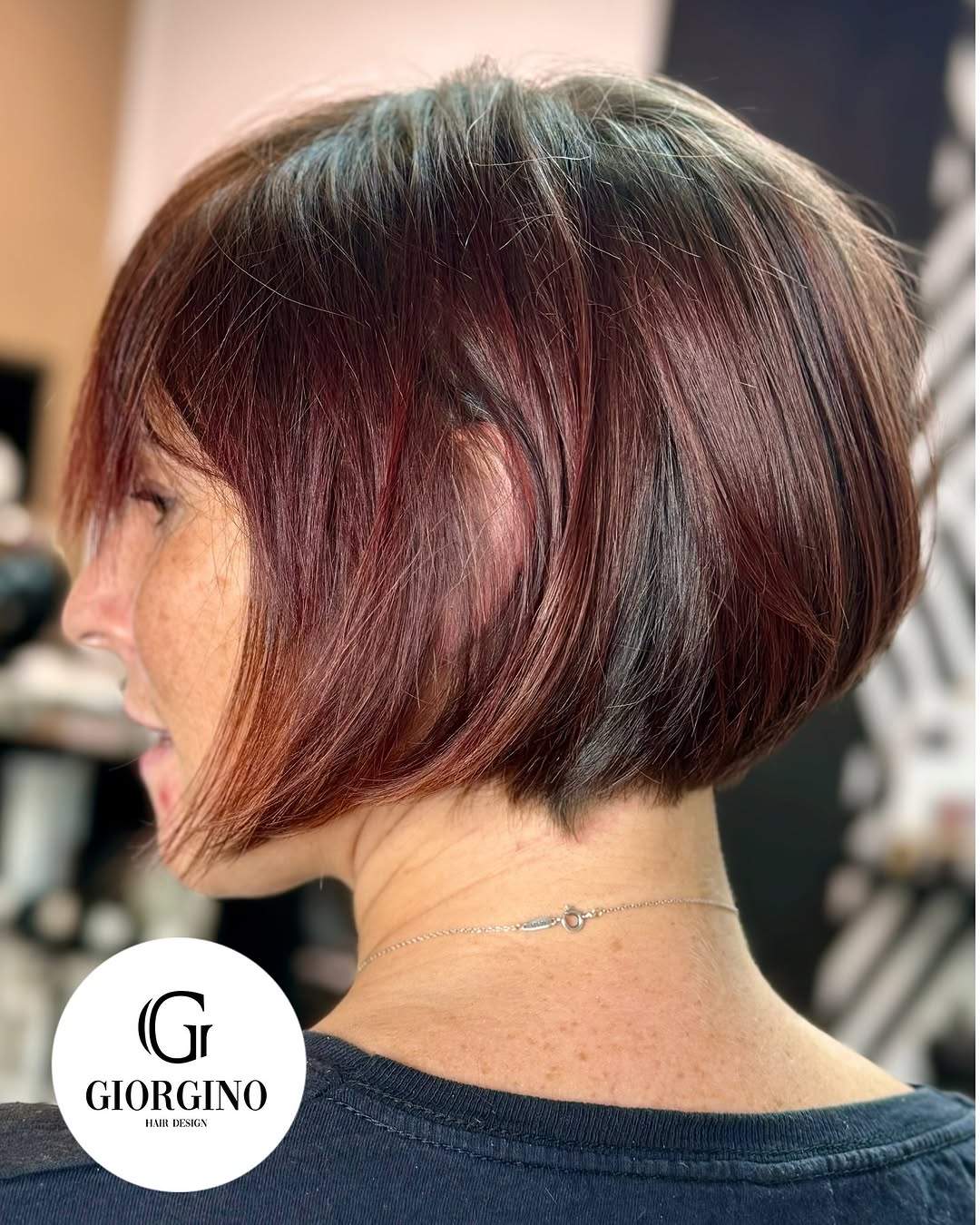
4. Razor-Cut Micro Bob
Razor cutting removes weight from thick strands in a way scissors cannot — the blade thins each section as it cuts, producing feathered, tapered ends instead of a blunt edge. At above-chin length, this technique transforms dense, coarse hair into something that moves and separates naturally. If your hair tends to puff out at short lengths, this is the cut that counteracts it.
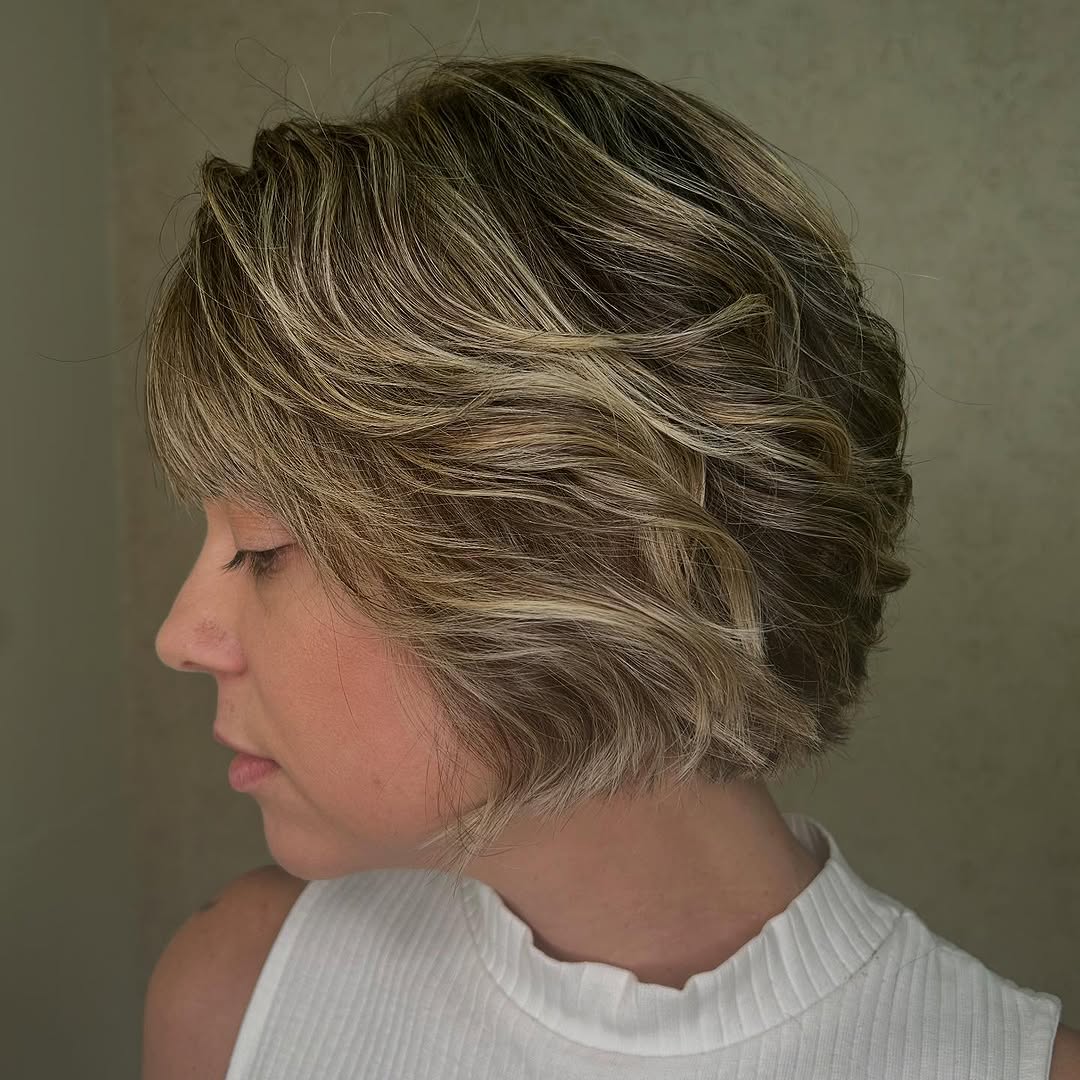
5. Ear-Length Bob with Side Part
A deep side part shifts the weight of a short bob asymmetrically, which prevents the boxy look thick hair can create at ear length. One side falls heavier while the other tucks neatly, giving the cut an angular quality that flatters square and round face shapes equally. Keep a lightweight smoothing serum on hand — thick hair at this length can frizz at the sides without some cuticle control.
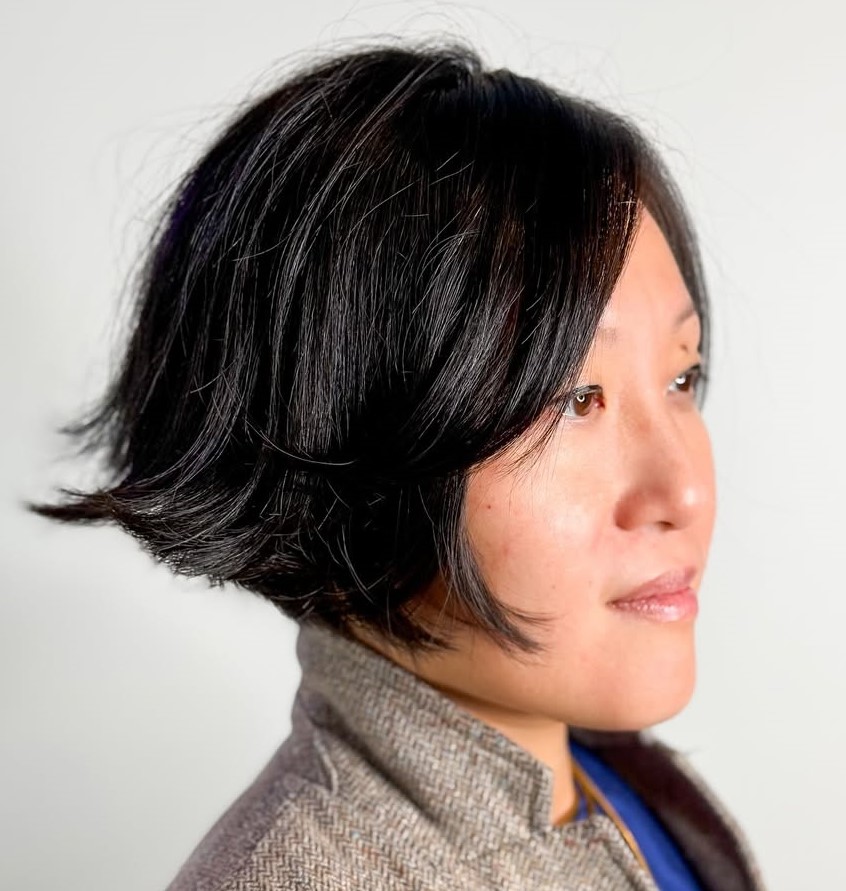
6. Chin-Length Wavy Bob
Naturally wavy thick hair at chin length falls into a textured shape that looks deliberately undone without any heat styling. The waves create their own layered effect, breaking up the density visually even if the cut itself has minimal layering. Air-dry with a sea salt spray scrunched into damp hair, or use a diffuser on low heat for 5 minutes to set the wave pattern. This is one of the lowest-maintenance options in this gallery.
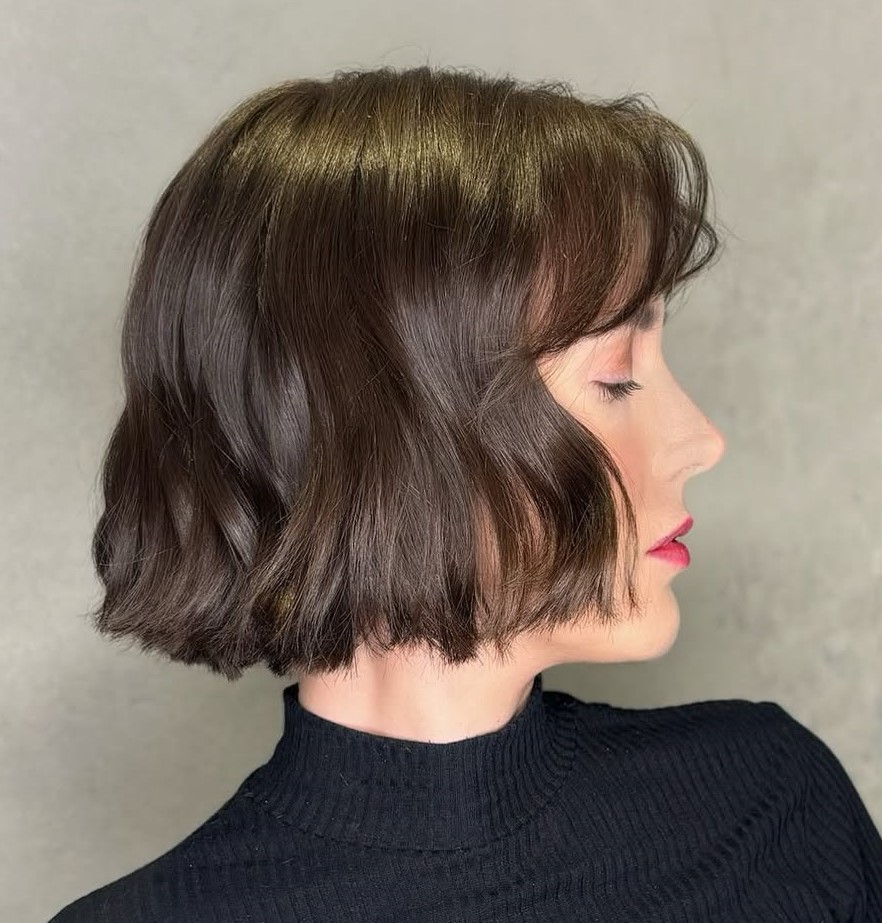
7. Jaw-Skimming Blunt Bob with Wispy Bangs
Unlike a full fringe, wispy bangs use thinned, feathered strands that soften a blunt bob without adding the heaviness that thick hair doesn’t need more of. The contrast between the solid perimeter and the delicate bangs creates visual interest. Bring a reference photo for the bangs specifically — “wispy” means different things to different stylists, and on thick hair, under-thinning the fringe is a common mistake that leaves it looking blocky rather than airy.

8. Textured Pixie Bob for Thick Hair
Sitting between a pixie and a bob, this bixie uses heavy texturizing throughout — point cutting, slide cutting, and notching — to reduce the volume thick hair creates at very short lengths. The result is a cut that looks effortlessly choppy rather than mushroom-shaped. It grows out faster than you’d expect; by week 6, the shape starts softening into something closer to a short bob, which makes the transition less awkward than a standard pixie grow-out.

Jaw to Shoulder-Length Bobs for Thick Hair
This is the length range where thick hair has the most options. Enough weight to fall naturally, enough length to layer effectively, and enough room for your stylist to sculpt the shape without the hair springing shorter than expected. Most of the bobs in this section sit between the jawline and the collarbone — the sweet spot for thick textures that want structure without heaviness.
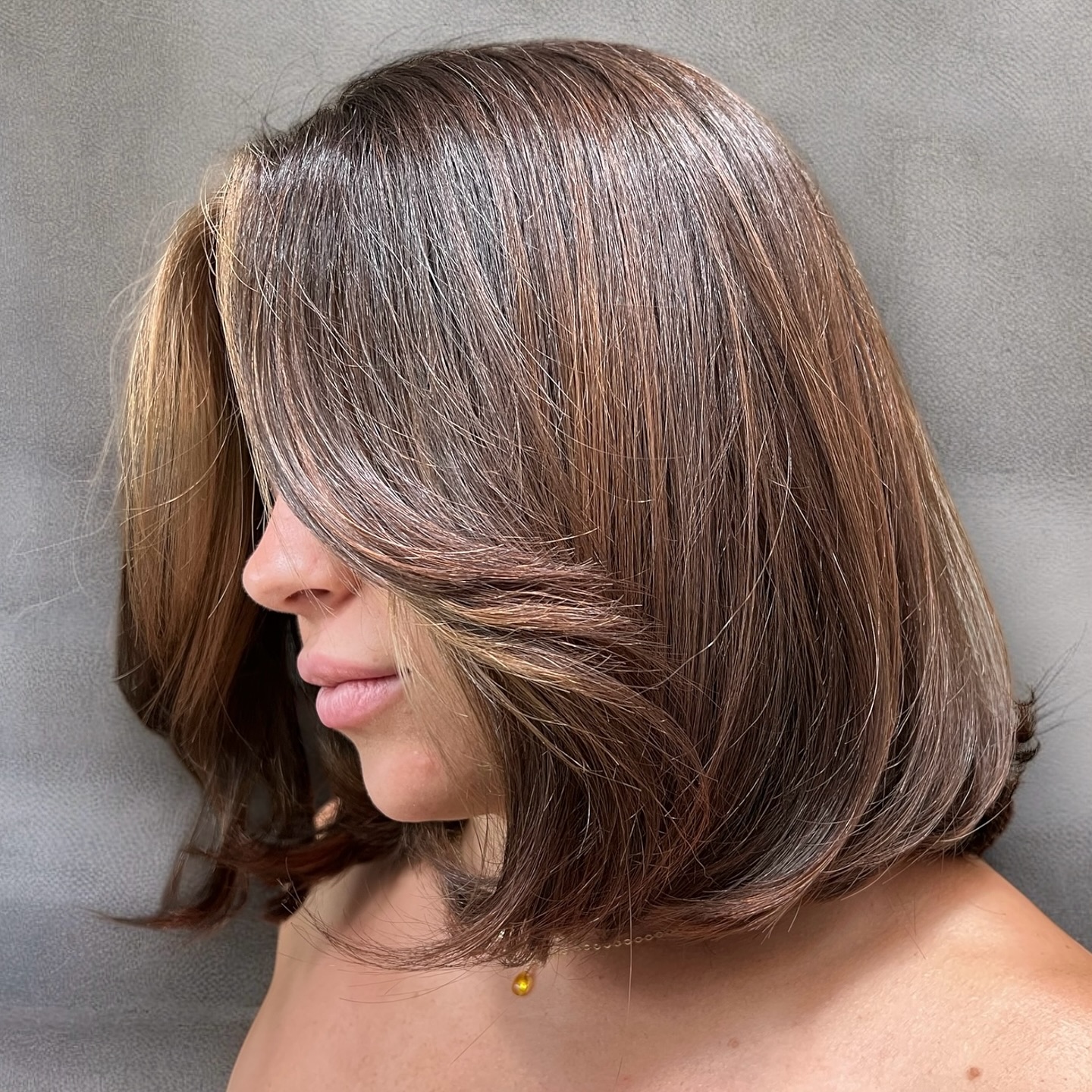
9. Angled Lob with Internal Layers
The angle — shorter at the back, gradually lengthening toward the front — directs the eye downward and creates an elongating effect that counteracts the width thick hair can add at the jawline. Internal layers (hidden beneath the surface, not visible when the hair is down) remove mid-shaft bulk while preserving a smooth exterior. This is the bob to ask for if you want the sleekness of a one-length cut with the manageability of layered hair underneath.
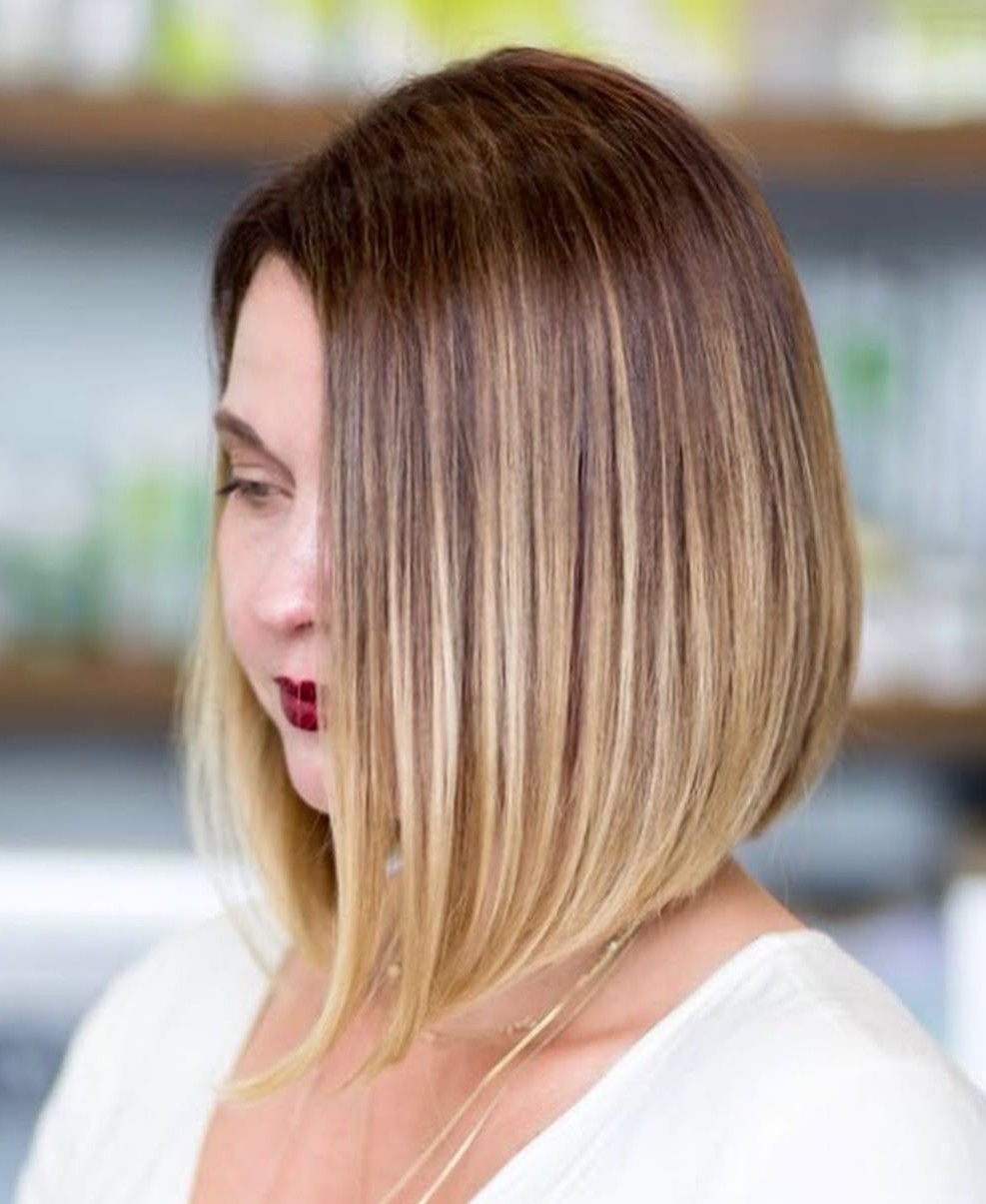
10. One-Length Lob at Collarbone
On thick hair, a lob with no layering at all creates a dense, satisfying weight that swings when you move. The collarbone length is heavy enough that gravity keeps it smooth, which is why this works even on hair that tends to puff out at shorter lengths. The trade-off is daily styling — you’ll need 10–15 minutes with a round brush and blow-dryer to get the polished, inward-curving shape. Without heat, the ends may flip outward unpredictably.
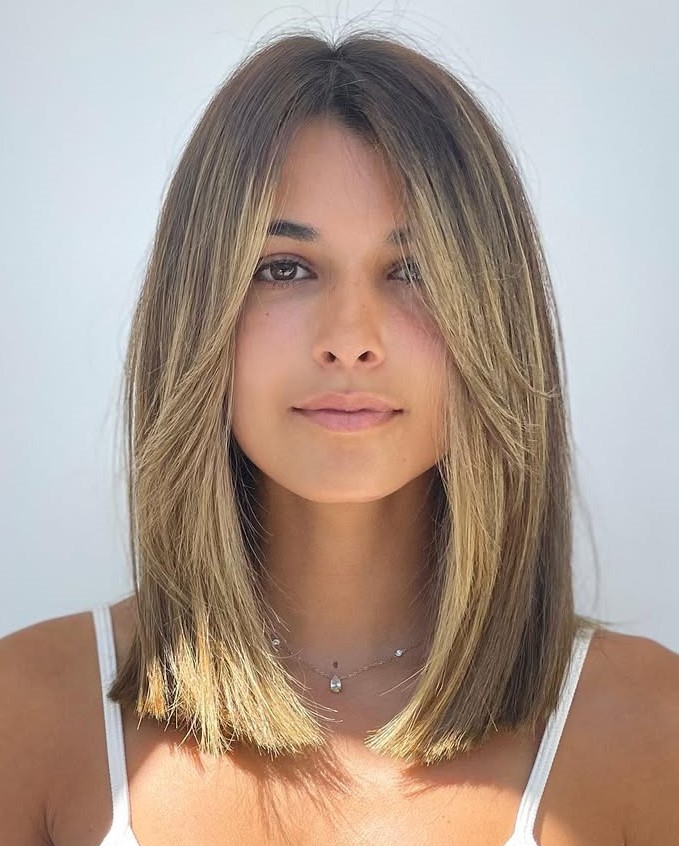
11. A-Line Bob
Unlike a gradual angle, the A-line cuts a steep diagonal from a short nape to a chin-length or longer front. Thick hair holds this geometry better than fine hair because the density maintains the line even in humid conditions. The shorter back removes a significant amount of hair at the nape, which makes this one of the more effective bobs for reducing the “heaviness on my neck” complaint that many thick-haired clients bring to consultations.
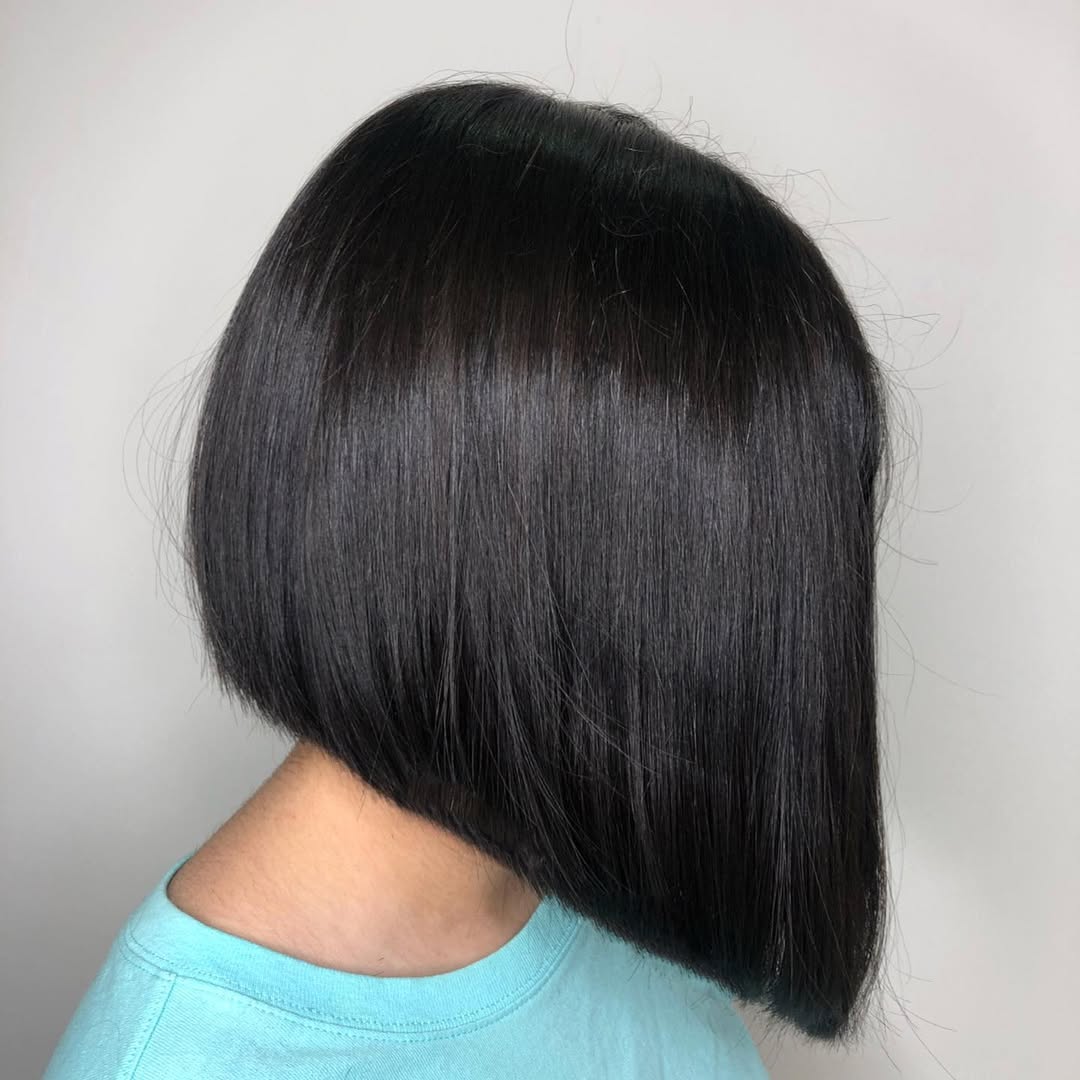
12. Shoulder-Length Bob with Face-Framing Layers
Face-framing layers starting at cheekbone level and graduating into the main length create contour around the face without disrupting the bob’s overall shape. On thick hair, these layers do double duty — they lighten the front section and direct attention to the eyes and cheekbones. Ask your stylist to cut the face-framing pieces while your hair is dry so they can see exactly where they fall, especially if your hair has any wave to it.
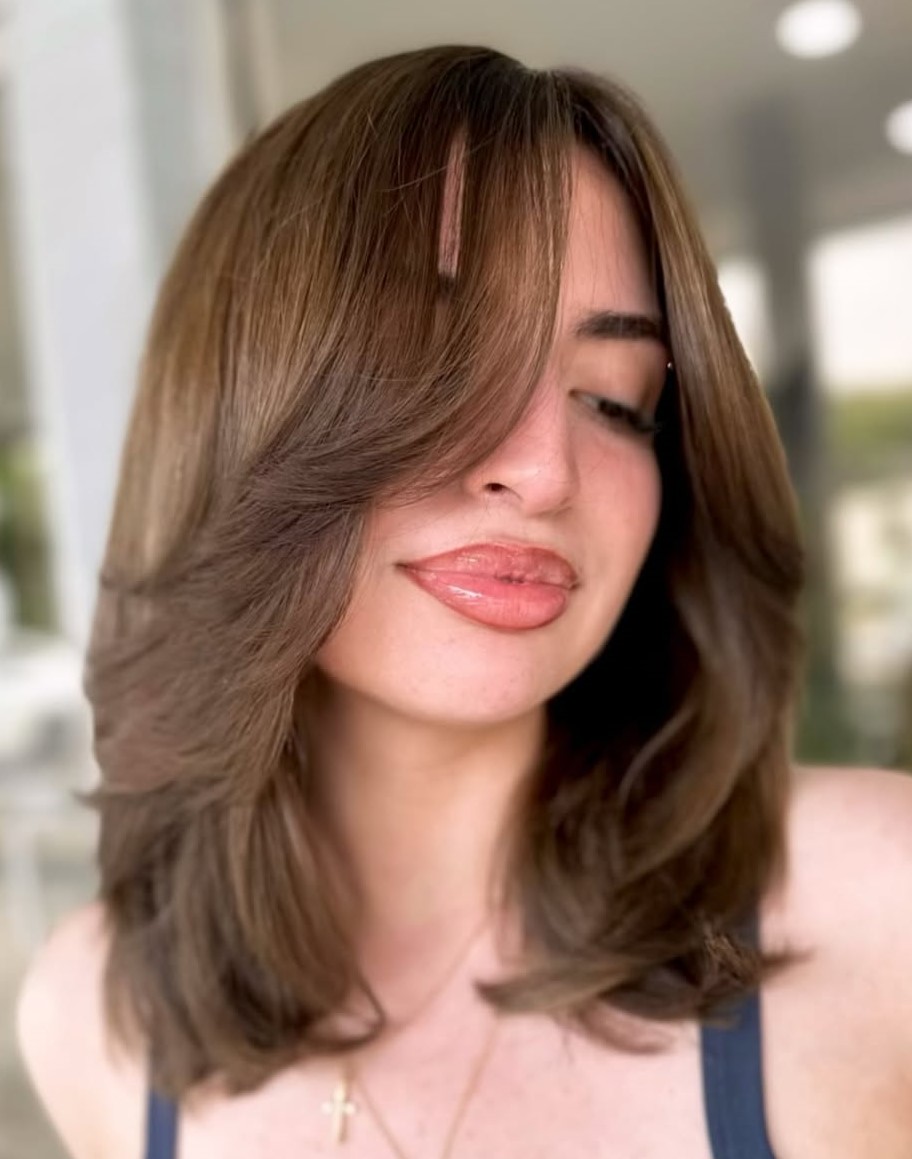
13. Inverted Bob with Undercut
An undercut at the nape removes the bottom one to two inches of hair entirely, which is the most aggressive bulk-removal option in this gallery. Layered over the top, the remaining hair covers the undercut completely — nobody sees it unless you lift the back. For thick hair that feels like a blanket on your neck even after layering, this combination gives relief while keeping the bob’s exterior shape intact. Expect to maintain the undercut with a buzz every 3–4 weeks.
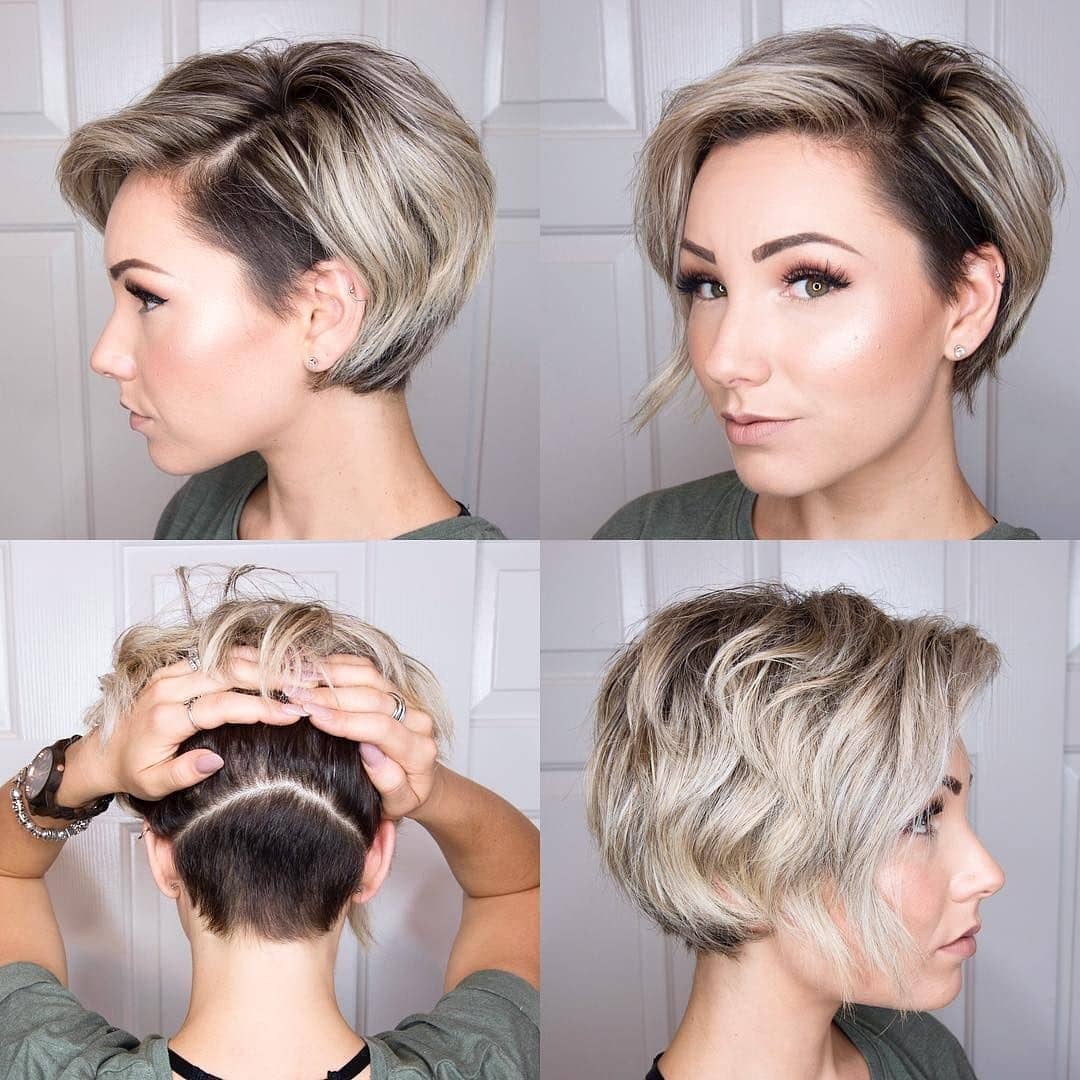
14. Graduated Bob
Graduation creates layers that stack progressively shorter toward the back, building a rounded, lifted shape at the crown. Where a stacked bob is dramatic, a graduated bob is subtle — the length difference between sections is smaller, producing a smoother arc. Thick hair amplifies this effect naturally; the density pushes each layer outward, which is why stylists often use this technique to add movement to dense hair that otherwise hangs flat and heavy.
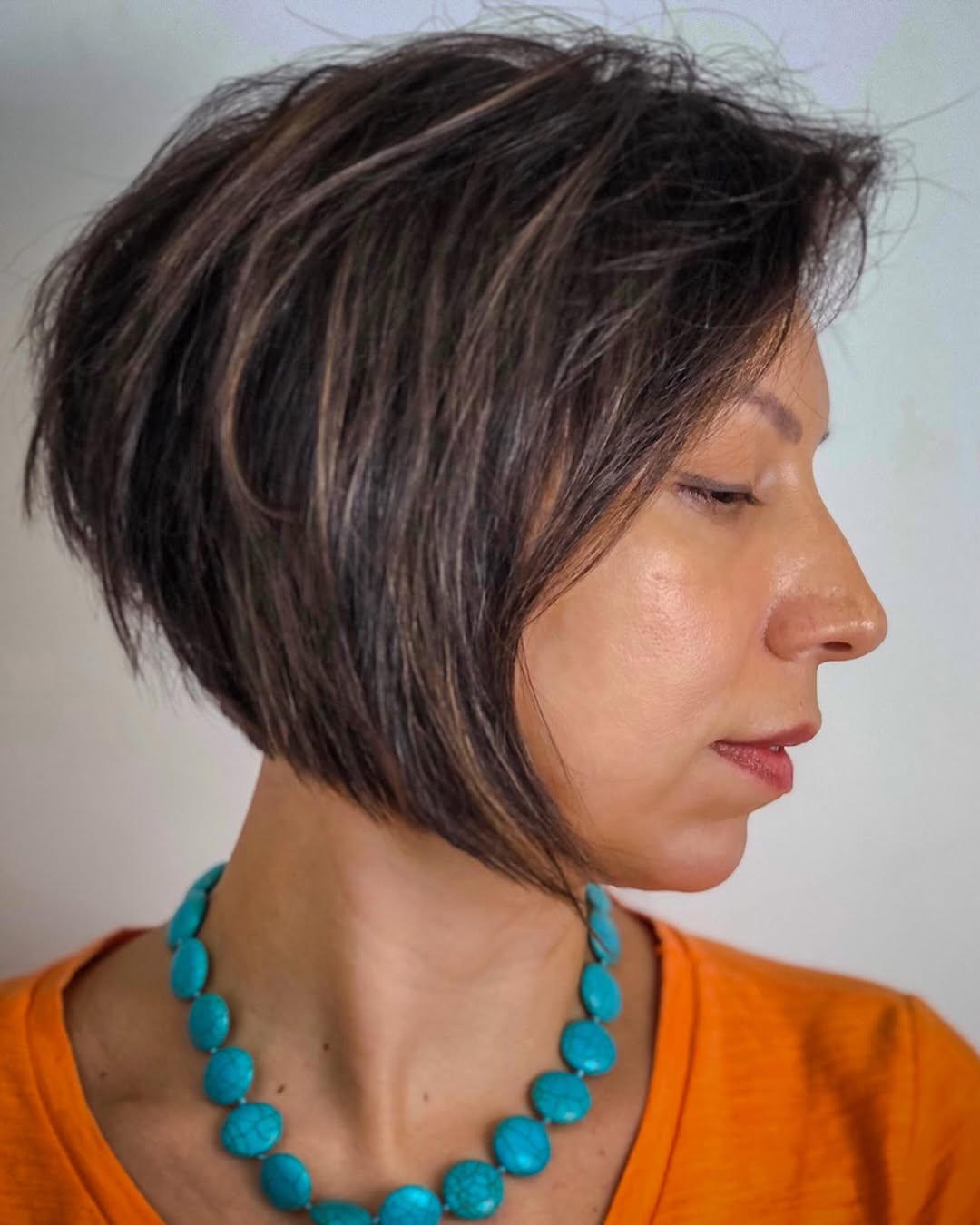
15. Messy Lob with Curtain Bangs
Achieve this look by applying a golf-ball-sized amount of texturizing cream to towel-dried hair, scrunching upward, and air-drying — no heat needed. The combination of curtain bangs and a tousled lob works particularly well on thick wavy hair because the natural texture creates the “messy” effect without the flattening that fine hair experiences with this style. The bangs will need trimming every 3–4 weeks to keep them parted and flowing rather than poking into your eyes.
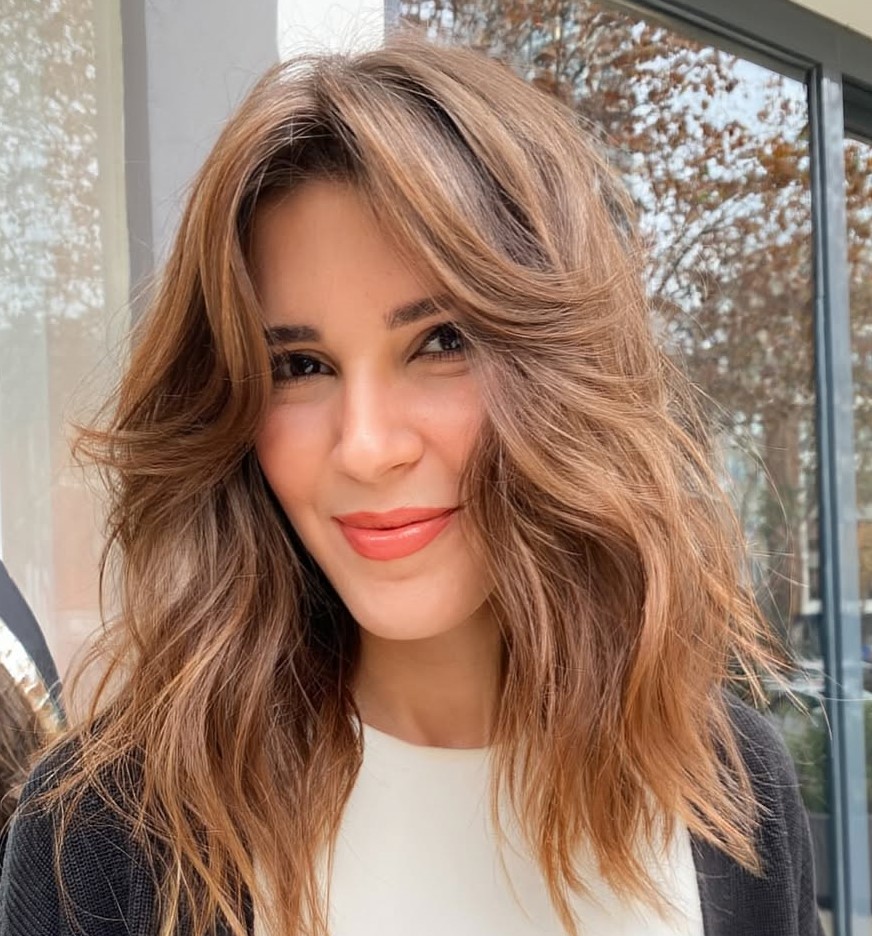
16. Jaw-Length Blunt Bob with Middle Part
A middle part on a blunt bob creates symmetry that reads as intentional and polished. Thick straight hair is actually the ideal canvas for this cut — the density holds the line, and the weight keeps both sides even. Round faces should be cautious with this combination, however. The center part combined with jaw-length hair can emphasize facial width. If you have a rounder face shape but want this look, extend the length to just below the jaw so the hair falls past the widest point of the face.
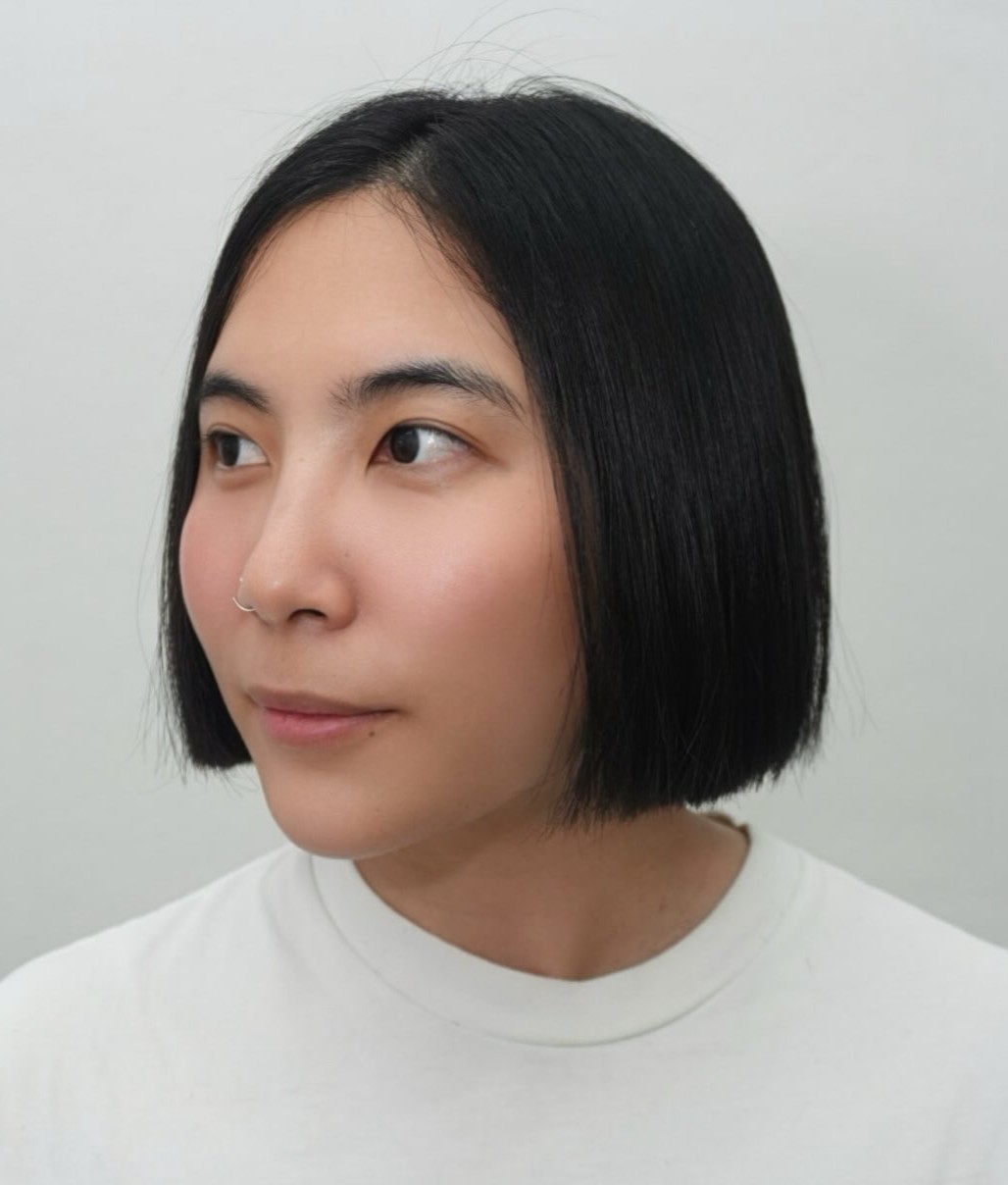
Layered and Textured Bobs That Reduce Bulk
If your main goal is making thick hair feel lighter and more manageable, this is the section that matters most. Every bob here uses specific layering or texturizing techniques designed to remove weight from dense hair. The difference between a good layered bob on thick hair and a bad one usually comes down to where the layers start and how the stylist removes the interior bulk — ask about internal layers and point cutting specifically, not just “layers.”
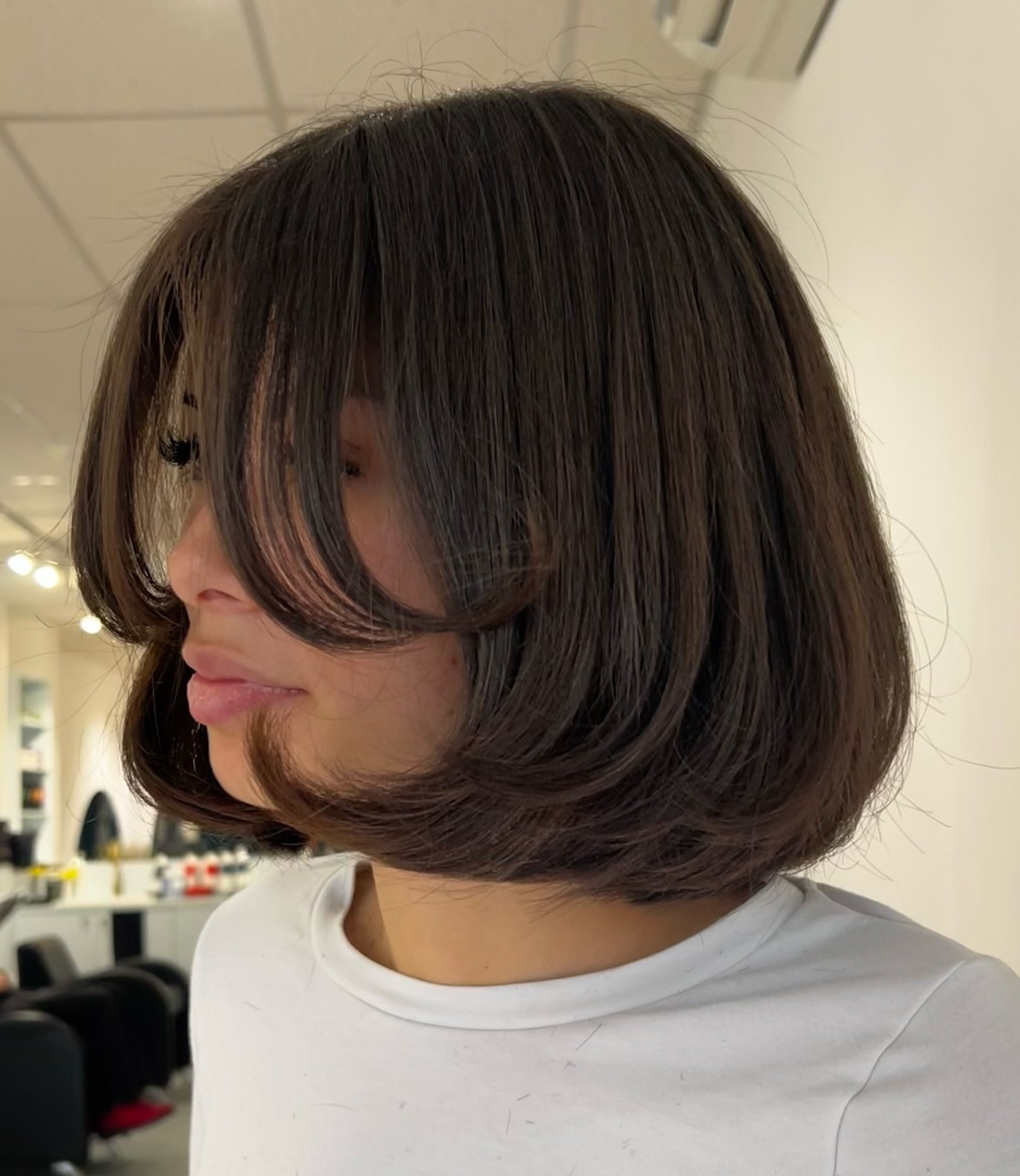
17. Long Layers in a Shoulder-Length Bob
Long layers starting at chin level and graduating down to the ends remove bulk gradually without creating the choppy, disconnected look that heavy layering can produce. On thick straight hair, this layering approach preserves the bob’s shape while reducing the amount of hair sitting on the shoulders by roughly 30%. The result is a cut that still reads as a “bob” rather than a layered cut — the structure stays clean.
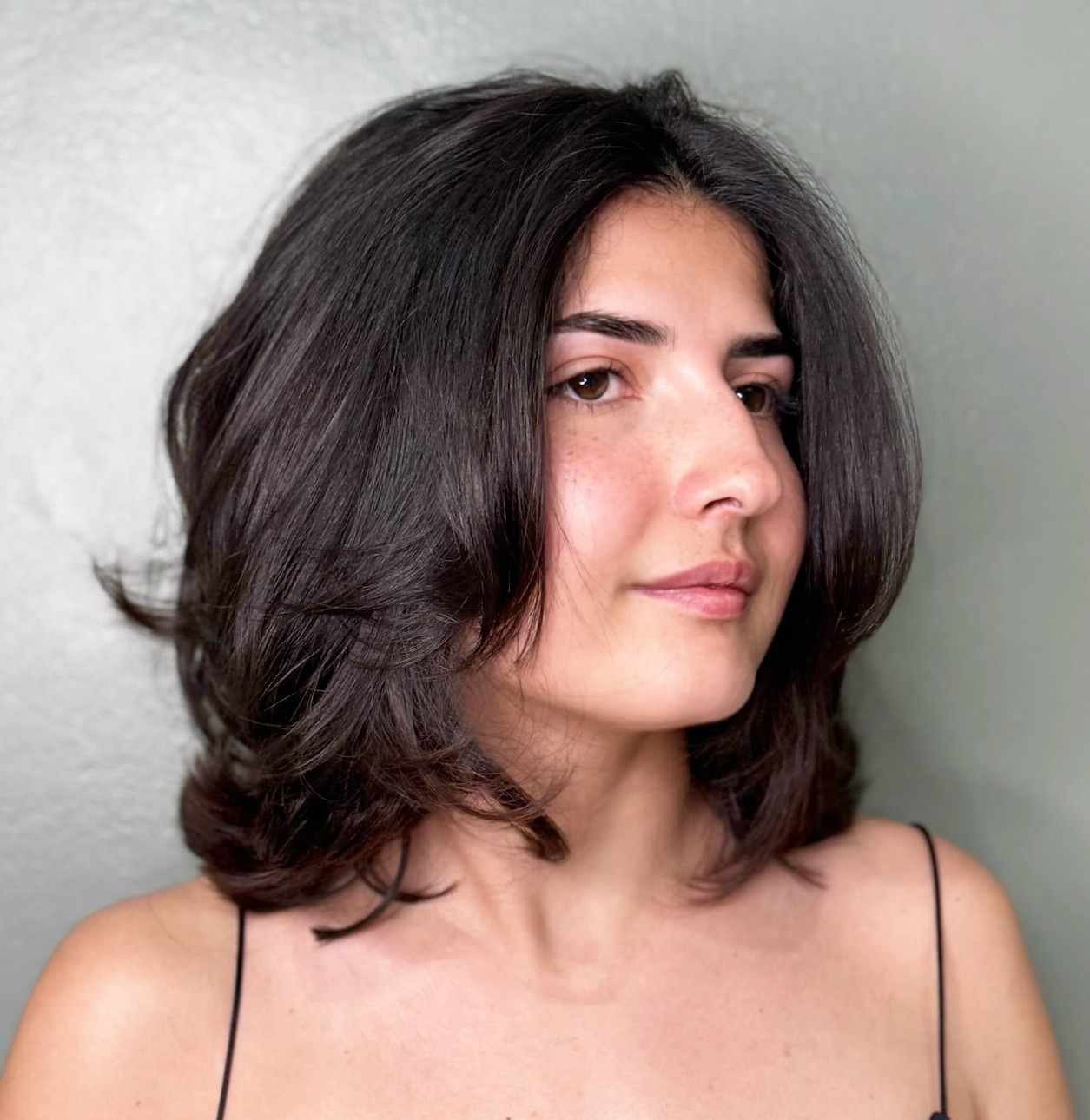
18. Choppy Textured Bob
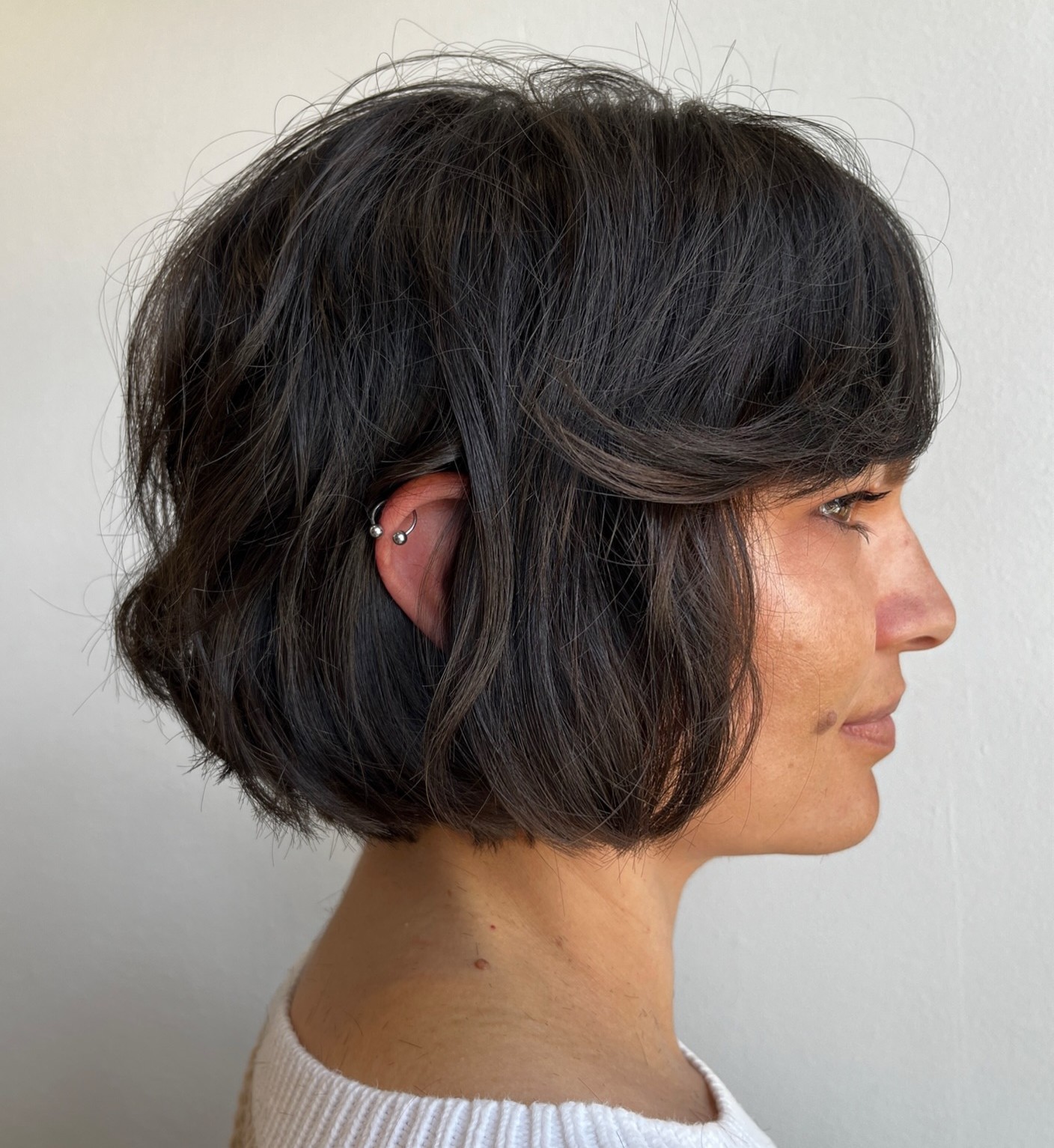
Heavy point cutting throughout the perimeter creates a deconstructed edge where individual strands separate and move independently. Unlike a blunt cut that holds its shape in a solid line, this style looks deliberately imperfect — and thick wavy hair makes it look even more textured because each strand has its own direction. A texturizing spray applied to dry hair is all you need for day-to-day styling, which makes this one of the fastest morning routines in the gallery.
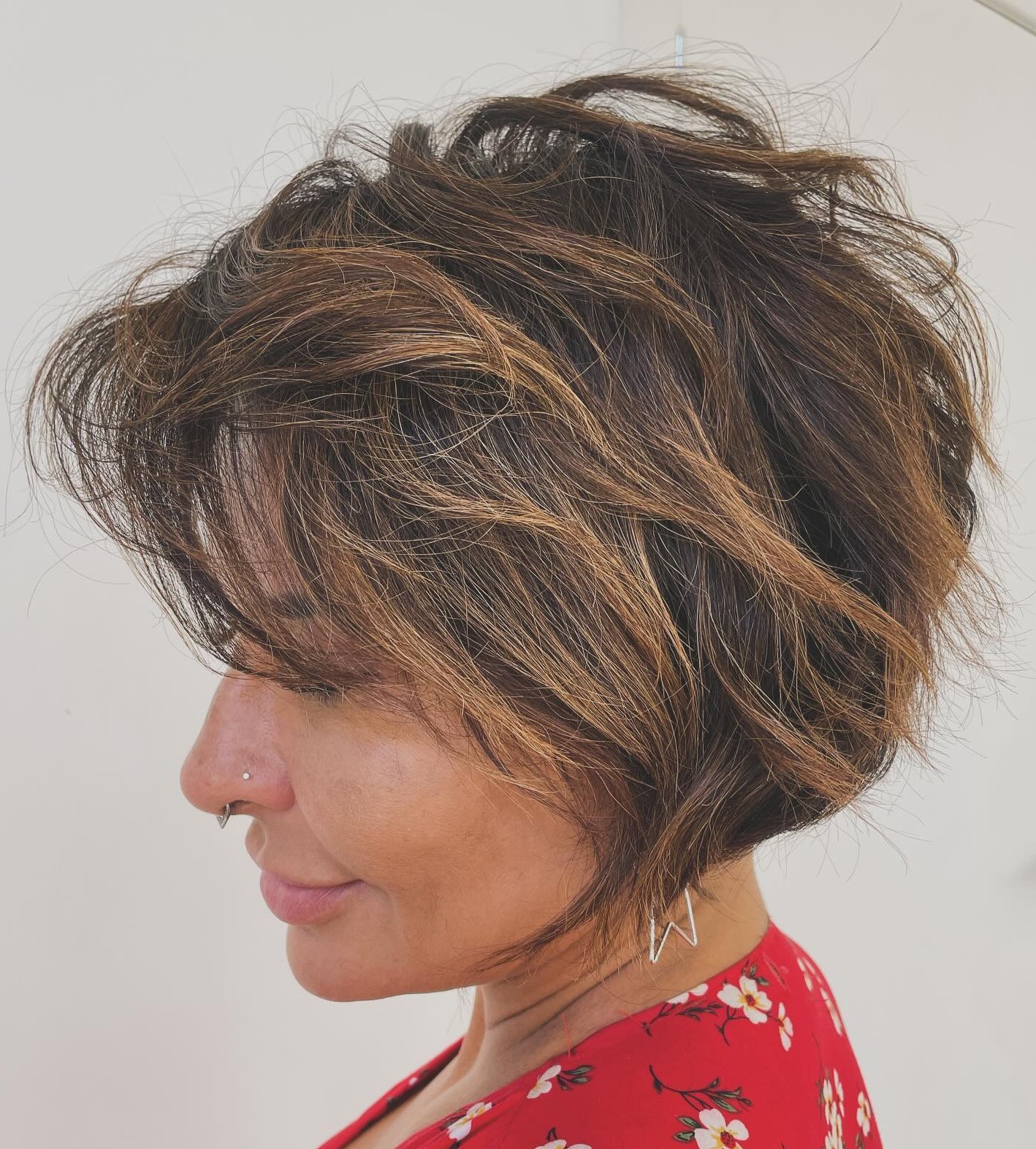
19. Shaggy Bob with Bangs
The shaggy bob uses more aggressive layering than a standard layered bob, with layers starting closer to the crown and graduating steeply downward. On thick hair, this aggressive approach is exactly what reduces that “triangle” shape where density builds outward toward the bottom. Full bangs complete the look and remove even more weight from the front. If your thick hair has been making every bob feel too solid and heavy, this is the variation that breaks that pattern most effectively.
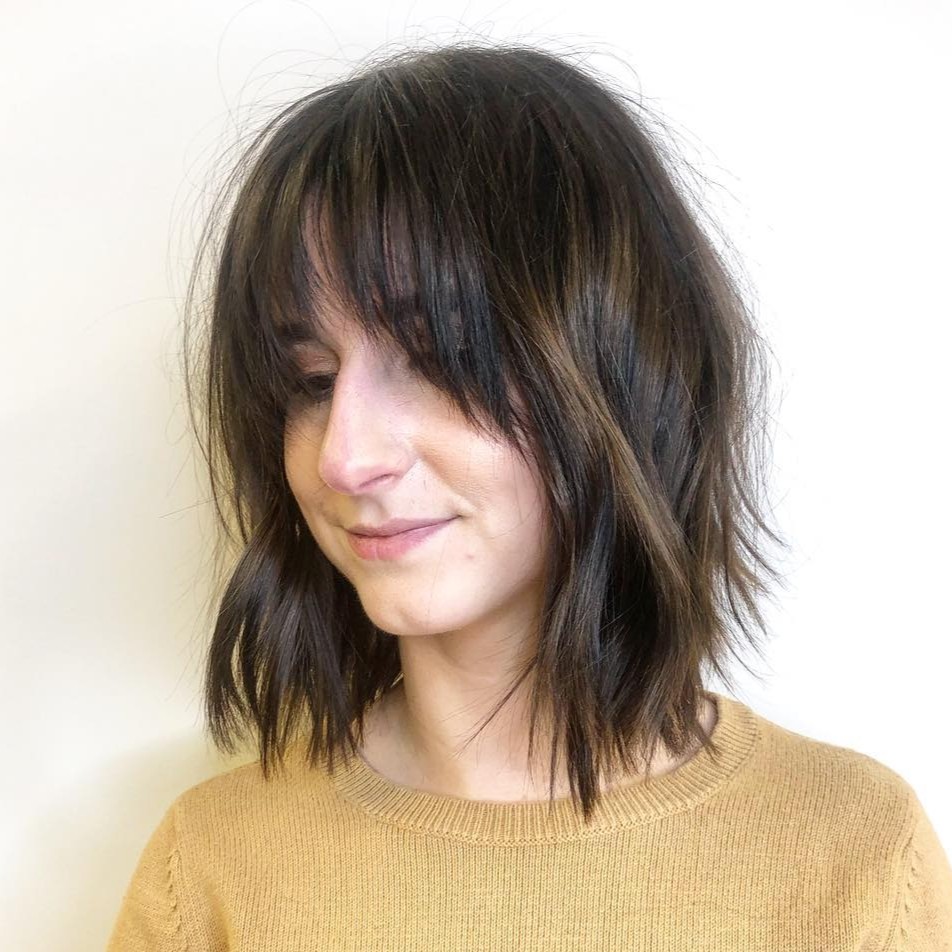
20. Slide-Cut Bob for Thick Wavy Hair
Slide cutting involves running the scissors along the hair shaft at an angle rather than cutting across it, which thins each section while preserving its length. Thick wavy hair responds well to this technique because it removes interior volume without shortening the wave pattern. Ask your stylist specifically for slide cutting rather than thinning shears — thinning shears on thick hair can create a frizzy, uneven texture, while slide cutting produces a smoother, more tapered result.
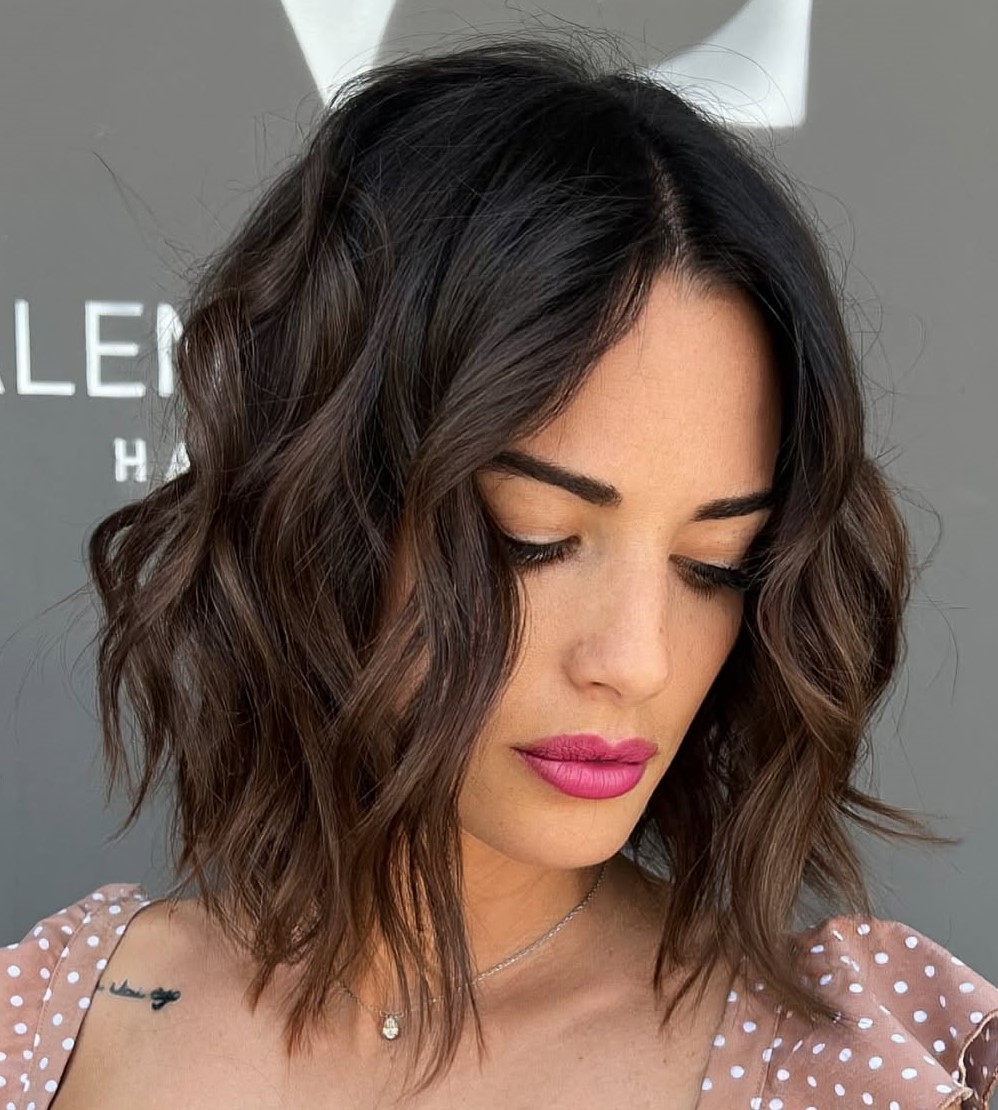
21. Layered Bob with Flipped Ends
Ends that flip outward rather than curving under give a layered bob a retro-modern quality that works because thick hair has the rigidity to hold the shape. Use a flat iron on the last inch of each section, rotating outward, to set the flip. The style lasts one to two days on thick hair without restyling, thanks to the hair’s natural hold — a dry shampoo at the roots on day two is usually all it takes to extend the look.
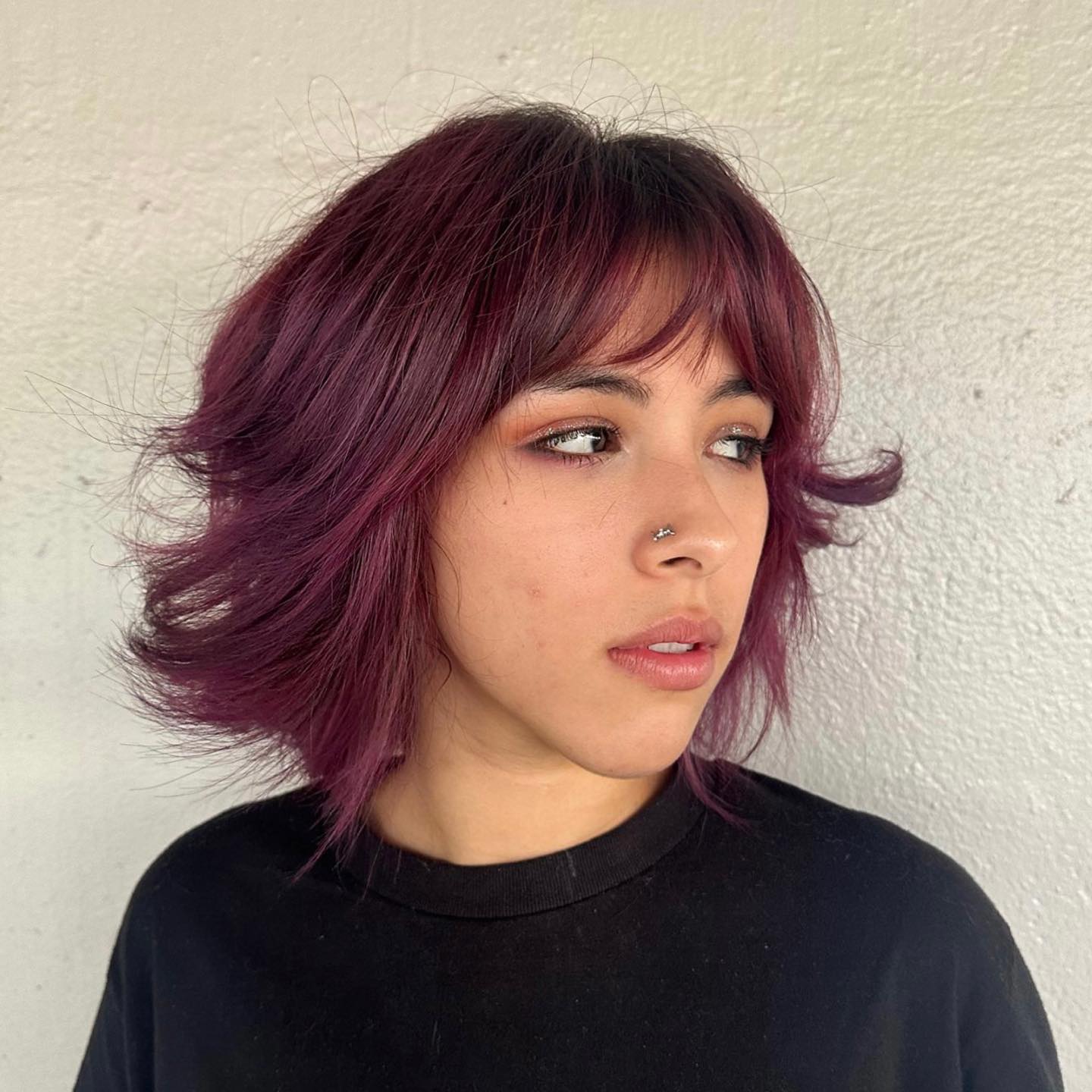
22. Heavily Layered Chin-Length Bob
On very thick, coarse hair, subtle layering sometimes isn’t enough. This variation uses short layers starting 2–3 inches from the crown, creating significant weight removal throughout the entire shape. The cut looks intentionally textured and voluminous at the top while tapering dramatically toward the ends. Bring a photo showing the exact amount of layering you want — “heavily layered” is subjective, and on very dense hair, a stylist might still hold back unless you make the goal explicit.

23. Feathered Bob
Feathering creates tapered, wispy ends by cutting hair at an angle along the outermost sections, producing movement that flicks outward and inward at different points. Thick hair benefits from feathering because it breaks up the bottom line’s density, making the perimeter look lighter and more dynamic. The look references 1970s styling but reads as modern when kept at jaw-to-shoulder length with a side part. Blow-dry with a medium round brush, flicking alternating sections inward and outward for the most natural movement.
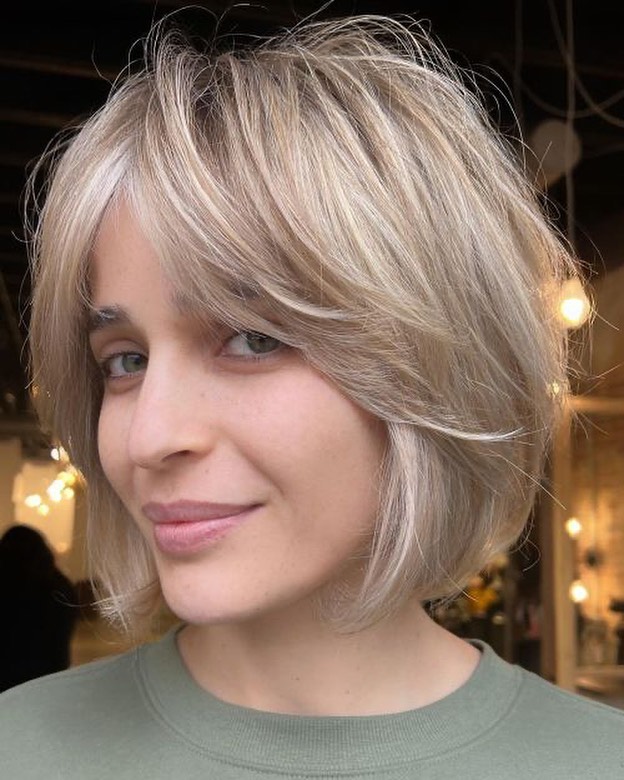
Bold and Edgy Bobs for Thick Hair
Thick hair gives edgier bob variations the structural backbone they need — sharp angles hold, asymmetry stays dramatic, and undercuts create genuine contrast between sections. These cuts lean more fashion-forward and require a bit more confidence in the chair, but they also solve the bulk problem more aggressively than traditional approaches.
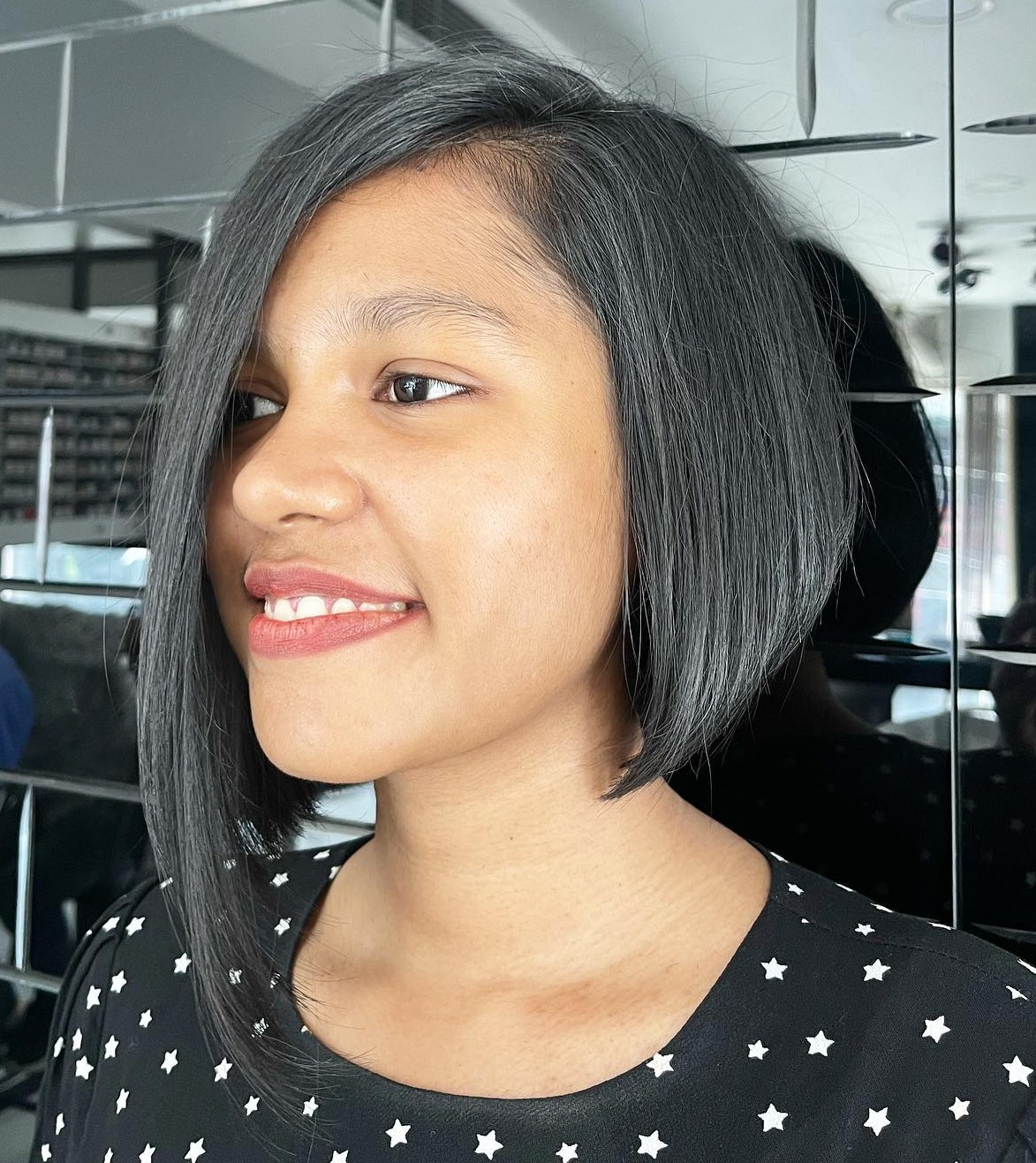
24. Asymmetrical Bob
One side sits at cheekbone level while the other drops to the chin or below, creating a deliberate imbalance that thick hair can sell because the shorter side maintains its density rather than looking thin. The longer side’s extra weight drapes forward, framing the face on that side. Heart-shaped faces work especially well with this variation — the longer side softens the wider forehead, while the shorter side highlights the cheekbone.
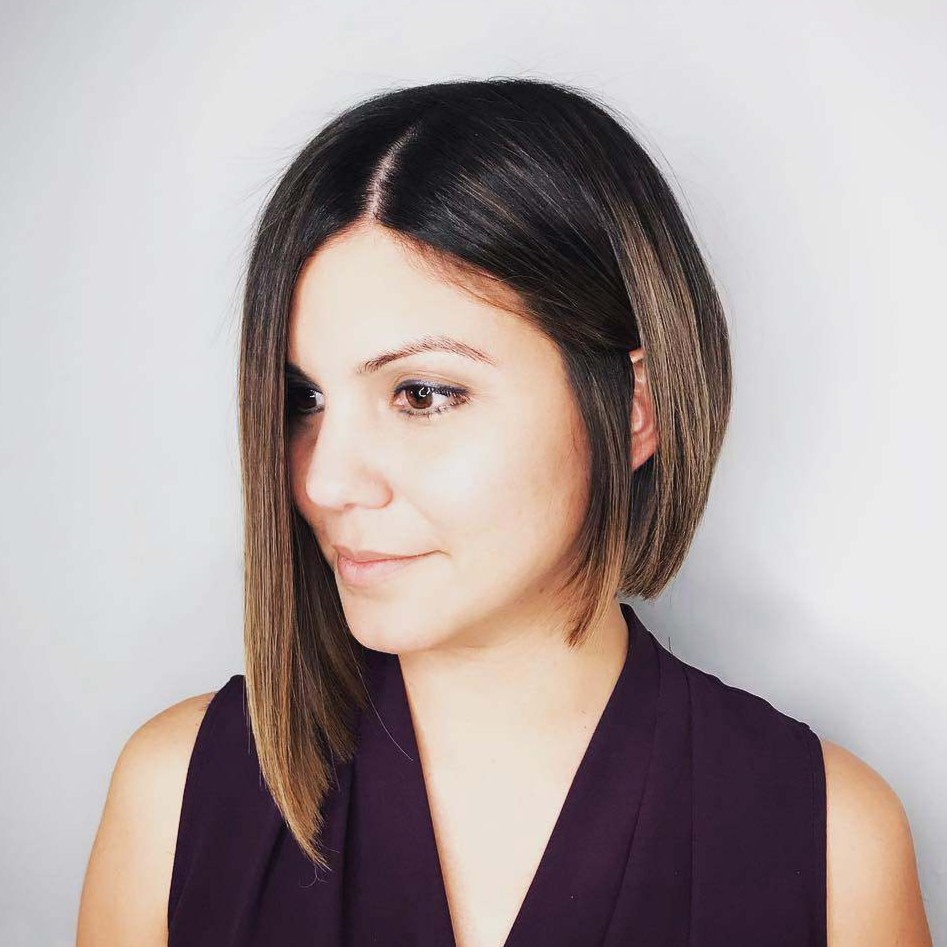
25. Blunt Bob with Bold Color
Dimensional color emphasizes the structure of a blunt cut by adding visual depth that monochromatic hair lacks. On thick hair, a rich copper or burgundy catches light across the surface differently depending on the angle, making the same cut look more complex than it is. The blunt perimeter showcases the color change at the tips, where lighter ends or contrasting tones create a frame effect. Keep in mind that color-treated thick hair needs a sulfate-free shampoo to prevent the color from fading faster than your trim schedule.
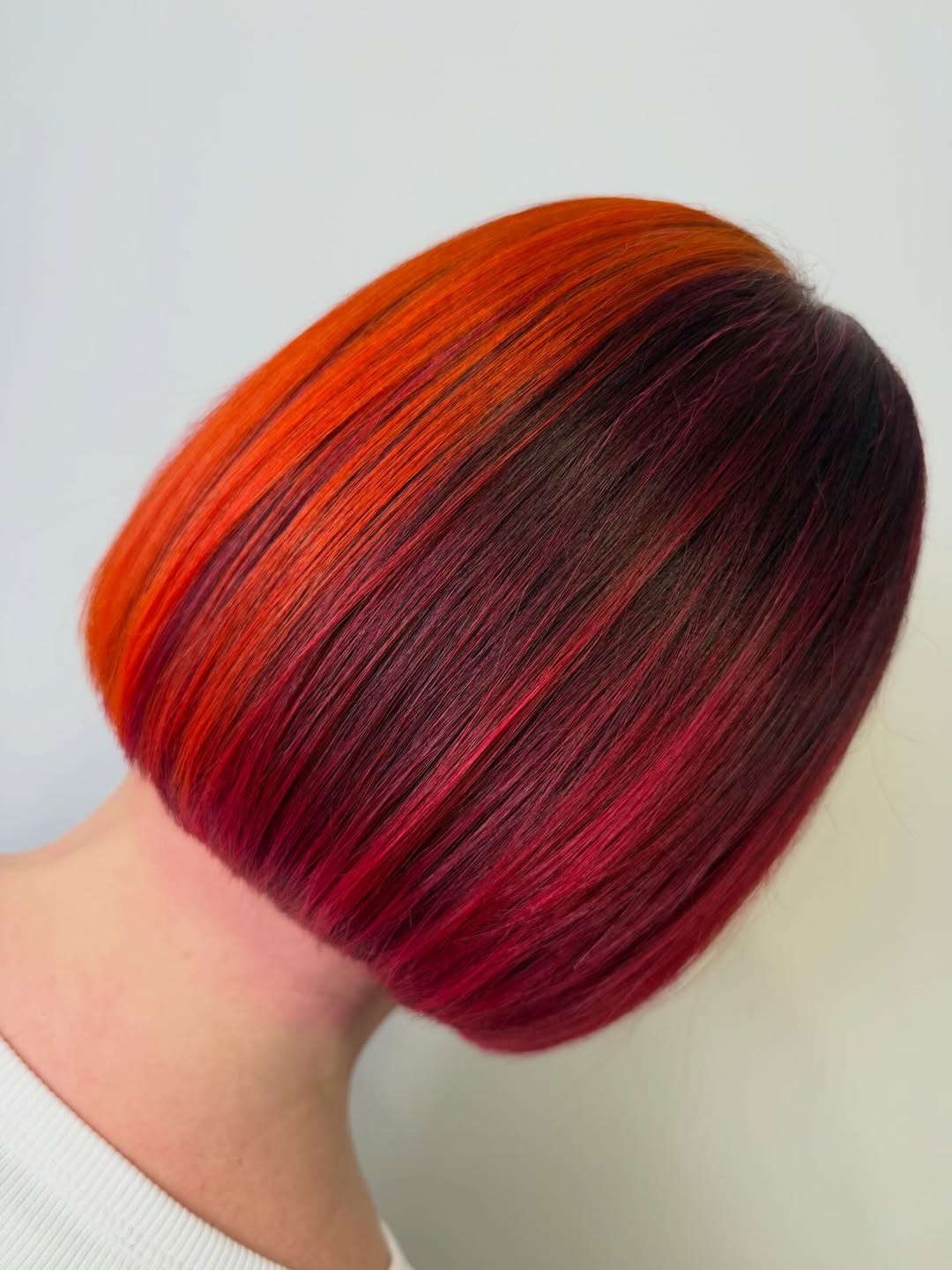
26. Disconnected Undercut Bob
Rather than a hidden nape undercut, this version shaves a visible section above one ear, creating a dramatic contrast between the dense bob and the bare skin. Thick hair makes the contrast even more pronounced — the full side looks luxuriously heavy next to the clean-shaven panel. This is a commitment cut: the shaved section needs buzzing every 2–3 weeks, and growing it out takes 6–12 months of awkward intermediate lengths.

27. Blunt Lob with Deep Side Part
A deep side part on a blunt lob transforms a simple cut into something cinematic by concentrating all the hair’s volume on one side. Thick hair creates a heavy, sweeping curtain that drapes across the forehead and falls past the shoulder on the dominant side. Square and oblong face shapes benefit from this asymmetric weight distribution — the sweep across the forehead softens angular features while the lopsided volume breaks the face’s vertical lines.

28. Textured Bob with Choppy Baby Bangs
Baby bangs — cut one to two inches above the eyebrow line — create an unexpectedly modern contrast against the density of a thick bob. The rest of the hair stays heavy and full while the bangs are deliberately thinned and textured to avoid the “shelf” effect that thick hair creates with a standard short fringe. This is a high-personality cut. Trying it on before committing (with clip-in bangs, for instance) can save you from discovering the look isn’t for you after the scissors have already done their work.
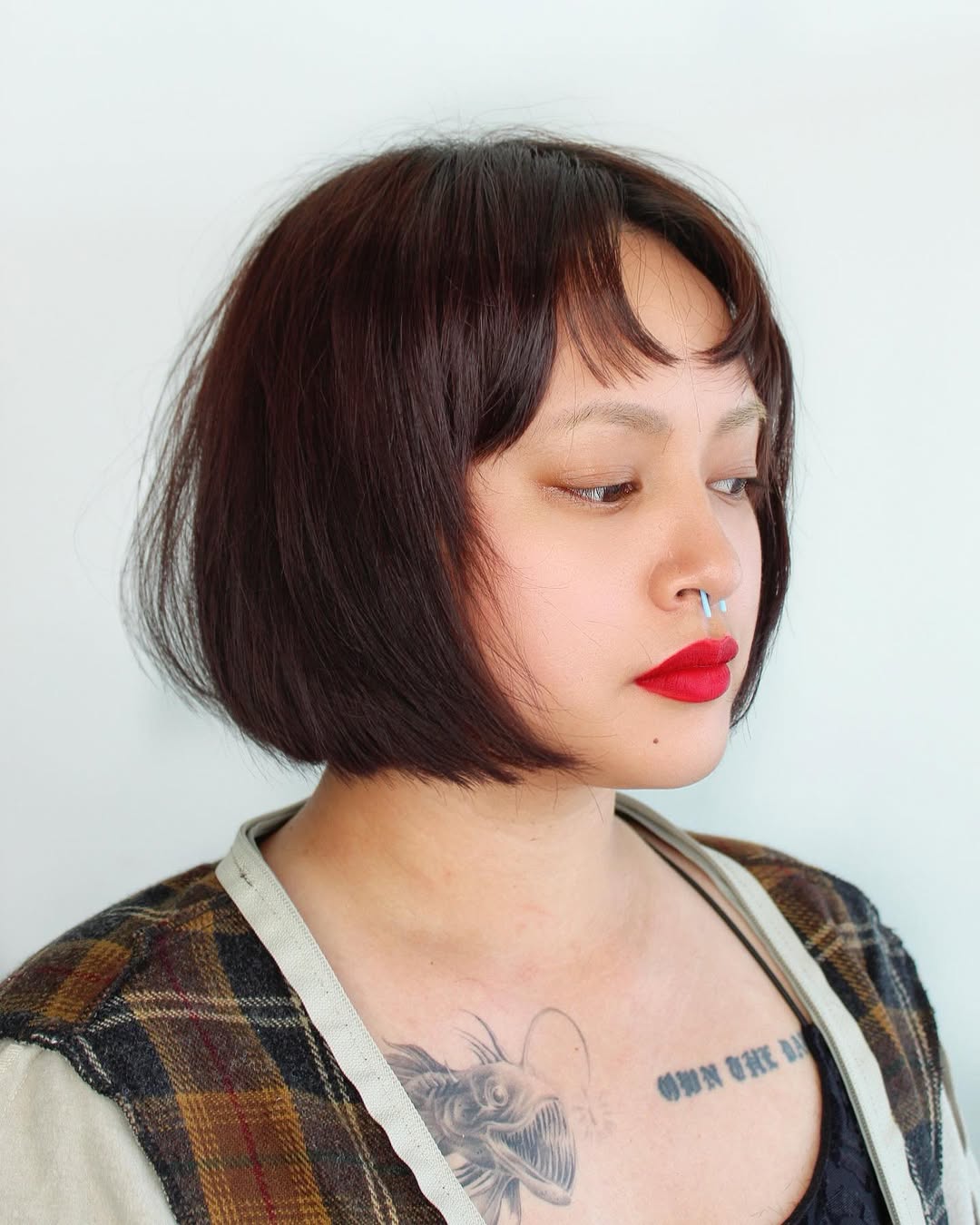
29. Chin-Length Curly Bob
Thick curly hair at chin length creates a full, rounded shape that’s hard to replicate with any other texture. The key is finding a stylist who cuts curly hair dry — wet cutting thick curls leads to a bob that ends up 2–4 inches shorter than intended once the curls spring back. Ask for curl-by-curl cutting, where each ringlet is shaped individually rather than sectioned and cut in straight lines. A leave-in conditioner and a light-hold gel define the curls without the crunch.
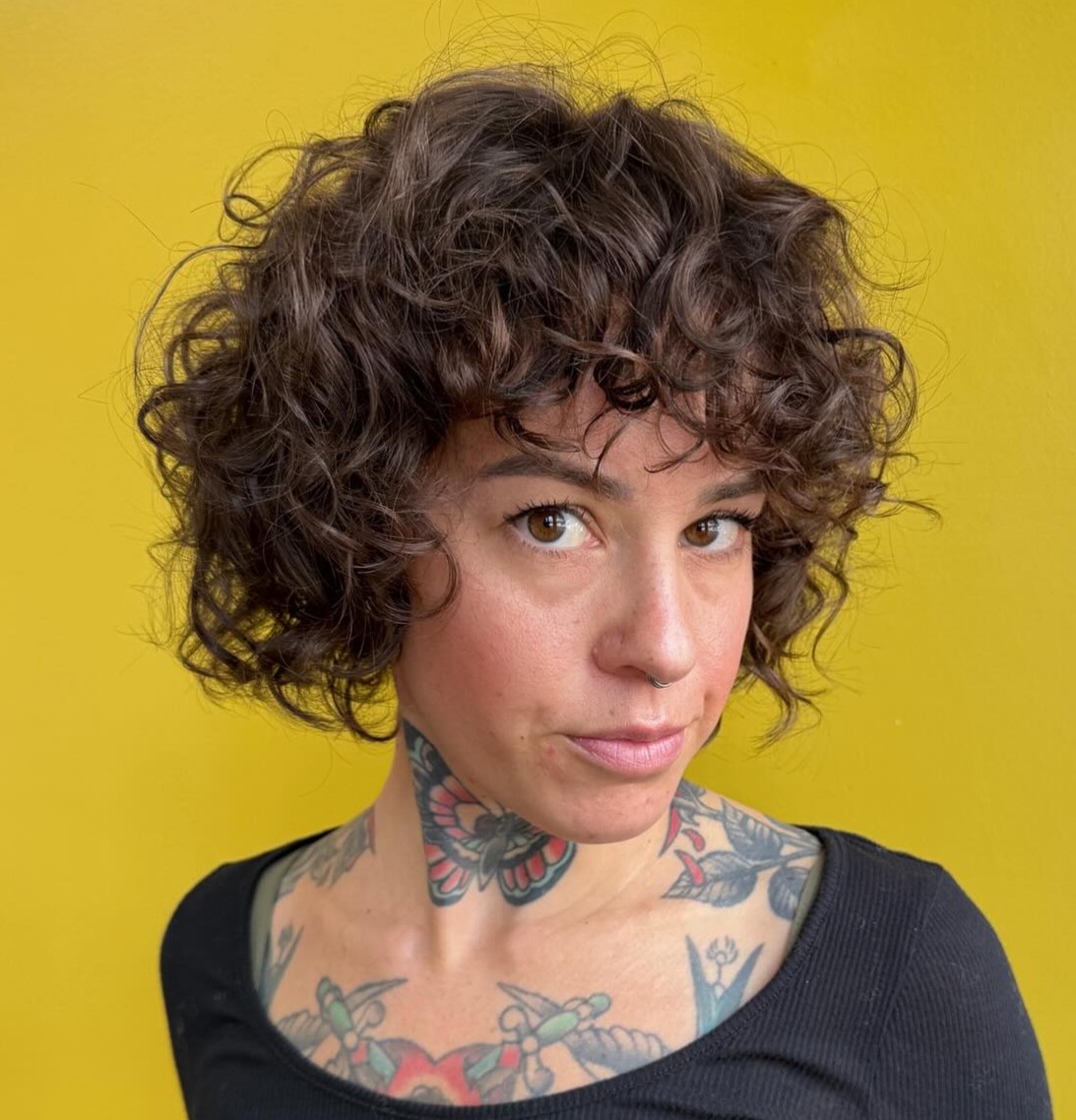
30. Sculpted A-Line with Razored Perimeter
Combining the steep geometry of an A-line with a razored perimeter gives thick hair both structure and softness in the same cut. The A-line architecture removes significant weight at the back while the razor work at the tips prevents the front length from looking too heavy or blunt. This is the most “editorial” bob in the gallery — it reads as sharp and intentional, but the razored ends keep it from feeling severe. Thick straight hair shows off the angle best; wavy hair softens it into something more relaxed, which works equally well if that’s the mood you’re after.
How to Choose the Right Bob for Thick Hair and Your Face Shape
Thick hair changes how face shape recommendations work. The added density creates volume that other hair types need to fake with products and styling, which means a bob that theoretically suits your face shape can still look wrong if the bulk sits in the wrong place. Here’s how each face shape interacts specifically with thick-haired bobs.
| Face Shape | Best Bob Variations | Why It Works on Thick Hair | Avoid |
|---|---|---|---|
| Oval | Almost any bob — blunt, layered, A-line, French bob | Balanced proportions handle thick hair’s volume at any length | Very short bobs without layering (can make forehead look larger) |
| Round | Angled lob, A-line, long bob past the jaw with side part | Thick hair’s volume at chin level can widen round faces — longer lengths redirect the eye downward | Chin-length blunt bob with center part (adds width at the widest point of the face) |
| Square | Layered lob, textured bob, feathered bob, deep side part styles | Layering softens the jaw area where thick hair concentrates the most weight | Blunt jaw-length bob (the sharp line echoes the jaw’s angularity) |
| Heart | Chin-length bob, stacked bob, asymmetrical bob | Thick hair’s volume at chin level adds width at the narrowest part of the face, balancing a wider forehead | Very long bobs that skip past the chin (misses the balancing sweet spot) |
| Oblong | Chin-length bob, French bob, bob with bangs, lob with curtain bangs | Thick hair’s natural width at chin or jaw level breaks vertical length; bangs shorten the face visually | Long, one-length bobs with center part (elongates the face further) |
| Diamond | Chin-length textured bob, lob with face-framing layers, feathered bob | Face-framing softens prominent cheekbones while thick hair fills out the narrow forehead and chin areas | Slicked-back styles that expose the cheekbone width |
Stylist tip: When discussing face shape with your stylist, don’t just name the shape — point to where you want volume and where you want less. Saying “I’d like the weight to sit below my jawline, not at the jaw” is more useful than “I have a round face” because your stylist can then adjust the layering and length accordingly.
What to Tell Your Stylist When You Have Thick Hair
Thick hair requires a different salon conversation than other textures. The default layering techniques many stylists use don’t always account for the sheer amount of hair they’re working with, so being specific about how you want your bulk managed prevents that “it’s technically a bob but it looks like a triangle” result.
Start with these four specific requests during your consultation. First, tell your stylist where you want the weight removed — all over, just the nape, just the interior, or just the ends. “I want internal layering to reduce bulk at the mid-shaft but keep the perimeter full” is a specific instruction that prevents generic thinning. Second, ask about the tools they plan to use. Point cutting and slide cutting create softer texture than thinning shears, which can leave thick hair looking frizzy and choppy at the surface. Third, bring two reference photos — one showing the shape you want and one showing the amount of volume you want. These are often different photos, and showing both gives your stylist a clearer target. Fourth, if you want an undercut for additional bulk removal, ask about it early in the consultation. It changes the cutting approach entirely and is much easier to integrate into the plan from the start than to add as an afterthought.
Stylist tip: The phrase “thin it out” is one of the most misinterpreted requests in a salon. Some stylists interpret this as thinning shears throughout (which can cause frizz on thick hair), while others hear it as layering. Instead, say exactly what you want: “I’d like less bulk in the interior but I want to keep the full perimeter” or “I need weight removed from the back and sides but not the top.” Specific language prevents miscommunication.
Maintenance and Styling for Thick-Haired Bobs
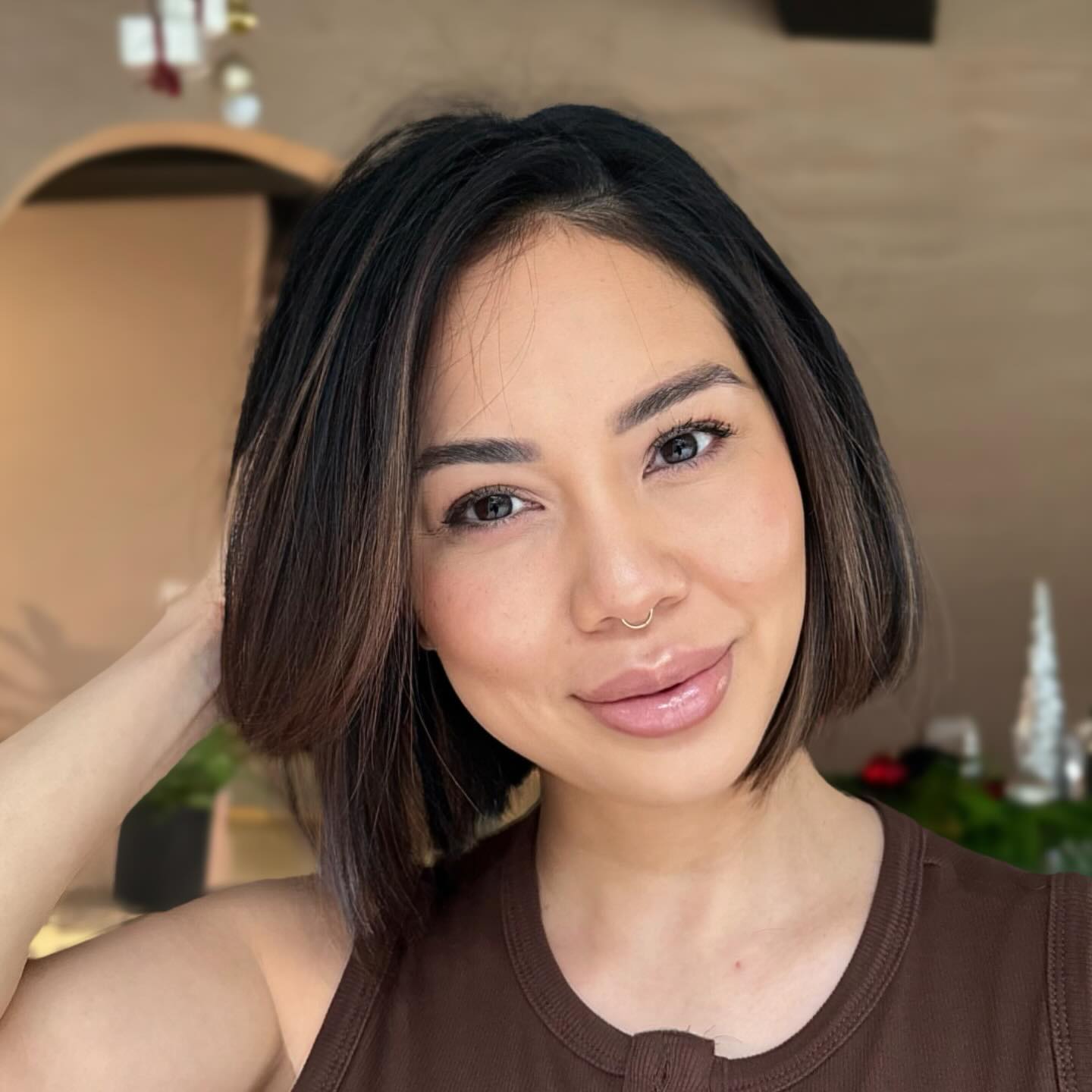
Thick hair doesn’t need volume products — it needs weight control and smoothing. The product categories that matter most for maintaining a bob on thick hair are texturizing sprays (for lived-in, textured styles), smoothing serums or light oils (for sleek, blunt styles), and leave-in conditioners (for wavy and curly thick hair to reduce frizz and define texture). Skip volumizing mousse unless your cut specifically flattens at the roots; on thick hair, mousse often creates stiffness rather than lift.
Trim frequency depends on the bob’s precision. A sharp blunt bob shows growth most obviously — by week 5, the perimeter starts looking uneven, so plan for trims every 5–6 weeks. A textured or shaggy bob is more forgiving and can go 7–8 weeks between trims because the intentionally rough edges disguise new growth. If you have an undercut component, that section needs its own maintenance on a 3–4 week cycle — you can do this at home with clippers if you’re comfortable, or book quick nape cleanups between full appointments.
Daily styling time varies significantly by bob type. Blunt, sleek bobs on thick hair need 10–15 minutes of blow-drying with a round brush to get the polished look. Textured and shaggy bobs need 5 minutes or less — scrunch in a texturizing product and go. Curly bobs need the most patience: define curls with leave-in conditioner and gel on wash day (15–20 minutes), then refresh with water and conditioner spray on days two and three.
FAQ
Should I Get a Blunt or Layered Bob If My Hair Is Very Thick?
It depends on how much daily styling you’re willing to do. A blunt bob on very thick hair looks incredible when styled but requires a blow-dryer and round brush to sit right — without styling, it can look boxy or triangular. A layered bob with internal layers is more forgiving and falls into a manageable shape on its own. If low maintenance matters more than a precise silhouette, layered is the safer choice.
Will Thinning Shears Ruin My Thick Hair?
Not inherently, but they’re not the best tool for every situation. Thinning shears cut some strands shorter than others within the same section, which can cause a fuzzy, flyaway texture on the surface — especially on coarse or wavy thick hair. Point cutting and slide cutting achieve similar weight removal with a smoother finish. If your stylist defaults to thinning shears, ask whether point cutting would work for your specific hair type and cut before they begin.
Can I Get a Bob If My Thick Hair Is Also Curly?
Yes — thick curly hair and bobs work well together because the density gives the curls structure and the curls give the bob natural volume and shape. The critical factor is finding a stylist who specializes in curly cutting and works on dry hair. Wet-cutting thick curls results in a bob that shrinks significantly once dry, sometimes by 25–40% depending on your curl pattern. Communicate your desired dry length, not a wet measurement.
How Do I Stop My Thick Bob from Looking Like a Triangle?
The triangle shape happens when hair accumulates weight at the bottom without enough layering to redistribute it. Ask your stylist for graduated layering or internal layers that remove mid-shaft bulk, and request that the weight sit at or above the jawline rather than flaring outward below it. An undercut at the nape also helps by eliminating the densest section of hair entirely. If you already have a triangle-shaped bob, a stylist can correct it in one session by adding layers without changing the overall length.
What’s the Best Bob Length for Thick Hair?
Jaw to collarbone length gives thick hair the widest range of styling options and the most manageable shape. Shorter than jaw length, thick hair requires more aggressive texturizing to prevent it from looking bulky. Longer than the collarbone, the weight can drag the bob down and reduce the movement and bounce that make the style look good. Within that range, your face shape and personal style are better guides than a universal “best” length.
How Often Should I Wash a Thick Bob?
Thick hair typically produces less visible oil than fine hair because the oil spreads across more surface area. Most people with thick bobs can wash every 2–3 days without looking greasy, with a dry shampoo at the roots on the second or third day if needed. Over-washing strips natural oils and can make coarse thick hair feel rougher and more prone to frizz. If your scalp tends toward oily, wash the roots and let the suds rinse through the lengths rather than scrubbing shampoo into the ends directly.
Is a Bob a Good Choice If I’m Trying to Grow My Thick Hair Out?
A bob can actually be a strategic stop on the way to longer hair. Starting at a chin-length bob and growing it through a lob into a medium length avoids the shapeless, bulk-heavy intermediate stage that thick hair goes through when growing from very short to long. Regular trims that reshape the bob every 8 weeks during the grow-out keep the hair looking intentional at every stage rather than unkempt, which is the main complaint people have about growing out thick hair.
Hair results vary based on your natural hair type, texture, density, and condition. Always consult with a licensed hairstylist before making significant changes, especially with chemical treatments or dramatic length changes. Photos may show styled results that require professional tools and products to replicate.