

A step-by-step framework for building a hair care routine matched to your hair type, porosity, and lifestyle
Your hair care routine should be built around two things most people overlook: your hair type (straight, wavy, curly, or coily) and your porosity (how well your hair absorbs and holds moisture). Getting both right determines whether a product sinks in or sits on top, whether you need to wash twice a week or once every ten days, and whether your conditioner is actually doing anything. This guide walks you through identifying both, then building a routine from the ground up — starting with just three core products and adding from there.
You’ll find a hair type and porosity primer, a step-by-step routine builder with product order, a wash frequency guide matched to your texture and lifestyle, a seasonal adjustment plan, and the signs that tell you whether your routine is working or needs a change.
Hair Type and Porosity: The Two Variables That Shape Your Routine
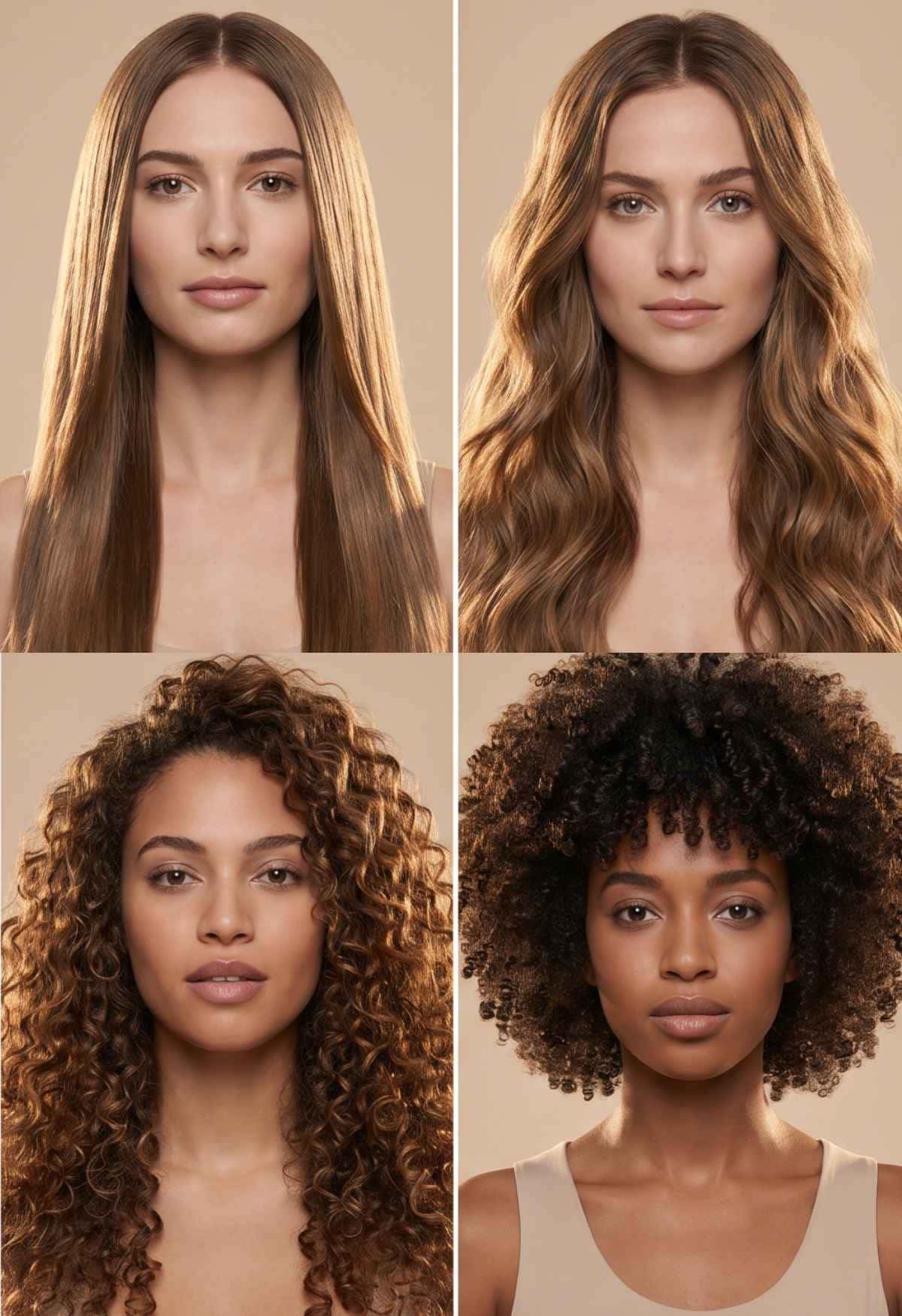
Hair type describes your strand’s natural pattern — the shape it takes when air-dried without any product. The widely used Andre Walker classification system breaks this into four types: Type 1 (straight), Type 2 (wavy), Type 3 (curly), and Type 4 (coily/kinky). Each type has subcategories (a, b, c) that reflect how pronounced the pattern is, but the broad type matters more for routine building than the subtype.
Porosity describes how your hair’s cuticle layer behaves. Low porosity hair has tightly sealed cuticles — products tend to sit on the surface, and your hair takes a long time to get fully wet or dry. High porosity hair has raised or damaged cuticles — it absorbs moisture fast but loses it just as quickly, leaving you in a cycle of hydration and dryness. Normal porosity falls in between.
Type Tells You What Products to Use — Porosity Tells You How to Apply Them
A common mistake is choosing products based only on hair type. Two people with Type 2b wavy hair can have completely different results from the same leave-in conditioner if one has low porosity (the product sits on top and creates buildup) and the other has high porosity (the product absorbs instantly but fades by afternoon). Your type narrows the product category. Your porosity determines the formulation weight, application method, and frequency.
Quick Porosity Test You Can Do at Home
Take a clean strand of shed hair (no product on it) and drop it into a glass of room-temperature water. Watch it for 2–4 minutes. If it floats on the surface, you likely have low porosity. If it sinks slowly to the middle, your porosity is normal. If it drops to the bottom quickly, you have high porosity. This test isn’t clinical-grade, but it gives a useful starting point. For a more reliable read, pay attention to how your hair behaves: low porosity hair takes a long time to fully saturate in the shower and dries slowly, while high porosity hair gets soaked almost instantly and air-dries fast.
The Core Routine: Start with Three Products
Every effective hair care routine rests on three non-negotiable steps: cleanse, condition, and protect. Before adding serums, masks, oils, or treatments, get these three right for your type and porosity. More products don’t mean better hair — they mean more variables to troubleshoot when something goes wrong.
| Step | What It Does | Product Type | When to Use |
|---|---|---|---|
| 1. Cleanse | Removes oil, buildup, and environmental debris from scalp and hair | Shampoo (sulfate-free for most types; clarifying shampoo monthly) | Every wash day |
| 2. Condition | Replenishes moisture, smooths cuticle, reduces friction between strands | Rinse-out conditioner matched to hair density (lightweight to rich) | Every wash day, mid-lengths to ends |
| 3. Protect | Shields hair from heat, UV, friction, or environmental drying | Leave-in conditioner, heat protectant spray, or light sealing oil | After washing, before styling or air-drying |
Stylist tip: Apply shampoo to your scalp, not the lengths of your hair. The suds running down during rinsing are enough to clean the mid-shaft and ends. Scrubbing shampoo directly into your ends strips moisture and causes tangling, especially on wavy, curly, and coily textures.
Routine by Hair Type: What Changes and What Stays the Same
The three core steps stay constant across all hair types. What changes is the weight of the products you use, how often you wash, how you apply conditioner, and which protection step matters most. Below is a breakdown by type — treat this as your starting framework, then adjust based on your porosity (covered in the next section).
Type 1 (Straight Hair) Needs Lightweight Products and More Frequent Washing
Straight hair gets oily faster than any other type because sebum from the scalp travels down the smooth shaft without interruption. The trade-off: it’s naturally shiny and rarely tangles, but it can look flat and greasy by day two if your products are too heavy. Use a lightweight, volumizing shampoo and condition only the ends — never the roots or scalp. Your protection step is a heat protectant spray (if you use hot tools) or a lightweight UV-protective leave-in if you spend time outdoors. Skip heavy creams, butters, and oils — they’ll weigh straight hair down and make it look unwashed.
Type 2 (Wavy Hair) Needs Moisture Without Weight
Wavy hair sits in a tricky middle ground. It needs more moisture than straight hair to hold its pattern, but too much moisture causes waves to droop and lose definition. A sulfate-free shampoo preserves the natural oils that support wave formation, while a medium-weight conditioner applied from mid-length to ends keeps things hydrated without creating heaviness. For the protect step, a lightweight leave-in conditioner or a curl-enhancing cream (applied to damp hair, scrunched upward) works best. Avoid brushing wavy hair when dry — it disrupts the wave pattern and creates frizz. Use a wide-tooth comb on damp, conditioned hair instead.
Type 3 (Curly Hair) Needs Rich Hydration and Defined Styling
Curly hair is structurally drier than straight or wavy types. The curl pattern means sebum from the scalp can’t travel down the spiral shaft efficiently, so the ends are almost always moisture-starved. Use a moisturizing, sulfate-free shampoo and follow with a rich conditioner — let it sit for 3–5 minutes before rinsing for deeper penetration. Detangle with a wide-tooth comb or your fingers while the conditioner is still in, working from the ends upward to minimize breakage. Your protection step does double duty: a leave-in conditioner provides moisture, and a curl cream or gel on top defines the pattern and reduces frizz. Avoid terry cloth towels — they create friction that disrupts curl clumps. Use a microfiber towel or a cotton t-shirt instead.
Type 4 (Coily/Kinky Hair) Needs Maximum Moisture and Gentle Handling
Coily hair has the tightest curl pattern and is the most fragile of all types. It’s naturally the driest because sebum barely reaches past the first inch of the shaft, and the tight bends in each strand create structural weak points where breakage happens. Wash with a moisturizing, sulfate-free shampoo or co-wash (conditioner-only wash) to avoid stripping the little oil that’s there. Follow with a heavy, cream-based conditioner — section the hair and apply generously, using your fingers to work it through each section. Deep conditioning every wash day isn’t excessive for this type; it’s often necessary. For protection, layer a leave-in conditioner, seal with a butter or oil (shea butter, castor oil, or jojoba oil work well), and consider protective styling to minimize daily manipulation and breakage.
Stylist tip: If your hair is Type 4 and you’ve been washing weekly, try extending to every 10–14 days with a co-wash in between. Over-washing is one of the most common reasons coily hair feels brittle — each wash strips oil that takes days to replenish naturally.
Adjusting for Porosity: The Layer Most Guides Skip
Once you’ve chosen products for your hair type, porosity determines how you use them. This is where most generic routines fail — they assume the same conditioner applied the same way works for everyone with the same curl pattern. It doesn’t.
| Porosity | Product Formulation | Application Method | Key Adjustment |
|---|---|---|---|
| Low porosity | Lightweight, water-based formulas; avoid heavy butters and thick oils | Apply products to damp (not dripping wet) hair; use warmth to open cuticle | Clarify monthly to prevent buildup that blocks moisture absorption |
| Normal porosity | Medium-weight products; most formulations work well | Standard application; no special technique required | Focus on maintaining balance — don’t over-treat |
| High porosity | Rich, cream-based formulas; proteins help fill cuticle gaps temporarily | Layer products (liquid → cream → oil) to seal moisture in stages | Seal with an oil after every moisturizing step; rinse with cool water to close cuticle |
Low Porosity Hair Needs Heat to Absorb Products
If products seem to sit on top of your hair rather than sinking in, and your deep conditioner doesn’t seem to do much even after 30 minutes, you’re likely dealing with low porosity. The tight cuticle acts like a closed door. To open it, apply your conditioner or treatment and then sit under a hooded dryer, use a warm towel wrap, or apply a shower cap and let your body heat do the work. Steam treatments are particularly effective — the heat opens the cuticle just enough for moisture to enter. Once it’s in, low porosity hair actually retains it well. Avoid heavy products that coat the surface without penetrating — stick to lightweight, water-based leave-ins and use a clarifying shampoo once a month to remove residue.
High Porosity Hair Loses Moisture Fast — Layer and Seal to Compensate
High porosity can be genetic or caused by heat damage, chemical processing, or mechanical wear. The cuticle is permanently raised, so moisture enters easily but escapes just as fast. The solution is layering: apply a liquid leave-in first (a spray or water-based formula), follow with a cream for sustained moisture, and finish with an oil to seal the cuticle shut. This is often called the LCO method (liquid, cream, oil) or LOC method (liquid, oil, cream) — experiment with both orders to see which your hair responds to better. Rinsing conditioner with cool water after washing helps close the cuticle temporarily. Protein treatments every 2–4 weeks also help because proteins like keratin and silk amino acids fill in gaps along the damaged cuticle, slowing moisture loss.
How Often to Wash: A Frequency Guide by Type and Lifestyle
Washing frequency is one of the most debated topics in hair care, and the answer depends on your hair type, scalp oil production, and daily activity. Overwashing strips natural oils and triggers the scalp to produce more, creating a greasy rebound cycle. Underwashing leads to buildup, itchiness, and dull-looking hair. Use this table as a starting point and adjust based on how your scalp feels on day two or three.
| Hair Type | Sedentary Lifestyle | Active / Gym 3+ Days | Notes |
|---|---|---|---|
| Type 1 (Straight) | Every 1–2 days | Daily or every other day | Oil shows fastest on straight hair; dry shampoo can extend to 2 days |
| Type 2 (Wavy) | Every 2–3 days | Every 1–2 days | Washing too often disrupts wave pattern; use co-wash on non-shampoo days |
| Type 3 (Curly) | Every 3–5 days | Every 2–3 days | Refresh curls between washes with a spray bottle and leave-in conditioner |
| Type 4 (Coily) | Every 7–14 days | Every 5–7 days | Co-wash between shampoo days; scalp condition and protective style affect frequency |
Stylist tip: Pay attention to your scalp, not your calendar. If your scalp feels itchy, flaky, or you notice visible oil at the roots, it’s time to wash — regardless of what a “rule” says. Conversely, if your hair feels fine on day four, don’t wash it just because someone told you to wash every three days.
Adding Layers: When and How to Expand Beyond the Core Three
Once your cleanse-condition-protect routine is working (give it 3–4 weeks of consistency before judging), you can start adding targeted treatments. Add one product at a time and use it for at least two weeks before adding another — this way, you’ll know exactly what’s helping and what’s not.
Deep Conditioning Adds Sustained Moisture (All Types Benefit)
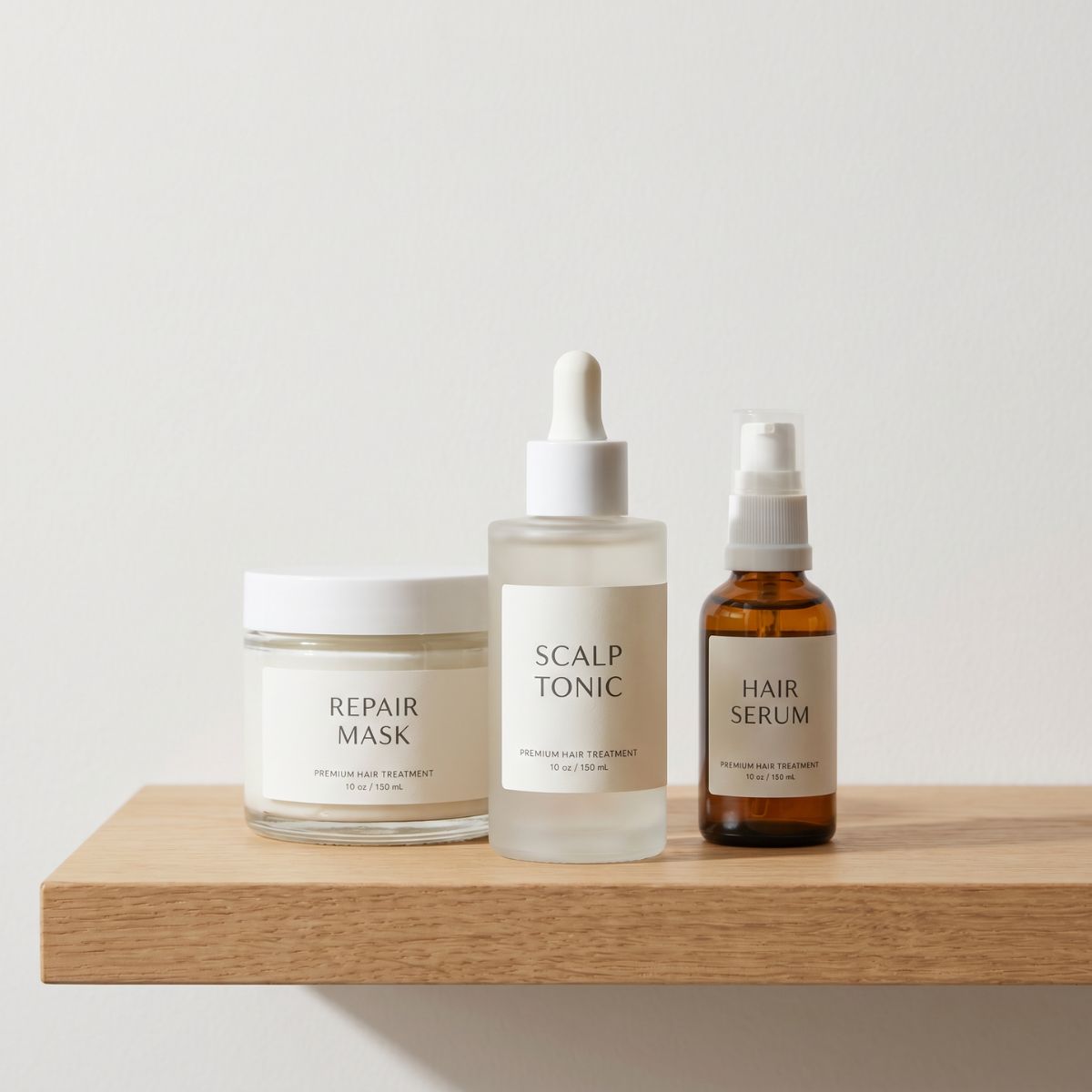
A deep conditioner or hair mask sits on the hair for 15–30 minutes, allowing ingredients to penetrate the cuticle more thoroughly than a rinse-out conditioner can. Use one every 1–2 weeks, or weekly if your hair is Type 3–4, color-treated, or heat-damaged. Apply to clean, damp hair and cover with a shower cap. Low porosity hair benefits from adding warmth (a warm towel on top) to open the cuticle and improve absorption.
Scalp Care Is the Foundation You’re Probably Ignoring
Healthy hair starts at the scalp. If your scalp is clogged with product buildup, dead skin, or excess oil, the follicles can’t function properly. Consider adding a scalp scrub or exfoliating treatment every 2–4 weeks, especially if you use a lot of styling products or don’t wash frequently. A scalp massager used during shampooing increases blood circulation and helps lift buildup — it takes 30 seconds and makes a noticeable difference over time.
Oils and Serums Address Specific Problems
Not everyone needs an oil or serum in their routine. If your hair feels adequately moisturized and protected with your core three products, adding oil on top can over-condition and create limpness or buildup. But if your ends feel dry despite conditioning, a lightweight serum (argan oil, jojoba oil, or a silicone-based smoothing serum) applied to damp ends fills that gap. High porosity hair almost always benefits from a sealing oil; low porosity hair rarely does.
Product Application Order Matters More Than Product Choice
Using the right products in the wrong order reduces their effectiveness. The general rule is: apply from thinnest to thickest consistency. Water-based products go first (they penetrate the cuticle), followed by creams (they provide sustained moisture), then oils or butters (they seal everything in). Reversing this order — putting oil on first, for example — coats the cuticle and blocks water-based products from absorbing.
| Order | Product Category | Consistency | Purpose |
|---|---|---|---|
| 1 | Leave-in conditioner or detangling spray | Liquid / spray | Delivers moisture into the strand |
| 2 | Curl cream, styling cream, or mousse | Cream / foam | Provides hold, definition, or volume |
| 3 | Gel or styling paste (optional) | Gel / paste | Sets shape and reduces frizz |
| 4 | Oil or serum | Oil | Seals moisture, adds shine |
Straight and wavy hair types typically need only steps 1 and 4 (and step 4 only on the ends). Curly and coily types benefit from all four steps, especially on wash day. On non-wash days, a quick spritz of water mixed with leave-in conditioner and a re-scrunch is usually enough to refresh without starting from scratch.
Seasonal Adjustments: Your Routine Should Change with the Weather
A routine that works in January may fail by July. Temperature, humidity, and UV exposure all affect how your hair behaves and what it needs.
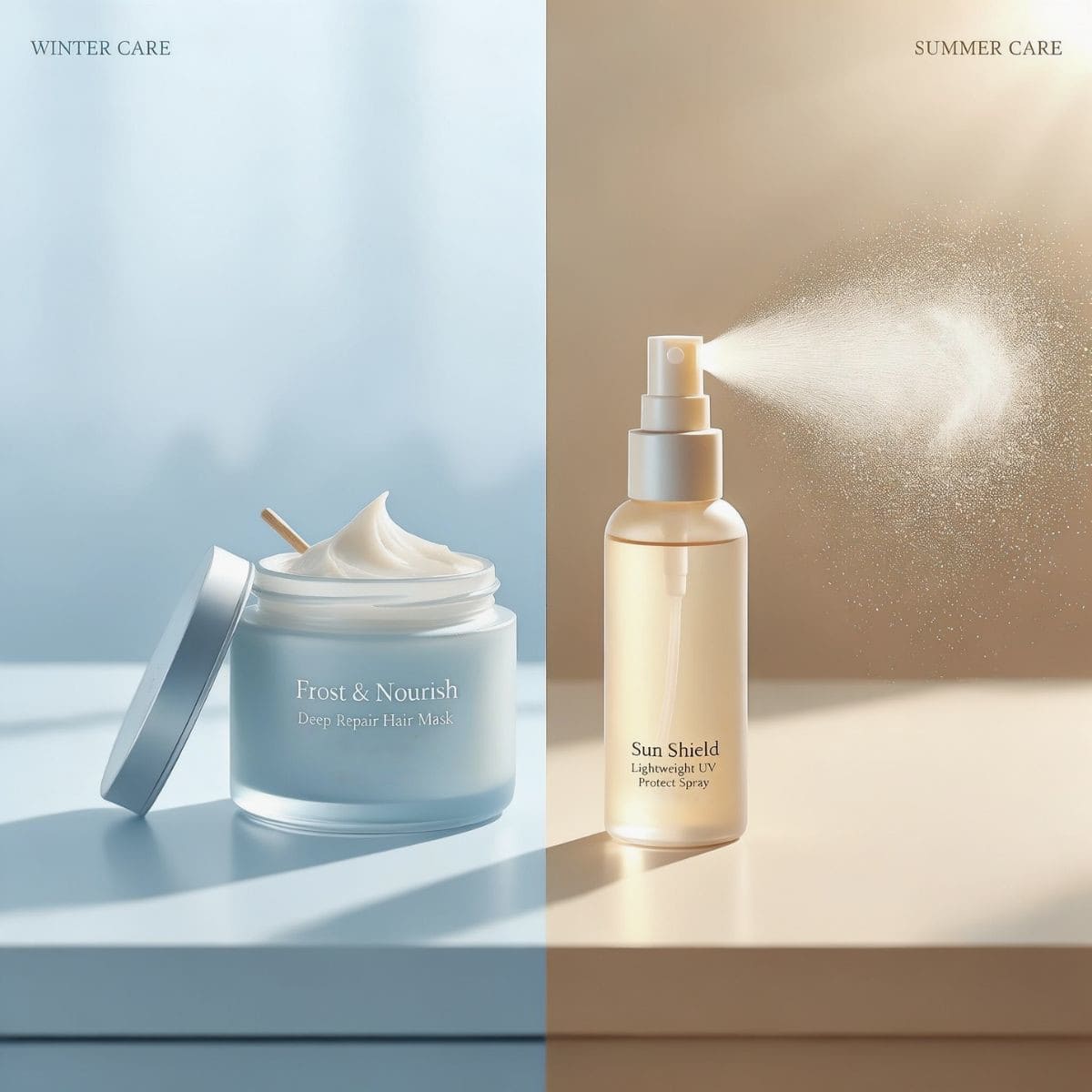
Summer Means Lighter Products and More UV Protection
Humidity causes frizz on wavy, curly, and coily types because moisture in the air enters the cuticle unevenly. Switch to lighter formulations — gel-based stylers control frizz better than creams in humid conditions. Add UV protection if you spend time outdoors; UV breaks down melanin (fading color) and weakens protein bonds in the hair shaft. A leave-in spray with UV filters provides protection without added weight. Chlorine and salt water both damage hair — rinse with fresh water before and after swimming, and consider a pre-swim protective oil.
Winter Calls for Richer Hydration and Less Frequent Washing
Cold air holds less moisture, and indoor heating pulls even more moisture from your hair. This is when static, brittleness, and dryness peak. Switch to a richer conditioner, add an oil or butter to your protect step, and consider reducing wash frequency by one day (your scalp produces less oil in cold weather). A deep conditioning mask every week during winter months helps offset the drying effect of heated indoor air. If static is a problem, a light application of oil on dry ends or switching to a satin pillowcase reduces friction overnight.
Signs Your Routine Is Working — and Signs It’s Not
Give any new routine at least 3–4 weeks before evaluating. Hair that’s been neglected or over-treated takes time to rebalance. After that initial period, look for these signals.
| Your Routine Is Working If… | Your Routine Needs Adjusting If… |
|---|---|
| Hair feels soft but not limp after washing | Hair feels mushy, gummy, or overly soft (protein-moisture imbalance — reduce moisture, add protein) |
| Scalp feels clean and comfortable between washes | Scalp is itchy, flaky, or greasy within 24 hours of washing (adjust wash frequency or shampoo type) |
| Curl/wave pattern is more defined than before | Curls/waves look weighed down or undefined (products are too heavy — switch to lighter formulas) |
| Less breakage on your brush/comb and in the shower | Increased shedding or snapping when detangling (add protein treatment or reduce manipulation) |
| Hair looks shinier and feels stronger at the ends | Ends are dry, splitting, or feel straw-like (increase conditioning, consider a trim) |
The most common issue is using products that are too heavy for your hair type and porosity. If your hair feels coated, dull, or limp, strip back to just shampoo and conditioner for a week, then reintroduce products one at a time. The second most common issue is not conditioning enough — especially for Types 3 and 4, where deep conditioning every wash day isn’t excessive; it’s often the minimum.
Common Mistakes That Derail a Good Routine
Even a well-designed routine fails if certain habits are undermining it. These are the errors stylists see most often in clients who say their routine “isn’t working.”
Applying Conditioner to the Scalp Causes Buildup and Greasiness
Conditioner is designed for the mid-lengths and ends — the parts of your hair that are oldest, driest, and furthest from your scalp’s natural oil supply. Applying it to the roots weighs hair down, clogs follicles, and makes even a good routine feel like it’s not working. The exception: Type 4 coily hair, where the scalp itself can be dry and may benefit from a lightweight conditioner applied to the scalp area occasionally.
Switching Products Every Week Prevents You from Seeing Results
Hair doesn’t respond instantly to new products. It takes 2–4 washes for your hair to adjust to a new shampoo or conditioner, and 3–4 weeks to see the full effect of a new routine. Switching products every few days means you’re constantly resetting the clock and never learning what actually works for your hair. Commit to a product for at least a month before deciding it’s not for you.
Skipping Heat Protectant Before Styling Creates Cumulative Damage
Heat damage is cumulative and irreversible — once the protein bonds in your hair are broken by excessive heat, no product can rebuild them; only cutting off the damaged section removes it. If you use a blow dryer, flat iron, or curling iron even occasionally, a heat protectant is non-negotiable. Apply it to damp hair before blow-drying or to dry hair before using a flat iron. Most heat protectants work by forming a temporary barrier that disperses heat more evenly across the strand, reducing hot spots where damage concentrates.
FAQ
Can I use the same products year-round?
You can, but your results will probably suffer in extreme seasons. At minimum, switch to a richer conditioner in winter and a lighter one in summer. If you live in a climate with high humidity summers and dry winters, seasonal adjustment makes the biggest difference in how your hair behaves day to day. Your shampoo can usually stay the same year-round.
How do I know if my hair needs protein or moisture?
Take a wet strand and gently stretch it. If it snaps immediately with no stretch, your hair needs moisture — the bonds are rigid and brittle. If it stretches like a rubber band and doesn’t spring back (or breaks after stretching far), you need protein — the structure has lost its integrity. Hair that stretches slightly and bounces back has a healthy protein-moisture balance. Most hair needs both, alternated — a protein treatment one week, a moisture mask the next.
Do I need a separate scalp product?
Not necessarily. A well-formulated shampoo and proper washing technique (massaging the scalp with fingertips for 60 seconds) handle scalp care for most people. Add a dedicated scalp treatment if you notice persistent flaking, itchiness, excess oiliness that doesn’t improve with wash frequency adjustment, or visible product buildup at the roots. A scalp scrub used every 2–4 weeks is a good starting point.
Is sulfate-free shampoo always better?
Not always. Sulfate-free shampoos are gentler and preserve moisture, which makes them the better default for wavy, curly, and coily hair. But if you use heavy styling products (waxes, pomades, silicone-based serums), a sulfate-free formula may not remove all the buildup. In that case, alternating between a sulfate-free shampoo for regular washes and a clarifying shampoo (which does contain sulfates or similar surfactants) once a month works well. Straight hair with an oily scalp sometimes benefits from sulfate shampoos used in rotation.
What order should I apply products after washing?
Always apply from thinnest consistency to thickest: leave-in spray or liquid first, then cream-based products, then gel or paste, then oil. This ensures each layer can penetrate or layer properly without being blocked by a heavier product applied earlier. If you’re using only one post-wash product, a leave-in conditioner is the most universally useful choice across all hair types.
How long should a conditioner sit before rinsing?
A rinse-out conditioner needs 1–3 minutes to work. Don’t rinse it immediately — let it sit while you finish other shower tasks. A deep conditioner or hair mask should stay on for 15–30 minutes, ideally under a shower cap to trap body heat and improve penetration. Leaving a regular conditioner on longer than 5 minutes doesn’t increase its effectiveness; it wasn’t formulated for extended contact time the way a deep conditioner is.
Can I air-dry my hair every time?
Air-drying is the gentlest option for any hair type, and it’s fine to do every wash. However, air-drying doesn’t give straight and wavy hair the same volume that blow-drying does, and curly hair may dry with less definition without a diffuser. If you prefer air-drying, apply your styling products to soaking wet hair, scrunch gently, and don’t touch it until it’s fully dry — handling hair while it’s drying disrupts the formation of curl clumps and wave patterns, causing frizz.
My hair feels different in different sections — is that normal?
Completely normal. Most people have different textures, porosity levels, and density across their head. The crown is often finer than the nape, the hairline can be wavier than the interior, and the canopy (top layer) gets more sun and heat damage than the underlayer. You may need to vary your product application by section — lighter product at the roots and crown, heavier at the dry ends and nape. Paying attention to these differences and treating each zone accordingly is what separates a good routine from a great one.
Hair results vary based on your natural hair type, texture, density, and condition. Always consult with a licensed hairstylist before making significant changes, especially with chemical treatments or dramatic length changes. Photos may show styled results that require professional tools and products to replicate.