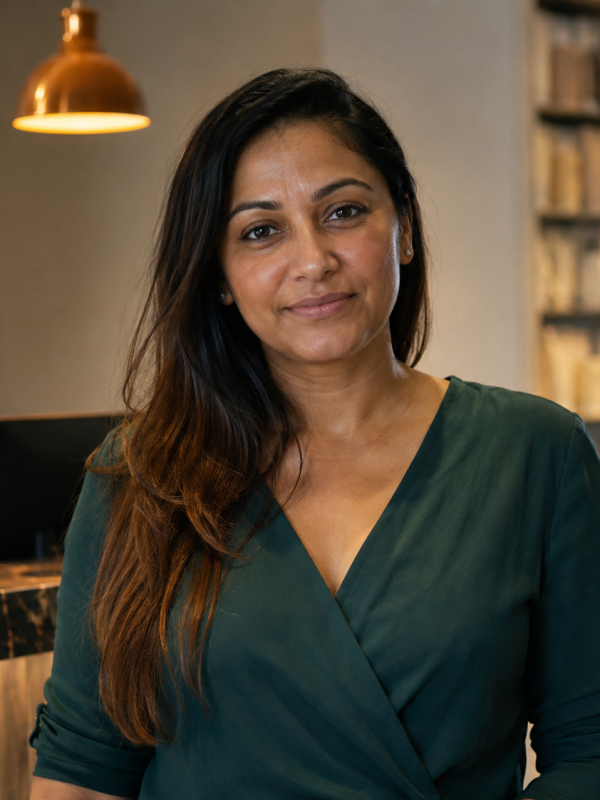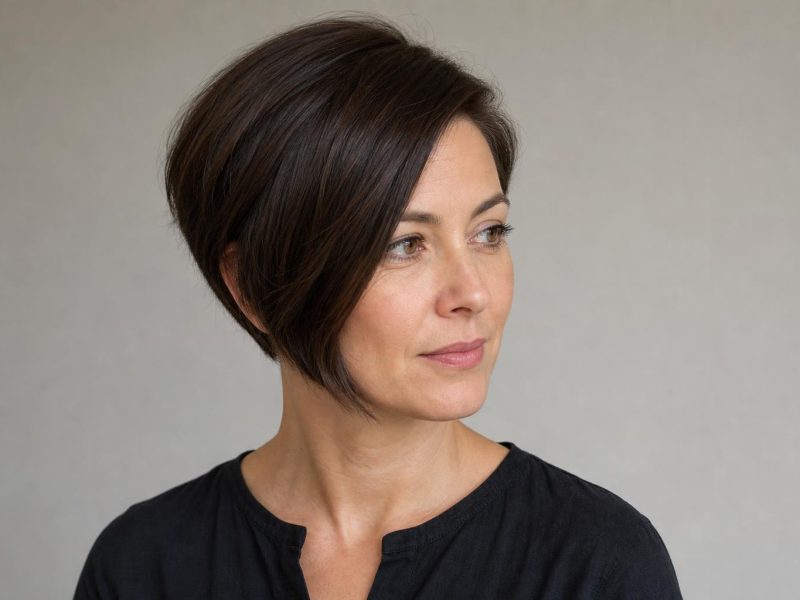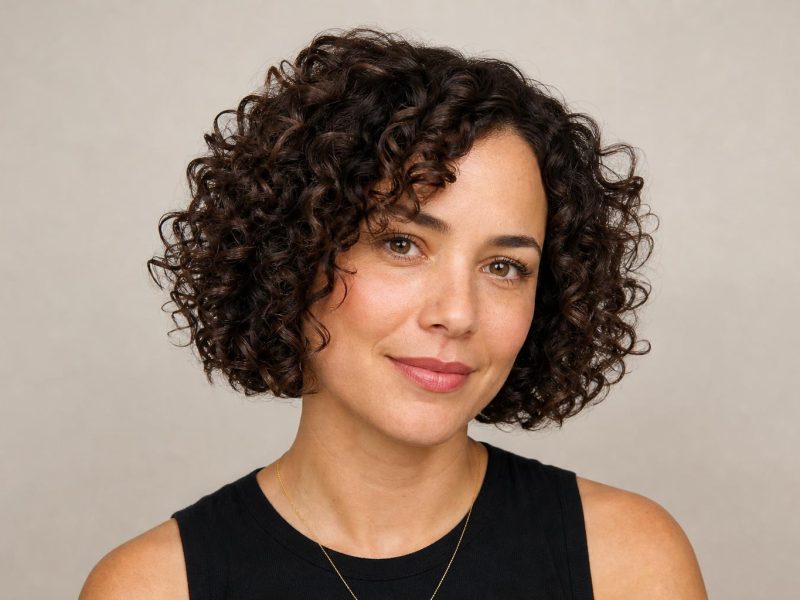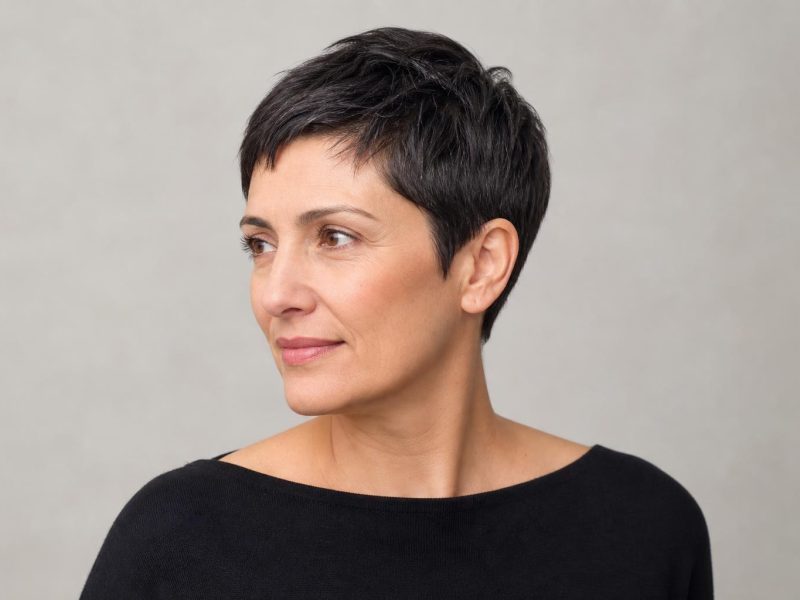

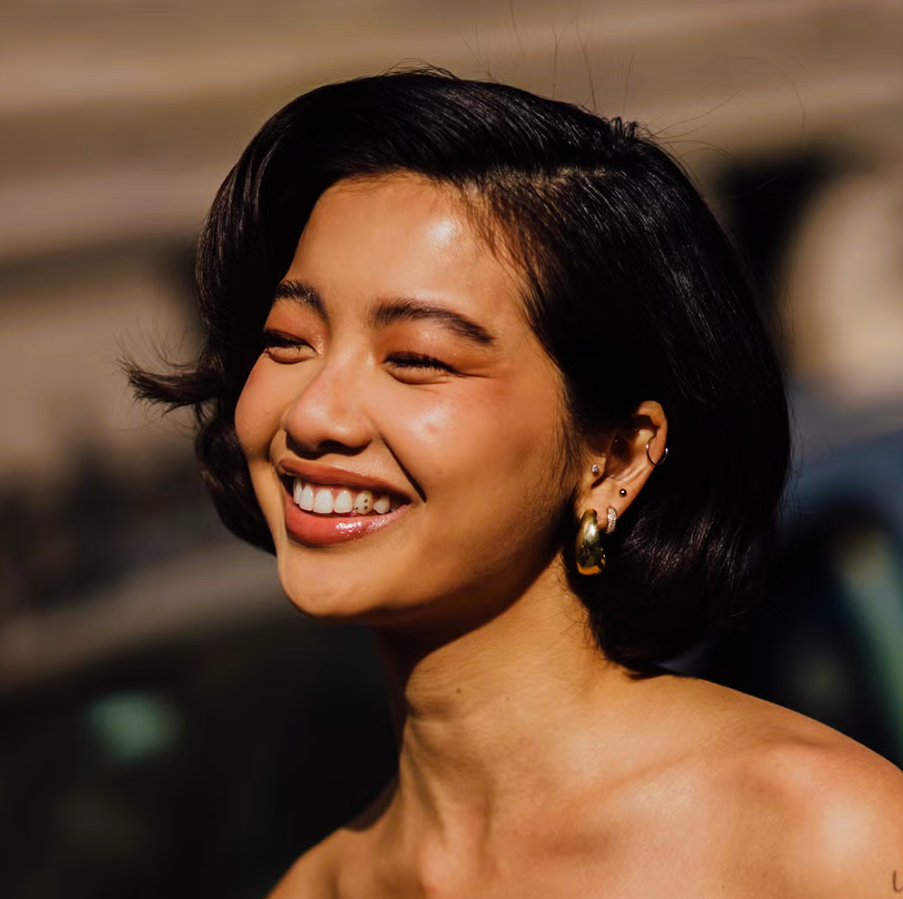
Stylist-curated short bob ideas organized by cut type, hair texture, and face shape — with what to ask for at the salon
Short bob haircuts sit between ear and chin length and pack more impact per inch than any other cut category — here are 50 variations that prove it. Whether you’re working with fine hair that needs structure, thick hair that needs shaping, or wavy texture that needs a bob built around it, each entry below breaks down what makes the specific cut work and who it flatters most.
You’ll find the gallery organized by cut style — blunt bobs, layered and textured variations, stacked and graduated shapes, angled and asymmetrical options, and bobs paired with bangs. After the gallery, there’s a face shape compatibility breakdown and a section on exactly what to tell your stylist to get the cut you want.
Blunt and Clean Short Bobs
A blunt short bob relies on a single, even cutting line with no layering through the perimeter. The weight sits at the ends, which gives fine-to-medium hair the appearance of density it often lacks. These cuts look sharpest on straight to slightly wavy textures — anything curlier tends to push the blunt line out of shape between trims.
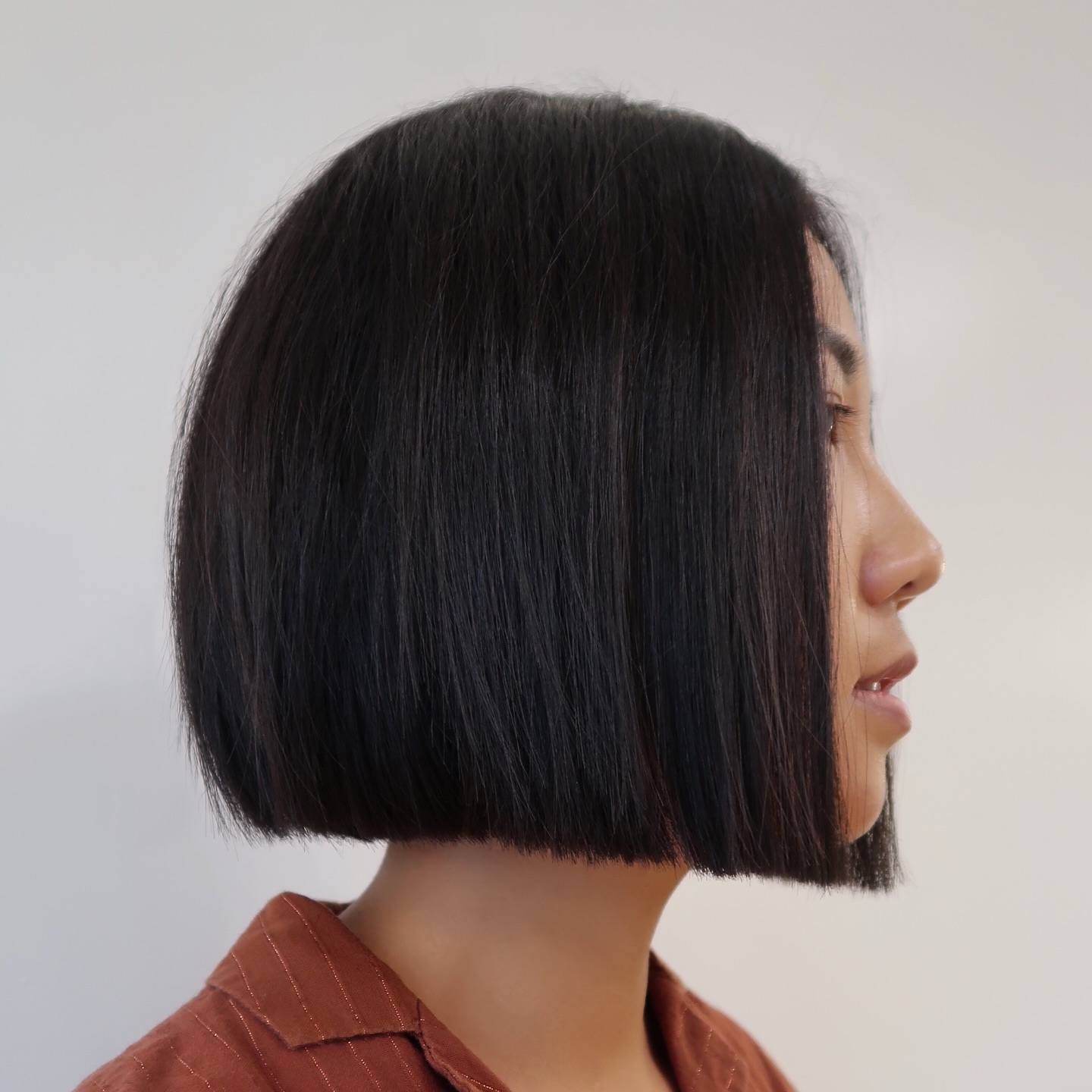
1. Chin-Length Blunt Bob with Center Part
The one-length perimeter hits exactly at the chin, creating a frame that mirrors the jawline on both sides. Oval and heart-shaped faces benefit most from this symmetry, since the center part draws the eye vertically and elongates the forehead-to-chin line. A smoothing serum applied to damp hair before blow-drying keeps the ends from flipping outward in humidity.
2. Jaw-Length Blunt Bob with Deep Side Part
Shifting the part to one side creates asymmetric volume that works especially well for round and square faces — the heavier side balances width at the cheekbones. Fine hair looks thicker here because the blunt ends stack on top of each other without gaps. Ask your stylist for a precision cut with shears only (no razor) to keep every strand at the same length.
3. Ear-Length Micro Bob
This is the shortest a bob gets before crossing into pixie territory — it grazes the earlobes and fully exposes the neck. The micro bob highlights strong jawlines and defined cheekbones, which is why it flatters diamond and oval face shapes particularly well. Expect salon visits every four to five weeks, since even a quarter-inch of growth shifts the proportions noticeably.
4. Lip-Length French Bob
Sitting just at lip level, the French bob creates a rounded, almost helmet-like silhouette that feels polished without effort. The slight inward curl at the ends happens naturally when the hair is cut at this specific length on most textures — it’s the weight of the cut doing the work. A lightweight mousse scrunched into towel-dried hair enhances the natural tuck without stiffness.
5. One-Length Bob with Blunt Bangs
Combining a blunt perimeter with a straight-across fringe creates a strong geometric shape that demands attention. Thick, straight hair carries this look best because the bangs need enough density to fall flat without gaps. If your forehead runs long or your face is rectangular, this combination shortens the visible face length and draws focus to the eyes.
6. Bronde Blunt Bob with Subtle Root Shadow
A root shadow that blends from dark brown into a warm bronde gives a blunt bob low-maintenance color depth — you won’t see a harsh grow-out line at four weeks. The dimension from the shadow root makes the one-length cut look less flat than a solid single-process color would. Stylists typically achieve this with a gloss toner over previously lightened ends, so there’s no additional bleach damage at the root.
Layered and Textured Short Bobs
Adding layers to a short bob introduces movement and removes bulk, which is why textured variations tend to suit a wider range of hair types than blunt cuts. The key difference is where the layers start — internal layers close to the head create volume at the crown, while perimeter layers at the ends build texture and piece-y separation.
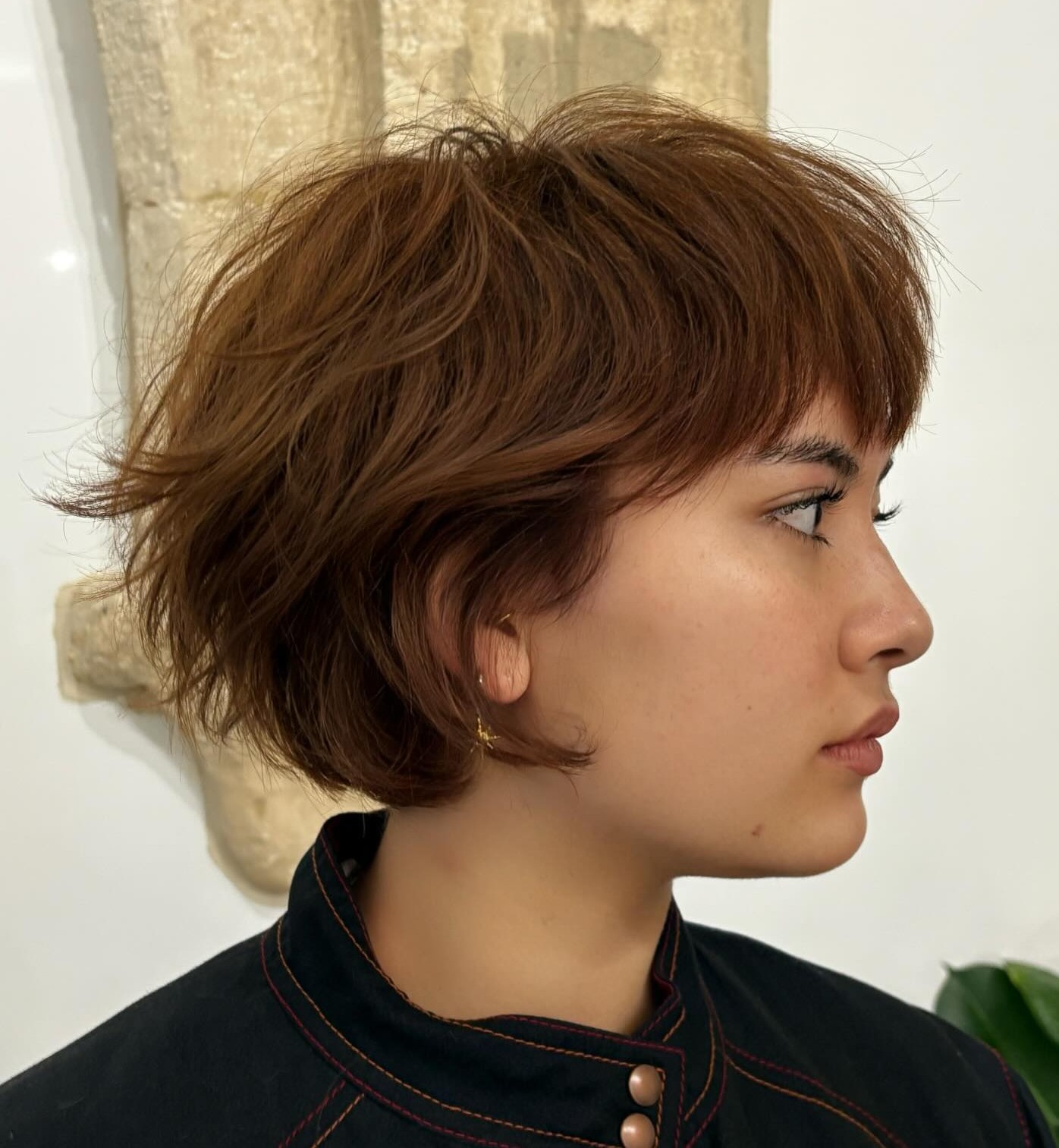
7. Choppy Textured Bob with Razored Ends
Razor cutting the last inch of each strand creates feathered, piece-y tips that break up the solid line of a traditional bob. This technique is ideal for thick hair that tends to look heavy and blocky at shorter lengths — the razor removes weight without sacrificing fullness. Avoid this method if your hair is fine, though, because razor cutting can make thin ends look see-through.
8. Point-Cut Bob for Fine Hair
Point cutting notches into the ends with the tips of the shears held vertically, creating a softer line than a blunt cut without the thinning effect of a razor. Fine-haired clients get the most out of this technique because it adds texture while preserving the visual weight at the perimeter. When you sit in the chair, ask specifically for point cutting rather than thinning shears — they produce very different results on delicate strands.
9. Short Shaggy Bob with Face-Framing Layers
Face-framing layers that begin at the cheekbones and blend into the bob’s length give this cut a relaxed, lived-in quality that looks better on day two than day one. Wavy and slightly curly hair types are the best match — the natural texture enhances the separation between layers without any styling tools. A texturizing spray with sea salt base defines the layers further, but skip it if your hair is already coarse, since salt-based sprays dry out rough textures.
10. Feathered Short Bob
Feathering uses a slide-cutting technique to taper the ends gradually, producing tips that look wispy and soft rather than blunt or choppy. This is one of the most forgiving short bob variations for women over 50 because it softens the area around the face without looking dated. The feathered ends also make gray and silver hair look intentionally textured rather than frizzy.
11. Textured Chin-Length Bob with Undercutting
An undercut at the nape — shaved or clipper-cut to about a half-inch — removes bulk underneath while the visible top layers maintain fullness. Thick and coarse hair types benefit the most, since the hidden undercut prevents that mushroom-like shape that happens when dense hair gets cut short without weight removal. The undercut grows out in roughly six to eight weeks, so schedule nape cleanups between full haircut appointments.
12. Tousled Bob with Internal Layers
Internal layers sit underneath the surface of the hair, building volume at the crown without visible layering through the ends. The result is a bob that looks full and rounded from every angle, even on medium-density hair that normally falls flat at the root. Flip your head upside down while blow-drying for about sixty seconds, then finish right-side up — that’s enough to activate the internal layers without overworking the style.
13. Lived-In Textured Bob with Curtain Fringe
Curtain bangs paired with a textured bob create one of the most face-flattering short styles available — the bangs split to frame the cheekbones while the bob frames the jaw. Round and square faces benefit from the curtain fringe’s ability to create a narrow central focal point that lengthens the face visually. Maintenance is moderate: the bangs need a trim every three to four weeks, even if the rest of the bob can wait six to eight.
Stacked and Graduated Short Bobs
Stacking creates volume at the back of the head by cutting shorter layers at the nape that push the hair upward and outward. The graduation from short (back) to longer (front) produces a wedge-like shape that adds lift exactly where flat, fine hair needs it most. These cuts require more frequent maintenance than their blunt counterparts — every five to six weeks keeps the stack from losing definition.
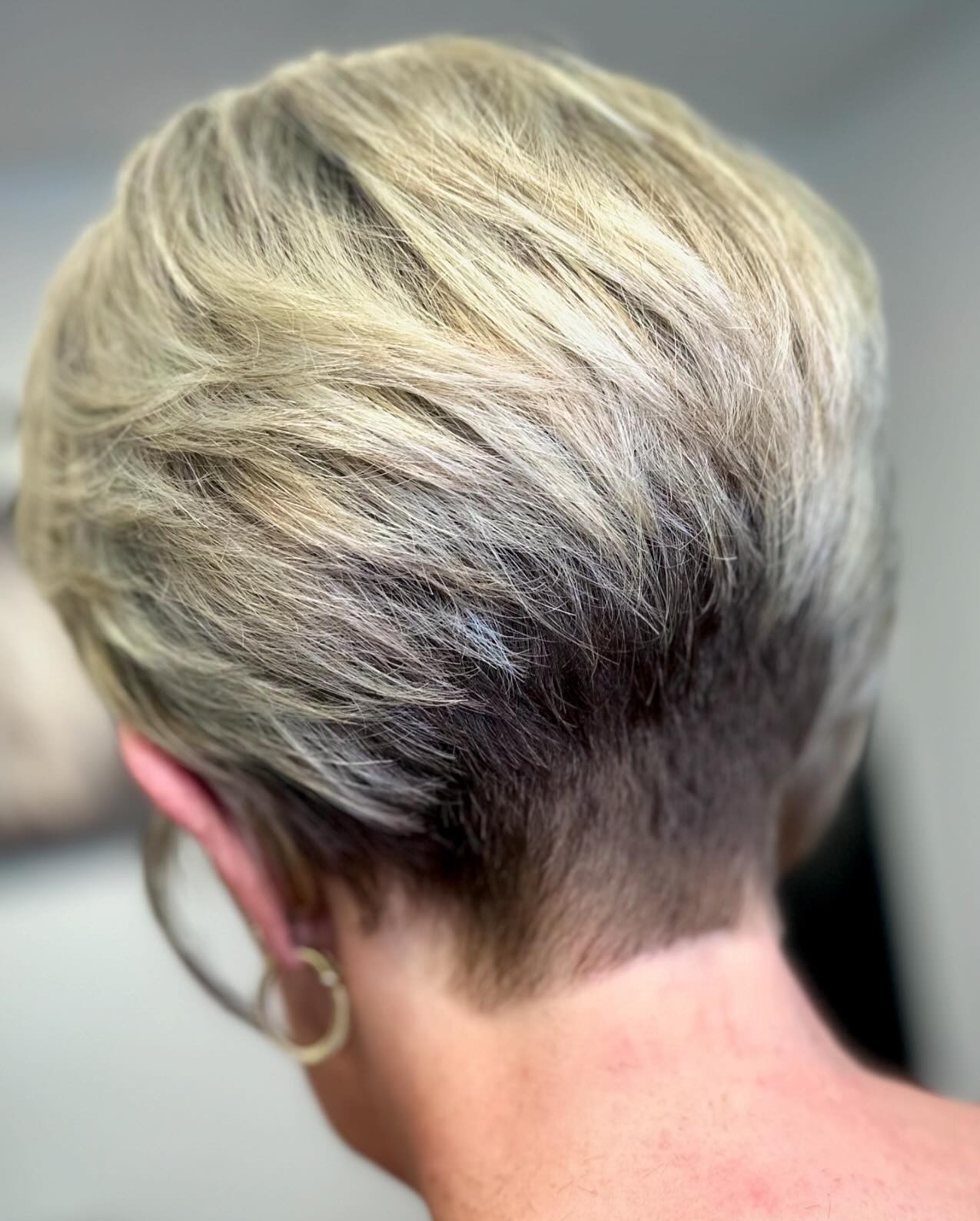
14. Classic Stacked Bob
The graduation at the nape builds rounded volume that makes the back of the head look fuller — a specific benefit for women with flat occipital bones who feel their profile lacks dimension. Straight, fine-to-medium hair holds the stacked shape cleanest, since curly textures can puff out unpredictably at the shorter back layers. A round brush and medium heat on the blow dryer are enough to set the shape each morning.
15. Short Inverted Bob
The inverted bob exaggerates the graduation — the nape is cut significantly shorter than the front pieces, creating a steep angle from back to front. This dramatic shape elongates the neck and draws the eye forward toward the face, making it effective for balancing wider jawlines. Keep in mind that the steeper the angle, the more frequently the back needs trimming to maintain the silhouette.
16. Stacked Bob for Fine Hair with Volume at Crown
Fine hair and stacking are a natural pairing because the graduated layers create lift that fine textures can’t produce on their own. Asking your stylist for shorter layers concentrated at the crown — rather than distributed evenly — targets the volume exactly where flat roots are most visible. A root-lifting spray applied directly to the scalp before blow-drying locks in the lift for a full day without the helmet feel of heavy-hold products.
17. Graduated Bob with Nape Undercut
Adding a nape undercut to a graduated bob amplifies the stacked effect while keeping the overall shape lighter and cooler — literally, in warm climates. The exposed undercut can be left clean or customized with a line or pattern for a more editorial edge. This combination works best on medium-to-thick hair, where there’s enough density in the upper layers to conceal or reveal the undercut at will.
18. Soft Graduated Bob with Rounded Back
Not every graduated bob needs a sharp stack. A softer version uses gentle graduation with slightly longer layers at the nape, creating a rounded shape rather than a wedge. This variation suits mature women who want volume without an overly structured look — the softness of the graduation works with gray and silver hair’s natural tendency to be coarser and stand away from the head slightly.
19. Wedge Bob with Tapered Nape
The wedge bob is a close relative of the stacked bob, but the tapering at the nape is tighter and more sculpted. Thick hair is the ideal candidate — the tapered nape prevents bulk from building up at the neck while the longer top layers provide coverage and movement. Bring a back-view reference photo to your stylist for this cut, since “wedge bob” can mean very different things depending on the stylist’s training background.
Angled and Asymmetrical Short Bobs
Angled bobs use a diagonal cutting line that creates a deliberate length difference between the back and front. Asymmetrical variations take this further by making one side noticeably longer or shorter than the other. Both approaches create visual interest and allow for strategic face-framing without relying on layers or bangs.
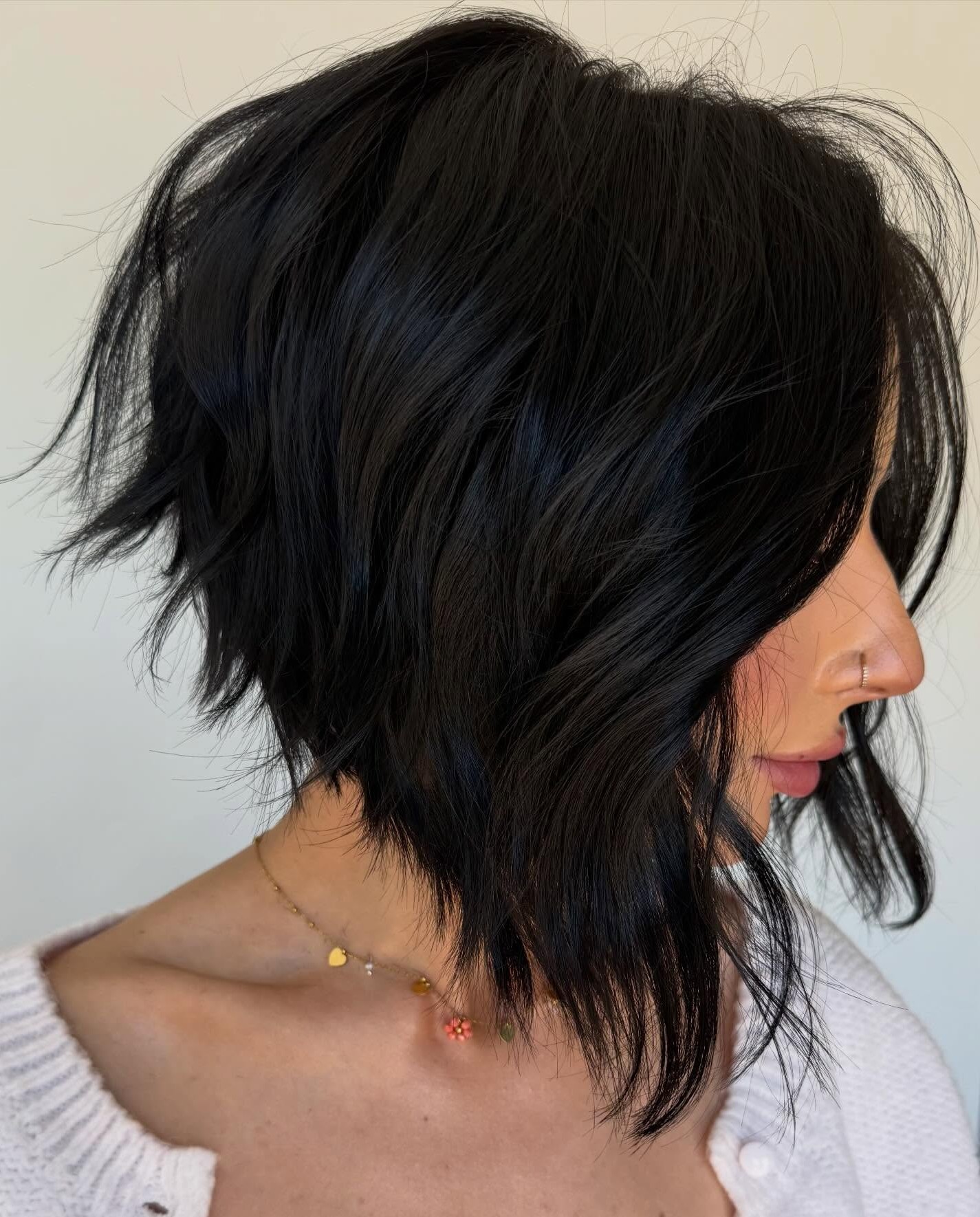
20. A-Line Bob
The A-line’s gradual slope from a shorter back to longer front pieces creates a shape that naturally draws the eye downward and inward toward the chin. This makes it one of the most reliable short bob cuts for round faces, since the longer front panels narrow the lower face visually. On straight hair, the A-line maintains itself well between trims — the angle grows out more gracefully than a stacked cut does.
21. Sharp Angled Bob with Disconnected Layers
Disconnected layers mean the front pieces don’t blend seamlessly into the back — there’s a visible jump in length that creates a graphic, editorial quality. This is a bold choice that reads as intentional and architectural rather than soft and romantic. Ask your stylist to keep the angle crisp with shears rather than blending it out, and expect to come back every five weeks to maintain the sharpness.
22. Asymmetrical Bob with One Longer Side
A two-to-three-inch difference between sides creates an off-balance silhouette that’s inherently eye-catching without needing color or texture tricks. The longer side can be positioned to minimize a feature you’re self-conscious about — next to a stronger jawline, for example, or over a wider cheek. This cut also works as a compromise style if you’re not ready to go fully short but want to test the look on one side first.
23. Angled Bob with Side-Swept Bangs
Pairing an angled bob with side-swept bangs creates diagonal movement across the face that flatters nearly every face shape — the angle of the cut echoes the angle of the bangs for visual cohesion. Fine hair handles this combination well because the bang volume at the forehead balances the lighter ends of the bob. A flat iron run quickly through the bangs every morning keeps them directional rather than falling flat.
24. Extreme Asymmetry Bob
When one side is shaved or cropped to near-pixie length while the other falls to the chin, the result is a statement cut that turns heads. This level of asymmetry requires commitment — the short side grows out faster and needs more frequent maintenance, and there’s no easy “in between” phase if you decide to even it out. Reserve this for clients who are comfortable with a cut that’s unmistakably bold.
25. Subtle Angled Bob with Soft Graduation
For those who want the slimming effect of an angle without a dramatic statement, a subtle one-inch difference between back and front delivers shape without shock value. The soft graduation at the nape adds just enough lift to prevent flatness while the gentle angle frames the jaw without drawing excessive attention. This is a strong recommendation for anyone trying an angled cut for the first time.
Short Bobs with Bangs
Bangs change the proportions of any bob — they shorten the visible face length, draw attention to the eyes, and create a frame within a frame. The type of bang matters as much as the bob itself: blunt bangs create a strong horizontal line, wispy bangs soften it, and curtain bangs split the difference. Getting the bang length wrong is harder to fix on a short bob than on longer hair, so discuss this detail thoroughly with your stylist before cutting.
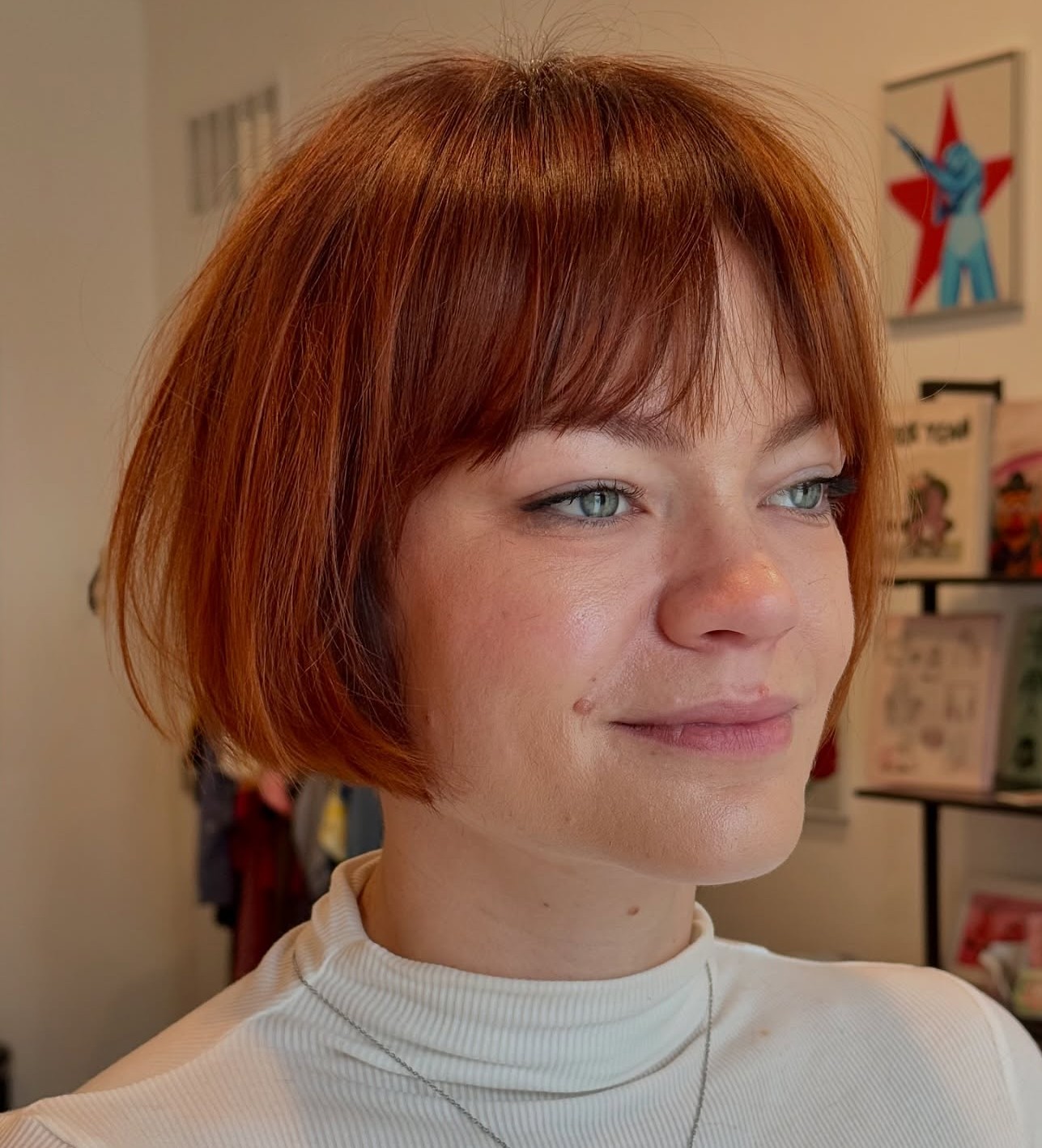
26. Blunt Bob with Micro Bangs
Micro bangs — cut to one inch or more above the eyebrow — expose the forehead and open up the upper face in a way that reads as confident and editorial. This pairing works best on oval and heart-shaped faces where the forehead is proportionate and doesn’t need shortening. Be aware that micro bangs are the hardest bang type to grow out gracefully, so consider this a commitment cut.
27. Layered Bob with Wispy Bangs
Wispy bangs are cut with a light hand — thinned at the tips so they don’t form a solid curtain across the forehead. On a layered short bob, they add softness without the heaviness that blunt bangs bring, making them a better match for fine hair that can’t afford to lose volume at the front. Wispy bangs also grow out more seamlessly, blending into face-framing layers within a few weeks if you decide not to keep trimming them.
28. French Bob with Full Fringe
The combination of a lip-length French bob and a full fringe has been a Parisian salon staple for decades — and for good reason. The fringe draws a horizontal line at the brow that pairs with the rounded bob shape to create an almost architectural silhouette. Medium-to-thick straight hair showcases this most effectively, since the fringe needs density to lay flat and the bob needs weight to maintain its shape.
29. Textured Bob with Curtain Bangs
Curtain bangs parted in the middle and swept to each side complement a textured bob by creating frame-within-a-frame layering around the face. The combination is universally flattering because the curtain shape can be adjusted in length and width to work with any face shape — shorter curtain pieces for long faces, longer ones for round faces. Style them with a round brush, rolling away from the face, for the signature swooping direction.
30. Stacked Bob with Side Bangs
Side bangs that sweep across the forehead add a diagonal line to the already-lifted shape of a stacked bob, creating movement that prevents the cut from looking too structured or matronly. This is a reliable option for women over 40 who want a modern silhouette without an extreme style — the side bang softens the precision of the stack. The bang length should reach just past the cheekbone to create the most flattering sweep angle.
31. Choppy Bob with Birkin Bangs
Birkin bangs — named for their tousled, slightly messy quality — give a choppy bob a rock-and-roll edge that reads as undone rather than unkempt. These bangs are cut longer through the center and shorter at the temples, blending into the bob’s choppy layers almost seamlessly. Thick, wavy hair is the best canvas here because the natural texture does most of the styling work. Let the bangs air-dry and resist the urge to smooth them flat — the imperfection is the point.
Wavy and Curly Short Bobs
Cutting a bob on wavy or curly hair requires a different approach than cutting on straight textures — the hair needs to be cut dry (or at least assessed dry) because wet curls shrink by 20 to 40 percent as they dry. A stylist experienced with textured hair will cut each curl at its natural resting point, not stretched straight, to avoid the “triangle effect” that happens when curls are cut wet and then spring up shorter than expected.
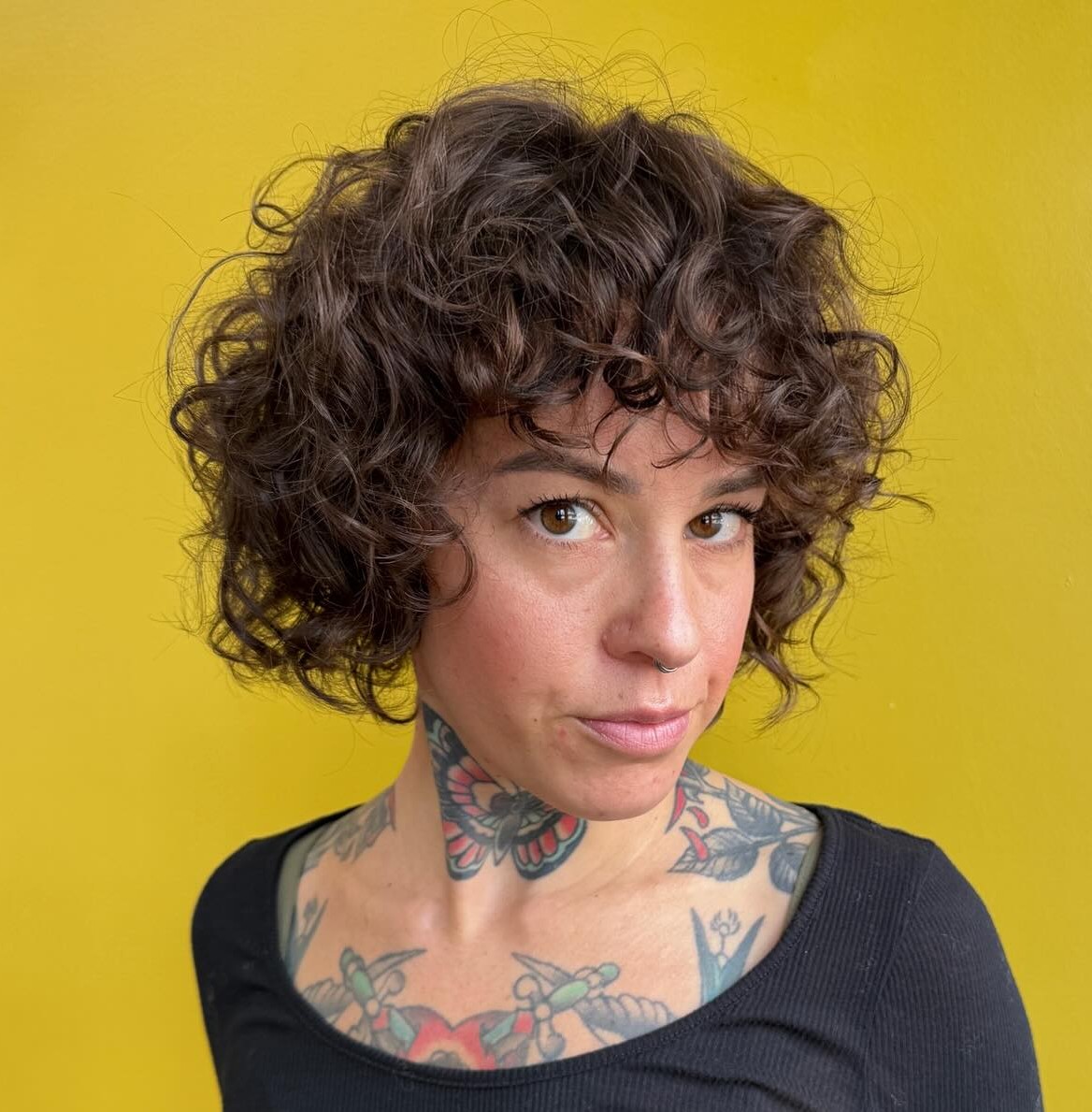
32. Wavy Chin-Length Bob
A natural wave pattern between 2a and 2b creates effortless movement in a chin-length bob without any heat tools. The key is cutting the bob about an inch longer than the desired finished length, since the wave will pull it up as it dries. A lightweight curl-enhancing cream applied to soaking-wet hair and scrunched upward sets the wave pattern — then leave it alone until it’s fully dry.
33. Curly Bob with Defined Ringlets
Tighter curl patterns between 3a and 3b create a bob shape that’s full of volume and movement — but the cut needs to account for shrinkage, which can be dramatic. A Deva Cut or similar curl-by-curl dry-cutting technique ensures each ringlet falls at the right length. Curly bobs benefit from a bit more length at the front than you’d leave on a straight bob, since the curls frame the face in three dimensions rather than lying flat against it.
34. Beachy Wave Bob with Lived-In Texture
The “woke up like this” texture of a beachy wave bob comes from a combination of cut and product — subtle layers create movement while a texturizing spray adds grip and separation. This is one of the easiest short bobs to maintain because the tousled look actually improves between washes. Skip the sea salt spray if your hair is already dry or color-treated, and opt for a lightweight texturizing spray without salt instead.
35. Wavy Bob with Face-Framing Highlights
Babylight highlights concentrated around the face create a brightening effect that makes the skin look warmer and draws attention to the cheekbones and eyes. On a wavy bob, these highlights land on the highest points of the wave, which amplifies the color’s visibility. Ask your colorist to paint the highlights specifically on the outermost wave crests rather than through traditional foils — the result looks more natural and requires fewer touch-ups.
36. Curly Asymmetrical Bob
Asymmetry on curly hair creates a different visual effect than on straight — the longer side cascades in a spiral that adds drama, while the shorter side shows off the ear and jawline. This cut lets curly-haired women experiment with short hair without losing all their length at once. Stylists should cut this dry and curly, checking the asymmetry from the front mirror to ensure the curl shrinkage doesn’t accidentally even out the intended length difference.
Color-Forward Short Bobs
Short bobs and bold color make a natural pair — there’s less hair to commit, which lowers both the cost and the damage risk of vivid or high-lift shades. The compact shape of a short bob also concentrates color impact, so even subtle techniques like a root melt or gloss read as more dimensional than they would on longer hair.
37. Platinum Blonde Blunt Bob
Platinum blonde on a short bob creates maximum contrast and visual punch — every strand is visible, and the cool-toned lightness reflects light in a way that makes the cut look sculptural. This shade requires lifting natural color to level 10, which typically means multiple sessions for anyone starting darker than a level 7. Be honest with yourself about upkeep before committing: root touch-ups every three to four weeks and a purple shampoo rotation to prevent yellowing are non-negotiable.
38. Copper Bob with Warm Undertones
Copper tones between a 7RC and 8RC bring warmth that complements green and hazel eyes while making olive and warm skin tones look radiant. A short bob showcases copper color exceptionally well because the concentrated length prevents the color from looking patchy or uneven, a common issue with reds on longer hair. Expect the vibrancy to fade faster than most shades — a color-depositing conditioner used once a week extends the life between salon visits by two to three weeks.
39. Dimensional Brunette Bob with Money Pieces
Money pieces — thick face-framing highlights that contrast with the base color — create a bold focal point without requiring all-over color processing. On a short brunette bob, warm caramel or honey money pieces lighten the area around the face and draw the eye upward toward the cheekbones. This is one of the lowest-maintenance highlight options because the face-framing placement means the regrowth blends gradually rather than creating a hard line.
40. Balayage Bob with Root Melt
A root melt creates a gradient from dark at the scalp to lighter at the ends, and on a short bob, the transition happens over just a few inches — which means the blend needs to be seamless. The balayage technique (hand-painted rather than foiled) gives the colorist more control over where light and dark meet, producing a result that looks sun-kissed rather than striped. Wavy texture shows off the dimension best because each wave catches color differently.
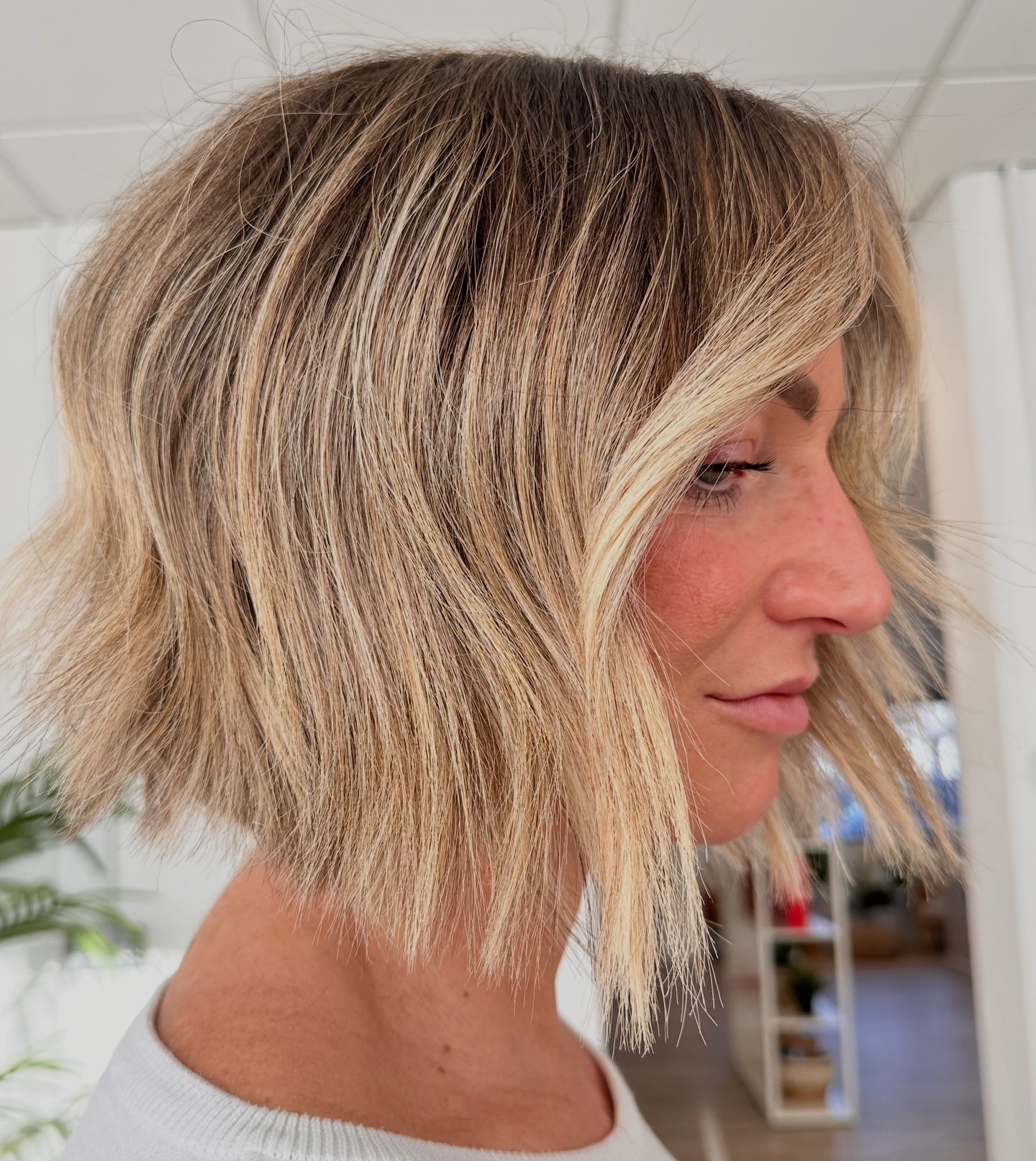
41. Jet Black Glossy Bob
Sometimes the most impactful color choice is a single, saturated shade executed perfectly. A jet black bob with a glass-like gloss finish creates a sleek, high-impact silhouette that needs no dimension tricks — the shine itself provides all the visual depth. Thick, straight hair carries this look most convincingly. A clear gloss treatment at the salon every six to eight weeks maintains the reflective finish.
42. Soft Rose-Gold Bob
Rose-gold sits at the intersection of pink and copper, creating a metallic warmth that flatters light-to-medium skin tones and works especially well when layered over a level 8 or lighter base. On a short bob, the color reads as subtle from a distance but reveals its complexity up close — the pink shifts to gold depending on the light. This shade fades beautifully into a warm blonde rather than turning muddy, which makes it a safer choice for color-nervous clients.
Short Bobs for Specific Needs
Not every bob decision starts with style preference — sometimes it starts with a practical need. Certain hair conditions, lifestyle constraints, and age-related changes call for specific bob modifications that go beyond choosing between layered and blunt. The cuts in this section address real-world hair challenges head-on.
43. Volumizing Bob for Thinning Hair
Thinning hair needs a cut that creates the illusion of density without making the scalp more visible. Short internal layers at the crown lift the hair away from the head, while a slightly longer perimeter maintains coverage. Point cutting — not thinning shears — preserves what density remains. If your hair is both thinning and silver, the lighter color actually works in your favor, since there’s less contrast between the hair and scalp.
44. Low-Maintenance Wash-and-Go Bob
This bob is cut to work with your natural texture rather than against it, which means minimal daily styling. The cut follows the hair’s existing movement patterns — a wave goes where the wave wants to go, and the layers are placed to enhance rather than redirect it. Tell your stylist you want a zero-heat style, and bring a photo of your hair at its most natural (not freshly styled) so they can see the real texture they’re working with.

45. Professional Polished Bob
A clean-lined chin-length bob with no visible layering reads as professional and put-together in corporate settings where more editorial cuts might feel out of place. The blunt perimeter and smooth finish communicate precision, while the length is short enough to stay out of the way during long workdays. A ceramic flat iron at medium heat for one pass keeps the shape polished from morning through evening without looking overdone.
46. Textured Bob for Thick Coarse Hair
Thick, coarse hair that’s been cut into a short bob without enough weight removal results in a shape that balloons outward rather than falling neatly. Internal thinning and channel cutting between sections reduces the bulk where it builds up most — usually behind the ears and at the nape. Your stylist should cut this dry and check the shape after each section, since thick hair shifts dramatically as weight is removed.
47. Transitional Bob for Growing Out a Pixie
The grow-out phase between pixie and bob is notoriously awkward, but a stylist who reshapes every four to six weeks can keep the transition looking intentional. The key is letting the top grow while trimming the sides and nape to prevent the dreaded mullet effect. Ask for shape maintenance rather than length maintenance — you want a stylist who understands they’re sculpting a bob-in-progress, not just cleaning up a growing-out pixie.
48. Short Bob with Protective Styling Access
This bob length — roughly chin level — leaves enough hair to execute twist-outs, finger coils, pin curls, and flat-twist styles while maintaining the clean bob silhouette when worn straightened or blown out. The versatility matters for women with natural 4a-4b texture who want a defined cut that still allows for styling variety. A leave-in conditioner with a lightweight hold component keeps protective styles in place without product buildup.
49. Short Bob for Heart-Shaped Faces
Heart-shaped faces are wider at the forehead and narrow at the chin — a short bob with subtle outward movement at the ends adds visual width at the jaw to balance the proportions. Avoid stacked or graduated bobs that add volume at the crown, since the last thing a heart-shaped face needs is more emphasis on the upper half. The outward flip at chin level can be achieved with a round brush rolled away from the face during blow-drying.
50. Short Bob for Round Faces
Round faces benefit from bobs that extend just past the chin with a side part and slight angle — this combination elongates the face by breaking up its circular symmetry. A center part with a chin-length bob can actually emphasize roundness, so the part placement is as important as the cut itself. If you’re bringing a reference photo, choose one showing a model with a similar face shape to yours, not just a haircut you like — the same bob looks different on every face.
How to Choose the Right Short Bob for Your Face Shape
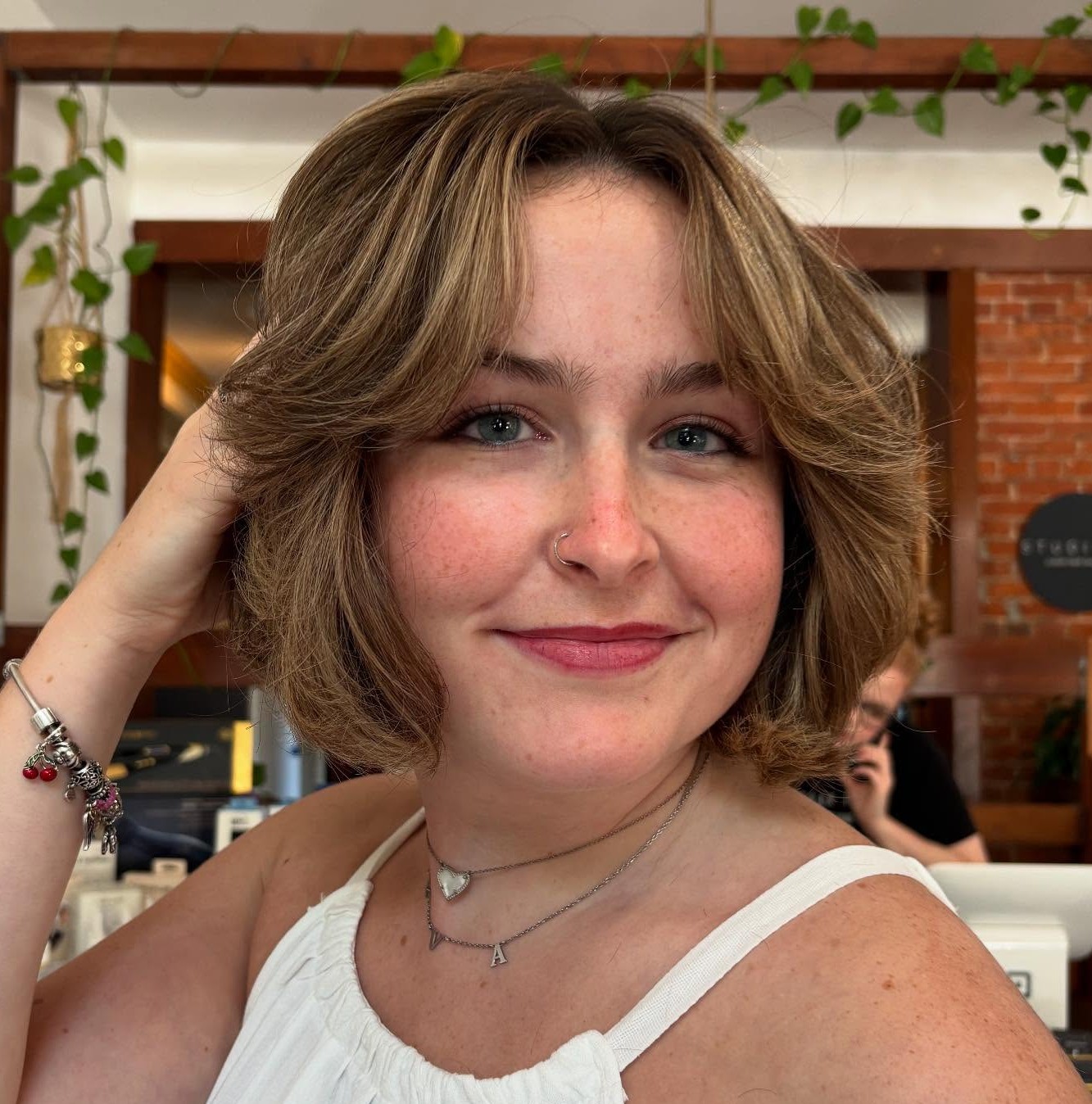
Face shape is the single most important factor in choosing a short bob variation — more important than hair type or texture, which can be worked with through cutting technique. The goal isn’t to find a “perfect” face shape (there’s no such thing) but to select a bob that balances your proportions. Here’s a straightforward breakdown:
| Face Shape | Best Short Bob Styles | What to Avoid |
|---|---|---|
| Oval | Almost any variation — blunt, layered, angled, stacked | Extreme volume at the crown, which can over-elongate |
| Round | A-line bobs, side-parted bobs, slightly below-chin length with angles | Chin-length blunt bobs with center parts; rounded stacked bobs |
| Square | Textured bobs with soft layers, side parts, wispy or curtain bangs | Blunt one-length bobs that emphasize the jaw’s horizontal line |
| Heart | Chin-length bobs with volume or outward flips at the ends, side-swept bangs | Stacked bobs that add crown volume; micro bangs that widen the forehead |
| Oblong/Long | Blunt or full bobs with side volume, full bangs to shorten the face | Very short bobs without bangs; long angled bobs that add vertical length |
| Diamond | Chin-length bobs with volume at the jaw, textured styles, side-swept bangs | Sleek, flat bobs that emphasize narrow forehead and chin |
Stylist tip: If you’re unsure of your face shape, pull your hair back completely and take a straight-on photo in natural light. Trace the outline of your face on the photo — the shape becomes immediately obvious. Bring this photo to your consultation so your stylist can see your face shape without your current hair influencing the assessment.
What to Tell Your Stylist
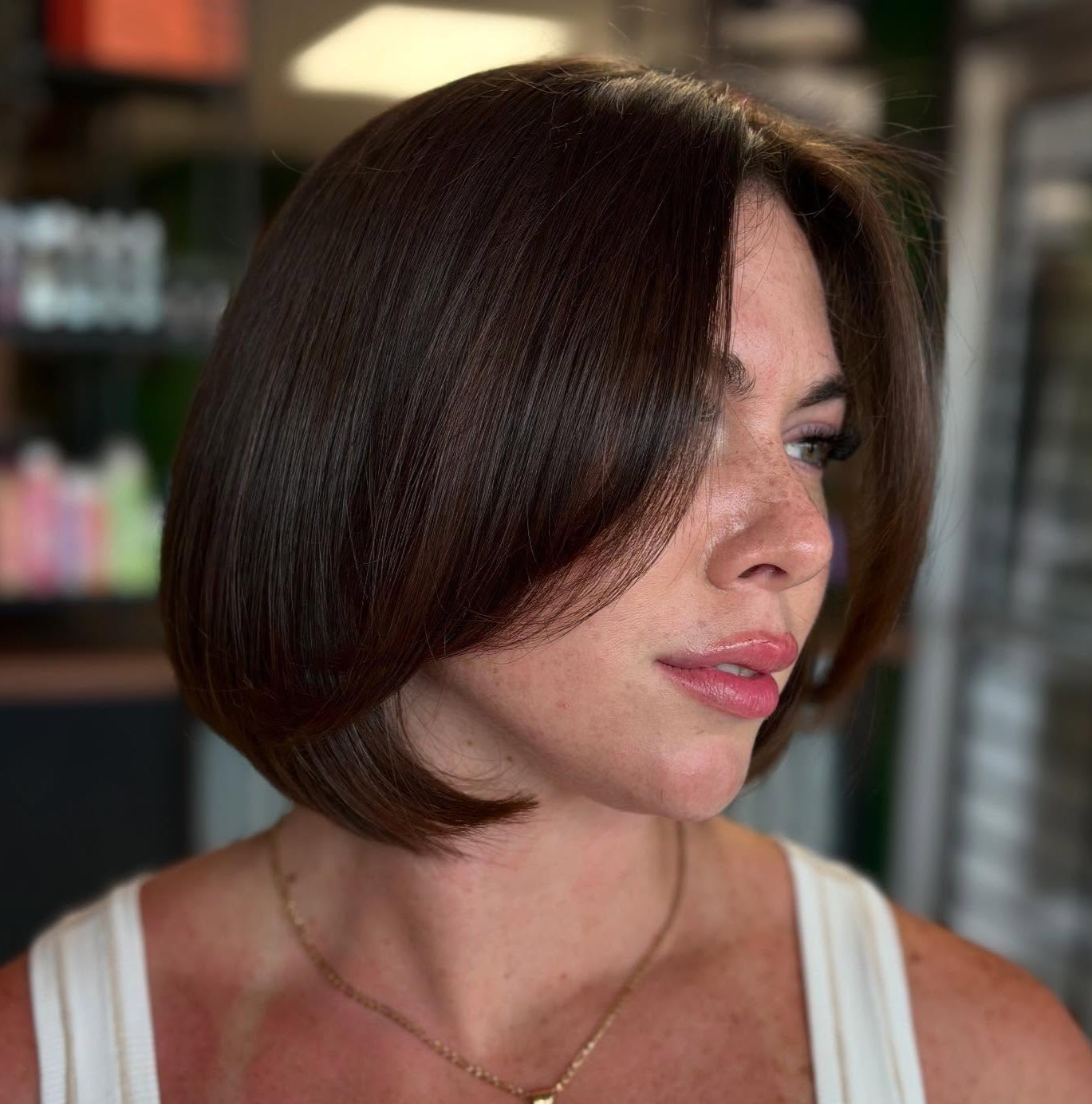
The gap between the bob you want and the bob you get often comes down to communication. Salon language is more specific than most clients realize, and a few precise phrases can prevent misunderstandings that take months to grow out.
Stylist tip: Always bring at least two reference photos — one of the cut and one of the color if they’re different sources. A single photo from one angle isn’t enough for your stylist to understand the full shape of the cut you want.
Start by describing the length relative to a landmark rather than using vague terms. “I want it to hit at my jawline” is more useful than “I want it short.” Similarly, “I want the back to sit at the nape” gives your stylist a fixed point to work from. If you’ve identified a specific bob type from this gallery, name it along with the number — “I want something like number 14, the stacked bob for fine hair” — and then discuss modifications from there.
For texture and layering, the most helpful phrasing is to describe the movement you want: “I want some piece-y texture at the ends but not a lot of volume at the crown” communicates more than “I want layers.” If you want weight removed without visible layering, ask for “internal layers” or “point cutting at the ends.” If you want visible, distinct layers, say “I want disconnected layers” or “I want to see the layering.”
Discuss styling reality before the cut starts. Tell your stylist how much time you spend on your hair each morning — be honest. If the answer is five minutes, a cut that requires a round brush blowout will frustrate you within a week. A good stylist will redirect you to a variation that works with your effort level rather than talking you into something that looks great leaving the salon but not at home.
FAQ
What Is the Difference Between a Short Bob and a Pixie?
A short bob maintains length from the ear to the chin and keeps a recognizable “bob” shape — the hair hangs downward from a part or natural fall point. A pixie is cropped closer to the head, typically tapered at the sides and back with longer pieces on top. The transition zone between them is the “bixie,” which borrows structure from both. If you can tuck your hair behind your ear and it stays, you’re in bob territory.
How Often Do Short Bobs Need Trimming?
Most short bobs need a trim every five to seven weeks to maintain their shape. Stacked and graduated bobs are on the shorter end of that range because the layered nape loses definition quickly. Blunt one-length bobs can stretch closer to seven or eight weeks, since the even line stays presentable longer. Your stylist can recommend a schedule based on your specific cut and how fast your hair grows.
Can I Get a Short Bob with Very Fine Hair?
Yes — fine hair is actually one of the best textures for short bobs. Blunt cuts create the illusion of thickness by keeping all strands at the same length, and stacked bobs build volume at the crown where fine hair tends to fall flat. Avoid heavy layering or razor cutting, which removes weight that fine hair can’t afford to lose. Point cutting at the ends adds just enough texture without thinning out the perimeter.
Will a Short Bob Look Good on My Round Face?
It depends on the specific bob variation. A-line bobs, angled bobs with side parts, and styles that fall slightly past the chin all elongate round faces by adding vertical lines. Avoid chin-length blunt bobs with center parts, which mirror the face’s circular shape and make it look wider. Side-swept bangs or curtain bangs can also help break up the round symmetry if you want to add a fringe.
How Do I Style a Short Bob Without Heat?
Air-drying with a lightweight styling cream or mousse gives wavy and curly textures a natural, textured bob shape without any tools. For straight hair, apply a volumizing mousse to damp hair, clip at the roots with flat clips for ten minutes, then remove — the clips create lift that lasts through the day. A silk or satin pillowcase preserves whatever shape you’ve set overnight and reduces frizz from cotton friction.
Is a Short Bob High Maintenance?
It depends on the variation. A wash-and-go textured bob on naturally wavy hair is one of the lowest-maintenance cuts available — five minutes of product application and air-drying. A sleek, blunt platinum bob is one of the highest — daily heat styling plus color touch-ups every three to four weeks. Match your bob choice to your maintenance tolerance, not just your aesthetic preference, and you’ll actually enjoy wearing it.
Can I Tie My Hair Back with a Short Bob?
Most short bobs — especially chin-length and longer — can be pulled into a small ponytail, half-up style, or clipped back with pins or clips. Very short bobs at ear length may not gather fully, but smaller clips, headbands, and bobby pin arrangements still get the hair off the face. If tying your hair back is a daily necessity (for work, exercise, or childcare), keep the length at chin level or longer to preserve that option.
Hair results vary based on your natural hair type, texture, density, and condition. Always consult with a licensed hairstylist before making significant changes, especially with chemical treatments or dramatic length changes. Photos may show styled results that require professional tools and products to replicate.