
Shrinkage is a percentage, which is why it stops being a detail and becomes the entire decision once curly hair goes short.
A curl pattern that pulls up by half its stretched length costs you six inches on twelve and one and a half inches on three. The absolute number shrinks, but the margin for error shrinks faster, because at three inches there is nothing left to correct with. That is the real reason short curly cuts go wrong: not that short hair does not suit curls, but that a wet cut at short length lands somewhere nobody predicted and there is no length in reserve to fix it.
This guide sets out what shrinkage actually costs at each curl pattern, how short you can realistically go, the four short curly shapes and who each suits, why short curls grow out into width rather than length, and the exact questions to ask a stylist before they pick up scissors.
What Shrinkage Costs at Short Length
Shrinkage is the difference between your hair’s stretched length and where it sits when dry. It varies by pattern rather than by person, and it is consistent enough to plan around once you know your number. The table below shows what a stylist is working with when they cut to a stretched measurement.
| Curl Pattern | Typical Shrinkage | Cut at 6 Inches Stretched | Sits Dry At |
|---|---|---|---|
| 2b to 2c waves | 10 to 20 percent | Loses under an inch and a half | About 5 inches |
| 3a to 3b curls | 20 to 30 percent | Loses about 1.5 inches | Around 4.5 inches |
| 3c curls | 30 to 40 percent | Loses roughly 2 inches | Around 4 inches |
| 4a to 4b coils | 40 to 60 percent | Loses 2.5 to 3.5 inches | Around 3 inches or less |
| 4c coils | Up to 75 percent | Loses 4 inches or more | Under 2 inches |
Two things follow. First, a stylist cutting your hair wet is choosing a stretched number and getting a dry result they cannot see, which at long length costs you an inch of surprise and at short length costs you the whole cut. Second, the same photograph means different things on different patterns: a chin-length curly bob on 3a hair and on 4a hair start from completely different stretched lengths.
Stylist tip: measure your own shrinkage before the appointment. Take one section at the front, pull it straight, measure to the end, then release it and measure where it sits. The ratio between the two numbers is the single most useful piece of information you can hand a stylist, and it takes about a minute. Bring it written down, because it converts every length discussion from guesswork into arithmetic.
How Short You Can Realistically Go
The limit is not the same for every pattern, and the reason is volume rather than length. Cutting curly hair short concentrates density into a smaller area, so the tighter the curl, the more the same length reads as width. That is why a two-inch cut looks sleek on loose waves and builds into a rounded shape on tight coils.
Looser 2b to 3a patterns can go as short as a true pixie, around one to two inches, and still lie close to the head. From 3b to 3c, two to three inches of dry length is where most cuts sit comfortably, and going shorter tends to produce height at the crown that some people want and others do not expect. On 4a to 4c, short works very well as a shaped, rounded silhouette, and the length is judged stretched rather than dry because the finished look is about the outline rather than the measurement.
One rule holds across all of them: it is far easier to take more off at the same appointment than to add it back. Ask for the first cut to land longer than your target and be prepared to go shorter in the same chair once you have seen it dry. Any stylist who resists that is skipping a step that costs thirty seconds and can cost you six months.
The Four Short Curly Shapes
Nearly every short curly cut is one of four structures. They differ in where the weight sits and how much of the outline the stylist controls, and picking one before the appointment makes the conversation much shorter.
A Curly Pixie Keeps Weight Only at the Top
Short through the nape and sides with the curl concentrated on top, so the shape is a defined mass above a clean outline. It suits 2b through 3b patterns most easily, where the curl lies rather than stands. Fine curly hair does well here because the concentration of density at the crown reads as fullness rather than sparseness.
A Pixie-Bob Bridges the Two and Reduces Regret
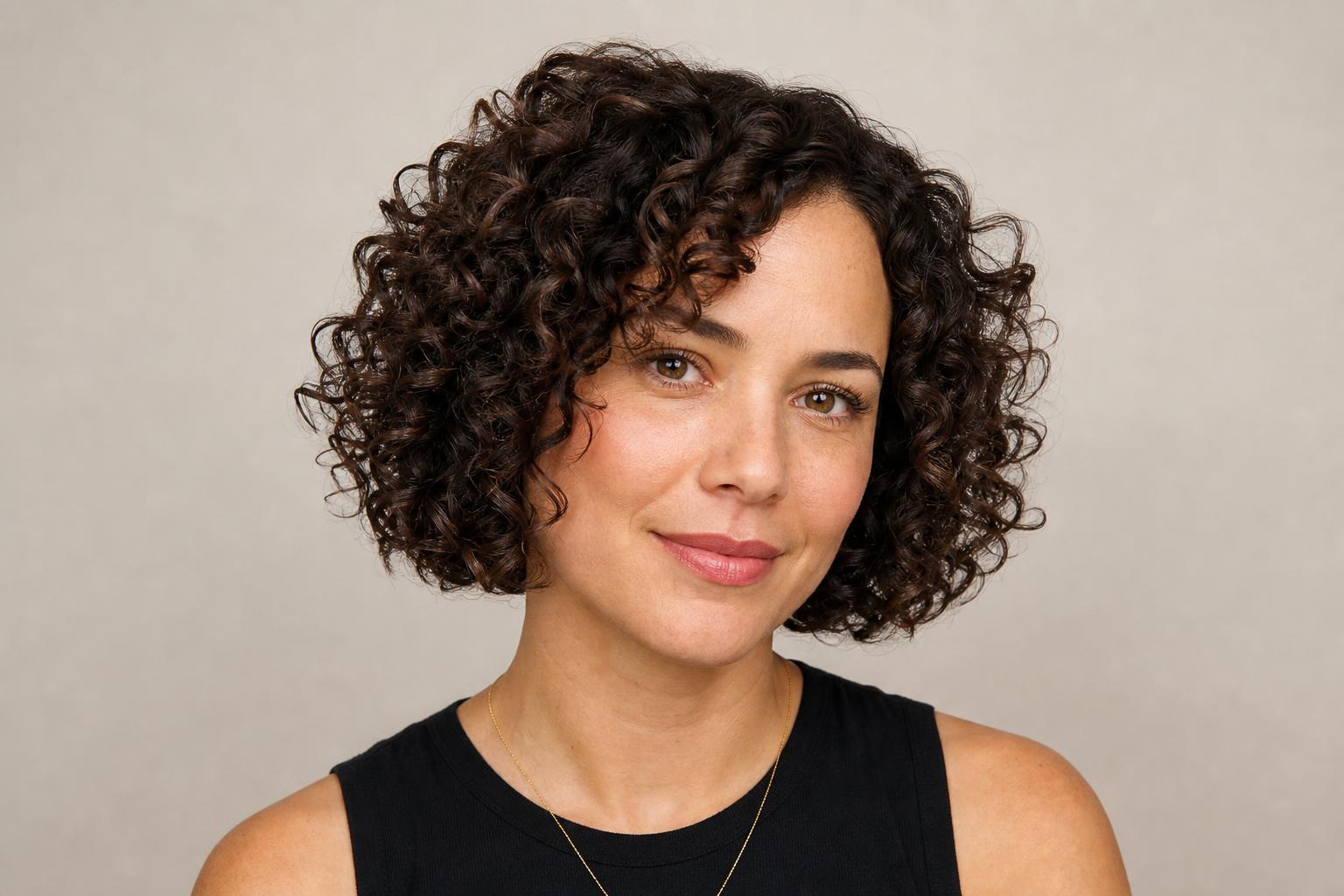
Shorter and graduated at the back with enough length at the front to tuck or sweep, sitting between a pixie and a bob. It is the shape to choose for a first short cut, since there is more length in reserve to reshape if the result is not what you pictured. Grow-out is also softer, because the graduation blurs rather than exposing a line.
A Rounded Curly Bob Is Shaped Through the Outline
Chin to jaw length with the stylist shaping the perimeter and leaving the interior density alone, which is the correct approach for 3c and tighter. Internal layering on these patterns removes the density that holds the shape and produces a triangle. Ask for the outline shaped and the inside untouched, which is a specific instruction rather than a general preference.
A Tapered Crop Controls Width at the Sides
The sides are tapered progressively shorter while the top keeps its full height, which counteracts the tendency of tight curls to build outward at the mid-lengths. It suits 3c through 4c particularly well. The taper should stop short of a hard fade line, since a skin finish against curl looks uneven within about three weeks.
Short Curls Grow Out Into Width, Not Length
This is the part that surprises people coming from straight hair. A short straight cut grows down and loses its shape at the perimeter. A short curly cut grows outward first, because each additional half inch of curl adds diameter to the spiral before it adds any visible drop. The cut does not get longer for weeks; it gets wider.
The practical consequence is that the appointment you need is a width appointment rather than a length one. Around week eight to ten, most short curly cuts want the sides taken back and the outline re-shaped while the top is left alone, which restores the silhouette without losing any of the growth you wanted. Asking for a trim at that point usually gets you length removed from the top, which is the opposite of what the shape needs.
Stylist tip: book the follow-up as a shape-up rather than a trim, and say the word width out loud. “Take the width back at the sides and leave the top alone” gets a completely different appointment from “just a trim,” and it is the request that lets a short curly cut grow into a longer one without ever passing through a shapeless phase.
What to Tell Your Stylist
Three questions before anything is cut. Ask whether they will cut it dry, and if the answer is no, ask how they account for shrinkage; a stylist experienced with curls will have a specific answer rather than a reassurance. Ask where they intend the shortest point to sit when dry, not stretched. And tell them your measured shrinkage ratio, which turns the whole conversation into numbers.
A complete request sounds like this: “My hair shrinks by about a third. I want a pixie-bob, shortest at the nape, front long enough to tuck behind my ear when dry. Please cut it dry, and go longer than the target first so we can check before taking more.”
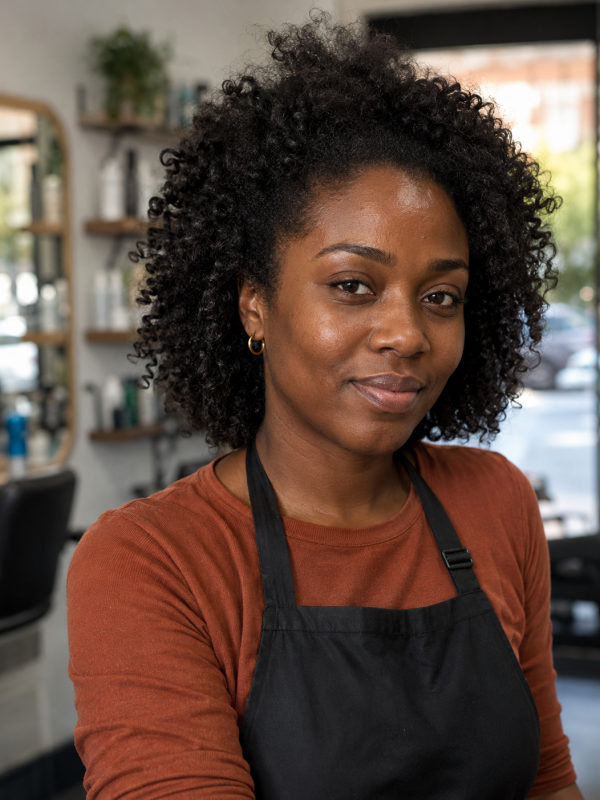
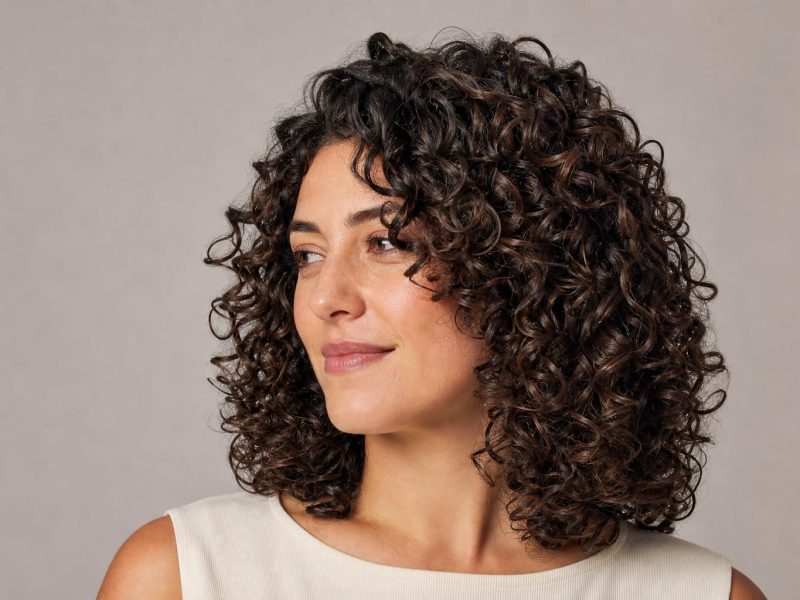
Bring photos of the cut on your curl pattern rather than on a pattern you admire. The same shape on 3a and 4a hair is two different cuts with the same name, and a reference from the wrong pattern sets an expectation the cut cannot meet. If you are unsure of your own pattern, guides for 3b curls and for 3c curls show how differently the same lengths behave.
The Routine at Short Length
Short curls need less product than long ones, and using a long-hair amount is the most common reason a new short cut looks weighed down. Cut your usual quantity roughly in half and apply everything to soaking wet hair rather than damp, raking through and then scrunching upward toward the scalp.
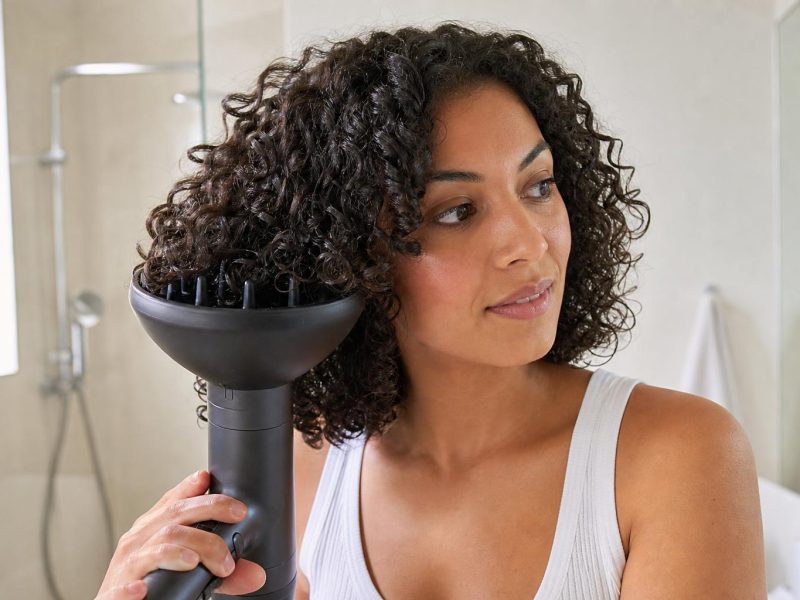
Drying matters more at short length because there is less weight holding the curl in place, so high airflow disturbs the pattern more easily than it would on longer hair. Diffuse on the lowest speed with the bowl cupped against the head rather than moving, and stop handling the hair once it is about 80 percent dry. Getting the equipment right helps: the guide to choosing a diffuser that fits your dryer covers why a shallow bowl suits short hair, and the technique itself is set out in using a diffuser without causing frizz.
Night protection carries more weight than any daytime product. A satin bonnet or pillowcase prevents the friction that flattens one side of a short cut overnight, which on short hair cannot be fixed by tying it back the next morning. Refreshing with water and a little leave-in beats rewashing on day two.
Maintenance
Short curly cuts run on a longer clock than short straight cuts, because curl hides growth. What they need instead is the periodic width appointment described above.
| Shape | Salon Interval | What the Appointment Does | Daily Time |
|---|---|---|---|
| Curly pixie | 6 to 8 weeks | Re-cut the nape and sides; top left alone | 3 to 5 minutes |
| Pixie-bob | 8 to 10 weeks | Reset the graduation at the back | 5 minutes |
| Rounded curly bob | 10 to 12 weeks | Re-shape the outline only | 5 to 10 minutes plus drying |
| Tapered crop | 6 to 8 weeks | Take the width back at the sides | 3 to 5 minutes |
Measured against other short cuts, this is a comparatively long cycle, which is why short curly hair reads as low maintenance to people who have it and high maintenance to people who have not tried it. The broader comparison of what short cuts actually cost in upkeep puts the numbers side by side.
When to Wait Before Cutting Short
Going short suits most curl patterns and a few situations argue for waiting.
- You cannot find a stylist who cuts curls dry. This matters more at short length than at any other, because there is no length in reserve to correct a wet-cut mistake.
- Your hair is currently damaged through the mid-lengths. A short cut removes the damaged section, which is often the right call, but do it as a deliberate reset rather than expecting the remaining curl to behave normally straight away.
- You are unsure and want a dramatic change. Start with a pixie-bob rather than a pixie; there is more length to reshape and the grow-out is far softer.
- Your curl pattern varies substantially across your head. Mixed patterns are common and need a stylist who will cut each section to its own resting length, which not every salon does.
- You rely on tying your hair back most days. Short curls cannot be tied back for several months, and that constraint bothers people more than the length itself.
FAQ
How Short Can You Cut Curly Hair?
Looser 2b to 3a patterns go as short as one to two inches and still lie close to the head, while 3b to 3c usually sits best at two to three inches of dry length. Tighter 4a to 4c patterns work well short as a shaped rounded silhouette, judged by outline rather than by measurement. The limit is set by how much width the curl builds at short length rather than by the length itself.
Should Short Curly Hair Be Cut Wet or Dry?
Dry, and it matters more at short length than at any other. Curls shrink between 10 and 75 percent depending on pattern, so a wet cut lands at a length the stylist cannot see, and at two or three inches there is no reserve to correct it. If a salon will only cut wet, ask specifically how they account for shrinkage before agreeing.
Why Does My Short Curly Hair Get Wider Instead of Longer?
Each additional half inch of curl adds diameter to the spiral before it adds visible drop, so short curly hair grows outward first. That is normal rather than a sign of a bad cut. The fix is a shape-up appointment that takes width back at the sides and leaves the top alone, which is a different request from a trim.
Is a Pixie or a Bob Better for Curly Hair?
A pixie-bob is the safest first short cut, since it keeps enough front length to tuck or sweep and leaves reserve to reshape if you want to go shorter. A true pixie concentrates curl at the crown and suits looser patterns and fine curly hair particularly well. A rounded bob suits tighter patterns, where the shape comes from the outline rather than from internal layering.
How Do I Know My Shrinkage Percentage?
Take one section at the front, pull it straight and measure to the end, then release it and measure where it sits. The difference between the two numbers, expressed as a proportion, is your shrinkage. Write it down and bring it to the appointment, since it converts every length discussion from guesswork into arithmetic.
Does Short Curly Hair Need Less Product?
Considerably less, and using a long-hair amount is the most common reason a new short cut looks weighed down. Roughly halve your usual quantity, apply it to soaking wet rather than damp hair, and rake it through before scrunching upward. Night protection with a satin bonnet or pillowcase does more for the result than adding product back.
How Often Does Short Curly Hair Need Cutting?
Every six to twelve weeks depending on the shape, with pixies and tapered crops at the shorter end and rounded bobs at the longer. Curl hides growth, so the interval is longer than for equivalent short straight cuts. What the appointment does changes too: it is usually about restoring width and outline rather than removing length.
Short curly hair for women comes down to arithmetic more than aesthetics. Measure your shrinkage before you book, insist on a dry cut, ask the stylist to land longer than the target so there is room to check, and understand that the follow-up appointment is about width rather than length. Start with a pixie-bob if you are unsure, because it leaves you something to work with.
Hair results vary based on your natural hair type, texture, density, and condition. Always consult with a licensed hairstylist before making significant changes, especially with chemical treatments or dramatic length changes. Photos may show styled results that require professional tools and products to replicate.