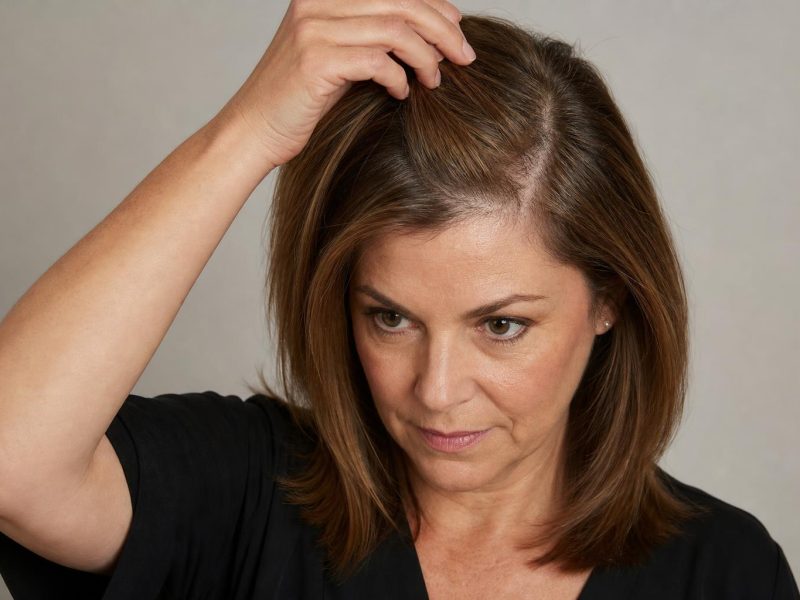

Subheadline: Practical, evidence-backed strategies for thicker-looking hair — from scalp care and nutrition to styling techniques and product choices
You cannot grow new hair follicles or change your genetic strand diameter, but you can make each strand thicker, reduce the breakage that thins your hair out, and create real volume through the right combination of habits, products, and nutrition. These 20 tips cover what trichologists and stylists actually recommend — not social media shortcuts that overpromise and underdeliver.
This guide is organized into four categories: daily hair care habits that prevent thinning, products and ingredients with evidence behind them, nutritional support that addresses the internal side, and salon and styling strategies that create immediate visible thickness. Start with the tips that match your biggest weakness — if your hair is breaking, fix that first; if your scalp is neglected, start there.
Hair Thickness vs. Hair Density vs. Hair Volume — Why the Difference Matters
Most people use “thick hair” to mean one thing, but it actually involves three separate variables. Thickness (strand diameter) is the width of each individual hair — fine, medium, or coarse. Density is how many hairs grow per square inch of scalp. Volume is how much space your hair takes up, which is a combination of both plus styling. You can have fine hair with high density (lots of thin strands that flatten easily) or coarse hair with low density (fewer thick strands that still look sparse). Knowing which factor is your issue determines which tips will actually help.
If your hair has always been fine but you want it to look thicker, you need volume-building techniques and thickening products. If your hair used to be thicker and has thinned over time, you may be dealing with breakage, hair loss, or nutritional deficiencies — and those need different solutions. If you’re losing more than 100 hairs per day consistently, see a dermatologist before trying product fixes — shedding beyond normal levels warrants a medical evaluation.
Daily Habits That Build Thicker Hair
The foundation of thicker hair is reducing the damage and breakage that thin it out. Most women lose visible thickness not because their follicles stopped producing — but because their daily habits are snapping strands faster than new ones grow. These six changes address the most common culprits.

1. Massage Your Scalp for 4 Minutes Daily
A small but promising study published in ePlasty found that standardized scalp massage for 4 minutes daily increased hair thickness by roughly 10% over 24 weeks. The mechanical stretching activates dermal papilla cells beneath the scalp, promoting changes in gene expression linked to hair growth. Use your fingertips — not your nails — in small circular motions, working from the temples to the crown. A silicone scalp massager can make this easier in the shower. Consistency matters more than pressure — do it daily, not once a week for longer.
2. Stop Brushing Wet Hair
Hair is most fragile when wet — the shaft swells and the cuticle lifts, making each strand significantly more vulnerable to snapping. Dragging a brush through tangled wet hair is one of the fastest ways to create breakage that makes hair look thinner over time. Instead, apply a detangling spray or leave-in conditioner after washing, then use a wide-tooth comb or a wet-hair-specific brush (like a Wet Brush) starting from the ends and working upward. Never pull through from root to tip in one stroke.
3. Limit Heat Styling to 2–3 Times Per Week
Daily blow-drying, flat ironing, or curling weakens the protein bonds in your hair shaft, leading to dryness, split ends, and breakage that compounds over weeks. If your ends are splitting and your ponytail feels thinner than it did a year ago, heat damage is likely contributing. When you do use heat tools, apply a heat protectant spray (not cream — cream weighs fine hair down) and keep the temperature below 375°F for fine hair, 400°F for medium, and 425°F for coarse. Air-drying 70% of the way before finishing with a blow-dryer on medium heat significantly reduces damage compared to blow-drying from soaking wet.
4. Switch to a Microfiber Towel or Cotton T-Shirt
Standard terry cloth towels create friction against wet hair, roughing up the cuticle and causing frizz and breakage. A microfiber towel or a soft cotton t-shirt absorbs water without the abrasive surface. Wrap your hair gently — don’t rub it back and forth. This one swap reduces surface-level damage that makes hair look dull and thin, and it’s especially noticeable on fine or color-treated hair.
5. Sleep on a Silk or Satin Pillowcase
Cotton pillowcases create friction as you move during sleep, which leads to tangles, breakage, and frizz. Silk or satin pillowcases let your hair slide rather than catch, reducing the cumulative overnight damage that is invisible day-to-day but adds up over months. This tip matters most for women with fine hair, color-treated hair, or anyone waking up with tangles and creases.
6. Wash at the Right Frequency for Your Hair Type
Overwashing strips your scalp of natural oils, leading to dryness and potential irritation. Underwashing allows sebum buildup that clogs follicles and flattens your roots. For most hair types, 2–3 washes per week strikes the right balance. Fine hair may need every other day because oil weighs it down quickly. Thick or curly hair can often go 3–4 days. Use a sulfate-free shampoo — sulfates are effective cleansers but can be too aggressive for hair that’s already fragile or chemically treated.
Products and Ingredients That Actually Work
Not every thickening product is marketing hype — some ingredients have real evidence behind them. The key is understanding what each product type does: some coat the outside of the strand to plump it temporarily, some strengthen the strand internally, and some work on the follicle itself to produce thicker growth over time. You want a combination of all three approaches.
7. Use a Volumizing Shampoo With the Right Active Ingredients
Volumizing shampoos work by gently cleansing without depositing heavy moisturizers that weigh hair down. Look for formulas containing biotin, panthenol (vitamin B5), hydrolyzed wheat protein, or caffeine — these ingredients either coat the strand to add temporary diameter or stimulate scalp circulation. Avoid shampoos with silicones (dimethicone, cyclomethicone) and heavy oils in the first three ingredients — these smooth the cuticle but flatten fine hair at the roots. Lather at the scalp, not the ends; the rinse-through suds are enough to clean mid-lengths.
8. Condition Only Your Mid-Lengths and Ends
Conditioner is essential for preventing breakage, but applying it to your roots weighs down the area where you need the most lift. Apply conditioner from ear level to tips only, let it sit for 2–3 minutes to penetrate, then rinse thoroughly with cool water to seal the cuticle. For fine hair, a lightweight conditioner or a detangling spray is better than a rich cream formula. Once a week, substitute a deep conditioning mask or a protein treatment for your regular conditioner — this strengthens the cortex of each strand, reducing breakage that thins out your overall volume.
9. Apply a Root-Lifting Product Before Blow-Drying
This is the single fastest way to create visible thickness. Apply a volumizing mousse (golf-ball-sized amount for medium hair) or a root-lifting spray directly to towel-dried roots. Then blow-dry upside down or use a round brush to lift sections at the crown. The product creates scaffolding that holds hair away from the scalp, and the heat sets that lift in place. For maximum effect, finish with a blast of cool air to lock the style. The result is immediate — your hair will look noticeably fuller than air-drying alone.
10. Try Rosemary Oil as a Scalp Treatment
A 2015 clinical trial published in SKINmed compared rosemary essential oil to 2% minoxidil in people with androgenetic alopecia and found both groups showed comparable improvement in hair count after six months — with the rosemary group reporting less scalp itching. While this single study doesn’t make rosemary oil a proven medical treatment, the results are promising enough that many dermatologists consider it a reasonable complementary approach. Mix 3–5 drops of rosemary essential oil with a tablespoon of carrier oil (jojoba or coconut), massage into your scalp, leave for 30 minutes to overnight, then shampoo out. Use consistently 2–3 times per week for at least 3 months before judging results.
11. Add a Bond-Repair Treatment to Your Routine
If your hair has been colored, bleached, or heat-styled heavily, the disulfide bonds inside the hair shaft may be damaged — this is what makes chemically treated hair feel thin, stretchy, and fragile. Bond-repair products (like those containing bis-aminopropyl diglycol dimaleate or K18 peptides) work at a molecular level to reconnect broken bonds within the cortex, physically strengthening each strand. This does not add new hair, but it prevents existing hair from snapping, which preserves your overall thickness. Use a bond-repair mask or treatment once a week in place of your regular conditioner.
Nutrition and Internal Support
What you eat affects hair health from the inside — your body builds each strand from protein, and a range of micronutrients are needed to keep the growth cycle running normally. Nutritional deficiencies are one of the most underdiagnosed causes of hair thinning in women, particularly iron and vitamin D.

12. Prioritize Protein at Every Meal
Hair is almost entirely made of keratin, a structural protein. If your diet is low in protein — common with restrictive diets, particularly vegan diets that aren’t carefully planned — your body deprioritizes hair production in favor of more critical protein needs. Aim for at least 0.8 grams of protein per kilogram of body weight daily from varied sources: eggs, fish, poultry, legumes, Greek yogurt, nuts, and seeds. Signs that protein deficiency may be affecting your hair include increased shedding, slower growth, and strands that break easily when pulled.
13. Get Your Iron and Ferritin Levels Checked
Iron deficiency — even without full anemia — is one of the most common nutritional causes of hair thinning in women, particularly those with heavy menstrual periods. Ferritin (stored iron) levels need to be significantly higher for optimal hair growth than the standard lab “normal” range. Some trichologists recommend maintaining ferritin above 70 ng/mL for hair health, while many labs flag anything above 12 ng/mL as normal. If your ferritin is low, an iron supplement taken with vitamin C (for absorption) can reduce shedding within 3–6 months. Do not supplement iron without blood testing first — excess iron causes its own health problems.
14. Address Vitamin D Deficiency
Vitamin D plays a role in the creation of new hair follicle sites and the regulation of the hair growth cycle. Deficiency — defined as below 30 ng/mL in blood tests — has been associated with telogen effluvium and alopecia areata in multiple studies. It is remarkably common: an estimated 42% of American adults are vitamin D deficient, with higher rates among women, people with darker skin, and those who spend most of their time indoors. A simple blood test determines your level, and supplementation (typically 1,000–5,000 IU daily, depending on severity) can be effective when deficiency is confirmed. Pair supplementation with dietary sources like fatty fish, fortified foods, and egg yolks.
15. Be Honest About Biotin
Biotin is the most marketed hair supplement, but the evidence for it is thin unless you are genuinely deficient — which is uncommon in people eating a varied diet. Biotin deficiency can cause hair thinning, but supplementing when your levels are already adequate does nothing for hair growth. One real concern: biotin supplements interfere with certain lab tests, including thyroid panels and troponin (a cardiac marker), potentially causing false results. If you choose to take biotin, stop it at least 48 hours before any blood work, and let your doctor know.
Scalp Health Is the Foundation
Your scalp is the soil your hair grows from — a congested, inflamed, or undernourished scalp produces weaker hair. The trend toward treating the scalp with the same care as facial skin (“skinification”) reflects real science: a healthy scalp environment directly affects hair porosity, strand strength, and follicle output.
16. Exfoliate Your Scalp Weekly
Dead skin cells, sebum, and product residue can accumulate on the scalp and clog follicles, restricting growth and making roots look flat. A weekly scalp scrub — either a physical exfoliant with gentle granules or a chemical exfoliant containing salicylic acid — clears this buildup without stripping the scalp’s moisture barrier. Apply to wet hair before shampooing, massage in gentle circles for 1–2 minutes focusing on oily areas, then rinse and shampoo as usual. Avoid scrubbing aggressively — the goal is to loosen buildup, not create irritation. For a deeper dive into technique, see our scalp exfoliation guide.
17. Invest in a Quality Scalp Serum
Scalp serums with peptides, niacinamide, caffeine, or piroctone olamine deliver targeted actives directly to the follicle environment. Peptides support the structural proteins around the follicle. Niacinamide improves scalp barrier function and reduces inflammation. Caffeine stimulates microcirculation and may counteract the follicle-shrinking effects of DHT. Apply after washing on a towel-dried scalp, part your hair into sections, and apply the serum directly to the scalp — not the hair. Massage in briefly and do not rinse. Use nightly for best results.
Salon Strategies and Styling Tricks
The cut, color, and styling technique your stylist uses can make an immediate visible difference to how thick your hair appears — no growth period needed. These are the professional approaches that create the illusion of density while your care routine builds actual thickness over time.
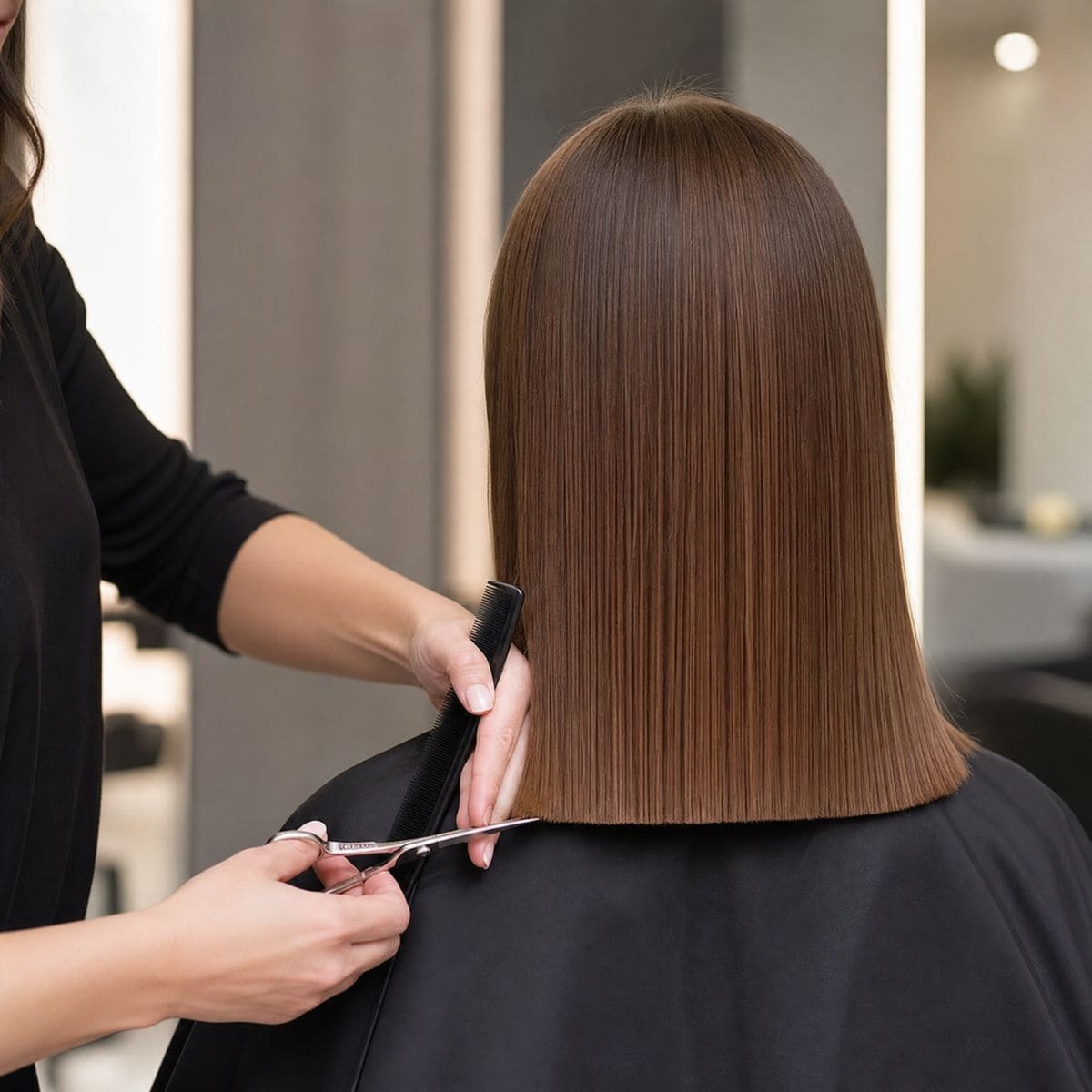
18. Ask for a Blunt Cut or One-Length Bob
Blunt cuts create a thick, solid perimeter line that makes fine hair appear denser than heavily layered cuts, which thin out the ends and expose more scalp. If your hair is fine or thin, a blunt bob at chin to collarbone length is the most reliably flattering choice — the hair’s weight keeps it in place, and the clean edge looks intentionally thick rather than wispy. Ask your stylist for point cutting at the very ends for subtle texture without removing weight. Avoid razor cutting on fine hair — it removes too much bulk and creates see-through ends.
19. Use Strategic Layers Only Where You Need Volume
While blunt cuts work well for fine hair, thick or medium-density hair benefits from strategic internal layers that remove weight and create movement without thinning the perimeter. Ask for layers that start at cheekbone level or below — short layers starting at the crown can create a top-heavy look that makes the rest appear thinner by comparison. Face-framing layers add dimension and movement around the front without sacrificing density. Tell your stylist your goal is “volume and movement, not thinning out” — this communicates that you want weight removal in specific zones, not an overall reduction.
20. Add Dimension With Color
Monochromatic, flat color — especially dark single-process color — can make hair look thinner because there is no variation to create the illusion of depth. Subtle highlights, lowlights, or babylights create visual contrast that makes hair appear more textured and voluminous. Balayage with a root shadow is particularly effective: the darker roots create the impression of density at the scalp, while lighter mid-lengths and ends appear to take up more space. One caution — bleaching weakens the hair shaft, so if thickness is your priority, keep lifts conservative (2–3 levels maximum) and pair every color service with a bond-repair treatment.
Common Mistakes That Make Hair Look Thinner
Some habits sabotage your thickness without you realizing it. Identifying and stopping these can produce noticeable improvement within weeks — sometimes faster than adding new products.
| Mistake | Why It Thins Hair | Fix |
|---|---|---|
| Using heavy conditioners on roots | Weighs down the area where you need the most lift | Apply conditioner ear-level and below only |
| Tight ponytails or buns daily | Creates traction alopecia — permanent loss at the hairline | Alternate loose styles, use fabric-covered elastics |
| Skipping trims for “length” | Split ends travel up the shaft, causing mid-length breakage | Trim every 8–12 weeks; ask for dusting if saving length |
| Overwashing fine hair | Strips oils, causes dryness and static that makes hair look sparse | Use dry shampoo between washes to absorb oil at roots |
| Same center part every day | Hair trains flat, part line widens visually over time | Alternate part position weekly; a side part creates instant lift |
| Ignoring scalp buildup | Clogged follicles produce finer strands and restrict growth | Exfoliate weekly with a scalp scrub or clarifying shampoo |
Stylist tip: If you are not sure whether your hair is thinning or just fine, ask your stylist to assess your ponytail circumference at your next visit. A ponytail that has noticeably decreased in circumference over 1–2 years suggests actual density loss rather than just fine strand diameter. This is a practical way to distinguish between natural fineness and progressive thinning before seeing a dermatologist.
FAQ
Can You Actually Make Thin Hair Thicker?
You cannot permanently change your genetic strand diameter, but you can increase the appearance of thickness through several mechanisms: strengthening strands to prevent breakage (which preserves length and density), using products that coat and plump each hair shaft, addressing nutritional deficiencies that may be causing thinning, and choosing cuts and styles that maximize visual volume. Women whose hair has thinned due to damage, deficiency, or hormonal shifts often see meaningful improvement — those with naturally fine hair since birth can enhance volume but will not transform fine strands into coarse ones.
How Long Does It Take to See Thicker Hair?
Styling and product changes produce immediate results — a volumizing mousse and blow-dry technique can make hair appear visibly fuller today. Damage reduction (less heat, gentler handling) shows improvement in 6–12 weeks as new growth replaces damaged lengths. Nutritional supplementation (when correcting a deficiency) typically takes 3–6 months. Rosemary oil and scalp treatments need at least 3 months of consistent use. Hair grows roughly half an inch per month, so any internal changes take time to reach visible length.
Does Cutting Hair Make It Grow Back Thicker?
No — this is a persistent myth. Cutting hair does not change the follicle or the strand diameter. What cutting does is remove damaged, split, tapered ends and replace them with a blunt, clean edge that looks thicker. Regular trims prevent split ends from traveling up the hair shaft and causing mid-length breakage, which preserves overall fullness. If you are growing your hair out, ask your stylist for “dusting” — trimming only the very tips, roughly 1/8 inch — every 10–12 weeks to maintain healthy ends without sacrificing length.
Is Biotin Worth Taking for Thicker Hair?
Only if you have a confirmed biotin deficiency, which is uncommon in people eating a varied diet that includes eggs, nuts, legumes, and whole grains. If your biotin levels are already normal, supplementing higher doses provides no additional hair benefit — the excess is simply excreted. One important caution: high-dose biotin supplements can interfere with lab tests, particularly thyroid panels, potentially producing falsely abnormal results. Discontinue biotin for at least 48 hours before any blood work.
Does Rosemary Oil Really Work for Hair Growth?
The evidence is promising but limited. One clinical trial found that topical rosemary oil performed comparably to 2% minoxidil for hair count improvement after six months, with fewer side effects. However, this was a single study, and rosemary oil has not undergone the rigorous multi-trial process that minoxidil has. It is reasonable to try as a complementary approach — mixed with a carrier oil and applied to the scalp 2–3 times per week — but it should not replace proven medical treatments if you have diagnosed pattern hair loss.
What Haircut Makes Thin Hair Look Thickest?
A blunt cut at chin to collarbone length creates the densest-looking perimeter line on fine or thin hair. Avoid heavy layering, which removes weight from the ends and creates transparency. If you want some movement, ask for face-framing layers only or internal texturizing rather than visible layering throughout. A side part adds asymmetry that creates the illusion of more volume at the crown than a center part. Bobs, lobs, and shoulder-length cuts are generally the most flattering lengths for maximizing the appearance of thickness.
When Should I See a Doctor About Thinning Hair?
See a dermatologist if your ponytail has noticeably decreased in circumference, you can see scalp through your hair in areas that were previously covered, you’re shedding more than 100 hairs per day for longer than 3 months, or you notice patchy bald spots. Medical hair loss treatments are most effective when started early — waiting until thinning is advanced makes recovery significantly harder. Blood work checking iron, ferritin, vitamin D, thyroid function, and hormones can identify treatable causes that no product can fix.
Do Hair Growth Supplements Like Nutrafol or Viviscal Work?
Both brands have small clinical trials showing improvements in hair growth and reduced shedding, but neither is a substitute for addressing underlying medical causes. They work best as a complement to a healthy diet when specific nutrient gaps exist. Results take 3–6 months of consistent use. If you are already eating well and have normal blood work, the benefit from these supplements may be minimal. Discuss any supplement with your doctor, particularly if you take other medications, as some ingredients can interact.
Hair results vary based on your natural hair type, texture, density, and condition. Always consult with a licensed hairstylist before making significant changes, especially with chemical treatments or dramatic length changes. Photos may show styled results that require professional tools and products to replicate.