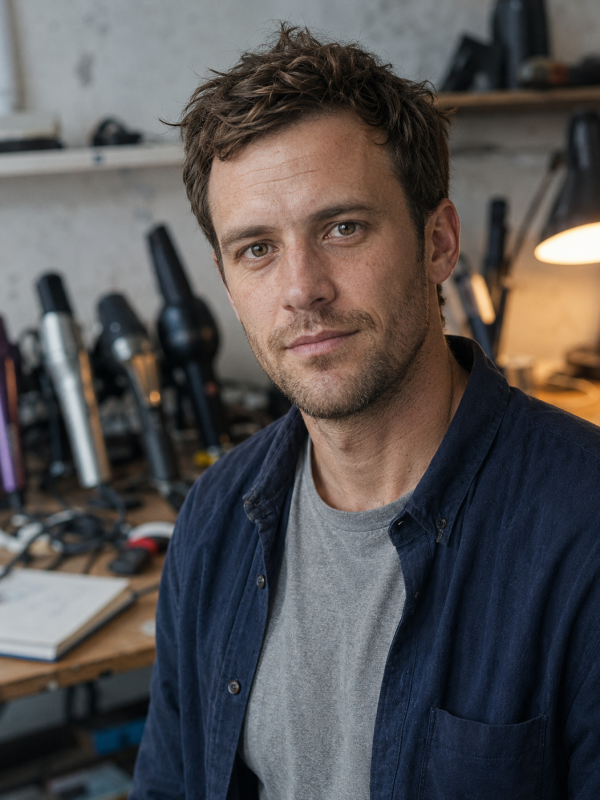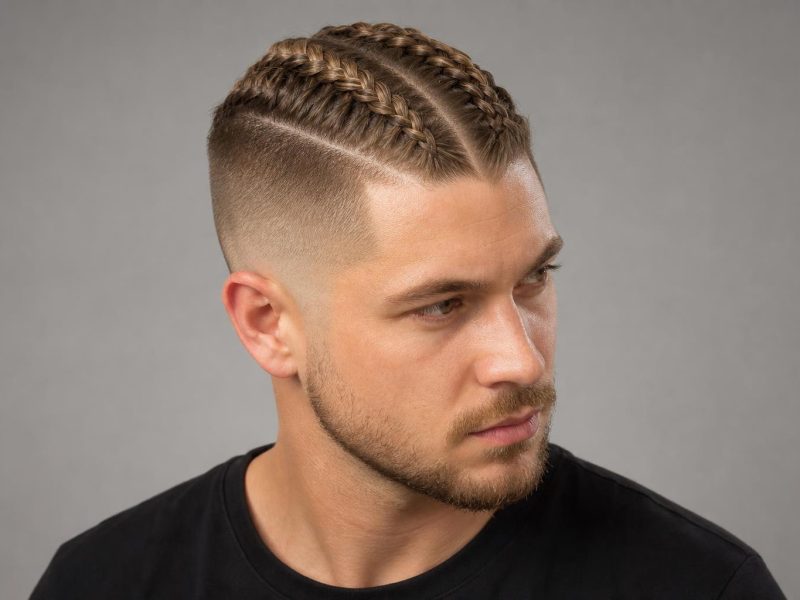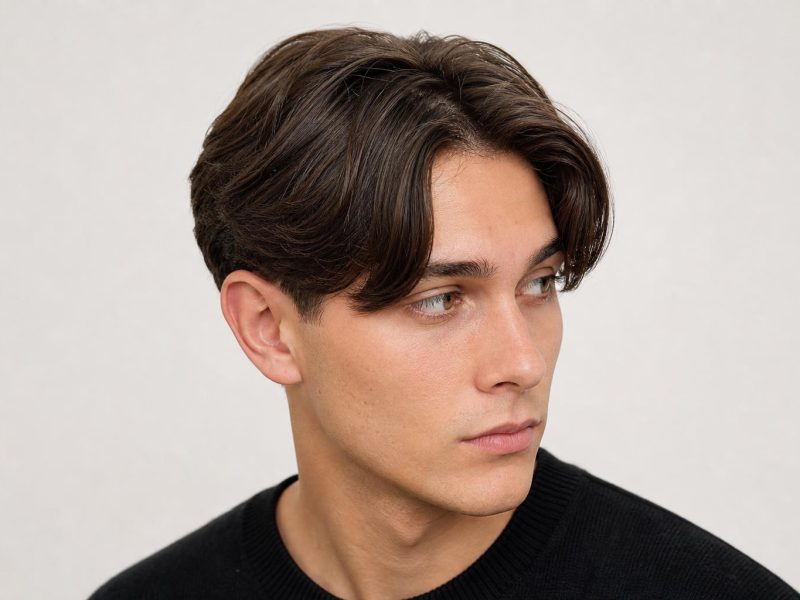

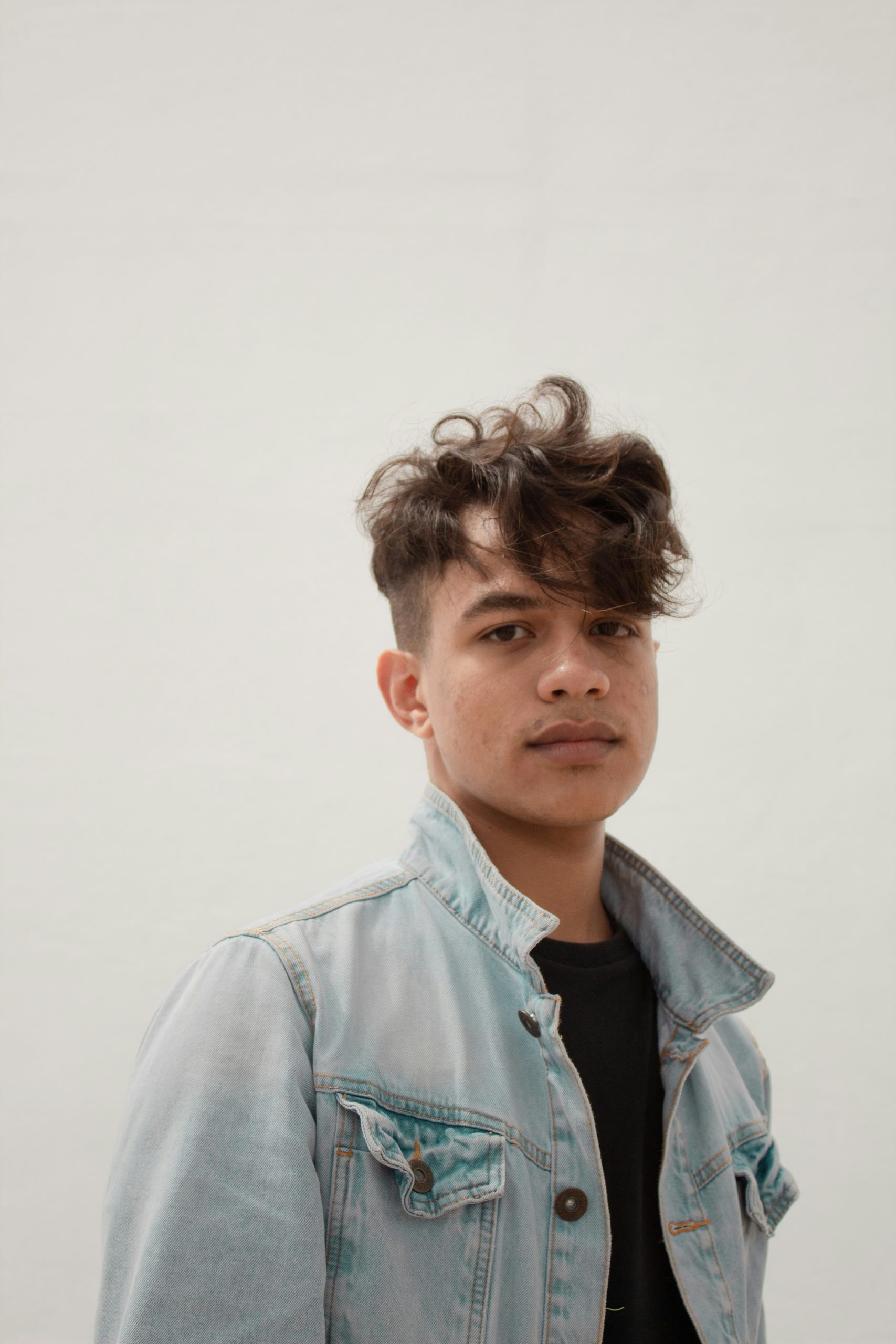

A fringe haircut for boys is any cut where the front hair falls above, at, or past the eyebrows and faces forward rather than being swept back or cropped close.
Boys’ fringe haircuts range from short blunt crops where the front falls just above the brow to longer curtain-style fringes where the hair parts in the middle and drapes past eye level. What they share is a front-facing length that frames the forehead, as opposed to fades, quiffs, or pompadours where the front is lifted or swept entirely off the face. These 25 ideas cover every major fringe variation, organized by style category, so you can match the right cut to your son’s hair type, face shape, and how much styling time is realistic on a school morning.
Face shape matters more for fringe placement than most barbers discuss at the appointment. The sections ahead include a face shape compatibility table, a school-morning styling guide, what to say at the barber so the fringe comes out the right length, and a section covering when fringe does not work well regardless of how it is styled.
| Factor | Details |
|---|---|
| Age range | Works from toddlers to teens; most manageable from ages 4 and up when the child can tolerate styling |
| Best hair type | Straight to wavy; medium texture. Tight curls need specialized fringe cutting to avoid springing up unevenly |
| Trim frequency | Blunt fringe: every 3-4 weeks. Textured or curtain fringe: every 5-7 weeks |
| School suitability | Most styles are school-appropriate; check school policy on hair touching the eyes |
| Styling time | Textured fringe: 1-2 minutes with a little product. Blunt or curtain fringe: 2-3 minutes with a brush or comb |
Classic and Short Fringe
Classic short fringe styles fall above or at eyebrow level and are cut in a straight or slightly curved line across the forehead. These are the lowest-maintenance fringe options: they take a few seconds to neaten each morning, grow out in a predictable line, and work on almost any face shape. For younger boys especially, the classic fringe is a practical default because it keeps the hair out of the eyes without requiring daily styling. It also pairs cleanly with either tapered or high taper fade sides, which keeps the overall silhouette neat between appointments.
1. French Crop with Blunt Fringe
The French crop is cut short all over with a blunt fringe that falls just above or at the eyebrow, with the sides and back either tapered or faded short. Cutting technique uses scissors-over-comb or clippers on the sides with a dry cut on the fringe to establish a clean, straight edge. Ask the barber to leave the fringe at eyebrow level rather than above it, since a fringe cut too high loses its frame effect and can make the forehead appear larger. This is a tidy, low-hassle option for school-age boys.
2. Blunt Fringe for Round Faces
Round face shapes benefit from a shorter, straighter fringe that creates a horizontal line across the forehead and visually reduces the circular proportion. Keep the fringe above the eyebrow line and slightly asymmetric at the edges so it does not emphasize roundness. The length of the overall cut should be shorter at the sides to add some angular contrast to the face shape. A mid or low fade on the sides works better than a high skin fade here, since the transition should be gradual rather than sharp.
3. Straight Hair Classic Fringe
Straight, fine-to-medium hair takes a classic fringe most naturally because the hair lies flat and holds the cut line without product. The main risk is oiliness at the forehead, which makes straight fringes clump together by midday. A light-hold clay or matte paste applied only at the roots of the fringe, not across the face-side surface, keeps individual pieces separated without adding greasiness. Blot-style dry shampoo at the fringe roots extends the style through a school afternoon without requiring a full wash.
4. Tousled Classic Fringe with Morning Styling
Roughing the blunt fringe with a towel after washing, then pressing it forward and to one side with fingers, creates a tousled variation that looks effortless without seeming unkempt. No comb needed: the finished look depends on not over-smoothing. A small amount of light-hold mousse applied to the damp fringe before towel-drying sets the direction. This takes about 90 seconds and holds through most of a school day on medium or coarser hair.
5. Low-Maintenance Fringe for Active Boys
A slightly longer blunt fringe, cut so it just touches the eyebrows rather than falling above them, grows out more gradually than a very short fringe and allows more days between trim appointments. For boys who play sport or swim, a longer fringe is easier to push back with a headband during activity and returns to its forward position when the headband is removed. The grow-out window between trims extends from 3 weeks to 5-6 weeks compared to a traditional short French crop fringe.
6. Natural Medium Tone Fringe
Medium brown or sandy blonde tones show the texture of a blunt fringe most clearly, since the natural color variation from roots to tips adds visual depth without dye. For boys with naturally darker roots and lighter ends, the fringe catches more light at the tips, which emphasizes its forward position. No color work is needed: the natural variation does the visual work, and that is an important point for parents who want a clean, age-appropriate look without scheduling salon color appointments.
Textured and Tousled Fringe
Textured fringe styles use point-cutting, razor work, or layer cutting to remove bulk from the fringe and add movement rather than a clean-cut edge. The result is a fringe that looks styled without looking rigid, which suits boys who want a fashionable look but won’t spend much time in front of a mirror. Textured fringe is more forgiving on grow-out than blunt fringe because the individual strands vary in length, so the cut line doesn’t become obvious in the same way. Hair type matters here: medium-textured or slightly coarse hair takes this fringe style best. Fine or very silky hair can look limp without the weight to hold the texture in place.
7. Point-Cut Textured Fringe
Point-cutting means the scissors are held vertically and snipped into the ends of the fringe at an angle rather than cut straight across. This removes bulk at the tips and creates micro-variations in length that give the fringe a softer, more natural edge. Ask the barber specifically to “point-cut the fringe” if you want this result. Without the instruction, most barbers default to a straight horizontal cut, which creates a heavier, more formal look than most boys prefer for everyday wear.
8. Curtain Fringe vs Classic Fringe: Key Differences
Classic fringe falls straight across and faces forward toward the forehead; curtain-style fringe parts in the center and falls outward on both sides, creating a softer, face-framing effect. Classic fringe requires less daily styling but more frequent trimming because the straight edge becomes obvious as it grows. Curtain fringe grows out more gracefully but takes slightly more morning effort to part and fall correctly. For boys who don’t style their hair at all, classic fringe is usually the more practical choice.
9. Layered Textured Fringe for Thick Hair
Thick hair needs layers through the fringe to prevent it from landing as a heavy, undifferentiated mass across the forehead. Ask the barber to thin the interior of the fringe with thinning shears, then point-cut the exterior edge. The result should be light enough to fall forward without weight, with individual pieces visible rather than a solid curtain of hair. Without this layering, thick hair fringe tends to puff outward rather than falling flat, which is a common source of frustration for parents trying to get the style to lie flat and look consistent.
10. Fringe on Long Face Shapes
Longer or narrower face shapes benefit from a fringe that adds horizontal width to the upper third of the face. A fuller, slightly longer textured fringe that falls at eyebrow level and covers more of the forehead area reduces the apparent length of the face more effectively than a short or cropped fringe. Avoid center-part styles on long face shapes since they add vertical emphasis. The goal is a line running across the face at the eyebrows, which is where both blunt and textured fringe work best for this face type.
11. No-Product Textured Fringe
Coarser or medium-weight hair can hold a textured fringe position through a school day without any product if the cut is done correctly. The key is that the barber cuts the fringe while the hair is dry, not wet, because wet cutting on textured hair over-estimates the final length. Ask specifically for a dry-cut fringe finish. Once cut correctly at dry length, this fringe type settles into its position naturally after sleeping on it, and a quick run of fingers forward in the morning is all the styling needed.
12. Textured Fringe Grow-Out Timeline
Unlike a blunt fringe that shows obvious regrowth within 3 weeks, a textured point-cut fringe typically holds its shape for 5-7 weeks before a trim becomes necessary. The varied tips blur the grow-out line, which is a significant maintenance advantage for families who find frequent trim appointments difficult to schedule. The style does start to lose definition beyond 7 weeks as the front length begins to cover the eyes, at which point either a trim or a transition to a side-swept style is the simplest solution.
Fade Plus Fringe Combinations
Pairing a fringe with a faded or tapered side profile is the most common current approach for school-age and teen boys. The fade keeps the sides and back very clean, which makes the front fringe the focal point of the cut. Short sides emphasize the fringe much more than tapered sides, so the style works best when the fringe is cut with enough length and texture to justify being the main feature. A skin or tight fade with a very short fringe can look unbalanced — the sides and front compete rather than complementing each other. Mid fades and drop fades are typically the most balanced pairings for fringe styles.
13. Mid Fade with Textured Fringe
Cutting the mid fade to blend from a zero at the temple to a natural length midway up the head creates a clean side profile that anchors a textured fringe without overwhelming it. The transition should blend smoothly rather than having a visible line between the faded section and the natural-length top. Ask the barber to leave the top length at 1.5 to 2 inches so the fringe has enough length to fall forward and show texture rather than falling flat from being too short. This combination takes about 30-45 minutes and is one of the most requested styles in school-age boys’ barbering.
14. Dark Fade, Lighter Fringe Contrast
Boys with dark hair who receive a very tight or skin fade at the sides end up with a natural contrast between the almost-bare sides and the darker top, and the fringe at the front is where most of that color sits most densely. For boys with naturally lighter ends, the tips of the fringe can appear a shade or two lighter than the roots, adding color dimension without any chemical treatment. This natural contrast is worth pointing out to the barber so they don’t inadvertently cut the fringe too short and remove the lighter tips.
15. Getting the Right Fade-Fringe Combination at the Barber
Tell the barber the fade height you want (low, mid, or high), the guard number at the shortest point, and whether you want a skin fade or a blended close crop at the sides. For the fringe, specify the fringe length (above brow, at brow, or past brow), the fringe width (full width of forehead or narrower), and the fringe finish (straight cut, point-cut, or texturized). Bringing a photo simplifies the conversation significantly. If you want a burst fade rather than a standard taper, say so explicitly since it’s a different silhouette around the ear area.
16. High Fade vs Low Fade with Fringe
A high fade starts very close to the temples and blends out rapidly, leaving very little natural-length hair visible from the sides. Paired with a fringe, this creates a strong contrast between bare sides and the more present fringe on top. Low fades are more subtle: the blending starts closer to the ear and the sides retain more visible length, making the overall cut look less dramatic and more appropriate for younger boys or more conservative dress codes. For teens who want a current look, mid-to-high fades are more fashionable; for kids under 10, a low fade or taper is typically a safer choice.
17. Drop Fade with Fringe
A drop fade follows the curve of the head around the ear and drops slightly lower at the back than at the temples, creating a curved fade line when viewed from the side. Paired with a textured fringe, this gives an arched, flowing silhouette rather than the straight-across line of a standard mid fade. The drop fade works well for oval and diamond face shapes. It also pairs with any fringe length, since the gentle arc at the sides complements both short blunt fringe and longer curtain-style front pieces.
18. Fringe with Fade for Square Face Shapes
Square jaw lines have strong angles at the lower face, and a fringe with a mid fade works to balance rather than emphasize those angles. Avoid a very tight skin fade on square faces, since it makes the jawline appear more prominent. A mid or low taper that retains some length through the sides creates a softer frame. The fringe at the front should be textured or slightly irregular rather than rigidly straight, since a sharp horizontal fringe line can visually echo the squared jaw and double the angularity.
Swept and Side-Parted Fringe
Swept and side-parted fringe styles redirect the front hair to one side rather than straight forward. These are among the most versatile fringe variations because they can be styled down and forward on casual days or swept more firmly to one side for a neater look. They also work well for boys who have a cowlick that makes straight-forward fringe difficult to maintain. A side part fringe is closer to a traditional comb-over shape, while a looser side sweep is more relaxed. Both are easy to style and grow out gracefully toward a side-swept mid-length look.
19. Wavy Hair Side-Swept Fringe
Wavy hair takes a side-swept fringe naturally because the wave direction can be trained to fall toward one side consistently. Comb the damp fringe to the side immediately after washing and allow it to air-dry in that direction a few mornings in a row, and the wave memory sets the fringe in place without much daily effort afterward. For boys with loose waves (Type 2a or 2b), this approach works within a week of consistent direction-setting. On tighter waves, a small amount of styling cream helps hold the direction longer.
20. Side-Part Styling for School Mornings
A side part fringe styled with a fine-tooth comb and a pea-sized amount of light-hold pomade creates a clean look that holds through a school day on medium and coarser hair. Apply the pomade to damp hair, comb to the side, and allow to dry naturally for 10 minutes or blow-dry on low heat while holding the comb in place. The styling step takes 2-3 minutes. This approach suits boys who want a polished, smart appearance rather than a casual tousled look, and it works well for school photo days or formal occasions.
21. Growing Out from a Classic Fringe to Side-Swept
When a blunt fringe grows past the eyebrows but a trim appointment isn’t scheduled yet, training it to one side is the simplest management approach. The grow-out phase from classic fringe to a usable side-swept style takes about 4-6 weeks of consistently combing to one side after washing. Clip the fringe to the side with a small clip during the awkward in-between length if it keeps falling forward. After several weeks of direction-training, the fringe holds its side position reliably without being clipped.
22. What to Ask for a Side-Swept Fringe
Tell the barber you want the front length left long enough to sweep to one side and hold its position — typically 2 to 2.5 inches of front length is the minimum for a reliable side sweep. Specify which direction the part should fall (left or right, matching the child’s natural part if there is one). Ask the barber to dry-cut the fringe in its swept position, rather than cutting it straight across and assuming the sweep will follow. This prevents the cut from coming back too short to reach the swept position naturally.
Curtain-Style and Longer Fringe
Curtain-style fringe for boys uses the same structure as curtain bangs: the front hair parts in the center and falls outward on both sides, creating a face-framing effect that softens the forehead. On boys, this style tends to be shorter than the women’s version, typically falling to eyebrow or slightly below-eyebrow level. It’s a popular choice for older teens who want a more fashion-forward look. The style takes 2-3 minutes to set in the morning using a round brush or a comb to direct each side outward from the center part. Unlike bowl cuts, which frame the entire head uniformly, curtain fringe focuses the movement at the front only.
23. Classic Center-Part Curtain Fringe for Teens
The center part divides the front hair in half, with each section directed outward and slightly downward toward the temples. The ideal length is eyebrow level at the center, tapering slightly longer toward the outer edge. Blow-dry with a round brush directed outward from the center on each side to set the shape, or use a flat iron with a slight outward roll at the tips for a cleaner finish. For teens, this style pairs well with mid-length sides, either faded or left at a natural taper.
24. Curtain Fringe for Heart Face Shapes
Heart-shaped faces have wider foreheads and narrower chins, and center-part curtain fringe addresses this by visually narrowing the forehead through the central part while the sweeping pieces add apparent width at the cheekbone level. The curtain fringe directs the eye outward and downward rather than straight across, which reduces the sense of forehead width. Keep the fringe at eyebrow length so the pieces fall to the widest point of the face rather than above it. For younger boys with heart-shaped faces, this fringe is one of the most flattering options in the category.
25. Curtain Fringe vs Classic Fringe: Total Maintenance Compared
Classic blunt fringe needs minimal daily styling since it just falls forward, but it needs a trim every 3-4 weeks when it grows past the eyebrows. Curtain fringe takes 2-3 minutes to part and set each morning, but the grow-out window extends to 6-8 weeks before trimming becomes necessary because the varying lengths blend into the sides. Over a 3-month period, curtain fringe averages about the same total maintenance time as classic fringe when you factor in the less frequent salon visits. The main deciding factor is usually whether the child is willing to spend the extra morning minutes on it.
Face Shape Guide for Boy Fringe Haircuts
Face shape determines which fringe falls naturally on the face and which requires effort to look right. The table below matches each face shape to the fringe type that works best, based on the proportion principles barbers apply when cutting:
| Face Shape | Best Fringe Type | Why It Works |
|---|---|---|
| Round | Side-swept or asymmetric fringe | Creates a diagonal break that reduces circular proportion |
| Oval | Any fringe style | Oval face shape supports all fringe types without proportion issues |
| Square | Textured or side-swept fringe | Avoids adding more hard horizontal lines to an already angular face |
| Long or Oblong | Full-width blunt or textured fringe at brow level | Adds width across the forehead and reduces apparent face length |
| Heart | Curtain or longer swept fringe | Draws the eye outward and downward, reducing forehead width |
| Diamond | Textured fringe with some width | Adds fullness at the forehead to balance narrow temples and chin |
Maintenance Schedule by Fringe Type
Fringe trims are more frequent than full cut appointments because fringe grows at the same rate as the rest of the hair but becomes obvious sooner when it passes the eyebrows. Building a trim-only appointment into the schedule between full cuts keeps the style looking sharp without requiring a full restyle each time:
| Fringe Type | Trim Frequency | Grow-Out Behavior |
|---|---|---|
| Blunt French crop fringe | Every 3-4 weeks | Obvious grow-out line; style degrades quickly past brow level |
| Textured or point-cut fringe | Every 5-7 weeks | Varied tips blur the grow-out line; more grow-out tolerance |
| Side-swept fringe | Every 5-6 weeks | Grows into a side-parted mid-length naturally; graceful grow-out |
| Curtain fringe | Every 6-8 weeks | Grows into longer curtain style; lowest trim frequency of all options |
What to Tell the Barber
Fringe cuts go wrong most often when the instruction is too vague. “Give him a fringe” leaves too many decisions to the barber, who may default to a very short, blunt fringe that’s already past its ideal length by the time you leave the chair. Specific instructions produce more consistent results.
Stylist tip: Bring a photo of the finished fringe length you want, not just the overall style. Fringe length is where most cut errors happen, and a photo makes it unambiguous. If in doubt, ask the barber to cut the fringe slightly longer than the target and let you check the length in the mirror before trimming it shorter. A fringe cut too short cannot be fixed until it grows back.
Scripts for specific fringe requests:
- French crop fringe: “Short on the sides with a [mid/low] fade blended into the top, and a straight fringe at eyebrow level, not higher. Dry-cut the fringe so the final length is accurate.”
- Textured fringe: “Keep the top at [length] inches and point-cut the fringe so it has soft, uneven tips rather than a straight edge. About eyebrow length or slightly past.”
- Side-swept fringe: “Leave the front length at 2 to 2.5 inches so it can sweep to the [left/right]. Cut it swept-back in its final position, not straight across.”
- Curtain fringe: “Center-part curtain fringe at eyebrow level, tapering slightly longer at the outer edges. Keep the sides at a natural taper rather than a hard fade.”
Stylist tip: For boys under 8, ask the barber to cut the fringe last, after the child is most likely to be fidgeting. Fringe is the most visible part of the cut and the easiest to rush or clip unevenly if the child is moving. Some barbers do fringe first out of habit, so it’s a reasonable request to reverse the order.
When a Fringe Haircut Is NOT Right
Fringe does not work for every boy, and recognizing the cases where it doesn’t suit the hair or lifestyle saves an appointment and a grow-out period.
- Strong cowlick at the hairline: A cowlick directly at the front hairline makes fringe stand up or part in an uncontrolled direction, often making it impossible to keep the fringe flat. Training a cowlick takes months of consistent styling and does not always produce results. A side-swept style that works with the cowlick direction is usually a better choice.
- Tight curl pattern: Type 3c or Type 4 curl patterns have significant shrinkage, and fringe cut to eyebrow level on wet hair may spring several inches above the eyebrow when dry. A specialist in natural hair cutting can work with tight curls and fringe, but a standard barbershop fringe approach is likely to produce an unpredictable result.
- Very active school environments: Boys who play contact sport, swim regularly, or attend schools with strict no-product policies may find that any fringe style requires more daily upkeep than it’s worth. A tapered cut with the top swept back is a practical alternative that stays neat without styling.
- Resistance to regular appointments: If a child dislikes haircut appointments, a blunt fringe that requires every-3-week trims is not a sustainable choice. A curtain or side-swept fringe with its 6-8 week grow-out window, or a fringe-free cut altogether, is more manageable for reluctant sitters.
Frequently Asked Questions
Common questions about fringe haircuts for boys, answered directly:
What is a fringe haircut for boys?
A fringe haircut for boys is any style where the front hair is left long enough to fall forward across the forehead, at or below eyebrow level, rather than being slicked back, lifted, or cut very short. Fringe styles range from a straight blunt cut across the brow to curtain-style pieces that part in the center and sweep outward on both sides.
At what age can boys get a fringe haircut?
Boys can have fringe haircuts at any age from toddlerhood onward, though practical fringe styling is most manageable from around age 4 when children can sit still for longer cuts and tolerate having hair brushed toward their face. Younger toddlers often have naturally long front hair that functions as fringe without any specific cutting required.
How do you style a boy’s fringe at home?
Styling depends on the fringe type. For a blunt or textured fringe, press the damp hair forward with fingers after washing and allow it to dry in that position. For a side-swept fringe, comb it to the preferred side while damp and let it air-dry. A light-hold paste or mousse applied to the roots only keeps the direction set without adding visible product weight to the fringe surface.
What fringe style works on a round face for boys?
A side-swept or asymmetric fringe works best on a round face because it creates a diagonal line across the forehead rather than a horizontal one. Straight horizontal fringe lines emphasize the circular proportions of a round face. Sweeping or angling the fringe to one side introduces an asymmetric element that reduces the emphasis on roundness.
How often does a boy’s fringe need trimming?
A blunt fringe needs trimming every 3-4 weeks to stay at the right length. Textured and side-swept fringe lasts 5-7 weeks between trims. Curtain fringe grows out most gradually and can go 6-8 weeks before a trim is needed. Building a standalone fringe trim appointment between full cuts, which usually takes only 10-15 minutes, keeps costs lower than scheduling full cuts every time the fringe needs attention.
Can boys with curly hair get a fringe?
Boys with loose waves or light curls (Type 2 hair) can have fringe with some daily styling effort. Tighter curls (Type 3 and above) present challenges because shrinkage makes the cut length unpredictable. A stylist experienced with natural hair cutting techniques can work with curlier fringe, but the result requires more daily product and effort than fringe on straight or wavy hair. For Type 4 hair, a fringe-free style is usually more practical. For guidance on working with natural texture in shorter cuts, see low taper fade on curly hair for natural-texture cutting considerations.
What is the difference between a French crop and a fringe haircut?
A French crop is a specific haircut style where the sides and back are faded or clipped close, the top is kept short (typically under 2 inches), and the front features a blunt fringe. All French crops have fringe, but not all fringe haircuts are French crops. Fringe can appear on longer overall cuts, on curtain-style styles with natural-length sides, and on many other cut types without the short-sides structure that defines a French crop. The French crop is best understood as one specific fringe delivery system rather than synonymous with fringe itself.
Whether your son wants a clean, low-maintenance blunt fringe or a textured curtain fringe that grows out gracefully, the boy fringe haircut category covers more variation than most people expect. Start with the fringe type that matches his face shape and your styling-time reality, and ask the barber to cut it dry so the length is accurate from day one.
Hair grows at an average rate of half an inch per month, which means fringe lengths shift noticeably within 3-4 weeks. The styles shown here represent fresh-cut versions. Results vary by hair texture, density, and individual growth rate. Consult a professional barber for personalized recommendations specific to your son’s hair type and face shape.