


Curtains need four to six inches of length at the front and a soft internal layer behind the fringe, and without that layer the hair falls in two flat slabs instead of the shape you were picturing.
A curtain haircut splits the front hair down the middle so it falls in two sections around the face, with the longest pieces landing anywhere between the cheekbone and the jaw. The sides can be tapered, faded, or left long enough to blend, and that single choice changes the look more than the fringe length does. These 25 versions cover every combination, sorted by side length rather than by hair type.
After the gallery: how to grow into curtains without eight months of looking unkempt, the exact wording that gets the right cut, which face shapes need the part moved off center, styling for straight and wavy and curly hair, and honest maintenance numbers for each side treatment.
| Factor | Details |
|---|---|
| Best for | Straight to wavy hair, medium to thick density, oval and square face shapes |
| Front length needed | 4 to 6 inches at the fringe; longer if your hair is curly and shrinks |
| Maintenance | Faded sides every 2 to 3 weeks; tapered every 5 to 6; grown-out sides every 8 to 10 |
| Avoid if | You have a strong cowlick at the front hairline, a receding hairline at the temples, or very fine sparse hair |
| Daily styling | 3 to 8 minutes with a blow dryer and a matte cream |
Short-Sided Curtains with a Fade
Cutting the sides short throws all the visual weight to the front and makes the fringe the whole haircut. This is the cleanest reading of the style and the easiest to keep tidy at work or school, but the price is a barber visit every two to three weeks, because a fade blurs fast and a blurred fade under a long fringe just looks like you need a haircut. Six versions here, running from the softest low taper up to the same skin fade used in high taper fade cuts.
1. Low Taper with a Cheekbone Fringe
The taper starts just above the ear and climbs gently, which leaves enough length at the temple for the fringe to connect into the sides rather than sitting on top of them like a lid. That connection is what stops short-sided curtains looking like a wig. Ask for the fringe to end level with your cheekbone, since anything shorter stops parting cleanly.
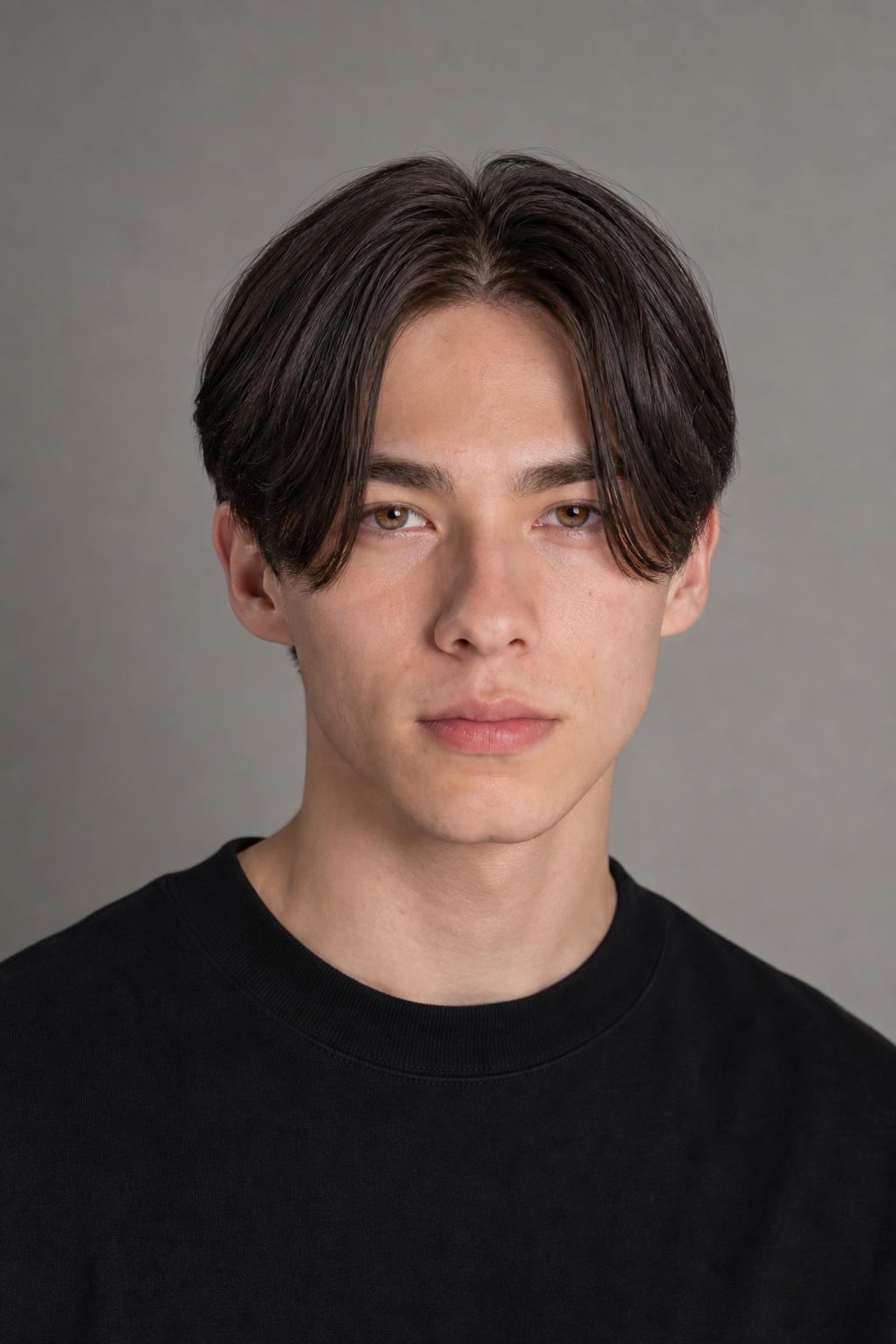
2. Mid Fade for a Square Jaw
A strong jaw is already providing the width at the bottom of the face, so the fade should climb to temple height and keep the sides narrow, letting the fringe soften the top half. The vertical break between bare sides and long front reads as height, which balances a wide jaw better than a low taper does. Keep the fringe just past the cheekbone so it does not sit level with the jaw corner.
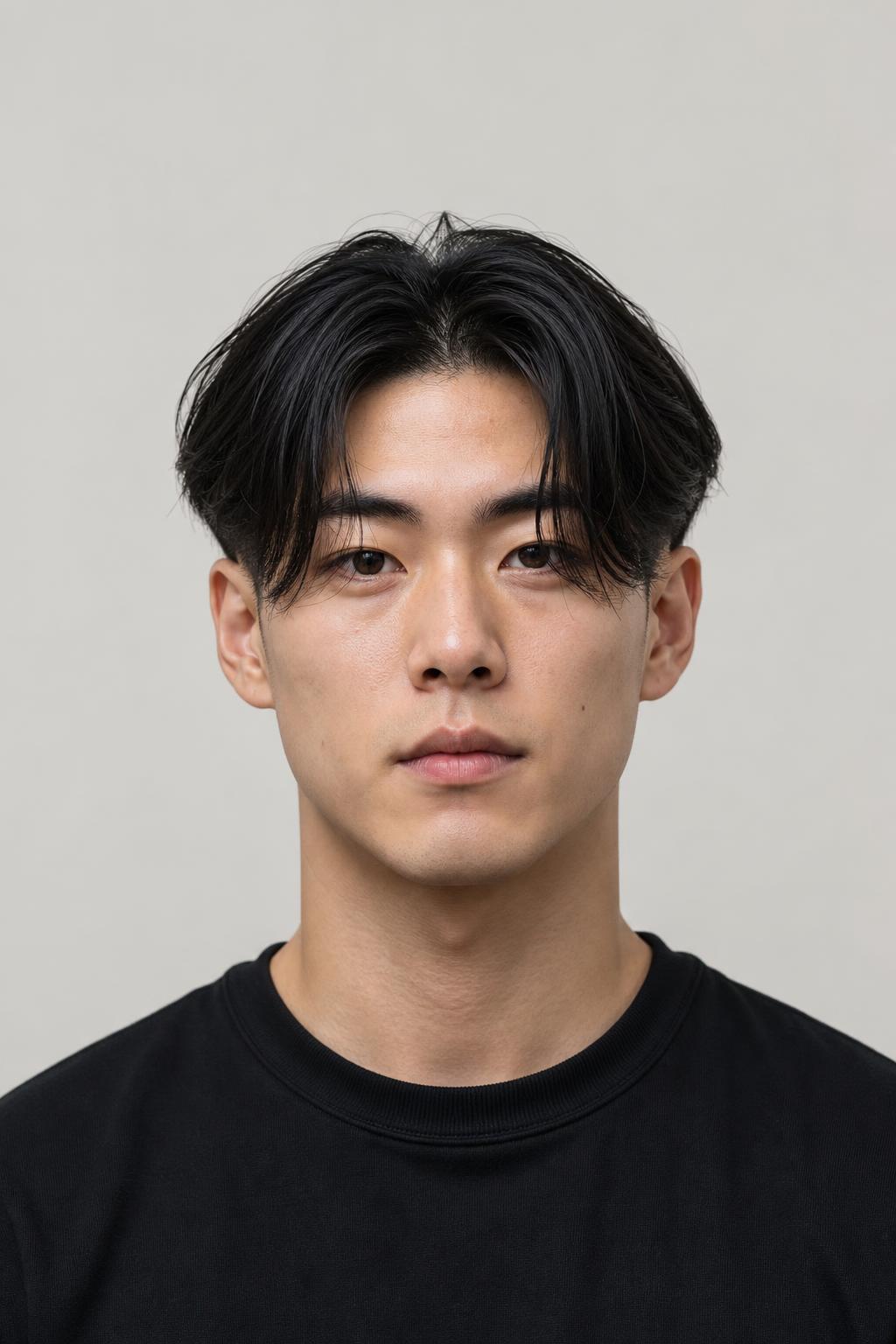
3. Skin Fade with Fine Straight Hair
Fine hair benefits from the hardest possible contrast, because bare skin at the sides makes whatever density you have on top look denser by comparison. The fringe should stay thick and blunt at the ends rather than point-cut, which on fine hair thins the tips into transparency. Two to three inches of visible fringe is the sweet spot before it goes limp.
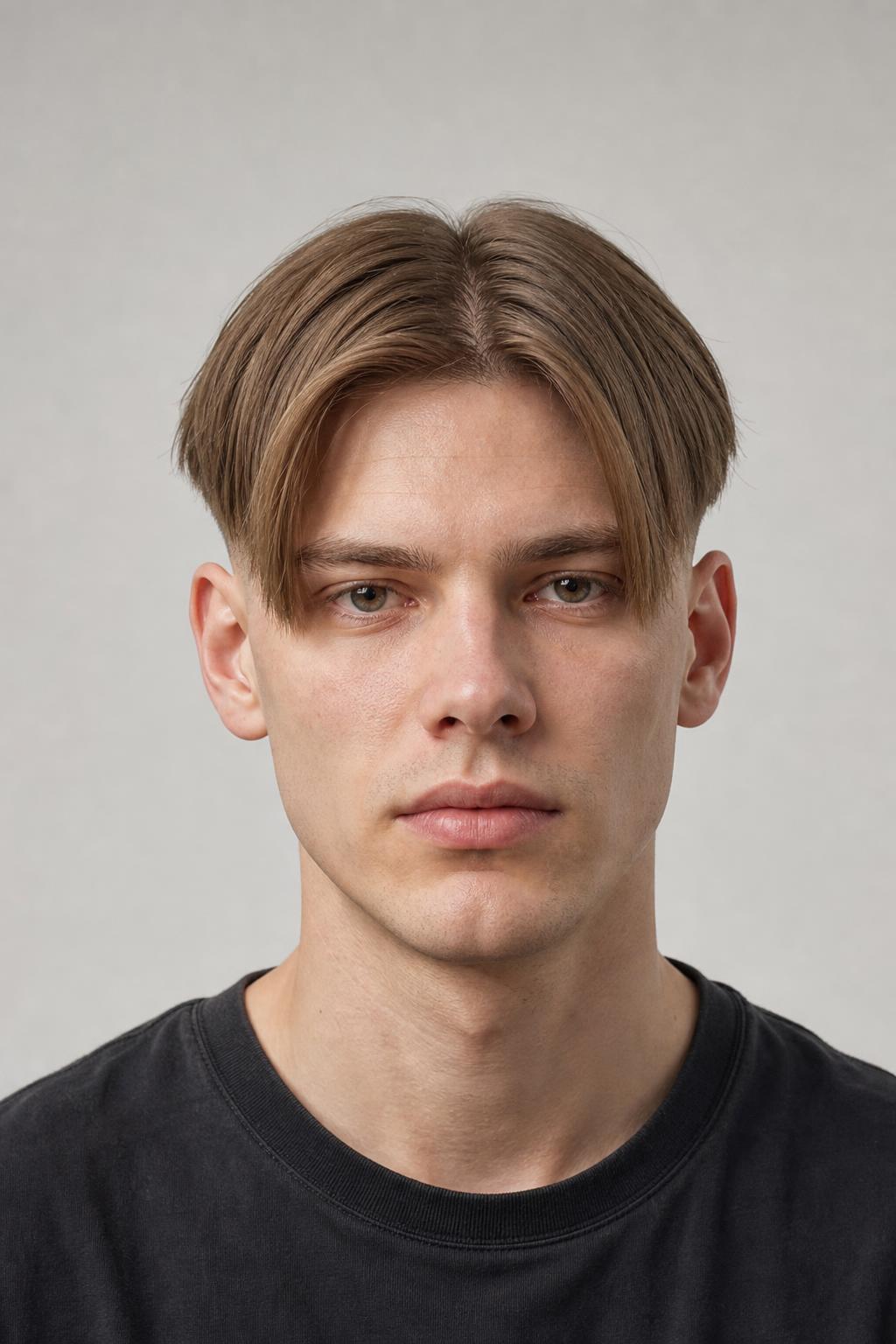
4. Blow-Dried Curtains with a Round Brush
Rough-dry to damp, set the part with a comb, then dry each front section over a small round brush rolling away from the face and holding for three seconds at the ends. The outward roll is what makes the fringe curve away instead of hanging straight down. Four minutes, then a pea of matte cream worked through the ends only.

5. Skin Fade on a Two-Week Cycle
A skin fade is unrecognizable at week three and gone by week four, so this pairing commits you to roughly 24 barber visits a year against a fringe that only needs trimming every eight weeks. Book the fringe trim into every fourth side appointment rather than as a separate visit. Guys who cannot hold that schedule should take the low taper instead and save around $500 a year.
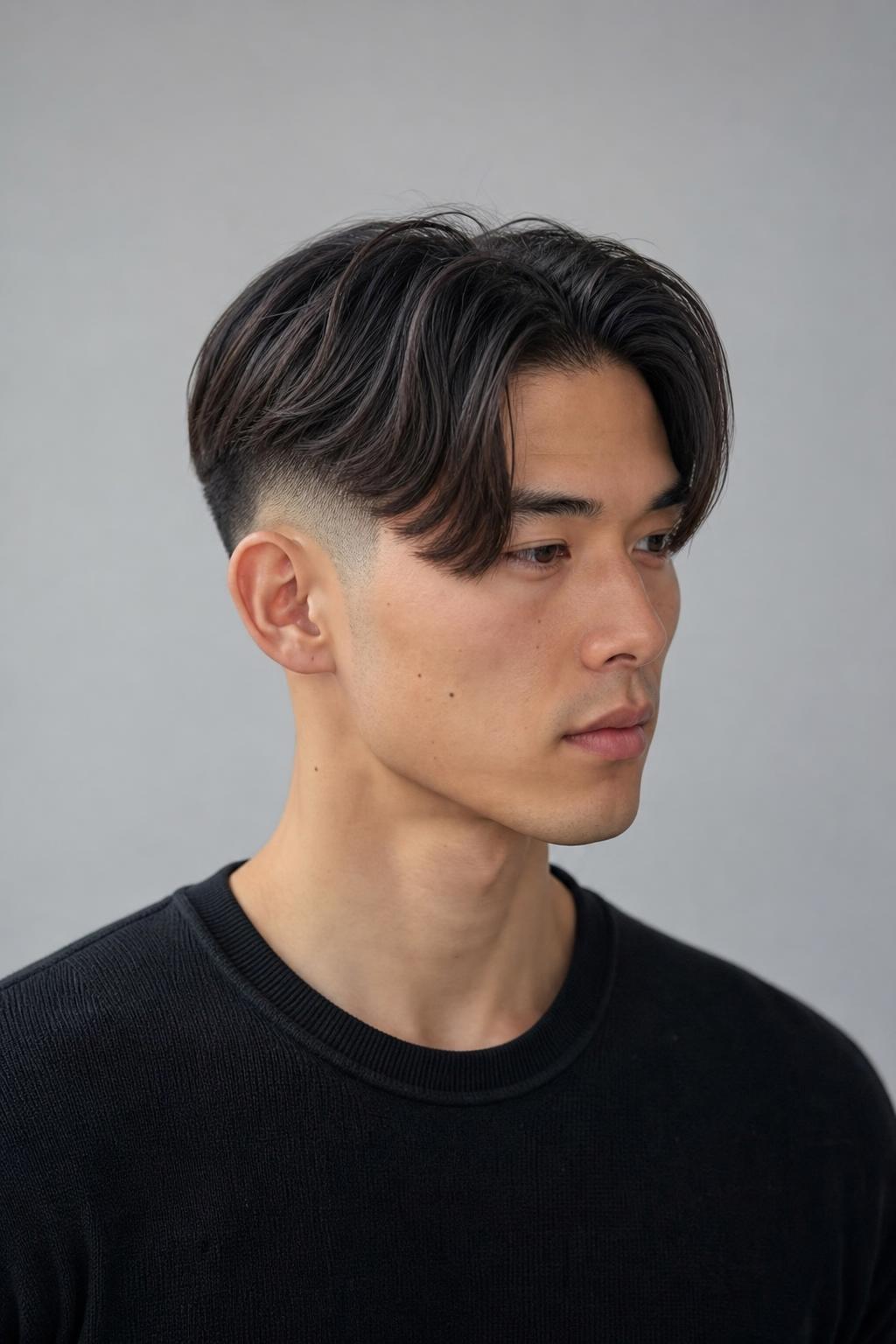
6. Lightened Ends over a Dark Fade
Lifting only the last two inches of the fringe two levels warmer draws the eye down to where the curtain splits and makes the front look longer than it is. Keep the roots and sides at natural depth so the fade edge stays crisp against skin. Bleach on the ends of a fringe you brush daily needs a bond-repair treatment every third wash or the tips go brittle.
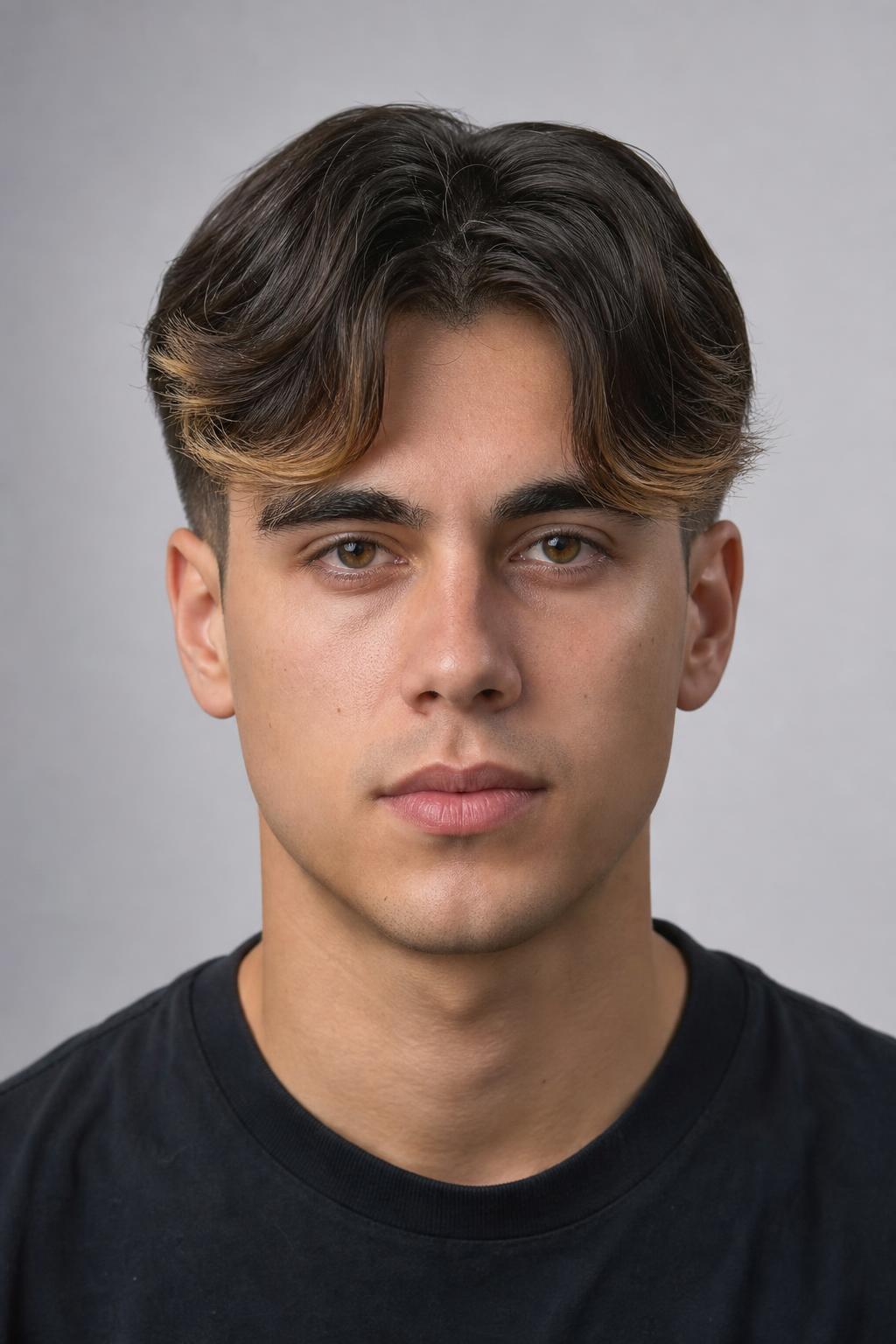
Mid-Length Curtains with Tapered Sides
Leaving the sides at a number two or three guard and tapering rather than fading gives you the same shape with half the maintenance, and it is the version most guys over 25 end up in. The sides still tuck behind the ear, the fringe still parts, and you can stretch to six weeks between cuts without it collapsing. This is also the section to read if you are growing out a fade toward longer curtains.
7. Ask for a Two-Guard Taper and a Connected Fringe
The phrase that works is: number two on the sides, blended up so it connects to the top, and leave the front long enough to part. Barbers hear curtains and often reach for a fade by default, so specifying the guard number removes the guesswork. Add “no hard line at the temple” if you want it soft.

8. Tapered Sides Without the Bare Look
Where a fade removes hair down to skin, a taper only shortens it, so the head keeps an even colour from crown to neck and the whole cut reads softer. The fringe does more of the work as a result and needs to be at least four inches to hold its own. This is the version that photographs least like a trend and most like a haircut.

9. Internal Layers Behind the Fringe
The barber lifts the section directly behind the front hairline and removes an inch of interior length, which gives the fringe somewhere to fall from and creates the bend that makes curtains look like curtains. Without it the front hangs in two flat sheets. Ask for a soft internal layer starting two inches back from the hairline.

10. Longer Curtains for an Oblong Face
A long face needs width rather than height, so the fringe should fall to the jaw and the sides should keep enough length to sit slightly away from the head at the temples. Never pair an oblong face with a high skin fade and a tall top, which stretches the proportions further. The lower and wider the hair sits, the better this face shape does.
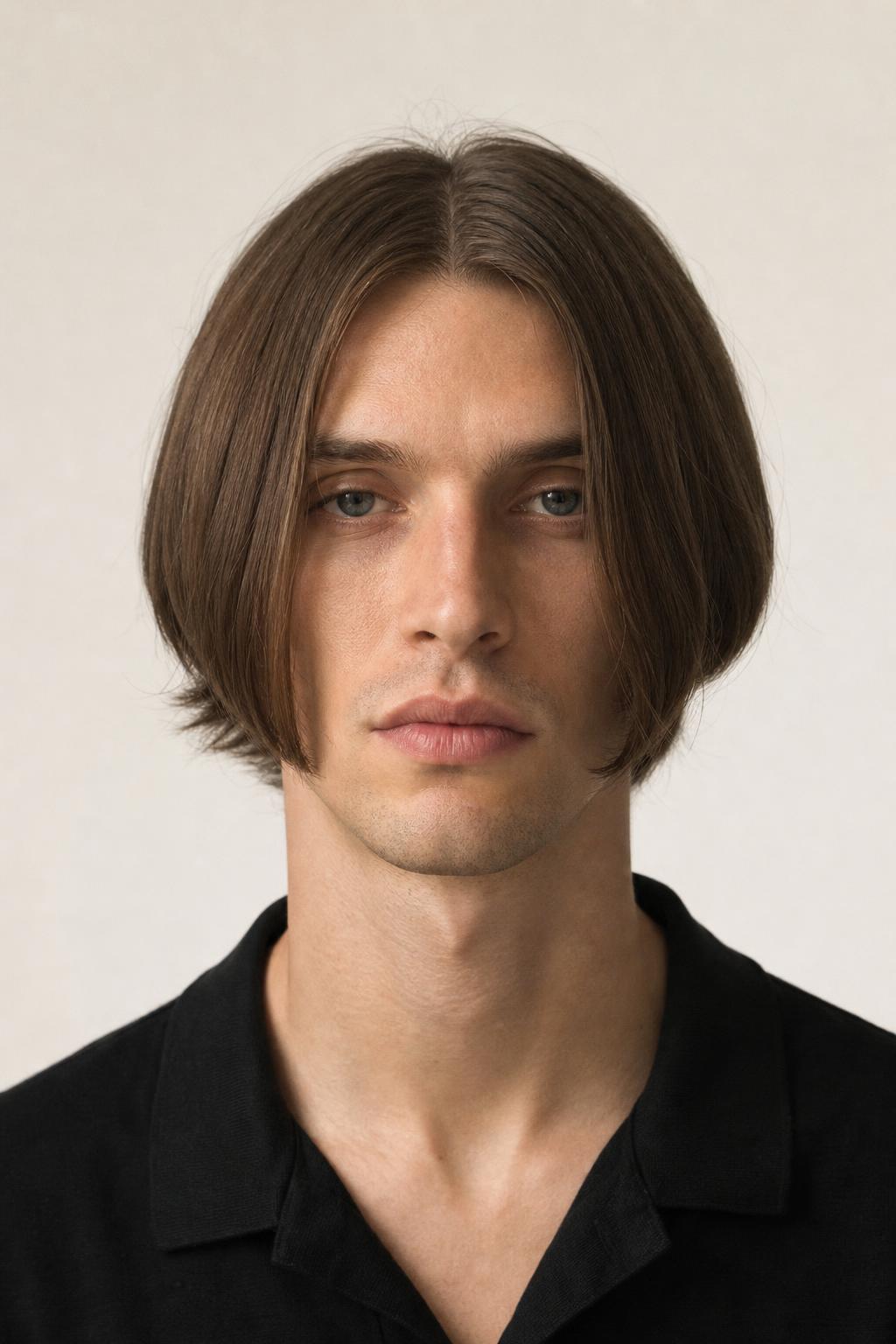
11. Curtains on Thick Coarse Hair
Thick coarse hair fights the part and springs back to the middle, so the barber needs to remove internal bulk from the crown and the sides of the fringe or the curtain sits too high and puffs out at the temples. Weight removal on coarse hair happens with scissors over comb, not thinning shears. Once the bulk is out, this texture holds a curtain better than any other.
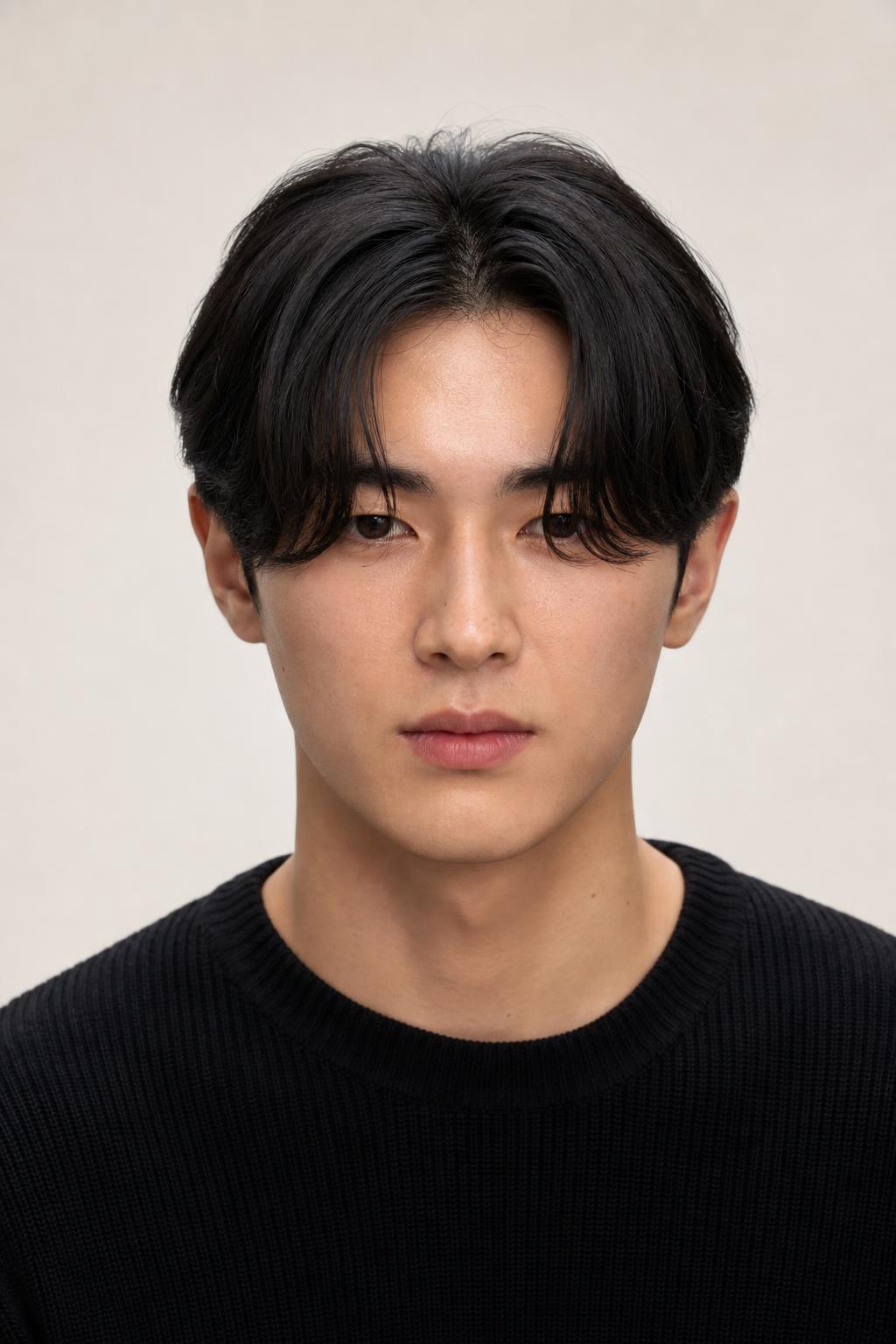
12. Sea Salt Spray and Air-Dry
Mist salt spray on towel-dried hair, comb the part in while wet, and let it dry without touching it. The salt gives the fringe enough grit to hold the split without the shine or stiffness of gel. Two minutes of work and the finish stays loose all day, which suits guys who find the blow-dried version too neat.

13. Six-Week Taper Cycle
A tapered side holds its shape for five to six weeks, roughly double a fade, because there is no hard edge to blur. The fringe is the part that needs watching: past eight weeks it stops holding the part and starts falling into your eyes. Get the sides done twice for every fringe trim.
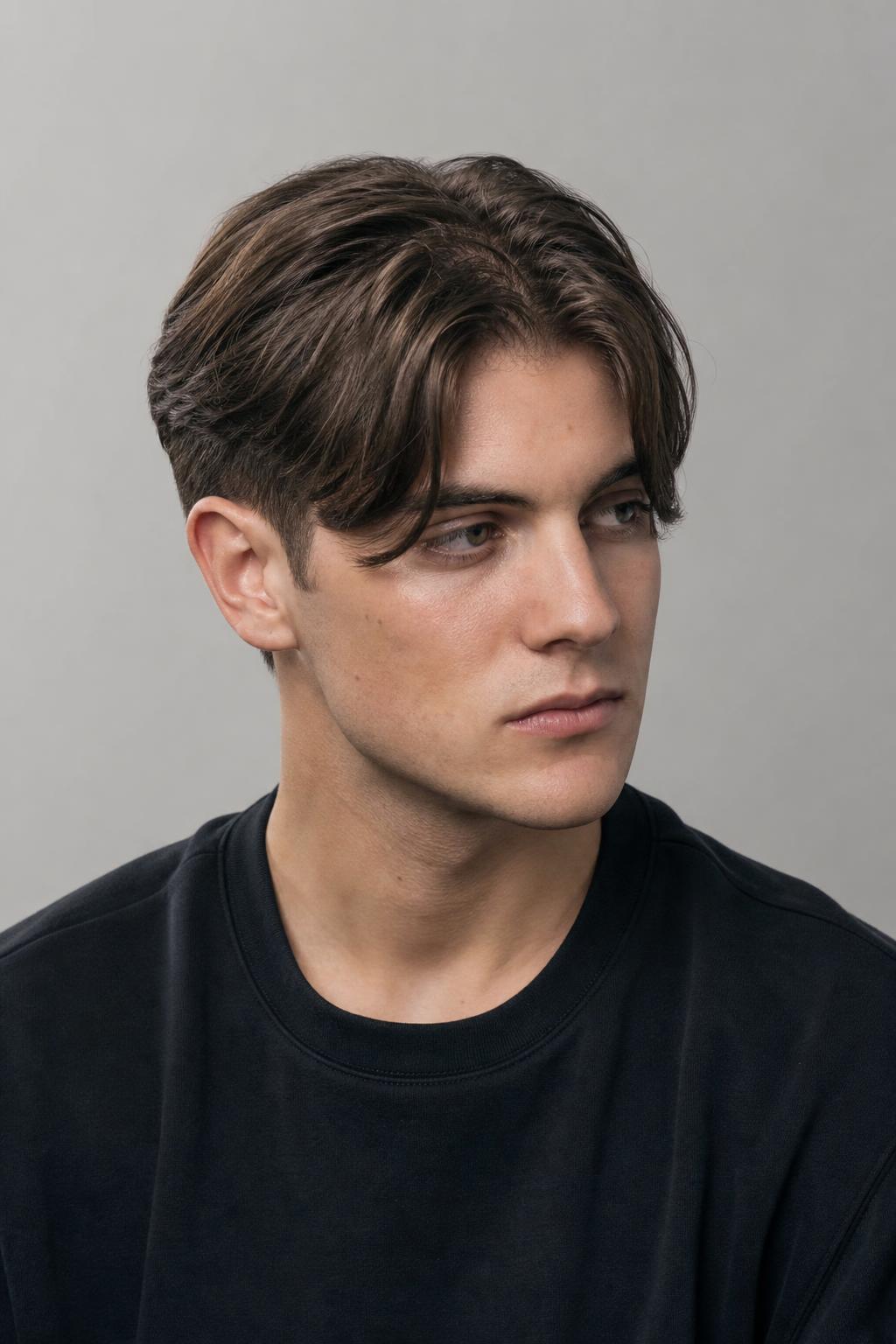
14. Ash Brown with a Cool Root
Curtains expose the part line, and warm brassy tones make a visible scalp line look wider than it is. Shifting the whole head one step cooler closes that gap and keeps the part reading as a line rather than a gap. It is a toner-level change, not a colour service, and it lasts about six weeks.
15. The Grow-Out Stage Cut
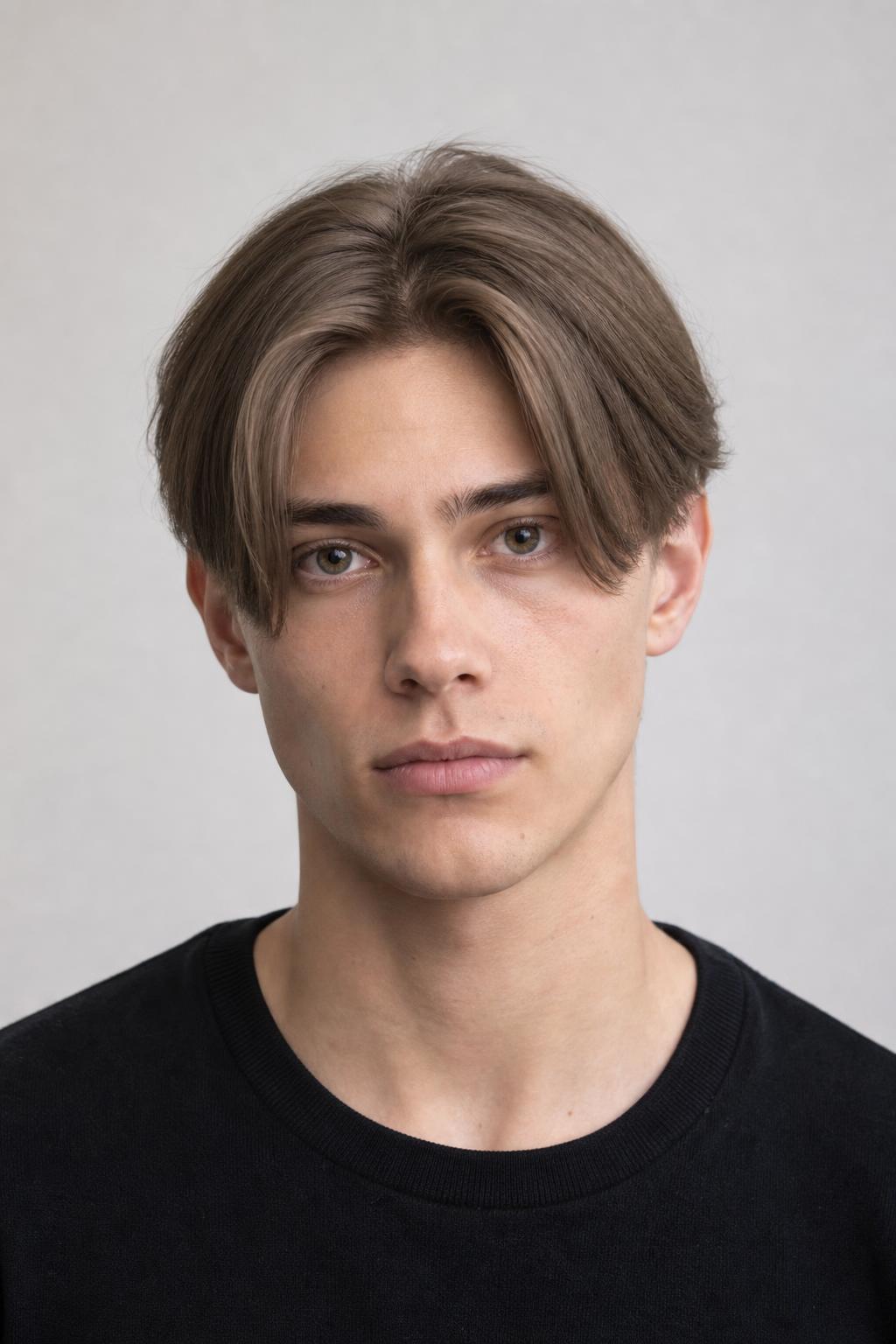
Between a short cut and full curtains there is a three-month window where the front is long and the sides are catching up, and the fix is to have the sides tapered while the top is left completely alone at every visit. Say “sides only, do not touch the top” and repeat it. Most guys abandon the grow-out at week six because a barber trimmed the front out of habit.

Long Curtains with Blended Sides
Take the sides past the ear and curtains stop being a fringe on a short cut and become a full-length hairstyle. This version needs the most hair and the most patience, roughly a year of growth from a fade, and it works best on straight to wavy textures with medium density. The upside is a barber visit every eight to ten weeks, and it sits one step away from a long undercut if you ever want the sides taken back down.
16. Chin-Length Curtains with Blended Sides
The sides are cut to the same length as the fringe so the whole perimeter reads as one line broken only by the part. There is no taper and no visible layering from the outside; the shaping is all interior. This is the closest men’s cut to a woman’s one-length bob and it demands regular trims to keep the ends from splitting.

17. Long Curtains for a Round Face
Length past the jaw creates a vertical line down each side of the face, which is exactly what a round face needs, provided the hair stays flat at the temples rather than expanding outward. Keep volume at the crown and weight at the ends. Avoid any version that puffs at the sides, which widens the face at its widest point.
18. Wavy Long Curtains on 2b Hair
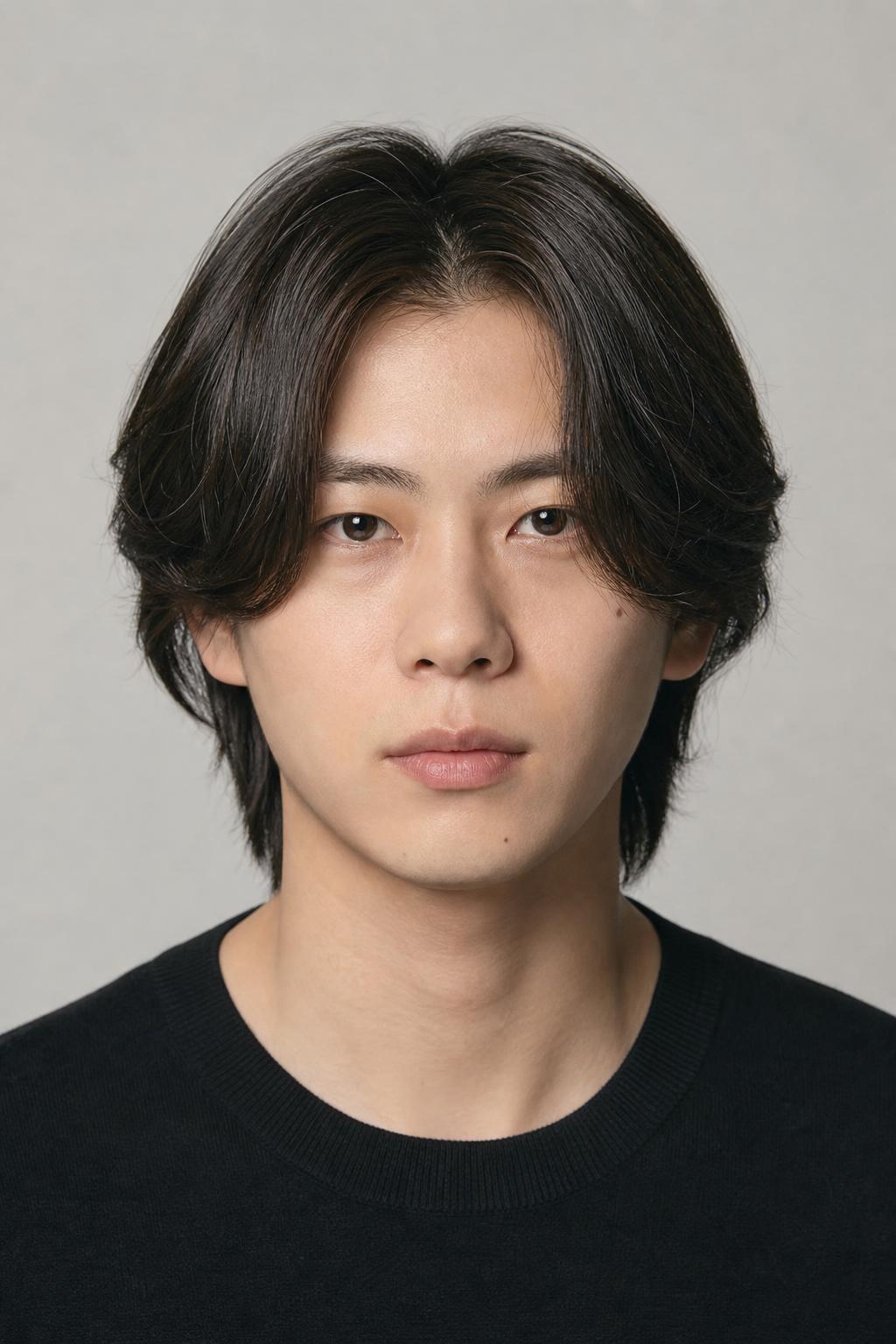
Natural 2b wave does the bending that straight hair needs a round brush for, so long curtains on wavy hair take almost no styling: comb the part in wet, apply a light cream, walk away. The wave also disguises the grow-out, which stretches the cut to ten weeks. Wavy hair does need the weight removed from the interior or the sides balloon.

19. Tucked Behind One Ear
Tucking one side behind the ear and leaving the other loose creates an asymmetry that stops long curtains looking heavy and gives you a version that works for a job interview without a haircut. Set it while damp so it holds. It takes ten seconds and is the most useful trick in this whole category.
20. Ten-Week Trims on Long Curtains
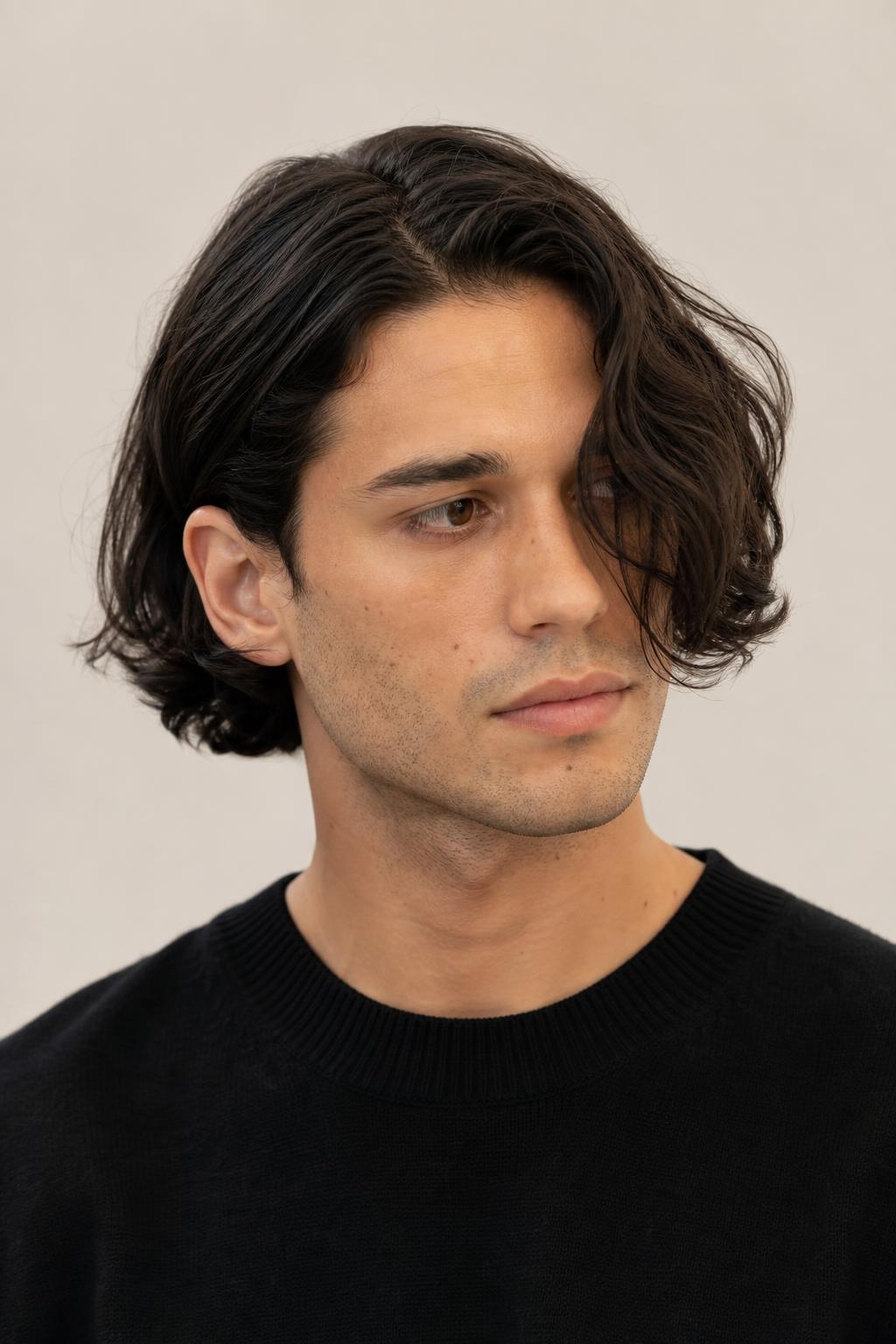
Long curtains hide grow-out better than any short version, so the schedule stretches to eight or ten weeks, and the trim is about removing split ends rather than reshaping. Half an inch off the perimeter each time holds the length steady. The one thing that ruins this cut is a barber who decides to add layers you did not ask for.

21. Sun-Faded Ends on Long Curtains
A subtle lift across the last three inches, applied freehand rather than in foils, mimics what sun does to long hair and adds dimension to a shape that is otherwise one flat colour. Keep it to two levels and keep it off the roots. On long hair this only needs redoing twice a year.

22. Curly Long Curtains on 3a Hair
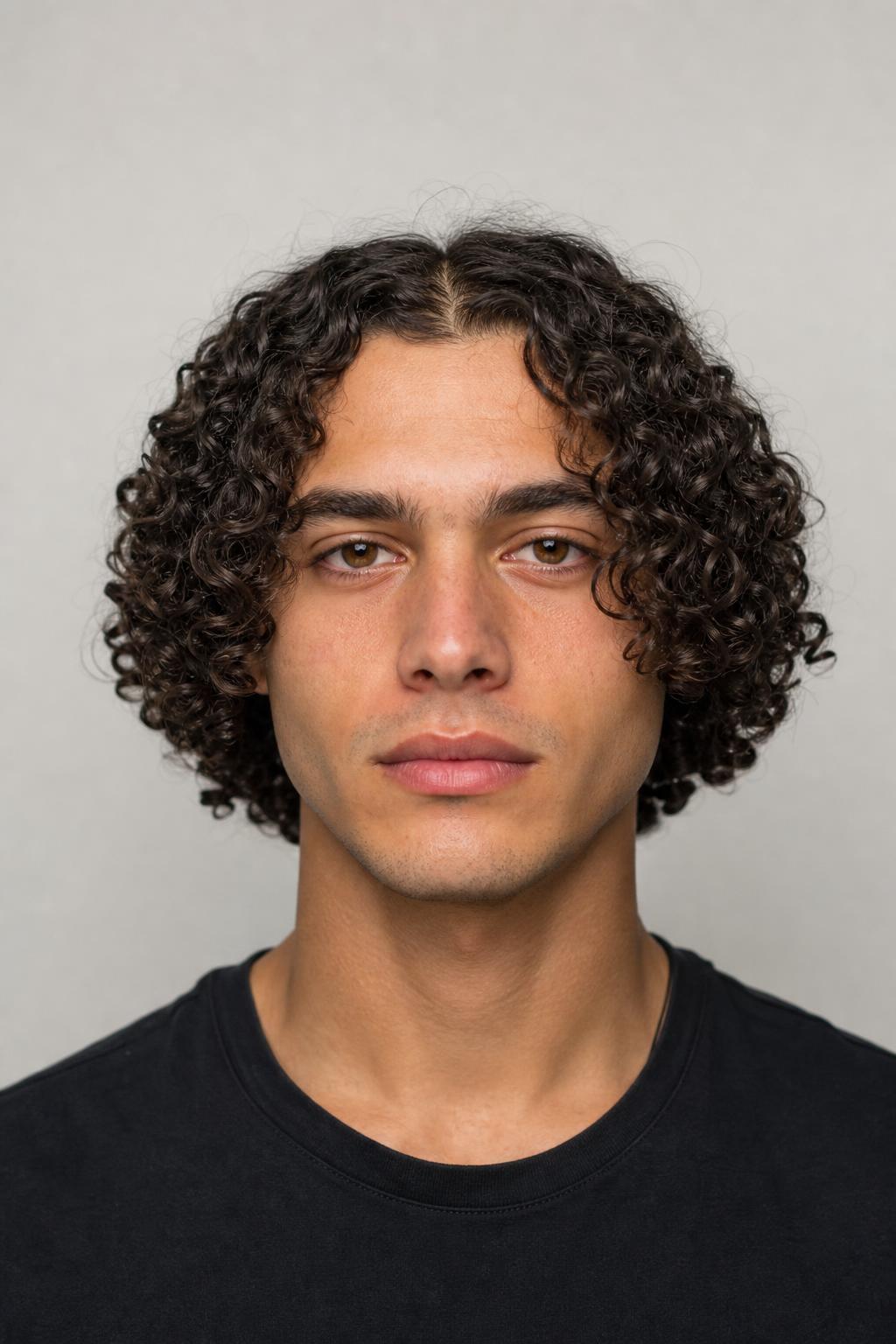
Curly hair can wear curtains, but the part has to be cut in rather than combed in: the barber separates the front at the natural parting point while the hair is dry and cuts each side to fall on its own. Add three inches to whatever length you want visible, because 3a curl shrinks by about a third. Cut wet and you will lose the part entirely once it dries, the same rule that governs every taper fade on curly hair.
23. Half-Up Tie for Long Curtains
Once the front reaches the jaw you can pull the back half into a small tie and leave the two front sections loose, which keeps the curtain shape at the face while getting the length off your neck. Use a fabric tie rather than an elastic to avoid a dent. Practical for the gym and for anyone growing the sides out further.

24. Curtains with a Heavier Left Side
Splitting the hair slightly off center, around an inch to one side, gives one panel more weight than the other and reads as far less deliberate than a dead-center part. It also works around a cowlick, which is the most common reason a true middle part refuses to sit. Ask for the part to be set where your hair already breaks.
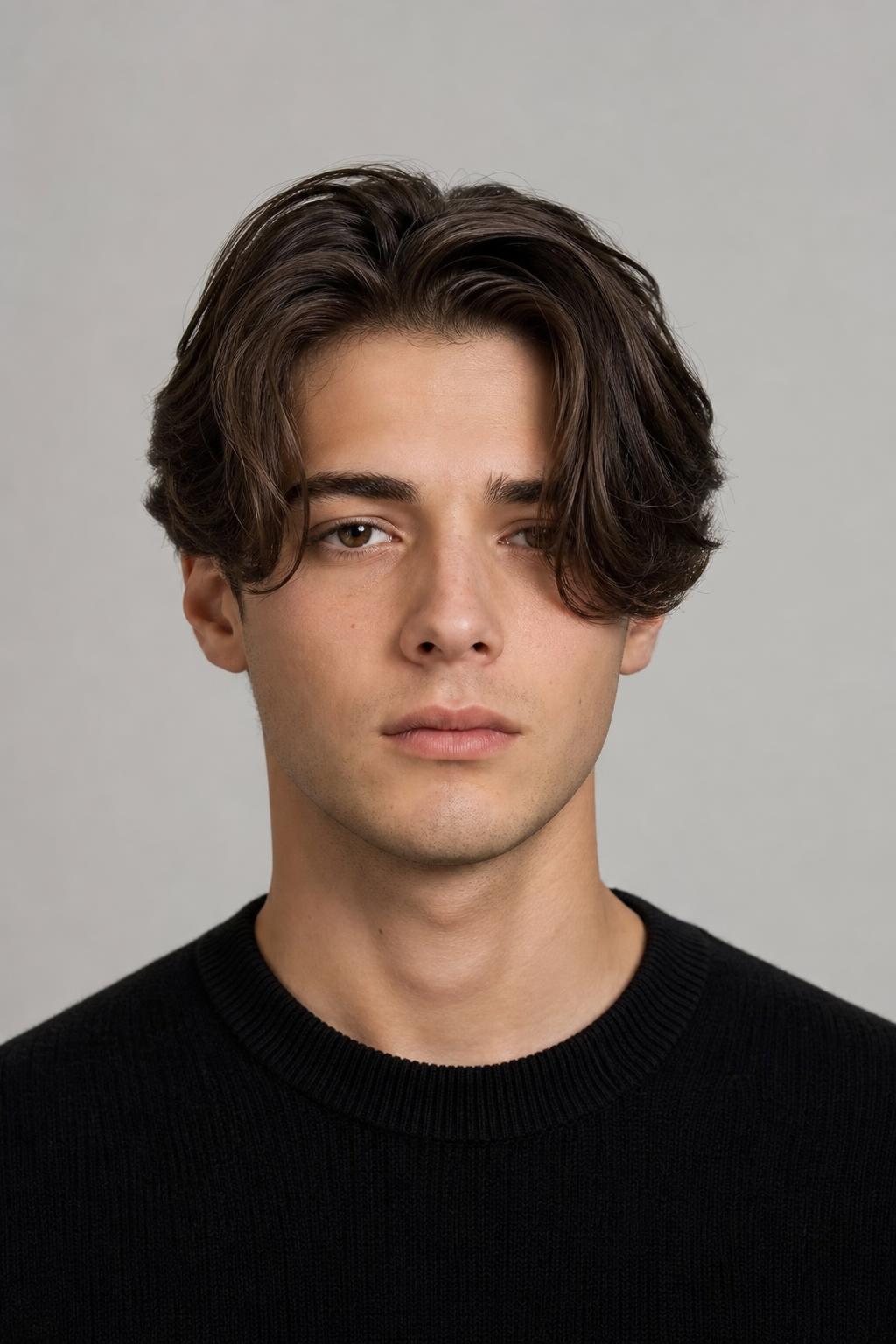
25. Pushed-Back Curtains for a Change
The same cut brushed straight back with a matte paste gives you a completely different look with no scissors involved, which is the practical argument for curtains over any short cut. Blow-dry back rather than down, then use paste on dry hair. It holds for a day and washes out to the original shape.
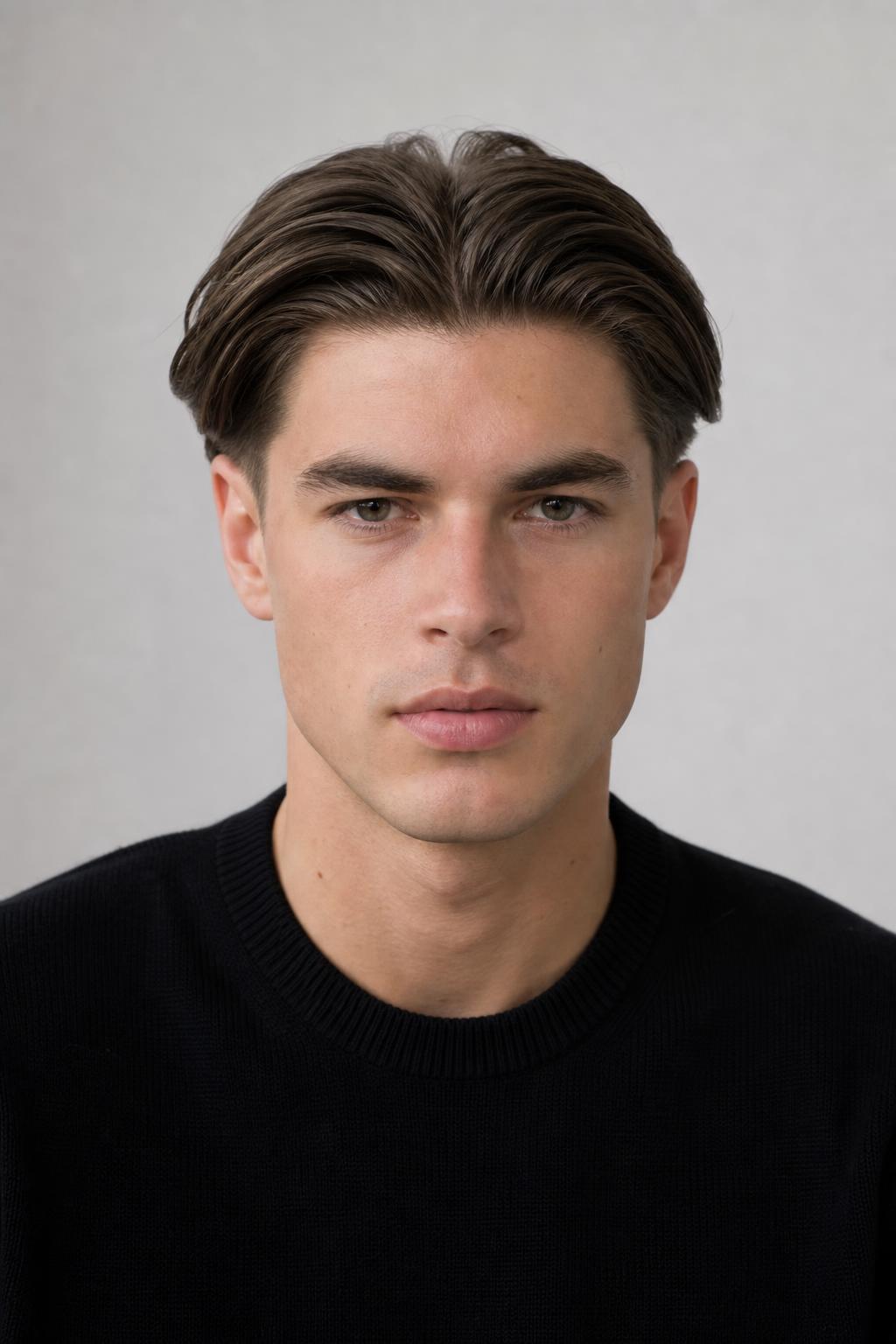
How to Grow Curtains Out Without the Awkward Stage
Growing into curtains from a short cut takes six to nine months, and almost everyone who quits does so between months two and four when the top is too long to spike and too short to part. The way through is to keep cutting the sides while never letting anyone touch the top, which keeps the haircut looking deliberate at every stage rather than neglected.
| Stage | Front Length | What to Ask For | How to Wear It |
|---|---|---|---|
| Months 1 to 2 | 2 to 3 inches | Sides tapered, top untouched | Forward and textured with paste |
| Months 3 to 4 | 3 to 4 inches | Sides tapered, ask for a soft internal layer behind the hairline | Pushed back or half-parted |
| Months 5 to 6 | 4 to 5 inches | First real curtain shape cut in, sides still short | Center part, blow-dried outward |
| Months 7 to 9 | 5 to 7 inches | Sides grown to blend, perimeter cleaned only | Full curtains, tucked or loose |
Stylist tip: During months two to four, get the sides cut shorter than feels comfortable. The bigger the gap between side and top length, the more the growing-out top looks like a deliberate style rather than an accident. This is the same logic that makes the awkward stage of a flow haircut survivable.
What to Tell Your Barber
Do not say curtains and stop there, because the word covers everything from a chin-length one-length cut to a skin fade with a two-inch fringe. Give the barber three numbers and one instruction: the guard or fade height for the sides, the finished fringe length measured against your own face, and whether you want the sides connected or disconnected from the top. Then say where your part naturally falls.
A working script: “Number two on the sides blended up, leave the top alone, and cut the front so it falls to my cheekbone when parted in the middle. Add a soft internal layer two inches behind the hairline so the fringe has some bend. My hair breaks about an inch left of center, so set the part there.” If your barber cuts the front while the hair is combed straight down and dry, you will get the length you asked for; if they cut it wet and stretched, it will end up an inch shorter than expected, which is worth confirming out loud. The same request applies whether you are working from a middle part at any length or a full curtain shape.
Stylist tip: Bring a photo taken from the side, not just the front. The side profile is where fringe length and side length either work together or clash, and it is the single most useful reference image for this haircut. Front-facing photos hide the entire relationship between the two.
Face Shape and Part Placement
A true center part is the least forgiving parting there is, because it splits the face into two halves and any asymmetry in your features becomes measurable. Moving the part half an inch to an inch off center fixes most of that while still reading as curtains. The table below covers where to set it and how long to leave the front.
| Face Shape | Best Variation | Fringe Length | Avoid |
|---|---|---|---|
| Oval | True center part, any side length | Cheekbone to jaw | Nothing structural; only very short fringes fail |
| Round | Off-center part with a mid or high fade | Jaw or longer | Short fringe with wide sides, which adds width |
| Square | Center part with a mid fade and soft ends | Just past the cheekbone | A blunt fringe ending level with the jaw corner |
| Heart | Off-center part, longer sides, tapered not faded | Jaw length | Height at the crown, which widens the forehead |
| Oblong | Center part, low taper, width at the temples | Jaw length | High fade with a tall top, which lengthens the face |
| Diamond | Center part with fullness kept at the jaw | Jaw to chin | Slicked-back versions that expose a narrow forehead |
When Curtains Are the Wrong Cut
Three situations where this shape fights you, and the alternative in each case.
- A receding hairline at the temples is exposed rather than covered by a center part, since the parting draws a line straight to the corners; a textured fringe brushed forward covers the same ground, and a mid taper fade with a forward crop is the standard alternative.
- A strong front cowlick will push one panel up and out no matter how the hair is cut, and while an off-center part helps, hair that spirals hard at the hairline usually needs a shorter cut that works with the growth direction instead of against it.
- Fine, low-density hair produces two thin panels that show scalp along the part line, which is more noticeable than the same hair worn short and textured. A two block cut gives similar length contrast without exposing a parting.
FAQ
How Long Does Hair Need to Be for Curtains?
Four inches at the front is the minimum for a fringe that parts and stays parted, and five to six inches gives you the full shape with movement. Growing from a standard short cut takes six to nine months at the usual half inch per month. Curly hair needs an extra two to three inches to account for shrinkage.
Do Curtains Work on Curly Hair?
Yes, on 2b through 3a, provided the barber cuts the part in dry rather than combing it in wet. Above 3a the curl pattern tends to pull the front sections back toward the middle and the parting closes on its own. Loose curls actually hold the outward bend better than straight hair, which needs a round brush to fake it.
How Do I Stop My Curtains from Falling Flat?
The problem is almost always missing internal layers rather than a product failure. Without an inch of length removed behind the front hairline, the fringe has nothing to lift from and falls in two flat sheets. Ask for that layer at your next cut, and in the meantime blow-dry the front upward at the root before parting it.
Should the Sides Be Faded or Tapered with Curtains?
Faded if you want the fringe to be the entire haircut and you can get to a barber every two to three weeks; tapered if you want a softer look and a five to six week cycle. Tapers also blend better if you plan to grow the sides out later. Fades look sharper for about ten days and then start working against you.
What Products Should I Use for a Curtain Haircut?
A matte cream or a light paste applied to dry hair at the ends, plus sea salt spray on damp hair if you want more grit. Avoid gel and anything high shine, which sticks the two panels together and makes the part look greasy. A pea-sized amount is enough; more weighs the fringe down onto your face.
Are Curtains Still in Style for Men?
Yes, and the current version is softer and more textured than the 1990s original, which relied on heavy gel and a hard split. The modern cut uses internal layering for movement and pairs with everything from a skin fade to fully grown sides. It has been steadily popular since around 2019 rather than spiking and dropping.
Can I Get Curtains with a Widow’s Peak?
A widow’s peak actually helps, because it gives the part a natural starting point and stops the fringe drifting. Set the part at the point of the peak rather than at the geometric center of your head. The one thing to avoid is fighting it with an off-center part, which leaves an obvious gap on one side.
Men’s curtain hairstyles come down to three decisions: how long the fringe falls, how short the sides go, and whether the barber puts a soft layer behind your hairline so the front has somewhere to move. Take a side-profile photo to your next appointment, name the guard number for the sides out loud, and tell them where your hair naturally breaks. The cut itself is easy; getting those three specifics across is the part most guys skip.
Hair results vary based on your natural hair type, texture, density, and condition. Always consult with a licensed hairstylist before making significant changes, especially with chemical treatments or dramatic length changes. Photos may show styled results that require professional tools and products to replicate.


1 response