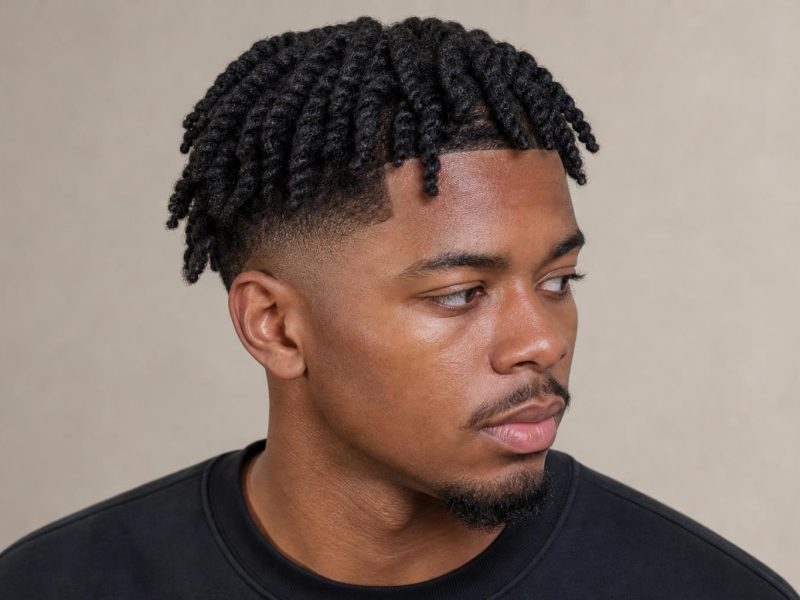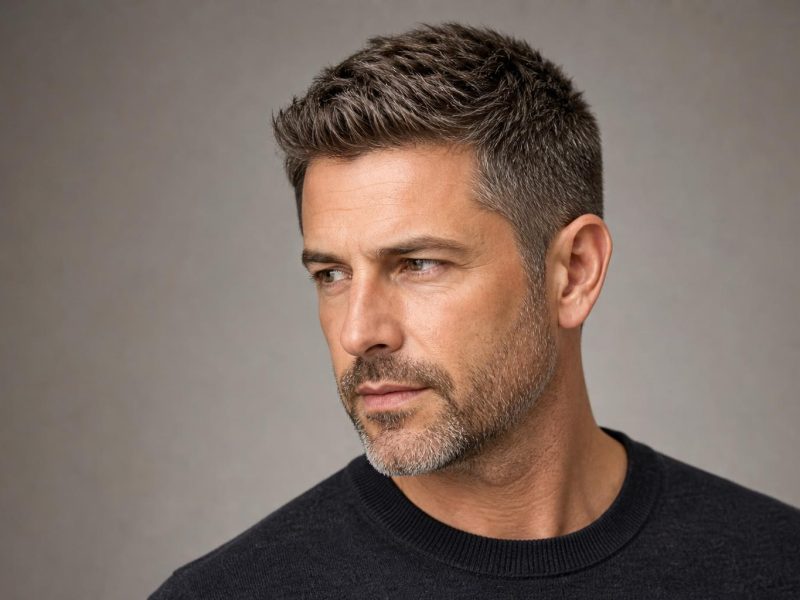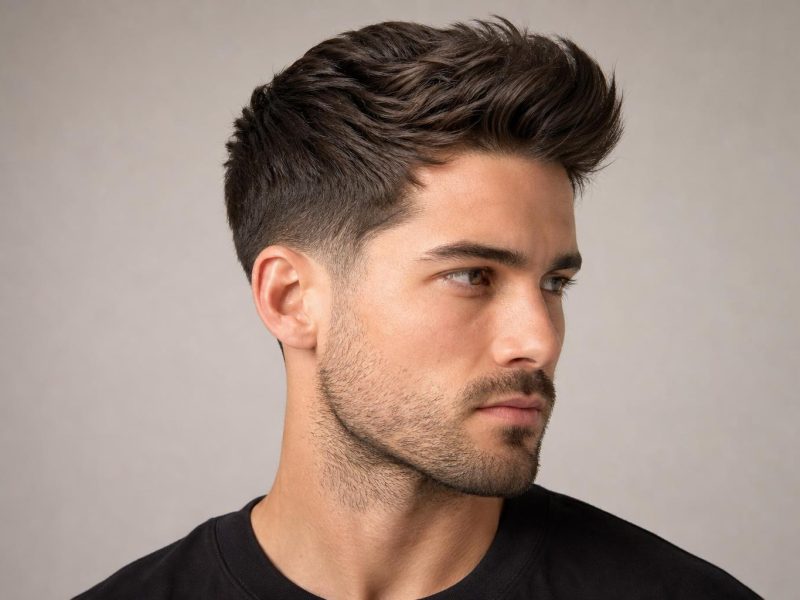

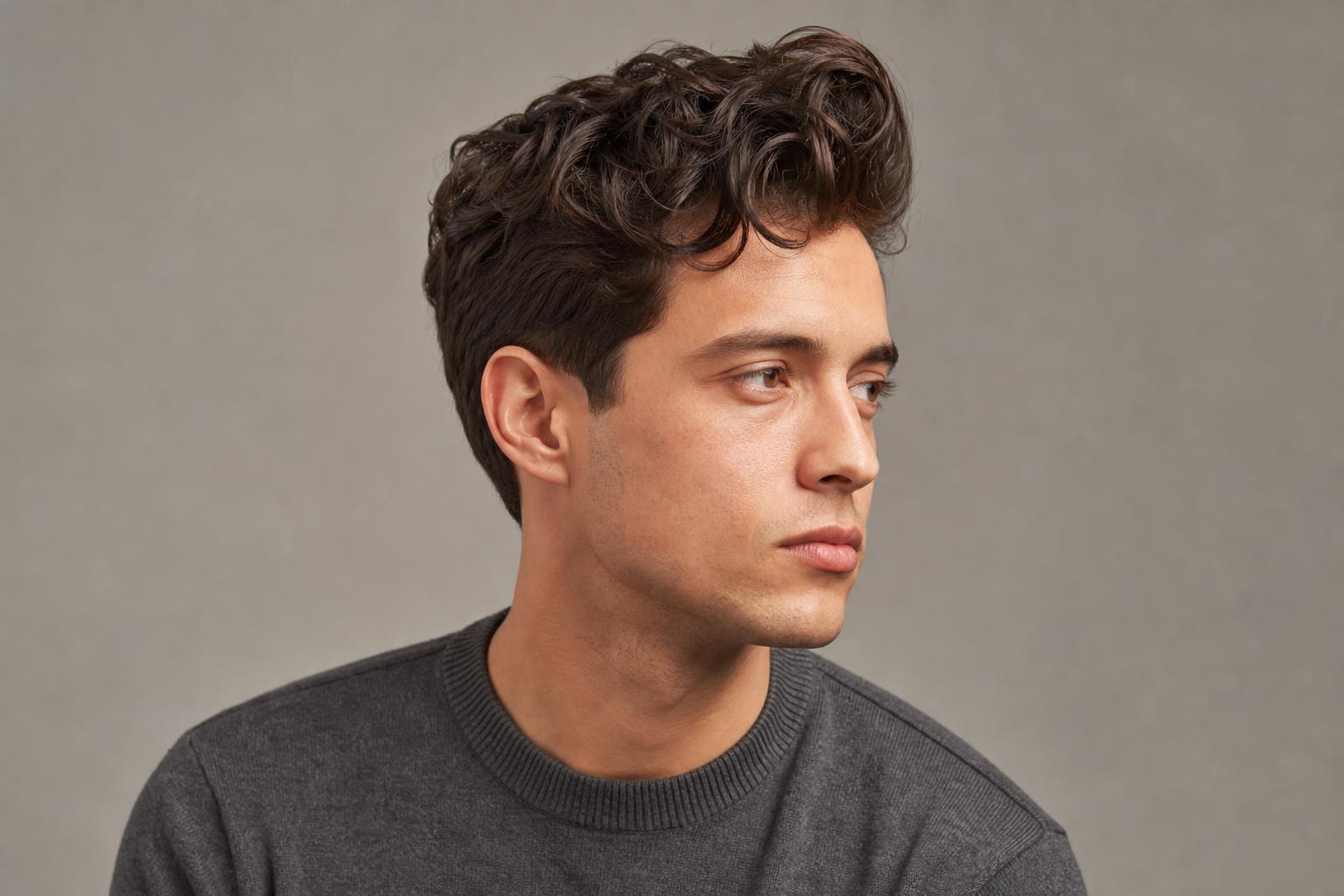
Wavy hair is the one texture a barber can ruin with thinning shears in under a minute, so the cut matters more than the product.
The best wavy hairstyles for men keep two to four inches on top, remove weight with point cutting rather than thinning shears, and leave enough length for the wave to complete at least one full bend before the ends. Loose 2a waves need a shorter, more structured cut to show any texture, while 2c waves that border on curls need layers and moisture or they turn to frizz. The 30 cuts below are grouped by length and then by wave type, so you can skip straight to the section that matches the hair on your head.
Each entry names the structure, who it suits by wave pattern and density, and what to ask for at the barbershop. After the gallery there is a 30-second way to identify your wave type, a product table by wave type, the barber script with the words that stop a stylist reaching for the thinning shears, a troubleshooting table for frizz and flat waves, a list of cuts that fight wavy hair, and honest maintenance numbers.
| Factor | Details |
|---|---|
| Best for | Type 2a to 2c hair, medium to thick density; fine wavy hair works with the shorter cuts |
| Core rule | Enough length for one full wave, weight removed by point cutting, cut dry or checked dry |
| Daily styling | 2 to 8 minutes; sea salt spray or light cream on damp hair, then hands off |
| Avoid if | You want a sharp, geometric outline that holds all day without product; waves move |
| Barber time | 30 to 45 minutes for a scissor-cut top with a fade or taper |
Short Wavy Hairstyles for Men
Short wavy cuts work on the principle that a wave needs about an inch and a half to show up at all. Anything below that looks like straight hair with a slight bend, so every cut in this section keeps at least that much on top and takes the sides tight to make the contrast obvious. These are the lowest-effort styles in the gallery and the best starting point for 2a hair that has never looked wavy in a short cut before.
1. Wavy Textured Crop with a Mid Fade
The top is cut to about two inches and point-cut deep into the ends so the wave breaks into separate pieces instead of one flat sheet. A mid fade takes the sides down to skin just above the ear. Scrunch a sea salt spray through damp hair and push it forward, then leave it alone.
2. Wavy French Crop with a Blunt Fringe
Round and oval faces carry this crop best, because the short fringe lands high on the forehead and the waves add width at the crown. A textured crop haircut with a straighter fringe line is the version that suits 2a hair with very loose bends, since the fringe gives the cut a shape the wave alone would not.
3. Short Wavy Caesar with a Taper
Thick 2b hair suits the Caesar, where the top is cut to one length around an inch and a half and brushed forward with the fringe cut straight across the forehead. The wave gives the classic cut some lift that straight hair never manages. A scissor taper at the neck and sides keeps it neat without a hard fade line.
4. Wavy Crew Cut with a Skin Fade
Style it with nothing more than a pea of matte paste rubbed between the palms and pushed through from back to front. The crew cut leaves an inch and a half at the front tapering to under an inch at the crown, and the skin fade gives the waves nothing to compete with. Works for 2a through 2c as long as density is medium or better.
5. Wavy Side Part with a Low Taper
Trims every 4 to 5 weeks keep the part line clean, which is the only real upkeep on this office-safe cut. Two inches on top are combed over a natural part with the wave left loose rather than slicked flat, and the sides are tapered with scissors. Grow-out is easy because there is no hard line to lose.
6. Sun-Lightened Wavy Crop on Dark Hair
Fine, natural-looking lighter pieces through the top of a dark wavy crop make every bend in the wave visible from a distance, which is the effect people are actually after when they ask for “beachy.” Ask for hand-painted pieces two levels lighter, kept to the top and away from the fade.
7. Wavy Faux Hawk with a Burst Fade
Ask your barber for “a faux hawk, three inches down the center, burst fade around the ears, and point-cut the top so the wave shows.” The burst fade curves around the ear and leaves the back longer, which gives the waves a strip to move in while the sides stay clean. Style up and toward the center with a light clay.
8. Wavy Buzz Cut with Guard Contrast
Compared with a buzz on straight hair, a number 4 on wavy hair holds a visible ripple across the top that a number 2 loses entirely. The trick is a two-guard difference between top and sides, a 4 over a 2 or a 3 over a 1, so the wave shows as texture rather than fuzz.
Medium Wavy Hairstyles with Fades and Tapers
Three to five inches on top is where wavy hair does its best work, because the wave has room to form one or two full bends and still stand up. The fade or taper underneath keeps the shape from going round, and the layering decides whether it looks like a haircut or a hedge. Most of these want a diffuser or air-drying, never a direct blast from a dryer.
9. Wavy Quiff with a Low Fade
Point cutting through a three-inch top lets the front of the quiff lift and bend back on itself, which is exactly what the wave wants to do anyway. The low fade keeps a little length above the ear so the transition is soft. Diffuse the front upward on low heat, then set with a light cream, not a pomade.
10. Wavy Middle Part with Curtain Fringe
Oblong and long faces gain the width they need from a center part that lets four inches of wave fall to either side of the forehead. The curtains cover the corners of the hairline and the ends flick out at the cheekbone. Our guide to men’s curtain hairstyles covers the length and part choices in depth.
11. Wavy Comb-Over with a Taper Fade
Fine 2a hair gets the most from this comb-over because the wave adds body to a style that goes flat on straight fine hair. Three inches on top are combed to one side over a taper fade, with the wave left in rather than blown straight. Volume powder at the root before combing keeps the height through the day.
12. Wavy Slick Back on Thick Hair
Style it on damp hair with a water-based pomade combed straight back, then let the waves settle as it dries so the finish is textured rather than glassy. On the sides ask for a taper rather than a fade, since a slick back with a skin fade can look severe on a wavy head.
13. Wavy Blowout Taper with Texture Forward
Upkeep runs every 3 to 4 weeks because the tapered temples and nape lose their edge fast against a full wavy top. Three inches on top are blown out with the nozzle pointed up from the roots and then pushed forward. The low taper blowout keeps most of the side length, which suits men who do not want a fade.
14. Wavy Pompadour with Copper Tones
Natural copper and auburn waves catch light along every bend, so a pompadour on this hair color looks fuller than the same cut on dark brown. Keep four inches at the front, taper to the crown, and use a matte paste rather than a shine pomade so the color does the work. Redheads with fine hair should stay at three inches.
15. Disconnected Undercut with a Wavy Top
Tell your barber “a disconnected undercut, number 1 on the sides, four inches on top, and layer the top so the wave falls in pieces.” The hard line between the shaved sides and the long top gives the waves a stage, and the layering stops them from forming one heavy dome. Styled loose it is the most striking cut in this section.
16. Wavy Two-Block Cut with a Textured Top
Unlike the undercut above, the two-block hides the short sides under the top rather than exposing them, so the outline stays soft. Four inches of layered wave cover a clipped under-section. Korean-style versions add a light perm on 2a hair to push it toward a 2b wave, which is a real option for men whose natural wave is too loose to show.
Longer Wavy Hairstyles for Men
Past five inches, wavy hair becomes about weight management. Left one length, it triangles out at the jaw and the top goes flat, which is the shape most men are trying to avoid when they say they want to grow it out. The cuts here use layers, a taper at the nape, or both to keep the volume at the top and the ends light.
17. Wavy Bro Flow Pushed Back
Long layers that start at the cheekbone and run to the collar let the flow push back off the face and stay there. This is the flow haircut for men in its wavy form, where the wave does the volume work that straight hair needs a blow-dryer for. Medium-to-thick 2b hair is the sweet spot.
18. Shoulder-Length Waves with Face-Framing Layers
Square faces and strong jaws benefit from layers that start at the chin and curve inward, softening the corners that one-length hair would frame in straight lines. The waves fall to the shoulder with the shortest layer at the cheekbone. It needs a leave-in conditioner every wash to stop the ends fraying.
19. Wavy Mullet with a Temple Fade
Thick 2c hair suits the mullet better than any other texture, because the near-curl waves at the back give the length a shape instead of a tail. The temple fade and short top keep the front clean while the back runs to the collar. A modern mullet on wavy hair needs the back layered, never blunt.
20. Wavy Man Bun with a Tapered Nape
Style it loose, pulled to the crown with a few front pieces left out, and skip the tight ballet-bun finish that flattens the wave at the hairline. Eight inches or more are needed, and a tapered nape keeps the neckline clean when the hair is up.
21. Wavy Shag with Choppy Layers
Trim every 8 to 10 weeks and this cut grows out better than anything else in the gallery, because the choppy layers were never meant to be even. The top is cut short around three inches with the length building through the back to the collar. Waves fill in the layers and hide the grow-out.
22. Long Wavy Hair Tucked Behind the Ears
Dark, glossy 2b waves at collarbone length tucked behind both ears show off the color at the temples and keep the wave off the face. A clear gloss at the salon every couple of months keeps the shine that makes this look work.
23. Wavy Wolf Cut with Heavy Crown Layers
Bring a photo and ask for “a wolf cut, crown layers to two inches, length to the collar, and point-cut everything, no thinning shears.” The short crown layers stand up on their own in wavy hair while the long perimeter moves, which is the contrast that separates a wolf cut from a shag. Anyone who wants the longer version can compare it with the long hairstyles for men that keep more weight.
Wavy Cuts Chosen by Wave Type
The same haircut behaves differently on a 2a head and a 2c head, and the last seven entries are chosen for a specific wave pattern or density problem. Loose 2a waves need structure and lift, defined 2b waves are the easiest to cut for, and 2c waves need moisture and layers or they frizz. Fine wavy hair is its own category.
24. 2a Loose Waves with a Short Textured Top
Unlike the 2b and 2c cuts that can carry length, 2a hair shows its wave best at two inches with heavy point cutting, because longer lengths pull the loose wave straight under its own weight. A mid fade adds the contrast. Sea salt spray is the only product that makes 2a hair look wavier rather than just messier.
25. 2b Defined Waves in a Medium Layered Cut
Long layers on a four-inch top let 2b waves form two full bends and stack on top of each other for height. This wave pattern is the one every “wavy hair men” photo is taken on, and the cut is forgiving. Our guide to 2b hair covers the wash and product routine that keeps the definition.
26. 2c Near-Curl Waves with Long Layers and a Low Taper
Cut dry, never wet. 2c waves shrink by an inch or more as they dry, and a barber who cuts them wet leaves you a full inch shorter than the photo. Four to five inches on top with long layers and a low scissor taper give the waves room to spring without the dome shape, and a curl cream on damp hair holds the pattern. Men whose 2c hair is closer to curl than wave should look at men’s haircuts for curly hair.
27. Fine Wavy Hair in a Cropped Quiff
Fine wavy hair loses its wave under any weight, so this quiff keeps the top at two and a half inches, shorter than a standard quiff, and the sides at a number 1. Diffuse upward from the roots, then use volume powder rather than cream, which is too heavy for fine strands.
28. Thick 2b Waves with Internal Weight Removal
Very thick wavy hair mushrooms unless weight comes out from underneath, and the right way is slide cutting or point cutting into the interior layers, not thinning shears at the ends. The top is four inches with the bulk removed through the middle so the outer layer falls flat and the wave keeps its shape. Ask for “weight out of the interior, ends left alone.”
29. Wavy Fringe Forward on a Receding Hairline
Men whose hairline is moving back at the temples get more cover from a wavy fringe worn forward than from anything pushed up, because the wave breaks up the line where the hair stops. Keep two and a half inches at the front, taper the sides with scissors, and skip any fade that exposes the temples. Matte paste, pushed forward and down.
30. Gray-Blending Waves in a Textured Side Sweep
Silver strands through dark wavy hair catch the light on every bend, so a side-swept textured cut with three inches on top makes gray look like a feature rather than an age marker. A low taper keeps the outline clean, and a clear gloss stops the gray from yellowing.
How to Tell Which Wave Type You Have
Wash your hair, apply nothing, and let it air-dry completely without touching it. Then look at a single strand from the crown. If it has a gentle S-bend that lies close to the head and looks almost straight until it gets long, it is 2a. If the S is visible from the mid-lengths down and the hair has some body on its own, it is 2b. If the waves are pronounced, start near the root, and some pieces form a loose loop at the end, it is 2c, and on a short cut it often looks curly. The curl type chart has the full spectrum if your hair falls between two.
Most men have more than one pattern on one head. The nape and sides are usually a wave type looser than the crown, and the front hairline is often the waviest section of all. Tell the barber where the wave is strongest, because that is the section that decides the length everywhere else.
Products by Wave Type
Product choice for wavy hair is about weight. The looser the wave, the lighter the product has to be or the wave collapses, and the tighter the wave, the more moisture it needs to avoid frizz. Heavy pomades and gels are the wrong tool for every wave type except a deliberate slick back.
| Wave type | Wash | On damp hair | Finish | Skip |
|---|---|---|---|---|
| 2a loose | Every 1 to 2 days, lightweight shampoo | Sea salt spray, scrunched | Matte paste, pea-sized, or volume powder | Creams, oils, leave-ins on the roots |
| 2b defined | Every 2 to 3 days, sulfate-free | Light styling cream or sea salt spray | Clay for hold, cream for softness | Gel, heavy wax, brushing when dry |
| 2c near-curl | Every 3 to 4 days, sulfate-free, conditioner every time | Leave-in conditioner, then curl cream | Nothing, or a drop of light oil on the ends | Sea salt spray daily, which dries it out; towel rubbing |
| Fine, any wave | Every 1 to 2 days, volumizing shampoo | Root-lift spray or mousse | Volume powder | Anything with oil or silicone at the roots |
| Thick, any wave | Every 2 to 3 days, moisturizing | Styling cream worked through with fingers | Clay for shape, light spray in humidity | Blow-drying without a diffuser |
Drying method matters as much as product. Air-drying gives the most natural wave, a diffuser on low heat and low speed gives the most volume, and a direct blast from a dryer straightens the wave and adds frizz in one go. If you want height, learning how to use a diffuser properly is worth more than any product on the shelf.
What to Tell Your Barber
The single most important sentence for wavy hair is “no thinning shears.” Thinning shears cut random strands short through the whole section, and on wavy hair those short pieces spring up as frizz that no product can flatten. The second most important is “cut it dry, or at least check it dry,” because waves shrink as they dry and a wet cut leaves you shorter than you asked for. Beyond those, give the three numbers barbers actually use: the length on top in inches, the guard or taper on the sides, and where the fade should start.
A full request sounds like “three inches on top, point-cut for texture, low taper on the sides with scissors, no thinning shears, and check the length dry before you finish.” Bring two photos, one of the cut and one of hair with your wave type, since a photo of a 2b quiff on a 2a head sets up disappointment.
Stylist tip: Ask for the last quarter inch of every section to be point-cut at a steep angle rather than blunt. Blunt ends on wavy hair line up into a visible edge the moment the hair dries, while point-cut ends scatter into the wave. It is a 60-second difference in the chair and the biggest visual upgrade a wavy cut can get.
Why Wavy Hair Goes Wrong and How to Fix It
Most complaints about wavy hair come down to five problems, and most of them are caused by the cut or the drying method rather than the hair. This table matches the symptom to the usual cause and the fix.
| Problem | Usual cause | Fix |
|---|---|---|
| Frizz that no product tames | Thinning shears, towel rubbing, or direct heat | Grow out the thinned section, blot with a T-shirt, diffuse on low |
| Flat on top, puffy at the sides | One length all over, sides too long | Layers on top, taper or fade on the sides |
| Waves only show on wash day | Sleeping on cotton, brushing dry hair | Refresh with water and a little cream in the morning; never brush dry |
| Ends look straight, roots look wavy | Weight pulling the wave out; hair too long for the wave type | Take an inch off and add layers |
| Crunchy or greasy by noon | Too much product, or gel on a wave type that needs cream | Halve the amount, switch to the product row for your wave type |
When a Wavy Cut Is Not the Right Choice
Not every popular cut survives contact with wavy hair, and a few situations call for working against the wave rather than with it.
- You want a razor-sharp, geometric outline that stays put all day. Waves move, and a blunt bowl cut or a hard-edged Caesar on 2b or 2c hair looks uneven by lunchtime. Take a fade with a textured top instead.
- Your hair is 2a and very fine. There is often not enough wave to show at any length, and chasing it with product just makes fine hair look dirty. A clean short cut with a fade and volume powder is more honest and looks better.
- You want a long slick back with a hard shine. Wavy hair fights a glassy finish and puffs back up within hours. Either keep the slick back short and textured or commit to blow-drying it straight first.
- You have a cowlick at the crown or front hairline. Wavy hair makes cowlicks worse, and a cut that ignores the growth pattern will never lie down. Ask the barber to cut with the cowlick, usually leaving it longer, rather than trying to flatten it.
- Your barber suggests thinning shears for bulk. Decline, and ask for internal point cutting or slide cutting instead. If they insist, find a barber who cuts wavy hair regularly.
Maintenance and Styling
Wavy hair is lower maintenance than straight hair in the chair and higher maintenance in the shower. Most wavy cuts stretch to five or six weeks between visits because the wave hides grow-out, but they punish skipped conditioner and rough towels more than any straight cut does.
| Cut | Barber visit | Daily styling | Products | Grow-out |
|---|---|---|---|---|
| Short crop or crew with fade | Every 3 to 4 weeks | 1 to 3 minutes | Sea salt spray, matte paste | Fade blurs by week 4, top still fine |
| Medium quiff, comb-over, curtains | Every 5 to 6 weeks | 4 to 8 minutes with a diffuser | Light cream, clay, diffuser | Graceful, layers keep the wave moving |
| Undercut or two-block | Every 3 to 4 weeks | 3 to 6 minutes | Cream, clay | Sides look unkempt fast, top is fine |
| Flow, shag, wolf cut | Every 8 to 10 weeks | 2 to 5 minutes, mostly air-dry | Leave-in conditioner, sea salt spray | Easiest in the gallery |
| Man bun or shoulder length | Every 10 to 12 weeks for ends | 2 minutes up, 5 minutes down | Leave-in, light oil on ends | Just gets longer; split ends are the issue |
Stylist tip: Swap the bath towel for an old cotton T-shirt and blot rather than rub. Terry cloth loops catch wavy strands and pull them out of formation, which is where most morning frizz starts. The T-shirt trick costs nothing and takes a week to notice.
FAQ
What Is the Best Haircut for Men With Wavy Hair?
A textured cut with two to four inches on top, point-cut layers, and a taper or fade on the sides works for the widest range of wavy hair. From there, 2a waves look best shorter and more structured, while 2b and 2c waves can carry more length and looser layering. The one constant is asking for point cutting instead of thinning shears.
Should Wavy Hair Be Cut Wet or Dry?
Dry, or at least checked dry before the cut is finished. Waves shrink as they dry, by up to an inch on 2c hair, so a wet cut ends up shorter than the length you asked for. Many barbers cut the sides wet for precision and the top dry for shape, which is a reasonable compromise.
How Do I Make My Wavy Hair Look Wavier?
Apply sea salt spray or a light cream to damp hair, scrunch upward, and let it air-dry or diffuse without touching it until it is fully dry. Touching or brushing wavy hair while it dries breaks the wave into frizz. If the hair is still too straight, the usual reasons are too much length pulling the wave out or a cut without layers.
Can Men With Wavy Hair Get a Fade?
Yes, and a fade is one of the best ways to keep wavy hair from going round at the sides. Low and mid fades suit most wave types, while a high skin fade can look severe under a soft wavy top unless the top is styled with some structure. Ask for the fade to be blended into the wavy top with scissors rather than a hard line.
How Often Should Men With Wavy Hair Wash It?
Every two to three days for most 2b hair, more often for loose 2a waves on an oily scalp, and every three to four days for 2c waves that need the moisture. Washing daily strips the oils that keep the wave pattern soft, which shows up as frizz. On non-wash days, wet the hair, add a little cream, and scrunch to refresh.
Why Does My Wavy Hair Get Frizzy?
The three common causes are thinning shears in the last haircut, rubbing with a rough towel, and direct heat from a dryer without a diffuser. Dryness from daily washing or a sulfate shampoo is the fourth. Fix the cut first, since short thinned pieces will frizz no matter what product goes on top.
Is Wavy Hair Hard to Maintain?
Not in the barber’s chair, where wavy cuts stretch to five to ten weeks between visits because the wave hides grow-out. The effort moves to the routine: sulfate-free washing, conditioner every time, blotting rather than rubbing, and a diffuser or air-dry instead of a direct blow-dry. Once those habits are in place, styling takes under five minutes.
The right wavy hairstyles for men come from matching the cut to the wave you actually have, whether that is a loose 2a bend that wants a short textured crop or a 2c near-curl that needs long layers and a leave-in. Pick one entry from the section that fits your wave type, bring the photo and the words “point-cut, no thinning shears, check it dry,” and give the cut a week of proper drying before you judge it. A wavy cut that was built for your pattern will look better on day five than it did leaving the shop.
Hair results vary based on your natural hair type, texture, density, and condition. Always consult with a licensed hairstylist before making significant changes, especially with chemical treatments or dramatic length changes. Photos may show styled results that require professional tools and products to replicate.