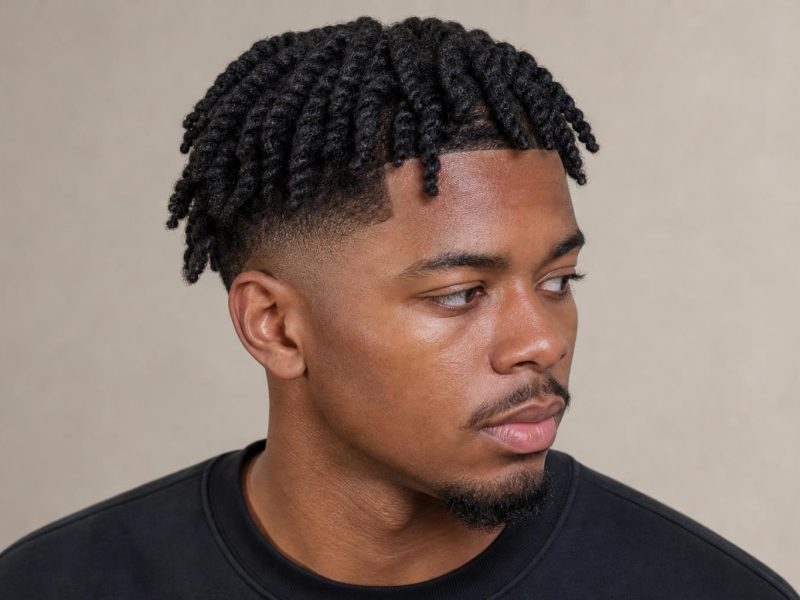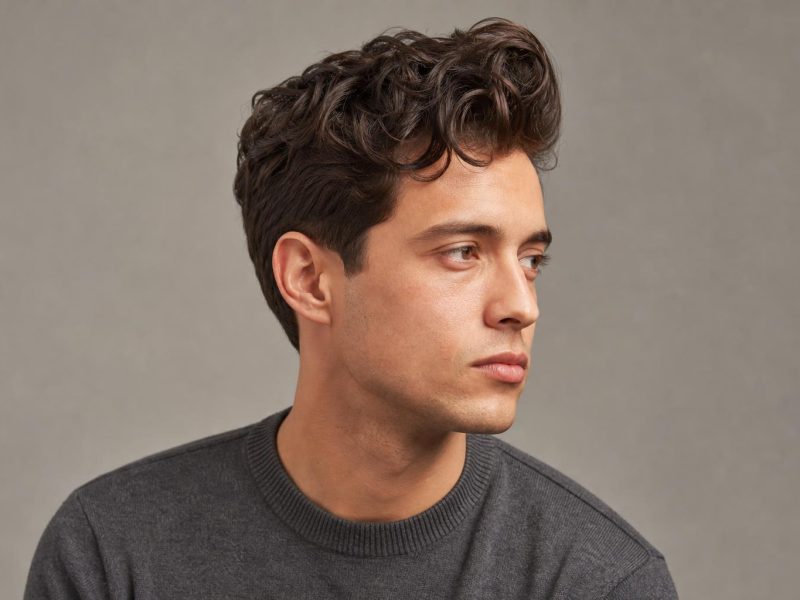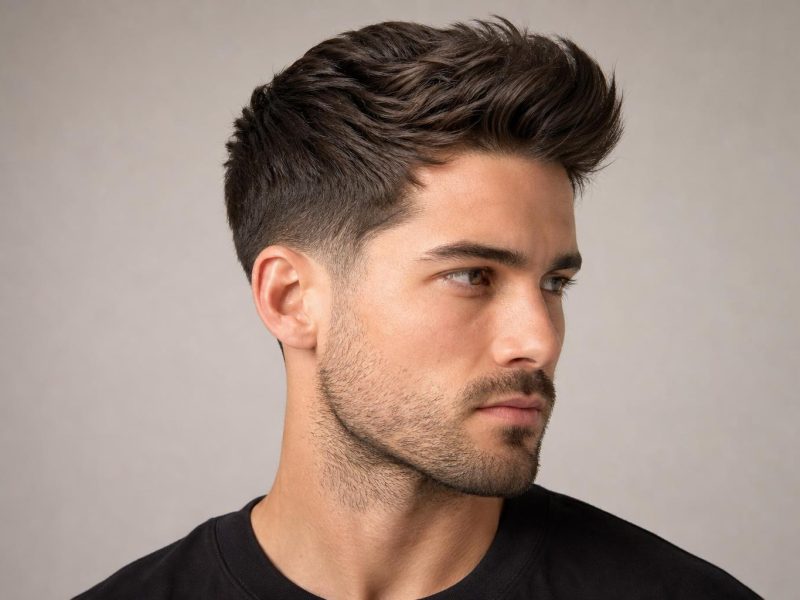

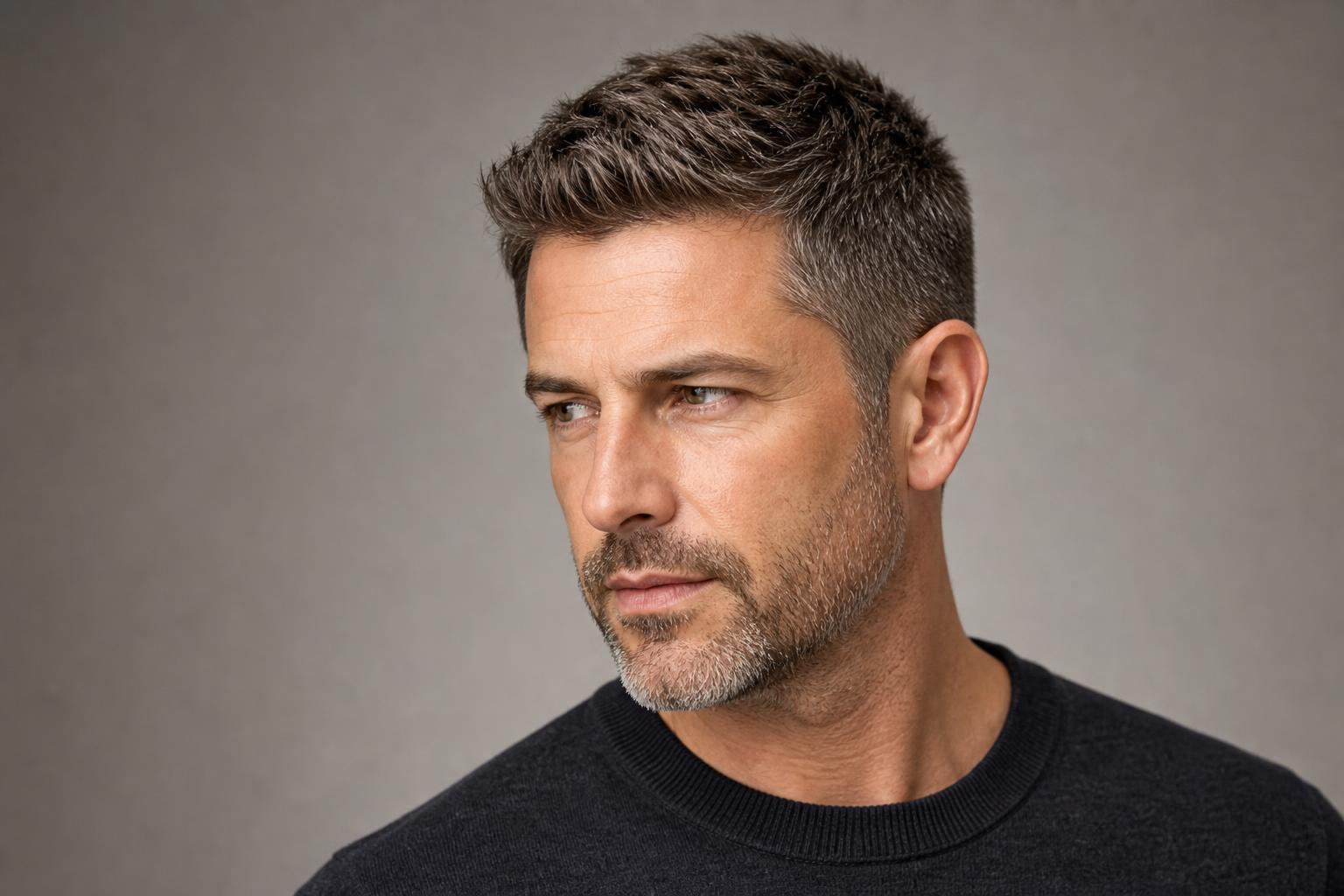
The men’s hair color that nobody notices is one shade lighter than you think you need and applied to about 70 percent of the gray, not all of it.
Hair color for men comes down to three decisions: whether you want the gray blended or covered, whether the color should last 6 washes or 6 weeks, and which shade will look like your own hair rather than a helmet. For most men the right answer is a demi-permanent color one shade lighter than the natural base, left on for less than the full processing time so that some gray still shows through. That combination fades gradually instead of leaving a line at the roots, and it is what a barber means when they say “just take the edge off.”
This guide covers the difference between blending and covering gray, the four color types and how long each holds, how to choose a shade that looks natural on your skin and your beard, home versus barbershop and what each costs, matching the beard to the hair, honest maintenance numbers, the mistakes that make colored hair obvious, and the situations where leaving the gray alone is the better call.
Blending Gray and Covering Gray Are Different Services
Covering gray means every white hair takes on the target shade, which gives a uniform result and a visible root line the moment new growth appears. Blending gray means the color is translucent or is taken off early, so 50 to 80 percent of the gray darkens and the rest stays silver. Blended hair has no hard root line because it never fully hid the gray in the first place, which is why it is the option barbers steer men toward. It also fades in a way nobody notices, from salt and pepper toward more salt, rather than from brown to a two-tone band.
Coverage still has a place. Men with 80 percent or more gray who want a solid brown, and men who color for a specific reason such as a job where a younger look matters, sometimes want full coverage. The cost is a strict four-to-six-week touch-up schedule and a harder exit if you decide to stop, because the only ways out are growing out a line or cutting very short. Blending can be abandoned at any point and the hair just becomes itself over five or six weeks.
Stylist tip: Ask for the color to be applied to dry hair with a wide-tooth comb rather than a bowl and brush, and taken off at half the box time. Uneven, slightly patchy application is the point. Perfectly saturated, fully processed color is how men end up with the one-tone look that everyone can spot from across the room.
The Four Types of Hair Color and How Long Each Lasts
Color products for men are the same chemistry as everyone else’s, packaged with shorter timing and browner shade ranges. What separates them is developer strength and whether the pigment gets inside the strand or stays on the surface. That decides how long the color lasts, how it fades, and how much damage it does to coarse gray hair that is already dry.
| Type | How it works | Gray result | Lasts | Best for |
|---|---|---|---|---|
| Shampoo-in or 5-minute color | Semi-permanent direct dye, no developer or very little; coats the surface | Blends 30 to 60 percent, tones down rather than hides | 4 to 8 washes | First-timers, under 30 percent gray, anyone who wants an easy exit |
| Demi-permanent | Low-volume developer, no ammonia; pigment lodges just under the cuticle | Blends 50 to 80 percent, looks like natural salt and pepper | 4 to 6 weeks, 20 to 28 washes, fades without a line | Most men; the barbershop default for gray blending |
| Permanent | 20-volume developer with ammonia or a substitute; pigment inside the cortex | Covers 100 percent, uniform result | Until it grows out; root line at 3 to 4 weeks on short hair | Over 70 percent gray wanting a solid shade, or a lighter result than the natural base |
| Bleach and fashion color | Lightener removes pigment, then a toner or direct dye adds the shade | Not for gray; gray bleaches unevenly | Roots at 2 to 3 weeks; pastel tones fade in 5 to 10 washes | Platinum, silver, or bright shades on short cuts; a barber or colorist job |
Two things the boxes do not say. Gray hair is coarser and more porous than pigmented hair, which means it grabs color unevenly and lets it go faster, so a shade that looks right on the pigmented hair can look darker or redder on the white strands beside it. And most “for men” kits are permanent color with a short processing time, not demi, so if the goal is blending, check the box for the words demi-permanent or ammonia-free and a low developer, or ask the barber which one they use.
How to Choose a Shade That Looks Like Your Own Hair
Shade is where most home color goes wrong, and it goes wrong in one direction. Men pick the color they remember having at 25, which was darker than they think, and the result is a flat block of brown or black that does not match the eyebrows, the beard, or the skin. The fix is a rule barbers use without thinking about it: choose one shade lighter than the color you believe is natural, and never choose black unless your natural hair is genuinely blue-black and your eyebrows still are.
| Natural base | Shade to buy | Undertone | Avoid |
|---|---|---|---|
| Black | Darkest brown or natural black, never blue-black | Neutral | Jet black, which looks like shoe polish and shows every gray root |
| Dark brown | Medium brown | Neutral or ash | Warm or golden browns, which turn orange on gray |
| Medium brown | Light brown | Neutral | Dark brown, which is the most common “too dark” mistake |
| Light brown or dark blonde | Dark blonde or light ash brown | Ash | Anything with gold or honey in the name |
| Red or auburn | Light auburn or a neutral brown with a copper gloss | Warm, but lighter than the memory | Bright reds, which fade to pink on gray within two weeks |
| Mostly gray or white | A silver or clear gloss instead of color | Cool | Any brown; full coverage at this stage needs permanent and shows roots in days |
Skin tone matters less than people expect for men’s color because the shades are so close to natural, but two rules hold. Cool or pink-toned skin looks better under ash and neutral browns, and warm or olive skin under neutral, never under ash, which goes greenish. Check the eyebrows: they are the color your hair is supposed to match, and they are almost always lighter than the shade men reach for. Anyone thinking about the silver route rather than the brown one will find the toning steps in our silver hair guide, which apply to men’s short cuts just as well.
Home or Barbershop, and What Each Costs
Home color works for men in a way it rarely does for women, because the hair is short, the shade is close to natural, and the goal is subtle. A demi-permanent or shampoo-in kit applied on a Sunday evening takes 15 minutes and costs a fraction of a salon visit. The barbershop wins on three things: matching the shade to the beard and brows by eye, taking the color off at exactly the right moment for blending, and doing the back of the head evenly. Many barbershops now offer a gray-blending service that takes 10 minutes at the end of a haircut.
| Aspect | At home | Barbershop or salon |
|---|---|---|
| Cost per application | Roughly $10 to $25 | Roughly $25 to $60 as a barbershop add-on, $80 to $150 at a salon |
| Time | 15 to 25 minutes including rinse | 10 to 20 minutes added to a cut |
| Shade accuracy | Fair; most men go too dark on the first box | Good; mixed to your brows and beard |
| Blending control | Depends on you taking it off early | Timed by someone who does it daily |
| Best for | Shampoo-in or demi blending on short hair, under 50 percent gray | First application, heavy gray, permanent coverage, bleach or fashion color |
A sensible pattern is to have the barber do the first application so you see what the right shade and timing look like, then repeat it at home with the same product type and take the box back to the shop when it stops matching. Whatever the route, a 48-hour patch test behind the ear comes first, every time the product changes. Hair color allergy can develop after years of trouble-free use and the reaction on a whole scalp is severe.
Matching the Beard to the Hair
The beard usually grays before the hair does and in a different pattern, typically at the chin and the sides of the mouth first, so a colored head over a white beard is one of the most common giveaways. Beard hair is also coarser than scalp hair, and skin on the face is more sensitive, so the same box does not do both jobs well. Beard-specific color is a gentler formula with a shorter processing time and a brush applicator that keeps it off the skin.
The blending logic is the same and even more important. Take beard color off at half time so the gray at the chin softens rather than vanishes, choose the shade one level lighter than the hair color you used, and apply it only every second or third time you color the hair, because the beard is trimmed more often and the grow-out is invisible. A beard that is fully covered while the hair is blended looks worse than leaving the beard alone entirely. Men who prefer to keep the beard natural can still soften the contrast with a short trim, since stubble looks like salt and pepper at any gray percentage.
Stylist tip: Color the beard first and wipe the skin with a damp cloth immediately, then color the hair. Beard dye on the skin shows for two or three days on the cheek line and is the single most obvious sign of home color. A thin layer of lip balm along the cheek and neck lines before applying stops the stain entirely.
How to Apply Men’s Hair Color at Home Without It Showing
The technique for a natural result is deliberately imperfect. You are aiming to darken most of the gray, leave some of it alone, and rinse before the color has fully developed. Done that way a demi-permanent color takes about 20 minutes start to finish and needs repeating every four to six weeks.
Step 1: Patch Test and Start on Dry, Unwashed Hair
What you need: The kit, gloves, an old towel, a wide-tooth comb, and a clock.
How: Do the patch test 48 hours ahead. On the day, work on dry hair that was last washed a day earlier, and put a thin layer of lip balm or petroleum jelly along the hairline and ears.
Why: A day of natural oil protects the scalp from irritation, and dry hair takes the color evenly. The balm stops the hairline stain that marks a home job.
Common mistake: Coloring freshly washed hair with a clean, dry scalp, which is when stinging and redness happen.
Step 2: Comb the Color Through, Do Not Paint It On
What you need: The mixed color and the wide-tooth comb.
How: Squeeze a small amount onto the comb or your gloved fingers and comb it through the hair from front to back, then side to side, concentrating on the temples and the front hairline where gray shows most. Leave the crown and nape lighter. Do not saturate.
Why: Combed-through color reaches most strands and misses some, which is exactly the salt-and-pepper result blending is meant to produce. Brushed-on, saturated color hits everything and gives a solid block.
Common mistake: Using the whole tube because it is there. Half a tube covers a short men’s cut.
Step 3: Rinse at Half the Stated Time
What you need: Lukewarm water and the conditioner from the kit.
How: If the box says 10 minutes, rinse at 5. If it says 25, rinse at 12. Rinse until the water runs clear, condition, and let the hair dry before judging it, because wet colored hair looks darker than it will be.
Why: Full processing time is calibrated for full coverage. Half time leaves 20 to 40 percent of the gray showing and produces the fade-without-a-line result.
Common mistake: Leaving it longer “to be safe.” There is no safe side on the dark end; too light can be repeated tomorrow, too dark takes weeks to fade.
Step 4: Wait 48 Hours, Then Switch to Color-Safe Washing
What you need: A sulfate-free shampoo and cool-water rinses.
How: Skip washing for two days so the pigment settles, then use a sulfate-free shampoo and rinse cooler than you would like. Wash every second day rather than daily if you can.
Why: Sulfates and hot water pull surface pigment out of coarse gray hair fastest. Every skipped wash adds days to the result.
Common mistake: Daily clarifying or dandruff shampoo, which strips a demi color in under two weeks.
Maintenance and Grow-Out
Short hair grows about half an inch a month, which means a permanent color shows a root line in three to four weeks on a fade and a blended demi color simply looks a little grayer each week. The schedule below assumes a standard short men’s cut washed every day or two.
| Color type | Reapply | How it fades | To stop |
|---|---|---|---|
| Shampoo-in | Every 2 to 3 weeks | Evenly, gone in 6 to 8 washes | Just stop; invisible in two weeks |
| Demi-permanent blend | Every 4 to 6 weeks, or with every second haircut | Gradually grayer, no line | Stop; natural in 5 to 6 weeks |
| Permanent coverage | Roots every 3 to 4 weeks | Tone dulls, roots show as a band | Buzz it short, or switch to demi for two cycles then stop |
| Bleach or platinum | Roots every 2 to 3 weeks; toner every 2 weeks | Goes yellow, then brassy | Cut it out; a buzz cut removes it in one visit |
Two upkeep tools earn their place. A clear gloss every second color keeps coarse gray hair from looking dull, and the same hair gloss at home routine written for women works on a men’s cut in five minutes. For bleached or silver hair, a weekly purple shampoo to control brassiness is the difference between platinum and yellow by week three.
Mistakes That Make Men’s Hair Color Obvious
Colored hair on men is only noticed when one of these has gone wrong, and all of them are avoidable.
- Too dark. The number one giveaway. Go one shade lighter than the color you remember, and lighter still if you are over 50, because skin loses warmth with age and dark hair against it looks harsh.
- Full coverage at 30 percent gray. Removing every gray hair from a head that was mostly dark makes the change obvious to everyone who knows you. Blend instead.
- Ignoring the beard and eyebrows. A brown head over a white beard, or dark hair over pale brows, tells the story immediately. Color the beard lightly or trim it to stubble, and leave the eyebrows alone.
- Warm shades on gray. Gold and honey tones turn orange on white hair. Choose neutral or ash for anything brown.
- Stained hairline and ears. Barrier balm before, damp cloth immediately after.
- Coloring the ends every time. On any hair over two inches, repeat applications only go on the new growth, or the ends get darker with every round.
- A sudden change. Going from full gray to full brown in one evening is the change people notice. Start with a shampoo-in or a light demi and darken over two or three rounds.
When Leaving the Gray Is the Better Choice
Color is a maintenance commitment, and there are situations where it costs more than it gives.
- More than 80 percent gray. Blending no longer has enough dark hair to blend into, and full coverage means roots within days on a short cut. A clear or silver gloss and a sharp cut do more for the look than brown color at this stage.
- A receding hairline or a thinning crown. Dark color makes the scalp show through more, not less, because the contrast between hair and skin rises. A lighter shade or no color, plus a haircut built for a receding hairline, looks fuller.
- A very short buzz or skin fade. Color on hair under a quarter inch grows out in a week and stains the scalp. If you want a darker look on a buzz, choose a lower guard instead.
- A history of scalp eczema or a past reaction to dye. Permanent color contains the ingredient most people react to, and demi contains it too. Shampoo-in direct dyes are the only lower-risk option, and even those need a patch test.
- You would rather not have a schedule. Blended demi is forgiving, but it is still an appointment with yourself every five weeks. Gray that is well cut, glossed and trimmed at the beard is a complete look on its own.
What to Tell Your Barber
The request that gets the right result is short: “I want the gray blended, not covered, demi-permanent, one shade lighter than my natural, and take it off early.” If the beard is part of the plan, add “and soften the beard to match, lighter than the hair.” Bring nothing but a willingness to look at your eyebrows in the mirror, because that is the shade the barber will match. Ask two questions: what developer they are using, since anything above 10 volume is heading toward coverage, and how it will look at week five, which tells you whether they are thinking about the fade or just the day-one result.
FAQ
What Hair Color Looks Most Natural on Men?
One shade lighter than your natural base, in a neutral or ash tone, applied so that some gray still shows. Matching the eyebrows rather than the hair you remember is the reliable check. Black looks natural on almost nobody over 30, and warm browns turn orange on gray, so the natural-looking choices are nearly always a neutral medium or light brown.
Should Men Cover Gray Hair or Blend It?
Blend it, unless you are over about 70 percent gray and specifically want a solid shade. Blending with a demi-permanent color leaves 20 to 50 percent of the gray visible, fades without a root line, and can be stopped at any time. Coverage looks uniform on day one and needs a root touch-up every three to four weeks on short hair.
How Long Does Men’s Hair Color Last?
Shampoo-in color lasts four to eight washes, demi-permanent lasts four to six weeks, and permanent lasts until it grows out with a visible root line at three to four weeks on short hair. Coarse gray hair releases color faster than pigmented hair, so all of these run to the short end on a mostly gray head.
Can I Use the Same Dye on My Hair and Beard?
You can, but beard-specific color is a better idea because it is gentler on facial skin, processes faster on coarse beard hair, and comes with a brush that keeps it off the cheeks. Whatever you use, choose a shade lighter for the beard than for the hair and rinse it earlier. A beard that is darker than the hair is a more common giveaway than the reverse.
Does Hair Dye Damage Men’s Hair?
Shampoo-in and demi-permanent color cause little damage because they use no ammonia and a low or zero developer. Permanent color opens the cuticle and dries coarse gray hair over repeated applications, and bleach is the only type that weakens the strand outright. On short hair that is cut every few weeks, damage rarely has time to matter, which is one reason men can color more casually than women.
How Do I Stop Coloring My Hair Without a Line?
Switch from permanent to a demi-permanent blend for two or three rounds, each one lighter and taken off earlier, then stop. The demi fades into the gray rather than growing out as a band. On very short hair, a buzz cut removes permanent color in a single appointment and is the fastest exit.
Is Gray Blending Worth It at a Barbershop?
For the first application, yes. A barber matches the shade to your brows and beard by eye and times the rinse for blending, which is the part home kits get wrong. After that, most men can repeat the same product at home every five or six weeks and return to the barber when the shade drifts or the gray percentage changes.
Good hair color for men is the color nobody comments on: a demi-permanent shade one level lighter than your natural, combed through rather than painted on, rinsed early, and matched to a beard that is softened rather than covered. Start with a barber for the first round, take the box home for the next few, and keep the eyebrows as your reference. If the gray is past 80 percent or the hairline is thinning, a gloss and a sharp cut will do more than any brown in a tube.
Hair results vary based on your natural hair type, texture, density, and condition. Always consult with a licensed hairstylist before making significant changes, especially with chemical treatments or dramatic length changes. Photos may show styled results that require professional tools and products to replicate.