
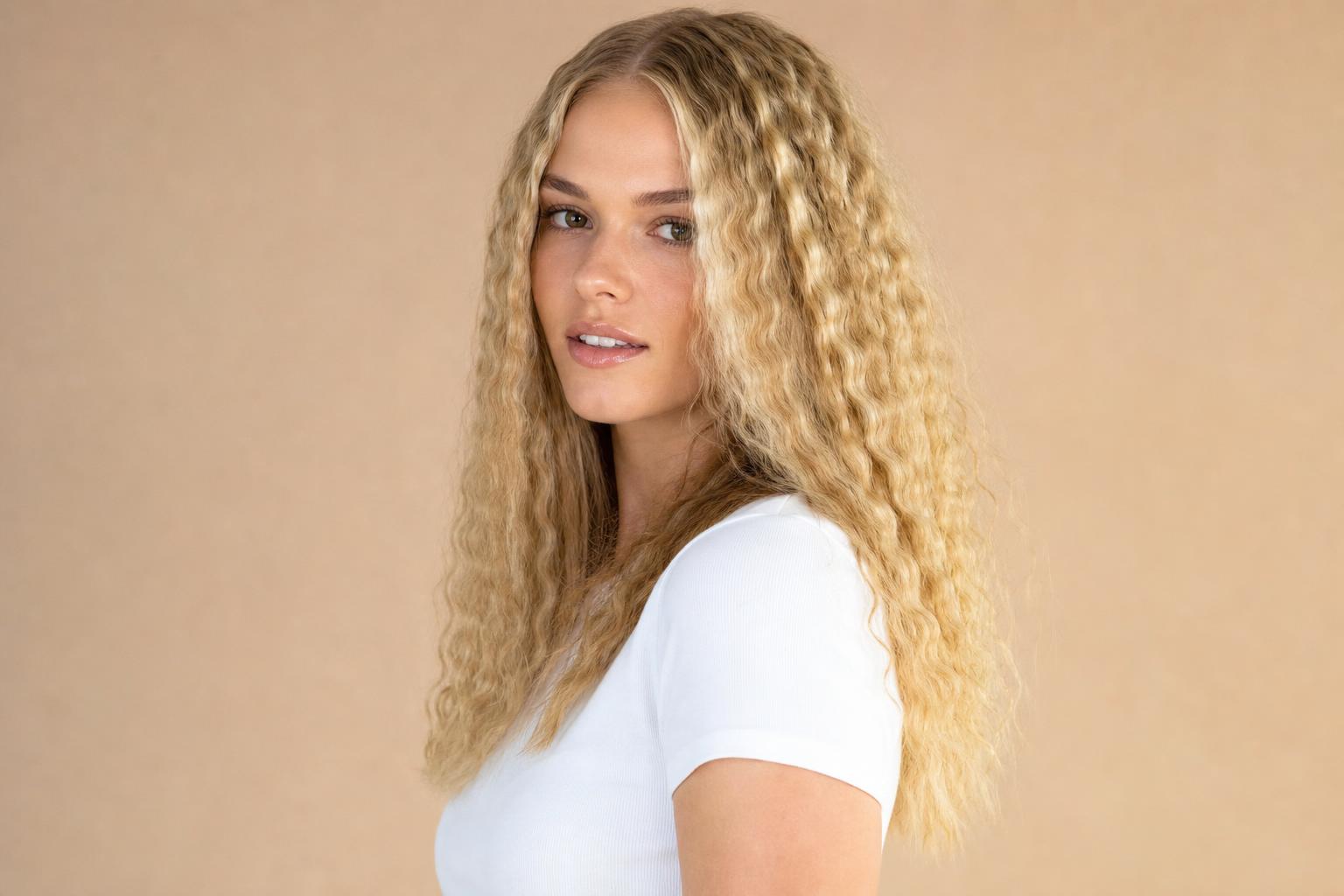
Crimped hair is easy to get right once you match the plate size to the look you want and the heat to your hair type, and it can be done without a crimper at all.
Crimped hair is hair pressed into small, tight zigzag waves between ridged hot plates, a texture that adds a lot of volume without curls. For most medium-textured hair, set a crimper to about 300 to 350°F, clamp each 1 to 2 inch section for around 5 seconds, and work from the roots down. A full head of shoulder-length hair takes 15 to 30 minutes, and the texture usually lasts 1 to 3 days. If you do not own a crimper, tight braids on damp hair left overnight give a softer, heat-free version.
This guide covers which crimper plate to buy, how to crimp hair step by step, the right temperature for your hair type, two no-crimper methods, how to handle curly hair and extensions, and hairstyles that make crimped texture look current rather than costume. The look had its first big run in the 80s hairstyles era and has come back as a softer, brushed-out texture.
| Factor | Details |
|---|---|
| Best hair | Straight to slightly wavy, fine to medium density; works on thick hair with smaller sections |
| Time | 15 to 30 minutes with a crimper; 5 minutes plus overnight for braids |
| Heat | 250 to 400°F depending on texture; lower is safer |
| Lasts | 1 to 3 days; less on fine or oily hair |
| Avoid if | Hair is freshly bleached, breaking, or you need texture that lasts past the next wash |
What Crimped Hair Is and How It Differs From Waves
Crimping creates sharp, angular zigzags close together along the strand, where waves are rounded S-shapes spaced further apart. The ridged plates bend the hair into a repeating pattern that holds its shape and pushes each strand away from its neighbors, which is where the extra volume comes from.
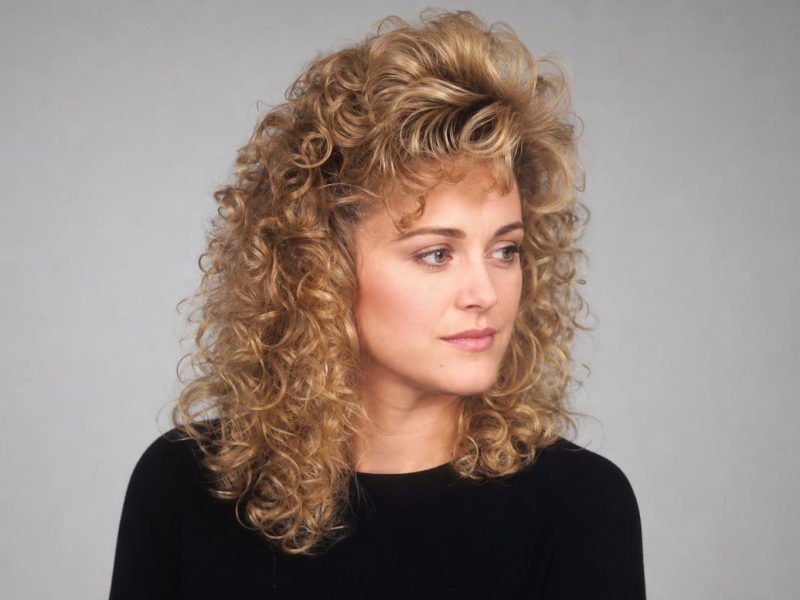
The 1980s version was tight and uniform from root to tip, worn big and teased. The current version is softer: crimped only through sections, brushed out slightly, or used at the roots as a hidden volume trick. That shift is why a crimper is back in many stylists’ kits, often for lift under the top layer rather than for the full zigzag look.
Choosing a Crimper Plate Size
Plate width is the biggest decision you will make, because it sets the size of every zigzag. Smaller plates give tighter, more defined crimps; wider plates give looser, wavier texture that covers more hair per clamp.
| Plate Type | Crimp Size | Best For | Hair Length |
|---|---|---|---|
| Mini or root crimper | Very tight, fine ridges | Hidden root volume, short hair, small accent sections | Pixie to shoulder |
| Standard crimper (about 1 inch) | Classic zigzag | Full crimped looks, retro styles, ponytails | Shoulder to long |
| Wide wave crimper (about 1.5 inches) | Loose, wavy crimp | Modern, softer texture on long or thick hair | Collarbone to long |
Stylist tip: If you only buy one tool, a mini crimper is the most useful. Crimping just the roots under the top layer gives fine hair all-day lift, and nobody can see the texture that is doing it.
How to Crimp Hair With a Crimper
Start with completely dry hair; crimping damp hair creates steam and damages the strand. Day-old hair holds the pattern better than freshly washed, silky hair.
Step 1: Prep With Heat Protectant
Mist a heat protectant through dry hair and comb it through so every strand is coated. Let it dry for a minute before clamping. Our guide on how to use heat protectant explains how much to apply for your hair type.
Step 2: Section the Hair in Layers
Clip the top half out of the way and start at the nape. Take sections about 1 to 2 inches wide and no thicker than the plate can close around.
Step 3: Clamp From the Root Down
Place the crimper close to the root, press for about 5 seconds, release, and move down so the new clamp slightly overlaps the last ridge. Overlapping keeps the zigzag continuous instead of leaving flat gaps.
Step 4: Let Each Section Cool
Leave crimped sections alone until they are cool to the touch. Hair sets its shape as it cools, and handling warm hair loosens the pattern.
Step 5: Finish and Decide on Texture
For a sharp, defined crimp, leave it and mist with a light-hold spray. For the modern, softer finish, brush through gently with a wide paddle brush to break up the pattern into fluffy volume.
The Right Crimping Temperature for Your Hair Type
Heat damage builds with temperature, not just time. A study measuring heat damage to the hair shaft found that surface damage to the cuticle increased as drying temperature rose, which is why lower settings are always the safer starting point. Pick the lowest setting that still holds the pattern for your hair.
| Hair Type | Temperature | Clamp Time |
|---|---|---|
| Fine, damaged or color-treated | 250 to 300°F | 3 to 5 seconds |
| Medium, healthy | 300 to 350°F | About 5 seconds |
| Thick or coarse | 350 to 400°F | 5 to 8 seconds |
| Heat-resistant synthetic extensions | Follow the label, usually below 300°F | 3 seconds, test first |
If your hair sizzles or smells burnt, the heat is too high or the hair is not fully dry. Stop and lower the setting.
How to Crimp Hair Without a Crimper
You can get crimp-like texture with braids and a flat iron, or with braids alone and no heat. The result is softer and less uniform than a crimper, which many people prefer for everyday wear.
Small Braids Overnight Give a Heat-Free Crimp
Divide slightly damp hair into 8 to 12 small braids, each about an inch wide, and braid tightly to the ends. Sleep on them, then undo the braids once your hair is completely dry. Smaller braids give a tighter, more crimp-like pattern; fewer, bigger braids give looser waves. The same idea is behind many heatless curls overnight methods.
A Flat Iron Over Braids Is the Fast Version
Make the same small braids on dry hair, then slowly press a flat iron down each braid for a few seconds. Let the braids cool completely before undoing them. This takes about 15 minutes and gives a stronger zigzag than the overnight method. Our roundup of the best hair straighteners can help if you need a narrow-plate iron for this.
Twisted Sections Create a Softer Wave
Twist small sections tightly, pin them flat against the head, and press each with a flat iron. It gives an irregular crimp that looks more lived-in than braids.
Crimped Hairstyles That Look Current
Crimping every strand and wearing it down looks strongly retro. For a more modern result, combine crimped texture with sleek sections or a simple shape.
Crimped Half-Up Style
Crimp the lengths, then pull the top half back with a clip or small ponytail. The smooth top keeps the style polished while the crimped lengths add volume.
Sleek Top With Crimped Ponytail
Brush the hair into a sleek high ponytail and crimp only the ponytail. The contrast between flat roots and full length is bold but easy to wear.
Root-Crimped Blowout
Crimp only the first inch of hair at the roots under the top layer, then blow-dry smooth. The result looks like a big blowout with no visible crimp.
Crimped Braids and Updos
Crimped hair has grip, so braids and buns look fuller and hold better. It pairs well with boho hair braiding for festivals.
Face-Framing Crimped Pieces
Crimp only two sections at the front and leave the rest straight. It is the most subtle way to try the trend.
Crimping Curly Hair and Extensions
Curly hair needs straightening before crimping, or the crimper will simply flatten the curls unevenly. Blow-dry or flat iron the hair first, then crimp at the lower end of your temperature range, since curly hair is often drier and more fragile. Expect the curls to return fully after the next wash.
Human hair extensions can be crimped just like your own hair. Synthetic extensions are different: standard synthetic fibers can melt at crimping temperatures, so only crimp pieces labeled heat-resistant, and test on the underside first.
How Long Crimped Hair Lasts
Crimps usually last until the next wash, but the look changes day to day. Plan for this timeline.
| Day | What It Looks Like | How to Refresh |
|---|---|---|
| Day 1 | Sharp, defined crimps | No need |
| Day 2 | Softer, fluffier texture | Dry shampoo at the roots; recrimp a few top sections |
| Day 3 | Loose waves, more frizz | Wear it in a braid or bun |
Sleeping with your hair in a loose, high bun on a silk or satin pillowcase keeps crimps from flattening overnight.
What to Ask for at the Salon
Stylists use crimping mostly for volume and texture before an updo. Ask clearly so you do not end up with more crimp than you wanted.
Try this: “Could you root-crimp under the top layer for volume, then keep the surface smooth? I don’t want visible crimp on top.” For a full look, ask for “a soft crimp through the lengths, brushed out slightly.”
Stylist tip: Crimping is one of the best preps for an updo that needs to hold all night. The ridges give pins something to grip, so the style slips far less than it would on smooth hair.
When Crimping Is Not the Right Choice
Crimping is heat styling, and it is not ideal for every head of hair.
- Freshly bleached or breaking hair: the repeated clamping adds stress to already fragile strands. Use the overnight braid method instead.
- Very short hair: hair shorter than about 3 inches does not have enough length for the plates. A mini crimper at the roots is the only realistic option.
- You want texture that survives washing: crimping is temporary. A light perm is the long-lasting alternative.
Common Crimped Hair Myths
A couple of assumptions stop people from trying crimped texture or lead them to damage their hair.
Myth: Crimping Damages Hair More Than Straightening
Reality: Both use heated plates, so damage depends mainly on temperature and how often you do it. Crimping at 300°F with protectant is gentler than straightening at 450°F.
Myth: Crimped Hair Only Looks Good Big
Reality: Modern crimped looks are often subtle, crimped only at the roots or in a few sections. Big, all-over crimp is one option, not the only one.
FAQ
How Do You Crimp Hair Without a Crimper?
Braid damp hair into 8 to 12 small, tight braids and leave them overnight. For a faster result, press a flat iron down each braid on dry hair, let it cool, then undo it.
Should You Crimp Hair Wet or Dry?
Always crimp dry hair. Hot plates on damp hair create steam that can damage the strand. The braid method is the only one that starts on damp hair, and it uses no heat.
How Long Does Crimped Hair Last?
Usually 1 to 3 days, or until your next wash. Fine and oily hair lose the pattern faster. Dry shampoo and a loose bun overnight help it last.
Does Crimping Work on Curly Hair?
Yes, but straighten it first so the crimp is even. Use a lower temperature, since curly hair is often drier, and expect the curls to return after washing.
What Temperature Should I Crimp My Hair At?
Start at 250 to 300°F for fine or damaged hair, 300 to 350°F for medium hair, and 350 to 400°F for thick hair. Use the lowest setting that holds the pattern.
Is Crimped Hair Back in Style?
Yes, in a softer form. Brushed-out crimps, root crimping and crimped ponytails are more common now than the tight, all-over 80s look.
Crimped hair comes down to three choices: the plate size, the temperature, and how much of your hair you crimp. Start with a heat protectant, the lowest heat that works, and one small section to see how your hair holds the pattern. From there, you can build anything from a hidden root boost to full retro crimps.
Hair results vary based on your natural hair type, texture, density, and condition. Always consult with a licensed hairstylist before making significant changes, especially with chemical treatments or dramatic length changes. Photos may show styled results that require professional tools and products to replicate.