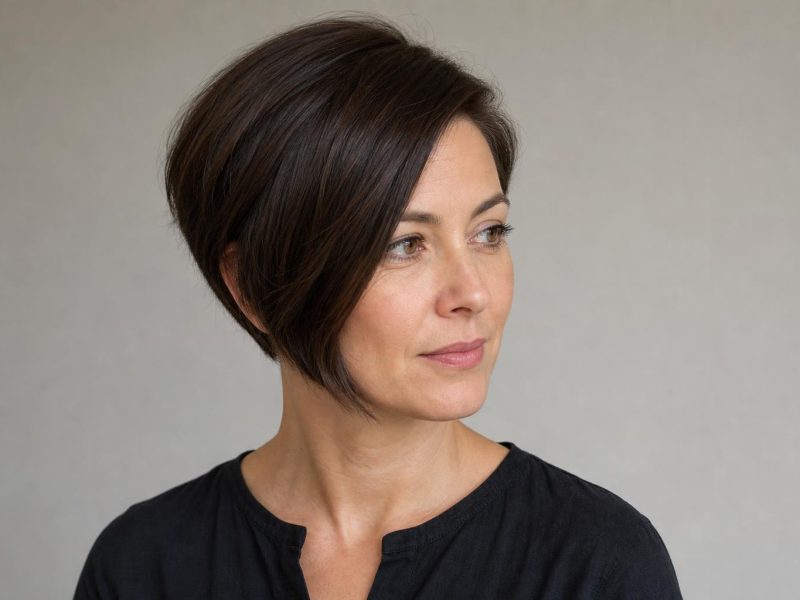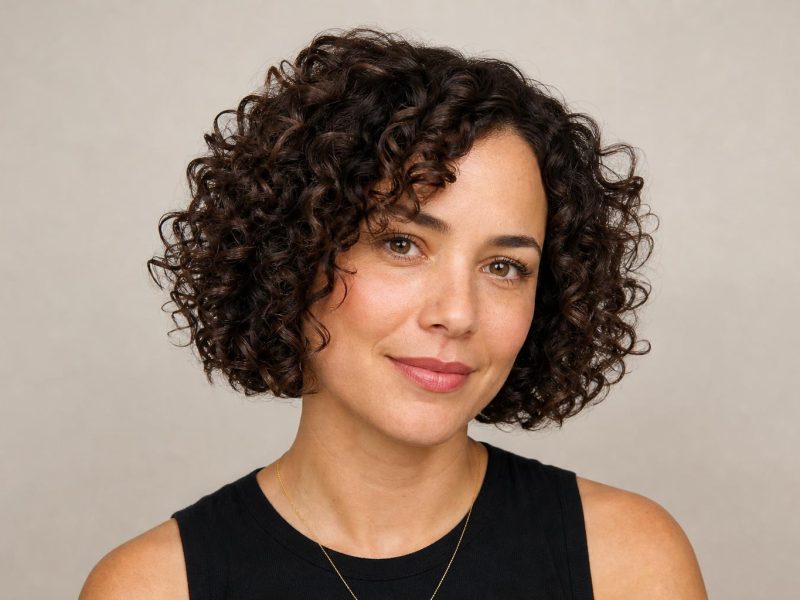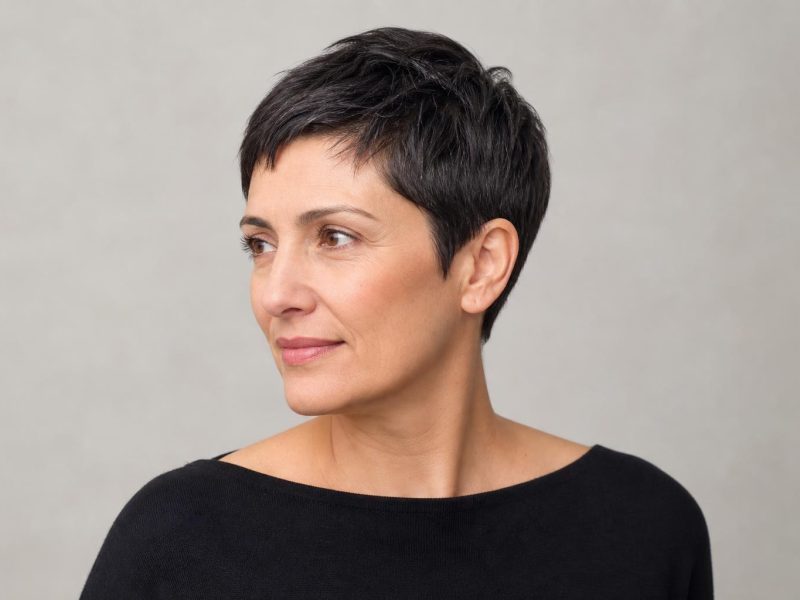

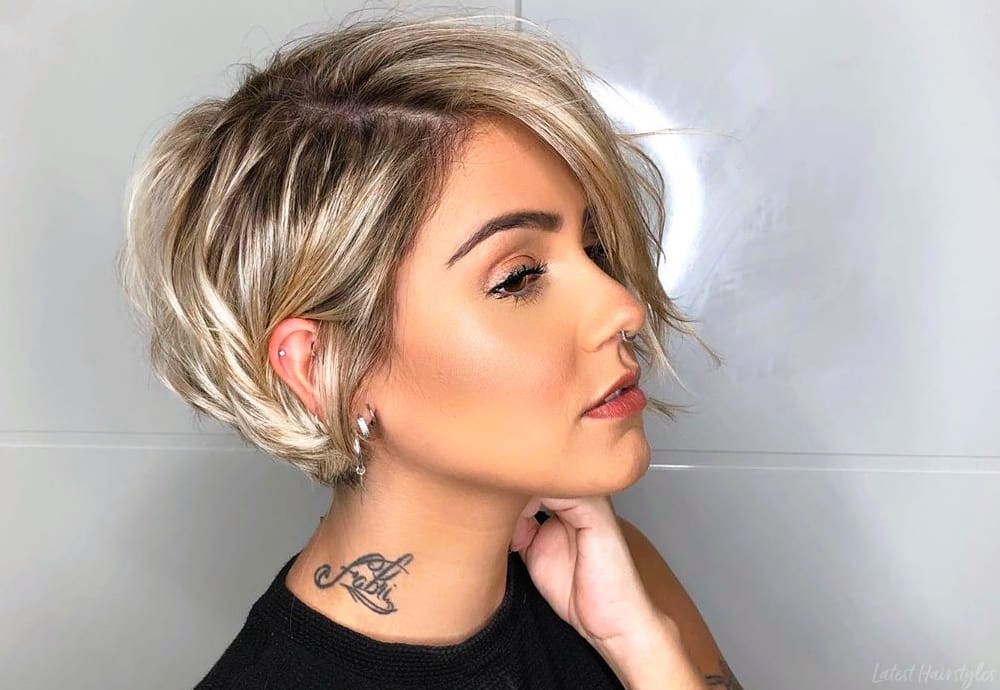
A stylist-curated collection of pixie bob variations for every hair type, face shape, and comfort level with short hair
The pixie bob — sometimes called a POB — splits the difference between a cropped pixie and a chin-length bob, landing somewhere between ear-length and neck-length with shorter graduation at the back and longer pieces through the top and front. These 25 variations from working stylists cover textured, sleek, edgy, and curly options, each with a note on who it flatters and how to recreate it.
Below the gallery, you’ll find a face shape compatibility guide, a maintenance schedule, and exact salon language to bring with you — so you can walk in with a reference photo and walk out with a pixie bob that actually works for your hair.
| Factor | Details |
|---|---|
| Best for | Fine to medium hair that needs volume; oval, heart, and diamond face shapes |
| Maintenance | Trims every 4–6 weeks; 5–10 minutes daily styling |
| Works with | Straight, wavy, and curly textures; adapts to thick hair with internal layering |
| Avoid if | Very coarse, wiry hair that resists lying flat at the nape; extremely round faces without a side part to add asymmetry |
| Salon time | 45–60 minutes for the cut; add 30–45 minutes if pairing with color |
Textured and Layered Pixie Bobs
Layered pixie bobs rely on point cutting, razor work, or graduated sections to create movement and reduce weight — making them the strongest option for fine hair that falls flat or thick hair that mushrooms out. The variations below range from subtle, blended layers to heavily textured chops, all sharing one quality: they look like they took more effort to style than they actually did.

1. Feathered Pixie Bob with Side-Swept Fringe
Feathered layers cut at a steep angle create an airy, lifted shape through the crown without sacrificing density at the perimeter — exactly what fine, straight hair needs to avoid looking flat. The side-swept fringe blends into the longer front pieces seamlessly, which means no awkward grow-out phase if you decide to ditch the bangs later. A walnut-sized amount of volumizing mousse applied to damp roots before blow-drying upside down is all it takes to get lift that lasts through the afternoon.
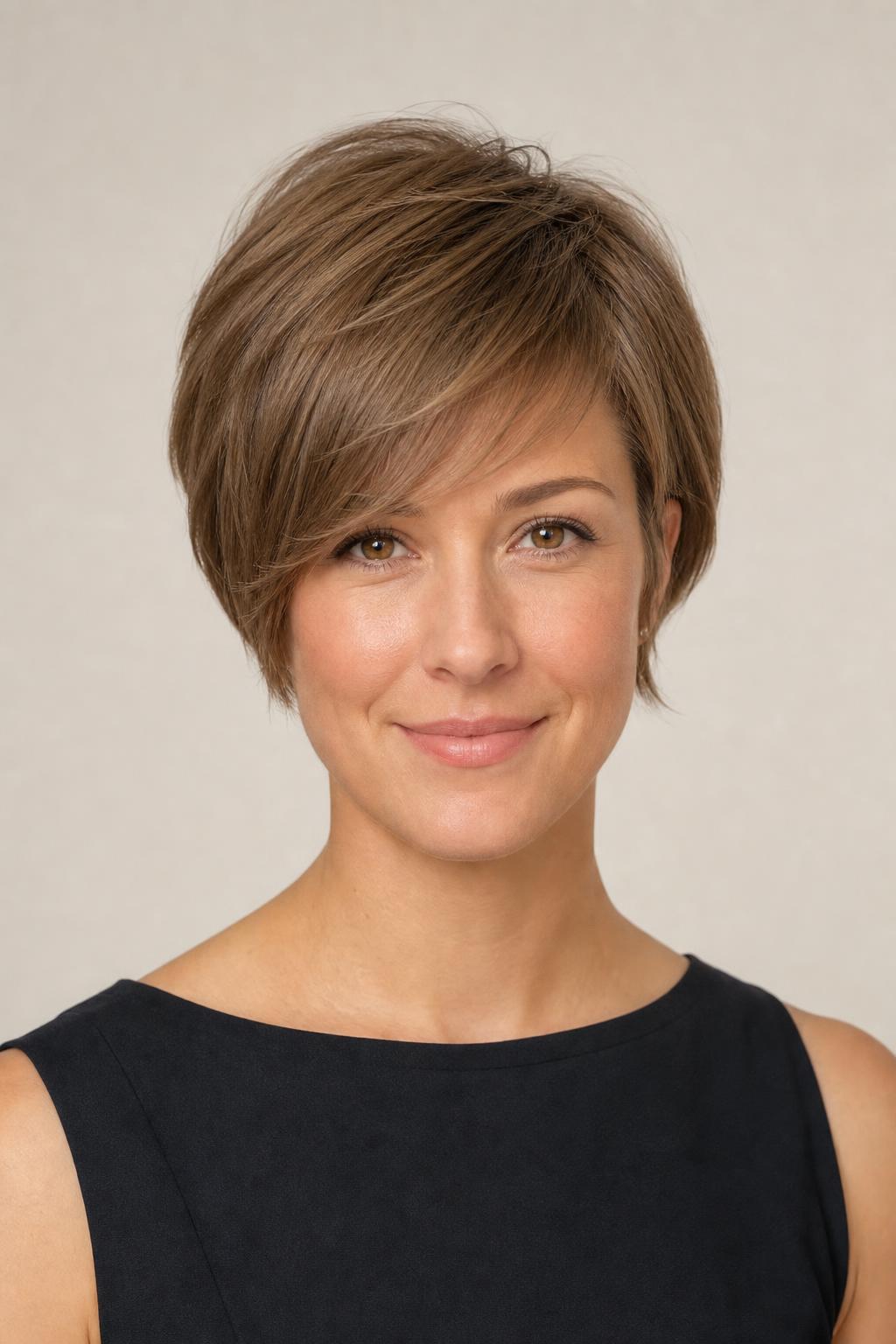
2. Choppy Pixie Bob with Piece-y Ends
Razor-cut ends create the chunky, separated texture that gives this variation its effortless, undone quality. It works particularly well on medium-density hair that has some natural wave — the texture amplifies the choppy layers instead of fighting them. Rub a pea-sized amount of texturizing paste between your palms and twist through mid-lengths and ends for definition that doesn’t look crunchy.
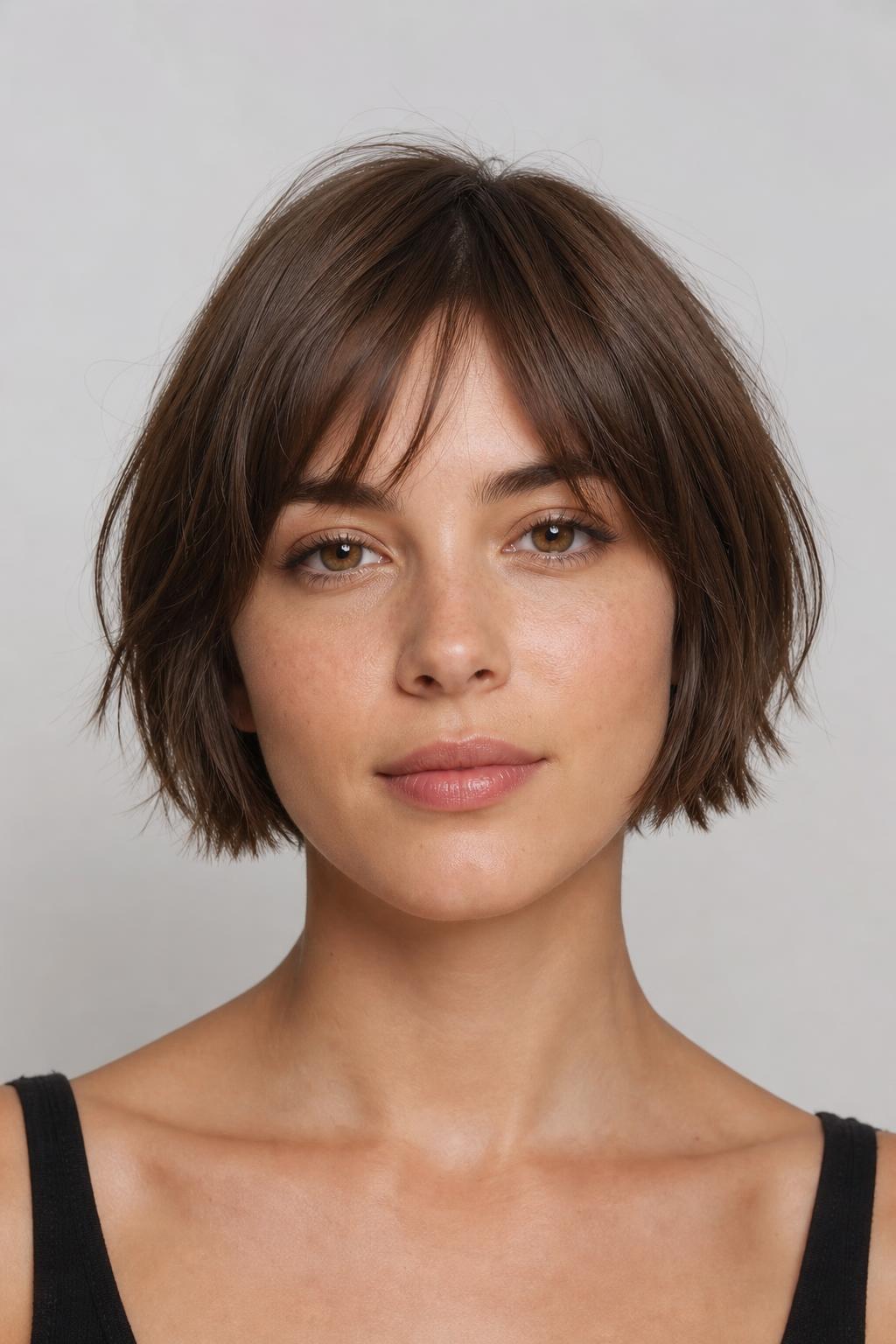
3. Stacked Pixie Bob for Volume
Graduation at the back builds a rounded, lifted silhouette where fine hair typically falls flattest. The stacking works by cutting increasingly shorter layers from the occipital bone down to the nape, pushing volume upward and outward. Bring this photo to your stylist and ask specifically for a graduated back with the weight line sitting at the occipital bone — that placement is what separates a structured pixie bob from a generic short cut.
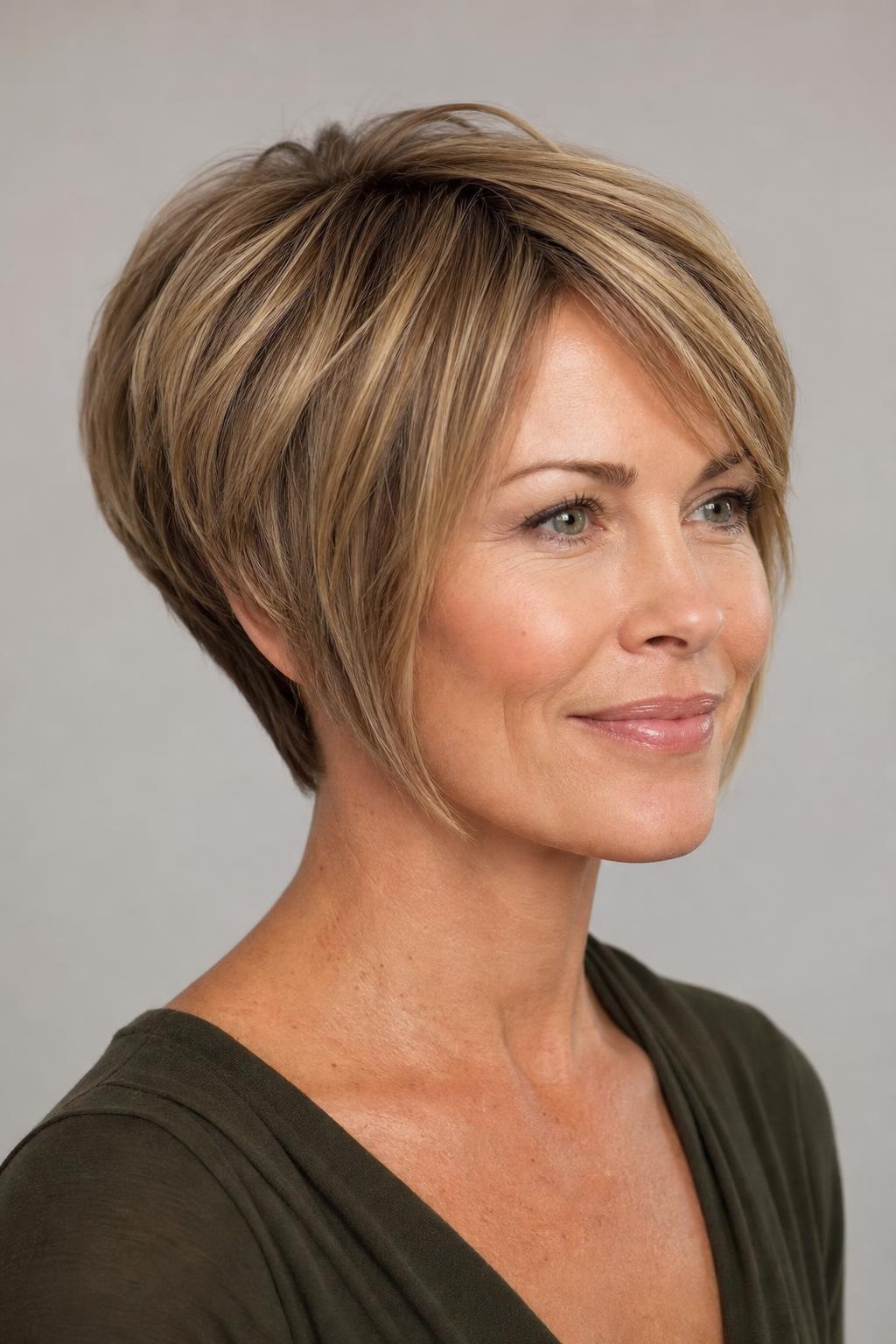
4. Long-Layered Pixie Bob with Face Framing
Heart-shaped faces benefit from longer layers that graze the jawline, where they add visual width and balance a narrower chin. The face-framing pieces in this variation are cut separately from the body of the hair, angled from cheekbone to jaw, so they move independently when you turn your head. This cut grows out more gracefully than most pixie bobs — by week six the layers simply blend into a short bob silhouette.

5. Textured Crop with Micro Layers
Heavy, thick hair that tends to triangle out at ear length responds well to micro layers removed through the interior with thinning shears. The technique reduces bulk without changing the perimeter shape, so you keep a clean silhouette with none of the puffiness. Expect trims every four weeks to maintain the precision — thick hair grows fast and the shape distorts quickly once the interior layers start overlapping.
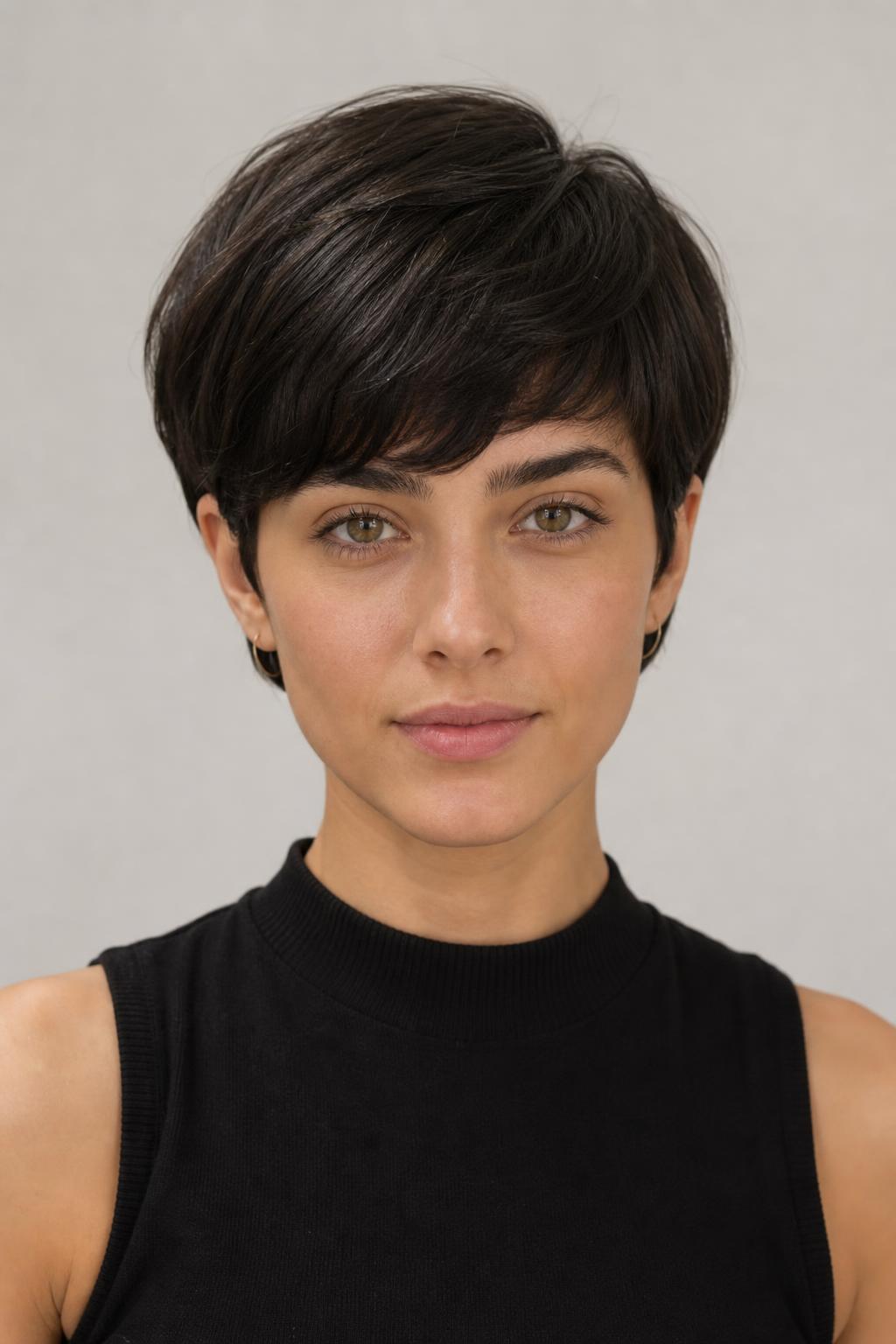
6. Soft Layered Pixie Bob with Curtain Fringe
The curtain fringe splits at the center and sweeps to both sides, creating a face-framing effect that softens strong features and works on virtually every face shape. Paired with a layered pixie bob, it bridges the gap between cropped and grown-out looks — making this an excellent transition cut if you’re growing out a shorter pixie. Dimensional highlights through the fringe area emphasize the layering and add the illusion of movement even on straight hair.
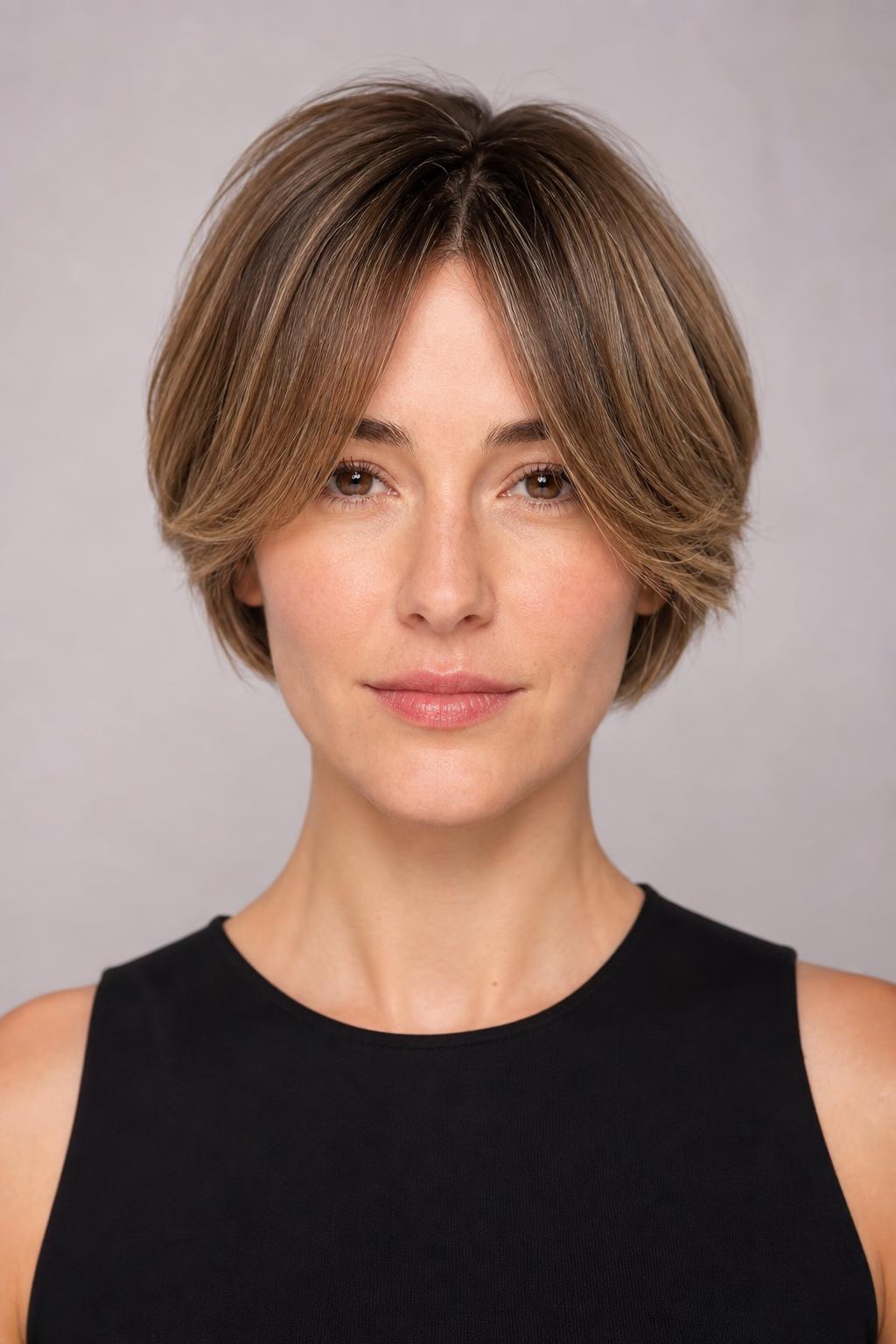
7. Shaggy Pixie Bob with Razored Ends
The razor creates softer, more tapered ends than scissors, giving this variation a lived-in quality that improves over the first two weeks after cutting. Unlike a standard layered pixie bob, the shaggy version deliberately breaks up the perimeter line — there’s no clean edge, which means it hides imperfect growth patterns well. Air-dry with a curl-enhancing cream if you have any natural wave; blow-dry with a round brush for a smoother, more polished version of the same shape.
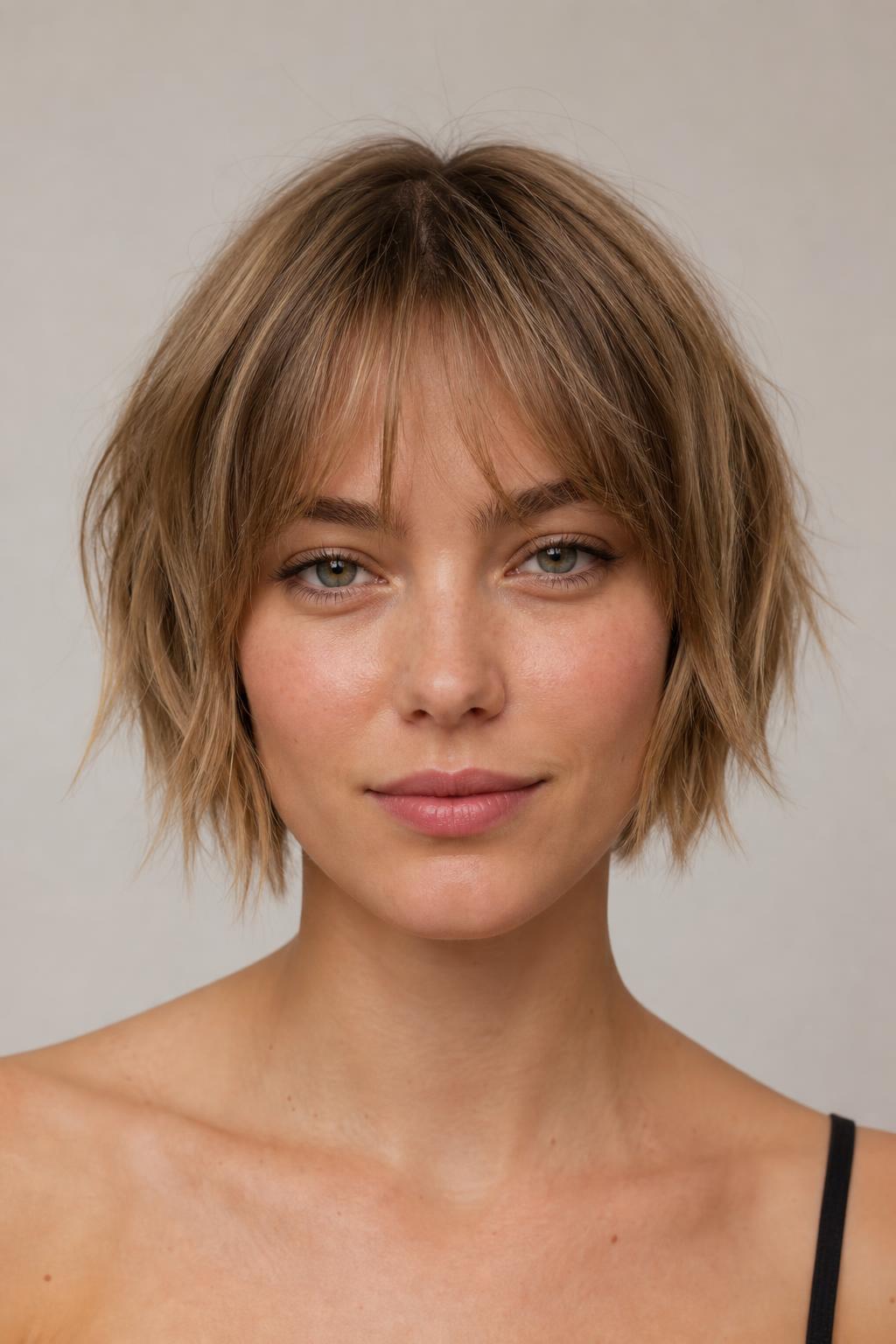
Sleek and Polished Pixie Bobs
Not every pixie bob needs to look tousled. These variations lean toward clean lines, smooth finishes, and structural precision — the kind of cuts that read as intentional from across a room. They demand a bit more daily styling (a flat iron or round brush), but the payoff is a shape that looks just as sharp at 6 PM as it did at 8 AM.
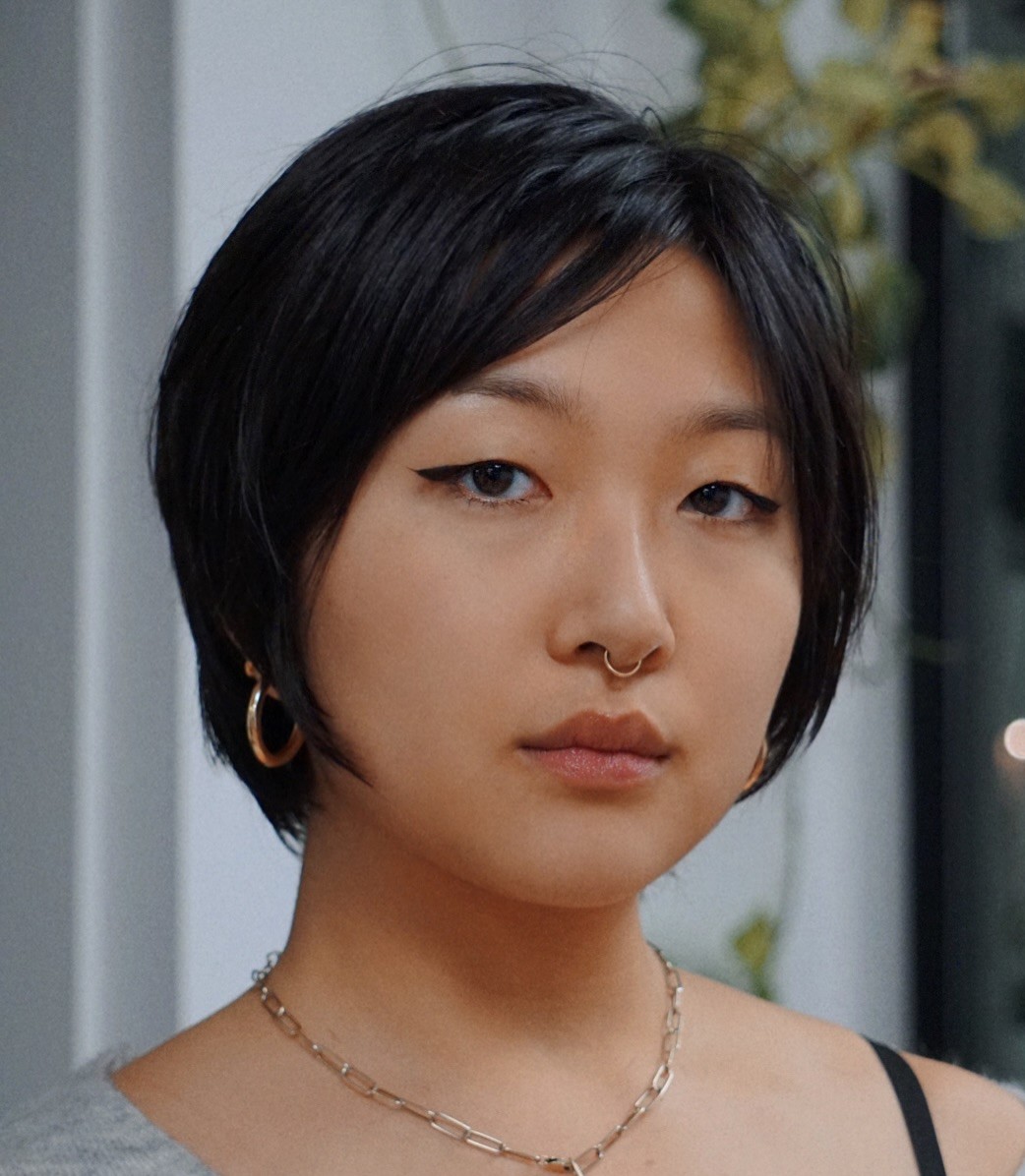
8. Blunt Pixie Bob with a Deep Side Part
A blunt perimeter with no visible layering creates a dense, weighted line that makes even thin hair appear thicker. The deep side part at a 70/30 ratio introduces enough asymmetry to prevent the cut from looking boxy, and it’s the single easiest way to flatter a round face with a pixie bob. A smoothing serum applied to damp hair before blow-drying with a paddle brush gets the sleek finish without heat damage from a flat iron.

9. Precision-Cut Pixie Bob with Clean Nape
A tapered nape cut close to the skin creates a polished, almost architectural finish that elongates the neck and keeps the entire cut looking intentional. This is the pixie bob variation that works best in professional settings where you want a modern short cut without any edge or rebellion attached to it. Ask your stylist to use clippers at the nape with a #3 or #4 guard, blending into the scissor-cut sections above the occipital bone.
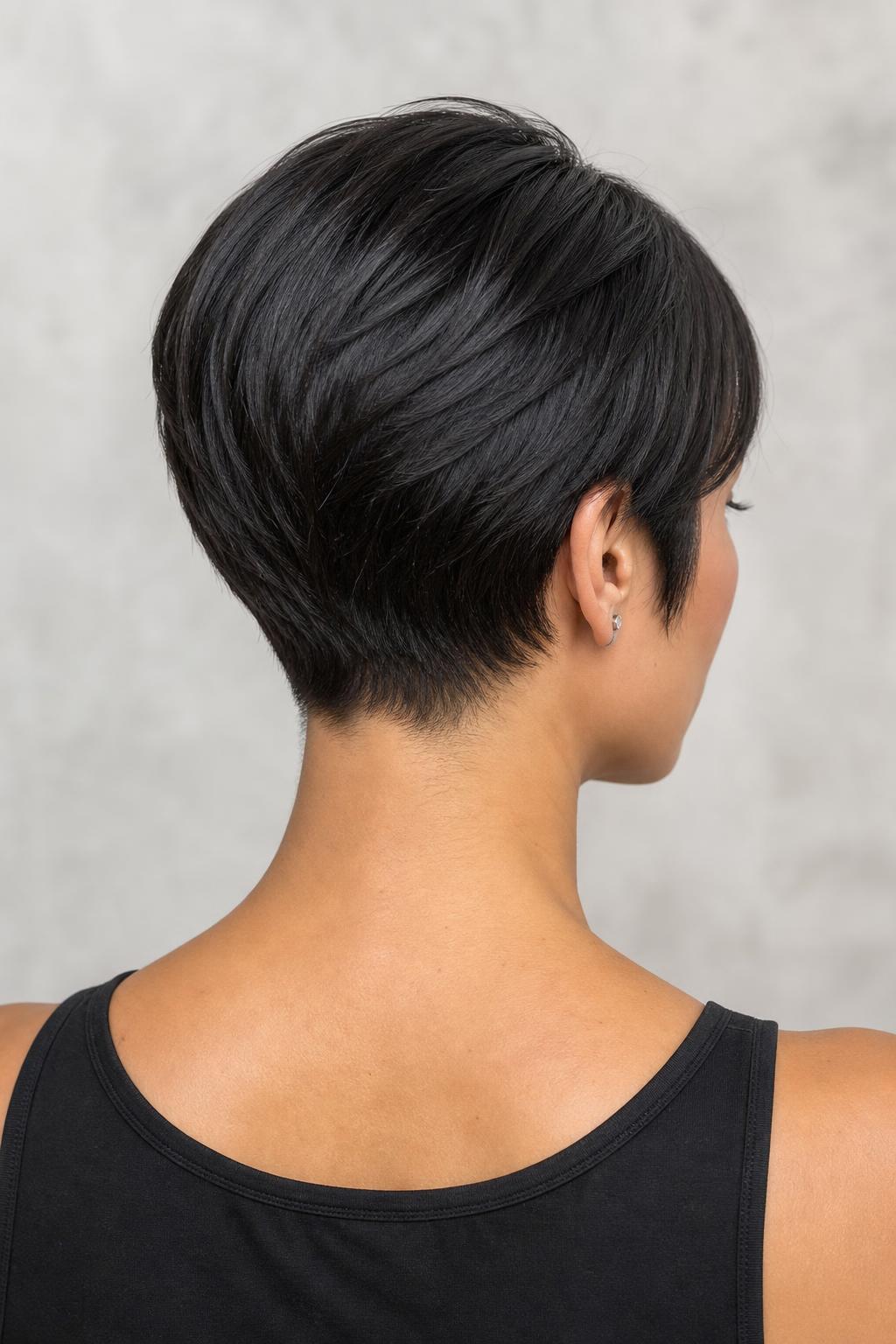
10. Sleek Side-Swept Pixie Bob
Sweeping all the length to one side creates a dramatic diagonal line from nape to jaw that visually elongates oval and square faces. On straight, medium-density hair, this look holds its shape well throughout the day with just a light-hold hairspray. The asymmetry also makes this one of the more forgiving pixie bobs to grow out — as it gets longer, it naturally transitions into an asymmetrical bob without an awkward in-between stage.
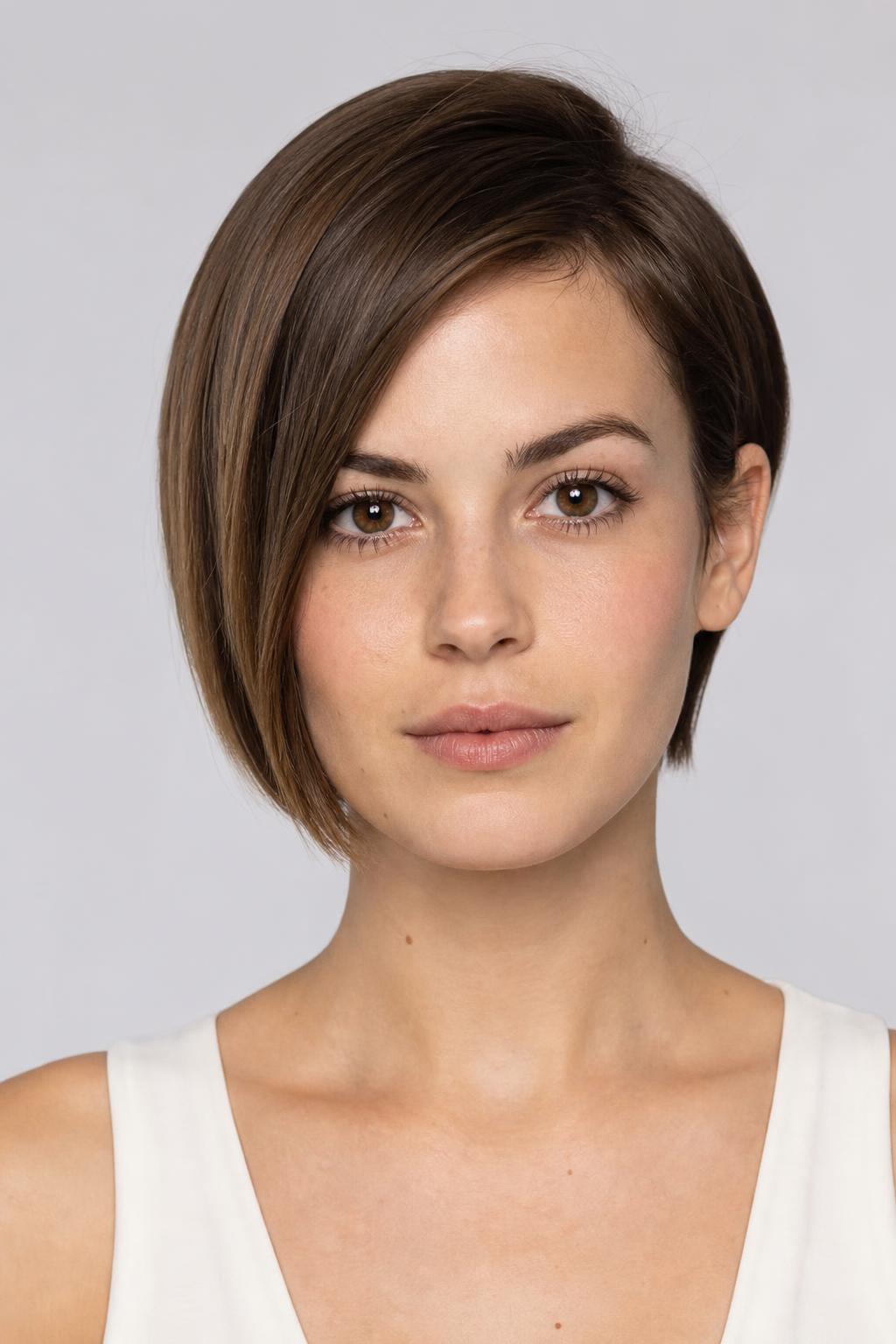
11. Graduated Pixie Bob with Shine Finish
Rich, single-process color with no visible highlights turns a graduated pixie bob into a light-reflecting surface — every layer and angle becomes more visible when there’s high shine. Auburn and deep copper shades work especially well here because the warm tones catch light differently at each graduation level. To maintain the gloss at home, swap your regular conditioner for a color-depositing gloss treatment once a week.
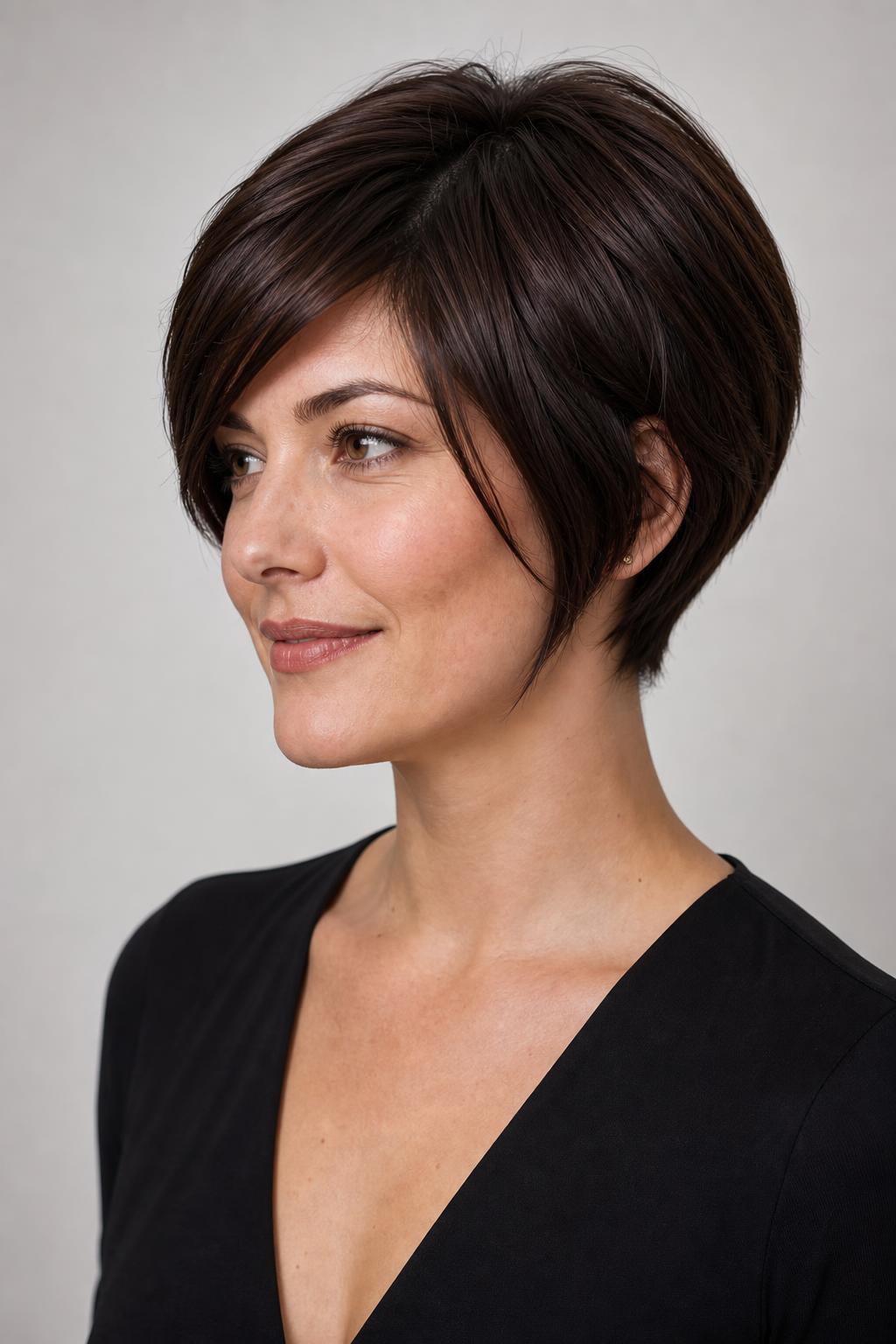
12. French-Inspired Pixie Bob with Micro Bangs
Micro bangs — cut an inch or more above the eyebrows — add personality without the daily blowout that longer bangs demand. This variation works best on small to medium foreheads and petite facial features, where the cropped fringe reads as deliberate rather than accidental. Keep in mind that micro bangs commit you to a style — they take months to grow past the eyes, so don’t ask for them on impulse.

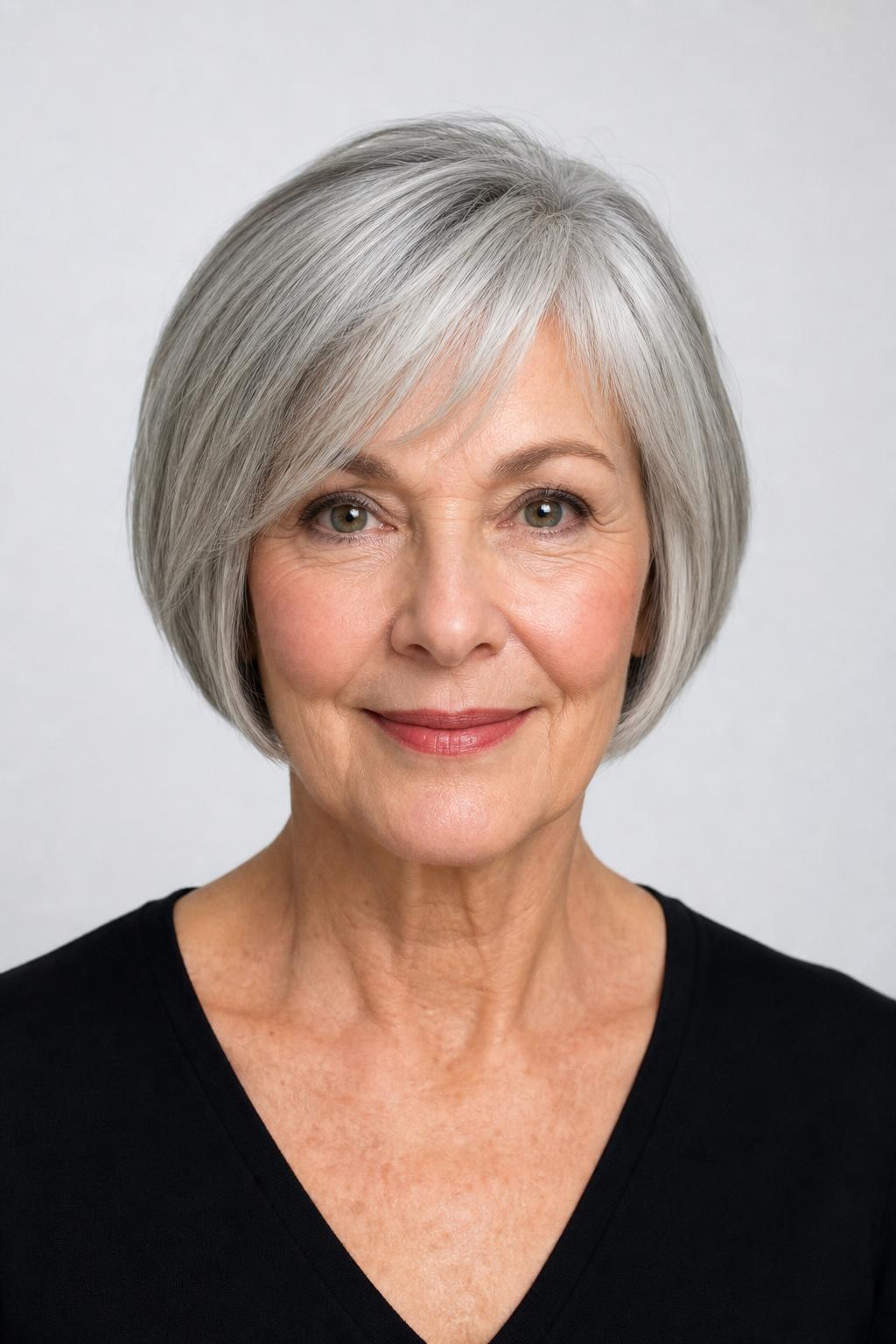
13. Polished Pixie Bob for Silver Hair
Silver and gray hair has a coarser texture than pigmented hair, which means it holds a structured pixie bob shape better than most people expect. The key is asking for internal layers that keep the silhouette smooth without thinning out the density that gray hair naturally carries. On silver hair, a purple shampoo used every third wash prevents yellowing, while a lightweight shine spray adds the luminosity that gray strands sometimes lack.
Edgy and Asymmetrical Pixie Bobs
Asymmetry, undercuts, and disconnected sections push the pixie bob into bolder territory. These cuts work for anyone who wants their haircut to be a statement rather than a default — and they pair particularly well with fashion colors or strong highlights that emphasize the structural contrast.
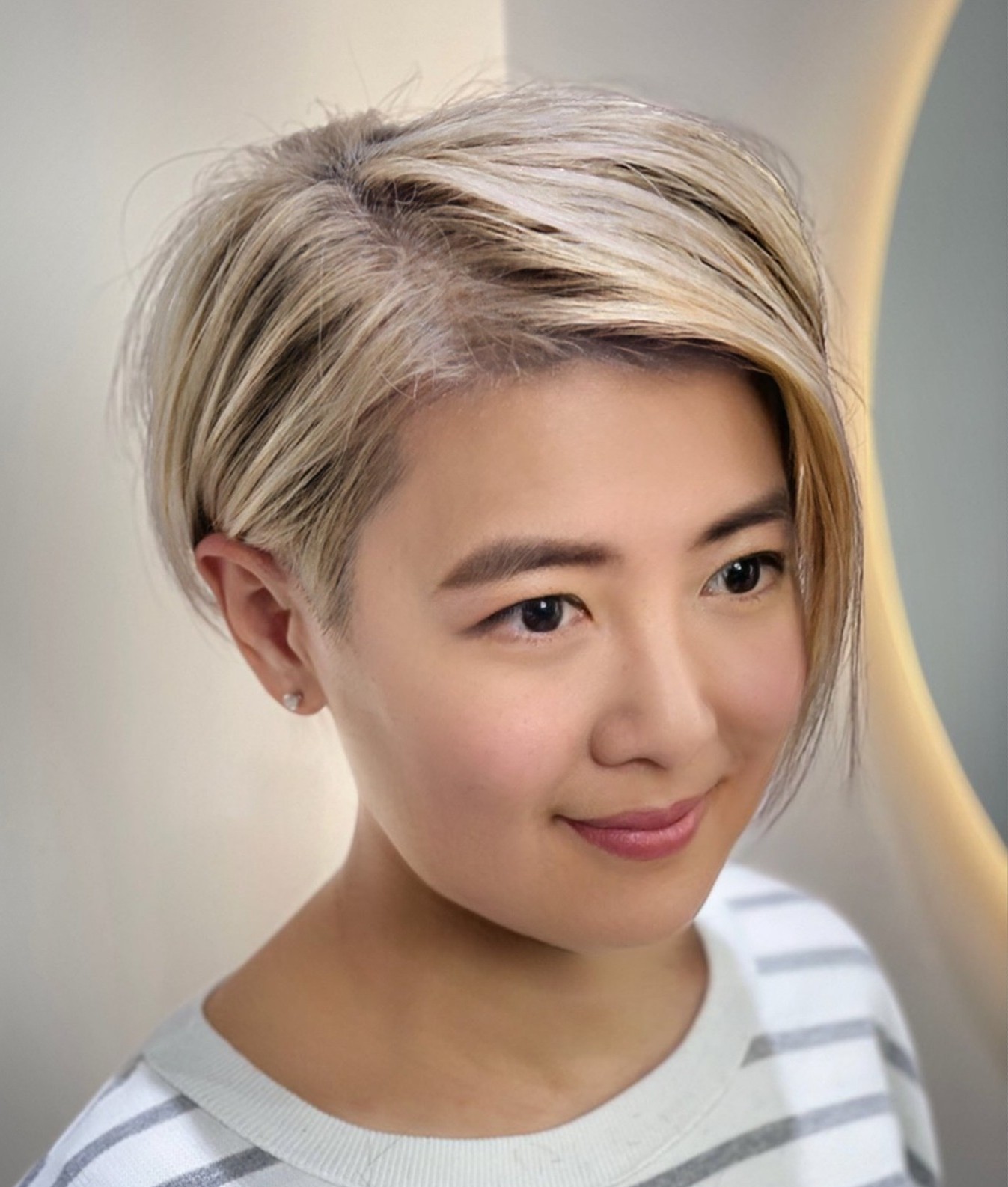
14. Asymmetrical Pixie Bob with Length on One Side
One side grazes the jawline while the other tapers to the ear — the contrast creates a dramatic silhouette that draws the eye vertically, which elongates round and wide face shapes. This variation requires a confident stylist who understands disconnection, because the two lengths need to blend through the back without a visible step. Wear it swept to the longer side for everyday polish, or tuck the short side behind the ear when you want to show off the contrast.

15. Undercut Pixie Bob with Volume on Top
Shaving the nape and temple area removes bulk from the densest parts of the head, allowing all the visual weight to concentrate at the crown and front. On thick hair, this solves the mushroom problem entirely — you get volume where you want it and clean edges where you don’t. The undercut needs a touch-up with clippers every two to three weeks to stay crisp; let it grow even slightly and it starts looking unintentional.
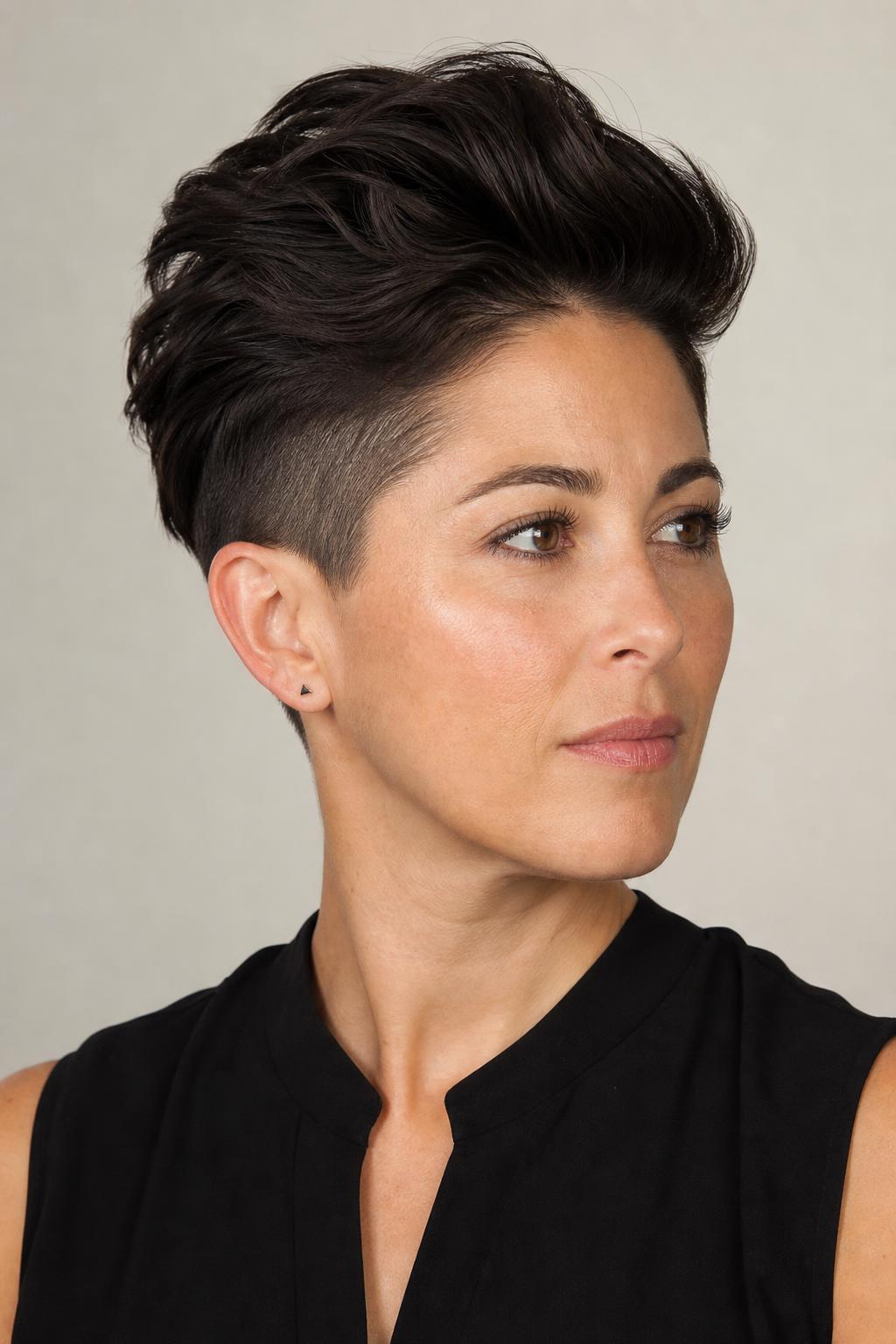
16. Disconnected Pixie Bob with Shaved Side
A full side shave below a longer pixie bob creates the most dramatic version of this cut. It works as a canvas for designs or graphics if you want to take it further, or stands on its own as a clean disconnection. The shaved section grows back relatively quickly — within three weeks it transitions from skin fade to a soft buzz — so maintenance is higher than most pixie bob variations.
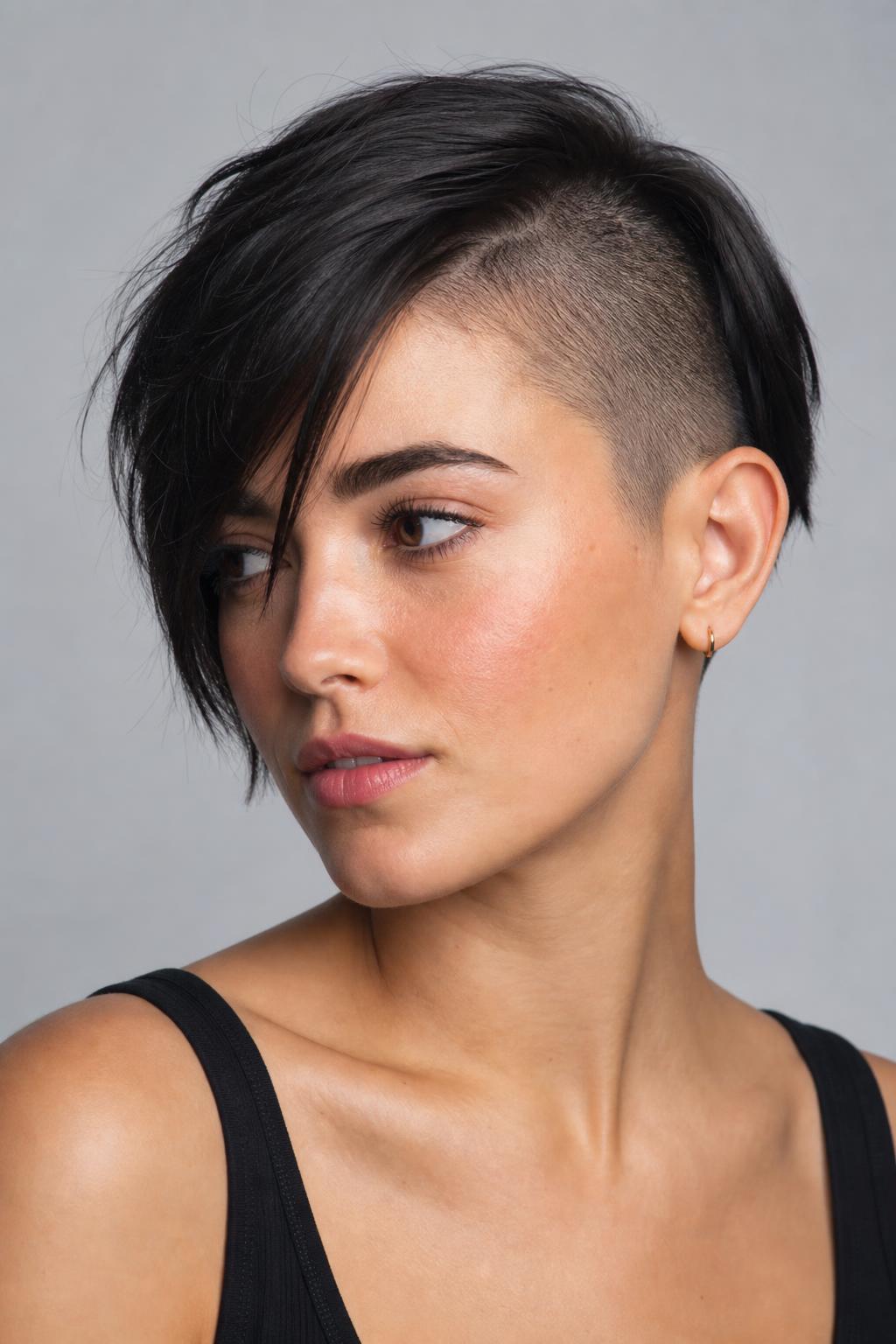
17. Tapered Pixie Bob with Etched Sideburns
Etched sideburns add geometric detail to an otherwise soft pixie bob shape, creating a contrast between the precision at the perimeter and the texture on top. Square and diamond face shapes benefit most from this detail — the sharp line at the temple echoes the angles already present in the bone structure. Ask your barber (yes, this is a cut that often benefits from a barber’s clipper skills rather than a salon stylist’s scissors) for a hard part line if you want to push the architectural quality further.
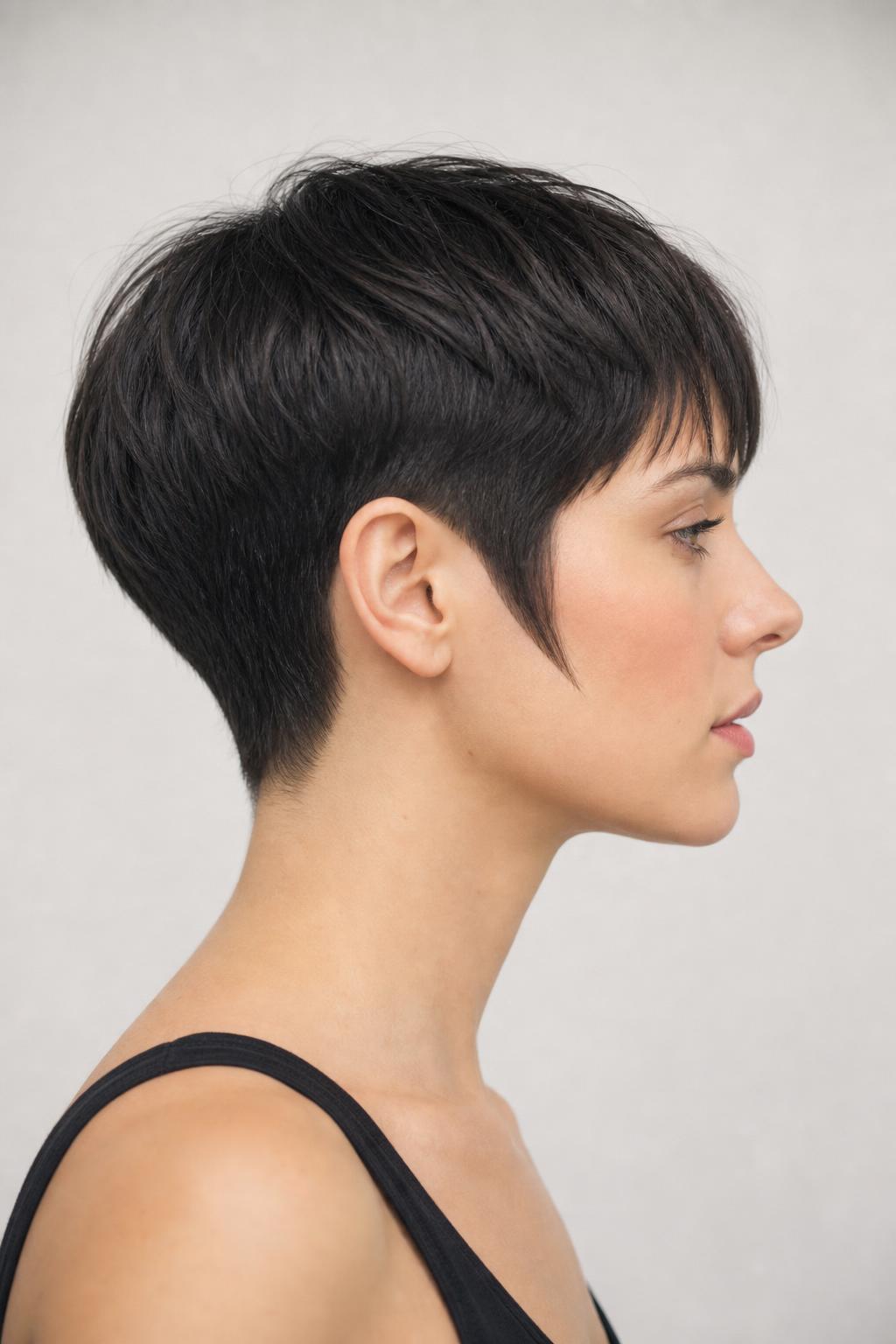
18. Stacked Pixie Bob with Nape Undercut
Combining stacking at the upper back with an undercut at the nape creates a lifted shape that appears to float — there’s volume at the crown and nothing weighing it down below. This two-technique approach works especially well on medium-density hair that isn’t thick enough for a full undercut but still needs some weight removed to prevent the back from looking heavy. Trim the undercut every three weeks; the stacked section can stretch to five or six weeks.
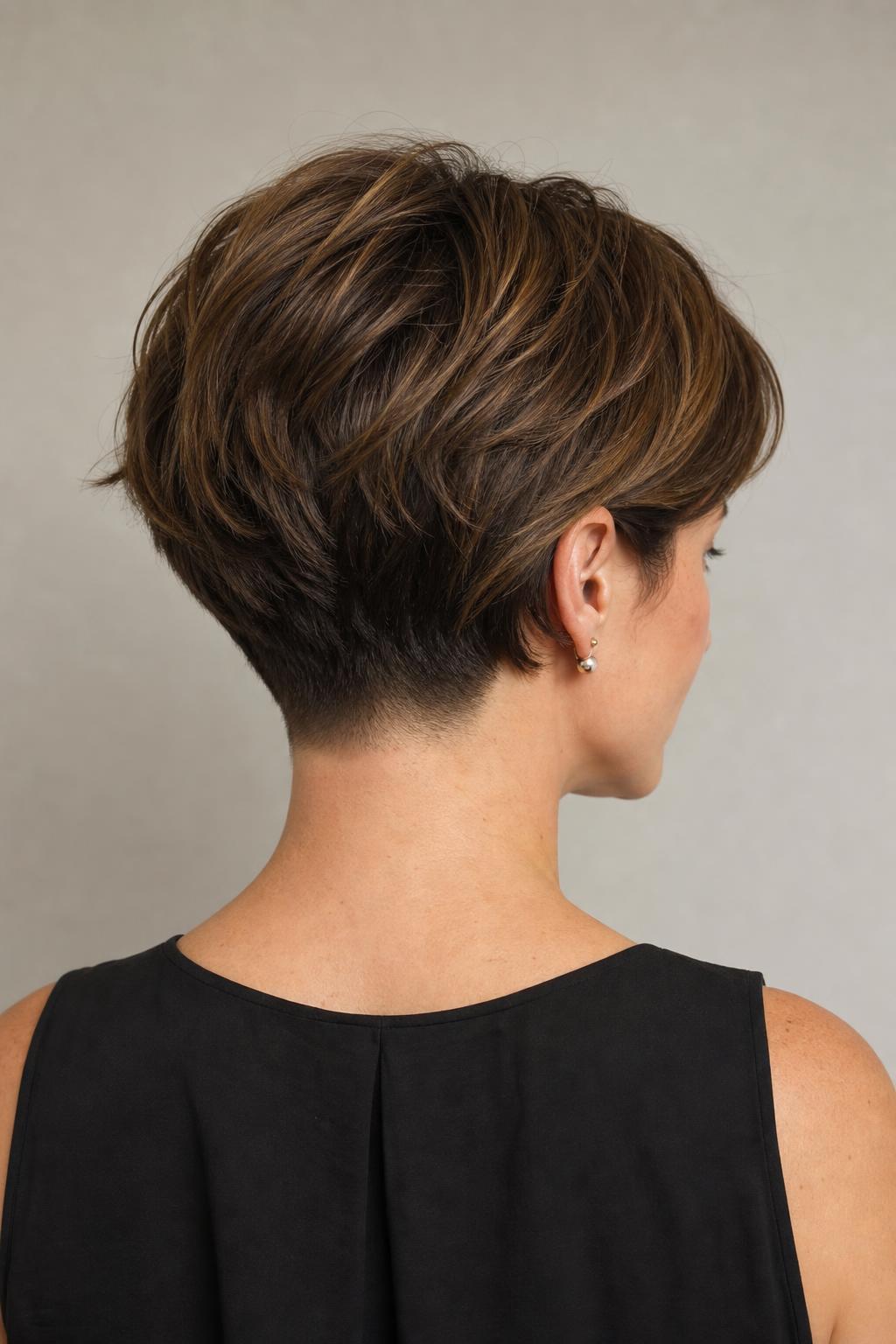
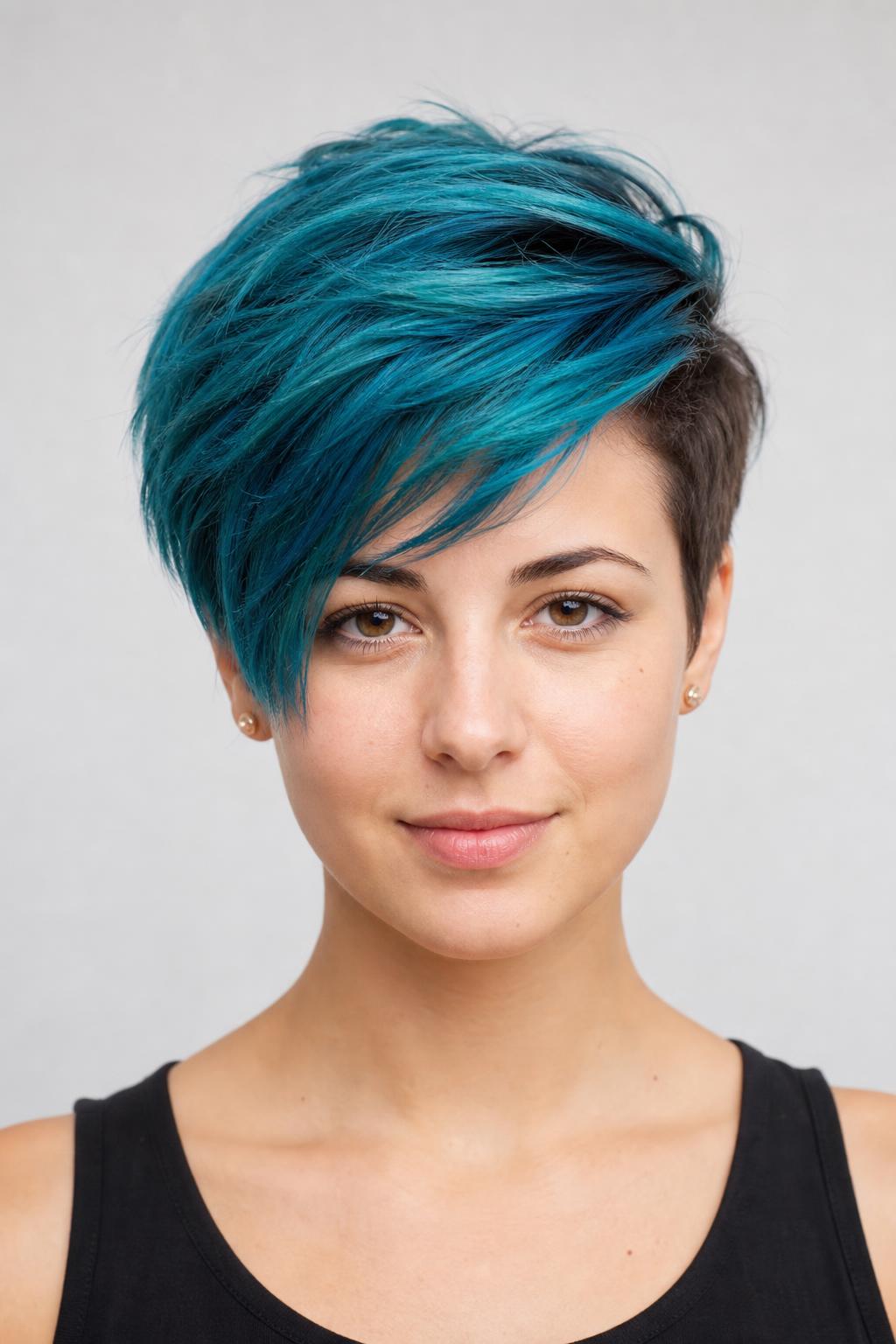
19. Bold Color-Block Pixie Bob
Color blocking — placing one vivid shade on the longer sections while keeping the shorter areas in a natural or contrasting tone — turns the structural elements of a pixie bob into a graphic design on your head. The technique works because the different lengths in a pixie bob already create visual separation, and color simply amplifies it. Keep in mind that vivid fashion shades fade within four to six weeks depending on how often you wash, so budget for color touch-ups more frequently than trims.
Curly and Wavy Pixie Bobs
Texture changes everything about how a pixie bob behaves. Curly and wavy hair adds its own volume and movement, which means cutting techniques need to account for shrinkage (curls can lose 2–4 inches of visible length when they spring up) and natural fall patterns. Every cut in this section should be performed on dry hair — wet cutting curly hair leads to uneven results once it dries and contracts.
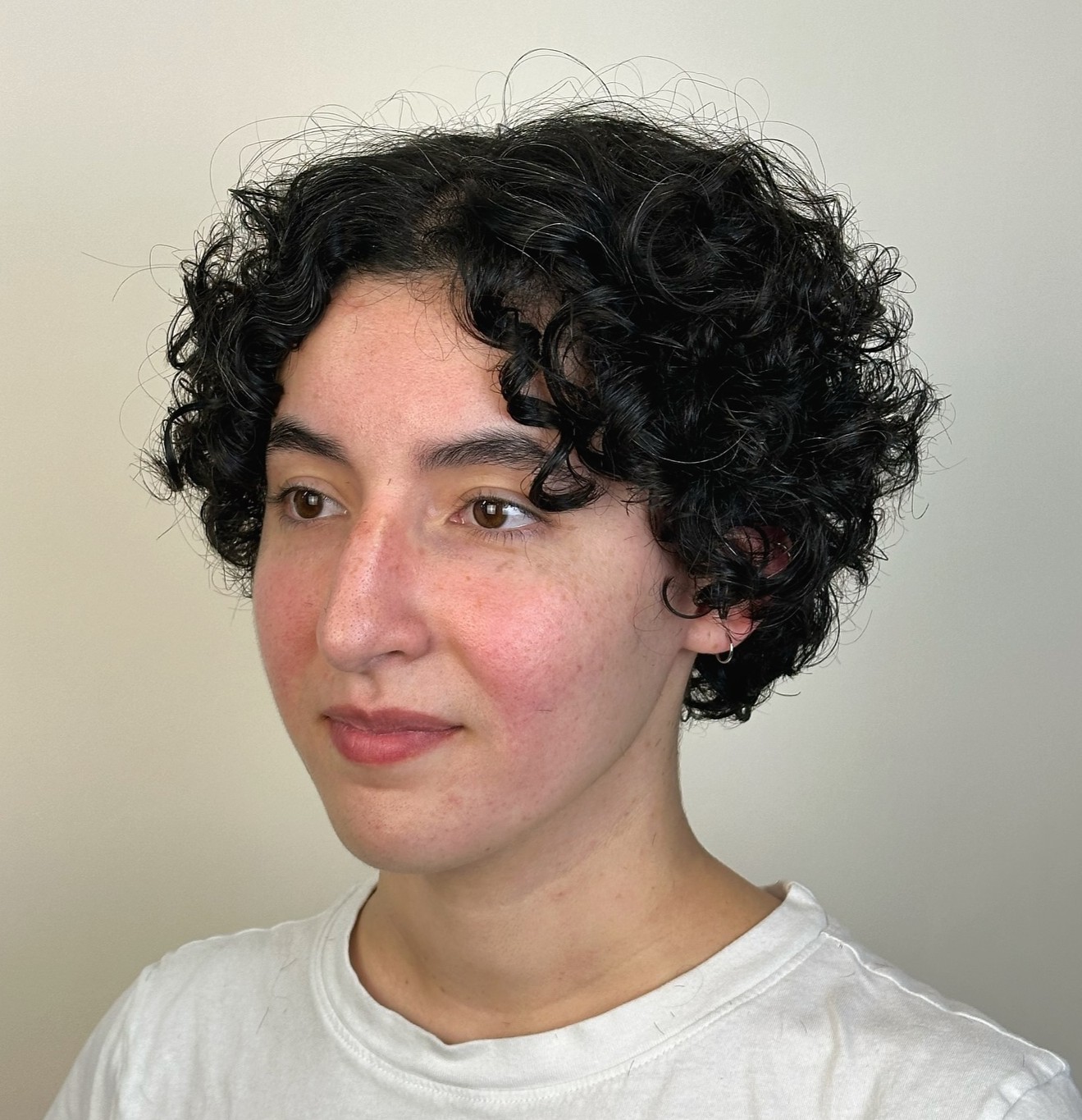
20. Curly Pixie Bob with Defined Coils
Defined coils cut to ear-to-jaw length create a rounded silhouette that frames the face with natural volume. The key technique is cutting each curl individually in its natural resting position — never pulling it straight — so the shape is true to how you’ll actually wear it. A lightweight curl cream scrunched into damp hair is enough to define without weighing down the spring. Avoid heavy gels or waxes that collapse the coil pattern and make the cut look flat.
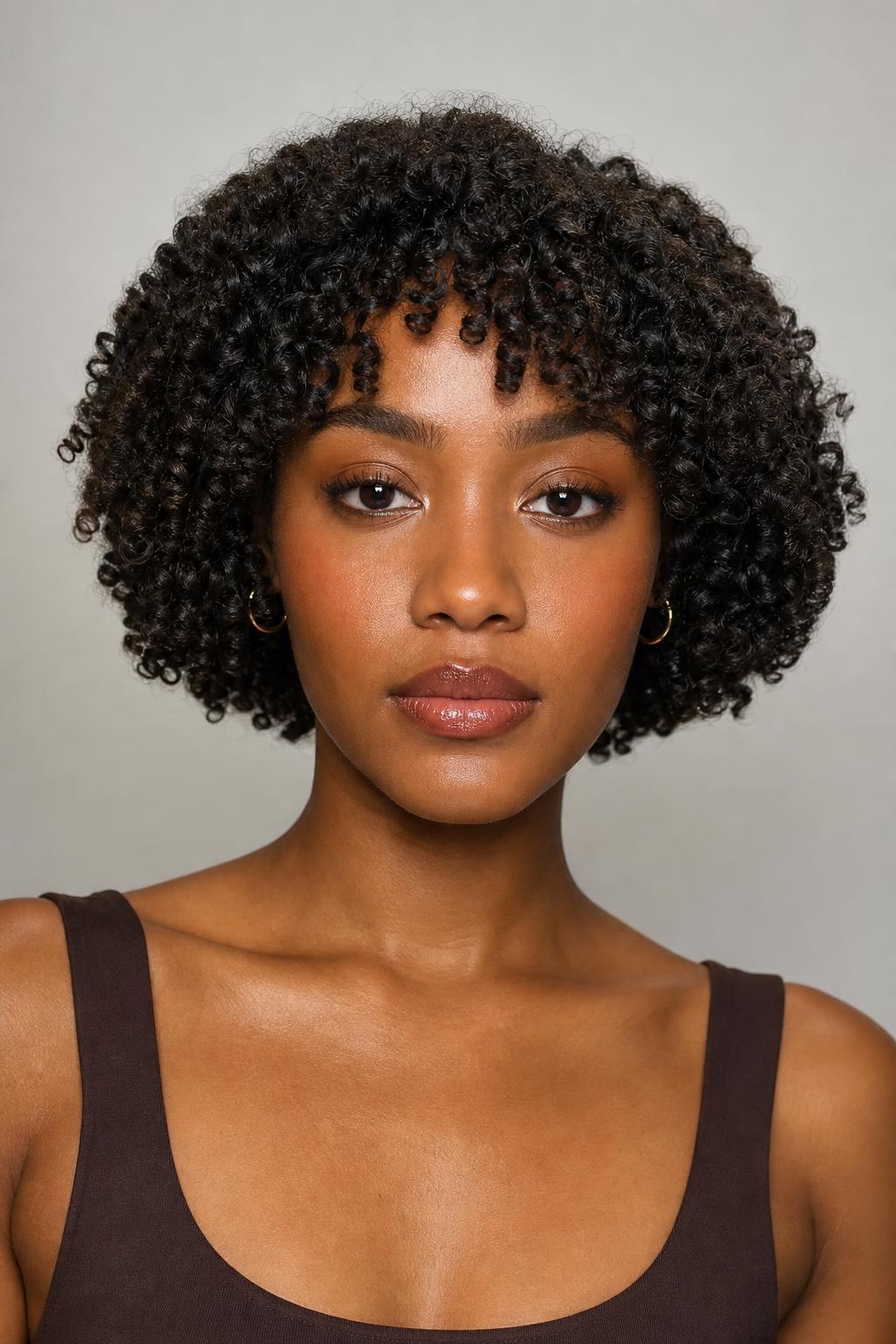
21. Wavy Pixie Bob with Tousled Finish
Natural wave gives a pixie bob built-in texture that straight hair has to fake with products and tools. This variation works best when the cut follows the wave pattern rather than fighting it — layers placed at the crest of each wave create maximum movement with minimum effort. Scrunch a salt spray into towel-dried hair and let it air-dry for the most natural result, or diffuse on low heat if you need to speed things up.

22. Tapered Curly Pixie Bob with Fade
A fade at the temples and nape paired with longer curls on top creates a clean contrast that highlights the curl pattern rather than competing with it. This combination works particularly well on tight curl types (3B through 4A) where bulk at the sides can overpower the shape. The fade needs a barber’s clippers every two to three weeks, while the curly top section can go four to six weeks between reshaping appointments.
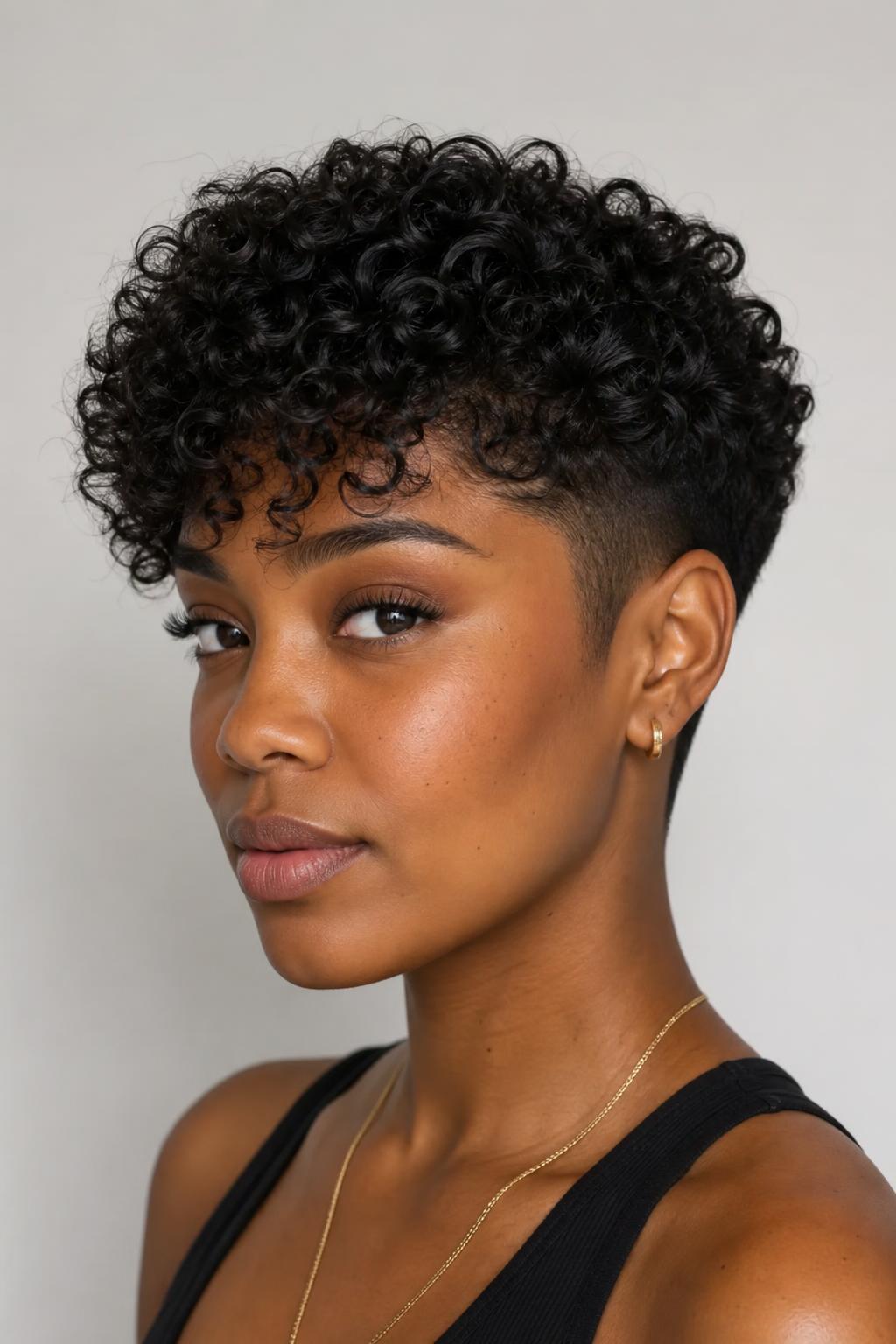
23. Wavy Pixie Bob with Grown-Out Bangs
Grown-out bangs that fall to cheekbone length create a curtain effect that softens every face shape — especially oblong faces, where the horizontal line of the bangs visually shortens a longer forehead. On wavy hair, these longer pieces develop a natural S-curve that frames without looking overly styled. This is also a practical choice if you’re transitioning from a shorter pixie to a pixie bob, since the longer front pieces disguise the grow-out stage.

24. Voluminous Curly Pixie Bob with Highlights
Highlights placed on the outermost curl sections catch light and create the illusion of even more volume and dimension than the curls already provide. On a pixie bob, this technique works best as a balayage rather than traditional foils — the hand-painted placement follows the natural curl movement instead of creating uniform stripes. Caramel and honey tones on a dark base are the most universally flattering combination, adding warmth without the brassiness that can come from full bleach.
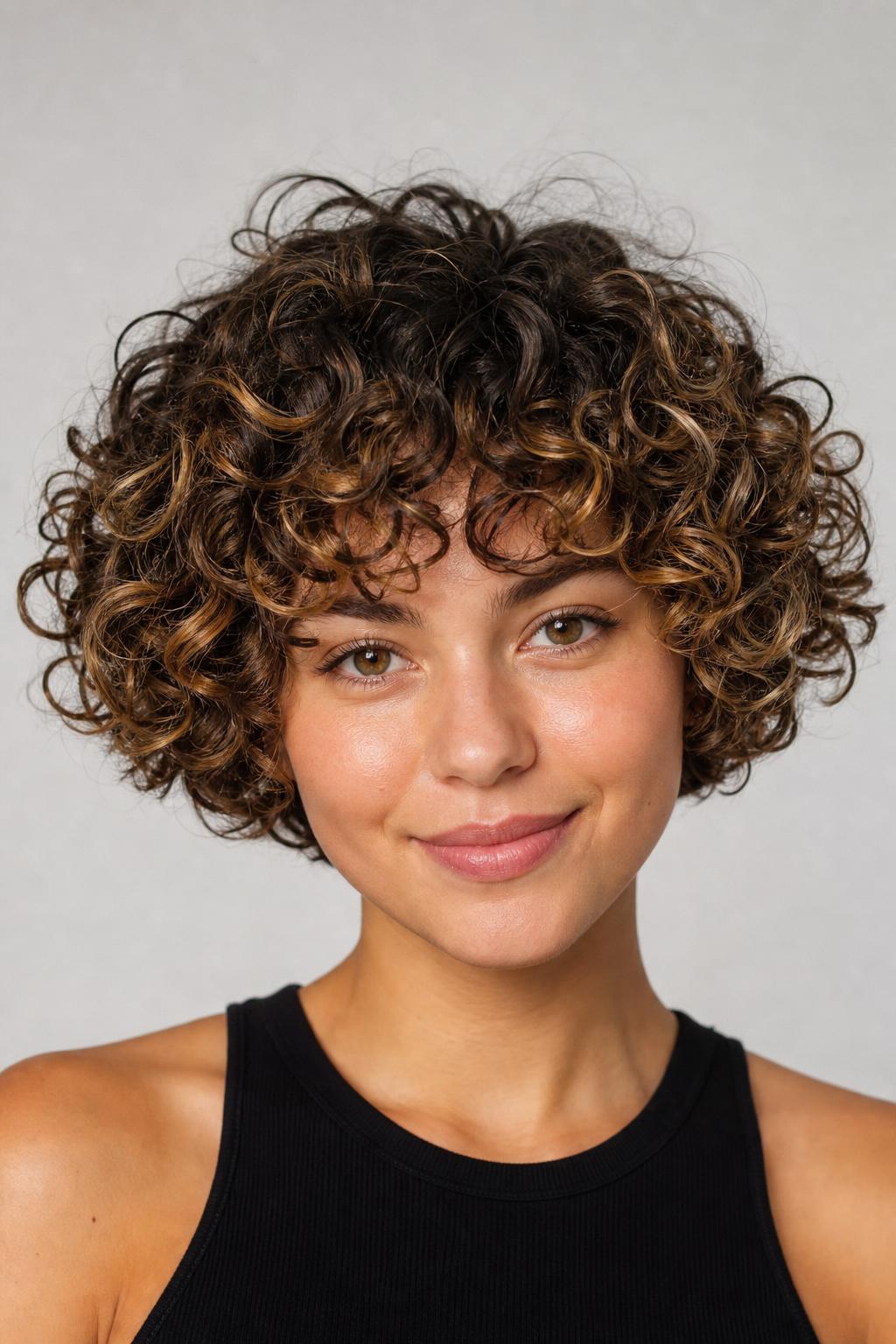
25. Soft Wavy Pixie Bob for Fine Hair
Fine hair with even a slight natural wave can achieve surprising volume in a pixie bob — the shorter length means less weight pulling the wave down, so what used to look limp at shoulder length now has visible body and movement. Ask your stylist to keep the layers minimal and concentrated at the crown; too many layers on fine wavy hair thin out the ends instead of building fullness. A root-lift spray applied before blow-drying adds the last bit of height that makes this cut look intentional rather than in-between.

How to Choose the Right Pixie Bob for Your Face Shape
The pixie bob is one of the more adaptable short cuts because the length, layering, and parting can all be adjusted to balance your specific face shape. The table below matches each shape to the most flattering pixie bob variation and flags what to avoid.
| Face Shape | Best Pixie Bob Variation | Avoid | Why |
|---|---|---|---|
| Oval | Any variation — blunt, layered, asymmetrical, curly | Heavy full bangs that cover the forehead entirely | Oval faces are naturally balanced; hiding the forehead shortens the proportions unnecessarily |
| Round | Asymmetrical pixie bob with a deep side part; longer front pieces past the jaw | Rounded, ear-length cuts with a center part | Diagonal lines and asymmetry create visual length; symmetry and roundness in the cut emphasize roundness in the face |
| Square | Soft layered pixie bob with textured ends; side-swept fringe | Blunt, jaw-length cuts that sit right at the jawline | Texture and softness counteract angular bone structure; a blunt line at jaw level doubles down on the squareness |
| Heart | Long-layered pixie bob with face-framing at the jawline | Very short, cropped pixie bobs that expose a narrow chin | Fullness at jaw level balances a wider forehead; too-short lengths leave the lower face looking pointed |
| Oblong | Pixie bob with grown-out bangs or curtain fringe; volume at the sides | Height at the crown with flat sides | Bangs create a horizontal line that shortens a long face; side volume adds width where it’s needed |
| Diamond | Pixie bob with volume at the forehead and jaw (curtain fringe, face-framing layers) | Slicked-back styles that expose a narrow forehead and jawline | Adding volume at the narrowest points (top and bottom) balances the widest point at the cheekbones |

What to Tell Your Stylist
The difference between a pixie bob you love and one that disappoints often comes down to the salon consultation. A reference photo is essential — short cuts have very little margin for error, and “I want a pixie bob” means different things to different stylists. Show at least two photos: one of the overall shape from the front and one from the back or side.
Use these specific phrases during your consultation to communicate clearly: “I want the back graduated to the nape but the front to reach my jawline,” “Keep the weight line at the occipital bone,” or “I need internal layers to remove bulk without changing the outline.” If you want texture, specify whether you mean razor-cut ends or point-cut ends — they create different effects. And always ask your stylist to factor in your natural growth patterns, especially cowlicks at the crown and nape, which can push a pixie bob into unexpected directions as it grows.
Stylist tip: Bring a photo of a pixie bob on someone with a similar hair texture and density to yours, not just a similar face shape. A cut that looks incredible on thick, straight hair may collapse on fine, wavy hair — and your stylist can only adjust so much through technique.
Maintenance and Styling
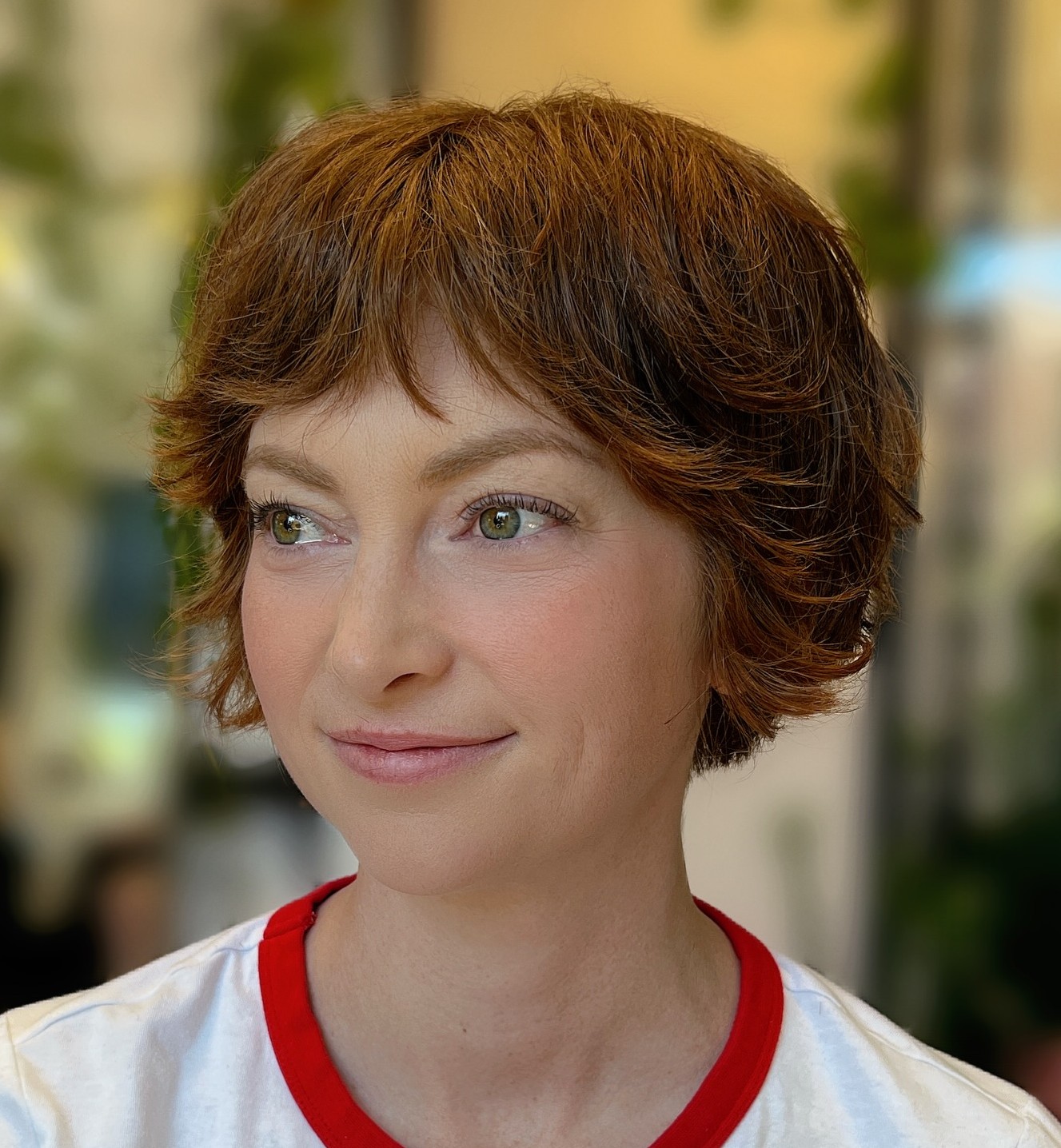
A pixie bob needs trims every four to six weeks to hold its shape — the shorter the back, the faster it loses definition. Between appointments, the front and sides grow more gracefully than the nape area, so if you’re trying to stretch time between cuts, ask your stylist to focus on the back during quick maintenance trims.
Daily styling takes five to ten minutes for most variations. Textured pixie bobs need a small amount of paste or cream worked through the ends; sleek versions require a round brush and blow-dryer or a quick pass with a mini flat iron. Keep your product arsenal minimal: a volumizing spray for roots, a texturizing product for mid-lengths and ends, and a light-hold finishing spray covers nearly every pixie bob style in this gallery.
Grow-out is the biggest concern people have before committing to a pixie bob, and it’s a fair one. The good news is that a well-cut pixie bob transitions into a short bob naturally around weeks eight to ten — less awkward than a true pixie grow-out, because there’s already enough length at the front to work with. If you hit an awkward stage, headbands, clips, and strategic tucking behind the ears buy you time between cuts.
FAQ
What Is the Difference Between a Pixie Bob, a Bixie, and a Regular Pixie?
A regular pixie is cropped close to the head with very short sides and back — think Audrey Hepburn. A pixie bob (POB) keeps more length throughout, typically reaching ear-to-neck length with graduation at the back and longer pieces in front. A bixie falls between the two, with slightly more volume and length than a pixie but less structure than a pixie bob. The easiest way to tell them apart: if the back is graduated and the front reaches at least the cheekbone, it’s a pixie bob.
Can I Get a Pixie Bob with Curly Hair?
Curly hair works well for pixie bobs, but the cut must be performed on dry hair to account for shrinkage. Curls can lose two to four inches of visible length once they spring up from a wet state, so cutting dry ensures the final shape matches what you actually see in the mirror. Ask for a stylist experienced with curl-by-curl cutting, and avoid heavy thinning shears that can create frizzy, undefined ends on textured hair.
How Long Does It Take to Grow Out a Pixie Bob?
Hair grows approximately half an inch per month on average. From a pixie bob, reaching a chin-length bob takes roughly three to four months; a shoulder-length lob takes about eight to ten months. The grow-out from a pixie bob is considerably less awkward than from a shorter pixie because you start with enough front length to style throughout the transition. Strategic trims at the nape every six weeks keep the shape looking intentional while the rest catches up.
Is a Pixie Bob High Maintenance?
Compared to a standard bob, yes — trim appointments come more frequently (every four to six weeks vs every six to eight). Compared to a true pixie, a pixie bob is actually easier to maintain because the extra length gives you styling flexibility and hides imperfect growth better. Daily styling time is typically under ten minutes, making it one of the faster cuts to get ready with in the morning.
Will a Pixie Bob Make My Face Look Rounder?
It depends on the variation. A rounded, ear-length pixie bob with a center part can emphasize width in a round face. An asymmetrical version with a deep side part and longer front pieces that extend past the jaw actually elongates the face by creating diagonal and vertical lines. The part direction and front length matter more than the cut name itself — which is why bringing a reference photo to your consultation is critical.
What Age Does a Pixie Bob Suit?
A pixie bob flatters every age group when cut appropriately. For women over 50, it’s one of the most popular short cuts because it adds volume where thinning hair needs it most (the crown) while reducing weight at the nape where hair often thins first. Softer layering with a natural part tends to look more flattering on mature faces than sharp geometric shapes, though that’s a guideline, not a rule — confident women pull off edgy pixie bobs at any age.
Hair results vary based on your natural hair type, texture, density, and condition. Always consult with a licensed hairstylist before making significant changes, especially with chemical treatments or dramatic length changes. Photos may show styled results that require professional tools and products to replicate.