


Ditch the security blanket and expose your power: the big chop is 2026’s ultimate status symbol for the woman who has nothing to hide.
A pixie cut removes length and puts your bone structure, features, and hair texture front and center. Whether you are considering your first big chop or looking for a fresh variation on a cut you already know, these 50 styles cover the full range, from classic close-cropped shapes to longer pixie bobs, curly-texture-friendly cuts, bold undercuts, and trending 2026 hybrids like the elf crop and the wixie. Each entry includes who the cut flatters, how it is achieved, and what your daily styling commitment looks like.
Here’s a snapshot of what to expect across pixie cut categories before you browse the gallery.
| Category | Best For | Maintenance Level | Daily Styling Time |
|---|---|---|---|
| Classic & Timeless | Oval, heart faces; fine to medium hair | High (trim every 3-4 weeks) | 5-10 min |
| Textured & Layered | Thick hair; round, square faces | Medium (trim every 4-5 weeks) | 5-8 min |
| Pixie Bobs (Bixie) | First-time short cuts; all face shapes | Low-Medium (trim every 5-6 weeks) | 8-12 min |
| Edgy & Bold | Thick hair; strong features | High (undercut touch-up every 2-3 weeks) | 5-15 min |
| Curly & Textured | All curl types 2A-4C | Medium (trim every 4-6 weeks) | 3-10 min |
| Color-Enhanced | All textures; varies by shade | High (color + cut maintenance) | 5-10 min + color upkeep |
| Age-Inclusive | Women 40+; fine to medium hair | Medium (trim every 4-5 weeks) | 5-10 min |
| Trending 2026 | Adventurous clients; wavy/fine hair | Varies by style | 2-10 min |
Classic and Timeless Pixie Cuts
The foundational pixie shapes that have carried the style since Audrey Hepburn’s 1953 debut. These are refined, proven cuts that work across decades, the kind your stylist can execute with confidence and you can wear anywhere.
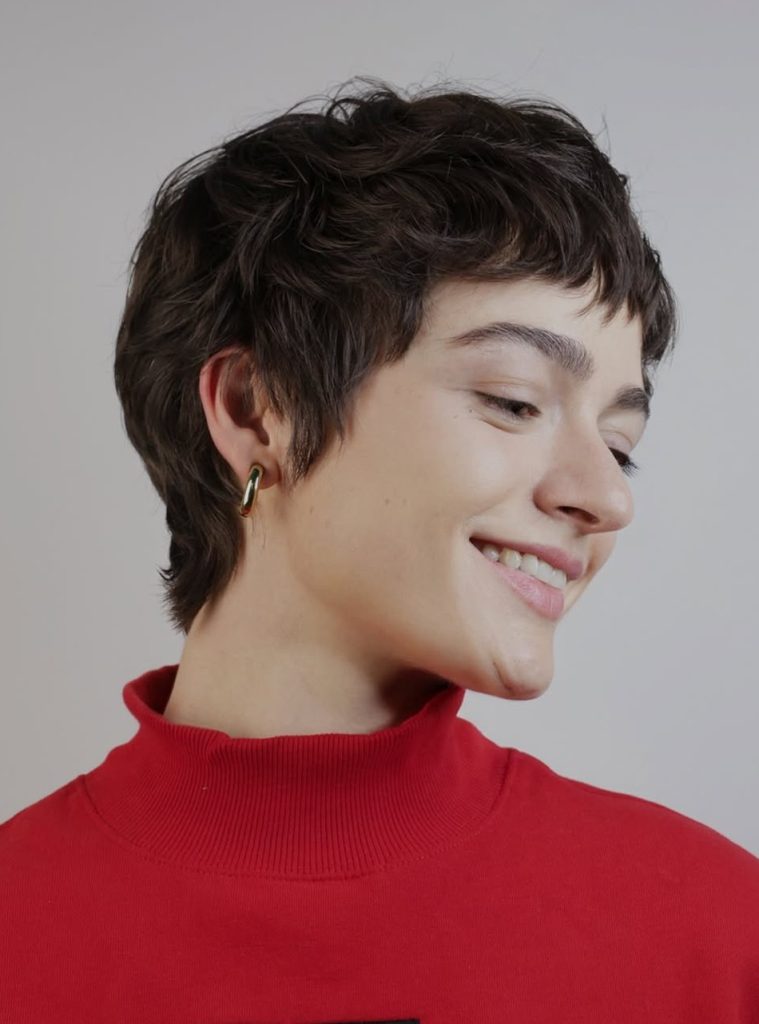
1. Classic Gamine Crop
Cropped tight at the sides and back with about two inches of length through the crown, this is the pixie in its purest form. The point-cut ends keep the top from lying flat, and the minimal weight means your stylist can shape it in under 15 minutes. Oval and heart-shaped faces wear it best because the exposed jawline and cheekbones do most of the work. Expect trims every 3-4 weeks to maintain the silhouette.
2. Tapered Pixie with Side-Swept Bangs
A graduated taper from nape to crown creates a clean, sculpted silhouette, while the side-swept bangs soften the forehead and draw attention to the eyes. Stylists often cut this variation with scissors rather than clippers to preserve softness at the edges. If you have a round face, ask for the bangs to skim past your cheekbone rather than stopping above it, the diagonal line visually lengthens.
3. Audrey Hepburn-Inspired Pixie
Short all over with a wispy, feathered fringe sitting above the eyebrows, this is the cut that started it all in the 1950s. The 2026 version keeps the softness but adds subtle texture through razored ends, so it reads modern rather than costume-like. Fine straight hair gives the cleanest result here, but medium textures can pull it off with a light application of pomade.
4. Soft Feminine Crop with Ear-Length Layers
Longer than a traditional pixie but still firmly in short-hair territory, this ear-length variation works well for someone making the jump from a bob. The layers are internal and point-cut, which means they add movement without creating bulk. Style it with a dime-sized amount of texturizing cream worked through damp hair, then let it air-dry. Thick wavy hair takes to this shape particularly well because the natural texture fills in the silhouette.
5. Polished Executive Pixie
A sharp, well-defined shape with a deep side part and tapered neckline. The key is precision: ask your stylist for a clean perimeter line at the nape with no wispy bits, and keep the sides flat. A round brush and medium-hold hairspray are all you need for the daily routine. Budget 5-7 minutes of styling time each morning.
6. Textured French Pixie
The French pixie sits slightly longer than a classic crop, with a piecey fringe that falls just above the eyelashes and deliberate texture through the crown. Unlike the sleek, polished variations, this one is meant to look a little undone, finger-style it with a matte paste and skip the blow-dryer. The lived-in quality makes grow-out less noticeable, so you can stretch your trims to every 5-6 weeks.
7. Vintage Finger-Wave Pixie
Finger waves on a pixie require at least 3 inches of length on top and a strong-hold mousse applied to soaking-wet hair. Your stylist sets the waves with clips and a fine-tooth comb, then lets them air-dry or sits you under a hooded dryer. The result lasts 3-5 days if you wrap your hair in a silk scarf at night. Not a wash-and-go option, but it turns heads at formal events.
8. Pixie with Micro Bangs
Micro bangs, cut straight across about an inch above the eyebrows, make a graphic, editorial statement. The rest of the cut stays close-cropped at the sides and slightly longer at the crown. Bring this photo to your stylist and specify that you want the bangs cut blunt with shears, not point-cut, to keep the strong horizontal line. This works well on straight to slightly wavy hair; very curly textures may shrink too much for the micro-bang effect to hold.
Textured and Layered Pixie Cuts
Layers and texture do the heavy lifting in these variations, adding movement and reducing bulk. If your hair tends to sit heavy or look flat at short lengths, the cuts in this section solve that problem through strategic layering and razored ends.
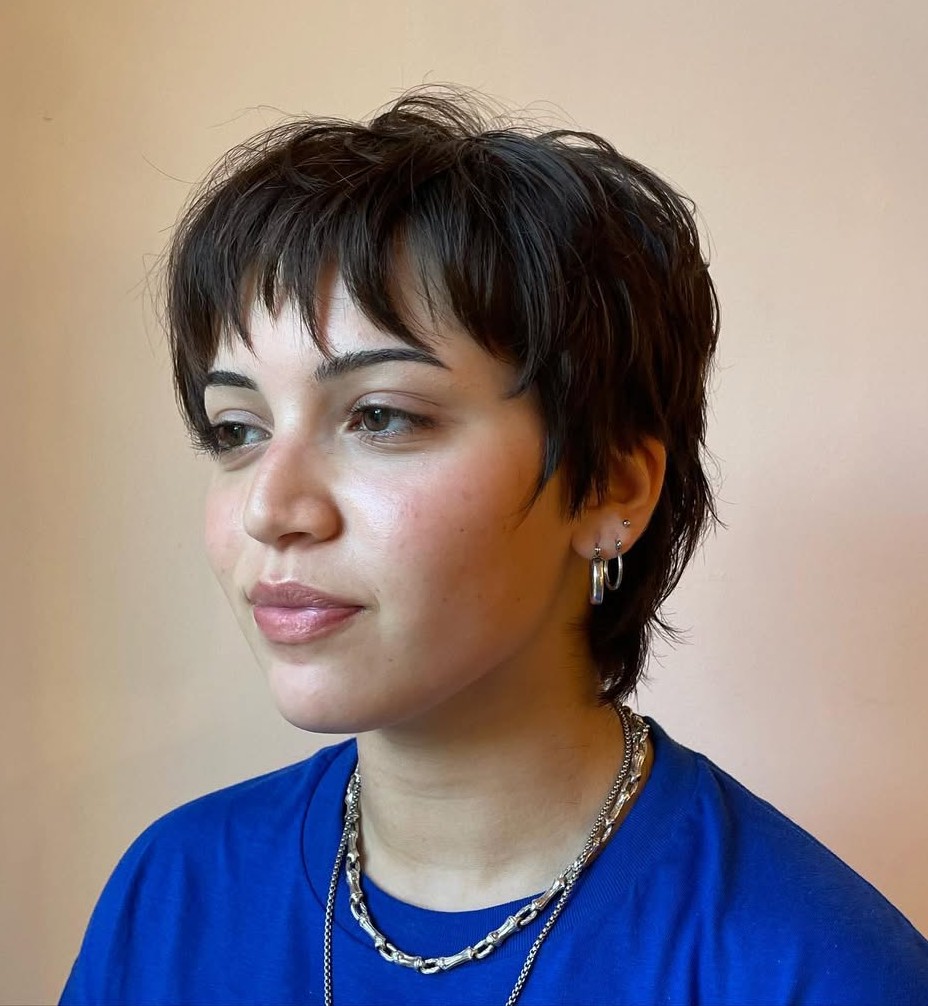
9. Choppy Layered Pixie
Razored layers throughout create a deliberately rough, deconstructed texture that makes thick hair look lighter and more mobile. The weight is concentrated at the crown while the sides and back are cut close. If your hair is coarse or high-density, this is one of the most flattering pixie variations because it removes bulk without sacrificing volume where you want it.
10. Feathered Pixie with Soft Fringe
Feathered layers fan out from the crown, creating a wing-like shape at the sides that frames the face gently. Ask your stylist to use point cutting along the perimeter to keep the edges soft. A volumizing mousse at the roots and a round brush during blow-drying are what give this cut its signature lift. Heart-shaped faces benefit because the width through the top balances a narrower chin.
11. Piece-y Textured Pixie
Individual sections are cut at different lengths and styled to separate visibly, creating a choppy, dimensional look. Apply a flexible wax or clay to dry hair and twist individual pieces between your fingers. The matte finish reads more casual than a polished pixie, and the intentional messiness means it actually looks better on day two or three. Medium-density hair responds best to this approach.
12. Shaggy Pixie with Curtain Bangs
A hybrid between a pixie and a shag, longer on top with curtain bangs that split at the center and frame each side of the face. The back and sides are kept short but not buzzed. Stylists typically use a combination of slide cutting and point cutting to create the layered movement through the top. The grow-out on this variation is forgiving – it transitions into a short shag naturally over 8-10 weeks.
13. Tousled Bedhead Pixie
Deliberate disorder. Scrunch a salt spray through towel-dried hair, shake it out, and leave it alone. The cut itself needs enough length on top (at least 2-3 inches) so the texture has something to grab onto. A common mistake is having the stylist take too much weight out of the crown, which turns bedhead into flat-head. Specify that you want density through the top with the lightness concentrated at the sides.
14. Layered Pixie for Thick Hair
Thick hair and pixies can clash when the cut is too blunt – the result ends up looking like a helmet. Internal thinning shears remove weight from the mid-shaft down, keeping the outer layer smooth while the underneath is lighter. Tell your stylist you want a layered shape, not a blunt shape, and that you want to see the outline of layers when you look in the mirror, not a solid mass.
15. Razored Pixie with Movement
A razor creates softer, more tapered ends than scissors, which translates to a cut that moves with you rather than sitting in place. The trade-off: razored cuts grow out faster and can look unkempt sooner than scissor-cut pixies. Plan for trims every 3-4 weeks if you want to keep this look sharp. Fine hair often gets the best results from razor cutting because the tapered ends create an illusion of fullness.
16. Disconnected Textured Pixie
A deliberate contrast between the very short sides and the significantly longer top gives this cut a fashion-forward edge. The disconnection means no blending between the two lengths, your stylist should leave a visible line where the short meets the long. Style the top forward or to the side depending on your face shape. Square jawlines benefit from directing the length forward over the forehead to soften the angles.
Pixie Bobs and Bixie Cuts
Not quite a pixie, not quite a bob. The bixie occupies the comfortable middle ground for anyone who wants short hair with a little more coverage. These work especially well as a transitional length, either growing a pixie out or working up the courage to go shorter.
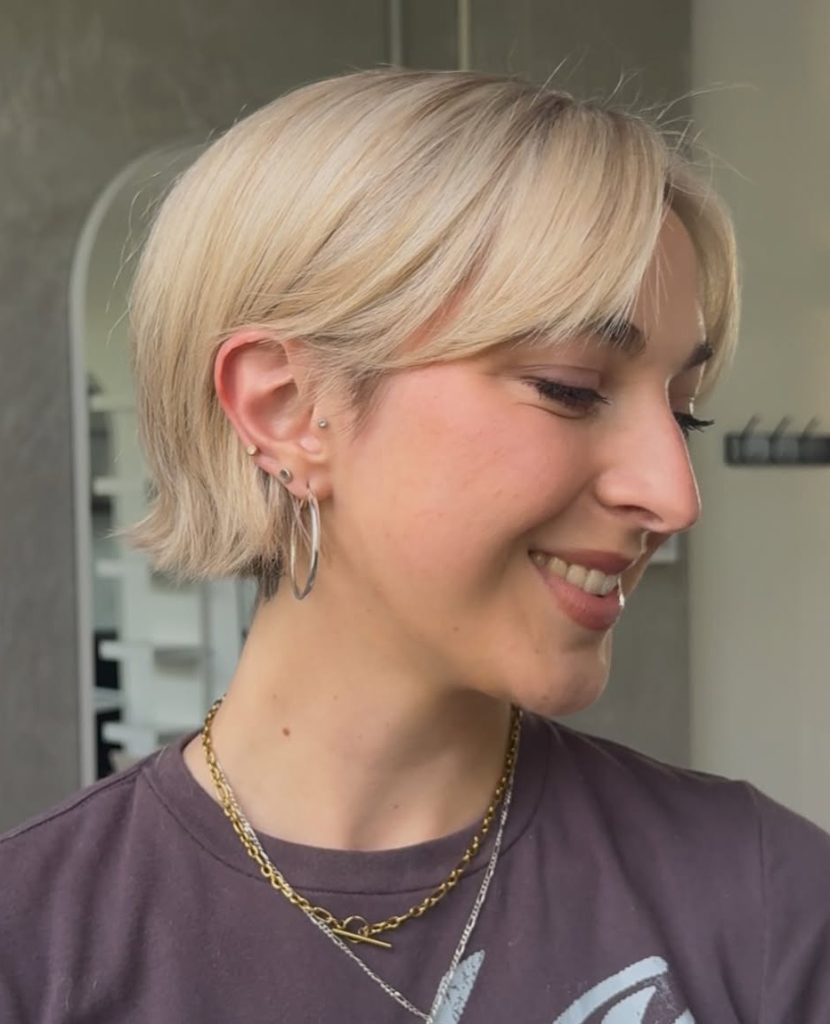
17. Classic Pixie Bob (Bixie)
The bixie sits right between a pixie and a bob, shorter than your jaw with more coverage than a traditional pixie. It gives you the ease of a short cut without the full commitment of exposed ears and nape. The perimeter can be blunt or textured depending on whether you want a clean line or a softer finish. Stylists generally recommend this as a first step for anyone nervous about going full pixie.
18. Layered Bixie with Volume
Added layers through the crown give this bixie lift and dimension that a blunt version can not match. The stacked back, shorter layers on top of longer ones at the nape, creates volume that holds its shape throughout the day without heavy product. Blow-dry with a small round brush, directing the roots upward, then let the ends fall naturally. Thick to medium hair gets the strongest result.
19. Tapered Bixie for Fine Hair
Fine hair often looks its best when the cut creates shape that the texture alone can not provide. A tapered bixie with graduation at the nape and light layering through the top builds volume without relying on product alone. Avoid heavy conditioners below the crown – they weigh down fine strands and flatten the silhouette. A lightweight volumizing spray at the roots before blow-drying makes the difference.
20. Messy Pixie Bob with Side Bangs
Chin-brushing length at the front, cropped at the back, with a long side bang that you can tuck behind the ear or let fall across the forehead. The styling is intentionally imperfect, work a texturizing paste through the mid-lengths and scrunch. Round faces get visual elongation from the asymmetric length, and the side bang adds a diagonal line that breaks up width. Wash-and-go friendly on wavy and curly textures.
21. Stacked Pixie Bob
Graduated layers at the back create a stacked effect that adds volume exactly where flat-haired clients need it most – the crown and occipital bone. The front pieces hang just below the ear. Bring this photo to your stylist and ask for a graduated back with point-cut layering and longer face-framing pieces. The maintenance window is about 5-6 weeks between trims.
22. Curly Pixie Bob
Curly hair and pixie-length cuts are a strong combination when the stylist cuts it dry and respects the curl pattern. Wet cutting curly hair at this length almost always results in a too-short surprise once it springs up. The bixie length lets ringlets frame the jawline without the shrinkage anxiety of a super-short crop. Use a lightweight curl cream and diffuse on low heat, scrunching upward.
Edgy and Bold Pixie Cuts
Undercuts, fades, shaved designs, and bold color choices. These pixies are built to get noticed and require a stylist comfortable with precision clipper work and creative cutting. The maintenance is higher, but so is the impact.

23. Undercut Pixie
Buzzed or shaved sides and back with 3-4 inches of length on top create a dramatic contrast. The undercut reduces bulk on thick hair and adds an element of surprise, hair down, it looks like a regular pixie; pull it back, and the shaved section is visible. Maintenance is higher: the undercut needs a clipper touch-up every 2-3 weeks to stay clean, while the top can go 4-5 weeks.
24. Faded Pixie with Hard Part
Borrowed from barbershop culture, the fade and hard part bring sharp geometric lines to a pixie. The skin fade at the temples tapers into longer hair at the crown, and a razor-etched part creates a defined line. Ask for a low or mid fade, a high fade can look too severe on most face shapes. The hard part grows out within 10-14 days, so factor in frequent barber visits or learn to maintain the line yourself with a trimmer.
25. Asymmetrical Pixie
One side cropped close, the other left significantly longer, the asymmetry creates a bold diagonal line across the face. The longer side can be anywhere from ear to chin length. Stylists typically recommend keeping the longer side on the same side as your natural part for the most natural fall. Oblong and rectangular faces benefit from the horizontal visual weight that the asymmetry provides, shortening the perceived face length.
26. Edgy Pixie with Shaved Design
A clipper-etched design on the shaved section, lines, geometric patterns, or freeform art, adds personality without changing the overall cut structure. Keep in mind that the design grows out in 1-2 weeks and fades quickly, so this is either a high-maintenance commitment or a special-occasion statement. Your stylist or barber needs steady hands and experience with designs; ask to see their portfolio before committing.
27. Mohawk-Inspired Pixie
Short faded sides with exaggerated height and texture through the central strip of hair, running from forehead to crown. Unlike an actual mohawk, the sides are not shaved to skin, they are faded or closely cropped, which keeps it wearable in professional settings. A strong-hold mousse or volumizing powder at the roots plus a blow-dryer directed upward are what hold the height in place. Thick hair has an advantage here because fine strands struggle to maintain vertical volume.
28. Platinum Buzz-Cut Pixie
As short as a pixie gets. One or two guard lengths all over, bleached to a cool platinum. The color and the cut work together: platinum on longer hair can look damaged, but on a buzz cut, there is not enough length for the damage to show visually. Achieving this shade requires a stylist experienced in lightening, expect 2-3 sessions if you are starting from dark hair. Not a box-dye project.
29. Spiky Textured Pixie
Spiked ends through the crown and top, achieved with a strong-hold wax or fiber paste worked through dry hair in an upward motion. The sides stay flat and tapered. Unlike the mohawk variation, the spikes are distributed across the entire top rather than concentrated in a central strip. Avoid gel for this look, it dries hard and shiny, while fiber paste keeps the spikes flexible and matte.
30. Pixie with Bold Color Block
Color blocking places two contrasting shades in distinct sections rather than blending them. A dark base with a vivid panel at the fringe, or a blonde top with dark undercut, creates visual impact that amplifies the short cut. The placement of the color should follow the cut lines, your colorist and cutting stylist should plan this together. Touch-ups depend on the colors chosen: vivid fashion shades fade within 4-6 weeks.
Curly and Textured Pixie Cuts
Curly, coily, wavy, and chemically treated textures all have specific needs at pixie length. The cuts in this section are designed around texture rather than against it, each one works with your natural pattern to create a shape that holds without fighting.
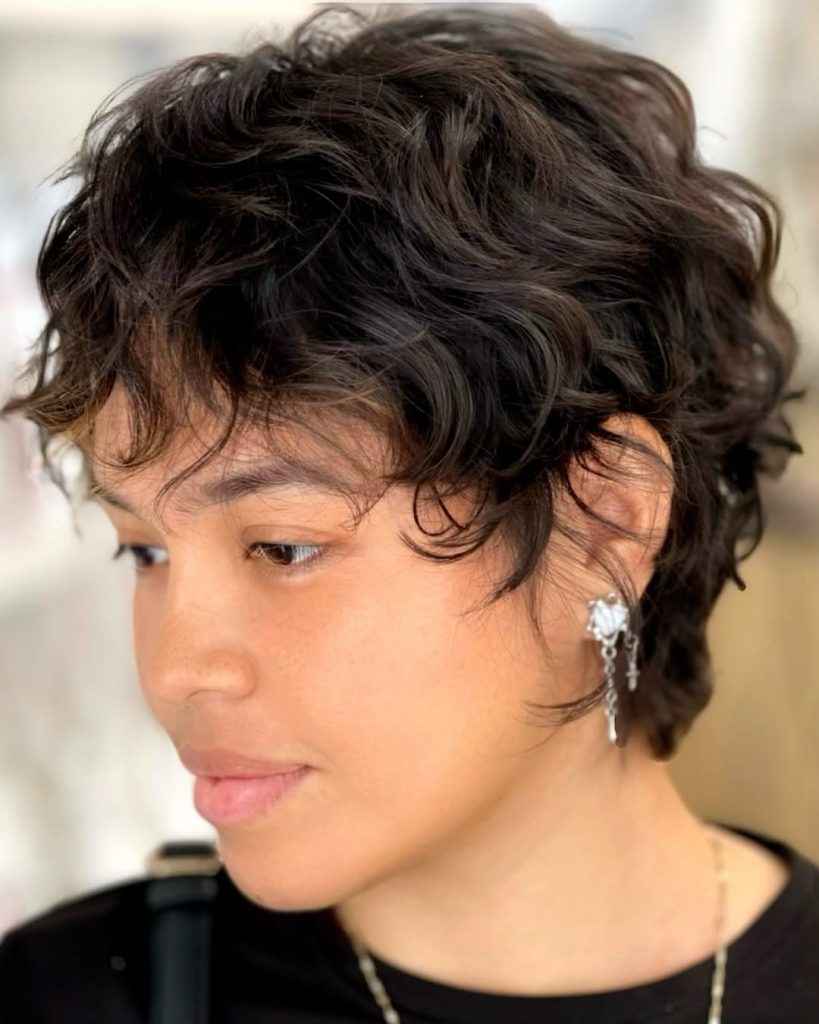
31. Natural Curly Pixie (Type 3A-3B)
Spiral curls at pixie length create a rounded, voluminous silhouette that suits oval and heart-shaped faces well. The key is dry cutting: a stylist who cuts curly hair wet at this length is guessing where the curls will sit once they spring up. Ask for the shape to be built around your natural curl pattern rather than fighting it. A curl-defining cream and a diffuser on low are your daily tools.
32. Coily Pixie (Type 4A-4C)
Coily textures at pixie length showcase the natural pattern in a way that longer lengths sometimes obscure under their own weight. The TWA (teeny weeny afro) variation keeps it close-cropped all over, while a shaped version can add height at the crown and taper at the nape. Moisturize with a leave-in conditioner daily and seal with a light oil to prevent dryness at this length. Silk pillowcases help maintain moisture overnight.
33. Wavy Pixie with Texture Spray
Wavy hair (2A-2C) has a natural bend that gives pixie cuts built-in movement without much styling. A salt spray or texture spray enhances the wave and creates separation between the strands. Air-drying works well for this texture, blow-drying tends to straighten the wave out unless you use a diffuser. The low-effort styling routine makes this one of the most manageable pixie variations.
34. Pixie for Curly Fine Hair
Fine curly hair presents a specific challenge: the curls want volume, but the fine strands can not support heavy products. A layered pixie with graduated cutting through the crown allows the curls to stack on each other, building height naturally. Use a lightweight mousse rather than a cream, and scrunch upward while diffusing. Avoid heavy oils – they will flatten your curls within an hour.
35. Pixie on Locs
Locs at pixie length offer a distinct look, the individual locs create their own texture pattern that is entirely different from loose-hair pixies. Starting locs at short length requires patience through the early stages, but once established, the maintenance is primarily retwisting every 4-6 weeks. The weight of even short locs helps them lay flatter than you might expect, which suits round and oval faces.
36. Relaxed Pixie with Sleek Finish
For those who wear their hair chemically relaxed, a pixie eliminates the length that shows the most damage from processing. The sleek, flat-ironed finish emphasizes the bone structure and works well with strong features. Keep in mind that relaxed hair at this length is more vulnerable to breakage, protein treatments every 2-3 weeks help maintain strand integrity. Avoid tight clips or bobby pins that create stress points.
Color-Enhanced Pixie Cuts
Color on short hair has a different effect than on long hair. There is less surface area, so the impact per strand is higher. These entries pair specific pixie variations with color techniques that amplify the cut’s shape and create visual depth.
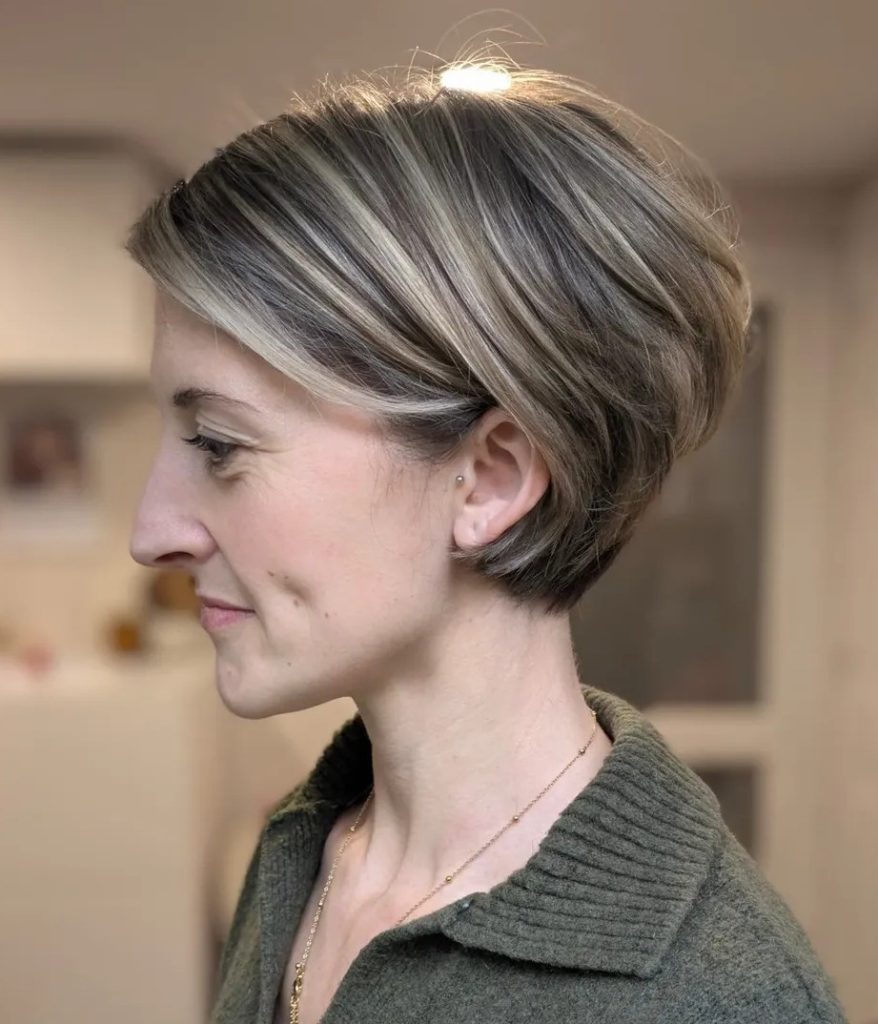
37. Pixie with Balayage Highlights
Balayage on a pixie requires a colorist who understands that there is less real estate to work with. The highlights should be concentrated where the light naturally hits, the top and the fringe rather than scattered evenly. Warm caramel tones on a dark base create depth that makes even a simple pixie shape look multi-dimensional. Touch-up timing is generous since balayage grows out without a harsh root line.
38. Icy Blonde Pixie
Cool-toned platinum with a slight silver cast. Maintaining this shade requires purple shampoo 2-3 times per week and a toner refresh at the salon every 4-5 weeks. The upside of a pixie: you are maintaining color on much less hair, so salon visits are faster and less expensive than maintaining the same shade on longer lengths. Ask for a consultation before committing, your stylist needs to assess your hair’s ability to withstand the lightening process.
39. Copper Red Pixie
Copper catches light and creates visual dimension on short cuts where shadows are limited. The shade sits between a true red and a warm blonde, flattering warm and neutral skin tones particularly well. Color-depositing conditioners extend the vibrancy between salon visits, and sulfate-free shampoo prevents premature fading. The combination of a bold color and a short cut draws the eye to the face, strong brows and a defined lip complete the look.
40. Brunette Pixie with Money Pieces
Two lighter panels at the front, framing the face on either side of the part, create instant brightness without a full color commitment. On a pixie, money pieces are really the front fringe strands and possibly a few pieces at the temple. The contrast between dark and light adds visual depth and draws attention to the eyes. A low-maintenance color choice since the placement grows out naturally.
41. Silver-Gray Pixie
Gray hair at pixie length carries a specific kind of authority. The texture of gray hair tends to be coarser and drier than pigmented hair, which actually works in the pixie’s favor, the natural body holds the shape well. A purple-toning shampoo once a week keeps the silver bright and prevents yellowing. If you are transitioning from dyed hair, a pixie is the fastest way to remove old color and start fresh.
42. Pastel Pixie in Lavender
Fashion pastels need a very light base to show up, so this look starts with a full bleach-out. The lavender tint is semi-permanent and fades within 6-8 washes, transitioning through a softer lilac to a pale platinum as it washes out. The short length means less damage from the bleaching process compared to applying the same treatment to mid-length or long hair. Re-applying the pastel toner at home between salon visits keeps the shade fresh.
Face-Flattering and Age-Inclusive Pixie Cuts
Face shape and life stage both influence which pixie variation works best. The entries here address specific face shapes and include considerations for women whose hair texture has changed with age, finer strands, gray transition, and shifting density.
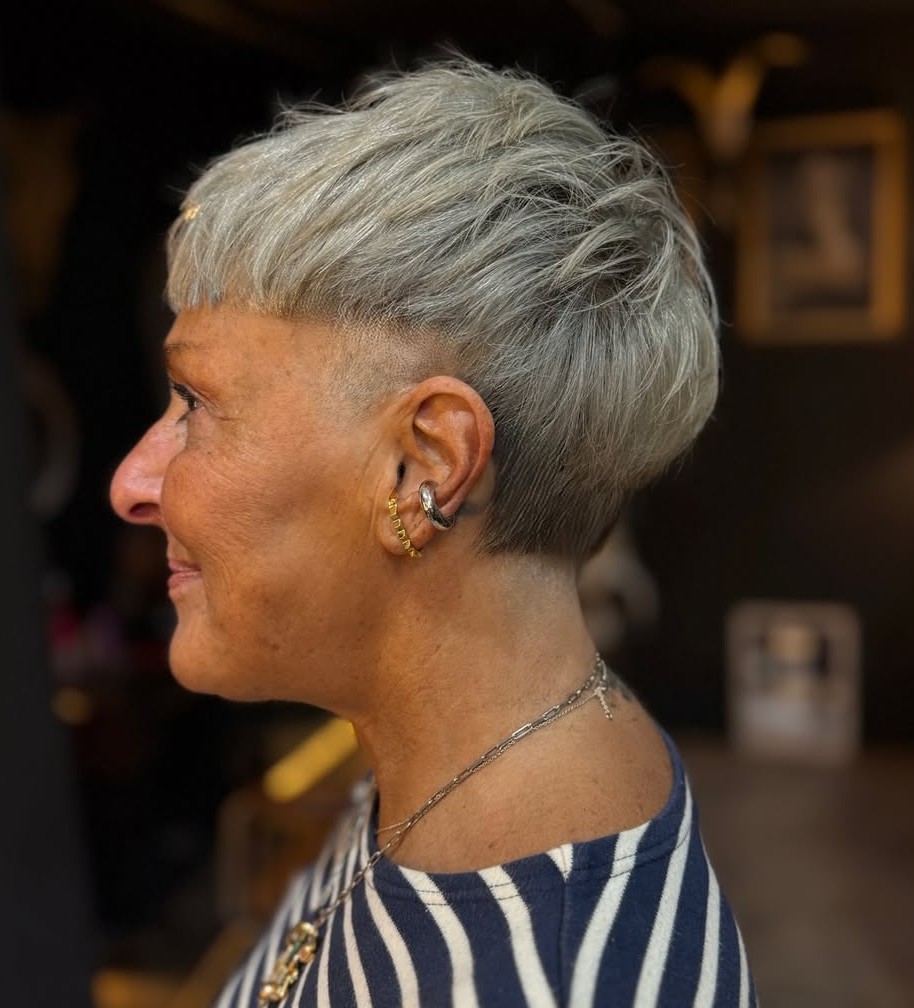
43. Pixie for Women Over 50
A pixie at 50+ is less about looking younger and more about working with your hair as it is now. Hair texture changes with age, often becoming finer, drier, or grayer, and a well-shaped pixie addresses all three. Keep the layers soft rather than sharp, and avoid super-short crops if your hair has thinned significantly at the temples. A side part and a little volume at the crown are usually more flattering than a center part at this stage.
44. Pixie for Round Faces
Volume at the crown and tapered sides create vertical lines that visually lengthen a round face. Avoid pixies that are the same length all over, they echo the circular shape rather than counteracting it. A side part is almost always more flattering than a center part on round faces because it introduces asymmetry. Bring this photo to your stylist and mention specifically that you want height and angularity rather than a rounded silhouette.
45. Pixie for Oval Faces
Oval faces and pixies are a well-documented match because the balanced proportions mean few restrictions on cut variations. You can go ultra-short, long on top, with bangs or without, the face shape supports all of it. The real decision comes down to hair texture and maintenance preference rather than face-shape compensation. Use this as an opportunity to try a version that interests you rather than one dictated by facial geometry.
46. Pixie for Heart-Shaped Faces
A wider forehead and narrower chin mean the goal is to add visual weight below the cheekbones and keep the top relatively close. Side-swept bangs draw the eye away from the forehead width, while a little extra length at the sideburns or nape adds balance at the bottom. Avoid pixies with lots of crown height and no bangs. They exaggerate the top-heavy proportions.
47. Pixie for Square Faces
Strong jawlines and prominent angles define square faces, and the right pixie softens them without hiding them. Wispy, textured layers are your ally here, avoid blunt, geometric cuts that mirror the angular bone structure. A side fringe that grazes the cheekbone introduces a curve that offsets the straight jawline. The length at the top should be moderate: too short exposes the jaw fully, while too long can look heavy.
48. Pixie for Oblong Faces
Oblong faces are longer than they are wide, so the strategy is opposite to round faces: add horizontal width and avoid vertical height. A full fringe that covers the forehead shortens the face visually, and keeping the crown flat rather than voluminous prevents added length. Width at the sides, achieved through layers that fan outward rather than lying flat, creates the horizontal balance that this face shape needs.
Trending Pixie Variations for 2026
The newest hybrid shapes gaining momentum this year. The elf crop and the wixie (wolf cut meets pixie) are two of the most requested cuts in salons right now, each offering something the classic pixie shapes do not.
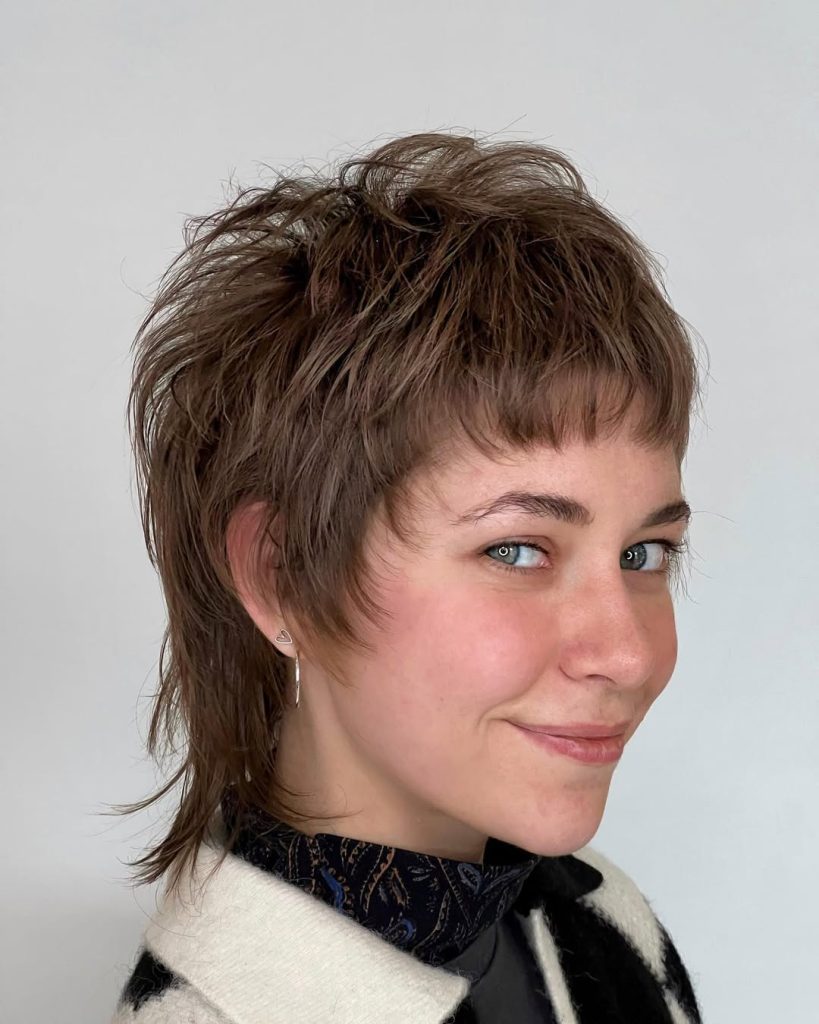
49. The Elf Crop
Trending hard through 2026, the elf crop is shorter than a classic pixie with rounded, soft edges that hug the head. The name comes from the delicate, almost otherworldly quality it gives the wearer, it puts bone structure and facial features on full display. Not for the faint of heart, but the payoff is a wash-and-go routine that takes under two minutes. Oval faces and those with pronounced cheekbones get the most striking result.
50. The Wixie (Wolf Cut + Pixie)
The biggest hybrid cut of 2026 combines the choppy, lived-in layers of a wolf cut with the short length of a pixie. The crown has visible layering and texture while the nape is left slightly longer and shaggier than a traditional pixie. It grows out well because the shaggy shape stays intentional-looking even as the length increases. Wavy and curly textures give it the most natural movement, but straight hair can achieve the look with a texturizing product and some finger styling.
How to Choose the Right Pixie Cut for Your Face Shape
Your face shape determines which pixie variations will work with your proportions and which ones will fight them. Here is a shape-by-shape breakdown with specific cut recommendations.
| Face Shape | Goal | Best Pixie Variations | Avoid |
|---|---|---|---|
| Oval | Maintain balance | Almost any variation – classic crop, textured, undercut, bixie | No restrictions; avoid only styles that add excessive height if face leans oblong |
| Round | Add length, reduce width | High-volume crown, tapered sides, side-swept bangs, asymmetrical cuts | Same-length-all-over pixies, center parts, rounded silhouettes |
| Square | Soften angles | Wispy layers, side fringe, textured crops, soft feminine shapes | Blunt geometric cuts, hard parts, very short crops that expose the jaw fully |
| Heart | Balance forehead width, add jaw-level weight | Side-swept bangs, length at sideburns, bixie cuts | Very short crops without bangs, excessive crown volume |
| Oblong | Add width, reduce perceived length | Full fringe, side-heavy styles, minimal crown height, width at sides | Lots of height at crown, no-bangs styles, very short sides |
| Diamond | Soften cheekbone width | Side-swept fringe, length at the jawline, textured layers | Styles that add width at the cheekbones, very short sides |
Stylist tip: If you are unsure of your face shape, pull your hair back tightly, stand in front of a mirror, and trace your face outline on the mirror with a dry-erase marker or lipstick. The shape becomes obvious when you step back and look at the outline without your features distracting you.
What to Ask Your Stylist
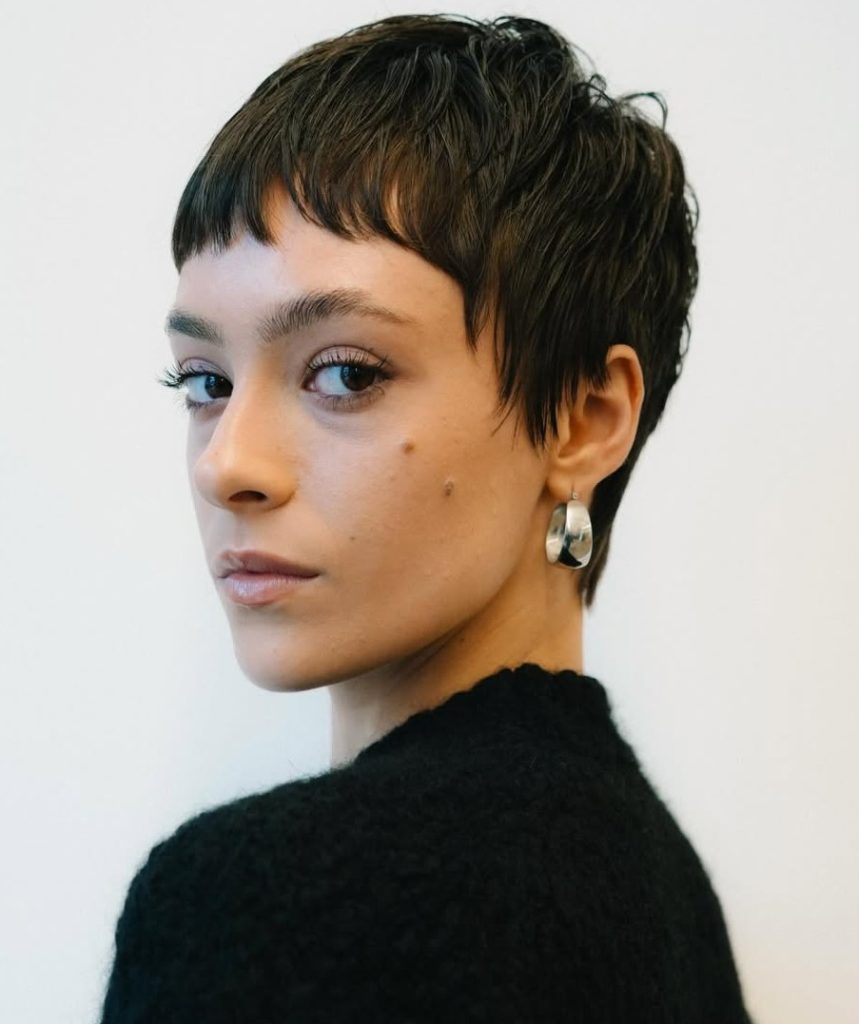
Most clients walk into the salon with a photo but without the professional language to explain what they want. Here is exact salon-ready phrasing for the most common pixie requests.
For a classic pixie: “I want a short pixie with about two inches on top, tapered sides and back, and point-cut ends for texture. I want to see my ears.”
For a bixie: “I want a pixie-length cut that is longer than my ears but shorter than my jaw. Textured perimeter, not blunt. Something between a pixie and a bob.”
For a textured pixie: “I want visible layers through the crown and top, razored or point-cut ends, and I want it to look like it has movement even without product.”
For an undercut pixie: “Short sides with a clipper – maybe a number 2 or 3 guard and leave 3 to 4 inches on top. I want a visible contrast between the sides and the top.”
For growing out a pixie: “I am growing my pixie out. Can you clean up the nape and sides to keep it looking intentional, but leave the length on top and through the crown?”
Stylist tip: Bring at least two reference photos showing the cut from different angles, front and side at minimum. A single photo from one angle leaves too much to interpretation, and stylists report that miscommunication about the back and nape area is the most common source of client disappointment with pixie cuts.

Pixie Cut Maintenance and Styling Essentials
Shorter hair means less time styling each day but more frequent salon visits. Here is what the ongoing commitment looks like across different pixie categories.
| Pixie Type | Trim Frequency | Daily Styling Time | Key Products | Grow-Out Behavior |
|---|---|---|---|---|
| Classic crop | Every 3-4 weeks | 5-7 minutes | Pomade or light wax, heat protectant | Gets shaggy quickly; needs regular trims during grow-out |
| Textured/layered | Every 4-5 weeks | 5-8 minutes | Texturizing paste or clay, dry shampoo | Grows out reasonably well; layers help disguise length changes |
| Bixie/pixie bob | Every 5-6 weeks | 8-12 minutes | Volumizing mousse, round brush, light hairspray | Transitions into a short bob naturally |
| Undercut/faded | Every 2-3 weeks (sides), 4-5 weeks (top) | 5-10 minutes | Strong-hold product, clipper for touch-ups | Sides grow out of shape fast; top transitions okay |
| Curly pixie | Every 4-6 weeks | 3-10 minutes | Curl cream, diffuser, lightweight oil | Curls add natural shape during grow-out; more forgiving |
| Color-enhanced | Cut: 3-5 weeks; Color: 4-8 weeks | 5-10 minutes + color upkeep | Color-safe shampoo, toner or color-depositing conditioner | Roots visible faster on short hair; plan toner refreshes |
FAQ
Can I Get a Pixie Cut with Curly Hair?
Curly hair works well with pixie cuts as long as your stylist cuts it dry. Wet cutting curly hair at short lengths leads to unpredictable shrinkage once the curls spring back. Type 2C through 4C textures can all support a pixie, the key is choosing a variation that works with your curl pattern rather than against it. Expect the silhouette to be fuller and rounder than it would be on straight hair, and plan your length accordingly.
How Often Do I Need to Trim a Pixie Cut?
Most pixie cuts need a shape-up every 3-5 weeks depending on the variation. Undercuts and fades need attention every 2-3 weeks, while longer pixie bobs and bixies can stretch to 5-6 weeks. Skipping trims beyond the recommended window does not just look messy, it can make your next appointment more expensive because the stylist needs to re-establish the shape from scratch.
What Products Do I Need for a Pixie Cut?
The product depends on the variation. Textured, messy pixies need a matte paste or clay. Sleek, polished pixies need a light-hold mousse and finishing spray. Curly pixies need a curl-defining cream and a diffuser attachment. One product that works across all pixie types: a heat protectant spray, even if you only blow-dry occasionally. Keep products lightweight – heavy creams and oils flatten short hair fast.
Will a Pixie Cut Suit My Face Shape?
Oval faces can wear almost any pixie variation. Round faces need height at the crown and tapered sides to create vertical elongation. Square faces benefit from soft, wispy layers and side fringes that offset angular jawlines. Heart-shaped faces need side-swept bangs and some length at the sideburns to balance a wider forehead. Oblong faces should go for a full fringe and minimal crown height.
How Do I Grow Out a Pixie Cut Without Looking Awkward?
The grow-out phase between a pixie and a bob typically takes 6-12 months and goes through an awkward mullet-like stage around months 3-5. Regular trims during this period are critical, your stylist can shape the growth so it stays intentional rather than neglected. Headbands, clips, and texture products help manage the in-between lengths. Transitioning through a bixie or pixie bob first makes the process feel less drastic.
How Long Does a Pixie Take to Style Each Morning?
Most pixie variations take 5-10 minutes daily. Ultra-short crops and buzz cuts take under 2 minutes. Longer pixies with blow-drying and product application can take up to 15 minutes. Curly pixies that air-dry need almost no active styling time, just product application. Compared to medium and long hair, the time savings are significant – most clients report getting back 15-20 minutes each morning.
Is a Pixie Cut High Maintenance or Low Maintenance?
The daily styling is low maintenance – shorter hair means less washing, drying, and product. But the salon maintenance is higher than longer cuts because the shape loses definition faster as it grows. Budget for a trim every 3-5 weeks, which is more frequent than the 8-12 week cycle most bob and long-hair clients follow. Color-treated pixies add another maintenance layer: root touch-ups are more visible on short hair.
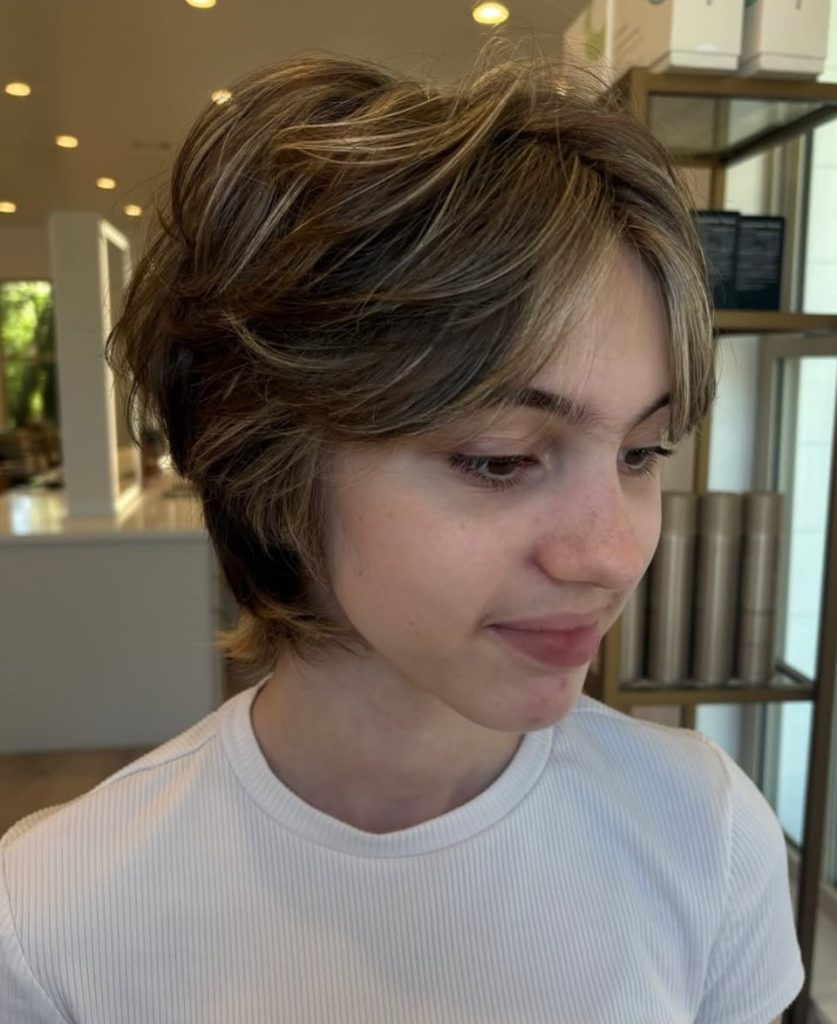
Pick your next hairstyle with confidence and keep it simple! With the right styling tips, maintenance routine, and expert advice. You can easily turn even the most basic crop into you best-fitting look ever. Save this guide and get started!
Hair results vary based on your natural hair type, texture, density, and condition. Always consult with a licensed hairstylist before making significant changes, especially with chemical treatments or dramatic length changes. Photos may show styled results that require professional tools and products to replicate.

1 response