

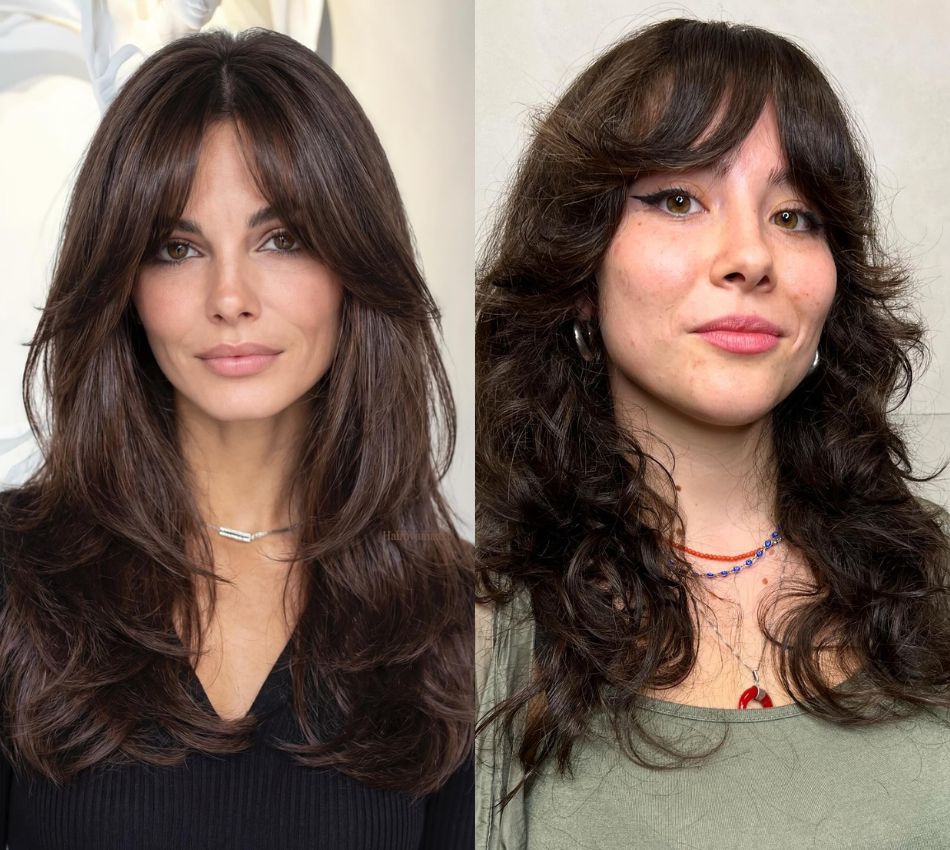
From textured pixie shags to waist-length layered versions, these 50 stylist-approved shag haircuts cover every length, texture, and face shape.
A shag haircut is built on layered, feathered cuts that create movement from the crown down to the ends, and the modern version is far more versatile than the ’70s original. Whether your hair is fine and flat, thick and hard to manage, or somewhere in between, these 50 variations include short, medium, and long shags matched to different hair types and textures. Each entry breaks down what makes the cut work and how to communicate it to your stylist.

The gallery is organized by length first (short, medium, long), then by hair texture and color technique. After the gallery, you’ll find a face shape guide, salon communication tips, and answers to the most common questions about shag maintenance.
| Feature | Details |
|---|---|
| Best For | Wavy, thick, and medium-density hair; also works on fine and curly with adjustments |
| Maintenance | Low to moderate; trims every 8–12 weeks, daily texturizing product recommended |
| Face Shapes | Oval, heart, and oblong; round and square need modified layering (see guide below) |
| Styling Time | 5–15 minutes depending on length and texture |
| Shag vs. Wolf Cut | Softer, blended layers versus the wolf cut’s sharper contrast between short top and long bottom |
Short Shag Haircuts
A short shag haircut works well for anyone who wants volume and texture without the weight of longer hair. Layers concentrate around the crown and sides, and the shorter length means most of these can be air-dried with a texturizing spray.
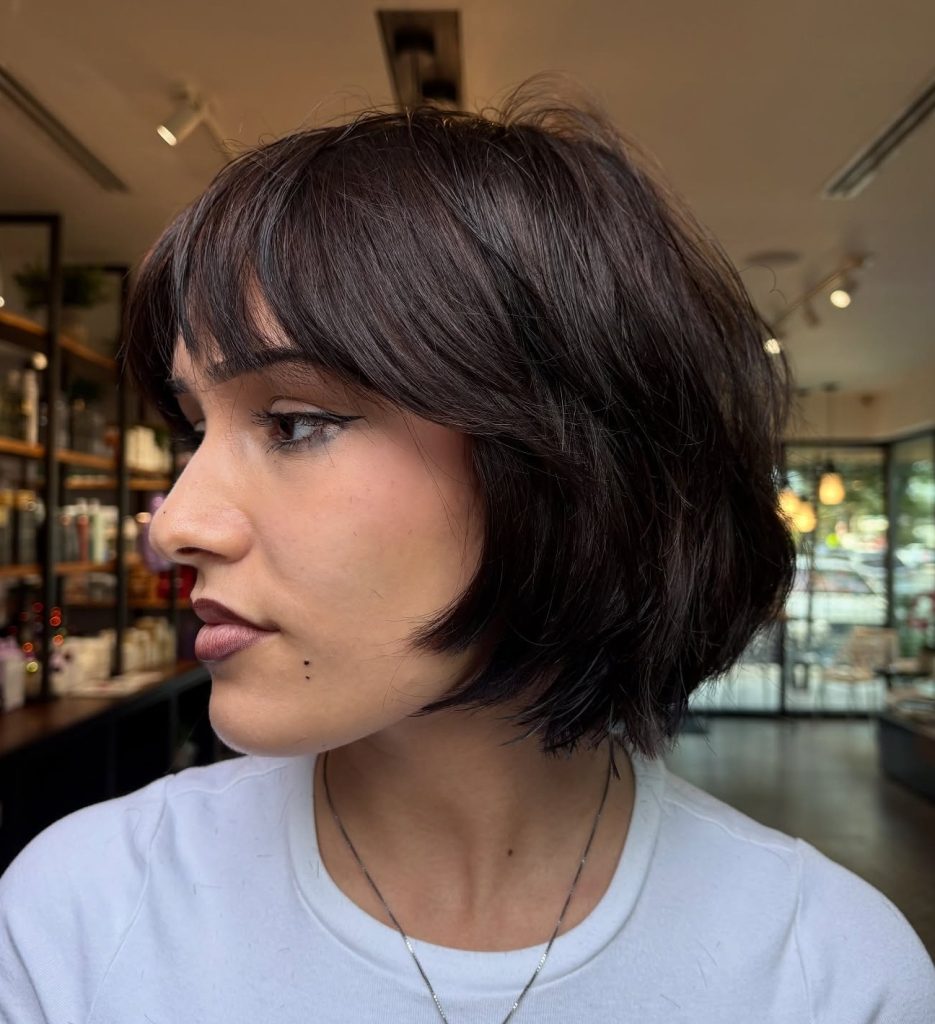
1. Chin-Length Choppy Shag
Heavy point cutting through the ends gives this chin-length cut its rough, lived-in texture. The choppy layers reduce bulk on thick hair and create natural movement without needing a blowout.
2. Pixie Shag with Textured Layers
A hybrid between a pixie and a shag, this cut keeps length at the nape and around the ears while building volume through the top with short, razored layers. It works particularly well on thick, coarse hair that holds shape on its own.
3. Ear-Length Micro Shag
Cut to sit just at the ears, this micro shag uses short interior layers to create fullness at the crown while the perimeter is soft and feathered. Fine hair benefits most — the compressed length prevents layers from going flat by mid-afternoon.
4. Short Shag with Curtain Bangs
Curtain bangs soften the forehead and frame the cheekbones, making this one of the most face-flattering short shag variations. Ask your stylist to cut the bangs dry, so they fall naturally around your face.
5. Cropped Shag for Thick Hair
Internal thinning and deep point cutting remove weight from thick hair without sacrificing the shag’s signature crown fullness. Expect trims every 6–8 weeks to keep the shape from growing out into a mushroom.
6. Short Layered Shag with Side Part
Shifting the part to one side adds asymmetry and visual interest to a short shag. The deeper side creates more volume on the heavier side and draws attention to the jawline. It’s a useful trick for round faces that benefit from diagonal lines.
7. Jaw-Length Shag Bob
Somewhere between a bob and a shag, this jaw-length cut uses the structured perimeter of a bob but adds interior shag layers for movement. It’s a smart entry point if you want to try a shag without fully committing to the heavily layered look.
8. Short Shag with Wispy Fringe
A wispy, see-through fringe keeps the forehead partially visible while adding softness. Unlike a blunt bang, the wispy version grows out gracefully and blends into the side layers within a few weeks — ideal for first-time bang territory.
9. Razor-Cut Short Shag
Razor cutting creates thinner, tapered ends that give this short shag a feathery quality. A common issue clients face with razor cuts is frizz on coarse or dry hair. If that’s your texture, ask for scissors with point cutting instead.
10. Short Shag with Volume at the Crown
Short layers stacked through the crown create lift where flat hair needs it most. Apply a lightweight volumizing mousse to damp roots and scrunch upward before air-drying for the best results.
Medium-Length Shag Haircuts
The medium shag haircut is the most popular length range — long enough for versatility, short enough to hold its layered shape. Most fall between the collarbone and shoulder level, suiting the widest range of hair types. If you’re exploring medium-length hairstyles, this section has the most options.
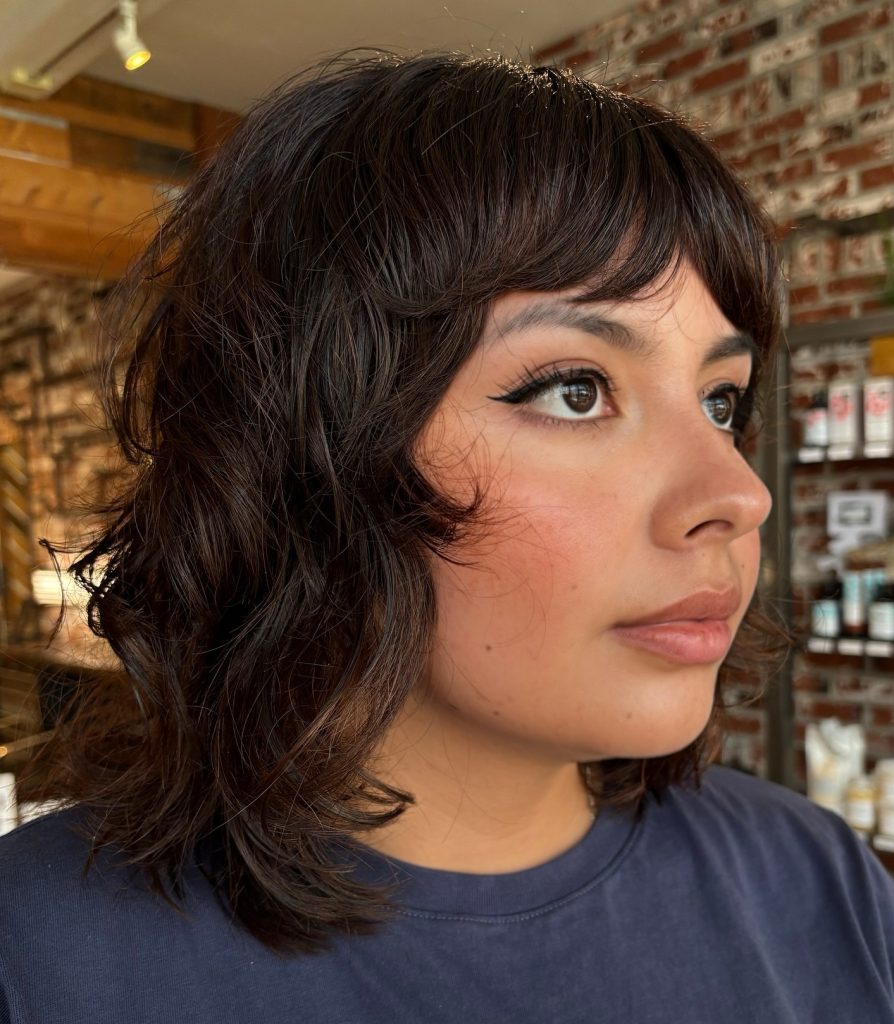
11. Classic Medium Shag
Shoulder-length layers graduating from shorter at the crown to longer at the ends — this is the shag in its most recognizable form. Medium-density hair in the straight to wavy range gets the best results from this cut.
12. Collarbone Shag with Face-Framing Layers
Face-framing pieces starting at cheekbone level direct attention to the eyes and jawline, while the rest falls at the collarbone. Stylists generally recommend this version for heart and oval faces, where the framing layers balance a narrower chin.
13. Medium Shag with Curtain Bangs
One of the most requested salon combinations right now. The key is getting the bang length right. Ask for bangs that hit at the bridge of the nose when styled, not shorter where they land awkwardly above the cheekbones.
14. Feathered Medium Shag
Feathered layers flip outward at the ends rather than falling inward, creating a retro-inspired silhouette. Use a round brush on low heat to direct the layers away from the face. This version works best on straight to slightly wavy hair.
15. Wolf Cut Shag
The wolf cut pushes the shag concept further with stronger contrast between the short, voluminous top and the longer, thinner bottom. A shag graduates smoothly, while a wolf cut deliberately leaves a gap. Thick hair handles this contrast best.
16. Medium Shag with Blunt Ends
Keeping the perimeter blunt while layering internally gives this shag a more polished edge. The blunt hemline adds visual weight that anchors the cut. It’s a good option if your style leans more tailored, but you still want movement.
17. Textured Lob Shag
A lob with shag layering skims the collarbone and uses texturizing techniques like twist cutting to break up the surface. Apply a sea salt spray to damp hair and scrunch for a natural, lived-in finish.
18. Medium Shag for Fine Hair
Fine hair and heavy layering don’t mix — too many layers make the ends look wispy and sparse. When sitting in the chair, ask your stylist to use internal layers only, keeping the perimeter solid and the bulk of the cutting in the crown and mid-section.
19. Shoulder-Length Shag with Wispy Bangs
Wispy bangs on a shoulder-length shag keep the look effortless. The bangs should be thin enough to see the forehead through them, which prevents the heavy, block-like effect full bangs can create on a layered cut.
20. Medium Shag with Disconnected Layers
Disconnected layers create deliberate gaps between the shortest and longest sections, adding drama to the silhouette. In the salon, this technique typically takes longer because each section needs individual attention.
21. Tousled Beach Shag
Built for air-drying, this shag uses long, loose layers to mimic salt-air-dried beach hair. Wavy types (2A–2B) get the most natural results without product. For straight hair, a texturizing cream scrunched into damp ends recreates the tousled finish.
22. Medium Shag with Flipped Ends
Flipped ends add a playful, retro shape to the bottom edge. Use a flat iron or large-barrel curling iron to flick the last two inches outward. Naturally straight hair holds this best; wavy or curly textures need heat styling every time.
Long Shag Haircuts
Long shag haircuts keep length while introducing movement through the mid-section and around the face. Layering starts lower, usually from the chin down, so you retain more density at the ends. Stylists often recommend long shags for clients who want a visible change without losing inches.
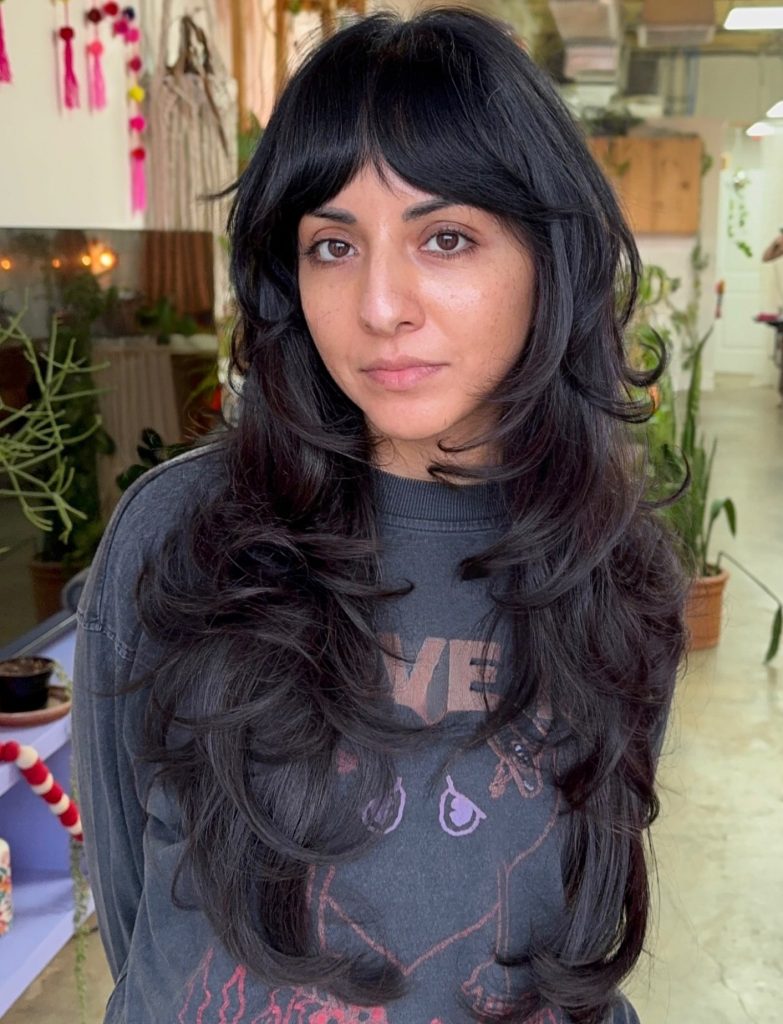
23. Long Layered Shag
Layers starting at chin level and cascading to the ends give this long shag its flowing, effortless shape. The gradual transition keeps the ends from looking thin. Trim every 10–12 weeks to maintain layer definition.
24. Long Shag with Curtain Bangs
Curtain bangs on a long shag frame the face without competing with the length. This pairing flatters nearly every face shape because the bangs can be adjusted — shorter for round faces, longer for softening square jawlines.
25. Waist-Length Shag with Soft Layers
At waist length, heavy layering makes the bottom half look stringy, so this version uses subtle layers concentrated in the upper half. If you’re growing out layered haircuts and want to maintain shape during the process, this is a strong transitional option.
26. Long Shag with Face-Framing Highlights
Lighter pieces around the face amplify the layered structure, making each section more distinct. The highlights follow the layers: shorter pieces get lighter tones, longer sections stay darker for depth.
27. Long Feathered Shag
Feathered layers starting from the cheekbones and flowing outward create a vintage silhouette on long hair. Blow-dry each section away from the face with a round brush. Straight to slightly wavy hair holds this shape best.
28. Long Shag with Micro Bangs
Micro bangs cut an inch or more above the brow create dramatic contrast against long, layered hair. Be honest about maintenance — micro bangs need trimming every 3–4 weeks to stay at the right length.
29. Long Razored Shag
Razor cutting through every layer gives long hair a soft, almost sheer quality at the ends. This technique works on medium to thick hair; fine hair cut with a razor can end up looking see-through rather than airy.
30. Long Shag with Graduated Layers
Graduated layering moves from very short at the crown to very long at the bottom, with each layer clearly defined. The stacked top creates volume while the long lower layers maintain overall length.
31. Long Boho Shag
Loose, effortless layers with no sharp lines define the boho shag. Air-dry with a leave-in conditioner and let your natural texture do the work. Wavy and curly hair types bring this cut to life without any heat tools.
32. Long Shag with Heavy Layers
Heavy, chunky layers through the mid-lengths add significant movement without making long hair look thin. Unlike subtle layering that disappears when styled straight, heavy layers stay visible and structural. Designed for thick hair that needs weight removal.
Shag Haircuts for Different Hair Textures
Hair texture changes how a shag falls, moves, and holds its shape. A shag haircut built for straight fine hair uses completely different techniques than one designed for coily or thick textures. A cut that looks effortless on wavy hair can look lifeless on straight or overwhelming on curly.
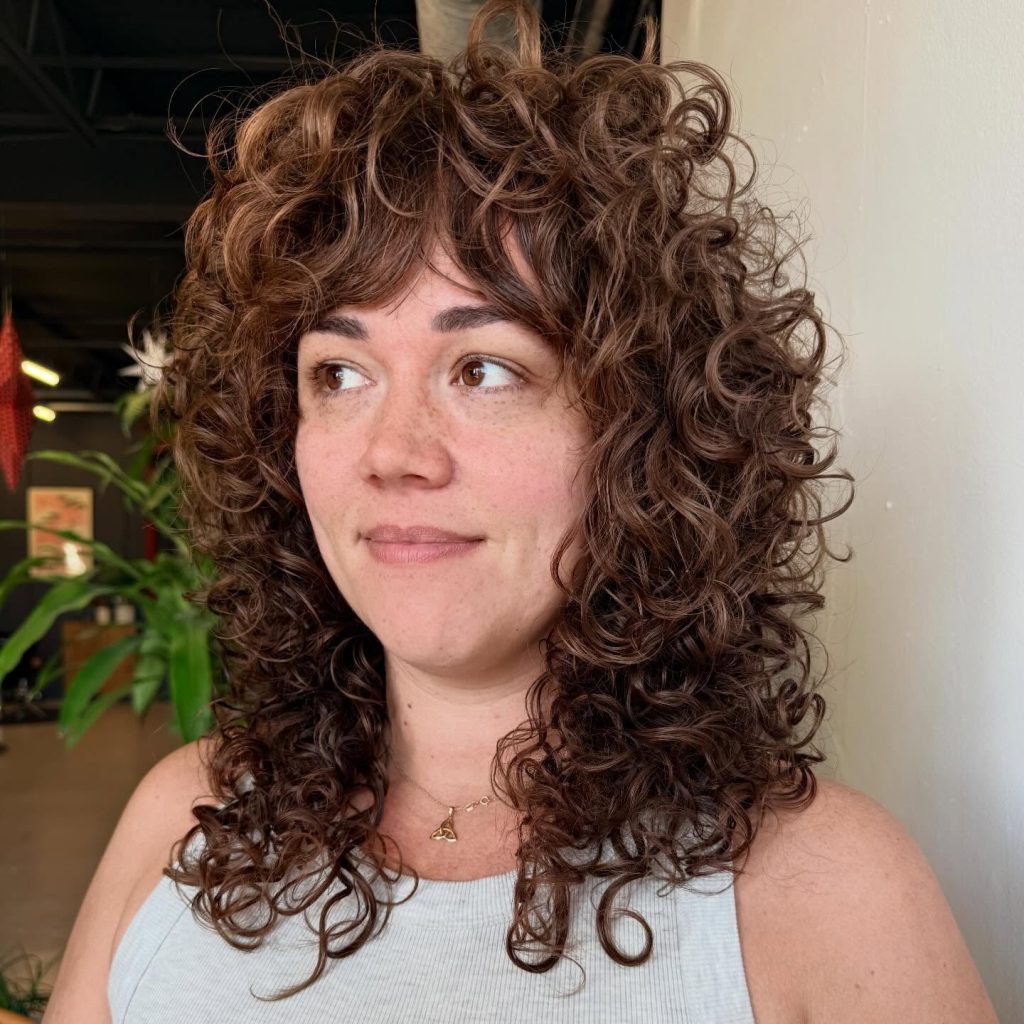
33. Shag for Straight Fine Hair
Fine, straight hair needs careful layering to avoid looking sparse at the ends. Ask your stylist for internal layers only; the outside perimeter should stay blunt and solid. A root-lifting spray creates the illusion of fullness.
34. Shag for Thick Straight Hair
Thick straight hair handles high-contrast layering and thinning without losing density. Deep point cutting or razoring through the interior removes bulk while keeping the surface smooth and the shape mobile.
35. Shag for Natural Waves
Natural waves (type 2A–2B) are the ideal texture for a shag — layers enhance what the hair already does. Stylists should cut this dry to see exactly where the waves fall, since wet cutting misjudges layer placement once the hair dries.
36. Shag for Type 2C Wavy Hair
Type 2C waves have more defined S-shaped bends that spring up shorter than expected. Longer layers with less graduation prevent the top from shrinking. Ask for weight removal through the sides to counteract the triangle shape.
37. Shag for Loose Curls
Loose curls (type 3A) give a shag incredible natural bounce. Layers should be cut long enough for each curl to complete its full spiral. Cutting too short interrupts the pattern and creates frizz. A lightweight curl cream keeps definition without crunch.
38. Shag for Tight Curls
Tight curls (type 3B–3C) need a shag that accounts for up to 40% shrinkage. Every layer should be cut longer than the desired finished length, and dry cutting is non-negotiable. Wet cutting leads to uneven layers once the hair springs back.
39. Shag for Coily Hair
Coily textures (type 4A–4C) respond well to a shag because the layers create defined volume rather than undefined bulk. The key is shaping rather than thinning — thinning shears create weak points that break. Ask for curl-specific layering techniques that work with the coil pattern.
40. Shag for Thin Hair with Volume Layers
Strategic layering at the crown and through the top third creates the appearance of volume on thin hair. The bottom two-thirds should stay one length to preserve thickness. Over-layering is the fastest way to make thin hair look thinner.
41. Shag for Coarse Thick Hair
Coarse, thick hair benefits from deep internal layering and texturizing to reduce weight. When sitting in the chair, ask your stylist to use texturizing shears through the interior and point cut the perimeter for movement at the ends.
42. Shag for Air-Dried Texture
Built to look good without heat styling, this shag relies on natural texture and minimal product. Apply a dime-sized amount of texturizing cream to towel-dried hair, scrunch once, and leave it alone. Works on any texture from waves to coils.
Shag Haircuts with Color Techniques
Color makes layers more visible. When a shag haircut is paired with the right technique, lighter tones catch the shorter layers, darker tones add depth to the longer sections, and the cut reads as more three-dimensional.
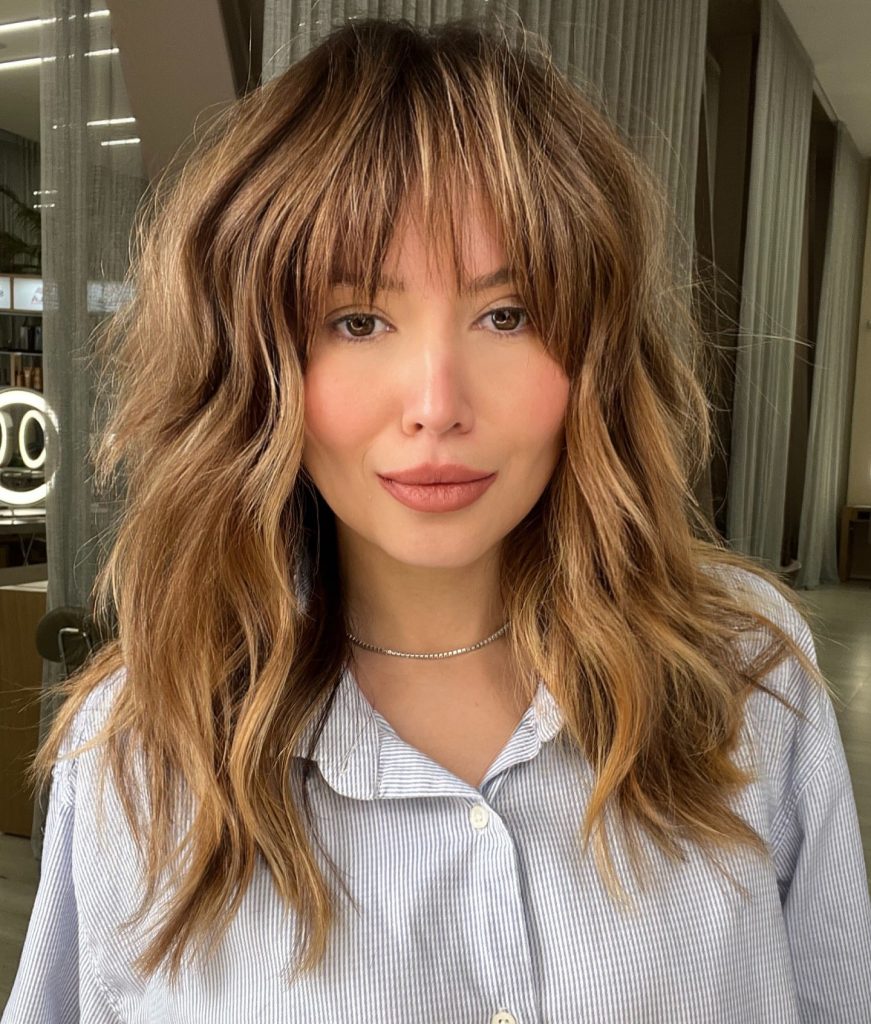
43. Copper Red Shag
Warm copper tones complement the shag’s layered structure by reflecting light differently on every section. Copper fades fast — expect to refresh every 4–6 weeks or switch to a color-depositing conditioner between appointments.
44. Blonde Shag with Shadow Roots
Shadow roots (a darker root area blending into lighter lengths) add depth without requiring frequent touch-ups. This is a lower-maintenance hair color approach for blondes who don’t want monthly salon visits.
45. Brunette Shag with Caramel Balayage
Hand-painted caramel balayage through a brunette shag creates sun-kissed dimension without a full highlight. The placement follows the layers, so each section catches light at a slightly different angle.
46. Platinum Shag with Dark Roots
High contrast between dark roots and platinum lengths creates a striking effect on a layered shag. Achieving this shade requires multiple salon sessions; do not attempt with box dye. Toning every 3–4 weeks prevents brassiness.
47. Multi-Tonal Blonde Shag
Mixing warm and cool blonde tones within the same shag creates complex, multi-dimensional color. The colorist places different shades on different layers so movement reveals new tones. This requires an experienced colorist — done poorly, it looks patchy.
48. Shag with Money Pieces
Money pieces (two bright, face-framing panels starting at the root) draw attention to the front of the shag. The rest can stay natural or darker, making this a minimal-effort, maximum-impact color choice.
49. Shag with Vivid Color Panels
Bold color placed in panels through the shag layers turns the cut into a statement. The shag’s movement makes vivid panels dynamic — they appear and disappear as the hair shifts. Bright colors fade within 4–8 washes, so expect maintenance.
50. Natural Gray Shag
Embracing natural gray in a shag adds texture and dimension that gray hair doesn’t always get from a single-length cut. The layers give gray hair movement and prevent it from looking flat. A purple shampoo once a week keeps yellow tones in check.
How to Choose the Right Shag for Your Face Shape
Face shape determines where layers should start, how much side volume you want, and whether bangs help or hurt the overall balance.
| Face Shape | Best Shag Style | What to Avoid |
|---|---|---|
| Oval | Any length or layering | Extremely heavy bangs that shorten the face |
| Round | Longer shags with layers below the chin; side part for asymmetry | Chin-length shags with volume at the sides |
| Square | Medium to long with soft, wispy layers around the jaw | Blunt-ended shags that emphasize the jawline |
| Heart | Chin-length layers adding width at the jaw; curtain bangs | Very short shags with heavy crown volume |
| Oblong | Medium-length with side volume; bangs to shorten visually | Long, straight shags with no side volume |
Stylist tip: Bring 2–3 reference photos of shags on people with a similar face shape to yours. A reference photo communicates more in five seconds than a verbal description can in five minutes.
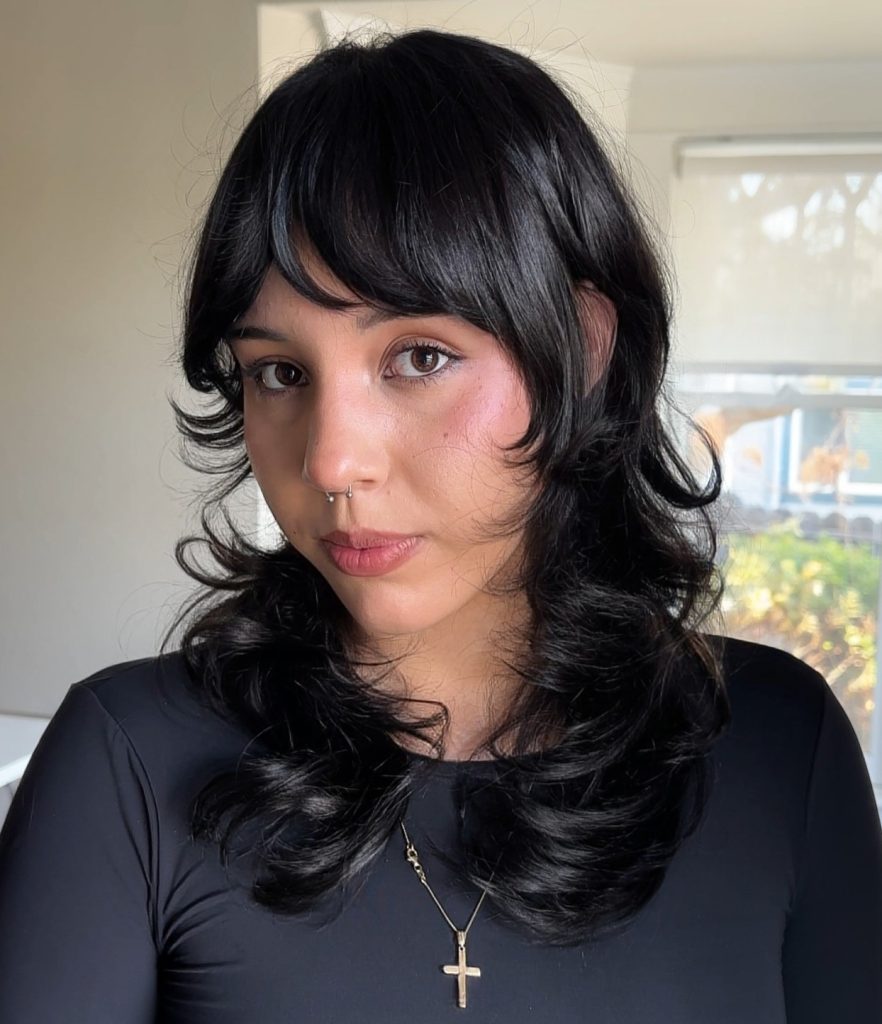
What to Ask Your Stylist for a Modern Shag
Saying “I want a shag” leaves too much room for interpretation. Start with the overall length and where you want the shortest layer to begin, for example: “I want a shoulder-length shag with the shortest layers starting at cheekbone level.” Then specify the end treatment: “feathered ends” for softness, “choppy ends” for texture, or “blunt perimeter” for a polished look.
If you have fine or thin hair, tell your stylist: “I want movement in the top layers but keep the bottom solid. I can’t afford to lose thickness at the ends.” For thick hair, the opposite: “Take out as much weight as you need through the interior. I want this to move, not hang heavy.” Mention your styling habits, too. If you air-dry daily, say so, and the layering will be adjusted to fall into place without heat tools.
Stylist tip: Ask whether your stylist plans to cut dry or wet. For wavy and curly textures, dry cutting lets the stylist see exactly how layers will fall. For straight, fine hair, wet cutting often gives more precise results.
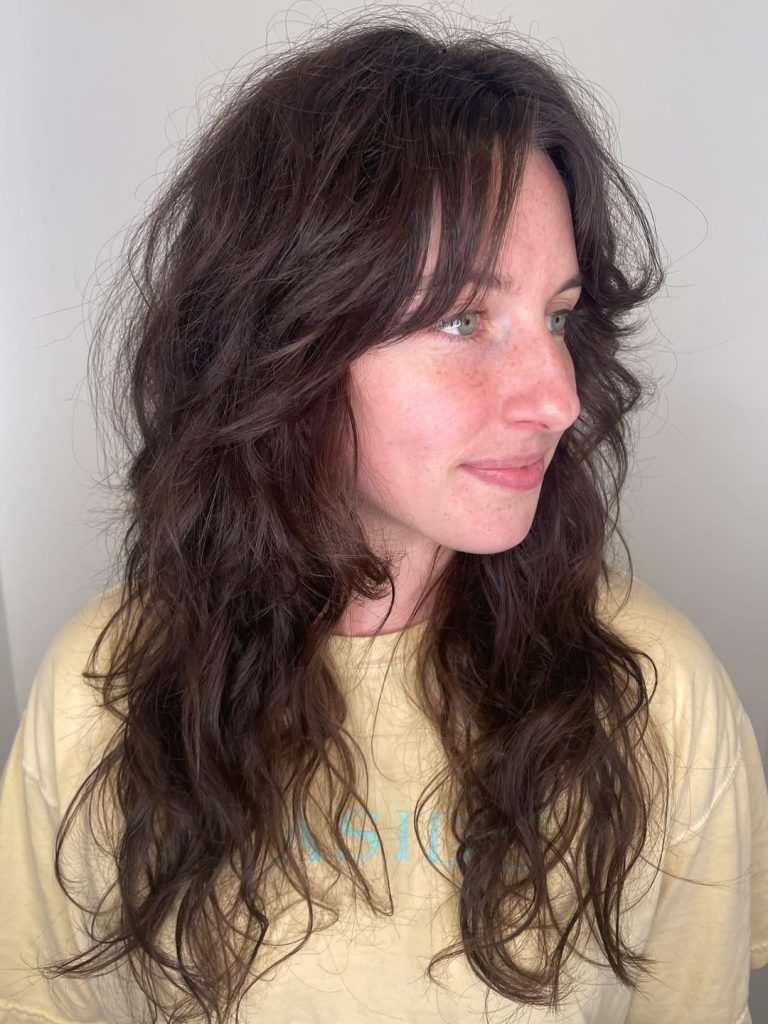
FAQ
Is a Shag Haircut High Maintenance?
A shag is relatively low maintenance compared to blunt or precision cuts. The textured, undone shape means it doesn’t need to look perfect. Daily styling takes 5–10 minutes with a texturizing spray or cream. Trims are needed every 8–12 weeks, which is less frequent than bobs or pixies that lose their shape faster.
Can You Get a Shag Haircut with Curly Hair?
Curly hair works well with a shag as long as the stylist accounts for shrinkage and cuts each layer long enough for the curl to complete its pattern. Dry cutting is essential because wet hair hangs 20–40% longer than dried length. Look for a stylist who specializes in curl-specific methods like the Rezo cut or DevaCut.
What Is the Difference Between a Shag and a Wolf Cut?
Both use heavy layering, but the wolf cut has a sharper disconnect between short top layers and longer bottom length, creating a mullet-like silhouette. A shag blends layers more gradually. If you want drama and contrast, go wolf cut; if you want movement and flow, go shag.
Does a Shag Work on Fine Hair?
A shag works on fine hair when layering is restrained. Too many layers make fine ends look thin and wispy. Ask for internal layers that add crown movement while keeping the perimeter blunt. This gives you the shag shape without sacrificing bottom thickness.
How Do You Style a Shag Haircut?
Apply a texturizing cream or sea salt spray to damp hair, scrunch lightly, and air-dry. For more volume, blow-dry with a diffuser or flip upside down while drying. For a polished version, use a round brush to direct layers away from the face.
Will a Shag Make My Face Look Rounder?
It can if the layers hit at the widest point of a round face. Keep the shortest layers above or below the cheeks — not directly at cheek level — and use a side part. A longer shag past the jaw redirects attention downward and visually narrows the face.
How Often Should I Trim a Shag?
Every 8–12 weeks for most lengths and textures. Short shags may need trims closer to 6–8 weeks, while long shags can stretch to 12 weeks. Bangs need trimming every 3–4 weeks regardless of the rest of the cut.
Can I Get a Shag If My Hair Is Very Thick?
Very thick hair is one of the best textures for a shag because the cut’s layering was designed to remove bulk and create movement. Ask your stylist to use texturizing shears and deep point cutting through the interior. Without enough thinning, a thick-haired shag ends up looking triangular rather than textured.
The modern shag haircut has evolved far beyond its ’70s roots into one of the most adaptable cuts available today. Whether you picked a short choppy version, a long feathered silhouette, or a texture-specific variation from the gallery above, the right shag comes down to matching the layering technique to your hair type and being specific with your stylist about what you want. Bring a reference photo, communicate your daily styling habits, and don’t be afraid to ask questions about maintenance before the scissors come out.
Hair results vary based on your natural hair type, texture, density, and condition. Always consult with a licensed hairstylist before making significant changes, especially with chemical treatments or dramatic length changes. Photos may show styled results that require professional tools and products to replicate.