

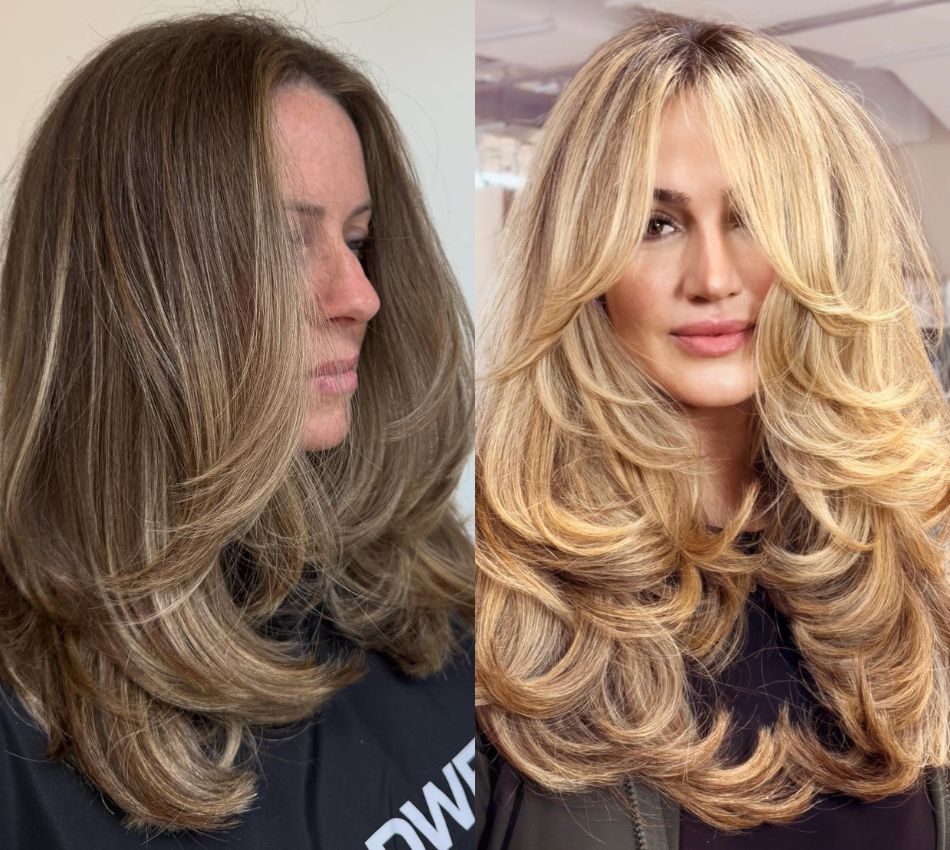
From pixie-length crops to waist-grazing cascades, these 60 stylist-approved layered haircuts show exactly how the right layers transform every hair type, length, and texture.
Layered haircuts remove weight, build movement, and reshape the silhouette of your hair, but the technique matters as much as the idea. A long razor-cut layer on thick hair solves a completely different problem than a short, point-cut layer on fine strands, and getting the wrong type of layering is one of the most common reasons people leave the salon disappointed. Below are 60 variations organized by length and texture so you can find a reference photo that actually matches your hair.
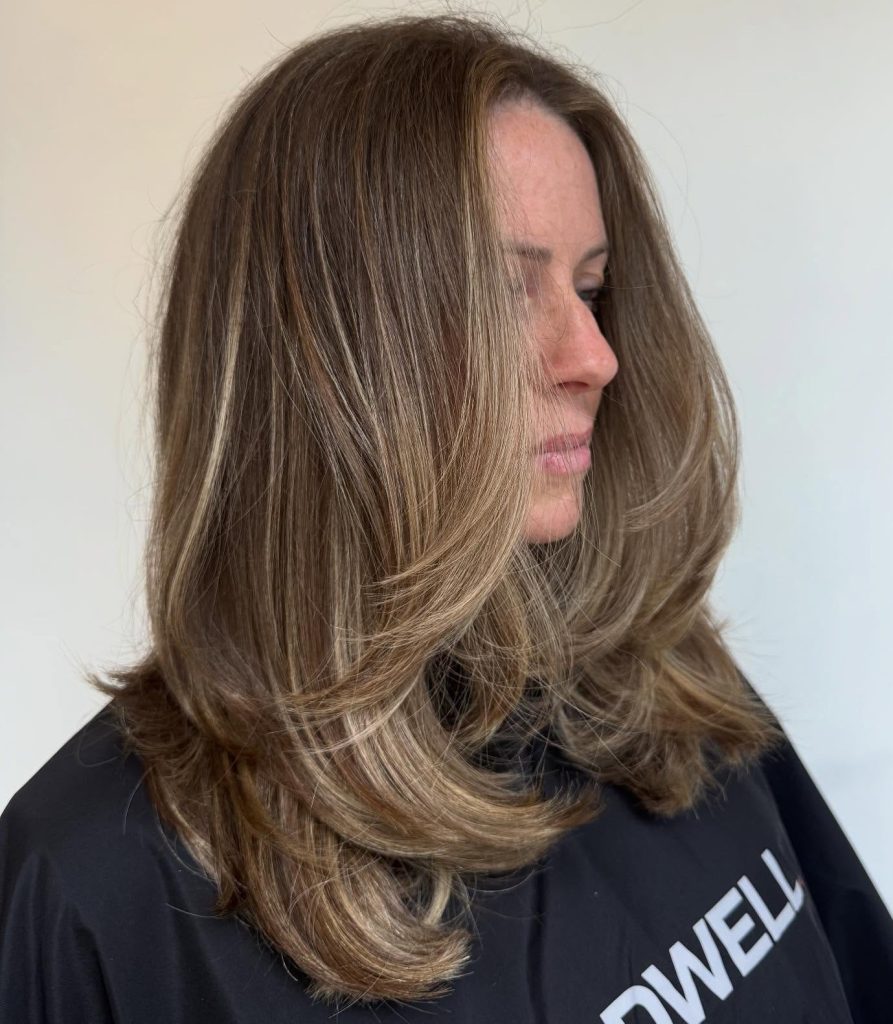
You’ll find options for short, medium, and long hair, plus a dedicated section on texture-specific layering for wavy, curly, coily, fine, and thick hair. After the gallery, there’s a face shape compatibility breakdown and salon communication tips — everything you need to walk in with a plan and walk out with the right cut.
| Category | Best For | Maintenance |
|---|---|---|
| Short Layers | Fine to medium hair, round and heart faces | Trims every 4–6 weeks |
| Medium Layers | All textures, most versatile range | Trims every 6–8 weeks |
| Long Layers | Medium to thick hair, oval and oblong faces | Trims every 8–10 weeks |
| Texture-Specific | Tailored to wavy, curly, coily, fine, thick | Varies by texture |
Short Layered Haircuts
Short layered haircuts work hardest when your hair needs volume at the crown or movement around the face without length to weigh it down. If you’re considering a shorter pixie or cropped cut, adding layers makes the grow-out phase significantly more manageable.
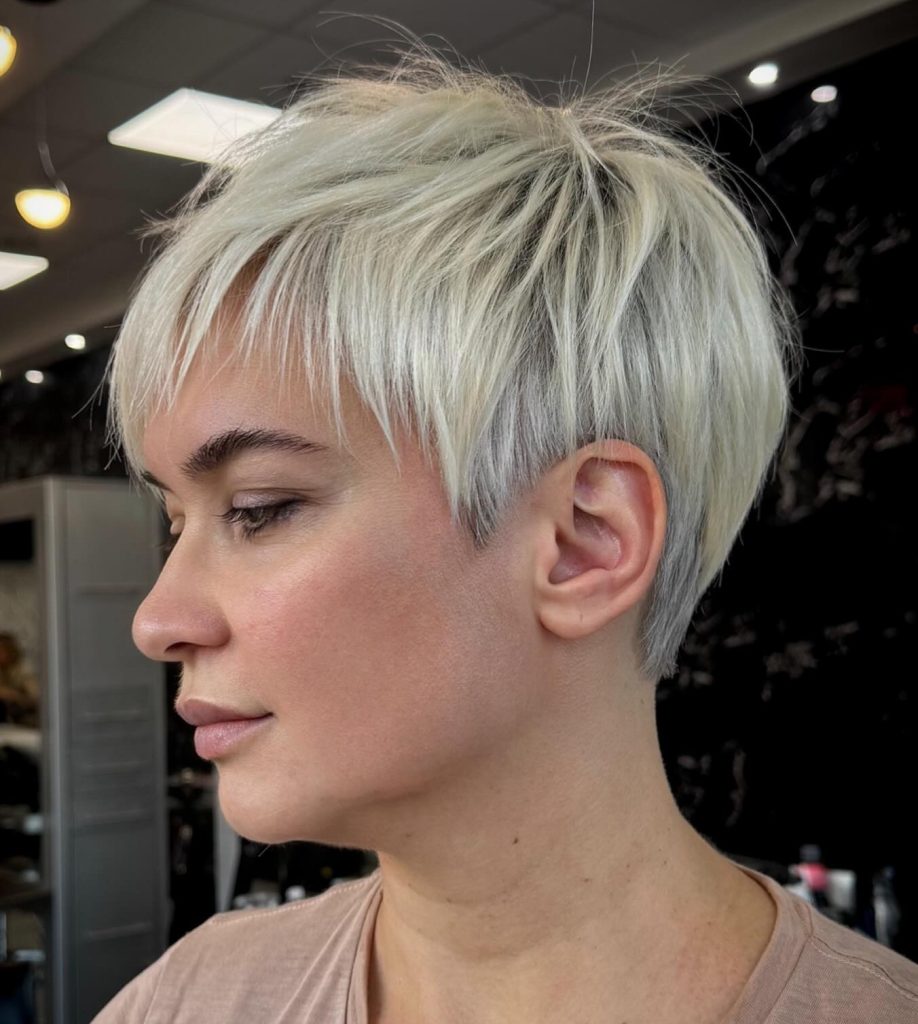
1. Textured Pixie with Feathered Layers
Point-cut layers through the crown and sides create lift without bulk, making this a strong option for fine hair that falls flat in one-length cuts. A small amount of texturizing paste gives it daytime shape.
2. Ear-Length Layered Bob
Heart-shaped and oval faces benefit most from this length, where the layers end right at the cheekbone and create a soft frame. Expect trims every 4–5 weeks since this cut loses its shape faster than longer bobs.
3. Chin-Length Choppy Layers
Razor-cut choppy layers eliminate the stiffness that comes with a blunt bob on thick hair. If you usually airdry, this cut really plays along. The texture settles in nicely without heat styling.
4. Short Shag with Side-Swept Bangs
Unlike a standard short bob, a short shag distributes layers throughout the interior, creating volume in the mid-lengths rather than at the ends. Side-swept bangs soften the forehead without the full commitment of a blunt fringe.
5. Cropped Layered Cut for Thick Hair
Thick hair at short lengths can puff out sideways without strategic layer placement. Internal layers through the crown and nape reduce bulk while preserving the perimeter weight. Tell your stylist you want weight removed gradually.
6. Wispy Layered Pixie Bob
Sitting between a pixie and a bob, this hybrid uses wispy, feathered layers to blur the line between the two. If your hair has a slight wave, the natural bend adds movement that straight-haired versions need a curling iron to replicate.
7. Short Layered Cut with Curtain Bangs
Stylists often recommend this combination for round faces because the center part and face-framing pieces create a vertical line that visually narrows the width. A lightweight volumizing mousse at the roots keeps the bangs from going flat by midday.
8. Tapered Layered Crop
Graduated shorter toward the nape and longer through the crown, this tapered cut builds natural lift without product or blow-drying. Works especially well on straight hair that needs the illusion of body.
9. French Bob with Subtle Layers
Adding subtle internal layers to a traditionally blunt French bob prevents the heaviness that makes standard bob haircuts fall flat on fine textures. The layers are hidden within the cut, giving you a neat outline with movement happening underneath.
10. Short Stacked Layers
Stacked layering at the back creates a rounded, lifted silhouette visible from the side and behind. If your hair clings to the back of your neck, stacking solves that and adds visual volume at the crown simultaneously.
11. Layered Undercut Bob
An undercut removes the densest weight from the nape, so the visible top layers have more bounce and movement. Designed specifically for very thick or coarse hair; fine hair doesn’t have enough density to support the undercut without revealing it.
12. Short Razored Layers
Bring this photo and ask for razor cutting through the mid-lengths and ends. The feathered, airy texture is what separates this from scissor-cut layers. One caveat: razor cutting is not ideal for hair that’s already damaged, because the technique can fray fragile ends.
13. Layered Bixie Cut
A bixie relies on layering to create its signature tousled shape. This length suits diamond and heart-shaped faces well because the volume lands at the widest point of the cheekbones.
14. Short Layered Cut for Fine Hair
Fine hair at short lengths needs careful layer placement to avoid looking thin at the ends. Ask your stylist for point cutting rather than razor cutting. Point cutting keeps more weight in each strand, giving fine hair the density it needs to look full.
15. Messy Short Layers with Highlights
Dimensional highlights make the layered structure more visible by creating contrast between the tones on each layer. A matte texture spray and finger-styling is all you need. The highlights also add depth that makes fine hair appear thicker.
Medium-Length Layered Haircuts
Medium-length layered haircuts — roughly from collarbone to shoulder — offer the most flexibility of any length category. There’s enough hair to pull back or style down, and layers at this length are forgiving during the grow-out phase.
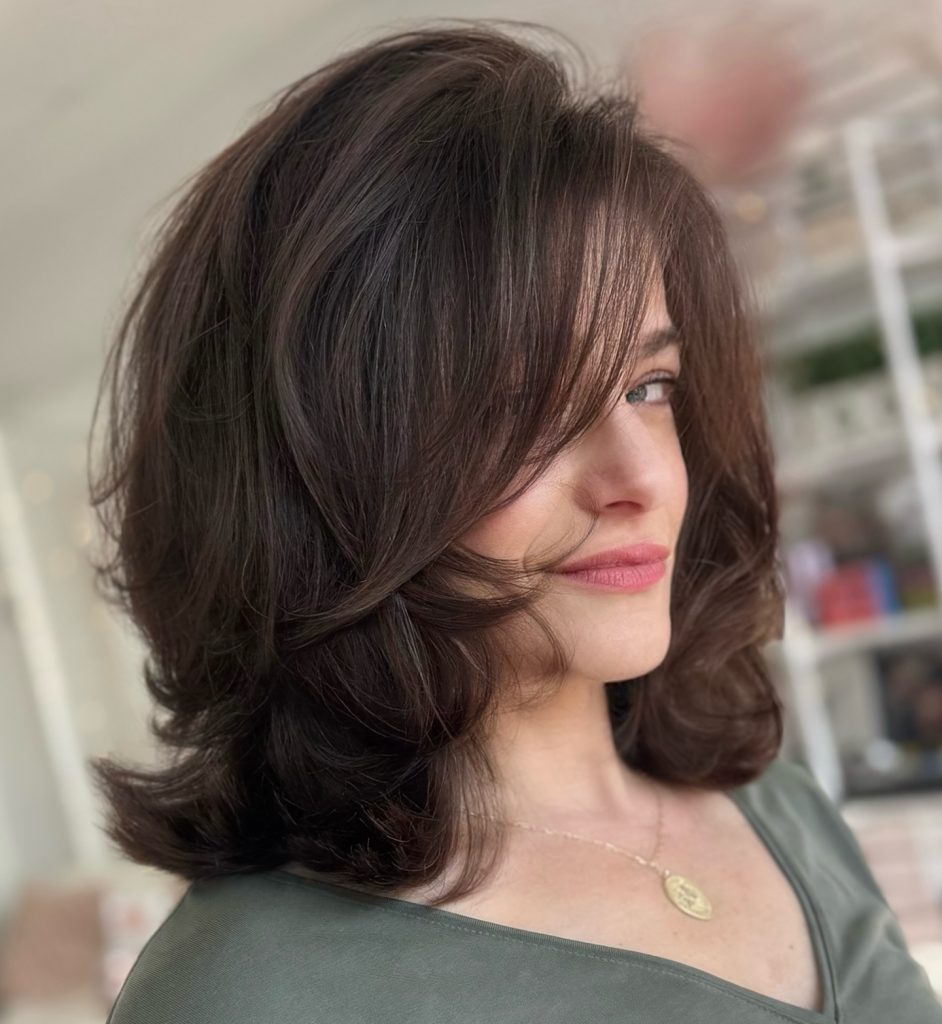
16. Collarbone-Length Layered Lob
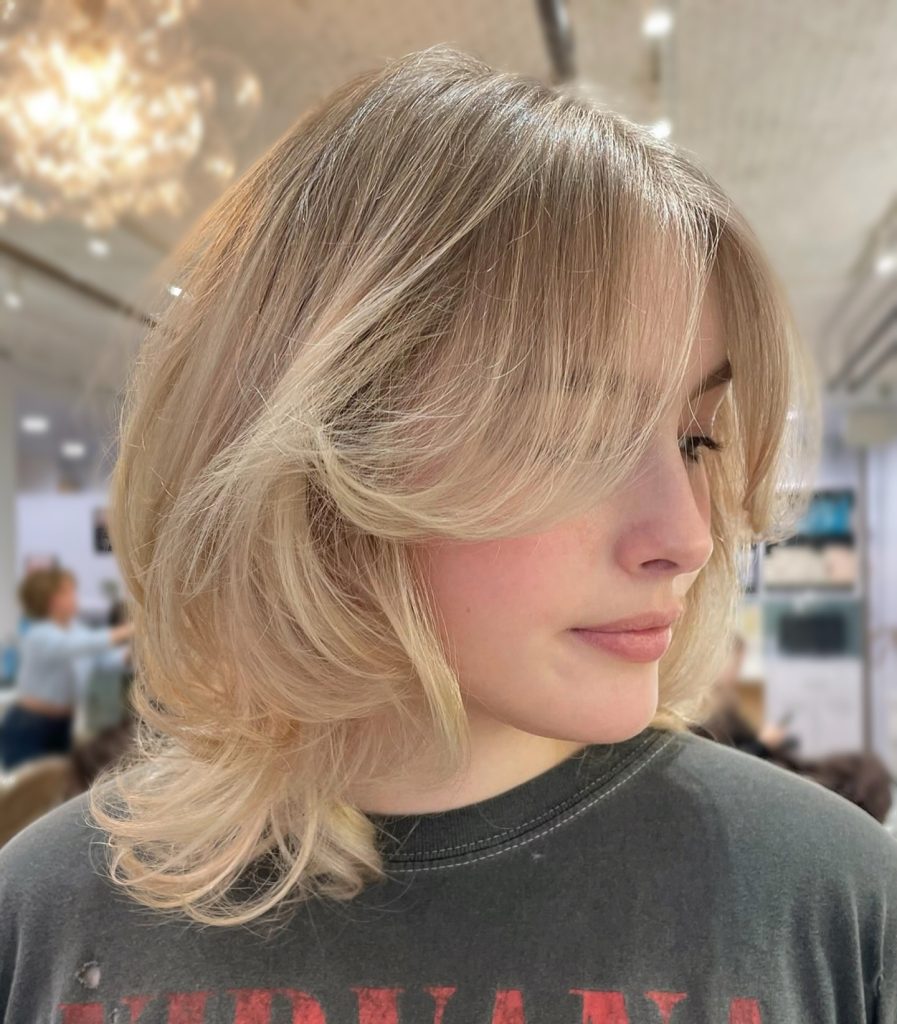
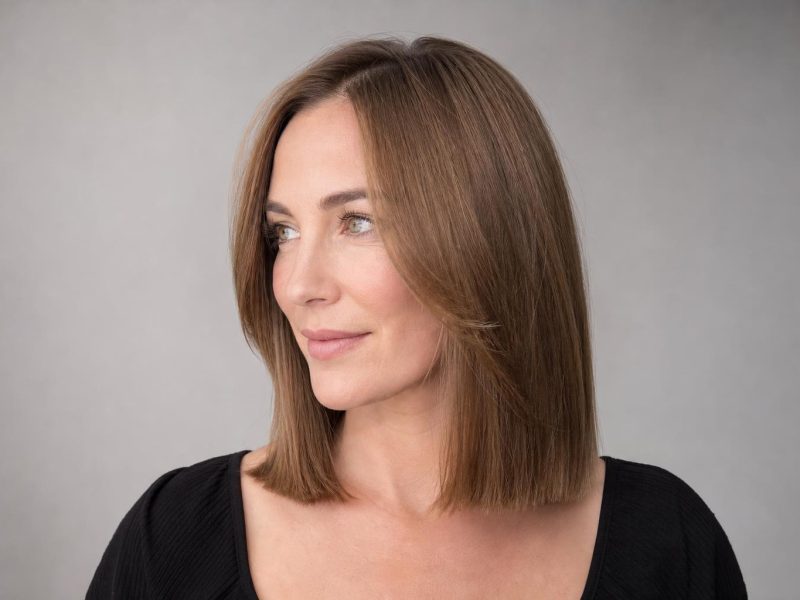
The longest layers hit the collarbone while shorter interior layers start at chin level, building movement through the lower half. One of the most universally flattering cuts on oval and square faces because the layer placement softens the jaw.
17. Medium Layered Shag
A modern shag uses softer layering than the ’70s original and works best on medium-to-thick hair that needs weight removal. The result is a light, airy shape that moves easily and still feels substantial.
18. Feathered Layers with Face Framing
Feathered layers curve outward at the ends, adding width and airiness at the shoulder line. Achieve this with a round brush — roll each section outward and hold for 5–8 seconds before releasing.
19. Medium Wolf Cut with Curtain Bangs
The wolf cut creates a sharp contrast between short crown layers and longer pieces below. This works on wavy textures with minimal effort but requires daily styling on straight hair to prevent the layers from looking flat.
20. Layered Midi Cut for Thick Hair
Thick hair at medium length tends to form a triangle shape without layers. Internal layers and texturizing through the ends redistribute that weight. Trims every 6–7 weeks keep the shape clean.
21. Textured Medium Layers with Balayage
Hand-painted balayage highlights follow the natural sweep of each layer, making the dimension look organic. The lighter tones catch light where the layers flip and separate, creating depth without heavy lifting from styling tools.
22. Blunt Medium Cut with Internal Layers
From the outside, this looks one-length with a clean perimeter. Inside, the layers remove bulk from the mid-shaft, so the hair swings and moves without looking thinned out. It’s a good option if you like clean lines but hate the helmet-like feel of a truly one-length cut.
23. Medium Layered Cut with Side Part
A deep side part redistributes volume to one side and creates asymmetry that flatters square and round faces. In the salon, ask your stylist to cut the layers with your part in place so they frame correctly.
24. Flippy Layered Lob
The ends curve outward at shoulder level, giving this lob a retro-modern bounce. A 1.5-inch curling iron flipped outward on the bottom two inches creates this effect in under 10 minutes.
25. Medium Choppy Layers
Heavy, disconnected chopping creates a rough, textured silhouette. Despite looking high-maintenance, choppy layers actually grow out better than precision layers because the unevenness blends naturally over time.
26. Shoulder-Length Layered Cut for Fine Hair
Fine hair at medium length needs fewer, strategically placed layers. Two to three long layers starting below the chin add movement without removing the weight that gives fine hair its fullest look.
27. Layered Medium Cut with Wispy Bangs
Wispy bangs fall lighter on the forehead than blunt fringe and transition into the face-framing layers without a hard line. Ideal for heart-shaped faces where a heavy bang can make the chin look too narrow.
28. Rounded Medium Layers
Beveled inward at the ends, rounded layers create a C-curve silhouette that looks polished without appearing stiff. A round brush during blow-drying sets this shape in about 15 minutes.
29. Medium Layered Cut with Highlights
Foil highlights on the outer layers create contrast that emphasizes movement. Even air-dried, the tonal variation makes the layers visible and defined. Color and cut together typically last 2.5–3.5 hours in the chair.
30. Tousled Medium Layers with Curtain Bangs
Loose waves paired with curtain bangs create effortless movement that works on day-two hair as well as freshly styled. Scrunch a sea salt spray into towel-dried hair and air-dry — no heat needed.
Long Layered Haircuts
Long layered haircuts preserve length while solving the flatness and heaviness that come with one-length hair past the shoulders. Most long cuts need fewer layers than people expect, placed in the right spots rather than stacked on top of each other.
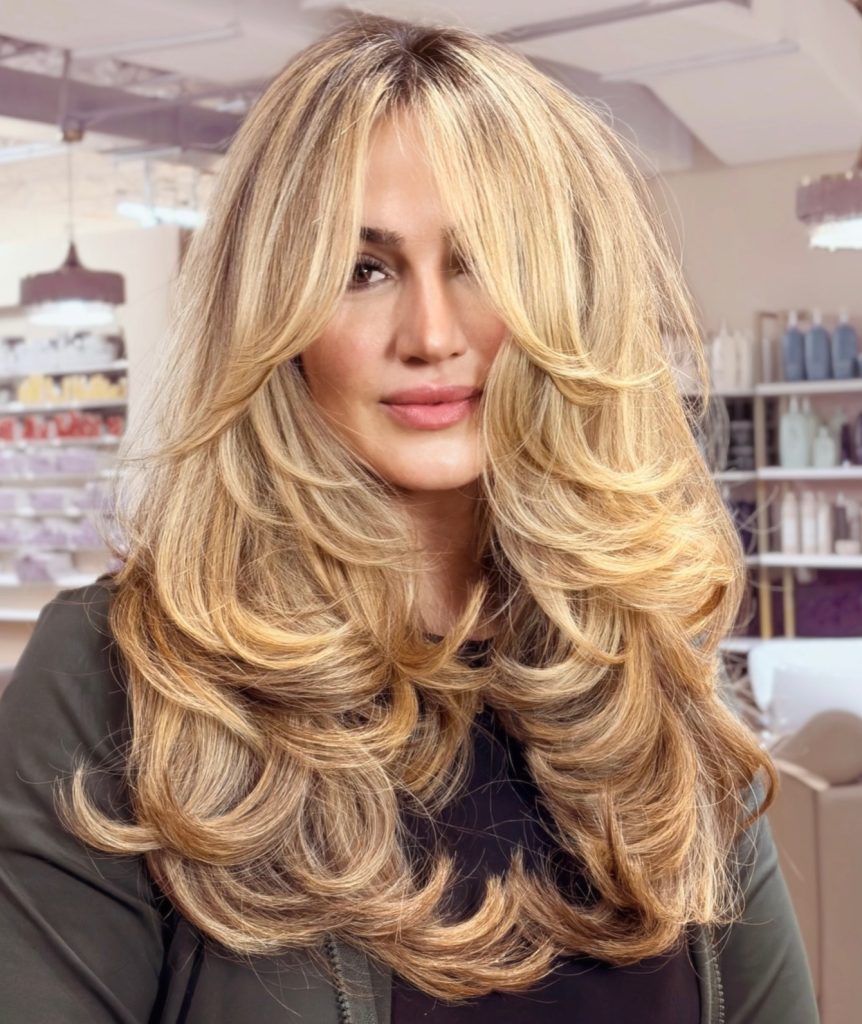
31. Classic Long Layers
The shortest layer starts at chin level and the longest hits mid-back, with a smooth gradient between them. This foundation cut suits nearly every face shape with minor adjustments: deeper face framing for round faces, less for oval.
32. Long Face-Framing Layers
Layers only appear around the face, starting at the jawline and blending into the full length by shoulder level, while the back stays one length. Ideal if you want dimension without sacrificing ponytail thickness.
33. Waist-Length Layered Cut
At this length, heavy layers make the ends look scraggly. Two to three subtle layers starting below the bust line are enough to add movement. Stylists recommend trims every 10–12 weeks for waist-length hair.
34. Long Layered Cut with Curtain Bangs
Curtain bangs add a frame to long layers that otherwise have no shape around the face. The bangs grow out gracefully. They blend into the face-framing layers within 8–10 weeks if you decide not to keep them.
35. V-Shaped Layered Cut
The layers form a V when viewed from behind, with the sides shorter than the center back. Flattering on thick, straight hair — on fine hair, the V can leave the ends looking sparse, so a U-shape is more forgiving.
36. Long Feathered Layers
Feathered layers flip outward at the tips, creating an airy, updated shape. A round brush flicking each layer outward is the fastest technique. Holds best on straight-to-wavy textures with medium density.
37. Layered Cut with Money Pieces
Two lightened face-framing sections create instant dimension that emphasizes the shortest layers around the face. A low-maintenance color option — roots grow out gracefully without harsh lines.
38. Long Subtle Layers for Fine Hair
One or two long layers starting below the collarbone are enough. Anything shorter than chin level on fine strands will create transparent gaps. Ask for point cutting at the ends to add texture without removing weight.
39. Long Choppy Layers
Disconnected, choppy layers create texture and an intentionally rough edge. This style looks best on second-day hair with a dry texture spray through the mid-lengths.
40. Cascading Layers with Side Part
A deep side part sends layers flowing diagonally across the front, creating a waterfall effect. Suits oval, square, and diamond face shapes well because the diagonal line draws the eye along the jawline.
41. Long Layered Shag
The long shag keeps length while adding short face-framing layers at cheekbone level and heavy interior layers through the crown. Wavy textures get the most from this cut. Straight hair needs a curling iron to prevent the layers from looking limp.
42. Butterfly Cut
Named for the way shorter layers fan out like wings at the collarbone while longer lengths flow below, the butterfly cut is a dramatic two-tier system. It suits thick hair best; on fine hair, the short layers don’t have enough volume to create the effect.
43. Long Layers with Blunt Ends
Blunt-cut ends on the bottom layer maintain the appearance of thickness, while the layers above create movement. A good compromise if you want layering but don’t like wispy, tapered ends.
44. Long Layered Cut with Bottleneck Bangs
Bottleneck bangs are shorter at the center and elongate toward the temples, naturally merging with face-framing layers. More forgiving than blunt bangs because the graduated length avoids a harsh line across the forehead.
45. Long Razored Layers
A razor creates paper-thin, wispy ends that give long hair an ethereal quality scissors can’t replicate. The trade-off: razor-cut ends fray faster on dry or damaged hair and may need more frequent trims.
Layered Haircuts for Different Textures
Texture changes everything about how layers behave. The same pattern that creates bouncy movement on straight hair can cause frizz on curly textures. Each entry below targets a specific hair texture with layering strategies that work with your natural pattern.
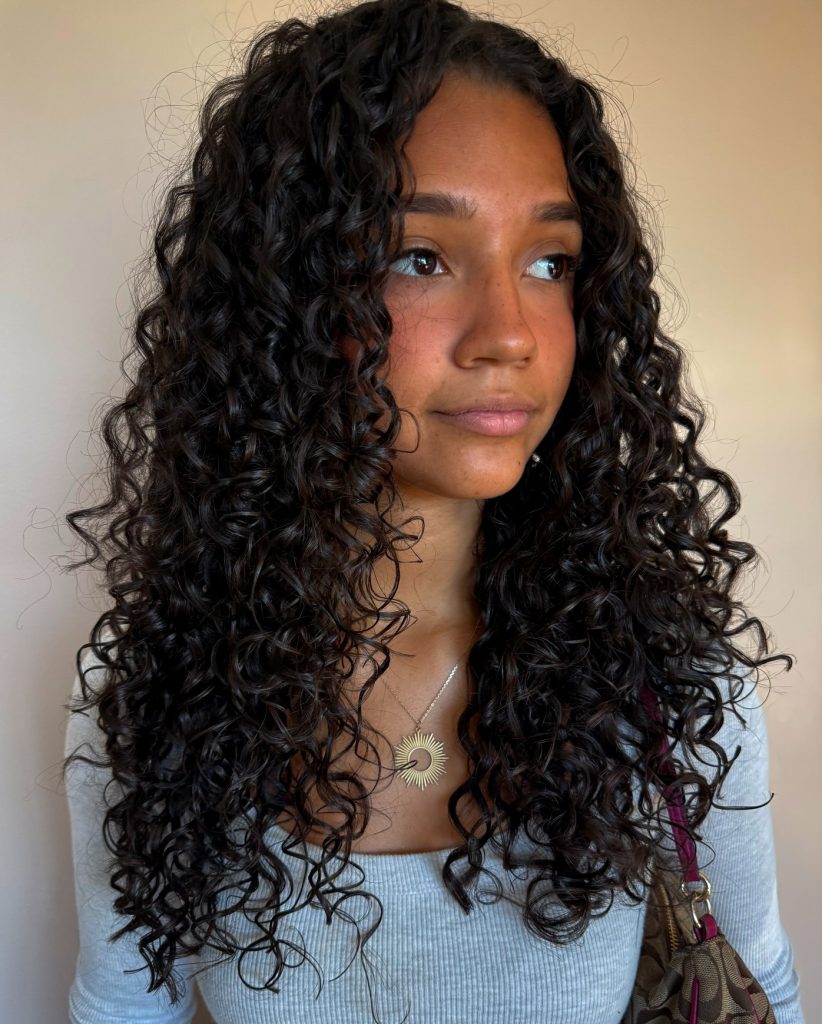
46. Layered Cut for Wavy Hair
Wavy hair (Type 2A–2B) is the most layer-friendly texture because the natural bend makes every layer visible. Medium-length layers starting at the chin enhance the wave pattern. A curl cream scrunched into damp hair defines waves without weighing them down.
47. Layered Cut for Curly Hair (Type 2C–3A)
Curly layers must be cut dry to account for shrinkage. Wet cutting can leave layers 2–3 inches shorter than intended. When sitting in the chair, ask for individual curl-by-curl shaping rather than uniform layers.
48. Layered Cut for Coily Hair (Type 3B–4C)
Coily textures need layers that reduce density without disrupting the curl pattern. Avoid traditional thinning shears on coily hair — they create frizz by cutting curls at random points within the coil structure.
49. Layered Cut for Straight Fine Hair
Fine, straight hair shows every layer distinctly, so fewer layers look fuller than many. Two long layers with point-cut ends create the illusion of thickness while adding movement.
50. Layered Cut for Thick Straight Hair
Without layers, thick straight hair falls heavy and flat. Internal layering through the mid-shaft removes enough bulk to let the hair swing. A medium-hold styling cream smoothed through the lengths prevents flyaways.
51. Layered Cut for Thin Hair with Volume Boost
Short-to-medium layers concentrated at the crown build height where thin hair needs it most. Keep the perimeter full — do not thin the ends, which would make them look transparent.
52. Long Layered Cut for Natural Curls
Long curly hair benefits from layers starting below the chin to prevent the triangle shape that happens when curls pile up at the bottom. Air-drying with a leave-in conditioner is all this cut needs.
53. Medium Layered Cut for Thick Wavy Hair
Thick, wavy hair at medium length is prone to looking bulky without proper layering. Texturizing shears through the interior, combined with face-framing layers, remove weight while keeping wave definition intact.
54. Short Layered Cut for Coarse Hair
Coarse hair has a thick diameter per strand and needs layers to prevent it from looking stiff. A smoothing serum applied to damp hair before styling controls frizz along the hairline.
55. Layered Cut for Heat-Damaged Hair
Strategic layers can hide damage while you grow it out. Removing the most damaged ends through graduated layers makes the remaining hair look healthier immediately. Use shears only, not a razor, since damaged hair splits further with razor cutting.
56. Layered Haircut for Gray Hair
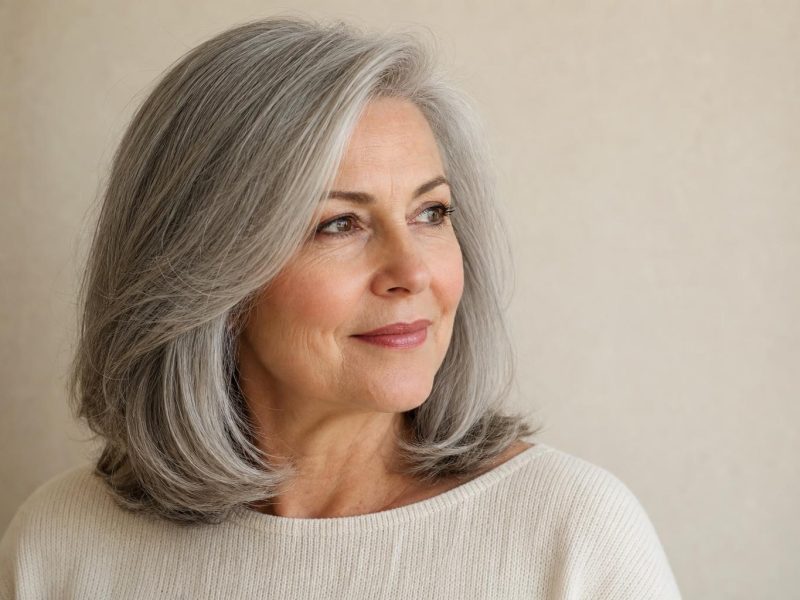
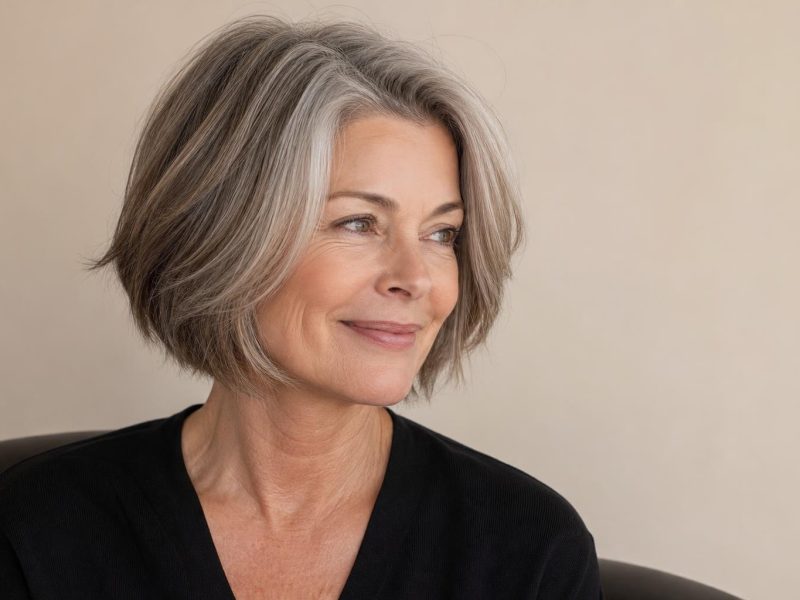
Gray hair tends to be coarser and wavier than pigmented hair, so layers need to account for the changed texture. Medium-length layers with a soft face frame complement the silver tone and add youthful movement.
57. Layered Cut for Low-Porosity Hair
Low-porosity hair resists moisture, and products tend to sit on top rather than absorbing. Lighter layers at medium length prevent product buildup from weighing the hair down. Use lightweight liquid products instead of heavy creams.
58. Layered Cut for High-Density Hair
High-density hair needs more aggressive layering to move freely. Your stylist may use texturizing shears and slide cutting through the interior. In the salon, this typically takes 45–90 minutes because the volume requires more sectioning.
59. Layered Haircut for Transitioning Hair
If you’re growing out a chemical treatment, layers can blend the line of demarcation between treated and natural growth. A layered cut at the midpoint of transitioning disguises the two textures so the contrast is less visible.
60. Layered Cut for Color-Treated Hair
Color-treated hair is more porous and fragile, so point cutting is safer than razor cutting on processed strands. Use a sulfate-free shampoo and a weekly hair mask to maintain both the color and the cut’s shape between appointments.
How to Choose the Right Layered Haircut for Your Face Shape
Layers can visually reshape your face, adding width where you need it and elongating where you don’t. If you’re unsure of your face shape, pull your hair back and trace the outline of your face on a mirror with a dry-erase marker — the shape will become obvious.
| Face Shape | Best Layer Placement | What to Avoid |
|---|---|---|
| Oval | Any length (layers starting at chin or below) | Very short crown layers |
| Round | Long face-framing layers below the chin; side parts | Chin-length layers that add width at the widest point |
| Square | Soft layers at cheekbone level to soften the jaw | Blunt one-length cuts that emphasize straight lines |
| Heart | Layers at chin and below to add lower width | Volume at the temples that widens the forehead |
| Oblong | Medium layers adding side volume; curtain bangs | Long one-length hair that adds vertical length |
| Diamond | Layers at chin level to balance forehead and jaw | Heavy cheekbone-height layers emphasizing width |
Stylist tip: Ask your stylist to cut the layers while your hair is dry rather than wet. Dry cutting lets the stylist see exactly where the layers fall naturally, which matters more for wavy and curly textures, where shrinkage changes the finished length.
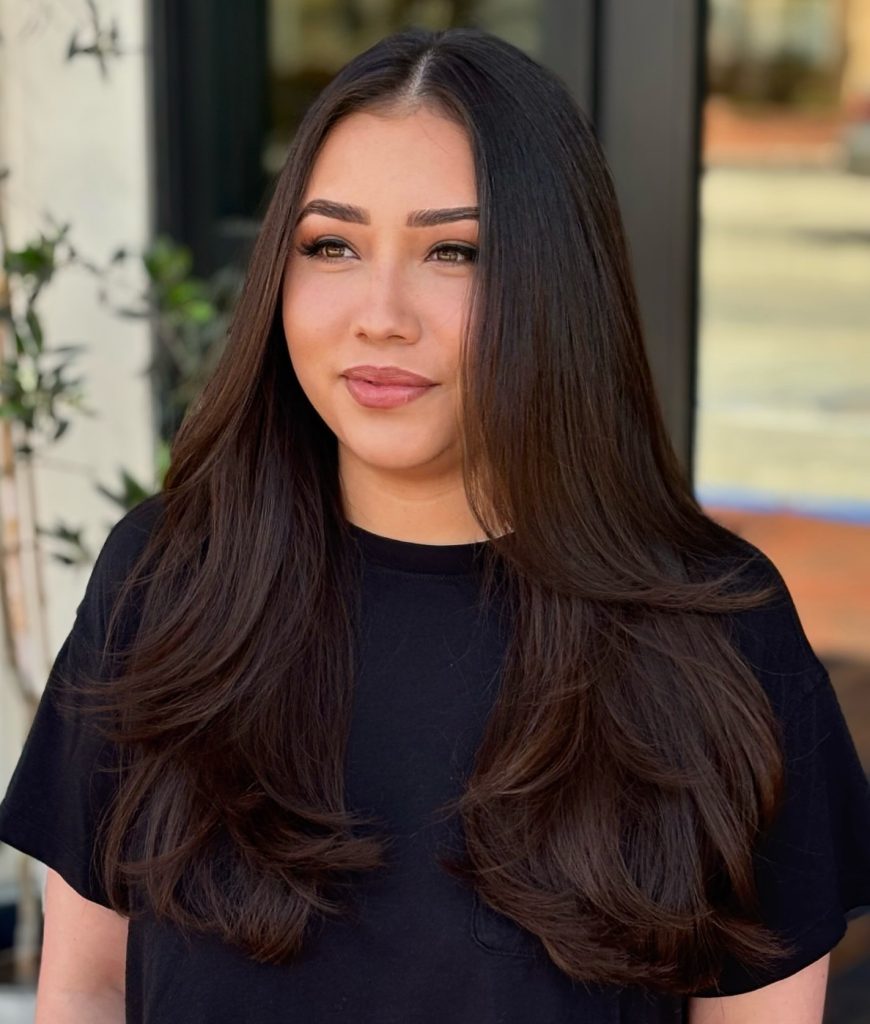
What to Tell Your Stylist
Walking into a salon with a clear plan makes a noticeable difference in your results. Start with your reference photo — bring two or three from this gallery — and tell your stylist where you want the shortest layer to start (cheekbone, chin, shoulder). Mention your daily styling routine so they can calibrate how much effort the cut requires.
- For movement without dramatic change: “I want long, blended layers that add movement but keep most of my length.”
- For volume on flat hair: “Can you add internal layers through the crown and mid-shaft to build lift?”
- For reducing bulk: “I need layers to remove weight. Can you texturize the interior without thinning the ends?”
- For a face frame: “I’d like face-framing layers starting at [cheekbone/chin/jawline] level.”
- For a shaggy texture: “I want choppy, disconnected layers, not blended or seamless.”
Stylist tip: Tell your stylist what you don’t want, too. “I don’t want wispy ends” or “I don’t want anything shorter than my chin” prevents misunderstandings that are hard to fix once the hair is on the floor.
FAQ
What Is the Difference Between Layers and a Shag?
Layers are a technique applied within many different haircuts to remove weight and add movement. A shag is a specific haircut that uses heavy, visible layering concentrated around the crown and face. All shags have layers, but not all layered haircuts are shags.
Can I Get Layers If I Have Very Fine Hair?
Yes, but fewer is better. One to three long layers with point-cut ends add movement without making fine hair look thin at the ends. Avoid heavy layering, razor cutting, or thinning shears, all of which remove weight that fine hair can’t afford to lose.
How Often Should I Trim Layered Hair?
Short layered cuts need trims every 4–6 weeks. Medium-length layers hold up for 6–8 weeks. Long layered haircuts are the most forgiving, going 8–12 weeks between trims depending on growth rate and how precise the original cut was.
Do Layers Make Thick Hair Easier to Manage?
Layers are one of the best ways to manage thick hair because they redistribute bulk from the bottom through the mid-lengths. Internal layering removes weight without changing the visible shape, making thick hair lighter to style and faster to dry.
Should Curly Hair Be Cut Wet or Dry for Layers?
Curly hair (Type 2C and above) should almost always be cut dry. Wet cutting doesn’t account for curl shrinkage, which can be 2–4 inches depending on your pattern. A dry cut lets the stylist see the finished curl shape and place each layer where it will actually fall.
Will Layers Help My Hair Look Thicker?
Layers can create the illusion of thickness when placed strategically — shorter crown layers build height, and face-framing layers add dimension. However, too many layers on truly thin hair will make the ends sparse. Add shape in the top two-thirds while keeping the bottom full.
What Is the Difference Between Point Cutting and Razor Cutting?
Point cutting uses scissor tips to cut into the ends at an angle, keeping each strand intact. Razor cutting slices through the hair, creating thinner, tapered ends. Point cutting is safer for fine or damaged hair; razor cutting works best on healthy, medium-to-thick textures.
Finding the right layered haircuts comes down to matching the technique to your specific hair length, texture, and face shape, not picking a style because it looks good on someone else. Use these 60 examples as a starting point, bring your top picks to the salon, and work with your stylist to adapt the layering placement for your individual situation. The more specific you are about what you want, the better your results will be.
Hair results vary based on your natural hair type, texture, density, and condition. Always consult with a licensed hairstylist before making significant changes, especially with chemical treatments or dramatic length changes. Photos may show styled results that require professional tools and products to replicate.
1 response