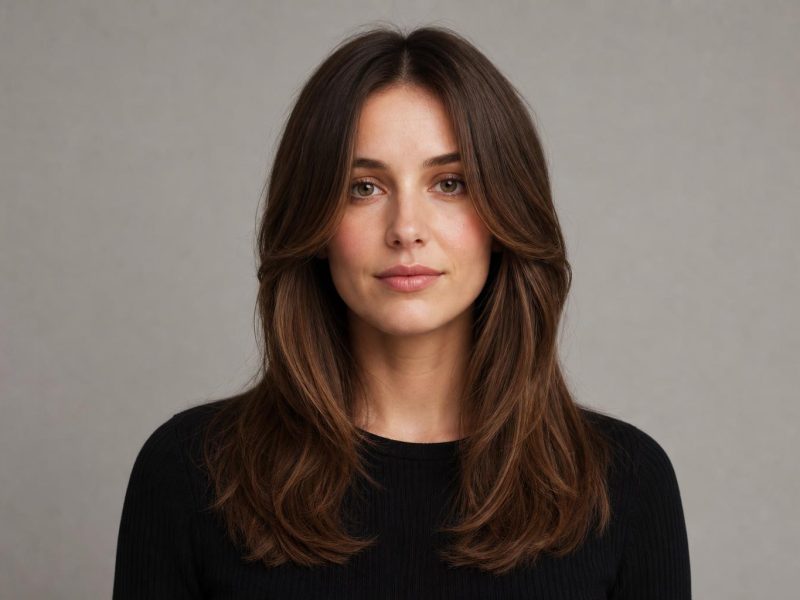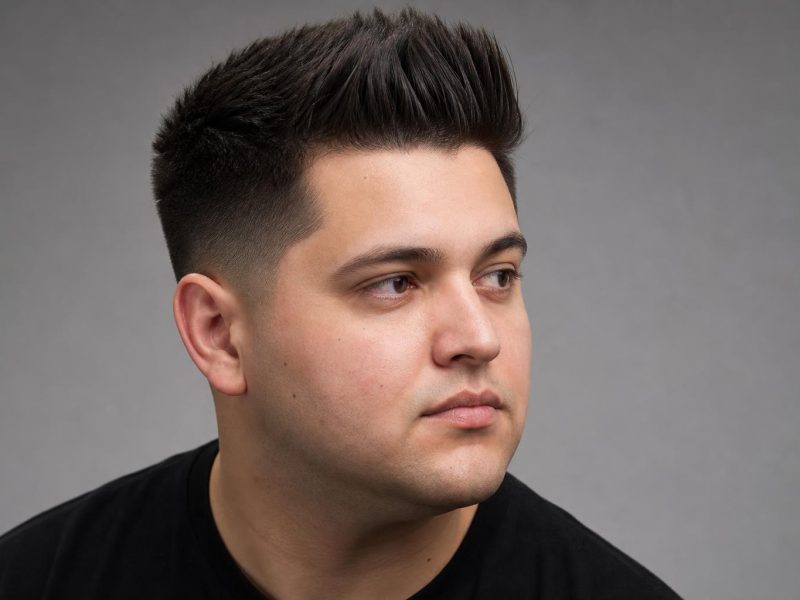


A square jaw is a feature worth keeping, so the goal is not to hide it but to stop the haircut from landing its heaviest weight directly on top of it.
Square face haircuts work when the shortest layer starts at or below the chin and the ends turn inward rather than flicking out at the jaw. That single placement rule decides whether a cut softens the corners of your jawline or squares them off further, and it applies whether you are cutting to your chin or to the middle of your back. Below are 30 cuts organized by length, from chin-skimming bobs through long layered shapes.
Each entry names the structural detail that makes it work, who it suits by hair type, and what to ask for at the salon. After the gallery come a square-versus-round self-check, a layer-placement table by hair texture, salon language, and honest maintenance numbers.
| Factor | Details |
|---|---|
| Best for | Equal forehead, cheekbone and jaw width with a visible corner below the ear |
| Key rule | Shortest layer starts at chin level or lower; ends curve in, not out |
| Works with | Fine to coarse, straight through 4c, at any length from chin to mid-back |
| Avoid if | You want a blunt one-length cut that stops exactly at the jaw corner |
| Salon time | 45 to 75 minutes for a cut; add 2 to 4 hours if color is involved |
How to Tell a Square Face from a Round or Rectangle One
Most haircut advice for square faces fails because people misdiagnose the shape. Square, round and rectangle all carry width through the lower face, but they need different cuts: a round face wants vertical length, a rectangle already has too much of it, and a square needs curve without extra length. The fastest way to separate them is the corner test. Place a fingertip just under one earlobe and slide it along the jawbone toward your chin. On a square face your finger turns a distinct corner within the first inch. On a round face it follows a continuous curve with no corner at all.
The second check is proportion. Measure your face length from hairline to chin, then your cheekbone width. If those two numbers land within roughly half an inch of each other and your jaw is nearly as wide as your forehead, you are square. If the length runs noticeably longer than the width while the jaw still corners sharply, you have a rectangle face shape, and the layering advice flips: rectangles need width at the cheekbones, not more length. Our walkthrough on measuring your face shape properly covers the four measurements in order.
| Check | Square | Round | Rectangle |
|---|---|---|---|
| Jaw corner | Sharp corner within an inch of the ear | No corner, continuous curve | Sharp corner, same as square |
| Length vs width | Nearly equal | Nearly equal | Length clearly greater |
| Widest point | Forehead and jaw tie | Cheekbones | Forehead and jaw tie |
| What the cut needs | Curve and diagonal movement at the jaw | Vertical lines and height at the crown | Width at the cheekbones, bangs to shorten |
| Worst cut | Blunt jaw-length bob, center part | Chin-length bob with a center part | Long one-length hair with no bangs |
Stylist tip: Take the corner test in a mirror with your hair pulled straight back and your chin level. Tilting your head even slightly rounds the jaw in your own reflection, which is why so many people with square faces are convinced they are round and then choose cuts that add width exactly where they do not want it.
Short Square Face Haircuts from Chin to Jaw
Short cuts are where square faces get the most conflicting advice, because the standard rule says avoid anything that stops at the jaw. The rule is half right. A blunt line landing on the jaw corner does mirror it, but a short cut with graduation, an inward curve, or an off-center part comes across as soft at the same length. The eight cuts below all stay between chin and jaw and use shape rather than length to break up the corners.
1. Chin-Length Bob with Inward-Turning Ends
Cut to one length at the chin, then the perimeter is over-directed forward so every end curls slightly toward the throat instead of flicking outward. That inward hook is the whole trick: it draws a curve across the widest part of the jaw where a straight line would draw a corner.
2. Soft Undercut Pixie for a Wide Jaw
Where the jaw is the widest measurement on the face, taking weight out below the ear does more than adding it above. A hidden undercut at the nape removes bulk from the corner zone while the top stays long enough to fall over one side of the forehead. Women with a strong jaw and fine hair often get a better result here than from a bob, and our gallery of pixie cuts shaped for a square jaw covers the variations in more detail.
3. Textured Crop for Thick Coarse Hair
Coarse hair with high density pushes outward at the jaw in any blunt short cut, which doubles the width you are trying to soften. Deep internal texturizing through the mid-lengths hollows the shape out from inside while the outline stays intact.
4. Tousled Chin Bob with a Deep Side Part
Take the part two inches off center and the diagonal line it creates cuts across the square symmetry of the face before anyone gets to the jaw. Rough-dry the roots with your fingers, then bend the ends inward with a flat iron rolled a quarter turn.
5. Grown-Out Pixie with Longer Sides
Somewhere around week ten a pixie hits a length where the sides fall just past the ear and hook toward the cheekbone, which is the single most flattering stage of the grow-out on a square face. Rather than fighting it, book a trim that cleans up the nape and leaves the sides alone.
6. Ash Brown Bob with a Face-Framing Money Piece
Two lightened pieces starting at the outer corner of each eyebrow pull the eye up toward the cheekbones and away from the jaw line. Cool ash tones work better than golden ones here because warmth expands, and a warm halo around a strong jaw widens it. Keep the lightened sections narrow, no wider than an inch each, or the effect turns into a stripe.
7. Angled Bob Longer at the Front
Ask for a bob that is a full inch longer at the front than at the back, with the angle starting behind the ear rather than at the crown. The exact phrasing that gets this right is “a soft forward angle, ending below the jaw corner, no stacking.” Say the last part out loud, because a stacked back on a square face throws volume to exactly the height that makes the jaw look wider.
8. Shaggy Bob Instead of a Blunt Bob
A blunt bob and a shaggy bob can be the same length and produce opposite results on a square face. The blunt version draws one uninterrupted horizontal line, while the shaggy version breaks that line into three or four staggered lengths that the eye cannot resolve into a straight edge.
Mid-Length Square Face Haircuts from Jaw to Collarbone
Mid-length is the safest zone for a square jaw because the weight of the cut falls below the corner rather than on it. Anything landing between the bottom of the jaw and the collarbone gives your stylist room to start layers at chin level and still leave enough length underneath for the ends to swing. These eleven cuts cover straight, wavy and curly texture at that length.
9. Collarbone Lob with Point-Cut Ends
Point cutting into the perimeter with the scissors held vertically breaks the bottom line into a soft feathered edge instead of a ruler-straight one. On a square face the payoff is at the sides, where a hard edge would otherwise echo the jaw two inches below it. A collarbone-length bob holds this shape better than a shoulder-length cut, which tends to push the ends outward where they hit the shoulder.
10. Layered Lob for a Square Face with a Wide Forehead
Not every square face is balanced top to bottom. Where the forehead is the wider of the two measurements, the layers need to start higher, around cheekbone level, so the fullness lands at the middle of the face and narrows the top by comparison.
11. Wavy Lob for Fine Hair
Fine hair loses its shape fastest at the jaw, where a square face needs the most movement. A lob cut with very few visible layers but plenty of internal layering underneath the surface keeps the ends dense while giving the mid-lengths something to bend around. A golf-ball of mousse on damp roots before rough-drying is the difference between a wave and a droop by lunchtime.
12. Blow-Dried Lob with a Bend at the Ends
Wrap the last three inches of each section inward around a two-inch round brush and hold the heat for four seconds before releasing. Working the brush under the section rather than over it is what turns the ends toward the neck instead of away from it.
13. Low-Upkeep Lob with Internal Layers
Because the layers live inside the cut rather than on the surface, this shape grows out without a visible shelf appearing anywhere. Ten to twelve weeks between trims is realistic, against six to eight for a heavily layered version. The trade-off is that it needs a texturizing spray on day two or the internal weight makes it hang flat.
14. Caramel Balayage on a Shoulder Lob
Painted color placed low and toward the ends adds visual depth exactly where the hair swings away from the jaw, which pulls attention downward and outward from the corners. Have the painting start below cheekbone level rather than at the root. Warmer caramel works here despite the general rule against warmth, because it is far enough from the face not to widen it.
15. Curtain Bang Lob You Can Ask For by Name
The request that produces this cut is short: “a collarbone lob with curtain bangs that start at the cheekbone and blend into the length by the chin, cut dry so I can see where they fall.” Asking for the blend point specifically is what stops you from leaving with bangs that stop dead at the jaw. Our guide to asking for curtain bangs has the full consultation script.
16. Curved Lob Instead of an A-Line
An A-line lob drops in a straight diagonal from back to front, and that straight edge is another line for a square face to echo. A curved lob follows a shallow C shape through the same distance, so the outline never presents a flat plane beside the jaw.
17. Razor-Cut Shoulder Shag
A razor held at a shallow angle removes weight along the length of the strand rather than at a single point, which produces ends that taper and separate on their own. On medium to thick hair this creates the piecey outline a square jaw benefits from without needing product to hold it. Fine hair should skip the razor and ask for slide cutting instead, since a razor takes too much from strands that are already thin.
18. Side-Swept Lob for a Short Square Face
When face length and width are genuinely equal, the cut needs to buy back a little vertical space. Sweeping the whole front section to one side and leaving a little unstyled height at the crown adds close to an inch of apparent length without touching the cut.
19. Diffused Curly Lob
Curl pattern does most of the softening on its own, so a curly lob needs less layering than a straight one, not more. The real risk is a triangular silhouette where the curls stack wide at the jaw and stay tight at the crown. Ask for a dry cut that removes bulk from individual curls at jaw level while leaving the perimeter length alone.
Long Square Face Haircuts Past the Collarbone
Length alone does not flatter a square face. Long hair hanging in one flat plane on either side of the head frames the jaw like a picture frame, which is why women with square faces often feel their long hair looks heavy without knowing why. Every cut in this section puts a break, a bend or a diagonal somewhere between the cheekbone and the collarbone.
20. Long Layers Starting Below the Chin
Style these by tipping your head forward, rough-drying the roots, then flipping back and letting the layers fall where they want. The first layer landing an inch below the chin means the shortest piece never draws a line across the jaw itself.
21. Grow-Out Friendly Long Shag
Of every cut here, a long shag holds its shape the longest, because the layers are already staggered and there is no single line to lose. Twelve weeks between trims is normal, and the shape at week eleven looks close enough to week two that most people will not notice.
22. Honey Lowlights on Long Dark Hair
Rather than lightening, this variation deepens alternating sections so the surface breaks into visible strands with their own shadow. The dimension stops long dark hair from behaving like a solid dark rectangle beside a square jaw. Woven fine and kept below the ear, lowlights need refreshing only every four to five months.
23. Face-Framing Curtain Bangs on Long Hair
Bring a photo and ask for the shortest point to land at the outer corner of your eye, with the sweep finishing past the chin, not at it. Adding “please cut these dry, in their natural fall” to the request saves you from bangs that shrink an inch once they dry.
24. Butterfly Layers Instead of a Wolf Cut
Both cuts stack short layers over long ones, but a wolf cut makes the contrast sharp and visible while butterfly layers keep the shorter pieces long enough to blend into the length. Square faces get more from the butterfly version, because visible contrast at the jaw acts like another edge.
25. Slide-Cut Long Layers
Sliding partially closed scissors down a section removes weight gradually rather than at a fixed point, which leaves a soft transition instead of a step. On long hair around a square face the result is layers you can feel but cannot see a line from. It works on straight and wavy hair and should be avoided on tight curls, where it causes uneven shrinkage.
26. Long Cut for a Square Face with High Cheekbones
A square jaw paired with genuinely prominent cheekbones needs very little correcting, and heavy layering flattens the cheekbone rather than the jaw. Keep the layers long and few, starting no higher than the collarbone, and let the natural fall of the hair do the framing.
27. Long Coily Cut with a Rounded Shape
Coily and 4c textures build width at the sides before they build length, so a square face benefits from shaping that adds height at the crown to balance it. Cut in stretched sections but checked in its natural state, the shape should come out as a soft oval rather than a wide triangle. Ask specifically for weight removed at the temples, which is where the width usually gathers.
28. Deep-Side-Part Long Layers
Move the part until it lines up with the arch of one eyebrow, then blow the front section back and across. The diagonal sweep drops a shadow across one side of the forehead, and the asymmetry it creates is the cheapest softening available on a square face.
29. Six-Month Long Layers for Minimal Trims
Long layers cut with a wide gap between the shortest and longest pieces can genuinely go five to six months between appointments, provided you accept some split ends at the perimeter. A weekly bond-building treatment holds the ends together longer than a trim schedule alone.
30. Copper Melt on Long Face-Framing Layers
Melting a copper tone from a deeper root through brighter mid-lengths puts the lightest color at cheekbone height, lifting the eye above the jaw. Copper on a square face is a commitment: red dyes are highly water soluble and rinse away faster than any other tone, so plan for a color-depositing conditioner every third wash.
Where Layers Should Start on a Square Face by Hair Type
The starting point of the shortest layer is the one measurement that changes the outcome most, and it is not the same for every texture. Shrinkage, density and how much a hair type holds a bend all move the ideal starting height. Use the table below as the number to give your stylist, then let them adjust once they see how your hair falls.
| Hair Type | Shortest Layer Starts | Cutting Method | Avoid |
|---|---|---|---|
| Fine straight | At the chin, internal only | Point cutting, no razor | Visible surface layers, which thin the ends |
| Medium wavy | One inch below the chin | Slide cutting or light razor | Blunt perimeter at jaw height |
| Thick coarse | At the chin, plus internal debulking | Deep internal texturizing | Surface thinning shears near the face |
| Curly 3a to 3c | Below the jaw, dry-cut | Curl-by-curl dry cutting | Wet cutting, which lands two inches short |
| Coily 4a to 4c | Shape by silhouette, not by length | Stretched sectioning, checked shrunken | Width at the temples |
What to Tell Your Stylist
Face shape language confuses consultations more than it helps. Saying “I have a square face” invites your stylist to apply their own rulebook, and rulebooks differ. Describe the structure you want instead, in the order the cut happens: length first, then where the shortest layer starts, then which direction the ends should travel. A useful script is “keep the length at my collarbone, start the shortest layer an inch below my chin, and turn the perimeter inward, please, no outward flick at the jaw.”
Two more requests are worth making by name. Ask for the front section to be cut dry so you can both see where it falls against your cheekbone, and ask them not to stack the back, since crown volume at jaw height widens the lower face. If you want more detail on placement, our breakdown of where face-framing layers should start for each face shape gives the measurements to quote.
Stylist tip: Bring two photos, not one, and make them the same cut on two different people. A single reference photo tells your stylist what you like about the styling; two photos of the same shape tell them what you like about the cut, which is the part they actually control.
When a Softening Haircut Is Not the Right Choice
The whole softening framework rests on an assumption that a strong jaw needs correcting, and plenty of people would rather lean into it. There are also situations where the standard advice actively works against you.
- You like your jaw and want it visible. A blunt jaw-length bob with a center part frames a square jaw deliberately, and it is a genuinely good look worn on purpose rather than by accident.
- Your hair is very fine and already sparse at the ends. Layering for softness removes weight you cannot spare, so a one-length cut with an inward blow-dry gets you the curve without the thinning.
- You have less than five minutes for daily styling. Most of these shapes need a bend put into the ends, and air-dried straight hair will fall back into a flat plane at the jaw regardless of how it was cut.
- You are growing out a fringe. Adding face-framing layers mid-grow-out gives you two competing short lengths around the face, and the shorter one usually wins visually.
Maintenance and Styling
Short shapes lose their softening effect fastest, because the inward curve depends on the perimeter staying precise. Long layered shapes tolerate grow-out far better but need more daily product. The numbers below assume growth of about half an inch a month.
| Cut | Trim Frequency | Daily Styling | Grow-Out Behavior |
|---|---|---|---|
| Chin bob, inward ends | 5 to 6 weeks | 10 to 15 min | Ends drop past the jaw by week 6 and flatten |
| Soft undercut pixie | 4 to 5 weeks | 5 min | Improves weeks 8 to 12, then gets heavy |
| Collarbone lob | 8 to 10 weeks | 10 min | Forgiving; ends soften rather than shelf |
| Long shag | 10 to 12 weeks | 5 to 10 min | Best grow-out of any shape here |
| Curtain bangs | 6 to 8 weeks for the fringe alone | 3 to 5 min | Blend into face-framing layers naturally |
Product-wise, the shapes here need less than you would expect. A lightweight mousse at the roots handles fine hair, a texturizing spray on the mid-lengths handles medium hair, and a leave-in cream handles curls. What matters more is direction: whatever you use, work the ends inward while they dry, because a product that adds separation without a directional bend leaves the jaw framed by two straight curtains.
FAQ
Should Square Faces Avoid Bangs Completely?
No, but the type matters more than for any other face shape. Straight-across blunt bangs draw a hard horizontal line at the forehead that pairs with the jaw to box the face in at both ends. Curtain bangs, side-swept fringes and any bang with a diagonal edge do the opposite by adding a slanted line. If you want a fringe, ask for one that is longer at the outer edges than in the middle.
Can I Wear a Bob If I Have a Square Face?
Yes, as long as it does not stop exactly at the jaw corner in a blunt line. Bobs cut an inch above or an inch below that point avoid mirroring the corner, and any bob with graduation, an angle or an inward curve works at almost any length. Adding a deep side part alone can rescue a bob that felt too boxy.
What Hairstyle Makes a Square Jaw Look Smaller?
Soft waves starting at cheekbone level with the ends turned inward do the most, because they replace the straight vertical lines beside the face with curves. Volume at the crown helps too by shifting the widest visual point upward. Slicked-back styles and tight low ponytails do the reverse and expose the jaw entirely.
Is a Center Part Bad for a Square Face?
Center parts emphasize symmetry, and symmetry is what makes a square face look square, so they are the harder option. That said, a center part with genuine wave or curl in the hair works fine, because the texture supplies the asymmetry the part removed. It is only the combination of a center part and poker-straight hair that boxes the face in.
Will Curly Hair Soften a Square Jaw on Its Own?
Usually yes, since curl replaces every straight line around the face with a series of curves. The complication is silhouette: curls tend to build width at jaw and ear level, which can widen the very area you want narrowed. A dry cut that removes bulk at the sides while keeping height at the crown solves it, and our curly bob gallery shows how that shaping plays out at shorter lengths.
How Do I Know if My Layers Started Too High?
Look at yourself straight on and find the shortest piece of hair beside your face. If it ends above your chin, it is too high and it is drawing a horizontal line across your cheek that widens the face. The fix does not require a full recut; ask your stylist to blend that shortest piece down into the next length at your following appointment.
Choosing between square face haircuts comes down to three decisions: where the shortest layer starts, which direction the ends travel, and whether the part runs down the middle or off to one side. Get those right and length becomes a lifestyle question rather than a flattering-or-not one. Browse our wider collection of layered haircuts when you have settled on a length and want to compare layering styles side by side.
Hair results vary based on your natural hair type, texture, density, and condition. Always consult with a licensed hairstylist before making significant changes, especially with chemical treatments or dramatic length changes. Photos may show styled results that require professional tools and products to replicate.