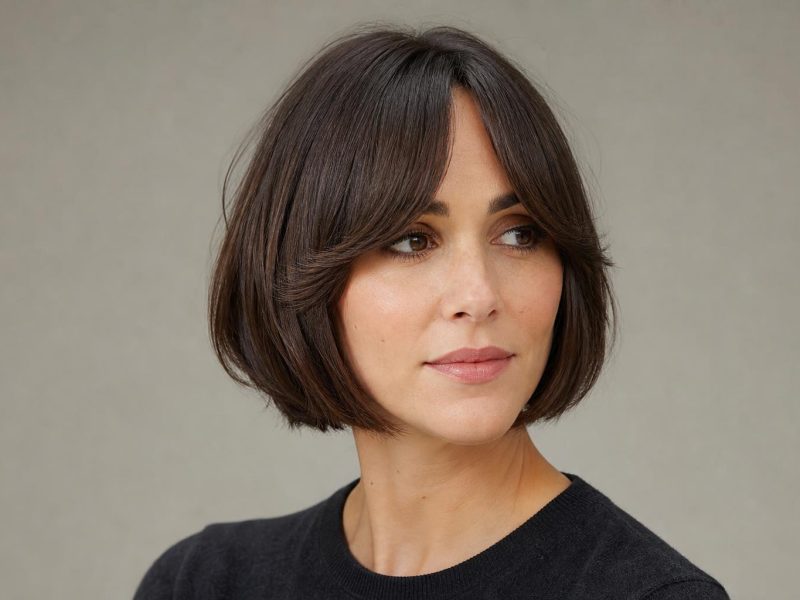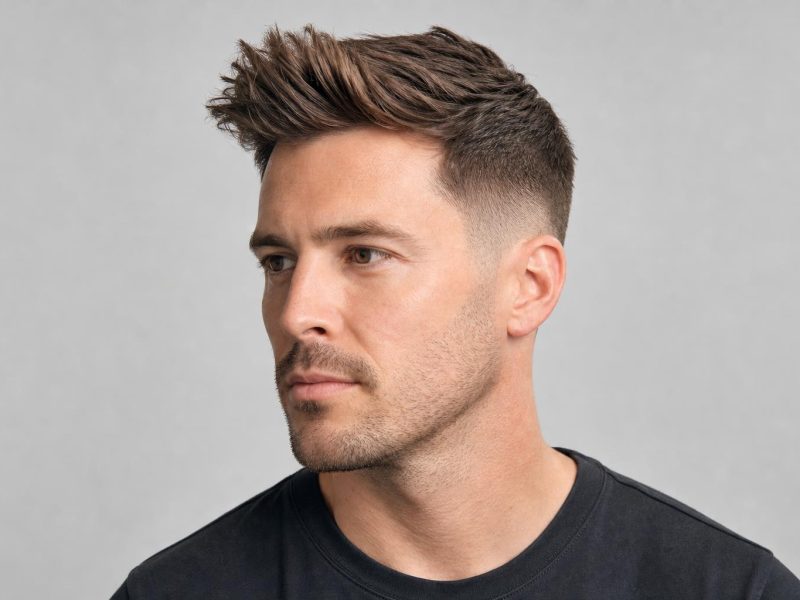


A rectangle face shape is longer than it is wide with a straight jaw and forehead of similar width, so the most flattering cuts add width at the cheeks, soften the jaw, and break up the length with layers, bangs, or waves.
If your face reads long and angular with a squared jaw, you have a rectangle (sometimes called oblong) shape. The goal of a good cut is balance: shorten the visual length and round out the straight lines. That means avoiding styles that drag the eye downward and choosing ones that build volume horizontally. Below are 25 cuts and styling ideas that do exactly that, grouped by length, by bang style, by texture, and by what to skip.
Not sure whether you are a rectangle or a closely related shape? Our oblong face shape guide covers the overlap, since the two terms describe nearly the same proportions.
How to Tell If You Have a Rectangle Face Shape
Before choosing a cut, confirm your shape. A rectangle face has a face length noticeably greater than its width, with the forehead, cheekbones, and jaw all close to the same width, and a jaw that is more square than rounded. This table compares it to the shapes people most often confuse it with.
| Face Shape | Key Feature | Styling Goal |
|---|---|---|
| Rectangle | Long, with a square jaw | Add width, soften the jaw, cut the length |
| Oblong | Long, with softer corners | Add width and break up length |
| Oval | Balanced length and width | Most cuts already suit it |
| Square | Short, with a strong jaw | Soften the jaw, add height |
Best Medium-Length Cuts
Medium lengths that finish around the collarbone are the sweet spot for a rectangle face, because they add width at the cheeks without dragging the length down. These cuts build the horizontal balance the shape needs.
1. Collarbone Lob With Layers
A layered lob that ends at the collarbone widens the face at its midpoint, which counteracts the length. The layers add body around the cheeks rather than at the ends. This is the single most reliable cut for the shape.
2. Wavy Shoulder-Length Cut
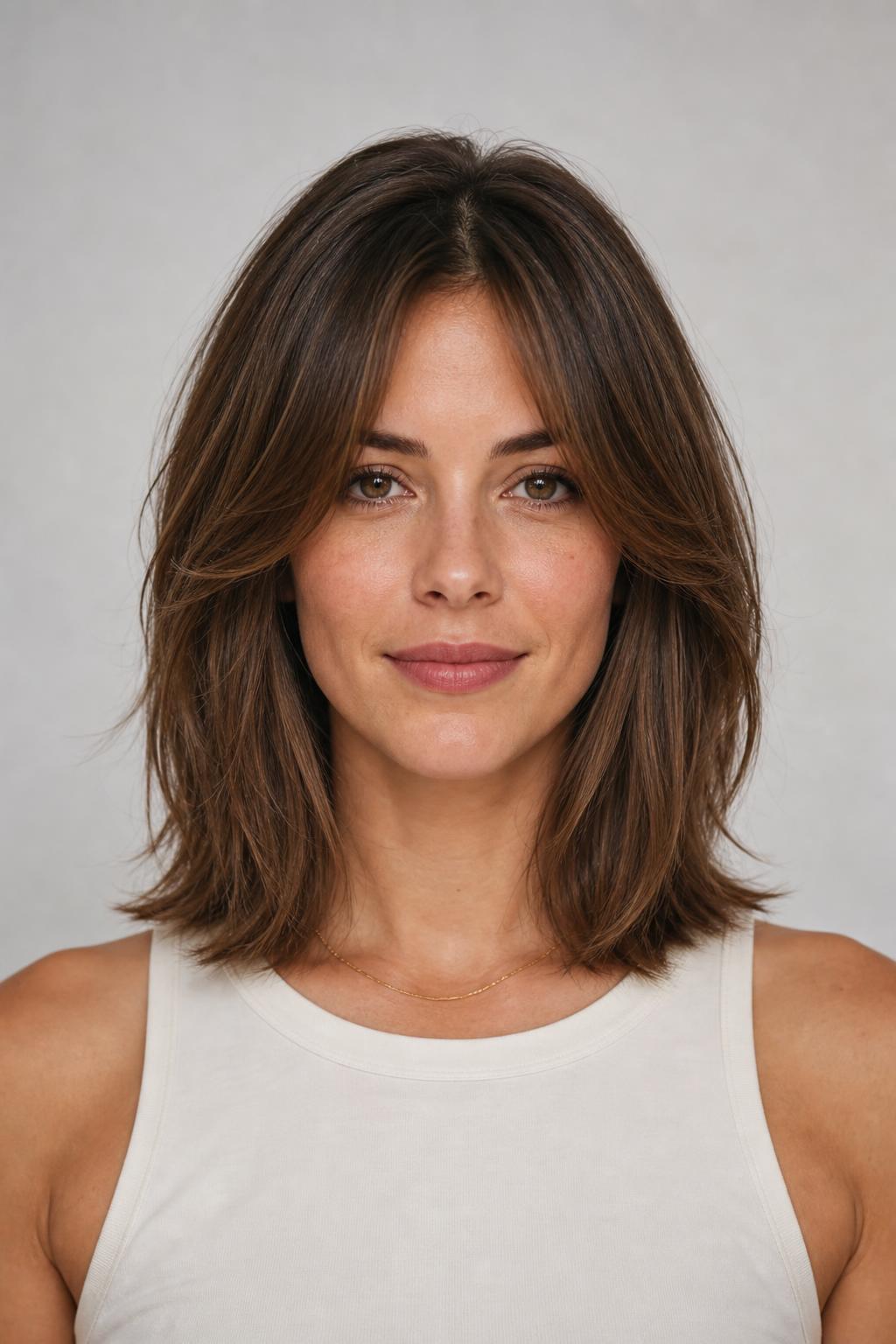
Cutting to the shoulders and adding waves builds width exactly where a rectangle face needs it. The bends in the hair pull the eye outward instead of down. Air-dry with a curl cream to keep the waves soft and full.
3. Curtain Bangs With a Mid-Length Cut
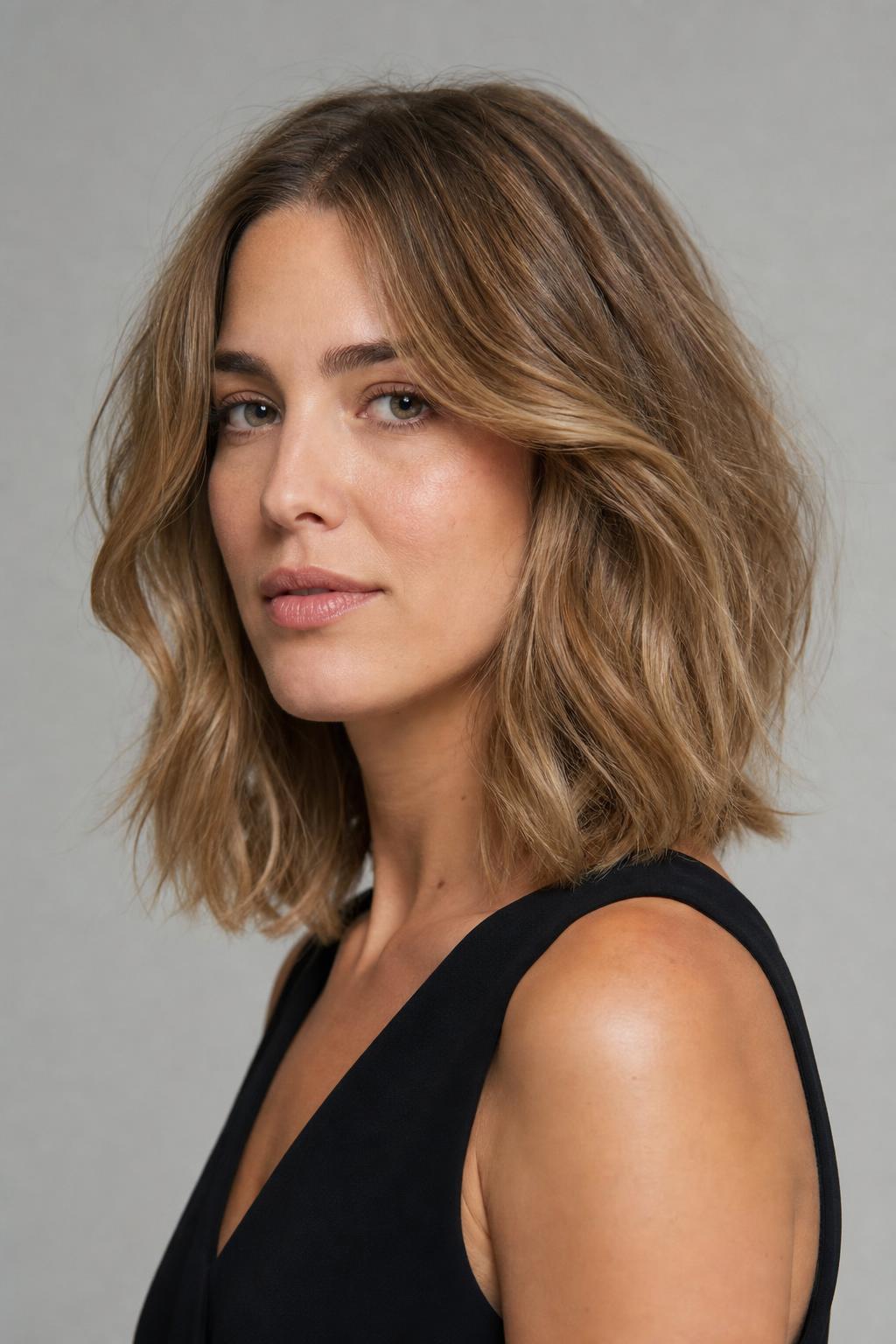
Pairing a mid-length cut with curtain bangs and layers breaks up the forehead and frames the cheekbones. The bangs cut the vertical line that makes a rectangle face read long. A versatile choice that grows out gracefully.
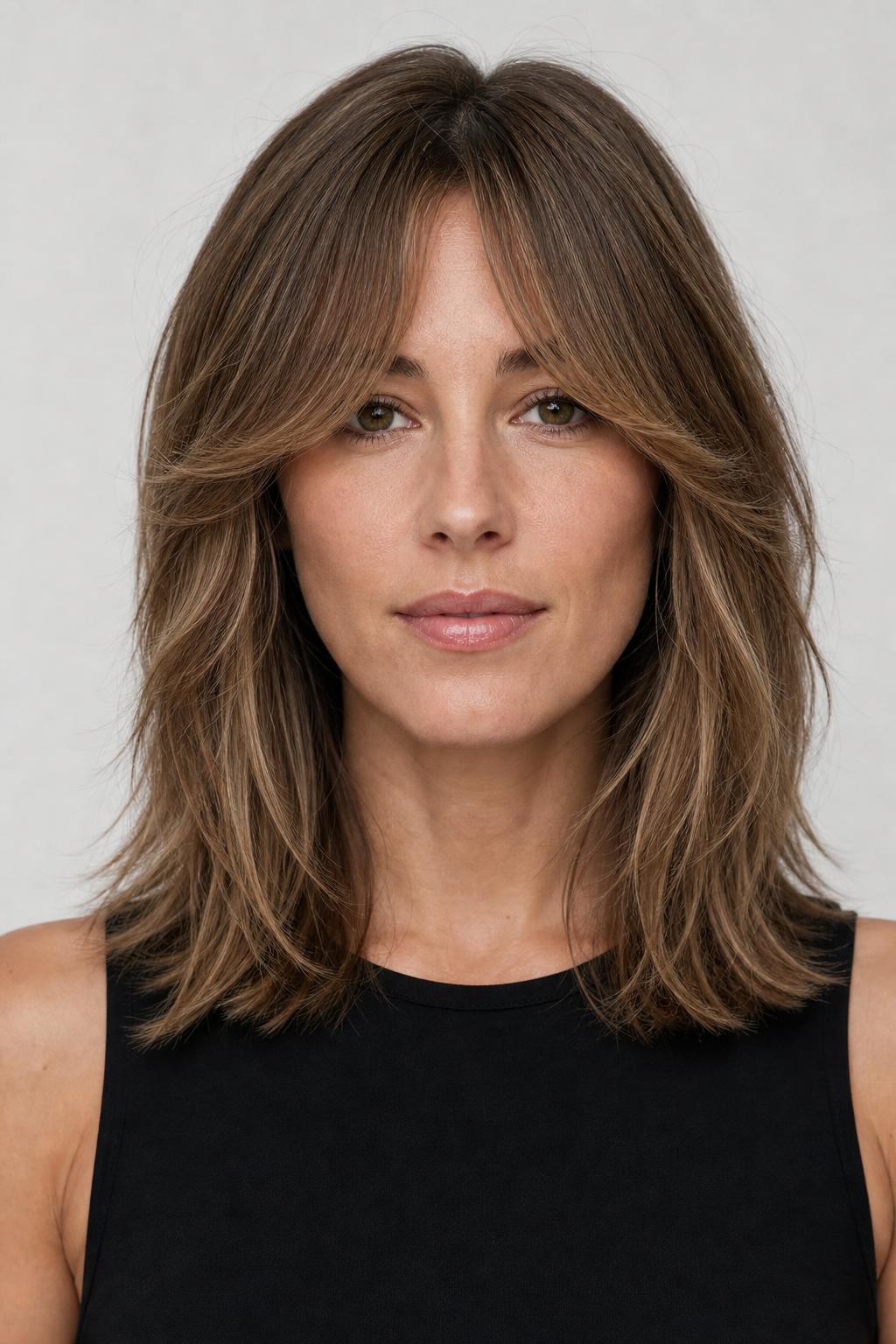
4. Layered Clavicle Cut With Volume
Building volume at the crown is a mistake here, but volume at the sides flatters. A clavicle-length cut with face-framing layers adds that side fullness. Round-brush the front pieces outward to maximize the widening effect.

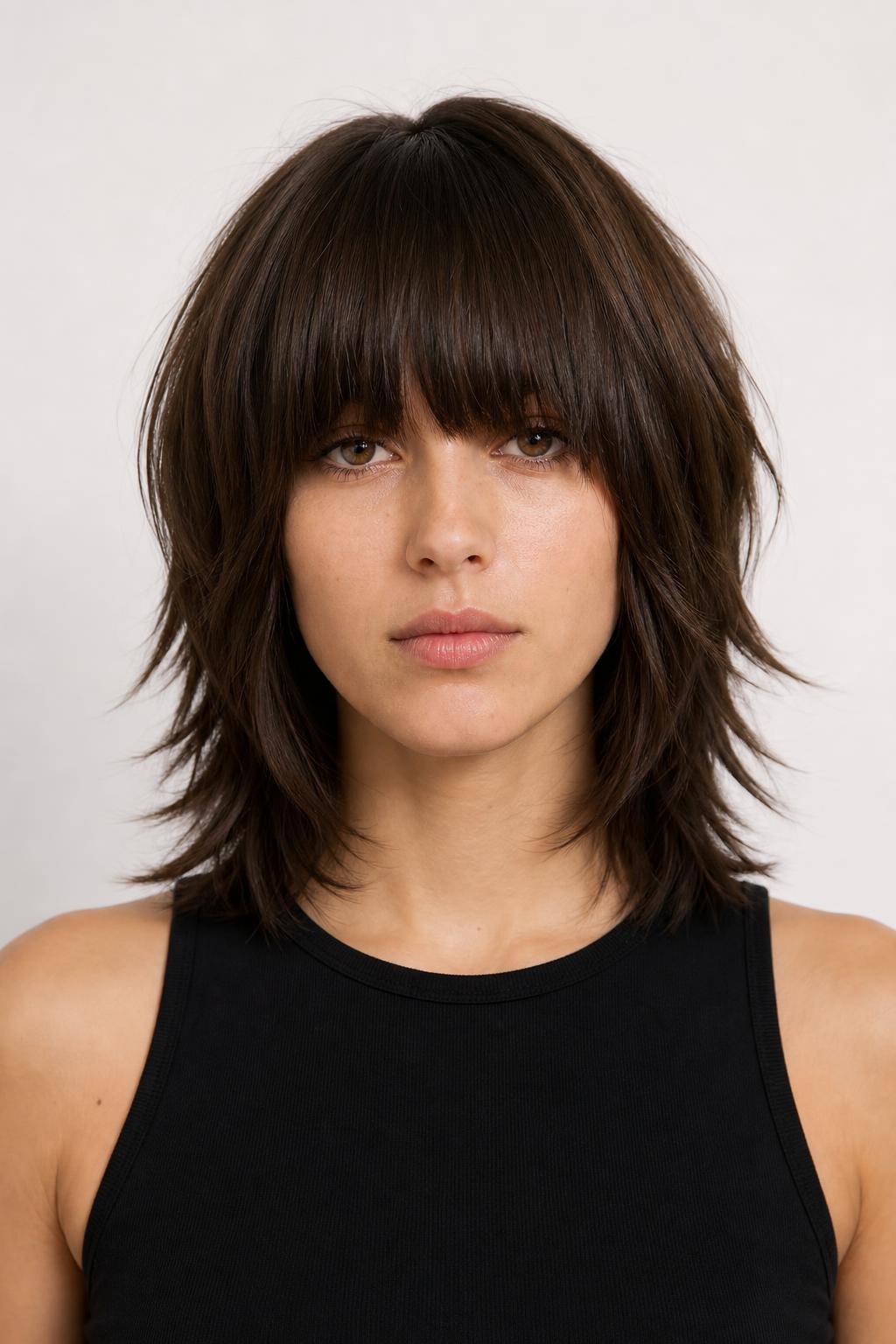
5. Shag With Heavy Fringe
A shag concentrates layers around the face and pairs naturally with a fringe, both of which shorten and soften a long face. The texture adds width through the middle. Our modern shag guide shows how to adapt the cut to your texture.
Best Short Cuts
Short cuts can flatter a rectangle face beautifully as long as they avoid height at the crown and keep fullness at the sides. These options round the silhouette rather than lengthening it.
6. Chin-Length Bob With Soft Waves
A bob that ends at the chin draws a horizontal line across the narrowest part of a long face, which balances it. Soft waves add width and break the straight jaw. Keep the ends slightly tousled rather than blunt and severe.

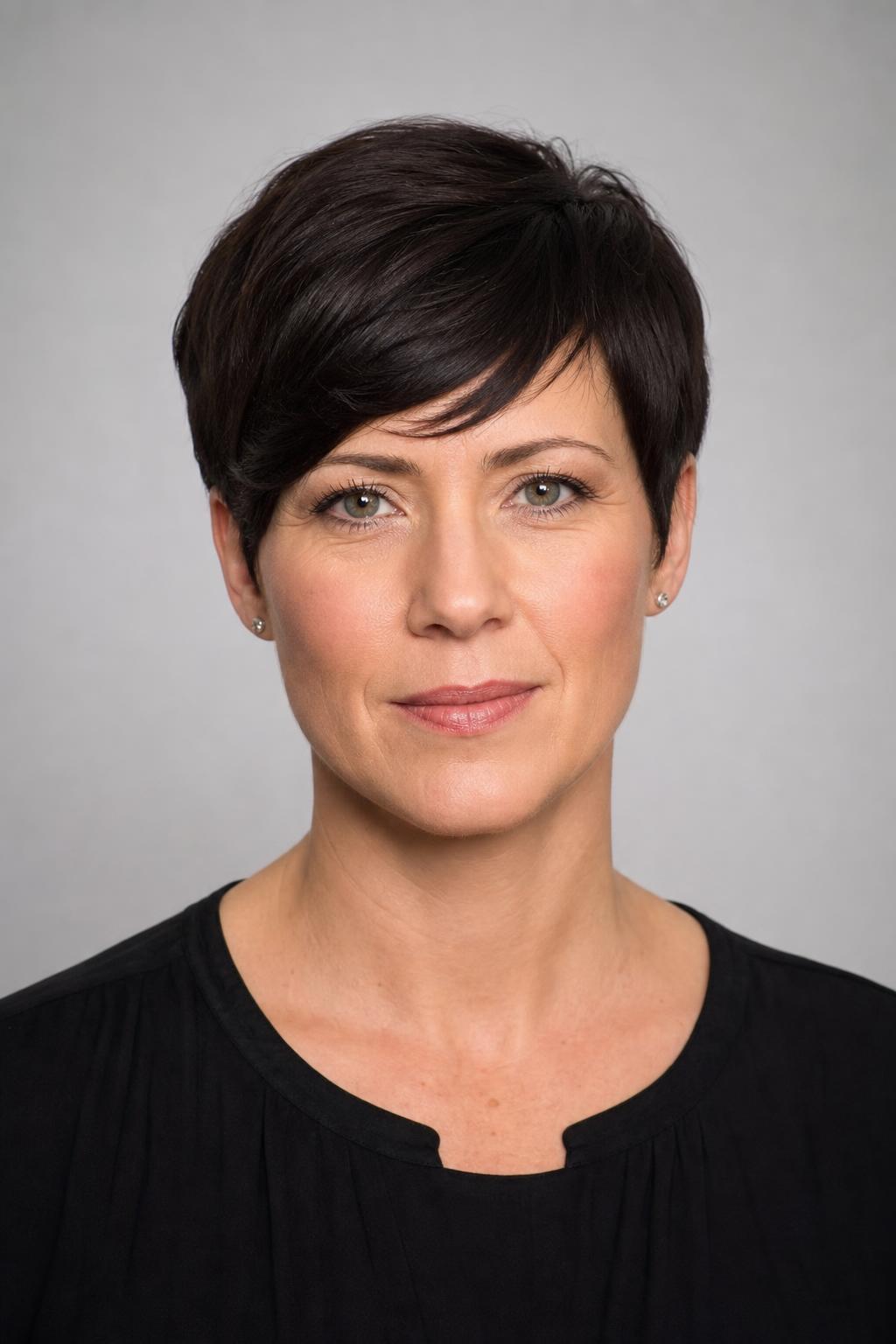
7. Side-Swept Pixie
A pixie works when it stays full at the sides and avoids a tall, spiky crown. A side-swept fringe adds a diagonal line that softens the angular jaw. Ask your stylist to keep weight around the ears.
8. Rounded Bob With Bangs
A bob cut to curve inward at the jaw, finished with bangs, hides the length of the forehead and rounds the corners of the face. The inward curve is the key detail. Avoid a blunt, boxy version that echoes the square jaw.
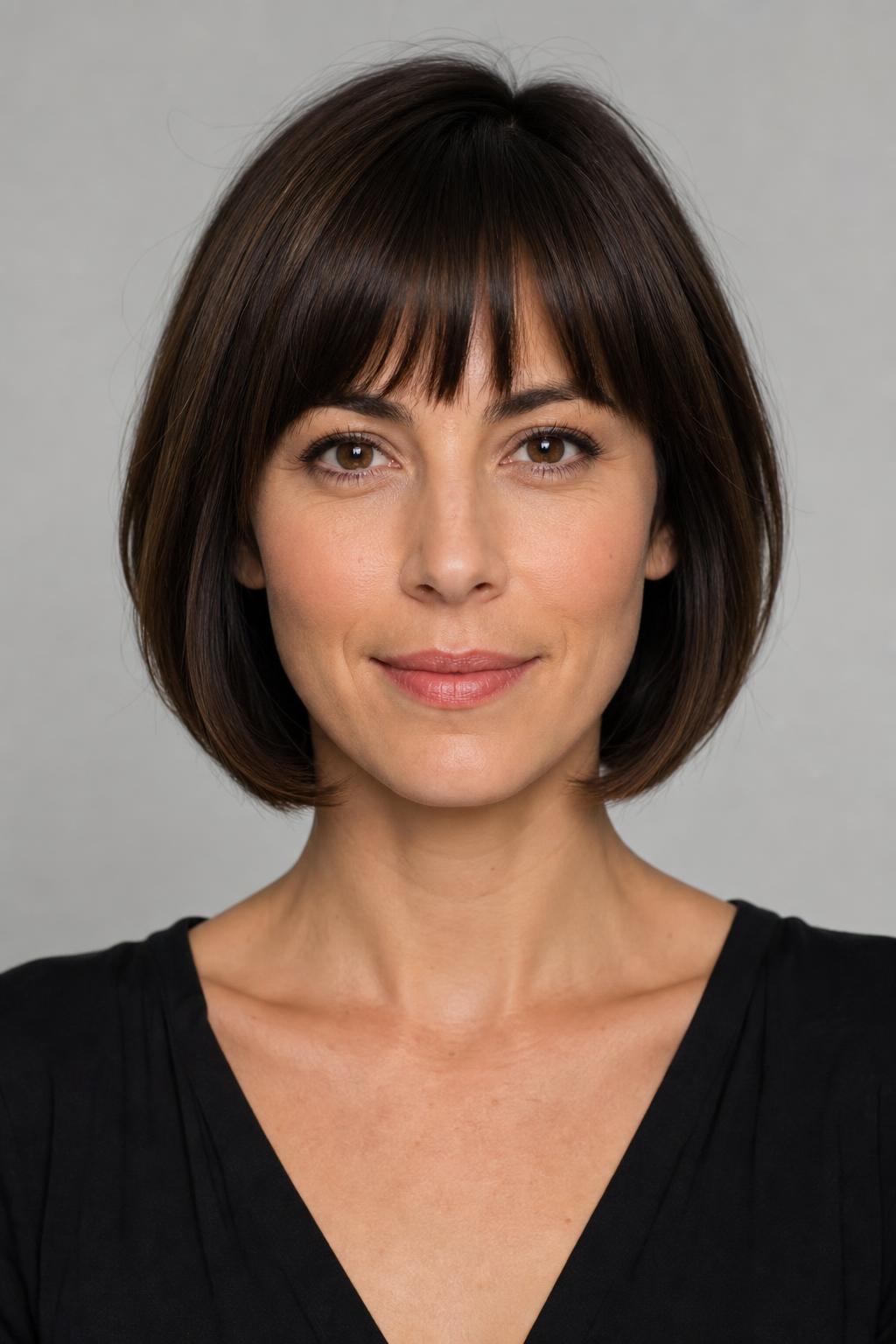
9. Textured French Bob
The short, jaw-grazing French bob with a fringe shortens the face and adds Parisian softness. The built-in bangs do the length-breaking work. Our French bob guide covers how to style the fringe.
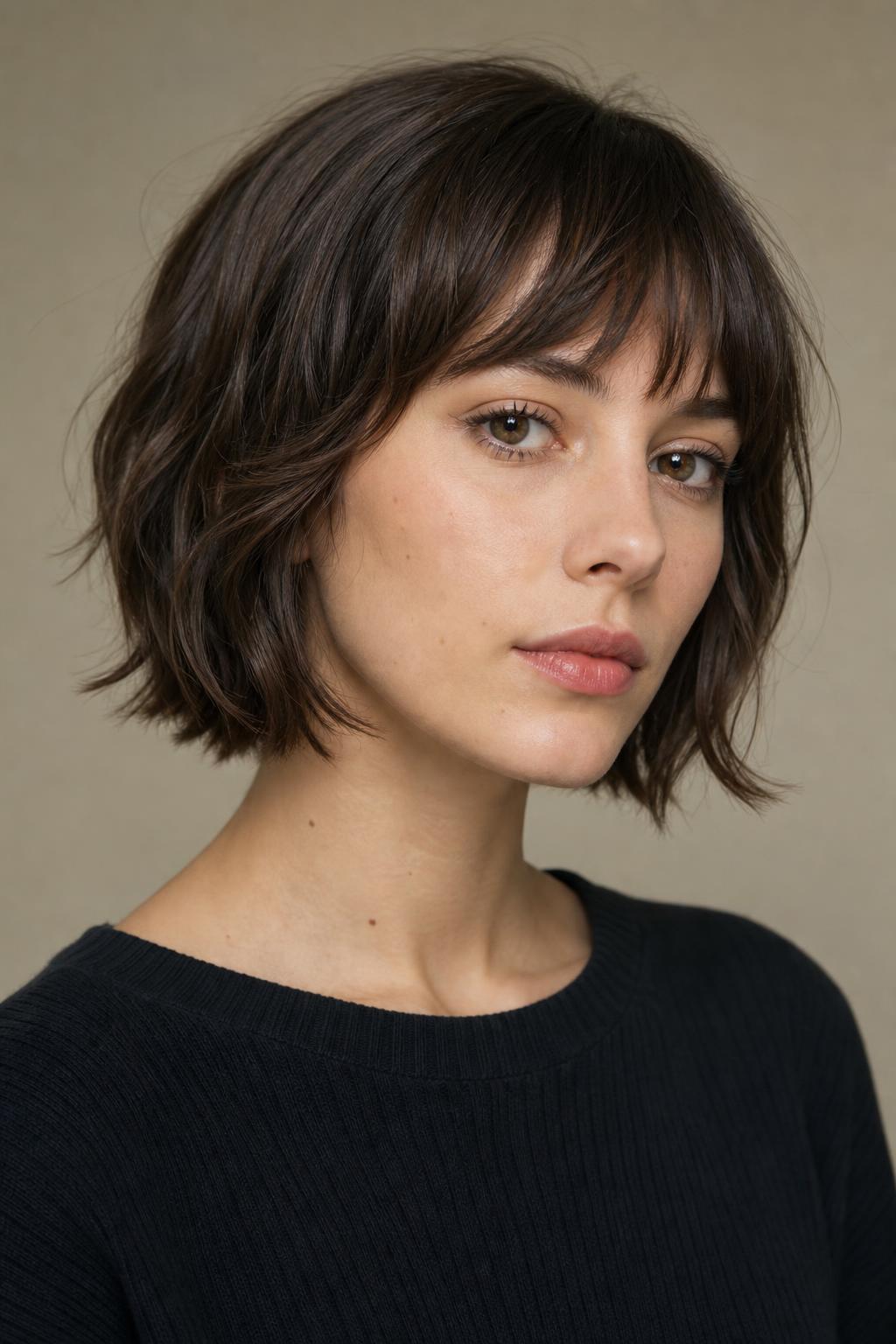
10. Wavy Bixie
A bixie, the bob-pixie hybrid, adds piece-y texture that builds width without height. The waves keep the silhouette rounded. A spirited short option for anyone wanting low upkeep with movement.
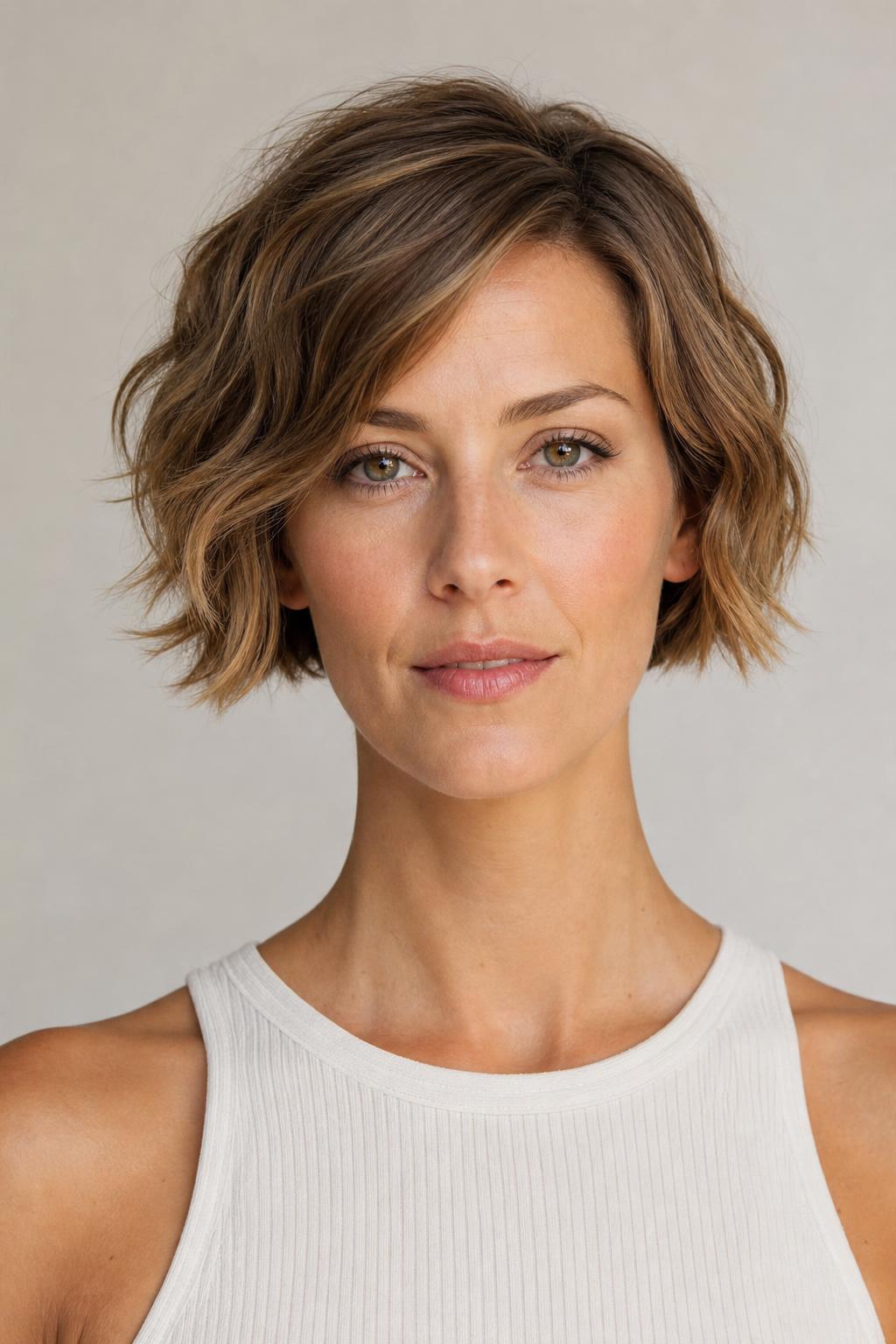
Best Long Cuts
Long hair can suit a rectangle face, but only with layers and waves that add width, never long and flat. These versions keep the length while still balancing the proportions.
11. Long Layers Starting at the Cheekbone
Long hair flatters the shape when layers begin at the cheekbone to build width up high. The face-framing pieces interrupt the length and add fullness at the cheeks. Keep the very ends from going stringy, which would lengthen the look.
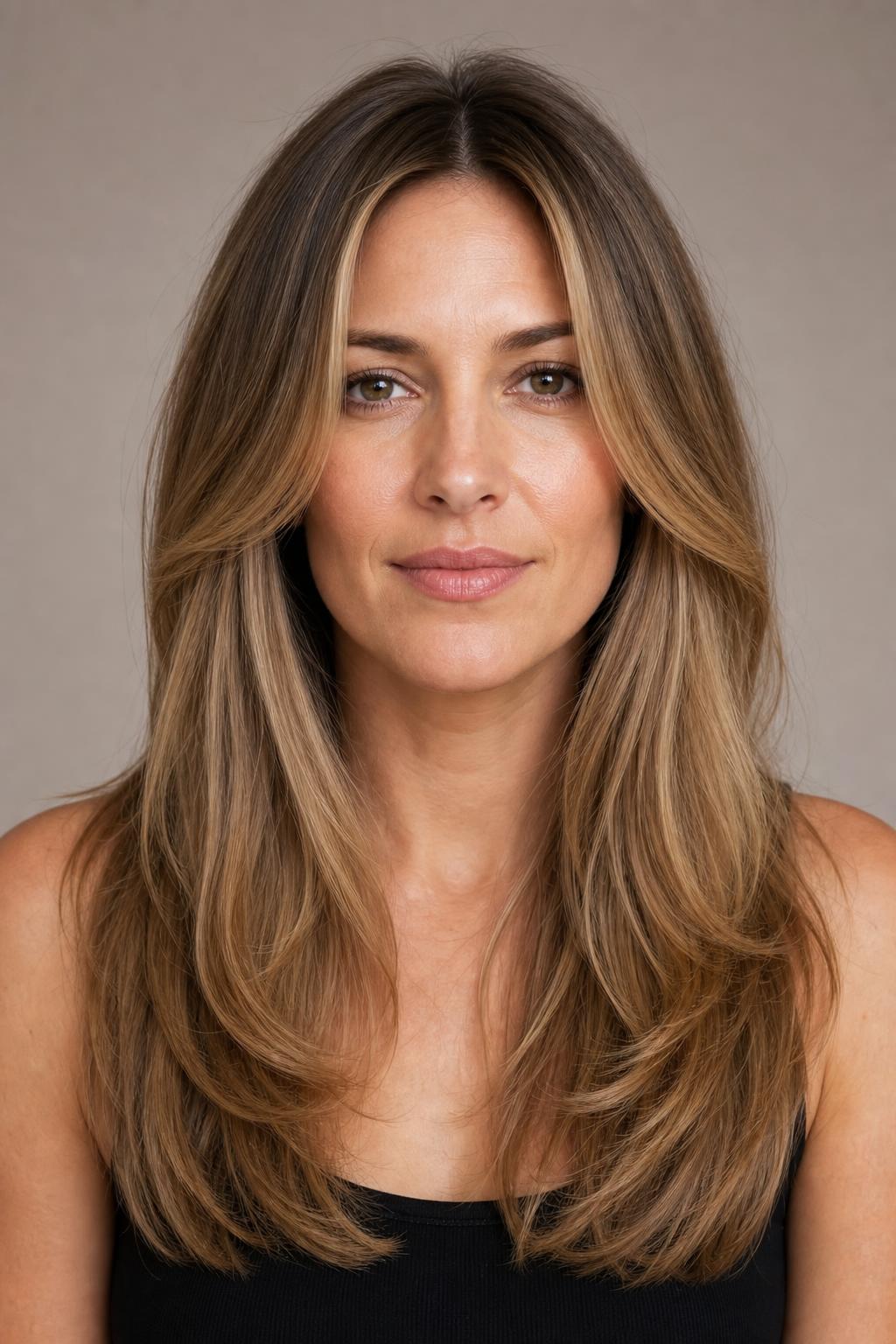
12. Long Waves With Face-Framing
Loose waves through long hair widen the silhouette and soften the jaw at once. Adding brighter face-framing highlights draws the eye to the cheeks. The combination balances a long face without losing length.
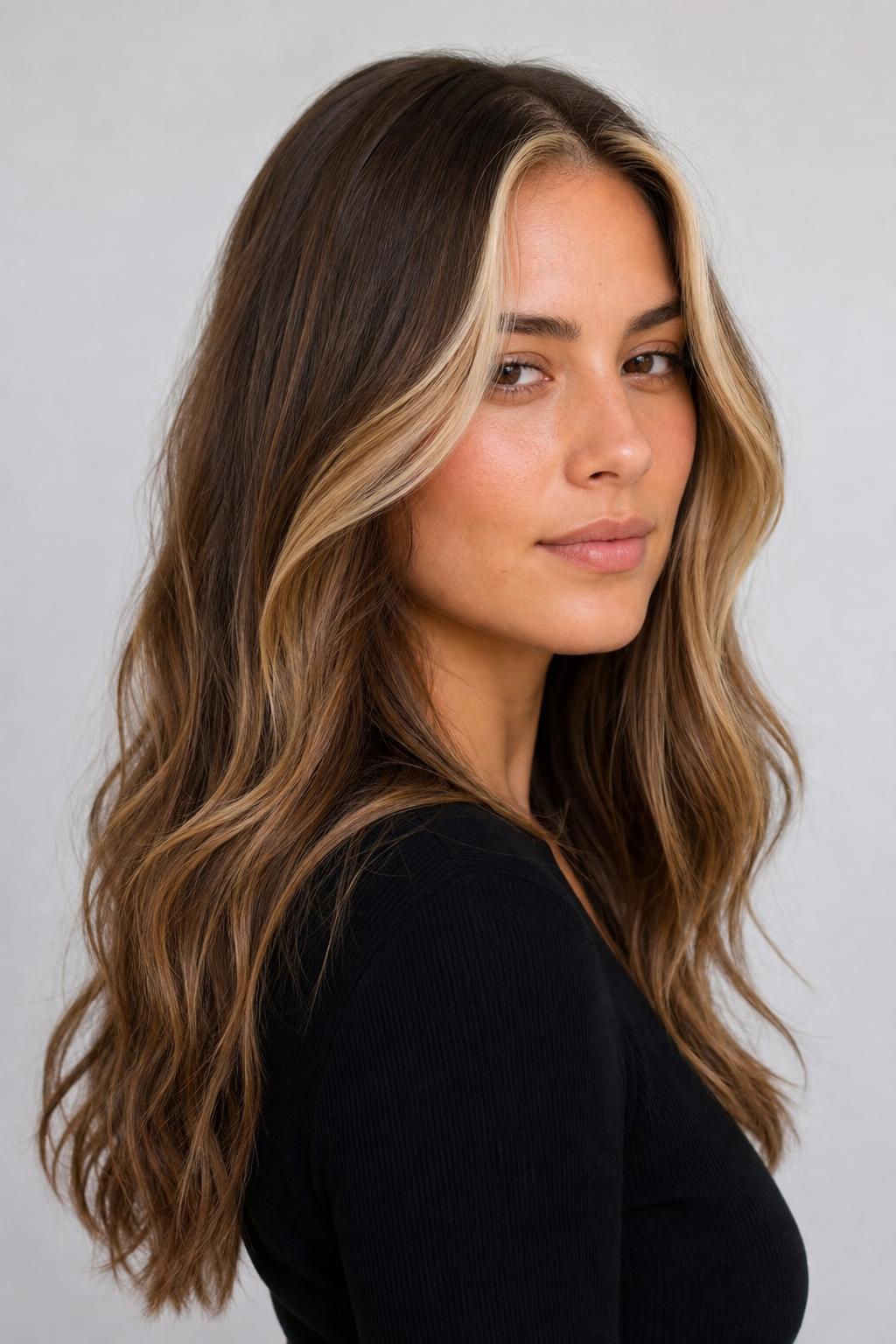
13. Long Hair With a Full Fringe
A full, brow-grazing fringe shortens the forehead and is the easiest fix for length on long hair. The blunt line across the brow stops the eye from traveling down. Best on those willing to maintain a fringe between cuts.
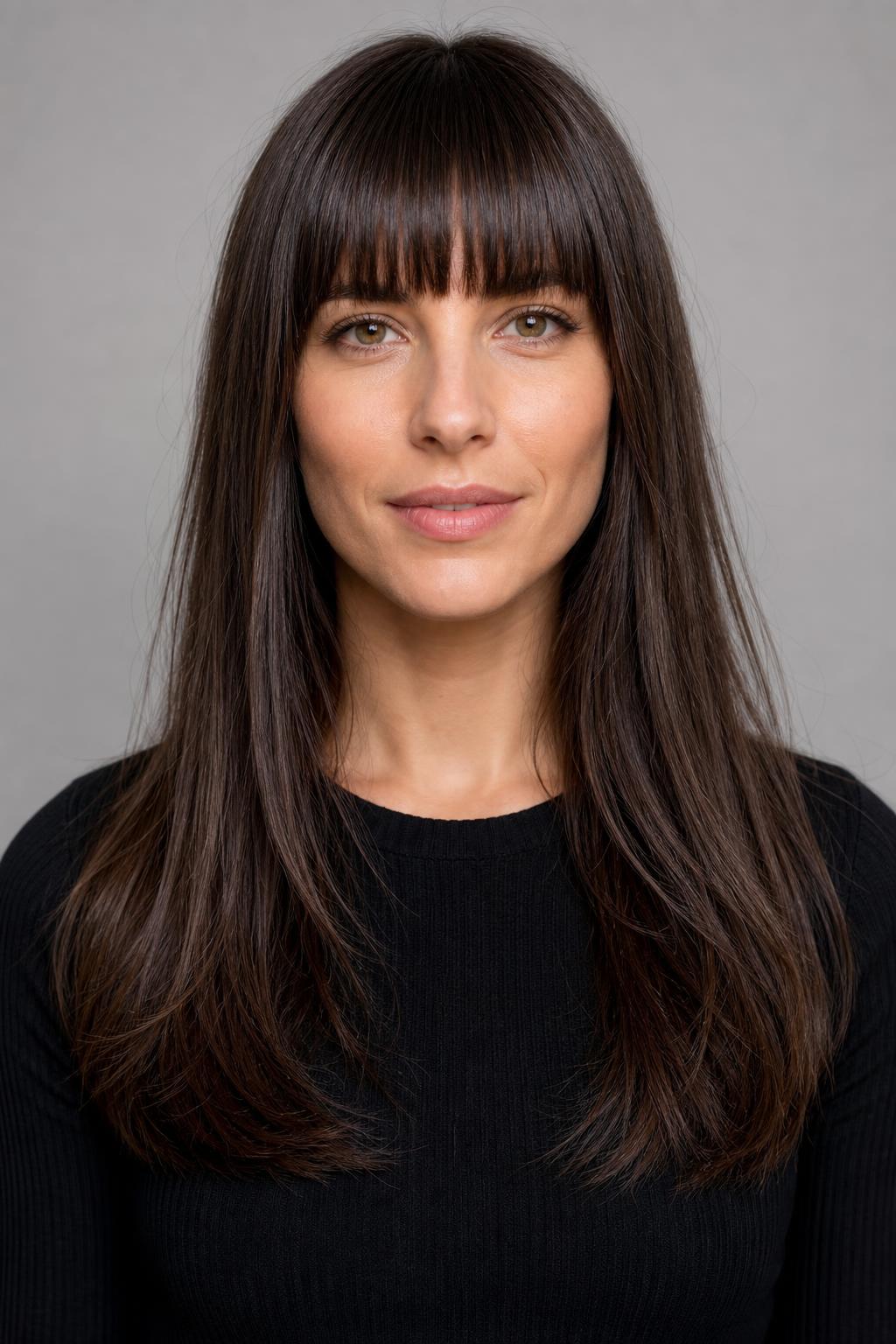
14. Long Butterfly Cut
The butterfly cut layers the front heavily while keeping length, building width around the face. The shorter wing layers add the horizontal balance a rectangle needs. See our butterfly cut on long hair guide for placement.
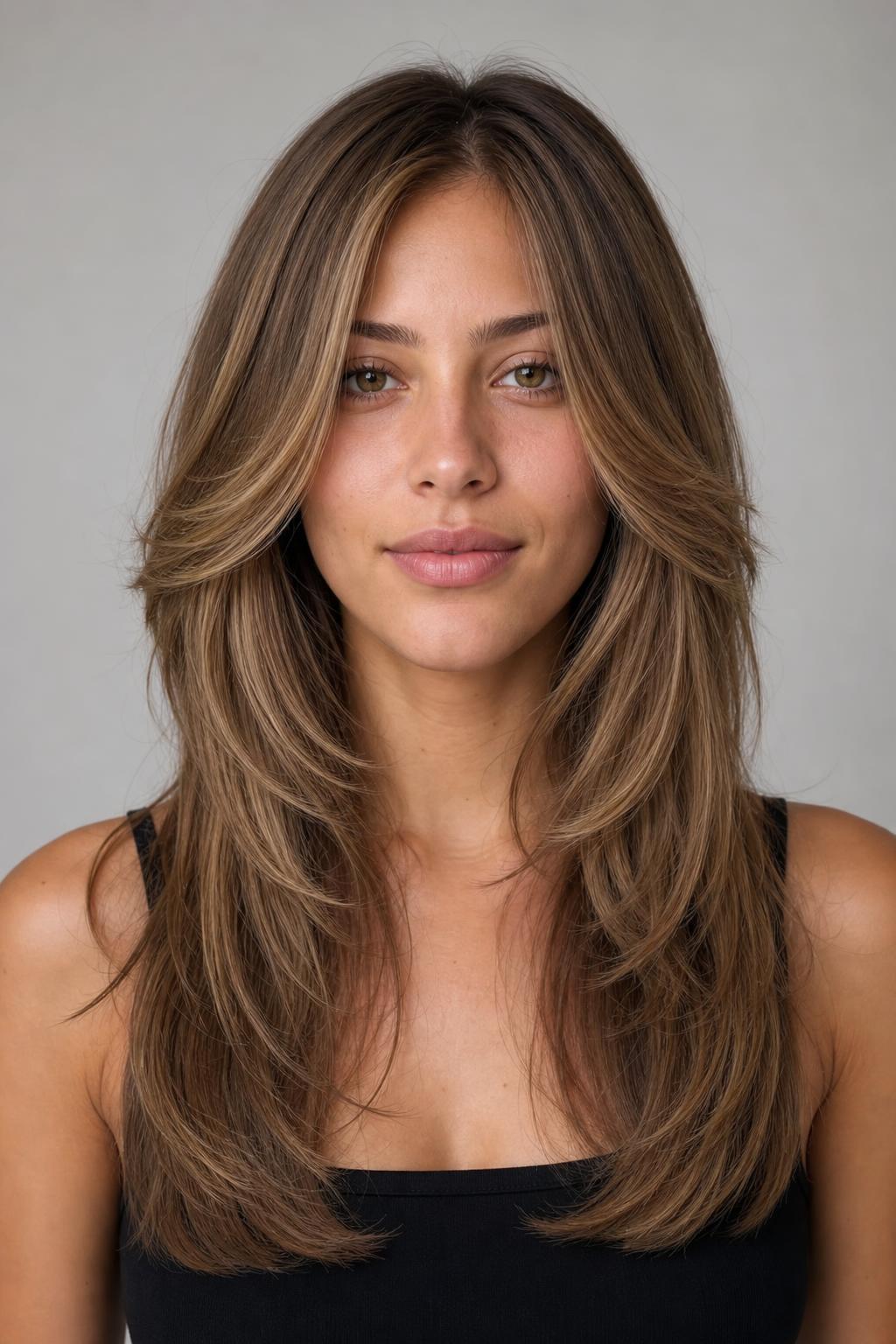
15. Long Shag With Curtain Bangs
A long shag keeps length while packing layers and movement around the face. Curtain bangs add the forehead-breaking detail. The result is full and soft rather than long and narrow.
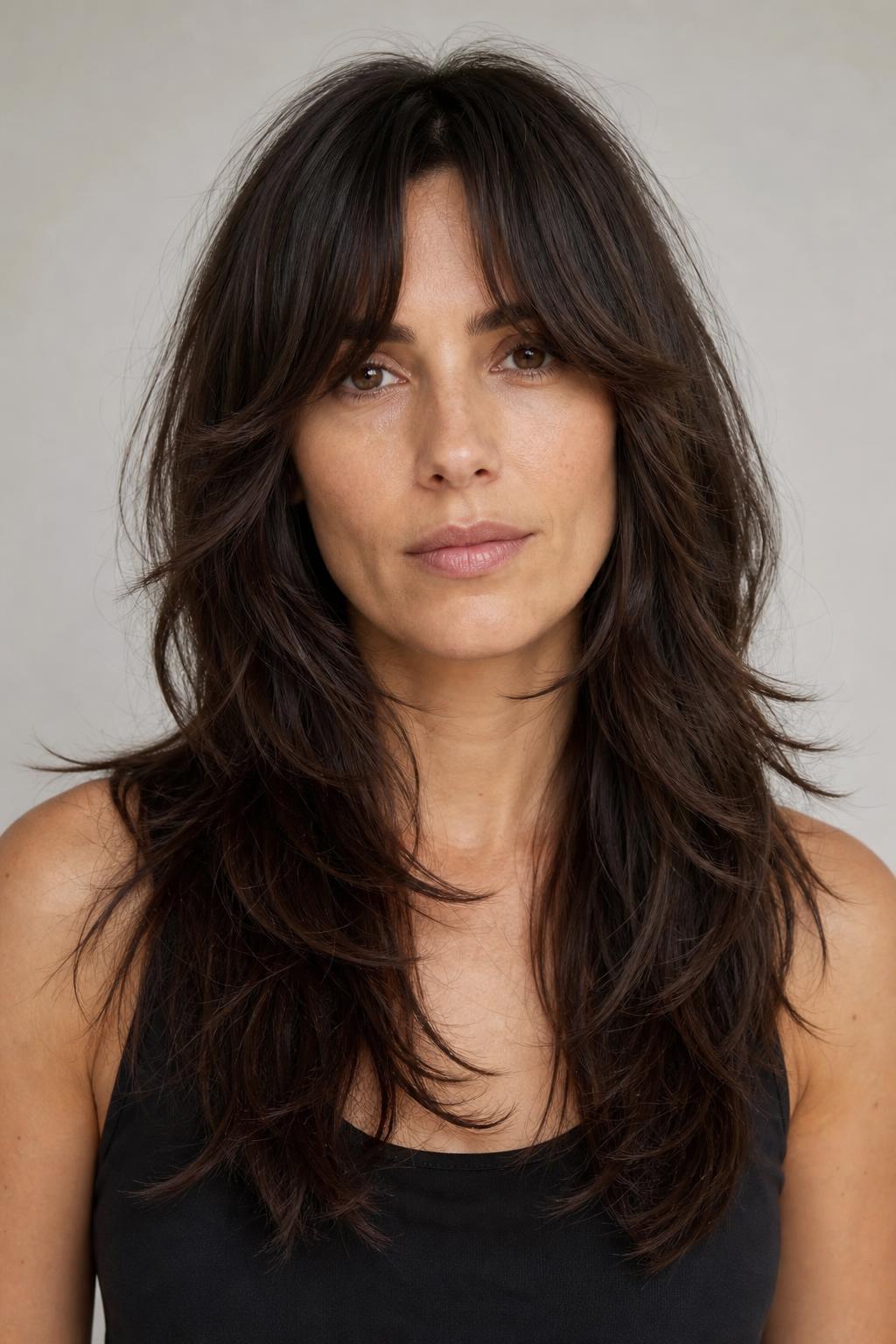
Bang Styles That Flatter
Bangs are the most powerful tool for a rectangle face because they shorten the forehead and cut the vertical line directly. The right fringe can transform how long the face reads.
16. Soft Curtain Bangs
Curtain bangs part in the middle and sweep to the sides, framing the cheekbones while shortening the forehead. They are the most versatile fringe for the shape. They also grow out without an awkward stage.
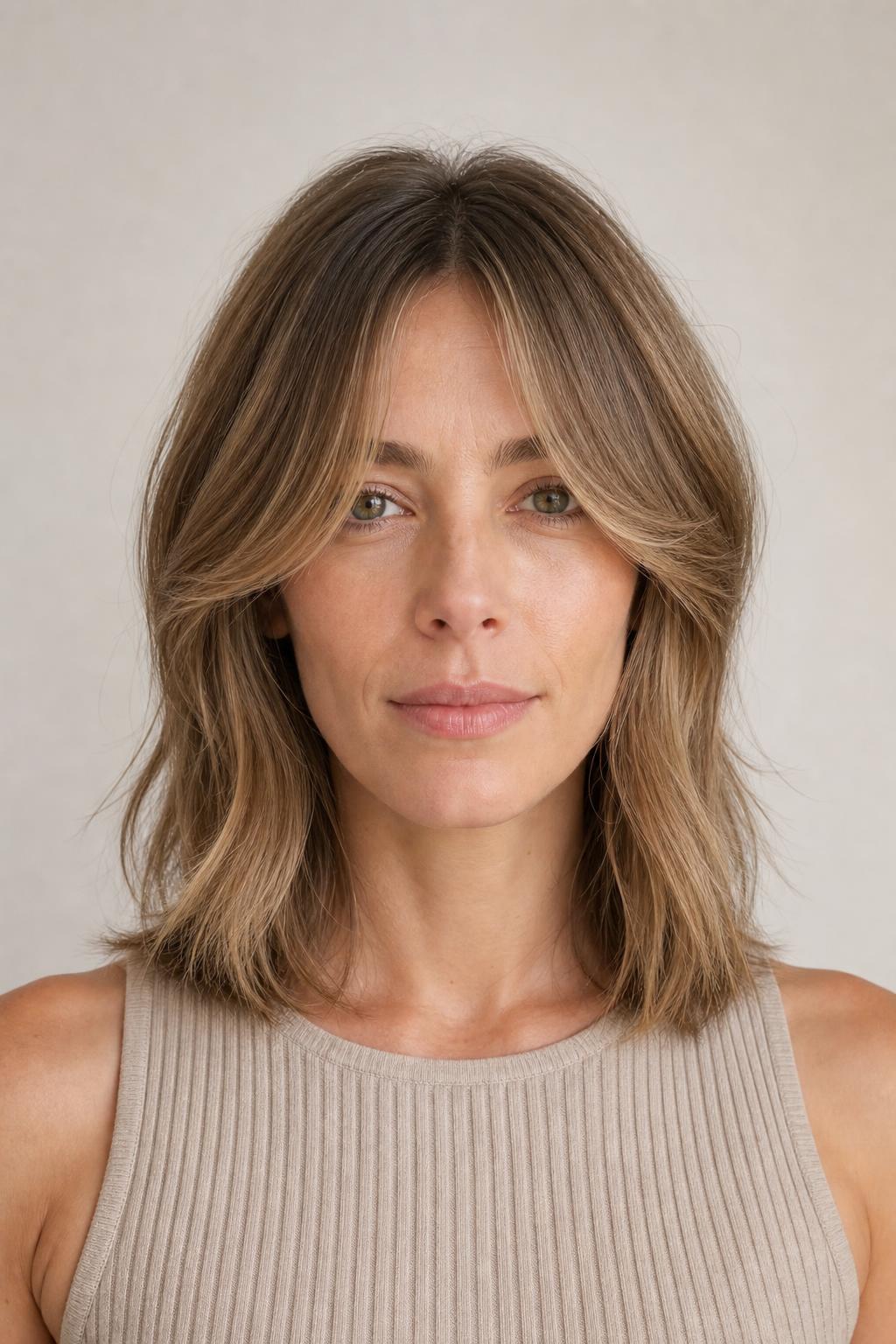
17. Full Blunt Fringe
A heavy, straight-across fringe makes the biggest dent in a long face by covering forehead length entirely. The strong horizontal line is the whole point. Keep it trimmed to just above the brows.
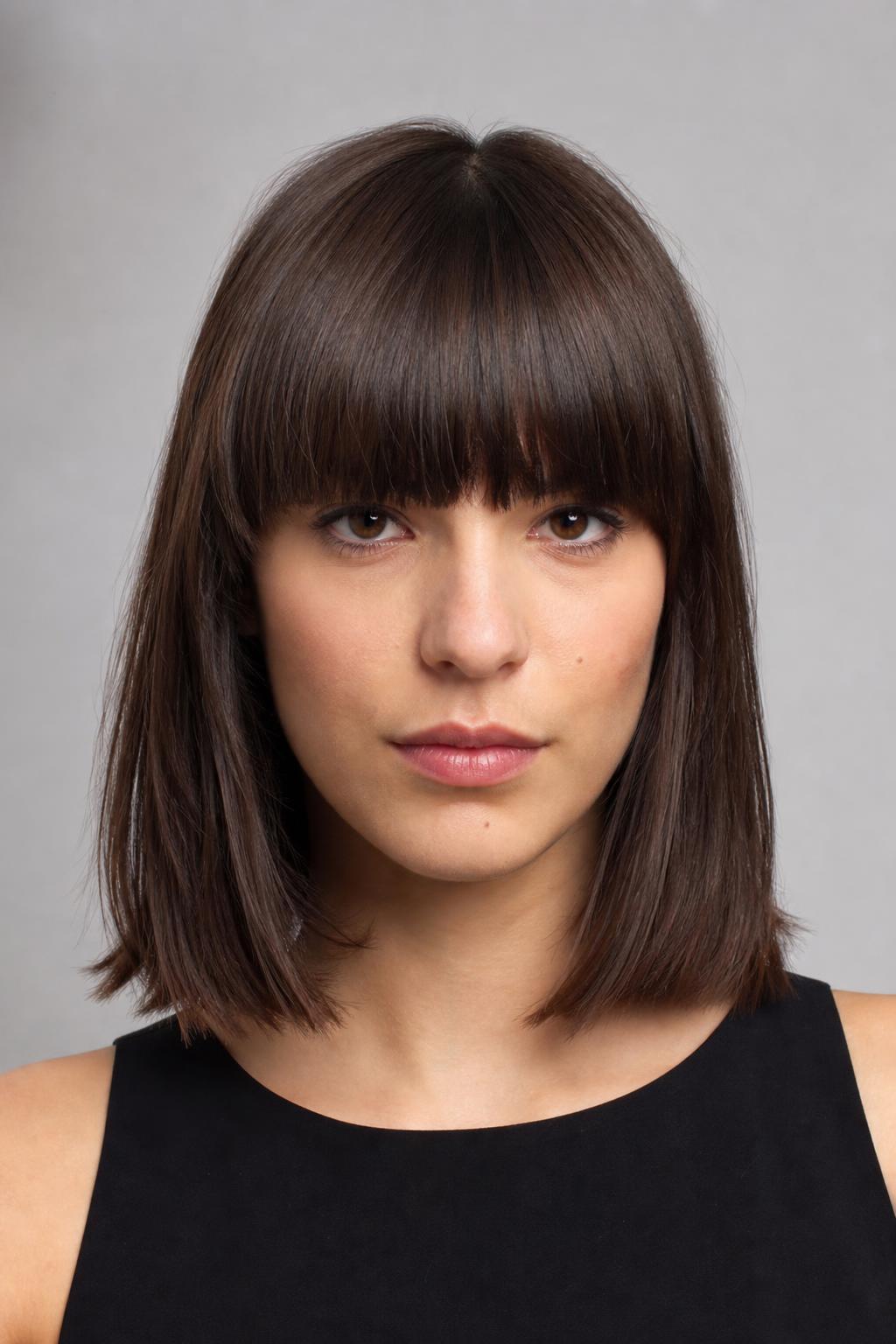
18. Side-Swept Bangs
A side sweep adds a diagonal that softens the straight jaw and angular forehead. The asymmetry breaks up the rectangle’s parallel lines. A gentle option for those not ready for a full fringe.
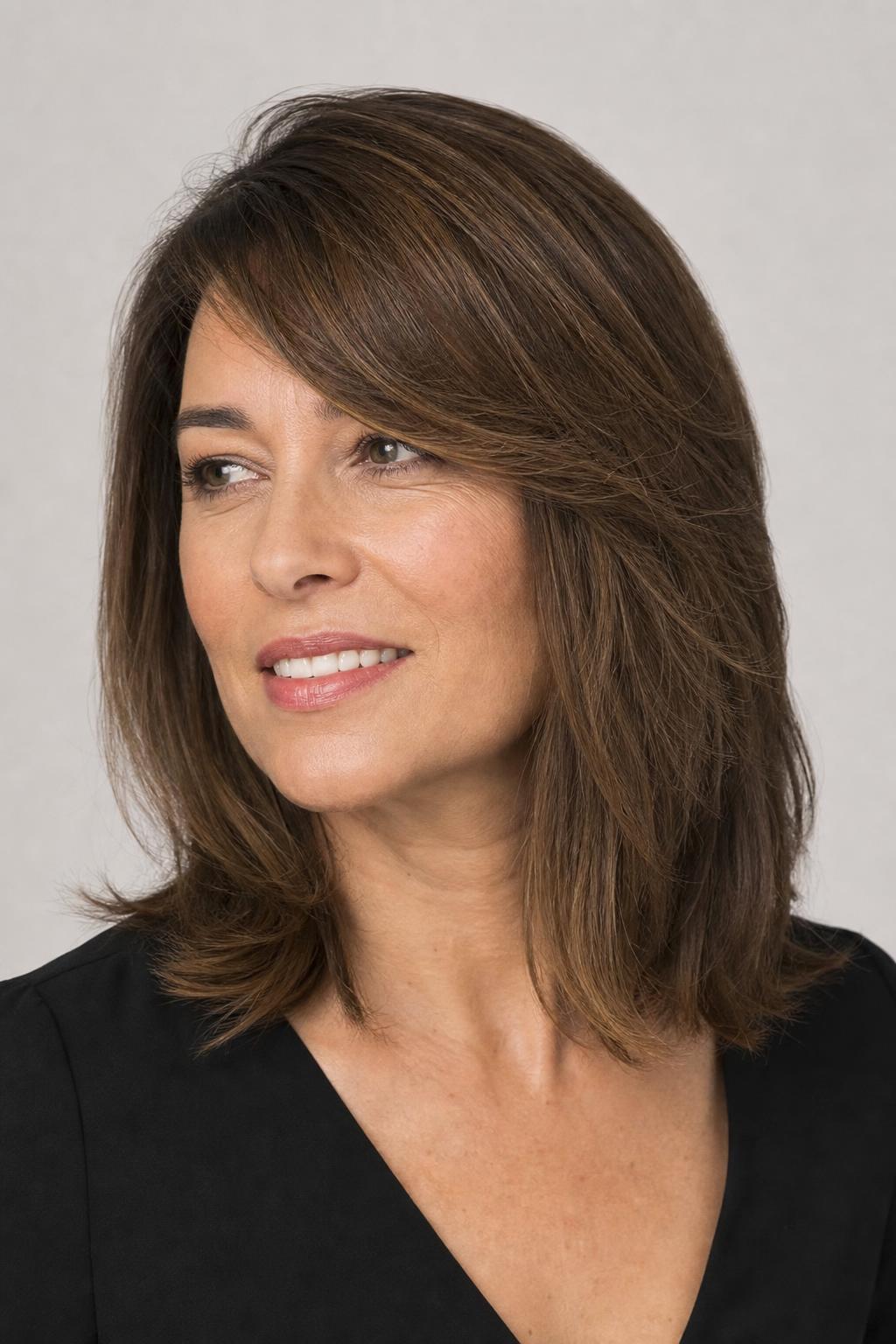
19. Wispy Birkin Bangs
Light, airy bangs with gaps shorten the forehead without the weight of a full fringe. The wispy texture keeps the look soft. They suit fine hair that a heavy fringe would overwhelm.
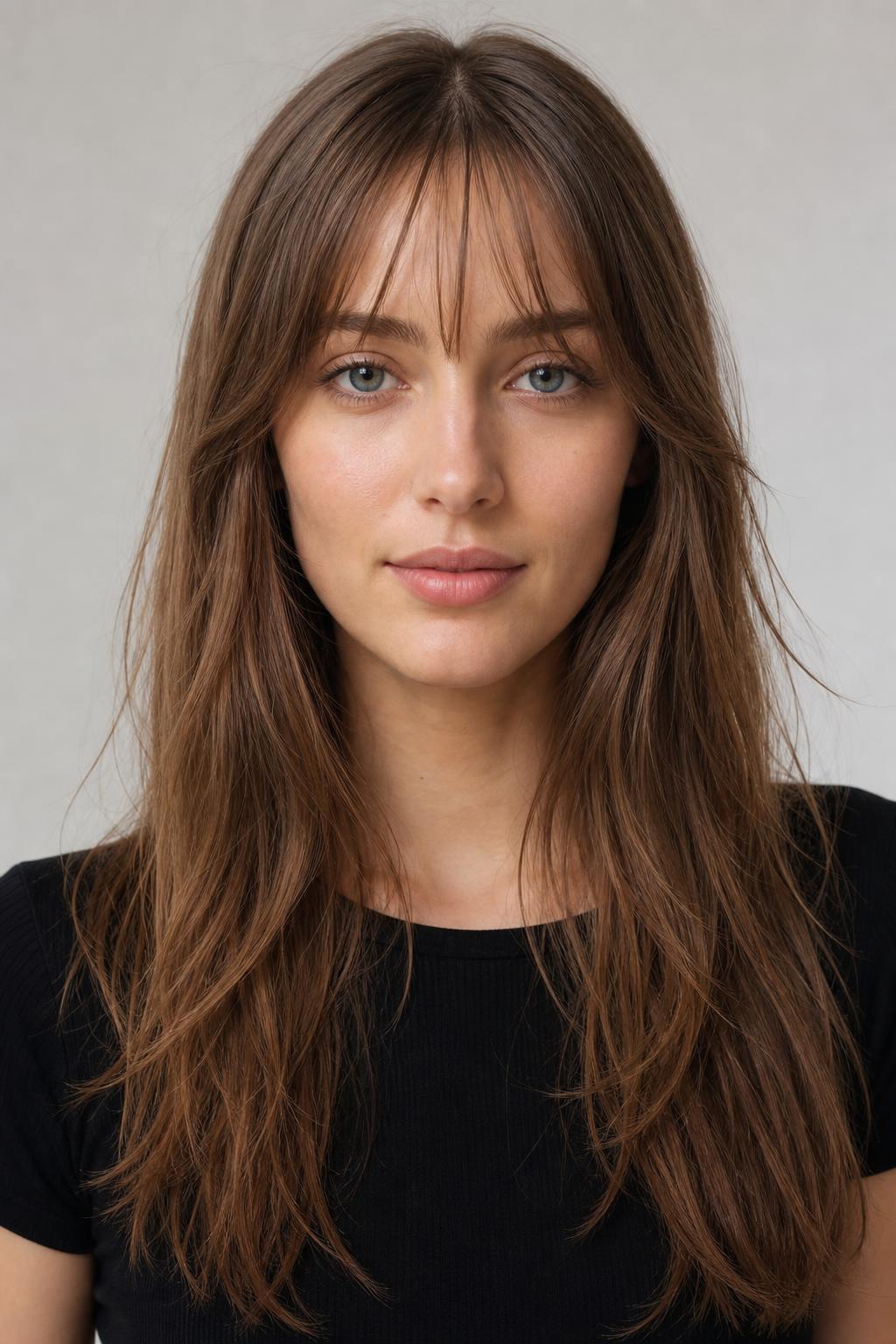
Styling by Texture
Your natural texture changes how a cut behaves on a rectangle face. The aim is always width and softness, and each texture reaches it a little differently. These entries match the approach to your hair.
20. Curly Hair With Cheek-Height Volume
Curly hair is a natural ally here because curls add width on their own. Shaping the curls to peak at the cheeks rather than the crown balances the length. Avoid a tall triangle of volume up top.
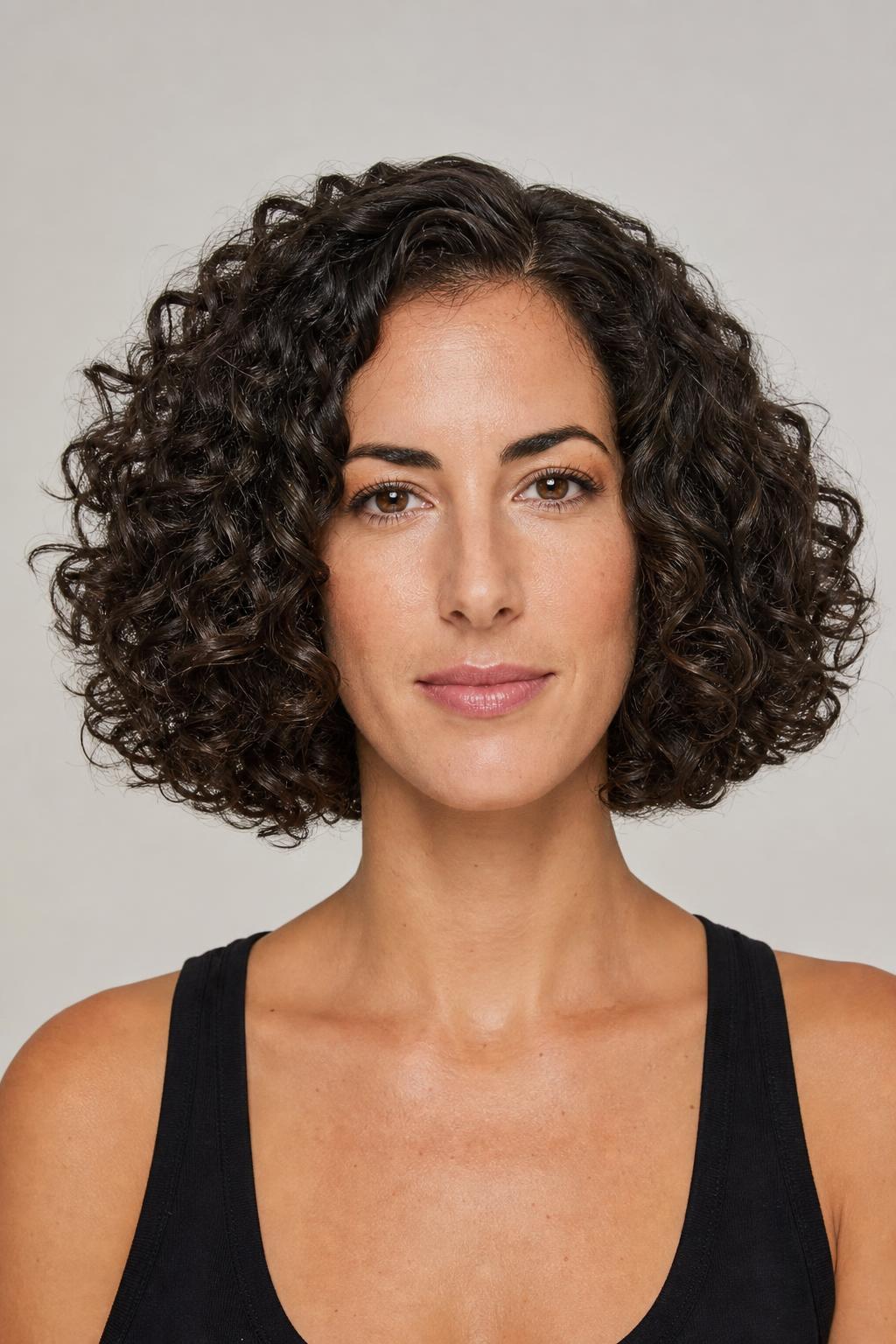
21. Straight Hair With Rounded Ends
Straight hair can read flat and lengthening, so rounding the ends under at the jaw adds the needed curve. A round-brush blowout builds side volume. Skip the sleek, poker-straight long look that emphasizes length.

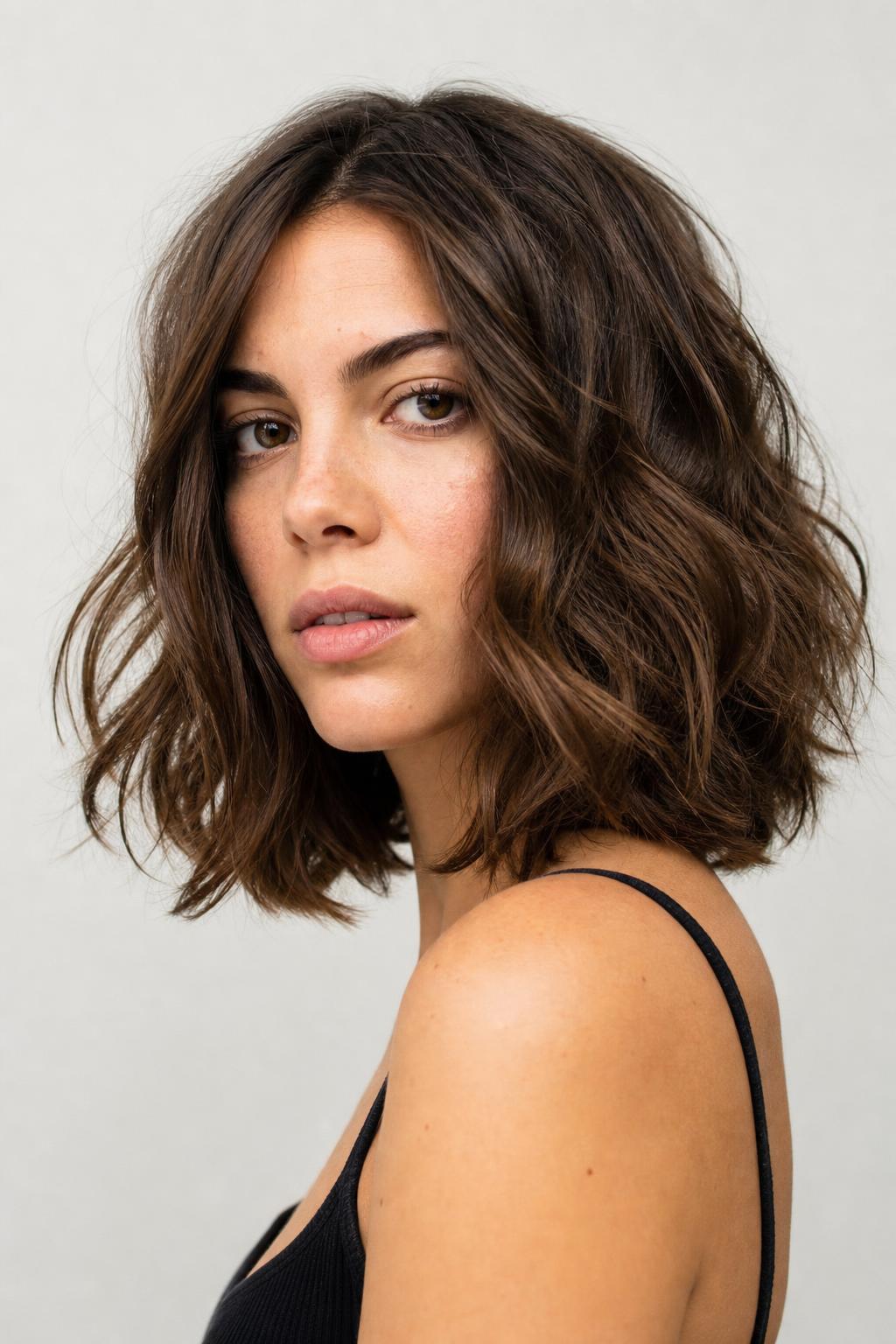
22. Wavy Hair Left to Its Texture
Natural waves do the widening work for you, so a cut that lets them expand at the sides is ideal. Scrunch in a light mousse and let the waves build fullness. The texture softens the angular jaw automatically.
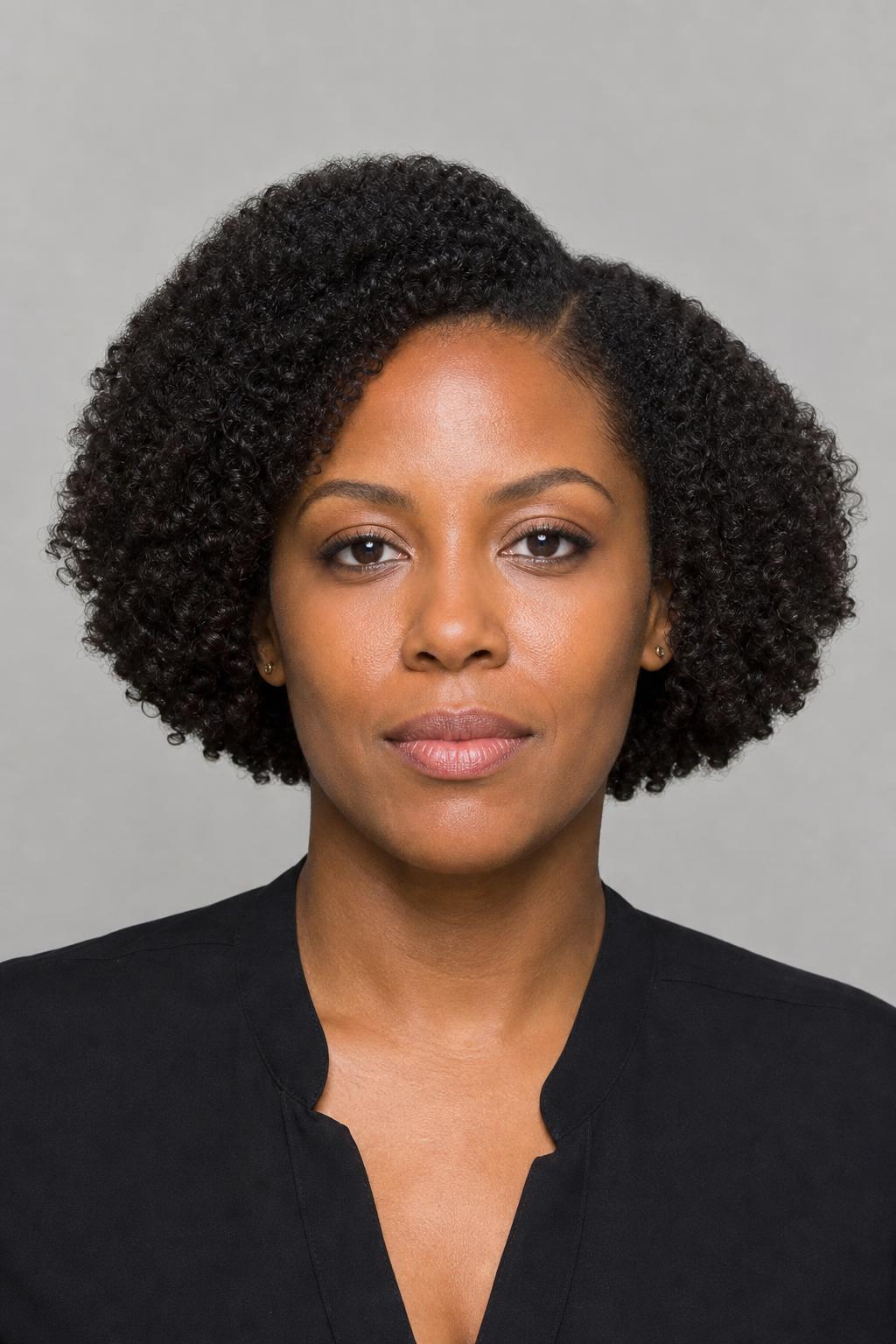
23. Coily Hair Shaped Wide
Coily hair shaped into a rounded silhouette, fuller at the sides than the top, flatters the shape. A side part adds asymmetry that softens the straight lines. Keep length moderate so the shape stays balanced.
What to Avoid and What to Ask For
Knowing the styles that work against a rectangle face is as useful as knowing the ones that flatter it. A few common choices lengthen and harden the face, and steering clear of them is half the battle.
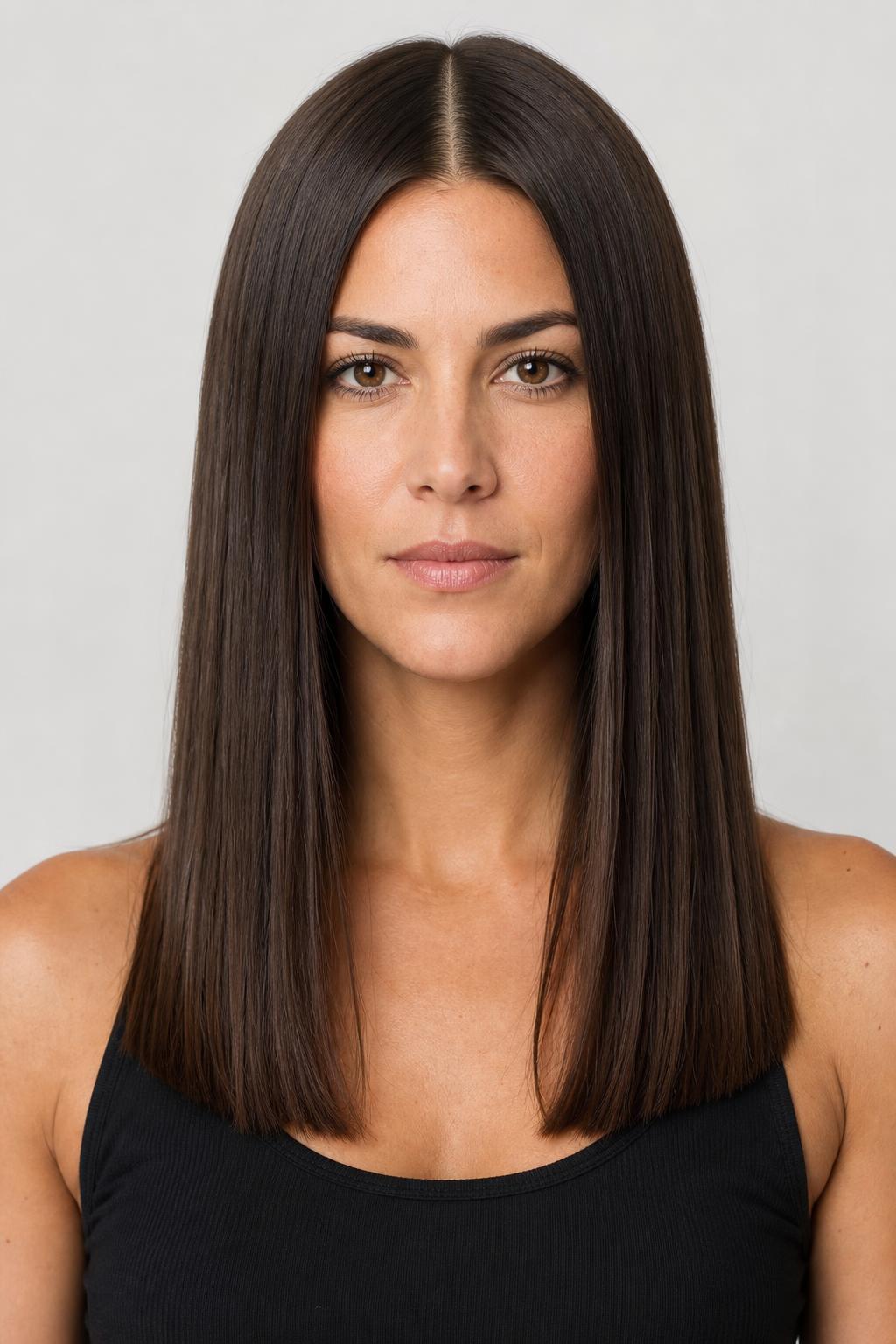
24. Skip Long, Flat, One-Length Hair
Long hair with no layers and no waves falls in straight vertical lines that make a long face look longer. The lack of width is the problem. If you love long hair, add layers and waves rather than wearing it blunt and flat.
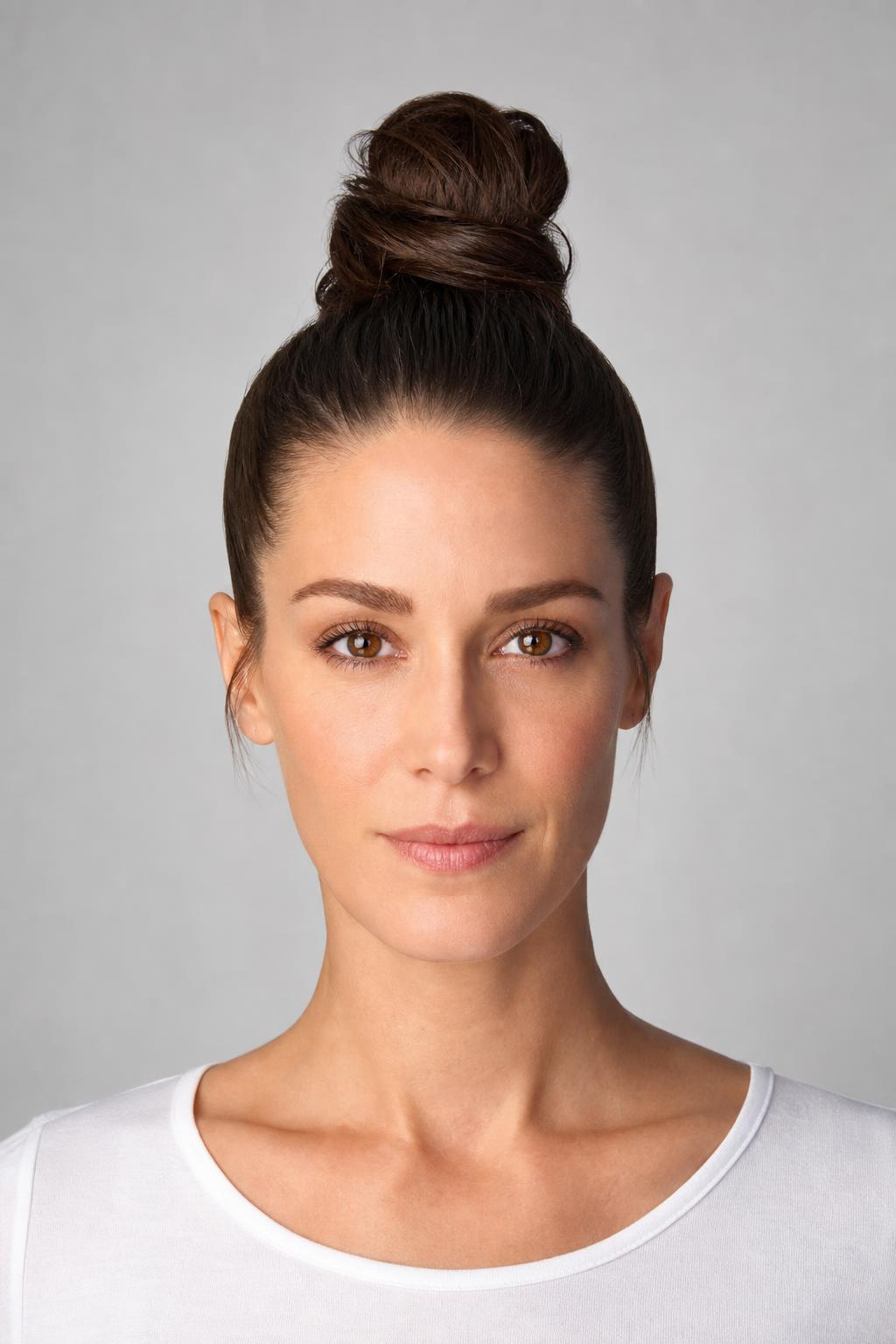
25. Skip Height at the Crown
Tall, voluminous styles at the top of the head, including a high pompadour or a tall topknot, stretch the face further. Volume belongs at the sides, not the crown. Keep the silhouette wide rather than tall.
What to Tell Your Stylist
A stylist who understands your face shape can tailor any cut to flatter it, but you need to communicate the goal, not just name a haircut. Frame the conversation around balance rather than a specific celebrity photo.
Tell your stylist your face reads long and you want to add width at the cheeks and soften the jaw. Ask for layers or face-framing that begins around the cheekbone, and discuss whether bangs suit your hairline and lifestyle. Mention that you want to avoid crown height and long flat lengths, so they shape the cut to widen rather than lengthen.
Stylist tip: Bring a photo of the texture and width you want, not just the length. A stylist can adjust length easily, but the volume and layer placement are what actually balance a rectangle face, and those are harder to convey with words alone.
When Face Shape Should Not Drive the Decision
Face shape is a helpful guide, but it is not a rulebook, and treating it as one can talk you out of a cut you would love. A few considerations matter more.
If a style you adore happens to lengthen the face slightly, your hair texture, lifestyle, and confidence often matter more than a strict shape rule. Many people with rectangle faces wear long flat hair or crown volume and look great, because features, coloring, and personal style all play a part. Use these guidelines to inform the conversation, not to rule out a look that feels like you.
Stylist tip: If you want a style that technically lengthens the face, you can offset it with other choices, like adding a fringe or wearing waves, so you still get the look you love with a touch more balance.
Frequently Asked Questions
What is the difference between a rectangle and an oblong face shape?
The two terms describe nearly the same long proportions, with a rectangle having a more defined, square jaw and oblong having softer corners. Styling advice for both is almost identical: add width and break up the length. Most people can follow either guide.
Should rectangle face shapes get bangs?
Bangs are one of the most flattering choices for a rectangle face because they shorten the forehead and cut the vertical length. Curtain, blunt, and side-swept fringes all work. The best one depends on your hairline and how much upkeep you want.
Can a rectangle face shape have long hair?
Yes, long hair suits a rectangle face when it has layers and waves that add width. The styles to avoid are long, flat, one-length looks that emphasize the length. Face-framing layers starting at the cheekbone make long hair flattering.
What haircut makes a long face look shorter?
A chin-to-collarbone length cut with a fringe and soft waves makes a long face look shorter by adding horizontal width and covering forehead length. Bangs are the most direct fix. Volume at the sides rather than the crown completes the effect.
Why should rectangle faces avoid crown volume?
Height at the crown adds visual length to a face that is already long, stretching the proportions further. Keeping volume at the sides instead widens and balances the face. This is why tall topknots and high pompadours are usually unflattering on the shape.
Are curly cuts good for a rectangle face?
Curly hair flatters a rectangle face because curls add width naturally. The key is shaping the volume to peak at the cheeks rather than the crown. A rounded silhouette balances the length better than a tall one.
Choosing hairstyles for a rectangle face shape comes down to one simple principle: add width and soften the straight lines so the face reads more balanced and less long. Whether you go short, medium, or long, lean on layers, waves, and a well-placed fringe, keep the volume at your cheeks rather than your crown, and almost any cut can be tailored to flatter the shape.
This article is for inspiration and general guidance only. Individual results depend on your hair type, features, and the skill of your stylist. Consult a licensed professional before making significant changes to your hair.