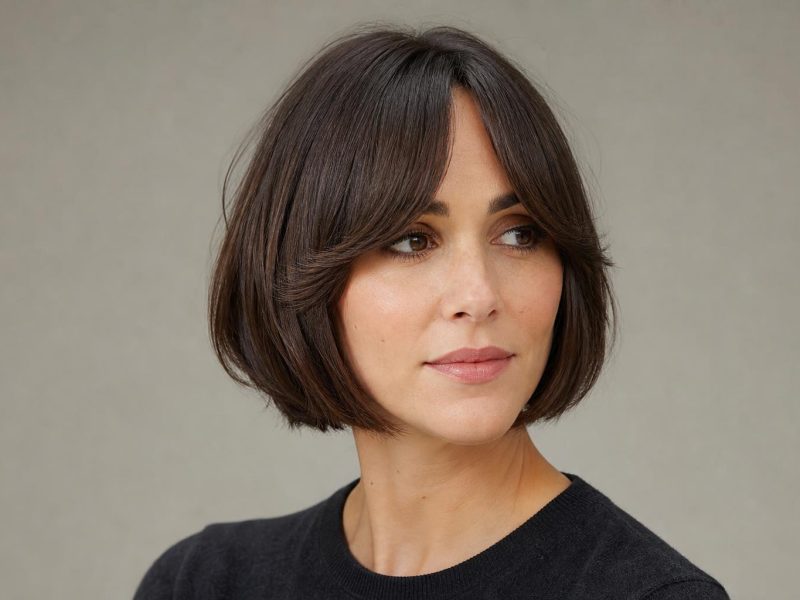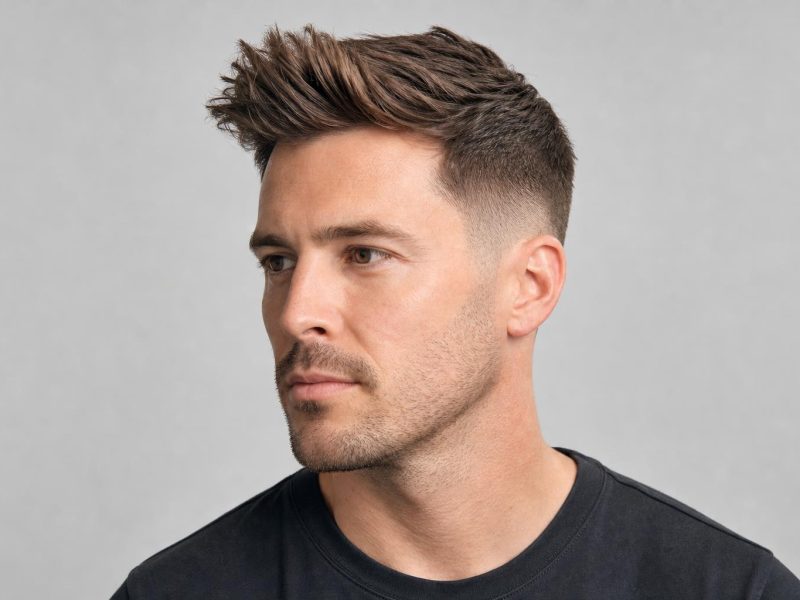

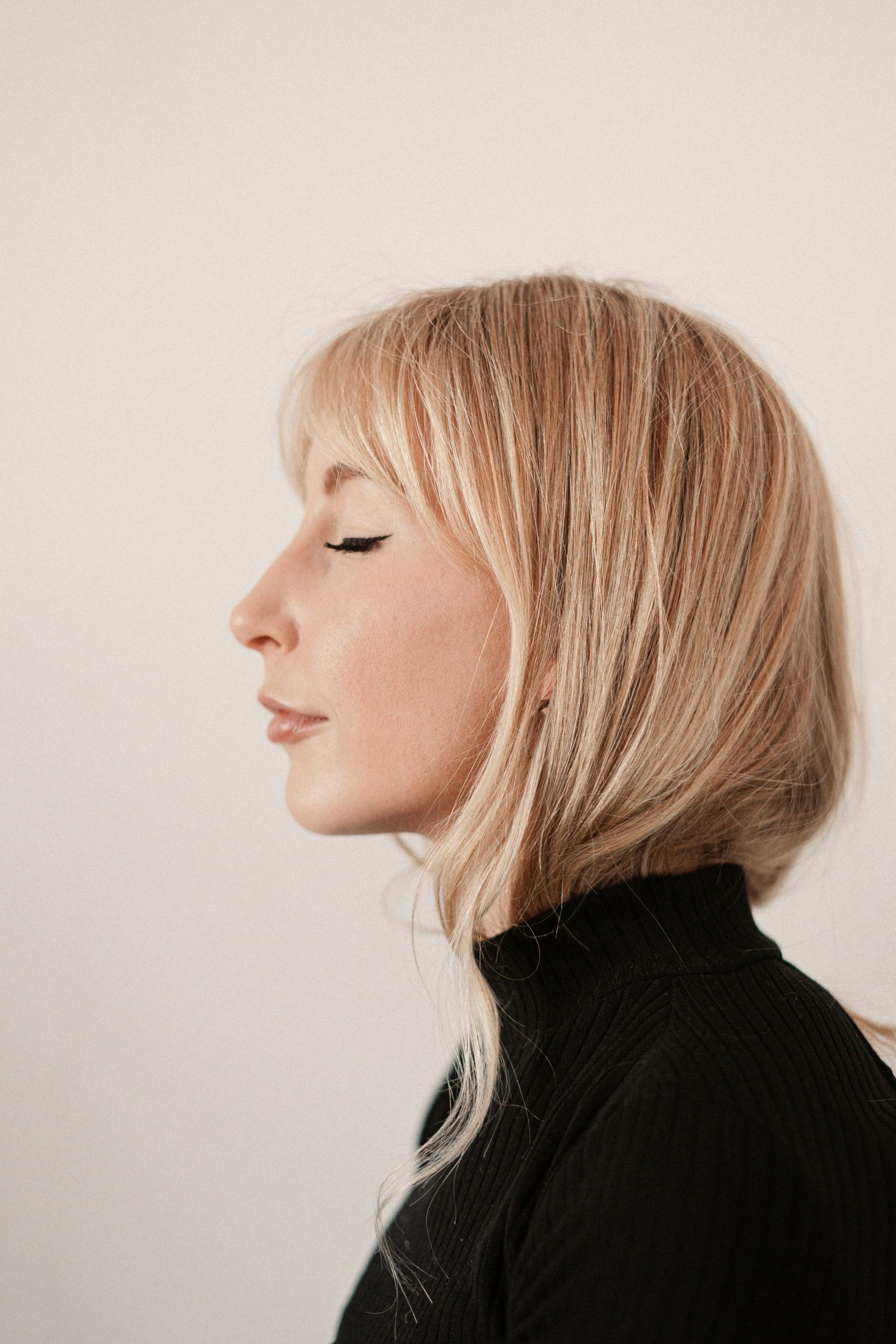

The right haircut for a chubby face creates vertical lines that draw the eye up and down, not across the widest part of the face.
Chubby and round faces are widest across the cheekbones, with similar width from forehead to chin. A flattering cut counterbalances that by adding height at the crown, keeping length below the jaw, and avoiding bulk at the sides that amplifies width. These 30 haircuts for chubby faces are organized by length (short, medium, and long) so you can start from where your hair is now and find what works within your range.
Every entry below addresses who a style suits, what makes it flattering, and how to ask for it at the salon. The companion searches for this topic: chubby face long bob haircuts, chubby face long layered haircuts, double chin round face pixie cut. All point to one truth: the best choice depends on hair type, density, and maintenance tolerance, not a single universal rule.
| Factor | Details |
|---|---|
| Best for | Round, chubby, and full faces; also addresses double chin concerns |
| What to look for | Length below the jaw, height at the crown, asymmetry, face-framing layers |
| What to avoid | Blunt chin-length cuts with center parts, heavy volume above the ears |
| Best lengths | Below the jaw (lob), collarbone, or long layers; pixies work when crown height is built in |
| Salon time | 45–90 minutes for a cut; 2–3 hours if adding face-framing highlights |
Short Haircuts for Chubby Faces
Short cuts can be extremely flattering on chubby faces when they build height at the crown and keep width tight at the sides. The cuts that cause problems on full faces are those that add horizontal volume at ear level, rounded bowl cuts, full blunt bobs at the widest cheek point, or heavy layering that puffs outward. Pixies, short shags, and jaw-length angled bobs all perform well when structured with the right technique.
1. Textured Pixie with Height at the Crown
Graduated layers at the back and sides are cut close and tight, while the top is left longer and texturized. This vertical contrast elongates the face and lifts visual weight upward. For chubby faces, the essential instruction is to keep the sides clippered short to avoid bulk above the ears. Ask for a “disconnected pixie with volume at the crown and short, blended sides.”

2. Short Shaggy Cut with Wispy Fringe
Fine hair benefits most from a short shag because the choppy layering adds density where the hair is sparse, and wispy fringe breaks the forehead-to-cheek line in a way that feels deliberate rather than corrective. The layers in a short shag sit mostly at the top and mid-lengths, avoiding the ear-level puff that rounds the face out. This cut grows out gracefully over 10–12 weeks, which reduces the pressure to maintain a tight trim schedule.

3. Jaw-Length A-Line Bob with Deep Side Part
The A-line shape falls longer at the front than the back, so the longest pieces hit just below the jaw rather than at the cheek. That angle creates vertical direction instead of horizontal width. A deep side part increases the asymmetry and adds a diagonal line that further slims the face. Round faces benefit from this combination more than any other short cut in the same length range.

4. Cropped Wolf Cut with Layered Top
A wolf cut with bangs cropped to above the shoulders keeps most volume at the crown and allows face-framing curtain pieces to fall forward past cheekbone level. That framing narrows the perceived width of the face. The curtain fringe is a strong supporting element here because it creates vertical interruption at the forehead. Thick wavy or coarse hair is the best candidate for this short version.

5. Undercut Pixie with Side Sweep
Round and chubby faces benefit from an undercut pixie because the clippered sides eliminate the ear-level puff that makes the face appear wider, while the side-swept top falls diagonally across the forehead. The diagonal is the slimming element: it creates a different visual axis than the horizontal roundness of the face. This cut needs a trim every 3–5 weeks to keep the undercut defined and the shape clean.

6. Chin-Length Layered Bob with Curtain Bangs
Dimensional highlights added to the face-framing pieces pull light toward the center of the face and away from width at the cheeks. Color placement makes the cut work harder without changing the structure. Soft curtain bangs pair particularly well with a chin-length layered bob because the curtain split opens up the center and adds height at the forehead without the forehead-lowering effect of a blunt fringe. Ask for curtain bangs that part naturally rather than being cut straight across.

7. Asymmetrical Short Bob with Angled Front
Unlike a standard bob where both sides hang at the same length, an asymmetrical bob is deliberately cut longer on one side. That diagonal line creates the elongating effect that round faces need most. The longer side should fall below the chin on the face’s less dominant side, usually opposite the natural part. Ask your stylist to blend the shorter side closely at the nape to avoid ear-level puffiness from the shorter length.

8. Feathered Short Cut with Tapered Nape
Feathering at the ends of a short cut creates lightweight movement rather than the heavy, rounded perimeter that fills out around a full face. A tapered nape keeps the back of the silhouette narrow and clean. This performs especially well on fine, straight hair that tends to fall flat. The feathering gives the appearance of more volume without adding horizontal bulk where the face is already widest.

9. Bixie with Texture at the Crown
Medium to thick hair suits a bixie best because the naturally dense texture fills out the blunt, close-to-face proportions without looking sparse at the ends. This bob-pixie hybrid typically hits between the chin and ear, and the most flattering version for chubby faces lands just below the jaw’s widest point rather than at the cheek. Bring a photo to the appointment — the bixie’s proportions vary significantly from stylist to stylist.

10. Short French Bob with Wispy Side-Swept Bangs
A classic French bob sits at or just above the jaw, but adding wispy, side-swept bangs converts it from a potentially widening cut to a flattering one for full faces. The bangs interrupt the forehead line, and sweeping them to the side creates diagonal movement that adds visual length. Unlike a blunt fringe, wispy bangs grow out forgivingly, a practical advantage for those uncertain about committing to full fringe upkeep.

Medium-Length Haircuts for Chubby Faces
Medium-length cuts are the most forgiving range for chubby and round faces because the added length below the jaw does a lot of visual elongating before any specific styling technique is needed. The lob, collarbone-length shag, and medium wolf cut all land here and consistently rank among the best-performing styles for rounder features. The one cut to approach carefully: a blunt one-length bob hitting at the widest cheek point with a center part.
11. Textured Lob Falling Past the Jawline
A lob landing one to two inches below the jaw is the most universally flattering medium haircut for chubby faces, the length creates vertical direction, and texturizing the ends prevents the heavy, rounded perimeter that emphasizes width. On fine hair, a collarbone-length lob with internal layers gives the most volume without sacrificing the length benefit. Trim every 8–10 weeks to maintain the length and perimeter shape.

12. Collarbone-Length Shag with Curtain Fringe
Thick hair at collarbone length benefits most from a shag structure because the choppy layering removes the side bulk that thick hair naturally generates in a one-length cut, channeling weight downward rather than outward. Coarse, dense hair that flows straight tends to balloon around a full face without specific layering. The hush cut is a softer, more blended variation worth considering if the choppy shag texture feels too edgy for your style preference.

13. Lob with Balayage and Face-Framing Layers
Balayage brightens the face-framing pieces without adding uniform color that could make the face appear rounder, lighter tones at the front draw the eye inward and forward, while darker roots at the top add the illusion of height. Face-framing layers that start at cheekbone level and fall forward add the structural benefit of the cut itself. This combination of cut and color is particularly effective for medium to thick hair on a chubby face.

14. Medium Layered Cut with Volume at the Crown
Blow-drying the roots upward with a round brush or using a diffuser on damp hair adds crown height that makes the face look proportionally longer. This works at medium length when the cut already has internal layers that support the lift, without layers, the volume collapses flat by midday. A lightweight volumizing mousse at the roots before blow-drying gives the most reliable result without stiffness or crunch through the day.

15. Blunt Lob with Deep Side Part
A blunt perimeter on a lob is technically the least flattering shape for a round face, but a deep side part changes the geometry completely by creating a strong diagonal line across the crown that counters the roundness. This combination works well on straight, medium-density hair that holds a deep part without falling back to center. Avoid heat-styling the ends outward on a blunt lob; flipped-out ends add horizontal width below the jaw and undo the side-part benefit.

Stylist tip: When asking for a lob on a round face, request that the front sections be left 1–2 inches longer than the back. That A-line angle — longer in front, shorter in back — creates elongation that a level lob cannot deliver. A perfectly level lob is often what makes the face look rounder, not the lob itself.
16. Medium Wolf Cut with Curtain Bangs
Wolf cuts generate natural volume at the crown through their shorter top layer, which is exactly what chubby faces need: height at the top, not width at the sides. The curtain bangs that typically accompany a wolf cut are a strong supporting element because they frame the face without sitting straight across the forehead. Medium wolf cuts at collarbone length are lower maintenance than shorter versions; the layers blend as they grow over 8–10 weeks.

17. Shoulder-Length Wavy Bob with Soft Layers
Adding natural wave texture through air-drying or a texturizing spray creates movement that prevents the silhouette from sitting flat and wide. Internal layers support the wave pattern and prevent the hair from resting heavy against the face at cheek level. This works best when the layers start below the cheekbone, layers that begin too high create bulk exactly where round faces cannot afford it.

18. Layered Lob for Thick, Dense Hair
Ask your stylist specifically for “interior weight removal with point-cut ends, keeping the length at or below the collarbone”, this instruction targets the two techniques that make a thick-hair lob work on a chubby face rather than puff outward. Interior weight removal via slide cutting or point cutting thins the mid-shaft without shortening the length, so the lob falls flat rather than expanding at the sides. Without this specific request, many stylists default to surface layering at the ends rather than mid-shaft thinning.

19. Textured Lob for Fine Hair with Internal Layers
Fine hair loses density quickly when over-layered, but a lob with targeted internal layers, placed mid-shaft, not at the perimeter, adds movement without thinning the ends to wispy nothingness. Razor cutting is generally not a good match for fine hair at this length because it can make ends look frayed and sparse. Point cutting at the perimeter creates texture without sacrificing the weight line that fine hair needs to look full.

20. Medium Cut with Side-Swept Angled Layers
Side-swept layers that angle from shorter at the back to longer at the front push the hair’s longest pieces toward the front of the face rather than letting the silhouette balloon at the sides. This approach is especially effective for curly and wavy hair, which tends to expand sideways without directional layering to channel it downward. For naturally curly hair, confirm that your stylist cuts curls dry, wet cutting curly hair makes it difficult to predict where the layers actually land once the curl springs back.

Long Haircuts for Chubby Faces
Long hair has a natural slimming effect on chubby faces because vertical length below the collarbone draws the eye downward and creates an elongated silhouette. The common mistake at length is keeping it too uniform and wearing a center part, two choices that frame both sides of the face equally and emphasize width. Long layered cuts, curtain bangs, and face-framing money pieces all improve the proportional balance. For straight hair, curtain bangs on straight hair are the lowest-effort upgrade available at long lengths.
21. Long Layered Cut with Low-Maintenance Grow-Out
Long layered haircuts for chubby faces need a trim only every 10–12 weeks because the length grows out slowly and the layering blends as it extends, never creating an obvious shape loss the way a shorter cut would. This is the most maintenance-forgiving style on this list, a practical choice for anyone who cannot keep a tight salon schedule. Ask for the first face-framing layer to start at the jaw or just below it, not at the cheekbone, to get the elongating benefit rather than the widening one.

22. Long Shag with Curtain Bangs
Unlike a medium shag that can look bottom-heavy on a chubby face at collarbone length, the long shag naturally distributes its volume between the crown and mid-lengths before the hair falls narrow and long. Curtain bangs create an opening at the center that draws the eye upward. Thick wavy hair on a round face benefits most from this combination, the waves add movement, and the shag channels that movement downward rather than outward.

23. Long Bob with Face-Framing Balayage
For plus-size women with chubby faces specifically, a long bob hitting between the collarbone and mid-chest is among the most recommended styles because the length below the jaw keeps visual focus away from the lower face and neck area. Balayage concentrated on the face-framing pieces adds dimension that draws the eye inward rather than emphasizing width. A deep side part further increases asymmetry and adds a diagonal element that counters the roundness.

24. Long Side-Swept Layers with Curtain Fringe
Curtain bangs at forehead length, combined with long side-swept layers, give this style two elongating elements working simultaneously: the curtain part opens the forehead and adds vertical space, while the long layers add length below. The fringe can be styled to one side for additional asymmetry if the center split does not feel flattering. Deep side fringe on long layers is one of the most consistently effective pairings for chubby face shapes across hair types.

25. Long Wavy Layers for 2b–3a Hair
Wavy hair in the 2b–3a range gets the most from long layers because the natural wave pattern adds the movement that straight hair has to achieve through styling. Building height at the crown requires the crown layers to be noticeably shorter than the lengths below, typically 4–6 inches shorter, so the top lifts rather than collapses flat against the head. A diffuser used on the root area rather than the mid-lengths encourages upward volume without disrupting the wave pattern.

26. Long Layers with Face-Framing Money Pieces
Money pieces — the lightened face-framing sections that fall forward on either side — direct attention toward the center of the face and create contrast that narrows the perceived width. This technique works most effectively when the money pieces are 2–3 shades lighter than the base color and start from the hairline, not mid-length. On darker base colors such as brunette to dark brown, the contrast is most dramatic and the visual slimming most visible in person and in photos.

27. Long Shag for Thick Wavy Hair
Thick wavy hair on a chubby face is one of the more challenging pairings because thick hair mushrooms outward at the cheeks and jaw without specific weight removal. A long shag addresses this directly: the choppy layering removes bulk from the mid-shaft while leaving the perimeter intact, so the hair falls narrow rather than wide. Expect this cut to need a refresh every 10–12 weeks before the weight line rebuilds at the sides.

28. Long Straight Cut with Deep Side Part
Styling the part at least 3–4 inches off-center rather than at the natural center creates an immediate diagonal line at the crown that adds visual length on the fuller side. This is the lowest-effort slimming technique available for long straight hair. Point-cut ends prevent the hair from forming a rounded shape that mirrors the face, a blunt straight-across perimeter can inadvertently create exactly that effect on very straight, dense hair.

29. Long Wolf Cut with Crown Volume
Bring two or three reference photos specifically showing crown volume, because wolf cut interpretations vary significantly and some stylists cut the top shorter than what works for a chubby face. A long wolf cut keeps the shortest layers at the crown, where they create lift, and graduates down to longer, narrower lengths that fall below the collarbone. The result is a silhouette that widens at the top where the face needs height and narrows below where elongation matters most.

30. Long Layers with Feathered Ends
Feathered ends at long lengths create light, wispy tips that avoid the blunt-perimeter weight that rounds the overall silhouette. Feathering is achieved through point cutting or razor cutting at the ends, texturizing spray alone cannot replicate this structural result. This style sits lower on the maintenance scale than a shag or wolf cut, since feathered ends grow out without the abrupt shape loss that heavily layered cuts can show at week 7 or 8.

What Makes a Haircut Flattering for a Chubby Face
The goal behind every cut on this list is the same: create the visual impression of an oval face shape, which has roughly a 1.5:1 length-to-width ratio. Chubby and round faces typically sit closer to 1:1. The strategies that shift that ratio are consistent and repeatable across hair types and lengths.
| Strategy | How It Helps | Best Cut Types |
|---|---|---|
| Height at the crown | Adds vertical length above the face | Wolf cut, textured pixie, shag |
| Length below the jaw | Extends the visual line downward | Lob, long layers, long shag |
| Asymmetry | Breaks horizontal symmetry that emphasizes width | Deep side part, A-line, asymmetric bob |
| Face-framing pieces | Draws the eye inward, away from the widest points | Curtain bangs, money pieces, balayage |
| Light perimeter | Avoids adding visual bulk at the sides | Point-cut or feathered ends, internal layers |
When a Haircut Makes a Chubby Face Look Rounder
Not every haircut that fails on a chubby face is the stylist’s fault — some are structural choices that work against round face geometry regardless of execution. These are the patterns to actively avoid.
- Chin-length blunt bob with a center part: This is the highest-risk combination for a round face. The horizontal line of a blunt perimeter at the widest cheek point, split symmetrically by a center part, creates a frame that announces width rather than disguising it. If you love this cut, ask for an A-line angle and a deep side part instead.
- Rounded short cuts with volume at the temples: A pixie or bob with too much volume at ear level creates a helmet silhouette that mirrors the face’s shape rather than countering it. Short cuts need tight, close tapering at the sides to balance a chubby face.
- Layers starting at the cheekbones: Layers that begin at cheekbone or ear level add bulk precisely where round faces are widest. Face-framing layers should start at the jaw or below, not at the cheekbones.
- Straight-across blunt bangs: Full blunt bangs lower the apparent forehead height and remove vertical dimension. Wispy, curtain, or side-swept bangs are the safer alternatives for chubby and round faces.
- Curly styles grown without directional shaping: Coarse, tightly curly hair allowed to grow into a rounded shape without layering can emphasize facial roundness. Asking for long layers or a curl-specific shaping cut keeps the silhouette elongated rather than spherical.
Stylist tip: The most common consultation mistake on a chubby face is requesting layers without specifying where they start. Layers at the cheekbone create width; layers at the jaw create elongation. When you sit in the chair, point to your jaw and say “I want the first face-framing layer to start here, not higher up.” That single instruction changes the result more than any other adjustment.
What to Tell Your Stylist
Specific language in the consultation makes the difference between getting the flattering version of a cut and getting a generic interpretation. These are the phrases that communicate what a chubby face needs, organized by cut type.
- For a lob or medium bob: “Cut the front sections 1–2 inches longer than the back, with the longest pieces falling below the jaw. Add face-framing layers starting at the jaw, not the cheekbone. Point-cut the perimeter, don’t leave it blunt.”
- For a pixie: “Keep the crown and top section longer with texture pointing upward. Clipper or close-shear the sides and back to sit flat against the head. Height at the top, not width at the sides.”
- For a shag or wolf cut: “I want the shortest layers at the crown for volume, graduating down to longer lengths. Face-framing pieces should fall forward past the cheekbones. No layers above cheekbone level.”
- For long layers: “Start the face-framing layers at the jaw or below. I want interior weight removal through the mid-shaft on the sides so the hair falls narrow rather than puffing out. Keep the perimeter length long.”
Maintenance
Knowing the realistic trim schedule before committing to a cut helps avoid the situation where grow-out causes the style to lose its flattering shape between appointments.
| Cut Type | Trim Frequency | Grow-Out Behavior |
|---|---|---|
| Pixie or undercut pixie | Every 3–5 weeks | Sides puff within 4 weeks; high maintenance |
| Short bob or A-line bob | Every 5–7 weeks | Angle softens over 5–6 weeks; still manageable |
| Lob or medium layered cut | Every 8–10 weeks | Most forgiving range; grows out gradually |
| Medium shag or wolf cut | Every 8–10 weeks | Layers blend as they grow; shape holds well |
| Long layers | Every 10–12 weeks | Very forgiving; layers extend slowly and naturally |
FAQ
What Is the Most Flattering Haircut for a Chubby Face?
A textured lob falling one to two inches below the jaw is the most universally flattering haircut for a chubby face, the length adds vertical direction, and texturizing the ends prevents the rounded perimeter that emphasizes width. An A-line angle (longer at the front than the back) adds additional elongation. On fine hair, a collarbone-length lob with internal layers rather than razor-cut ends gives the most volume without sacrificing length.
Can a Pixie Cut Work on a Chubby Face?
Yes, but the technique matters more than with any other cut. A pixie for a chubby face needs height and texture at the crown with tight, flat sides, the opposite of a rounded bowl-style pixie. An undercut pixie or a disconnected pixie with a side-swept top both achieve this balance. A longer pixie that falls closer to bixie length gives more flexibility and is less vulnerable to the sides puffing out before the next trim.
Should Someone with a Chubby Face Avoid Bangs?
Blunt, straight-across bangs should generally be avoided because they reduce apparent forehead height and eliminate vertical dimension. Curtain bangs, wispy side-swept bangs, and face-framing pieces are all better alternatives, they create a central opening rather than a horizontal line that lowers the perceived height of the face. If you want fringe, go wispy or curtain; avoid anything cut straight and heavy across the forehead.
Does Long Hair Flatter a Chubby Face?
Long hair generally flatters a chubby face well because the vertical length below the collarbone naturally elongates the silhouette. The mistakes to avoid at length are keeping the hair one uniform length with a center part (which frames both sides equally) and allowing thick hair to grow without layers (which creates triangular widening at the sides). Long layered cuts with face-framing pieces are the most reliably flattering version for full faces.
What Haircut Is Best for a Chubby Face with a Double Chin?
A lob or long shag falling below the chin and collarbone is the best choice when there is also a double chin concern, because the length keeps visual focus below the lower jaw rather than drawing attention to it. Cuts that end at chin level can inadvertently frame the jaw area. Keep the longest face-framing pieces below the jaw and avoid tucking hair behind the ears, which exposes the neck and jawline more directly.
What Works for Plus-Size Women with Chubby Faces?
The same structural principles apply regardless of body size: length below the jaw, height at the crown, face-framing pieces rather than blunt perimeters. The lob, long shag, and long layered cut with curtain bangs all work consistently for plus-size women with chubby faces because they create a balanced, elongated silhouette from the face down. What matters is the proportional relationship between the cut’s volume and the face shape.
How Often Should Someone with a Chubby Face Get a Haircut?
The trim frequency depends on the cut, not the face shape. Short cuts like pixies need a refresh every 3–5 weeks because side growth breaks the flattering shape fastest. Medium lobs and shags can go 8–10 weeks. Long layered cuts are the most forgiving, typically 10–12 weeks between trims. Once the hair starts rounding out at the sides or losing its angle, the shape has started working against the face rather than for it.
Choosing among haircuts for chubby faces is less about avoiding styles and more about adjusting specific structural details, angle, length, layering, and parting, within almost any cut you already love. From gallery collections exploring styles for triangle face shapes to specific hair-type guides, face shape planning is one of the most practical steps before a salon visit. Bring two or three of these photos to your next appointment and ask your stylist which structural detail, the A-line angle, the crown layering, the curtain fringe placement, works best with your natural hair type and growth pattern.
Hair results vary based on your natural hair type, texture, density, and condition. Always consult with a licensed hairstylist before making significant changes, especially with chemical treatments or dramatic length changes. Photos may show styled results that require professional tools and products to replicate.