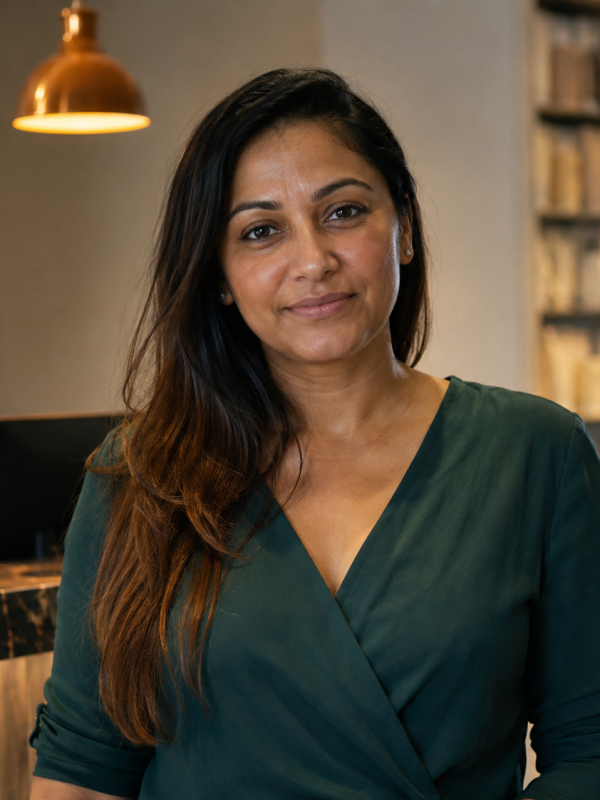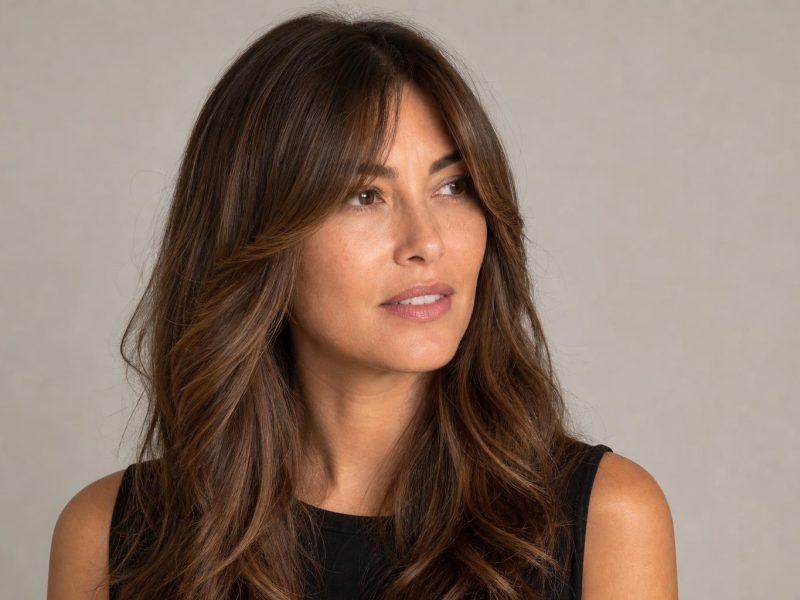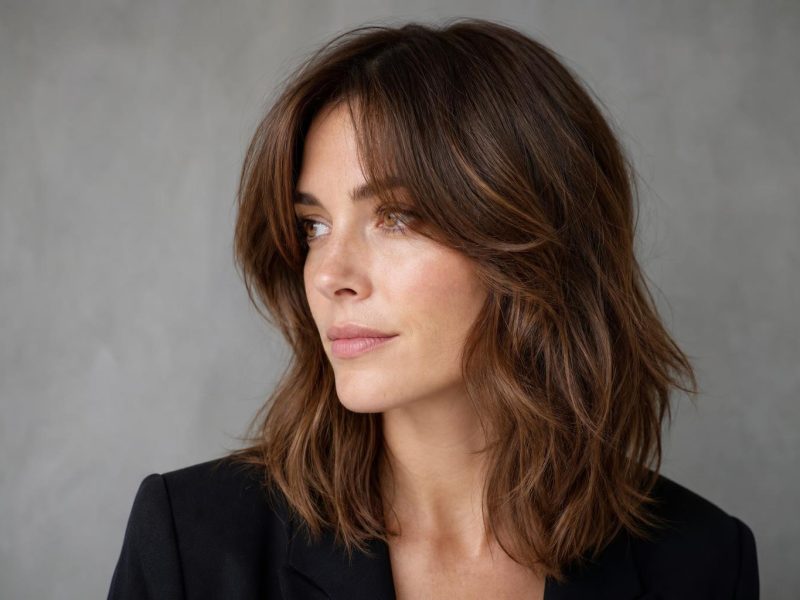


Soft curtain bangs are razored or point-cut to a whisper-light density and swept to either side of a center or off-center part — they frame the face without the weight or commitment of a blunt fringe.
The defining difference between a standard curtain bang and a soft one is in the finishing technique. A standard curtain bang has visible density at the leading edge; a soft curtain bang is thinned through the ends with a razor or thinning shears until the fringe becomes nearly weightless at the tip. The result is a face-framing effect that blends into surrounding layers rather than sitting as a distinct panel across the forehead. These 25 styles are organized by hair type — fine and thin hair, wavy and textured hair, and thick or dense hair, then by length variation, with a face shape guide, stylist language, and maintenance schedule following the gallery.
Every entry names the specific technique, the hair type that benefits most, and what to request at the salon. The guidance sections cover why soft curtain bangs behave differently on different textures and where the grow-out phase is most forgiving.
| Factor | Details |
|---|---|
| Best for | Fine to medium hair most adaptable; all face shapes with the right length adjustment |
| Defining feature | Razored or point-cut fringe thinned to a near-weightless tip; sweeps to each side from a center or off-center part |
| Maintenance | Shape trim every 5–7 weeks; longer intervals possible if you prefer a loose, grown-out curtain look |
| Avoid if | Strong forehead cowlicks; tightly coiled 4b–4c hair without a stylist experienced in textured fringes |
| Salon time | 15–20 minutes for bangs alone; 45–75 minutes if combined with a fresh cut |
Soft Curtain Bangs on Fine and Thin Hair
Fine hair and soft curtain bangs are a natural pairing because the light thinning work that creates the whisper-weight fringe does not strip density that fine hair cannot afford to lose. The key is minimal razor or thinning shear work — fine hair already has the airy quality the style is built around, so a stylist who over-thins the ends can leave the fringe looking sparse rather than feathered. Most fine-hair soft curtain bangs work best at cheekbone length or slightly shorter, where the hair is dense enough near the root to hold shape but light enough at the tip to fan out naturally.
1. Barely-There Whisper Fringe on Fine Straight Hair
A single pass of thinning shears at the last inch of each fringe section leaves about 40–50 percent of the original density at the tips, creating a transparent fringe that adds texture near the forehead without any real weight. On fine straight hair this technique works well because the hair lies flat on its own — the thinning is purely about edge quality, not bulk removal. Ask for “a soft fringe, point-cut to the tip, no blunt line” to prevent the stylist from defaulting to a scissor-cut fringe edge.

2. Brow-Grazing Soft Frame for Oval Faces
Oval faces are the most forgiving for shorter, brow-level soft curtain bangs because even a relatively high fringe position does not distort balanced facial proportions. When the fringe falls right at or just below the brow, it draws the eye to the eye area and creates a natural horizontal line that works with the face’s existing symmetry. A center part is slightly more structured; a loose off-center part gives the same bang shape a more relaxed, everyday quality.

3. Feathered Fringe with Air-Dry Styling
Fine hair that air-dries without frizz is the easiest starting point for a low-maintenance soft curtain bang: let it dry completely, then separate the fringe with fingertips and press flat with a small amount of light hold spray on the palms. No heat required. The natural fall of fine straight strands creates a slightly irregular texture across the fringe edge that looks intentionally undone, which suits the casual face-framing these bangs are built for.

4. Layered Bob with Soft Curtain Fringe on Fine Hair
Curtain bangs on straight hair paired with a fine-hair layered bob benefit from fringe and layers being cut at the same session; the stylist can calibrate how light to go with the fringe based on the overall density of the rest of the cut. On fine hair, internal layers already remove weight from the mid-shaft; the fringe only needs the final thinning pass at the tips. Cutting both at the same appointment prevents the disconnect that happens when a fringe is later miscalibrated against a body of cut it was not measured against.

5. Blunt Lob with Wispy Fringe Contrast
Pairing a blunt, dense-based lob with a soft curtain fringe creates a deliberate contrast: the lob’s perimeter line carries significant weight, while the fringe is nearly weightless by comparison. The contrast works best when the fringe is kept very light. A blunt-cut fringe on a blunt-based lob reads as matchy and heavy, while a razored fringe provides visual relief and gives the silhouette two distinctly different finishing approaches in a single cut.

6. Grow-Out Soft Curtain Bangs at Six Weeks
At the 5–7 week mark, most soft curtain bangs have grown from cheekbone level toward the jaw, and fine hair handles this grow-out phase more gracefully than thick or coarse hair because the added length on fine hair naturally merges into the surrounding layers. On fine hair with caramel highlights or lighter balayage through the mid-shaft, the grown-out fringe blends into the face-framing sections without a visible line of demarcation between bang and layer.

7. Split Center Part with Asymmetric Fall
Starting a center part at the crown and allowing the fringe to fall slightly more toward one side creates an asymmetric curtain effect that works with natural growth patterns rather than against them. Fine hair often has a cowlick or directional growth at the front hairline that makes a precisely symmetrical center part difficult to maintain; leaning into a slight asymmetry looks deliberate rather than unfinished. Tell your stylist where your hair falls naturally at the front hairline before the fringe is cut so the shape can accommodate the actual growth direction.

8. Soft Curtain Bangs vs. Wispy Bangs
Wispy bangs are typically short, fine strands left across the forehead without sweeping to the sides; they sit as an independent panel across the brow line. Soft curtain bangs are always longer, always swept to each side from a part, and always merge into the surrounding hair. The key difference is function: wispy bangs accentuate the forehead area, while soft curtain bangs frame the face by directing the eye outward toward the cheekbones. On fine hair, soft curtain bangs are also more forgiving during grow-out because the growing fringe transitions naturally into the side hair rather than becoming awkwardly long across the forehead.

Soft Curtain Bangs on Wavy and Textured Hair
Wavy and naturally textured hair adds a layer of complexity to soft curtain bangs because the fringe must be cut at the natural wave length, not the stretched length. A stylist who cuts wavy curtain bangs while the hair is wet will overestimate how long the fringe will appear once it dries, as wave shortens the effective length by 10–25 percent depending on the tightness of the curl pattern. These seven variations show how soft curtain bangs interact with 2a to 3a wave patterns, from a gentle loose wave to a defined S-curve.
9. Loose Wave Soft Curtain Bangs with Natural Movement
A 2b wave pattern, defined S-shaped waves from root to end, gives soft curtain bangs a natural fluidity that looks styled with minimal effort. The wave creates its own separation across the fringe, so the feathered ends move and shift throughout the day without looking disheveled. Allow the bangs to air-dry completely before assessing the final fall; wet styling overstretches the wave pattern and makes the fringe appear longer and straighter than it will be once fully dry.

10. Round Face Framing with Below-Cheekbone Length
Round faces benefit most from soft curtain bangs that extend clearly past the cheekbone rather than ending at it — a fringe that grazes the cheekbone creates a horizontal emphasis at the widest point of a round face, while one that falls to mid-cheek or below draws the eye downward and inward. On wavy hair, the wave’s shortening effect means asking the stylist to cut the fringe at least an inch longer than the desired dry length, then evaluating the actual position after the first complete air-dry cycle.

11. Diffused Wave with a Soft Fringe Panel
On 2c to 3a hair, using a diffuser on low heat to set the fringe before pressing it flat with dry fingertips gives the fringe natural volume and texture at the root while keeping the ends relatively smooth rather than springing upward. Work a pea-sized amount of curl cream through the fringe before diffusing, then separate and smooth with dry fingers once fully set. This prevents the rounded, bulging shape that curtain bangs can develop on curlier textures when they dry without any direction applied.

12. Honey Blonde and Warm Tone Framing
Soft curtain bangs in warm blonde or honey-toned hair catch light at the leading edge of the fringe more visibly than darker shades, adding dimension to the face-framing effect. On wavy hair with balayage, the lighter fringe sections separate naturally as the hair moves, creating a multi-tonal feathered look that reads as styled even when air-dried. Medium-to-warm skin tones paired with honey-toned soft curtain bangs produce a natural highlighting effect across the upper cheekbone zone without any additional color work.

13. Wolf Cut Integration with Soft Curtain Fringe
A wolf cut with bangs calls naturally for soft curtain styling because the wolf cut’s shaggy crown layers already carry fringe-adjacent volume. The stylist needs to unify the fringe with the crown layers rather than treating them as separate sections — the transition between the curtain panel and the first short crown piece should blend without a visible ridge separating them. This integration works best on 2a–2c wavy hair, where natural texture masks any minor blending inconsistencies between the fringe and the crown layering.

14. Point-Cut Fringe That Merges into Face-Framing Layers
When the fringe and the face-framing layers use the same cutting technique throughout, using point cutting through the mid-shaft of each section, and the transition from fringe to side layer is invisible. A texture mismatch occurs when the fringe is razor-cut but the layers are scissor-cut: the fringe has a feathered, multi-strand end and the layers have a clean parallel edge, and the boundary between them is visible. Matching the technique from fringe to layer produces the unified look that defines the best soft curtain bang results.

15. Heart Face Soft Curtain Bang: Balancing the Forehead
Heart-shaped faces have a wider forehead and a narrowing lower face, and soft curtain bangs address both concerns simultaneously, reducing some forehead visibility while sweeping outward at cheekbone level to add visual fullness where the face narrows. The length matters precisely: too short, and the bangs leave the full forehead exposed; too long, and they close off the face’s narrowing points without creating width where it is needed. A length ending at the outer corner of the brow and sweeping to the cheekbone is the most reliable starting position for heart-shaped faces on wavy hair.

Soft Curtain Bangs on Thick and Dense Hair
Thick hair creates the biggest challenge for soft curtain bangs because achieving the near-weightless tip quality on dense strands requires significantly more thinning work than on fine or medium hair. Without enough thinning, thick-hair curtain bangs form a heavy, almost shelf-like panel across the forehead rather than the feathered frame the style is built around. The stylist needs to thin the fringe from underneath — removing weight from the inner section of each fringe panel so the surface appears smooth but the overall density is substantially reduced from the inside out.
16. Thinned Thick-Hair Curtain Bang with Internal Density Removal
Tell your stylist: “soft curtain bangs with internal thinning: I want the ends to feather, not sit as a block.” If the stylist only point-cuts the tips without thinning through the mid-section, the fringe will still feel heavy and the feathered tip will look added-on. Internal thinning shear passes through the under-section of the fringe can remove 30–40 percent of the weight while leaving the surface texture intact and smooth from the front.

17. Square Face and Soft Curtain Bangs: Softening the Jaw
Square faces have a strong horizontal jawline, and curtain bangs address the balance by redirecting the eye to the center of the face and then outward at cheekbone level. On thick hair, the fringe needs to be light enough to sweep naturally. A fringe with too much density on thick hair tends to stay centered rather than parting and sweeping to the sides, which defeats the face-framing purpose entirely. The target outcome is bangs that move with any head movement, not bangs that must be manually placed.

18. Deep Brunette and Dark Warmth at the Fringe
On thick, dark brunette hair, soft curtain bangs carry a richness at the root that lighter shades cannot produce; the high pigment density makes the fringe look intentionally bold even when the feathered ends are quite airy. On dark red or auburn hair, the fringe catches warm light through the day as the color shifts between different lighting conditions, adding a dimensional quality without any highlight service. The color’s natural depth does most of the visual work; the fringe only needs the internal thinning to achieve movement.

19. Coarse High-Density Hair: A Modified Approach
Coarse, high-density hair (individually thick strands in large numbers) presents the most demanding version of this cut. A razor alone on coarse hair tends to fray and split the ends rather than taper them cleanly; a combination of thinning shears through the mid-section and a scissor-cut final trim produces a cleaner feather than either tool alone. The result on coarse hair will be softer than a blunt fringe but will not reach the near-transparent quality achievable on fine or medium hair. Managing that expectation before the appointment is part of the consultation.

20. Hush Cut Pairing: Seamless Face-Framing on Thick Hair
The hush cut hairstyle, a layered face-framing cut with curtain-adjacent structure, pairs naturally with soft curtain bangs because both elements prioritize a seamless transition between fringe and length. On thick hair, combining these cuts requires the stylist to apply consistent thinning from the fringe through the face-framing layers so the density reduction is uniform across the whole front section. The result is a thick-hair cut that flows rather than sitting as a weighted block around the face.

Length and Framing Variations
Soft curtain bang length determines how the style frames the face and how different face shapes respond to the fringe. A fringe ending at the brow creates a shorter, more defined upper-face frame. A fringe extending to the cheekbone or below creates a longer, more diffuse frame with less forehead coverage. These five variations cover the length spectrum from brow level to below-cheekbone, with face shape and maintenance notes for each position.
21. Eyebrow-Level Soft Curtain Bangs
A soft curtain bang at eyebrow level trims most frequently of all the length variations, as the fringe grows past the brow line within 4–5 weeks and quickly loses its frame quality. This length works best for oval and round faces; oblong faces should avoid the brow-level position because a short horizontal fringe at the top of a long face adds visual width only at the brow line, further elongating the face rather than adding width at the mid-face where it is needed most.

22. Cheekbone-Length Soft Curtain Bangs
Cheekbone-length is the most versatile and widely recommended position for soft curtain bangs because the fringe ends at the widest horizontal plane of the face rather than at the brow or jaw. For all face shapes except round, this position creates a natural and flattering frame; round faces should go one-half to one inch lower to avoid the fringe ending exactly at the widest point. Use a small round brush on damp bangs and direct the tips outward as they dry, which establishes the side-sweep without heat damage to the feathered ends.

23. Below-Cheekbone Curtain Bangs for Oblong Faces
Oblong and long faces benefit from soft curtain bangs that fall well past the cheekbone, closer to mid-jaw, because the additional length allows the fringe to add horizontal visual weight at the mid-face zone. A soft curtain bang at near-jaw length on an oblong face functions more like a face-framing layer than a traditional fringe and needs less frequent maintenance, every 8–10 weeks rather than the standard 5–7, because the grow-out phase at this length is far less visually dramatic than on a brow-level fringe.

24. Graduated Curtain Bang: Shorter Center, Longer Outer Corners
Cutting the center section of the fringe slightly shorter than the outer sections creates an angled frame that reduces forehead coverage at the center while maximizing cheekbone-level framing at the outer edges. The graduated approach works especially well on diamond faces, where a shorter center section reduces the visual exposure of a narrow forehead while the sweeping outer corners add width precisely at the cheekbone level where the face is already at its widest and where added volume genuinely helps the overall balance.

25. Soft Curtain Bangs on a Long Bob: The Classic Pairing
A long bob with bangs and a soft curtain fringe is one of the most requested combinations in salons because the lob’s collarbone-length perimeter and the airy curtain fringe create opposite visual endpoints of a balanced silhouette: dense and structured at the base, soft and face-framing at the top. On straight to lightly wavy hair, the combination needs minimal daily styling: a pass of a small round brush under the fringe while blow-drying and a light serum on the lob perimeter produces the finished look most clients picture when they bring in a reference photo.

Face Shape Guide for Soft Curtain Bangs
The face-framing quality of a curtain bang shifts substantially with length and part position. The table below shows the most flattering approach for each face shape, including the main adjustments that make the style work and the patterns to avoid.
| Face Shape | Best Length | Part Position | What to Avoid |
|---|---|---|---|
| Oval | Any; brow to cheekbone most versatile | Center or off-center both work | Nothing specific; most lengths and placements are flattering |
| Round | Just below cheekbone; avoid ending exactly at cheekbone | Off-center or deep side part | Short brow-level curtain bangs that add a horizontal line at the top of the face |
| Square | Cheekbone length; longer if combined with layers | Soft center or slight off-center | Heavy fringe with too much density, which sits as a block rather than sweeping |
| Heart | Outer brow corner sweeping to cheekbone | Center; avoids asymmetric emphasis on a wider forehead | Very short brow-level bangs that leave the full forehead exposed |
| Oblong | Below cheekbone toward mid-jaw; longer is better | Center; adds horizontal width at mid-face | Brow-level curtain bangs that elongate rather than balance the face’s length |
| Diamond | Graduated: shorter at center, longer at outer corners | Center; allows symmetric framing of a narrow forehead | Wide, dense fringe section that adds horizontal bulk above narrow temples |
What to Tell Your Stylist
The most common consultation error is asking for “wispy curtain bangs” without specifying the technique. “Wispy” is interpreted differently by different stylists — some read it as a razor pass through the last inch, others as aggressive thinning throughout, and others as a point-cut blunt fringe with some texture added. Specify the outcome rather than the descriptor:
“I want soft curtain bangs, feathered at the tips so the ends are nearly weightless, parted in the center and swept to each side. I do not want a defined blunt edge; the fringe should blend into the surrounding hair naturally.”
Add a length reference tied to your own face: “I want the fringe to fall to [cheekbone level / just below the outer corner of my brow / approximately two inches past my brow].” References anchored to your facial landmarks are more reliable than measurements in inches because the stylist can see those reference points before making the first cut.
Stylist tip: If you have thick or coarse hair, specifically request internal thinning through the under-section of the fringe, not just at the tips. Surface feathering alone on thick hair produces a fringe that looks soft for two to three days before the internal density pushes the ends back down and the fringe returns to a heavy, flat panel across the forehead.
Stylist tip: Bring a reference photo AND describe your hair type out loud before the consultation begins. A soft curtain bang on fine straight hair and a soft curtain bang on thick wavy hair look identical in a photo but require entirely different technique decisions from the stylist. Naming your actual texture before the consultation starts prevents them from defaulting to the technique from the reference photo rather than the technique your hair needs.
Maintenance and Styling
A soft curtain bang at cheekbone length grows approximately 0.5–0.75 inches per month, which means it reaches the jaw in roughly 4–6 months from a cheekbone starting point. The fringe needs reshaping every 5–7 weeks to stay in its working frame range; after week 7, it begins to lose its framing quality and functions more like a long face-framing layer than a bang.
Daily styling is minimal compared to blunt or heavy fringes. On straight hair: dry the fringe section with a small round brush or flat paddle, pressing outward and downward as the hair dries. On wavy hair: apply a small amount of smoothing serum to the fringe while damp, let air-dry, then separate with dry fingertips. On thick hair: use a medium round brush on damp bangs and direct the sections away from center as you dry with medium heat, which trains the fringe to maintain its side-sweep throughout the day.
When Soft Curtain Bangs Are Not the Right Choice
Soft curtain bangs are among the more forgiving fringe styles, but specific situations make them unlikely to perform as expected:
- Strong cowlicks at the front hairline: A cowlick in the fringe zone pushes a section against the intended curtain sweep direction. On a light, feathered fringe this creates a visible spike or lift that cannot be pressed flat without frequent application of a sticky hold product. Blunt fringes suppress cowlicks better because the weight of the dense edge holds the growth pattern down; soft curtain bangs do not carry enough weight to do this consistently.
- Very tightly coiled 4b–4c hair: The shrinkage on tightly coiled hair at the fringe zone means a cheekbone-length curtain bang cut wet may be brow-level or shorter when dry, and the coil pattern produces a rounded, lifted shape rather than the sweeping side-curtain fall the style depends on. A stylist with experience cutting soft curtain bangs on tightly coiled hair dry is necessary for this combination to work.
- Transitioning out of a blunt fringe: Thinning an established blunt fringe edge to create a soft curtain shape creates uneven density across the fringe and an awkward transition phase of 4–8 weeks. Better to allow a consistent grow-out at one length and let the fringe develop naturally than to try thinning a blunt edge into a curtain shape mid-grow-out.
- A completely product-free routine: Soft curtain bangs need at least a minimal hold product (light spray or a smoothing serum) to stay swept to the sides during activity or in humidity. On a zero-product routine, the feathered fringe will fall forward rather than maintaining the side-swept curtain position, especially after the first hour of the day.
FAQ
What Are Soft Curtain Bangs?
Soft curtain bangs are a fringe style cut from a center or off-center part and swept to each side of the face, with the ends razored or point-cut to a near-weightless feathered finish rather than a defined blunt edge. The word “soft” describes the edge quality: the fringe merges into the surrounding hair without a visible panel boundary, creating a face-framing effect that reads as part of the cut rather than a separate bang style. They differ from standard curtain bangs in that the density at the tip is significantly reduced, making the fringe more airy and blended.
Do Soft Curtain Bangs Work on Fine Hair?
Yes, fine hair is the easiest starting point for this cut because the minimal thinning the style requires does not strip density that fine hair cannot spare. The lightest version, where only the final inch of each fringe section is point-cut, is appropriate for fine hair without any risk of sparseness. The main caution is over-thinning: a stylist who goes too heavy on the razor on fine hair will leave the fringe looking thin rather than feathered. Request “light tip work only, no aggressive thinning” to prevent this.
How Often Do Soft Curtain Bangs Need Trimming?
Cheekbone-length soft curtain bangs need reshaping every 5–7 weeks. Below-cheekbone lengths can go slightly longer, 7–9 weeks, before the fringe loses its frame quality. Brow-level curtain bangs need the shortest trim intervals, every 4–5 weeks, because the fringe grows past the eye zone quickly and loses its visual effect as soon as it covers the brow arch. Longer intervals are workable if you prefer a fuller, more relaxed grown-out curtain look.
Can Soft Curtain Bangs Work on Curly Hair?
Soft curtain bangs work on 2a–2c wavy and loosely curly hair with a dry cut to account for shrinkage and a stylist comfortable with textured fringes. On tighter curl patterns (3b and above), the coil’s spring and lift create a different dynamic: the fringe tends to rise and separate rather than sweep to the sides, producing an effect closer to a textured piecey fringe than a classic curtain bang. If your curl pattern is 3a or looser, a dry-cut soft curtain bang can produce the look well with the right technique.
What Is the Difference Between Curtain Bangs and Soft Curtain Bangs?
Standard curtain bangs have a defined edge with visible density at the fringe’s leading edge, reading as a distinct bang style that contrasts with the surrounding hair. Soft curtain bangs use the same part and sweep direction, but the tips are razored or point-cut until the edge is nearly transparent, so the fringe blends into the surrounding hair without a visible boundary. Soft curtain bangs photograph as a face-framing effect more than a traditional fringe, which is why they work for people who want the face-framing benefit without the maintenance of a more defined bang.
How Do I Style Soft Curtain Bangs at Home?
On straight hair, dry the fringe section with a small round brush held parallel to the forehead and direct the brush outward on each side as you apply heat. On wavy hair, apply a lightweight smoothing serum or curl cream to damp bangs and allow them to air-dry before separating with dry fingers. On thick straight hair, use a medium round brush and medium heat to press the fringe flat and outward simultaneously. The key on all textures is directing the fringe outward as it dries. If you let it air-dry falling forward, it will rest across the face rather than maintaining the side-swept curtain position.
Soft curtain bangs remain one of the most adaptable fringe styles because fine, medium, wavy, and straight hair can all produce a workable version of the look, and every face shape is flattered with the right length and part position. Bring a reference photo showing the fringe end quality you want, feathered and near-weightless, and describe your hair type out loud to your stylist before the consultation begins, so the technique decision happens before the first cut rather than after it.
Hair results vary based on your natural hair type, texture, density, and condition. Always consult with a licensed hairstylist before making significant changes, especially with chemical treatments or dramatic length changes. Photos may show styled results that require professional tools and products to replicate.