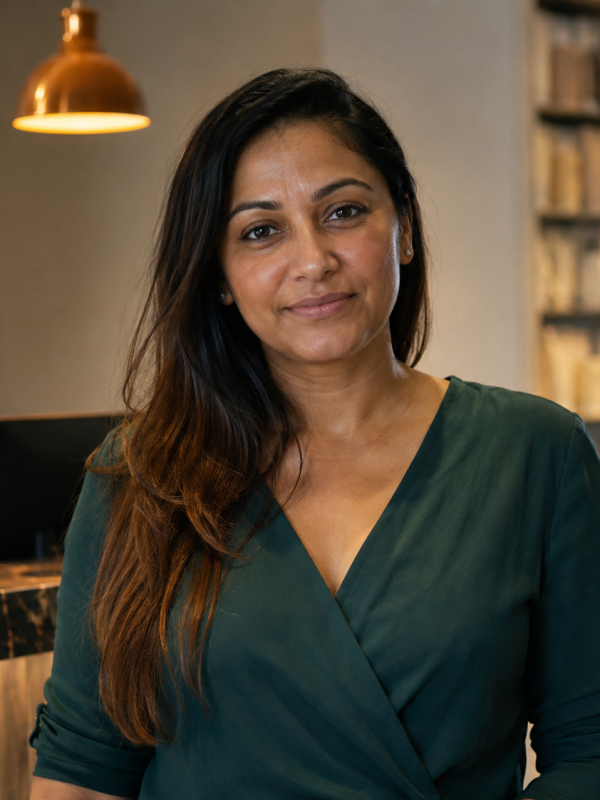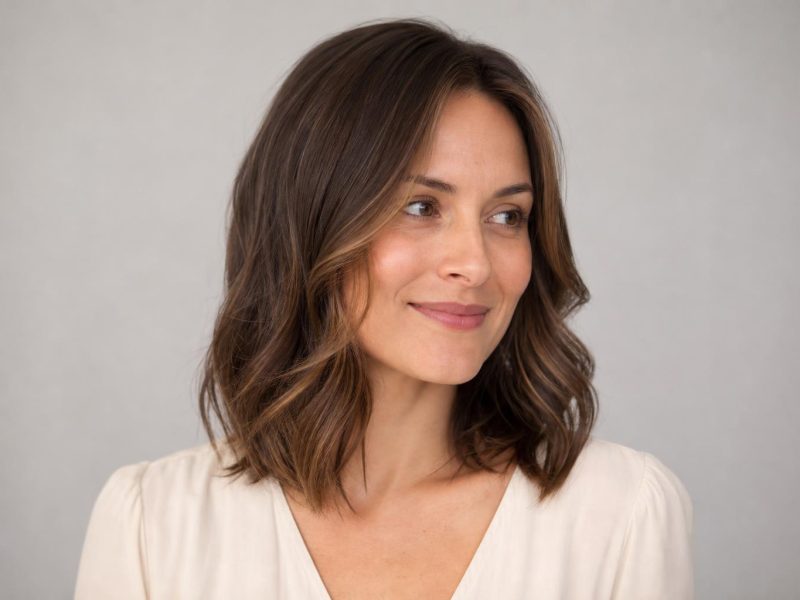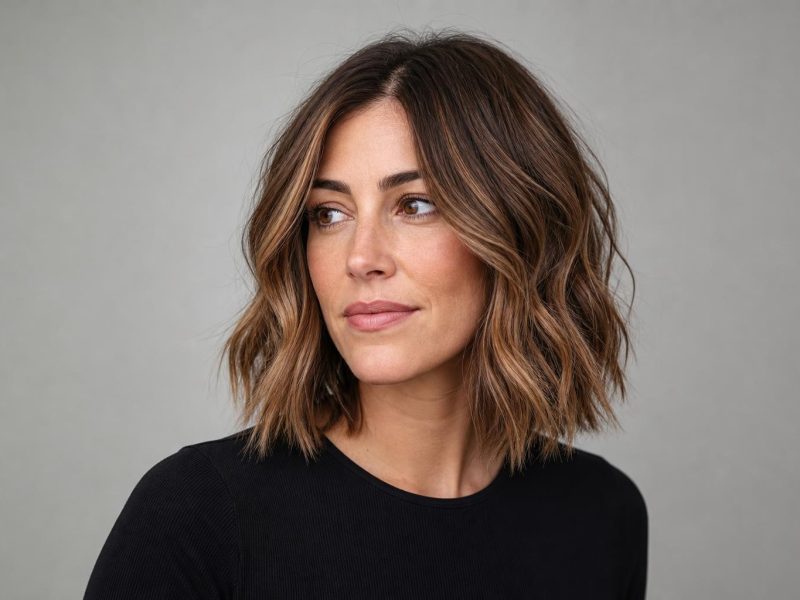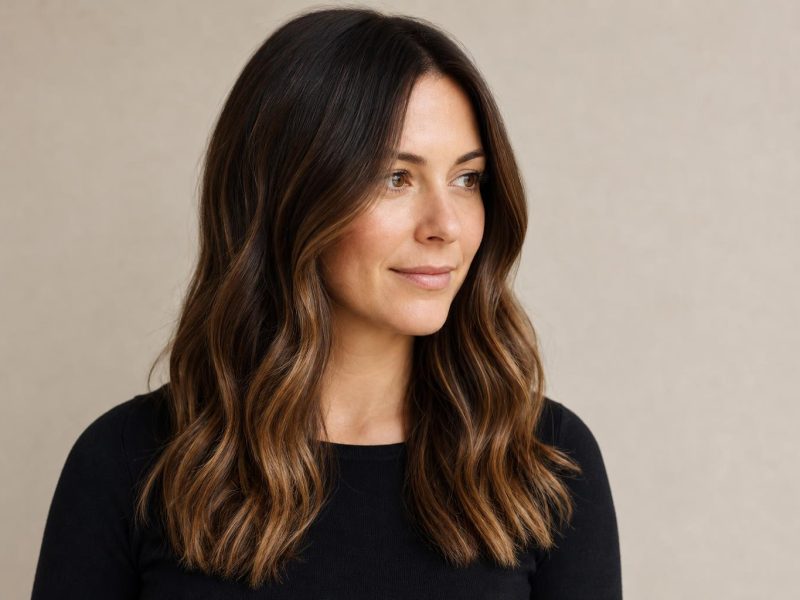


Dark red hair covers four distinct shade families — cherry, auburn, burgundy, and black cherry, each with different undertones, fade behavior, and skin-tone compatibility that matter as much as the color itself.

Dark red is the most versatile category in red hair color: it ranges from warm copper-auburn that reads as natural in most light, to deep black cherry that appears nearly brown indoors and saturated red in sunlight. These 30 ideas are organized by shade family so you can identify which variation of dark red matches your starting base, your skin undertone, and your maintenance tolerance. Fade speed, touch-up intervals, and exact colorist language follow each entry.
Red is the fastest-fading of all color families, and within red hair, the shade and application method determine how quickly the result shifts. The guidance sections after the gallery cover skin undertone compatibility, a shade comparison table distinguishing cherry from auburn from burgundy from wine, and a direct answer to the question most clients ask before booking: how many weeks before this looks faded?
| Shade Family | Tone Direction | Best Skin Undertone | Fade Rate |
|---|---|---|---|
| Dark cherry | True red with cool undertone; vivid in light | Cool, neutral | Fast; noticeable at 3-4 weeks |
| Auburn and copper | Warm red-brown; earthy, natural-looking | Warm, neutral | Moderate; visible at 6-8 weeks |
| Burgundy and wine | Cool red with purple undertone; rich, deep | Cool, neutral | Moderate; fades to warm brown at 6-8 weeks |
| Black cherry and dark plum | Deep red-violet, near-black indoors | Cool, all undertones | Slowest; noticeable at 8-10 weeks |
Dark Cherry Red
Dark cherry red sits at level 4-5 on the professional color scale with cool undertones that make the red vivid and saturated rather than warm or golden. This is the shade most people picture when they say “dark red hair,” a true, statement red that appears richer in shade than fire-engine red but brighter than burgundy. On light-to-medium brown bases, dark cherry typically requires a bleaching step to ensure the red formula deposits evenly without turning muddy.
1. Dark Cherry Balayage on Natural Brown
Applying dark cherry red as a balayage technique on a natural medium brown base creates a result where the roots stay close to the natural shade and the cherry red deepens through the mid-lengths and ends. The colorist hand-paints the cherry formula from mid-shaft down, creating a gradient that looks intentional in sunlight and natural in indoor light. On medium brown hair at level 4-5, balayage dark cherry typically requires pre-lightening the painted sections to level 7 before the red formula is applied, or the color will look dark and muddy rather than true cherry.
2. Cherry Red on Thick, Straight Hair
Thick, straight hair holds dark cherry red particularly well because the flat surface reflects light evenly, making the color appear more saturated and vivid than the same formula on wavy or curly hair. A glossy blowout amplifies this effect; smooth hair reflects direct light rather than scattering it, creating a color-mirror effect that shows the true cherry tone in its fullest form. For thick straight hair, ask for full saturation from root to tip rather than balayage for the most impactful result.
3. Long-Lasting Cherry Red Formula
Red hair color pigment molecules are the largest of all color families, which is why they deposit on the outermost layer of the hair cuticle rather than penetrating deeply the way brown and black pigments do. On cherry red, this means the color begins shifting within 3-4 washes, sometimes fading to a warm orange-red rather than cooling down gracefully. Two techniques extend the result: using a sulfate-free shampoo, and applying a red color-depositing conditioner weekly to replace the pigment lost with each wash.
4. Cherry Red for Oval Face Shapes
Oval face shapes have balanced proportions and no dominant feature that needs correcting, which means cherry red looks equally flattering at any length and with any parting. For oval faces, the styling decision matters more than the color placement: a center part with dark cherry red makes the face appear longer and more angular; a side part and soft wave softens the result. The shade itself works without adjustment on oval faces, so the customization comes entirely from cut and styling.
5. Cherry Red with Loose Curls and Waves
Loose curls scatter light across multiple planes, which creates natural dimension in dark cherry red even without highlights or lowlights. Each curl catches the red pigment differently at its apex versus its inner curve, producing a multidimensional effect that straight hair needs balayage to replicate. Style cherry red hair with a 1.25-inch barrel and alternating curl directions, then separate the curls with fingers and a light serum; the result shows the full red-to-dark-red dimension the shade contains.
6. Cherry Red vs Cherry Cola: The Key Difference
Dark cherry red sits at a vivid, cool-toned red without significant brown or purple in the formula. Cherry cola adds brown undertones (and sometimes a faint violet cast) to the same red base, making it slightly darker, richer, and more muted in bright light. Cherry cola fades more gracefully than pure dark cherry red because the brown tones persist longer than the red pigment, meaning the color shifts toward a warm brunette rather than an orange. Clients who want the cherry look but are concerned about the orange fade stage often find cherry cola a more practical choice.
7. Asking for Dark Cherry at the Salon
The phrase “dark cherry red” covers a wide spectrum at the salon counter. Specify: “I want a cool, vivid red at level 4-5 — not orange, not burgundy, not wine. Think true red with a slight cool undertone.” Bring a reference photo taken in natural daylight that shows both the color in bright light (the vivid cherry) and in lower light (to show the expected indoor result). Red references photographed in filtered or warm studio lighting often look significantly different in real life, so the reference photo context matters as much as the photo itself.
8. Dark Cherry Red vs Natural Brunette in Different Light
Dark cherry red hair shifts dramatically between lighting conditions; it can appear nearly dark brown in fluorescent office lighting and a vivid, saturated cherry in direct afternoon sunlight. This chameleon quality is one of the reasons cherry red appeals to people who want a striking color without committing to something that reads as bright red in every setting. The same hair can look conservative in the workplace and bold in outdoor settings, which is a practical benefit that lighter, more vivid reds cannot offer.
Auburn and Copper-Red
Auburn and copper-red occupy the warm, brown-adjacent end of the dark red spectrum, sitting at level 4-6 with warm gold and orange undertones instead of cool ones. These shades are the most natural-looking category in dark red: on naturally warm-toned brown hair, a professional auburn can be achieved without bleaching, and the grow-out blends more seamlessly than any other dark red variation. Auburn also fades most gracefully because its warm-brown components hold longer than the red pigment.
9. Auburn Balayage on Medium Brown Base
A professional auburn balayage on medium brown hair uses a warm red-brown formula (level 5-6 with copper and red tones) painted from mid-shaft to the ends, creating a dimension that looks like naturally sun-changed hair rather than salon color. On a naturally medium brown base, this result is achievable in some cases without pre-lightening; your colorist can assess whether your current base allows direct auburn deposit or whether a single-session lift is needed. Expect a 2-3 hour appointment including processing time and toner.
10. Auburn on Fine, Wavy Hair
Fine, wavy hair benefits from auburn’s warm tones because the reflective quality of waviness adds warmth to any color, and auburn’s golden-red base amplifies rather than fights this natural effect. Balayage auburn on fine hair works best when the color is concentrated in the face-framing pieces and the top layer, leaving interior sections closer to the natural base, creating the appearance of volume through contrast. For fine wavy hair, avoid full-coverage root-to-tip auburn; it flattens the wave pattern and makes the hair look one-dimensional.
11. How Auburn Fades and the Touch-Up Schedule
Auburn fades more slowly than bright cherry red because its warm brown components are larger pigment molecules that bond more durably to the cuticle. On most bases, auburn balayage holds its warm tone for 6-8 weeks before the red shifts to a brassy golden-brown. A toner refresh at week 6 deposits warm red-brown pigment without additional lifting and extends the result to 12-14 weeks before a full re-application is needed. Between appointments, a color-depositing conditioner in a copper or auburn shade replaces the pigment lost with each wash.
12. Auburn Highlights for Heart-Shaped Faces
Heart-shaped faces have a wider forehead and a narrower chin, and auburn highlights placed heavily at the hairline can make the forehead appear wider. A more flattering placement concentrates the warmest, lightest auburn pieces from the cheekbones down, brightening the lower face and creating the visual illusion of a wider jaw. Ask your colorist to place the richest copper-auburn sections at ear level and below, keeping the top of the head closer to a deeper auburn or natural brown to reduce forehead emphasis.
13. Copper-Red Beach Waves
Salt spray and air-drying copper-red hair with scrunching creates a beachy wave texture that catches light across each wave’s curve, producing a fiery, dimensional effect in direct sunlight. For the cleanest copper wave: apply a small amount of sea-salt spray and a drop of oil to towel-dried hair, scrunch sections upward, and allow to dry without touching. Heat-styling copper-red hair too frequently accelerates fading; reserve the curling iron for specific occasions and use the air-dry method as the daily approach.
14. Warm Copper vs True Auburn
Warm copper hair sits at a higher, more orange-adjacent point on the color scale than true auburn. Copper reads as orange-gold with red undertones in most lighting; auburn reads as red-brown with warm undertones. Both are warm-toned, but copper is more vivid and requires a lighter base to achieve, while auburn sits closer to dark brown and is achievable on darker bases with or without pre-lightening. If you want a result that looks natural on a brown base, ask for auburn. If you want something that reads as a clear, vivid red-orange, ask for copper.
15. Auburn with Natural Brown Roots: How to Style the Transition
Auburn balayage has a natural root because the natural brown base is left untouched, and the contrast between the dark root and the warm auburn mid-lengths and ends is part of the intended result. Styling the transition intentionally helps: a loose braid or half-up style keeps the darkest sections pulled slightly away from the face, while letting the auburn mid-lengths frame the face. The natural root is what separates professional auburn balayage from a grown-out amateur dye job, so letting it show rather than fighting it produces a better overall result.
Burgundy and Wine
Burgundy and wine are the cool, purple-adjacent end of the dark red family. Burgundy sits at level 3-5 with a purple-red undertone that gives it depth and a slight violet cast in bright light. Wine hair is slightly lighter and warmer than true burgundy, closer to a merlot or dark plum-red. Both shades work well on darker natural bases because the existing dark pigment reinforces the depth of the red-violet formula, and neither requires significant pre-lightening on hair at level 4 or below.
16. Salon Language for Burgundy vs Wine
Colorists interpret “burgundy” and “wine” interchangeably at many salons, so being specific prevents a missed result. For burgundy: “I want a deep red with cool, purple undertones, like a dark wine. Not orange, not warm. Slightly more purple than red.” For wine: “I want a deep red-purple that’s not as dark as burgundy, something in the merlot range, still cool-toned but slightly warmer and lighter than a full burgundy.” Both descriptions are dramatically more useful than color names alone, and a printed reference photo confirms the shared understanding before the formula is mixed.
17. Burgundy vs Wine vs Merlot: The Exact Differences
Burgundy is the darkest and coolest of the three, a deepest red-violet, closest to level 4, with the most purple in the formula. Wine is one step lighter and slightly warmer; it’s the level 5 version of burgundy, with more red and less purple than a true burgundy. Merlot splits the difference between wine and burgundy, adding a warm plum cast that makes it the most dimensional of the three in most lighting. All three share cool undertones and a red-violet direction; the difference is how dark and how purple each reads against the skin.
18. Full Burgundy on Dark Brown Hair
Applying full burgundy coverage on dark brown hair (level 3-4 base) is one of the most manageable dark red processes because the existing dark pigment provides the depth burgundy needs, and in many cases the colorist can apply the burgundy formula directly without pre-lightening. The result on a dark brown base is a rich, deep red-violet that reads as near-black in dim light and as a saturated burgundy in direct sunlight. For clients who want maximum depth with minimal processing, full burgundy on dark brown is the most practical entry point in dark red color.
19. Keeping Burgundy from Fading to Brown
Burgundy fades to a warm, murky brown rather than a clean-looking natural base because the red and violet pigments leave behind a yellow-orange residual cast on the hair shaft. Preventing this requires maintaining the pigment throughout, not only after fading begins. Use a color-depositing conditioner in a burgundy or red-violet shade once a week, wash with cool water (hot water opens the cuticle and accelerates pigment loss), and avoid clarifying shampoos entirely between color appointments. A professional toner refresh every 6-8 weeks resets the formula and prevents the muddy, faded-brown stage.
20. Burgundy for Square Face Shapes
Square face shapes have a strong, angular jawline with similar measurements across the forehead and jaw. Burgundy at medium-to-long length softens these angles because the deep, cool tone draws the eye down the length of the hair rather than across the jaw. A side part with loose waves framing the face is the most flattering combination for square faces with burgundy color; the asymmetry of the side part reduces the appearance of width, and the waves create movement that softens the angular jaw. Avoid blunt, one-length bobs with burgundy on square faces; the contrast between the sharp jaw and the blunt cut emphasizes the angle.
21. Wine-Toned Hair with Sleek Styling
Sleek, straight styling maximizes the visual impact of wine-toned hair because a smooth surface reflects light uniformly, showing the full red-violet dimension of the shade. Blow-dry in sections using a round brush and a medium-hold thermal protectant, then finish with a ceramic flat iron in a slow pass from root to tip. A drop of high-shine serum applied to the surface after straightening adds a glass-like reflection that intensifies the wine tones. Avoid heavy oils on wine-toned hair, as they can add an orange cast that clashes with the cool purple undertone in the formula.
22. Wine-Toned Balayage for Subtle Dark Red
Balayage on dark brown hair using a wine-toned formula creates a result that reads as natural depth variation rather than obvious salon color; the wine sections appear as a rich, dimensional red-brown rather than an overtly colored look. This is the entry-level dark red option for clients who are not sure they want to commit to a full color change. Because the balayage leaves most of the hair at the natural base, the grow-out is seamless and the appointment interval extends to 14-16 weeks without a visible root line.
Black Cherry and Dark Plum
Black cherry and dark plum sit at the deepest end of the dark red spectrum, level 2-4 with strong violet-purple undertones that push the red toward near-black in most indoor lighting. These shades are the most wearable dark red options for daily professional environments because they read as very dark brown rather than obviously colored in most lighting. The red-purple dimension reveals itself in direct sunlight, creating a dramatic contrast between the indoor and outdoor appearance of the color.
23. Black Cherry Color Profile
Black cherry hair sits at level 2-3 with an almost equal blend of red, violet, and dark brown tones. In dim light or indoors, it looks nearly black with a faint red undertone visible at the ends. In direct afternoon sunlight, the same hair reveals a deep, saturated cherry-red and violet shimmer that makes the color look significantly lighter and more vivid. This light-dependent shift is what distinguishes black cherry from standard dark brown; it’s a color that rewards outdoor light and looks convincingly natural in controlled settings.
24. Asking for Black Cherry vs Dark Burgundy
Black cherry and dark burgundy are closely related but differ in depth and primary tone. Black cherry is darker (level 2-3) with more red and violet relative to purple; dark burgundy is slightly lighter (level 3-4) with more purple relative to red. To distinguish: “Black cherry should look nearly black indoors with a red shimmer — not obviously colored in overhead lighting. Dark burgundy has more purple and reads as a rich, colored red-violet in most light.” If your goal is something that passes as a natural-looking dark color in professional settings, black cherry is the darker, safer choice. If you want the color to be visible indoors, ask for dark burgundy.
25. Black Cherry on Naturally Black Hair
Applying black cherry on naturally black or very dark brown hair (level 1-2) without pre-lightening produces a result that is nearly invisible indoors but adds a red-violet shimmer in bright direct light. Many clients with naturally black hair choose this approach specifically because it preserves the natural-looking base while adding the light-shift quality of dark red. For a more visible result, a single bleach pass to level 4-5 before the black cherry formula allows the color to deposit more vividly. Your colorist can do a strand test to show you both options before committing.
26. Dark Plum on Type 4 Textured Hair
Type 4 coily and kinky hair holds dark plum and black cherry tones exceptionally well because the tight coil pattern scatters and reflects light across many angles simultaneously, creating a built-in dimensional shimmer the formula doesn’t need to manufacture. On natural 4b-4c hair, a dark plum gloss or deposit-only formula can add the color without the damage of bleaching. The key detail: ask your colorist for a deposit-only plum formula at level 2-4 on your natural base; if your natural base is darker than the target level, the result will appear as a subtle sheen in sunlight rather than a visible color change in all lighting.
27. Dark Plum Fade Timeline
Dark plum fades more slowly than lighter dark reds because its close proximity to the natural base means the fade stage looks like a slightly warmer version of the original, rather than a brassy or orange departure from the target color. On most dark bases, dark plum holds its violet-red quality for 8-10 weeks before shifting to a warm, red-tinted dark brown. A deposit-only gloss refresh at week 8 resets the plum tones without any bleach or lifting, the most manageable maintenance schedule in the dark red family.
28. Dark Plum for Round Face Shapes
Round face shapes benefit from length and vertical emphasis, and dark plum at medium-to-long length creates a natural elongating effect because deep, cool-toned color visually slims and lengthens. Pair dark plum with a center part rather than a side part for the strongest vertical line through the face. A light highlight in a slightly brighter plum or cherry at the center front section creates a focal point that pulls the eye upward rather than sideways, the opposite of what cheek-level highlights do on a round face. Avoid blunt, chin-length bobs with dark plum; the dark color at jaw level emphasizes width rather than length.
29. Dark Red Highlights vs Full Coverage
Scattered dark red highlights on a natural brown base create a dimensional red effect without the full commitment of all-over color. The highlights catch light in motion and in sunlight, adding red dimension that reads as natural warmth rather than colored hair. This approach suits clients who want to experiment with dark red before committing, those with lower maintenance budgets, and anyone whose workplace has conservative norms around visible hair color. The grow-out from red highlights is dramatically easier than growing out full-coverage red, because the natural base blends back in as the colored sections fade.
30. Cherry Red Balayage on a Dark Neutral Base
A dark neutral base at level 4-5 is the ideal starting point for cherry red balayage because the dark root provides the shadow depth that makes the cherry mid-lengths and ends look more vivid by contrast. The colorist pre-lightens only the balayage sections to level 7 before applying the cherry formula, leaving the root entirely untouched. On a dark neutral base, the resulting balayage looks more dimensional than the same cherry formula on a lighter base, because the contrast between the natural brown root and the vivid cherry ends creates a built-in depth gradient. On the subject of caramel highlights on dark bases, the application logic is identical: pre-lighten first, then tone to the target shade.
Dark Red Shade Comparison
The most common source of salon confusion in dark red color is using shade names interchangeably when each has a specific tone direction, depth, and undertone family. The comparison below uses technical language that your colorist can match to their formula book.
| Shade | Level | Primary Undertone | Indoor Look | Outdoor Look |
|---|---|---|---|---|
| Dark cherry | 4-5 | True red, cool; no orange | Deep, vivid red | Saturated, bright cherry |
| Cherry cola | 3-5 | Red-brown with faint violet | Dark red-brown | Rich red with brown depth |
| Auburn | 4-6 | Warm red-brown; earthy | Warm brown with red | Warm copper-red |
| Copper | 5-7 | Orange-red, warm; vivid | Vivid warm orange-red | Fiery, bright copper |
| Burgundy | 3-5 | Red-violet; cool, deep | Deep red-purple | Rich violet-red |
| Wine/merlot | 4-5 | Red-purple; slightly warmer than burgundy | Deep plum-red | Merlot, warm-cool balance |
| Black cherry | 2-3 | Deep red-violet; near-black | Near-black, subtle red | Vivid cherry-violet |
Which Skin Undertone Suits Each Dark Red Shade
Skin undertone determines which family of dark red is most flattering. The general rule: warm skin undertones (golden, peachy, olive) suit warm dark reds (auburn, copper); cool skin undertones (pink, rosy, porcelain) suit cool dark reds (cherry, burgundy, black cherry). Neutral undertones have the widest range of options but suit wine and cherry cola best because these shades balance warm and cool without leaning strongly in either direction.
| Skin Undertone | Best Dark Red Shades | Shades to Approach Carefully |
|---|---|---|
| Cool (pink, rosy) | Dark cherry, burgundy, black cherry, wine | Copper and bright auburn (warm orange undertone clashes with pink skin) |
| Neutral | Cherry cola, wine, auburn, merlot | Most dark reds suit neutral undertones; all work with adjustment |
| Warm (golden, peachy, olive) | Auburn, copper, cherry cola | Pure burgundy and dark cherry (cool undertone can look harsh against warm skin) |
| Deep (rich brown, ebony) | Black cherry, dark plum, burgundy | Copper and bright auburn can look disconnected from deep skin tones |
Stylist tip: To identify your undertone quickly, look at the veins on the inside of your wrist in natural light. Blue-purple veins indicate cool undertones; green veins indicate warm undertones; veins that look both blue and green indicate neutral. Use this as your starting point for selecting the dark red shade family, then confirm with a reference photo at your consultation.
What to Tell Your Colorist
Dark red is the color category with the highest rate of salon miscommunication because the vocabulary is inconsistent across training programs and regions. “Burgundy” at one salon is “wine” at another, and “dark cherry” can mean anything from level 3 to level 6 depending on who you ask. The most effective approach: describe the target shade using three parameters — the depth (how dark), the tone direction (how warm or cool), and the expected lighting behavior (what it should look like indoors vs outdoors).
Example language by shade family:
- Dark cherry: “Level 4-5, cool red with no orange, vivid in sunlight and a deep true red indoors. Not burgundy, not auburn.”
- Auburn: “Level 5-6, warm red-brown with a copper cast. Natural-looking, like a warmer version of my current brunette. No orange, no cherry.”
- Burgundy: “Level 3-5, cool red with purple undertones, like a dark wine. Not orange, not warm. More purple than red.”
- Black cherry: “Level 2-3, near-black with a red-violet shimmer in direct light. Should look very dark indoors, not obviously colored in overhead lighting.”
Stylist tip: Take two photos to your appointment: one shot in natural outdoor light (showing the vivid red quality you want) and one in indoor lighting (showing how dark and subtle it should look in controlled settings). Dark red references photographed under warm studio lighting often look significantly more red than the actual result will appear in a workplace or home environment. Showing both lighting conditions gives your colorist a complete brief rather than a single-context reference.
Why Red Fades the Fastest and What to Do About It
Red hair color molecules are the largest in the color spectrum, which means they sit on the outermost layer of the hair cuticle rather than penetrating deeply into the cortex the way dark brown and black pigments do. Every wash removes some of this surface-deposited pigment, which is why red fades faster than any other color family regardless of brand or formula quality. Understanding which shade fades fastest, and why, prevents unrealistic expectations after the appointment.
Fade speed by shade: bright cherry red fades fastest (vivid red molecules are most unstable); auburn fades most slowly within the dark red family because its warm-brown base persists longer than red pigment; burgundy fades to a warm brown rather than an orange because the cool-toned formula leaves behind fewer warm residuals. Black cherry and dark plum have the longest intervals between appointments because their proximity to the natural base means the fade stage still looks intentional.
At-home maintenance that meaningfully extends dark red results: wash hair in cool water (hot water forces the cuticle open and accelerates pigment loss), use a sulfate-free shampoo on every wash, apply a red color-depositing conditioner once a week, and use a UV-protecting spray before outdoor activities. A professional gloss refresh every 6-8 weeks is the single most effective maintenance step — it deposits pigment without any lifting, takes 30-45 minutes, and costs significantly less than a full re-application.
When Dark Red Hair Is Not the Right Choice
Dark red is not the right direction for every client, and recognizing when a different shade family would produce a better result saves time, money, and frustration.
- Very warm, orange-golden skin undertones seeking auburn: Auburn and copper on strongly warm skin can create a ruddy, flushed appearance because the warm red-orange undertones in the formula amplify rather than complement the warmth in the skin. A neutral-toned auburn or cherry cola, which contains more brown and less orange, sits better against very warm skin than a bright copper formula. Test a small section or strand first if you are unsure.
- Clients who cannot commit to 6-8 week maintenance: Red is the highest-maintenance color family. Without regular toner refreshes, most dark red results shift to a warm, brassy brown within 8-10 weeks. Clients who can only visit the salon every 3-4 months will spend most of the interval with faded, unflattering results rather than the original color. Black cherry and dark plum are exceptions; their grow-out looks more intentional, but all dark red shades require more maintenance than brown or black color.
- Chemically over-processed or severely damaged hair: Dry, porous hair absorbs red pigment unevenly and releases it faster than healthy hair. On highly porous hair, even a professionally applied dark red can fade 50% in the first 4 washes. Restoring the hair’s porosity through bond treatments (Olaplex, K18) before a color appointment produces significantly better and longer-lasting results. Ask your colorist to do a porosity test at the consultation.
- Natural-looking results on virgin light blonde hair: Applying dark red directly to naturally light blonde hair risks an orange or neon-red result because light bases reflect red formulas differently than medium-to-dark bases. On light blonde hair, a dark red result requires a pre-darkener or filler step to build the artificial brown base the red needs to deposit naturally. Skipping this step produces an uneven, often cartoonish result that is difficult to correct.
FAQ
What Is the Difference Between Dark Red and Burgundy Hair?
Dark red covers the broad category of all dark, red-toned hair colors; burgundy is a specific shade within dark red that has a cool, purple-adjacent undertone. Dark red includes warm shades like auburn and copper as well as cool shades like burgundy and black cherry, while burgundy refers specifically to the deep red-violet, wine-toned variation at level 3-5. If someone describes your hair color as “dark red,” they’re describing the category; if they say “burgundy,” they’re describing a specific cool, purple-toned shade within it.
Does Dark Red Hair Work on Dark Skin Tones?
Yes, and dark red is one of the most flattering color families for deep skin tones because the depth of the shade creates a natural contrast with rich skin without the disconnect that lighter hair colors can produce. Black cherry, dark plum, and burgundy are the most flattering dark red shades for deeper complexions because their near-black depth preserves natural visual harmony. Bright cherry red and copper can work on deep skin but require more deliberate formula and placement decisions, and often look more cohesive as highlights than as full-coverage color.
How Long Does Dark Red Hair Color Last?
Dark red typically begins showing visible fading within 3-6 weeks depending on the shade and maintenance routine. Bright cherry red fades fastest, with a shift toward orange or warm brown visible by week 3-4 without active maintenance. Auburn holds for 6-8 weeks. Black cherry and dark plum hold the longest, typically 8-10 weeks before the fade is noticeable. With a sulfate-free shampoo, cool-water washing, and a weekly color-depositing conditioner, these intervals extend by 2-4 weeks.
Can I Get Dark Red Hair on a Dark Brown Base Without Bleaching?
Some dark red shades are achievable on dark brown hair without bleaching. Auburn and dark cherry cola can be applied directly to dark brown bases at level 4-5 and produce a visible shift; the color reads differently in sunlight even if it looks subtle indoors. Black cherry and dark burgundy require no bleaching at all on dark bases because they are formulated to deposit on dark hair directly. Pure, vivid cherry red and copper are not achievable on dark bases without pre-lightening because the existing dark pigment prevents the vivid red formula from showing clearly.
What Products Maintain Dark Red Hair at Home?
Three product categories meaningfully extend dark red results at home. A sulfate-free, color-safe shampoo is the baseline; sulfates strip pigment more aggressively than any other shampoo ingredient. A color-depositing conditioner in a red, auburn, or burgundy shade replaces the pigment lost with each wash and is the highest-impact at-home step after a professional appointment. A UV-protecting hair spray or serum prevents sun exposure from fading the color outside, particularly relevant for auburn and cherry shades that are more photo-sensitive than deeper black cherry and dark plum formulas.
How Do I Get Dark Red Hair from Naturally Black Hair?
Naturally black hair at level 1-2 gives you two options: apply a deposit-only dark red formula directly on the natural base, which produces a subtle red sheen visible only in direct sunlight; or pre-lighten to level 4-5 before applying the target red formula for a more visible, vivid result. Deposit-only black cherry or dark plum on natural black hair is the gentlest approach and causes no lifting damage. For a result that reads as clearly red in most lighting, pre-lightening is required; discuss the two-session approach with your colorist to protect the integrity of your hair during the transition.
Is Dark Red Hair Hard to Remove?
Red is one of the most difficult color families to remove cleanly because red pigment molecules are small enough to stain the hair cortex even while sitting on the cuticle surface. Removing dark red often requires multiple color correction sessions, and the intermediate stages can include orange, warm pink, or strawberry blonde tones depending on the original formula and how deeply it penetrated. If you want to transition away from dark red later, discuss an exit strategy with your colorist before committing to the initial color; knowing the removal plan affects which dark red shade you choose initially.
Dark red hair produces some of the most dimensional, light-responsive results in color because each shade in the family behaves differently between indoor and outdoor settings. Matching the specific shade family to your skin undertone, natural base, and maintenance schedule is what determines whether the result looks intentional and flattering for its full lifespan. Use the shade comparison table above and the colorist language in the guidance sections to arrive at your appointment with a precise brief — a clear target shade and two reference photos in different lighting conditions get closer to the result you want than any shade name alone.
Hair results vary based on your natural hair type, texture, density, and condition. Red hair color fades faster than other color families; individual results depend on the starting base, formula used, and at-home care routine. Always consult with a licensed colorist before making significant color changes, especially processes involving bleach or color correction.