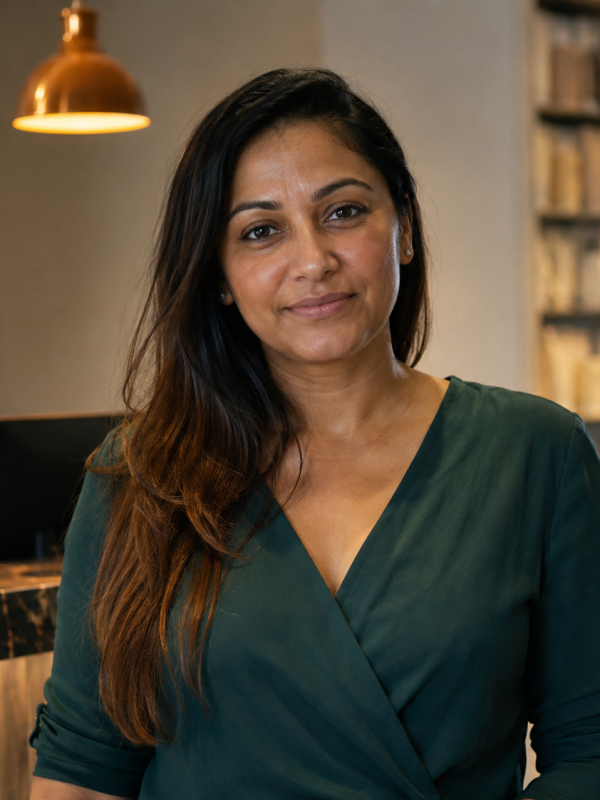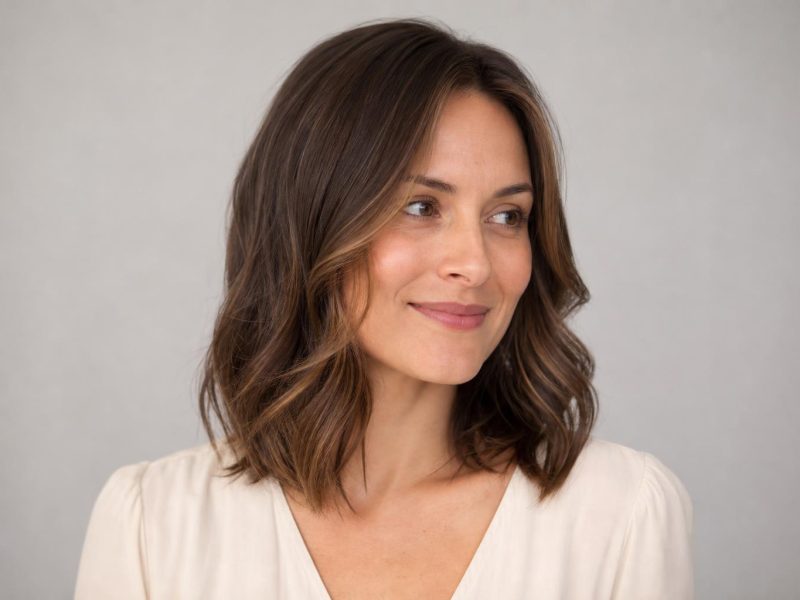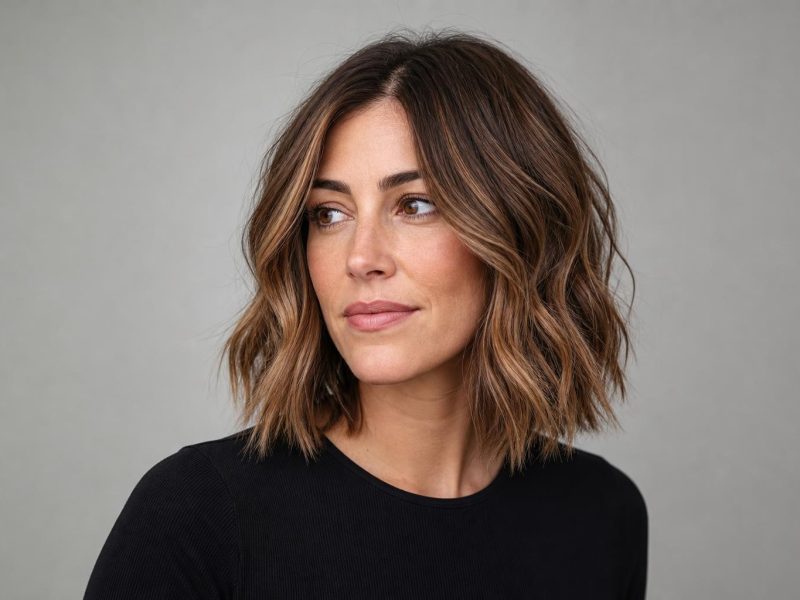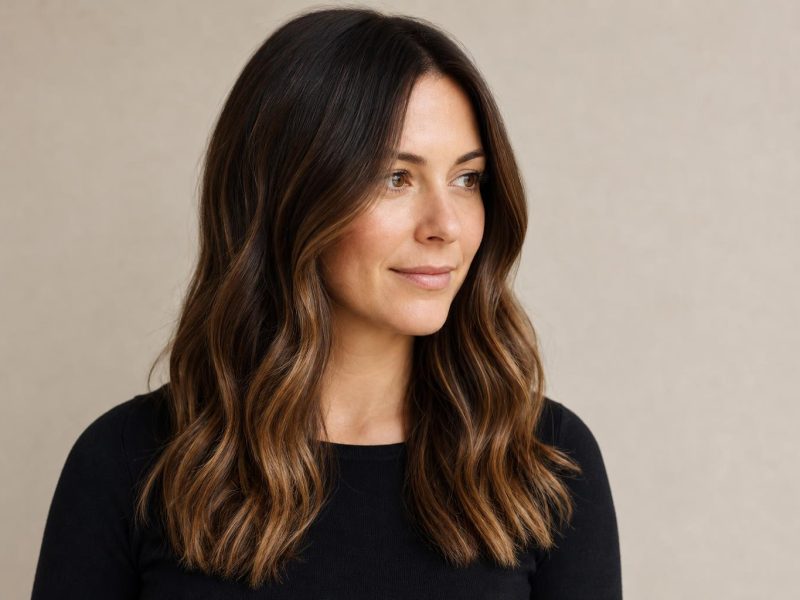
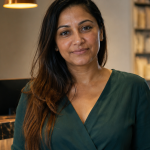


Brown hair is the ideal base for balayage — every shade from sandy chestnut to deep espresso responds to hand-painting with depth and dimension that flat color cannot replicate.
Balayage on brown hair works by painting lightener freehand onto the surface of each strand, concentrating it where natural sunlight would catch the hair. The result graduates from a darker, untouched root into lighter mid-lengths and ends, with no defined line to expose as the hair grows. These 30 looks cover light, medium, and dark brown bases across the full range of techniques: caramel lifts, honey babylights, root melts, foilayage, and tonal color melts.
Each entry notes which brown shade the technique suits best, how much upkeep it requires, and what to ask your colorist to get the result. The guidance sections cover shade selection by skin undertone, a face shape placement guide, and an honest maintenance schedule. If you’re weighing balayage against highlights or ombre on your brown base, the comparison table covers the key differences.
| Factor | Details |
|---|---|
| Best for | All brown shades, light chestnut to espresso; warm and cool undertones |
| Technique | Freehand painting without foils; foilayage added for resistant dark bases |
| Touch-up frequency | Every 12–16 weeks (longer than highlights due to seamless root blending) |
| Salon time | 2–3 hours for a full balayage; 1–1.5 hours for a gloss or toner refresh |
| Avoid if | Hair is over-processed or heat-damaged; expecting platinum results in one session on dark brown |
Light Brown Balayage
Light brown bases (shades like sandy chestnut, warm taupe, and golden light brunette) lift easily with balayage. A single session can take light brown hair to a soft honey blonde or a bright caramel without the harshness of full foils. These entries show the breadth of what light brunette hair can achieve, from barely-there tonal work to a full bronde result.
1. Honey Blonde Hand-Painted Lift
The colorist paints lightener starting a few inches from the root and builds concentration from the mid-shaft toward the ends, creating a naturally dark-to-light graduation. On light brown hair, this technique reaches honey blonde in one session without bleach pulling warm brassiness. The seamless, root-to-tip softness separates hand-painted balayage from foil highlights far more than the color alone does.
2. Face-Framing Caramel on Sandy Brunette
Concentrated on the two front sections framing the face, this approach works especially well on round and square faces where a soft halo of lightness elongates and brightens without altering the rest of the hair. The cost is lower than a full balayage and the maintenance even lower, since only the most visible sections need refreshing. If you want a subtle change that reads as a full color treatment, this is the entry point.
3. Beige Blonde Lift on Fine Light Brown Hair
Fine hair is risky to over-lighten, so this variation targets only the outermost layer of each section, leaving the core strands where structural integrity matters most completely untouched. The resulting beige-blonde balayage sits cool and airy on fine light brown hair, adding dimension without the dryness that comes from heavier bleach application. A bond-building treatment at the appointment is worth adding to the service price on this hair type.
4. Babylight-Enhanced Sun-Kissed Look
Achieve this with a 1.25-inch barrel curling iron, alternating direction on each section and leaving the last two inches uncurled, so the thin babylight pieces scatter and catch light as the waves break apart. The painted sections are placed in very fine, sporadic placements that mimic the irregular pattern of natural sun exposure. Diffused through loose waves on light brown hair, the result looks more like summer than a salon appointment.
5. Grow-Out-Friendly Light Balayage
The root area is left dark, with color beginning 3–4 inches from the scalp, so the grow-out at 16 weeks looks natural rather than neglected. Touch-ups on this version are needed only twice a year at most, making it the lowest-commitment and most cost-effective approach in the light brunette range. A color-safe, sulfate-free shampoo extends the life of the lifted ends between salon visits without stripping the mid-shaft color.
6. Warm Golden Tones on Light Chestnut
Warm tones with a golden lean flatter olive and warm-beige skin undertones most naturally, turning light chestnut into a sunlit bronde that looks like the hair has been outdoors all season. The golden hue lands in the mid-lengths and ends while the roots hold the cooler, natural chestnut base for contrast. A gloss toner applied after lightening deepens the warmth and adds the mirror-like shine that makes golden balayage on light brown hair photograph particularly well.
Medium Brown Balayage
Medium brown hair spans shades from level 4 to level 6, covering warm chocolate to cool coffee, and offers the widest range of balayage outcomes. A single session can reach warm caramel, cool ash, soft copper, or honey bronde depending on the formula and toner chosen. These six entries cover that full range, from subtle tonal work to richer contrasts with visible depth.
7. Caramel Money Piece on Medium Brunette
Ask for a concentrated balayage on the two front sections with the color painted from an inch below the root to the tips, and specify “caramel, not blonde” to keep the tone warm rather than pulling yellow. Money pieces work well on medium brown hair because the contrast is just enough to brighten the face without looking unnatural against the brown base. A brass-neutralizing toner in the caramel family prevents the piece from shifting orange after a few washes.
8. Dimensional Medium Brown with Tonal Depth
Unlike full highlights, which lighten hair in uniform sections from root to tip, balayage on medium brown hair builds a multi-tonal effect where deeper brown sits at the root and caramel-to-blonde develops toward the ends. The result is movement and depth in a single look, with no two sections of hair reading the same shade. A caramel highlights approach achieves similar warmth with more uniform placement if a bolder, higher-contrast result is the goal on the same brown base.
9. Root Melt on Medium Wavy Brown Hair
A root melt blends a darker brown shade painted down from the scalp to eliminate any hard line where natural growth meets the balayage. On medium brown wavy hair, this technique makes the transition between root and highlighted mid-lengths nearly invisible at any grow-out stage. Wavy texture naturally obscures transitions that would be visible on straight hair, making this one of the most forgiving balayage variations on medium bases.
10. Soft Warm Balayage on Shoulder-Length Medium Brown
Heart and round face shapes benefit when balayage concentration shifts away from the temples and toward the ends, avoiding top-heavy lightness that adds visual width. On shoulder-length medium brown hair, this placement creates warmth through the mid-lengths that frames the jaw area without drawing attention upward. The effect reads subtle from the front but becomes dynamic when the hair swings with movement.
11. Toffee Balayage on Thick Medium Brown Hair
Thick hair absorbs more product, so a colorist needs adequate lightener and processing time to achieve lift through the denser sections — rushing this step produces an uneven result. Toffee tones, slightly richer than caramel with more brown in the formula, sit naturally against a thick medium brown base without looking too light against the overall color. Pairing the balayage with a layered cut that removes interior weight helps the color surface through the outer layers rather than disappearing in the bulk.
12. Tousled Medium Brown with Bronze Mid-Lengths
Work a texturizing sea-salt spray through the mid-lengths and scrunch with your hands, and the bronze balayage picks up a warmth that reads almost metallic in direct light without product weighing the hair down. This styling approach lets the color carry the look, no diffuser or curling iron required. Bronze sits best on medium brown hair with warm undertones; on cool-toned brunettes, ask the colorist to finish with a neutral brown toner over the bronze to soften any orange pull.
Dark Brown Balayage
Dark brown hair, including deep espresso, rich chocolate brown, and near-black brunette, requires more lightening time to produce visible balayage results, and technique selection matters more at this end of the spectrum. Subtle tonal work is achievable in one session, but bold lifts toward honey or blonde often require a second appointment after the hair recovers. The payoff is real dimension that catches in natural light rather than appearing flat and one-dimensional against a dark base.
13. Subtle Caramel on Dark Brunette, Low-Maintenance Version
On dark brown hair, a subtle balayage concentrates lightener only on the outermost, most visible ends — creating warm caramel at the tips without dramatically altering the base. Touch-ups on this version are needed every 4–5 months, since the soft graduation means there is no defined line to expose at any grow-out stage. This is the balayage approach for someone who wants visible change without committing to colorist visits every 8 weeks.
14. Copper Accents on Espresso Brown Hair
Copper pieces on a near-black brown base draw from the warm, red-orange family and work best on warm-to-olive skin tones where the metallic warmth complements the complexion rather than clashes. The contrast between dark espresso and copper is striking outdoors but appears more subdued indoors, giving a versatile effect across different settings. Copper tones on dark hair fade faster than caramel does, and a color-depositing copper conditioner used once a week stretches the vibrancy between appointments.
15. Soft Caramel Ends on Dark Brunette
Tell your colorist: “I want a soft melt from dark brunette into caramel ends, starting at the last third of the hair”; that phrasing gives the colorist exact placement information and avoids a result that sits too high or transitions into an ombre band. The caramel should stay contained to the lower section; any higher and the look becomes a defined ombre that requires more upkeep to stay polished. With the balayage limited to the ends, grow-out is almost completely seamless.
16. Dark Brown Balayage vs Dark Ombre
A dark ombre transitions from root to ends in a band; the color shift is visible as a horizontal line across the hair when styled straight, and that line becomes more pronounced as the hair grows. Balayage on dark brown hair has no band; the lightened sections are scattered throughout with no fixed mid-point, producing a softer, less graphic result. If a colorist suggests “painting it ombre-style,” clarify that you want scattered placements throughout, not a block-to-block gradient.
17. Lived-In Shadow Root on Dark Brown Hair
Shadow root technique deposits a shade one or two levels darker than the natural base directly at the scalp, creating a deliberate smudged root that disguises grow-out for months. On dark brown hair that already has some balayage, a shadow root refresh extends the original color by 6–8 weeks without a full appointment. It works especially well on a dark brown base because any visible grow-out on dark hair breaks the illusion more sharply than on lighter shades.
18. Soft Lift on Dark Brown Hair for Round Faces
For round faces on dark brown hair, ask the colorist to concentrate the balayage through the top section and at the temple area, creating height and vertical lightness that elongates the face shape visually. Keep the lightest pieces away from the widest point of the face; lightness at cheekbone level adds visual width rather than length. A few soft highlighted pieces through the crown achieve the elongating effect without a dramatic overall lift.
Brown Balayage by Technique
Standard freehand balayage is one approach, but colorists apply several related techniques depending on the desired outcome and the resistance of the base. Babylights add density without heavy lift, foilayage provides more lift for resistant dark hair, color melts transition between shades without visible seams, and sombre creates a more defined gradient with a blended finish. These six entries show each technique applied to brown hair across the full shade range.
19. Babylights Through Medium Brown Hair
Fine to medium density hair responds especially well to babylights, which are very fine sections of lightener placed in thin, close-together placements that mimic the natural variation you’d see on a child’s hair. On medium brown hair, babylights build fullness by separating the color into dozens of slightly different tones rather than a few chunky highlighted sections, making the result look genuinely multi-dimensional. The technique takes 3–3.5 hours in the salon but holds noticeably longer than standard balayage on fine-textured hair.
20. Beach Wave Styling to Show Brown Balayage
Set a 1.25-inch curling iron at medium heat, wrap 1-inch sections from the ear down, and leave ends uncurled for a lived-in wave pattern. Once the curls cool, shake them out with your fingers and mist with a light-hold spray, and the balayage pieces separate through the waves and show contrast against the darker brown sections underneath. Air-drying works for naturally wavy hair, but produces none of this definition on straight to slightly wavy brown hair; the waves are doing real work here.
21. Sombre on Brown Hair, Low-Upkeep Gradient
A sombre (soft ombre) sits between a defined ombre and a freehand balayage: the roots are clearly darker and the ends clearly lighter, but the transition is diffused rather than banded. On brown hair, sombre touch-ups are needed every 12–14 weeks, slightly more often than a deep balayage, but more defined than scattered babylights. It suits readers who want visible contrast without the 8-week upkeep of foil highlights.
22. Color Melt from Dark Roots to Warm Caramel Ends
Color melt technique connects multiple color zones in one seamless application: a near-black root shade is painted down and blended into a mid-shaft brown, then melted into a warm caramel at the ends. The result is a cohesive gradient with no hard transitions or visible bands at any grow-out stage. This approach gives dark brown hair warmth and dimension without the full bleach load that a standard lift demands on resistant bases.
23. Foilayage for Resistant Dark Brown Hair
Ask specifically for “foilayage, not standard balayage” when your hair is dark brown, naturally coarse, or previously colored; the foil traps heat and processes the lightener more efficiently on resistant strands than open-air hand-painting does. Standard balayage may reach only 1–2 levels of lift on dark, coarse hair; foilayage typically achieves 3–4 levels in the same processing time. Specify that you want the foil sections placed in a scattered, lived-in pattern rather than in uniform rows.
24. Balayage vs Foil Highlights on Brown Hair
Foil highlights on brown hair place color uniformly from root to tip in defined sections, producing a visible regrowth line at 6–8 weeks as the natural base grows in. Balayage on brown hair paints mid-lengths and ends only, so grow-out is seamless and touch-ups stretch to 12–16 weeks. For a polished, high-contrast look with structured sections, foil highlights deliver; for a sun-kissed, low-maintenance result, balayage is the right call. A dirty blonde color result is achievable with either method on light brown hair, but the maintenance commitment differs significantly.
Brown Balayage by Length and Style
How balayage reads on the hair depends substantially on the cut. Long layers spread color across a larger surface, creating sweeping movement. Bobs concentrate the balayage into a shorter canvas where contrast is more visible and precise. Curly and textured hair diffuses the balayage throughout the curl pattern, producing an all-over dimensional warmth rather than defined highlighted sections. These final entries show brown balayage across different lengths, textures, and cuts.
25. Balayage on a Blunt Bob in Brown Hair
On a blunt bob, the colorist concentrates balayage through the mid-section and the perimeter, building the lightener toward the cut line to create a lit-from-within effect at the ends. The compact length means the balayage covers a smaller zone, so the contrast between root and ends reads more sharply than on long hair. A short layered cut softens the balayage transition considerably compared to a blunt perimeter, if a less graphic result is the goal.
26. Long Layers with Brown Balayage for a Heart Face
Long layers distributed through a heart face shape should carry the bulk of the balayage concentration at the mid-lengths and ends near the jaw, not at the temples where top-heavy lightness would draw attention to the wider forehead. The added warmth at jaw level visually balances the narrower chin without widening the face overall. A few lighter face-framing pieces are fine, but the dramatic lift belongs in the lower half of the hair where it elongates and balances rather than widens.
27. Balayage on Curly Brown Hair
Curly and coily hair diffuses balayage throughout the curl pattern rather than reading in defined sections, creating an all-over dimensional warmth when the curls are worn loose and open. One non-negotiable: bleach weakens the curl pattern on tightly coiled strands, so a professional bond-building treatment before and after lightening is essential, not optional. On 3a–3c curls, a light balayage at the ends with minimal mid-shaft application preserves curl integrity while still delivering noticeable dimension.
28. Blowout-Styled Long Brown Balayage
A smooth blowout using a large round brush on long balayaged brown hair reveals the color contrast most clearly: the lighter pieces separate from the darker base and catch light in long, continuous bands down the hair’s length. Apply a lightweight smoothing cream to towel-dried hair before blow-drying to prevent frizz from obscuring the color separation. This approach is especially effective in winter, when a salon balayage provides the warm, lifted tones that summer sun would naturally create outdoors.
29. Brown Balayage at the 4-Month Mark
At four months, a well-executed balayage on brown hair should look natural rather than overdue; the darker root has grown down, but the blended mid-lengths mean there is no defined line to expose the time elapsed. This is the stage where many clients book an unnecessary full refresh; a toning gloss appointment revives the color without starting over and costs considerably less. Budget 12–16 weeks between full balayage appointments and 6–8 weeks for a gloss-only visit if the warm tone has faded.
30. Bronde Balayage on Medium Brown Hair
Bronde lands at the midpoint between brown and blonde, a caramel-to-golden lift on a medium brown base that commits to neither extreme and works across a wider range of skin tones than a full blonde result does. The color holds its tone longer than a light blonde lift because less bleach is involved and fewer bonds are compromised in the process. On medium brown hair, a bronde result is achievable in one session and typically looks its best for 14–16 weeks before a refresh is needed.
How to Choose the Right Balayage Shade for Your Brown Hair
The most flattering balayage on brown hair depends on two factors: your skin’s undertone and how much lift your natural base can achieve in a single session. Getting either wrong produces results that look off — too warm, too ashy, too brassy, or simply too light against the base. A consultation before booking the color appointment is not optional; bring reference photos and let the colorist assess the gap between what you have and what’s achievable in one visit.
| Skin Undertone | Best Balayage Tones | Avoid |
|---|---|---|
| Warm (gold, peachy) | Honey, caramel, golden blonde, copper, toffee | Ash, platinum, icy tones |
| Cool (pink, blue-veined) | Ash blonde, beige, champagne, cool caramel | Brassy orange, warm copper |
| Neutral (mix of both) | Bronde, natural caramel, neutral honey | Strong ash or strong warm extremes |
| Olive (yellow-green undertones) | Golden, toffee, caramel, warm bronde | Ash or platinum (can pull grey-green on skin) |
Stylist tip: The most reliable way to check your undertone at home is to look at the veins on the inside of your wrist in natural daylight. Blue or purple veins indicate cool; green veins indicate warm; a mix of both points to neutral. Your colorist will also assess undertone from your skin in person before mixing any formula, so mention whether gold or silver jewelry tends to flatter you more.
What to Tell Your Colorist
Bringing a reference photo is the single most effective preparation for a balayage appointment. “Sun-kissed” and “natural” mean different things to different colorists — a photo removes ambiguity and gives the colorist specific information about placement density, contrast level, and tone family. Come with two or three photos: one for the tone, one for the placement style, and one for the overall result you’re aiming for.
-
“I want lived-in, not highlighted”: signals you want seamless roots, not a foil-to-root application that shows a regrowth line at 6 weeks.
-
“Can we start the color 3–4 inches from the root?”: sets clear expectations for root depth and the length of seamless grow-out.
-
“I want warm caramel, not blonde”: prevents a formula that lifts too high and pulls yellow-orange on a brown base.
-
“Please add a root melt to soften the transition”: ensures a blended gradient rather than a hard edge between your natural color and the balayage zone.
Stylist tip: On resistant or dark brown hair especially, ask the colorist to do a strand test before committing to the full application. A strand test reveals the actual lift the formula achieves on your specific hair and prevents a result that looks significantly different from the inspiration photo you brought to the appointment.
Balayage vs Highlights vs Ombre on Brown Hair
These three techniques are frequently used interchangeably in conversation but produce different results on brown hair. Understanding the distinctions helps you ask for exactly what you want and helps you understand why your colorist might recommend one approach over another for your specific base and maintenance tolerance.
| Feature | Balayage | Foil Highlights | Ombre |
|---|---|---|---|
| Application | Freehand, no foils | Foils, root to tip | Banded application, defined gradient |
| Root visibility | Seamless, invisible grow-out | Visible regrowth at 6–8 weeks | Defined line as it grows out |
| Touch-up frequency | 12–16 weeks | 6–8 weeks | 10–14 weeks |
| Result on brown | Natural, sun-kissed dimension | Bold, uniform lightness | Defined contrast, more graphic |
| Maintenance level | Low | High | Medium |
Maintaining Brown Hair Balayage
Balayage on brown hair holds its color longer than blonde balayage because the lifted sections sit against a darker base, and any warmth that develops reads as caramel rather than unwanted brassiness. Proper home care doubles the lifespan of the color between salon visits. The most common mistake is continuing to use a standard shampoo; sulfate-based formulas strip the cuticle, and bleach-lifted sections lose color faster than untouched strands.
-
Wash frequency: 2–3 times per week. Daily washing removes color from lifted sections faster than from natural, untouched hair.
-
Shampoo: Sulfate-free, color-safe formula. For warm caramel or honey tones, no purple shampoo needed. For ash or beige blonde balayage on brown hair, a purple shampoo once a week neutralizes brassiness without stripping the warm base.
-
Heat protection: Apply a heat protectant to the mid-lengths and ends before any heat styling. Bleach-lifted strands have higher porosity and are more vulnerable to heat damage than the untouched root area.
-
Touch-up schedule: Full balayage refresh every 12–16 weeks; toner or gloss-only appointment every 6–8 weeks if the color has faded warm. Bond-building treatments at home between full visits maintain the integrity of the lightened ends.
When Balayage Is Not the Right Choice for Brown Hair
Balayage is versatile, but it is not the right technique for every goal or every hair condition. Knowing when to choose a different approach saves a disappointing result.
-
You want platinum or very light blonde: Balayage alone cannot achieve light blonde results on medium-to-dark brown hair in one session. A full pre-lightening process with multiple sessions is needed, and at that lift level, foils give the colorist more control than freehand painting.
-
Hair is heavily processed or heat-damaged: Lightening already-compromised hair causes breakage and further structural damage. A bond-rebuilding treatment plan of 4–8 weeks of consistent at-home care, should come before any lightening appointment.
-
You want precise, graphic highlights: Balayage is a loose, artistic technique. If you want clean, defined sections of color that look uniform on both sides, foil highlights provide more controlled placement.
-
You have box dye on the brown base: Box dye deposits color unevenly and creates unpredictable lift. A colorist cannot guarantee a balayage result on a box-dyed base without a strand test first, and salons often recommend a color correction appointment before proceeding.
FAQ
How Long Does Balayage Last on Brown Hair?
A full balayage on brown hair typically looks its best for 12–16 weeks before a refresh is needed. Brown bases hold balayage longer than blonde because any warmth that develops blends into the natural color rather than reading as unwanted brassiness. A toning gloss at the 8-week mark can revive the lifted sections and restore tone without a full reapplication, stretching the time between full appointments.
Can I Get Balayage on Dark Brown Hair in One Session?
Yes, but the achievable lift in one session on dark brown hair is limited, typically 2–3 levels, which takes you from dark brown into a caramel or toffee range, not blonde. Reaching a light honey or blonde result from a dark brown base almost always requires a second session after the hair recovers from the initial lightening. Set realistic expectations at the consultation; what’s achievable on your specific base matters more than what the inspiration photo shows.
Does Brown Hair Balayage Need Purple Shampoo?
Not always. Purple shampoo neutralizes yellow and brassy tones, so it’s essential for ash, beige, or cool blonde balayage on brown hair. For warm caramel or honey balayage, purple shampoo would neutralize the very tone you paid for. Use a sulfate-free, color-safe shampoo for warm balayage results; add purple or blue shampoo to the routine only if the goal was a cool or neutral tone that has drifted warm between visits.
How Much Does Brown Hair Balayage Cost?
A full balayage on brown hair typically costs $150–$350 at a mid-range salon, with higher-end salons in major cities ranging to $500 or more. Partial balayage (money pieces or face-framing only) generally runs $80–$150. Foilayage on resistant dark brown hair often costs more than standard balayage due to the additional processing time and product. Always confirm whether toning is included in the quote before the appointment, as colorists often price it as a separate service.
Will Balayage Damage My Brown Hair?
Any lightening process causes some structural change to the hair, but balayage causes less overall damage than full highlight applications because only select sections are lifted, leaving the majority of the hair untouched. The risk increases with darker bases that require more aggressive lightening. A professional bond-building service added to the balayage appointment significantly reduces breakage, and bond-building conditioners used at home in the weeks after help rebuild weakened strands between visits.
How Is Balayage on Brown Hair Different from Highlights?
Balayage is painted freehand from the mid-shaft down, so roots stay natural and grow out with no visible line. Foil highlights are applied from the root with more uniform placement, creating a defined regrowth line at 6–8 weeks. On brown hair, balayage is the more forgiving choice for anyone who dislikes frequent salon visits, while highlights suit clients who prefer a brighter, more consistent contrast. The strawberry blonde range is easier to reach through balayage on light brown hair than through foils, because freehand painting allows more graduated blending through the warm-to-light spectrum.
Balayage on brown hair is one of the most forgiving color services available — the seamless roots keep grow-out manageable, tonal drift reads as natural warmth rather than a mistake, and the range of outcomes covers barely-there dimension to striking bronde contrast. Bring clear reference photos to your colorist consultation, confirm your skin undertone before committing to a tone family, and plan a gloss toner at the 8-week mark to keep the color looking fresh between full balayage appointments.
Hair results vary based on your natural hair type, texture, density, and condition. Always consult with a licensed hairstylist before making significant changes, especially with chemical treatments or dramatic length changes. Photos may show styled results that require professional tools and products to replicate.