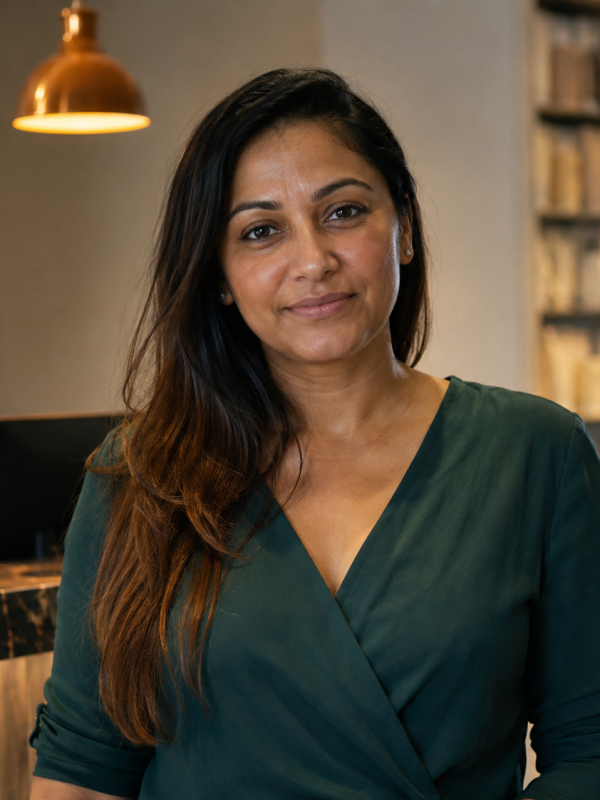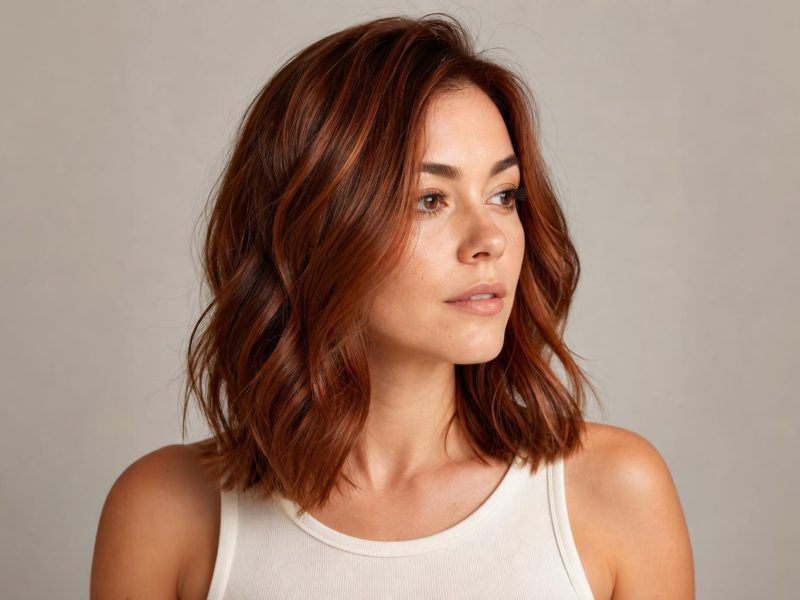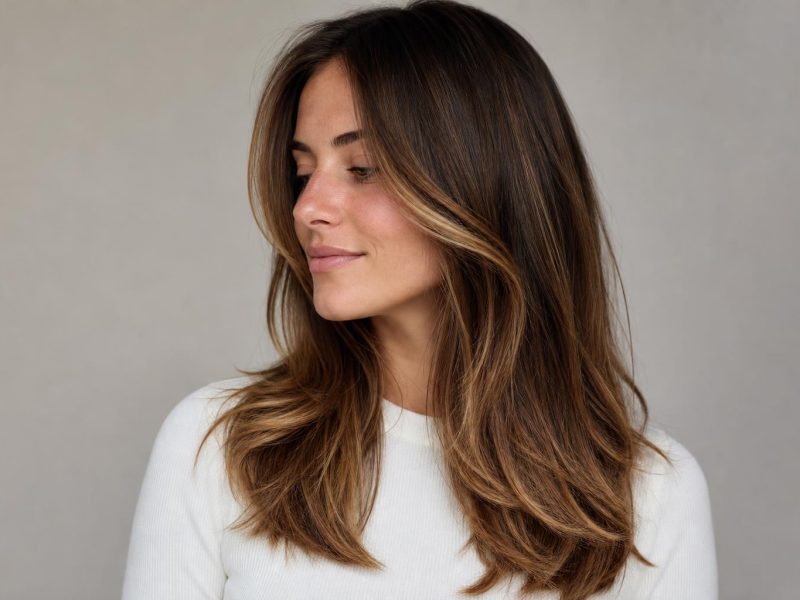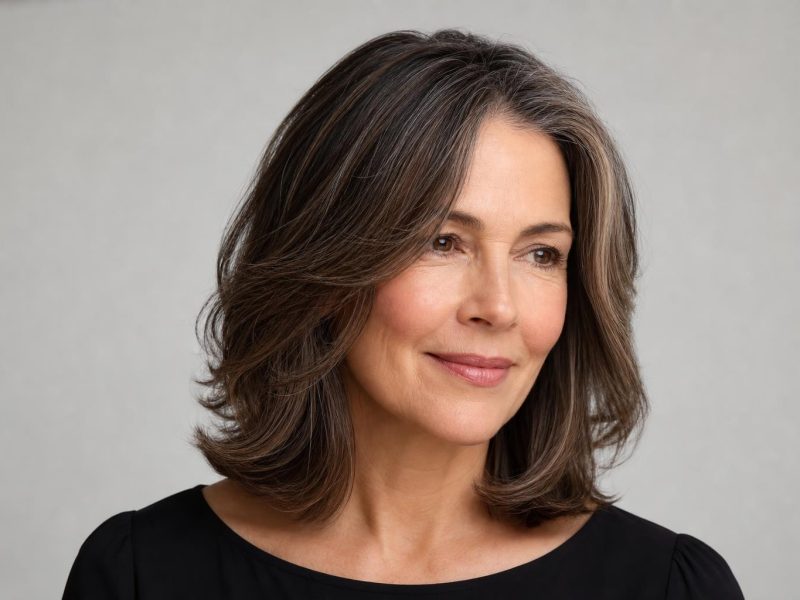

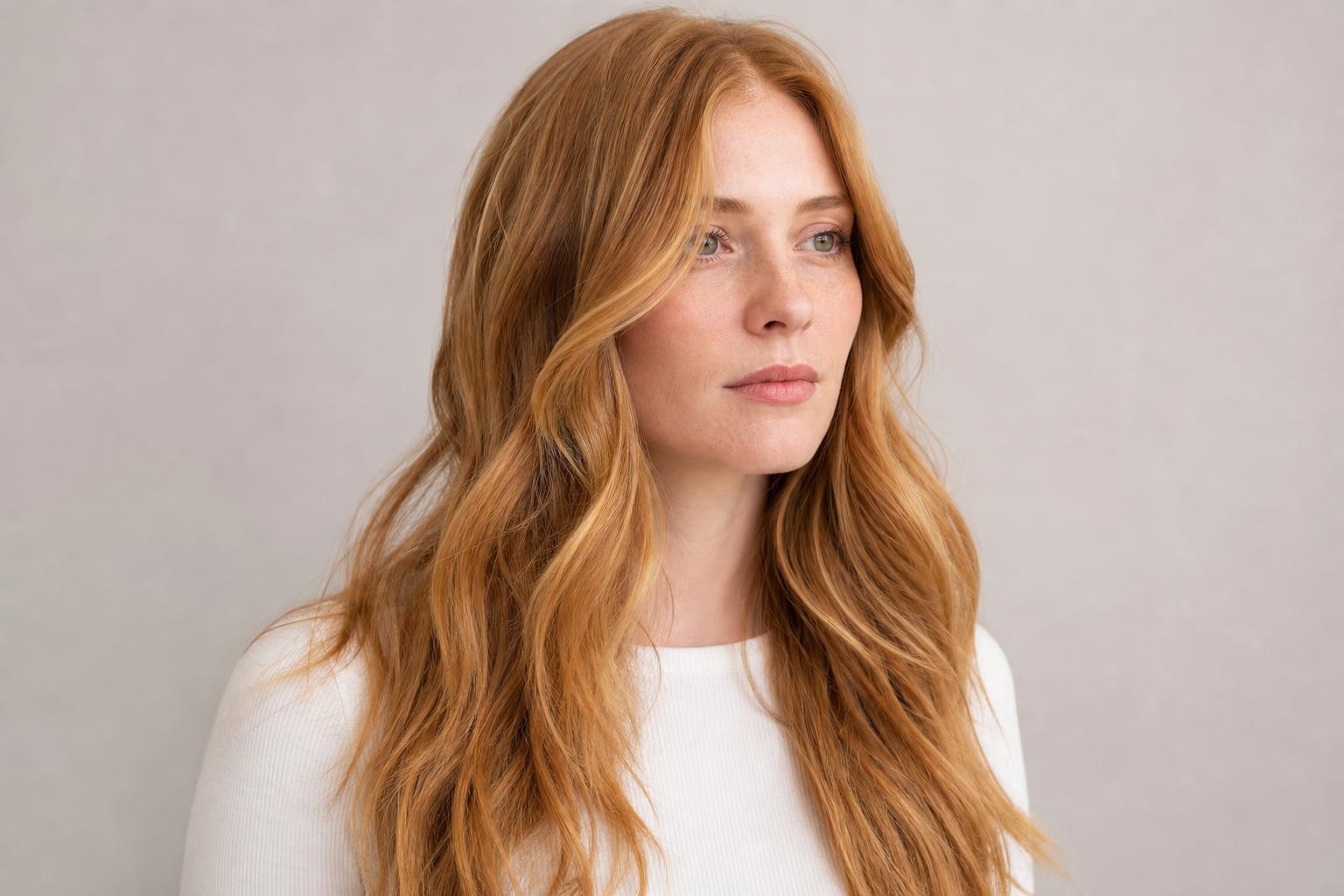
Strawberry blonde sits between golden blonde and copper on the color spectrum, defined by a warm red pigment overlay that runs roughly 30-40% of the total color — enough to give the hair a peachy-pink glow in sunlight without crossing into full auburn or copper territory.
The distinction matters practically. A color described as “strawberry blonde” at a salon appointment could range from a barely-there warm gloss on bleached blonde hair to a rich coppery-red base with blonde highlights, depending on the colorist’s interpretation. Knowing which end of the spectrum you want, and how your natural base interacts with red pigment, is what determines whether you leave the chair with the color you intended. Red and copper tones also fade faster than other color families, which changes both the maintenance cost and the between-appointment appearance of this color. These 30 ideas cover the full range from pale peachy strawberry to deep copper-leaning shades, organized by depth, technique, and base hair type, so you can identify the version that suits your hair and commit to it with your colorist.
Light and Peachy Strawberry Blonde
Pale strawberry blonde leans closer to blonde than to red: the red pigment is present as a warm peachy overlay rather than a dominant tone, and the overall result can appear close to a warm golden blonde in indoor light, only revealing its strawberry quality in direct sun. This end of the spectrum suits lighter natural bases that need minimal lifting and works particularly well on fair skin with cool or neutral undertones, where the peachy warmth of the color adds dimension without competing with the skin.
1. Pale Strawberry Blonde on Fair Skin
Fair skin with pink or neutral undertones carries pale strawberry blonde naturally because the pinkish warmth in the color echoes the undertone in the skin rather than clashing with it. On warm ivory or peach complexions, this shade adds a sun-warmed quality that reads as almost natural on light hair, especially when applied as a gloss or tone rather than a full lightening process. Ask your colorist for “a warm peachy tone with minimal red saturation” to land in this range.
2. Soft Strawberry Blonde Highlights on Natural Blonde
Weaving warm strawberry tones through a natural blonde base as highlights rather than an all-over color creates a dimensional look where the warmth appears only in direct light. The technique is lower commitment than a full color change because the highlights grow out gradually without a harsh root line. Four to five foils around the face and crown, placed at the hairline and on the top sections that catch light first, is enough to shift the warmth perception of naturally pale blonde hair without a dramatic change.
3. Pale Strawberry Blonde on Fine Hair
Fine hair benefits from light strawberry tones applied as a gloss or toner over pre-lightened hair because a gloss adds no additional processing damage while depositing the warmth that makes fine hair look richer and more dimensional. Fine hair that is already at a light blonde level can receive a strawberry tone in a single appointment; fine hair that is darker than a level 8 blonde will need a lightening step first. Color-depositing conditioners in a peachy-warm tone can maintain the strawberry gloss between salon appointments and slow down the fade. Adding layers is also worth considering for fine hair: the movement that layers create allows warm tones to catch light at multiple angles, making thin hair look fuller — see layered haircuts for thin hair for cut options that pair well with this color.
4. Morning Sun Strawberry Blonde
Some colorists describe the lightest end of strawberry blonde as a “morning sun” tone: a warm vanilla blonde base with just enough peachy copper running through the mid-lengths to give the hair a glow effect rather than a definite color. Styling technique matters here: loose waves and a diffused blowout allow light to travel through the hair shaft and catch the warm pigment at different angles, making the color look more complex than a flat iron or sleek blowout would allow.
5. Strawberry Blonde Curtain Bangs
Curtain bangs in a pale strawberry blonde tone frame the face with warm color at the most visible point of the hairline, which makes the overall color look richer than it is at the roots and lengths. The technique works because fringe catches direct frontal light, and warm peachy tones near the face tend to flatter a wider range of skin tones than the same tone applied uniformly across the full head. Ask your colorist to concentrate slightly more warmth in the bang section when placing highlights.
6. Strawberry Blonde Lob
A lob at collarbone length carries pale strawberry blonde particularly well because the cut removes the oldest, most faded hair at the ends and keeps the freshest, most saturated color visible. At lob length, the hair also moves enough to catch light at multiple angles throughout the day, which makes pale strawberry tones appear more varied in depth than the same color would on very long or very short hair. The lob also reduces the overall hair mass that needs color services, which lowers the per-appointment cost.
Copper Strawberry Blonde and Rich Tones
The copper-leaning end of strawberry blonde is where red pigment begins to dominate the color rather than accent it. These shades still have enough blonde presence to read as strawberry blonde rather than copper or auburn, but the warmth is undeniable and reads more orange-red than peachy in most lighting conditions. This range suits medium to deep skin tones with warm undertones and requires more maintenance because the higher red saturation means more visible fading at the roots between appointments.
7. Deep Copper Strawberry Blonde
At this depth, the color is a rich copper-red with blonde highlights woven through to prevent it from reading as a single-process auburn. The blonde strands create the visual break that keeps the color in the strawberry blonde category rather than pushing into full copper territory. On dark natural bases (levels 4-5), this shade is achievable without full head bleaching by using a copper-toned dye over the existing base and lifting only the sections where highlights are placed.
8. Copper Strawberry Blonde on Warm Olive Skin
Warm olive skin carries the copper end of strawberry blonde exceptionally well because both the skin and the color share a warm yellow-orange undertone. The result is a harmonious, sun-lit appearance where neither the hair color nor the complexion competes for dominance. Avoid cool-toned toning shampoos on this combination: they mute the warmth that makes the color work with olive skin and can introduce an ashy quality that flatters neither the skin nor the hair.
9. Dark Strawberry Blonde on Thick Hair
Thick hair with high natural melanin holds warm red pigment longer than fine hair because the larger shaft diameter allows more color molecules to bind. Dark strawberry blonde on thick hair tends to fade more slowly than the same shade on fine hair, and the color often deepens rather than washing out between appointments. The tradeoff is that achieving a true strawberry blonde on level 3-4 dark natural hair requires a multi-session lightening process to bring the base up enough for the warm tones to appear as blonde-adjacent rather than simply red.
10. Cinnamon Strawberry Blonde
Cinnamon strawberry blonde is a deeper, spicier take on the color where the red tones lean brown-orange rather than pink-orange, creating a shade that suits autumn and winter seasons particularly well. This version is less clearly “strawberry” in most indoor lighting and more clearly warm auburn-blonde, only revealing its strawberry quality in bright outdoor light where the blonde strands become visible. It is one of the more versatile versions for women who want a warm hair color that transitions well across all four seasons without appearing out of place in cooler months.
11. Rich Strawberry Blonde with Root Shadow
A root shadow, where the colorist deposits a slightly deeper, more natural shade at the root, extends the life of strawberry blonde by weeks by creating a gradual transition rather than a hard line as the color grows out. On copper-leaning strawberry blonde, the root shadow typically uses a warm brown or warm level 6 shade that complements the strawberry tones rather than contrasting with them. This technique reduces the frequency of full-head color appointments from every 6 weeks to every 10-12 weeks for many clients.
12. Strawberry Blonde vs. Copper Hair
The most frequently confused pair in the warm color family: copper hair has a higher red-to-yellow saturation and typically reads as orange in most lighting, while strawberry blonde retains visible blonde highlights or a blonde base that softens the overall impression. On a painted-on color swatch, the difference is clear; in a salon photo, it is often hard to tell without knowing whether highlights or a blonde base were used. When describing your goal to a colorist, show two reference photos and ask which end of the spectrum the color sits closer to rather than relying on the color name alone.
Strawberry Blonde Balayage and Highlight Techniques
The application technique changes the character of strawberry blonde more than the shade choice does. The same strawberry tones applied as a full gloss, as hand-painted balayage, or as traditional foil highlights produce three distinctly different results on the same client. Understanding which technique suits your natural base and the maintenance schedule you can realistically commit to is the most important decision in the strawberry blonde process.
13. Strawberry Blonde Balayage
Balayage for strawberry blonde is the lowest-maintenance technique in this color family: the hand-painted highlights grow out naturally with a soft, blended root, so the color remains flattering through weeks 8-12 between appointments rather than the 4-6 weeks a foil highlight typically allows. The colorist applies the lightener to the surface of the hair rather than wrapping it in foil, which creates a softer transition between the lighter and darker sections. For strawberry blonde specifically, balayage works best when the base is a natural medium brown (levels 5-6), allowing the painted sections to lift to a warm blonde while the base provides the darker contrast.
14. Strawberry Blonde Money Piece
A money piece is a face-framing highlight applied to the front sections of the hair on both sides of the part, creating a warm frame around the face without changing the rest of the hair. For strawberry blonde, the money piece delivers the color’s warm peachy glow at the most visible point — the hairline and temples — while the rest of the hair can remain at its natural color. This is the entry-level version of the strawberry blonde trend for women who want to test the color without committing to a full color treatment.
15. Full-Head Strawberry Blonde Gloss
A gloss deposits color rather than lifting it, which means it can only add warmth to hair that is already at or above the target level. On bleached or naturally light blonde hair, a strawberry blonde gloss delivers a transparent wash of warm peachy color that fades gradually over 4-6 weeks with color-safe washing. The gloss process takes 20-30 minutes in the salon, causes no chemical damage, and can be repeated frequently. It is the most damage-free path to strawberry blonde and the fastest to apply, but it requires a pre-lightened base that is already within two levels of the target shade.
16. Strawberry Blonde Ombre
An ombre places the lighter, strawberry blonde tone at the ends of the hair while the roots remain at the natural base color, creating a graduated transition from dark to light. On dark brown hair, the ombre produces a dramatic contrast where the roots are clearly dark and the ends are warm blonde-red. On medium blonde hair, the same technique produces a softer, sun-kissed result where the transition is gradual and the strawberry tones appear as a brightening of the existing color rather than a clear color change. Ombre grows out without creating a visible regrowth line because the transition zone is the design itself.
17. Strawberry Blonde Peekaboo Highlights
Peekaboo highlights are placed underneath the top layer of hair so they are only visible when the hair moves. On dark brown or black hair, strawberry blonde peekaboo highlights add warmth and dimension without changing the overall appearance of the hair in a still position, which suits workplaces or contexts where a visible color change would not be appropriate. The strawberry tones show when the hair is gathered into a ponytail, when the wind moves it, or when the hair falls forward. The maintenance is lower than full-head color because only the hidden underlayer needs refreshing.
18. Strawberry Blonde with Lowlights
Adding darker lowlights to a strawberry blonde base creates depth and prevents the all-over warmth from becoming flat. On full-head strawberry blonde that has been on the hair for several months, adding a few copper-brown lowlights at the mid-length refreshes the dimension without requiring a full recolor. The lowlights should be one to two shades deeper than the main strawberry blonde shade and placed in the sections that receive the least direct light, such as the underneath and the back panels, to create natural-looking shadow.
Strawberry Blonde by Hair Length
Length changes how strawberry blonde color behaves visually and practically. Long hair shows more fade variation between roots and ends, while short hair refreshes faster per appointment. The natural wave or texture of the hair also interacts with length to determine how prominently the warm tones read throughout the day.
19. Long Strawberry Blonde Waves
Long wavy hair is one of the most flattering canvases for strawberry blonde because the waves create light and shadow variation that makes the color appear multidimensional without requiring extensive technique. On naturally wavy hair, the warm tones catch light differently at the crest of each wave than at the shadow between waves, producing the kind of natural-looking complexity that flat-ironed hair cannot replicate. At lengths below the shoulder, balayage or highlights placed in the sections that peak at each wave crest maximize this effect. Naturally 2b wavy hair is particularly well-suited to this technique because the wave pattern is defined enough to create distinct peaks without being tight enough to cause significant shrinkage.
20. Strawberry Blonde Bob
A bob keeps the hair at a length where all of it was colored within the last few months, which means the color tends to look fresher than the same shade on long hair where the ends may be 12-18 months old and several shades lighter than intended. On a classic chin-length bob, an all-over strawberry blonde gloss or a full-color application maintains a consistent, saturated tone from root to end that is harder to achieve at longer lengths. The short length also reduces the amount of product needed per service, which can lower the per-visit cost slightly.
21. Strawberry Blonde Pixie Cut
All-over strawberry blonde on a pixie cut delivers maximum color impact because there are no distracting lengths or variations: the entire visible surface of the hair is the same warm peachy-copper tone, making the color the defining characteristic of the style. Color maintenance on a pixie requires frequent appointments regardless of the shade, since the cut itself needs trimming every 4-6 weeks, and those appointments can double as color refresh sessions. The volume of product needed is small, which keeps service costs lower than the same color on longer hair.
22. Strawberry Blonde with Curtain Bangs on Medium Hair
Medium-length hair with curtain bangs gives strawberry blonde more face-framing contact than a blunt cut at the same length. The bangs, styled to fall on either side of the face, place warm color directly adjacent to the cheekbones and eyes, which is where warm hair color creates the most flattering effect on most skin tones. Keeping the bangs slightly lighter than the rest of the hair through targeted highlight placement amplifies this effect without creating an obvious color contrast.
23. Textured Strawberry Blonde Shag
A shag cut with heavy layering and curtain bangs moves more than most cuts throughout the day, which means the strawberry blonde tones appear at varying angles and intensities as the layers shift. The shag is one of the best cuts for showing off balayage strawberry blonde because the layers create natural separation between the lighter and darker sections that the balayage technique produces. On wavy or curly hair, the shag enhances the texture while the warm tones add definition to the curl pattern in good light.
24. Strawberry Blonde Updo
Loose updo styles, such as a messy bun or a twisted half-up, reveal the multi-tonal quality of strawberry blonde at the gathered point where the hair is pulled together: lighter highlights catch the light where they fall across the surface, while the darker base provides contrast underneath. Soft tendrils left loose around the face showcase the strawberry tones at the most visible level without the bulk of all the hair down. For formal events, a braided updo on strawberry blonde hair makes the color variation visible in each individual braid section.
Strawberry Blonde on Different Natural Bases
Natural hair base level is the single most important variable in achieving strawberry blonde. The same target color looks and maintains completely differently on a level 8 natural blonde versus a level 4 dark brown, and the process required to achieve it changes the health of the hair, the time investment, and the ongoing cost. Understanding what your natural base level means for the strawberry blonde process prevents unrealistic expectations.
25. Strawberry Blonde on Natural Blonde Base (Levels 7-9)
Natural blonde hair in the level 7-9 range is the most straightforward base for strawberry blonde: the hair is already light enough that a strawberry tone can be deposited with a gloss, toner, or semi-permanent color with no lifting required. The result is clean, the process is non-damaging, and the maintenance can be managed largely with color-safe home care and a gloss refresh every 6-8 weeks in the salon. This combination is the most cost-effective and least damaging path to strawberry blonde.
26. Strawberry Blonde Balayage on Light Brown Hair (Level 5-6)
Light to medium brown natural hair is the ideal base for strawberry blonde balayage because the colorist can lift only the painted sections to a warm blonde level while leaving the natural root area intact, creating the two-tone contrast that defines the technique. The natural level 5-6 base provides a warm brown root that transitions naturally into the painted strawberry blonde sections without needing a separate root color application. The resulting grow-out is gradual and flattering for 10-14 weeks before a refresh is needed.
27. Strawberry Blonde on Dark Brown Hair (Level 3-4)
Dark brown or dark auburn natural hair requires at least one full lightening session before strawberry blonde tones can be applied accurately. Applying a warm blonde-red shade directly over a level 3-4 base without pre-lightening typically produces a dark red or auburn result rather than strawberry blonde, because the existing dark pigment absorbs the overlay color and pushes it toward the red-brown range. Most colorists recommend a two-appointment process: lighten in session one, tone to strawberry blonde in session two, with a week between sessions to allow the hair to recover.
28. Strawberry Blonde on Previously Colored Hair
Previously color-treated hair, especially hair that carries old permanent color, can be unpredictable when switching to strawberry blonde. Old dye molecules in the cortex can interact with new pigment in ways that produce unexpected undertones. A colorist should do a strand test on a small section of the most processed hair before committing to a full treatment. Hair that carries old dark dye may also require a color remover treatment before the lightening step, which adds a third appointment to the process for heavily colored hair.
29. Strawberry Blonde Highlights on Dark Hair
Rather than a full transition, dark-haired clients can request strawberry blonde highlights placed through the top and front sections of the hair to add warm color without lifting the entire base. The result is a dark hair color with bright, warm ribbons of strawberry blonde visible at the surface. This approach is lower commitment, lower damage, and lower cost than a full color transition, and the grow-out is more forgiving because the highlights simply blend back into the dark base as they grow. Over multiple appointments, the highlighted sections can be expanded gradually to increase the overall warmth.
30. Strawberry Blonde Maintenance for Fading Red Pigment
Red and orange pigment molecules are smaller than cool-toned pigment molecules, which means they exit the hair shaft faster during washing. Strawberry blonde colors typically show visible fading after 4-6 weeks of regular washing, with the warmest tones washing out first and the cooler blonde base remaining. The most effective delay is washing with lukewarm or cool water rather than hot, which slows pigment migration through the cuticle. A warm-toned color-depositing shampoo used once per week can re-deposit a small amount of strawberry pigment between appointments and extend the color by 2-3 weeks.
Which Strawberry Blonde Shade Suits Your Skin Tone
Strawberry blonde covers a wide range from barely-there peachy warmth to rich copper-blonde, and the shade that looks most natural and flattering is directly linked to the undertone and depth of your skin. The same strawberry blonde formula can appear washed-out on very fair skin or look mismatched on deep skin with cool undertones.
| Skin Tone | Undertone | Best Strawberry Shade | Avoid |
|---|---|---|---|
| Fair | Cool or neutral | Pale peachy strawberry blonde, light highlights | Deep copper; makes fair cool skin appear sallow |
| Fair | Warm (peachy, golden) | Any shade; warm undertone pairs with all strawberry tones | Over-toned cool blonde; removes the warm synergy |
| Medium | Warm or olive | Copper strawberry blonde, cinnamon tones | Very pale peachy blonde; reads washed-out on medium skin |
| Medium | Cool or rosy | Rose-gold strawberry blonde; leans pink-warm rather than orange | Deep orange copper; clashes with cool-medium skin |
| Deep | Warm or neutral | Rich copper-red strawberry blonde highlights on dark base | All-over pale strawberry; full lift on deep skin requires extensive damage |
| Deep | Cool | Warm-toned highlights placed sparingly; avoid all-over saturation | Orange or brassy strawberry; accentuates cool-warm contrast |
The rose gold hair family overlaps with the cool end of strawberry blonde: if you want strawberry with more pink than orange, rose gold formulas are a closer target than a standard strawberry blonde.
What to Tell Your Colorist
Strawberry blonde is one of the most variable terms in salon vocabulary because it spans a wide tonal range and can be achieved through multiple techniques. Bringing references and asking specific questions prevents the disconnect between what you envision and what gets applied.
- “I want strawberry blonde that leans [peachy / copper / warm golden] — here are two photos showing where on the spectrum I want to land.”
- “What is my current base level, and what process will I need to reach this shade?”
- “What technique do you recommend for the maintenance schedule I can realistically commit to — I can come in every [X weeks]?”
- “Will you do a strand test before starting if my hair has previous color?”
- “What at-home products should I use to keep the warmth from washing out between appointments?”
Colorist tip from Priya Nair, THP contributor and color specialist: Save two reference photos to your phone before your appointment: one showing the exact strawberry blonde shade you want, and one showing a shade you do NOT want (typically the copper or orange version that goes too far). Showing both photos is twice as useful as showing one, because it helps your colorist understand exactly where the boundary is in your mind. Many strawberry blonde disappointments come from the colorist reading “warm and peachy” while the client was picturing “bright copper-free.”
Maintaining Strawberry Blonde
Red pigments fade faster than any other color family because their molecular weight is lower, which allows them to move through the open cuticle more quickly with each wash. Strawberry blonde is effectively a color that begins fading from the first shampoo, which is why maintenance strategy matters as much as the initial color application.
| Task | Frequency | Notes |
|---|---|---|
| Full color appointment | Every 6-8 weeks (all-over), 10-12 weeks (balayage) | Balayage grows out more gracefully; fewer appointments |
| Gloss refresh | Every 4-6 weeks | Can be done between full-color appointments; low damage |
| Color-depositing shampoo | Once per week | Warm-toned red or copper variant; leave on 3-5 min |
| UV protection | Daily when outdoors | UV rays accelerate red pigment breakdown; use UV-protectant spray |
| Wash temperature | Every wash | Cool or lukewarm water; hot water opens the cuticle and releases pigment faster |
Colorist tip: Wait at least 48-72 hours after a color appointment before washing your hair. The cuticle needs time to close and lock in the pigment after the chemical process. Washing the same day or the next morning loses a measurable amount of the fresh color in the first shampoo. Some colorists apply a color-safe leave-in conditioner at the end of the appointment to help seal the cuticle before the client leaves the salon.
For related warm hair color maintenance across the wider color family, see the honey brown hair guide for low-fade warm color strategies that apply to adjacent shades.
When Strawberry Blonde Is Not the Right Move
Strawberry blonde is a high-commitment color in terms of process and ongoing maintenance. Understanding where it does not perform well saves you from an expensive and potentially damaging outcome that does not match your goal.
- Severely damaged or over-processed hair: Hair that is already broken, porous, or highly damaged from repeated bleaching will not hold red pigments well — the open cuticle allows color to fade within days of the appointment rather than weeks. A colorist may decline to apply strawberry blonde color to hair in poor condition because the result will fade unevenly and could cause further breakage. A protein treatment and a period of no chemical processing is usually the prerequisite for getting color to hold correctly on damaged hair.
- Very dark natural bases without multi-session commitment: Achieving a true strawberry blonde on level 2-3 hair in a single appointment is not possible without causing serious damage through over-processing. If you are not prepared to commit to multiple appointments over several months — gradually lifting the base and depositing warm tones in stages — strawberry blonde highlights placed over the dark base are a more realistic option. Full commitment to the color means accepting a 3-6 month process on very dark natural hair.
- Clients with minimal maintenance tolerance: If you wash your hair frequently with hot water, use heat tools daily without protection, and cannot realistically commit to salon appointments every 6-8 weeks, strawberry blonde will fade quickly and unevenly. The color between appointments will shift from strawberry blonde toward brassy yellow-orange as the red pigments wash out first, leaving a faded, unintentional result that requires a correction appointment. Lower-maintenance warm color alternatives include bronde hair, which uses cooler blonde tones that fade more predictably.
FAQ
What Is Strawberry Blonde Hair?
Strawberry blonde is a warm hair color that combines a blonde base with red or copper pigment overlay, typically landing in a range where the hair appears peachy-warm in most lighting and reveals more clearly red or copper tones in direct sunlight. The ratio of blonde to red is roughly 60-70% blonde to 30-40% red pigment, which places it clearly between golden blonde and full copper in the warm color spectrum. Natural strawberry blonde hair is rare; most people achieve the color through highlights, balayage, or a full color treatment.
Does Strawberry Blonde Suit All Skin Tones?
Strawberry blonde suits most skin tones when the shade is adjusted to match the undertone of the skin. Fair skin with cool or neutral undertones looks best with the peachier, less saturated end of the spectrum. Warm medium skin carries the deeper copper-strawberry shades well. Deep skin with warm undertones can wear strawberry blonde highlights on a dark base with strong visual impact. The shade that does not suit any skin tone well is over-saturated orange-copper applied all over without any blonde present to soften it.
How Long Does Strawberry Blonde Color Last?
Strawberry blonde color typically shows visible fading after 4-6 weeks for an all-over application, with the warm red tones washing out first and the blonde base remaining. Balayage and highlight techniques hold their shape for longer, often 10-12 weeks before a refresh is needed, because the grow-out is gradual rather than a hard root line. Color-depositing shampoo, cool water washing, and UV protection can extend the vibrancy of the color by 2-3 weeks between appointments.
Is Strawberry Blonde Hard to Achieve on Dark Hair?
Achieving a full strawberry blonde color on dark natural hair requires a pre-lightening step that cannot safely be completed in a single appointment on most dark bases. Hair naturally at level 3-5 needs to be lifted to at least level 7-8 before strawberry blonde tones will appear as blonde-adjacent rather than dark red or auburn. A two-session process with a professional colorist is the minimum safe approach, and some clients with level 2-3 hair benefit from a three-session process spaced several weeks apart. Strawberry blonde highlights or a money piece are achievable in a single session on dark hair without requiring a full base lift.
What Is the Difference Between Strawberry Blonde and Rose Gold Hair?
Rose gold leans cooler and pinker than strawberry blonde, with the pigment pulling toward pink-mauve rather than orange-copper. Strawberry blonde is distinctly warm and orange-adjacent; rose gold reads as warm but pink in most lighting. On fair skin with cool undertones, rose gold is typically more flattering because the pink warmth harmonizes with the skin’s coolness, while orange-warm strawberry blonde can create a clash. On warm skin tones, the distinction matters less because both shades complement warm undertones.
What Products Should I Use to Maintain Strawberry Blonde?
A color-safe shampoo with a warm-toned formula is the foundation of strawberry blonde maintenance, used for all regular washes except the weekly color-depositing shampoo wash. A warm copper or red color-depositing shampoo used once per week re-deposits a small amount of strawberry pigment and delays visible fading. A deep conditioning mask used weekly helps maintain the cuticle integrity that is essential for color retention. UV-protectant hair spray or leave-in treatment applied before outdoor exposure prevents photochemical breakdown of the red pigment, which is one of the fastest routes to premature fading.
Strawberry blonde hair sits at a specific point on the warm color spectrum where the balance of blonde to red determines everything: the flattery, the maintenance commitment, and the technical process required to get there. The 30 ideas above span that full range from barely-there peachy warmth to rich copper-blonde, and the most successful results come from identifying exactly which version suits your natural base, your skin tone, and the maintenance schedule you will actually follow. Work with a colorist who asks questions before mixing formulas, bring reference photos that show both your goal and what you want to avoid, and protect the color between appointments with the right at-home products. For a warmer take on blonde that requires less red-pigment maintenance, honey brown hair is a closely related alternative worth considering before committing to the full strawberry blonde process.
Hair color results vary based on your natural hair color, texture, porosity, and chemical history. Always consult with a licensed colorist before attempting color changes, particularly those requiring pre-lightening. Photos may show professional results that require multiple salon sessions to achieve.