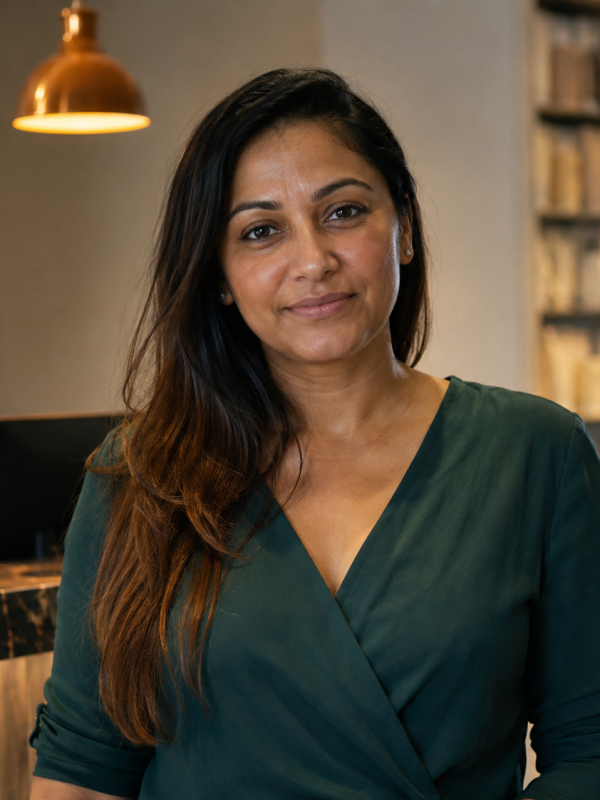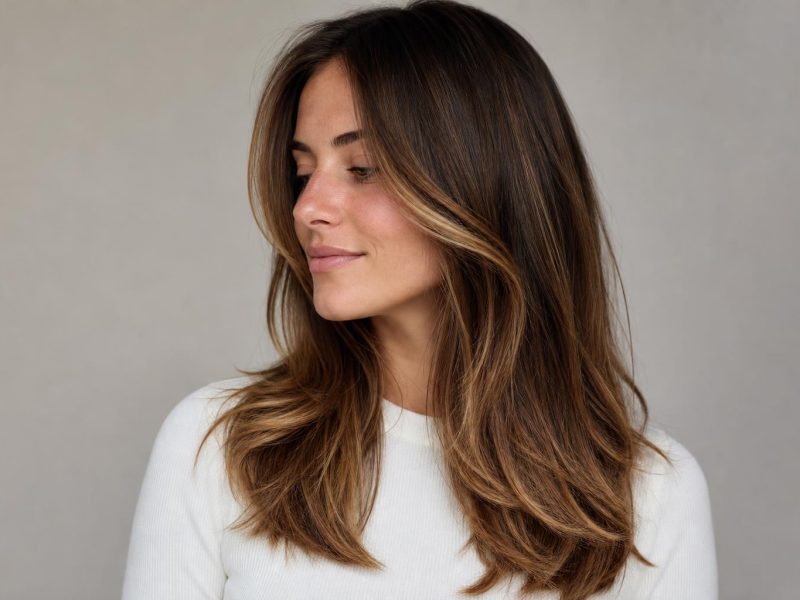

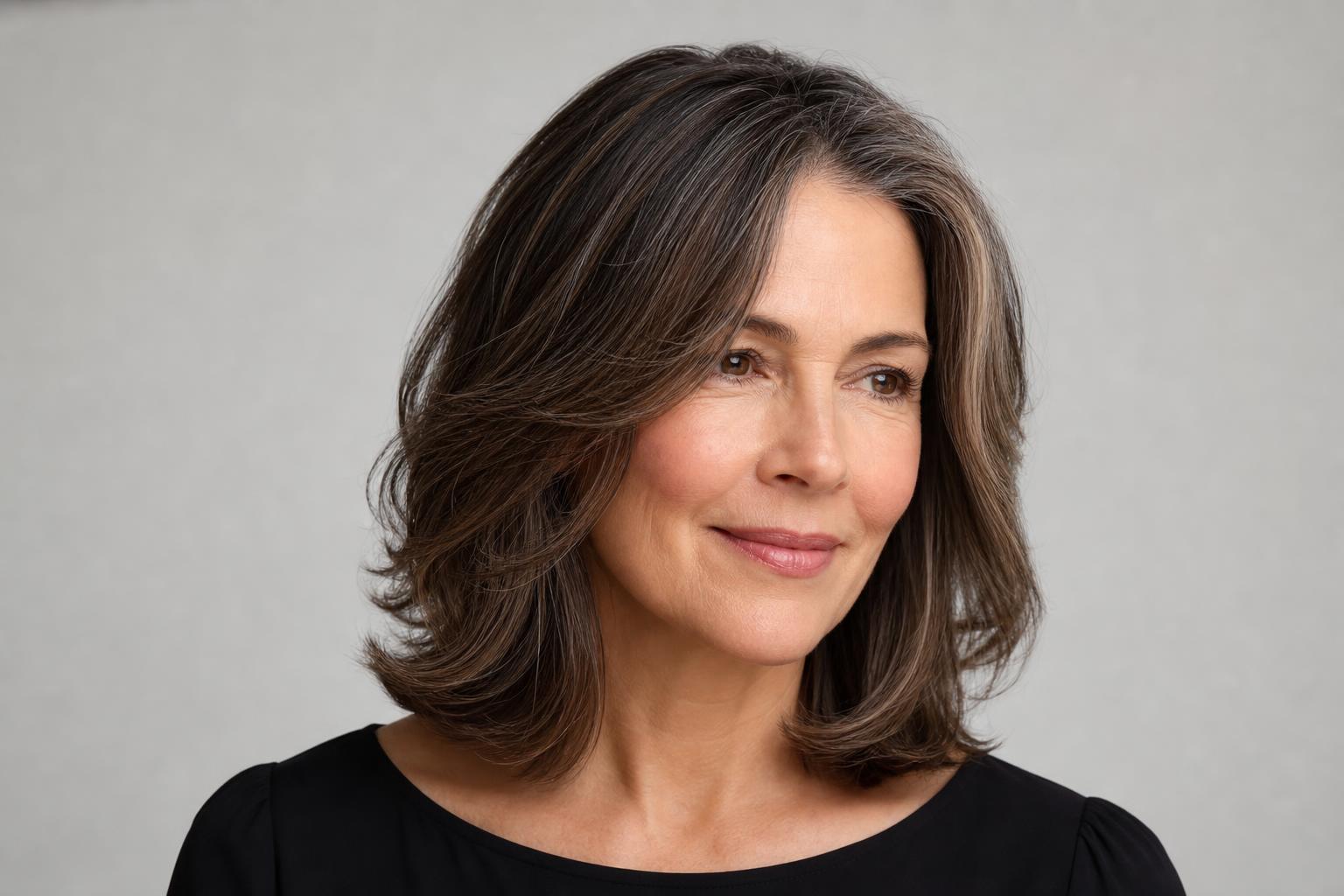
Gray blending does not cover gray hair; it darkens the gray strands part of the way so they read as dimension against your natural color instead of as regrowth.
On dark hair the usual approach is a demi-permanent color that deposits roughly 50 to 70 percent tone onto the gray, often paired with fine highlights or lowlights that break up the line where new growth meets colored hair. Because nothing is fully opaque, there is no hard root line four weeks later, which is the entire point: gray blending stretches the salon cycle from four weeks to eight or ten. The trade-off is that some silver stays visible, and you have to want that.
This guide covers what separates blending from full coverage, the four techniques colorists actually use on dark hair, how the approach changes as the percentage of gray climbs, the words to say at the consultation, realistic costs and intervals, and the situations where blending is the wrong choice and coverage or a full transition to silver serves better.
Gray Blending Softens Gray While Coverage Erases It
Full gray coverage uses permanent color with a developer that opens the cuticle and deposits opaque pigment, so every white strand turns the target shade and the result is a single solid color. Gray blending uses translucent demi-permanent color, usually with a low-volume developer or none at all, so the gray takes on some tone but still shows through as a lighter strand. From two feet away that reads as natural dimension rather than as gray. The practical difference shows up at week four, when a covered head has a visible band of white at the part and a blended head simply looks slightly lighter at the roots.
| Feature | Gray Blending | Full Gray Coverage |
|---|---|---|
| Color type | Demi-permanent, translucent deposit | Permanent, opaque deposit |
| Gray hidden | Roughly 50 to 70 percent | 100 percent |
| Regrowth line | Soft, diffused, no hard band | Sharp line at the part by week 4 |
| Salon interval | 8 to 12 weeks | 4 to 6 weeks |
| Effect on condition | Minimal; no lift, often adds shine | Cumulative, especially at the ends |
| Reversible | Yes, fades out over 4 to 8 weeks | No, needs to grow out or be removed |
| Best when | Gray is under about 60 percent and evenly spread | You want zero visible gray |
Blending is also the only one of the two that goes in both directions. A blended head can move toward full coverage at the next appointment or drift toward silver simply by skipping a service, while permanent color commits you until it grows out or a colorist removes it.
Four Techniques Colorists Use for Gray Blending on Dark Hair
Most appointments combine two of the four below rather than using one alone, because each solves a different part of the problem. A demi gloss handles the overall tone, foils or hand-painting handle the contrast, and a root shadow handles the line where new growth arrives. Knowing the names lets you follow what your colorist is proposing and ask why.
A Demi-Permanent Gloss Tones the Gray Without Lifting
This is the base of nearly every gray blending service. A demi color at or slightly lighter than your natural depth is applied through the roots and mid-lengths, depositing tone into the gray so it drops from white to a soft muted shade a level or two lighter than your base. There is no bleach and no high-volume developer, so hair condition is essentially unaffected and the color fades out over four to eight weeks rather than sitting there as a line. On dark brunette hair this alone can take a head from obviously graying to quietly dimensional.
Fine Foils Break Up a Solid Gray Section
Gray rarely arrives evenly. It concentrates at the temples and the front hairline first, which produces a solid pale patch that a gloss alone cannot disguise. Babylights, which are very fine foils placed close to the scalp, scatter lighter pieces through the darker hair so the eye stops reading the gray patch as a block. On dark hair these are kept warm, usually caramel or soft mocha, because an ashy highlight next to white hair emphasizes the gray rather than blending it.
Balayage and Foilyage Blend Gray Toward the Ends
Hand-painted balayage places lightness where you want it and keeps the root area untouched, which makes regrowth almost invisible. Foilyage is the same painting technique with the sections wrapped in foil to push them lighter, and it is the usual choice on dark hair, which resists lifting. Both work best when the gray is spread through the length rather than sitting in one front patch. Expect three hours in the chair and a follow-up gloss to keep the lightened pieces from going brassy.
Lowlights and a Root Shadow Rebuild Depth
When previous highlighting has left hair too uniformly light, adding lowlights a level or two darker restores contrast so the remaining gray has something to sit against. A root shadow, sometimes called a root melt, is a demi color painted at the scalp to soften the transition between natural regrowth and colored length. On heads with more than half gray this pairing does more than any amount of highlighting, because the problem at that point is a lack of dark, not a lack of light.
Stylist tip: ask for warmth in the blending shade even if your natural color is cool. Gray hair has no pigment at all, so it takes on tone unpredictably and pulls ashy on its own; a colorist who adds a gold or copper base to the demi formula gets a blend that looks like hair rather than like a shadow. This is the adjustment that separates a blend from a gray patch with a filter over it.
How Much Gray You Have Changes the Approach
Colorists estimate gray as a percentage of the head, and the number determines which of the four techniques leads. The same demi gloss that looks seamless at 20 percent gray looks like a wash at 70 percent, so an approach that worked five years ago may simply have been outgrown rather than done badly.
Under 25 Percent Gray Needs Only a Gloss
At this stage the gray is scattered rather than concentrated, and a demi-permanent gloss every eight to ten weeks is enough on its own. The service takes about forty minutes, costs the least of any option, and leaves no line at all. Many people start here and stay for several years before anything more is needed.
Between 25 and 50 Percent Gray Needs a Gloss Plus Foils
Gray at this level has usually clustered at the temples and the part, which is exactly where a gloss alone falls short. Adding babylights around the hairline scatters the concentration, and the gloss handles the rest of the head. Appointments run around ninety minutes and stretch to ten weeks, which is where gray blending starts genuinely saving money against a four-week root touch-up.
Above 50 Percent Gray Needs Depth Added Back
Once more than half the head is gray, the hair reads as light overall and adding more lightness makes it look washed out. Lowlights in a deeper natural shade rebuild the contrast that makes gray look like highlights, and a root shadow keeps the regrowth soft. This is also the point at which many people reconsider the goal, because a well-executed salt-and-pepper is often more flattering than a blend that fights the majority color.
Above 75 Percent Gray Is Usually Better Left Silver
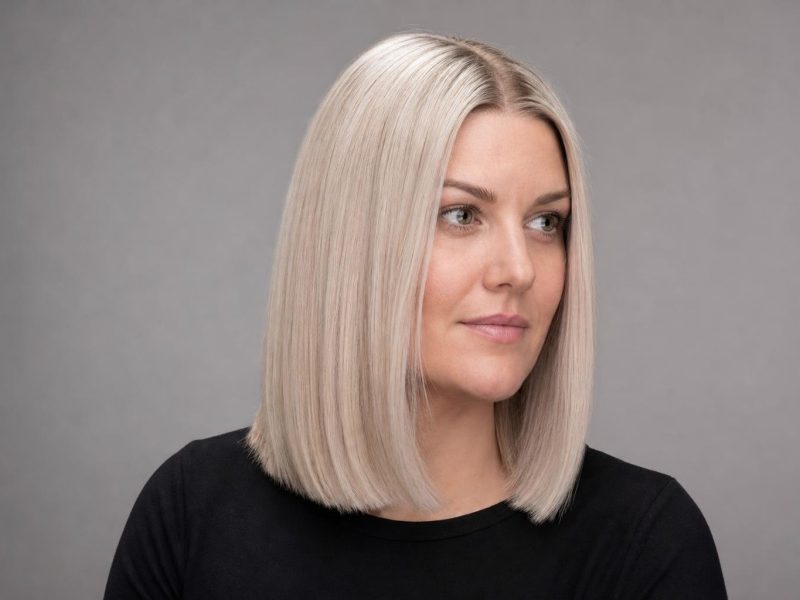
With three quarters or more of the head gray, blending means darkening most of your hair, which is closer to full coverage in effort and cost while delivering a less clean result. A gloss to neutralize yellow tones plus a sharp shape is a lower-maintenance and generally better-looking option, which is why so many women arriving at this stage land on a modern bob that lets silver read as deliberate. Anyone at this stage who still wants darker hair is really asking for coverage, and it is worth naming that honestly at the consultation.
What to Tell Your Colorist
Start by saying the outcome rather than the service, because the same words mean different things in different salons. A useful opening is: “I want to soften the gray, not cover it. I would rather see some silver than have a root line in four weeks, and I want to come in every ten weeks.” That sentence tells a colorist the technique, the tolerance and the budget in one go. Follow it by asking which of the four techniques they plan to use and why, and whether the result will need a toner refresh between appointments.
Bring photos, and bring the right kind. A photo of blended gray on someone whose base was light brown tells your colorist very little if your natural color is near-black, because the contrast between gray and base is what makes the technique visible. Photos of people with your depth of hair and roughly your amount of gray are far more useful, and how you present reference photos at the salon changes the conversation more than most people expect.
Stylist tip: book the first gray blending appointment for a day when you have nowhere to be afterward, and ask the colorist to go one shade lighter than you think you want. Demi color on gray hair grabs more strongly at the first application than at subsequent ones, so a formula that looks right on paper often comes out darker than expected the first time. Going lighter leaves room to deepen at the next visit rather than waiting for something too dark to fade.
Maintenance, Cost and Realistic Intervals
The appeal of gray blending is the interval, so it is worth being concrete about it. A demi gloss fades gradually over four to eight weeks and leaves no line, which means the appointment can be pushed if life gets busy without the hair announcing it. Highlight-based work goes longer still, because painted pieces have no root line at all. Salon prices vary enormously by region and by colorist experience, so treat any figure as a range rather than a quote.
| Service | Salon Time | Interval | Home Care |
|---|---|---|---|
| Demi gloss alone | 40 to 60 minutes | 8 to 10 weeks | Sulfate-free shampoo, color-safe conditioner |
| Gloss plus babylights | 90 minutes to 2 hours | 10 weeks | Add a weekly bond or protein treatment |
| Balayage or foilyage | 2.5 to 3.5 hours | 12 to 16 weeks | Toning shampoo every third wash |
| Lowlights plus root shadow | 2 hours | 8 to 12 weeks | Gloss refresh at home or in salon midway |
| Full permanent coverage | 60 to 90 minutes | 4 to 6 weeks | Color-safe range, heat protection |
Home care matters more with blending than with coverage, because demi color has nothing anchoring it into the cortex and washes out faster under harsh detergent. Switching to a shampoo without sulfates is the single most useful change, and it typically buys two to three extra weeks of tone. If any part of your service involved lightening, a bond-building treatment once a week keeps the lifted pieces from feeling straw-like. Gray hair also has a rougher cuticle than pigmented hair and picks up yellow from hard water and heat, which is where a purple shampoo used sparingly earns its place. Keeping the ends fresh matters too, since faded demi color clings longest to damaged ends, and a trim on a sensible cycle stops that dullness from accumulating.
When Gray Blending Is Not the Right Choice
Blending suits a specific set of circumstances, and pushing it outside them produces the muddy result people describe as looking like they simply have gray hair and paid for it.
- You want zero visible gray. Blending is designed to let some through; if that will bother you every time you look in a mirror, permanent coverage is the honest answer and there is no virtue in stretching intervals you will not enjoy.
- Your gray sits in one dense patch at the front. A single concentrated streak needs foil work to break it up before any gloss will read as blended, and a gloss alone on that pattern usually deepens the streak into a visible gray band.
- You are already past about 75 percent gray. At that point blending means darkening most of the head, which costs as much as coverage and looks less deliberate than embracing the silver with a good cut.
- Your hair is already color-treated with permanent black or a dark box dye. Demi color cannot lift what is there, so the blend will not show until the existing color grows out or is removed.
- You cannot get to a salon at all. Gray blending is a professional technique built on formula adjustment; the at-home equivalents are root sprays and powders, which are useful for a week but do not produce the same result.
Common Gray Blending Myths
Myth: Blending Is Always Cheaper Than Coverage
Reality: per appointment it is often more expensive, because foil or hand-painted work takes two to three times as long as a root touch-up. The saving comes from frequency, since ten-week intervals mean roughly five visits a year against nine or more for coverage. Over twelve months the total usually favors blending, but the individual bill does not.
Myth: Pulling Out Gray Hairs Makes More Grow Back
Reality: one follicle produces one hair, and pulling it does not recruit neighboring follicles. What plucking does do is damage the follicle over time, which can produce a thinner or stunted replacement. The reason gray seems to multiply after plucking is simply that more follicles are losing pigment on their own schedule.
Myth: Gray Hair Is Coarser and Needs Heavier Products
Reality: gray hair often feels coarser because the cuticle is rougher and sebum production has slowed, not because the strand is thicker. Heavy silicone-based products flatten it without fixing the texture. A lightweight leave-in plus a weekly moisturizing mask does more, and glossing itself smooths the cuticle enough that many people notice their hair feels softer after a blending appointment.
FAQ
What Is Gray Blending for Dark Hair?
Gray blending is a coloring technique that softens gray strands so they read as dimension rather than covering them completely. On dark hair it usually combines a demi-permanent gloss with fine highlights or lowlights, hiding roughly 50 to 70 percent of the gray. Because nothing is fully opaque, there is no hard regrowth line and the salon interval stretches to eight or ten weeks.
How Long Does Gray Blending Last on Dark Hair?
A demi gloss holds its tone for eight to ten weeks and then fades out gradually rather than growing out as a line. Highlight-based blending lasts twelve to sixteen weeks, since painted pieces have no root to grow out. Washing with sulfate-free shampoo and in cooler water typically adds two to three weeks to either figure.
Is Gray Blending Better Than Full Coverage?
Neither is better; they solve different problems. Blending suits anyone who wants fewer appointments and can live with some visible silver, while coverage suits anyone who wants no gray showing at all. The percentage of gray also matters, because blending works best under about 60 percent and starts to look thin above that.
Does Gray Blending Damage Dark Hair?
A demi-permanent gloss involves no lightening and very little developer, so it does minimal damage and often improves shine by smoothing the cuticle. Damage risk enters only when the service includes foils or balayage, which do lift the hair. If your blend includes any lightening, a weekly bond-building treatment keeps the lifted sections from becoming brittle.
Can Gray Blending Work on Nearly Black Hair?
It works, and the technique has to change. On very dark bases the contrast between gray and natural color is at its highest, so a gloss alone tends to leave the gray looking like a separate layer. Colorists usually add fine warm foils first to create a middle depth, then gloss over everything, which gives the eye a gradient rather than two flat tones.
How Much Does Gray Blending Cost?
Prices range widely by region and colorist, from a modest charge for a gloss alone to several hundred dollars for a full foilyage session in a major metro salon. The fair comparison is annual rather than per visit, since blending needs about five appointments a year against nine or more for permanent root coverage. Ask for a written estimate at the consultation, because a blend often turns into a multi-service appointment.
Can I Blend Gray Hair at Home?
Demi-permanent color is sold for home use, and the results on gray are much less predictable than a salon formula because gray takes tone unevenly and needs a warm base added to look natural. Root touch-up sprays and powders are the more reliable at-home option, covering for a day at a time and washing out. If you do use a box demi, choose one shade lighter than your natural color rather than matching it.
Gray blending for dark hair is a decision about tolerance as much as technique: you are trading a small amount of visible silver for far fewer salon visits and much softer regrowth. Work out roughly what percentage of your head is gray, decide honestly whether seeing some of it bothers you, and take that answer plus a photo of someone with your natural depth to the consultation. A colorist who knows both numbers before picking up a bowl will produce a blend that grows out gracefully instead of one you are managing by week five.
Hair results vary based on your natural hair type, texture, density, and condition. Always consult with a licensed hairstylist before making significant changes, especially with chemical treatments or dramatic length changes. Photos may show styled results that require professional tools and products to replicate.