
Thirty stylist-approved layered cuts for thin hair that build real volume without bulk.
Layers are what stylists consistently reach for when a client has thin hair, they remove the weight that makes low-density strands fall flat and replace it with movement that reads as fullness. These 30 layered haircuts for thin hair cover short crops, mid-length bobs, and long styles, each chosen for how it actually performs on fine, low-density strands rather than how it photographs on thick hair.
The gallery is organized by length, short, medium, and long, followed by a volume-first techniques section, a face shape guide, and stylist communication tips. Bring a few reference photos from this collection to your next appointment and note what specifically draws you to each one: the length, the face-framing pieces, or the amount of visible movement. Those details matter more than the style name.
Short Layered Haircuts for Thin Hair
Short lengths work in thin hair’s favor for one structural reason: less hair hanging down means gravity has less to pull against. Layers in the ear-to-chin range create lift at the root before the weight of the hair itself can drag it flat. If you want to explore short options beyond fine-hair-specific cuts, the broader short layered haircut gallery covers texture-by-texture options from bobs through crops.

1. Short Pixie with Piece-y Layers
Point cutting at the crown and temples pulls the texture apart into individual strands rather than leaving a solid mass, this is what gives fine pixie cuts that lived-in, full appearance. Ask your stylist to use point shears specifically on the top section, where the difference in how the layers move is most visible.
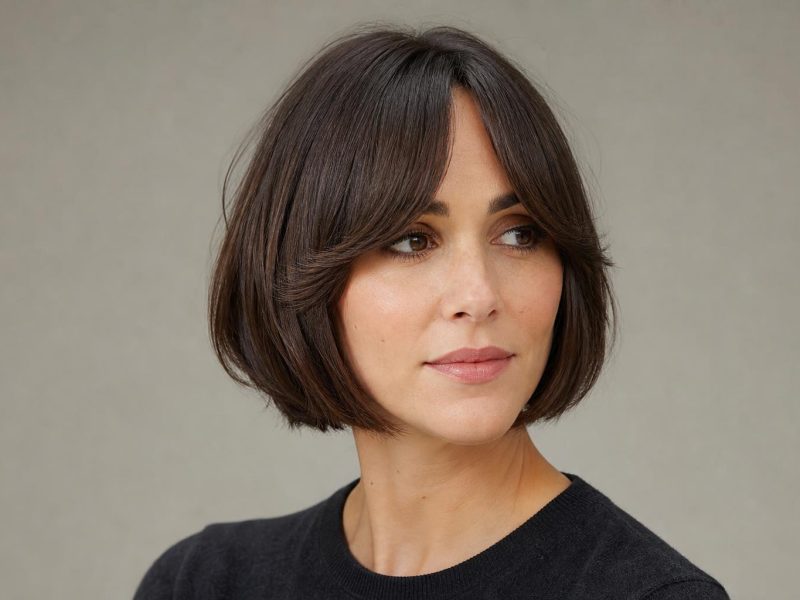
2. Layered French Bob
Oval and heart-shaped faces get the most from this cut because the jaw-skimming length narrows the lower face while the layered construction adds width at the cheekbones. The French bob works on thin hair precisely because the cut structure holds shape without needing density to support it.
3. Choppy Short Bob with Point-Cut Ends
On extremely fine hair with very little density, a choppy short bob outperforms a blunt version because point-cut ends scatter light rather than sitting in a flat, uniform plane. Keep the weight line just below the jaw to maintain enough perimeter heft without loading up the mid-shaft.
4. Feathered Ear-Length Cut
Blow-dry this cut using a small round brush, start at the root and roll the brush under as you move toward the tips to set the gentle curve in the feathered ends. The ear-length frame places the layers right at cheekbone level, drawing attention to the face rather than the hair itself.
5. Soft Short Shag with Curtain Fringe
The shag format, disconnected layers, face-framing pieces, and a soft fringe, grows out more forgivingly than a blunt bob on thin hair, so you can stretch a trim from 7 weeks to 9 without the cut looking shapeless. The curtain fringe starts separating after about 5-6 weeks, so keep a small pair of shears for at-home touch-ups.
6. Point-Cut Textured Bob
Tell your stylist you want a bob with point-cut ends and internal layers concentrated in the top two-thirds of the hair, not throughout, because over-layering thin hair creates wispy ends with nothing supporting them. This keeps a solid-looking perimeter while building movement internally where the hair needs it most.
7. Tousled Short Layers
Unlike a structured pixie or a clean-lined bob, a tousled short cut is styled for movement rather than a defined silhouette, density variations read as intentional texture rather than sparseness. Style with fingers and a small amount of texturizing clay rather than a brush, which flattens the layers.
8. Graduated Bob with Internal Layers
A graduated bob stacks the back shorter than the front, concentrating volume exactly where thin hair tends to fall flattest, at the nape and lower back of the head. The graduation creates an illusion of fullness from behind without requiring extra density to hold it.
Mid-Length Layers That Work Hard for Thin Hair
The collarbone-to-shoulder range is the most layering-friendly zone for thin hair because there’s enough length to place multiple layer lengths without the individual sections becoming too short to have movement. The lob format, at its most versatile for this kind of layering work, appears often in this section. For a deep look at this length across all hair types and textures, the lob haircut gallery covers all the variations.

9. Chin-Length Layered Bob
On fine hair with a straight texture, a chin-length bob with subtle internal layers is one of the most reliable choices because the weight line sits at the widest point of the face, visually balancing features. Keep the layers internal, meaning they never shorten the perimeter, so the ends still look full rather than wispy.
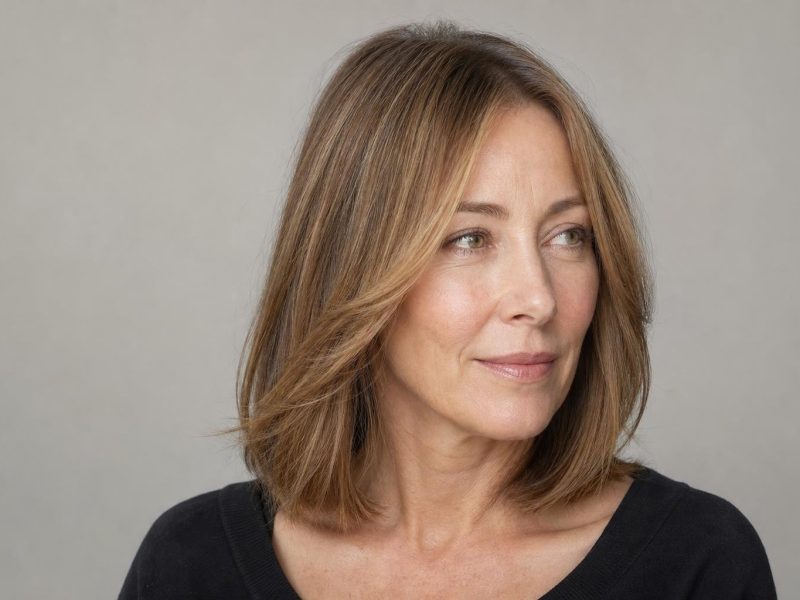
10. Feathered Lob for Thin Hair
Round faces benefit from a feathered lob because the layers and length together draw the eye downward past the jawline, creating elongation rather than adding width. Ask for layers starting at chin level and graduating through the ends, with the longest pieces at collarbone height.
11. Textured Mid-Length with Curtain Bangs
A texturizing spray applied to damp hair before blow-drying, not mousse, which can weigh fine strands down, adds the grit that helps mid-length layers hold their shape through the day. The curtain bangs in this version are low-effort to maintain; a light air-dry is enough most days.
12. Internal Layers on a Fine-Hair Lob
Internal layers, cut within the top half of each section, not sliding through the ends, preserve the illusion of density at the perimeter while removing the bulk that weighs thin hair down. This is the technique to ask for specifically if you’ve been told there’s “nothing much that can be done” with fine hair; a stylist who knows this approach can meaningfully change how it behaves.
13. C-Part Layered Collarbone Cut
A soft c-curve part, hair sweeping naturally to one side in a gentle wave, grows out symmetrically on thin hair, and the layers stay visible even at 10-11 weeks without looking overgrown. The collarbone length also gives you the option to tie it back when the layers start to feel heavy.
14. Shattered-End Mid-Length
Ask your stylist for “shattered ends”, shears pushed directly into the tips at different depths rather than cutting straight across. On thin hair, this prevents the perimeter from looking like a flat curtain of strands while keeping enough weight to avoid a transparent finish.
15. Bottleneck Bangs with Lob Layers
Bottleneck bangs, wide across the forehead, narrowing toward the nose bridge, work especially well for oblong or long face shapes because they shorten the face visually and add horizontal width at the top. Paired with collarbone-length layers on thin hair, the combination creates visual mass right where long faces need it.

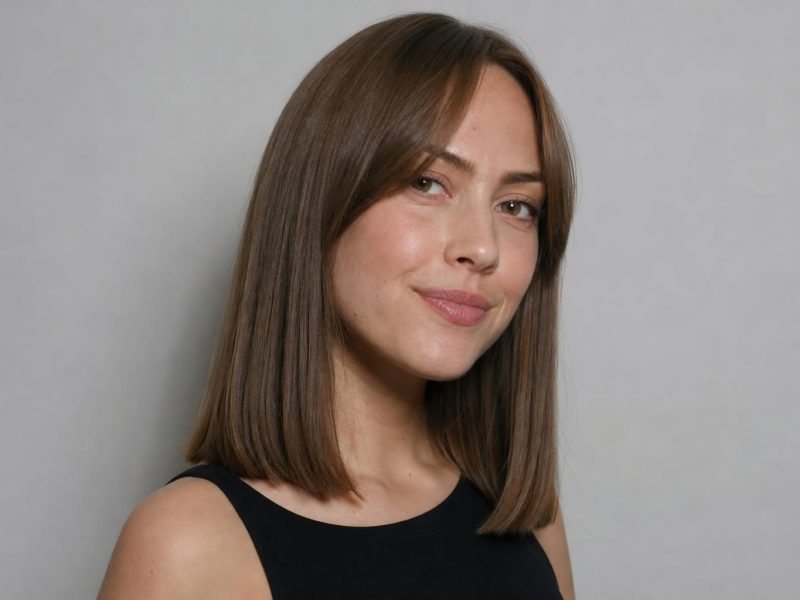
16. Textured Blunt Lob with Subtle Layers
On fine hair with a straight pattern, a textured blunt lob is the best of both worlds: the blunt perimeter gives the illusion of density from a distance, while internal layers add enough movement to prevent it from looking flat up close. Ask the stylist to leave the final inch of the perimeter untouched to preserve the blunt effect.
17. Curtain Bangs with Collarbone Layers
Curtain bangs on thin hair need a lightweight hold product, a rice water spray or a single drop of smoothing serum at the roots, to sit flat rather than separating into individual strands across the forehead. The collarbone-length layers create enough visual weight to balance the framing section.

18. Razored Mid-Length Layers
A razor-cut on medium-length thin hair creates feathered edges that move more fluidly than scissor-cut ends, which can look sharp and flat on fine strands. Over-razoring thin hair makes the ends transparent and weak, specify “light razor work on the ends only” rather than letting the stylist razor through the full section length.
Long Layered Cuts for Thin Hair
Long thin hair gets the most from layering when the layers are positioned to work with gravity rather than fight it, face-framing pieces at the cheekbones, internal layers through the mid-shaft, and soft feathering at the ends. These six cuts all use length as a styling asset while the layers prevent the flat, one-dimensional finish that makes long thin hair look fine in the least flattering sense. The layering ideas here also pair well with the cuts found in the broader layered haircuts gallery covering all lengths and textures.

19. Long Face-Framing Layers
The most flattering position for face-framing layers on long thin hair is starting at the cheekbone, with the shortest pieces framing the eye area rather than the jaw, this places visible movement exactly where the face needs definition. Ask your stylist to keep these pieces at least 2 inches shorter than the main length so they read as intentional framing, not grow-out.
20. Butterfly Cut on Fine Hair
The butterfly cut, layers cut above the mid-shaft that fan outward when dry, is more reactive on fine hair than thick because lighter strands respond more strongly to styling. Stylist tip: On very fine hair, ask for the butterfly layers to start 3-4 inches below the crown; too much layering at the very top collapses the volume it’s meant to create.
21. Long Layers with Wispy Curtain Bangs
Long layers on thin hair need a styling step to show up properly, air-drying long fine hair produces a limp finish regardless of how skilled the layering is. A 10-minute blow-dry with a paddle brush, followed by a loose pass with a 1.5-inch curling wand, makes the layers read as deliberate movement rather than just a different end texture.
22. Barely-There Layers on Straight Fine Hair
If length retention matters more than maximum volume, barely-there layers, just enough to remove weight from the mid-shaft without shortening the perimeter, let you grow long hair without the flatness that comes from keeping it one-length. These grow out invisibly and need refreshing only every 12-14 weeks.

23. Long Feathered Layers
Ask for “feathered layers starting at shoulder level, blending to the ends”, this is precise professional language that communicates exactly what you want without ambiguity. Feathering creates soft movement through the lower half rather than blunt step-changes between layer lengths, which is why it looks most natural on long thin hair.
24. Dimensional Color with Long Layers
Face-framing highlights or a money-piece color creates the visual depth that thin hair doesn’t have on its own, light and dark contrast makes layers look more substantial without changing the cut. A long layered style with dimensional color is among the highest-perceived-volume options in this collection because it’s using two tools simultaneously.
Volume-First Layer Techniques for Very Fine Hair
For hair that’s not just thin but very fine, low density and small diameter per strand, these six cuts use cutting techniques designed to maximize the visual effect of what’s there. They span short to medium lengths and prioritize structural movement over length retention.

25. Razor-Feathered Volume Cut
Razor feathering works from the mid-shaft to the ends, deliberately separating the tips to create individual strand movement rather than a flat curtain of hair. Done lightly, it creates significant lift and texture on thin hair; done aggressively, the ends become translucent and fragile, so communicate “light feathering” clearly.
26. Stacked Bob with Soft Front Layers
A stacked bob places volume at the back of the head, shorter at the nape, gradually longer toward the front, which is a significant advantage for thin hair that collapses at the crown from behind. Square and oblong faces benefit most, since the back volume creates visual roundness without adding width at the sides.
27. Voluminous Blowout with Layered Mid-Length
This cut is designed specifically for the blow-dry routine: apply a golf-ball amount of volumizing mousse to damp roots, tip the head forward, and blow-dry with a medium round brush, rolling under at the ends. Without the blowout technique, this looks like a regular mid-length on thin hair, the styling does at least as much work as the cut.
28. Air-Dry Friendly Layered Cut
Layers cut to follow your natural part direction, rather than against it, fall into shape without heat, making this the right choice when a low-effort routine matters. Tell your stylist your default part before the cut starts: the whole cut should be engineered around how your hair already wants to fall.
29. Beach Wave Layers for Fine Wavy Hair
Fine hair with a natural wave gets the most from medium-length beach wave layering, where the cuts fall between the waves rather than interrupting them. Apply a curl-enhancing cream to soaking wet hair and air dry without touching, fine wavy hair loses its pattern faster than thick wavy hair when handled while drying.
30. Flippy-End Layered Cut
Unlike layered cuts designed to sit flat and smooth, this variation angles the ends slightly outward, a subtle flip that creates the illusion of width and density at the tips. On thin straight hair that would otherwise hang in a limp curtain, the outward movement at the perimeter adds visual mass exactly where the hair is sparsest.
What to Tell Your Stylist
Showing up with a photo is a good start, but thin hair benefits from more specific language. These phrases push the consultation toward the right decisions without requiring you to know every technical term.
Stylist tip: Before the cut begins, tell your stylist your natural part direction and whether you heat-style regularly or prefer air-drying. The whole cut should be engineered around your actual routine, layers built for a blowout look completely different from layers designed to work without heat.
Use these phrases directly in the chair:
“My hair is fine and thin, I want layers for volume, concentrated in the top two-thirds, not throughout. Keep the perimeter weight so the ends don’t look wispy.”
“Cut the layers to fall with my natural part, not against it.”
“Please use point cutting or shattered ends at the perimeter rather than cutting straight across, I want movement at the tips without losing the weight line.”
If you’re referencing a specific entry from this gallery, mention the technical detail that drew you to it: the graduation angle, where the shortest layer sits, whether there’s a fringe section. That context helps your stylist interpret the photo correctly for your specific density and texture.

FAQ
The most common questions about layers on thin hair, answered directly.
Do Layers Make Thin Hair Look Thinner?
Not when they’re done correctly. The problem is over-layering, removing too much weight throughout the hair until the ends become sparse and translucent. The solution is internal layers (cut within each section rather than through the ends) combined with a solid perimeter weight line. When that balance is right, layers add movement that reads as fullness rather than exposing the lack of density.
What Is the Best Layering Technique for Fine Hair?
Point cutting and internal layering are the two most effective techniques for fine hair. Point cutting uses the tip of the shears to separate strands rather than making a clean horizontal cut, creating texture without removing weight. Internal layering cuts only within the top portion of each section, preserving density at the ends. Ask for one or both specifically, standard scissor-over-comb layering can leave harsh, flat lines on fine hair.

How Often Should I Trim Layered Thin Hair?
Short layered cuts like pixies and graduated bobs need a trim every 5-6 weeks, thin hair shows grow-out faster than thick hair at the same length. Mid-length and longer layered cuts can go 8-10 weeks, especially with soft layers and a non-blunt perimeter. Split ends travel faster on fine hair, so once you spot them, don’t wait for the scheduled appointment.
Should I Get Face-Framing Layers or Internal Layers?
Both, they do different jobs. Face-framing pieces (starting at the cheekbone or jaw) create visual structure and frame your features. Internal layers remove bulk from within the section and improve movement. A well-built cut for thin hair usually includes both: internal layers for body, face-framing pieces for shape. Ask your stylist to do both rather than treating them as an either/or decision.
What Products Work Best for Volume on Layered Thin Hair?
A volumizing mousse applied to damp roots, golf-ball sized amount, before blow-drying is the highest-yield product for fine layered hair. For air-dry routines, a lightweight texturizing spray or sea salt spray adds grit that helps layers hold definition without weighing strands down. Avoid heavy creams and oils at the root regardless of how good the cut is, they flatten fine hair consistently.
Can I Get Layers on Very Short Thin Hair?
Yes, pixie cuts, textured crops, and short bobs all use internal layering and point cutting to create movement on thin hair at short lengths. The balance between enough texture for movement and enough weight for the shape to hold is narrower at under 3 inches, so work with a stylist who regularly cuts fine hair short. The technique difference between a stylist who does and one who doesn’t is significant at this length.
Whether you’re choosing between a short crop and a long lob, the right layered haircuts for thin hair share the same principle: layer placement and cutting technique that works with your hair’s natural density rather than overriding it. Pick two or three reference photos from this gallery, note what draws you to each (the length, the texture, the face-framing sections), and bring that specific language to the salon. A detailed brief and a clear photo together give your stylist everything they need to make the cut work for your hair.
Hair results vary based on your natural hair type, texture, density, and condition. Always consult with a licensed hairstylist before making significant changes, especially with chemical treatments or dramatic length changes. Photos may show styled results that require professional tools and products to replicate.