
Everything you need to know about the French bob, from choosing the right variation for your face shape to styling it at home in under ten minutes.
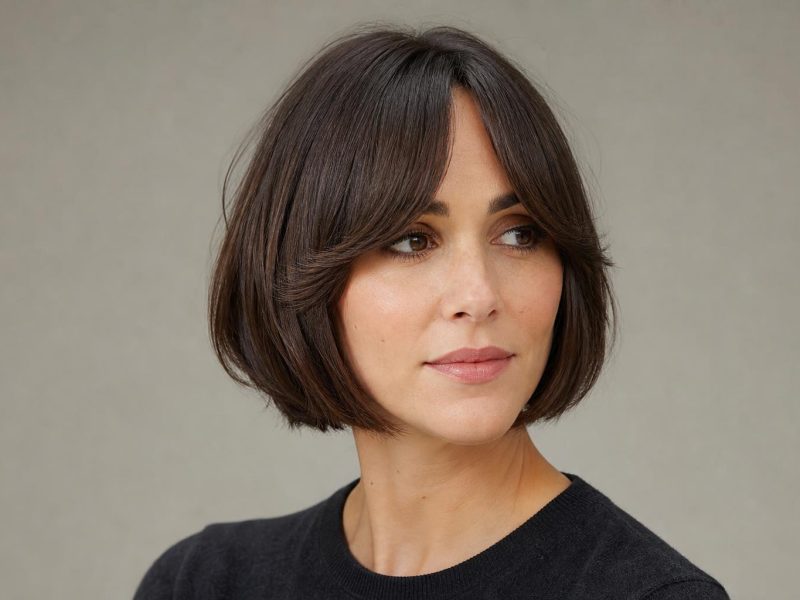
A French bob haircut falls between the earlobes and the chin, cut bluntly with minimal layering and often paired with a soft fringe. It’s shorter and more structured than a standard bob, and that precision is exactly what gives it the effortless Parisian look people associate with the style. The cut works across straight, wavy, and curly textures, but the specific length, layering, and bang style need to match your hair type and face shape to actually deliver the low-maintenance result most people expect.
This guide covers what makes a French bob different from other bob styles, how to match the cut to your face shape, exact language to use at the salon, step-by-step styling for different textures, and a realistic maintenance schedule so you know what you’re signing up for before you sit in the chair.
What Is a French Bob Haircut?
The French bob is a short, blunt-cut bob that typically falls between the earlobes and the jawline. It’s shorter than a classic bob, which usually hits at chin level or below. The defining features are a clean, blunt perimeter line (no heavy layering or stacking at the back), soft texture through the interior of the cut, and a fringe that ranges from full and brow-grazing to wispy and piecey. The overall effect is relaxed rather than rigid — think slightly tousled, never helmet-like.
The style traces back to 1920s Paris, where women cut their hair short as a statement of independence. The modern version keeps that same spirit but with softer edges and more adaptability. Today’s French bob often includes subtle internal layering (invisible layers that reduce bulk without changing the blunt outline) and point-cut ends that give the perimeter a slightly lived-in finish rather than a razor-sharp line.
Stylist tip: The “effortless” look of a French bob is engineered, not accidental. Internal layers and point cutting create movement that air-dries naturally. Without them, blunt bobs on medium-to-thick hair sit flat and heavy instead of bouncing at the jaw.

French Bob vs Regular Bob: What’s the Difference?
People confuse the French bob with a standard bob constantly, and the distinction matters when you’re communicating with your stylist. The differences come down to length, finish, and attitude. Here’s how they compare side by side.
| Feature | French Bob | Classic Bob |
|---|---|---|
| Length | Earlobe to jaw (above chin) | Chin to shoulder |
| Perimeter | Blunt with soft, point-cut ends | Blunt, angled, or graduated |
| Layering | Minimal, internal layers only | Varies (can be heavily layered) |
| Bangs | Almost always (full, curtain, or wispy) | Optional |
| Styling Vibe | Tousled, undone, air-dried texture | Can be sleek, polished, or textured |
| Trim Frequency | Every 5–6 weeks | Every 6–8 weeks |
| Best For | Fine to medium hair, oval and heart faces | All hair types and face shapes (more versatile) |
The practical takeaway: a French bob is a specific subset of the bob family: shorter, blunter, almost always with bangs, and designed to look slightly undone. If you want a polished, tucked-under bob or something that grazes your collarbone, you’re looking at a classic bob or lob, not a French bob.

How to Know If a French Bob Suits Your Face Shape
A French bob haircut looks different on every face shape, and the right adjustments in length, parting, and fringe style can make or break the result. The good news is that the French bob is more adaptable than it appears, but you need to know which version to ask for.

Oval Faces Have the Most Flexibility
Oval faces work with nearly every French bob variation because the balanced proportions don’t need correcting. A jaw-length cut with a full, brow-skimming fringe creates the most classic Parisian silhouette. You can also go shorter without worrying about the cut widening your face. Center parts and side parts both work here, so pick based on personal preference rather than strategic face-framing.
Heart-Shaped Faces Benefit from a Jaw-Length Cut
Heart-shaped faces (wider forehead, narrower chin) pair naturally with a French bob because the fullness at jaw level visually balances the narrow lower face. Keep the length right at the jawline. Going shorter shifts the volume upward and emphasizes the wider forehead. A soft curtain fringe or wispy bangs work better than a blunt, heavy fringe, since they break up the forehead width without creating a stark horizontal line.
Round Faces Need Length and Angles
Round faces present the trickiest fit for a French bob. A very short, chin-length cut with a center part can actually emphasize roundness by framing the widest point of the face. The fix: go slightly longer (just below the jaw) with a deep side part. The asymmetry creates vertical lines that visually elongate. Skip a full, blunt fringe and opt for a side-swept or curtain bang that opens up the forehead and adds diagonal lines.
Stylist tip: If you have a round face and your heart is set on a French bob, ask your stylist to leave the front pieces about half an inch longer than the back. This subtle A-line angle breaks up the roundness without losing the French bob silhouette.
Square and Oblong Faces Respond to Softening Details
Square faces benefit from a French bob with soft, wispy ends and textured layers around the jaw. A blunt perimeter line landing exactly at the jaw’s widest point on a square face creates a boxy effect, so point cutting the ends is non-negotiable here. For oblong faces, the key is avoiding extra height at the crown. A French bob with a fuller fringe shortens the face visually and works well, but skip any root-lifting techniques or stacked volume at the top.
How to Ask Your Stylist for a French Bob
Walking into the salon with a reference photo is a good start, but photos alone can mislead, because what looks jaw-length on someone with a long neck might sit at earlobe level on you. Combining a photo with specific language gets you much closer to the result you want.
Here’s a ready-to-use script you can adapt: “I’d like a chin-to-jaw length French bob with a blunt perimeter and point-cut ends so it doesn’t look too sharp. I want minimal layers, just enough internal texture to keep it from sitting flat. For the fringe, I’d like [full and brow-grazing / soft curtain bangs / wispy and piecey]. I want the styling to be undone and air-dried, not sleek and polished.”
Beyond the script, mention these details to your stylist. They make a bigger difference than most people realize:
- Your daily styling time: If you have less than five minutes in the morning, tell them. They’ll adjust the internal layering so the cut falls naturally without heat tools.
- Your hair’s natural texture: If your hair is wavy or curly, ask for a dry cut. Cutting curly or wavy hair while wet doesn’t account for shrinkage, and you’ll end up shorter than planned.
- Your grow-out tolerance: A French bob at earlobe length has a more awkward grow-out phase than one at jaw length. If you don’t want to commit to trims every 5 weeks, start longer.
- Your part direction: Where you naturally part your hair affects how the cut falls. Show your stylist your usual parting so they can build the cut around it.
Stylist tip: Bring two or three reference photos showing the same style on different hair textures, not just one “perfect” shot. This helps your stylist see the cut rather than one specific styling result, and it opens up a more productive conversation about what’s realistic for your hair.

How to Style a French Bob at Home
The French bob’s reputation as a low-maintenance cut is earned, but “low maintenance” doesn’t mean “no maintenance.” Different textures need different approaches, and the right technique is what separates a cut that looks intentional from one that looks like a grow-out phase.
Straight Hair: The Air-Dried Texture Method
Straight hair in a French bob tends to fall flat without some coaxing. After washing, towel-dry until your hair is about 80% dry, then work a golf-ball-sized amount of volumizing mousse through the mid-lengths and ends. Flip your head upside down and use a diffuser attachment on medium heat for 2–3 minutes. This builds root lift without creating defined curls. Once fully dry, shake it out and tuck one side behind the ear. The slight wave from diffusing gives straight hair that lived-in texture the French bob is known for.
For a sleeker finish, use a 1-inch round brush and blow-dry section by section, curling the ends slightly inward at the jaw. Keep tension light — over-styling kills the relaxed feel. Finish with a dime-sized amount of texturizing paste rubbed between your palms and scrunched through the ends.
Wavy Hair: Let the Texture Do the Work
Wavy hair is the easiest texture to style in a French bob because the natural movement does most of the heavy lifting. Apply a lightweight leave-in conditioner to damp hair, scrunch gently, and air-dry completely. Once dry, break up any crunchy sections by scrunching with dry hands. If certain sections fall flat while others wave nicely, use a 1-inch flat iron to create one or two loose bends in the straighter pieces — just the mid-shaft, not the ends.

Curly Hair: Define Without Shrinkage Surprises
Curly hair in a French bob needs a different approach entirely. Apply a curl-defining cream or gel to soaking-wet hair, distribute evenly with the praying-hands method, and then scrunch upward. Diffuse on low heat with the cup facing up, hovering without touching the hair, until about 90% dry. Let the last 10% air-dry to avoid frizz. The key mistake curly-haired people make with a French bob is touching their hair too early. Don’t break the gel cast until it’s fully dry, then scrunch out the crunch for soft, defined curls.
If your curls run tighter than 3B, expect the French bob to sit 1–2 inches shorter than it does when wet. This is exactly why a dry cut matters. Your stylist needs to see the finished curl formation, not a stretched-out wet version that will bounce up dramatically once it dries.

French Bob Maintenance and Upkeep
The maintenance reality of a French bob is moderate. It’s less demanding than a pixie cut, but more frequent than a lob or long layers. Here’s what to plan for so there are no surprises.
| Maintenance Area | Details |
|---|---|
| Trim frequency | Every 5–6 weeks (or 6–8 if you’re comfortable with a softer, grown-out shape) |
| Daily styling time | 5–10 minutes for straight/wavy hair; 10–15 minutes for curly textures |
| Essential products | Texturizing spray or mousse, heat protectant (if blow-drying), lightweight styling cream or paste |
| Essential tools | Diffuser attachment, 1-inch round brush, flat iron (optional for touch-ups) |
| Grow-out behavior | Grows into a standard chin-length bob within 8–10 weeks; relatively graceful grow-out compared to a pixie |
| Annual cost estimate | $400–$1,000+ depending on trim price in your area ($50–$120 per visit × 8–10 visits per year) |
The bangs are the highest-maintenance element. Forehead fringe grows out faster than the rest of the cut and starts falling into your eyes within 3–4 weeks. Some people trim their bangs at home between appointments. If you go this route, invest in sharp, professional shears (not kitchen scissors) and cut dry hair only, in small snips, holding the scissors vertically for a softer, piecey edge.
One honest limitation worth knowing: the French bob doesn’t grow out as invisibly as a lob or long layers. Once it passes the chin, it enters an in-between stage that can look shapeless for a few weeks before it settles into a standard bob. If you’re someone who likes to skip salon visits for months at a time, this cut will test your patience during the transition.

FAQ
Can I Get a French Bob If I Have Very Fine Hair?
Fine hair actually works well with a French bob because the blunt perimeter creates the illusion of density. Skip heavy internal layering, which removes weight that fine hair can’t afford to lose. Ask for point-cut ends and a slight undercut at the nape if you want more volume at the back. A texturizing spray applied to damp hair before air-drying adds grip and body without weighing fine strands down.
Does a French Bob Work on Curly Hair?
It does, but the cut needs to be adapted for curl shrinkage and triangle-prevention. For curl patterns between 2A and 3B, a blunt perimeter with long, choppy interior layers keeps the shape from puffing out at the sides. For tighter curls (3C–4A), a dry cut is essential so the stylist can see the actual finished length. Use a curl-defining cream and diffuse on low heat rather than air-drying, which can produce uneven results at this length.
How Often Do I Need to Trim a French Bob?
Plan for a trim every 5–6 weeks to keep the blunt line sharp and the overall shape intentional. If you prefer a softer, slightly grown-out look, you can stretch to 7–8 weeks, but beyond that, the cut loses its structure and starts looking like a generic short haircut rather than a deliberate style. The bangs are the first thing to lose shape. Most people need a bang trim every 3–4 weeks, which many salons offer for a reduced fee or complimentary between full appointments.
What’s the Difference Between a French Bob and an Italian Bob?
The French bob is shorter (jaw-length or above), blunter, and styled with minimal effort for a tousled finish. The Italian bob is longer (usually chin-to-shoulder length) with more visible layering, more volume, and a blow-dried, bouncy finish. Think of the French bob as minimalist and undone versus the Italian bob as polished and voluminous. Your choice depends on whether you prefer an effortless vibe or a more styled, salon-fresh look.

Will a French Bob Make My Face Look Rounder?
It can if the length and parting aren’t adjusted for your face shape. A very short French bob with a center part and full blunt bangs on a round face creates a framing effect that mirrors the roundness rather than counteracting it. The fix is going slightly longer (below the jaw rather than at the ear), choosing a side or deep side part, and opting for curtain bangs instead of a blunt fringe. These adjustments add vertical and diagonal lines that counterbalance width.
Can I Style a French Bob Without Heat Tools?
This is one of the cut’s biggest advantages. It’s designed to be styled without heat. Apply a texturizing spray or mousse to damp hair, scrunch, and air-dry. The blunt ends and minimal layering naturally fall into a clean shape without blow-drying or flat-ironing. On days when you want more polish, a round brush and low-heat blow-dry is all you need. Completely heat-free styling works best on wavy or curly textures, while very straight hair may need occasional diffusing to avoid a flat, limp result.
Is a French Bob Hard to Grow Out?
Easier than a pixie, harder than a lob. The French bob grows into a standard chin-length bob within about two months, which is a natural-looking transition. The awkward stage hits around weeks 8–12, when the back starts to flip out, and the bangs reach an in-between length. Scheduling a shaping trim during this phase, where the stylist blends the growing lengths without taking significant length off, makes the transition much smoother. Clips, small barrettes, or tucking the front pieces behind your ears help manage the bang grow-out.
Whether you’re going for a classic jaw-length French bob haircut with a full fringe or a slightly longer, softer variation without bangs, bring reference photos that show the cut on a hair texture similar to yours. Talk to your stylist about your daily routine, your grow-out tolerance, and how much time you’re willing to spend each morning. That conversation is what turns a trendy haircut into one that actually works for your life.
Hair results vary based on your natural hair type, texture, density, and condition. Always consult with a licensed hairstylist before making significant changes, especially with chemical treatments or dramatic length changes. Photos may show styled results that require professional tools and products to replicate.