


Bangs get greasy first because they lie flat against the oiliest part of your face, so the fix is a two-front routine: soak up oil at the roots with dry shampoo and cut off the supply by keeping your forehead matte.
Your forehead has some of the most active oil glands on your body, and your bangs press right into them for hours at a time. That is why the fringe looks stringy by lunch while the rest of your hair still looks clean. The good news is you rarely need to wash your whole head to fix it. A targeted routine, plus a couple of habit changes, keeps bangs fresh for a full day.
This guide covers the same-day rescues that revive limp bangs in two minutes, the prevention habits that stop grease before it starts, a step-by-step method to spot-wash just your fringe, and the everyday mistakes that make oily bangs worse. Start with the dry-shampoo technique below, because most people apply it wrong and wonder why it barely works.
| Do This | Not This |
|---|---|
| Apply dry shampoo at night, on dry roots | Waiting until bangs already look oily |
| Use oil-free or mattifying forehead skincare | Heavy creams and sunscreens on the forehead |
| Spot-wash just the fringe at the sink | Conditioning the bangs after washing |
| Keep hands and phone off your bangs | Pushing them around all day |
| Pick a shampoo for oily or fine hair | Smoothing or “glossy” moisturizing formulas |
Why Bangs Get Greasy Faster Than the Rest of Your Hair
The skin on your forehead is dense with sebaceous glands, the tiny glands that produce sebum, your skin’s natural oil. Bangs rest directly on that skin all day, so they pick up forehead oil on top of the oil their own roots produce. The rest of your hair only deals with scalp oil, which is why your ponytail can look clean while your fringe looks damp.
Fine and thin hair shows this fastest, because there is less hair surface to spread a fixed amount of oil across, so each strand coats sooner. Heat and sweat speed it up too. If you run warm, wear a hat, or exercise, your forehead produces more oil and your bangs absorb it. Understanding the source matters, because the most effective fixes work on the forehead, not just the hair.
Stylist tip: Blot your forehead with a mattifying primer or a translucent setting powder in the morning, the same way you would to keep makeup from sliding. Less oil on the skin means less oil transferring up into the roots of your fringe through the day.
Same-Day Fixes That Revive Oily Bangs in Two Minutes
When your bangs are already limp and you cannot wash them, these three methods bring them back without a shower. Reach for dry shampoo first, and keep a travel size in your bag for afternoon touch-ups.
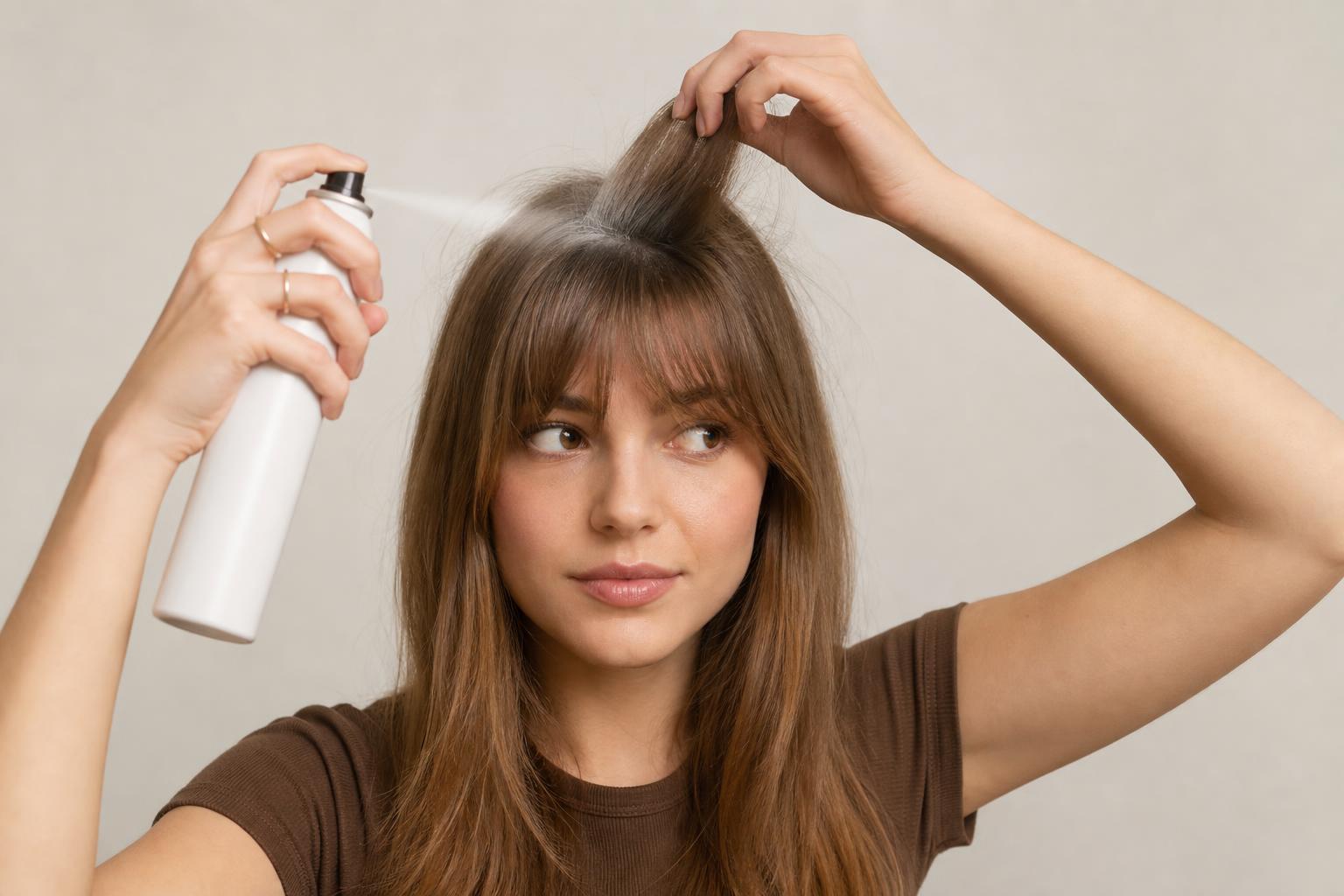
Dry Shampoo Works Best Applied Before the Grease Shows
Hold the can at least eight inches away, lift the bangs, and spray a light mist onto the roots, not the lengths. Wait a full minute for the starches to absorb the oil, then brush it through and tousle at the root. The most common mistake is spraying too close and too much, which leaves a chalky white cast that looks worse than the grease. Applying it the night before, on clean-ish dry hair, lets it absorb oil as it forms overnight.
Translucent Powder Is the Emergency Backup
If you are out of dry shampoo, a loose translucent setting powder does the same job. Dip a clean makeup brush, tap off the excess, and sweep it along the roots of your bangs. It absorbs oil on contact and vanishes into the hair. This trick is handy for very fine bangs, where even a light dry shampoo can look powdery.
A Boar-Bristle Brush Redistributes Oil Instead of Adding Product
A few passes with a small boar-bristle brush pulls oil away from the roots and down the lengths, which instantly makes the fringe look less concentrated at the top. It will not make dirty hair clean, but it buys time between washes and evens out the shine. Follow with a quick blast of cool air from a dryer to lift the roots.
Prevent Greasy Bangs Before They Start
Same-day fixes treat the symptom. These habits reduce how much oil reaches your bangs in the first place, so you reach for dry shampoo far less often.
Oil-Free Forehead Skincare Cuts Off the Supply
Swap heavy forehead creams, oily sunscreens, and rich moisturizers for oil-free or gel-based versions, and let anything you apply fully absorb before your bangs fall back down. If your skin is genuinely oily, a mattifying moisturizer keeps the forehead drier for longer. This single change does more for greasy bangs than any hair product, because it addresses the actual source.
Your Shampoo Formula Decides How Fast Grease Returns
Shampoos labeled smoothing, glossy, hydrating, or for damaged hair leave a conditioning film that weighs fine bangs down and attracts oil faster. Choose a clarifying shampoo or one made for oily or fine hair, and never run conditioner through the fringe itself. Keep conditioner to the mid-lengths and ends, where your hair actually needs the moisture.
Hands Off Is the Habit That Matters Most
Your fingertips carry their own oil, and touching, twirling, or pushing your bangs aside all day transfers it straight to the strands. Every adjustment adds a little more. A satin or silk pillowcase helps overnight too, since cotton absorbs your skin’s oils and then presses them back into your fringe while you sleep.
How to Spot-Wash Just Your Bangs
Washing your whole head every day to fix one greasy section strips the rest of your hair and can trigger even more oil production. Spot-washing only the fringe keeps it fresh while leaving your length and its natural oils alone. The whole process takes about five minutes at the bathroom sink.
Step 1: Clip the Rest of Your Hair Back
Twist and clip everything except the bangs up and out of the way so only the fringe hangs loose. Lean over the sink and wet just the bangs with lukewarm water, keeping the rest of your hair dry.
Step 2: Use a Dime of Clarifying Shampoo, No Conditioner
Work a small amount of shampoo through the bangs only, focusing on the roots where oil collects. Rinse thoroughly, and skip conditioner entirely on this section. Conditioning oily bangs undoes the wash by leaving behind a film.
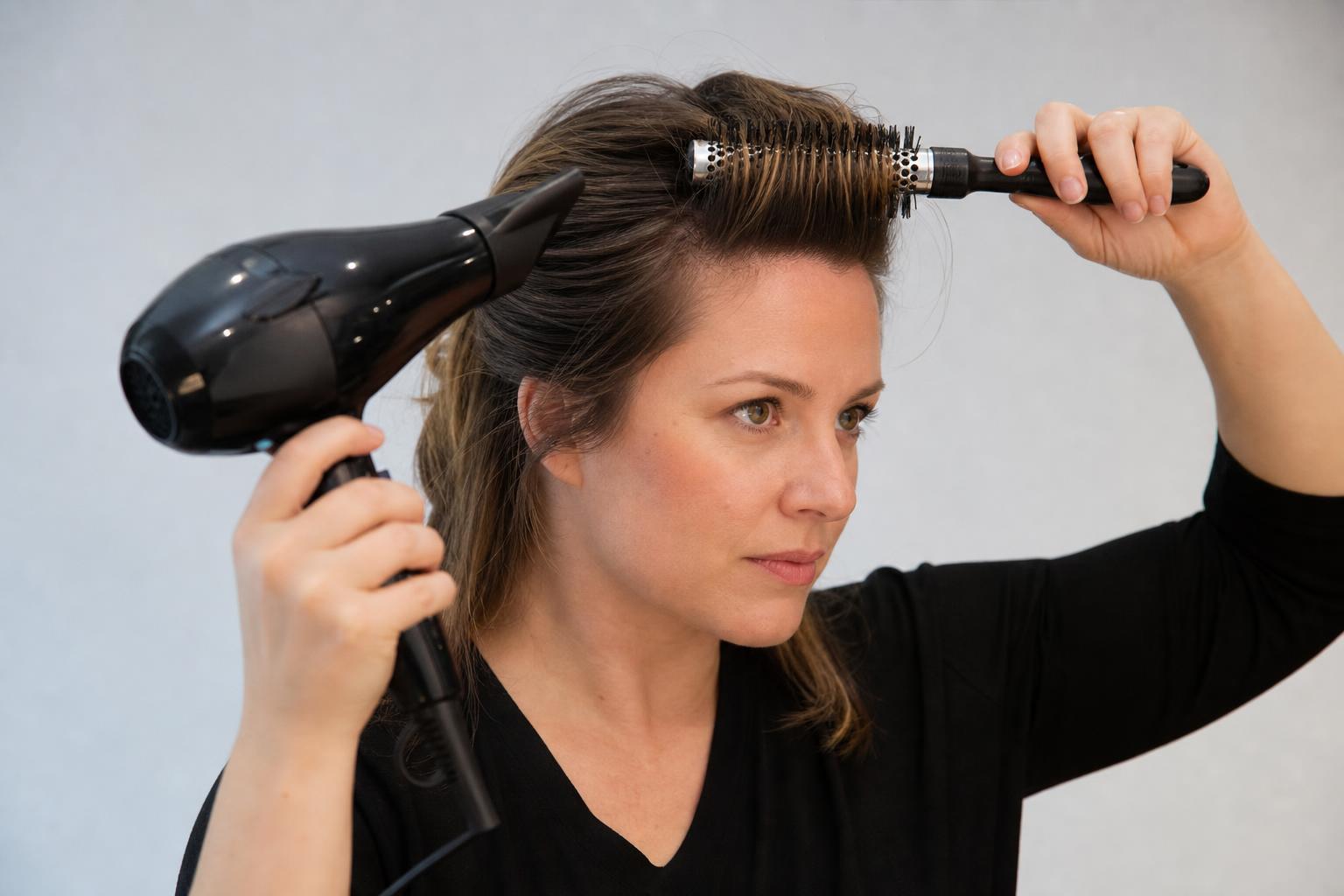
Step 3: Blow-Dry With a Round Brush for Lift
Rough-dry the bangs, then finish with a small round brush, directing the roots up and away from your forehead before shaping the sweep. Lifting the roots keeps the bangs off your skin a little longer, which delays the next grease cycle. A blast of cool air at the end sets the shape.
What Makes Greasy Bangs Worse
A few well-meaning habits actively speed up the oil. If your bangs still go limp by noon despite a good routine, one of these is usually the culprit.
Myth: Washing Your Bangs More Often Trains Them to Be Less Oily
Reality: over-washing can backfire. Stripping the hair and skin too aggressively can signal your glands to produce more oil to compensate. Spot-washing the fringe once a day is plenty; scrubbing it several times a day often makes the problem worse, not better.
Myth: More Dry Shampoo Means Cleaner Bangs
Reality: piling on dry shampoo builds up starch and product residue at the roots, which eventually looks dull and feels gritty. Use a light hand, brush it through, and do a proper spot-wash every day or two to clear the buildup. Dry shampoo extends the time between washes; it does not replace washing.
Myth: Greasy Bangs Just Mean Your Hair Type Is Oily
Reality: forehead skincare and daily habits usually matter more than your hair type. Even people with normal hair get greasy bangs from a rich forehead moisturizer or constant touching. Before blaming your hair, audit what touches your forehead all day.
Adjust the Routine to Your Hair Type
Grease shows up differently depending on your texture, so the emphasis shifts. Match your approach to your hair below rather than following a one-size plan.
Fine and Straight Hair Needs the Lightest Touch
Fine straight bangs go flat and oily fastest, so lean on translucent powder over heavy dry shampoo, and keep any product well away from the roots. A root-lifting spray on freshly washed bangs adds body that resists collapsing into the forehead.
Thick or Wavy Hair Hides Oil Longer but Holds Product
Thicker bangs disguise grease for longer, but they also trap dry-shampoo buildup, so a regular clarifying spot-wash matters more. Wavy fringes benefit from a little texture, which lifts the hair off the skin and slows oil transfer. Curly bangs, common in a longer curtain-style fringe, usually stay freshest because the curl keeps the hair away from the forehead.
FAQ
Why Do My Bangs Get Greasy So Fast?
Your bangs rest against your forehead, one of the oiliest areas of your face, so they collect forehead sebum on top of their own root oil. Fine hair and an oily complexion make it show even faster. Cutting oil at the skin with mattifying forehead skincare slows it down more than any hair product.
How Do I Fix Greasy Bangs Without Washing My Hair?
Spray dry shampoo on the roots from eight inches away, wait a minute, then brush it through and tousle at the root. If you have no dry shampoo, sweep translucent setting powder along the roots with a makeup brush. A few passes of a boar-bristle brush also pulls oil down the lengths to even out the shine.
Can I Wash Just My Bangs Every Day?
Yes, spot-washing only your fringe is a smart daily habit that keeps it fresh without stripping the rest of your hair. Clip everything else back, wet and shampoo just the bangs with a small amount of clarifying shampoo, skip conditioner, and blow-dry with a round brush. It takes about five minutes and protects your length’s natural oils.
Should I Condition My Bangs?
No, skip conditioner on the bangs if grease is your problem. Conditioner leaves a moisturizing film that weighs the fringe down and attracts oil faster, especially on fine hair. Keep conditioner on the mid-lengths and ends, where the hair is older and drier.
Does Dry Shampoo Damage Bangs?
Dry shampoo is safe used in moderation, but overusing it builds up starch and residue that dulls the hair and can irritate the scalp over time. Apply a light mist, always brush it through, and do a proper spot-wash every day or two to clear the buildup. Think of it as a bridge between washes, not a substitute.
Will Getting Bangs Cut Differently Help With Grease?
A longer or side-swept fringe touches less of your forehead than a short blunt one, like a dense Italian fringe, so it tends to stay fresh a bit longer. If oily bangs frustrate you, ask your stylist about a wispier or longer style that lifts away from the skin. Our overview of the main bang styles shows which shapes sit closest to the forehead, and a stylist can help you pick one that suits your curtain-bang request if you want more distance from your skin.
Keeping bangs from getting greasy comes down to attacking the problem from both sides: absorb the oil that is already there with dry shampoo or powder, and reduce the oil reaching your fringe by keeping your forehead matte and your hands off. Add a quick daily spot-wash and the right shampoo formula, and your fringe stays fresh from morning to night. Once you treat greasy bangs as a skin-and-habit issue as much as a hair issue, the stringy midday fringe stops being your default.
Hair results vary based on your natural hair type, texture, density, and condition. Always consult with a licensed hairstylist before making significant changes, especially with chemical treatments or dramatic length changes. Photos may show styled results that require professional tools and products to replicate.