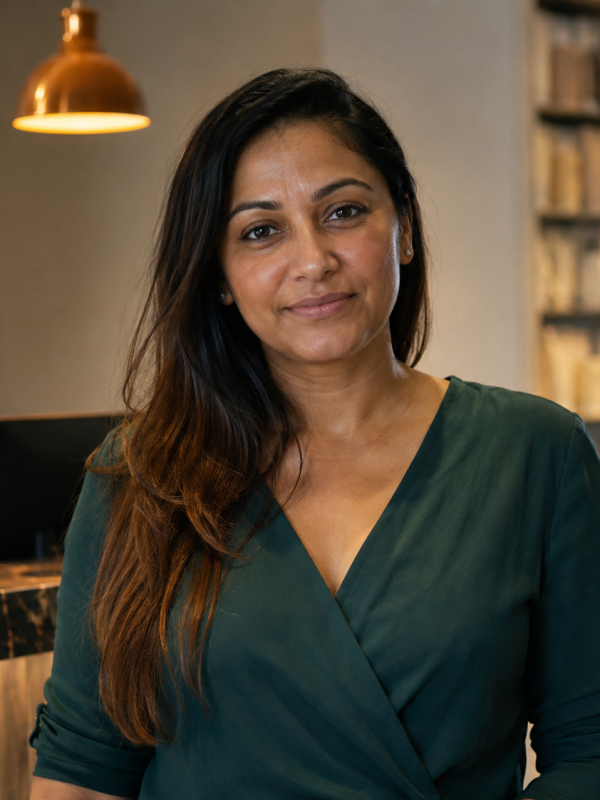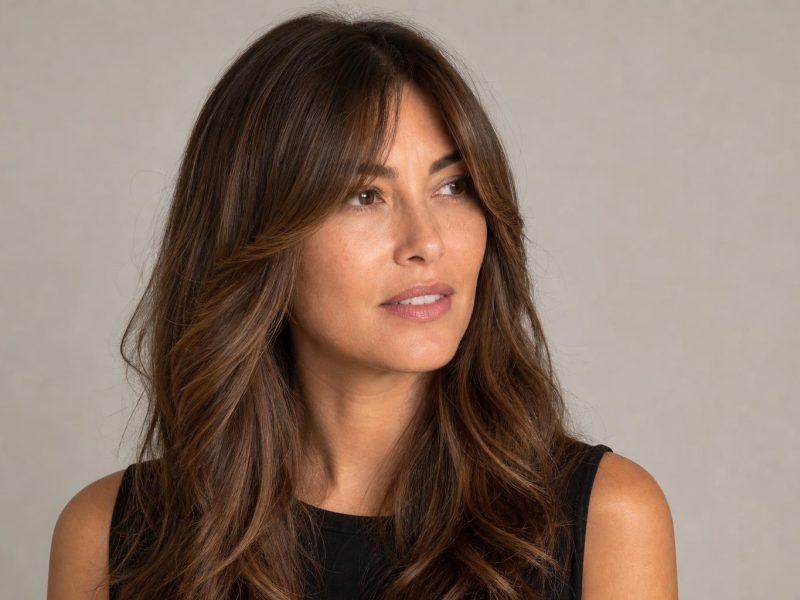

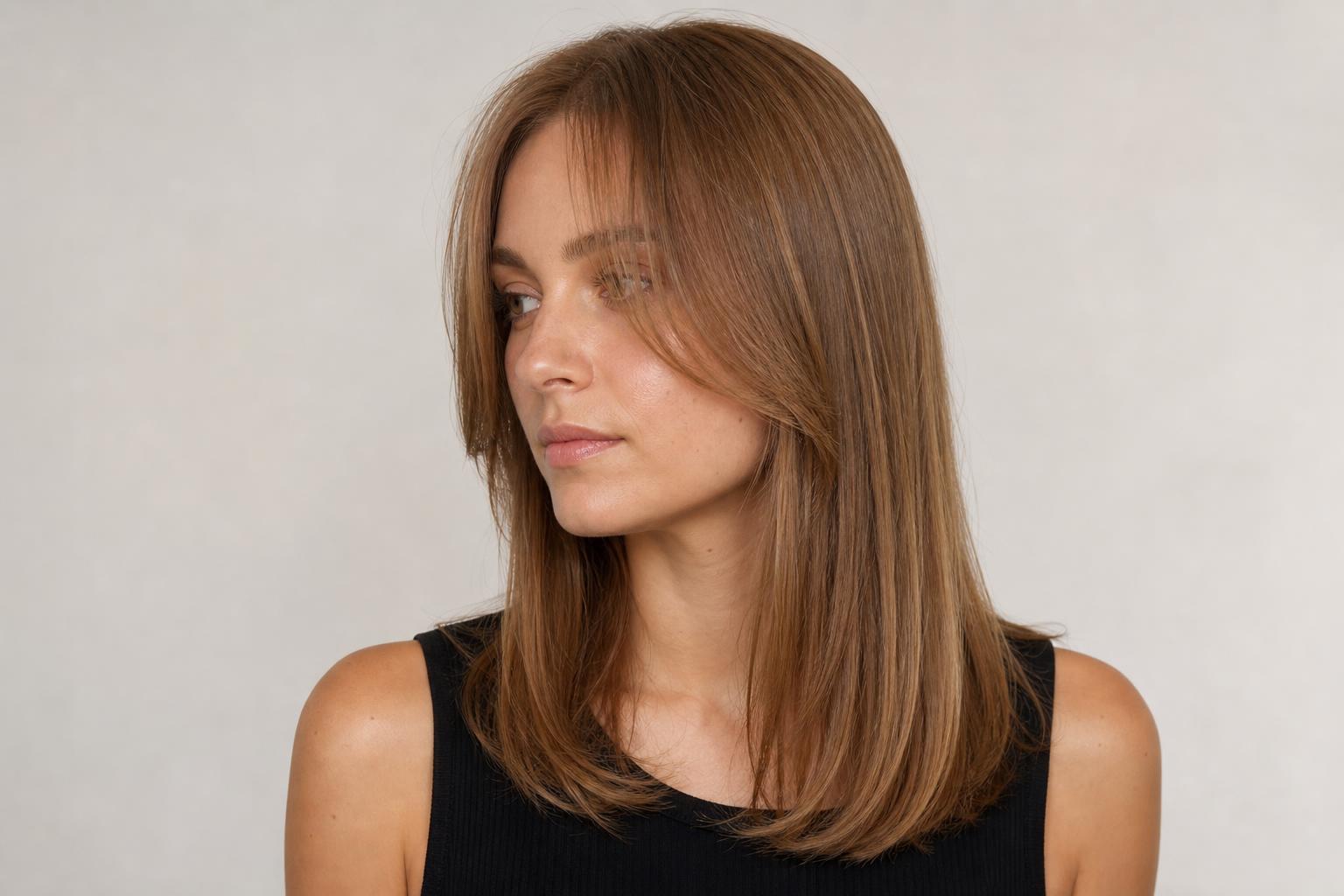
Wispy and full curtain bangs are the same haircut at two different densities, and density is the decision that determines everything else.
The difference between wispy and full curtain bangs is how much hair the stylist pulls into the fringe section: wispy versions use a shallow triangle of hair that lets the forehead show through, while full versions take a deeper section that forms a solid, swooping panel on each side of the part. Wispy suits fine hair, low-effort routines, and first-timers; full suits medium-to-thick hair and anyone who wants the fringe to register as a feature rather than a suggestion.
This guide covers what separates the two cuts at the section line, which hair types carry each one, how the styling and trim workloads compare, and the exact wording to bring to the salon so you get the density you actually want.
The Difference Is Cut into the Section, Not the Styling
Every curtain bang starts with the stylist sectioning a triangle of hair at the front hairline. For a wispy version the triangle is shallow, roughly half an inch to an inch deep, so the fringe stays sheer and the hem feathers into individual strands. For a full version the triangle reaches back an inch and a half or more, pulling enough hair forward that the fringe reads as a continuous curtain with real weight at the hem. No amount of styling converts one into the other; the density is decided at the sectioning stage, before a single cut is made.
Both versions share the curtain shape itself: shortest at the center part, lengthening toward the temples, designed to swoop away from the face on each side. If you are new to the style family entirely, our gallery of soft curtain bangs shows the shape across dozens of variations.
Stylist tip: Ask your stylist to show you the sectioned triangle in the mirror before cutting. The depth of that triangle is the single best preview of how dense your fringe will be, and adjusting it costs nothing before the first snip and a 3-month grow-out after it.
How the Two Versions Compare
Density changes the fringe’s behavior in every daily-life category that matters: styling time, product needs, trim cycle, and how forgiving the grow-out is. The matrix below is the short version of this whole article.
| Feature | Wispy Curtain Bangs | Full Curtain Bangs |
|---|---|---|
| Section depth | Shallow, about 0.5 to 1 inch | Deep, 1.5 inches or more |
| Forehead coverage | Sheer; skin shows through | Solid; forehead mostly covered near the part |
| Best hair type | Fine to medium, straight to gently wavy | Medium to thick, straight to wavy |
| Daily styling | 2 to 3 minutes, often air-dry friendly | 5 to 10 minutes with a round brush or hot tool |
| Trim cycle | 5 to 8 weeks; blends as it grows | 4 to 6 weeks; loses the swoop sooner |
| Grow-out | Nearly invisible; melts into face-framing | Noticeable; needs pinning or tucking mid-way |
| Overall effect | Soft, airy, barely-there framing | Defined, polished, 70s-leaning statement |
Which Version Your Hair Type Can Carry
Hair density sets the realistic options before preference enters the conversation. The fringe borrows hair from the front of your head, and the loan has to be affordable.
Wispy Curtain Bangs Flatter Fine and Low-Density Hair
Fine hair does not have spare density to fund a full fringe, and forcing one leaves the surrounding layers thin at the temples. A wispy section takes so little hair that the rest of the cut keeps its body, which is why stylists steer fine-haired clients here almost by default. The sheer fringe also photographs lighter than it feels, adding softness around the eyes without flattening at the first sign of forehead oil. On straight fine hair the effect is especially clean; the strands separate naturally into the piecey finish the style is named for, as the examples in our curtain bangs for straight hair gallery show.

Full Curtain Bangs Need Medium to Thick Density
A full curtain panel holds its swoop because there is enough hair for the inner layers to support the outer ones, the way a thick curtain drapes better than a sheer one. Medium and thick hair can fund the deeper section without visibly thinning the sides. Wavy textures get a bonus: the extra density lets the wave form one continuous bend on each side rather than scattered strands, a look you can see across our curtain bangs for wavy hair collection. On thick hair, ask for the interior to be point cut so the panel moves instead of standing as a solid slab.

Curly Hair Can Wear Either, Cut Dry
Curl pattern changes the calculation because shrinkage hides density: a full section of 3a curls can spring up into what looks like a wispy fringe. The reliable route is a dry cut, where the stylist shapes the fringe curl by curl at its resting length and decides the density by what shows, not by what the section measures. Wispy versions on curls need honest expectations, since sheer curly strands can frizz faster than a fuller grouping; the styles in our curly curtain bangs gallery lean fuller for exactly that reason.
Styling Workload Is Where They Really Divide
A wispy fringe mostly styles itself: rough-dry it with fingers, add nothing, and the strands settle into their taper. The workday risk is oil rather than shape, since sheer strands show scalp oil sooner, and a dab of dry shampoo at the roots resets them in under a minute. Heat is optional and mostly unnecessary.
A full fringe wants direction every single morning. The standard routine is a medium round brush and a blow-dryer, rolling each half away from the part for a few passes, or two minutes with a large-barrel iron turned outward at the ends. Skip the routine and the panel drops flat across the forehead, turning curtain bangs into accidental straight bangs by lunchtime. Full versions also drink product: a light mousse at the roots before drying keeps the swoop aloft, and a whisper of flexible spray holds it.
Stylist tip: Whichever density you choose, dry your fringe before it air-dries on its own, even if the rest of your hair waits. Curtain bangs take their direction from the first five minutes of drying, and a fringe that dried flat while you commuted cannot be fully revived by any tool short of rewetting it.
Common Myths About Curtain Bang Density
Myth: Wispy Curtain Bangs Are Just Grown-Out Full Ones
Reality: They are cut from different section depths, and a grown-out full fringe keeps its density while gaining length, which looks heavier than a true wispy cut, not lighter. A stylist converting full to wispy removes hair from the section, usually over two appointments so the transition does not look abrupt.
Myth: Full Curtain Bangs Make Every Face Look Smaller
Reality: A dense panel adds visual weight beside the temples and cheekbones, which flatters long and oval faces but can widen the appearance of round ones. Round faces usually do better with the wispy version, where the see-through hem keeps vertical skin visible. The choice is corrective, not universal.
Myth: Fine Hair Can Fake a Full Fringe with Styling Products
Reality: Volumizing product lifts the hair that exists; it does not add strands. A deep section on fine hair buys a slightly fuller fringe at the cost of visibly thinner sides, a trade most stylists will talk you out of. Powder sprays and mousse make a wispy fringe look healthier, not full.
What to Tell Your Stylist
Use the density word explicitly and pair it with a depth: “I want wispy curtain bangs from a shallow section, about half an inch deep, so the fringe stays see-through” or “I want full curtain bangs from a deeper section, cheekbone length at the sides, with the ends softened.” Photos still matter, because one stylist’s wispy is another’s medium; two reference images, one too light and one too heavy, bracket your target better than a single perfect photo. Mention your part habits too, since curtain bangs assume a center or near-center part, and a hard side part turns any density into a side-swept fringe. If you part far off-center, ask whether shorter curtain pieces or a different fringe family entirely would serve the parting better.
Maintenance and Grow-Out
Wispy versions are the lower-commitment cut on every axis: trims stretch to 5 to 8 weeks, the taper disguises regrowth, and abandoning the fringe entirely takes about two unbothered months as it dissolves into face-framing layers. Full versions ask for a 4-to-6-week trim cycle to keep the swoop’s shape, and their grow-out announces itself, with the panel hitting an in-between length that needs tucking, pinning, or a claw clip through weeks 6 to 10. Budget accordingly: at typical fringe-trim pricing of free to $15 at your regular salon, the full version costs an extra visit or two per year. Pairing either density with layers eases the eventual grow-out, which is why stylists often cut them alongside the shapes in our long layers with curtain bangs gallery.
FAQ
Are wispy or full curtain bangs better for fine hair?
Wispy, almost without exception. Fine hair lacks the density to fill a deep fringe section, and borrowing that much hair thins the layers at the temples. A shallow wispy section delivers the curtain shape while leaving the rest of the cut its body.
Which lasts longer between trims, wispy or full curtain bangs?
Wispy versions go 5 to 8 weeks between trims while full versions need attention every 4 to 6. The wispy hem is already irregular, so new growth blends in, while a full panel depends on a defined swoop line that regrowth visibly drags down.
Can I switch from wispy to full curtain bangs later?
Yes, and it is the easy direction: the stylist deepens the section and cuts the new hair to match, done in one appointment if your density supports it. Going from full to wispy is slower, since the extra fringe hair must grow until it reaches layer length, usually 3 to 5 months of transitional trims.
Do full curtain bangs work on a round face?
They can, but the wispy version is the safer pick. A dense curtain adds width beside the cheeks, exactly where a round face already carries it, while a sheer fringe keeps skin visible through the hem and preserves vertical length. If you want fullness anyway, keep the shortest point at eyebrow level or below so the panel lengthens the face as it opens.
What should I ask for if I want curtain bangs like the ones on social media?
Most viral curtain bangs are full versions styled with a round brush, so ask for a deeper section and bring the specific photo. Confirm your hair density can support it, and ask the stylist to show you the sectioned triangle before cutting. Expect the photographed swoop to require 5 to 10 minutes of daily styling; the cut creates the possibility, not the finished look.
Choosing between wispy vs full curtain bangs comes down to an honest audit of your density and your mornings: fine hair and low-effort routines point to wispy, thicker hair and a willingness to pick up a round brush point to full. Say the density word out loud at the consultation, bracket it with two photos, and ask to see the section before the first cut. The curtain shape flatters nearly everyone; the density only flatters when it is matched to the hair funding it.
Hair results vary based on your natural hair type, texture, density, and condition. Always consult with a licensed hairstylist before making significant changes, especially with chemical treatments or dramatic length changes. Photos may show styled results that require professional tools and products to replicate.