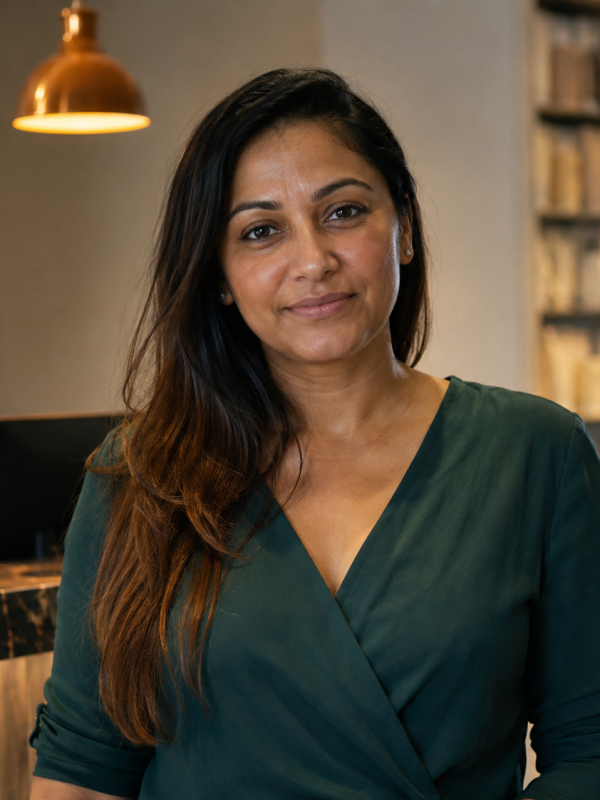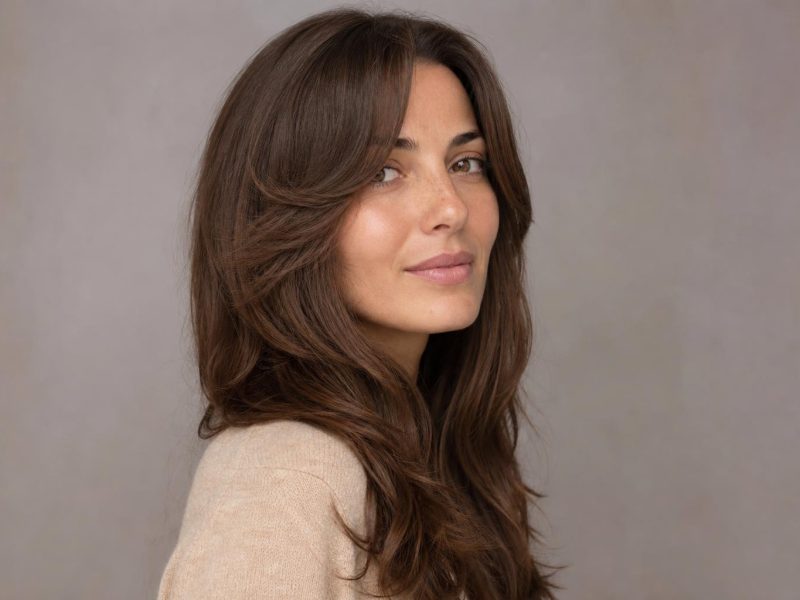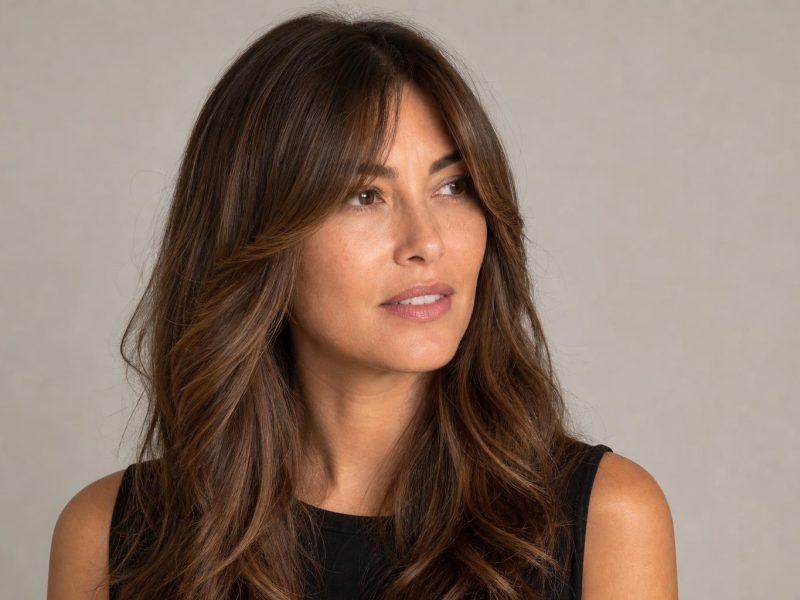

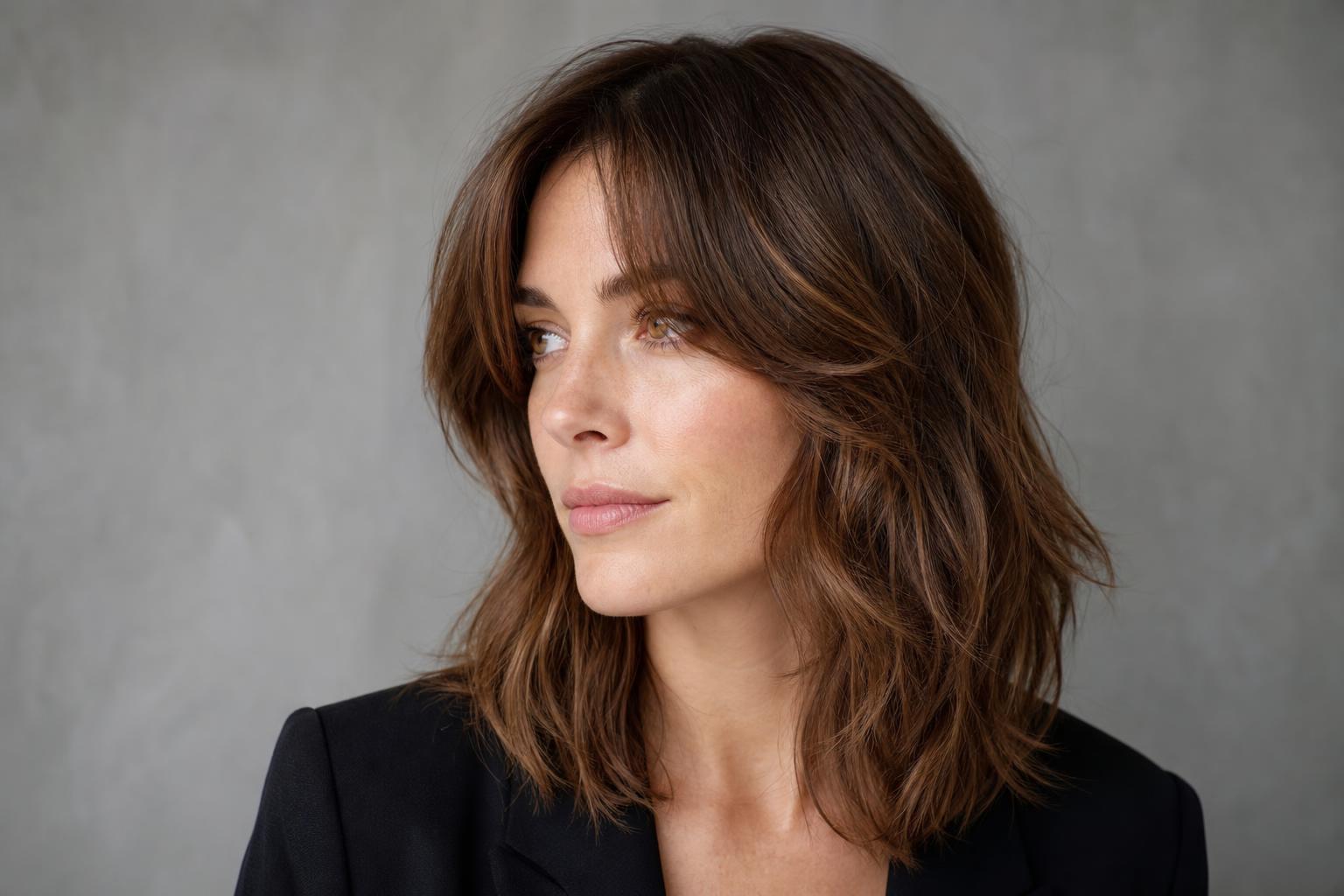
The fastest way to get the curtain bangs you actually want is to say one exact sentence: “Face-framing bangs, parted in the middle, shortest at the center around my eyebrows and sweeping longer past my cheekbones.”
That single line tells your stylist the three things that define curtain bangs: a center part, a short middle, and long sides that blend into your length. Bring one or two reference photos as backup, and skip the word “blunt” entirely, since it signals a hard straight-across fringe, which is the opposite of the soft curtain shape. Curtain bangs work on every face shape when the length is matched to your proportions, so the ask changes slightly depending on your face and hair texture.
This guide gives you the word-for-word script to use in the chair, shows how to adjust the ask for your face shape and hair type, flags the phrasing mistakes that lead to a fringe you did not want, and lays out how often to trim to keep the shape. Read the length section before your appointment, because the center-to-side length ratio is the detail most people forget to mention.
| The Ask | What to Say |
|---|---|
| Shape | “Curtain bangs, center-parted, that blend into my layers” |
| Length | “Shortest at the eyebrows, longest past the cheekbones” |
| Part | “Keep them on my natural part so they fall on their own” |
| Texture | “Soft and wispy, not heavy or solid across” |
| Avoid saying | “Blunt,” “full fringe,” or “straight across” |
What Curtain Bangs Actually Are, and the One Word to Avoid
Curtain bangs are a face-framing fringe split down the middle so each side sweeps away from the center, like a pair of drapes pulled open. The shortest point sits at the center of the forehead, usually around eyebrow level, and the pieces get progressively longer toward the outer edges where they melt into your layers. That soft diagonal is the whole point, and it is why the cut flatters far more faces than a straight-across fringe.
The word that derails the most appointments is “blunt.” To a stylist, blunt means a solid, one-length line cut straight across the forehead, the shape behind a French fringe, which reads heavy and closes off the face. If you say “blunt bangs” while pointing at a curtain-bang photo, you are giving two contradictory instructions. Describe the shape by its movement instead: parted, sweeping, soft at the ends. A quick way to see the difference before you commit is our breakdown of wispy versus full curtain bangs, which shows how density changes the entire look.
Stylist tip: Ask your stylist to cut your curtain bangs dry, or at least to finish them dry. Wet hair stretches and springs back shorter once it dries, and on bangs even half an inch of shrinkage changes where the shortest point lands.
The Core Script, Adjusted by Length
Length is the single most important number to communicate, because “curtain bangs” covers everything from a wispy eyebrow fringe to a long cheekbone-grazing frame. Decide how short you are willing to go at the center, then describe both the center point and the outer point. Stylists cut curtain bangs starting about two to three inches back from your hairline at the part, so the bangs have enough hair to blend rather than sitting as a separate patch.
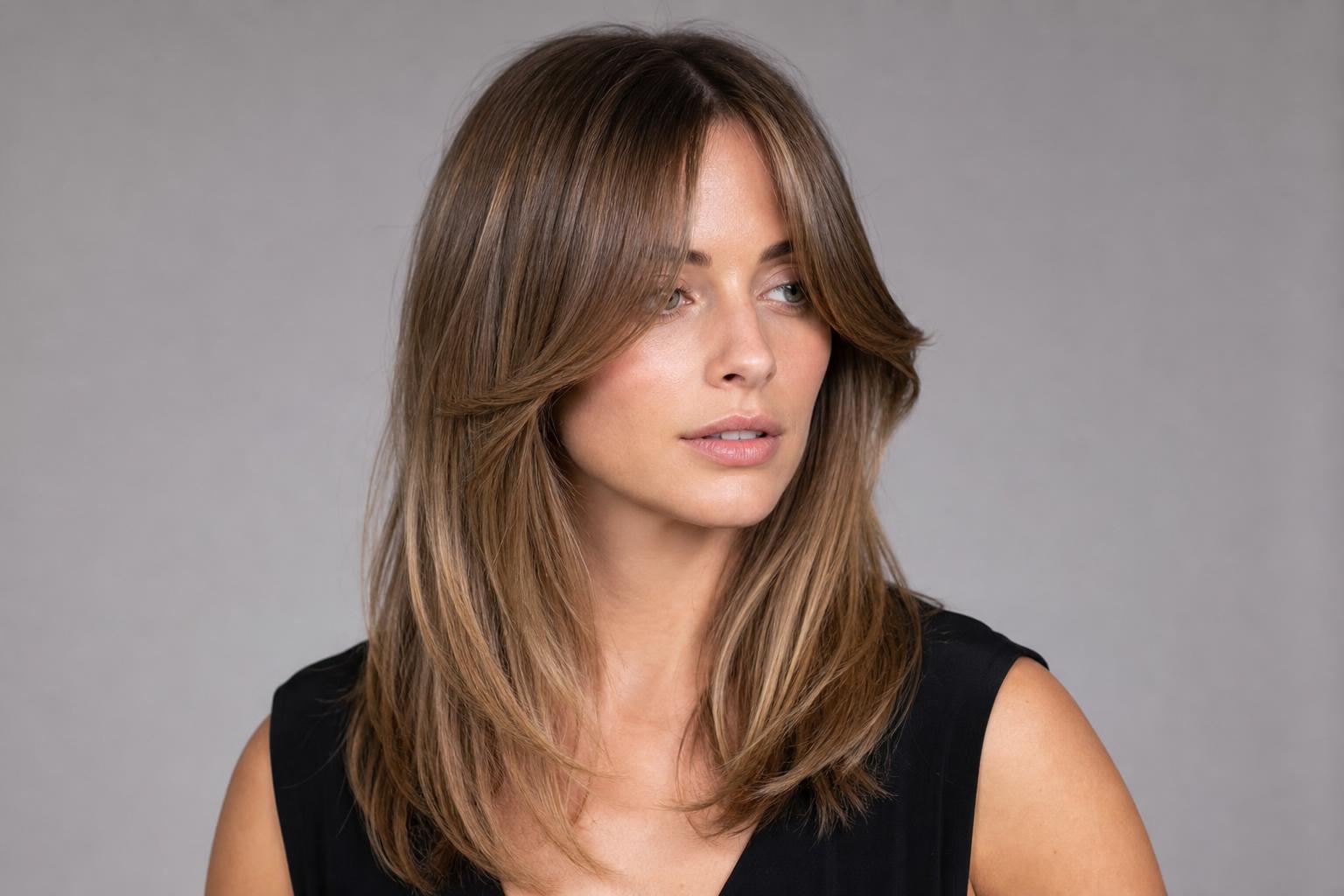
Short Curtain Bangs Sit at the Eyebrows in the Center
For the most noticeable, retro-leaning version, ask for “the center point right at my eyebrows, sweeping to the tops of my cheekbones.” This is the boldest option and the highest maintenance, since a shorter center shows grow-out faster. It suits people who want the bangs to read as a clear feature rather than blend quietly into the rest of the hair.
Long Curtain Bangs Reach the Cheekbones or Jaw
If you want something that grows out gracefully and blends into face-framing layers, say “start the center around the bridge of my nose and keep the sides long enough to hit my jaw.” Longer curtain bangs are the easiest entry point if you have never had a fringe, because on a bad hair day you can tuck them back or clip them into the rest of your hair without them looking obviously cut.
Wispy Curtain Bangs Need a Texturizing Request
Density is separate from length, and you have to ask for it directly. Tell your stylist “keep them airy and texturized, with soft ends, not a solid panel.” Point cutting or a light texturizing technique removes weight from the ends so the bangs feather instead of sitting as one heavy block. If you have a lot of hair, this request matters even more, or your curtain bangs will look thicker than the photo.
Match the Ask to Your Face Shape
Curtain bangs are unusually forgiving across face shapes, but the length ratio does the flattering, so tune the ask to your proportions. The general rule: the longer and steeper the sweep, the more it slims a rounder face, while a wider, softer center shortens a longer face. Use the table as your cheat sheet, then say the recommendation out loud during your consultation.
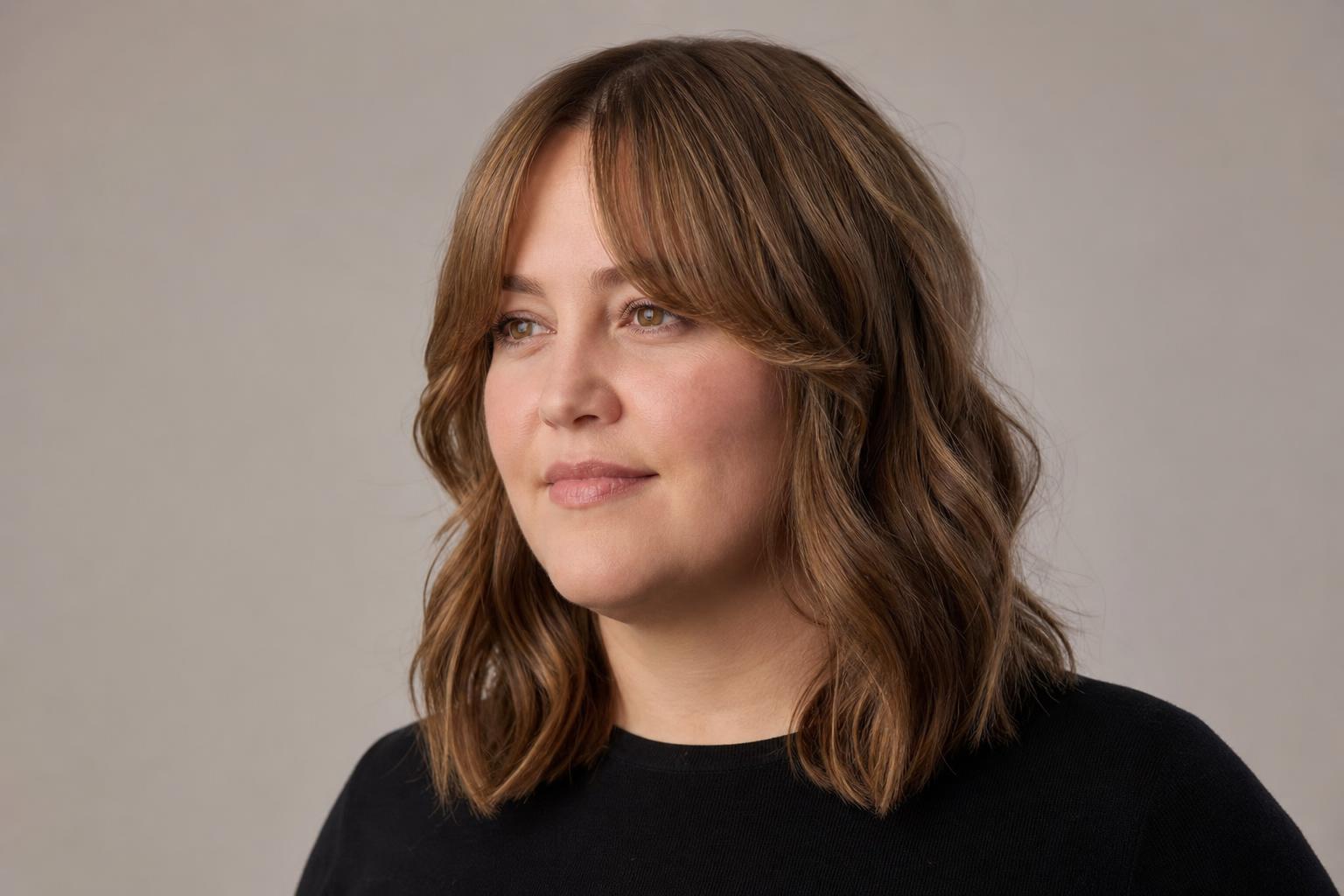
| Face Shape | What to Ask For | Why It Works |
|---|---|---|
| Round | Short center, long sides past the cheekbones, steep sweep | The strong diagonal adds vertical length and slims width |
| Long or oblong | Wider, slightly denser center starting a bit lower | A horizontal center breaks up length and shortens the face |
| Square | Center at the bridge of the nose, extra soft texturizing | Wispy ends soften a strong jaw and hard angles |
| Heart | Length focused at the cheekbones, airy center | Width lower down balances a wider forehead and narrow chin |
| Oval | Any length; pick by preference and hair type | Balanced proportions carry most versions well |
If you wear glasses, mention it during the consultation, because the frame line and the bang line compete for the same space on your face. The sweet spot is usually bangs that end above or below the top bar of your frames rather than right at it, a detail covered in our guide to choosing bangs when you wear glasses.
Texture Changes the Script More Than You Think
Two people can ask for the identical curtain bangs and walk out with completely different results because their hair behaves differently. Name your texture in the consultation and add the matching request below, since a stylist cannot always predict how your hair will fall once it dries and you style it yourself.
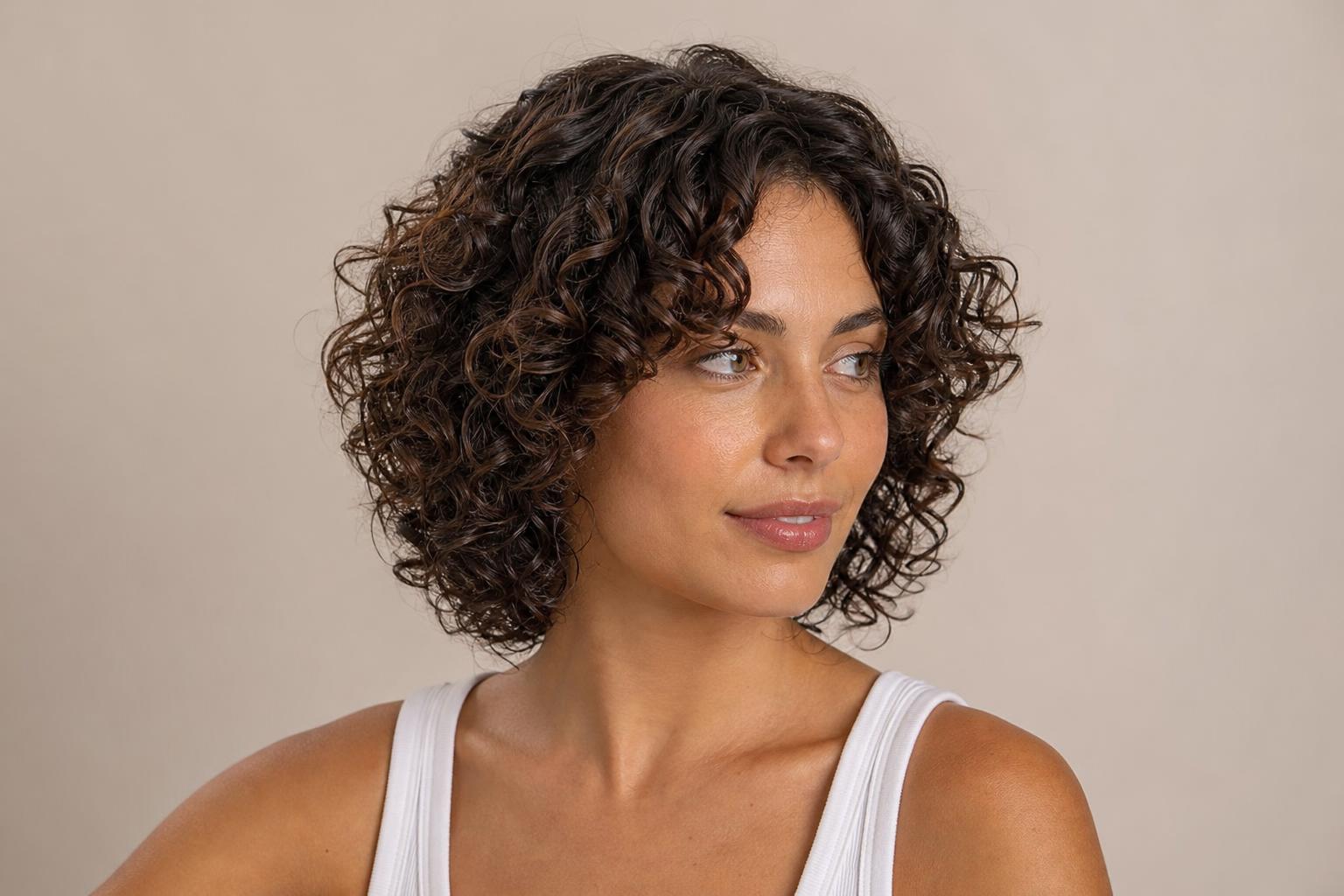
Curly and Wavy Hair Needs Length Added for Shrinkage
Ask your stylist to “cut these dry and leave them a little longer than you think, because they will spring up.” Curly hair can retract an inch or more as it dries, so a curtain bang cut to the eyebrows wet can end up mid-forehead once the curl activates. On wavy and curly textures, a longer starting length is insurance against a too-short surprise.
Fine Hair Reads Fuller With a Blunter Interior
Counterintuitively, very fine hair sometimes looks best with slightly less texturizing at the ends, because heavy point cutting can leave wispy bangs looking sparse. Tell your stylist “I want them soft but not so thinned that they disappear.” A light round-brush blow-dry at the roots gives fine curtain bangs the body they need to hold the shape through the day.
Thick and Coarse Hair Must Be Weight-Removed
Thick hair fights the soft curtain shape and wants to sit as a heavy block, so the request here is about removing weight. Say “please thin the interior and texturize the ends so they do not look like a full fringe.” Without that, dense hair delivers a solid curtain that swings back into your eyes instead of sweeping cleanly to the sides.
Phrasing Mistakes That Get You the Wrong Bangs
Most curtain-bang regret traces back to the words used in the chair, not the stylist’s skill. These are the requests to strike from your vocabulary, with what to say instead.
Myth: Saying “Just a Trim on the Bangs” Keeps Them Safe
Reality: vague requests get vague results. “A trim” means different amounts to different stylists, and on bangs the margin is tiny. Specify the finished length you want in relation to a landmark on your face, such as “leave the center brushing my eyebrows,” so there is no guesswork.
Myth: A Reference Photo Is Enough on Its Own
Reality: a photo shows a result on someone else’s hair, styled and often filtered. Bring the photo, but pair it with your own words about length and density, and ask your stylist directly whether that look is realistic for your texture. The photo sets the direction; your description sets the specifics.
Myth: You Should Fight Your Natural Part
Reality: curtain bangs cut against your natural part will never sit right without daily effort. Tell your stylist where your hair naturally splits and ask them to build the bangs around it. Working with the cowlick or part you already have is what makes curtain bangs feel low effort.
Maintenance and Upkeep
Curtain bangs need a shape-up every three to four weeks to stay in their flattering zone, faster than the rest of your hair, because a fringe grows into your eyeline quickly. Many salons offer free or low-cost bang trims between full appointments, so ask about that when you book. Daily styling takes about three to five minutes: a quick blast with a round brush or a paddle brush while blow-drying the roots in the direction of the sweep sets the shape, and a touch of lightweight styling cream keeps flyaways down without weighing the ends.
Stylist tip: Learn to trim tiny amounts between salon visits by cutting your bangs dry, styled the way you normally wear them, taking off no more than an eighth of an inch at a time with proper hair shears. Point the scissors vertically into the ends rather than cutting straight across, which keeps the soft feathered edge instead of creating the blunt line you were avoiding.
FAQ
What Should I Say to Ask for Curtain Bangs?
Say “face-framing curtain bangs, center-parted, shortest at my eyebrows and sweeping longer past my cheekbones, soft and wispy at the ends.” That covers the shape, the part, the length ratio, and the density in one sentence. Add your face shape and hair texture, bring a reference photo, and avoid the word blunt.
Should I Get Curtain Bangs Cut Wet or Dry?
Dry, or at minimum finished and refined dry. Hair springs up as it dries, and on curly or wavy textures it can shrink an inch, which throws off where the shortest point lands. A dry cut lets your stylist see exactly where the bangs will sit on your styled hair.
How Long Should Curtain Bangs Be?
The center usually falls between the eyebrows and the bridge of the nose, and the sides reach anywhere from the top of the cheekbone to the jaw. Shorter centers read bolder and need more upkeep, while longer versions blend into layers and grow out easily. Pick based on how much of a statement you want and how often you can get them trimmed.
Do Curtain Bangs Work on Curly Hair?
Yes, curtain bangs work beautifully on curly hair, but they must be cut dry and left longer to account for shrinkage. The natural curl gives the sweep built-in movement, so you often need less styling than straight hair does. Ask a stylist experienced with your specific curl pattern, since curl behavior at the fringe is hard to predict.
Will Curtain Bangs Suit My Face Shape?
Curtain bangs flatter every face shape when the length is matched to your proportions. Round faces do best with a short center and long, steep sides, long faces with a wider softer center, and square faces with extra texturizing to soften the jaw. The shape itself is universal; the length ratio does the tailoring. If you like the face-framing effect but want more of a swept, wing-shaped fringe, the butterfly fringe is a longer, more layered cousin worth comparing.
How Often Do Curtain Bangs Need Trimming?
Every three to four weeks to keep them out of your eyes and in their most flattering length. That is more often than a full haircut, but many salons include a complimentary bang trim between appointments. Learning to dust the ends yourself between visits stretches the time comfortably.
Can I Ask for Curtain Bangs Without Cutting the Rest of My Hair?
Yes, curtain bangs can be added to almost any length or cut without changing the rest of your hair. Tell your stylist you only want the fringe added and ask them to blend it into your existing face-framing pieces so it does not look disconnected. Pairing new bangs with a fresh set of layers, like the ones in our guide to the main bang styles, can make the transition smoother, but it is optional.
Getting the curtain bangs you pictured comes down to describing the shape, the length ratio, and the density in your own words, then backing it with a reference photo and your face shape. Walk into your appointment with the exact sentence from the top of this guide, ask for a dry cut, and be specific about how short you are willing to go at the center. When you know how to ask for curtain bangs the way a stylist thinks about them, you skip the guesswork and walk out with a fringe that actually fits your face.
Hair results vary based on your natural hair type, texture, density, and condition. Always consult with a licensed hairstylist before making significant changes, especially with chemical treatments or dramatic length changes. Photos may show styled results that require professional tools and products to replicate.