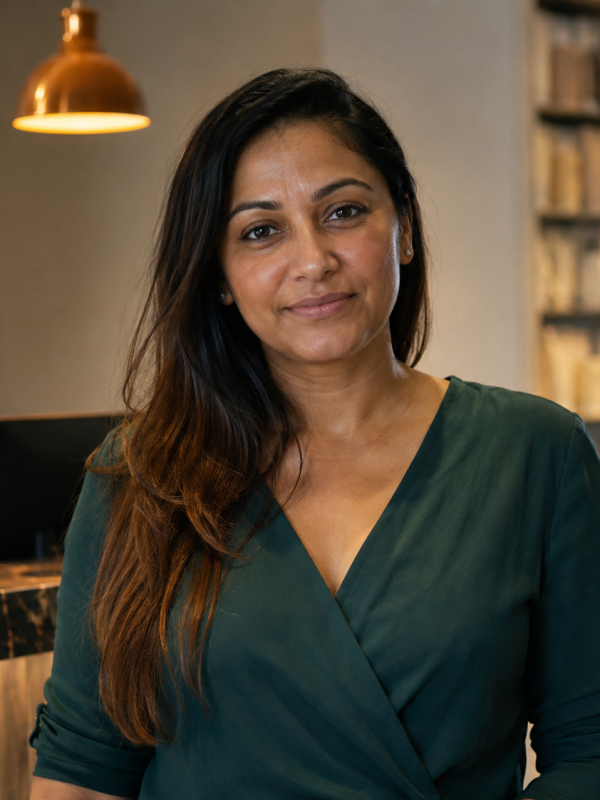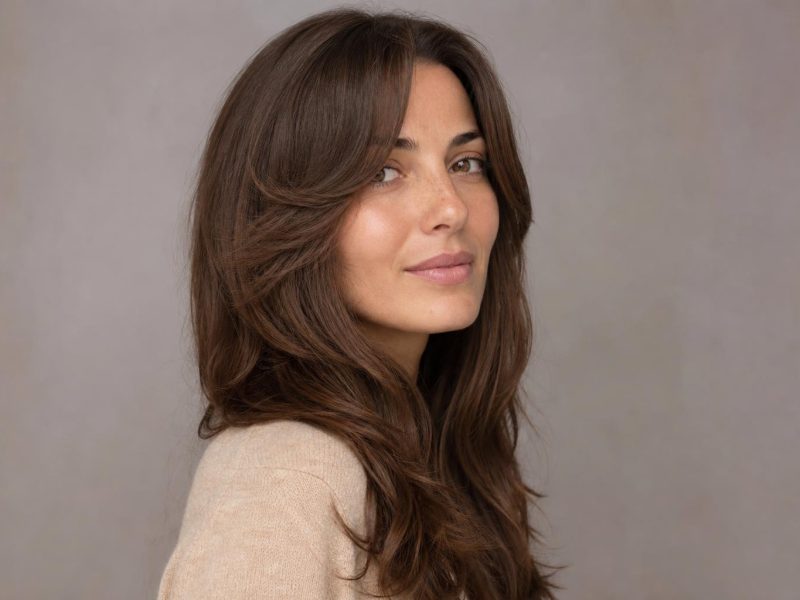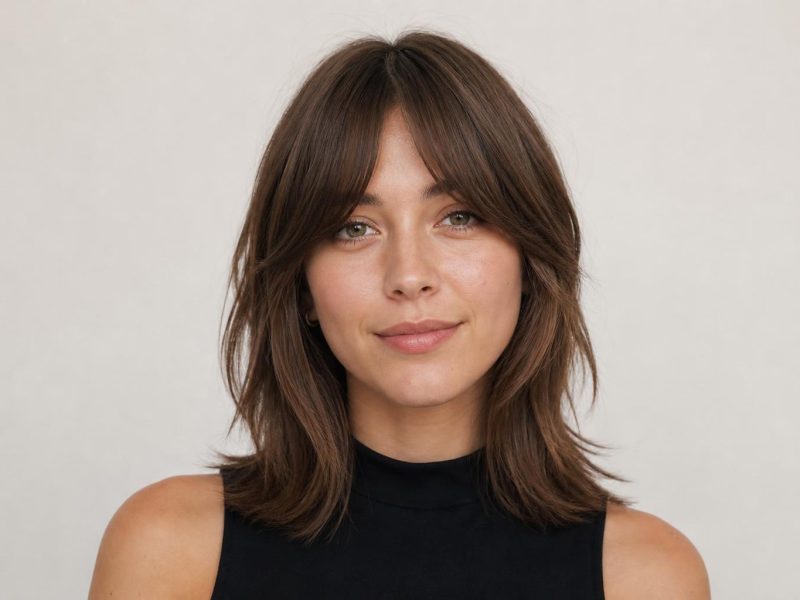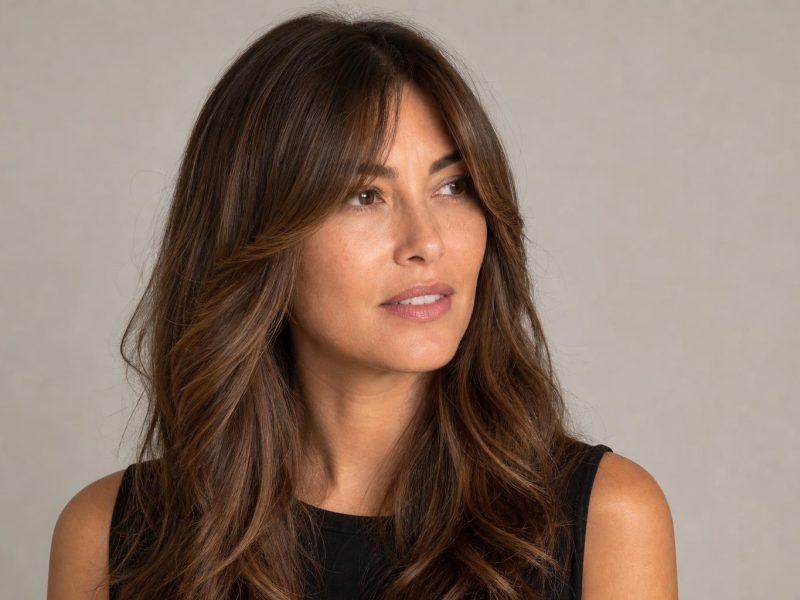

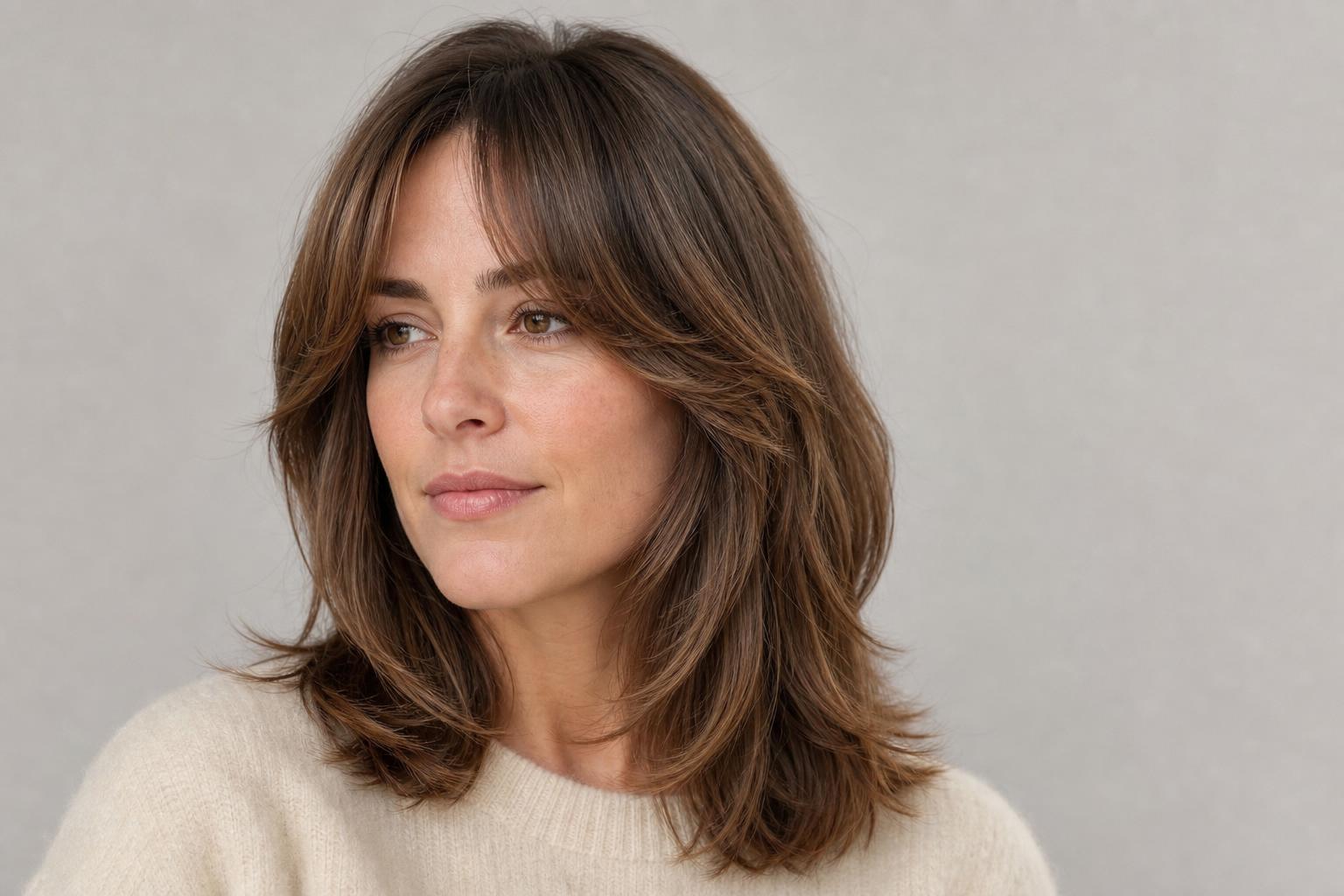
A butterfly fringe is a soft, heavily layered face-framing fringe that graduates from short pieces at the cheekbones to longer strands that blend into your length, and these 20 ideas show its full range.
A butterfly fringe frames the face with feathered layers that start short around the eyes or cheekbones and get gradually longer toward the ears, wrapping the face in soft, winged movement. It looks like a curtain bang that kept growing and gained a lot more layering, which is exactly where it comes from, and it gives the illusion of short layers without cutting real length off the back. These 20 variations are sorted by length, hair texture, and face shape, so you can find the version that suits your hair.
After the gallery you will find a plain-language explainer on how a butterfly fringe differs from curtain bangs, a face shape breakdown, the exact wording to bring to your stylist, an honest styling and maintenance schedule, and a note on when this fringe is the wrong call.
| Factor | Details |
|---|---|
| Best for | Adding face-framing movement and volume without losing length |
| Length | Shortest pieces at the cheekbone or eye, longest blending past the chin |
| Works with | Straight, wavy, and curly hair; most face shapes |
| Avoid if | You want a true wash-and-go fringe with no blow-dry time |
| Upkeep | Trim every 6 to 10 weeks; a few minutes of daily styling |
Butterfly Fringe by Length
Length changes the whole personality of a butterfly fringe. A shorter version falls closer to the eyes for a bolder frame, while a longer one starts at the jaw and barely looks like a fringe at all. These seven cover the range from cheekbone-short to collarbone-long.
1. Cheekbone-Length Butterfly Fringe
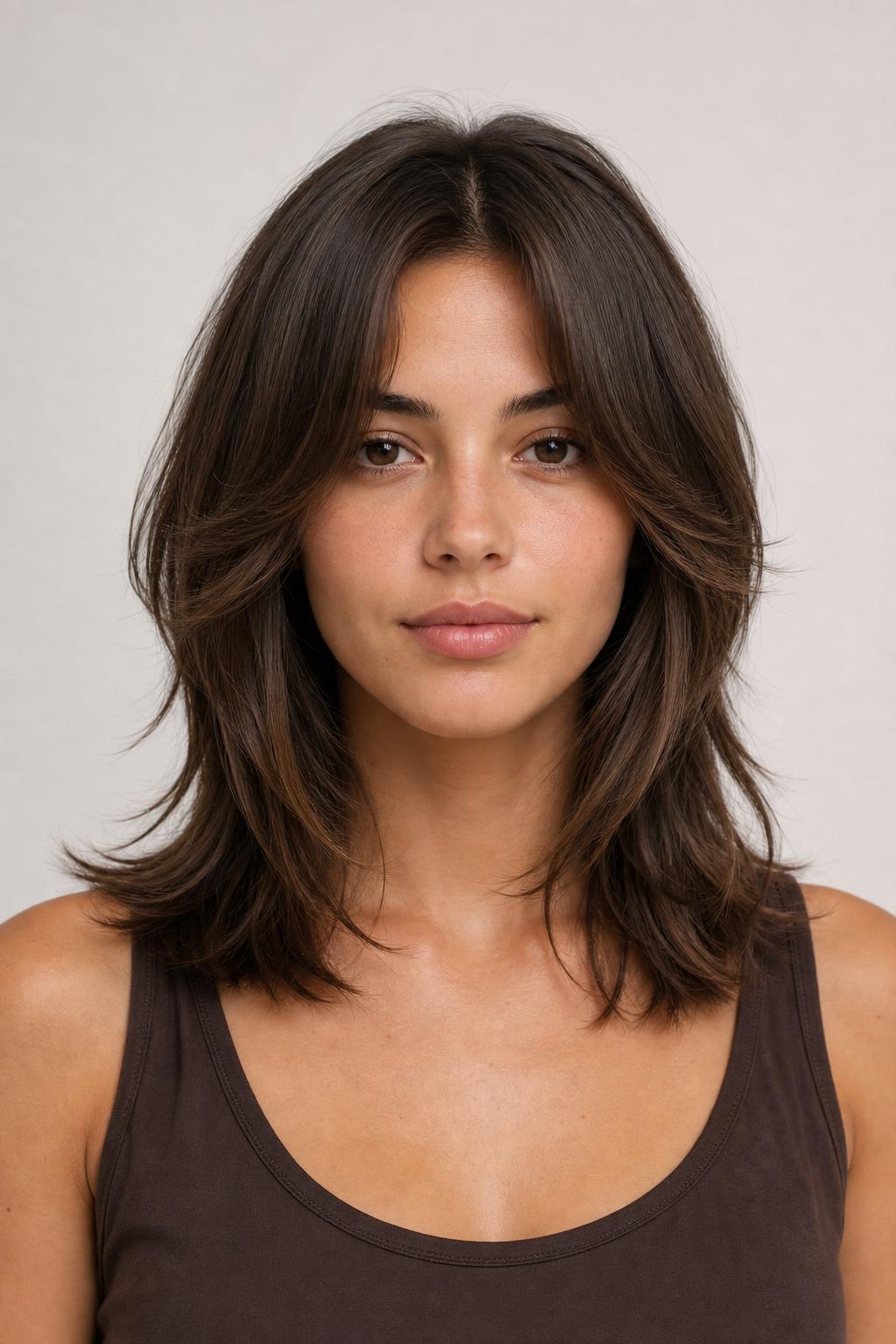
Cutting the shortest pieces to cheekbone level gives the most defined frame, with feathered ends that flick away from the face. Point cutting the tips keeps them soft rather than blunt, which is what separates a butterfly fringe from a heavier curtain bang. This length suits anyone who wants the fringe to be a clear feature rather than a subtle blend.
2. Eye-Grazing Butterfly Fringe
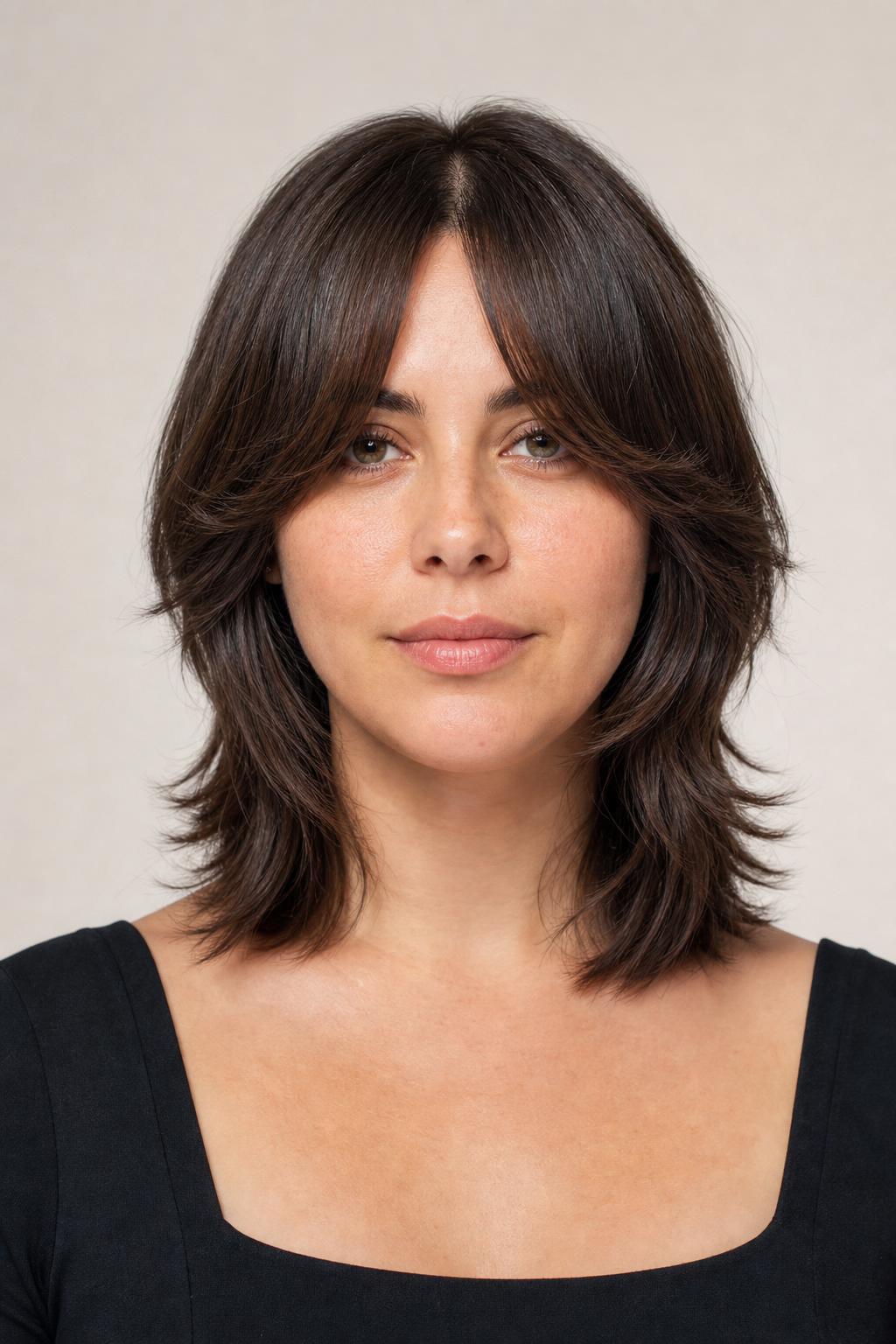
When the shortest pieces graze just under the eyes, the fringe draws a strong vertical frame that flatters a round face by adding length through the center. The longer side pieces sweep down toward the jaw and slim the widest part of the face. Keep the very shortest sections wispy so they do not fall into your eyeline.
3. Jaw-Length Butterfly Fringe
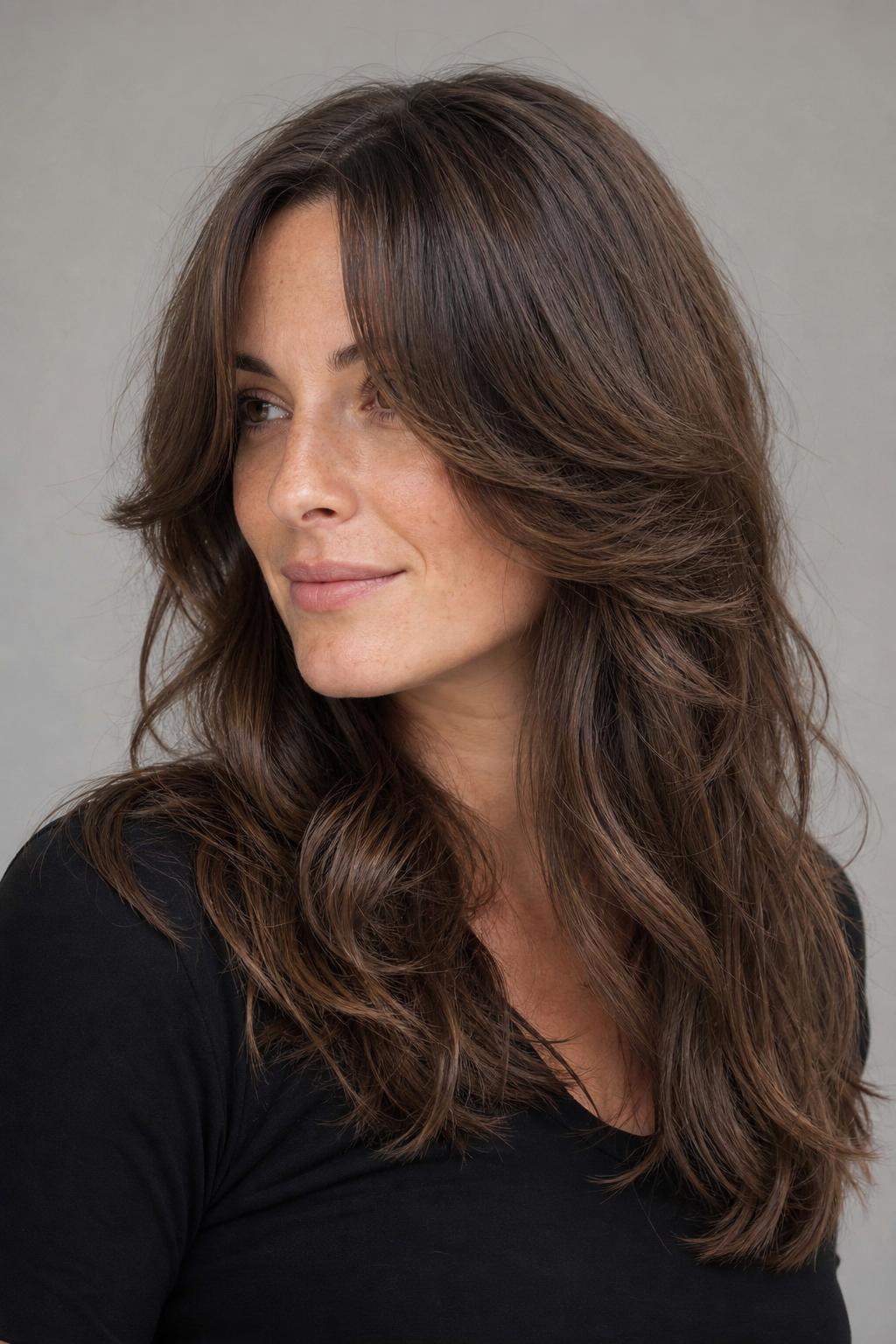
A jaw-length version is the softest, most grown-out take, ideal for thick hair that would look heavy with a shorter fringe. The longer starting point removes weight around the face without committing to a bold bang. This is the easiest length to grow out because it already blends into your layers.
4. Collarbone Butterfly Fringe
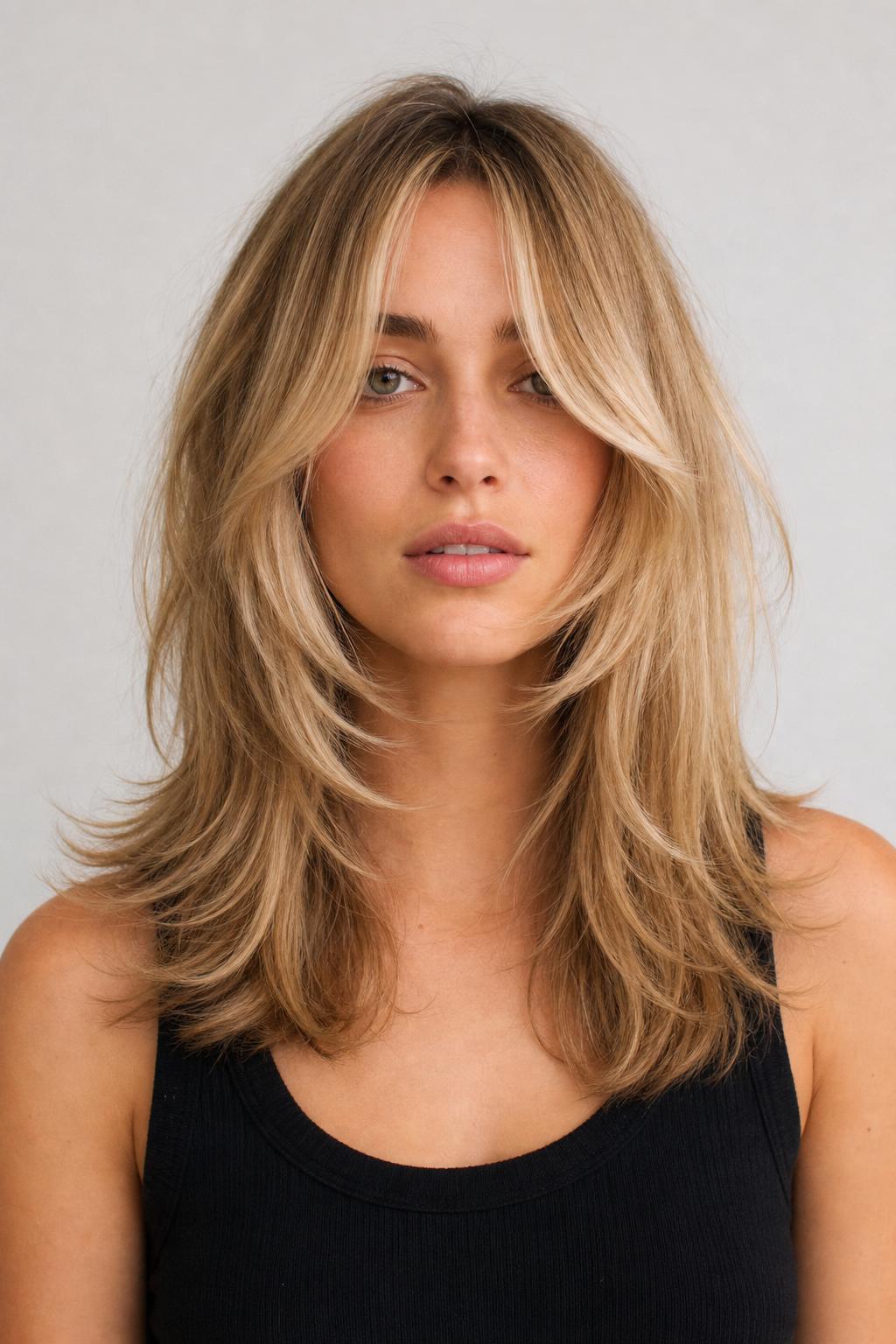
The longest butterfly fringe starts near the collarbone and barely looks like a fringe until you style it away from the face. A round brush flicks the ends outward to reveal the layered shape and build the signature winged volume. Expect a few minutes of blow-dry time, since this length relies on styling to show its movement.
5. Low-Maintenance Grown-Out Fringe
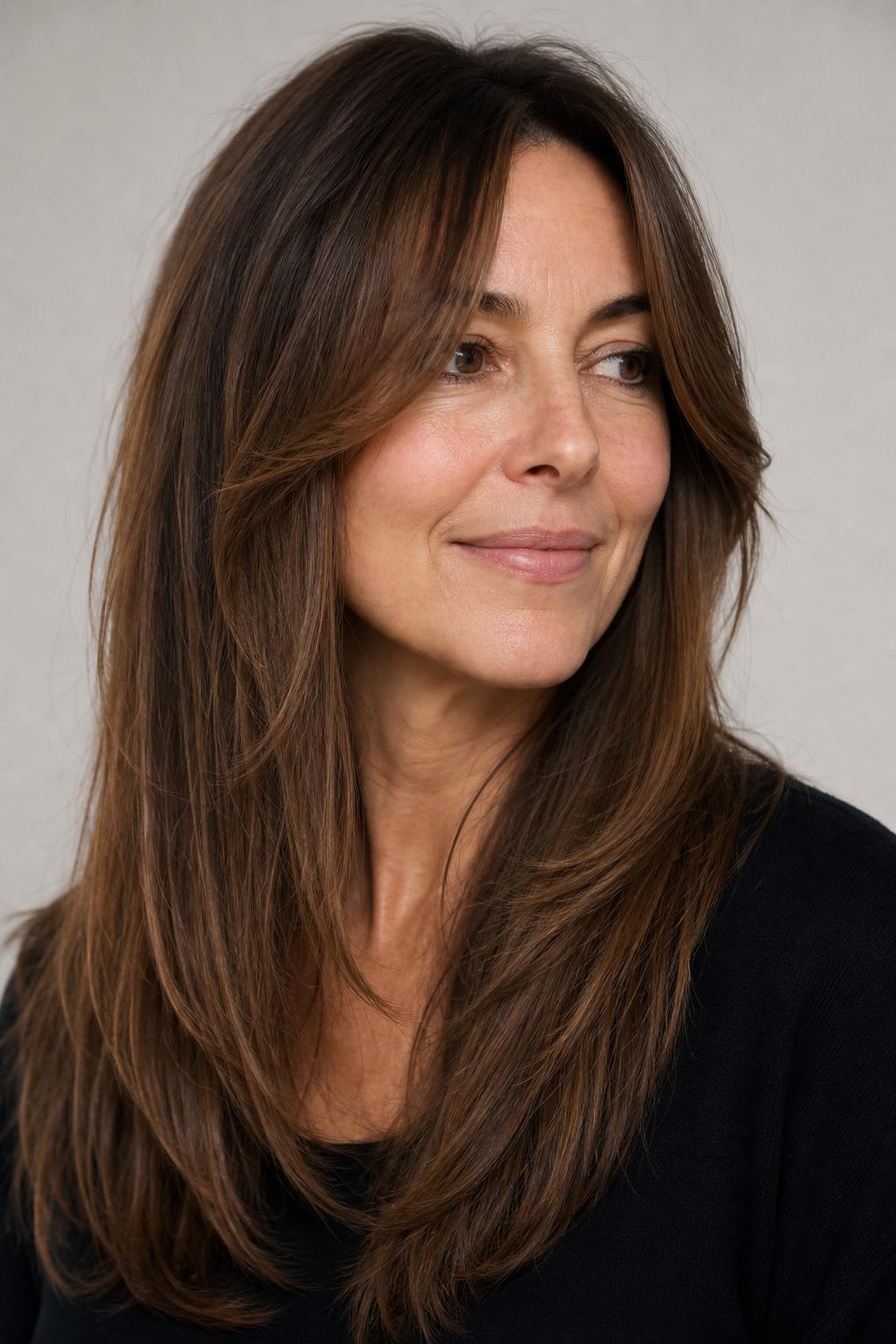
Once a butterfly fringe grows past the chin, it turns into soft face-framing layers that need almost no upkeep. This stage stretches the time between trims to ten weeks or more, since there is no short piece to keep in check. It is the most forgiving option for anyone who likes the look but not the salon frequency.
6. Balayage Butterfly Fringe
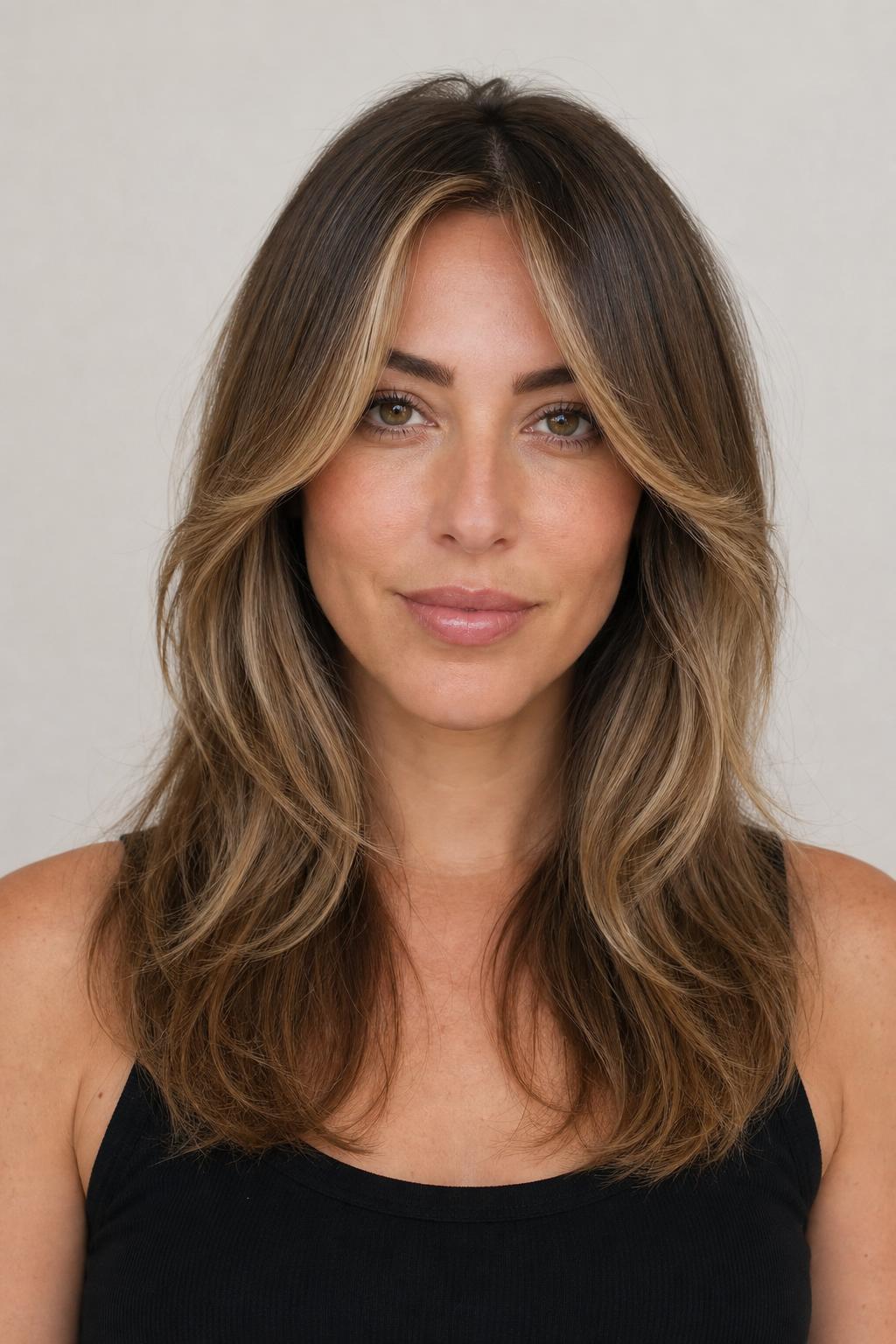
Placing lighter balayage pieces through the front of a butterfly fringe makes the layered shape pop by catching the light along each feathered edge. A brighter money-piece at the shortest sections frames the face and highlights the graduation from short to long. Keep the base a shade deeper so the face-framing color stands out.
7. Salon-Script Mid-Length Fringe
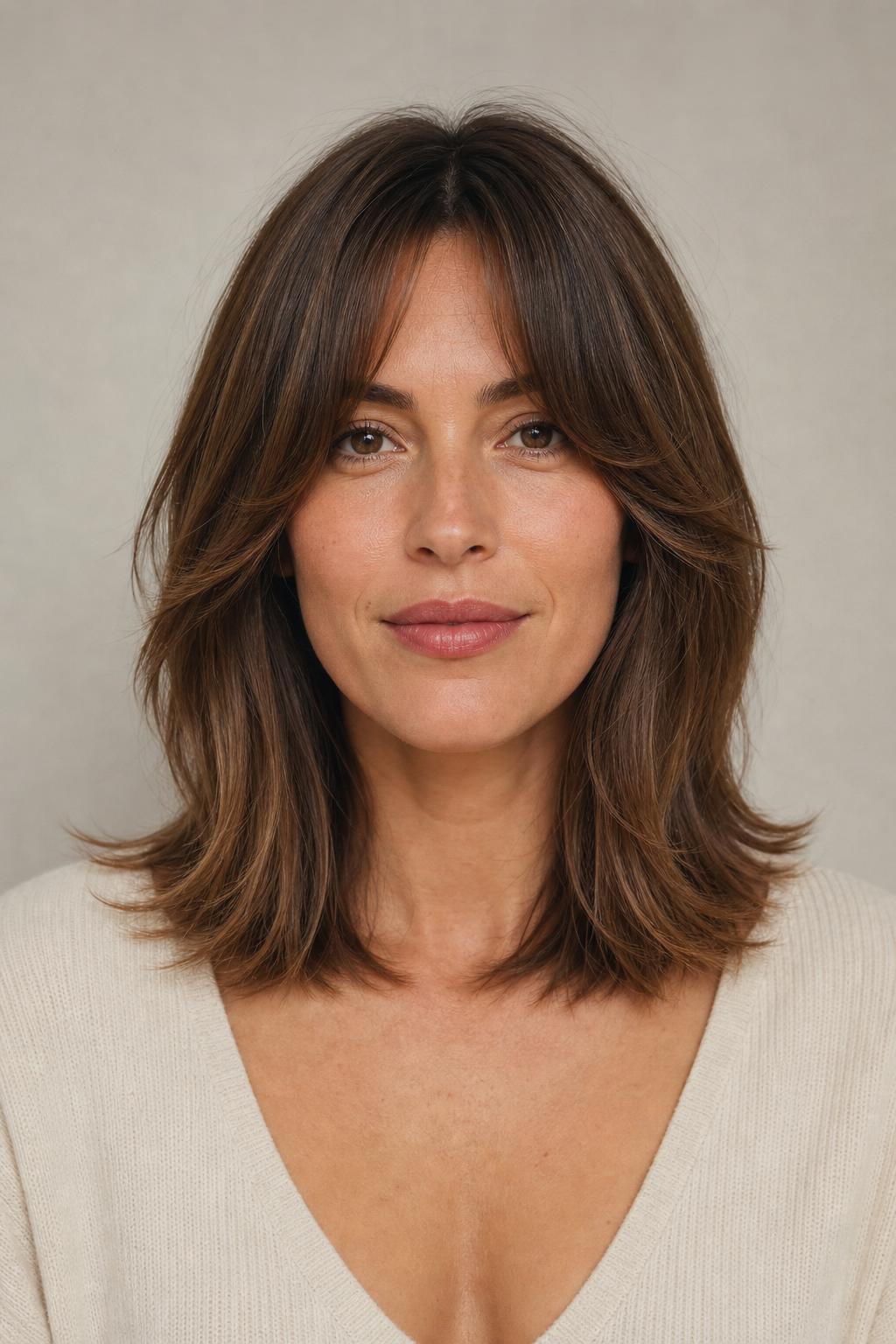
A mid-length butterfly fringe, with the shortest pieces landing around mid-cheek, is the most requested version because it flatters nearly everyone. When you book it, ask for a butterfly fringe with the shortest layer at cheekbone level and a soft graduation into your length. That single sentence gives your stylist the shape without any guesswork.
Butterfly Fringe by Hair Texture
Texture decides how much the layers move and how much styling the fringe needs. Straight hair shows the graduation cleanly, wavy hair adds built-in movement, and curly hair turns the fringe into soft spirals around the face. These seven are grouped by what each texture does with the shape.
8. Straight Butterfly Fringe with Flicked Ends
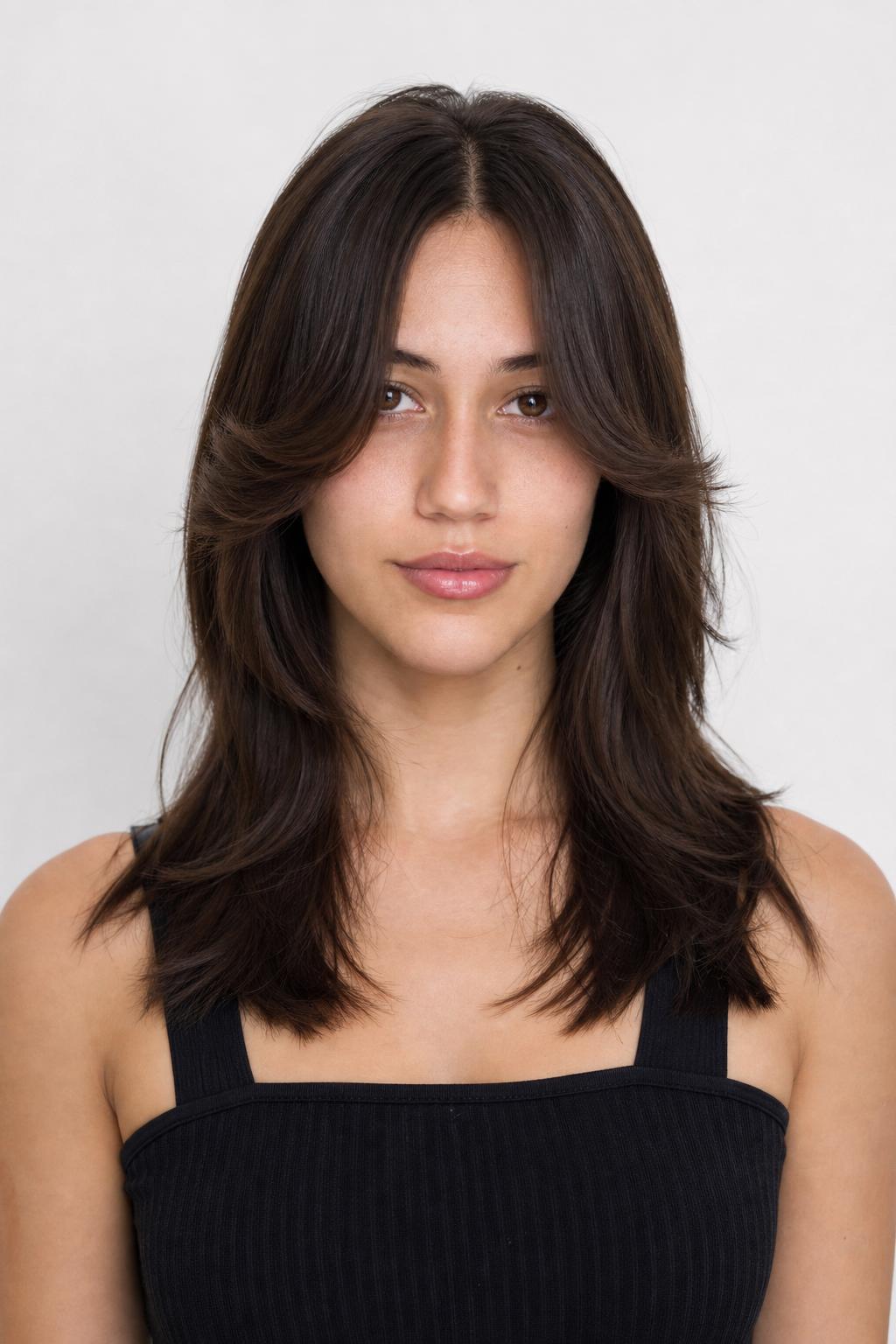
Straight hair shows off the precise graduation of a butterfly fringe, so the flicked ends read crisp and deliberate. Unlike a straight-across curtain bang, the butterfly version keeps every piece a slightly different length, which is what creates the winged effect. A flat iron with a slight outward turn at the ends sets the shape in seconds.
9. Wavy Butterfly Fringe
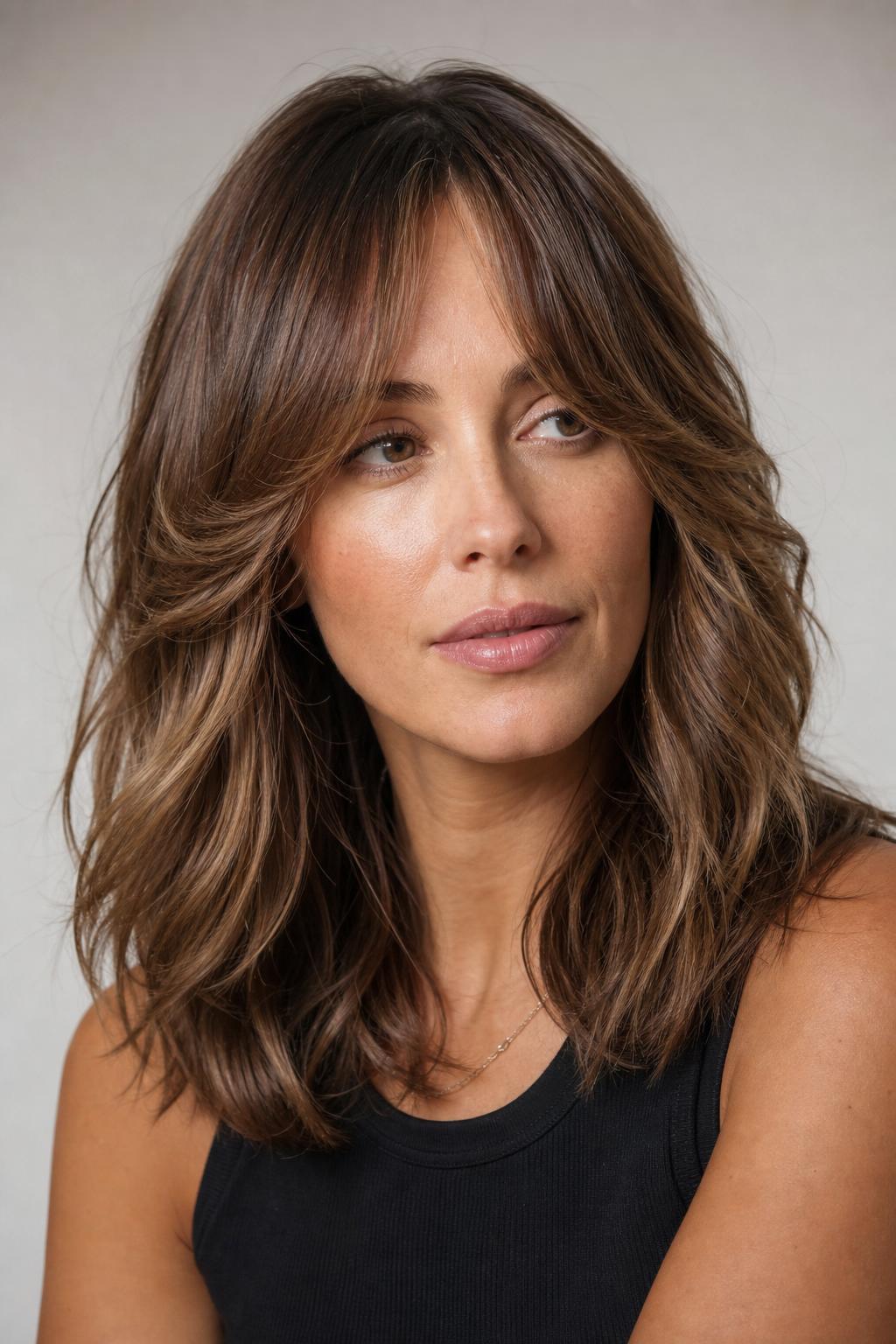
Wavy hair gives a butterfly fringe built-in movement, so the layers bend and separate without much effort. Point cutting removes just enough weight to let the waves spring around the face rather than sitting heavy. Scrunch a light cream through damp fringe and air-dry to bring the bend out naturally.
10. Curly Butterfly Fringe
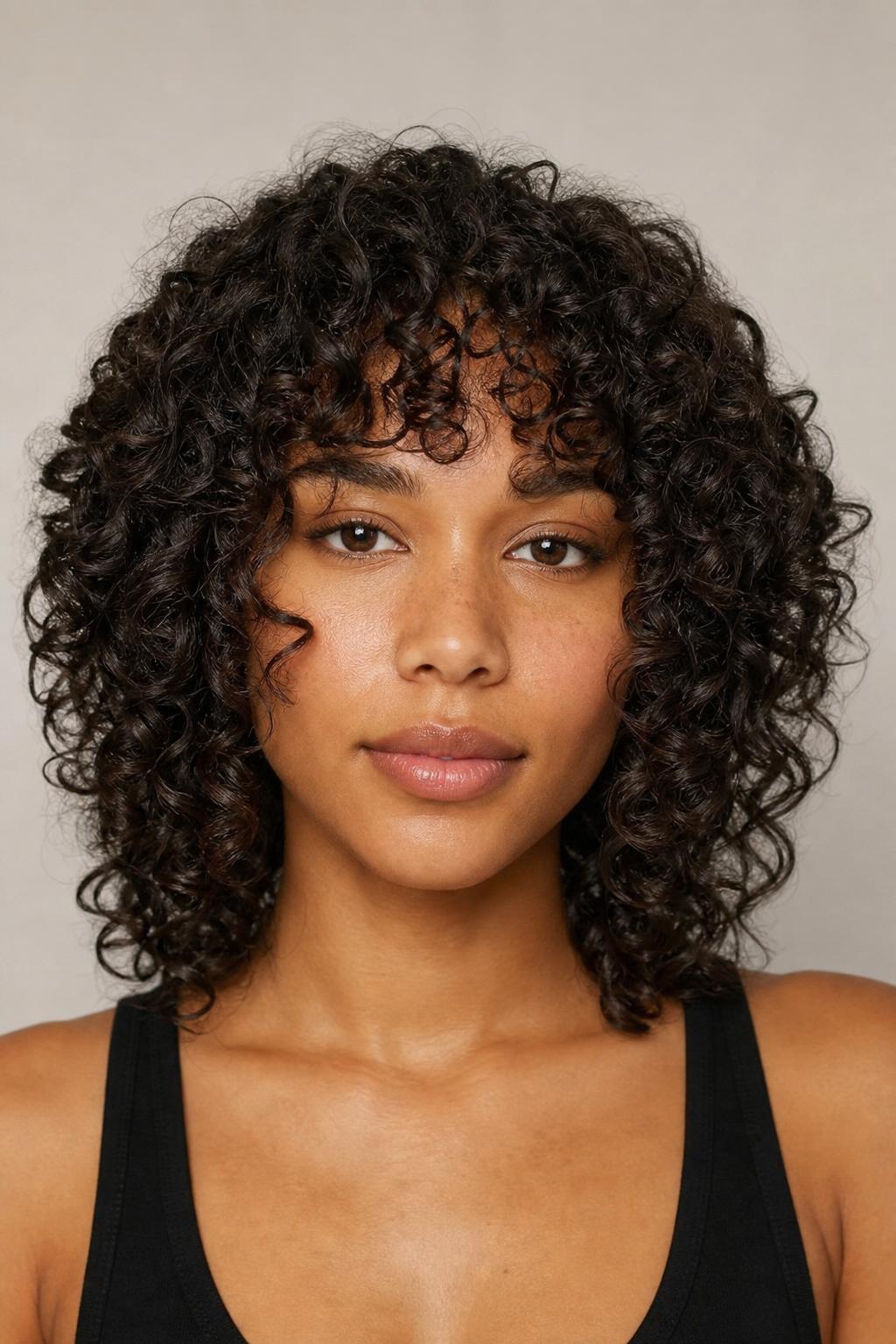
On curly hair a butterfly fringe becomes soft spirals that frame the face, as long as it is cut dry to account for how much the curls spring up. Because curls shrink, the stylist leaves the fringe longer than the final length you want. A curl cream scrunched into the front keeps the spirals defined instead of frizzy, much like the approach in our curly bangs ideas.
11. Fine-Hair Butterfly Fringe
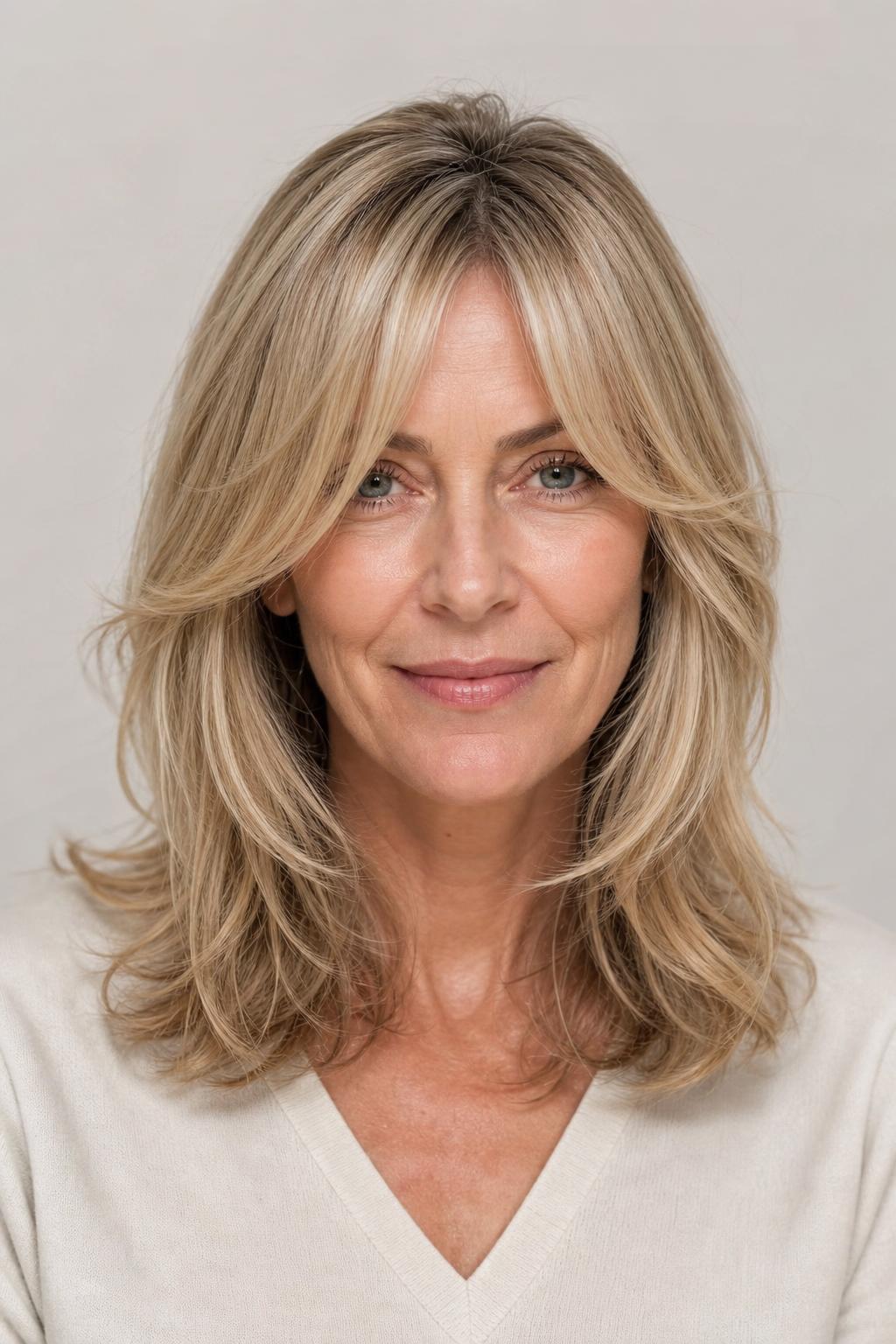
Fine hair benefits from a butterfly fringe because the added layers create the look of more volume around the face, the same idea behind our layered haircuts for thin hair. Blow-drying the roots up with a round brush lifts the fringe and gives the illusion of thickness where fine hair usually falls flat. Keep the layering soft, since too many fine layers can look wispy rather than full.
12. Butterfly Fringe for a Long Face
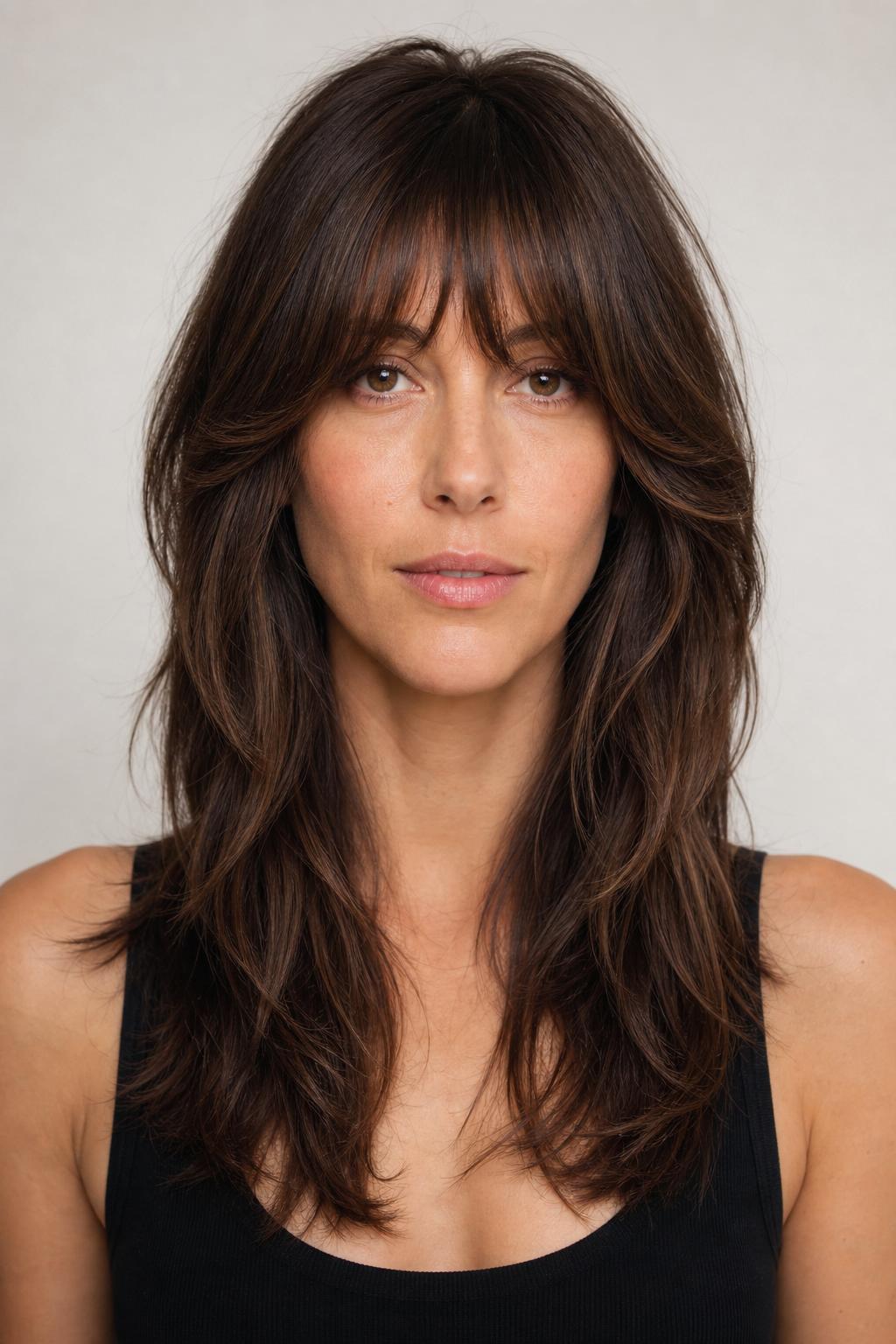
A fuller butterfly fringe that starts closer to the brow shortens a long or oblong face by breaking up the vertical length. Keeping more weight in the fringe adds horizontal softness across the forehead, which balances the proportions. Avoid pushing all the volume to the top, since height only lengthens the face further.
13. Copper Butterfly Fringe
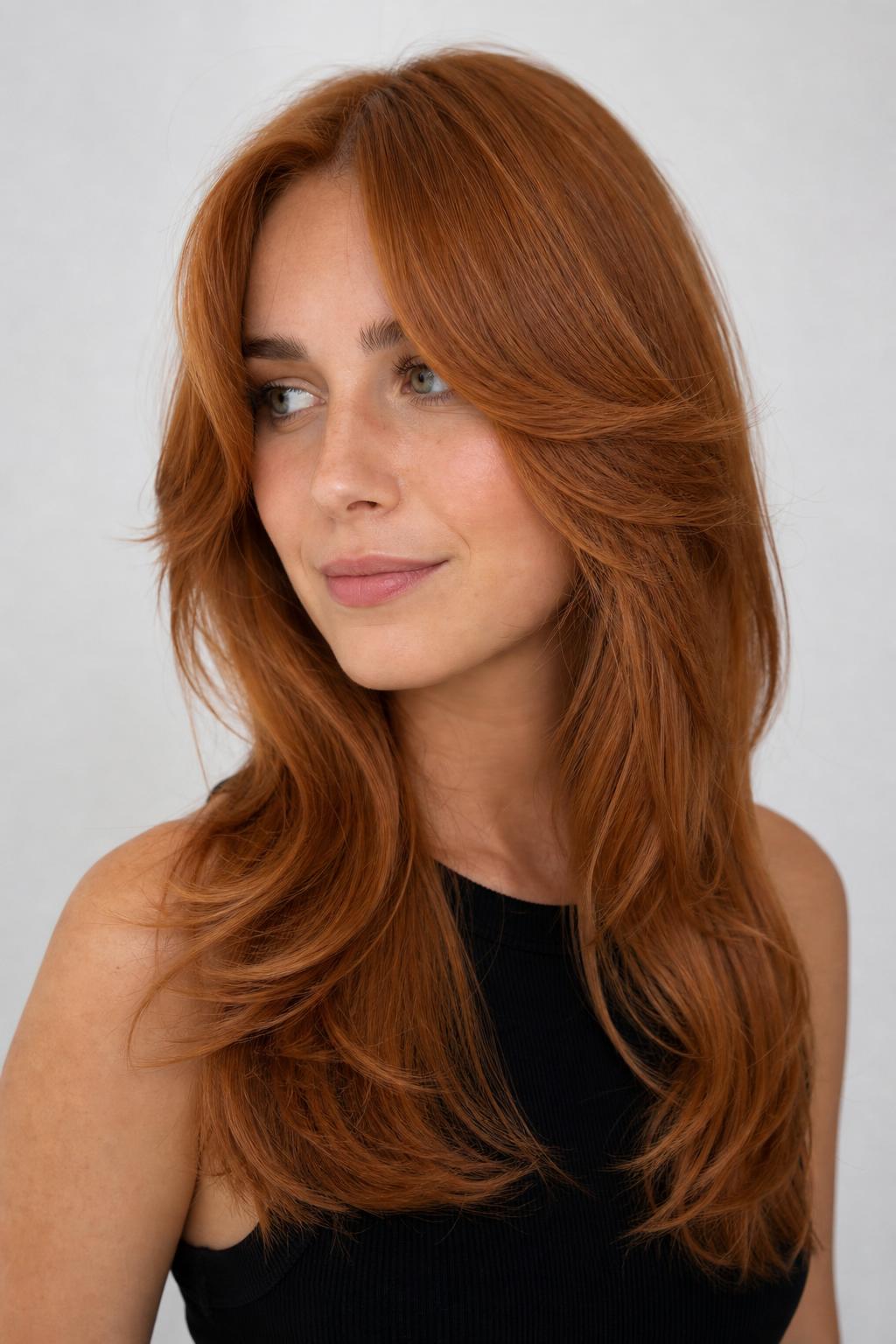
A warm copper shade makes the feathered layers of a butterfly fringe glow along every edge. The movement of the fringe shows off the dimension in a copper tone better than a blunt bang would. Warm reds fade quickly, so a color-depositing conditioner between washes keeps the fringe rich around the face.
14. Low-Upkeep Wavy Bob Fringe
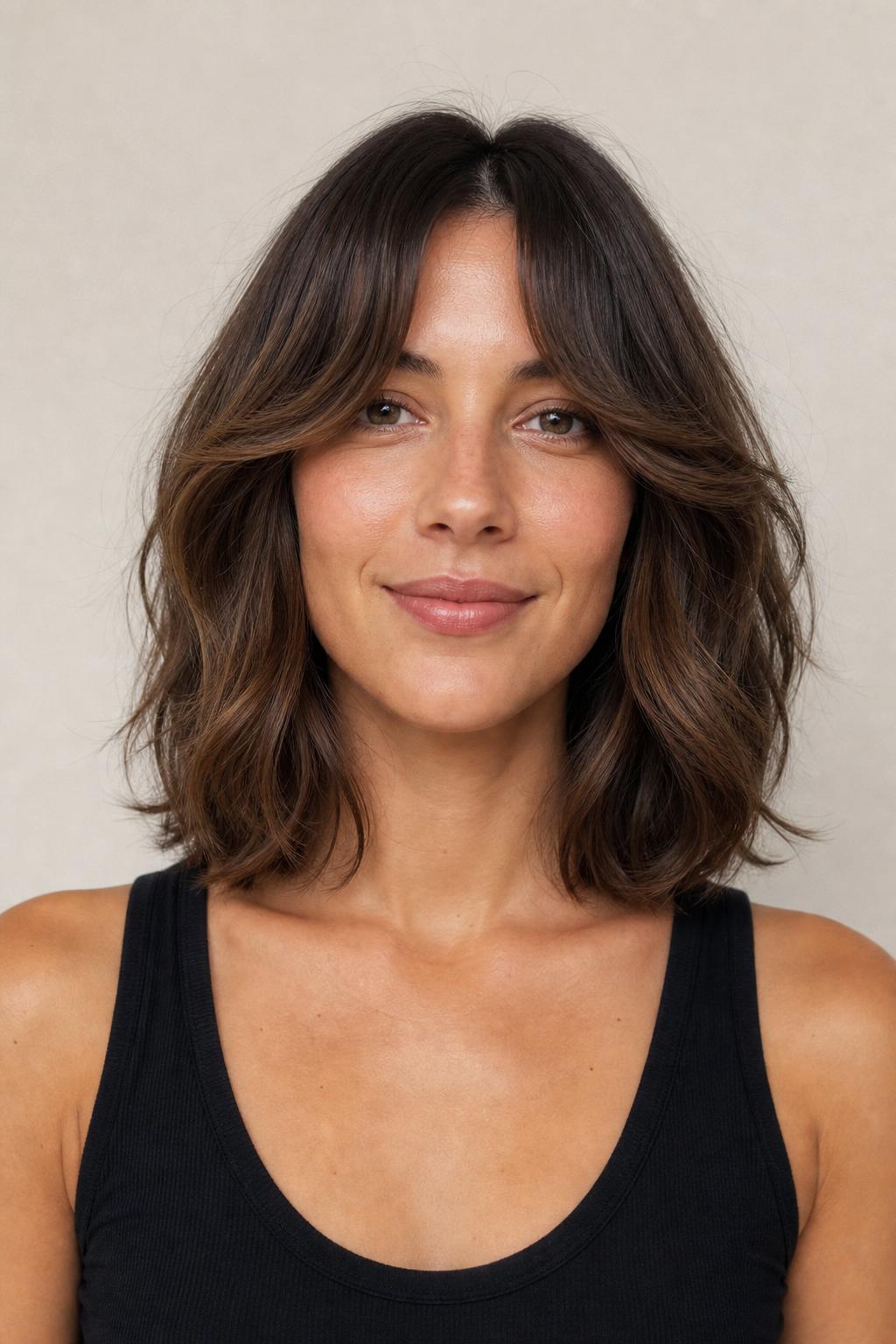
Pairing a butterfly fringe with a wavy bob keeps the whole look low-upkeep, since the fringe blends straight into the bob’s layers. The shorter overall length means the fringe needs less blow-dry time to show its shape. A trim every eight weeks keeps the front pieces from overwhelming the bob.
Butterfly Fringe by Face Shape and Color
The right butterfly fringe can balance almost any face shape once the length and weight are placed correctly. These final six show how the fringe adapts to specific shapes and color treatments, from square jaws to soft blended blondes.
15. Square-Face Butterfly Fringe
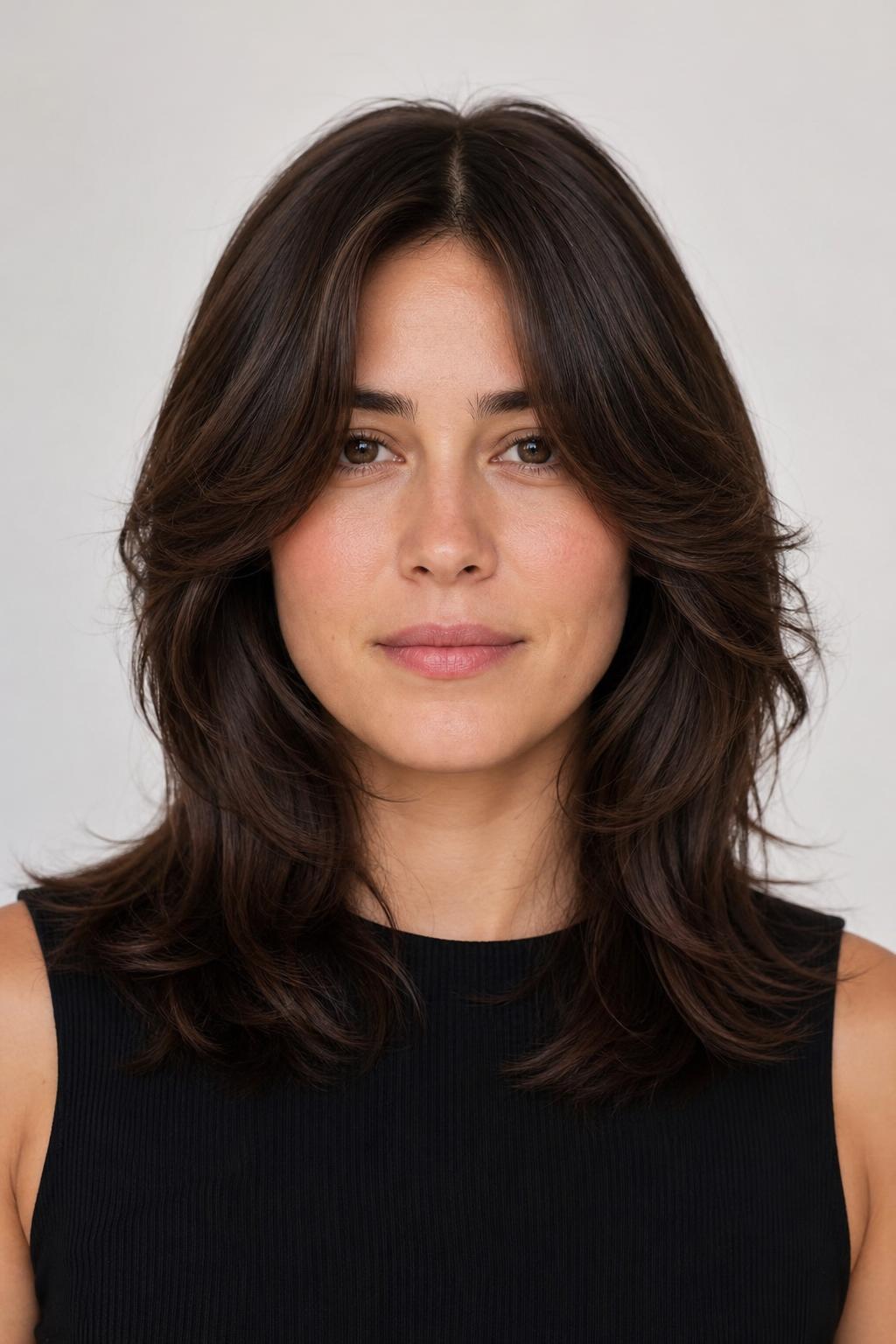
A butterfly fringe softens a square jaw when the longer pieces curve inward toward the cheekbones rather than falling straight. Ask your stylist to shape the longest sections with a slight inward bend so they frame and soften the corners of the face. The curved feathering trades the strong horizontal jaw line for gentle diagonal movement.
16. Butterfly Fringe with Curtain-Bang Roots
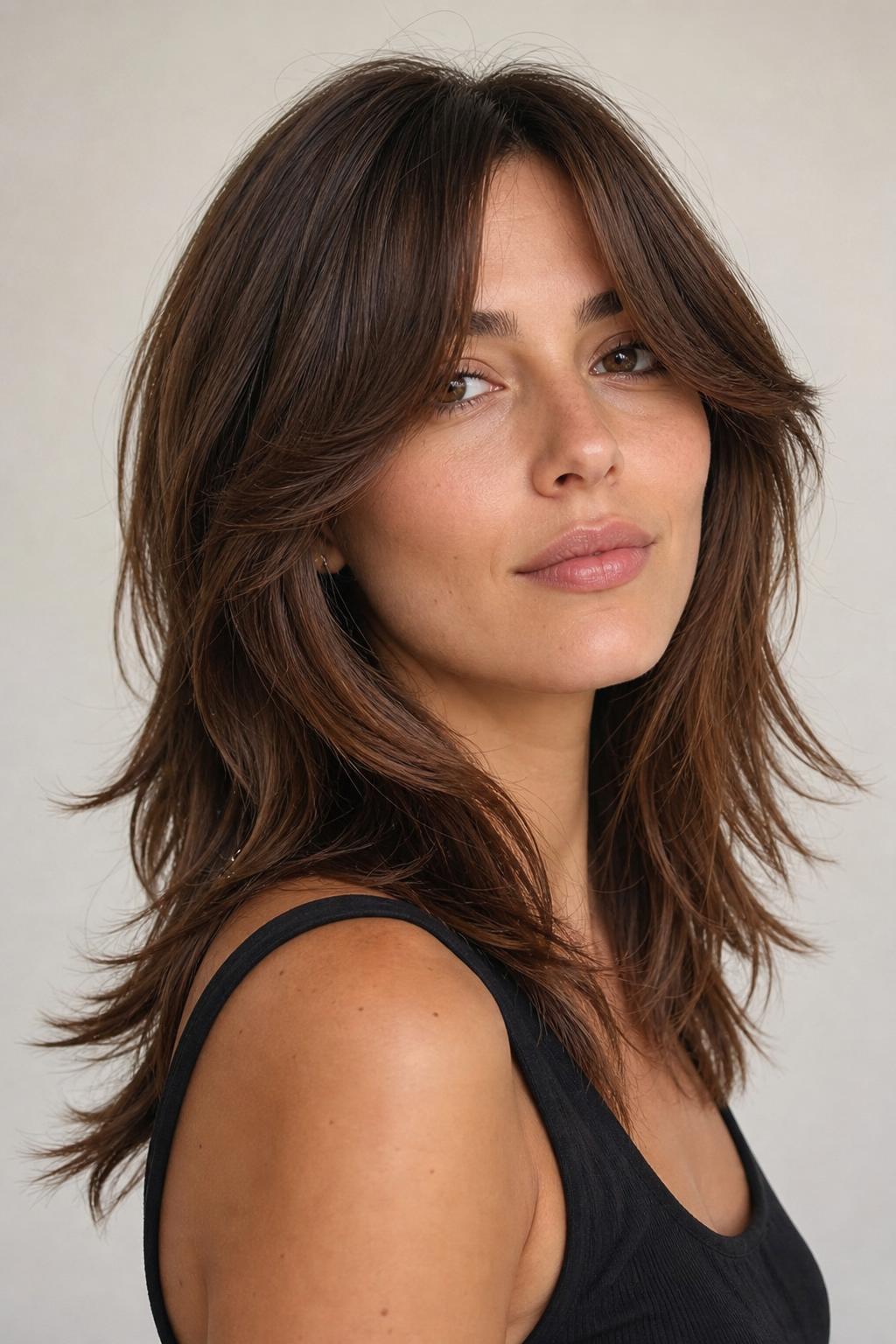
This hybrid keeps a curtain bang’s clean center part at the very front and adds the extra butterfly layers behind it for depth. Unlike a standard curtain fringe, the layered pieces underneath build volume and movement rather than a single flat panel. It is a good bridge if you already have curtain bangs and want to grow into the butterfly shape.
17. Razored Butterfly Fringe
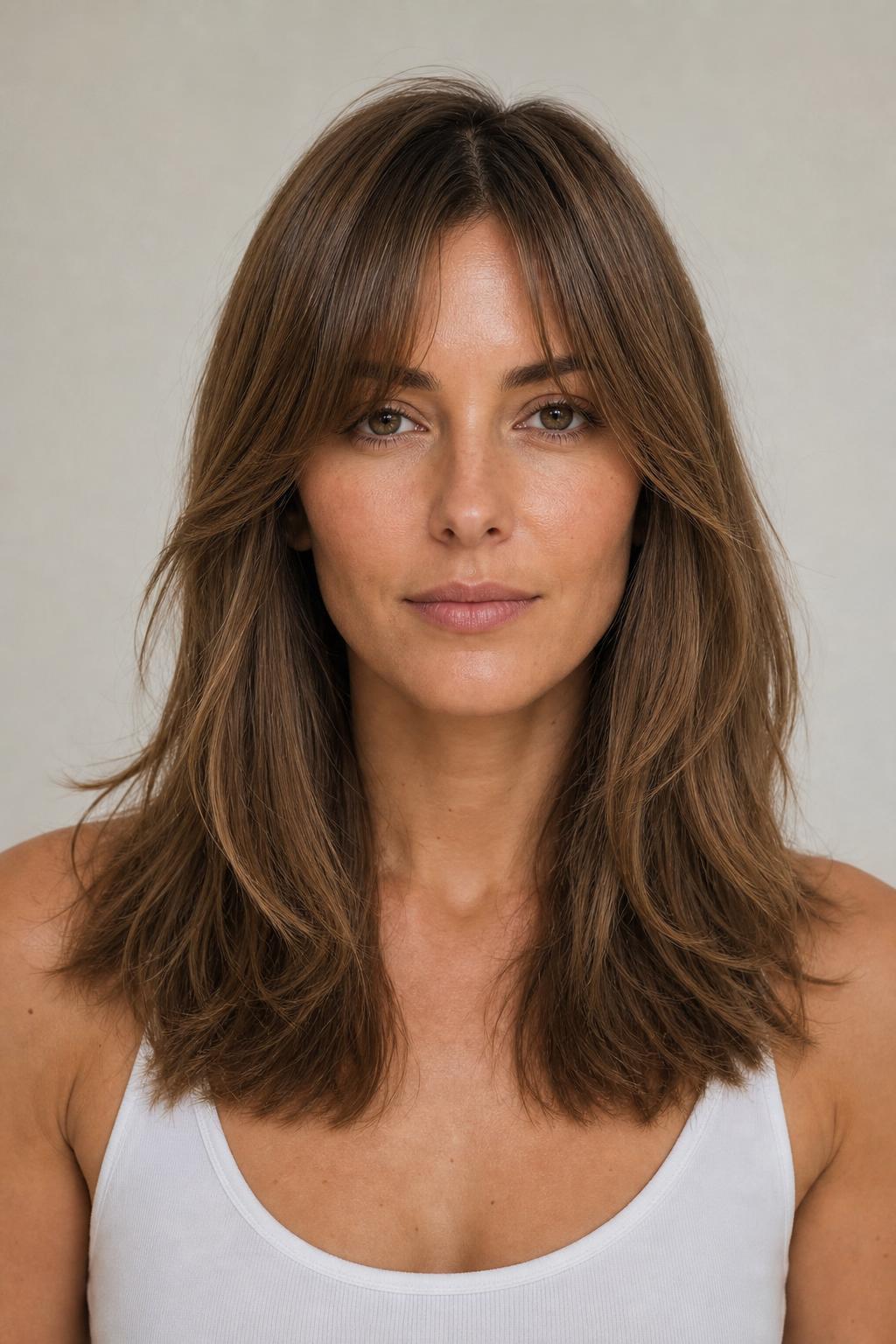
A razor gives the softest possible tips on a butterfly fringe, melting each layer into the next with no hard line. The technique suits medium hair that can carry the airy, wispy finish without looking thin. A razor removes weight fast, so choose a stylist who works with one often to avoid over-thinning the front.
18. Thick-Hair Butterfly Fringe
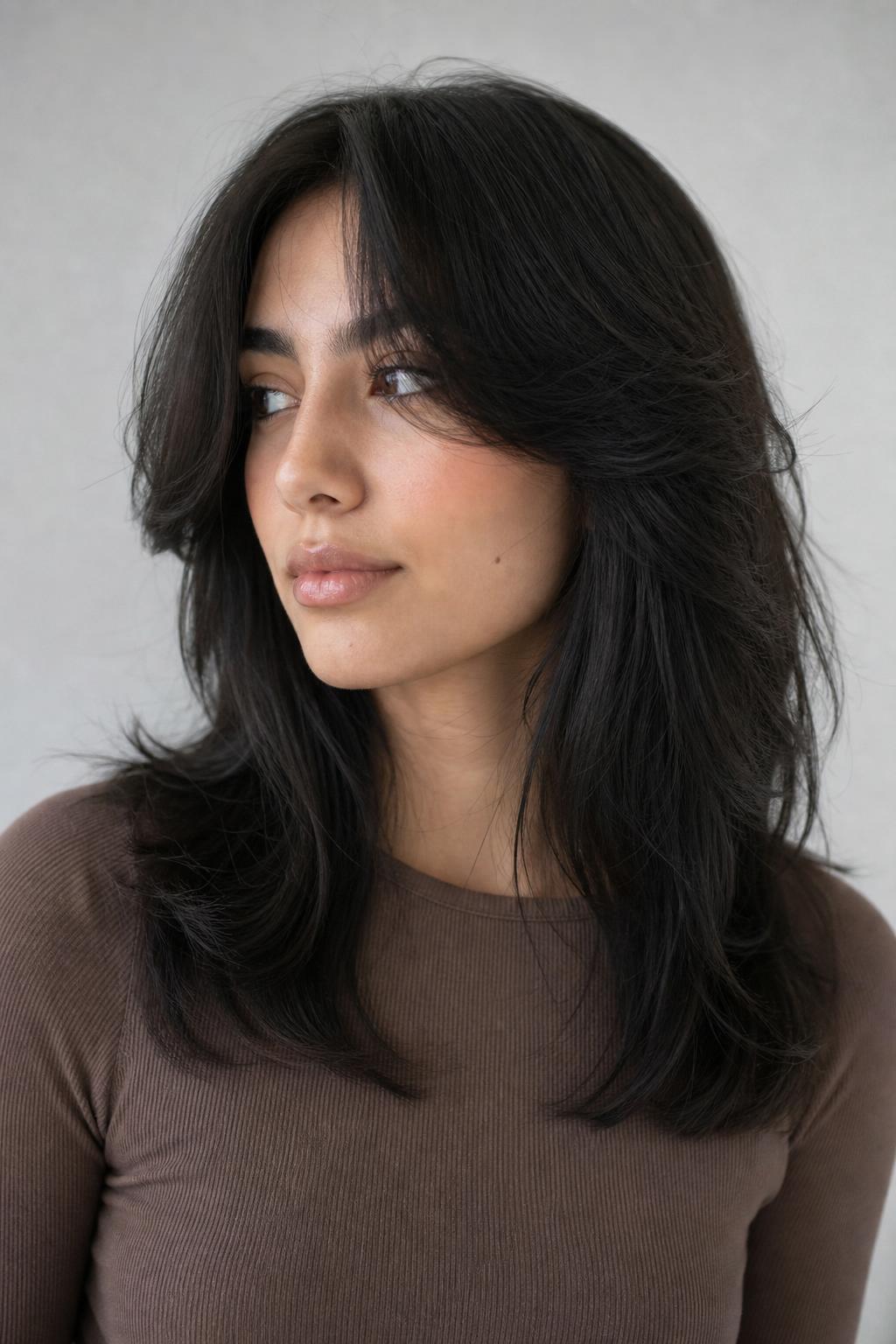
Thick hair needs internal layers cut into the butterfly fringe so the front pieces move instead of sitting as a heavy block. Removing weight from inside the fringe lets the feathered shape separate around the face. Without that thinning, thick hair can make the fringe look bulky rather than airy.
19. Blow-Out Butterfly Fringe
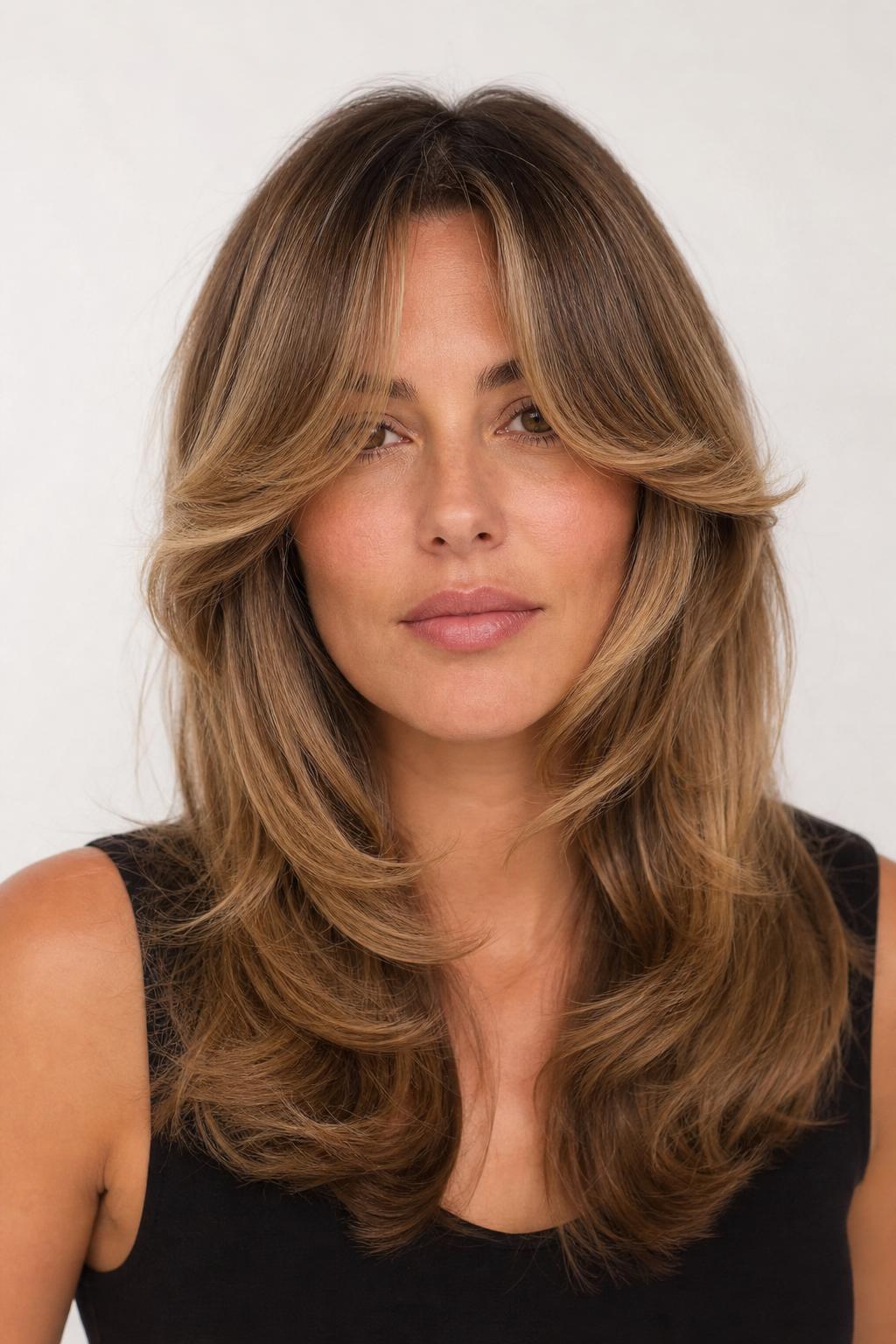
A full blow-out is where a butterfly fringe reaches its most glamorous, with the layers flicked back for maximum winged volume. Use a round brush at the roots and turn the ends away from the face to build the lift. This styled version needs the most effort, so save it for days when you have ten minutes at the mirror.
20. Soft Blended Blonde Butterfly Fringe
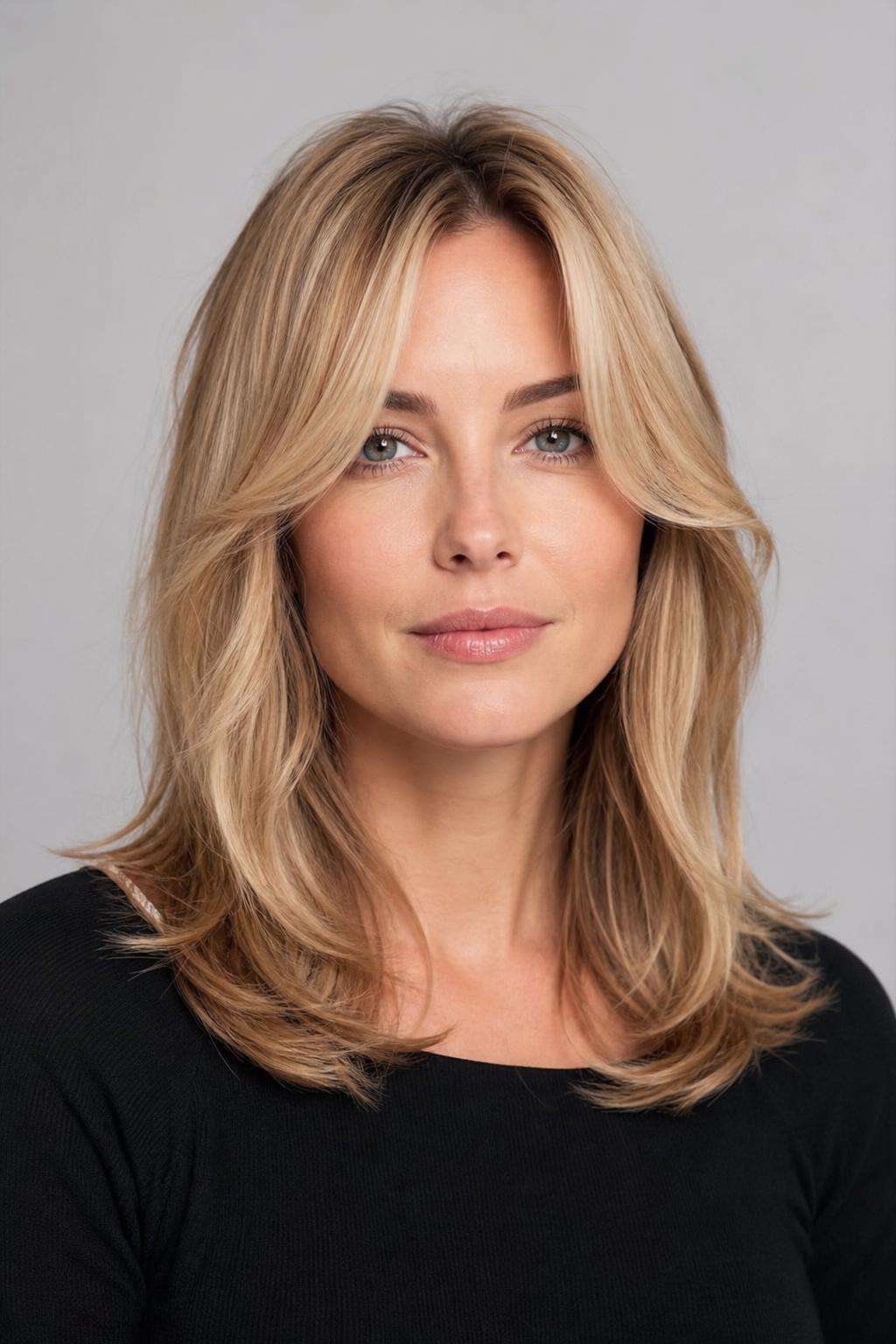
On a heart-shaped face, a butterfly fringe softens a wider forehead while the longer pieces add fullness toward a narrow chin. A soft blended blonde keeps the whole frame light and airy, which suits the delicate lower half of a heart face. The graduation from short to long does the balancing work on its own.
How a Butterfly Fringe Differs from Curtain Bangs
A butterfly fringe grew out of the curtain bang, so the two share a center-parted, face-framing shape, but the butterfly version is longer, wispier, and cut with many more layers. A curtain bang is usually one soft panel on each side; a butterfly fringe stacks several graduated layers that build volume and movement around the whole face. The practical difference is styling: curtain bangs can air-dry, while a butterfly fringe usually wants a few minutes with a round brush to reveal its winged shape.
| Feature | Butterfly Fringe | Curtain Bangs |
|---|---|---|
| Layering | Many graduated layers for volume | One soft panel per side |
| Length | Longer, wispier, blends into layers | Cheekbone to jaw, more contained |
| Styling | Round brush for winged volume | Can air-dry, low effort |
| Best for | Movement and volume around the face | A soft, easy, low-commitment frame |
If you want the easier, lower-effort version, the styles in our curtain bangs on straight hair and curtain bangs on curly hair collections are the natural starting point before you commit to the butterfly shape.
How to Choose a Butterfly Fringe for Your Face Shape
A butterfly fringe flatters most face shapes because you can move the shortest layer up or down to balance your proportions. The rule of thumb is to place the shortest pieces where you want to draw the eye and the longest where you want to soften.
| Face Shape | Best Butterfly Fringe | Avoid |
|---|---|---|
| Round | Shortest pieces at the eye for a lengthening vertical frame | Heavy horizontal fullness across the cheeks |
| Square | Longer pieces curved inward to soften the jaw | Blunt straight-across sections |
| Heart | Soft fringe over the forehead, length toward the chin | All the volume stacked at the temples |
| Oblong | Fuller fringe starting at the brow to shorten length | Long wispy pieces that add vertical length |
| Oval | Any length; balanced proportions carry every version | Nothing specific; most variations work |
What to Tell Your Stylist
Because a butterfly fringe and a curtain bang look similar in photos, name the layering so your stylist knows which one you mean. Say: “I want a butterfly fringe, not just curtain bangs, so please add several graduated layers, with the shortest at my cheekbone and the longest blending into my length.” Adding your face shape and where you want the shortest piece removes the last of the guesswork.
Stylist tip: Ask your stylist to cut the fringe with your hair dry and styled the way you normally wear it. A butterfly fringe cut wet can end up shorter than expected once it dries and springs up, especially on wavy or curly hair, and the layered shape only reveals itself when the hair is dry.
How to Style and Maintain a Butterfly Fringe
A butterfly fringe needs a trim every six to ten weeks depending on how short the front pieces are, and a few minutes of daily styling to show its winged shape. The tools that matter most are a round brush for volume, a light heat protectant, and a texturizing spray to keep the layers separated. The look relies on movement, so avoid heavy creams that flatten the front.
| Task | Frequency | Notes |
|---|---|---|
| Fringe trim | Every 6 to 10 weeks | Shorter versions need trimming sooner |
| Daily styling | 3 to 5 minutes | Round brush at the roots, ends flicked out |
| Product | Daily | Light texturizing spray, no heavy cream |
| Grow-out reshape | Every 8 to 10 weeks | Blend the fringe into layers as it grows |
When a Butterfly Fringe Is Not the Right Choice
A butterfly fringe suits most people, but a few situations point toward a different fringe or none at all.
- You want zero styling time: the winged shape needs a round brush to look right, so it is not a true wash-and-go. If you want a fringe you can air-dry and forget, standard curtain bangs are the easier choice.
- Your hair is very fine and sparse: heavy layering can thin out an already-delicate front. A soft, sheer fringe with minimal layers frames the face without removing precious density, as shown in our see-through bangs styles.
- You are growing out toward a blunt look: the graduated layers take months to catch up to one length. If a sharp, blunt fringe is your goal, cutting butterfly layers now only delays it.
FAQ
What Is the Difference Between a Butterfly Fringe and Curtain Bangs?
A butterfly fringe is a longer, wispier, more heavily layered version of curtain bangs. Curtain bangs are usually one soft panel on each side of a center part, while a butterfly fringe stacks several graduated layers that build volume and movement around the face. The butterfly version also needs more styling, since it relies on a round brush to reveal its winged shape.
Does a Butterfly Fringe Suit All Face Shapes?
A butterfly fringe suits most face shapes because you can adjust where the shortest layer falls. Placing the shortest pieces at the eye lengthens a round face, while curving the longer pieces inward softens a square jaw. Oval faces can wear almost any version, and a fuller fringe starting at the brow shortens a long or oblong face.
How Do You Style a Butterfly Fringe?
Style a butterfly fringe with a round brush and a blow-dryer, lifting the roots and turning the ends away from the face. This builds the winged volume that separates the layered pieces and shows the graduation from short to long. A light texturizing spray keeps the layers apart, while heavy cream flattens the shape.
Is a Butterfly Fringe High Maintenance?
A butterfly fringe is moderate maintenance, needing a trim every six to ten weeks and a few minutes of daily styling. It is more work than air-dry curtain bangs but less than a blunt fringe that has to stay a precise length. Longer, grown-out versions ask the least, since there is no short piece to keep in check.
Can You Get a Butterfly Fringe on Curly Hair?
Yes, a butterfly fringe works on curly hair when it is cut dry to account for how much the curls spring up. The stylist leaves the fringe longer than the final length so the curls land where you want once they shrink. A curl cream keeps the front spirals defined rather than frizzy.
Will a Butterfly Fringe Grow Out Awkwardly?
A butterfly fringe grows out more gracefully than a blunt bang because its layers blend into your length as they get longer. Within a couple of months the shortest pieces reach your face-framing layers and the fringe softens on its own. A reshape every eight to ten weeks keeps the grow-out looking deliberate.
A butterfly fringe gives you the movement and face-framing softness of short layers without cutting real length, which is why it has become the natural next step for anyone who loved curtain bangs and wanted more. Pull two or three of these looks to bring to your stylist, name the layering and where you want the shortest piece to fall, and be honest about how much daily styling you will actually do. Chosen for your hair type and face shape, a butterfly fringe frames your features with soft, winged movement that grows out as easily as it goes in.
Hair results vary based on your natural hair type, texture, density, and condition. Always consult with a licensed hairstylist before making significant changes, especially with chemical treatments or dramatic length changes. Photos may show styled results that require professional tools and products to replicate.