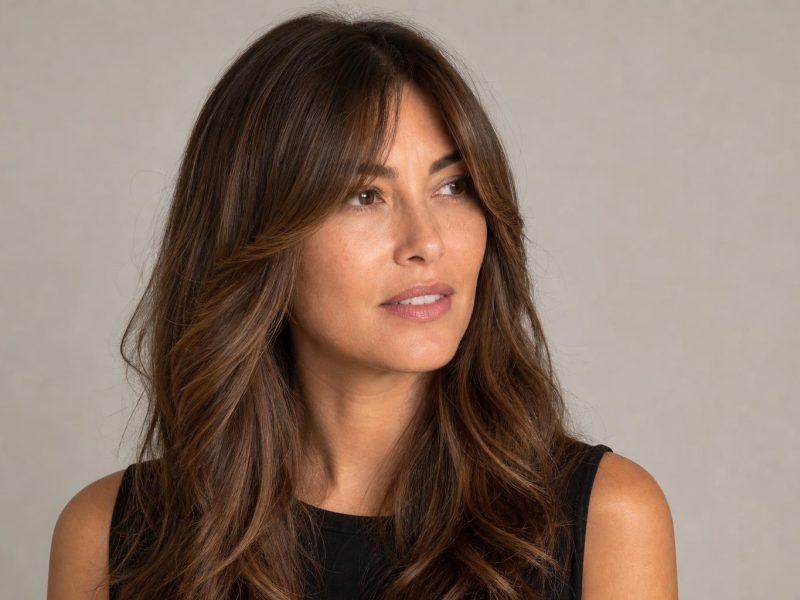



Curly bangs only work when they are cut for your specific curl pattern and shaped dry, since curls spring up and shrink as they dry, landing far higher than they look when wet.
Curly bangs can frame the face beautifully, but they fail when a stylist cuts them like straight bangs and ignores shrinkage. The fix is matching the bang shape and length to your curl type, then cutting dry so the curls land where you expect. Here are 25 curly bangs ideas, sorted by curl pattern, bang style, and the cut they pair with, so you can find a fringe that actually works with your texture.
The gallery moves through bangs by curl type, then specific bang styles, then how they pair with different cuts and lengths. After the photos you will find how curly bangs are cut, a face shape table, the exact language for your stylist, a styling and maintenance plan, and an honest look at when curly bangs are the wrong call.
| Factor | Details |
|---|---|
| Best for | Framing the face and softening the forehead on naturally curly hair |
| Maintenance | Trim every 6 to 10 weeks; daily refresh to define the curl |
| Works with | Type 2 waves through type 4 coils, cut for the pattern |
| Avoid if | You want a sleek, blunt fringe or have no time to refresh curls daily |
| Salon time | A dry-cut fringe adds 15 to 30 minutes to a cut |
Curly Bangs by Curl Type
Your curl pattern decides everything about how bangs will fall, from how much they shrink to how much volume they carry. Looser waves drape, tighter coils spring up high, and each needs a different starting length. These entries match the fringe to your texture.
1. Wavy Type 2 Bangs
Loose type 2 waves take a softer, slightly heavier fringe that drapes rather than springs up. A bottleneck shape, narrower at the top and flaring out, suits the gentle bend. Because waves can fall flat, a light mousse keeps the fringe from going limp by midday.
2. Type 3a Spiral Bangs
Springy 3a curls are the sweet spot for curly bangs, with enough bounce to form a soft, rounded fringe. A curl cream scrunched into damp hair sets the spiral before it dries. Cut to land at the cheekbone once the curls spring up.
3. Type 3b Defined Curl Bangs
Tighter 3b curls build real volume, so the fringe needs medium length to allow for bounce and movement. The defined ringlets frame the eyes with plenty of body. A custard locks the curl so the fringe holds its shape all day.
4. Type 3c Voluminous Bangs
Dense 3c curls make a full, voluminous fringe that reads bold and soft at once. Leave extra length to account for the significant shrinkage as they dry. Finger-coil a few pieces for definition where the curls clump unevenly.
5. Type 4a Coily Bangs
Tight 4a coils need a fringe cut slightly longer to allow for heavy shrinkage and shape retention. A curl-by-curl dry cut keeps the coils intact and the shape even. A defining custard worked in with the praying-hands method holds the coil pattern.
6. Type 4c Shaped Bangs
On 4c hair, a fringe works best shaped and picked into a soft, rounded forehead frame rather than left to hang. The dense coils carry serious volume. Keep them moisturized with a leave-in so the shape stays soft and defined.
7. Mixed-Texture Bangs
Plenty of people have looser curls at the front and tighter ones underneath, and a fringe can work with that mix. Let the natural pattern lead with one unifying product. Embracing the irregularity reads more natural than forcing every piece the same.
Curly Bang Styles
Beyond curl type, the shape of the fringe sets the whole mood, from soft curtains to a bold micro fringe. The right style depends on your face and how much commitment you want. These entries cover the most wearable curly bang shapes.
8. Curly Curtain Bangs
Curtain bangs split softly around the face and blend into the length, making them the easiest curly fringe to grow out. The center-split shape flatters nearly every face. For straight and wavy versions, see our face-framing bangs gallery.
9. Wispy Curly Bangs
A light, wispy curly fringe keeps the forehead airy and suits finer curls that a heavy fringe would overwhelm. The see-through pieces frame the eyes without weight. A light cream tames frizz without flattening the curl.
10. Full Curly Bangs
A fuller, rounder fringe makes a bold statement and suits dense, voluminous curls. The heavier shape covers more of the forehead. Be honest about upkeep, since a full curly fringe needs daily refreshing to stay defined.
11. Side-Swept Curly Bangs
Sweeping curly bangs to one side crosses the forehead on a soft diagonal that flatters a wider forehead. The sweep is easy to pin back on busy days. It is the most forgiving curly fringe for anyone nervous about commitment.
12. Curly Shag Bangs
Shag bangs blend into the layers of the cut so the fringe looks like a natural extension of the hair. The piece-y, lived-in shape suits curls beautifully. It is a low-commitment way to add a fringe without a hard line.
13. Curly Micro Bangs
A short, high micro fringe is a bold, fashion-forward choice that shows off the curl pattern at the forehead. The cropped length needs confidence and a strong face shape. Our micro bangs gallery shows the ultra-short range.
14. Windswept Curly Bangs
Windswept bangs are styled to lay across the forehead with each curl carefully placed for an undone, romantic finish. The relaxed shape reads effortless. A little gel scrunched in holds the placement without stiffness.
15. Spiral Face-Framing Bangs
Longer spiral bangs act as face-framing layers, with defined ringlets falling from the temple to the cheekbone. The look frames the face without true forehead coverage. It suits loose and tight curls alike.
Curly Bangs with Different Cuts
A fringe reads differently depending on the cut underneath it, and pairing the two well is half the result. Shags, bobs, and long layers all change how a curly fringe sits. These entries pair bangs with specific cuts.
16. Curly Bangs with a Shag
A curly shag with bangs is one of the most flattering pairings, with the fringe blending into heavy layers. The texture and the fringe work as one. Our long shag gallery shows how the layers carry curls.
17. Curly Bangs with a Wolf Cut
A wolf cut with curly bangs leans edgy, with the choppy crown layers flowing into a textured fringe. The bold shape suits curls that want movement. See our wolf cut gallery for the full silhouette.
18. Curly Bangs with a Bob
A curly bob with bangs frames the face top and bottom for a clean, balanced shape. The fringe keeps the focus up high while the bob frames the jaw. Cut both dry so the curl lands evenly all around.
19. Curly Bangs with a Pixie
A curly pixie with a soft fringe keeps things short and bold while the bangs add a frame. The cropped shape shows off the curl pattern fully. A little clay defines the fringe and the top together.
20. Curly Bangs with Long Layers
Long layered curly hair with a fringe keeps length while adding a face frame up front. The fringe softens the forehead without a heavy commitment. Curtain-style bangs blend best into long layers.
Curly Bangs by Length and Look
The length and finish of the fringe change the whole feel, from a short bold crop to long parted pieces. These final entries cover ways to wear and place curly bangs. Pick based on how much forehead you want to cover.
21. Short Bold Curly Bangs
A short curly fringe sits high and makes a confident statement that puts the curl pattern on display. The cropped length suits strong features and oval faces. It is the boldest length here and needs regular trims.
22. Long Curly Bangs
Longer curly bangs reach the cheekbones or below for a soft, low-commitment frame. The length is easy to tuck or pin when you want it off your face. It grows out gracefully into face-framing layers.
23. Middle-Part Curly Bangs
Splitting curly bangs down the center creates a soft curtain that frames both sides evenly. The middle part suits oval and heart faces. For more ways to wear it, see our middle part guide.
24. Voluminous Rounded Bangs
A rounded, voluminous curly fringe builds height and body at the forehead for a retro-soft shape. Diffuse the fringe forward to pump up the volume. It suits dense curls that hold their shape.
25. Curly Baby Bangs
Curly baby bangs sit very short and high for a daring, editorial look that celebrates the curl. The bold crop is not for the faint-hearted and demands a confident face shape. Keep them defined with a light gel and frequent trims.
How Curly Bangs Are Cut
The single most important rule with curly bangs is that they should be cut dry, in the hair’s natural curl state, rather than wet. Curly hair shrinks dramatically as it dries, so a fringe cut wet at eyebrow level can spring up inches higher once it dries, leaving you with a fringe far shorter than you wanted. Cutting dry lets the stylist see exactly where each curl lands and shape the fringe to fall at the right spot.
A skilled curl specialist often cuts curly bangs curl by curl, shaping the fringe into a soft V or rounded shape rather than a blunt line. This accounts for the way curls form their own outline rather than sitting in a straight row. The tighter your curl pattern, the more length the stylist should leave to allow for shrinkage, which is why a 4c fringe starts much longer than a wavy one.
Stylist tip: If a stylist reaches for a spray bottle to wet your fringe before cutting it, stop and ask for a dry cut instead. Wet-cutting curly bangs is the single most common reason curly fringes end up too short, and it is almost impossible to fix once the curls spring up. A curl specialist will already know to cut dry.
How to Choose Curly Bangs for Your Face Shape
Curly bangs draw attention to the forehead and frame the face, so matching the shape to your proportions keeps the result flattering. The goal is to use the fringe to balance your features. The table below pairs each face shape with the best curly bang.
| Face Shape | Best Curly Bang | Why It Works | Avoid |
|---|---|---|---|
| Oval | Almost any style | Balanced proportions take any fringe | Little to avoid |
| Round | Long or side-swept curly bangs | Length and diagonal lines lengthen the face | Short rounded bangs that add width |
| Square | Soft wispy or curtain bangs | Soft curls ease a strong jaw | Heavy blunt fringe that hardens the angle |
| Heart | Wispy or side-swept curly bangs | Light fringe softens a wider forehead | Very full bangs that add top-heavy width |
| Oblong | Full or rounded curly bangs | A fuller fringe shortens a long face | Long, sparse bangs that elongate further |
| Diamond | Curtain or face-framing curly bangs | Framing balances wider cheekbones | Bangs that narrow the forehead further |
If your face is round, keep curly bangs longer or side-swept so the diagonal and vertical lines lengthen the face. For an oblong face, the opposite helps, so a fuller, rounded fringe adds width and shortens the look. Square jaws soften with light, wispy curls rather than a heavy blunt fringe that echoes the angle.
What to Tell Your Stylist
Lead with your curl type and the word dry, since those two details prevent the most common curly-bang disasters. Try, “I have 3b curls and want soft curtain bangs that land at my cheekbones once they spring up, cut dry in my natural curl pattern.” That gives your pattern, the shape, the target length, and the cutting method.
Ask whether your stylist specializes in curly hair, because a general stylist may not know to cut dry or allow for shrinkage. Bring a photo of curly bangs on a similar curl type, not on straight hair, so the reference is realistic. Be clear about how much forehead you want covered.
Stylist tip: Ask your stylist to cut the fringe a touch longer than your target the first time, because you can always go shorter at the next visit but you cannot add length back. With curly hair, where shrinkage is unpredictable, that small buffer is the difference between a fringe you love and one you hide under a hat for weeks.
How to Style and Maintain Curly Bangs
Curly bangs need daily attention to stay defined, since the forehead section flattens and frizzes faster than the rest of your hair from contact with your skin and hands. The good news is that styling takes only a couple of minutes once you know the routine. Refreshing the curl each morning is the key.
| Aspect | What to Do |
|---|---|
| Trim frequency | Every 6 to 10 weeks to keep the shape |
| Daily refresh | Mist with water, scrunch in a little mousse or gel |
| Products | Lightweight curl cream or gel; avoid heavy oils on the fringe |
| Drying trick | Blow-dry the fringe opposite the way it sits, then back |
| Night care | Pineapple or pin the fringe to protect the curl |
A handy trick for a fringe that will not sit right is to blow-dry it in the opposite direction first, then lightly back the way you want it, which gives the curls more flexible placement. Drench the fringe with water before applying any product, since curls form best from soaking wet. For more curl-friendly cuts and color, browse our brown balayage gallery for dimension that flatters curly textures.
When Curly Bangs Are Not the Right Choice
Curly bangs suit a lot of people, but a few situations point elsewhere.
- No time for a daily refresh will leave curly bangs frizzy and flat by midday, since the fringe needs more attention than the rest of your hair. A longer face-framing piece you can tuck back is more forgiving.
- A strong cowlick or irregular growth pattern at the hairline can fight a fringe, pushing the curls in directions you do not want. A stylist should assess your hairline before committing to bangs.
- Wanting a sleek, blunt fringe is simply a different goal that curly hair cannot deliver without daily heat styling. If you love a precise straight fringe, a fringe is not the low-effort choice for your texture.
FAQ
Should Curly Bangs Be Cut Wet or Dry?
Curly bangs should always be cut dry, in the hair’s natural curl state, because curls shrink significantly as they dry. A fringe cut wet at eyebrow level can spring up inches higher once dry, leaving it far too short. A dry cut lets the stylist see exactly where each curl will land.
How Long Should Curly Bangs Be Cut?
It depends entirely on your curl pattern, since tighter curls shrink more and need to start longer. A loose wave can be cut close to the target length, while a 4c coil should start well below it to allow for shrinkage. Always ask your stylist to cut a little long the first time.
How Do I Style Curly Bangs?
Drench the fringe with water, scrunch in a lightweight mousse or gel, and let the curls reform, diffusing on low heat if you want more volume. For a fringe that will not sit right, blow-dry it opposite the way it sits, then lightly back. Avoid heavy oils, which weigh the curls down.
What Curl Types Work Best with Bangs?
Every curl type from loose waves to tight coils can wear bangs, as long as the fringe is cut for the pattern. Type 3 curls are often called the sweet spot because their bounce forms a natural rounded fringe. Tighter 4-type coils work beautifully too when shaped and cut curl by curl.
How Often Do Curly Bangs Need Trimming?
Curly bangs hold their shape longer than straight bangs because the curl disguises grow-out, so a trim every 6 to 10 weeks is usually enough. The looser your curl, the sooner you may want a shape-up. Watch for the fringe starting to fall into your eyes when stretched.
Can I Get Curly Bangs with a Cowlick?
You can, but a cowlick at the hairline can push the fringe in an unwanted direction, so the stylist should work with the growth pattern rather than against it. Cutting the fringe slightly longer gives more weight to control a cowlick. Have your stylist assess your hairline before committing.
Curly bangs reward you with a soft, face-framing fringe when they are cut for your curl pattern and shaped dry to allow for shrinkage. Identify your curl type, choose a bang shape that suits your face, and insist on a dry cut from a stylist who knows curly hair. Styled with a quick daily refresh, curly bangs give you a flattering frame that works with your natural texture instead of fighting it.
Hair results vary based on your natural hair type, texture, density, and condition. Always consult with a licensed hairstylist, ideally a curl specialist, before cutting a fringe into curly hair. Photos may show styled results that require professional tools and products to replicate.