Preview:
40 wolf cut ideas by length and texture, from short and choppy to long and layered, with salon-ready tips.
Shorter at the crown, longer at the ends, and layered with purpose, forty wolf cut variations to match your next salon appointment.
A wolf cut blends the volume of a shag with the structure of a mullet. It uses shorter, heavily textured layers around the crown that cascade into longer pieces at the back and sides. The result is a cut with built-in movement and an intentionally undone feel. Whether you have straight, wavy, or curly hair, the wolf cut adapts by adjusting where the layers start and how much weight gets removed. Below are 40 stylist-approved variations organized by length, bang style, and texture, each with notes on who it suits and how to ask for it.
You’ll find options grouped into short, medium, and long versions, plus dedicated sections for wolf cuts with bangs and for curly or wavy textures. After the gallery, there’s a face shape compatibility breakdown and a salon communication guide, so you can walk in with the right reference photo and the right vocabulary.
| Feature | Wolf Cut Details |
|---|---|
| Best For | Medium to thick hair; wavy and curly textures get the most natural movement |
| Maintenance Level | Low to moderate; trims every 6–8 weeks to keep the layers defined |
| Styling Time | 5–15 minutes depending on length and texture |
| Works With | Straight, wavy (2A–2C), curly (3A–3B); layering approach changes per type |
| Avoid If | Very fine hair with low density — heavy layering can expose thin areas |
Short Wolf Cuts
A short wolf cut hits between ear and chin level, concentrating all that layered volume around the crown and cheekbones. The shorter length amplifies the mullet-meets-shag silhouette. You get more visible contrast between the top layers and the tapered ends. If you’re considering short layered haircuts but want something with more edge, these deliver that extra punch.
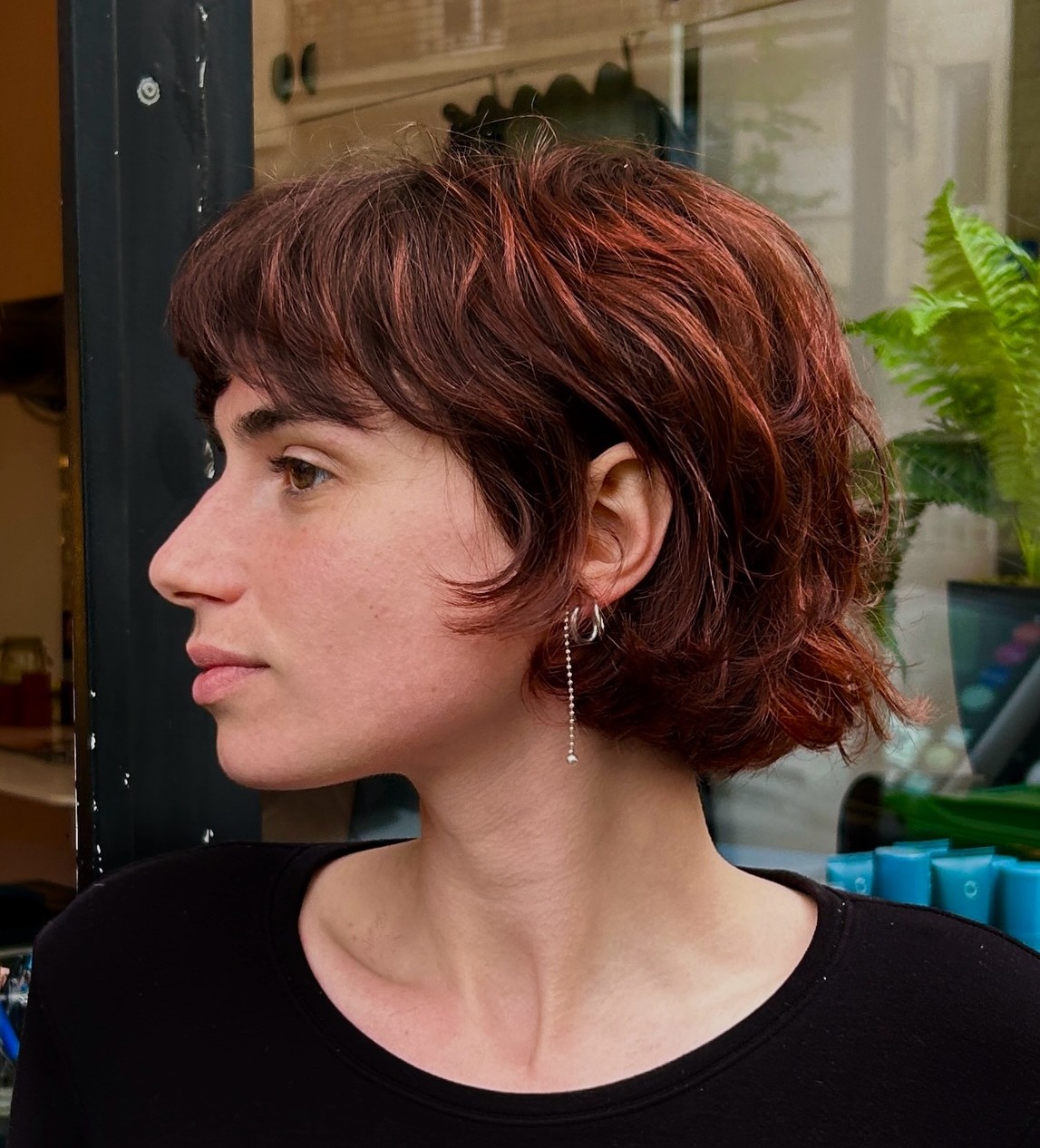
1. Cropped Wolf Cut with Micro Layers
Razor-cut micro layers through the crown create a spiky, textured top that blends into slightly longer pieces at the nape. Ideal for thick, straight hair that holds shape without product. A fingertip of texturizing paste worked through dry hair is all it needs.
2. Ear-Length Wolf Cut for Thick Hair
Keeping the length at the ears lets thick hair fan out naturally, creating the rounded, voluminous silhouette the wolf cut is known for. The heavy internal layers remove bulk without collapsing the shape. Trims every 5–6 weeks keep this one from getting unruly.
3. Chin-Length Wolf Cut with Side Part
A deep side part adds asymmetry to a chin-length version, which softens square jawlines by directing volume toward one side. Ask your stylist for point cutting at the ends. It creates softer tips than blunt cutting and works especially well on medium-density hair.
4. Platinum Short Wolf Cut
The choppy layers in a short wolf cut gain extra dimension with a platinum blonde shade. Each layer catches light differently, making the texture look even more pronounced. Keep in mind that lightening to platinum requires multiple salon sessions and a solid bond-repair routine between visits.
5. Textured Pixie Wolf Hybrid
Blending the wolf cut silhouette with a longer pixie results in a low-maintenance shape that works for both casual and professional settings. The crown is full and textured while the sides taper closer to the head. Wavy textures get the most effortless look here.
6. Short Wolf Cut with Shaved Nape
An undercut at the nape adds a modern edge and reduces weight on hair that tends to get bulky at the back. From the front, it looks like a standard short wolf cut; the shaved section only reveals itself when the hair moves. Expect nape touch-ups every 3–4 weeks.
7. Copper-Toned Jaw-Length Wolf Cut
Warm copper tones amplify the dimension in choppy jaw-length layers, making each layer pop against the next. The color works particularly well on fair to medium skin with warm undertones. A color-safe shampoo and gloss treatment every few weeks will keep the copper from fading to brassy.
8. Short Messy Wolf Cut for Fine Hair
Fine hair can handle a short wolf cut if the layers are internal rather than heavily razored. This preserves enough density at the perimeter while building volume at the crown. A root-lift spray applied before blow-drying adds the body that fine strands lack naturally. Keep the longest pieces at chin level to maintain the illusion of fullness.
Medium-Length Wolf Cuts
Medium wolf cuts fall between chin and collarbone, offering the most versatile version of the style. There’s enough length to pull into a loose ponytail on off days, while the layering still creates that signature crown volume. If you’ve been exploring medium layered haircuts, a wolf cut takes the concept further with more dramatic layer contrast.
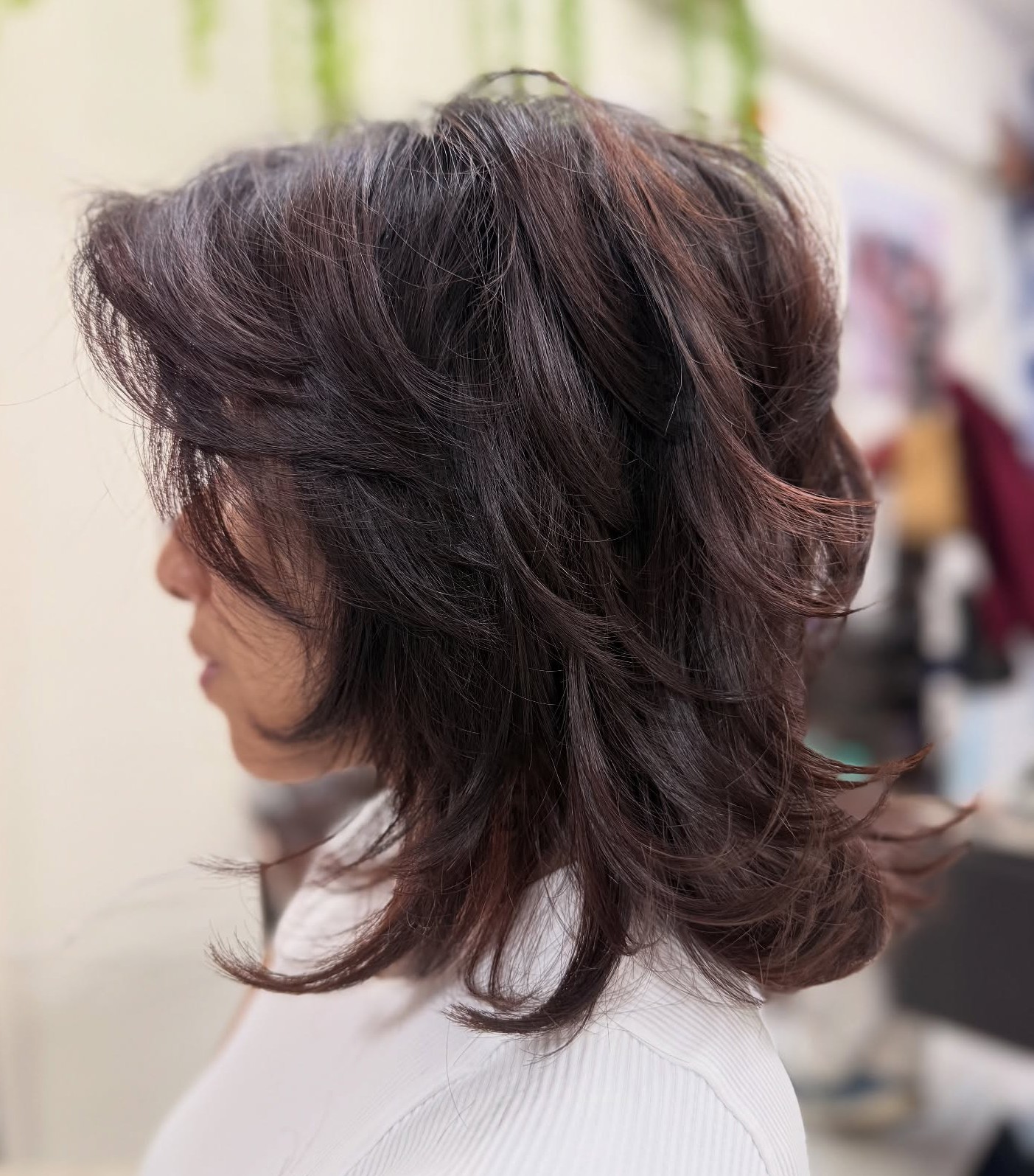
9. Classic Shoulder-Length Wolf Cut
Layers start at cheekbone level and cascade to the shoulders, creating the most recognizable wolf cut shape. Stylists often recommend this length for first-timers because it keeps enough length for flexibility while showing off the cut’s structure. Air-drying with a lightweight mousse is usually enough to define the layers.
10. Razored Wolf Cut for Thick Wavy Hair
Razor cutting removes weight from the interior of thick wavy hair, letting the waves move freely instead of sitting heavy. The razored ends create a wispy, feathered finish that looks effortless, like the hair landed exactly where it wanted to. A diffuser on low heat enhances the wave pattern without frizz.
11. Face-Framing Wolf Cut with Money Pieces
Blonde or caramel money pieces around the front layers draw attention to the face-framing effect that makes the wolf cut so flattering. The lighter strands follow the shortest layers, creating a natural spotlight effect around the cheekbones. Stylists typically hand-paint these pieces for the most seamless blend.
12. Blunt-Ends Wolf Cut
Keeping the bottom perimeter blunt while layering heavily through the crown creates an interesting contrast: structured at the ends, wild at the top. Straight hair types show off this contrast best, and it provides a slightly more polished version of the wolf cut for professional settings.
13. Wolf Cut with Curtain Bangs
Curtain bangs soften the overall silhouette by easing the transition between the short crown layers and the rest of the length. They frame the face symmetrically and work well on oval and heart-shaped faces. Bring a round brush and a few minutes of patience — curtain bangs need directional blow-drying to fall correctly.
14. Tousled Wolf Cut for Straight Hair
Straight hair can look flat in heavily layered cuts, but a wolf cut with texturizing cuts at the mid-lengths adds the appearance of movement without relying on natural wave. Scrunching a sea salt spray into damp hair before air-drying creates a tousled effect that straight textures don’t produce on their own.
15. Collarbone Wolf Cut with Shadow Root
A shadow root (dark roots gradually melting into a lighter mid-length and ends) reduces maintenance because there’s no harsh regrowth line. On a collarbone-length wolf cut, this color technique adds depth to the layers. The darker roots at the crown give the illusion of even more volume. Touch-ups stretch to every 10–12 weeks.
16. Disconnected Wolf Cut with Heavy Layers
Disconnected layers, where the short crown pieces are noticeably different in length from the bottom, push the wolf cut into its edgiest territory. The gap between layers can be 4–6 inches, creating a bold visual statement. This variation looks striking on thick hair but can appear sparse on thinner textures, so be honest with your stylist about your density.
17. Wolf Shag Hybrid
Sitting between a classic shag and a full wolf cut, this hybrid uses softer, more graduated layering that blends the crown volume into the length. The transition is gentler than a true wolf cut, making it a good entry point if you want the look without the extreme contrast. Medium-density hair in the 2A–2C wave range gets the most natural result.
Long Wolf Cuts
Long wolf cuts keep the back and sides past the collarbone, while building the same layered volume at the crown. The extra length means the layers have more room to blend, so the mullet element is less pronounced and the overall effect is more flowing. If you’re attached to your length but want a layered cut with more personality, a long wolf cut delivers texture without the big chop.
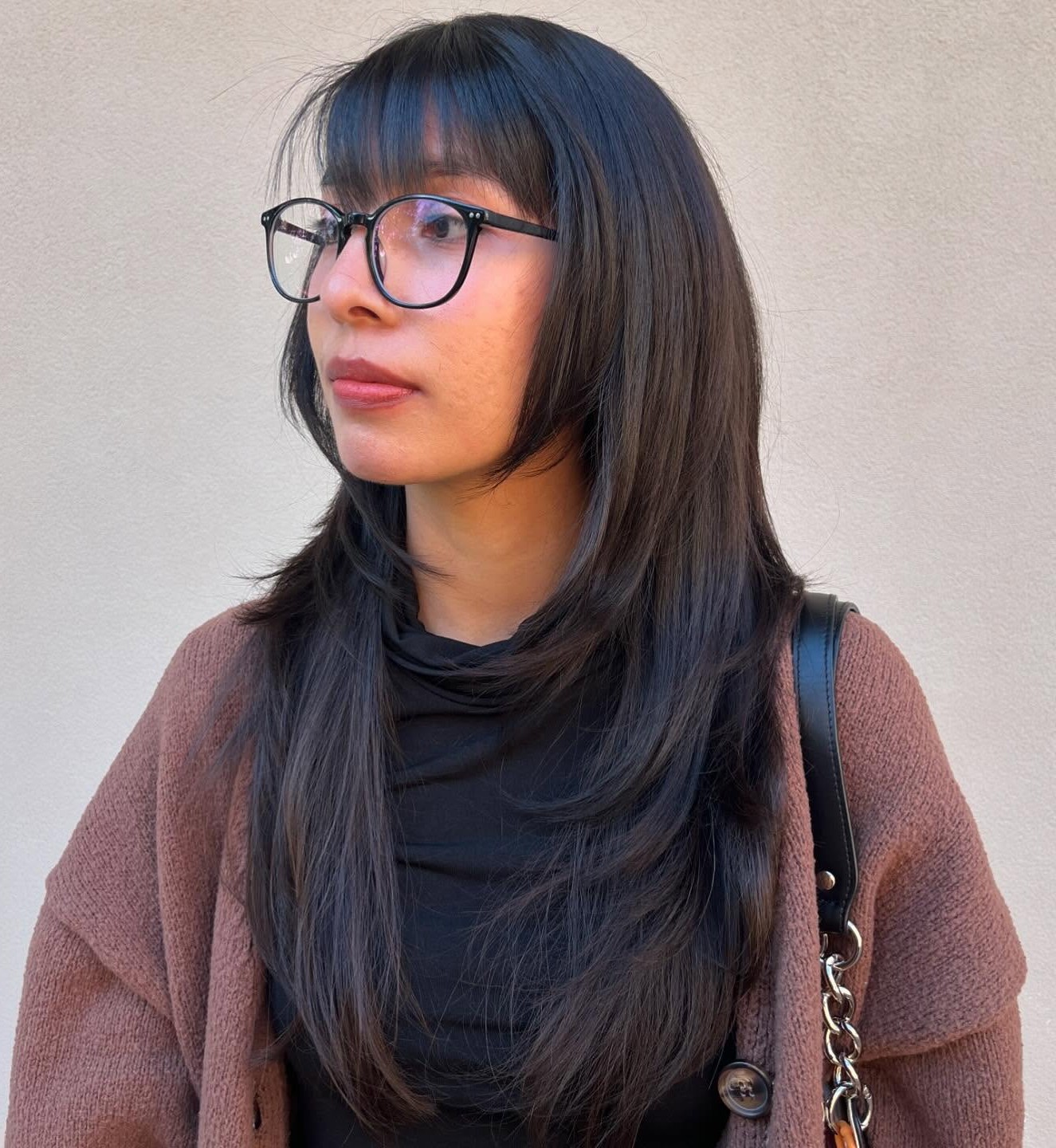
18. Waist-Length Wolf Cut with Soft Layers
Layers starting at jaw level and gradually lengthening to the waist create a waterfall effect that adds movement without removing too much weight. This version suits thick hair that can afford to lose some bulk. Keep in mind that the longest pieces will need occasional dusting to prevent scraggly ends.
19. Long Wolf Cut for Oval Faces
Oval faces have the proportional balance to handle the heavy crown layering without the face looking wider or longer. Layers framing the cheekbones highlight the face’s natural symmetry. Ask your stylist to avoid too much volume directly at the temples. That’s where the shape can tip from flattering to overwhelming.
20. Balayage Long Wolf Cut
Hand-painted balayage highlights catch the layered dimension of a long wolf cut in a way that traditional foil highlights don’t. The color transitions follow the layers naturally. Warm caramel on a brunette base or icy blonde on a dark ash base both work well here. The color refresh schedule is forgiving, typically every 12–16 weeks.
21. Long Choppy Wolf Cut
Heavy point cutting throughout the length creates choppy, piece-y ends that look deliberately undone. A common issue clients face with this variation is that it can read messy rather than intentional on hair that hasn’t been freshly styled, so have a texturizing spray in your routine. Thick, straight to wavy hair holds the choppy texture best.
22. Layered Wolf Cut with V-Shape Back
Shaping the back into a V rather than a straight line adds a subtle detail that elevates a long wolf cut. The pointed back creates a slimming visual line from behind. The V-shape also helps the layers fall with more outward movement at the ends. Expect trims every 7–8 weeks to maintain the point.
23. Red-Toned Long Wolf Cut
Rich auburn and burgundy tones bring warmth and dimension to long layers, making the crown-to-end contrast pop even more. Red shades fade faster than most other colors, so a sulfate-free, color-depositing conditioner used once a week is non-negotiable. The payoff is a head-turning color that interacts beautifully with layered movement.
24. Long Wolf Cut with Wispy Ends
Thinning the ends with texturizing shears creates a wispy, barely-there finish that softens the overall look. On fine to medium hair, wispy ends make the cut appear lighter and more effortless, but avoid going too thin, or the ends will look see-through. Stylists generally recommend keeping the top half denser and tapering only the bottom third.
25. Mid-Back Wolf Cut with Center Part
A center part paired with a long wolf cut creates clean symmetry, making the face-framing layers mirror each other perfectly. Heart-shaped faces benefit most from this combination because the layers add width at the jaw where the face naturally narrows. Medium-hold hairspray at the roots gives the crown lift that a center part tends to flatten.
26. Long Wolf Cut for Asian Hair
Straight, coarse Asian hair types hold the wolf cut structure exceptionally well. The natural weight of the hair keeps the longer sections sleek while the layered crown fans out. Slide cutting (where the shears glide along the hair shaft) creates the smoothest layer transitions on this texture. A lightweight serum at the mid-lengths adds shine without weighing the layers down.
Wolf Cuts with Bangs
Adding bangs to a wolf cut changes its entire personality. The type of bang (curtain, wispy, full, or micro) determines whether the cut leans retro, edgy, or softly framed. Bangs also bridge the gap between the short crown layers and the face, making the transition look more deliberate. If you’re considering pairing bangs with layers, the wolf cut is one of the most natural fits because the graduated crown already creates a bang-like effect at its shortest point.

27. Full Fringe Wolf Cut
A thick, blunt fringe sitting just above the eyebrows adds a retro ’70s feel to the wolf cut’s modern layering. This combination draws attention straight to the eyes and brow line. Oval and oblong face shapes suit full fringes best, while round faces may find the straight-across line widens their appearance.
28. Wispy Bangs on a Medium Wolf Cut
Wispy bangs feel more casual and forgiving than a full fringe, blending into the side layers without a hard line. They’re a good choice if you’re new to bangs because they grow out more gracefully than thicker options. Point-cutting the bang sections rather than blunt cutting keeps the airy, separated look.
29. Bottleneck Bangs with Wolf Layers
Bottleneck bangs sit between curtain bangs and a full fringe. They blend seamlessly into a wolf cut’s layering because the bang itself is already tapered. When sitting in the chair, ask your stylist to keep the center of the bang at eyebrow level and the sides at cheekbone level.
30. Micro Bangs on a Short Wolf Cut
Micro bangs (cut well above the brow) paired with a short wolf cut create the most editorial, fashion-forward version of this style. The look is unapologetically bold and works best on confident wearers with smaller foreheads and defined features. A tiny amount of pomade keeps micro bangs in place without making them look greasy.
31. Asymmetric Bangs with Wolf Cut
Asymmetric bangs are longer on one side and shorter on the other. They add a creative twist that makes a wolf cut feel custom. Stylists use this technique to balance uneven facial features or to complement a deep side part. The asymmetry needs precision cutting, so bring a clear reference photo to your appointment.
32. Birkin Bangs on a Long Wolf Cut
Named after the effortless fringe Jane Birkin made iconic, these slightly parted, just-past-the-brow bangs add French-girl ease to a longer wolf cut. They require minimal styling. Just finger-comb them after washing and let them air-dry. Best on straight to slightly wavy hair; very curly textures will need flat iron touch-ups to keep the fringe falling flat.
33. Side-Swept Bangs with Wolf Cut
Side-swept bangs direct attention diagonally across the face, which visually elongates round or square face shapes. On a wolf cut, they merge into the face-framing layers naturally, creating a cohesive sweep from the bang through the cheekbone pieces to the collarbone. Blow-dry the bang section with a round brush aimed toward the ear for the best shape.
Wolf Cuts for Curly and Wavy Hair
Curly and wavy hair textures are arguably where the wolf cut looks its most natural. The built-in texture fills out the layers without any styling required. Curls spring into the layered shape on their own, creating volume at the crown that straight-haired wolf cuts need product and tools to achieve. The key difference is in how the layers are cut: a stylist experienced with textured hair will cut curls dry to account for shrinkage and spring pattern.

34. Type 2B Wavy Wolf Cut
S-shaped waves (2B pattern) fill out the wolf cut silhouette without needing diffusing or scrunching. Layers starting at the cheekbone let the waves fan outward naturally, creating a full, face-framing shape. A lightweight curl cream applied to damp hair defines the wave pattern without stiffness.
35. Curly Wolf Cut for 3A Spirals
Loose spiral curls (3A) spring into the wolf cut’s crown volume beautifully, but shrinkage means the cut will sit 2–3 inches shorter than it looks wet. A stylist who specializes in curly cutting should shape this dry, section by section, to control exactly where each layer falls. Gel applied with the praying-hands method gives definition without crunch when scrunched out after drying.
36. Coily Wolf Cut for 3B–3C Textures
Tighter coils create a dramatic crown silhouette that sits high and full, tapering into elongated coils at the back and sides. The layering needs to work with the curl’s natural shape, as over-thinning will cause frizz and breakage on coily textures. A leave-in conditioner and curl-defining cream layered together keep coils hydrated and clumped.
37. Wolf Cut on Wavy Hair with Curtain Bangs
Curtain bangs on wavy hair curve outward naturally at the ends, framing the face with a soft swooping motion that straight-haired curtain bangs need a round brush to achieve. Cut the bangs slightly longer than you think you want — wavy hair will shorten them as they dry. A quick touch with a flat iron only at the root of the bangs gives the cleanest part line.
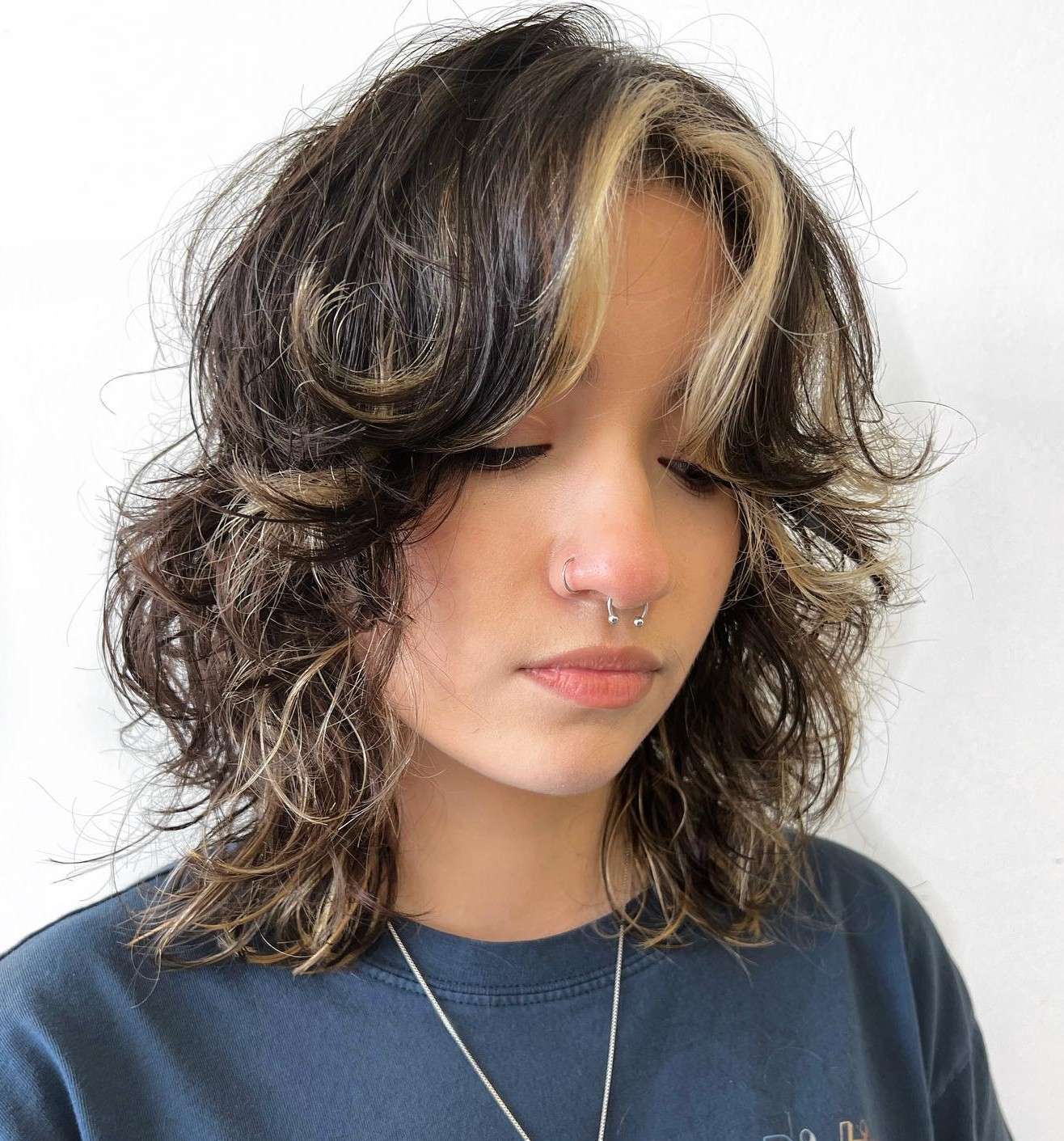
38. Diffused Wolf Cut for Frizz-Prone Hair
Frizz-prone hair benefits from the wolf cut’s layering because it distributes volume intentionally rather than letting it balloon unpredictably. Using a diffuser on medium heat with a microfiber towel scrunch beforehand controls the frizz while enhancing texture. An anti-humidity serum on the outer layers is the finishing step that locks the style in place.
39. Beach Wave Wolf Cut
Achieved with a 1.25-inch curling iron on straight or slightly wavy hair, the beach wave wolf cut mimics natural texture that the cut then amplifies through its layering. Alternate the curl direction for a more organic wave pattern. A sea salt spray or texture mist adds grit and hold to keep the waves defined through the day.
40. Tight Curly Wolf Cut with Volume at the Crown
Maximizing volume at the crown on tight curls (3B–3C) by concentrating the shortest layers in a 3-inch radius around the top of the head creates a halo-like effect. The length at the back and sides can reach the shoulders or beyond, giving a dramatic long-to-short ratio. Refresh this cut between washes by rewetting the crown with a spray bottle and reapplying curl cream to reshape any flattened areas.
How to Choose the Right Wolf Cut for Your Face Shape
The wolf cut’s layered structure makes it adaptable to most face shapes. But where the layers start, how much volume is at the crown, and whether bangs are added can make or break the look. Stylists approach each face shape differently to balance proportions rather than working against them.
| Face Shape | Best Wolf Cut Approach | Avoid |
|---|---|---|
| Oval | Any length works; layers starting at cheekbone level highlight balanced proportions | Excessive crown volume that elongates the face further |
| Round | Medium to long wolf cut with layers below the chin; side part to add asymmetry | Short wolf cuts that add width at cheek level; full blunt fringes |
| Square | Soft, face-framing layers with curtain or wispy bangs to soften the jawline | Blunt layers that end exactly at jaw level, emphasizing angularity |
| Heart | Layers that add width at jaw level; center part; medium to long length | Heavy crown volume with no width below |
| Oblong | Short to medium length with full bangs that visually shorten the face | Long wolf cuts with center parts that add vertical length |
| Diamond | Layers that fill width at forehead and jaw; side-swept bangs | Slicked-back styling that emphasizes wide cheekbones |
Stylist tip: Bring at least two reference photos to your appointment: one showing the overall length and layering you want, and one showing how the cut frames a face shape similar to yours. Two angles give your stylist a much clearer picture than one alone.

What to Tell Your Stylist Before Getting a Wolf Cut
Walking into the salon with the right language makes the difference between leaving with the wolf cut you envisioned and one that misses the mark. Not all stylists define a wolf cut the same way, so being specific about the characteristics you want narrows the gap between expectation and result.
Start by describing the level of layer contrast you’re after. “Disconnected” means a dramatic jump between the shortest and longest pieces. “Blended” means the layers graduate more smoothly. Then specify where you want the shortest layers to start (crown only, cheekbone level, or jaw level), because this single measurement shapes the entire cut. If you want bangs, mention the type by name: curtain, wispy, micro, or full fringe.
Mention your daily styling commitment honestly. If you don’t use heat tools, tell your stylist so the cut can be shaped to air-dry well. If you’re willing to spend ten minutes with a round brush and dryer, that opens up more polished variations. Stylists often recommend starting with a more conservative version on the first visit. Crown layers can always be cut shorter next time, but you can’t add length back if they go too far.

FAQ
Is a Wolf Cut High Maintenance?
A wolf cut is generally low to moderate maintenance depending on the length and texture. Wavy and curly hair types can air-dry and let their natural texture do the work, while straight hair may need a few minutes with a texturizing spray or curling iron. Trims every 6–8 weeks keep the layers defined and prevent the grow-out from losing its shape.
Can I Get a Wolf Cut on Fine or Thin Hair?
Yes, but the approach needs adjustment. Heavy razoring or excessive thinning will make fine hair look sparse at the ends. Ask your stylist for internal layers and point cutting instead. These techniques build volume at the crown without sacrificing density at the perimeter. A shorter version (chin to shoulder) typically works better than a long wolf cut on fine hair.
How Does a Wolf Cut Differ from a Shag?
A shag has graduated layers that blend more evenly throughout the hair, creating a uniform, all-over textured look. A wolf cut has a sharper contrast between the short, voluminous layers at the crown and the longer lengths at the back and sides. The wolf cut is more dramatic; the shag is softer.
Will a Wolf Cut Work on My Curly Hair?
Curly hair is one of the best textures for a wolf cut because the curls naturally fill out the layered shape and add crown volume without any styling. Make sure to get the cut done dry by a stylist who has experience with textured hair. Wet cutting doesn’t account for curl shrinkage, and the result can end up much shorter than expected.
How Do I Style a Wolf Cut at Home?
For wavy or curly hair, apply a curl cream or mousse to damp hair and diffuse or air-dry. For straight hair, flip the crown sections while blow-drying to build volume, then use a 1-inch curling iron to add bends at the mid-lengths. Finish with a texturizing spray to separate the layers and add a lived-in feel. The whole process typically takes 10–15 minutes.
What Products Work Best for a Wolf Cut?
The product lineup depends on your texture. Wavy and curly types benefit from lightweight mousse, curl cream, and an anti-frizz serum. Straight hair types get the most from texturizing spray, sea salt spray, and a volumizing powder at the roots. Across all textures, a flexible-hold hairspray preserves the shape without making it look stiff or crunchy.
How Long Does It Take to Grow Out a Wolf Cut?
Growing out a wolf cut takes roughly 6–12 months depending on how short the crown layers were cut. The awkward phase hits around months 2–4, when the crown layers reach an in-between length that doesn’t blend smoothly into the longer sections. Regular trims during the grow-out (every 8–10 weeks) can keep the shape looking intentional while the layers even out.
Can I Do a Wolf Cut at Home?
The viral ponytail method (tying hair into a high ponytail and cutting across) creates a rough wolf cut shape, but the layers won’t be customized to your face shape, density, or texture the way a professional cut would be. For a first wolf cut, a salon visit is worth the investment. If you’ve had the cut before and just need to refresh layers between appointments, the ponytail technique works as a stopgap.
The wolf cut keeps evolving from its social media origins into a salon staple because it delivers something most haircuts don’t — visible texture and volume that look like they happened naturally. Whether you go short and edgy, long and flowing, or somewhere in between, the adaptability of the wolf cut across hair types, face shapes, and styling preferences is what makes it worth considering for your next appointment. Use the variations above to narrow down which version fits your hair and your daily routine, and walk into your next salon visit with a clear picture of what you want.
Hair results vary based on your natural hair type, texture, density, and condition. Always consult with a licensed hairstylist before making significant changes, especially with chemical treatments or dramatic length changes. Photos may show styled results that require professional tools and products to replicate.