

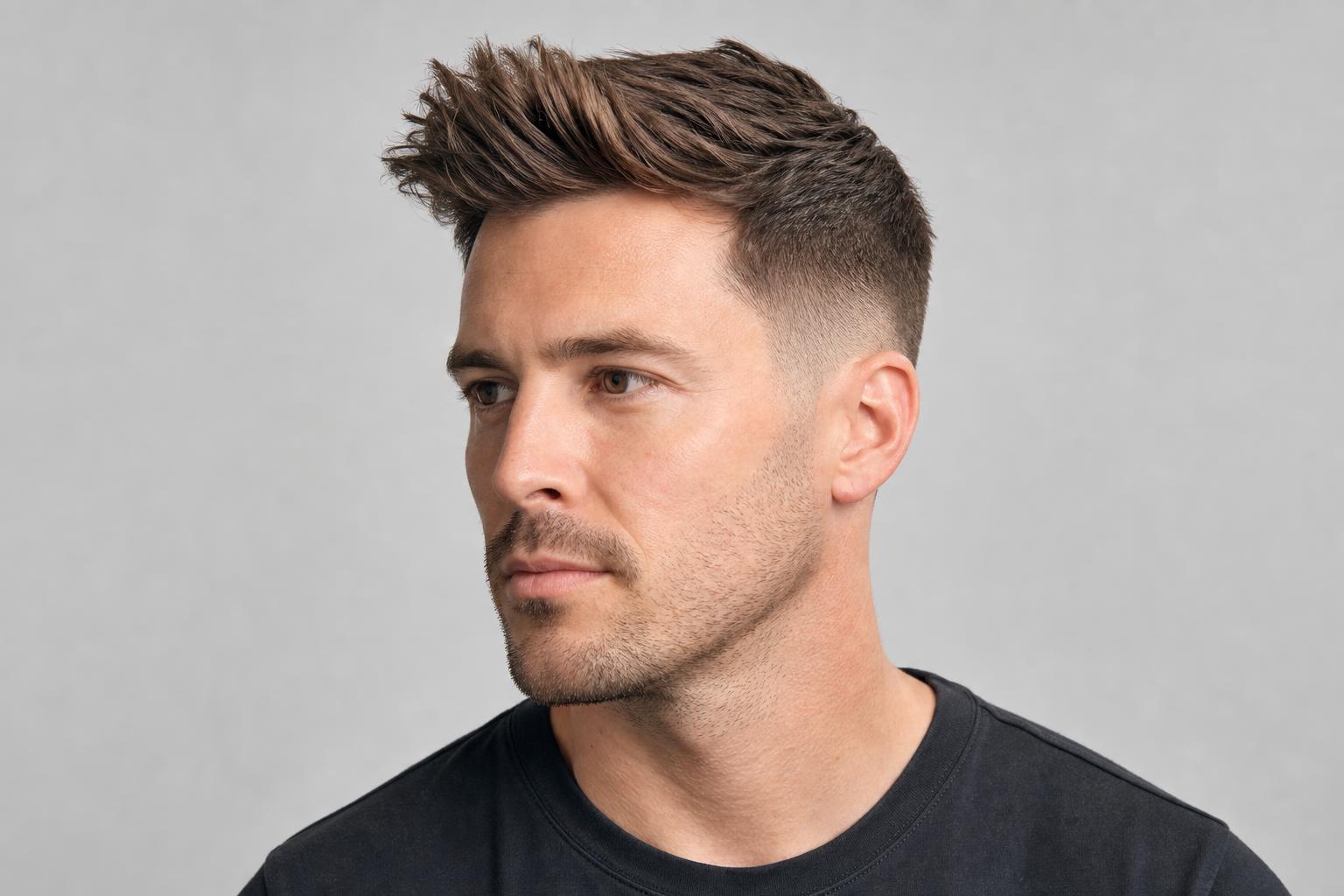
Triangle and diamond faces get lumped together in most barber advice, but they need opposite things: one wants width added high on the head, the other wants it added at the forehead and the jaw.
A triangle face is narrow at the forehead and wide at the jaw, so the cut has to build width across the temples and top. A diamond face is narrow at both the forehead and the chin with cheekbones as the widest point, so the cut has to widen the forehead line and leave a little weight near the jaw while keeping the sides off the cheekbones. Getting those two backwards is the single most common reason a good haircut looks wrong on an angular face.
Below are 25 cuts sorted into three groups: nine for triangle faces, nine for diamond faces, and seven that suit either shape. After the gallery you will find the exact wording to use at the shop, a maintenance table, and an honest section on the cuts both shapes should skip.
How to Tell a Triangle Face from a Diamond
Stand square to a mirror, pull your hair back, and compare three widths: forehead at the hairline, cheekbones at their widest, and jaw at its widest. Whichever is largest names the shape. Triangle faces measure widest at the jaw; diamond faces measure widest at the cheekbones with a noticeably pointed chin. The two get confused because both have a narrow forehead, and that shared trait is why so much face shape advice ends up recommending the same cut for both.
| Shape | Widest Point | Goal | Avoid |
|---|---|---|---|
| Triangle (pear) | Jaw, with the narrowest point at the hairline | Build width and height across the temples and top | High and skin fades, which narrow an already narrow forehead |
| Diamond | Cheekbones, with a narrow forehead and pointed chin | Widen the forehead with a fringe, keep some weight near the jaw | Tight temple work and extreme height, both of which sharpen the cheekbones |
| Inverted triangle | Forehead, tapering to a narrow chin | Reduce width at the top, keep the sides close | Volume on top, which exaggerates the imbalance |
The third row is there because inverted triangle is frequently mislabeled as triangle online, and the correct advice for it is the reverse of everything in the first section. If your forehead is your widest measurement, follow the inverted triangle row rather than the triangle gallery below. The same measuring method works for every other shape, so it is worth checking against a full breakdown of long and oblong proportions if none of the three describes you.
Cuts for Triangle Faces: Width Across the Temples
Every cut in this section does the same job through different means, which is putting visible mass above the ears so the head does not taper inward toward the hairline. That rules out the fade heights most barbers default to. A low fade or a plain taper keeps weight where a triangle face needs it, and the top carries enough length to be pushed up, forward, or sideways rather than lying flat.
1. Textured Quiff with a Low Fade
Lifting the front section up and slightly forward adds height at the narrowest part of the face, which is exactly the correction a triangle shape needs. Ask for three to four inches at the front graduating back, point cut through the ends, with the fade kept low so the sides stay full above the ear.
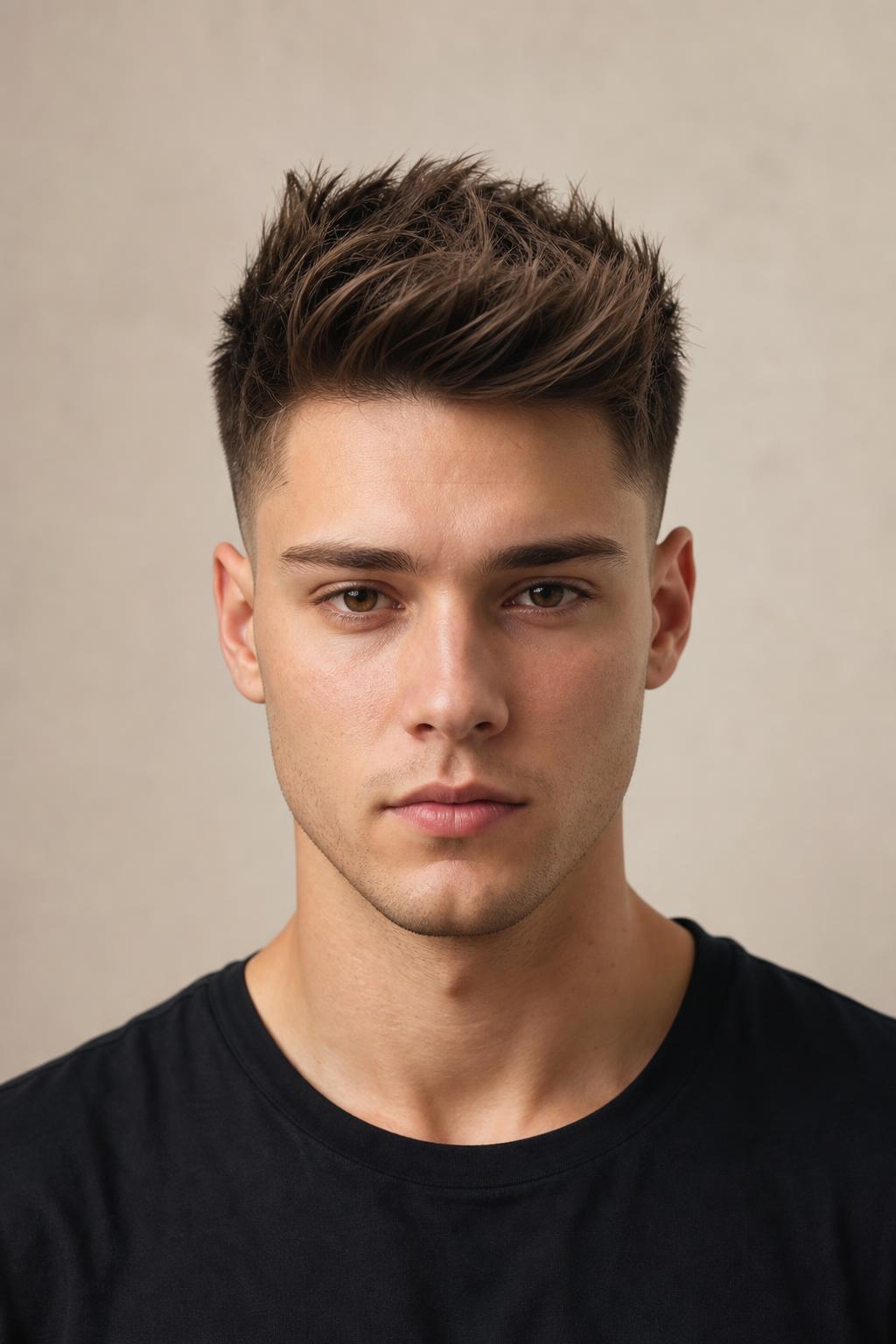
2. Classic Pompadour with Side Volume
Triangle faces carry a pompadour better than almost any other shape, because the rounded mass at the front broadens the forehead line while the swept sides add bulk right where the face is narrowest. Keep four to five inches at the front and resist the urge to take the sides in tight; a scissor-cut side left at an inch balances the jaw far better than a clipper grade.
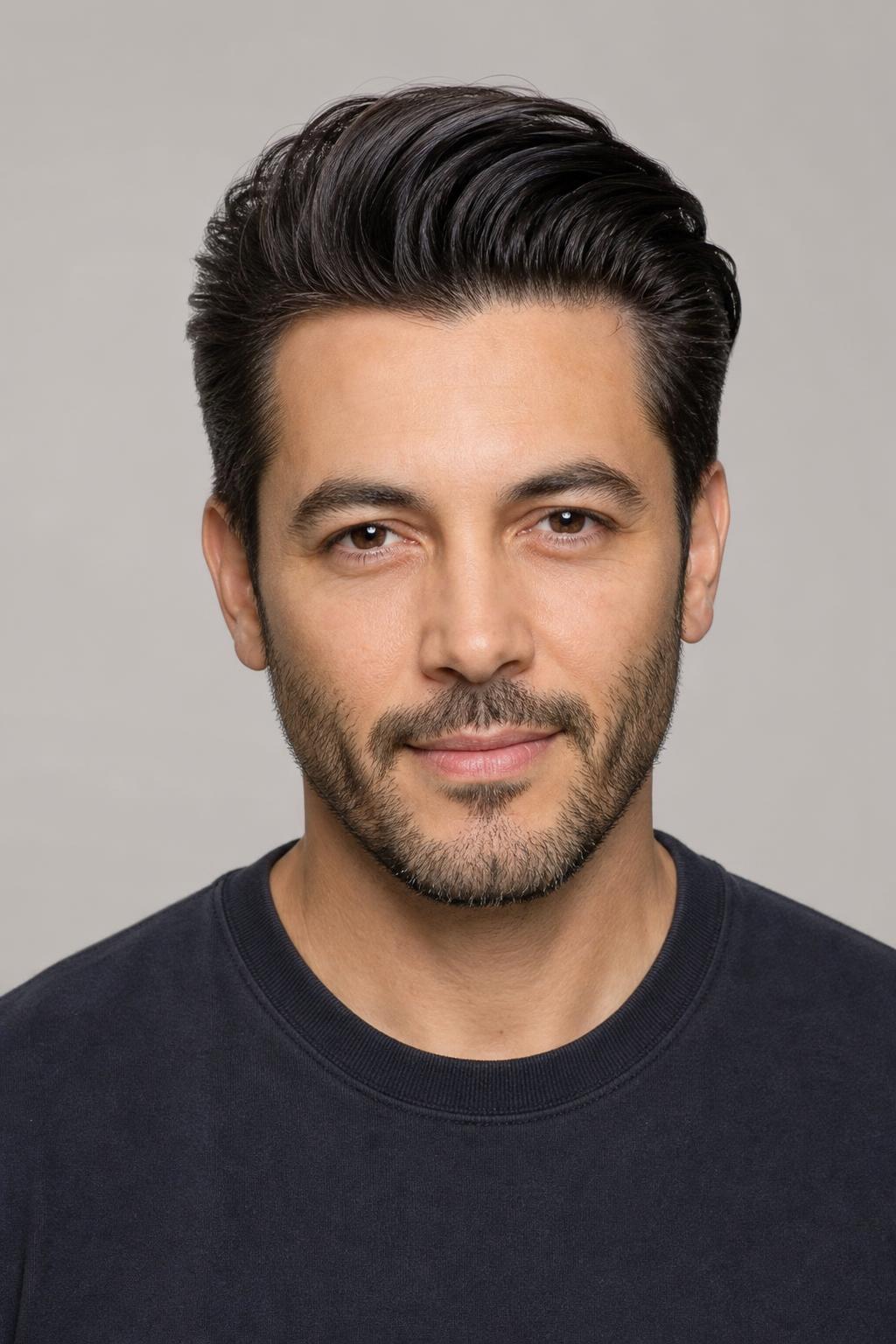
3. Messy Crop for Thick Straight Hair
Thick, straight hair holds outward volume without product, which makes it the easiest texture to work with on a triangle face. Two inches on top, cut in irregular sections and dressed sideways rather than back, spreads mass across the temples. Fine hair can copy the shape but needs a volumizing mousse at the roots first.

4. Side-Swept Undercut with a Deep Part
Blow-drying against the direction of the part for the first thirty seconds is what makes this shape hold all day. The deep part sends a heavy panel of hair across the top of the head, and the disconnected side gives it somewhere to rest without collapsing. Finish with a medium-hold matte paste worked from the roots outward.
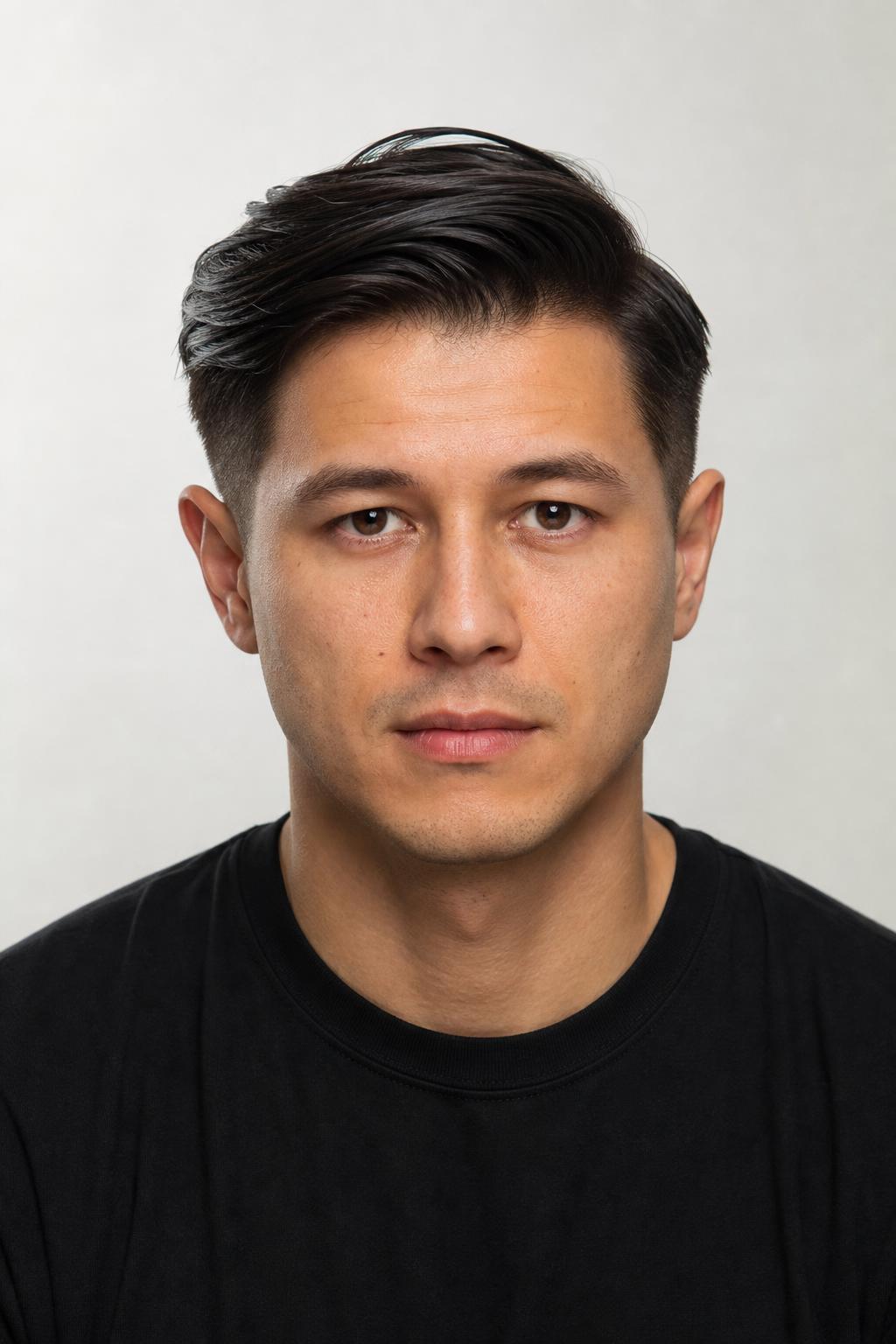
5. Grown-Out Textured Crop
Grow-out is an advantage here rather than a problem, since the extra week or two of length adds the width a triangle face wants. Trims stretch to seven or eight weeks, which is unusual for a men’s cut with any structure. The shape softens gradually instead of losing its line all at once.

6. Sun-Lifted Top on a Textured Cut
A few shades of lift through the top two inches only, left dark at the roots and sides, makes the upper half of the head appear larger than it measures. The effect works because lighter tones advance visually while darker ones recede, so a triangle face gains apparent width exactly where it is short. Ask for a soft root shadow rather than foils to the scalp, which would leave a hard line as it grows.

7. Low Taper with a Longer Fringe
The words to use are low taper, not fade, and leave the corners. Corners means the hair at the front sides above the temples, which most barbers automatically remove and which a triangle face cannot spare. Add that you want the fringe long enough to reach your eyebrow when pulled straight down.
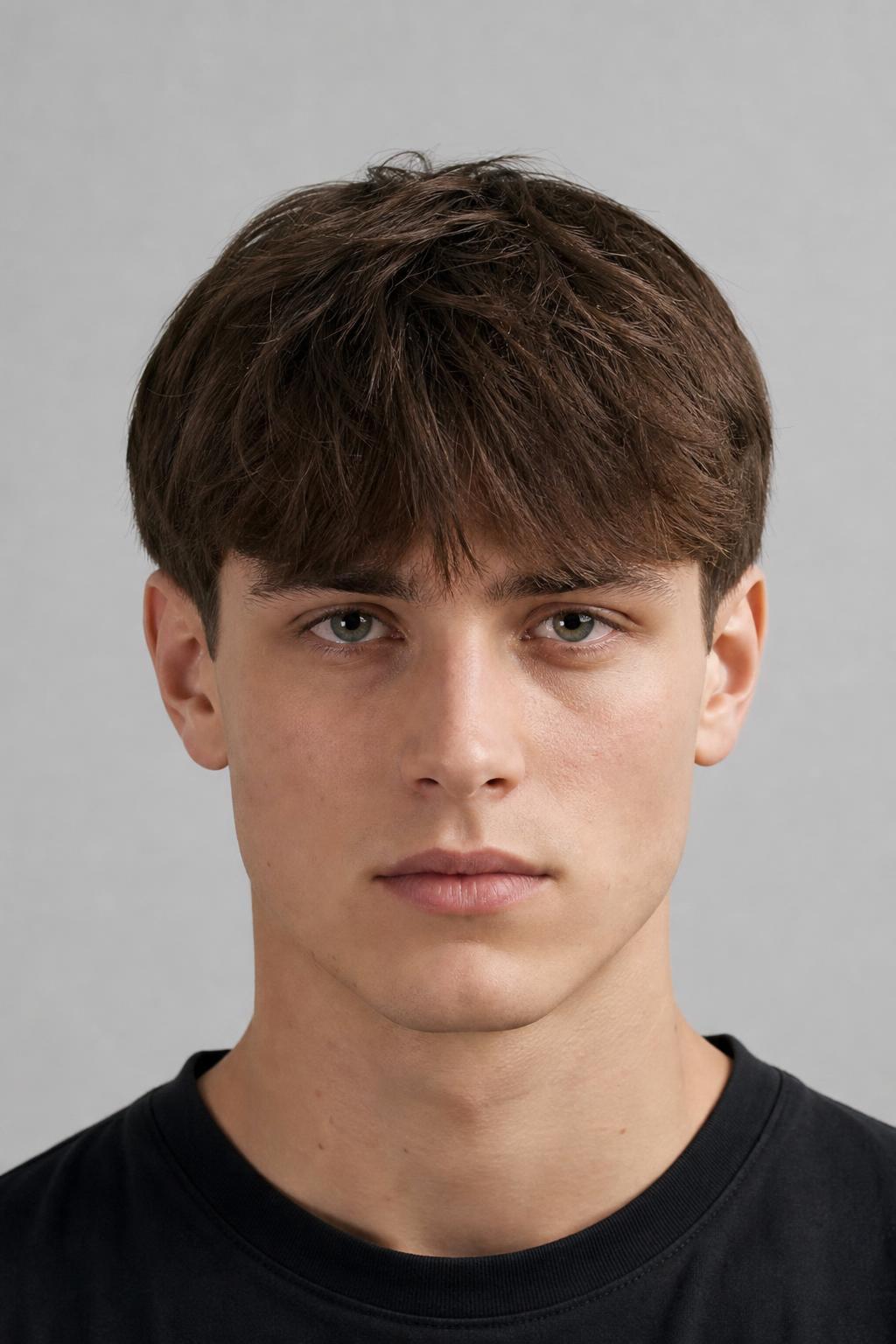
8. Soft Faux Hawk with Kept Sides
Where a traditional faux hawk strips the sides to build a narrow central ridge, this version leaves half an inch through the sides so the silhouette stays broad. The centre section reaches about three inches and is pushed up into a soft ridge rather than a spike. Triangle faces get the height without the tapering outline that a shaved-side version creates.

9. Wide Textured Fringe
Cutting the fringe wide, taking it from temple to temple rather than just across the centre, draws a horizontal line at the top of the face and gives the impression of a broader forehead. Length runs about two inches, textured at the ends so the line stays soft. This is the most direct fix in the section for a very narrow hairline.
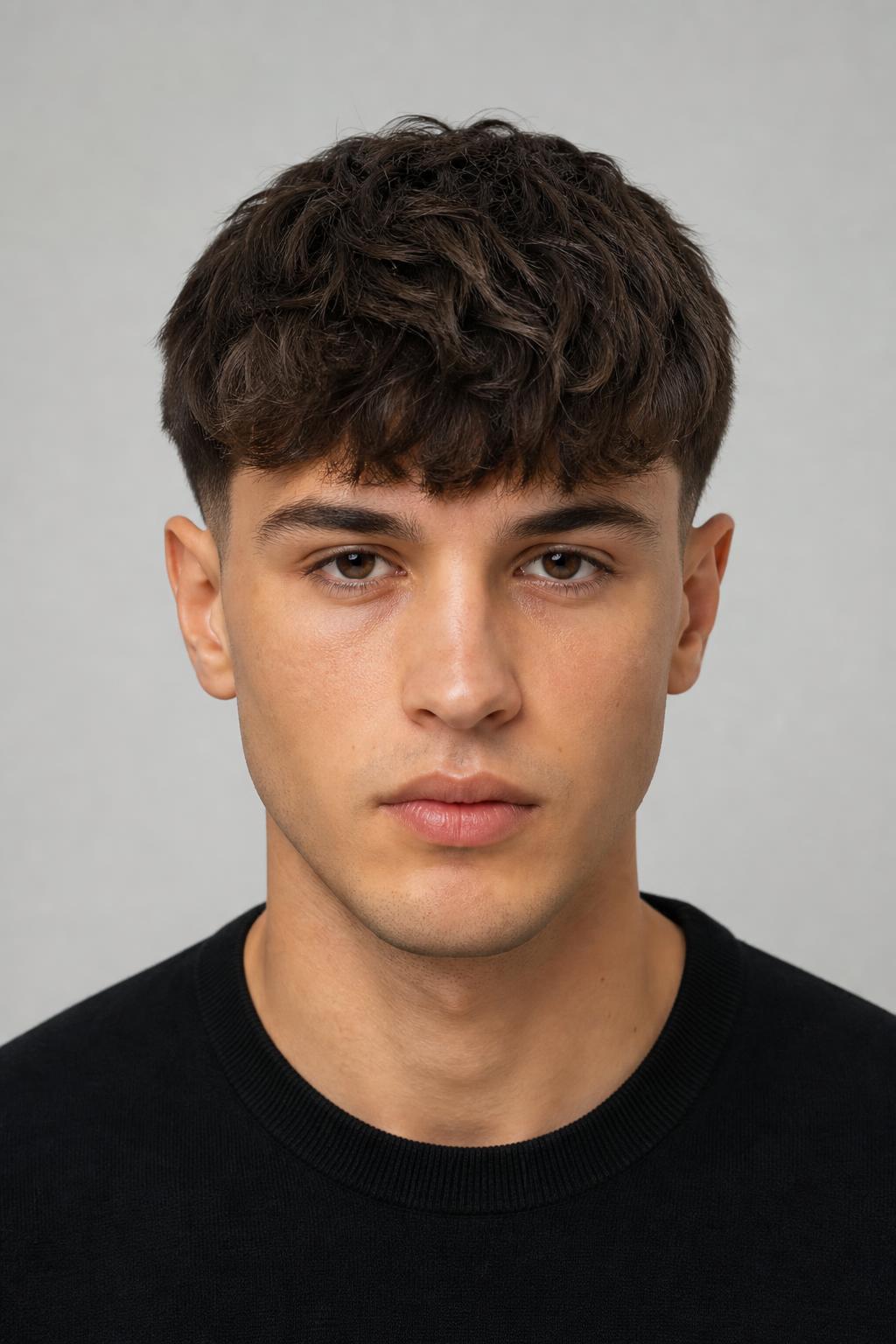
Cuts for Diamond Faces: Forehead Width, Softer Cheekbones
A diamond face has the opposite problem in the middle of the head. Cheekbones are already the widest point, so anything that pulls the sides in tight above the ear sharpens them further, and anything that adds height stretches the face longer. The cuts here widen the forehead with a fringe, keep the sides moderate rather than shaved, and leave a little length near the jaw to balance a pointed chin.
10. Textured Fringe Pushed Forward
Working product through damp hair with the fingers pointing forward, then drying in that direction, sets the fringe where it needs to fall without a brush. Around two inches falls across the forehead and covers the narrowest part of the face. Skip anything that lifts the front upward, since height is the enemy of a diamond shape.

11. Blunt-Cut Fringe with a Low Taper
Cutting the fringe in one straight line rather than point cutting it creates a solid horizontal edge, and a solid edge widens more effectively than a soft one. The barber cuts it dry, straight across at about brow level, then tapers the sides low so weight stays down near the jaw. Straight and slightly wavy hair take this cleanly; tight curls will not hold the line.
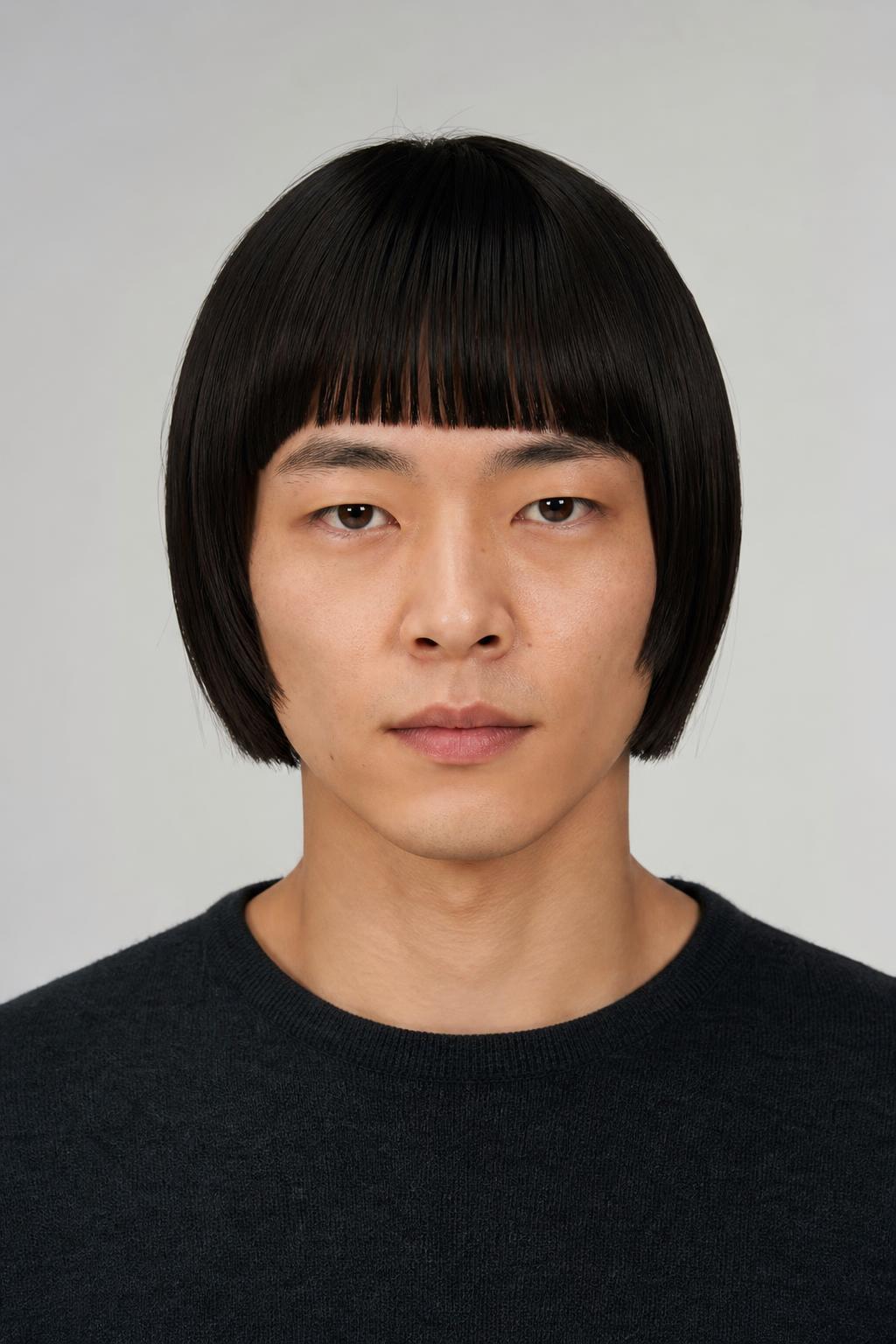
12. Curly Fringe for 3a Hair
Loose curl in the 3a range does the widening work on its own, since each curl occupies more horizontal space than a straight strand of the same length. Keep three inches at the front so the curl pattern forms fully and cut it dry, because wet curly hair springs up two inches once it dries. Curl-specific cutting for men matters more than the shape you ask for.
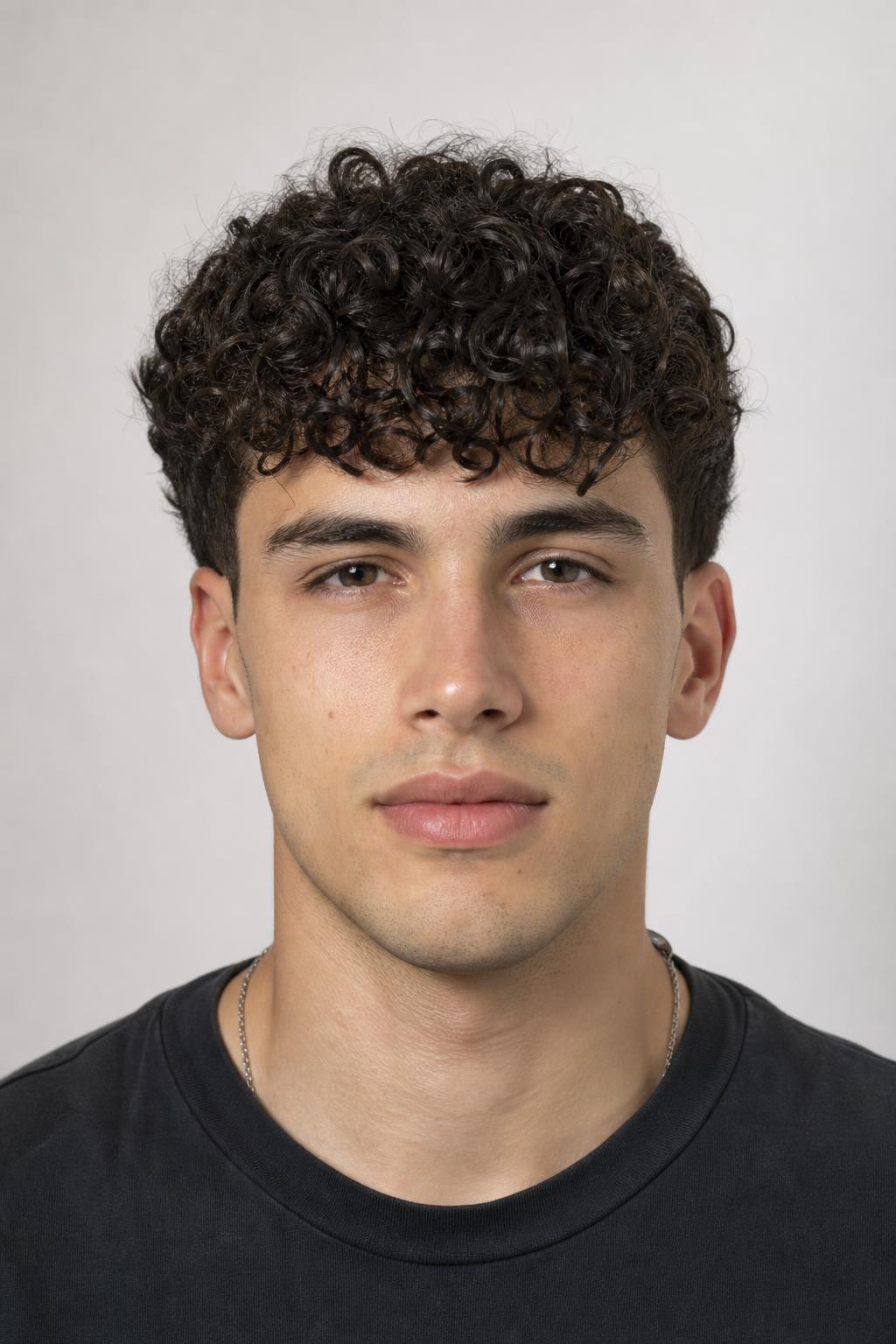
13. Ash-Toned Crop for Graying Hair
Cool ash tones flatten the shadow that strong cheekbones cast, which softens the widest part of a diamond face without touching the cut at all. A demi-permanent in an ash mid-brown blends salt-and-pepper gray rather than covering it, and the grow-out stays invisible. Pair it with a crop of about an inch and a half worn forward.

14. Short Side Part with Kept Weight
Upkeep sits at about four weeks, and the reason is the part line rather than the length. Once the sides pass an inch the part stops holding and the whole shape drifts wider at the cheekbones. Two minutes of drying with a comb and a light cream keeps it accurate.

15. Low Fade Instead of a Skin Fade
A skin fade takes the hair above the ear to nothing, which sets the cheekbone as the outermost point of the whole head. Dropping to a low fade leaves a quarter inch through that zone, and that quarter inch is enough to stop the bone from being the widest thing anyone sees. Everything above stays identical, so the difference costs nothing in styling time.
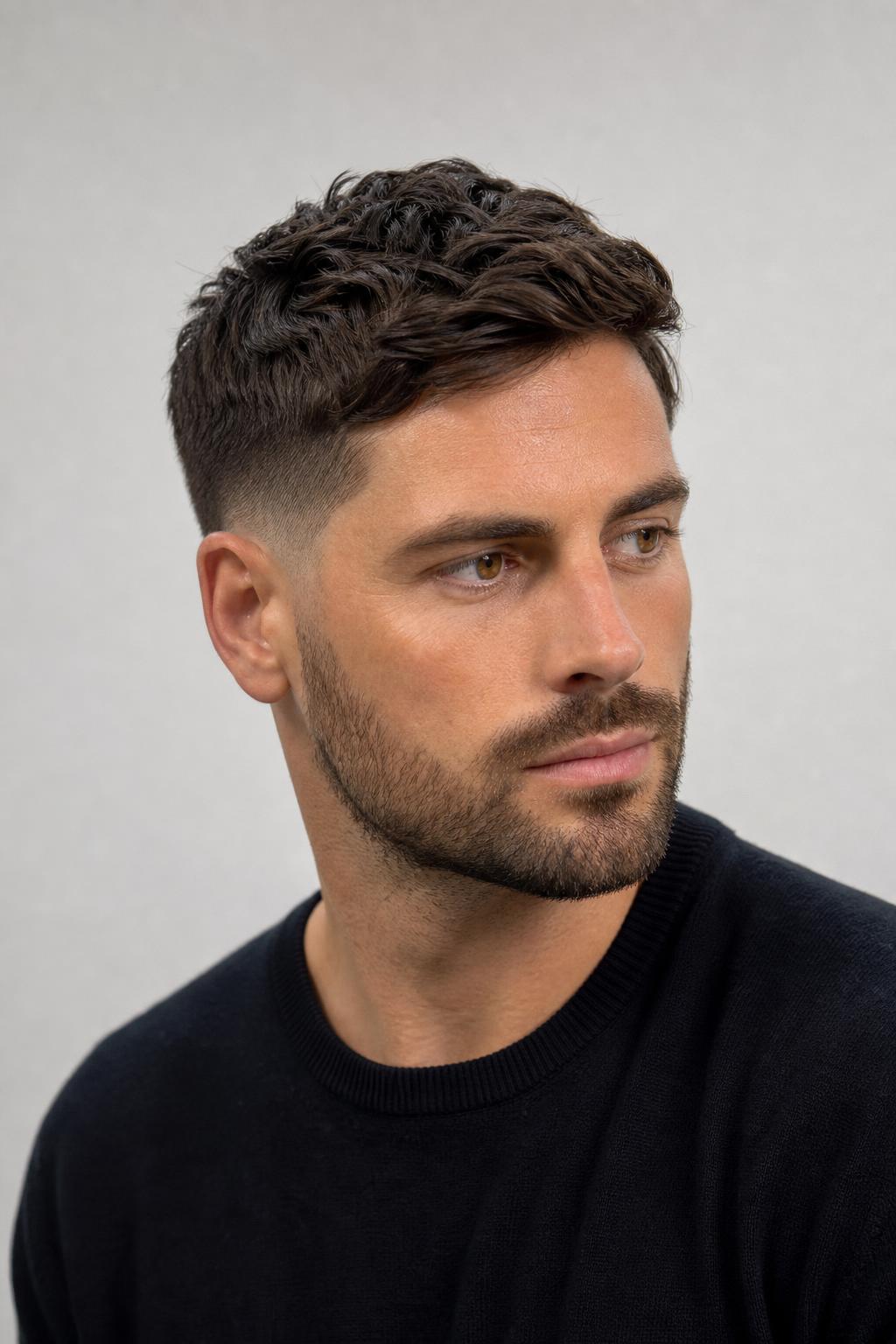
16. Ivy League with a Softened Temple Line
Ask for an Ivy League with the temple line left soft, not squared. Squared temples put a hard corner right beside the cheekbone and make it look wider; a rounded corner does the opposite. Specify an inch and a half at the front tapering to half an inch at the crown.
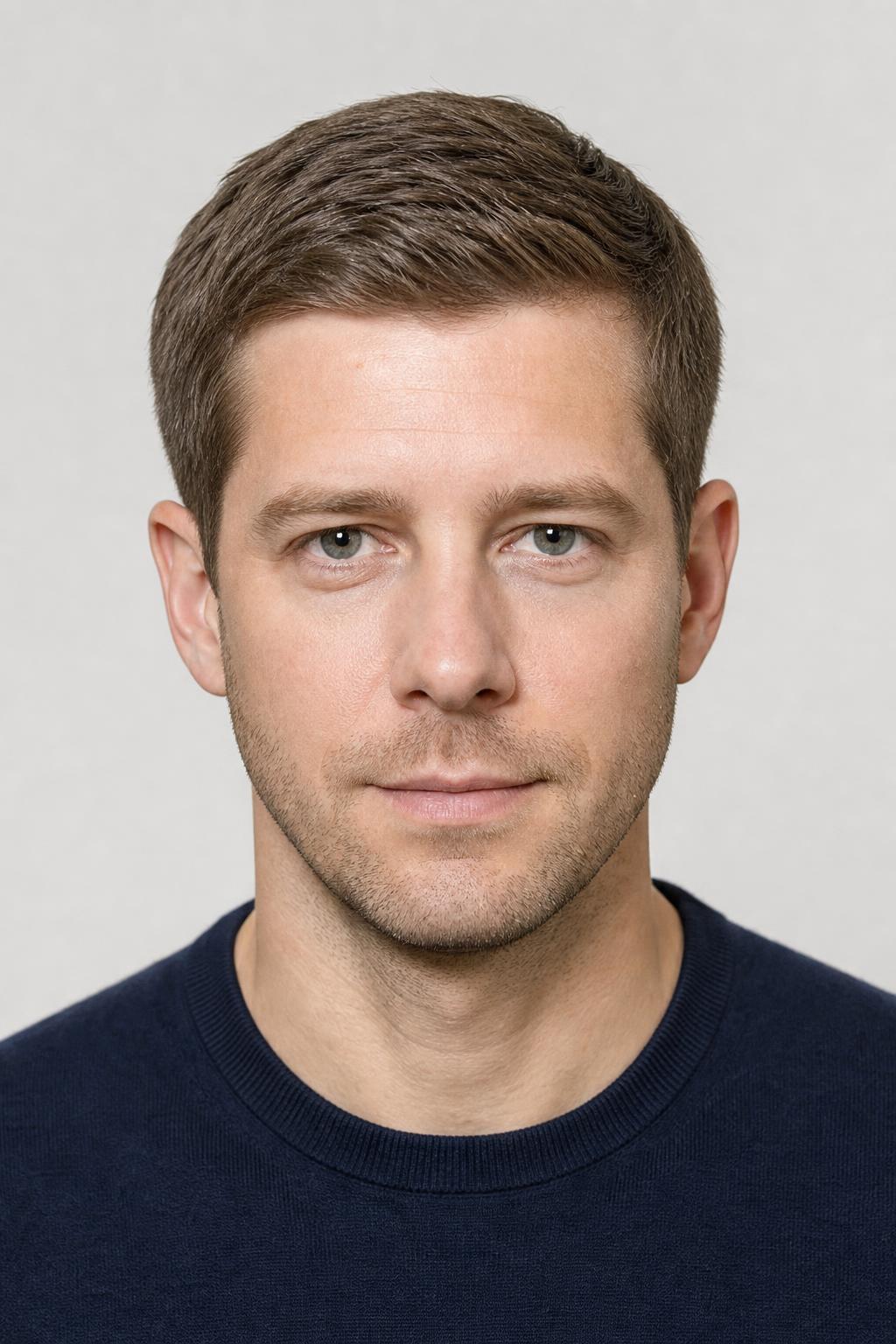
17. Wavy Medium Length Finishing at the Jaw
Wavy hair grown to jaw level puts bulk exactly where a diamond face runs narrow, and the bend keeps that bulk off the cheekbones rather than piled against them. Around four inches all round works, air-dried with a sea salt spray. Straight hair does not achieve this, because it falls flat against the cheek instead of away from it.

18. Angular Fringe Cut Across the Forehead
Cutting the fringe on a slight diagonal, longer at one side, builds a wider line than a centred fringe of the same length. The barber sections from the crown forward and drops the guide from the high side down. Around two and a half inches gives enough to angle without falling into the eyes.

Cuts That Suit Either Shape
A handful of cuts work for both, and they share one trait: moderate length everywhere, with no extreme at any point of the head. Nothing shaved, nothing towering, nothing cut to a hard edge. These are the safe choices when you are not certain which of the two shapes you have, or when your measurements land close enough that either description almost fits.
19. Medium-Length Layered Cut
Rough-drying with the head tipped forward for a minute gives layered length the lift it needs at the roots without adding height at the crown. Around four inches through the top with layers starting at ear level keeps the mass distributed rather than concentrated. A light cream beats a clay at this length, which needs movement more than hold.

20. Mid-Length Textured Crop
Neither shape is harmed by a crop that stops at two inches, because the length is enough to add a little width but not enough to build height. The fringe covers a narrow forehead for a triangle face and widens the hairline for a diamond one, doing both jobs with the same cut. Sides stay at a taper rather than a fade.

21. Classic Short Back and Sides
Five to six weeks between visits, two minutes of styling, and no product required beyond a light cream on humid days. Scissor over comb through the sides keeps the outline soft, which is what makes it safe on angular faces where a clipper line would be harsh. The top stays at an inch and a half and blends with no visible step.

22. Taper with Weight Left above the Ear
Unlike a fade, which travels up the side of the head, a taper only shortens the last inch at the bottom and leaves everything above it untouched. That distinction matters on both shapes, since the hair above the ear is doing structural work for a triangle face and protective work for a diamond one. Ask for a taper at the neckline and around the ears only.
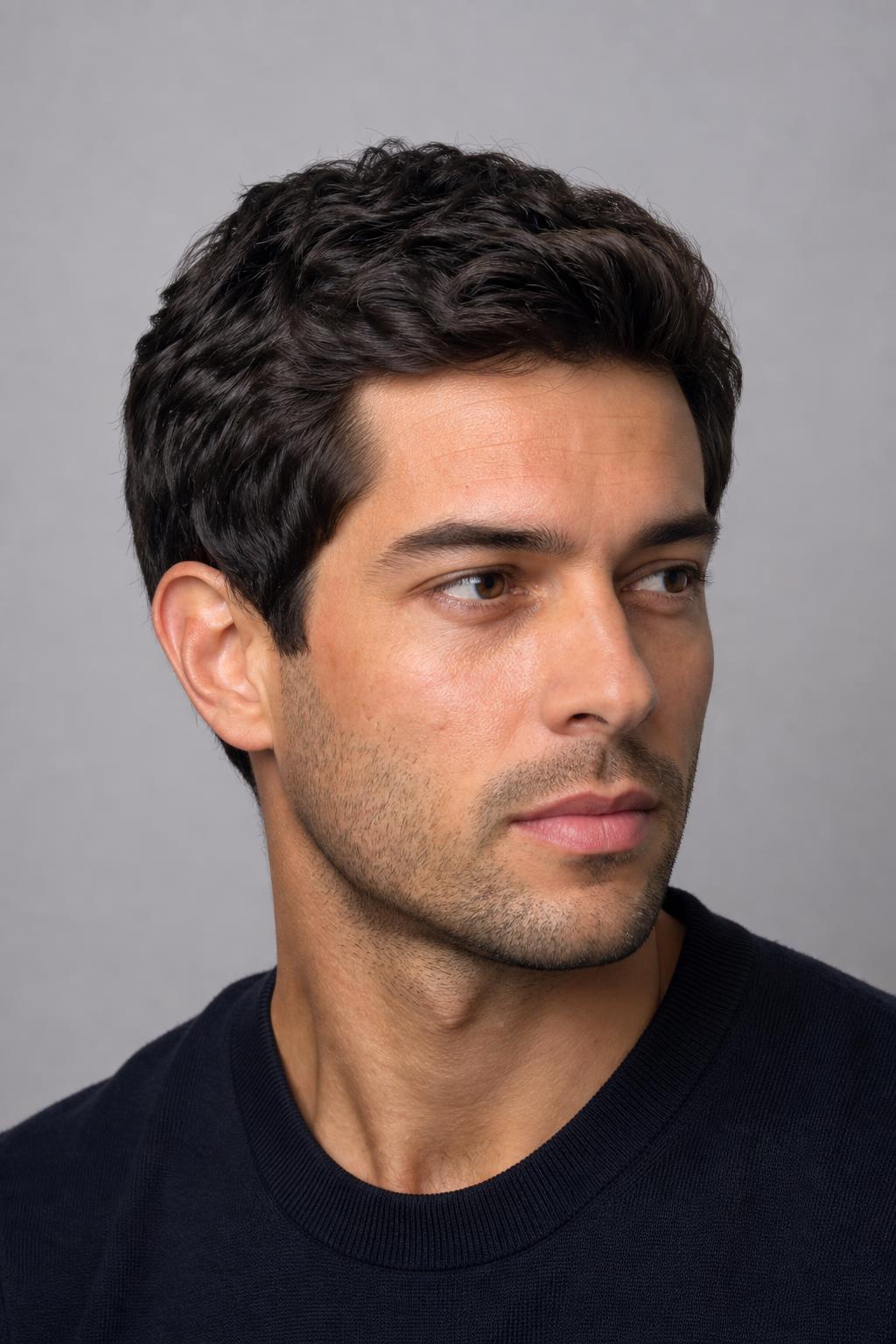
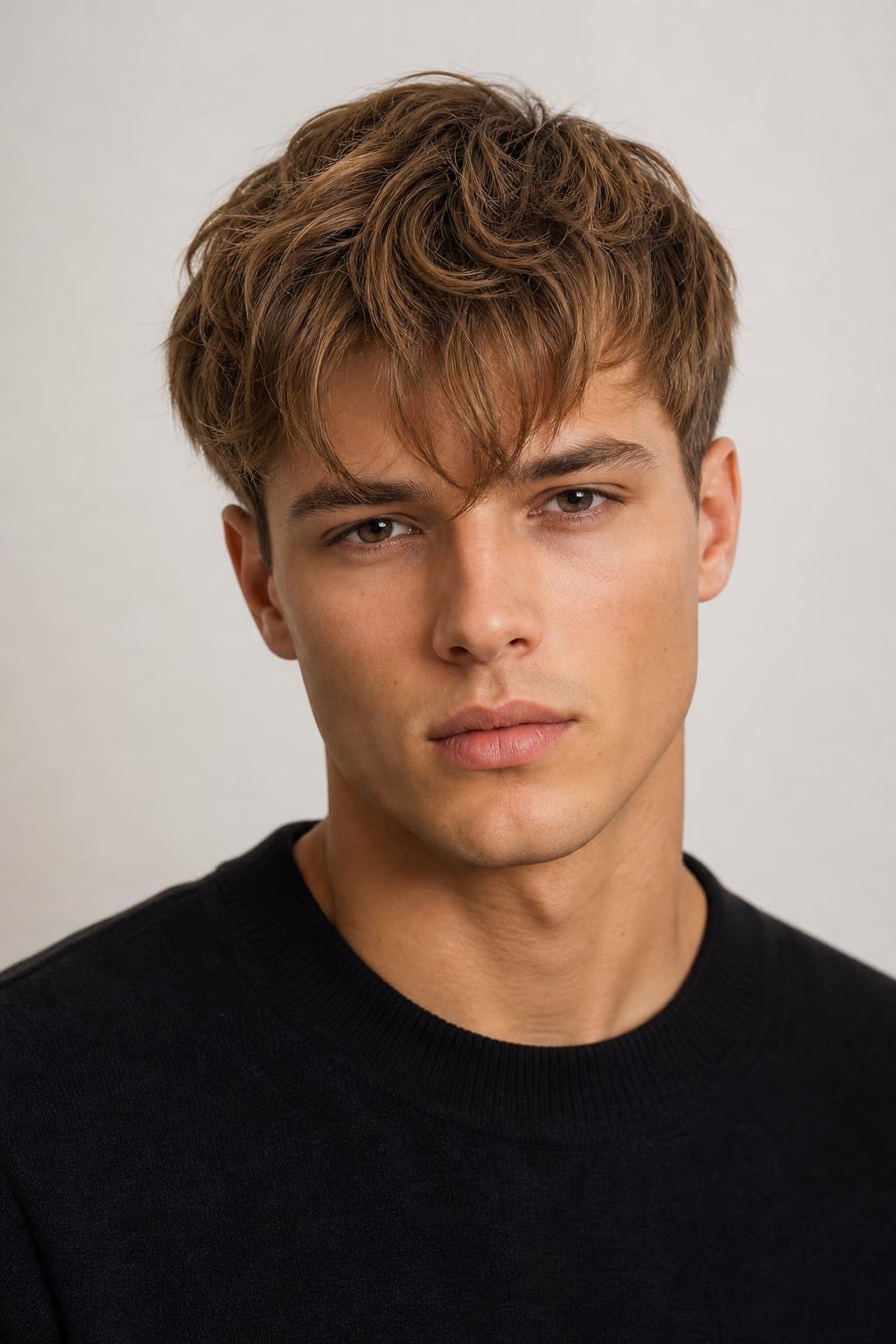
23. Warm Brown Tone on a Textured Cut
A warm mid-brown softens the shadow that both shapes cast under overhead light, where a flat dark tone deepens it and makes every angle look sharper. The gloss is demi-permanent, takes twenty minutes, and fades without a line. Pair it with two inches of textured length and no strong parting.
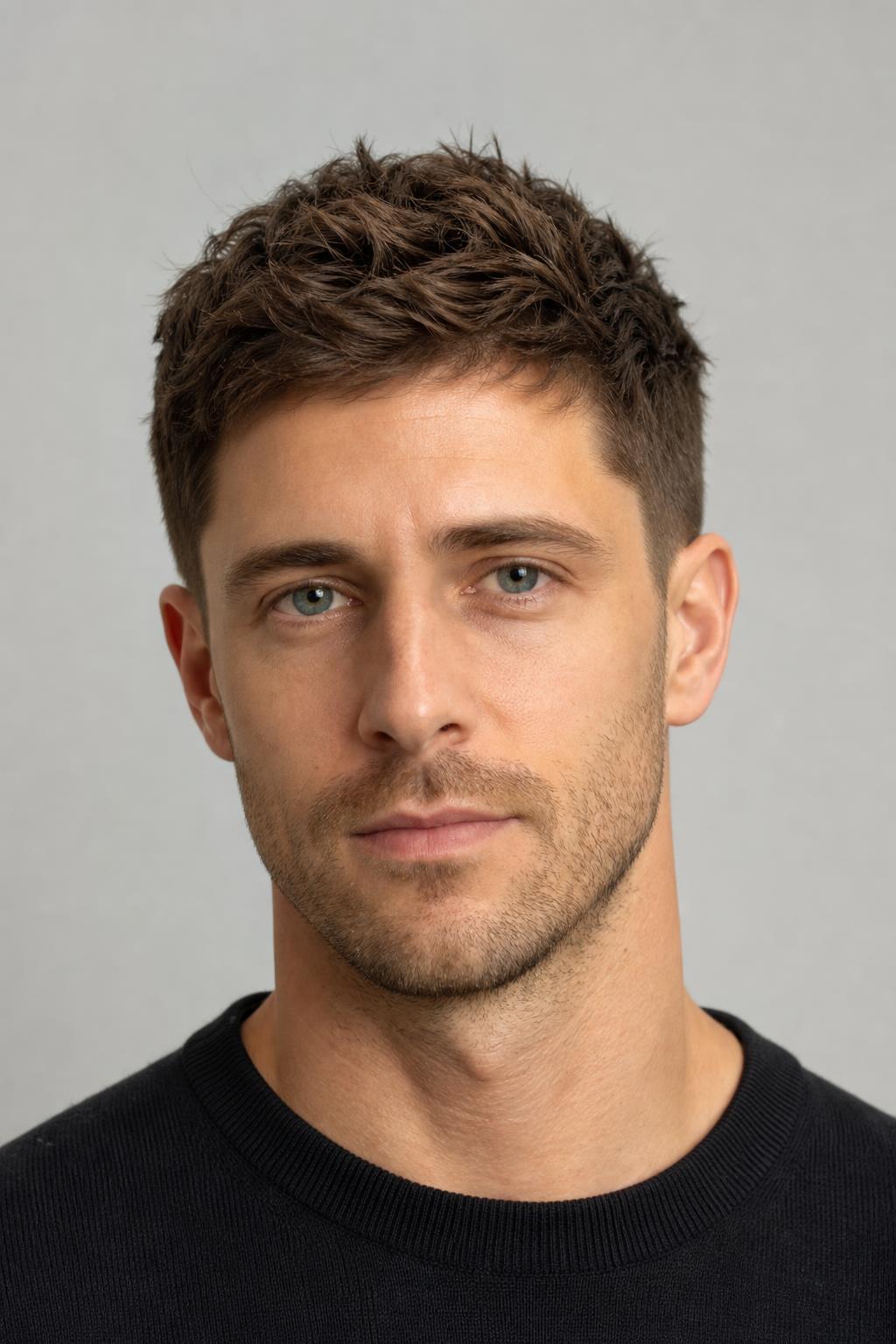
24. Comb-Over with a Soft Part
Ask for a comb-over with a natural part rather than a hard part, which is a line shaved in with a trimmer. The shaved version puts a sharp horizontal stripe across the side of the head, and on an angular face that competes with the bone structure underneath. A natural part falls where the hair grows and moves as you do.

25. Long Fringe with Scissor-Cut Layers
Scissor-cut layers through a longer fringe remove weight without removing width, which is the balance both shapes need. The barber works vertically through the top, taking small sections and cutting into them at an angle. Length runs four inches at the front, falling into the brow when left unstyled.
What to Tell Your Barber
Naming your face shape at the chair rarely helps, because barbers are trained on hair rather than facial geometry and the labels get used inconsistently. Describe the correction instead. Say where you want width added and where you want it kept off, and the barber can translate that into guard numbers and scissor work far more reliably than they can translate the word diamond.
For a triangle face: “Keep the sides full above the ear and only taper at the bottom. Leave the corners at the front. I want length on top I can push up and out, so nothing shorter than three inches at the front.” For a diamond face: “Low fade, nothing above the ear. Leave a fringe long enough to fall onto my forehead, and keep the temple corners rounded rather than squared.” Bring a photo either way; a reference showing exactly where the fade line starts settles more questions in five seconds than a paragraph of description.
Stylist tip: Ask the barber to check the shape with your hair pushed back off your face before they start cutting, not after the cape comes off. Once hair is styled forward the forehead is hidden, and the forehead measurement is the one that decides which of these two galleries you belong in.
Maintenance and Styling
Angular faces need cuts that keep their proportions, and proportions drift as hair grows at different rates in different places. Sides grow faster than the top on most men, which means a low fade creeps upward and a diamond face starts looking sharper at the cheekbone by week four. Building a schedule around that, rather than around when the cut looks scruffy, is what keeps the balance you paid for.
| Cut | Barber Visit | Daily Styling | Products | Grow-Out Behavior |
|---|---|---|---|---|
| Quiff or pompadour | 4 to 5 weeks | 5 to 8 minutes | Volume spray, matte clay, light hairspray | Front gets too heavy to lift past week 6 |
| Textured crop or fringe | 5 to 7 weeks | 2 minutes | Matte paste, sea salt spray | Forgiving; the fringe simply lengthens |
| Low fade with length on top | 3 to 4 weeks | 3 minutes | Matte clay only | The fade line blurs upward and widens the sides |
| Side part or Ivy League | 4 weeks | 2 to 3 minutes | Light styling cream, comb | The part stops holding once the sides pass an inch |
| Medium layered or wavy length | 8 to 10 weeks | 1 minute, air-dried | Sea salt spray, light leave-in | Grows out gracefully; layers blend as they drop |
Cuts Both Shapes Should Skip
A few popular men’s cuts actively work against angular faces, and they are popular enough that most men try at least one before working out why it never looked right. None of these are bad haircuts; they are simply built to solve problems neither of these shapes has.
- High skin fades. They narrow the head above the ear, which leaves a triangle face tapering toward the top and a diamond face with cheekbones as the widest point of the whole silhouette.
- Buzz cuts under a grade 2. With no hair to shape the head, bone structure carries everything, and an uneven jaw-to-forehead ratio is exactly what these two shapes have.
- Slicked-back styles with no fringe. Pulling every strand off the forehead exposes the narrowest measurement on both shapes; a curtain shape that keeps hair at the hairline solves the same styling itch without the cost.
- Hard parts shaved with a trimmer. A sharp horizontal line across the side competes with the facial angles below it, and on a diamond face it lands right at the cheekbone.
- Very long flat hair with no layers. Length without layering hangs against the cheek and adds width at the widest point rather than the narrowest.
Stylist tip: If your hairline is receding as well as your face being angular, treat the hairline as the first problem and the face shape as the second. The fringe-based cuts in the diamond section stop working once the hairline moves back, and the priorities shift toward the shorter shapes covered in our guide to cuts for a thinning crown.
FAQ
What Is the Difference Between a Triangle and an Inverted Triangle Face?
A triangle face is widest at the jaw and narrowest at the forehead, while an inverted triangle is the reverse, with a broad forehead narrowing to a pointed chin. The distinction matters because the correct cut for one is close to the worst cut for the other. Measure your forehead and jaw with a tape or a piece of string before picking a style, since the two are easy to confuse from a mirror alone.
Can Men with Triangle Faces Get a Fade?
Yes, provided it stays low. A low fade shortens only the last inch or two near the ear and leaves the temple area intact, which is where a triangle face needs its width. Mid and high fades take hair out of that zone and make the head taper inward toward an already narrow forehead, so ask specifically for low and confirm where the barber plans to start the line.
What Beard Suits a Diamond Face Shape?
A full beard with squared-off corners at the jaw, kept short on the cheeks, balances a pointed chin and adds width where a diamond face runs narrow. Avoid a goatee or anything tapering to a point below the chin, which extends the shape that is already too narrow. Trim the cheek line straight rather than curved to keep the extra width high enough to matter.
Do Long Hairstyles Work on Triangle Faces?
They work when the length carries layers and volume, and they fail when it hangs flat. Flat length falls beside the jaw, adding weight at the widest point and deepening the imbalance. If you want to grow it out, ask for layers starting around ear level and keep some lift at the crown, along the lines of a grown-out flow cut with movement through the sides.
Should I Part My Hair If I Have a Diamond Face?
A soft side part works well because it breaks up symmetry and shifts mass slightly off centre, which softens the strong horizontal line the cheekbones create. Keep it a natural part rather than a shaved one, and place it wherever the hair already wants to split. A centre part is the one to avoid, since it splits the face into two matching halves and emphasizes the widest point twice.
How Do I Know If My Face Is Triangle or Just Has a Strong Jaw?
Compare the jaw measurement against the forehead rather than judging the jaw on its own. A square face has a strong jaw with a forehead of similar width, and it suits completely different cuts. If forehead and jaw come out within about half an inch of each other, treat it as square rather than triangle, and the general principles in the wider triangle face shape guide will help you check.
Choosing among men’s haircuts for triangle face shapes and diamond ones comes down to a single measurement taken before you sit down, which is whether your forehead or your jaw is the narrower of the two. Take it once, remember which gallery it puts you in, and bring a photo that shows the fade height you want. The cut that balances your proportions will look considered even when you have not touched it since the shower.
Hair results vary based on your natural hair type, texture, density, and condition. Always consult with a licensed hairstylist before making significant changes, especially with chemical treatments or dramatic length changes. Photos may show styled results that require professional tools and products to replicate.