
A stylist-level breakdown of what the bixie actually is, who it flatters, and how to get one that works for your hair.
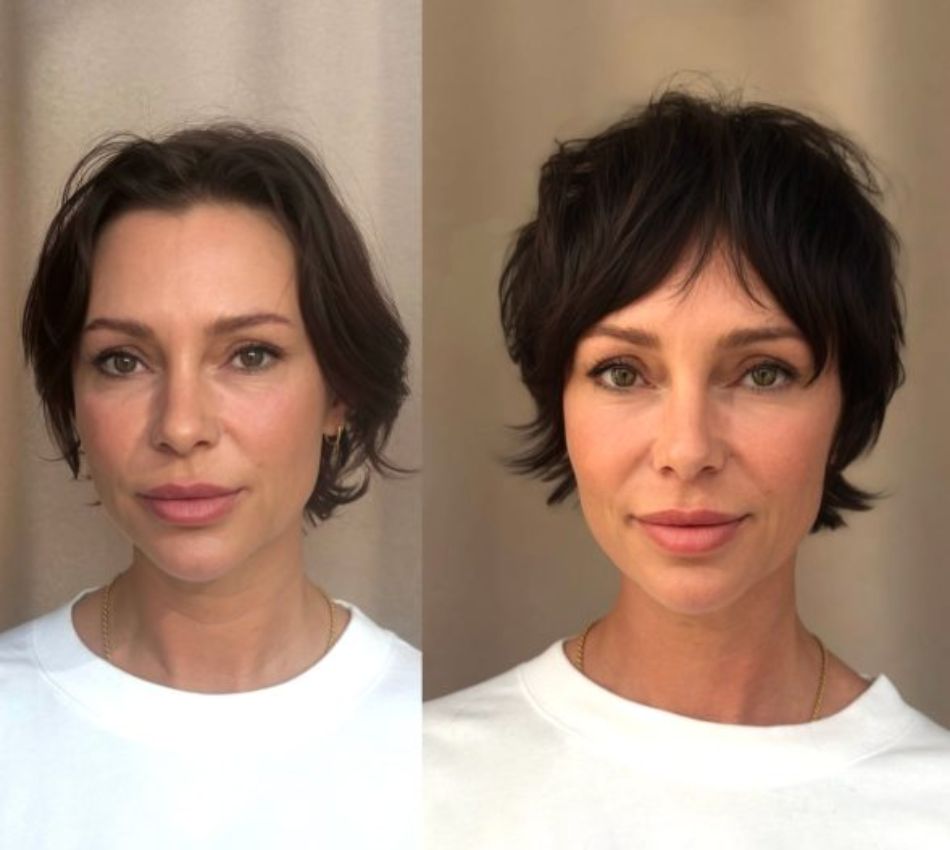
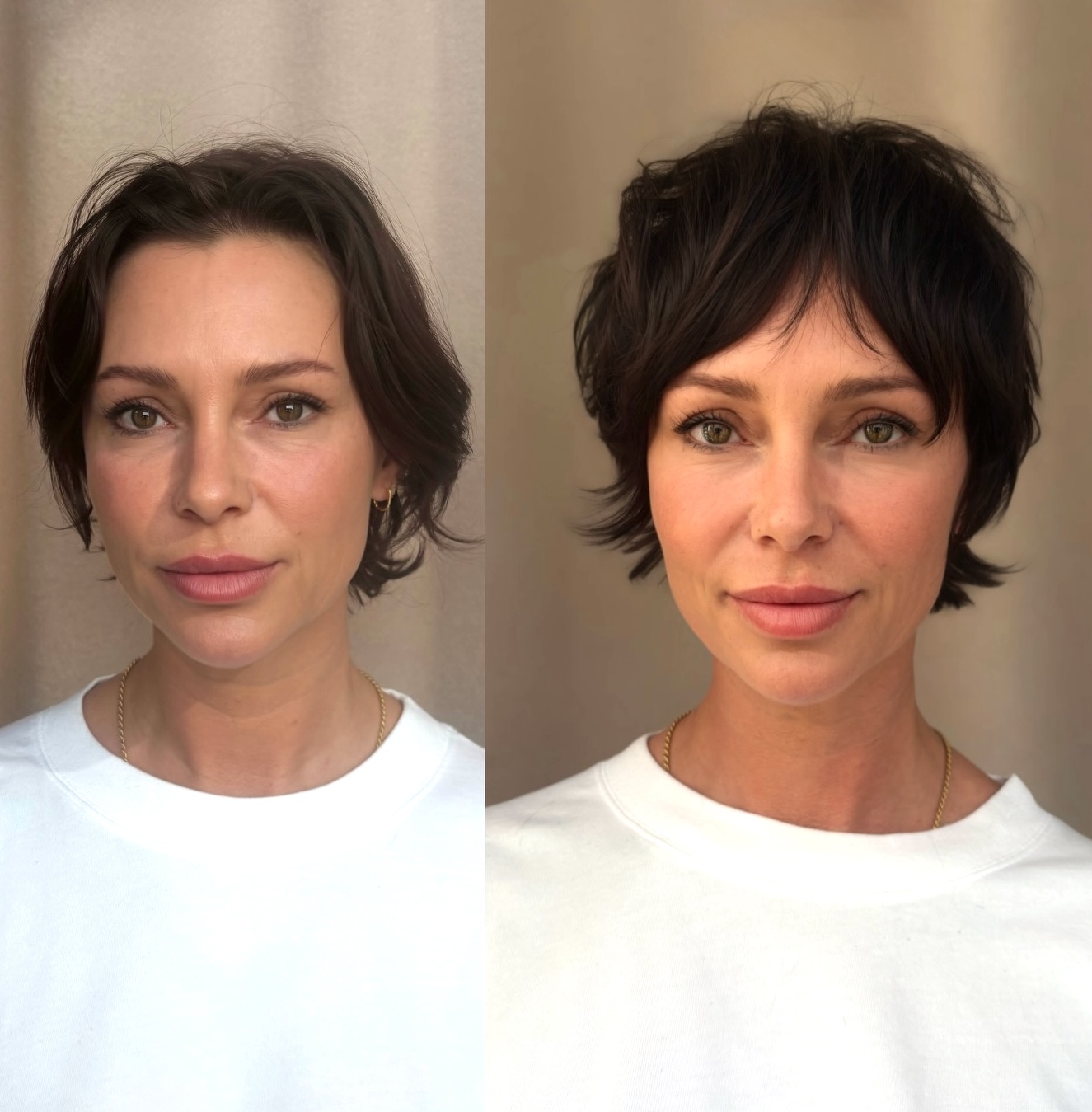
A bixie haircut bridges the gap between a pixie and a bob, usually ear to jaw length, featuring choppy texture through the crown and longer framing pieces in front. It solves a specific problem: you want the low-effort coolness of a pixie without losing the styling flexibility of a bob. The bixie gives you both, which is why it became one of the most-requested short cuts heading into 2026, endorsed by stylists and celebrities alike.
This guide covers what defines a bixie and how it differs from a pixie or a bob, which face shapes and hair types get the best results, the most popular bixie variations and what makes each one work, realistic maintenance expectations, and the exact salon language to communicate the cut you want.
| Factor | Details |
|---|---|
| Best for | Oval, heart, diamond, and square face shapes; fine to medium-density hair that needs volume; anyone growing out a pixie or downsizing from a bob |
| Maintenance | Trim every 4–6 weeks; 5–10 minutes daily styling |
| Works with | Straight, wavy, and loose curly textures; fine, medium, and thick density |
| Avoid if | Very tight curl patterns (3C–4C) unless you work with a stylist experienced in short natural cuts; also tricky if you have strong cowlicks near the hairline |
| Salon time | 45–75 minutes for the initial cut; 30–45 minutes for maintenance trims |
What a Bixie Haircut Actually Is
The name “bixie” is a portmanteau of bob and pixie, and the cut itself is exactly that hybrid. It keeps more length than a traditional pixie — enough to tuck behind the ears or sweep across the forehead — while staying shorter and more layered than even a cropped bob. The back is typically tapered or graduated, sometimes stacked for lift, with the top and sides carrying more length and texture through point-cut or razor-cut layers.
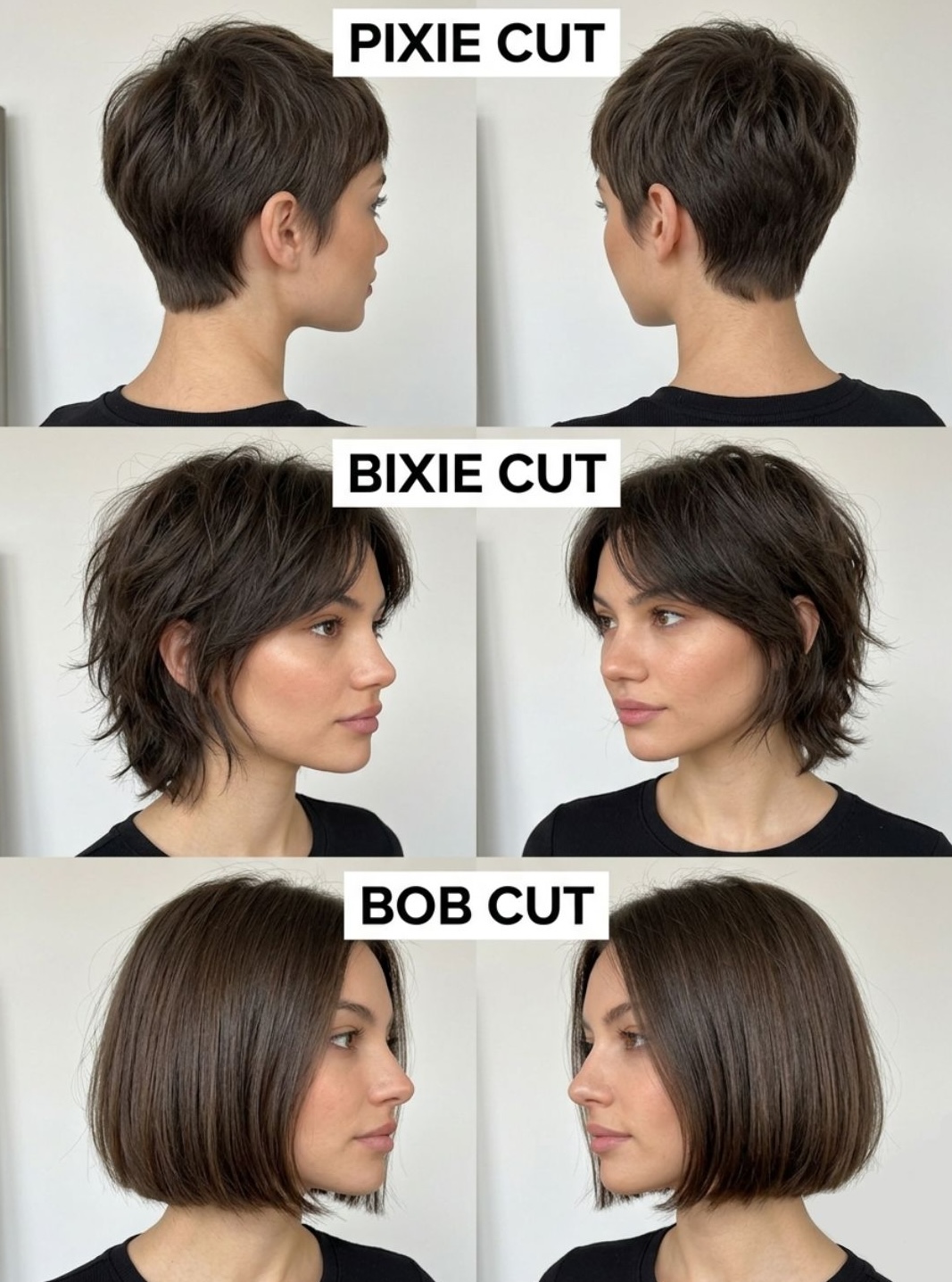
What separates a bixie from a “long pixie” or a “short bob” is the layering approach. A bixie uses internal layers and texturizing throughout the crown and mid-lengths, creating an airy, deconstructed look where you can see the movement between layers. A short bob, by contrast, tends to have a more uniform weight line. A long pixie keeps the bulk of its length on top with closely cropped sides. The bixie distributes length more evenly and relies on texture rather than a clean perimeter line for its shape.
Stylist tip: The bixie has been around since the 1990s (think Winona Ryder and Meg Ryan’s choppy crops), but the current version tends to be softer and less angular. If you bring in a ’90s reference photo, let your stylist know whether you want that chunkier texture or the more feathered, blended approach that’s trending now.
Bixie vs. Pixie vs. Bob: A Side-by-Side Breakdown
These three cuts occupy different points on the short-hair spectrum, and the differences go beyond length. Having a sense of how each style is positioned helps you communicate your vision to your stylist and plan for the styling and maintenance that come with it.
| Feature | Pixie | Bixie | Bob |
|---|---|---|---|
| Typical length | Above the ears; closely cropped sides | Ear to jaw level; layered throughout | Chin to shoulder; more uniform length |
| Layering | Concentrated on top; minimal on sides | Internal layers throughout; textured ends | Varies from blunt to layered; the weight line is visible |
| Daily styling time | 2–5 minutes | 5–10 minutes | 10–20 minutes |
| Trim frequency | Every 3–5 weeks | Every 4–6 weeks | Every 6–8 weeks |
| Grow-out behavior | Awkward, needs frequent reshaping | Relatively graceful, transitions into a short bob | Grows into a lob with minimal reshaping |
| Best for | High cheekbones; strong jawline; confident with very short hair | Most face shapes; wants short without fully committing to a pixie cut | All face shapes with the right variation; prefers a clean silhouette |
The bixie’s real advantage is in the grow-out. A pixie that’s two weeks overdue can look neglected fast, mullet-adjacent, even. A bixie that’s growing out just starts looking like a textured short bob, which means you get more runway between salon visits and a less stressful transition if you decide to grow it longer.
The Best Bixie Haircut for Each Face Shape
The bixie is adaptable enough to work across most face shapes, but the specific variation is where it’s at. The cut’s layering, length placement, and part direction all change how it interacts with your bone structure. Here’s how to tailor it.
Oval Faces Have the Most Flexibility
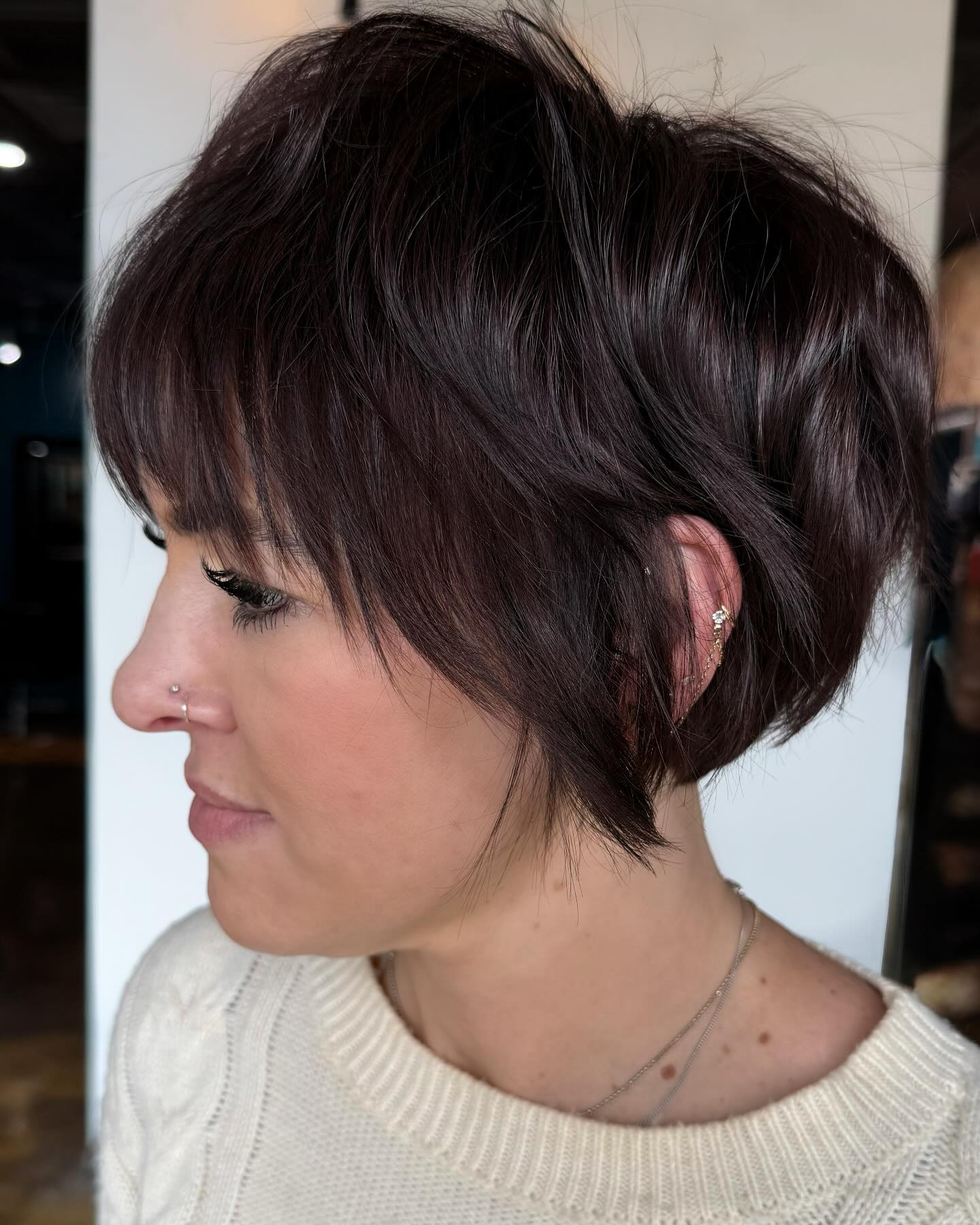
Oval faces are proportionally balanced between forehead, cheekbones, and jaw width, which means nearly any bixie variation works. A center part shows off that symmetry, while a deeper side part adds asymmetry for a more editorial feel. You can go shorter at the back without losing balance, and both blunt and feathered bangs pair well with the cut. If you have an oval face, use the bixie as a chance to experiment with bolder textures or color placement.
Round Faces Benefit from Height at the Crown
Round faces are widest at the cheeks with a softer jawline, so the goal is to create vertical lines and visual length. Ask for a bixie with more volume at the crown and tapered sides. This elongates the face rather than emphasizing its width. A deep side part helps break up the roundness, and face-framing layers that start at cheekbone level draw the eye downward rather than across. Avoid a center part with equal volume on both sides, as that tends to widen a round face further.
Square Faces Need Softer Layers Around the Jaw
Square faces have a strong jaw and an angular forehead of roughly equal width. The bixie works here by softening those angles with wispy, feathered layers around the jawline and side-swept bangs that curve across the forehead rather than cutting straight across. Point-cut ends rather than blunt perimeters keep the overall look less geometric. The worst thing for a square face is a sharp, blunt bixie with hard lines; it just mirrors and amplifies the angles.
Heart-Shaped Faces Want Volume Below the Cheekbones
Heart-shaped faces are wider at the forehead and taper to a narrow chin. A bixie that concentrates its volume and length around the jaw and chin area balances this proportion. Chin-length face-framing pieces and side-swept bangs work well. Such framing softens the forehead width while the longer front pieces add visual weight near the chin. Avoid ultra-short bixies that expose the full forehead and a narrowing chin simultaneously, as that can exaggerate the inverted triangle shape.
Diamond Faces Thrive with Textured Width at the Temples
Diamond faces have narrow foreheads and jawlines with prominent cheekbones. A bixie that adds width and fullness at the temples through voluminous side layers or curtain bangs balances the cheekbone dominance. Keep the sides slightly fuller rather than tapered tight, and avoid heavy top volume that only narrows the face further. The bixie’s natural layered texture is particularly effective on diamond shapes because it distributes visual weight evenly rather than concentrating it in one zone.
How the Bixie Works on Different Hair Types
Your hair’s texture and density change how a bixie behaves daily. The cut is broadly versatile, but knowing what to expect and what adjustments your stylist should make prevents the gap between “salon day” and “Tuesday morning.”
Fine Hair Gets the Biggest Volume Payoff
Fine hair is arguably where the bixie shines brightest. The short length removes weight that drags fine strands flat, while internal layers create the illusion of thickness and movement. Ask your stylist to point cut the ends rather than razor cut. Razoring can thin fine hair further and leave it looking wispy rather than textured. A volumizing mousse applied at the roots before blow-drying, combined with a texturizing spray on dry hair, gives fine-hair bixies their best day-two texture.
Thick Hair Needs Strategic Weight Removal
On thick hair, the bixie requires more internal texturizing and slide cutting to prevent the cut from looking bulky or helmet-like. Your stylist should remove weight from inside the layers rather than thinning the perimeter, which can create a mushroom silhouette on thick hair. The payoff is worth it — thick-haired bixies hold their shape longer between trims and look great air-dried because the natural density provides built-in volume that fine hair has to work for.
Wavy and Curly Textures Add Natural Movement
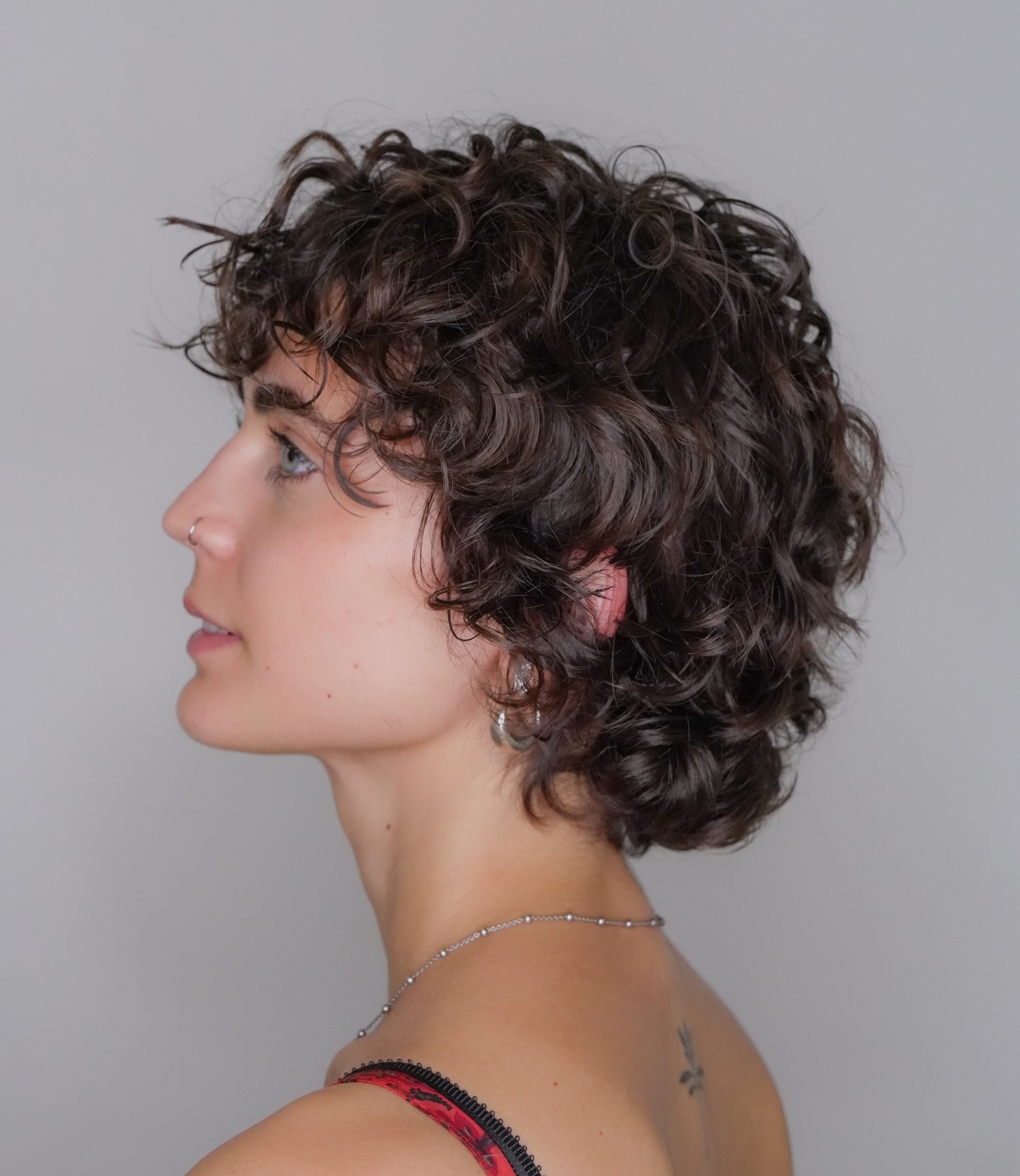
Wavy hair (type 2A–2C) and loose curls (3A–3B) work naturally well with the bixie because the cut’s layered structure lets waves and curls spring independently rather than clumping into a single mass. The key adjustment is dry cutting — having your stylist shape the cut on dry hair so the layers account for your hair’s natural shrinkage and curl pattern. What looks like chin-length on wet hair might bounce up to ear-length when dry on curly textures, and dry cutting eliminates that surprise.
Tighter curls (3C–4C) can wear a bixie, but it requires a stylist experienced with natural hair who can manage shrinkage, shape the curl clusters individually, and ensure the proportions still present as a bixie rather than a rounded crop. Bring reference photos of bixies on your specific curl type.
Straight Hair Benefits from Texturizing Techniques
Straight hair can look flat or overly blunt in a bixie without the right cutting technique. Razor cutting or point cutting through the mid-lengths and ends creates the piece-y, deconstructed texture that defines the bixie silhouette. Without it, straight-haired bixies can register more like a plain short bob. A texturizing paste or dry shampoo worked through the lengths after styling adds grip and separation that straight hair doesn’t produce on its own.
Popular Bixie Variations and What Makes Each One Work
The bixie isn’t a single haircut. It’s a family of cuts that share a length range and layering philosophy. Here are the variations stylists cut most often, and why each one exists.
The Classic Textured Bixie
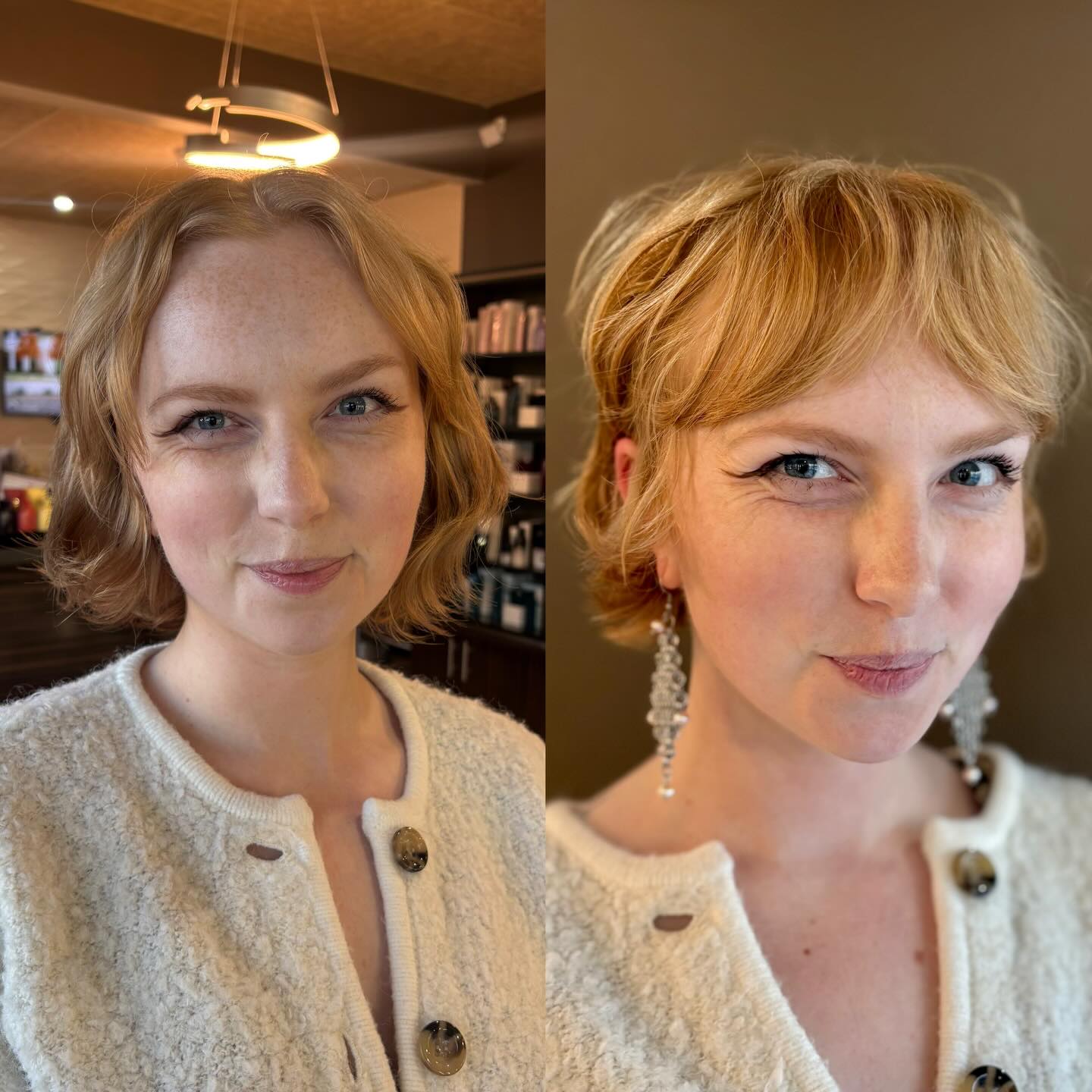
The original and most requested version: shorter through the back and nape with longer, face-framing layers in the front, heavy point-cutting throughout. It air-dries well, blow-dries fast, and gives that “I just have naturally great hair” effect. This is the safest starting point if you’ve never gone this short before, because the longer front pieces offer a visual security blanket while you adjust.
The Shaggy Bixie
More layers, more texture, more ’90s energy. The shaggy bixie uses choppier layering and often incorporates razored ends for a rougher, more lived-in texture. It borrows from the shag’s DNA: lots of movement, a less polished perimeter, and a slightly disheveled finish even when freshly styled. This variation works especially well on wavy hair, where the natural texture does half the styling work.
The Bixie with Curtain Bangs
Adding curtain bangs to a bixie softens the cut and gives it a more romantic, face-framing quality. The bangs start shorter at the center of the forehead and sweep longer toward the temples, blending into the bixie’s side layers. This variation is particularly effective on heart-shaped and oval faces, and it offers a built-in grow-out path. As the bangs lengthen, they just become part of the front layers.
The Sleek Bixie
A more refined, blown-out version with smoother layers and a glossy finish. The sleek bixie still has the cut’s characteristic layering, but it’s styled with a round brush and heat- rather than air-dried for texture. This variation transitions well from a workday to an evening event and suits straight to slightly wavy hair best. Expect to add five minutes to your morning routine for the blow-dry.
The Side-Parted Asymmetrical Bixie
A deep side part shifts the bixie’s weight dramatically to one side, creating an asymmetrical look without the need for an asymmetrical cut. One side sweeps across the forehead with more volume and movement, while the other stays tucked behind the ear. This is a strong choice for round and square faces where asymmetry breaks up visual width, and it’s the easiest variation to change daily — just flip the part.
Maintenance and Upkeep: What You’re Signing Up For
Short cuts always demand more frequent trims than long styles, and the bixie is no exception. But the daily effort is lower than most people expect.
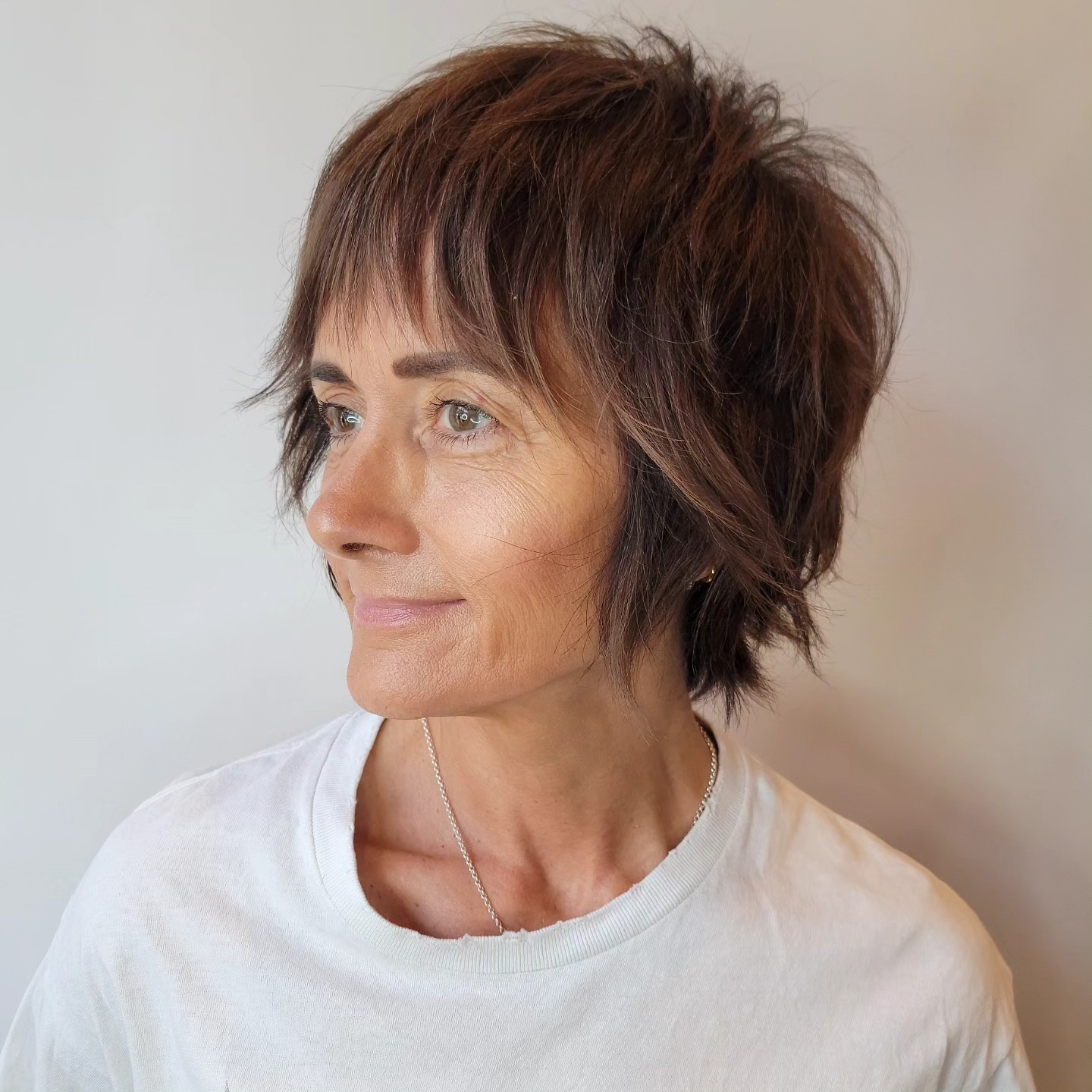
Trim frequency: Every 4–6 weeks to keep the shape intentional. The back and nape grow out fastest and start looking unkempt first. If you can only afford occasional trims, ask your stylist to prioritize the back and neckline on shorter visits.
Daily styling time: 5–10 minutes on average. A texturizing spray on damp hair and some finger-scrunching is the baseline. A full blow-dry with a round brush for a polished look takes closer to 10–15 minutes.
Products you’ll need: A lightweight texturizing spray or cream (the backbone of bixie styling), a volumizing mousse for fine hair or a smoothing cream for thick hair, a heat protectant if you blow-dry or flat iron, and a dry shampoo for extending the style between washes.
Tools: A small round brush (1-inch barrel or smaller) for blow-drying lift into the crown, a flat iron for the sleek variation, and a diffuser attachment if you have wavy or curly texture.
Grow-out behavior: This is the bixie’s hidden strength. Unlike a pixie that hits a painful mullet stage around week six, a bixie grows into a textured short bob without a major awkward phase. If you decide to grow it out, your stylist can shape-trim the back and nape while letting the top and front catch up, and within three to four months, you’ll have a chin-length bob.
Stylist tip: Wash your bixie every two to three days rather than daily. The natural oils that develop on day two give the cut more texture and hold than freshly washed hair. A spritz of dry shampoo at the roots adds volume and absorbs excess oil without stripping the style.
What to Tell Your Stylist
Walking into a salon with the word “bixie” is a good start, but most stylists want specifics. Here’s how to translate what you want into a language your stylist can act on.
Start with a reference photo. Ideally, two or three showing the length, texture, and styling you want. Photos of the back and sides are especially helpful for short cuts, because that’s where the cut’s structure lives. Then layer in these details:
For the length, specify where you want the shortest point (usually the nape) and the longest point (usually the front face-framing pieces). “I want the back to hit mid-nape and the front to reach my chin” is much more useful than “I want a bixie.”
For the layers, tell them whether you want choppy, visible layering (shaggy bixie) or softer, blended layers (classic or sleek bixie). The terminology that helps: “I want point-cut ends and internal layers through the crown” gives the stylist a specific cutting plan rather than an interpretation.
For the bangs, clarify whether you want curtain bangs, side-swept bangs, wispy micro-bangs, or no bangs at all. If you want bangs, specify the length — “starting at the bridge of my nose” or “hitting just below my eyebrows.”
For the nape, say whether you want it tapered close, left slightly longer for softness, or undercut for extra edge. The nape is the most visible structural element on a bixie, and stylists appreciate direction here.
Finally, mention your styling habits. “I air-dry 90% of the time” or “I use a round brush daily” tells the stylist how to calibrate the layers. A bixie designed for air-drying needs more built-in texture than one that gets blow-dried into shape every morning.
Color Techniques That Pair Well with a Bixie
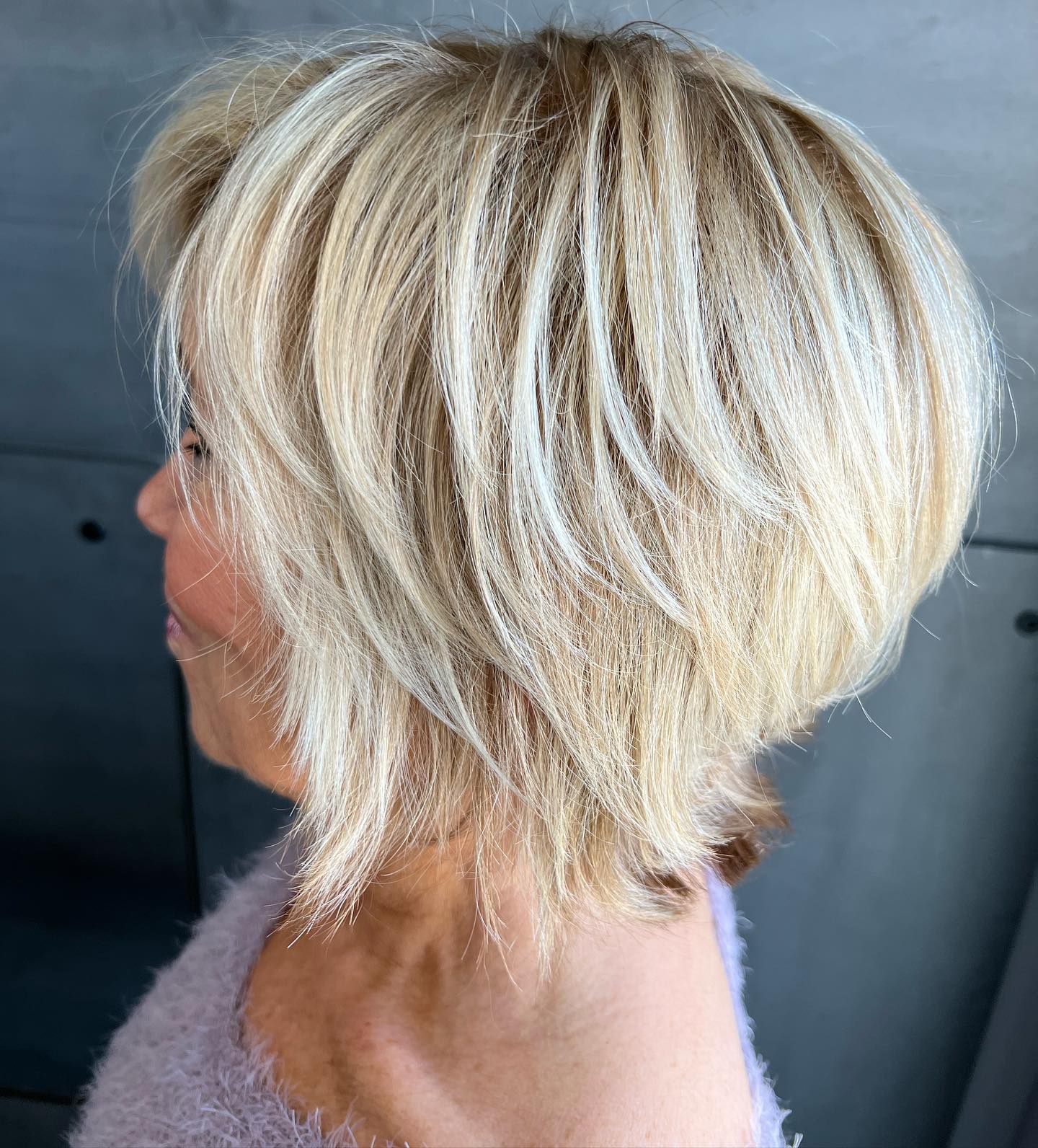
Short cuts change the color game entirely. With less canvas to work with, every color choice becomes more concentrated and visible, which means subtle techniques have an outsized impact on a bixie.
Face-framing highlights (money pieces) brighten the area around the eyes and cheekbones and add dimension to the bixie’s front layers. Even two or three lighter pieces at the temples can transform a single-process color into something more dynamic.
Babylights through the top layers mimic natural sun-lightening and add depth without strong contrast lines. On a bixie, where the layers are already creating shadow and movement, babylights amplify that three-dimensional quality.
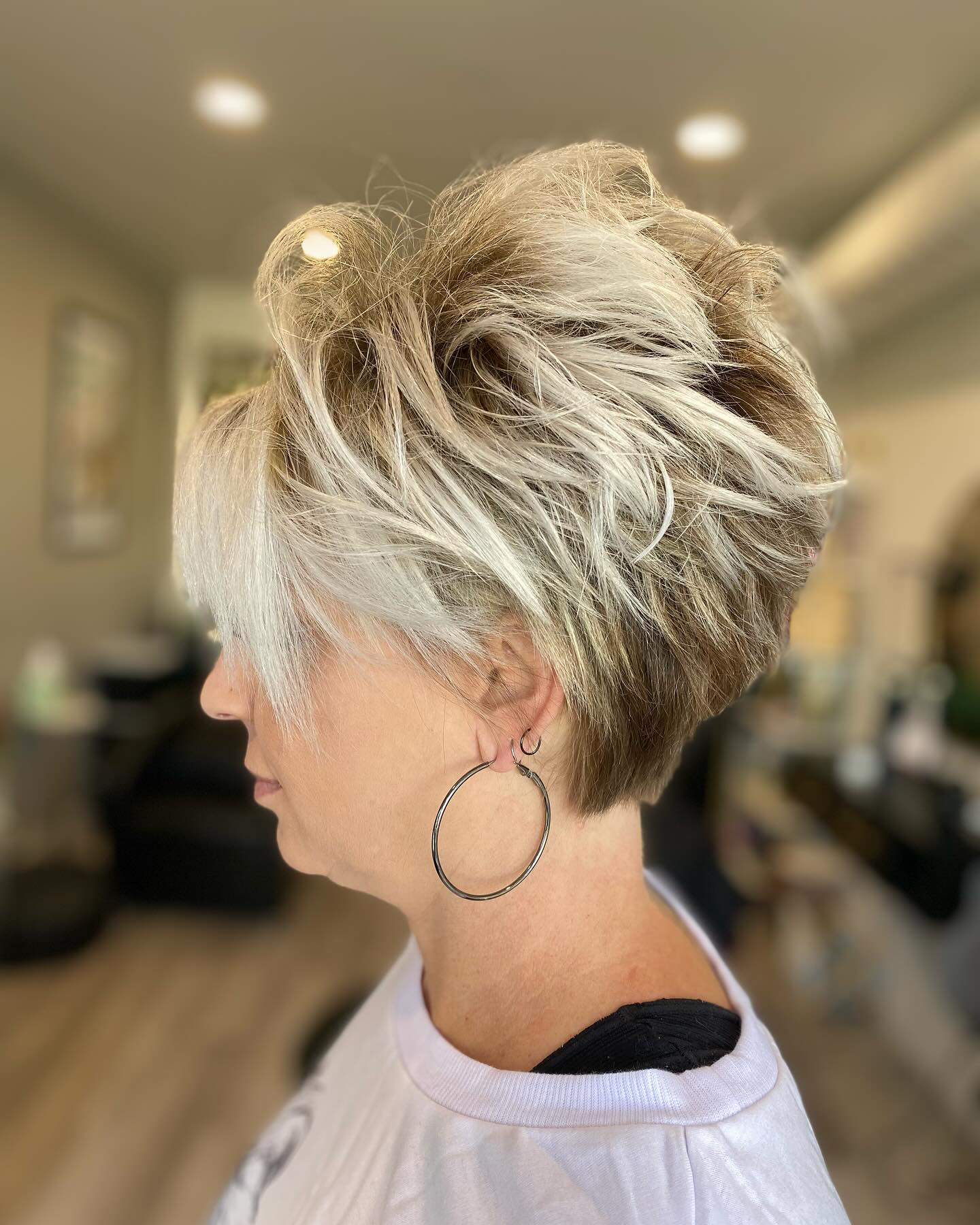
A root melt or shadow root works well if you don’t want to deal with harsh grow-out lines on such a short cut. The darker root blends into the lighter lengths gradually, which means your color still looks well-blended at week five or six.
All-over rich tones — deep brunette, copper, burgundy — come across as bold on a bixie because the cut’s texture catches light at different angles. Copper in particular has surged alongside the bixie trend, and the two pair naturally because warm tones enhance the visual depth that layering creates.
FAQ
Is a Bixie Haircut Low Maintenance?
Compared to most mid-length and long styles, yes. Daily styling takes 5–10 minutes, and the cut air-dries well with a texturizing spray alone. The maintenance catch is frequency: you need trims every 4–6 weeks to keep the shape sharp. If you’re used to going three months between haircuts, the bixie will feel more demanding at the salon, even though it saves time every morning.
Can I Get a Bixie with Curly Hair?
Wavy and loose curly textures (up to 3B) work well with the bixie’s layered structure. The curls add natural movement and volume that straight hair has to create with products. Tighter curls (3C–4C) require a stylist experienced in cutting short natural hair, because shrinkage significantly changes the proportions. Always request a dry cut on curly hair so the stylist can see the final length and shape as they work.
Will a Bixie Haircut Suit a Round Face?
Yes, with the right variation. The key is building height at the crown and keeping the sides sleeker to create vertical visual lines. A deep side part adds asymmetry that breaks up the face’s width, and face-framing layers that start at cheekbone level draw the eye downward. Avoid a center-parted bixie with equal volume on both sides, which tends to widen round faces.
How Long Does It Take to Grow Out a Bixie?
A bixie grows into a short bob within two to three months and a chin-length bob within four to five months, depending on your growth rate (the average is about half an inch per month). The grow-out is significantly less awkward than a pixie because the layered structure blends naturally into longer lengths. Strategic maintenance trims, like shaping the nape and back while letting the top grow, keep the style looking cohesive throughout the transition.
What Products Do I Need for a Bixie?
The essentials are a texturizing spray or cream (the single most-used product for bixies), a heat protectant if you blow-dry, and a dry shampoo to extend your style between washes. Fine hair benefits from a volumizing mousse applied at the roots before drying. Thick hair does better with a lightweight smoothing cream to control bulk without flattening. Skip heavy serums and oils, as they weigh down short layers and kill the movement the cut is built on.
Can Women Over 50 Wear a Bixie?
The bixie is one of the most age-inclusive short cuts available. For women over 50, softer feathered layers and a tapered nape add lift and structure without looking harsh. The volume at the crown counteracts thinning at the hairline, and the textured finish avoids the “helmet” quality that more structured short cuts can create. If your hair has gone gray or silver, the bixie’s layers catch light across the different tones and actually showcase the dimension in natural gray.
How Much Does a Bixie Haircut Cost?
Pricing depends on your location and stylist, but expect to pay what you’d pay for a standard women’s cut at your salon, typically between $50 and $150 in the United States. The initial cut may take longer (45–75 minutes) since the stylist is creating the shape from scratch, while maintenance trims are shorter and may cost less. If you’re combining the cut with color, budget for both separately.
Ultimately, choosing a bixie haircut is about embracing a style that offers the best of both worlds: the effortless edge of a crop and the feminine framing of a bob. Whether you are looking to simplify your morning routine or find a sophisticated way to grow out a shorter cut, this hybrid style provides the versatility and modern texture needed to feel confident and stylish every day. By understanding your face shape and hair type, you can work with your stylist to customize this trend-setting look to perfection.
Hair results vary based on your natural hair type, texture, density, and condition. Always consult with a licensed hairstylist before making significant changes, especially with chemical treatments or dramatic length changes. Photos may show styled results that require professional tools and products to replicate.