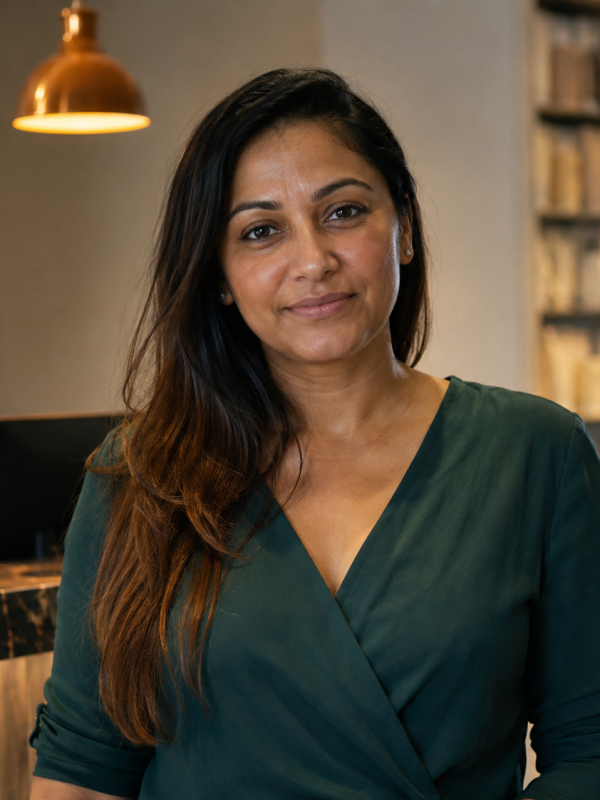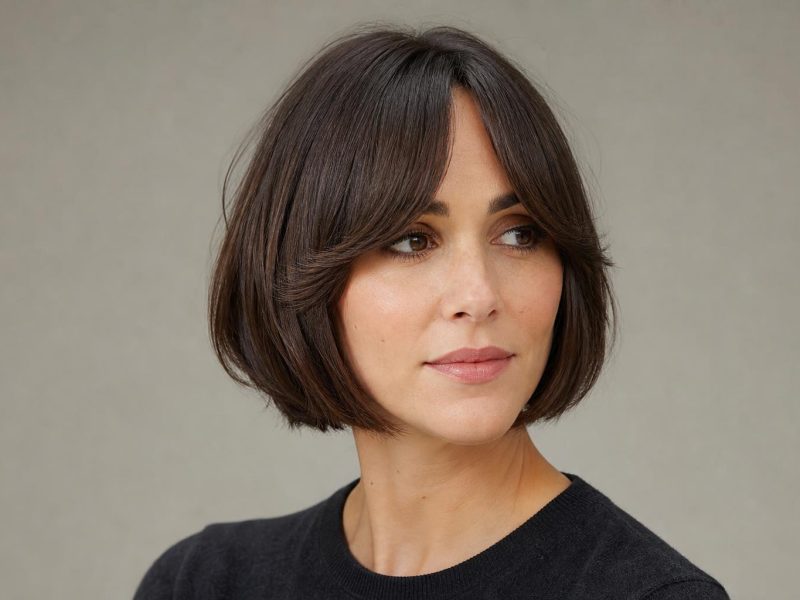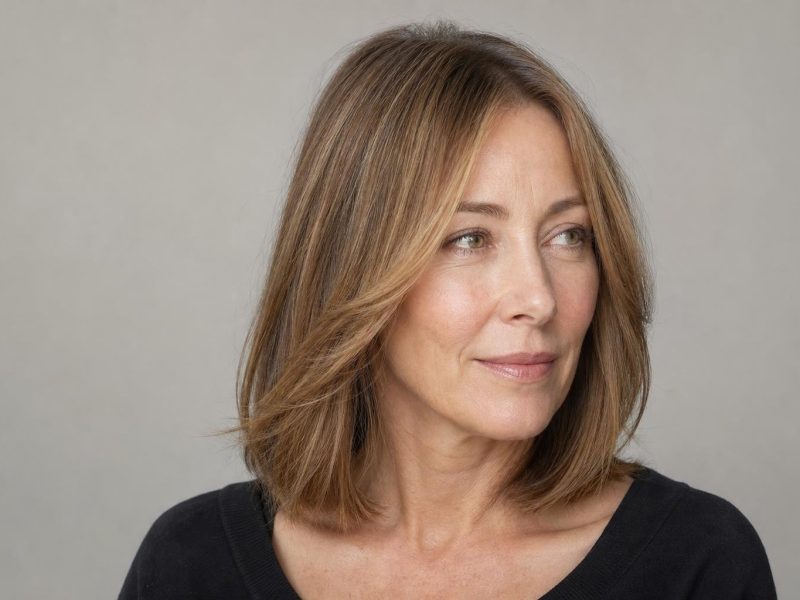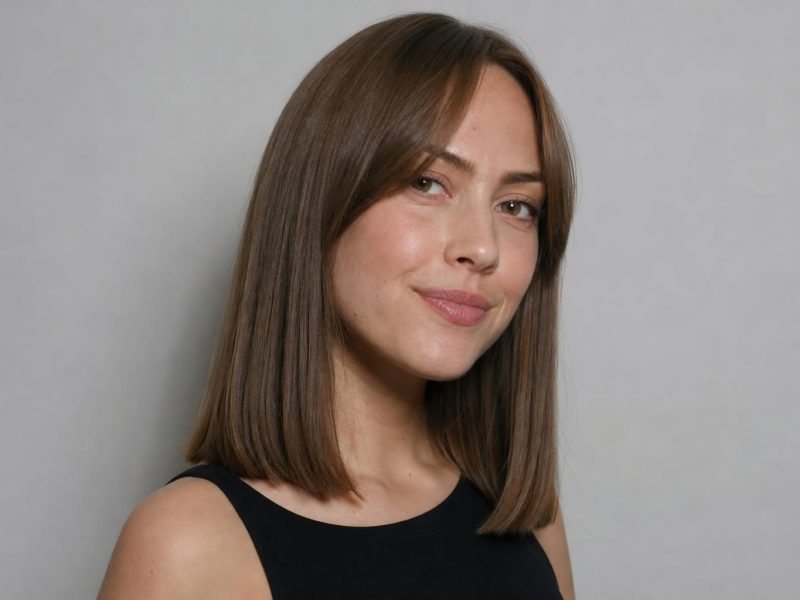

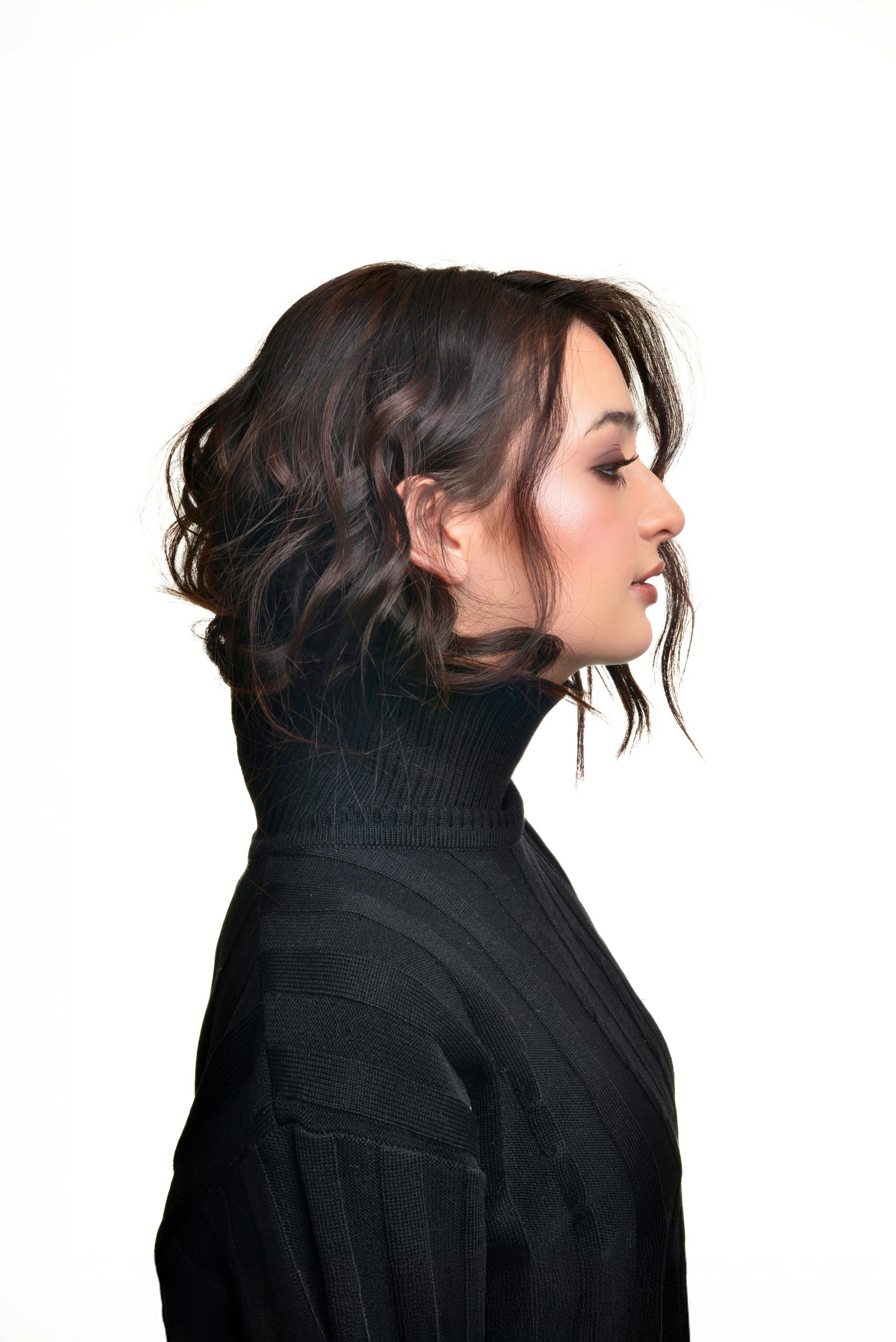

The curved bob, also called the bevelled bob, tapers its ends inward so they fold softly under the jaw, giving a rounded, face-framing shape that takes almost no daily styling.
A curved bob is a chin- to collarbone-length bob cut so the ends bevel under, curving toward the neck instead of hanging blunt and straight. That inward turn traces the jawline and softens it, which is why the shape flatters so many faces with so little effort. Hairstylists build the curve into the cut itself through graduation, so the hair wants to fold under on its own rather than needing a full heat set every morning.
The look has quiet pedigree, worn for years by Victoria Beckham and Helen Mirren and pushed back into the spotlight when Phoebe Dynevor cut her long hair into a collarbone-grazing version. This spotlight explains what makes a curved bob different from a blunt or A-line bob, shows 15 variations to consider, and covers face shape fit, the exact words to bring to your stylist, and how to keep the bevel with a single round brush.
| Factor | Details |
|---|---|
| Best for | Most face shapes, especially square and round; straight to wavy hair |
| Maintenance | Trim every 6 to 8 weeks; 5 to 10 minutes of daily styling |
| Works with | Chin to collarbone length, fine to medium density |
| Avoid if | You have tight curls or want a sharp, blunt-edged line |
| Salon time | 45 to 60 minutes for the cut |
What Makes a Curved Bob Different
The whole idea lives in the ends. On a blunt bob the perimeter hangs straight down in a hard line, while a curved bob is graduated underneath so the bottom edge rolls inward and beveling forms a soft C-shape against the neck. Stylists borrow the word bevel from jewelry and woodwork, where a bevel is an angled edge rather than a squared one, and the same sloped finish is what gives this bob its rounded silhouette.
It differs from an A-line or inverted bob, where the front is cut longer and the angle drives the eye forward toward the chin. A curved bob keeps the length fairly even and turns the ends under all the way around, so the effect is soft and framing rather than sharp and directional. Because the curve is cut in, a decent version holds its shape as it air-dries, and a great version barely needs a brush.
Stylist tip: Ask whether your ends should be cut with a slight graduation or with an internal bevel using a razor. On fine hair a scissor graduation keeps enough weight to fold under, while thick hair often needs light internal thinning so the curve does not flip out into wings.
Curved Bob Lengths and Shapes
Length changes the mood of a curved bob more than anything else. A chin-length version reads polished and retro, while a collarbone cut feels current and low-key. These first eight variations move through the core shapes.
1. Classic Chin-Length Curved Bob
The purest form of the trend cuts the perimeter at the chin, then graduates the underneath so the ends hook in right at the jaw. A wide round brush on the last three inches sets the bevel in one pass. Point-cut ends keep the curve soft instead of helmet-like.
2. Collarbone Curved Bob
Wear the length at the collarbone for the Phoebe Dynevor version, where the ends flick under just as they reach the shoulder. Blow-dry the last section with the brush rolled inward, then a quick cool shot locks the shape. It is the easiest length to grow into if you are coming from long hair.
3. Jaw-Grazing Bevelled Bob for a Square Face
Ends that curve in right at the jaw soften a strong or square jawline, because the rounded turn breaks the horizontal corner rather than echoing it. Keep the length a touch below the widest point of the jaw for the most flattering balance. A soft side part adds another diagonal that eases the angles.
4. Low-Maintenance Air-Dry Curved Bob
A well-graduated curved bob on straight hair folds under as it air-dries, which makes it one of the lowest-effort cuts in the bob family. Smooth a pea-sized drop of cream through damp ends and let them dry over your fingers curled inward. Skip the iron entirely on days you are short on time.
5. Curved Bob with Face-Framing Layers
Ask for a curved bob with a few face-framing pieces cut at the cheekbone to add movement around the front. Tell your stylist the frame should blend into the bevel, not sit separate from it. The layers give the shape a lived-in softness that a one-length curve can lack.
6. Curved Bob vs Blunt Bob
Where a blunt bob ends in a flat, weighty line, the curved bob trades that edge for a rounded roll that feels softer against the face. The blunt version makes a statement of precision; the curved version makes a statement of ease. If your hair is very fine, the curve can read fuller than a blunt line that separates into strands, and you can compare the two in our roundup of chin-length bob styles.
7. Sleek Glass-Finish Curved Bob
A mirror-smooth blow-out on a curved bob turns the bevel into a clean, glossy curve that catches light along the fold. Finish with a shine drop worked through the mids and ends, keeping the roots matte for lift. Deep brunette and black bases show the glassy curve most clearly.
8. Curved Lob for the In-Between
A curved lob keeps a couple of extra inches past the collarbone while still turning the ends under, which suits anyone nervous about going short. The longer weight makes the bevel a little softer and more forgiving between trims. For more length options in this family, our collarbone bob guide covers the just-above-shoulder range.
Curved Bobs by Texture, Color, and Fringe
Texture and color decide how you build and show off the bevel. Fine hair leans on the cut to create the curve, thick hair needs weight managed, and a glossy tone makes the fold catch the light.
9. Fine-Hair Curved Bob
Fine hair takes especially well to a curved bob, since the inward roll adds the illusion of body that a flat cut cannot. Keep the length between chin and jaw so the weight is not stretched thin, and use a light mousse at the roots before a quick round-brush finish. Avoid heavy oils, which drag the curve straight.
10. Thick-Hair Bevelled Bob with Managed Weight
Thick hair needs internal thinning so the ends bevel cleanly instead of flaring out into wings at the jaw. A stylist removes weight from underneath while keeping the top surface smooth, which lets the curve turn under naturally. Done right, thick hair holds a bevel for days without a reset.
11. Soft Wavy Curved Bob
Style natural waves into a relaxed curved bob by rough-drying most of the hair, then rolling only the very ends under with a flat iron or thermal brush. The waves keep the top airy while the bevel disciplines the perimeter. It is a forgiving middle ground between polished and undone.
12. Curved Bob with Curtain Bangs for a Round Face
Curtain bangs that split at the center and sweep toward the cheeks add a vertical line that lengthens a round face, and the curved ends widen just below to balance it. Blow the fringe back and away so it flows into the bevel rather than sitting on the forehead. Pair the two in our gallery of bob hairstyles with curtain bangs.
13. Glossy Chocolate Curved Bob
A rich chocolate-brown gloss makes the bevel read as a single ribbon of shine curving under the jaw. The depth of the color hides any small unevenness in the fold, which is a quiet bonus for anyone still learning the round-brush technique. A clear glaze every few weeks keeps the finish reflective.
14. Curved Bob for Blending Gray
Silver and salt-and-pepper hair suits a curved bob because the soft turn keeps the shape looking styled rather than set, and the rounded ends look deliberate rather than accidental. Trim every 6 to 8 weeks so the bevel stays crisp as the color grows. A purple-toned wash keeps the gray cool and glossy between visits.
15. Curved Bob vs A-Line Bob
Unlike an A-line bob, which is shorter at the back and angles longer toward the face, a curved bob keeps a fairly even length and folds the ends inward all the way around. The A-line pushes the eye forward and down; the curve wraps softly around the jaw. If you want that angled drama instead, our asymmetrical bob styles show the sharper end of the spectrum.
How to Choose a Curved Bob for Your Face Shape
A curved bob is one of the most adaptable cuts because you can move where the fold lands. The turn adds soft width at the jaw, so the trick is choosing a length that places that width where it balances your features. Confirm the details with your stylist before any cutting.
| Face Shape | Best Curved Bob | Ideal Length | Avoid |
|---|---|---|---|
| Oval | Almost any version, with or without a fringe | Chin to collarbone | Nothing specific; most lengths flatter |
| Round | Collarbone curve with curtain bangs | Collarbone or just above | Very short chin curves that widen the cheeks |
| Square | Jaw-grazing bevel with a side part | Just below the jaw | A blunt line level with the jaw corner |
| Heart | Curve that fills out at the jaw | Chin to jaw | Heavy volume up at the crown |
| Oblong | Chin curve with soft face-framing | Chin length | Long, flat lengths that stretch the face |
| Diamond | Curve with width at the jaw and a fringe | Chin to collarbone | Slicked shapes that narrow the forehead |
What to Tell Your Stylist
The magic of a curved bob is in the cut, so the consultation matters more than the styling. Ask for a bob at your chosen length with the ends graduated to bevel under, and say plainly that you want the perimeter to curve toward the neck rather than hang blunt. Bring a photo of the fold you like, and mention how much daily effort you are willing to give, since a stylist can cut more curve into the shape if you want it to fold under on its own. The words bevel and graduated ends tell an experienced stylist exactly what you mean.
Stylist tip: Tell your stylist your hair’s natural fall direction and any cowlicks at the nape. If your ends naturally flick out, the cut has to compensate with extra graduation, otherwise the bevel will fight your growth pattern and wing out no matter how you brush it.
Styling and Maintaining a Curved Bob
This is the low-effort payoff of the cut. Most people finish a curved bob in 5 to 10 minutes with a single round brush or a thermal styling brush, rolling the last few inches under while a warm dryer follows. On air-dry days a little cream and finger-curling the ends inward is often enough. The trim schedule matters more than the daily routine, since the bevel loses its precision as the length grows.
| Aspect | Details |
|---|---|
| Trim frequency | Every 6 to 8 weeks to keep the bevel precise |
| Daily styling | 5 to 10 minutes, or air-dry on straight hair |
| Key products | Light mousse, smoothing cream, shine drops, heat protectant |
| Tools needed | Medium-to-large round brush or thermal styling brush |
| Grow-out behavior | Ends drop and lose the fold; needs regular trims to stay sharp |
Stylist tip: Roll the brush under and hold it there for a cool blast of air before you release it. The cold sets the curve the way heat cannot, and that one step is the difference between a bevel that lasts all day and one that drops out by lunch.
When a Curved Bob Is Not the Right Choice
The cut is adaptable, but it is not universal. Here is where a different shape serves you better.
- You have tight, coily curls: the ends want to spring up, not fold under, so a shaped curly cut or a rounded afro shape suits your texture far more than a bevel.
- You want a sharp, blunt statement: a curved bob softens the line on purpose, so a blunt or A-line bob delivers the crisp edge you are after.
- Your ends flick out stubbornly: strong nape cowlicks can defeat a light bevel, so ask for heavier graduation or consider a different finish before committing.
- You never pick up a brush: air-dry works only on naturally straight hair, so wavier textures will need a couple of minutes with a brush to see the curve.
FAQ
What Is a Curved Bob?
A curved bob, also called a bevelled bob, is a chin- to collarbone-length bob cut so the ends turn inward and fold softly under the jaw. The curve is built into the cut through graduation, which is why it frames the face with very little styling. It differs from a blunt bob, which ends in a straight, flat line.
Is a Curved Bob High Maintenance?
No, it is one of the easier bobs to live with day to day, needing only 5 to 10 minutes with a round brush or an air-dry on straight hair. The catch is the trim schedule: the bevel loses its shape as the ends grow, so you need a cut every 6 to 8 weeks. Trade a slightly tighter salon calendar for very short mornings.
Does a Curved Bob Suit a Round Face?
Yes, especially at collarbone length with curtain bangs. Keeping the length a little longer avoids adding width at the cheeks, while the bangs draw a vertical line that lengthens the face. The inward curve then adds soft balance lower down, near the jaw, where it flatters rather than widens.
What Is the Difference Between a Curved Bob and a Bevelled Bob?
There is no difference; they are two names for the same cut. Bevelled bob is the term stylists and British editors tend to use, borrowed from the sloped edge in jewelry and woodwork, while curved bob is the plainer description of the same inward fold. If you use either word with your stylist, you will get the same shape.
Can Fine Hair Handle a Curved Bob?
Fine hair actually looks fuller in a curved bob than in a blunt one, because the inward roll adds the appearance of body. Keep the length between chin and jaw so the weight stays concentrated, and use a light root mousse rather than heavy oils that pull the curve flat. A quick cool-shot finish holds the bevel through the day.
How Do I Ask for a Curved Bob at the Salon?
Ask for a bob at your chosen length with graduated ends that bevel under toward the neck, and bring a reference photo of the fold you want. Say how much daily styling you are willing to do so the stylist can cut in more or less curve. The words bevel and graduated tell a trained stylist exactly what shape to build.
The curved bob earns its 2026 moment by doing the hard work in the cutting chair so your mornings stay simple, folding the ends inward for a soft, face-framing shape that suits nearly everyone. Decide on a length that flatters your face, bring a clear reference photo, and ask your stylist for graduated ends that bevel under. If you want to compare it against other short and mid-length shapes first, browse the full range in our library of haircuts for women.
Hair results vary based on your natural hair type, texture, density, and condition. Always consult with a licensed hairstylist before making significant changes, especially with chemical treatments or dramatic length changes. Photos may show styled results that require professional tools and products to replicate.