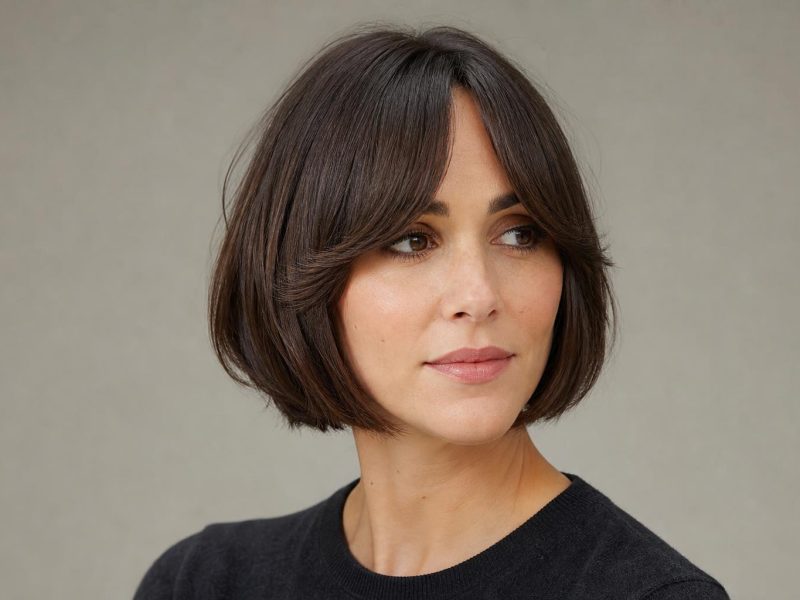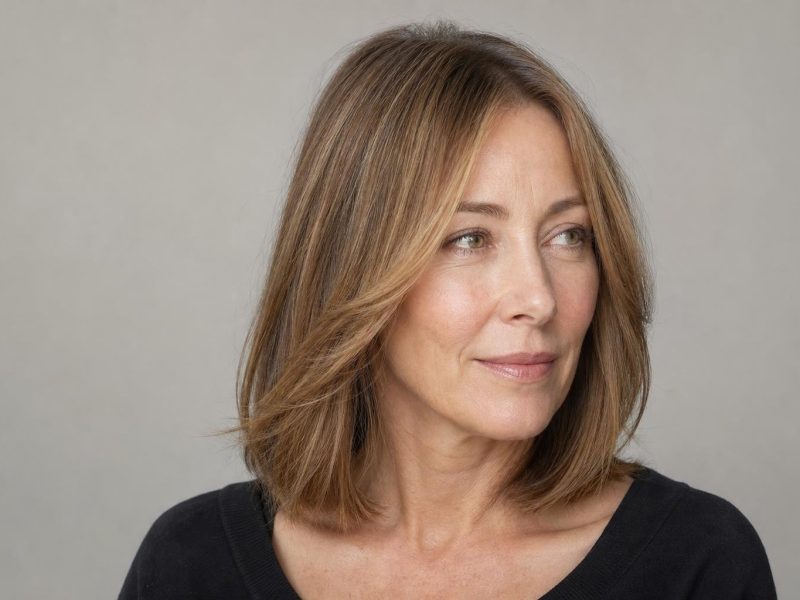


From barely-there angles to dramatic undercuts, these 30 asymmetrical bob variations cover every hair type, face shape, and lifestyle.
An asymmetrical bob is any bob haircut where one side is intentionally cut shorter than the other. The length difference can be as subtle as half an inch or as bold as a full shaved undercut. This range is what makes this cut one of the most versatile shapes in a stylist’s repertoire. Whether you have fine hair that needs the illusion of thickness, thick hair that benefits from weight removal on one side, or curly texture that craves an interesting shape, there’s a version here worth saving to your phone before your next appointment.

These 30 cuts are organized by style category so you can jump straight to what fits your hair type and comfort level. You’ll find classic angles, dramatic statement cuts, textured and layered options, color-enhanced pairings, and variations built for specific textures. After the gallery, there’s a face shape compatibility table, a maintenance breakdown with annual cost estimates, and specific language to use during your salon consultation.
| Asymmetrical Bob Type | Best For | Maintenance | Trim Frequency |
|---|---|---|---|
| Subtle angle (½–1″ difference) | First-timers, professional settings | Low | Every 6–8 weeks |
| Dramatic angle (2–4″ difference) | Oval, heart, diamond faces | Medium | Every 5–6 weeks |
| Undercut asymmetrical bob | Thick, coarse hair; edgy preference | High | Every 3–4 weeks |
| Layered asymmetrical bob | Fine to medium hair; round, square faces | Low–Medium | Every 6–8 weeks |
| Curly/wavy asymmetrical bob | Natural texture, 2B–3C patterns | Low | Every 8–10 weeks |
Classic and Subtle Asymmetrical Bobs
Not every asymmetrical bob needs to turn heads from across the room. The cuts in this section keep the length difference to roughly half an inch to an inch and a half. It’s enough to add visual interest without feeling like a major departure from a traditional bob. If you’ve been browsing layered bob hairstyles and want something with a little more personality, these are a natural next step.

1. Chin-Length Asymmetrical Bob with Side Part
The deep side part does the heavy lifting here, pushing volume to the longer side while the shorter side tucks neatly behind the ear. On straight, medium-density hair, this version needs almost no product, just a quick pass with a flat iron for a polished finish. Oval and heart-shaped faces wear this particularly well because the chin-length line frames the jaw without adding width.
2. Blunt Asymmetrical Bob on Fine Hair
Fine hair and heavy layering don’t mix, but a blunt perimeter with a subtle angle actually helps thin strands look thicker. The solid weight line tricks the eye into seeing more density than what’s really there. If your hair tends toward the finer side, check out our guide to bob haircuts for fine hair for more options that maximize fullness. Ask your stylist for point cutting only on the interior, not the perimeter, to keep that clean edge intact.
3. Soft Angled Bob with Curtain Bangs
Curtain bangs soften the short-to-long transition and work especially well on wavy hair, where natural texture blends the angle into a more organic shape. If you have a round face, the center-parting bangs create vertical lines that visually elongate. It’s a useful optical trick when paired with the bob’s diagonal line.
4. One-Length Asymmetrical Lob
On thick hair, the weight of the longer side drapes beautifully without styling intervention. This is the safest entry point if you’re testing asymmetry for the first time and want the option to trim into a symmetrical lob later if it doesn’t feel right.
5. Sleek Asymmetrical Bob with Middle Part
A center part with an asymmetrical cut creates an interesting tension — the parting is symmetrical, the length is not. A lightweight smoothing serum (not a heavy oil) keeps the flat-ironed finish glossy without weighing anything down. Diamond and oblong face shapes benefit most, where the center part balances forehead width while the angled length shortens the visual face length.
Bold and Dramatic Asymmetrical Bobs
For anyone who considers “subtle” a synonym for “boring,” these push the length difference to three inches or more. Some incorporate shaved sections, stacked backs, or extreme angles that make the asymmetry the focal point. Fair warning: these versions require more frequent salon visits, and growing out to even lengths takes real patience.

6. Undercut Asymmetrical Bob
Shaving one side to a #2 or #3 guard while keeping the other at chin length creates the most dramatic version of this cut. On thick or coarse hair, the undercut removes significant bulk and actually makes styling faster. The trade-off is real, though: the shaved section needs a touch-up every three to four weeks, and growing it out takes 12 to 18 months to reach bob length again. Bring a reference photo showing the exact clipper gradient you want, because “shaved on one side” means very different things to different stylists.
7. Stacked Asymmetrical Bob
Stacking, where the back is cut in graduated layers that get progressively shorter toward the nape, adds volume at the crown that a single-length bob simply can’t. If you’re drawn to this structure, our collection of stacked bob haircuts shows more variations of the graduated back. Round and square faces benefit from the height at the crown, which draws the eye upward and elongates the silhouette.
8. Extreme Angle Asymmetrical Bob
When the back sits at nape level, and the longest front piece reaches the collarbone, you’re looking at a four-to-six-inch difference that reads as pure geometric precision. Maintaining that sharp angle is the high-maintenance part, as the whole shape can look muddled within about five weeks. This version looks its sharpest on straight hair; wavy textures will soften those clean lines, which is either a feature or a frustration depending on what you’re after.
9. Asymmetrical Pixie-Bob
Split the difference between a pixie and a bob — keep the back and one side cropped close while the top and opposite side stay long enough to sweep across the forehead. A matte-finish paste or clay gives the textured look without shine or stiffness.
10. Disconnected Asymmetrical Bob
Unlike a blended asymmetrical bob, where the stylist creates a smooth gradient from short to long, a disconnected version leaves an intentional gap. You can see exactly where the short section ends and the long section begins. This is the boldest variation and works best as a planned collaboration with a stylist you trust, since the proportions need to complement your specific head shape and features.
Textured and Layered Asymmetrical Bobs
Texture transforms an asymmetrical bob from a geometric statement into something more wearable and forgiving. These versions use razored ends, internal layers, choppy texturizing, or natural wave patterns to soften the angle and add movement. They also grow out more gracefully than blunt cuts because the layers blend as they lengthen, buying you extra time between trims.

11. Razored Asymmetrical Bob
Razor cutting removes weight from the mid-shaft and ends, creating those soft, feathery tips that move with every head turn. The technique works best on medium-to-thick hair; on fine strands, a razor can make the ends look see-through rather than textured. Specify razor use only on the interior layers, not on the top surface, where it can create frizz on humidity-prone hair.
12. Choppy Textured Asymmetrical Bob
Point cutting, where the stylist cuts into the ends vertically rather than straight across, creates irregular, choppy ends that add texture without removing as much weight as a razor. On platinum-blonde hair, the uneven tips catch light at different angles, giving the cut dimension even without color work. A texturizing spray with a sea salt base enhances the separation on towel-dried hair.
13. Layered Asymmetrical Bob for Thick Hair
Thick hair and a single-length bob are a recipe for triangular shape — the weight flares outward at the bottom, making the head look wider. Internal layers remove bulk from the mid-shaft while keeping the outer perimeter intact. If you want to see how choppy layered bobs handle thickness differently, that gallery focuses specifically on weight removal through texture.
14. Shaggy Asymmetrical Bob
Short layers at the crown, longer face-framing pieces, and deliberate unevenness throughout — the whole point is an “I woke up like this” nonchalance. This version grows out the most gracefully of any asymmetrical bob because the layers were already uneven by design. You can stretch trims to every 8 to 10 weeks without losing the shape, and a diffuser on medium heat is the fastest way to style wavy or curly versions.
15. Feathered Asymmetrical Bob
Feathered layers curve outward at the tips rather than falling flat or curling under, creating an airy, retro-inspired silhouette. Use a large round brush (1.5-inch barrel or wider) during blow-drying, wrapping the ends away from the face on the longer side. On the shorter side, the outward flip adds width — a useful feature for anyone with a narrower face who wants to balance their proportions.
Color-Enhanced Asymmetrical Bobs
Color and asymmetry amplify each other. A balayage gradient looks more dimensional on an angled cut because the color follows the diagonal line. A bold single-process shade draws more attention to the geometric shape. The styles here use color as a design element, not just an afterthought.

16. Balayage Asymmetrical Bob
Hand-painted balayage follows the hair’s movement, so the longer side naturally gets more visible color, creating intentional variation in both length and shade. The grow-out is minimal, typically three to four months between touch-ups without visible regrowth lines.
17. Platinum Asymmetrical Bob
Platinum demands healthy hair. The bleach processing required to lift dark hair to a level 10 leaves strands fragile if the base is already compromised. A root shadow (leaving the first half-inch of regrowth intentionally darker) reduces the starkness of grow-out and adds depth at the part line. Plan on a purple-toning shampoo once a week to prevent brassiness, and budget for toner touch-ups every four to six weeks. Annual maintenance for a platinum asymmetrical bob realistically runs $800 to $1,500, depending on your starting shade and metro area.
18. Vivid Color Block Asymmetrical Bob
Color blocking assigns different shades to different sections, and asymmetry gives you a natural dividing line — one side in jet black, the other in electric blue or deep emerald. Know that vivid semi-permanent shades fade with every wash; you’ll lose vibrancy within three to four weeks unless you use a color-depositing conditioner and wash with lukewarm water. Sulfate-free shampoo is non-negotiable for preserving any fashion color.
19. Copper-Red Asymmetrical Bob
Copper tones are having a moment, and they interact beautifully with the angular lines of this cut. The warm, reflective quality makes each layer and angle visible in a way that cooler shades don’t. On warm or olive skin tones, copper looks like a natural extension of your complexion rather than an imposed color. If you’re new to red tones, a demi-permanent copper glaze lets you test the shade for six to eight weeks before committing to a permanent formula.
20. Highlights on Asymmetrical Bob
Face-framing highlights (“money pieces”) draw the eye to the length difference by adding contrast exactly where the asymmetry is most visible. To reinforce the angle, ask your colorist to concentrate the highlights on the longer side and the face-framing sections rather than distributing them evenly.
Asymmetrical Bobs for Specific Hair Types
Hair type dictates how an asymmetrical bob actually behaves day-to-day. The same cut on straight fine hair versus thick curly hair will look and act like two entirely different haircuts. The entries in this section are chosen specifically for how well the asymmetrical angle works with each texture.

21. Asymmetrical Bob for Curly Hair
Curly hair shrinks — typically by 30 to 50 percent of its stretched length, depending on your curl pattern. A stylist who cuts asymmetrical bobs on curly hair needs to cut dry, curl by curl, to account for this shrinkage. If they cut wet, the angle will be significantly steeper once the hair dries and springs up. Bring a reference photo of curly asymmetrical bobs, specifically, not straight-hair versions, so your stylist can calibrate the length difference for your particular curl pattern.
22. Wavy Asymmetrical Bob
Natural wave patterns blur the precision of the asymmetrical angle, which actually works in your favor. This way, the cut looks effortlessly textured rather than geometrically rigid. Air drying works fine for this version; just scrunch a lightweight curl cream into damp hair. If the shorter side consistently flips outward as it dries, ask your stylist to undercut or thin at the nape to reduce the bulk causing the flip.
23. Asymmetrical Bob for Thin Hair
Thin hair benefits from the visual illusion asymmetry creates. The eye reads the longer side as “more hair” and the shorter side as deliberate rather than sparse. Keep the perimeter blunt (no razor cutting, no heavy layering) to maximize thickness. A golf-ball-sized amount of volumizing mousse at the roots before blow-drying adds lift where thin hair tends to fall flat.
24. Thick Straight Asymmetrical Bob
Dense, heavy hair holds an asymmetrical angle with almost no effort because the weight keeps each side in place without product or daily restyling. The challenge is keeping it from looking bulky. Ask for thinning shears or slide cutting on the interior to remove density without disturbing the perimeter line.
25. Asymmetrical Bob for Coily Hair (4A–4C)
Coily textures experience the most dramatic shrinkage (up to 75 percent), so the cut needs to be significantly longer than the target length when stretched. A stylist experienced with 4A–4C hair will cut on dry, stretched hair (blow-dried or twist-stretched, not flat-ironed) to ensure the asymmetrical angle shows up in the finished style. A defined twist-out on the longer side paired with a close taper on the shorter side showcases natural texture.
Statement Asymmetrical Bobs
These final entries combine multiple elements — color, texture, and extreme angles — into cuts that function as full-on style statements. They require the most upkeep and the most confident stylist-client relationship, but they deliver the highest visual impact.

26. Asymmetrical Bob with Shaved Design
Adding a razor-etched geometric design into the shaved section turns the shorter side into a canvas. Lines, geometric designs, and fades are the most common patterns. The design blurs as the hair grows (within two to three weeks, it starts losing definition), so this is genuinely a high-maintenance feature. Some barber shops offer design touch-ups separately from a full haircut at a lower cost, which is worth asking about when scheduling.
27. Asymmetrical A-Line Bob
An A-line bob already features a shorter back and longer front. Adding asymmetry on top of that means the two front sections fall at different lengths. The result is a cut with three-tier graduation: shortest at the back, medium on one side, and longest on the other. This progressive weight distribution works on almost any hair texture because it shifts density gradually rather than concentrating it at one level.
28. Messy Asymmetrical Bob with Bangs
Blunt bangs paired with an asymmetrical bob create an intentional visual contrast — perfectly horizontal fringe above, angled length below. Adding a messy, textured finish to the bob portion plays up that contrast. A dry texturizing spray on second-day hair, focused on the mid-lengths, gets the piece-y separation. Factor in that bangs need washing and blow-drying almost daily to avoid an oily, flat fringe.
29. Asymmetrical Bob with Face-Framing Layers
Face-framing layers add another dimension to asymmetry. They draw attention to your eyes and cheekbones regardless of which side is shorter, making this version flattering on faces with strong bone structure. Tell your stylist to start the face-framing pieces at cheekbone level on the shorter side and blend them into jaw-length layers on the longer side for a cascading effect.
30. Low-Maintenance Grown-Out Asymmetrical Bob
Here’s the honest truth most galleries skip: a well-cut asymmetrical bob can look intentional even as it grows past its original shape. If your stylist used layered or textured techniques, the asymmetry softens gradually and transitions into an asymmetrical lob over two to three months. Ask for a “lived-in asymmetrical bob.” Most experienced stylists know this means building in enough texture that the grow-out phase still reads as a deliberate cut, not a missed appointment.
How to Choose the Right Asymmetrical Bob for Your Face Shape
Face shape determines which version of asymmetry complements your bone structure rather than competing with it. The angle of the cut, the length of each side, and the overall proportions all interact with your face’s natural geometry.
| Face Shape | Best Variation | Why It Works | Avoid |
|---|---|---|---|
| Oval | Any — subtle to dramatic | Balanced proportions handle any angle | Heavy fringe hiding forehead balance |
| Round | Longer bob (past jaw), deep side part | Vertical line from cheekbone to collarbone slims visually | Chin-length with center part (adds width) |
| Square | Soft layered, side-swept | Layers break up strong horizontal jawline | Blunt jaw-length (emphasizes angular jaw) |
| Heart | Chin-length with side-swept bangs | Fullness at chin balances wider forehead | Very short bobs exposing chin point |
| Oblong | Chin-length with bangs | Horizontal bang line shortens face length | Long lobs without volume (further elongate) |
| Diamond | Face-framing layers | Layers at cheekbones soften widest point | Slicked-back styles exposing narrow forehead |
Stylist tip: If you’re unsure about your face shape, pull your hair back tightly, stand in front of a mirror, and trace the outline of your face on the glass with a dry-erase marker or lipstick. The shape that you see tells you which row in the table above to focus on.

What to Tell Your Stylist
Walking into a salon with the phrase “I want an asymmetrical bob” gives your stylist a starting point, but not nearly enough detail. The degree of asymmetry, the finishing technique on the ends, and how the cut works with your existing texture all need to be specified, or you’re leaving the final result up to interpretation.
Here’s a framework you can adapt: “I’d like an asymmetrical bob with the shorter side at [ear/jaw/chin] level and the longer side at [chin/jaw/shoulder] level. I want [blunt/textured/layered] ends, and I’d prefer the transition between sides to be [gradual and blended/sharp and defined]. My hair is [straight/wavy/curly] and [fine/medium/thick], and I don’t want to spend more than [X] minutes styling it daily.”
Stylist tip: Bring at least two reference photos — one from the front and one from the side or back. A single front-facing photo doesn’t show your stylist how the angle is structured behind the ear or at the nape. Many clients are surprised by the back of their haircut because they never discussed it. If you can’t find a back-view photo, ask your stylist to describe what the back will look like before they start cutting.

Maintenance and Styling
The maintenance commitment varies dramatically depending on which version you choose. A subtle, layered version stretches eight weeks between trims and grows out gracefully. A sharp, blunt, geometric cut starts losing its defining lines after week four or five.
| Version | Trim Cycle | Daily Styling | Key Products | Annual Cost |
|---|---|---|---|---|
| Subtle blunt | 5–6 weeks | 5–10 min | Smoothing serum, heat protectant | $400–$700 |
| Layered/textured | 6–8 weeks | 5–15 min | Texturizing spray, lightweight mousse | $350–$600 |
| Dramatic angle | 5–6 weeks | 10–15 min | Heat protectant, flat iron, light hold spray | $500–$800 |
| Undercut/shaved | 3–4 weeks | 5–10 min | Matte paste or clay, light hold spray | $600–$1,000 |
| Curly/wavy | 8–10 weeks | 5–15 min | Curl cream, diffuser, anti-frizz serum | $250–$500 |
One grow-out reality worth mentioning: sharp, geometric asymmetrical bobs don’t transition smoothly into symmetrical cuts. You’ll likely go through a phase where one side looks like a bob and the other looks like an unfinished haircut. If you think you might want to grow it out eventually, start with a textured or layered version that blends naturally as it lengthens.

Whatever version you choose, an asymmetrical bob rewards you with a cut that’s more dynamic than a classic bob without requiring a complete hair overhaul. The key is matching the angle, texture, and maintenance level to what actually fits your life, not just what looks striking in a photo. Save two or three of the entries above to your phone, book a consultation, and use the salon language from this guide to make sure you and your stylist are starting on the same page.
FAQ
Is an Asymmetrical Bob High Maintenance?
It depends entirely on which version you choose. A subtle, layered asymmetrical bob is no more work than a standard bob: trims every six to eight weeks and five to ten minutes of styling. A blunt geometric version with a dramatic angle or a shaved undercut requires trims every three to five weeks and more precise daily styling to maintain the intended shape. Curly and wavy textures actually make asymmetrical bobs easier to maintain because the natural pattern disguises the grow-out between appointments.
Can I Get an Asymmetrical Bob If I Have a Round Face?
Yes, but length and parting matter more than the asymmetry itself. Keep the longer side past your jawline. The vertical line it creates from cheekbone to chin visually narrows a round face. Pair it with a deep side part rather than a center part, since center parts add width at the face’s widest point. Avoid chin-length cuts where both sides hit at jaw level.
How Do I Ask My Stylist for an Asymmetrical Bob?
Be specific about three things: the length of each side (use landmarks like chin, jaw, ear, or shoulder), the finish on the ends (blunt, textured, razored, or layered), and how gradual the transition between sides should be. Bring two to three reference photos showing the front, side, and ideally the back. Saying just “asymmetrical bob” without these details gives your stylist too much room for interpretation.
Will an Asymmetrical Bob Work with Curly Hair?
Absolutely — with one critical condition: the cut must be done on dry hair to account for curl shrinkage. Curly hair shrinks 30 to 75 percent of its stretched length, depending on the curl pattern. A stylist cutting wet will produce a much shorter and steeper angle than intended. Look for someone trained in dry cutting methods like the DevaCut or Rezo Cut for the most predictable result.
How Long Does an Asymmetrical Bob Take to Grow Out?
From a short asymmetrical bob to even shoulder-length hair, expect roughly six to nine months at average growth rates (about half an inch per month). The most awkward phase falls between weeks four and eight, when the shorter side has grown but still looks shorter than a bob. If you’re growing it out, ask your stylist for a “transitional trim” that reshapes the grow-out without cutting off your progress.
What’s the Difference Between an Asymmetrical Bob and an A-Line Bob?
An A-line bob has a shorter back that gradually lengthens toward the front, but both front sides are the same length. An asymmetrical bob has two sides at different lengths. You can combine the two — an asymmetrical A-line bob has a graduated back plus two front sides that don’t match. The distinction matters when communicating with your stylist, because asking for an “A-line” without specifying asymmetry will get you a symmetrical graduated cut.
An asymmetrical bob works best when you match the angle and texture to your actual hair type, face shape, and morning routine. Save your top picks from this gallery, bring them to a consultation, and give your stylist the specifics to get a cut that looks just as good on day fourteen as it does on day one.
Hair results vary based on your natural hair type, texture, density, and condition. Always consult with a licensed hairstylist before making significant changes, especially with chemical treatments or dramatic length changes. Photos may show styled results that require professional tools and products to replicate.