

Stylist-approved choppy bob ideas sorted by length, hair type, and texture — with face shape guidance and salon tips
A choppy bob uses point cutting, razor cutting, or slice cutting to break up the perimeter into uneven, textured ends — and that deliberate irregularity is what separates it from a standard layered bob. The result is built-in movement that looks effortless whether you air-dry or style with heat. Here are 45 variations organized by length, hair type, and styling approach, each with notes on who it flatters and how to recreate it.
You’ll find short choppy bobs that hit at the ear and jaw, chin-length options that sharpen facial features, and longer choppy lobs with more versatility. Below the gallery, there’s a face shape compatibility guide, a section on what to tell your stylist, and realistic maintenance expectations so you know what you’re committing to before you sit down in the chair.
Short Choppy Bobs
Short choppy bobs — from ear-length to just above the jaw — deliver maximum texture with minimum weight. They work best on straight to wavy hair with fine to medium density, where every layer has room to separate and move independently. If your hair is very thick, a short choppy bob needs aggressive weight removal at the nape and interior to avoid looking boxy.
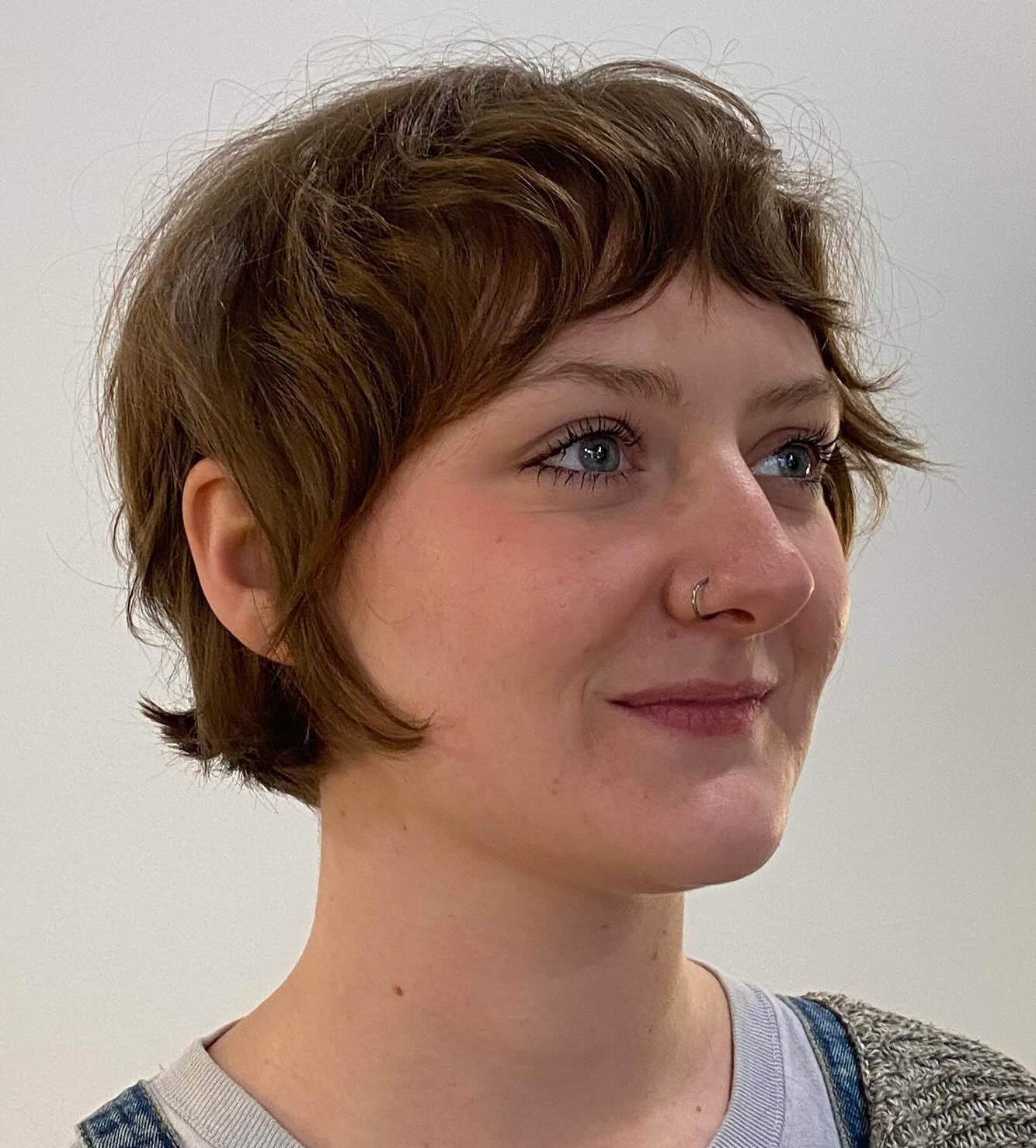
1. Ear-Length Razored Choppy Bob
Razor cutting at this length produces soft, wispy ends that curve naturally around the head. Fine hair benefits most from this approach — the razor removes just enough weight to create separation without thinning out already-sparse ends. Ask your stylist to keep the interior layers minimal and focus the choppiness on the perimeter only.
2. Textured Pixie Bob with Side Sweep
Sitting between a pixie and a bob, this cut uses heavy point cutting through the top to build height and direction. The side-swept styling elongates round and square faces by creating a diagonal line across the forehead. Expect to visit the salon every 4–5 weeks — at this length, even half an inch of growth changes the silhouette.
3. Jaw-Skimming Choppy Bob with Blunt Bangs
Pairing choppy ends with blunt bangs creates a deliberate contrast — the structure of the fringe plays off the undone texture of the perimeter. Oval and heart-shaped faces carry this combination well. Stylists often recommend using thinning shears at the crown to prevent the top from looking too heavy against the wispy bottom.
4. Stacked Choppy Bob with Nape Graduation
Graduation at the nape lifts the back of the bob into a rounded, voluminous shape, while the choppy ends at the sides and front keep it from looking too structured. If your hair falls flat at the crown, this stacked shape redistributes visual weight upward. Needs a trim every 5–6 weeks to maintain the stacking — once it grows past the nape, the shape collapses.
5. Messy Chin-Grazing Bob on Wavy Hair
Natural wave amplifies every choppy layer, so this cut does most of its own styling. A center part works here because the waves break up what would otherwise be a symmetrical shape. Apply a walnut-sized amount of texturizing cream to damp hair, scrunch, and air-dry — the cut handles the rest.
6. Disconnected Choppy Bob with Undercut
An undercut removes bulk at the nape without shortening the visible length, making this a practical choice for anyone with thick hair who wants a short bob without the mushroom effect. The disconnection between the undercut and the textured top layers creates an intentional contrast that looks sharp styled down or tucked behind the ears.
7. Platinum Choppy Crop
Platinum color exposes every layer and angle of a choppy cut, making the texture more visible than it would be on darker hair. The trade-off: this color requires maintenance every 4–6 weeks and the bleaching process can weaken fine hair over time. If you’re going platinum on a choppy bob, ask your stylist about bond-building treatments during the lightening process to protect structural integrity.
8. Soft French Choppy Bob
A French bob sits between the ear and chin with a slightly longer front — adding choppy ends to this silhouette loosens the traditionally polished shape into something more lived-in. The length naturally falls at the jawline, which means it draws attention to whatever’s happening there: strong jaws get emphasized, soft jaws get defined. A deep side part offsets the symmetry if your face is very round.
Chin-Length Choppy Bobs
Chin-length is the sweet spot for choppy bobs — long enough for the texture to develop visible movement, short enough to hold its shape without weighing down. This length suits the widest range of hair types and face shapes, though the specific layering approach matters more at this length than at shorter or longer ones.
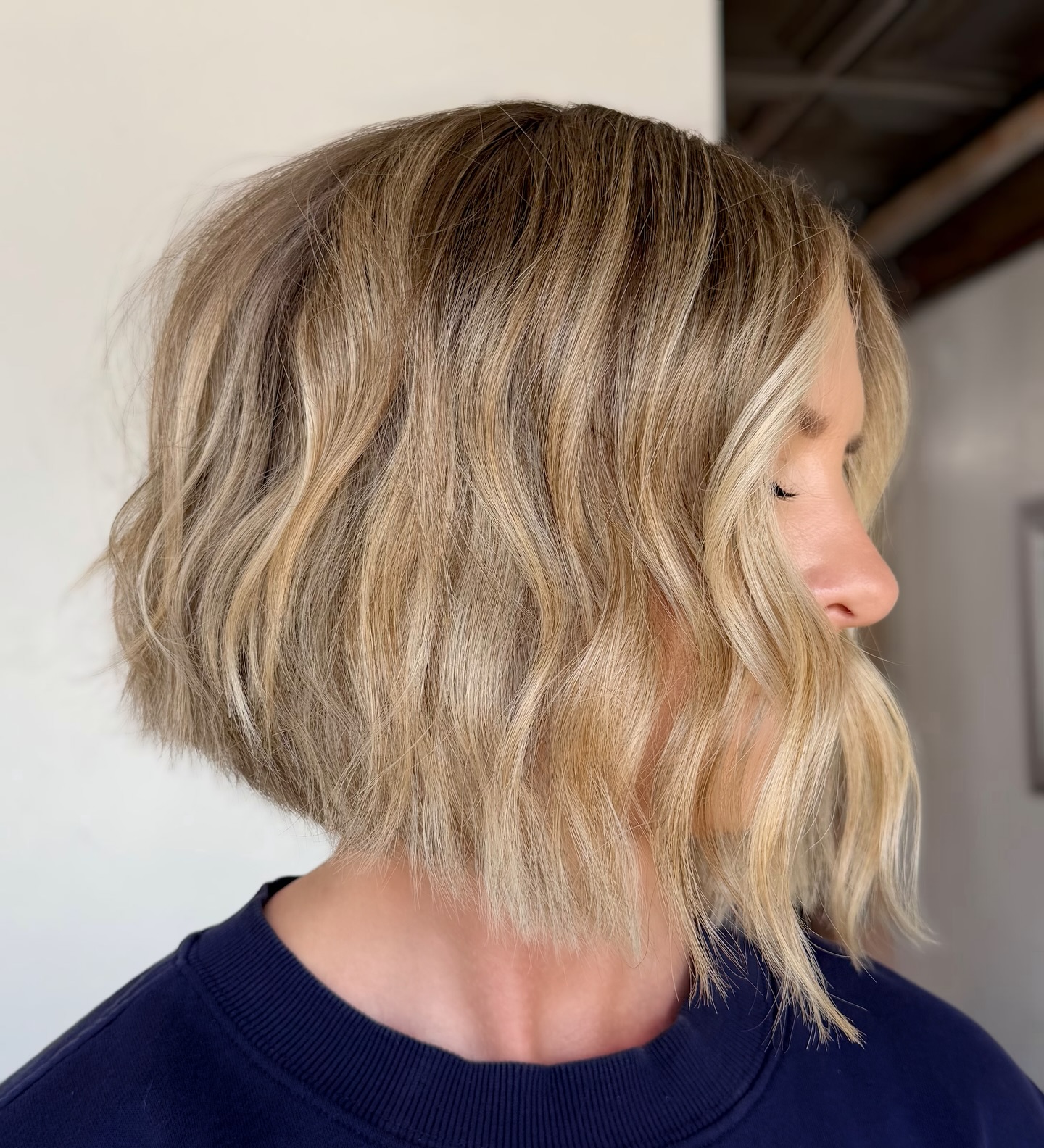
9. Classic Chin-Length Choppy Bob
Point cutting the last inch of the perimeter at this length creates just enough irregularity to prevent the blunt-bob effect without looking overly shattered. This is the version to start with if you’ve never had a choppy bob before — it’s forgiving on most hair types and easy to grow out if you decide the texture isn’t for you. A 1-inch curling wand through the mid-lengths adds a soft bend that lasts all day.
10. Choppy Bob with Face-Framing Highlights
Placing highlights on the shorter face-framing layers makes the choppiness three-dimensional — the color contrast emphasizes the texture that the cut creates. Brunettes get the most impact from this technique because the contrast between dark base and lighter pieces is more visible. Ask your colorist to hand-paint the pieces rather than foil them for a softer blend.
11. Razor-Cut A-Line Choppy Bob
An A-line silhouette (shorter in back, longer in front) combined with razor-cut ends creates a forward-falling shape with soft, feathered tips. This works particularly well on wavy hair — the natural texture enhances the A-line’s diagonal without needing to style it into place. Square and rectangular faces benefit from the way the longer front pieces soften angular jaw areas.
12. One-Length Choppy Bob with Internal Layers
The perimeter stays a single length while the internal layers do the texturizing work — this preserves the clean line of a classic bob but gives the interior enough movement to avoid looking like a helmet. Thick hair responds well to this approach because the weight of a one-length perimeter keeps the shape grounded while the internal layers prevent bulk. Slide cutting through the mid-lengths is the technique that makes this work.
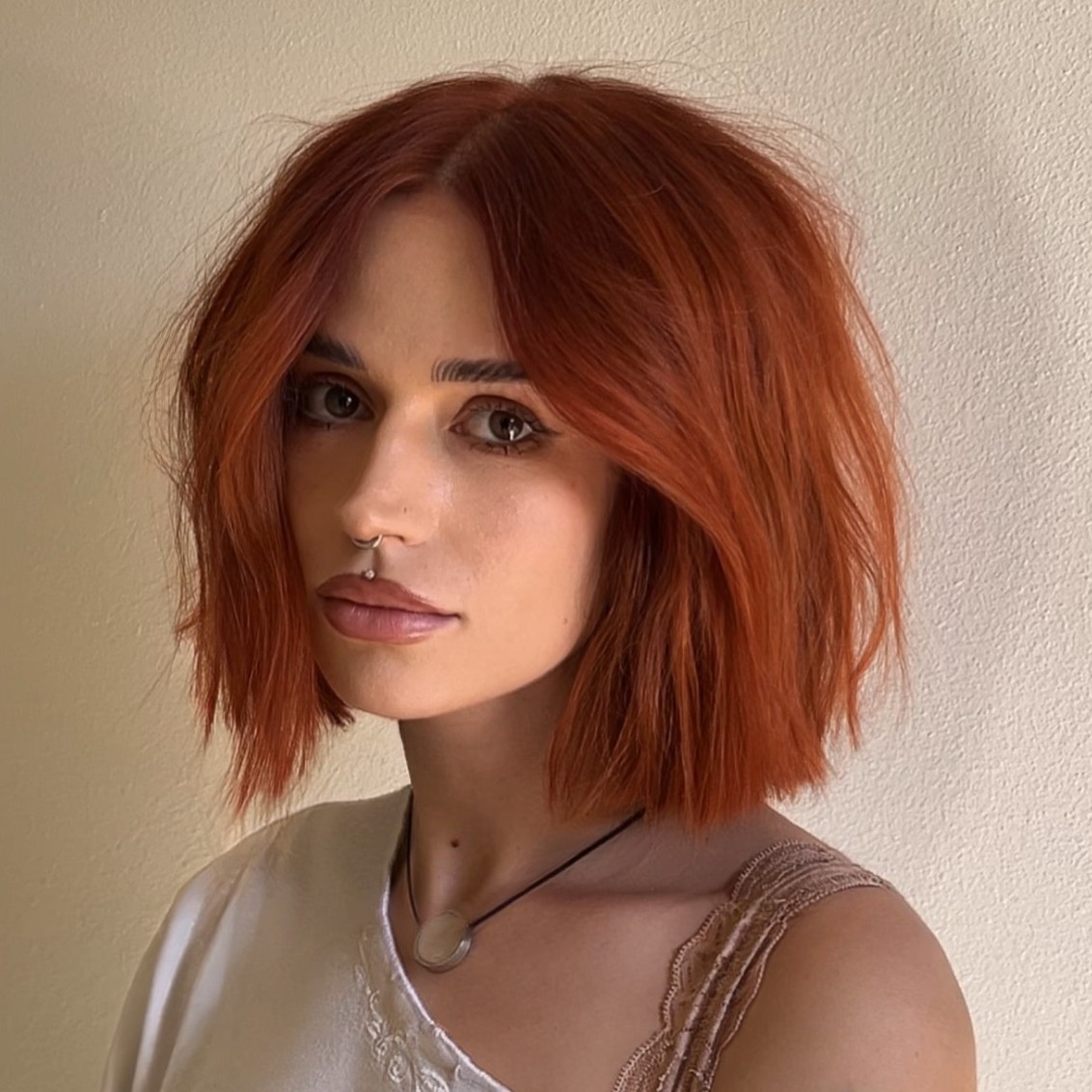
13. Copper Choppy Bob
Warm copper tones catch light differently on each textured layer, creating a multidimensional effect that monochrome colors can’t replicate. The color works best on medium-density hair where there’s enough surface area for the tones to show but not so much bulk that the warmth becomes overwhelming. Copper fades fast — sulfate-free shampoo and a color-depositing conditioner every other wash extend the vibrancy by 2–3 weeks between salon visits.
14. Blunt Choppy Bob with Shattered Ends
Shattered ends — created by holding the scissors vertically and chipping into the last half-inch of hair — add irregularity without removing length. The effect is subtle enough for professional settings but textured enough to avoid the severity of a fully blunt cut. A flat iron on a low setting smooths the body of the bob while leaving the shattered tips visible.
15. Tousled Brunette Choppy Bob
Tousled styling on a brunette base creates a relaxed, off-duty look that works with second-day hair as well as freshly styled. The trick to making tousled look intentional rather than neglected: the choppiness has to be uniform throughout, not concentrated in one area. If your stylist point-cuts the entire perimeter evenly, the tousled shape holds together as a cohesive silhouette.
16. Asymmetrical Choppy Bob
Asymmetry adds another layer of visual interest to an already textured cut — one side falls 1–2 inches longer than the other, creating a diagonal line that elongates the neck and draws the eye sideways rather than down. Round faces benefit from this directional pull. The longer side should fall on the side of your deeper part to maintain visual balance.
17. Choppy Bob with Curtain Bangs
Curtain bangs soften the transition between a choppy bob and the face, framing the eyes and cheekbones without the commitment of a full fringe. The bangs should start at cheekbone level and blend into the shortest layers of the bob — if there’s a visible gap between where the bangs end and the bob begins, the proportions look disjointed. Wavy hair makes this pairing look effortless; straight hair may need a quick bend with a large-barrel curling iron at the bang tips.
Choppy Lob and Shoulder-Length Bobs
A choppy lob (long bob) extends the textured ends to collarbone level or just past the shoulders. The additional length means more weight, which can pull fine hair flat — so the layering strategy shifts at this length toward more aggressive texturizing through the mid-lengths, not just the ends. On thick hair, a choppy lob is one of the most low-maintenance options because the weight naturally falls into place.
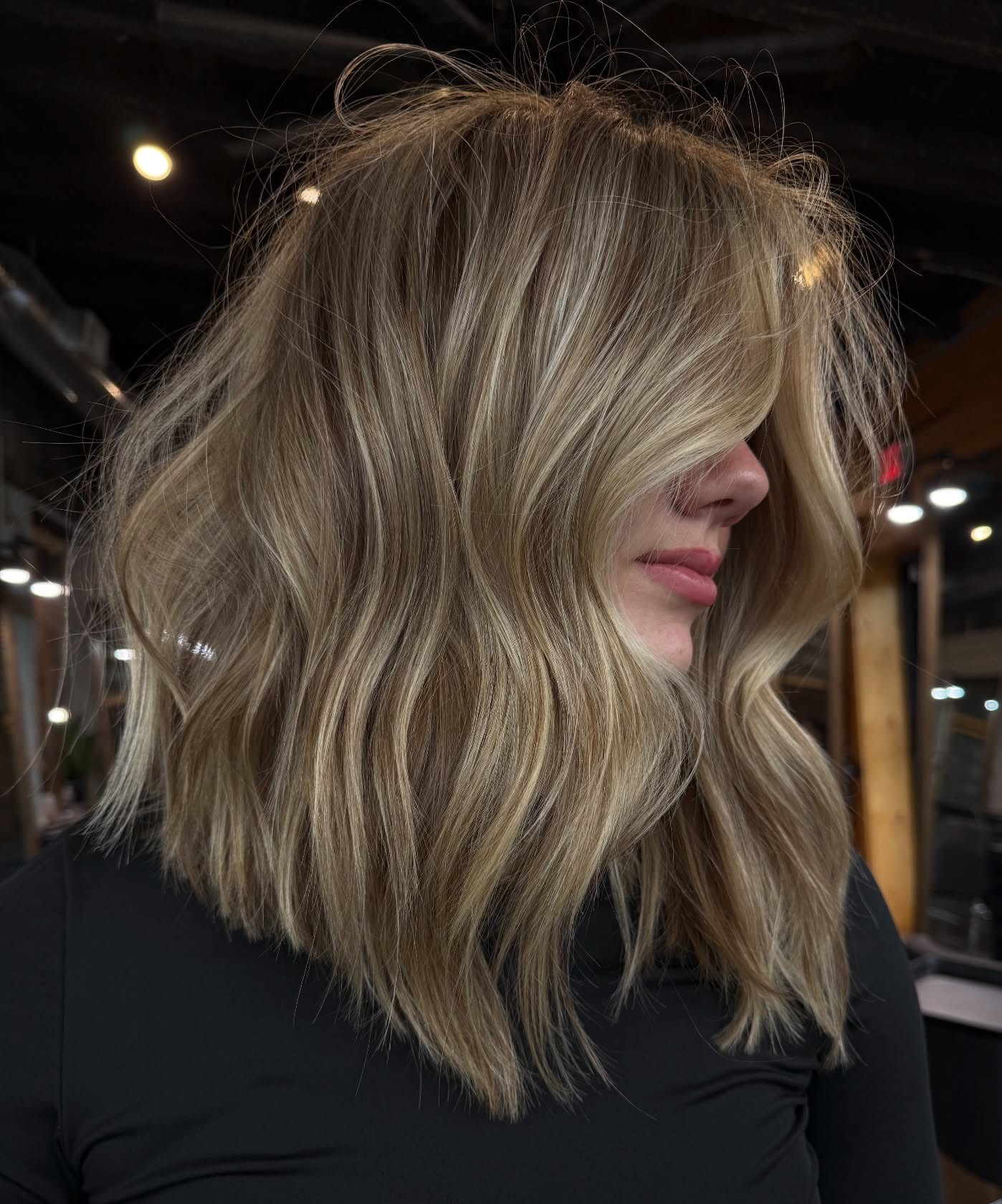
18. Collarbone-Length Choppy Lob
The collarbone is the ideal landing point for a choppy lob — it’s long enough to pull back if needed but short enough that the layers don’t lose their shape under their own weight. Texturizing through the bottom three inches with point cutting keeps the ends from looking scraggly while maintaining the lived-in effect. This is the “starter lob” for anyone transitioning from long hair to a bob.
19. Beachy Choppy Lob with Balayage
Balayage hand-painting on a choppy lob creates a sun-kissed gradient where the lighter pieces catch different angles of the textured layers. The key is keeping the balayage concentrated on the mid-lengths and ends rather than pulling it all the way to the roots — this mirrors where natural sun exposure would lighten hair and keeps the grow-out low-maintenance. A sea salt spray on damp hair before air-drying gives the beachy wave without heat damage.
20. Blunt Lob with Choppy Interior
Keeping the perimeter blunt while texturizing the interior gives thick hair the weight removal it needs without sacrificing the clean bottom line. From the outside, it looks like a polished lob; when it moves, the internal layers create separation and swing. This is a strong option for thick, coarse hair that tends to look bulky in a standard one-length lob.
21. Choppy Lob with Money Pieces
Money pieces — the thick, face-framing highlights placed on the front sections — interact with choppy layers to draw attention forward and brighten the complexion. On a choppy lob, the money pieces fall on the most textured sections, which creates more dimension than the same color technique on a blunt cut. Dark bases (deep brown, black) get the strongest contrast.
22. Layered Choppy Lob for Wavy Hair
Wavy hair and a choppy lob are one of the most natural-looking pairings in the bob family — the wave pattern does most of the styling work, and the layers enhance what’s already there rather than creating artificial texture. Stylists often recommend dry cutting for this combination because it shows exactly where the waves fall and where the layers need to land. A lightweight leave-in conditioner controls frizz without flattening the wave.
23. Sleek Choppy Lob with Deep Side Part
A deep side part on a choppy lob creates volume at the root on one side and a sleek, close-to-the-head drape on the other — the asymmetry reads as intentional styling rather than just a haircut. This is one of the few choppy bob variations that works well flat-ironed smooth because the textured ends still show even on completely straight hair. Round and oval faces both benefit from the elongating effect of the deep part.
24. Choppy Shag-Lob Hybrid
When the layers in a choppy lob start at cheekbone level rather than chin level, the result crosses into shag territory — shorter, face-framing pieces on top, longer textured lengths below. The difference between this and a full shag is that the perimeter stays within bob/lob range rather than extending to mid-back. Medium-to-thick wavy hair gets the best results because there’s enough density to support the shorter top layers without going flat at the crown.
25. Warm Caramel Choppy Lob
Caramel tones on a dark base make the textured layers visible in a way that single-process color doesn’t — each choppy piece picks up light at a slightly different angle. This color-and-cut combination grows out gracefully because the balayage-style application doesn’t leave a hard root line. Style with a 1.25-inch curling iron, alternating the curl direction to avoid ringlet uniformity.
26. Air-Dried Choppy Lob
If you’re looking for a genuinely low-effort cut, this is the version to screenshot. The layers are structured so the bob falls into a deliberate shape without any heat styling — the point-cut ends separate naturally as they dry, and the internal layers prevent the bottom from clumping together into a single sheet. Works best on hair with some natural wave (2A–2B); very straight hair may air-dry too flat to show the texture.
Choppy Bobs for Fine and Thin Hair
Fine hair and choppy bobs can work well together, but the approach matters. Over-texturizing fine hair — too many layers, too much razor work — removes the density that creates the illusion of fullness. The goal is strategic choppiness: enough texture to create movement, not so much that the ends look see-through. A blunt or semi-blunt perimeter with point-cut texture on the last half-inch is usually the safest starting point.
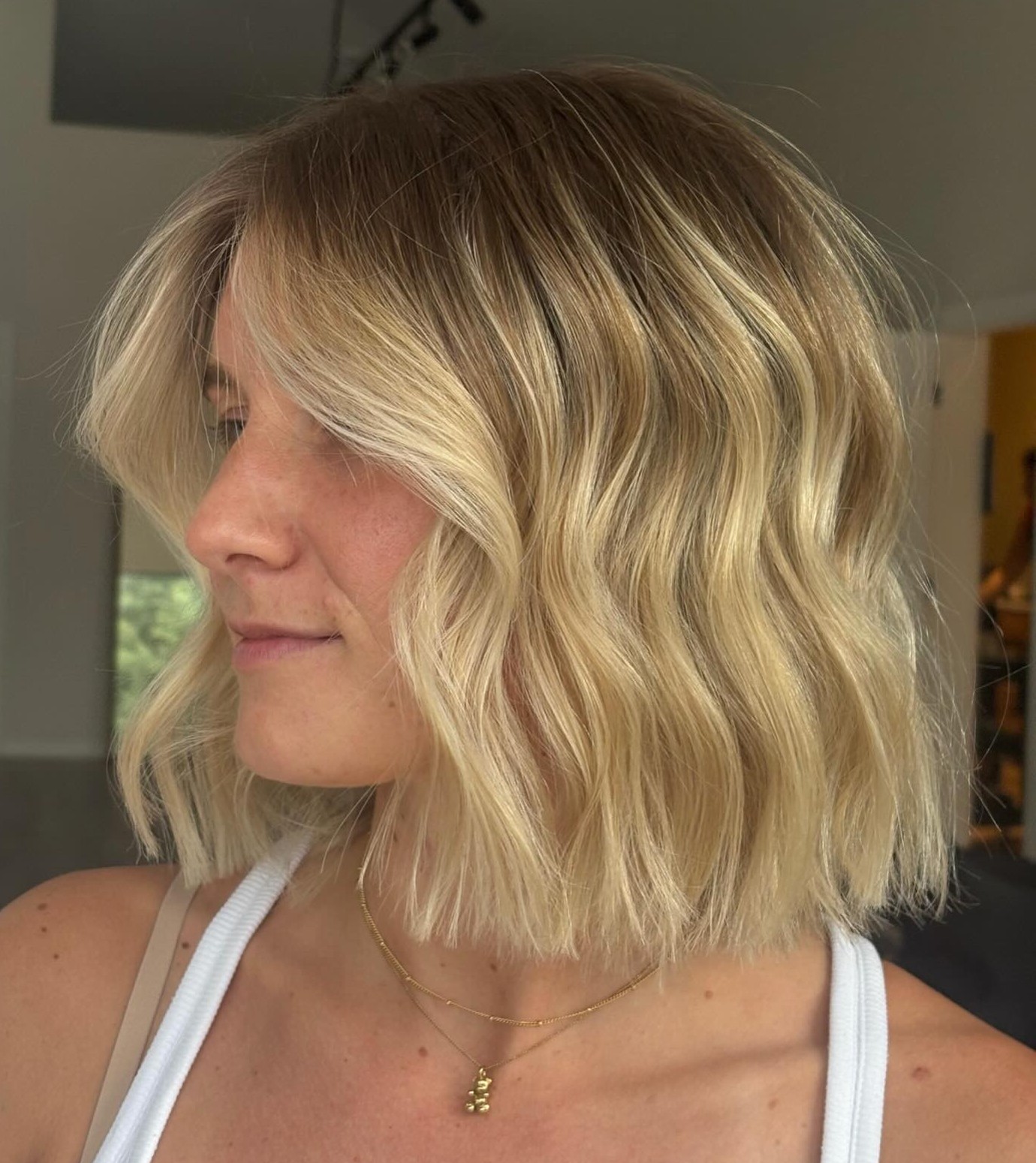
27. Blunt Choppy Bob for Fine Hair
A blunt baseline preserves the density at the ends — which is exactly where fine hair needs it most — while strategic point cutting through the last quarter-inch creates just enough texture to prevent the bob from looking flat. Avoid razor cutting on fine hair at this length; the razor removes too much weight from strands that are already thin. Volumizing mousse applied to damp roots before blow-drying gives the crown the lift this cut needs.
28. Textured Fine-Hair Bob with Root Lift
A medium-barrel round brush during blow-drying lifts the roots on fine hair, creating the appearance of density at the crown that the choppy ends then carry through the rest of the shape. Without this root lift, fine-hair choppy bobs tend to look flat on top and wispy at the bottom. Dry shampoo at the roots on day two helps maintain the volume without re-washing.
29. Chin-Length Choppy Bob with Highlights
Babylights — very fine, closely spaced highlights — add visual thickness to fine hair because the tonal variation creates depth that monochrome color can’t. On a choppy bob, the highlights interact with the textured ends to make each layer look like a separate piece, which tricks the eye into reading more volume. Ask your colorist to keep the highlights within two shades of your base to avoid looking stripy.
30. One-Length Choppy Bob for Thin Hair
When hair is thin (low density, not just fine in strand diameter), keeping the bob at a single length concentrates whatever fullness you have at the bottom. The choppiness comes only from the end texture — point cutting or notch cutting the perimeter — rather than from internal layers that would spread the already-limited density across multiple lengths. This is the most flattering choppy bob for anyone who can see their scalp through their hair.
31. Volumizing Choppy Bob with Side Part
A deep side part lifts the roots on the heavy side of the part, creating natural volume that fine hair struggles to achieve on its own. Combined with light choppiness at the ends, the result is a bob that looks fuller than the hair actually is. Flip the part direction every few days to prevent a permanent crease from forming and to distribute volume evenly over time.
32. Feathered Choppy Bob on Fine Hair
Feathering the ends with thinning shears creates an airy, tapered edge that softens the face without removing bulk from the body of the bob. On fine hair, feathering should be limited to the outermost layer — going deeper thins out the interior and exposes gaps. This cut frames oval and heart-shaped faces naturally, with the feathered tips brushing along the jawline.
33. Piece-y Choppy Bob with Texture Spray
Texture spray on fine hair gives the choppy layers definition that air-drying alone can’t achieve — it adds grip and separation so each piece sits independently rather than collapsing into its neighbor. Apply to dry hair in short bursts from arm’s length (too close and it oversaturates). The result looks intentionally undone rather than unkempt. A salt-free texturizing spray avoids the drying effect that sea salt sprays can have on fine, fragile strands.
Choppy Bobs for Thick and Wavy Hair
Thick hair is where a choppy bob really earns its reputation — the layering removes bulk in controlled sections, turning what would be a heavy, triangle-shaped bob into something with actual movement. The mistake most people make is not removing enough weight: if your stylist is conservative with the texturizing, you’ll end up with a solid block of hair that happens to have uneven ends. Communicate clearly about how much weight you want removed from the interior.

34. Heavy-Textured Choppy Bob for Thick Straight Hair
When thick, straight hair is point-cut aggressively through both the interior and the perimeter, the result is a bob with noticeable air between the layers — it swings rather than sitting in a solid mass. Ask your stylist for both internal layering and perimeter texturizing. Without the interior work, the surface texture won’t have room to show.
35. Choppy Bob on Naturally Wavy Hair
If your natural wave pattern falls in the 2A–2B range, a choppy bob at chin length is practically self-styling. The waves create movement that amplifies every textured layer, and the short length prevents the weight of the hair from pulling the wave flat. Air-drying with a curl-enhancing cream is all it takes — the cut and your natural texture do the work together.
36. Choppy Inverted Bob for Thick Hair
An inverted bob (graduated shorter at the back, longer toward the face) is one of the best structural choices for thick hair because the graduation at the nape removes the heaviest concentration of bulk. Adding choppy texture to the inverted shape prevents it from looking too geometric. The front pieces should fall just past the chin to maintain enough length for face-framing.
37. Choppy Lob for Thick Coarse Hair
Coarse hair needs more aggressive interior weight removal than medium-textured hair to achieve the same level of movement. Slide cutting through the mid-lengths — where the stylist opens and closes the shears while sliding down the hair shaft — is the technique that works best here because it tapers each strand individually rather than cutting across the section. The coarse texture holds the choppy shape well between appointments, so you can push trims to every 7–8 weeks.
38. Curly Choppy Bob
Curly hair should always be dry-cut for a choppy bob — cutting wet curly hair doesn’t account for shrinkage, which can be anywhere from 25% to 50% depending on your curl pattern. Ask for a stylist experienced with textured hair who will shape the bob according to your dry curl formation. The choppiness on curly hair appears as defined separation between curl clusters rather than the piece-y effect you see on straight hair.
39. Choppy Bob with Dimensional Brunette Color
Dimensional color — a combination of lowlights and highlights within a brunette range — makes the choppy layers on thick hair look more dynamic because each textured piece picks up a slightly different tone. The depth variation prevents the dense hair from reading as a flat wall of color. A glossing treatment every 6–8 weeks maintains the tonal separation as the color naturally fades.
40. Deconstructed Choppy Bob
A deconstructed bob takes choppiness to its extreme — the layers are visibly disconnected, with some pieces falling significantly shorter than others. This is the cut to bring to your stylist if you want maximum texture and don’t mind looking a little undone. It suits thick, straight hair best because the density fills in the gaps between the disconnected layers. On fine or thin hair, this level of deconstruction would look sparse rather than intentional.
Choppy Bobs with Bangs
Adding bangs to a choppy bob changes the proportions of the cut and introduces a framing element that can shorten a long face, soften a strong forehead, or simply add visual interest to a familiar shape. The type of bangs matters — wispy and curtain bangs complement the textured spirit of a choppy bob, while thick blunt bangs create an intentional contrast between structured fringe and undone lengths.
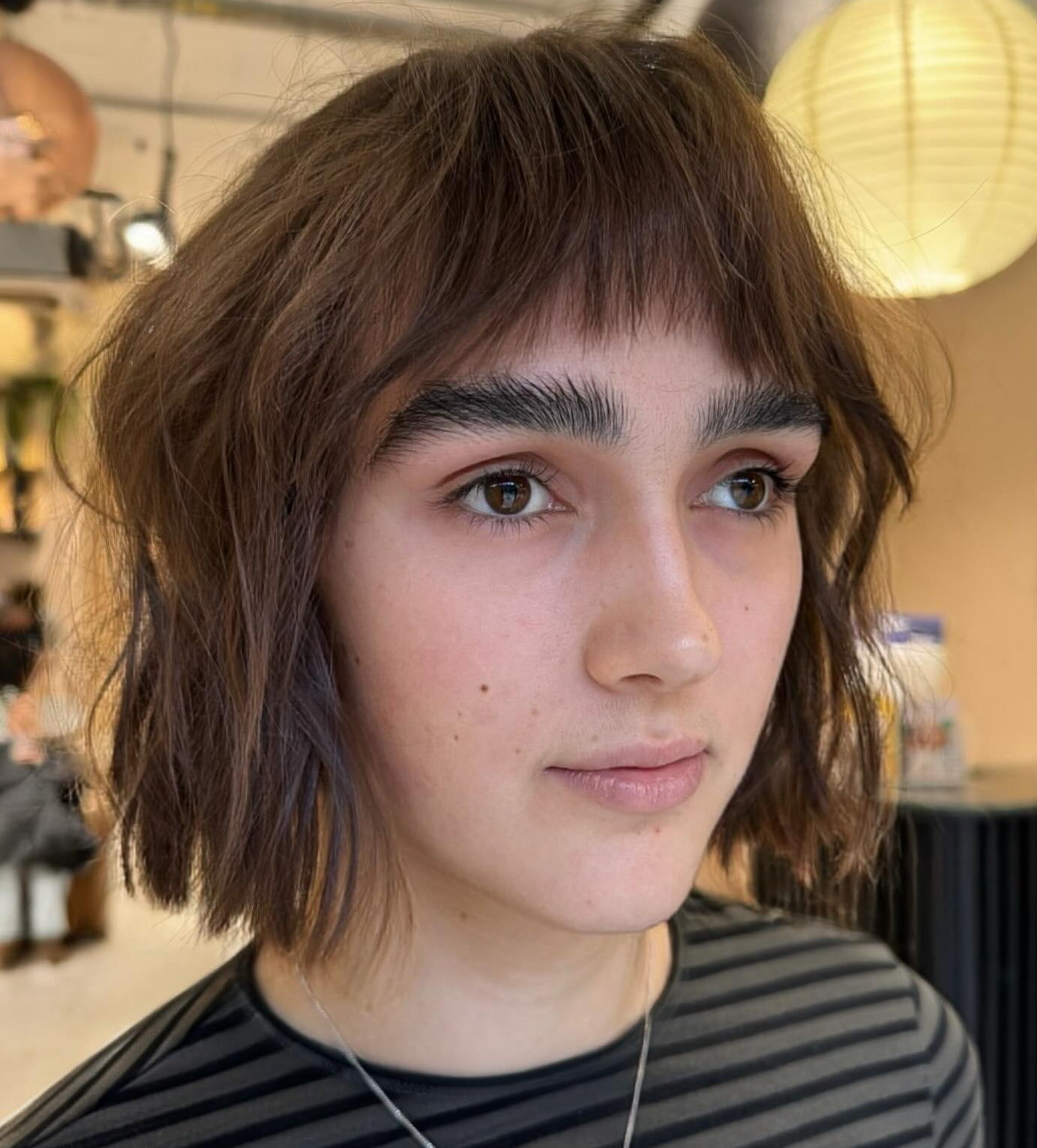
41. Choppy Bob with Wispy Bangs
Wispy bangs match the lightweight character of a choppy bob — they’re thin, slightly irregular, and move with the rest of the hair rather than sitting as a separate element. On fine hair, wispy bangs are easier to manage than blunt ones because they don’t require as much daily styling to look right. They work on every face shape, though round faces should ask for the bangs to be cut slightly longer at the temples to create a narrowing frame.
42. Choppy Lob with Full Curtain Bangs
Curtain bangs at their full length (cheekbone to jaw) combined with a choppy lob create a layered frame around the entire face. The bangs act as the shortest layer in the system, and the choppy lengths graduate from there. Oval and oblong faces wear this best — the bangs visually shorten a long face while the choppy lob adds width at the jaw. Expect a trim for the bangs every 3–4 weeks separately from the main cut.
43. Choppy Bob with Micro Bangs
Micro bangs — cut to mid-forehead or higher — on a choppy bob is a bold, editorial choice. The short fringe exposes the forehead and creates a dramatic frame that’s unconventional and eye-catching. Heart-shaped and oval faces suit this best; round faces can feel overexposed by the combination of a short fringe and a short bob. Consider this a high-commitment look: once micro bangs are cut, the grow-out takes 3–4 months of awkward in-between stages.
44. Side-Swept Bangs on a Choppy Bob
Side-swept bangs integrate seamlessly into a choppy bob because they blend into the face-framing layers rather than creating a separate line across the forehead. This is the most universally flattering bang option for a choppy bob — it works on round, square, and oval faces because the diagonal line of the sweep creates visual length. The bangs are also the easiest to grow out if you change your mind, since they transition naturally into longer layers.
45. Textured Choppy Bob with Bottleneck Bangs
Bottleneck bangs — shorter at the center of the forehead and gradually longer toward the temples — merge into a choppy bob without a visible endpoint. The shape mimics an hourglass at the face, narrowing at the forehead and widening toward the jaw. This bang style is newer and less common than curtain bangs, which means your stylist may need a reference photo. The result looks more tailored than curtain bangs and frames the face with more precision.
Choppy Bob vs. Layered Bob: What’s the Difference
A layered bob uses graduated cutting — longer layers on top, shorter layers underneath — to create volume and shape within the bob silhouette. The layers are smooth, blended, and designed to fall seamlessly into each other. A choppy bob, by contrast, uses cutting techniques that deliberately break up the ends: point cutting, razor cutting, slice cutting, or notch cutting. The layers in a choppy bob aren’t meant to blend — they’re meant to be visible as individual textured pieces.
The practical difference comes down to finish: a layered bob looks polished and intentional even when air-dried, while a choppy bob looks intentionally undone. Layered bobs suit people who want volume without visible texture; choppy bobs suit people who want movement and a lived-in feel. If you’re not sure which to ask for, tell your stylist whether you want your ends to “blend together” (layered) or “separate and move independently” (choppy) — that distinction is clearer than the names themselves.
How to Choose the Right Choppy Bob for Your Face Shape
Face shape determines where the bob should hit, how much volume to place at the sides versus the crown, and whether bangs help or hinder the overall proportion. Here’s how to match the cut to your shape.

| Face Shape | Best Choppy Bob Variation | What to Avoid |
|---|---|---|
| Oval | Any length works. Chin-length with a center part is the classic match. Bangs of any style complement oval proportions. | Very short bobs with too much volume at the sides can make an oval face look wider than it is. |
| Round | Longer choppy bob (past the jaw) with a deep side part. Asymmetrical variations add elongation. Volume at the crown, not the sides. | Chin-length bobs with a center part — the horizontal line at the widest point of the face emphasizes roundness. |
| Square | Chin-length or longer with softly textured ends around the jaw. Curtain or side-swept bangs soften angular features. | Blunt bangs with a jaw-length bob — creates too many horizontal lines competing with the strong jawline. |
| Heart | Chin-length choppy bob with volume at the jaw to balance a wider forehead. Side-swept or curtain bangs minimize forehead width. | Volume at the crown with no counterbalance at the jaw — makes the forehead look larger. |
| Oblong/Long | Chin-length with side volume and full bangs. The horizontal line at the chin shortens a long face visually. Avoid very long lobs. | Long choppy lobs with no bangs — the vertical length adds to an already long face shape. |
| Diamond | Chin-length choppy bob that adds width at the forehead and jaw. Side-swept bangs fill in a narrow forehead. | Very short bobs that emphasize wide cheekbones without balancing the narrower forehead and chin. |
Stylist tip: Bring a photo of the specific choppy bob variation you want, but also bring a photo of your face from the front and side. A good stylist will use both references to adjust the cut to your proportions — the same choppy bob cut at different lengths and part placements will look completely different on a round face versus an oval one.
What to Tell Your Stylist
The word “choppy” means different things to different stylists. Saying “I want a choppy bob” without more detail can result in anything from a barely textured trim to an aggressively shattered cut. Here’s how to communicate precisely what you want.
For subtle choppiness: “I’d like a bob with point-cut ends — just enough texture to break up the blunt line, but nothing that looks shattered or disconnected. Keep the internal layers minimal.”
For medium choppiness: “I want a textured bob with visible layers and piece-y ends. Point cutting or slide cutting through the bottom two inches, and some internal layering to remove weight. I want it to look lived-in, not polished.”
For heavy choppiness: “I’m looking for a deconstructed, heavily textured bob with razor-cut ends and visible disconnection between layers. I want it to look undone and editorial, with real movement when I shake my head.”
Stylist tip: Always specify whether you want the texturizing concentrated at the perimeter (keeps more weight) or distributed through the interior and perimeter (removes more bulk). For fine hair, keep it at the perimeter. For thick hair, ask for both.
Maintenance and Styling
A choppy bob generally needs trimming every 5–7 weeks to keep the textured ends looking intentional. Once the choppy pieces grow past about an inch, they start blending into each other and the cut loses its texture — at that point, it just looks like a grown-out bob. If your hair grows quickly, lean toward the 5-week end; slower growth can stretch to 7.
Daily styling time depends on how much texture you want visible. Air-drying a choppy bob on naturally wavy hair takes zero effort but 20–40 minutes of passive drying time. Blow-drying with a round brush for volume and then adding texture with a curling wand takes 10–15 minutes on short bobs, 15–20 on lobs. The minimum you need product-wise is a texturizing spray or cream — without it, the choppy layers can clump together and lose their separation.
Essential products by category:
- Texturizing spray: Adds grip and separation to dry hair. Look for a salt-free formula if your hair is color-treated or fine.
- Volumizing mousse: Apply to damp roots before blow-drying. Gives fine hair the root lift that choppy bobs depend on.
- Heat protectant spray: Non-negotiable if you use a curling iron or flat iron — 300°F+ temperatures damage the already-thinned choppy ends faster than intact ones.
- Lightweight leave-in conditioner: For wavy or curly choppy bobs that air-dry. Controls frizz without weighing down the texture.
FAQ
Is a Choppy Bob Good for Fine Hair?
Yes, but the texturizing technique matters. Point cutting the last quarter-inch of the ends gives fine hair enough texture to look fuller without removing the density it needs. Avoid heavy razor cutting, which can make fine ends look see-through. A blunt or semi-blunt perimeter with subtle point-cut texture is the safest approach for fine hair — it preserves the thick-looking bottom edge while adding just enough movement to avoid flatness.
How Often Does a Choppy Bob Need Trimming?
Every 5–7 weeks for most hair types. The choppy ends grow out faster visually than blunt ends because the uneven pieces start closing the gaps between them, which flattens the texture. If you have bangs as part of the cut, those need a separate trim every 3–4 weeks. Fine hair tends to show the grow-out sooner (around week 5), while thick hair can push closer to 7 weeks because the density masks early-stage grow-out.
What’s the Difference Between a Choppy Bob and a Shaggy Bob?
A choppy bob keeps its bob shape — the variation is in the end texture, not the overall silhouette. A shaggy bob has more dramatic internal layering that creates visible shorter layers throughout the top and mid-lengths, often starting at cheekbone level. The choppy bob moves at the ends; the shaggy bob moves throughout the entire head. If you want texture concentrated at the perimeter, you want choppy. If you want layers that start high and cascade down, you want shaggy.
Can I Get a Choppy Bob with Curly Hair?
Absolutely — but the cut needs to be done dry by a stylist experienced with textured hair. Curly hair shrinks 25–50% from wet to dry depending on your curl pattern, so a choppy bob cut on wet curly hair will end up significantly shorter than intended. The “choppy” effect on curls appears as defined separation between curl clusters rather than the piece-y texture seen on straight hair. Specify your desired dry length, not wet length, during the consultation.
Will a Choppy Bob Work If I Air-Dry My Hair?
It depends on your natural texture. Wavy hair (2A–2C) air-dries into a choppy bob beautifully — the natural wave enhances the texture. Straight hair air-dries flat, so the choppy layers may not show much movement without heat styling or product. Curly hair air-dries well with curl cream for definition. If you’re committed to zero heat styling, aim for a chin-length or shorter choppy bob where the shorter length provides enough natural lift to hold the shape.
Does a Choppy Bob Grow Out Awkwardly?
Less awkwardly than a blunt bob. The textured ends blend into longer lengths more naturally than a hard blunt line, which means the grow-out process looks intentional for longer before it needs reshaping. The most noticeable grow-out issue is at the nape — the shorter pieces there can start flipping outward around week 6, which is the main reason for the trim schedule. If you’re actively growing it out, ask your stylist to blend the nape during trims rather than cutting the overall length.
What Face Shape Looks Best with a Choppy Bob?
Oval faces suit every variation. Round faces look best with longer choppy bobs (past the jaw) and a side part to add elongation. Square faces benefit from softly textured ends around the jawline that blur the angular jaw. Heart-shaped faces should aim for chin-length with volume at the jaw to balance a wider forehead. The important thing isn’t whether a choppy bob “works” for your face — it’s matching the right length, part direction, and layering to your specific proportions.
Hair results vary based on your natural hair type, texture, density, and condition. Always consult with a licensed hairstylist before making significant changes, especially with chemical treatments or dramatic length changes. Photos may show styled results that require professional tools and products to replicate.