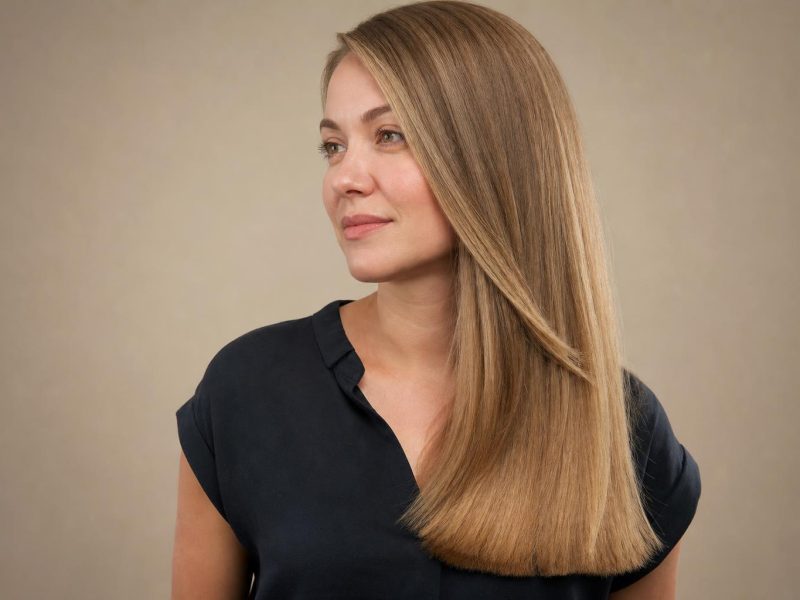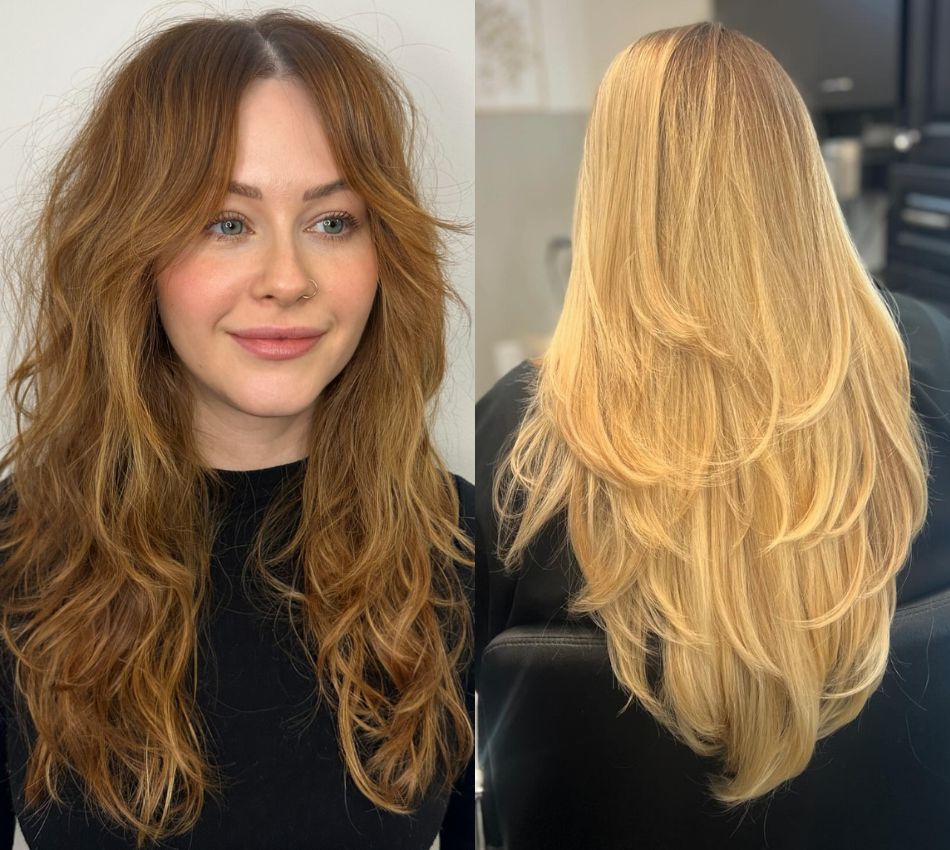

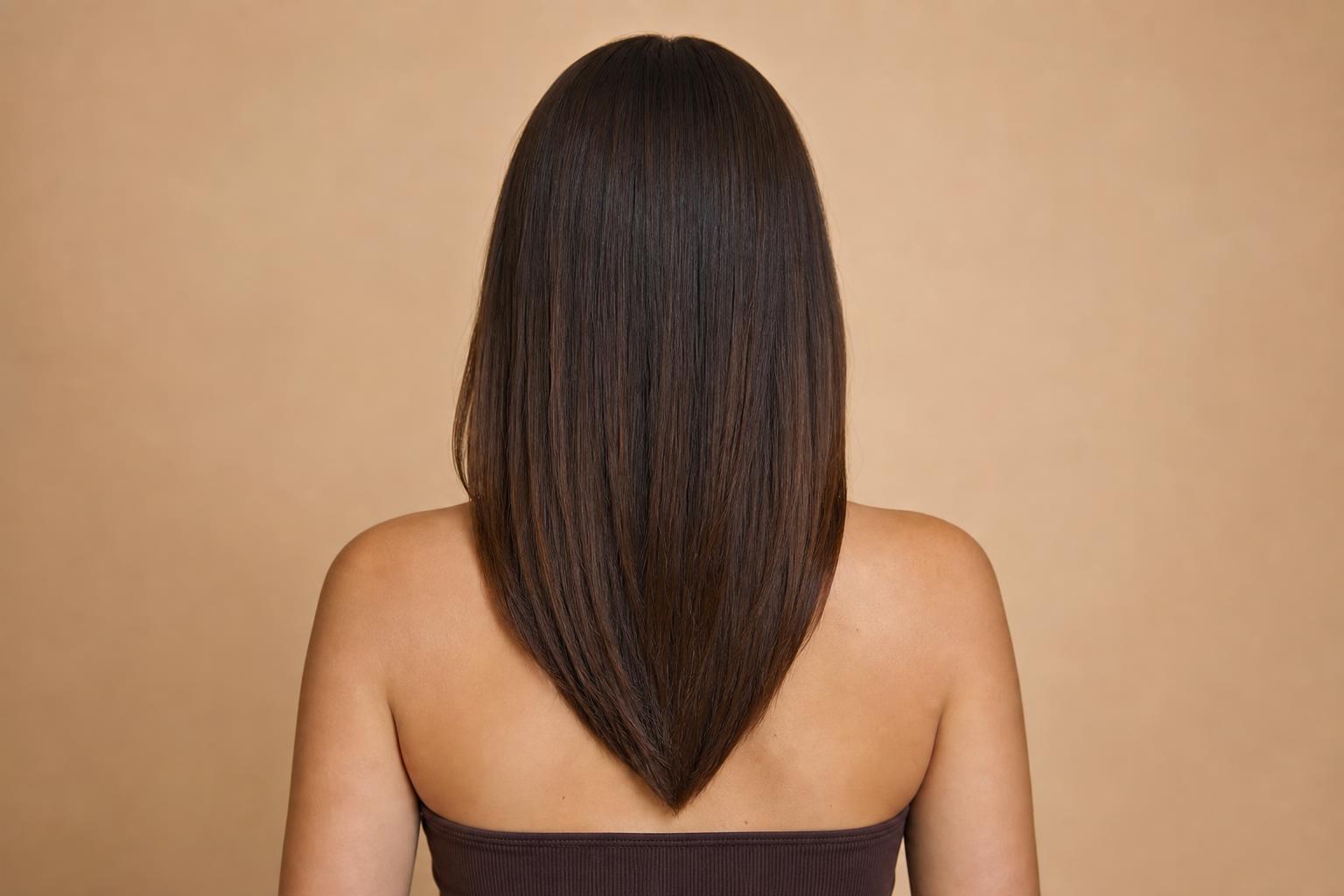
Both names describe the shape of the back perimeter, not how many layers you get, and mixing those two things up is why people leave the salon with a cut they did not ask for.
A V-cut tapers the back of the hair to a point, so the center strand is noticeably longer than the sides and the ends narrow as they fall. A U-cut curves the same perimeter into a rounded arc, keeping the sides and the center much closer in length. The V removes visual weight and narrows the silhouette; the U keeps density at the ends and looks fuller and more polished.
This guide covers what each shape does to different hair types, why the depth of the taper matters more than which letter you pick, the exact language to use at the consultation, how each shape grows out, and the situations where a straight-across perimeter beats both.
Both Terms Describe the Perimeter, Not the Layering
This is the confusion worth clearing first. Layers are the internal lengths cut through the body of the hair, and they control movement and volume. The V or U describes only the outline the ends make when your hair hangs down your back. You can have heavy layers with a U perimeter or almost no layers with a deep V, and those two cuts look nothing alike.
The two do interact, though, which is why the terms get conflated. A deep V taper needs some layering to blend or the point looks stuck on, and a U perimeter blends more naturally into long layers because the curve is gentler. If you want to control the internal shape as well as the outline, that is a separate conversation, and the distinction between internal layers and visible layers is the one to have.
Stylist tip: Ask to see the back of your current cut in a hand mirror before anything is decided. Most people have never actually looked at their own perimeter shape and are surprised to find they already have a soft U, which changes what they should ask for next.
V-Cut and U-Cut Compared
The practical differences show up in density at the ends, how the hair behaves tied up, and how forgiving each shape is as it grows. Read the density row first, because that is the one people regret getting wrong.
| Feature | V-Cut | U-Cut |
|---|---|---|
| Perimeter shape | Angular point at the center back | Rounded curve, sides close to center length |
| Density at the ends | Reduced, ends taper and thin as they fall | Preserved, ends stay full across the width |
| Visual effect | Narrows the silhouette, adds length and drama | Widens slightly, looks polished and even |
| Best hair type | Thick, dense, coarse hair that triangles out | Fine to medium hair that goes stringy at the ends |
| Tied up | Shorter sides can escape a ponytail and stick out | Gathers cleanly, less falls loose at the nape |
| Grow-out | Point softens and blurs, usually gracefully | Curve flattens toward straight, needs reshaping sooner |
| Trim frequency | Every 10 to 14 weeks | Every 8 to 12 weeks to keep the curve clean |
What Each Shape Does to Your Hair Type
Hair type decides this more than personal taste does, because both shapes exaggerate whatever your density is already doing. Read the section that matches your hair and treat the aesthetic preference as the tiebreaker rather than the deciding factor.
Thick Hair Loses Bulk Best With a V-Cut
Dense hair worn long tends to widen as it falls, forming a triangle that gets heavier toward the bottom. A V-cut removes weight from exactly where the problem is, narrowing the outline and letting the length hang rather than pile up. Combine it with internal weight removal and you get a shape that moves, which is the same reasoning behind most layered cuts built for thick hair.
Fine Hair Keeps More Density in a U-Cut
Fine hair does not have bulk to remove, and a V-cut on a low-density head produces exactly the stringy, see-through ends people are trying to avoid. The rounded U keeps more strands at the same length, so the perimeter stays visually solid. If your hair is fine and you want the illusion of a V, ask for a very shallow one, no more than an inch of difference between the sides and the center.
Curly Hair Needs a Softer Curve and a Dry Cut
Curl pattern hides a perimeter shape almost entirely, so a sharp V is wasted effort on anything above a loose wave. A gentle U looks better and survives shrinkage. More importantly, your stylist has to cut curls dry to see where each spiral actually lands, because the same section can end up two inches shorter once it dries and springs up.
A Straight Perimeter Is the Third Option Nobody Offers
Cutting straight across the back is the strongest, densest option of the three, and it suits anyone who wants maximum thickness at the ends. It is less forgiving, since a flat line shows every uneven bit of grow-out, and it can look heavy on very thick hair. Ask about it if both the V and the U feel like they are removing something you would rather keep.
Depth Matters More Than the Letter
The single biggest source of disappointment here is depth, not shape. A V can be a subtle inch of taper or a dramatic eight-inch point, and both are correctly called a V-cut. Walking in and saying “I want a V” without naming a measurement leaves the entire result to your stylist’s guess about your taste.
Depth is the vertical distance between the shortest point on the sides and the longest point at the center back. One to two inches gives a soft taper most people simply see as “long hair with nice ends.” Three to five inches is a visible, deliberate V. Anything past six inches is a statement, and it commits you, since growing out a deep point takes a long time and the sides have to catch up.
| Depth | How It Looks | Suits | Commitment |
|---|---|---|---|
| 1 to 2 inches | Barely there, softens a blunt line | Fine hair, first-timers, anyone unsure | Low, grows out in a few months |
| 3 to 5 inches | Clearly visible taper with movement | Medium to thick hair, mid-back and longer | Moderate, around 8 to 10 months to blend out |
| 6 inches or more | Dramatic point, ends narrow to a wisp | Very thick, very long, waist or below | High, over a year to grow level again |
What to Tell Your Stylist
Name the shape, the depth in inches, and what you want the ends to do. A workable script: “I would like a U-shaped perimeter with about two inches of curve, keeping the ends as dense as possible, and long layers starting below the collarbone.” That sentence contains every decision, and it takes ten seconds.
For a V, the equivalent is: “A V-shape at the back with about four inches between the sides and the center point, and please remove weight from the interior so the taper blends instead of looking like a separate piece.” The second half is what stops a V-cut looking like a triangle with a spike attached.
Ask them to show you the depth between two fingers before cutting, the same way you would for a trim. Hair terminology varies by salon and by country, and a stylist’s four inches and yours can be different numbers. A broader vocabulary helps at every appointment, and our rundown of salon terms and what they actually mean covers the rest of it.
Stylist tip: Bring a photo of the back of someone’s head, not the front. Almost every reference photo people bring to this conversation shows a face, which tells a stylist nothing about the perimeter shape being requested. Search for the back view specifically and the consultation gets twice as accurate.
When Neither Shape Is the Right Call
Both cuts assume you have length to work with and density worth shaping. Several situations make them a poor choice, and knowing which applies saves an appointment.
- Hair shorter than the shoulder blades has too little vertical distance for either shape to register. Below that length the perimeter is essentially a straight line whatever you ask for.
- Ends that are already thin and see-through need weight added back, not removed. Both shapes take length off the sides, which makes sparse ends look sparser.
- Actively growing out a shorter cut is the wrong moment for a deep V, since it locks in a length difference you then have to grow through. Keep the perimeter straight until you reach your target, as covered in our guide to growing long hair and keeping the length.
- Hair worn up nearly every day gets little benefit from either, because the shape only shows when the hair is down. A U at least gathers more cleanly if you do choose one.
- Very tight coil patterns render both shapes invisible once the hair shrinks. Shape is better controlled through layering and silhouette in that case.
Maintenance and How Each Grows Out
A V-cut is the more forgiving of the two over time. The point softens gradually as everything grows at the same rate, and the shape blurs into a general taper that still looks deliberate at four or five months. Most people can stretch to ten or fourteen weeks between appointments without the cut looking neglected.
A U-cut needs more attention, because a curve flattening toward a straight line is more noticeable than a point going soft. Eight to twelve weeks keeps the arc clean. The upside is that a U-cut trim removes very little length, usually a quarter to half an inch, so frequent appointments cost you less than they sound like they would.
Whichever you choose, styling changes how visible the shape is. Straightened hair shows both perimeters clearly, while waves and curls soften a V considerably. If you almost always wear texture, ask your stylist to cut the shape slightly deeper than you think you want, because the pattern will eat some of it.
FAQ
Which Is Better for Thin Hair?
A U-cut, and it is not close. Thin hair needs every strand held at a similar length to look dense at the perimeter, and a V-cut removes length from the sides where the density is already lowest. If you want any taper at all, keep it under an inch and pair it with a blunt finish rather than point-cut ends.
Can I Have a V-Cut With No Layers?
Yes, and it produces a distinctive look with all the length concentrated at the center back and a hard taper up the sides. It works best on thick, straight hair, where the density carries the shape. On thinner or wavier hair the unlayered V tends to look stringy at the point, so some interior blending is usually worth it.
Does a U-Cut Make Hair Look Thicker?
It looks thicker at the ends, which is where most people perceive thickness in long hair. It does not add density anywhere, it just avoids removing it. Pairing a U perimeter with fewer, longer layers is the combination that maximizes the fullness of the ends.
How Do I Know Which Shape I Currently Have?
Brush your hair straight down your back, hold a phone camera behind you, and take a photo. A rounded arc is a U, a point is a V, and a flat horizontal line is a straight cut. Most people who have had long layers for years have some version of a shallow V without knowing it.
Will a V-Cut Make My Hair Look Longer?
The center point will be the longest hair you have, so the maximum length increases visually. The trade is that the overall body of hair looks narrower and slightly less full. If length is the goal rather than fullness, a V delivers it, and a deeper one delivers more.
Can I Switch From a V to a U Without Losing Much Length?
Going from V to U means cutting the center point back to match the sides, so you lose the full depth of the V from your longest length. Going the other way costs almost nothing, since a stylist only removes a little from the sides. Consider that asymmetry before committing to a deep V if you might change your mind.
The v-cut vs u-cut decision comes down to whether your hair needs weight removed or weight preserved, and your density answers that faster than any photo will. Decide the shape from your hair type, name the depth in inches at the consultation, and bring a back-view reference rather than a face. The right perimeter makes long hair look shaped rather than simply uncut.
Hair results vary based on your natural hair type, texture, density, and condition. Always consult with a licensed hairstylist before making significant changes, especially with chemical treatments or dramatic length changes. Photos may show styled results that require professional tools and products to replicate.