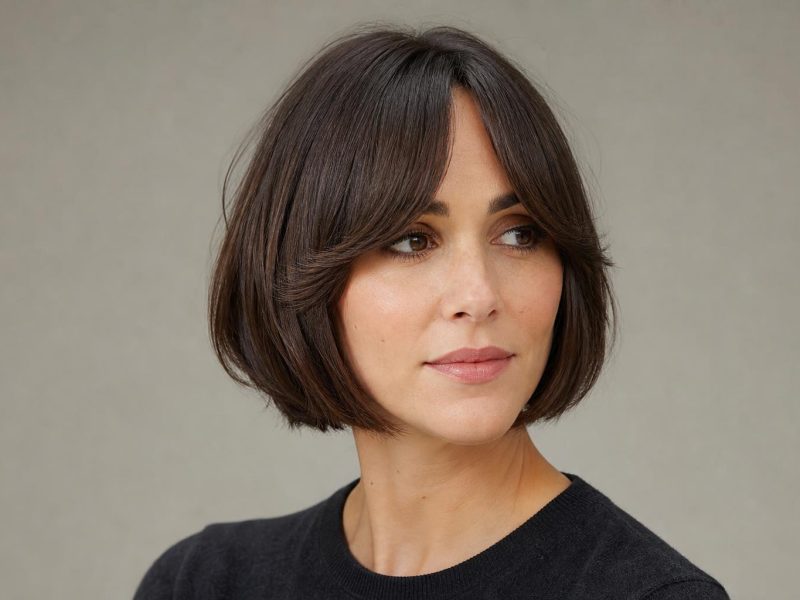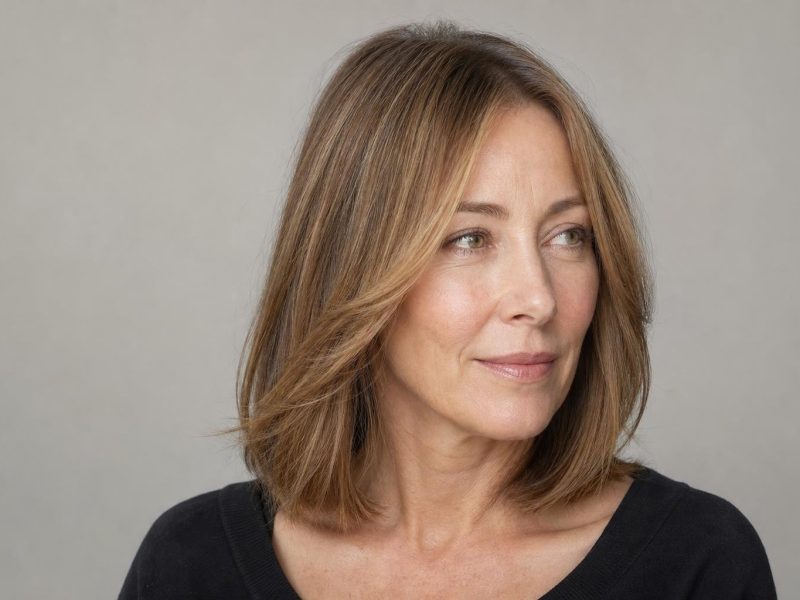

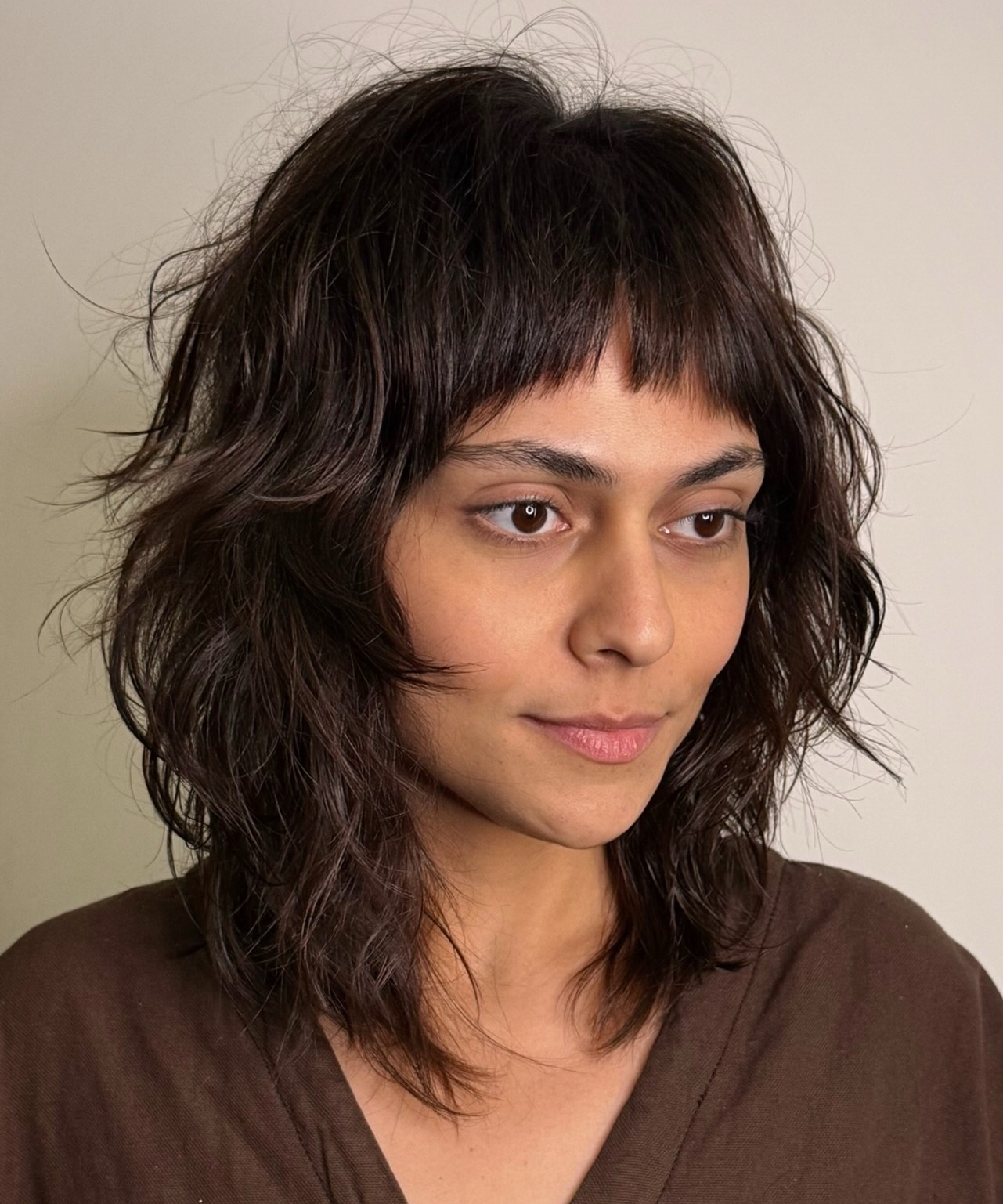
Stylist-backed medium shag variations organized by texture, bang style, and maintenance level.
A medium shag haircut sits between chin and collarbone length and relies on disconnected, heavily textured layers to create movement that looks effortless rather than engineered. Unlike a standard layered cut where layers blend seamlessly, a shag deliberately leaves visible separation — shorter pieces around the crown and face, longer weight through the mid-lengths and ends. The result is volume where most cuts fall flat, and a lived-in texture that actually improves between washes. Below are 35 variations, each with notes on who it suits and how to recreate it.
You’ll find options grouped by texture, bang pairing, maintenance demand, and edge factor, covering straight, wavy, and curly textures across oval, round, square, and heart-shaped faces. If you’re exploring other cuts in this length range, our guide to medium-length hairstyles is a useful starting point.
| Feature | Medium Shag Details |
|---|---|
| Best For | Medium-density to thick hair, wavy or straight textures, oval and heart-shaped faces |
| Maintenance Level | Low to moderate; air-dries well, trims every 8–10 weeks |
| Daily Styling Time | 5–10 minutes (texturizing product + air dry or diffuse) |
| Works With | Curtain bangs, wispy bangs, face-framing layers, balayage, highlights |
| Avoid If | Very fine hair under medium density, or you prefer a sleek, polished look daily |
Textured Medium Shags for Everyday Wear
These are the workhorses of the medium shag world — cuts designed to look good with minimal effort on an average morning. The layering is moderate enough to maintain density through the ends, and the texturizing keeps them from looking like a standard layered cut.
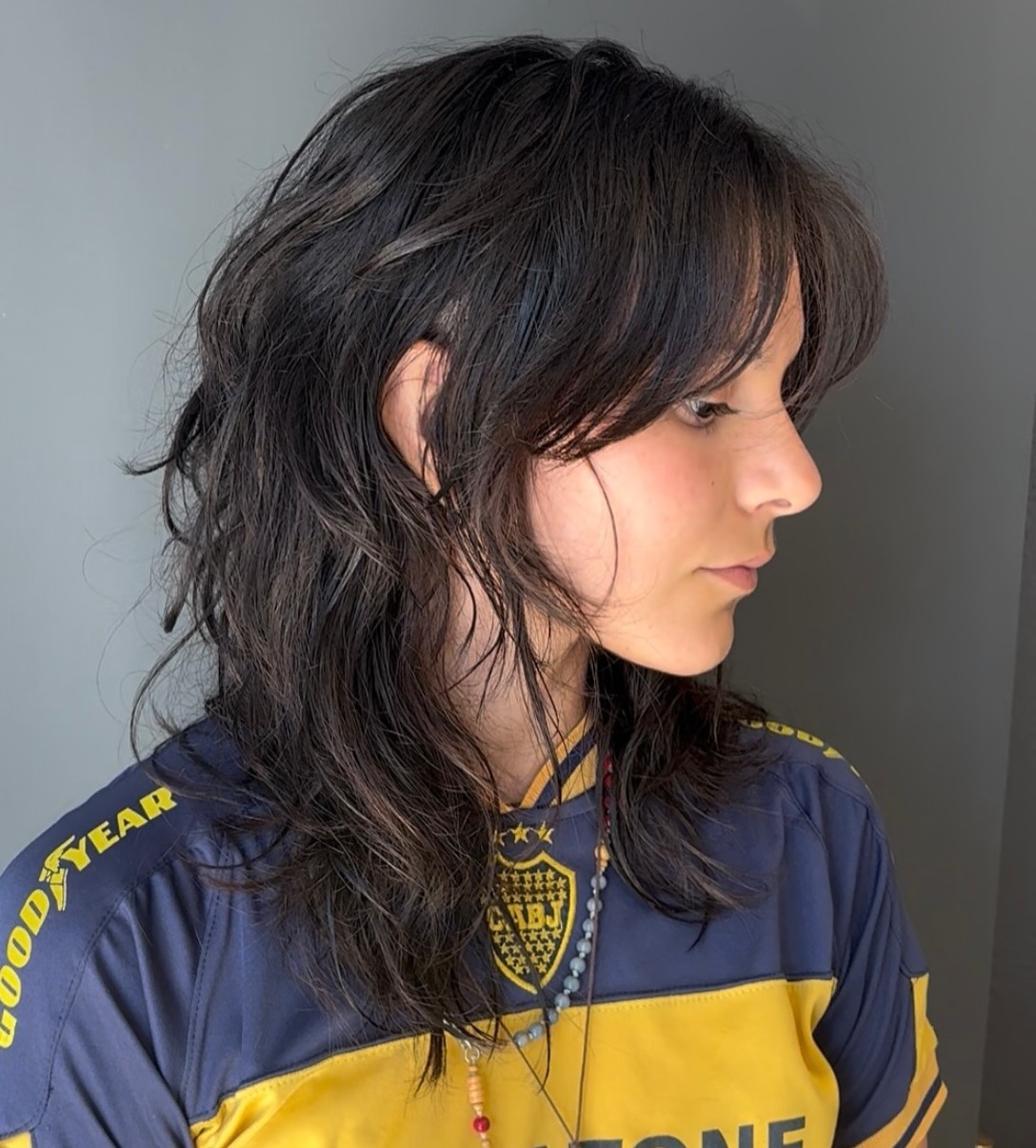
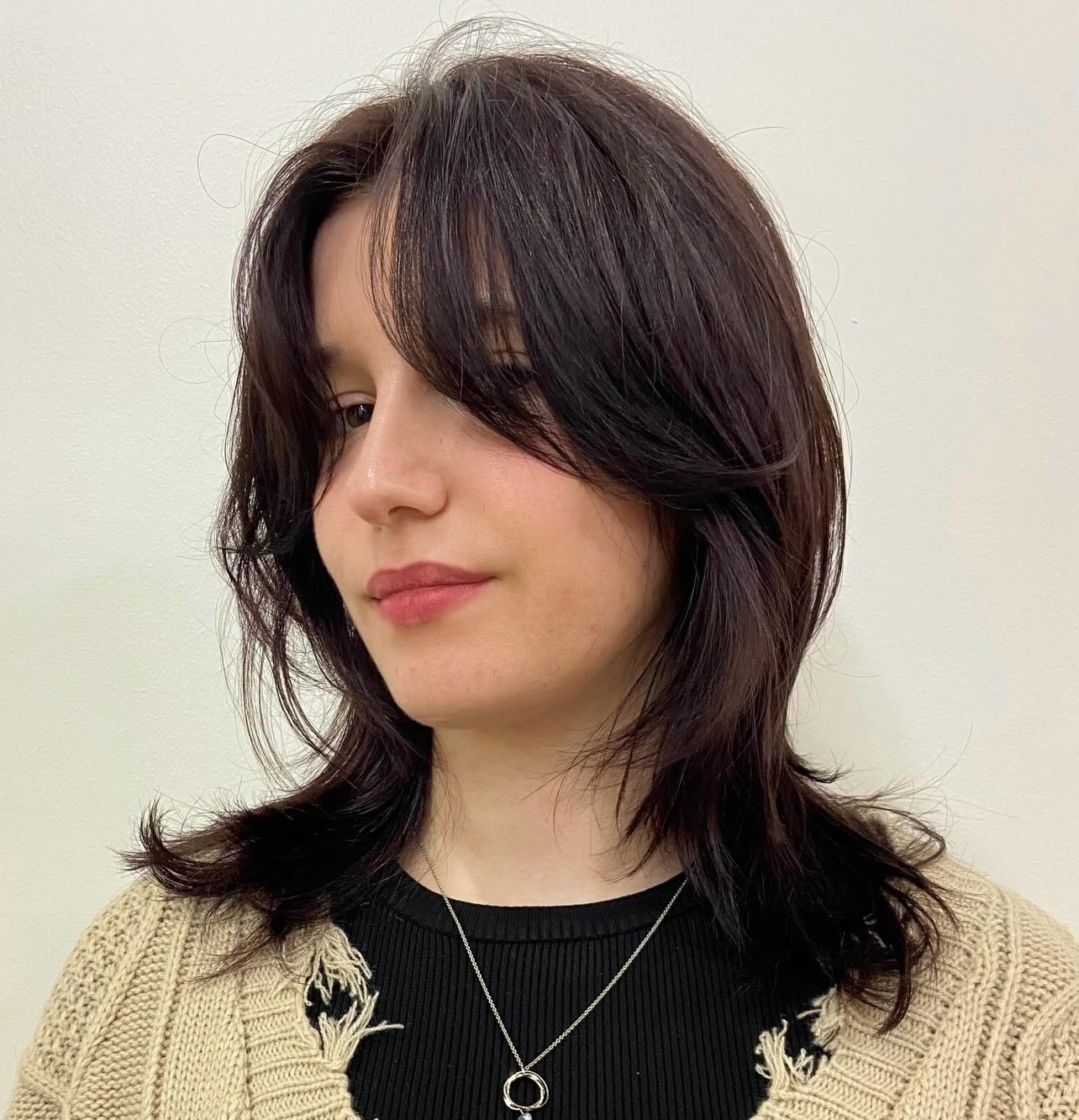
Image source: @se.augustoo1. Classic Collarbone Shag
Layers start at the cheekbone and cascade to collarbone length, creating a tapered silhouette that moves with every head turn. This medium shag haircut works on straight to slightly wavy hair with medium density. It’s the version most stylists recommend for a first-time shag. Ask for point-cut ends rather than blunt to keep the tips light.
2. Razored Mid-Length Shag
A razor instead of shears created these feathery, almost translucent ends. Razoring removes weight without sacrificing length, making it ideal for thick, coarse hair that tends to pouf at the sides. Oval and oblong faces wear it well because the volume sits at the cheekbones rather than the jawline.
3. Soft Layered Shag with a Center Part
A center part keeps things symmetrical while the layers add a gentle flip at the ends. Heart-shaped faces benefit from the width the layers add at jaw level, balancing a narrower chin.
4. Lived-In Shag on Fine Straight Hair
The stylist kept the shortest layers at crown level and left the perimeter heavier, so fine hair still has body at the ends. A volumizing mousse at the roots before blow-drying helps the crown layers stand up rather than collapse.
5. Blunt-Perimeter Medium Shag
The interior is fully shag, but the perimeter is blunt at one length. That blunt edge creates a visual anchor that prevents the cut from looking too wispy. If you want a shag with the structure of a lob, this is the hybrid.
6. Shoulder-Grazing Tousled Shag
Slightly longer than a true collarbone cut, the layers concentrate through the top third. It reads as a messy layered cut from the front and a full shag from the side. Round faces should pair it with a side part to avoid adding width at the cheeks.
7. Sun-Kissed Shag with Balayage
The layering shows off hand-painted highlights running through the mid-lengths, and each layer catches light at a different angle. Balayage and shags are natural partners because the dimension adds depth that a single-process color can’t match.
Medium Shag Haircuts with Bangs
Bangs change the entire personality of a medium shag. Curtain bangs soften it, wispy bangs modernize it, and a full fringe makes it retro. The layered structure means bangs integrate naturally. There’s no harsh line where the fringe ends, because everything is already graduated.
8. Curtain-Banged Shag
Curtain bangs split at the center and sweep along the cheekbones, blending into the shag’s face-framing layers. The parting creates an elongating effect for round and square faces. Expect the bangs to need a quick round-brush blow-dry of about 2 minutes.
9. Wispy Micro Bangs on a Medium Shag
These bangs fall above the eyebrows and are thinned with texturizing shears for a feathery effect. The contrast between short fringe and longer shaggy layers is editorial. Oval faces with prominent foreheads pull this off best.
10. Bottleneck Bangs with Textured Shag
Bottleneck bangs are shorter at the center and lengthen toward the temples, creating a soft arch that opens up the eye area. They transition into the layered sides without any visible stopping point. It’s a strong choice for anyone who wants bangs without the commitment of a full heavy fringe.
11. Full Blunt Bangs and Choppy Shag Layers
Heavy, straight-across bangs against heavily textured layers are the most 1970s-inspired version on this list. Thick, straight hair holds this look best; fine or wavy textures may struggle to keep the bangs flat without a flat iron.
12. Side-Swept Bangs on a Shag
These bangs sweep entirely to one side, creating diagonal movement across the forehead. The asymmetry flatters square and heart-shaped faces by breaking up angular bone structure.
13. Feathered Farrah-Style Fringe
The bangs flip back and away from the face in a nod to the iconic 1970s silhouette. Achieving this requires a round brush. The flip starts at the root and follows through to the ends. If a retro-inspired shag haircut is your goal, this delivers the most recognizable shape.
14. Birkin Bangs with Undone Shag
Eye-skimming, barely parted, and slightly messy, Birkin bangs land at the lash line and pair with a low-effort shag that looks unplanned. Have the stylist cut these bangs dry so they fall exactly where your growth pattern pushes them.
Medium Shags for Wavy and Curly Hair
Wavy and curly textures are where a medium shag really earns its reputation. The layering removes bulk from the mid-shaft (the exact spot where thick curly hair triangles out), and lets each curl spring individually. Stylists who specialize in textured cuts often recommend dry cutting for shags on curly hair, since wet hair shrinks unpredictably.
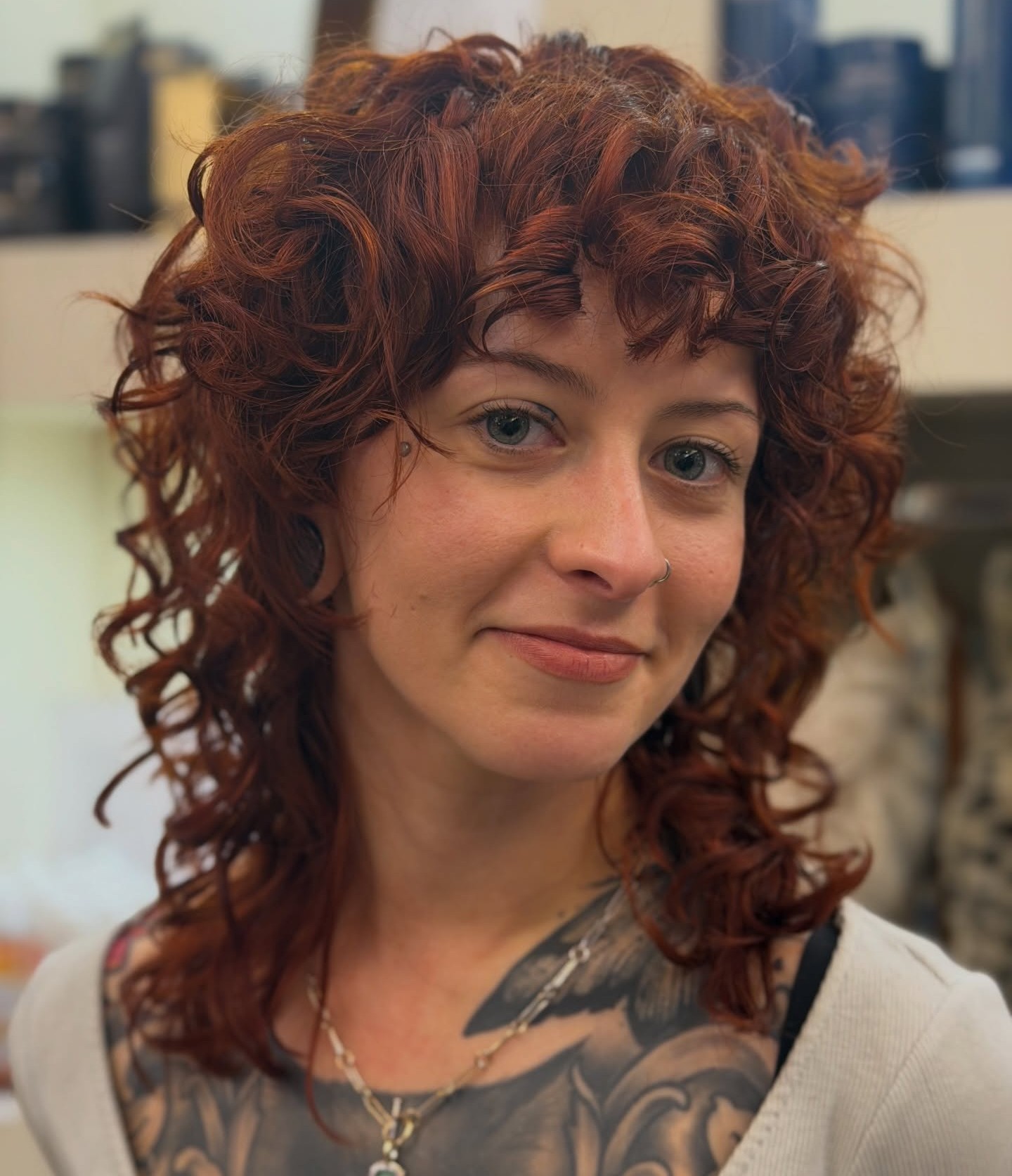
15. Wavy Shag with Air-Dried Texture
No diffuser, no round brush — this cut looks its best when you wash, scrunch in a curl cream, and walk out. The layers follow the natural wave pattern so each piece bends at its own rhythm. Type 2A and 2B waves get the most lift.
16. Curly Shag with Crown Volume
Shorter layers at the crown let curls stand up rather than weigh each other down, creating height that balances a rounder face. If your curls are type 3A or 3B, ask for dry cutting in the natural curl state.
17. Beach-Wave Shag with Highlights
Loose S-waves through highlighted mid-lengths give this shag a coastal feel. The highlights emphasize the wave pattern by creating contrast between peaks and valleys. A sea salt spray adds grip without weighing waves down.
18. Thick Wavy Hair Shag with Removed Weight
Internal layers thin out the heaviest sections while the visible outer layers create movement. The result is hair that swings instead of sitting in a block. It’s a common fix for clients with dense medium-length hair.
19. Loose Spiral Curls in a Shag Shape
Spiral curls follow the layer graduation naturally, with shorter spirals framing the face and longer ones at the collarbone. The shape looks intentional even on second- or third-day hair.
20. Diffused Shag on Type 2C Waves
Type 2C waves get structure from a shag’s layered framework. Diffusing upside down enhances the pattern while shorter crown layers add height. About 15 minutes of diffusing, zero effort for the rest of the day.
21. Frizz-Friendly Shag for Humid Climates
Heavy texturizing means that when hair expands in moisture, it adds to the tousled look rather than ruining the style. Even without anti-humidity serum, this shag reads as intentional rather than unkempt.
Low-Maintenance Medium Shags
These cuts lean hard into the shag’s low-effort promise, and they are built for people who genuinely do not want to style daily. They air-dry well, grow out gracefully, and still look deliberate at week eight. If you’re weighing a shag against a choppy bob for less daily styling, the key difference is that shags hold their shape longer between trims.
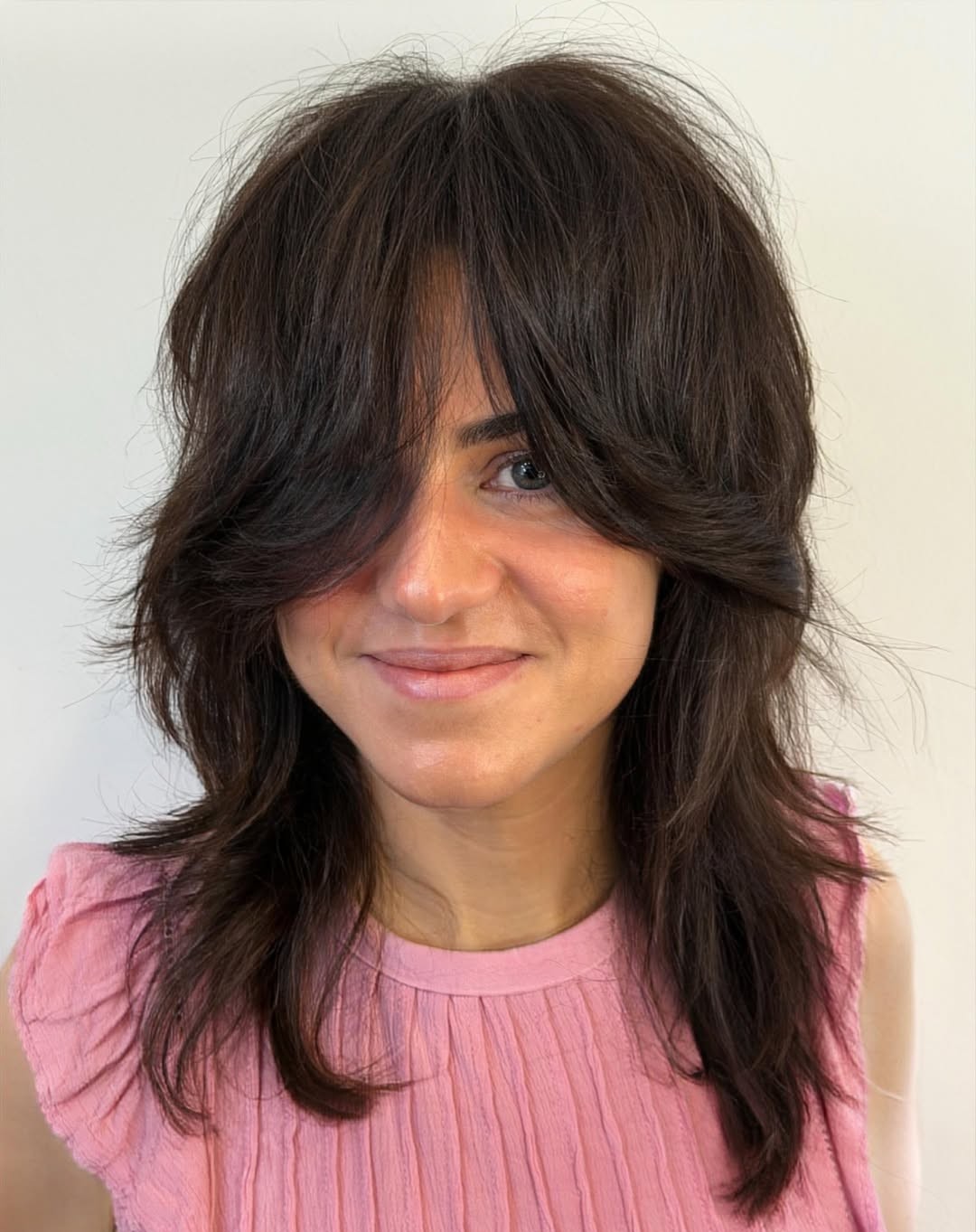
22. Wash-and-Go Shag
Moderate layers — not extreme enough to need product, but enough to prevent a one-length look. Towel-dry, maybe a dime-sized texturizing spray at the roots, done. Looks the same whether you styled it or didn’t.
23. Grown-Out Shag with Soft Layers
This is what a well-cut shag looks like 10–12 weeks post-appointment. The layers have softened, the bangs lengthened, and the shape relaxed. Some clients prefer this stage over the fresh cut, which is why smart stylists cut the initial layers slightly shorter.
24. Air-Dry-Only Textured Shag
Every layer was point-cut to enhance the hair’s natural drying pattern. The stylist asked the client to come in with air-dried hair so they could see how each section falls. If you hate blow-dryers, mention that before the first snip.
25. Shag with Minimal Layers for Fine Hair
Only three or four long layers separate this from a one-length cut, but those layers make a visible difference. Fine hair loses density fast with intensive layering. This version adds interest without sacrificing fullness at the ends.
26. Second-Day Shag
Designed to peak on day two, when natural oils add weight and separation. Heavy texturizing at the ends and slightly longer face-framing pieces fall into place as the hair settles. A dry shampoo at the roots is the only product needed.
27. No-Frills Shoulder-Length Shag
Nothing trendy or editorial, just a reliable medium shag haircut that works for a 28-year-old creative and a 55-year-old teacher alike. Layers start below the ears, length sits at the shoulders, texturizing is moderate. Function over flash.
28. Shag That Grows Into a Layered Lob
The layers are positioned so that as they grow, they transition into a longer layered look rather than an awkward phase. At month three, you have a textured lob; at month five, long layers. No emergency salon visit required.
Bold and Edgy Medium Shag Variations
For readers who want a shag that makes people ask “where did you get your hair done?” It has more pronounced layering, sharper contrasts, and styling that reads as a fashion statement. These require more upkeep than the low-maintenance section.
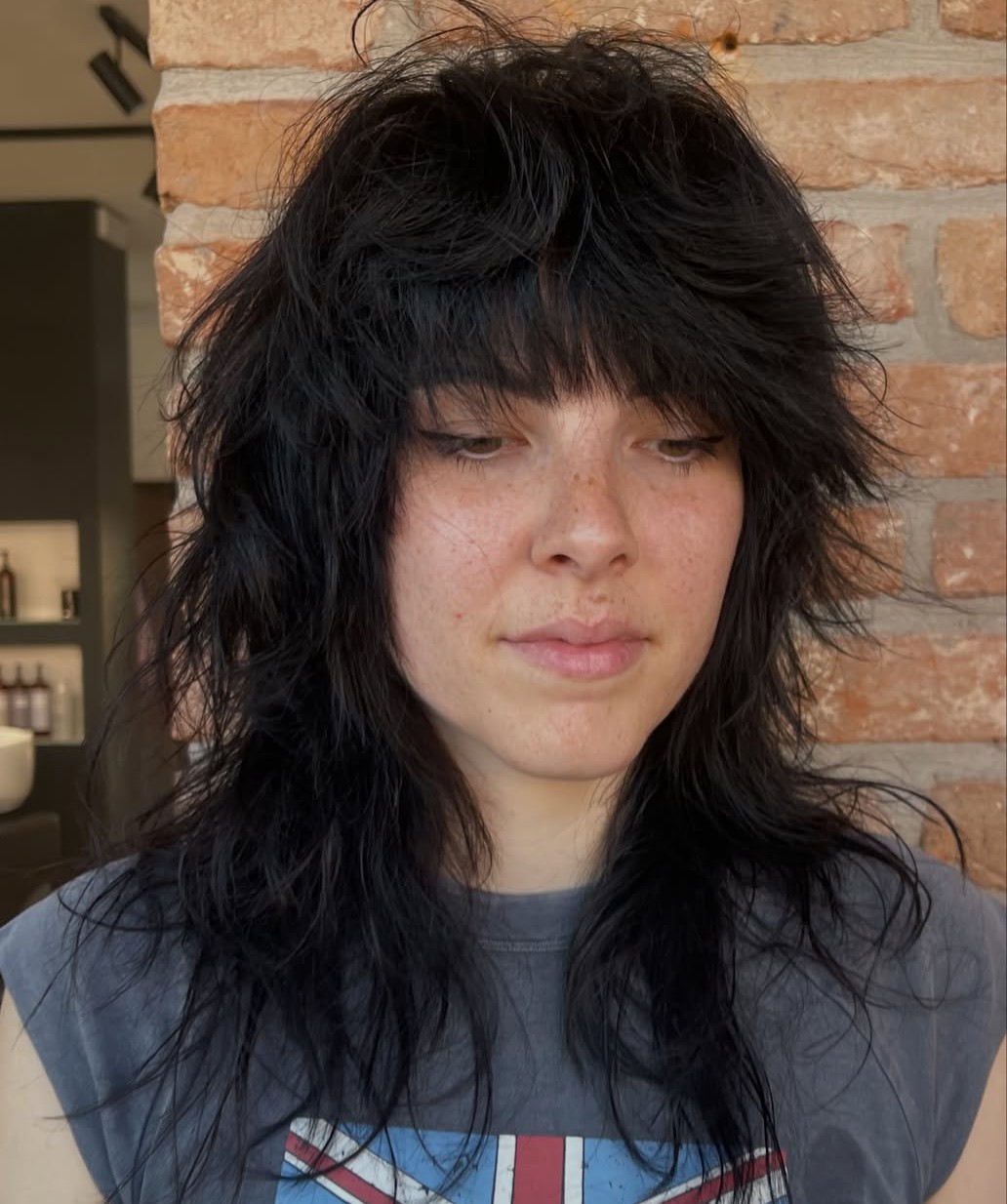
29. Heavily Razored Punk Shag
Maximum texture, minimum rules. The razor created layers so choppy that individual pieces spike in different directions. Works best on thick hair with some wave; fine hair won’t hold the separation. Expect to use a matte paste daily.
30. Disconnected Layers with a Dramatic Drop
The shortest layers at the crown land a full four inches above the longest pieces at the collarbone. Stylists call this “disconnection.” It’s what separates a standard shag from one with real visual impact.
31. Platinum Shag with Dark Roots
The shag amplifies a grown-out platinum root shadow by placing lighter and darker pieces at different lengths. Be realistic about maintenance — platinum requires toning every 4–6 weeks, and the layers need trimming on a similar schedule.
32. Choppy Shag with an Undercut
An undercut at the nape removes bulk from the bottom, letting the visible shag layers move freely. It’s hidden when hair is down and only reveals itself in a ponytail. For thick, heavy hair that overwhelms regular layering, this finally makes it manageable.
33. Color-Blocked Shag
Different color sections placed at different layer levels, so each head movement reveals a flash of a different shade. Works with natural tones (chocolate and caramel) or bold contrasts (copper and burgundy) depending on desired aesthetic.
34. Asymmetrical Medium Shag
One side cut noticeably shorter, while maintaining shag texture throughout. The asymmetry draws attention to the jawline and works especially well on heart-shaped faces. Needs precise trimming every 6–8 weeks.
35. Wet-Look Styled Shag
Same cut as a standard medium shag, styled with a strong-hold gel for a wet, slicked texture from roots to mid-lengths while the ends flip freely. This is a styling choice, not a cutting technique. You can switch between the wet look and a tousled finish depending on the day.
How to Choose the Right Medium Shag for Your Face Shape
Face shape determines where layers should start, how much volume you want at the crown versus the sides, and whether bangs help or hurt the overall balance. A medium shag is more forgiving than a bob or blunt cut because the layers naturally break up harsh lines, but some versions still flatter each shape more than others.
| Face Shape | Best Medium Shag Variation | Avoid |
|---|---|---|
| Oval | Most variations; try curtain bangs or a center part | Heavy bangs that shorten the face |
| Round | Longer layers starting below cheekbone, side part, crown height | Wide layers at cheekbone level |
| Square | Soft wispy layers around the jaw, curtain bangs | Blunt layers ending at the jaw |
| Heart | Layers adding width at chin and jaw level | Heavy crown volume with tapered ends |
| Oblong | Side-swept bangs, cheekbone layers, side fullness | Extra crown height with no side volume |
What to Tell Your Stylist
The gap between the shag you picture and the shag you get usually comes down to communication. Shags have more variables than a standard layered cut: where the shortest layer starts, how disconnected the layers are, whether ends are point-cut or razor-cut, how the fringe integrates, so “give me a shag” leaves too much room for interpretation.
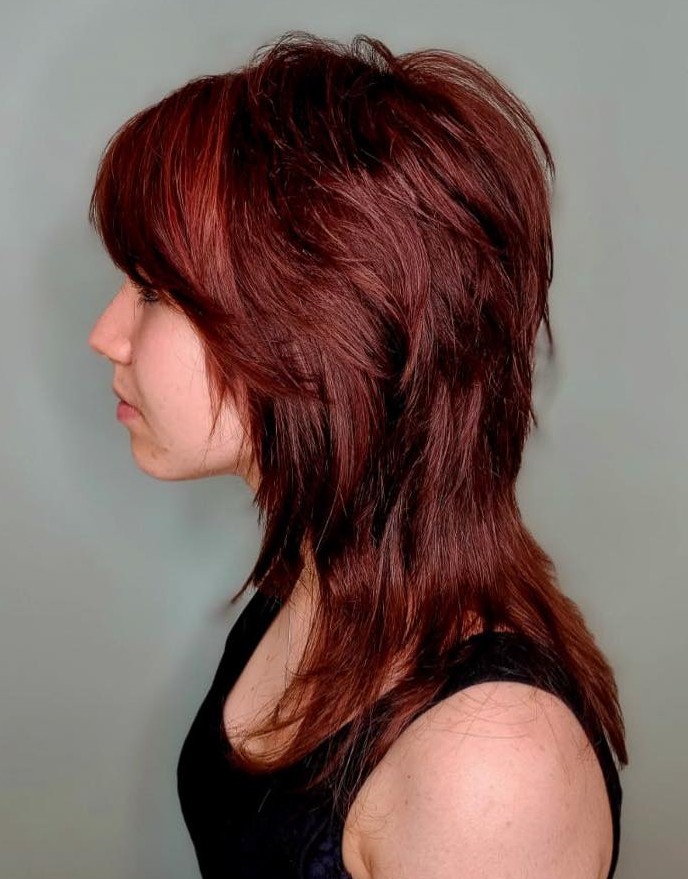
Bring at least two reference photos — front view and side or back. A single front-facing photo doesn’t tell the stylist how much layering happens behind the ear or how the back is shaped.
Be specific about where you want the shortest layer (cheekbone, chin, or ear level), how much weight remains at the ends, and how you style daily. If you air-dry 90% of the time, say so. A stylist who knows your routine will cut layers to cooperate with your natural texture rather than a blow-dried ideal.
Stylist tip: Ask whether they recommend shears or a razor for your hair type. Razors create softer, feathered layers but can cause frizz on fine or damaged hair. Shears with point cutting give more control and work better on fine textures.
FAQ
Is a Medium Shag Hard to Maintain?
Shags are among the lowest-maintenance medium-length cuts because the textured layers look intentionally messy as they grow out. Trims every 8–10 weeks keep the shape, and daily styling takes under 10 minutes with a texturizing spray or cream. Most versions air-dry well without heat tools, and the grow-out transitions into a layered look rather than an awkward stage.
Can I Get a Medium Shag with Fine Hair?
Yes, but ask for minimal long layers with point-cut ends. Fine hair loses density with aggressive layering, so the goal is adding texture without thinning the perimeter. A volumizing mousse at the roots compensates for the lack of natural body, and avoid razor cutting, which can create wispy, see-through ends on fine textures.
What Is the Difference Between a Shag and a Wolf Cut?
A shag has layers throughout the entire length with softer transitions, creating an all-over tousled effect. A wolf cut concentrates shorter layers at the crown with a sharper drop to longer lengths, creating a more visible “mullet-like” contrast. Wolf cuts read as edgier; shags feel more approachable.
Does a Medium Shag Work on Curly Hair?
Shags and curly hair are a strong match because layering removes bulk from the mid-shaft where curls triangle out. Find a stylist who dry-cuts curly hair, since wet curls shrink two to four inches and cutting wet risks ending up shorter than planned. Type 3A through 3C curls respond particularly well to shag layering.
What Products Work Best for a Medium Shag?
For straight to wavy hair, a salt spray or texturizing spray adds grip and separation. Curly shags benefit from a lightweight curl cream that defines without weight. For edgier, piecier versions, a matte paste pushed through mid-lengths creates visible separation. Avoid heavy oils on the crown as they flatten the volume that makes a shag look like a shag.
How Do I Grow Out a Medium Shag?
To reach long layers, skip trims for 4–5 months and let shag layers blend into graduated lengths. For a blunt look, ask your stylist for perimeter-only trims that maintain bottom length while shorter layers catch up. Shags arguably improve during grow-out because the disconnected layers soften and blend naturally over time.
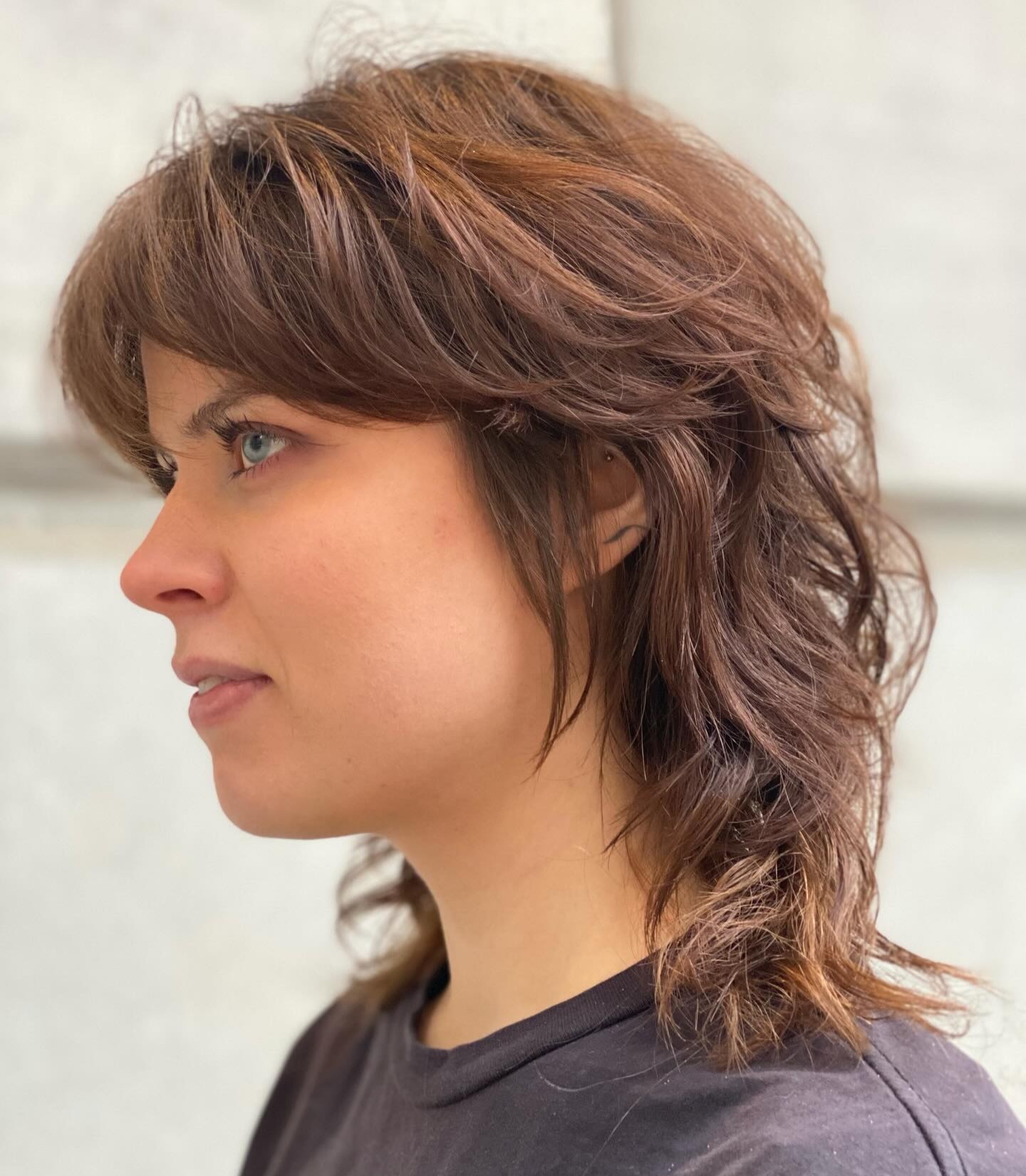
A medium shag haircut is one of the most adaptable styles at shoulder-to-collarbone length. It accommodates a wide range of textures, face shapes, and styling preferences without locking you into one look. Whether you lean toward wash-and-go variations or bolder editorial versions, the right shag starts with understanding your hair’s natural behavior and communicating that clearly to a stylist who can translate it into layers that move the way you want.
Hair results vary based on your natural hair type, texture, density, and condition. Always consult with a licensed hairstylist before making significant changes, especially with chemical treatments or dramatic length changes. Photos may show styled results that require professional tools and products to replicate.