

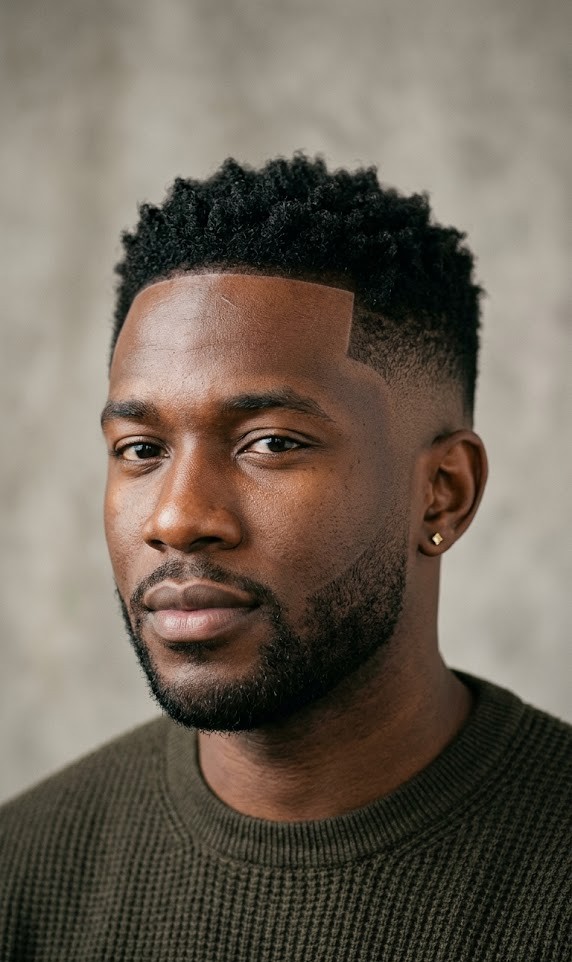
The temp fade is one of the most versatile cuts in any barbershop — and one of the most misunderstood when it comes to knowing exactly what to ask for.
A temp fade (short for temple fade, also called the Brooklyn fade) focuses the taper specifically around the temple area, creating sharp, clean lines that frame the face without touching the neckline or the full sides. That precision is what sets it apart from a standard low, mid, or high fade — it’s a targeted technique, not just a height preference. Whether you’re pairing it with a textured crop, waves, a Caesar, or even a blowout, the temp fade is the detail that makes the whole cut read as intentional.
This guide covers how the temp fade differs from other fades and tapers, the main variations (low, mid, high, and skin), which face shapes benefit most, what to tell your barber so you walk out with what you actually want, and honest maintenance expectations — including what happens when you stretch visits too long.
| Factor | Details |
|---|---|
| Also called | Temple fade, Brooklyn fade |
| What makes it distinct | Fade targets the temple area specifically — not a uniform blend around the full head |
| Variations | Low, mid, high, skin (bald) |
| Best for | Oval, square, round, and heart-shaped faces; all hair types |
| Maintenance | Every 2–3 weeks for sharp lines; 3–4 weeks if you prefer a slightly grown-out look |
| Pairs well with | Textured crop, waves, Caesar, blowout, pompadour, slick back, braids, curly top |
| Avoid if | You want a very subtle, understated finish — a taper is more conservative |
What a Temp Fade Actually Is (and How It Differs from a Regular Fade)
Most fades work by blending hair down uniformly — the taper travels around the sides and back of the head, gradually reducing length from top to bottom. A temp fade is different. It focuses that taper specifically at the temples: the strip of hair between the top of the sideburns and the corner of the forehead. The rest of the cut stays relatively intact. This creates a defined frame around the face — a sharp visual edge right where the eye naturally travels — without requiring the full sides and back to be faded at the same level.
The result is a more deliberate contrast than a standard low taper, but more controlled than a high skin fade. It draws attention to the eyes and jawline, cleans up the transition between sideburns and facial hair (an area where growth is often patchy or uneven), and gives any hairstyle on top — from a blowout to braids to a textured crop — a crisp, finished perimeter to work against.
Stylist tip: The temp fade originated in New York City barbershops in the late 1990s, particularly in Brooklyn, and became a signature of Afro-Caribbean, Italian American, and Latino communities who wanted a clean modern edge without a dramatic all-over skin fade. Its popularity has since spread across every hair type and background.
Temp Fade vs. Taper Fade vs. Standard Fade: The Real Differences
These three terms are used interchangeably in most barbershops, which is exactly how miscommunication happens. Knowing what each one actually means gives you the control to ask for the right thing.
| Technique | Where It Acts | Visual Result | Best Described As |
|---|---|---|---|
| Temp fade | Temple area only — front corners of the head | Sharp frame around the face; sides and back less affected | Surgical precision at the temples |
| Taper fade | Sides and back, but shorter duration — doesn’t reach skin | Gradual blend that ends short, not bald — more conservative | Natural finish with modern structure |
| Standard fade (low/mid/high) | Full sides and back, blended uniformly from a set height | Even gradient all the way around the head | All-over contrast, varies by height |
In practice, many barbers will combine techniques — for example, a temp fade at the front with a low taper around the back and neckline. This hybrid approach gives you the sharp temple definition without the high-maintenance commitment of a full skin fade everywhere. It’s worth asking for this combination if you want the clean temple line but prefer a more forgiving grow-out behind the ears.
The Four Temp Fade Variations
Height and skin exposure are the two variables that change everything about how the temp fade reads. The same person can look dramatically different with a low versus a high temp, so understanding the difference before you sit in the chair matters.
Low Temp Fade Sits at or Below the Temples and Reads as Professional
The fade line starts low — at or just above the upper edge of the sideburns — creating a clean transition without exposing a large patch of skin. This is the most conservative variation and the one that holds up best between visits. It works in any professional environment, ages well, and suits virtually every face shape because it adds definition without drama. If you’re new to temple fades, this is where to start; you can always go higher once you know how the lines look on you.
Mid Temp Fade Starts Around Temple Height for a Balanced Contrast
The most requested variation in most barbershops, the mid temp fade begins at mid-temple level — roughly where the ear meets the side of the head — and blends downward from there. It creates noticeably more contrast than the low version without the boldness of a high fade, and it pairs equally well with short crops and longer blowout-style tops. The mid temp fade flatters oval, square, and round faces particularly well because it adds vertical definition on the sides without exaggerating width at the top of the head.
High Temp Fade Creates Maximum Contrast and Demands Confidence
The fade line starts well above the temple, sometimes approaching the crown, creating a sharp silhouette with a lot of skin visible on the sides. This is a statement cut — it highlights expert barbering technique and makes a strong impression. High temp fades require more frequent maintenance (the contrast between grown-in hair and faded skin becomes obvious fast), and they work best on men with oval or oblong faces, where the added height from the higher fade doesn’t create excessive width. If you have a very round face, a high temp fade can emphasize width — opt for the mid version instead.
Skin Temp Fade Takes the Temple to Bare Skin for Maximum Definition
Also called a bald temp fade, this variation blends completely to the skin at the temple area — no stubble, just a clean transition from hair to scalp. It creates the sharpest possible edge and the highest-contrast finish, which works exceptionally well with waves, 360 waves, textured afros, and braids where the contrast is part of the overall aesthetic. The trade-off is maintenance: skin temp fades become noticeably grown-out within 7–10 days, which means visits every 2 weeks minimum if you want to keep that crisp line. For men with very fast hair growth, this commitment is worth factoring in before requesting it.

Which Face Shape Benefits Most from a Temp Fade
Unlike a full all-over fade, the temp fade primarily affects the area directly around the temples and forehead corners — which means it influences face framing more than face shape in the traditional sense. That said, choosing the right height makes a real difference in how balanced the cut looks.
| Face Shape | Best Temp Fade Height | What It Does | Avoid |
|---|---|---|---|
| Oval | Any — low to high all work | Most proportions are balanced; height is a style preference | Nothing to avoid — most versatile face shape for fades |
| Square | Mid to high | Height adds vertical emphasis to balance a strong jawline | Very low fade with heavy side volume — emphasizes width |
| Round | Low to mid | Adds side definition without widening the visual width at the temples | Very high temp fade — creates a wide top-heavy silhouette |
| Heart | Low to mid | Balances a wider forehead without adding more emphasis up top | High temp fade — draws more attention to a broader forehead |
| Oblong / Long | Low, combined with fuller top | Keeps the sides fuller, adds width rather than height | High skin fade — increases perceived face length significantly |
| Diamond | Mid, blended softly | Creates balance around the widest point (cheekbones) | Very sharp high lines — can overemphasize narrow forehead and chin |
Stylist tip: One mistake barbers see regularly is clients asking for a temp fade line too high on the first visit — it exposes a large area of scalp and throws off facial proportions in ways that are hard to visualize until the cut is done. Start conservatively with a mid or low line, see how it sits on your head shape, and you can go higher next time. You can’t undo a high fade between appointments.
Temp Fade Combinations: What Goes on Top
The temp fade is a frame, not a standalone style — it works by making whatever is on top look sharper and more intentional. The pairing you choose changes the overall character of the cut considerably.
Textured Crop and Temp Fade Is the Most Requested Combination
A short to medium textured crop — whether it’s a French crop, a messy top, or a choppy caesar — paired with a mid temp fade is the most common request across barbershops right now. The clean temple line makes even naturally textured or unruly hair look structured at the perimeter. Use a matte clay or texture powder through the top for separation and movement without shine; apply to damp hair and work through with fingers rather than combing for a natural finish.
Waves and a Skin Temp Fade Create the Sharpest Contrast
360 waves or defined wave patterns on top gain significantly from a skin-level temp fade because the contrast between the precise bald line at the temple and the textured wave pattern above it becomes a deliberate design element. The cut amplifies the waves rather than competing with them. This combination requires the most consistent maintenance — waves need regular brushing, a durag for moisture, and a barber visit every 2 weeks to keep the skin fade from looking grown-out.
Blowout Taper and Temp Fade Works for Men Who Want Volume
A blowout taper on top — blow-dried upward and outward for height and volume — pairs naturally with a mid or high temp fade at the sides. The lifted top and the crisp temple line create a bold silhouette that works across Afro-textured, wavy, and coarse straight hair. This combination leans more statement than subtle, so it’s better suited to casual environments and personal expression than conservative workplaces where a lower, less dramatic version works better.
Slick Back and Low Temp Fade Reads as Professional and Polished
A slicked-back style on top — whether with a pomade for high shine or a cream for a softer matte finish — combined with a low or mid temp fade is one of the more office-appropriate variations of this cut. The low fade keeps the overall volume of the sides intact; the defined temple line adds the modern edge without looking aggressive. This combination works particularly well on straight to slightly wavy hair and on men with oval or square faces where the volume at the back of the head isn’t competing with the temple structure.
Braids and Loc Styles Use the Temp Fade as a Clean Perimeter
For men wearing braids, cornrows, box braids, or locs, the temp fade creates a defined edge where the styled section meets the hairline — it functions like a frame around a picture. The fade is usually kept low to mid height in these combinations, just enough to clean up the hairline and sideburns without taking off the perimeter braid work. Ask your barber to blend rather than cut sharply in this case, so the transition reads as clean rather than disconnected.

What to Tell Your Barber
The most common complaint after a fade appointment isn’t about the barber’s skill — it’s about communication. A few specific terms and a reference photo eliminate the guesswork on both sides.
The baseline ask: “I want a temp fade — just the temples, not a full fade around the sides. Can we start with a mid height and blend to skin?” This establishes the technique, the location, the height, and the finish in one sentence.
For a low temp fade: “Keep the fade low at the temples — I want it clean but conservative. Blend down from about sideburn level, not higher than mid-temple.”
For a mid temp fade: “Mid temp fade, blended to a 1 guard or skin. I want a clean line at the temple that frames the face — leave the sides and back as they are.”
For a high or skin temp fade: “High temp fade, blended to skin at the temples. Keep it tight — I want maximum contrast between the fade and the top.”
For a hybrid: “Temp fade at the front with a low taper around the back — I want the sharp temple line but a more gradual finish at the neckline.”
On the lineup: Always specify whether you want a lineup (also called a line-up, shape-up, or edge-up) as part of the service. A lineup squares off the forehead hairline and sharpens the temple corners with a trimmer or straight razor. It’s separate from the fade itself and some barbers charge extra or won’t include it unless asked. Say: “Can you do a lineup along the forehead as well?”
Stylist tip: Bring a reference photo — not to show your barber exactly what you want pixel for pixel, but as a communication tool. A photo of a mid temp fade with waves is a faster, clearer brief than any verbal description. Show it and say “something like this height and transition” rather than expecting an exact copy, because your hair texture and head shape will produce a different result anyway.

Temp Fade for Textured and Coily Hair
The temp fade has deep roots in Black barbershop culture specifically because of how well the technique works with Afro-textured, coily, and kinky hair. The natural density and coil pattern of 3c–4c hair creates a dramatic contrast against the faded temple line — more so than with straight or wavy hair — which is why the skin temp fade became a signature look in these communities before it crossed into mainstream barbering.
For coily and kinky hair types, there are a few technique differences worth knowing about. A skilled barber will use a combination of clippers and a straight razor or trimmer for the temple line; the razor creates the precise skin-level edge that defines coily hair best. The clipper work on the fade itself needs to go with the direction of coil growth rather than against it to avoid patchiness. Ask specifically: “Do you cut textured hair regularly?” before your first appointment with a new barber — not every barber has equal experience with 3c–4c coils, and the temp fade is unforgiving of technique gaps.
Maintenance, Cost, and What Happens When You Wait Too Long
Temp fades grow out faster than almost any other haircut, specifically because the precision of the fade line is doing the visual work. A low taper can look acceptable at 4–5 weeks; a skin temp fade starts looking noticeably grown-out by days 8–10.
| Variation | Recommended Visit Frequency | What Happens If You Wait | Annual Cost (est.) |
|---|---|---|---|
| Low temp fade | Every 3–4 weeks | Fade blurs gradually; still looks tidy at week 3–4 | 13–17 visits/year — lower end of fade maintenance |
| Mid temp fade | Every 2–3 weeks | Temple line softens noticeably by week 3; grows into a high taper look | 17–26 visits/year |
| High temp fade | Every 2 weeks | High contrast becomes stubble-heavy fast; lines become uneven | 26 visits/year |
| Skin temp fade | Every 10–14 days | Stubble visible at temples by day 7–10; dramatic grow-out by week 3 | 26–36 visits/year — highest commitment |
At $25–$60 per barbershop visit depending on your city and barber, a skin temp fade can run $650–$2,160 per year in maintenance alone. That’s not a reason to avoid the cut — but it’s worth factoring in honestly before you commit to the sharpest version.
Between visits, the most useful maintenance tool is a quality pair of cordless trimmers for self-lineup touch-ups along the forehead hairline. Leave the actual fade blending to your barber; the fade gradient requires multiple clipper guards and a trained eye to keep even. Attempting to re-fade your own temples without experience typically results in patchy or uneven lines that your barber will have to correct — often by taking it shorter than you wanted.
When a Temp Fade Is NOT the Right Choice
- You want a very subtle finish. A temp fade creates a defined line even at its lowest height. If you’re in a workplace or environment where any visible fade reads as too sharp, a classic taper (no skin exposure) is a more conservative approach that’s still clean.
- You have naturally very sparse temples. Men with thinning hair at the temple area can actually make sparseness more visible by fading the area to skin — the contrast highlights exactly the zone you’d prefer to downplay. A textured, blended taper that fills in the sideburns area creates a fuller-looking result.
- You can only visit a barber once every 4–5 weeks. A mid or high temp fade will look grown-out and unintentional by week 4 on most hair types. A low temp fade is the only version that survives extended intervals without looking neglected.
- You have very uneven temple hairlines. If your natural hairline is asymmetrical or irregular, a precise temp fade can amplify that asymmetry rather than disguising it. Ask your barber to work with your natural growth pattern rather than against it — the best barbers build the cut around what’s actually there.
FAQ
What Is the Difference Between a Temp Fade and a Temple Fade?
They are the same cut — “temp” is simply shorthand for “temple.” Both terms refer to a fade that targets the temple area specifically, rather than blending uniformly around the full sides and back. You may also hear it called the Brooklyn fade, particularly in New York City barbershop culture where the style originated in the late 1990s.
How Often Do You Need to Get a Temp Fade Touched Up?
Every 2–3 weeks for a mid or high temp fade; every 3–4 weeks for a low version. Skin temp fades need attention every 10–14 days because the grow-out contrast against bare skin is immediate. If you want to reduce frequency, request a lower fade height — the lower the line, the more forgiving the grow-out.
Can You Get a Temp Fade on Curly or Coily Hair?
Yes — and the cut often looks its sharpest on coily and Afro-textured hair because the natural density creates more visible contrast against the faded temple. The key is finding a barber who regularly cuts 3c–4c hair, since the fade technique on coily textures requires clipper-and-razor work that not every barber practices equally. A skin temp fade paired with natural coils or waves is one of the most distinctive versions of this cut.
Does a Temp Fade Include a Lineup?
Not automatically. A temp fade shapes and blends the hair at the temples; a lineup (edge-up, shape-up) uses a trimmer or straight razor to square the forehead hairline and define the corner edges. Many barbers do both together because they complement each other visually, but some charge extra for the lineup separately. Ask explicitly when you book: “Does this include a lineup?” to avoid a surprise at checkout.
What Top Style Works Best with a Temp Fade?
Almost anything — the temp fade works as a frame rather than dictating a specific top length or style. Textured crops, waves, blowouts, slick backs, pompadours, braids, and afros all pair naturally with the cut. The one variable to pay attention to is balance: very voluminous tops (like a high blowout) look their best with a mid to high temp fade because the proportions need the fade height to match; lower, softer tops look more balanced with a low or mid version.
Is a Temp Fade the Same as a Mid Fade?
No — though they’re often confused because a mid fade often starts at around temple height. The mid taper fade blends uniformly around the full head starting at the middle of the sides; the temp fade targets the temple area specifically and doesn’t necessarily fade the full sides. You can combine them: “mid temp fade with a low taper around the back” is a common hybrid that gives you the sharp front-facing line without a full all-over fade.
Will a Temp Fade Work for a Job Interview or Formal Setting?
A low or mid temp fade with a clean lineup reads as polished and professional in most workplaces. It’s a defined, well-groomed look — not edgy for the sake of it. A high or skin temp fade with dramatic contrast is bolder and better suited to creative industries or casual environments. When in doubt, request the low version for an interview; you can always ask your barber to take it higher once you know your workplace’s culture.
How Do I Ask for a Temp Fade Without Showing a Photo?
Say: “I want a temple fade — just at the front corners of the head, not a full fade around the sides. Mid height, blended to skin.” That tells your barber the technique (temple fade, not all-over), the position (front corners), the height preference (mid), and the finish (to skin). Adding “leave the sides and back as they are” removes any ambiguity about how much of the head is being faded. Showing a reference photo alongside this description is always faster and safer, but these terms work on their own.
The temp fade earns its place as one of the most consistently requested cuts in barbershops because it delivers visible impact without requiring a dramatic all-over transformation. Getting it right comes down to two things: knowing the height and finish you want before you sit down, and finding a barber who communicates with you before reaching for the clippers. Start with a low or mid version, bring a reference photo, and confirm whether the lineup is included — after that, the cut does the rest of the work.
Hair results vary based on your natural hair type, texture, density, and condition. Always consult with a licensed hairstylist before making significant changes, especially with chemical treatments or dramatic length changes. Photos may show styled results that require professional tools and products to replicate.


2 responses