
Stacked, angled, and graduated inverted bob variations sorted by technique, hair type, and face shape
An inverted bob is shorter in the back and progressively longer toward the front, with stacked layers at the nape that create built-in volume and a curved silhouette — here are 40 variations from subtle graduation to dramatic A-line angles, each with notes on who it flatters and how to ask for it.
The gallery is organized by sub-type: stacked inverted bobs (maximum back volume), angled inverted bobs (sharp front-to-back contrast), graduated bobs (softer, blended layering), variations by hair type, and inverted bobs with bangs. After the gallery, you’ll find a comparison chart breaking down how these sub-types actually differ, a face shape guide, salon communication tips, and realistic maintenance expectations.
| Factor | Details |
|---|---|
| Best for | Straight to wavy hair (1a–2b), fine to medium density; oval, heart, and round face shapes |
| Maintenance | Trims every 4–6 weeks to maintain the stacking; 5–15 minutes daily styling |
| Works with | Ear-to-shoulder lengths; adapts to both sleek and textured finishes |
| Avoid if | Very curly or coily hair (3b–4c) unless cut by a specialist; cowlicks at the nape that resist stacking |
| Salon time | 45–75 minutes for the cut alone; add 60–90 minutes if color is involved |
Stacked Inverted Bobs
Stacking refers to how tightly the layers at the back of the head are graduated — the steeper the graduation, the more volume builds at the crown and occipital bone. These stacked inverted bobs range from subtly rounded to dramatically lifted, and they’re the best option if flat, lifeless back-of-head volume is your main complaint. Most sit between ear and jaw length at the shortest point.
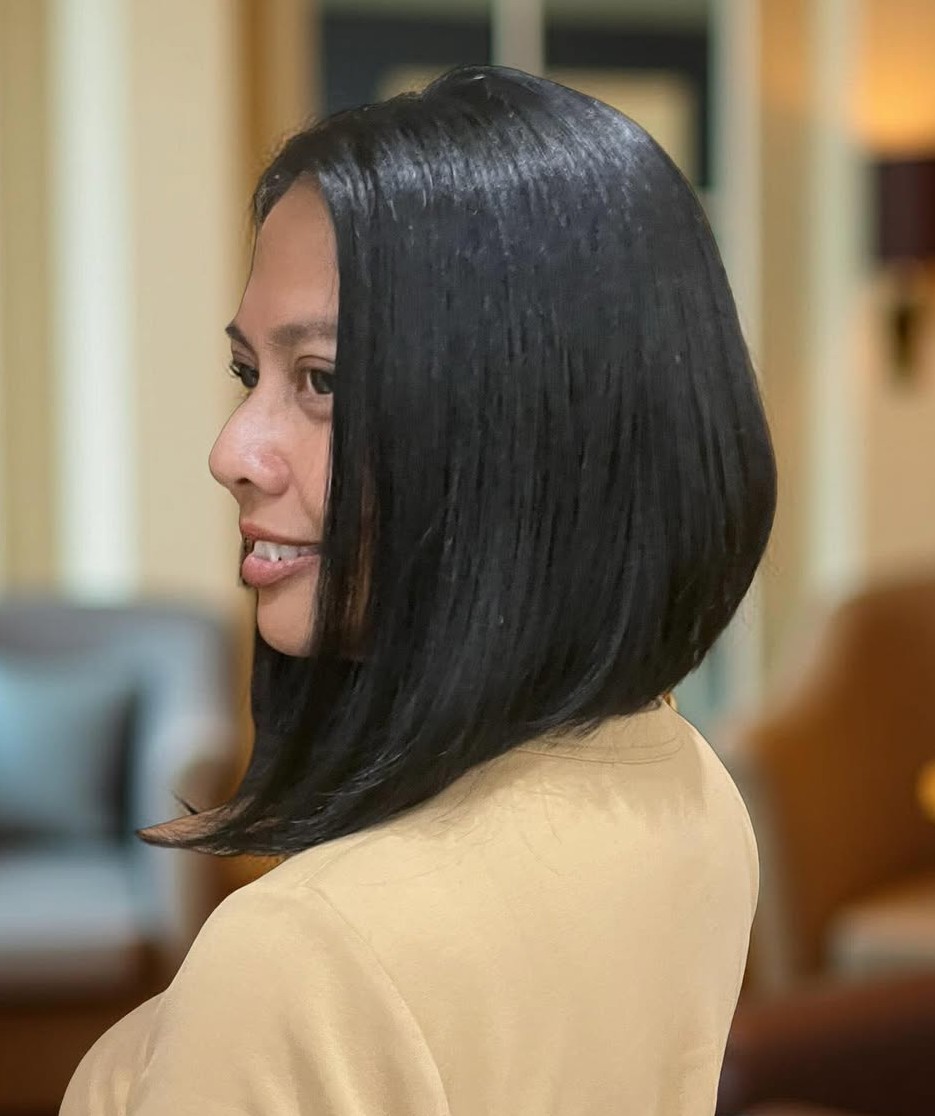
1. Classic Short Stacked Bob
Tightly graduated layers at the nape build a rounded, lifted shape that pushes volume toward the crown — this is the technique that defines what “stacked” actually means. Fine-to-medium hair gets the best results because the layers sit close enough to create a smooth curve without gaps. Expect trims every 4–5 weeks; the stacking loses its shape fast once those nape layers start growing out.
2. Stacked Inverted Bob for Fine Hair
When fine hair falls flat at the back of the head, a stacked bob redistributes visual weight upward, creating fullness where it matters most. The key is point-cut ends rather than razor cutting — razoring removes too much bulk from already-thin strands. A lightweight volumizing mousse applied at the roots before blow-drying gives the stacking its lift without weighing anything down.
3. High Stacked Inverted Bob
The “high stack” pushes the weight line well above the occipital bone, creating an almost mushroom-like silhouette in the back that’s equal parts architectural and bold. Unlike a standard stack, the nape is cut very short — sometimes clipper-tapered — which means the shape is more dramatic but also more committed. Oval and long face shapes wear this best because the volume sits high and wide, which can make round faces appear fuller.
4. Soft Stacked Bob with Highlights
Dimensional highlights running through stacked layers amplify every graduation line — the color shift between light and dark strands makes the layering structure visible even when the hair is air-dried. Ask your colorist to concentrate babylights along the back layers and heavier face-framing pieces at the front. On brunette hair, caramel or toffee tones create the most depth without looking stripy.
5. Stacked Bob with Nape Undercut
A hidden undercut at the nape lets the stacked layers above it sit higher and rounder without any bulk pushing them out from underneath. Stylists generally approach this by clipper-tapering the lowest inch of the nape, then building the graduated layers on top. If you have thick hair that resists stacking because the nape area is too dense, this is the structural fix that makes the whole cut work.
6. Jaw-Length Stacked Inverted Bob
Bring this photo to your stylist and ask for the back graduation to start at ear level, with the front pieces falling to exactly the jawline — not above it, not below it. That jaw-length front creates a sharp horizontal line that draws attention to your chin and jawline, which makes this a strong choice for heart-shaped faces where you want to balance a narrower chin. A center part keeps it clean; a side part softens it.
7. Stacked Inverted Bob on Thick Hair
Thick hair and stacking can go two ways: either the graduation creates a beautifully rounded shape with natural body, or the density at the nape pushes the layers out awkwardly. The difference comes down to whether your stylist thins the internal layers at the back. Ask for texturizing shears through the graduation — not on the surface layers, which would break the smooth curve, but underneath where the weight builds.
8. Stacked Bob with Platinum Color
Platinum blonde on a stacked inverted bob creates a striking, almost sculptural look — the light color removes visual texture, so every angle and line in the cut reads as pure shape. Achieving this shade requires multiple lightening sessions over 6–8 hours total, and the upkeep is real: root touch-ups every 3–4 weeks, purple shampoo twice weekly, and a bond-building treatment at least monthly. The payoff is a head-turning silhouette, but walk in with realistic expectations about maintenance.
9. Stacked Inverted Bob with Textured Ends
Not every stacked bob needs to be sleek. Point-cut or razor-textured ends at the perimeter break up the hard lines and give the cut an undone, lived-in quality that works for everyday wear. Compared to a smooth stack, this version is more forgiving on grow-out — the textured ends blend naturally as they lengthen, so you can push trims to 6–7 weeks instead of the standard 4–5.
10. Short Stacked Bob with Side Part
A deep side part on a short stacked bob creates asymmetry that flatters round and square face shapes — the heavier side adds diagonal movement that breaks up the face’s natural symmetry. On the shorter side of the part, the stacking is fully visible, which shows off the graduated structure. On the longer side, the hair swings forward toward the chin for face-framing effect. This works best on straight to slightly wavy hair, where the part holds its position throughout the day.
Angled Inverted Bobs
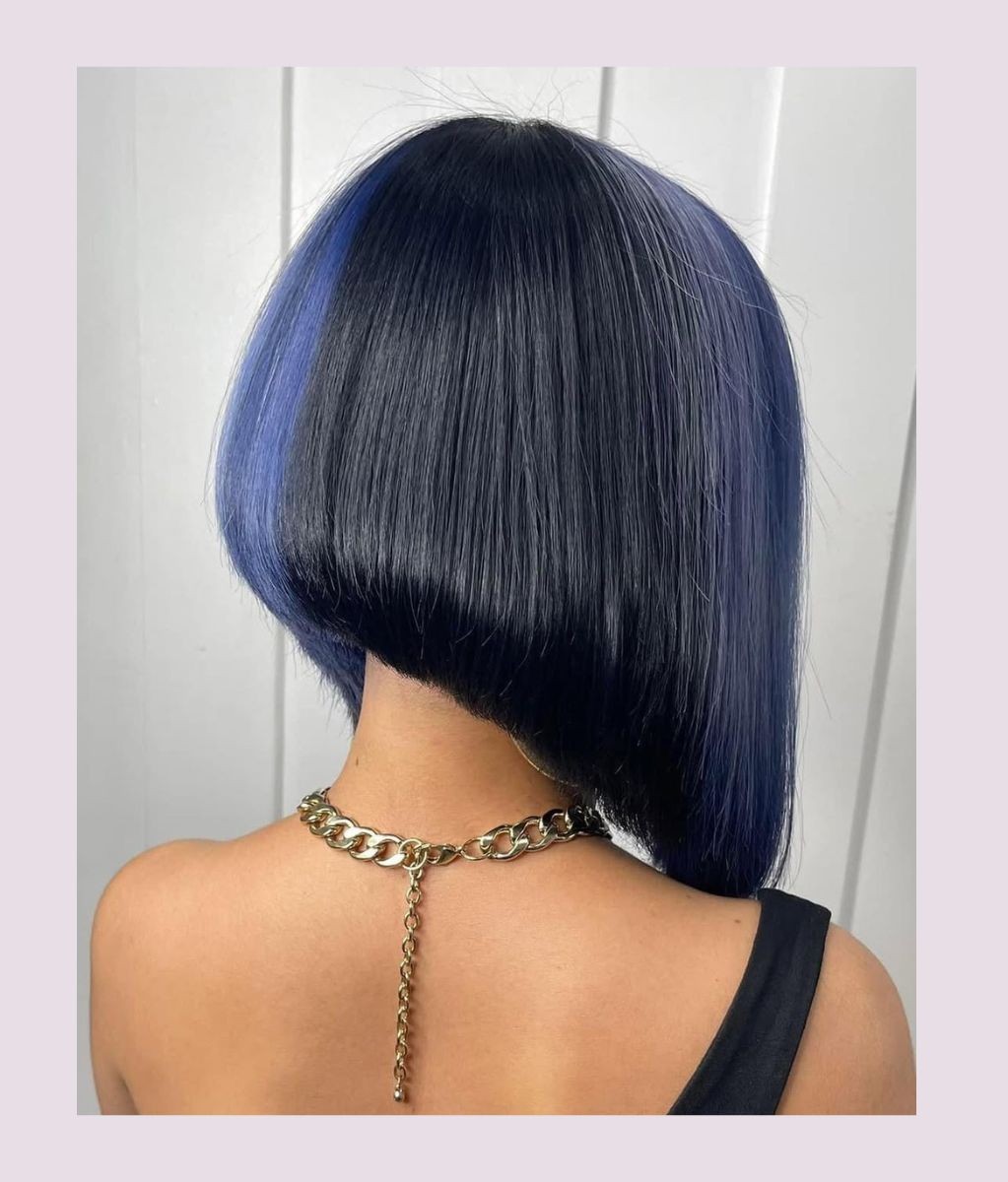
The angle is the front-to-back length differential — how much shorter the back is compared to the front pieces. A subtle angle might be an inch of difference; a dramatic angle can be four or more inches. These angled inverted bobs prioritize that A-line silhouette, which naturally elongates the face and draws the eye downward toward the jawline. If you want a bob that looks different from the front than it does from the back, this is your section.
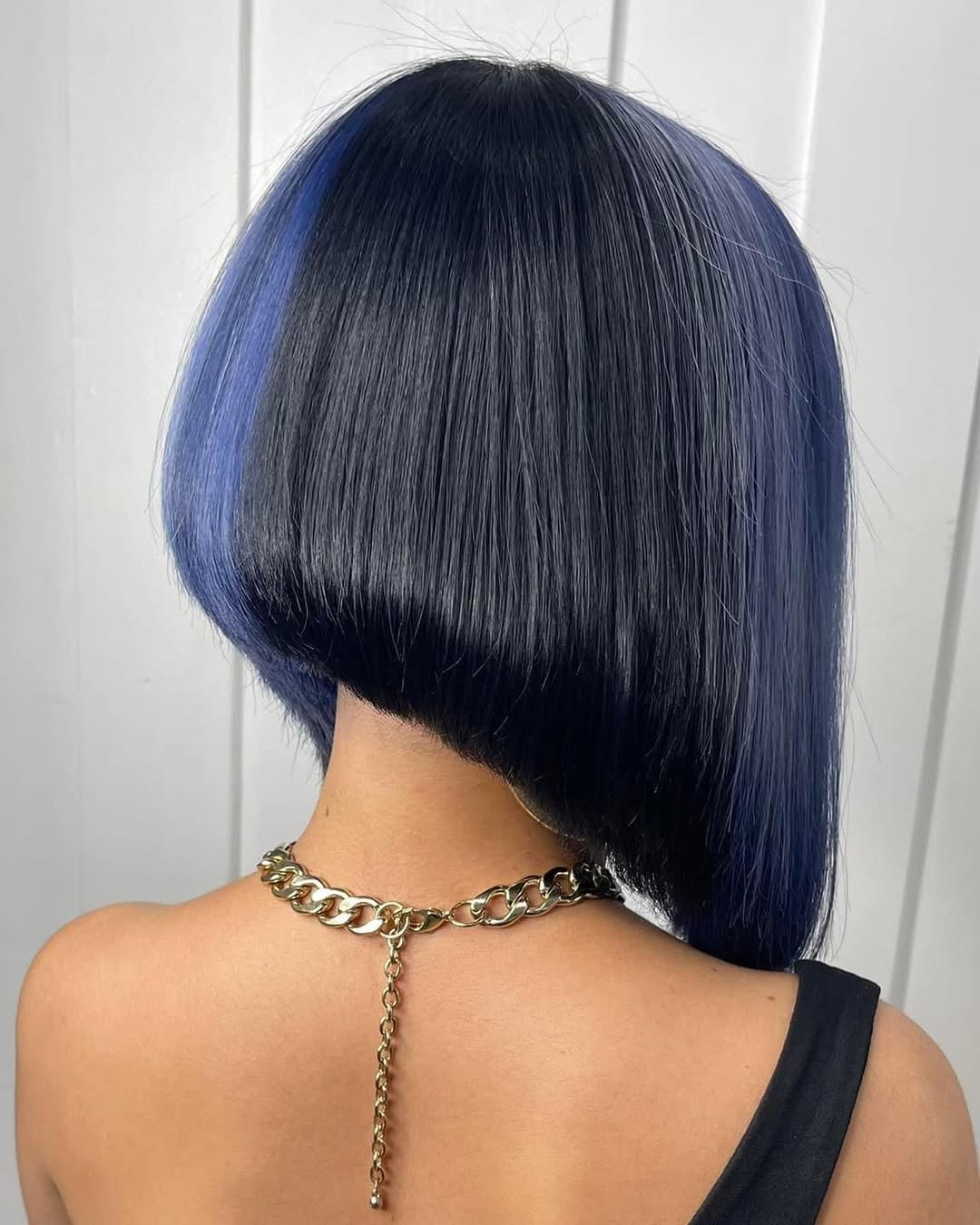
11. Dramatic A-Line Inverted Bob
When the back sits at ear level and the front pieces reach past the collarbone, the angle becomes the entire focal point of the cut. This dramatic A-line works on straight, smooth hair — curly or wavy textures soften the angle and reduce the visual contrast that makes the cut distinctive. Ask your stylist to keep the perimeter line sharp rather than texturized, and expect to flat-iron the front pieces daily to maintain the clean diagonal.
12. Subtle Angled Inverted Bob
Round faces benefit from the elongating effect of an angled cut, but a dramatic drop isn’t necessary to get that result. A 1–2 inch difference between back and front creates enough diagonal movement to visually slim the lower face without looking extreme. This subtle angle also grows out more gracefully — the shape transitions into a standard bob over 8–10 weeks rather than looking immediately uneven.
13. Long Angled Inverted Bob
Extending the front pieces to collarbone length while keeping the back at jaw level gives you the inverted silhouette with more styling versatility — the front is long enough to pull into a low ponytail or half-up style when needed. A texturizing spray with a salt base adds grip and separation to the longer front sections without weighing them down. Fine hair gets the best movement from this length because there’s enough weight in front to keep it from flipping outward.
14. Angled Inverted Bob with Layers
Adding internal layers to an angled bob prevents the front pieces from sitting heavy and flat against the face — without layers, the front can look like curtains framing your jaw rather than hair with movement. Layers starting at cheekbone level and graduating down create a tapered, feathered effect at the front while the back retains its tight angle. Blow-dry with a medium round brush, directing the front sections away from the face for the most lifted finish.
15. Sleek Angled Inverted Bob
This is the “boardroom bob” — sharp lines, zero texture, completely polished. To keep a sleek angled bob looking intentional rather than simply flat, you need medium-to-thick hair with enough density to hold the weight line. Very fine hair collapses into the neck and loses the angle’s clean edge by midday. A smoothing serum applied before flat-ironing gives the glass-like finish, and a light-hold hairspray locks the front pieces in place.
16. Angled Inverted Bob on Wavy Hair
Waves soften every line in an angled bob — the sharp A-line becomes a flowing, organic shape that looks effortless rather than structured. If your hair has a natural 2a or 2b wave pattern, this version requires the least daily styling of any inverted bob: scrunch a curl-defining cream into damp hair, diffuse on low heat, and let the waves do the rest. Square faces look particularly good here because the soft waves counterbalance strong jawline angles.
17. Angled Bob with Deep Side Part
Shifting the part to a 70/30 or 80/20 ratio adds another layer of asymmetry to the angled cut — the heavy side carries more visual weight, creating a sweeping effect past the jawline. Bring this reference photo to your consultation and specify where you want the part to fall, because the part position determines how much of the stacked back is visible from the front. Stylists often recommend pinning the lighter side behind the ear for maximum drama.
18. Angled Inverted Bob with Balayage
Balayage hand-painted along the angled perimeter line acts like a spotlight on the cut’s architecture — the lighter ends trace the diagonal from back to front, making the angle visible even in low light. Unlike full highlights, balayage lets you keep a shadow root that reduces maintenance and adds depth at the crown. On dark brown or black base colors, warm copper or chestnut-toned balayage reads more natural than cool blonde, which can look disconnected on very dark hair.
19. Extreme Angled Inverted Bob
The most polarizing version of the inverted bob: back clipped at or above ear level, front pieces extending to the collarbone or beyond. This is essentially two haircuts meeting in the middle, and it requires both the confidence to commit and a stylist experienced with extreme graduation. Unlike a subtle angle, this does not grow out well — once the back reaches an awkward length (around week 5–6), the shape looks unintentional. Budget for maintenance every 4 weeks.
Graduated Inverted Bobs
Graduation is the gentler cousin of stacking — instead of sharply layered steps at the nape, the layers blend smoothly from short to long with soft, curved transitions. Graduated inverted bobs have less visible structure than stacked versions, which makes them more versatile for daily wear and easier to style without precise blow-drying. If you want the inverted bob’s shorter-back, longer-front silhouette without the architectural drama, these are your options.
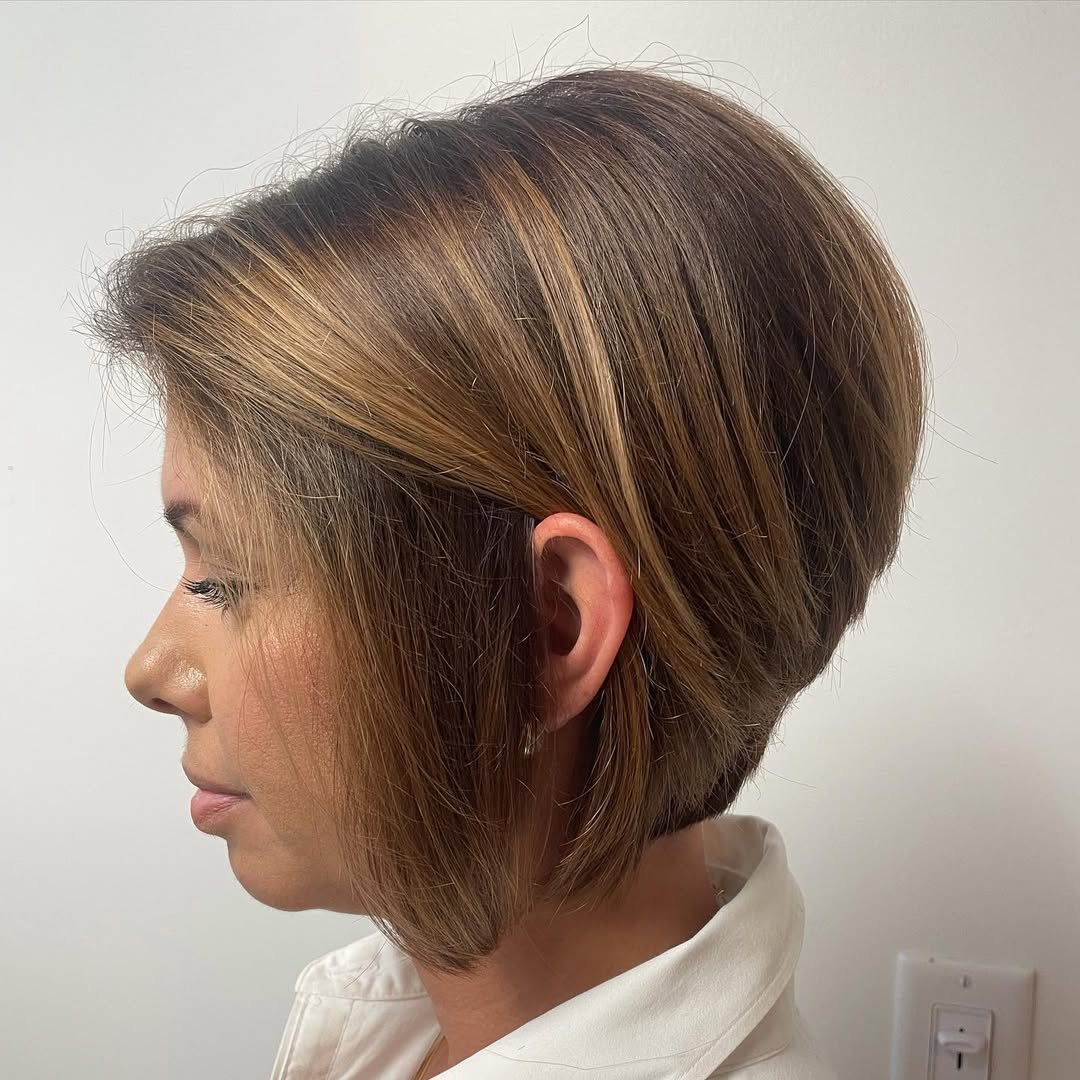
20. Classic Graduated Bob
Smooth, blended graduation from nape to jaw creates a curved silhouette that sits naturally against the head without needing product or heat tools to hold its shape. On straight hair, this version air-dries into a clean, minimal-effort look — just run a smoothing cream through damp hair and let it go. The graduated weight line sits right at the occipital bone, which adds a subtle lift without the pronounced roundness of a fully stacked cut.
21. Graduated Bob with Face-Framing Pieces
Heart-shaped and oval faces can amplify the graduated bob by adding shorter face-framing pieces that start at cheekbone level and blend into the longer front sections. These pieces create a second layer of graduation around the face — separate from the back stacking — that softens the forehead and draws attention to the eyes. Ask your stylist to point-cut the framing pieces rather than blunt-cutting them, which creates a softer, more natural finish.
22. Textured Graduated Inverted Bob
Razor-cut ends throughout the graduation give this version a deliberately undone, lived-in texture that reads as effortless. Compared to a smooth graduated bob, the razored version has more movement and air — the strands separate naturally, creating visual gaps between layers that make thick hair look lighter. Apply a texturizing paste (not spray — paste gives more separation on short layers) to dry hair and scrunch for a piece-y, editorial finish.
23. Mid-Length Graduated Inverted Bob
Extending the graduation into a mid-length (lob-adjacent) silhouette gives readers who aren’t ready for a short bob a way to get the inverted shape with more length to work with. The back sits at jaw level while the front reaches the collarbone — a softer, less committed version of the long angled bob. This mid-length graduation grows out more naturally than shorter versions and bridges the gap between a bob and a lob for anyone still deciding on their length.
24. Graduated Bob with Copper Tones
Copper and auburn tones interact beautifully with graduation because the warm color shifts as light hits each layer at a different angle — the shorter back layers catch more light and appear brighter, while the longer front sections read deeper and richer. If you’re lifting from a dark brunette base, ask your colorist for a “lived-in copper” rather than an all-over application — keeping some depth at the roots and crown prevents the color from looking flat against the graduated shape.
25. Graduated Bob for Women Over 50
A softly graduated inverted bob is one of the most flattering cuts for silver or salt-and-pepper hair because the blended layers prevent the “helmet” look that one-length bobs can create on gray textures. The graduation adds movement and visual interest without requiring complicated daily styling — a paddle brush and a blow-dryer on low heat are enough to shape it. Chin length or slightly longer keeps the cut age-appropriate without going severe.
26. Asymmetrical Graduated Bob
Combining graduation with asymmetry — one side 1–2 inches longer than the other — creates a modern, editorial look that breaks the inverted bob out of its traditional silhouette. The longer side offers face-framing potential while the shorter side shows off the graduated structure at the back. This is a style-forward choice that works best on angular or oval face shapes; on very round faces, the asymmetry can emphasize width rather than reducing it.
27. Graduated Inverted Bob with Blunt Front
Keeping the front pieces at a single blunt length while graduating only the back creates a hybrid effect — structure and precision in the front, soft movement in the back. The contrast between the blunt perimeter at the chin and the layered nape is what makes this version distinctive. It’s a strong choice for anyone who wants the inverted shape but prefers clean, sharp lines around the face rather than layered softness.
Inverted Bobs for Every Hair Type
The inverted bob adapts to different textures and densities, but it doesn’t work the same way on every hair type. Thick hair needs internal thinning to prevent the stacking from puffing out. Fine hair needs strategic layering to avoid looking see-through. Curly and wavy hair need dry-cutting and shrinkage compensation. These variations show how stylists modify the cut for specific hair realities.
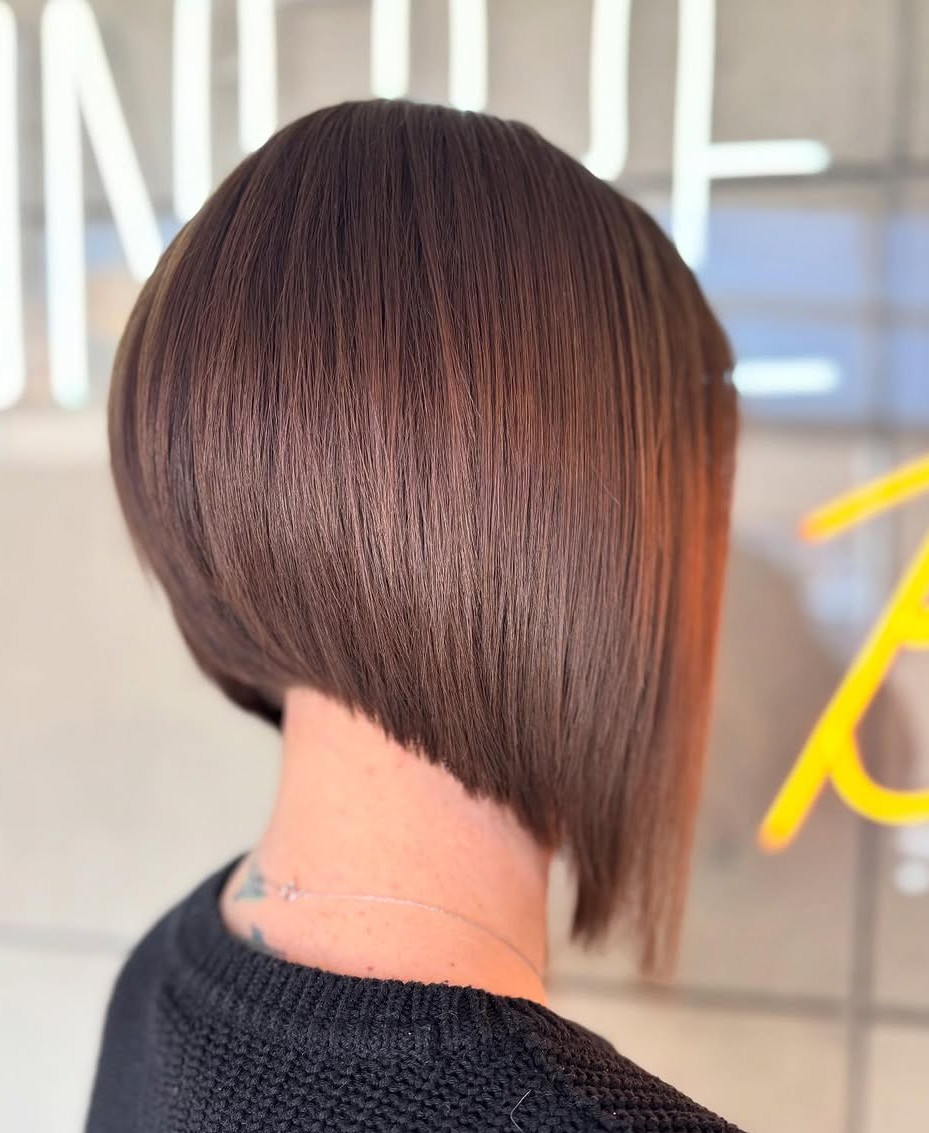
28. Inverted Bob for Very Fine Hair
Fine hair and heavy graduation are a bad combination — too many stacked layers leave the ends looking transparent and wispy. This version uses only 2–3 layers of graduation at the nape instead of 5–6, building just enough lift without exposing the scalp through thinned-out strands. A blunt perimeter line at the front also helps: it creates the illusion of thickness by keeping all the hair at one level rather than feathering it away.
29. Inverted Bob for Thick, Coarse Hair
When thick, coarse hair is cut into an inverted bob without any weight removal, the back puffs outward into a triangle shape instead of curving inward. Texturizing shears through the internal layers — not at the surface — are what allow the graduated shape to sit flat against the head. Ask your stylist about an undercut at the nape if your hair is exceptionally dense; removing the bottom half-inch of hair creates room for the visible layers to stack properly.
30. Curly Inverted Bob
Curly hair needs to be cut dry for an inverted bob — wet cutting doesn’t account for 25–40% curl shrinkage, which means the finished length will be significantly shorter than what your stylist measured. Curls also create built-in volume at the back, so the graduation can be gentler than on straight hair. A diffuser on low heat and a curl-defining cream are the only daily tools needed. Avoid brushing after drying, which breaks the curl pattern and creates frizz.
31. Wavy Inverted Bob
Natural waves between 2a and 2b texture are arguably the easiest match for an inverted bob — the wave adds movement to the graduated layers without creating the volume control challenges of curlier textures. Air-drying works perfectly: scrunch a sea salt spray into damp hair for definition, then leave it alone. The waves will settle into the angled shape naturally, with the shorter back pieces curving inward and the longer front pieces falling forward. Needs minimal heat styling, if any.
32. Inverted Bob for Thin, Aging Hair
Thinning hair at the crown or temples is a common concern for women over 50, and the inverted bob addresses it structurally: the stacked back creates volume where hair is thickest (at the nape and occipital), drawing the eye away from areas that have thinned. Keep the graduation moderate and the perimeter blunt — heavy layering on already-thin hair creates visible gaps. A root-lifting spray applied before blow-drying adds the most volume with the least residue.
33. Inverted Bob on Straight, Dense Hair
Dense, straight hair holds the inverted bob’s geometric shape better than any other texture — the weight of the hair keeps the lines clean, and the density means no gaps show through the graduation. This is the hair type where you can go for the sharpest angles and the most dramatic stacking without worrying about the cut losing its architecture. A flat iron and a smoothing serum are enough to achieve the glass-finish look that straight-haired inverted bobs are known for.
34. Inverted Bob for 2c Wavy-Curly Hair
The borderline between wavy and curly (type 2c) creates an interesting situation for inverted bobs — some sections wave softly while others coil tighter, which means the graduation reads differently on various parts of the head. A stylist experienced with textured hair should dry-cut and evaluate each section independently rather than using a uniform guide. Leave-in conditioner and a curl cream applied in sections, scrunching from the bottom up, give the most consistent result.
Inverted Bobs with Bangs
Bangs change the proportions of an inverted bob — they add a horizontal element at the top of the face that balances the diagonal movement of the angled sides. The right bang style depends on your face shape: full blunt bangs shorten a long face, side-swept bangs soften a square jaw, and curtain bangs work on nearly everyone by framing without committing. Every bang variation here is designed to integrate with the inverted silhouette, not fight against it.
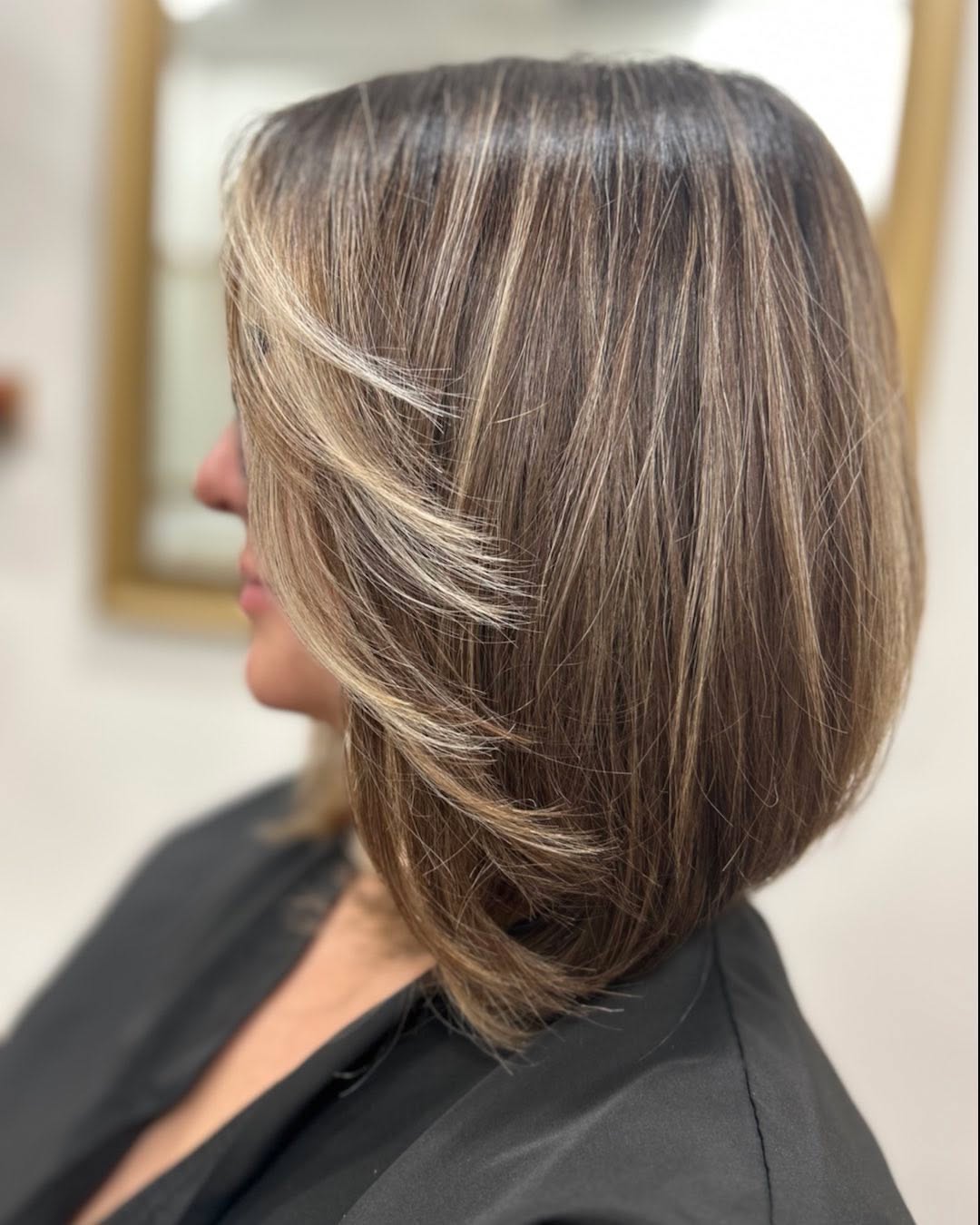
35. Inverted Bob with Curtain Bangs
Curtain bangs are the lowest-risk bang option for an inverted bob because they split down the center and blend into the face-framing pieces, creating a continuous line rather than an abrupt horizontal cut. Start the bangs at cheekbone level — shorter than that and they separate from the bob’s overall silhouette. Grow-out is graceful: as they lengthen, curtain bangs simply become longer face-framing layers.
36. Inverted Bob with Side-Swept Bangs
Side-swept bangs mimic the diagonal of the angled cut — they carry the eye in the same direction as the bob’s perimeter, which creates a cohesive, flowing look from top to bottom. On square faces, this diagonal breaks up the forehead’s width and softens angular features. Keep them long enough to tuck behind the ear when you want them out of the way. A round brush and blow-dryer directed to the side set the sweep; a medium-hold hairspray keeps them there.
37. Stacked Inverted Bob with Blunt Bangs
Pairing blunt, full bangs with a stacked back creates a geometric frame around the entire head — a clean horizontal at the forehead, graduated curves at the nape, and angled lines connecting the two at the sides. This combination is the most high-maintenance in the gallery: blunt bangs need trimming every 2–3 weeks, and the stacking needs reshaping every 4–5 weeks. The payoff is a striking, Vidal Sassoon-inspired structure that looks editorial in every photo.
38. Graduated Bob with Wispy Bangs
Wispy bangs — thin, feathered, and light — pair naturally with the soft graduation of an inverted bob because neither element has a hard edge. On fine hair, wispy bangs are often the better option over blunt because they don’t require as much density to look full. The feathered texture lets the forehead peek through slightly, which keeps the face open and prevents the bangs from visually shortening the face on petite frames.
39. Angled Bob with Micro Bangs
Micro bangs sitting above the eyebrows make a deliberate style statement — they expose the full forehead and pair unexpectedly with the angled bob’s long front pieces, creating maximum contrast between the shortest and longest points of the cut. This is not a safe choice and it isn’t meant to be. Micro bangs suit oval and heart-shaped faces best and can overwhelm round or small-featured faces. If you’re considering this, try clip-in micro bangs first to test the proportions.
40. Inverted Bob with Bottleneck Bangs
Bottleneck bangs — shorter in the center, widening and lengthening toward the temples — are one of the most versatile bang shapes for an inverted bob because they create a seamless transition from fringe to face-framing layer. The “bottleneck” shape mirrors the inverted bob’s own longer-at-the-front architecture, so the two elements feel integrated rather than separate. Any face shape can wear this combination, but it’s especially effective on heart-shaped faces where the wider temple sections balance a narrow chin.
Inverted Bob vs Stacked Bob vs Angled Bob: The Differences
These three terms get used interchangeably online, but they describe different structural techniques — and asking for the wrong one can get you a different cut than you expected. All three fall under the broader inverted bob family, but they emphasize different elements: stacking focuses on back volume, angling focuses on the front-to-back length gradient, and graduation focuses on how smoothly the layers blend. Here’s how they compare side by side.
| Feature | Stacked Bob | Angled Bob (A-Line) | Graduated Bob |
|---|---|---|---|
| Defining trait | Steep, visible layering at the nape for maximum back volume | Sharp length difference between back and front — the diagonal line | Smooth, blended layers from short back to longer front |
| Back shape | Rounded, lifted, pronounced curve | Flat or slightly rounded — angle does the work, not volume | Gently curved, natural-looking |
| Best hair type | Fine to medium, straight to slightly wavy | Straight to wavy, medium to thick density | All types — most versatile of the three |
| Trim frequency | Every 4–5 weeks — stacking loses shape fast | Every 5–6 weeks — angle softens gradually | Every 6–8 weeks — blended layers grow out naturally |
| Grow-out | Awkward — back layers flip outward around week 5 | Moderate — transitions into a standard bob | Graceful — blends naturally into a longer shape |
| Best for | Adding volume at the back and crown | Elongating the face, creating drama | A natural-looking inverted shape with minimal fuss |
Stylist tip: Many inverted bobs combine two or three of these techniques — a “stacked angled bob” has both the back volume and the front-to-back length contrast. When consulting, specify which element matters most to you so your stylist knows where to emphasize the cut’s architecture.
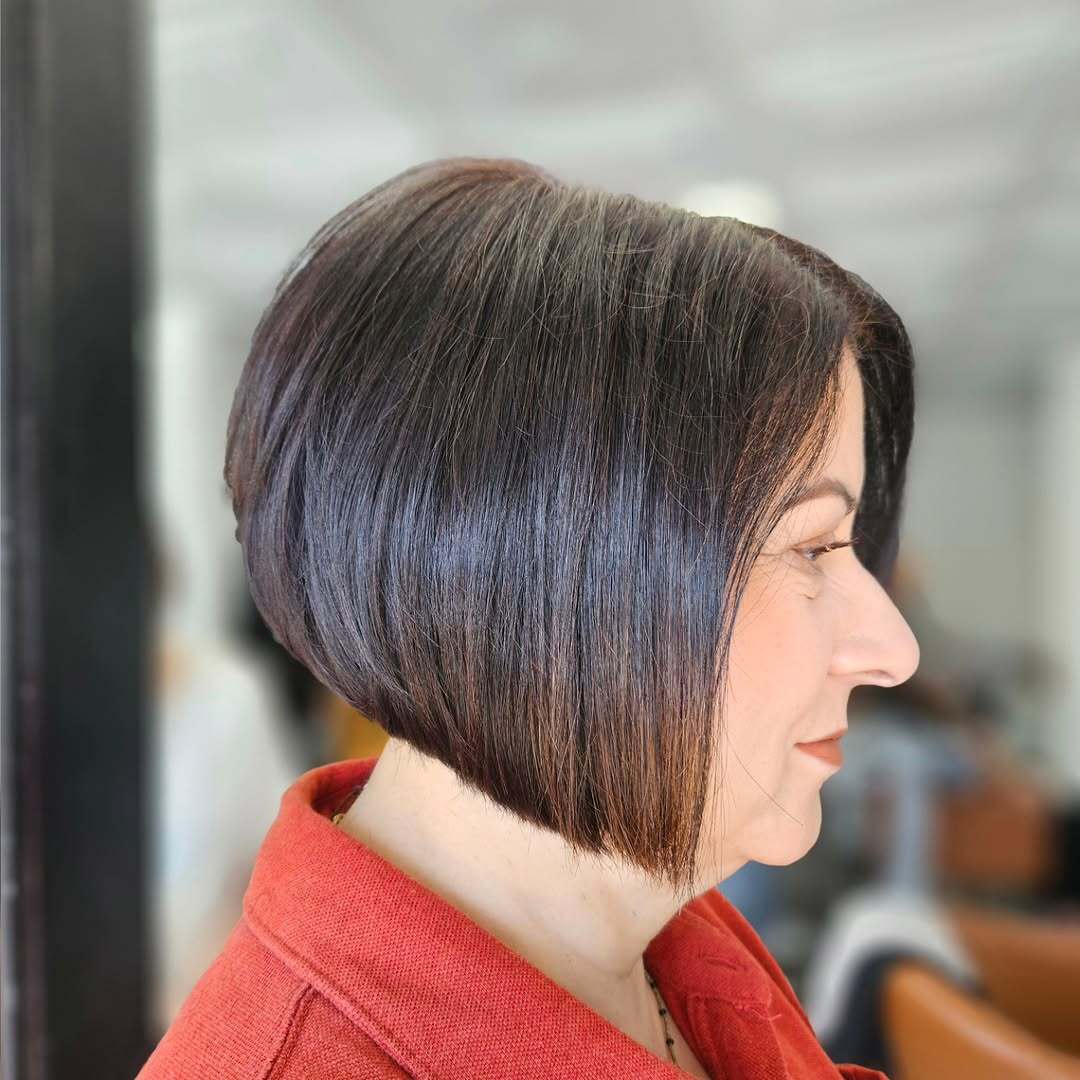
How to Choose an Inverted Bob for Your Face Shape
The inverted bob’s angled structure gives it a built-in face-elongating effect, which is why it’s naturally flattering for rounder faces. But different face shapes need different adjustments to the angle, length, and layering to get the most balanced result. Use this table to narrow down which variation from the gallery above best suits your proportions.
| Face Shape | Best Inverted Bob Variation | Ideal Length | Avoid |
|---|---|---|---|
| Oval | Any variation — oval faces are proportionally balanced and wear all inverted bob types well | Chin to collarbone | Very short stacked bobs that expose too much neck and elongate the face further |
| Round | Angled or long graduated bob with a side part — the diagonal and asymmetry create visual length | Front pieces past the jaw, not at chin level | Chin-length bobs with center parts — the horizontal line at the widest point emphasizes roundness |
| Square | Graduated bob with soft layers or waves — softens angular features without hiding them | Jaw length or slightly below | Sharp, blunt-perimeter angled bobs that mirror the jaw’s angularity |
| Heart | Jaw-length stacked bob or graduated bob with face-framing — adds width at the narrow chin area | Chin to jaw, with front pieces at jawline | High-volume stacked bobs that add width at the crown (already the widest point) |
| Oblong | Stacked bob with fullness at the sides — adds width to balance a long face | Chin length, no longer | Long angled bobs that emphasize the face’s vertical length |
| Diamond | Graduated bob with side-swept or curtain bangs — softens narrow forehead and pointed chin | Chin to collarbone | Very short stacked bobs without bangs that expose the narrow forehead |
What to Tell Your Stylist
The gap between “inverted bob” on Pinterest and “inverted bob” in a stylist’s hands is often a communication problem. The same term means different things in different salons — some stylists use “inverted” and “graduated” interchangeably, while others draw a sharp distinction. Bringing a reference photo eliminates most misunderstandings, but pairing it with precise language gets you even closer to what you want.
Start by specifying the angle: “I want a [subtle/moderate/dramatic] angle from back to front, with the back at [ear/nape/jaw] level and the front at [chin/jaw/collarbone] level.” Then address the back structure: “I want the back [stacked with visible layers / graduated and smooth / flat with minimal layering].” Finally, clarify the finish: “I want the ends [blunt and sharp / point-cut and textured / razor-cut and piece-y].”
Stylist tip: Show your stylist at least two photos — one from the side and one from the back. Most inverted bobs look similar from the front, so the back view is what communicates the stacking, graduation, and nape length that define the cut’s structure. If your photo is only a front view, you’re leaving the back up to interpretation.
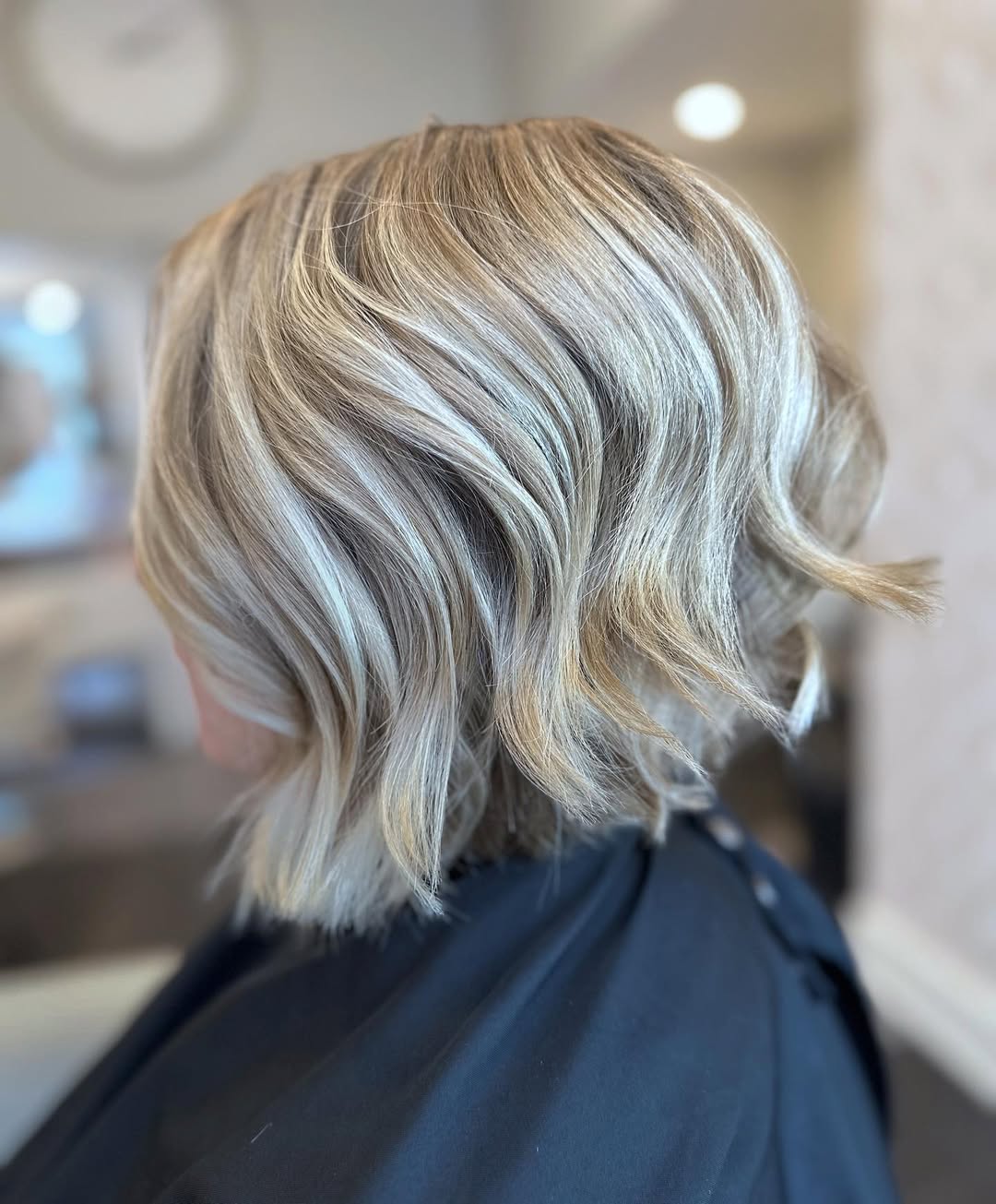
Maintenance and Styling
Inverted bobs are not the wash-and-go haircut some galleries make them out to be — the shorter the back and the sharper the angle, the more maintenance the cut demands. Here’s what to realistically expect depending on which variation you choose.
| Aspect | Details |
|---|---|
| Trim frequency | 4–6 weeks for stacked variations, 6–8 weeks for graduated. After week 5, nape layers on stacked bobs start flipping outward as they grow past the neck’s curve. |
| Daily styling | 5–10 minutes for graduated versions (air-dry friendly); 10–15 minutes for stacked versions (round brush blow-dry needed to shape the back) |
| Products needed | Volumizing mousse (stacked back); smoothing serum or cream (angled front); texturizing spray (lived-in finishes); heat protectant (if blow-drying or flat-ironing) |
| Tools needed | Medium round brush (1–1.5 inch barrel) for shaping the back; flat iron for sleek angled styles; diffuser for wavy/curly versions |
| Grow-out behavior | Stacked: grows out awkwardly (back flips out). Angled: transitions into a standard bob. Graduated: most graceful — blends naturally over 8+ weeks. |
FAQ
What Is an Inverted Bob?
An inverted bob is a bob haircut that’s shorter in the back and gradually longer toward the front, creating an angled silhouette. The back typically features stacked or graduated layers that build volume at the crown and nape, which is what distinguishes it from a standard A-line bob that’s simply cut at an angle without layering. The “inverted” part of the name refers to the weight distribution being flipped — instead of weight sitting at the ends (as in a classic bob), it sits higher on the head.
Is an Inverted Bob the Same as a Graduated Bob?
They overlap, but they’re not identical. “Graduated” specifically describes how the layers are blended — from short to long in a smooth, curved transition. “Inverted” is the broader term for any bob that’s shorter in back and longer in front. A graduated bob is always inverted, but an inverted bob isn’t always graduated — it could be sharply stacked or cleanly angled with no graduation at all.
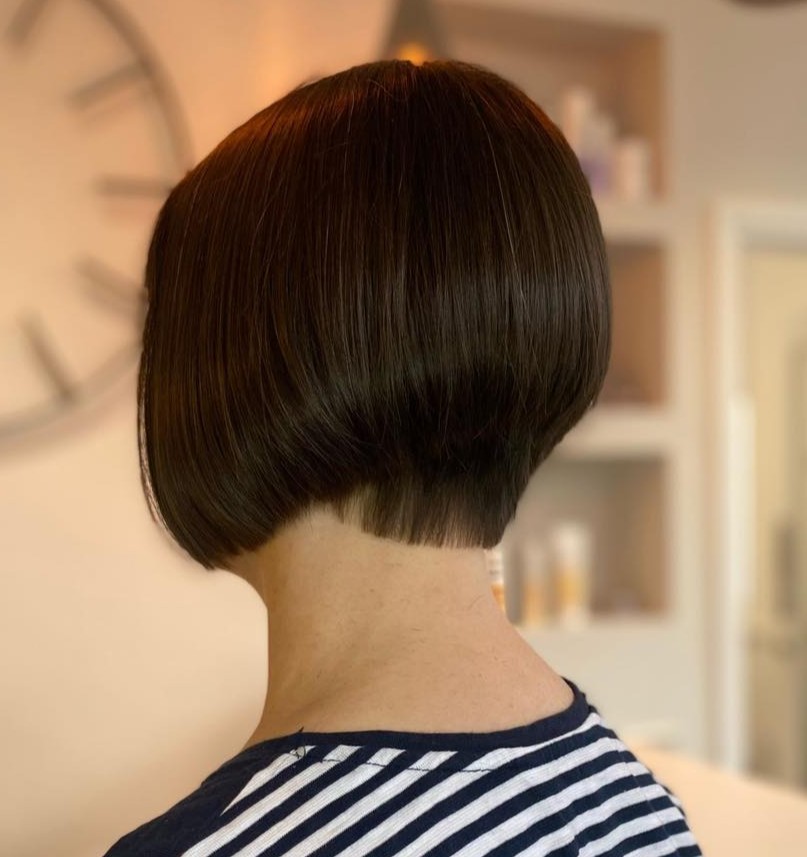
How Often Do Inverted Bobs Need Trimming?
Every 4–6 weeks for stacked versions, where the tight layering at the nape loses its shape quickly as it grows. Graduated versions can go 6–8 weeks between trims because the blended layers grow out more naturally. If your inverted bob has a dramatic angle, the back grows out of proportion to the front after about 5 weeks, which makes the shape look unintentional.
Can Curly Hair Pull Off an Inverted Bob?
Yes, but the cutting technique needs to change. Curly inverted bobs should be cut dry — wet cutting doesn’t account for 25–40% curl shrinkage, so the finished result will be much shorter than expected. Curls also create natural volume at the back, which means the graduation can be gentler. Look for a stylist experienced with textured hair, and bring reference photos of curly inverted bobs specifically — not straight-haired examples.
Do Inverted Bobs Work on Round Faces?
An inverted bob is one of the most flattering bob types for round faces because the diagonal line from back to front creates visual length that counters the face’s width. The key is keeping the front pieces past the jaw (not at chin level, which hits the widest point) and using a side part for asymmetry. Avoid very short stacked versions with center parts, which add width at the cheekbones.
What’s the Difference Between an Inverted Bob and an A-Line Bob?
An A-line bob is cut at a diagonal with a clean, single-length perimeter — shorter in back, longer in front, but without stacked or graduated layers in the back. An inverted bob adds layering at the nape, which creates volume and a rounded or curved shape in the back that an A-line doesn’t have. In practice, many stylists combine both elements, so specifying whether you want layering in the back (inverted) or a flat, clean angle (A-line) is the critical distinction to communicate.
Is an Inverted Bob High Maintenance?
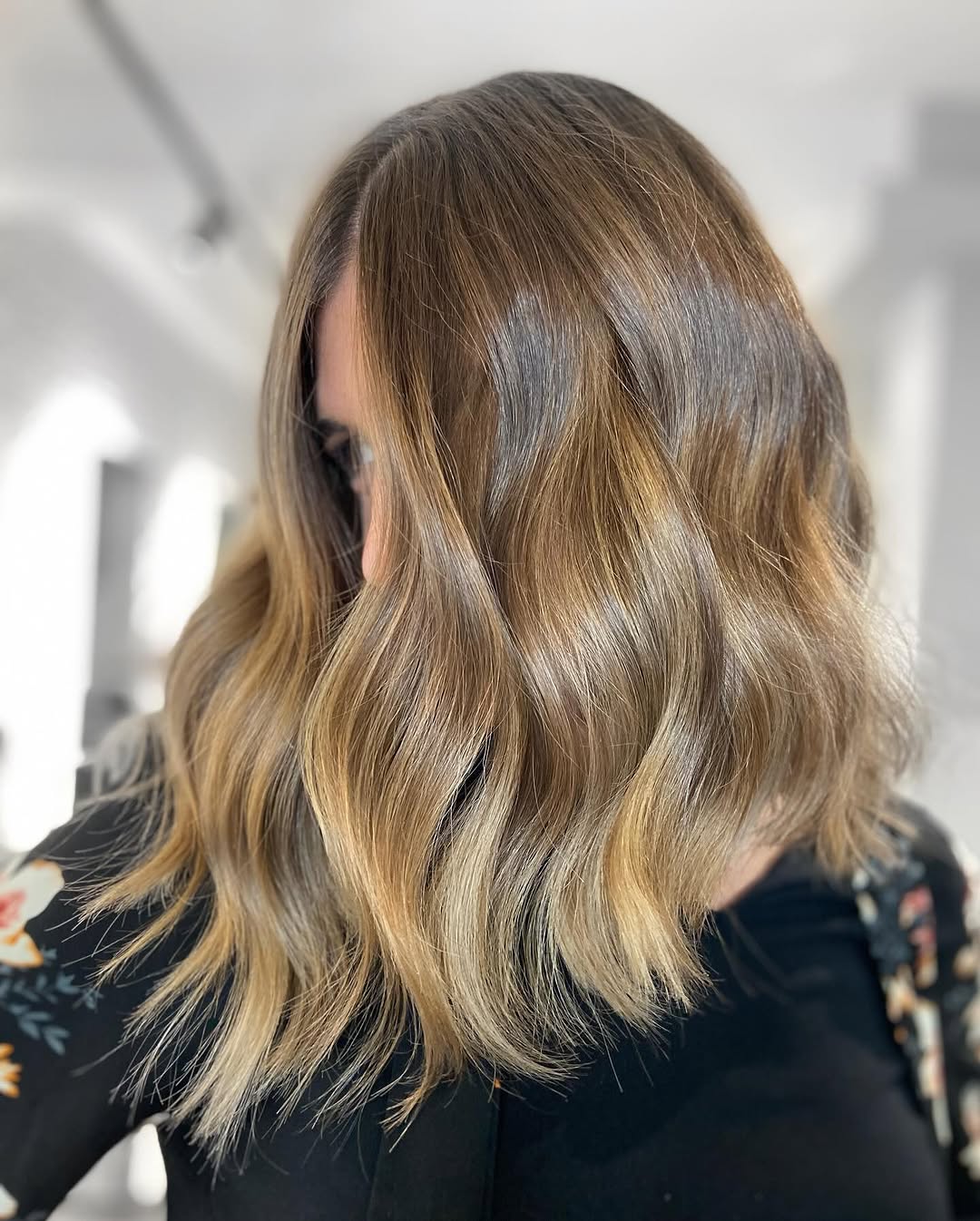
It depends on the variation. A softly graduated inverted bob on wavy hair can air-dry beautifully with minimal product — that’s genuinely low maintenance beyond regular trims. A sharply stacked or dramatically angled inverted bob needs blow-drying, round-brushing, and frequent reshaping. Before committing, be honest about how much time you’re willing to spend styling each morning. If the answer is “zero,” choose a graduated version over a stacked one.
Hair results vary based on your natural hair type, texture, density, and condition. Always consult with a licensed hairstylist before making significant changes, especially with chemical treatments or dramatic length changes. Photos may show styled results that require professional tools and products to replicate.