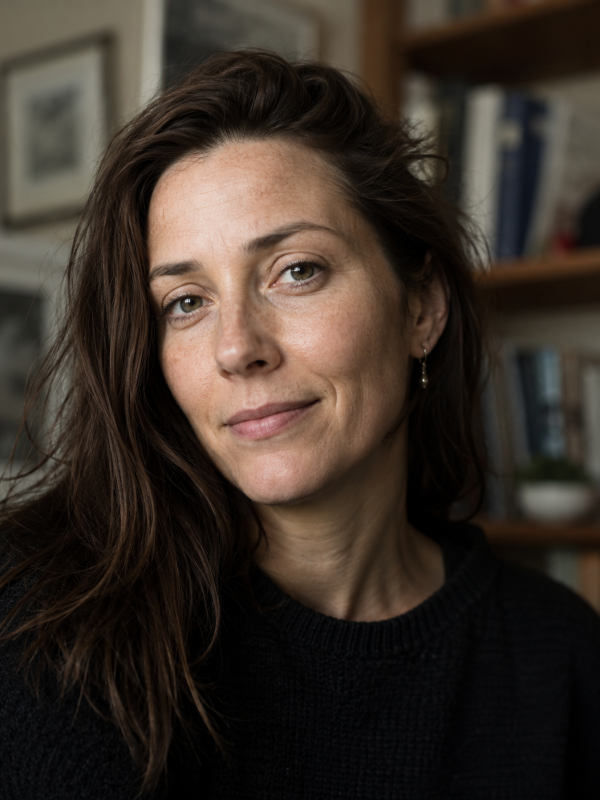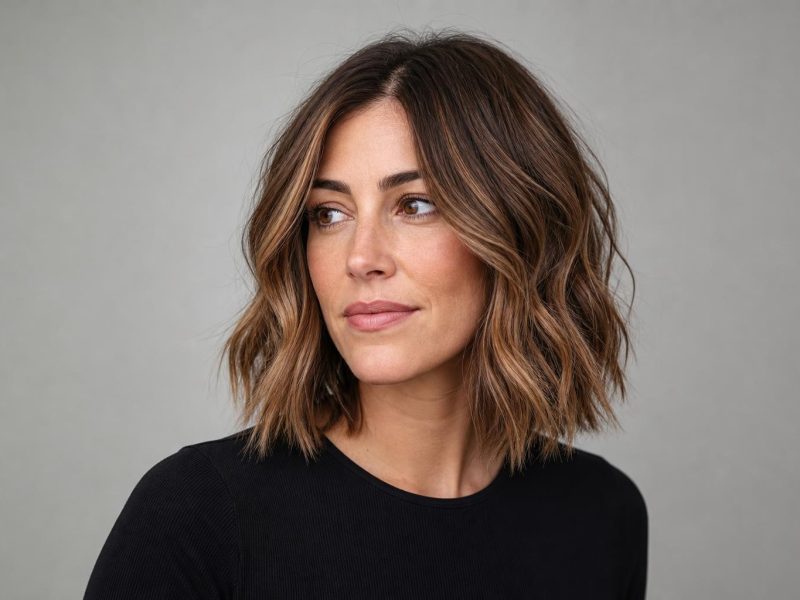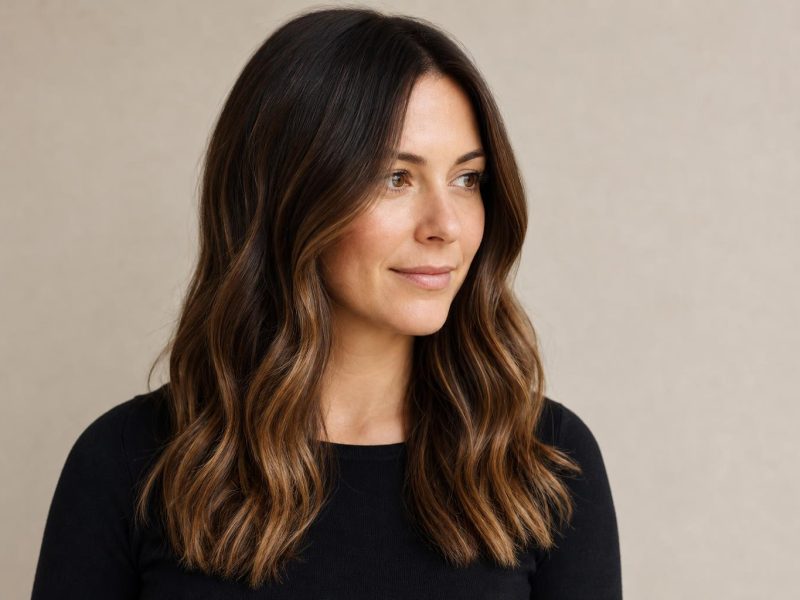

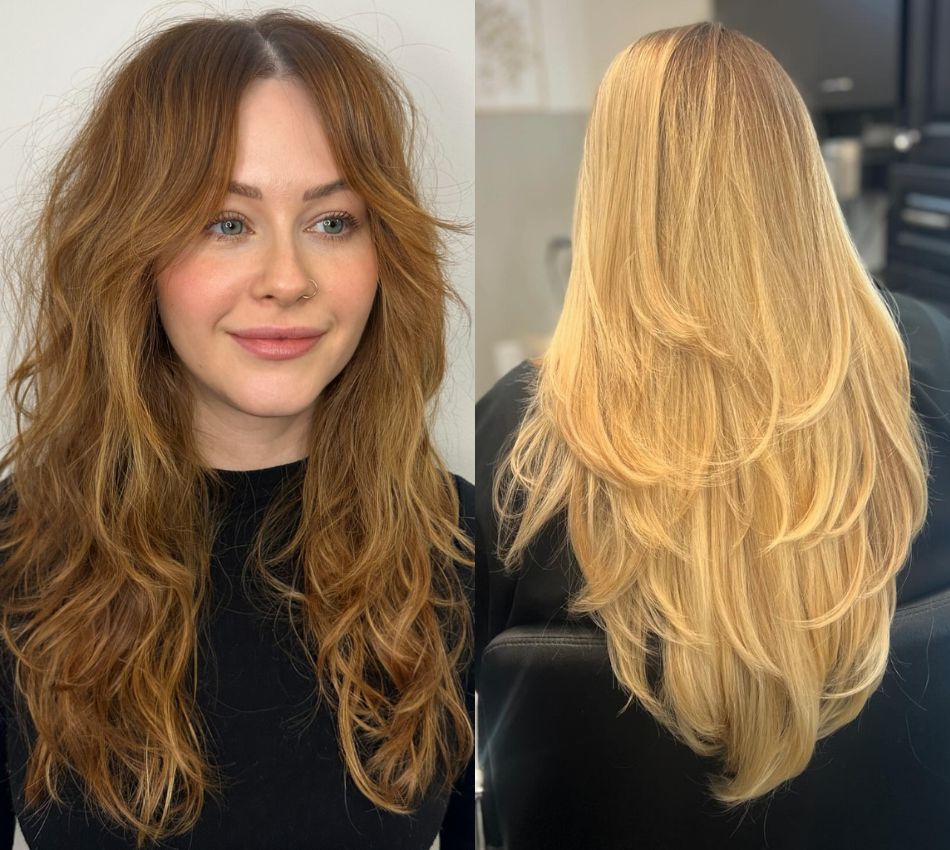
From subtle face-framing layers to dramatic, heavily textured cuts, 45 stylist-backed long layered haircuts organized by hair type, bang style, and maintenance level, with salon-ready language for every variation.
Long layered haircuts remove weight and add movement without sacrificing the length you’ve spent months (or years) growing out. Whether your hair is pin-straight and falls flat against your back, or thick and wavy with a mind of its own, the right layering approach turns a single-length cut into something that actually moves when you walk. Below are 45 variations from working stylists, each with notes on who it flatters, what makes it work, and how to describe it at the salon.
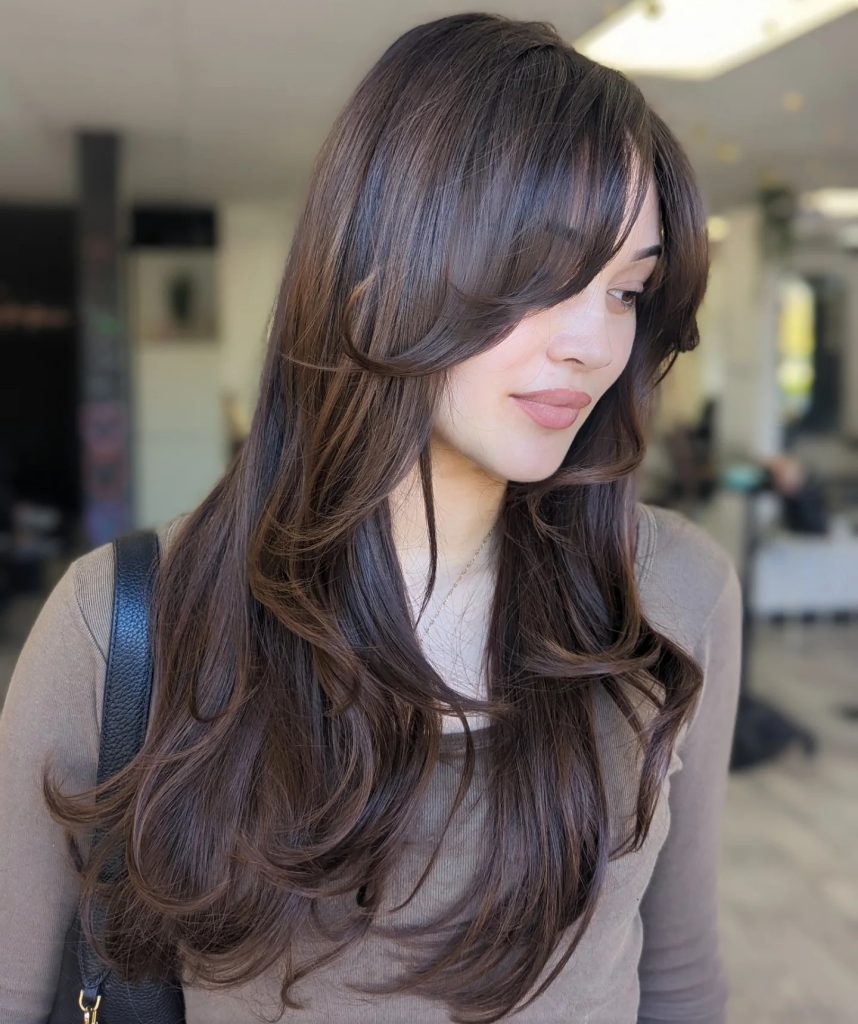
You’ll find options sorted by texture (straight, wavy, curly), bang compatibility, face shape guidance, and maintenance commitment. After the gallery, a face shape breakdown and a salon communication section give you the exact language to bring to your next appointment, so you leave with the cut you actually wanted, not an approximation of it.
| Feature | Details |
|---|---|
| Best for | Straight, wavy, and curly textures; fine to thick density |
| Maintenance level | Low to moderate: trims every 8–12 weeks |
| Works with | Bangs, face framing, balayage, highlights, natural color |
| Avoid if | Hair is severely damaged or extremely thin at the ends; layers will expose sparse areas |
Long Layered Haircuts for Straight Hair
Straight hair benefits from layers more than most people realize. Without them, long straight hair hangs like a curtain, flat against the head with zero dimension. Layers create internal movement that makes straight hair look fuller and less static, especially when cut with point cutting or slide cutting techniques that soften the edges.
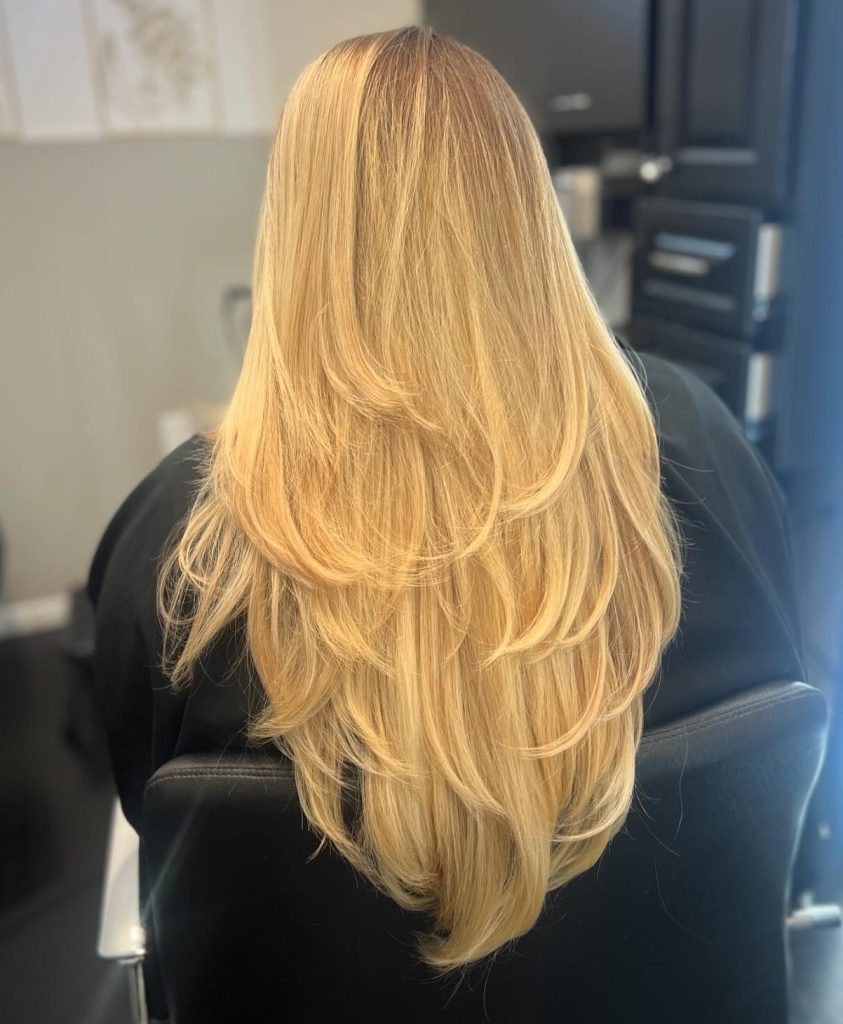
1. Classic V-Shaped Layers
Layers graduate from shorter at the face to a pointed V at the back, creating a natural sense of depth visible from every angle. This shape works well on medium-density straight hair and grows out gracefully over 10–12 weeks without losing its structure. Ask your stylist for a gradual V taper with the shortest layers starting at collarbone level.
2. Blunt Ends with Internal Layers
The perimeter remains one length, heavy and blunt, while hidden internal layers remove bulk from the mid-shaft. Stylists often recommend this for anyone who wants the thickness of a one-length cut but hates the blocky shape that comes with it. The result looks solid from the outside, but moves freely when you flip your hair.
3. Feathered Long Layers
Soft, wispy ends created through razor cutting or detailed point cutting give straight hair an airy quality that a blunt cut can’t deliver. Feathered layers tend to look best on fine to medium hair. On very thick strands, the feathering can create too much volume at the ends. A lightweight smoothing serum keeps the feathered tips polished without weighing them down.
4. Subtle Face-Framing on Straight Hair
Two shorter pieces that taper from cheekbone to chin frame the face while the rest of the length stays intact. This is the lowest-commitment version of haircuts with face framing. You get dimension around your features without a dramatic shape change. It works on every face shape and grows out almost invisibly.
5. Long Straight Layers with a Deep Side Part
A deep side part paired with long layers creates asymmetry that flatters round and square face shapes by breaking up symmetrical proportions. The heavier side drapes across the forehead, adding visual height. Blow-dry with a large round brush (1.5-inch barrel) to set the part and add lift at the root.
6. Chest-Length Layers with Minimal Graduation
For anyone who wants layers but panics at the thought of losing length, this is the version to try. The shortest layer falls just two inches above the longest, creating movement so subtle you’d only notice it when the hair swings. Trim every 10–12 weeks, and the shape practically maintains itself.
7. Sleek Layers with Curtain Pieces
Polished, flat-ironed layers combined with two curtain-parted pieces at the front create a refined look that works equally well at a desk or a dinner. Stylists typically cut the curtain pieces at the jawline level and blend them into the longer layers using slide cutting. A heat protectant spray is non-negotiable here. Daily flat-ironing without it causes breakage within weeks.
8. Razor-Cut Long Layers for Fine Hair
Razor cutting removes weight at an angle, creating edges so soft they almost dissolve into each other. On fine hair, this technique adds the illusion of texture and density that scissor-cut layers sometimes miss. A volumizing mousse (golf-ball-sized amount on towel-dried hair) gives fine-haired long layered haircuts the body they need to hold shape between washes.
Long Layered Haircuts for Wavy and Curly Textures
Wavy and curly hair needs layers cut differently than straight hair. Shrinkage, curl pattern, and how each strand springs back after cutting all change where the layers actually land. Stylists who specialize in textured hair typically cut curls dry so they can see the finished shape in real time, rather than guessing how wet hair will shrink.
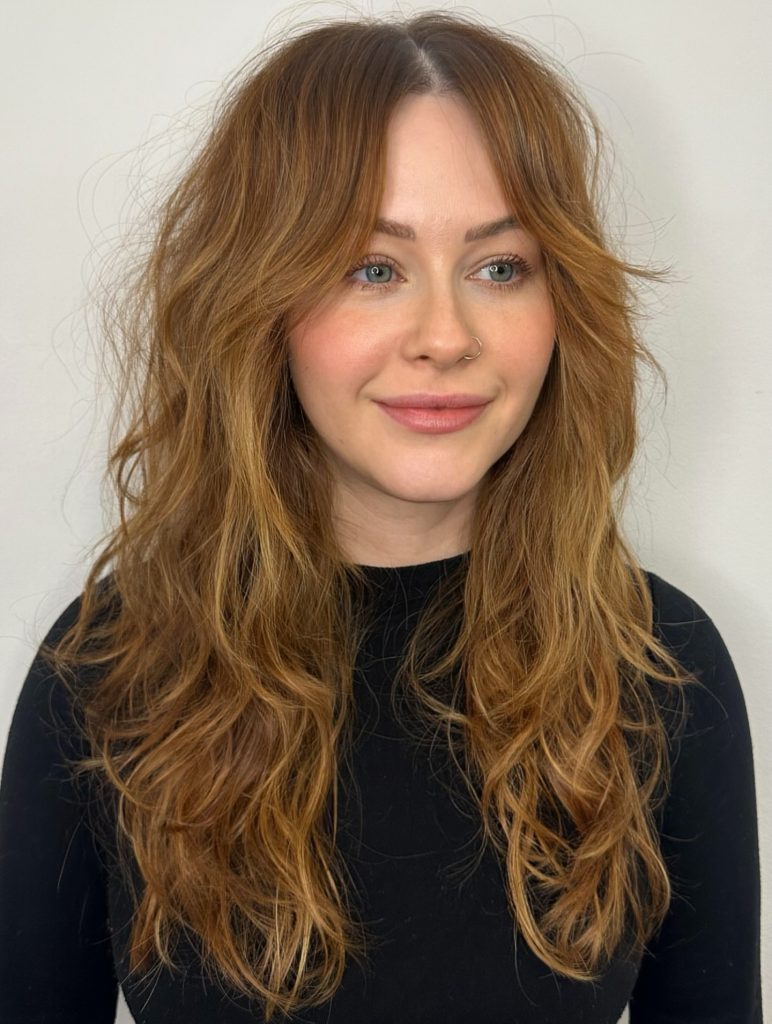
9. Wavy Long Layers with Natural Movement
Long layers on 2A–2B waves enhance the hair’s natural bend without encouraging frizz. The key is keeping the shortest layer below the chin so the wave pattern stays intact and doesn’t pouf outward. Air-drying with a curl-enhancing cream delivers the most natural result; blow-drying straight defeats the purpose.
10. Curly Long Layers with Volume Control
Strategic layering on type 3A–3B curls prevents the dreaded triangle shape by removing weight from the mid-lengths while keeping fullness at the ends. A common issue clients face with this cut is over-layering. If the stylist takes out too much internal bulk, the curls lose their clumping pattern and frizz instead. Ask for layers that start below the ears, and request that your stylist cuts each section individually rather than combing curls straight and cutting them wet.
11. Beachy Textured Long Layers
Rougher, deliberately imperfect layering mimics the sun-and-salt texture of a week at the coast. This works on hair that’s naturally wavy or on straight hair willing to commit to a texturizing spray routine. The lived-in quality means it actually looks better on day-two hair than freshly washed.
12. Long Shaggy Layers on Thick Wavy Hair
Heavy layering throughout, starting as high as the cheekbones, turns thick wavy hair into a modern shag silhouette with serious movement. This is one of the most effective layered styles for thick hair because it drastically reduces bulk without thinning the ends. Expect more daily styling time (5–10 minutes with a diffuser) but fewer bad hair days overall.
13. Loose Curls with Long Graduated Layers
Graduated layering on loose curls (2C–3A) adds definition to each curl grouping by separating them at different lengths. The bottom stays dense and weighted, while the crown lifts naturally. A lightweight curl cream (not a heavy butter) distributed through damp hair keeps the bounce without crunch.
14. Textured Long Layers for Coarse Hair
Coarse hair holds layers differently. The strands are rigid enough to maintain separation, which makes even subtle layering visible and defined. Texturizing shears thin the interior without changing the outline shape. Deep conditioning treatments every two weeks prevent the coarse texture from turning wiry at the layer transitions.
15. Waterfall Layers on Wavy Hair
Named for the way the layers cascade like a waterfall from the crown downward, this cut uses a continuous graduation rather than distinct steps. On 2B–2C waves, each layer catches light at a different angle, creating dimension without color. The shape holds for 10–12 weeks before the graduation flattens out.
16. Voluminous Curly Layers with a Center Part
A center part on curly long layers distributes volume evenly on both sides of the face, which balances oval and oblong face shapes particularly well. The key structural detail: the shortest layer around the face should land at chin level so the curls frame without overwhelming. Pineappling (gathering curls loosely at the crown) overnight preserves the shape between washes.
Face-Framing Long Layers
Face-framing layers are the most targeted form of long layered haircuts. They change how your face looks without altering the overall silhouette. The starting point of the shortest piece (cheekbone, jaw, or chin) determines whether the layers open up your face or narrow it, so placement matters more than quantity here.
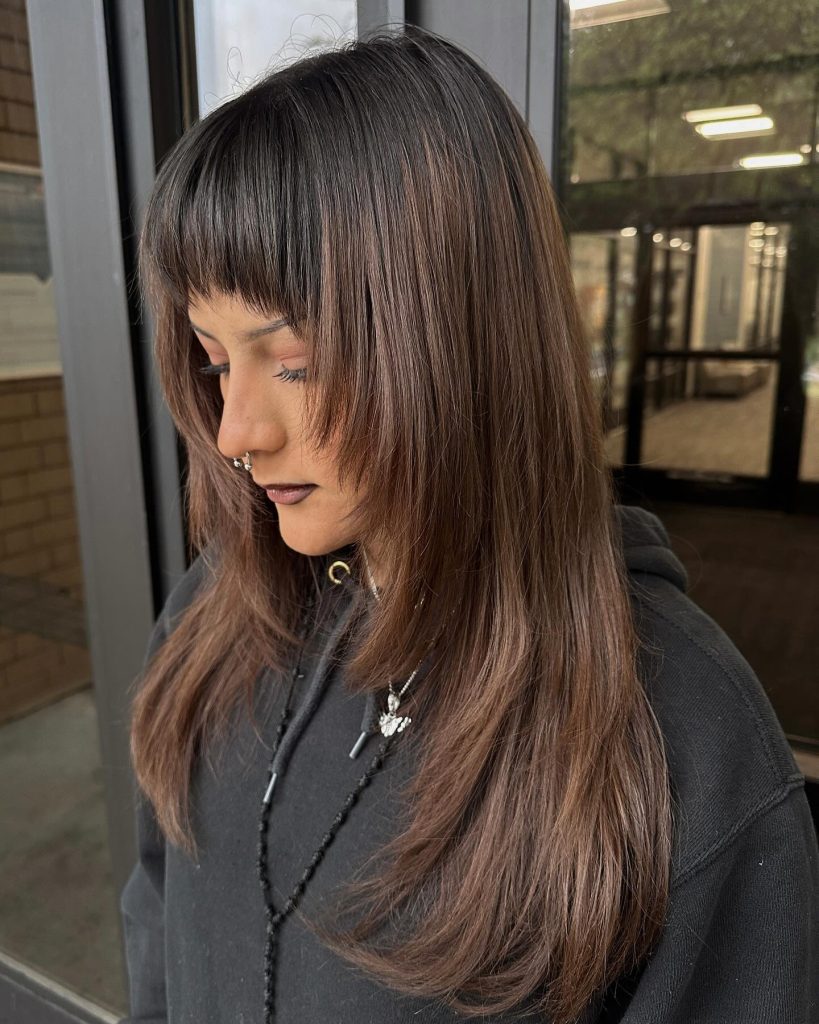
17. Cheekbone-Length Face-Framing Layers
Short pieces that hit right at the cheekbone lift the eye upward and highlight the upper half of the face. This placement is particularly effective for heart-shaped faces, where width at the cheekbones is the face’s strongest feature. Blow-dry these pieces outward with a round brush to keep them from falling flat against the face.
18. Jaw-Length Framing Layers
Framing layers that stop at the jaw create a visual boundary that shortens an oblong or rectangular face. The jaw-length placement also draws attention to the lips and chin — a detail worth considering if you wear bold lip color often. These grow out smoothly and only need reshaping every 8–10 weeks.
19. Money Pieces with Long Layers
Bright face-framing highlights (money pieces) paired with long layers double down on dimension. The layers create movement while the color contrast creates depth. The combination works on every base color from dark brunette to medium blonde. Toner touch-ups every 6–8 weeks keep the money pieces looking refined.
20. Soft Rounded Face Framing
Instead of angular, sharp pieces, these face-framing layers are cut in a smooth curve that follows the natural contour of the cheek and jaw. Round faces benefit most from this approach. The curve echoes the face’s shape without emphasizing it, creating a softened, cohesive look. Ask your stylist to blend the pieces with slide cutting so there’s no visible step between the framing and the length.
21. Long Layers with Dramatic Front Pieces
The shortest layers start at chin level and drop steeply to the full length, creating a high-contrast frame that’s immediately noticeable. This is a striking option for anyone who wants a strong visual impact without an actual haircut change in the back. Square and diamond face shapes wear this well because the angled pieces soften strong jaw and cheekbone lines.
22. Wispy Face-Framing on Fine Hair
Fine hair can handle face-framing layers if the stylist uses point cutting to create soft, wispy ends rather than blunt chops that look see-through. The pieces should be sparse (two to three on each side, maximum) and blend seamlessly into the longer layers. Too many framing pieces on fine hair creates a stringy, thinned-out appearance around the face.
23. Layered Face Framing on Thick Hair
Thick hair can support heavier face-framing layers without looking sparse, so the stylist has more freedom to build a graduated frame with multiple lengths between the shortest piece and the full length. The result is a curtain-like effect that moves in one fluid motion and adds serious dimension. Texturizing the interior of the frame layers prevents them from puffing outward in humidity.
24. Collarbone Face Framing with Long Back
A longer face frame that begins at the collarbone keeps the framing effect subtle while still breaking up the monotony of one-length hair. This version suits anyone who isn’t ready for dramatic front pieces but wants more shape than a basic trim provides. The back is still long enough for a ponytail or a bun.
Long Layered Cuts with Bangs
Bangs and long layers are a natural pairing. The bangs frame the top of the face while the layers handle the length. The specific bang type changes the vibe significantly: curtain bangs feel relaxed and modern, blunt bangs feel polished and intentional, and wispy bangs strike a middle tone.
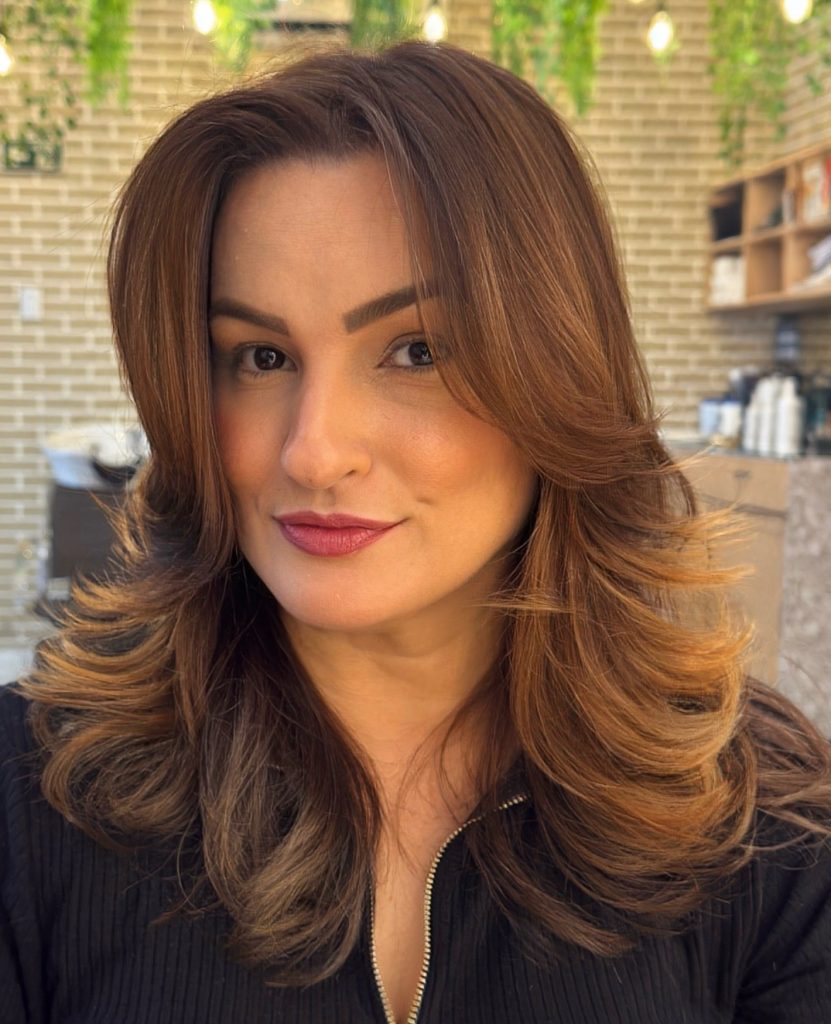
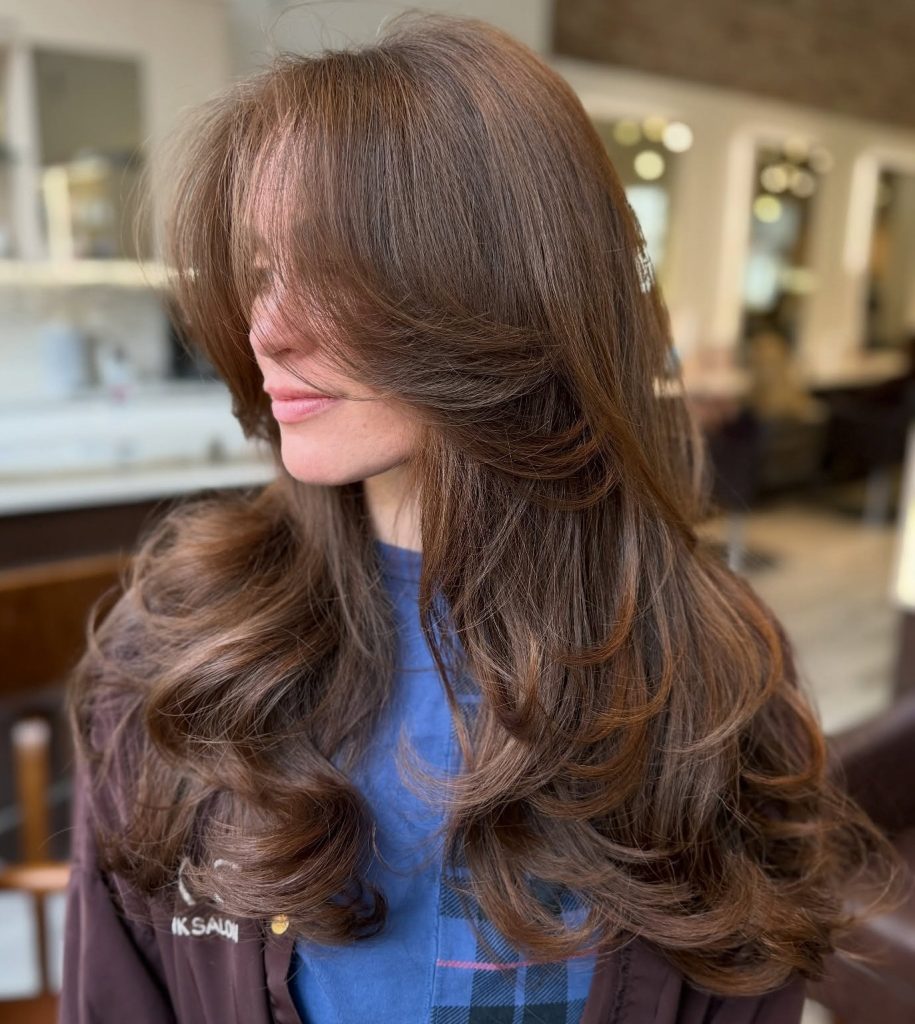
25. Curtain Bangs with Long Layers
The most popular bang-and-layer combination right now, and for good reason. Curtain bangs blend into face-framing layers so seamlessly that the transition is invisible. They work on oval, heart, and oblong face shapes and grow out gracefully if you decide to skip the next trim. Blow-dry them over a round brush, directing each side away from the center, to get that signature parted sweep.
26. Blunt Bangs with Soft Long Layers
A strong, straight-across bang paired with soft, flowing layers creates a contrast between structured and relaxed that reads as effortlessly put-together. This combination works best on straight to slightly wavy hair. Anything curlier and the blunt bang fights humidity all day. Trim the bangs every 2–3 weeks to keep the line sharp; the layers can go 10–12 weeks.
27. Wispy Bangs with Textured Long Layers
Thin, see-through bangs add a softness to the forehead without the commitment or maintenance of a full fringe. On fine hair, wispy bangs create the illusion that there’s more hair around the face than there actually is. Pair them with textured long layers, and you get a low-effort style that looks deliberately undone.
28. Bottleneck Bangs with Long Layered Hair
Bottleneck bangs — shorter in the center and longer at the temples — are a hybrid between curtain bangs and a traditional fringe. They narrow at the center of the forehead (like the neck of a bottle) and widen as they blend into the layers. This shape is forgiving on wide foreheads and grows out more naturally than blunt bangs.
29. Side-Swept Bangs with Long Graduated Layers
A long, side-swept bang that flows diagonally across the forehead pairs well with graduated layers that mimic the same directional movement. The diagonal line visually elongates round faces and softens square jawlines. Stylists typically cut side-swept bangs at an angle from the eyebrow arch down to the cheekbone.
30. Micro Bangs with Long Layered Hair
Baby bangs that sit above the eyebrows make a bold statement against waist-length layered hair. The contrast between the ultra-short fringe and the flowing length is deliberately dramatic. This combination suits oval and diamond face shapes, where a shorter bang doesn’t disrupt the face’s natural proportions. Be honest with yourself about commitment: micro bangs need trimming every 2 weeks and look awkward during the grow-out.
31. Bardot Bangs with Long Feathered Layers
Inspired by the ’60s French icon, Bardot bangs are full, slightly parted, and brushed to each side with volume at the roots. Paired with long feathered layers, the full effect is romantic and effortlessly glamorous. A root-lifting spray and a round brush are the two tools that make this style work on day one. Without root lift, Bardot bangs collapse flat.
32. Layered Bangs that Blend into Length
Rather than a distinct bang section, the stylist cuts a graduated fringe that gets progressively longer and merges directly into the first layer. There’s no clear line where the bangs end, and the layers begin, which creates a seamless flow from forehead to ends. This approach suits anyone who wants the look of bangs without the hard-line commitment.
Low-Maintenance Long Layered Styles
Not every long layered haircut demands a 20-minute morning routine. The cuts in this section are designed to air-dry well, grow out without awkward stages, and go 10–12 weeks between trims. If your morning hair routine tops out at “wash, maybe product, leave the house,” these are your options.
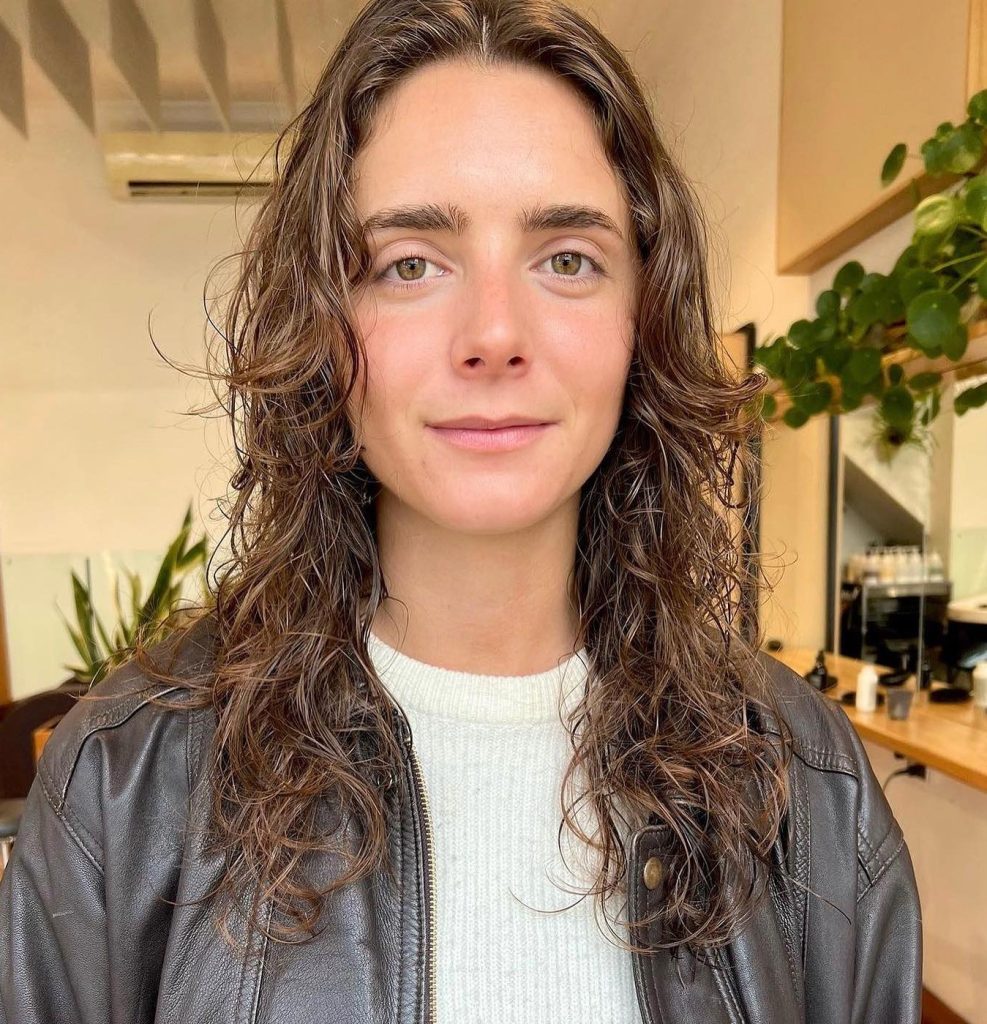
33. Air-Dry Friendly Long Layers
Minimal, well-placed layers that fall naturally into shape without heat tools — the goal is a cut that does the styling work for you. The stylist removes just enough weight to create movement but leaves enough density so the hair doesn’t look thin when it dries on its own. A leave-in conditioner and nothing else is the product routine here.
34. One-Length Base with Hidden Layers
From behind, this looks like a clean one-length cut. From the side and front, subtle interior layers create movement that’s only visible when the hair shifts. It’s the most conservative form of long layered haircuts. It is ideal for professional settings where you want a distinct shape without anything visibly “done.” Trims every 12 weeks keep it polished.
35. Long Layers with Natural Texture
Cutting layers that follow and enhance your hair’s natural texture means less time styling and more consistent day-to-day results. When sitting in the chair, ask your stylist to cut your hair in its natural state. The layers should complement how your hair actually behaves, not how it looks after 30 minutes of styling.
36. Wash-and-Go Long Layers for Wavy Hair
Wavy hair (2A–2C) is the most forgiving texture for low-maintenance layers because the wave pattern disguises any imperfections and adds movement without any product. The only non-negotiable product is a frizz-control serum in humid months. Expect the style to look slightly different every day — that’s a feature, not a flaw.
37. Long U-Shaped Layers
A rounded U shape at the hemline (instead of a V or blunt line) creates a softer, more gradual graduation that grows out beautifully. The shortest layers frame the face at the collarbone level, while the longest pieces form the bottom of the U at mid-back. This shape works on straight and wavy textures and needs reshaping only every 10–12 weeks.
38. Lived-In Long Layers
Deliberately imperfect layering that looks like it’s been growing for months, in the best way. The stylist achieves this through varied cutting angles and avoiding precision at the perimeter. If you’re someone who skips regular salon visits, this is the cut that rewards that habit rather than punishing it.
39. Long Layers for Second-Day Hair
Designed to look its best the day after washing, this cut relies on layers that gain texture and separation as natural oils develop. A dry shampoo at the roots is the only maintenance required between washes. The layering is heaviest around the crown and mid-lengths, where oil tends to flatten straight and wavy hair fastest.
Bold and Textured Long Layered Looks
If you want your layers to be a visible, defining feature of the cut rather than a subtle background detail, these heavily layered and textured options deliver a strong silhouette. Expect more daily styling time (10 to 15 minutes minimum) and trims every 6–8 weeks to maintain the shape.
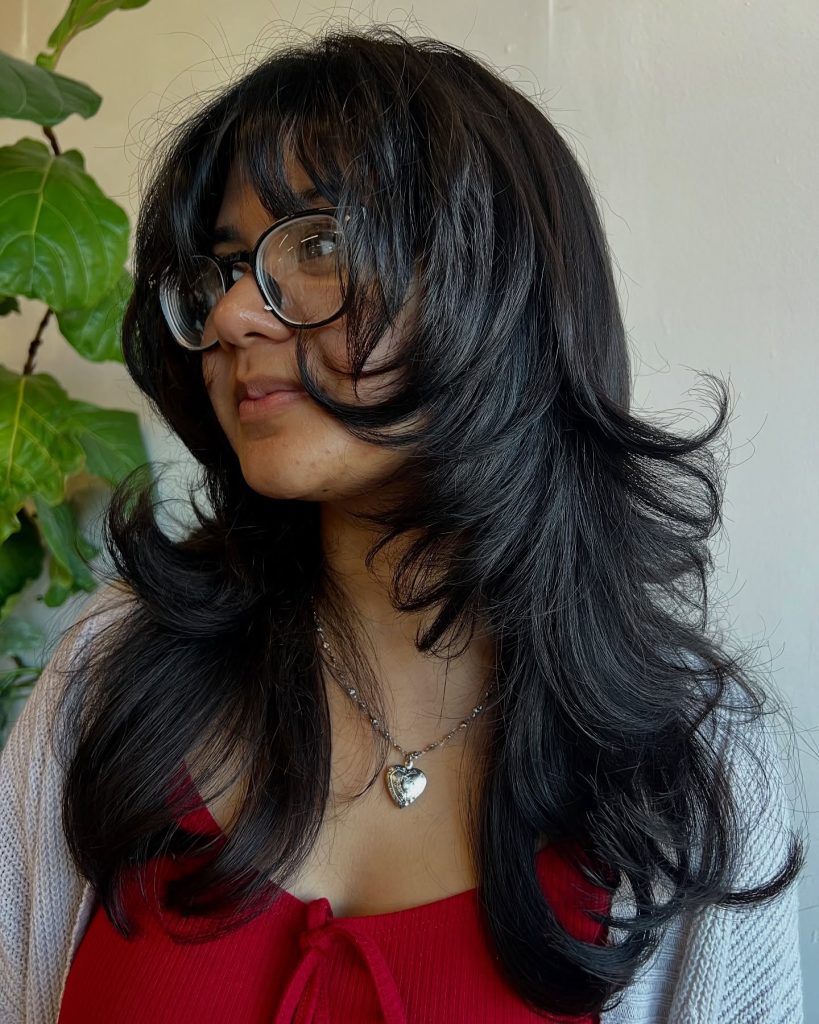
40. Heavy Layering with Choppy Ends
Aggressive layering starting at chin level, combined with choppy, uneven ends, creates a rock-and-roll texture that reads as edgy and deliberate. This is the opposite of subtle — the layers are visible, the ends are irregular, and the silhouette has a jagged quality. Thick hair handles this best; on fine hair, the choppy ends can look sparse rather than intentional.
41. Long Butterfly Layers
The butterfly cut places the shortest, most dramatic layers at the collarbone and jaw, creating two distinct “wings” of volume at the top while the lower half remains longer and sleeker. It’s essentially a two-tier structure: a shorter top layer for volume and a longer bottom layer for length. This works on medium to thick hair and creates the illusion of a shorter cut from the front while maintaining long hair from the back.
42. Wolf Cut on Long Hair
A wolf cut extends the classic shag concept with heavier, more contrasting layers — short and choppy at the crown, longer and wispier toward the ends. On long hair, it creates a soft take on a mullet shape that’s polarizing in the best way. Stylists generally recommend texturizing spray (not pomade or wax) to define the top layers without weighing them down.
43. Heavily Textured Layers with Razored Ends
A razor blade creates softer, more irregular ends than scissors, and when applied extensively across multiple layers, the result is a cut with serious movement and a slightly wild, undone quality. This look works best when you prioritize texture: scrunch with a curl-enhancing product and air-dry. Avoid heavy serums or oils, which flatten the razored texture and defeat the entire point of the cut.
44. Long Layered Mullet-Inspired Cut
A modern mullet hybrid with softer transitions than the traditional version — shorter layers at the crown and temples flow into long, untouched length at the back. The difference between this and a classic mullet is the blending: there’s no harsh line between the short and long sections. Round and oval face shapes wear this best because the crown volume adds height.
45. Long Layers with Disconnected Sections
Disconnected layering deliberately leaves gaps between layer lengths — instead of a smooth graduation, you get distinct steps that create a graphic, editorial shape. This is the most high-fashion version of long layered haircuts in this gallery, and it requires a stylist who’s confident with precision cutting. Maintenance is every 6 weeks because disconnected sections lose their clarity quickly as the hair grows.
How to Choose Long Layered Haircuts by Face Shape
The shape of your face determines where layers should start, how much graduation you need, and whether face-framing pieces help or hinder. Choosing layers based on face shape comes down to understanding which placements create the visual effects you want.
| Face Shape | Best Layer Placement | Avoid |
|---|---|---|
| Oval | Any layer starting point works; collarbone-length face framing is universally flattering | Excessive volume at the sides, which widens the mid-face |
| Round | Layers starting below the chin; V or U-shaped perimeter for elongation | Chin-length layers that add width at the widest part of the face |
| Square | Soft face-framing layers at jawline level to soften angular lines | Blunt, one-length cuts that emphasize the strong jaw |
| Heart | Layers that add width below the chin and at the collarbone to balance a narrow chin | Heavy volume at the crown, which exaggerates the wider forehead |
| Oblong | Layers that start at cheekbone level to add horizontal width and visual breaks | All-one-length hair with a center part, which maximizes vertical lines |
| Diamond | Chin and jaw-length face framing to balance narrow forehead and chin | Heavy layers at cheekbone level, which widen the already-widest area |
Stylist tip: Bring two or three reference photos to your appointment, but point out the specific layer placement you like in each photo, not just the overall look. Stylists can recreate a technique from a photo much more accurately than an overall vibe.
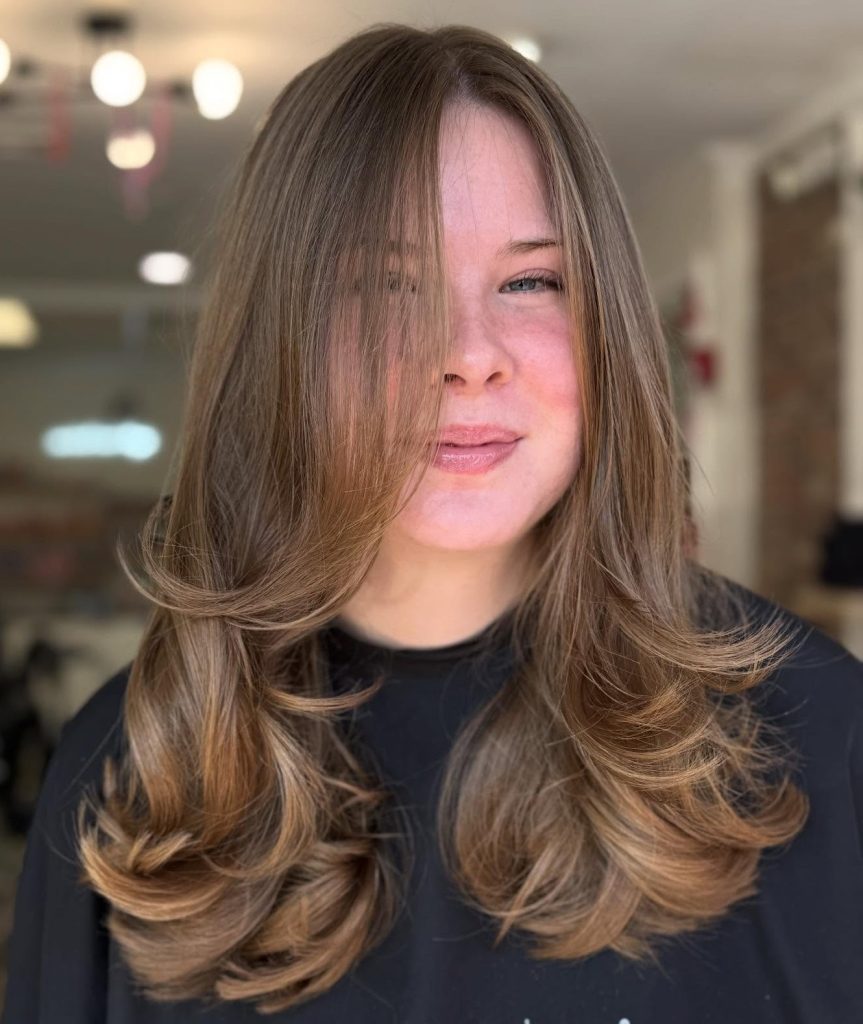
What to Ask Your Stylist
Walking into a salon with clear, specific language makes the difference between getting the cut you imagined and getting a stylist’s default interpretation. Long layered haircuts have so many variations that “I want layers” tells your stylist almost nothing. Here’s how to communicate what you actually want.
Start with the perimeter shape: tell your stylist whether you want a V shape, U shape, or blunt line at the bottom. Then specify where you want the shortest layer to start — at the cheekbone, chin, collarbone, or lower. Mention whether you want face-framing pieces separately, because those are cut independently from the overall layering. Finally, tell them how you plan to style it daily (air-dry, blow-dry, flat-iron) so they can adjust the cutting technique accordingly.
Useful phrases to bring to the salon:
- “I want long layers with the shortest piece starting at [collarbone/chin/jaw] and the perimeter in a [V/U/blunt] shape.”
- “Can you add face-framing layers starting at [cheekbone/jaw] level and blend them into the length?”
- “I air-dry my hair. Can you cut the layers to fall well without heat styling?”
- “I want internal layers for movement, but I’d like to keep the perimeter looking thick and solid.”
- “Please point-cut the ends rather than blunt-cutting. I prefer a softer edge.”
Stylist tip: If you’ve had a bad layering experience before, tell your stylist what went wrong. “My last layers were too short and poky at the crown” gives them a clear boundary. Knowing what to avoid is just as useful as knowing what you want.
FAQ
How Often Should I Trim Long Layered Haircuts?
Most long layered cuts hold their shape for 8–12 weeks between trims, depending on how fast your hair grows and how defined the layering is. Heavily layered or disconnected styles need attention closer to the 6–8 week mark because the shape loses clarity as the layers grow out. If you have bangs alongside your layers, the bangs will need trimming every 3–4 weeks, even if the rest of the cut can wait.
Do Long Layers Work on Thin Hair?
Yes, but the layering needs to be minimal and strategic. Heavy layering on thin hair removes too much density from the ends, making them look see-through and scraggly. Ask for internal layers only. These remove bulk from the mid-shaft while keeping the perimeter full and weighted. Point cutting (not razor cutting) is the safest technique for thin hair because it removes less material per cut.
Can I Get Long Layers If My Hair Is Very Curly?
Curly hair (type 3A–3C) benefits from layers, but they must be cut by a stylist experienced with curly textures, ideally someone who cuts curls dry. Wet-cutting curly hair often leads to layers that land in the wrong place once the hair shrinks as it dries. The layers should follow the curl clump pattern rather than fighting it, with the shortest pieces starting below the chin to prevent poufing.
What Is the Difference Between Long Layers and Face-Framing Layers?
Long layers refer to the overall graduation throughout the hair — from shorter at the top to longer at the bottom. Face-framing layers are a separate, targeted set of shorter pieces cut specifically around the front of the face. You can have long layers without face framing, face framing without overall layers, or both together. Most people who want a noticeable shape around their face need both.
Will Long Layers Make My Hair Look Thinner?
It depends on the layering approach. Intensive layering with thinning shears can absolutely make hair look thinner, especially at the ends. However, well-placed layers (internal layering, point-cut ends, strategic graduation) actually create the illusion of more volume by adding movement and lift. The technique and starting hair density matter more than the concept of layers itself.
How Do I Style Long Layered Hair Without Heat?
Apply a lightweight styling cream or leave-in conditioner to damp hair, then air-dry without touching it. Scrunching with a microfiber towel (not a cotton towel, which causes frizz) before air-drying adds natural texture to wavy and curly hair types. For straight hair that air-dries flat, try braiding slightly damp hair into two loose braids and sleeping on them. You’ll wake up with soft, heatless waves that work well with layered cuts.
Should I Get Layers Cut Wet or Dry?
For straight hair, wet cutting works well because straight strands don’t shrink significantly as they dry. Wavy and curly hair should be cut dry, or at minimum, cut in its natural state after air-drying, because curl shrinkage can move the layer position by 2–4 inches. Dry cutting also allows the stylist to see exactly how each layer falls and interacts with your natural texture in real time.
Do Long Layered Haircuts Work with Balayage or Highlights?
Layers and color techniques like balayage and hand-painted highlights enhance each other significantly. Layers expose different sections of hair to light at different angles, which makes dimension-based color techniques look richer and more complex. If you’re planning both a cut and a color, get the cut first. The colorist can then paint highlights specifically onto the layers that catch the most light.
Finding the right long layered haircuts comes down to matching the layer placement, graduation type, and face-framing approach to your specific hair texture, density, and face shape. The 45 options above cover the full range, from barely-there internal layers to dramatic, high-contrast shag-inspired cuts, so bookmark the ones that match your hair type, bring the reference photos to the salon, and use the specific language from the stylist communication section to describe exactly what you want.
Hair results vary based on your natural hair type, texture, density, and condition. Always consult with a licensed hairstylist before making significant changes, especially with chemical treatments or dramatic length changes. Photos may show styled results that require professional tools and products to replicate.