
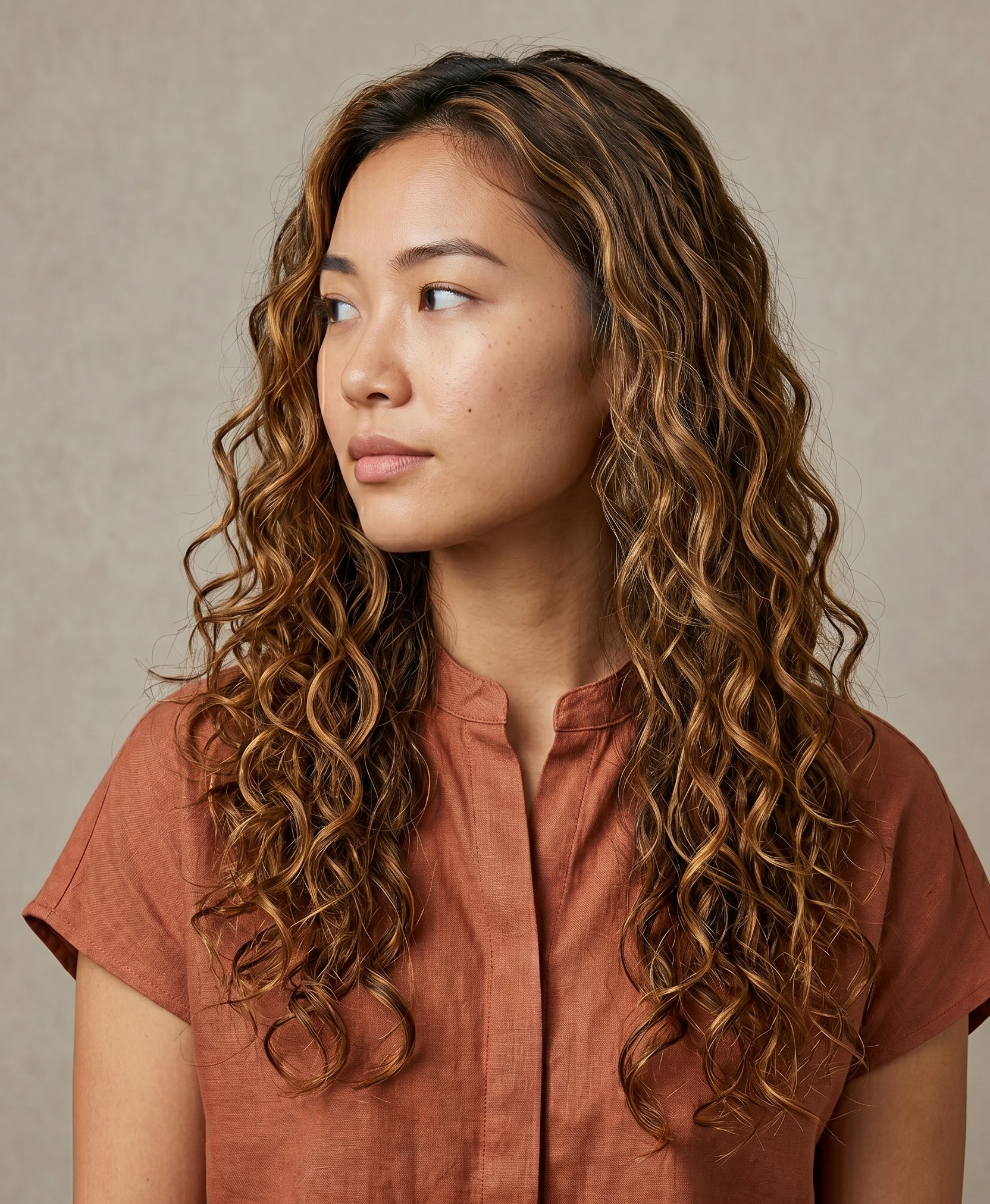
2B hair forms S-shaped waves that start flat at the roots and gain definition from the mid-lengths to the ends — the wave pattern is clear enough to see, but fine enough to collapse into frizz if the wrong product weight or drying technique is used.
Understanding your type matters because the gap between 2B and its neighbors — 2A below and 2C above — changes which products help and which ones flatten the pattern completely. 2A barely bends and can handle more weight; 2C waves from root to tip and needs moisture-heavy products to avoid dryness. 2B falls between them, where lightweight hold wins over rich creams and diffusing is almost always better than a standard blow-dry. This guide covers how to confirm you have 2B hair, a complete wash-day routine, the specific product categories that enhance the wave without overwhelming it, 12 haircuts that work with the 2B pattern, face shape guidance, and the exact language to use at your next salon appointment.
| Factor | Details |
|---|---|
| Wave pattern | S-shaped waves, flat at roots, defined from mid-lengths to ends |
| Wash frequency | Every 2–4 days; over-washing strips natural oils that support wave definition |
| Product weight | Lightweight — mousses, curl creams under 3% hold, sea salt spray |
| Drying | Air dry or diffuse on low heat; standard blow-drying causes frizz |
| Best haircut features | Layers starting at or below the collarbone; avoid heavy blunt cuts that suppress the wave |
What 2B Hair Actually Is
2B is the second subcategory in the type 2 (wavy) family, sitting between the barely-there bends of 2A and the defined, root-to-tip waves of 2C. What makes 2B distinctive is where the wave starts: roots tend to grow out fairly flat for the first inch or two, then the S-shape becomes visible through the mid-lengths and gains the most definition at the ends. This creates a silhouette that looks flatter at the crown and fuller at the bottom — a characteristic that stylists who specialize in wavy hair use to distinguish 2B from 2C (where the wave starts almost at the scalp).
The tricky quality of 2B is that it behaves differently in different humidity levels, temperatures, and product combinations. On a low-humidity day with the right lightweight hold product, 2B waves look effortlessly defined. With a heavier cream or on a humid day, the same hair can appear flat at the roots and frizzy at the lengths — not fully wavy, not smooth, somewhere in between that looks like the hair couldn’t decide. The routine adjustments that fix this are specific to 2B’s porosity and density, which is why what works for a 2C or a 2A often doesn’t transfer.
Stylist tip: The most reliable way to confirm your wave type is a fresh air-dry on product-free, clean hair — no styling products, no towel rubbing, just squeeze out water and let it dry. The wave that forms naturally is your baseline type, uninfluenced by product or technique. If you only know your hair air-dried with product, you may be misidentifying frizz as wave pattern or product cast as definition.
How 2B Hair Differs from 2A and 2C
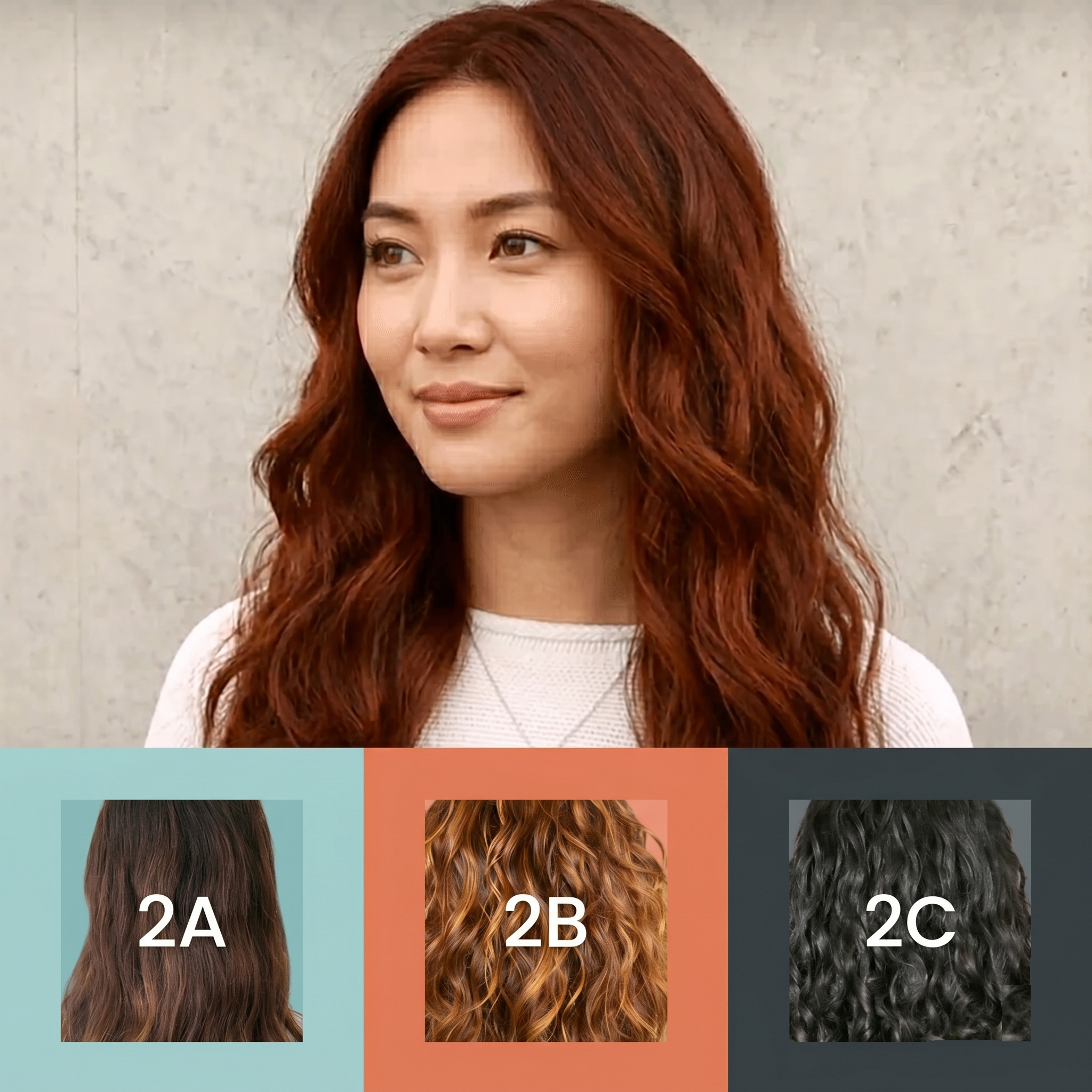
Knowing which side of the 2B line you’re on changes the approach significantly — 2A responds well to light texturizing sprays that add definition to near-straight hair, while 2C needs the moisture-heavy products that 2B hair finds too heavy. The table below lays out the key distinctions.
| Feature | 2A | 2B | 2C |
|---|---|---|---|
| Wave origin | Barely bends; loose bend below eye level | Flat roots, S-shape from mid-lengths down | Wave starts near the root |
| Definition level | Low — needs product to hold any shape | Medium — waves form naturally but lose hold without product | High — holds definition longer; closer to curly |
| Frizz tendency | Low to moderate | Moderate — especially in humidity | Moderate to high; drier strand texture |
| Best product weight | Very lightweight (texturizing mist or spray) | Lightweight mousse or light curl cream | Medium curl cream or gel; needs moisture |
| Curl method compatibility | Partial — skip the gel | Partial — use a wavy-modified routine, not full curly girl | High — curly girl method or modified version works well |
How to Identify 2B Hair at Home
Wash your hair with a gentle sulfate-free shampoo, rinse out all conditioner, then let it air dry completely without any products, touching, or scrunching. When fully dry, check where the wave begins — if the first inch or two from the scalp sits relatively flat and the S-shape is most visible from the mid-length down, that’s 2B. If waves start from near the root, you’re likely 2C. If the hair barely bends at all, you’re in 2A territory.
A second useful marker is frizz behavior. 2B hair frizzed by humidity shows the pattern of separating individual strands rather than clumping into curl sections — the waves lose their cohesion and each strand goes its own direction. This differs from 2C or 3A frizz, which usually manifests as the curl expanding volumetrically rather than unraveling into individual strands. Strand separation frizz is the 2B signature, and it’s what the right lightweight products prevent by helping strands clump into visible wave formations instead of frizzing apart.
The 2B Hair Wash Day Routine
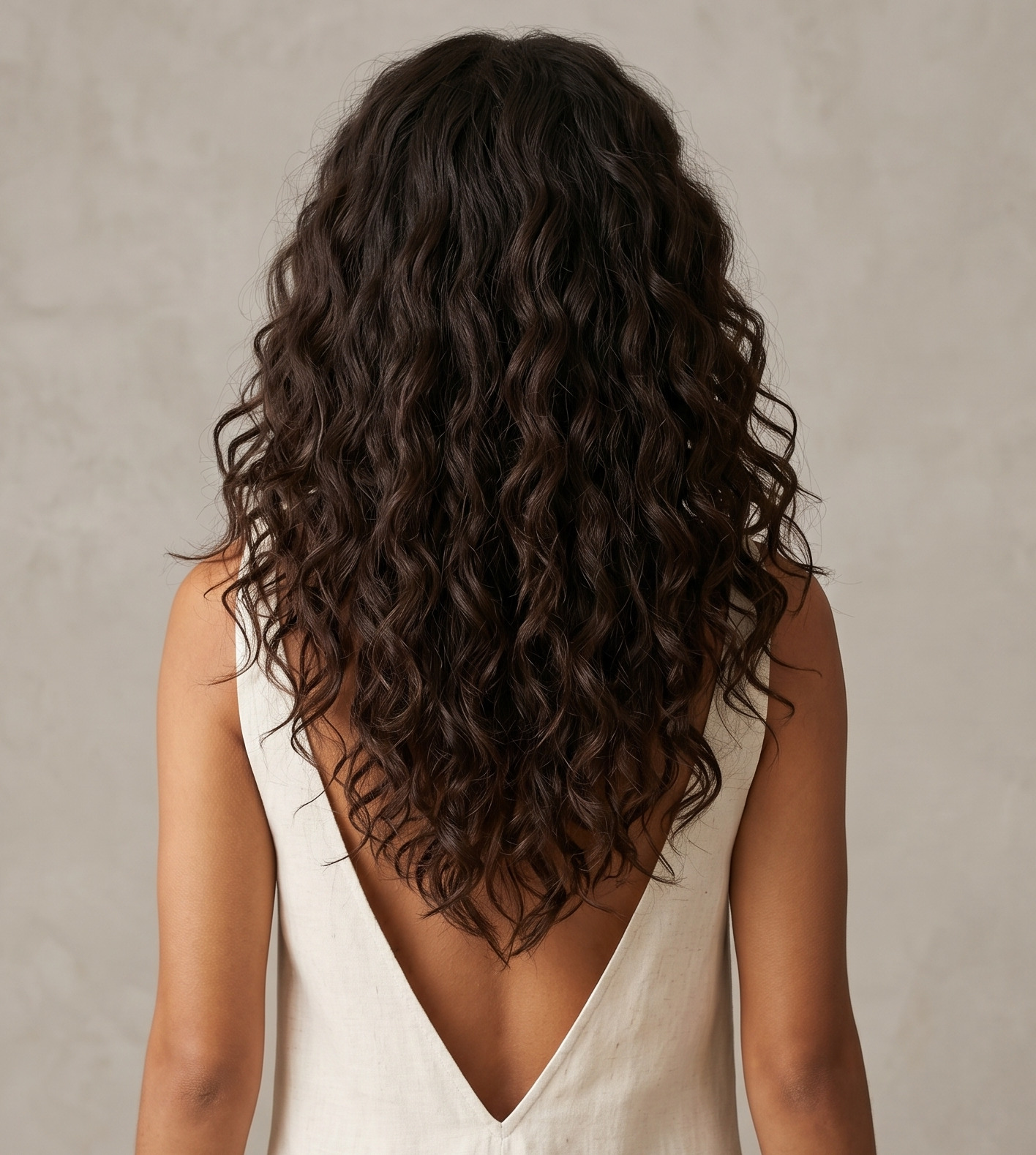
The principles behind a 2B routine differ from a standard wavy or curly routine in one key way: products must be light enough not to suppress the already-flat root section but substantial enough to hold the wave definition through the lengths. Most routines written for “wavy hair” suggest the same products used for 3A curls, which are typically too heavy for 2B and cause the flat-root problem to worsen.
Shampoo and Condition Without Stripping the Wave
Sulfate-free shampoo is the right starting point — sulfates cleanse aggressively and can strip the natural oils that give the S-wave its hold, leaving the hair in a temporarily frizzier and less-defined state after washing. Apply shampoo only to the scalp, not the lengths; the lengths get clean from the rinse water running through them. On conditioner: apply from mid-length to ends, let it sit for two to three minutes, then rinse with cool or lukewarm water — cold water helps seal the cuticle and keeps the surface smooth, which reduces the frizzy texture that a hot-water rinse leaves behind. Do not condition the roots — conditioner at the root flattens 2B hair’s already-flat root section further.
Styling Technique That Defines Without Weighing Down Fine Waves
Apply styling product while hair is still soaking wet — not damp, not towel-dried, wet. Wet hair distributes lightweight products evenly without creating concentrated patches that dry stiff. A golf-ball-sized amount of lightweight mousse or a half-teaspoon of curl cream is the right starting range; using more presses the wave flat before it has a chance to form. Apply with a prayer-hands motion (press palms together around a section of hair from roots to ends) rather than scrunching at this stage — premature scrunching can break up the wave formation while the product is still distributing. Scrunch after the product is evenly coated and the hair is starting to clump into wave sections.
Drying 2B Hair for Maximum Definition
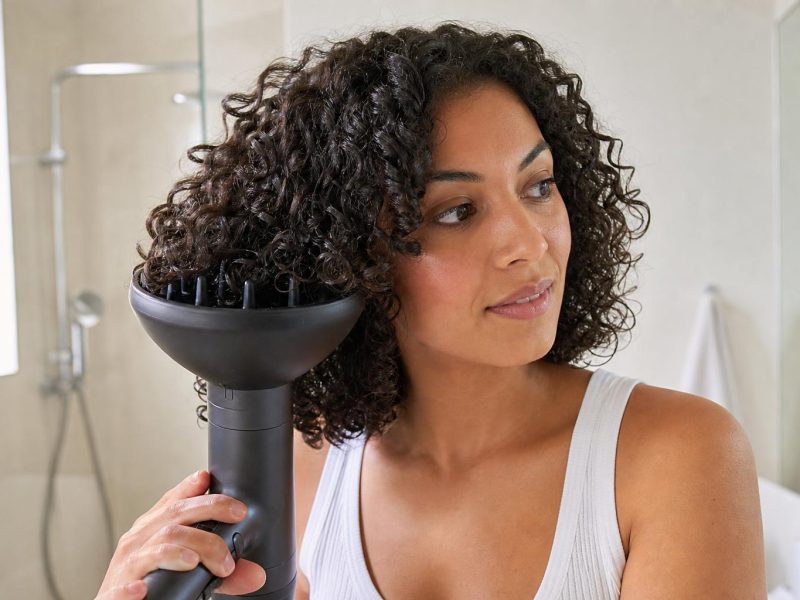
Air drying produces the most defined wave for 2B hair and is the lowest-frizz option when time allows. Flip your head upside down while applying product to get a head start on root volume, then let it air dry without touching. If diffusing, use the lowest heat setting and medium airflow — high heat dries the outer layer of each strand faster than the inner layer, which creates the rough, frizzy texture that comes from uneven moisture evaporation. Diffuse by placing a section of hair into the diffuser bowl and holding it against the head rather than moving the dryer through the hair. After drying, wait until the hair is completely cool before scrunching out the product cast — scrunching while warm creates frizz.
Products for 2B Hair by Concern
Product choice for 2B hair comes down to a single principle: weight control. The wrong texture or amount of product causes more problems than the absence of product. This table maps product categories to the specific 2B concerns they address.
| Concern | Product Category | What to Avoid |
|---|---|---|
| Frizz in humidity | Anti-humidity spray or lightweight gel with hold agents — applied over damp mousse | Heavy butters or oils — they attract humidity and worsen frizz on 2B porosity |
| Flat roots | Lightweight volumizing mousse applied at roots before diffusing | Root conditioner; heavy cream near the scalp |
| Lack of wave definition | Sea salt spray on wet hair; curl-enhancing cream in small amounts | Protein-heavy products on fine 2B strands — they create stiffness, not definition |
| Dryness at the ends | Leave-in conditioner misted on mid-lengths and ends only | Silicone-based serums on low-porosity 2B hair — they coat strands and block moisture |
| Refresh on day 2–3 | Water mist or refreshing spray; scrunch and diffuse briefly | Adding fresh styling products over dried product — creates buildup and flattening |
12 Best Haircuts for 2B Wavy Hair
The most wave-friendly cuts for 2B hair share one structural feature: layers that remove weight from the mid-lengths rather than leaving bulk that pulls the S-shape flat. Blunt-cut lines at the bottom work against 2B’s natural tendency because the weight of the blunt section drags the wave out of its shape. Internal layers, point-cut ends, and graduated layer placement all work with the 2B wave instead of against it. The entries below cover the range from short to long, structured to soft.
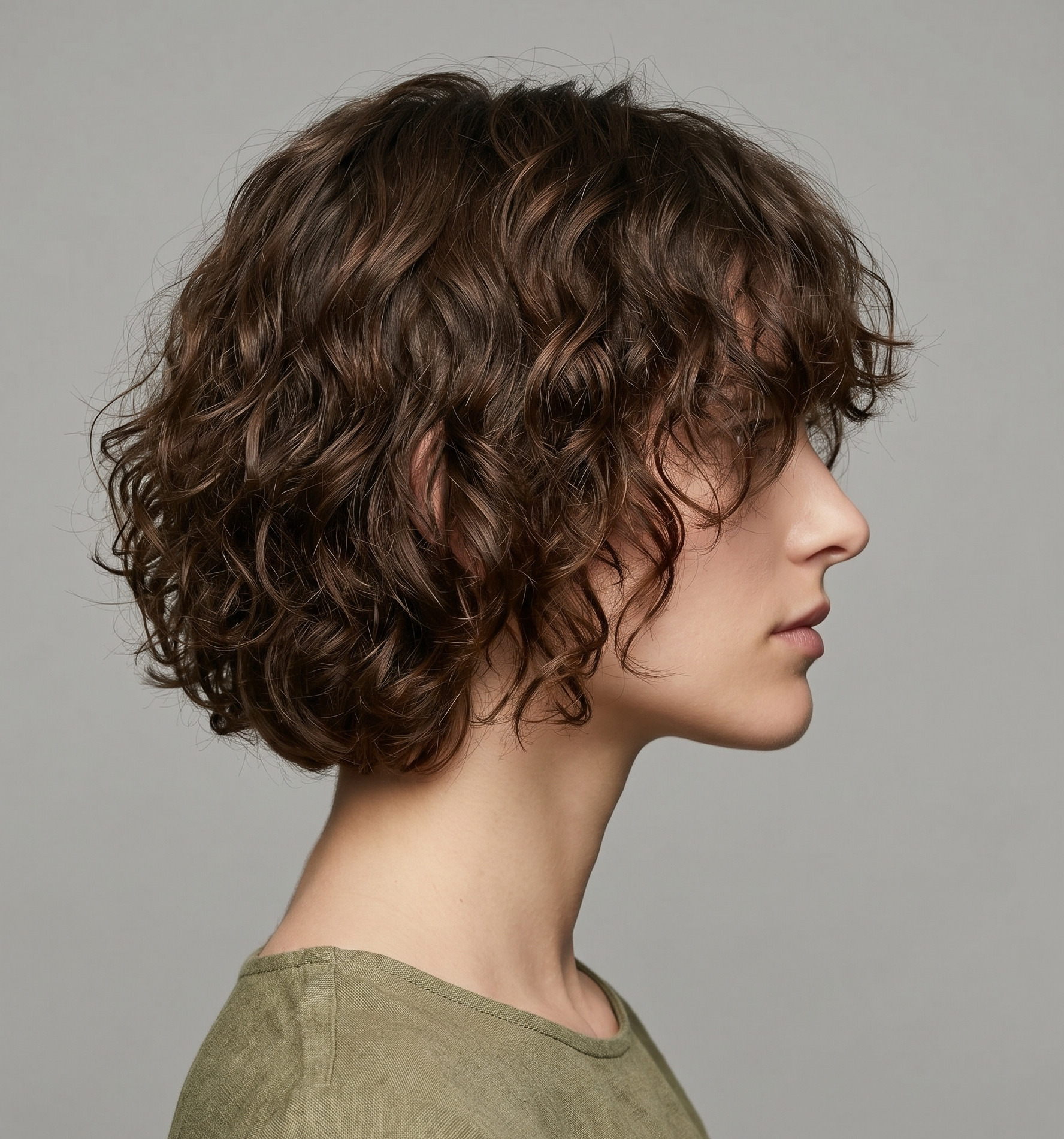
1. Long Layered Waves
Long layers cut between collarbone and chest level allow the full S-wave pattern to express itself without the drag of uniform length weighing the mid-lengths flat. The stylist removes weight internally — through the hair shaft, not at the perimeter — which keeps the length while reducing the density that suppresses 2B waves. On hair below the shoulder, point cutting at the ends rather than a blunt perimeter prevents the triangle silhouette that uncut long wavy hair creates when it grows.
2. Face-Framing Lob for 2B Waves
A lob landing at or just past the collarbone suits round and square face shapes particularly well because it creates vertical length lines from ear to shoulder while keeping the wave definition visible at the lengths — the S-shape has enough room to form before reaching the ends. The face-framing pieces should be cut to cheekbone level, not shorter, to frame the face without creating a drastic length difference that the wave makes visually abrupt.
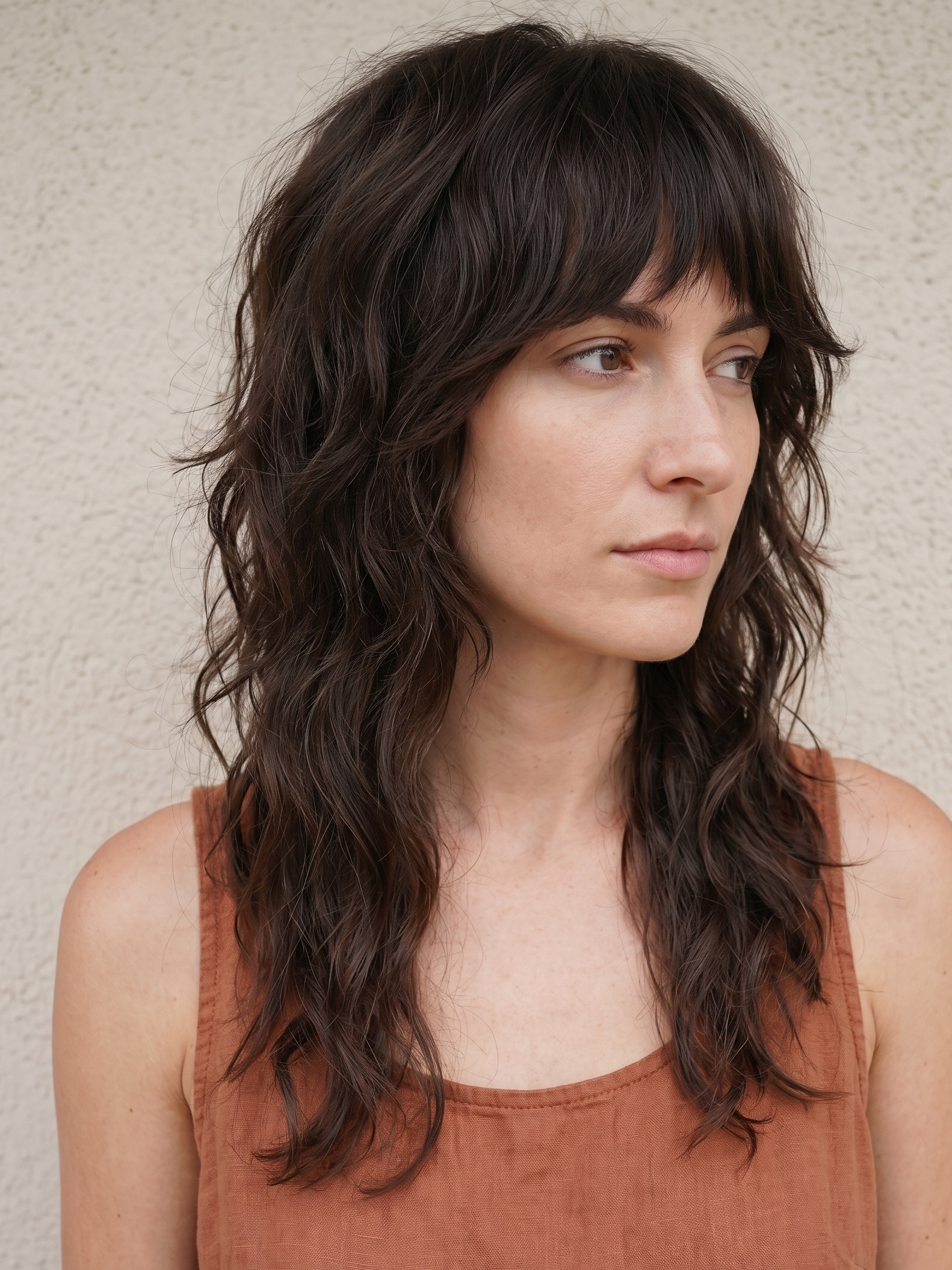
3. Wavy Shag with Curtain Bangs
Fine-to-medium 2B hair benefits from the shag’s aggressive internal layer removal — the shag takes weight off the mid-lengths where 2B hair packs in density that fights the wave pattern. Curtain bangs that part in the center and fall to cheekbone level work well with 2B because the slight wave in the fringe section adds movement rather than needing to be styled. On low-porosity 2B hair, however, the shag’s many layers can create frizzy ends if not diffused properly — take each section into the diffuser bowl rather than running the dryer through the hair. For a gallery of options combining waves with shaggy cuts, our shag haircut guide covers the full range of layer depths and lengths.
4. Shoulder-Length Butterfly Cut
Achieve this look with a diffuser and a light-hold mousse — the butterfly cut’s heavily layered structure means the shortest pieces at the crown need either product or heat to prevent them from sticking up rather than falling into the wave. Apply mousse to soaking-wet hair and diffuse upside down for the first five minutes to build root volume; then right-side up for the remaining dry time. The butterfly cut suits oval and heart face shapes best; very round or square faces may find the strong volume at the crown amplifies rather than balances the face’s width.
5. Collarbone Waves with Soft Internal Layers
Collarbone length — where the hair touches or just passes the collarbone — is the maintenance sweet spot for 2B waves because it’s long enough to show the full S-shape but short enough to dry completely in 30–40 minutes without a diffuser. Grown out past this length, the cut only needs a half-inch trim every 8–10 weeks to maintain the layered shape; shorter cuts require visits every 5–6 weeks to prevent the layers from blending back into a blunt line as the hair grows. This is the cut to request when you want defined waves with the minimum possible salon investment.
6. Highlighted Lob with Piece-y Waves
Balayage or face-framing highlights add dimension to 2B waves by lightening the pieces that catch the most light — the top sections and the pieces that frame the face — which makes the wave’s S-shape more visible even when definition is loose. The color contrast between lighter highlighted strands and the darker base visually emphasizes each wave. Ask for highlights painted only on the pieces that fall forward or on top, not throughout the underneath sections, so the color reads as sun-kissed movement rather than full highlights that add chemical damage risk throughout.
7. Layered Bob for 2B Waves
Request a layered bob specifically for wavy hair rather than a standard layered bob — the difference is where the layers start. For wavy hair, the shortest layers should begin no higher than chin level; layers starting above the chin create pieces that are too short to form a wave and instead stick out from the sides. Tell your stylist: “I have 2B wavy hair and I’d like a layered bob where the layers start at chin length and graduate longer toward the back — no layers shorter than the chin, and please point-cut the ends rather than blunting them.” For comparison of the different bob variations available, the layered haircuts guide covers each option with face shape guidance.
8. Wavy A-Line with Longer Front
Unlike a classic A-line that creates an obvious diagonal from back to front, a subtle A-line for 2B waves keeps the back one to two inches shorter than the front — barely visible when the hair is straight, but clearly frame-creating once the wave forms. The movement of the wave exaggerates the A-line shape, so subtle is usually better than dramatic. On heart and oval face shapes the A-line works easily; on square or wide faces, a very pronounced A-line that ends at the jaw can emphasize the jaw width rather than frame the face.
9. Long Waves with Wispy Ends
Point cutting creates wispy, tapered ends that let the wave free-form at the tip of each strand rather than sitting in a uniform line that flattens the finish. On long 2B hair past the chest, the lower sections accumulate the most density and are the most likely to drag the wave flat — point cutting removes that density from the perimeter without shortening the length visibly. On fine-stranded 2B hair, very heavy point cutting can make the ends look thin; ask for “light point cutting on the last two inches” rather than all-over texturizing.
10. Medium Wavy Shag for Round Faces
Round and full face shapes get the most benefit from a medium shag landing at the shoulders because the layers above the shoulder line add volume and movement at crown level while the length past the chin creates vertical lines that visually elongate the face. The key is keeping enough length at the front to reach below the jaw — a shag that ends at the jaw on a round face increases the visual width rather than balancing it. Ask your stylist to cut the shortest front pieces to collarbone level minimum.
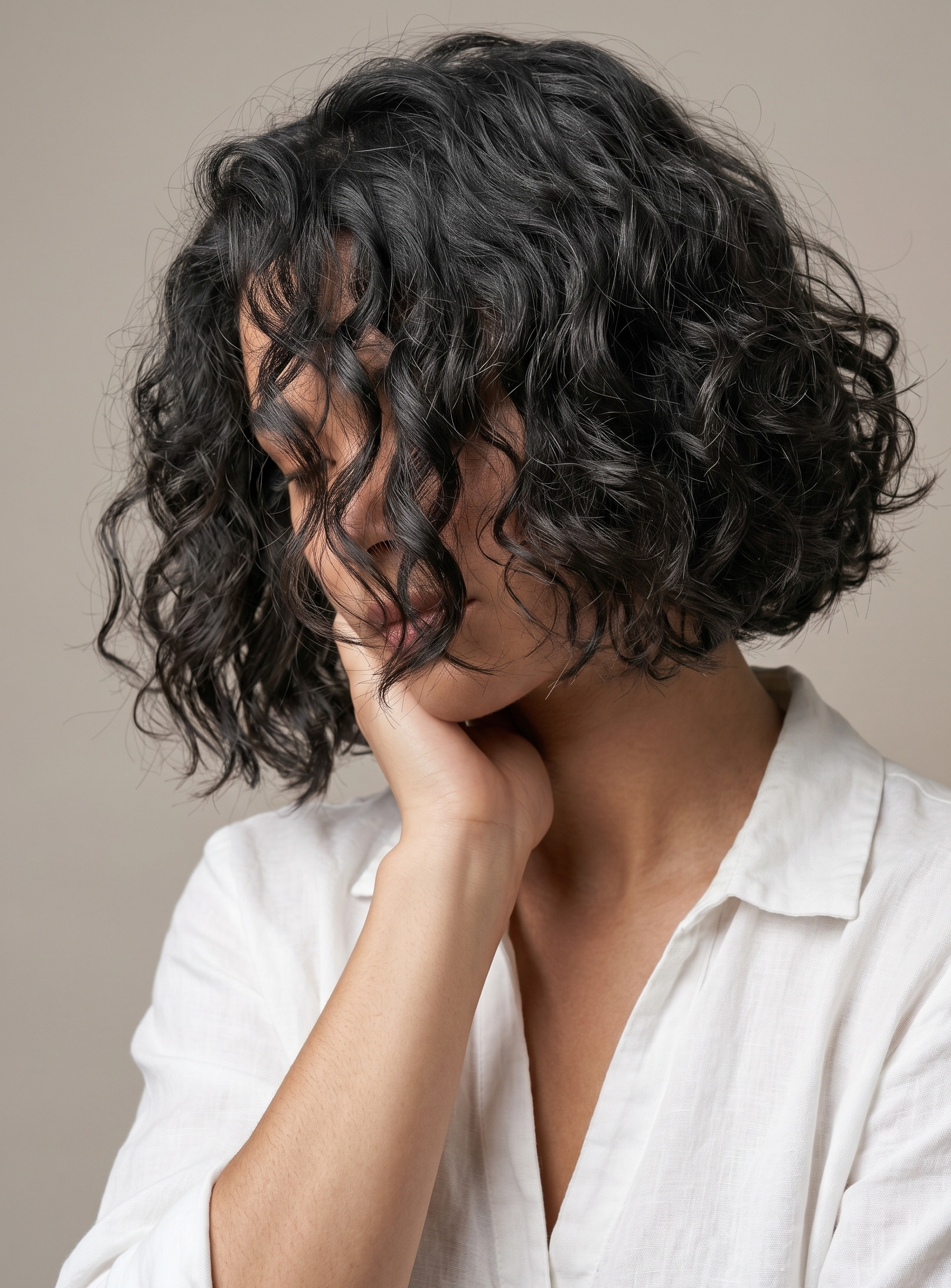
11. Short Wavy Bob
A bob ending just below the jaw suits 2B waves when the stylist cuts it dry — wet cutting on wavy hair results in the stylist seeing the hair at its straightened, stretched length, which means the final cut often ends up shorter than intended once the wave springs back. This is the cut where asking “do you cut wavy hair dry?” at the consultation matters most. Dry cutting lets the stylist see exactly where each wave lands and cut accordingly. For a fuller reference of bob styles compatible with wavy textures, the bob haircut gallery includes texture-specific guidance.
12. Long Waves with Blunt Perimeter and Internal Layers
The blunt perimeter looks elegant on 2B hair when the length is long enough to support it — at or past the chest, the wave at the lengths is defined enough to create its own texture above the blunt line, which prevents the flat, heavy look a blunt cut creates on medium-length wavy hair. Internal layers above the shoulder line remove bulk from the mid-shaft while the blunt end maintains a clean, deliberate perimeter. This is the opposite approach from the wispy-ends style: same wave, different finish aesthetic — structured and polished versus soft and piece-y.
Which 2B Haircut Works Best for Your Face Shape
2B waves add volume around the head as they form, which shifts how length proportions interact with face shapes. A collarbone-length cut that reads as slim on flat hair reads as considerably wider on 2B hair once the wave expands. Factor in the wave’s volume increase when choosing a length.
| Face Shape | Best Cut | Avoid |
|---|---|---|
| Oval | Any length works; lob to long layers are most forgiving with the wave | Nothing specific — most lengths flatter |
| Round | Collarbone-length or longer; butterfly cut with crown volume to add height | Chin-length bob with center part — adds visual width at the widest facial point |
| Square | Long layers past the shoulder to soften jaw angles; soft wavy shag | Blunt jaw-length cut — the wave at jaw level can emphasize the jaw’s width |
| Heart | Lob or collarbone length to add width at the jaw; curtain bangs to break forehead width | Very short cuts that expose a pointed chin without balancing jaw width |
| Oblong/Long | Shoulder-length waves with volume at the sides; shag with layers that add horizontal volume | Long flat-topped waves that add length without width — use layers to build side volume instead |
| Diamond | Chin to collarbone length with curtain bangs to add forehead width | Very short bob that narrows the already-slim forehead further |
Common 2B Hair Myths That Cause the Most Frizz
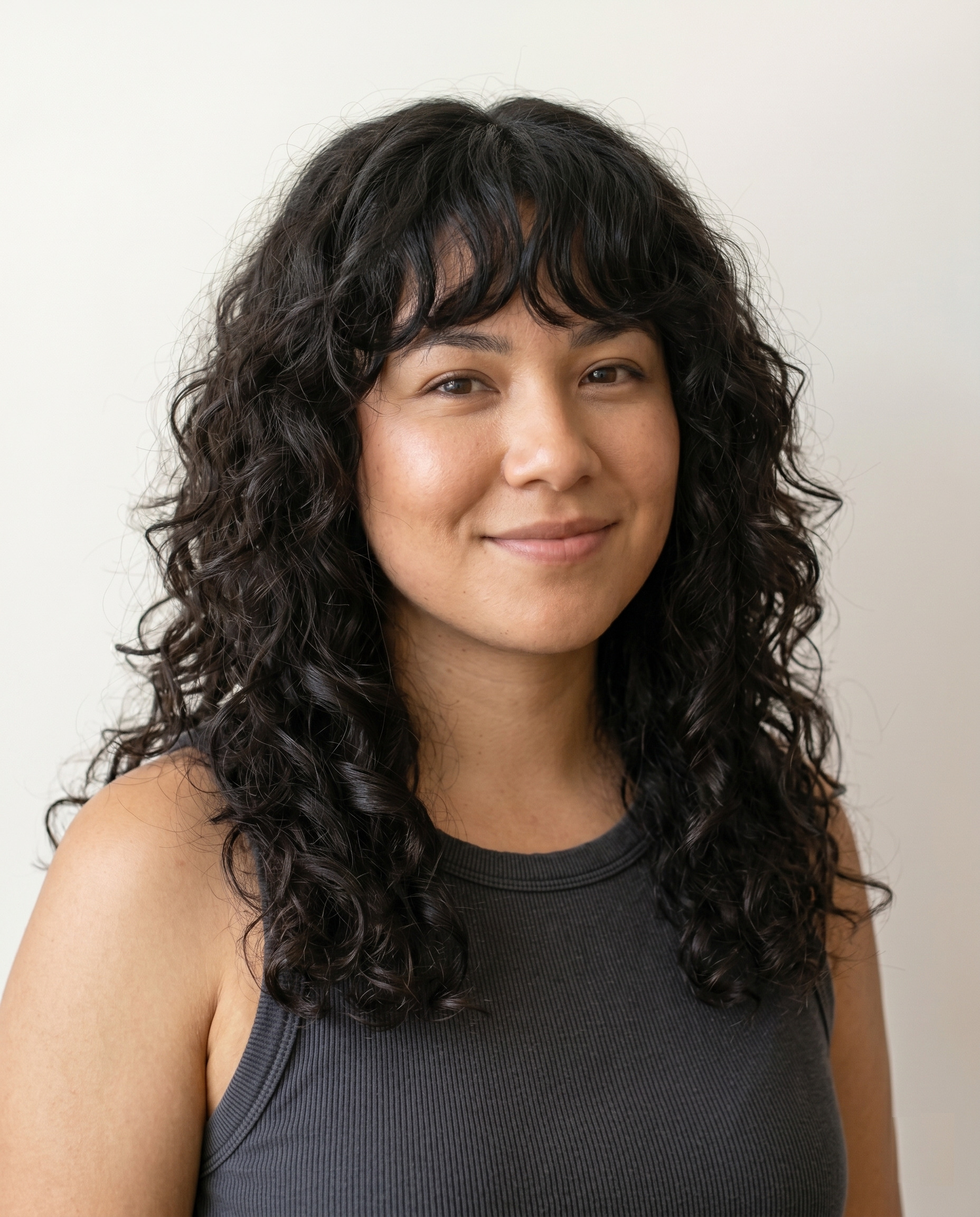
Most 2B hair frustration comes from following advice designed for 3A or 3B curls and wondering why it makes waves flat or frizzy. These are the specific misconceptions that get 2B hair owners in trouble most often.
Myth: The Curly Girl Method Is the Best Routine for 2B Hair
Reality: The curly girl method was designed for curl types that need heavy moisture to prevent breakage and dryness — typically 3A and above. For most 2B hair, the method’s emphasis on rich conditioners and gel causes product buildup that flattens the root section and weighs down the wave. A wavy-modified approach works better: use lighter products, a gentle sulfate-free shampoo (not co-washing exclusively), and skip the heavy gel in favor of mousse or light curl cream. The diffusing, scrunching, and no-towel-rub principles from the curly girl method do transfer well, however.
Myth: 2B Hair Needs Deep Conditioning Every Week
Reality: Deep conditioning once every two to three weeks is enough for most 2B hair — more frequent application causes over-moisturization, which softens the protein bonds in the strand and causes waves to fall flatter and lose definition. If your waves are consistently loose and undefined despite good technique, too much conditioning moisture is sometimes the cause. Try pulling back to one deep treatment per month and see if definition improves before adding more product to the routine.
Myth: All Frizz Means the Hair Needs More Moisture
Reality: Two different conditions cause frizz in 2B hair: moisture deficiency (dry, rough strands that frizz from the outside) and protein-moisture imbalance (strands that are over-conditioned and too soft to hold the wave). Moisture-deficiency frizz looks wiry and dry. Protein-imbalance frizz looks soft but undefined — the hair doesn’t hold its wave and feels mushy or limp. Adding more moisture to protein-imbalance frizz makes it worse. If your hair is soft but frizzy, try a light protein treatment and see if the wave tightens. If it’s wiry and dry, add moisture through a leave-in conditioner.
What to Tell Your Stylist
The most important consultation move for 2B hair is requesting a dry cut — or at minimum requesting that the stylist view the hair in its dry, unstyled state before starting. Stylists who primarily work with straight or slightly wavy clients may not automatically offer this; asking is the only way to ensure the cut accounts for the wave’s behavior.
For a layered lob: “I have 2B wavy hair — the waves start flat at the roots and form from mid-length to ends. I’d like a lob at collarbone length with internal layers to remove bulk, and point-cut ends rather than a blunt perimeter. Please cut dry if you can, or show me how the layers fall before you commit to the length.”
For a shag: “I want a wavy shag with layers that start at or below the chin — nothing shorter than chin level at the front. I want the layers graduated so the shortest pieces frame the face and the longest pieces add movement at the mid-back. Can you cut dry so we can see where the wave lands before cutting?”
For a bob: “2B wavy hair — I’d like a layered bob where the shortest layer starts at the chin, not above it. Point-cut the ends, please. If you cut wet, please add at least one inch of extra length because my waves shrink the apparent length when dry.”
Stylist tip: When a client with 2B hair shows a reference photo of a celebrity with “beachy waves,” confirm whether that photo shows natural 2B waves or styled waves on otherwise straight hair. Styled waves on straight hair are a different result requiring different tools — a curling iron or wand for each section — while the reference photo in the client’s mind may be achievable with their own natural wave and the right diffusing technique. Clarifying this before the cut prevents the disappointment that comes from spending 45 minutes with a curling iron on a cut that could have produced the same result air-dried.
FAQ
What Is 2B Hair?
2B hair is a subcategory of wavy (type 2) hair defined by S-shaped waves that start flat at the roots and become more defined from the mid-lengths to the ends. It falls between 2A (barely wavy) and 2C (waves from root to tip), and is characterized by moderate frizz tendency, a mid-length wave that forms naturally without styling products, and a tendency to go flat with heavy creams or over-conditioning.
How Do I Know If I Have 2B Hair?
Air dry your hair completely with no products after washing, then check where the wave begins. If the roots are relatively flat and the S-shape becomes clear from the mid-lengths down, that’s 2B. If the wave starts near the scalp, you’re likely 2C. If the hair barely bends at all, you’re closer to 2A. Product-free air drying is the only reliable test — styled results reflect technique as much as natural wave type.
What Products Should I Use on 2B Hair?
Lightweight mousse, sea salt spray, and light curl creams work best for 2B hair — all applied on soaking-wet hair. Avoid rich butters, heavy creams, and silicone-based serums, which sit on the 2B hair shaft rather than absorbing and create the flat-root, frizzy-ends combination. A sulfate-free shampoo every two to four days plus a light leave-in conditioner on the ends covers most 2B routines.
Should I Follow the Curly Girl Method for 2B Hair?
A modified wavy version works better for most 2B hair than the full curly girl method. Keep the technique principles — diffuse rather than blow-dry, scrunch rather than rub, apply product on wet hair — but skip the co-washing-only approach and the heavy gels, which are designed for 3A and above curl types. Gentle sulfate-free shampoo every two to four days cleans the 2B scalp without stripping the wave-supporting natural oils.
What Is the Best Haircut for 2B Wavy Hair?
Layered cuts that start at or below the collarbone give 2B waves the most room to form while removing the bulk that suppresses the wave pattern. Long layered lobs, butterfly cuts, and medium wavy shags all work well. A dry cut appointment is preferable — your stylist sees the natural wave before making length decisions, preventing the common outcome of a cut that looks shorter than expected once the wave springs back from its wet-hair length.
How Often Should I Wash 2B Hair?
Every two to four days works for most 2B hair. Washing daily strips the natural oils that help the wave form and hold its shape; going longer than four days causes product and oil buildup that weighs the wave flat. On non-wash days, a light water mist or refreshing spray plus a brief diffuse session can revive second-day waves without the full wash routine.
Is 2B Hair Considered Wavy or Curly?
2B hair is wavy — it sits within the type 2 (wavy) classification, not the type 3 (curly) range. The distinction matters for product selection because curly hair products are generally too heavy and moisture-rich for the 2B wave pattern. 2C hair, the next step up, sits at the boundary between wavy and curly and can often handle mid-weight curl products; 2B benefits most from lightweight wavy-specific formulas.
2B hair rewards a simplified routine more than an elaborate one — the fewer and lighter the products, the more likely the S-wave pattern forms cleanly and holds through the day. Getting the cut right makes the daily routine easier: a well-layered lob or shag on 2B waves air-dries into shape with minimal intervention, while a blunt-cut or too-short style fights the wave every wash day. Bring your wave type and face shape to your next consultation, and the right combination of cut and technique will make your 2b hair pattern work for you rather than against you.
Hair results vary based on your natural hair type, texture, density, and porosity. Always consult with a licensed hairstylist, preferably one with wavy or curly hair specialization, before making significant changes to your cut or color. Products mentioned are categories, not specific brands — results vary based on individual hair chemistry and climate.