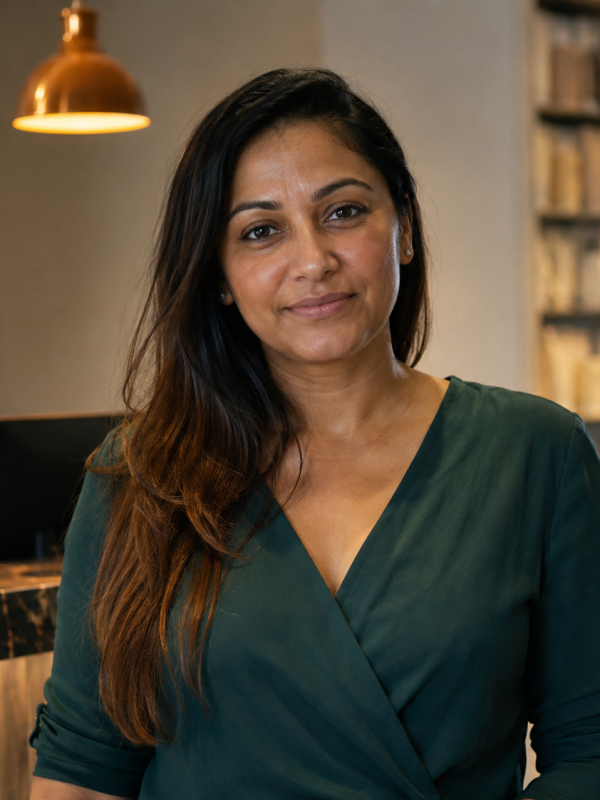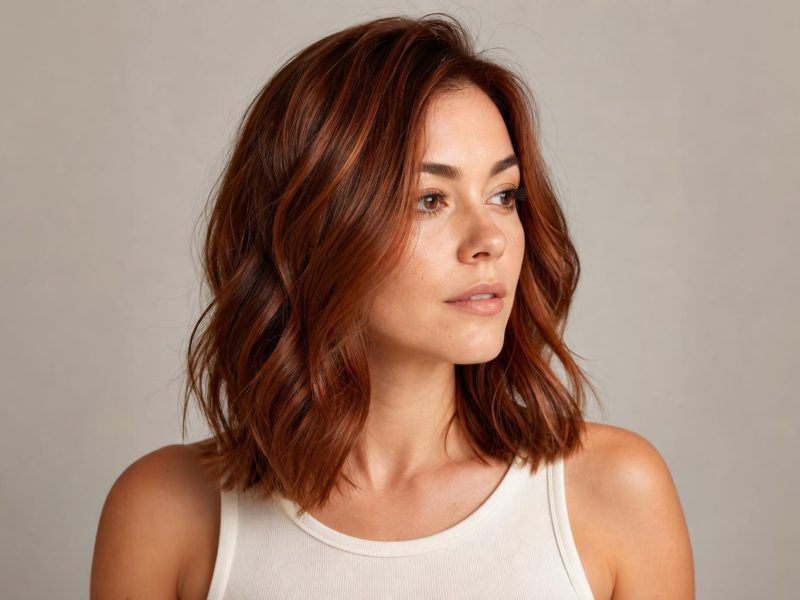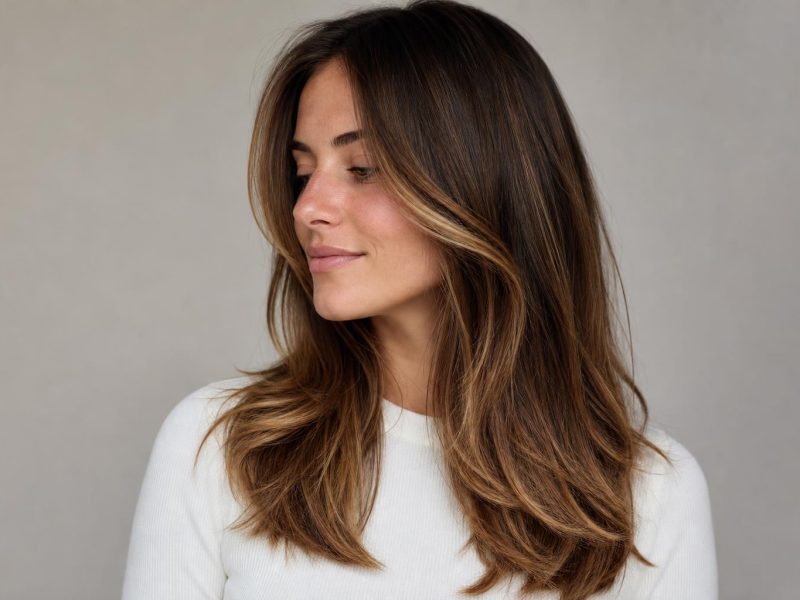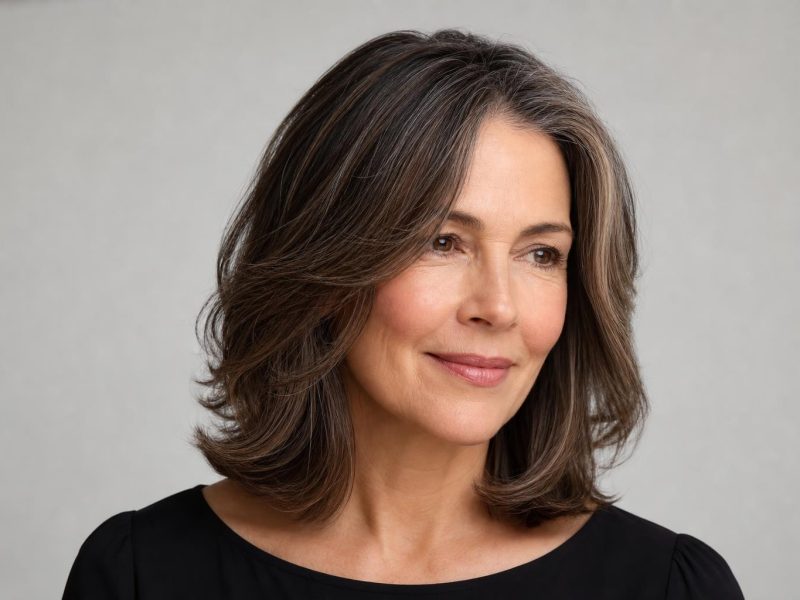

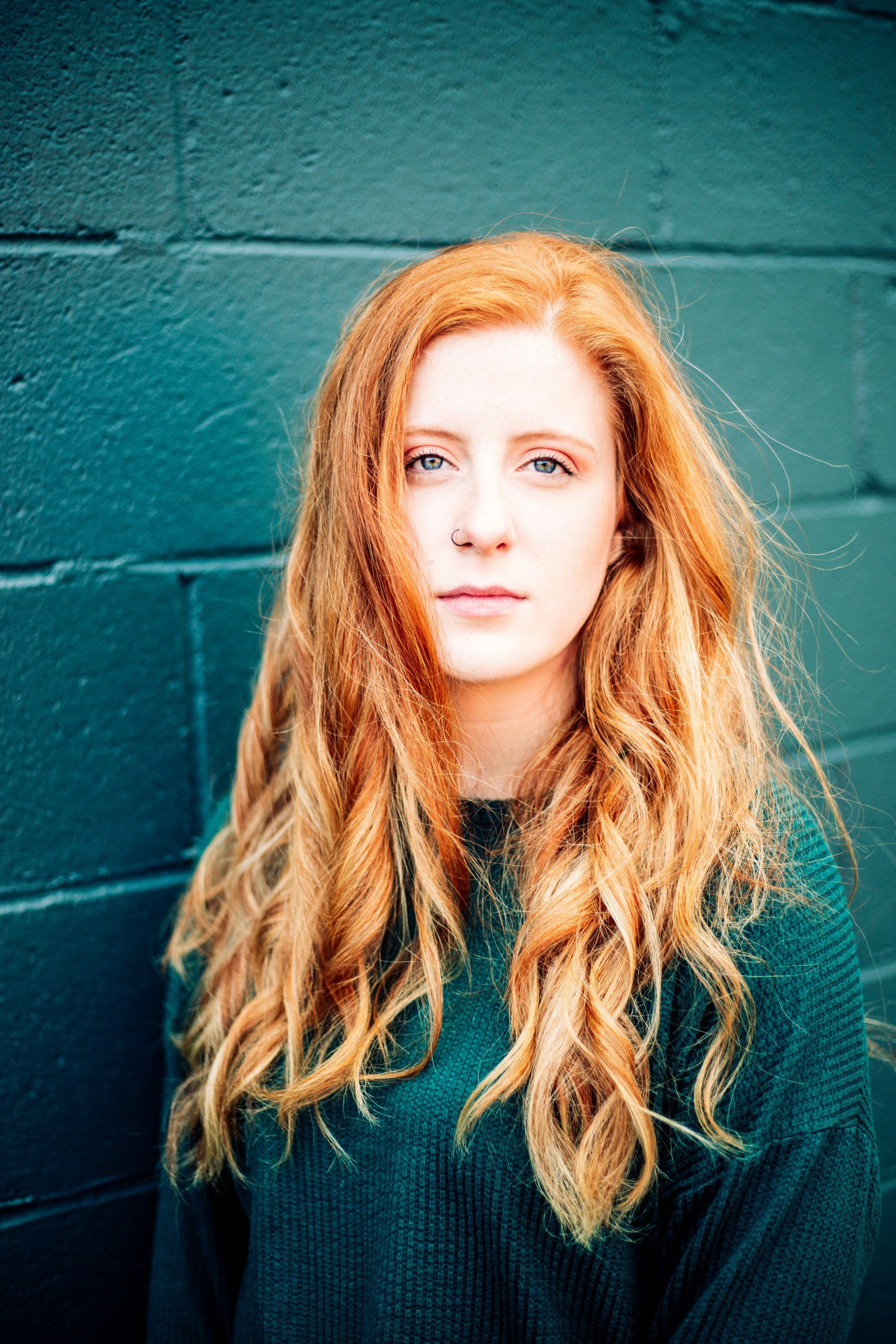
Strawberry blonde hair is a warm-spectrum color where golden blonde and natural red overlap, producing a shade that shifts between peachy copper and honey-touched gold depending on light conditions and the specific red-to-gold ratio your colorist builds.
Unlike auburn or copper, strawberry blonde stays clearly blonde-dominant. The red is a warmth modifier, not the primary visual tone. That single distinction is what makes the color appear more natural on a wider range of starting shades and easier to adjust if the result reads too warm or too cool after the first session.
The 30 ideas below cover the full spectrum: all-over color, balayage, chunky highlights, copper-leaning variations, and subtle techniques for darker starting bases. Each entry includes the specific detail that defines it and how it differs from adjacent variations. For context on the warmer side of this spectrum, the article on honey blonde hair covers the overlap between the two shades.
What Strawberry Blonde Is (and What It Is Not)
Strawberry blonde occupies the boundary between level 7 and level 9 blonde with a warm, red-based toner applied over or alongside the base lift. The “strawberry” element refers specifically to the peachy-red warmth, not to an orange or copper cast. When a result leans too orange, the colorist has either lifted to the wrong underlying pigment level or applied a toner that skewed warm without enough golden balance.
The shade performs differently on warm versus cool undertones. Clients with warm golden or peachy skin tones find the color looks like natural genetic pigment. Cool or rosy complexions can also carry strawberry blonde well, but the specific formula needs to lean more golden than red to avoid the color washing out against pinker skin.
Dark starting bases require pre-lightening before a true strawberry blonde result is achievable. Clients with natural levels 3 to 5 (dark brown to medium brown) typically need a two-session process: a lift to level 7 or 8 in the first session, followed by the strawberry blonde toner in the second. Skipping the pre-lift and applying a direct strawberry toner over dark hair produces a warm red-brown, not the peachy blonde this shade is known for.
Skin Tone and Face Shape Compatibility
The strawberry blonde family is one of the few warm-spectrum colors that can be adapted for both warm and cool complexions by adjusting the red-to-gold ratio. Where it places and how densely it distributes can also be adjusted per face shape.
| Face Shape | Best Technique | What to Ask For |
|---|---|---|
| Oval | Any technique | Full placement, no restrictions |
| Round | Crown-concentrated highlights, darker sides | Lighter pieces through the top, root shadow at sides |
| Square | Face-framing pieces around the jaw, softer distribution | Lighter money pieces, slightly cooler toner near the face |
| Heart | Bottom-half lightness, darker crown | Lighter ends and midshaft, root shadow at the top |
| Oblong / Long | Mid-shaft highlights for width | Wider, horizontal highlight placement through the mid-section |
| Diamond | Lighter at the forehead and ends | Face-framing pieces at the temples and lighter ends |
All-Over Strawberry Blonde Looks
These eight entries use full-coverage color application techniques — single process, demi-permanent, or all-over toner — to create a uniform strawberry blonde base from root to tip.
1. The Demi-Permanent Strawberry Blend
Demi-permanent formulas deposit color without fully lifting the underlying base, which produces a softer, more translucent strawberry blonde result than permanent color. The warm tones appear glazed over the natural base rather than fully opaque, creating a sheer peachy quality that photographs warmly in natural light. Best for clients who want to try the shade with minimal commitment or whose natural base is already a light to medium brown.
2. The Oval-Face Saturation Strawberry
Oval face shapes support any distribution of strawberry blonde, including full, even saturation from root to tip. The color’s warmth circles the face evenly, picking up the natural light from all angles without needing to concentrate placement for balance. Clients with oval faces who want a low-maintenance version should ask for even all-over color rather than a complex placement technique.
3. The Fine-Hair Single-Process Strawberry
Fine hair absorbs color formulas more efficiently than thick or coarse textures, which means single-process strawberry blonde tends to produce a richer, more saturated result on finer strands without requiring a heavier formula. Ask your colorist to use a lower-volume developer and a tone that leans golden rather than red to prevent the result from going too warm on the finer, more porous shaft. A conditioning bond builder in the formula helps preserve fine hair integrity through the process.
4. The Glossed-Finish Strawberry
A clear or tinted gloss applied over an all-over strawberry blonde formula enhances the peachy-gold shift that makes this shade distinctive. Glosses seal the cuticle after the color session, smoothing the surface enough that light bounces off cleanly rather than diffusing through an uneven shaft. Schedule the gloss as the final step in your color appointment, not as a separate visit, to build the habit into your color maintenance cycle from the start.
5. The 6-Week Refresh Protocol
Red pigment molecules are physically larger than blue and yellow molecules, which means they exit the hair shaft faster when exposed to water, heat, and UV light. All-over strawberry blonde formulas that include red pigment will visibly warm out or fade golden within 4 to 6 weeks. A toner refresh appointment at 6 weeks costs less than a full color service and keeps the strawberry tone accurate between the full-process visits every 10 to 12 weeks.
6. The Golden-Dominant Strawberry Ratio
The warmth balance in a strawberry blonde formula shifts the overall tone based on how much red the colorist adds to the golden base. A golden-dominant mix produces a sun-kissed result that photographs as a warm natural blonde; a red-dominant mix pushes toward peach and copper. For clients who want the color to appear clearly blonde in photos and warm only in person, ask for a formula that runs at about 70% gold to 30% red pigment distribution.
7. The Two-Appointment Lift Process
When your colorist tells you they need two sessions to achieve strawberry blonde from your natural dark base, they are correct. Attempting to reach this shade in one session on a level 4 or lower starting point typically results in orange rather than peachy-gold. Session one lifts the base to level 7 or 8; session two applies the strawberry blonde toner once the underlying warm pigment has been partially neutralized. Rushing this into a single visit produces the brassiness clients most commonly complain about after strawberry blonde appointments.
8. The Strawberry Blonde vs Auburn Distinction
Strawberry blonde and auburn share red-gold pigment families but occupy opposite ends of the spectrum in terms of brightness and depth. Auburn is a medium-to-deep warm red-brown where red dominates; strawberry blonde is a light-to-medium warm golden blonde where gold dominates and red is a supporting warmth. If your colorist reference photos include both shades, clarify which direction you lean by specifying the darkness level: strawberry blonde runs light, auburn runs medium to dark.
Strawberry Blonde Balayage and Highlight Ideas
These eight entries use partial or hand-painted techniques to create dimension and movement within a strawberry blonde palette, rather than covering the full base.
9. The Hand-Painted Strawberry Balayage
Balayage painted through mid-lengths and ends in a warm peachy-gold formula creates natural-looking sun-kissed movement without the uniform density of all-over color. The hand-painted application allows the strawberry tones to concentrate where natural light would strike the hair, producing a result that shifts visually as the hair moves. Best suited for clients who want a low-maintenance version of the shade with visible roots that grow out softly rather than with a hard line.
10. The Round-Face Money Piece Lift
Money piece highlights concentrated at the face frame rather than distributed through the full head create vertical warmth at the sides of the face, which draws the eye up and down rather than widening the visual field. For round face shapes, asking for lighter strawberry blonde panels specifically at the hairline and temples — with slightly darker tones kept through the sides — produces a face-framing effect that adds length to the appearance of the face.
11. The Thick-Hair Dimension Highlights
Thick, high-density hair can absorb a large volume of highlights without looking overdone, which makes it well-suited for multi-panel strawberry blonde placement. Spacing the lighter panels at irregular intervals through the midshaft and ends adds movement that would be difficult to achieve with an all-over color on thick hair. Ask your colorist to vary panel width between half an inch and a full inch to create a naturally sun-touched rather than uniformly highlighted result.
12. The Tousled-Wave Balayage Strawberry
Strawberry blonde balayage paired with loose, tousled waves creates the most effective showcase for the shade’s warm-cool color shift. The curves of each wave catch light differently across the peachy and golden sections of the balayage, producing the multi-dimensional shimmer this color is most associated with. Style with a large-barrel curling iron and scrunch to break the curl into a soft wave rather than a defined spiral.
13. The Gloss-Sealed Balayage
A tinted gloss applied over strawberry blonde balayage 4 to 6 weeks after the initial service refreshes the peachy tones that have faded at the lighter sections without requiring another full lift. The gloss adds translucent depth through the natural base while brightening the balayage sections at the same time. This two-in-one refresh keeps the balayage looking intentional rather than grown-out for twice as long as leaving it untreated between full sessions.
14. The Chunky Highlight Strawberry
Wider, bolder highlight ribbons placed through the top and crown sections reference 2026’s visible-highlight trend, where the chunky placement is part of the style rather than an attempt at natural blending. For strawberry blonde, chunky highlights create a clear contrast between the warm peachy-gold sections and the natural base, giving the color a more editorial feel compared to the soft blending of traditional balayage. Works best on medium to light natural bases where the contrast remains within the warm color family.
15. The Root Shadow Specification
When requesting a root shadow alongside strawberry blonde highlights, specify the root depth you want in inches, not in general terms. “Soft root shadow” can mean anything from half an inch to three inches depending on which colorist you ask. Most clients who want a natural-looking grow-out find one inch of shadow at natural depth feels balanced; clients who want low maintenance should request two inches. Providing this number removes the most common cause of disappointment with root shadow results.
16. The Full-Color vs Balayage Decision
Full all-over color produces a more uniform, vivid strawberry blonde result and is generally the better choice for clients who want the shade to be visibly impactful from across the room. Balayage produces a softer, more dimensional version that is less visible at distance and more adaptable to grow-out. If your main priority is saturation and warmth, choose full color; if your main priority is natural dimension and extended time between appointments, choose balayage with a root shadow.
Copper-Leaning and Warm-Tone Strawberry Blonde Ideas
These seven entries push the strawberry blonde formula toward the warmer, deeper copper end of the spectrum for clients who want more intensity without crossing into auburn territory.
17. The Copper-Kissed Overgloss
A copper-tinted gloss layered over an existing strawberry blonde base adds a richer metallic warmth without requiring a full color service. The overgloss deposits a thin layer of copper pigment over the lighter balayage sections, deepening them while leaving the natural base untouched. This technique works particularly well at week 6 of a strawberry blonde cycle when the peachy sections have faded and need a warmth refresh without another full lift.
18. The Heart-Face Warm Frame
Heart-shaped faces with a wider forehead and narrower chin benefit from a strawberry blonde distribution that is darker at the crown and lighter through the lower half. Concentrating the warmest copper-strawberry tones through the ends and midshaft rather than the face frame keeps the forehead visually narrower. Ask your colorist to save the lightest pieces for below the cheekbone level rather than placing them at the temples.
19. The Coarse-Hair Warm Formula
Coarse, high-porosity hair requires a denser formula and longer processing time to achieve the same strawberry blonde saturation that finer hair reaches more quickly. Ask your colorist to add a color seal or bond protector to the formula to minimize porosity increase during processing. Without it, coarse hair can absorb the formula unevenly, producing sections that appear more orange and others that pull more golden in the same head of hair.
20. The Diffused Copper-Strawberry Air Dry
Allowing a copper-leaning strawberry blonde to air dry without heat tools creates a diffused, slightly undone warmth that reads more casual than a blow-dried finish. Apply a light curl cream or styling oil to damp hair before air drying to control frizz at the copper sections, which tend to have higher porosity and thus more fly-aways after coloring. The diffused finish works particularly well on 2A to 2C wavy textures where the wave pattern distributes the warmth through the natural movement.
21. The Toning Shampoo Rotation
A warm-toned toning shampoo used once per week instead of your regular cleanser deposits a light layer of red-gold pigment that offsets the fast fade inherent in strawberry blonde formulas. Alternate the toning shampoo with a bond-strengthening shampoo on other wash days rather than using it every time, which can cause over-deposit and push the shade toward orange. The rotation keeps the strawberry warmth consistent between professional appointments with no additional salon visits.
22. The Rose-Copper Strawberry
A slight rose adjustment in the formula shifts strawberry blonde from peachy-gold toward a peach-pink that catches light with a distinctly feminine warmth. The rose element is added through a fraction of a violet-to-red mix in the toner formula rather than as a standalone application, which keeps the result within the strawberry blonde family rather than crossing into pink hair territory. Best on natural or lifted bases at level 8 or lighter, where the rose pigment can deposit cleanly without reading muddy against darker underlying tones.
23. The Copper-Correction Request
When an existing strawberry blonde result has gone too copper or too orange between appointments, the correction at the salon requires a targeted neutralizing toner rather than another full lift. Tell your colorist: “The strawberry blonde pulled too warm and orange — I want to bring it back toward peachy-gold without lifting further.” This framing tells them to use a toner with more golden and less red pigment to neutralize the excess copper without changing the lift level.
Subtle and Mixed-Tone Strawberry Blonde Ideas
These seven entries cover softer, cooler-leaning, or transitional versions of the shade for clients who want warmth without the intensity of a full copper-strawberry result.
24. The Strawberry Blonde vs Dirty Blonde Comparison
Dirty blonde and strawberry blonde share the medium-light level range but diverge in tone family. Dirty blonde uses ash or neutral pigment bases that keep the color from reading warm; strawberry blonde uses warm and red-adjacent bases that create the signature peachy shift. If you are deciding between the two, consider whether you want the color to appear warm and alive in flat indoor light (strawberry blonde) or natural and muted (dirty blonde). They occupy the same level but entirely different visual temperature.
25. The Peekaboo Strawberry Panel
Peekaboo placement of strawberry blonde highlights through the underlayer creates a warm surprise when hair moves but keeps the surface looking like natural color. The technique involves saturating the lower layers below the parting line rather than the face frame or top sections. When the hair falls naturally, the base color is dominant; when the hair moves or is pulled back, the warm strawberry sections emerge. Low commitment, high impact, and barely visible at a salon maintenance appointment.
26. The Square-Face Soft Strawberry
Square face shapes carry harder angles that fully saturated, all-over warm colors can amplify. A softer strawberry blonde formula with more golden and less red in the mix produces a gentler warmth around the face that does not draw additional attention to a strong jaw structure. Ask for the toner at the face frame to run cooler than the back sections, which keeps warmth concentrated away from the front hairline.
27. The Wavy-Hair Strawberry Definition
Natural wave patterns in 2A to 2C textures create light-catching movement through the strawberry sections that cannot be replicated on straight hair without styling tools. The wave peaks pick up light and show the peachy undertone; the valleys retain more of the base depth, producing a natural dimensional effect throughout the day. Clients with wavy hair who work with 2B waves or similar textures often find strawberry blonde looks most vivid when hair is allowed to dry naturally.
28. The Heat-Barrier Styling Step
Red pigment molecules break down faster under heat than any other pigment family, which makes daily heat styling the single largest cause of premature fade in strawberry blonde hair. A thermal protectant applied before every heat tool use — not just occasionally — extends the time between professional toning appointments by approximately two weeks on average. Choose a protectant with UV filtering as well as heat shielding, since UV exposure fades red pigment as aggressively as direct heat.
29. The Professional Gloss Timeline
A realistic maintenance schedule for strawberry blonde hair: full color or lift service every 10 to 12 weeks, professional gloss or toner refresh at week 5 to 6, and toning shampoo weekly at home between visits. Clients who skip the mid-cycle gloss step typically need a more intensive correction at their 10-week appointment because the fade has shifted the tone further from the target. The mid-cycle gloss appointment costs roughly 40% of a full color service and prevents the majority of color drift.
30. The Honey-Strawberry Transition
Clients transitioning from honey blonde toward a warmer result can request a strawberry blonde toner overlay without altering the existing lightness level. The transition adds red-adjacent warmth over the golden base, shifting the tone from pure blonde toward the peachy-strawberry direction without requiring a new lift. The result typically reads closer to honey blonde in subdued light and closer to strawberry blonde in warm or direct light, making it a low-risk first step for clients uncertain whether they want to commit fully to the warmer shade.
How to Maintain Strawberry Blonde Hair
Red pigment is the most unstable color family in professional hair color chemistry. It fades faster than blonde, brown, or black pigments because the red molecules are physically larger and leave the hair shaft more quickly when the cuticle is opened by water, heat, or UV exposure. Managing that fade is the central maintenance task for strawberry blonde clients.
Wash in cool water. Hot water opens the cuticle and accelerates pigment loss regardless of formula. Cool water closes the cuticle and holds the color inside. This single habit extends every strawberry blonde result by 7 to 10 days between appointments with no additional product investment.
Stylist Tip: If your strawberry blonde consistently fades to golden blonde within 3 weeks, the issue is likely your wash temperature and frequency combined, not a weak formula. Reduce washing to 2 to 3 times per week and switch to cool water before requesting a stronger pigment mix from your colorist.
Use a color-safe, sulfate-free shampoo. Sulfates strip pigment aggressively, especially in the red family. A sulfate-free formula used at lukewarm or cool temperature is the baseline maintenance requirement for any color-treated hair, but it matters more for strawberry blonde than for most other shades.
Stylist Tip: A weekly apple cider vinegar rinse (one part ACV to three parts water) smooths the cuticle and briefly restores shine without affecting color. It is not a substitute for a salon gloss, but it maintains the surface quality between visits at minimal cost.
What to Tell Your Colorist
Strawberry blonde is a spectrum, not a single formula. Showing a reference photo matters more for this shade than for most others because the phrase “strawberry blonde” triggers different mental formulas in different colorists.
For a soft, natural result: “I want a strawberry blonde that looks like natural warm hair, not visibly dyed. Peachy gold rather than copper or red. I want it to read as a warm blonde, not a warm brunette.”
For a bold, vivid result: “I want a saturated strawberry blonde with clear warmth and visible strawberry tones. I am fine with it reading warm and colorful. I do not want it to lean too golden or to wash out.”
For a balayage with low maintenance: “I want strawberry blonde balayage concentrated through the mid-lengths and ends, with a root shadow of about one to two inches. I want the roots to grow in naturally. Soft rather than high contrast.”
When Strawberry Blonde Is Not the Right Direction
Despite the shade’s broad appeal, certain circumstances make strawberry blonde a poor choice or at minimum a high-maintenance one.
Very cool skin tones with heavy pink or redness. Strawberry blonde adds peach and red-adjacent warmth around the face. On a complexion with already-visible redness or rosacea, this additional warmth can amplify the flush rather than complement the complexion. A golden blonde or honey blonde formula with very little red keeps warmth without the pink-intensifying effect.
Very dark natural bases without time for two sessions. Level 3 and 4 natural bases require two appointments to achieve a true strawberry blonde. Attempting it in one session produces orange-brown, not peachy-gold. If you cannot commit to two sessions, wait until you have time for the process done correctly.
Clients who rarely return for maintenance. Strawberry blonde that is not maintained every 6 to 8 weeks fades to an indistinct warm golden blonde within 3 months. If you want a color that holds its character for 4 to 6 months between visits, a cooler or deeper formula will serve you better than this shade.
Frequently Asked Questions
What exactly is strawberry blonde hair?
Strawberry blonde is a warm-toned blonde color that blends golden blonde and natural red pigments, producing a peachy-gold result that shifts between warm blonde and copper depending on light. It occupies roughly the level 7 to 9 range on the hair color scale with a warm, red-adjacent toner applied over the blonde base.
Does strawberry blonde work on dark hair?
Yes, but dark natural bases (level 4 and below) require a pre-lightening session before the strawberry blonde toner can be applied. Skipping the lift and applying a warm toner directly over dark brown hair produces red-brown rather than strawberry blonde. Plan for two appointments approximately 2 to 4 weeks apart.
How fast does strawberry blonde fade?
Red pigment fades faster than any other color family. Full strawberry blonde all-over color typically fades noticeably within 4 to 6 weeks. Balayage versions last slightly longer because the lightened sections do not contain unstable red pigment throughout the full shaft. A mid-cycle toner refresh at 6 weeks is standard maintenance for this shade.
Is strawberry blonde warm or cool?
Strawberry blonde is a warm-toned color. It contains red and golden pigments that reflect warm light. However, within the warm spectrum it can be adjusted from a soft peachy-warm to an intense copper-warm depending on the red-to-gold ratio in the formula.
What is the difference between strawberry blonde and copper hair?
Copper hair is red-dominant at a medium depth, where the red pigment visually overpowers the gold. Strawberry blonde is gold-dominant at a lighter depth, where red provides warmth rather than primary color. In photographs, copper reads as clearly red; strawberry blonde reads as warm blonde that hints at red.
Can strawberry blonde work on cool undertones?
Yes, with the right formula adjustment. For cool or neutral undertones, ask your colorist to lean the formula toward golden rather than red, and to avoid heavy copper or orange pigment in the mix. A golden-dominant strawberry blonde formula complements cool undertones without adding unwanted warmth around the face.
Strawberry blonde rewards clients who are willing to engage with the maintenance cycle the shade requires. With a 6-week toner refresh, sulfate-free products, and cool-water washing, the peachy-gold warmth that makes this color distinct holds far longer than the shade’s reputation for fast fade suggests. Whether you start with a single-process all-over color or build toward the result with balayage, the same principles apply: manage the red pigment fade, protect from UV and heat, and communicate the golden-to-red ratio you want clearly to your colorist.
The hair color ideas shown in this guide are presented for inspiration purposes. Results vary based on natural hair color, texture, starting base, and the skill of your colorist. Consult a licensed professional before making significant changes to your hair color.