Fifty modern short cuts sorted by style, texture, and face shape, with real stylist guidance for women over 50.
Short hairstyles for older women have come a long way from the standard “wash and set” cuts that dominated for decades. Today’s options are layered, textured, dimensional, and genuinely flattering, and there are more of them than most women realize. This gallery covers 50 of the best short styles right now, organized by cut type so you can find your match quickly.
Whether you’re drawn to a sleek classic pixie cut, a textured shag, or a soft layered bob, the entries below include the details you need: what makes each style work, who it suits, and how to describe it to your stylist.
Pixie Cuts for Older Women
The pixie remains one of the most flattering short haircuts for older women, it lifts the face, works beautifully with silver and salt-and-pepper tones, and is genuinely low maintenance once you find the right variation.
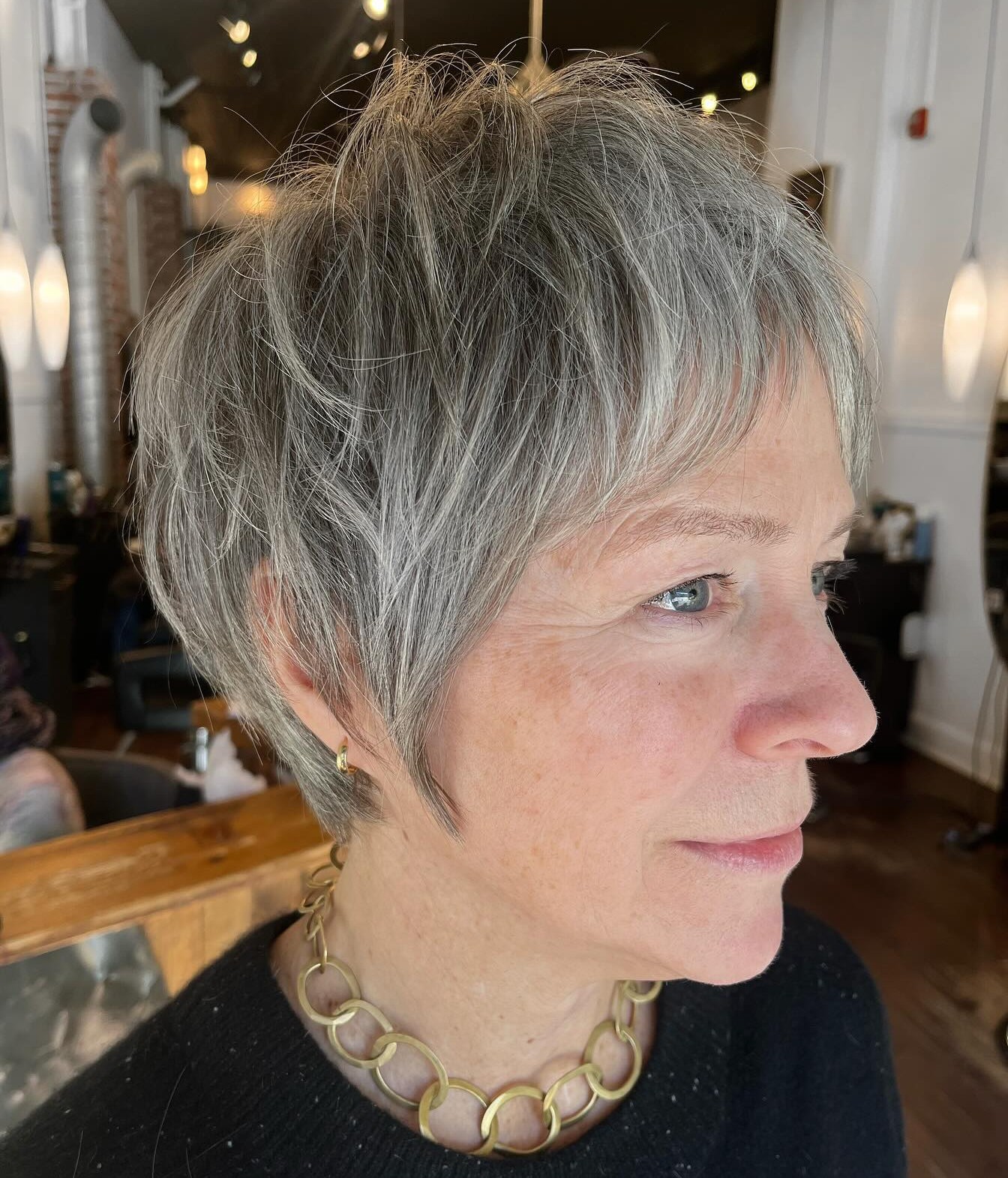
1. Classic Tapered Pixie
The nape and sides taper closely while the crown keeps soft length, the contrast creates a clean, lifted silhouette. This works for all face shapes but especially flatters oval and heart faces.
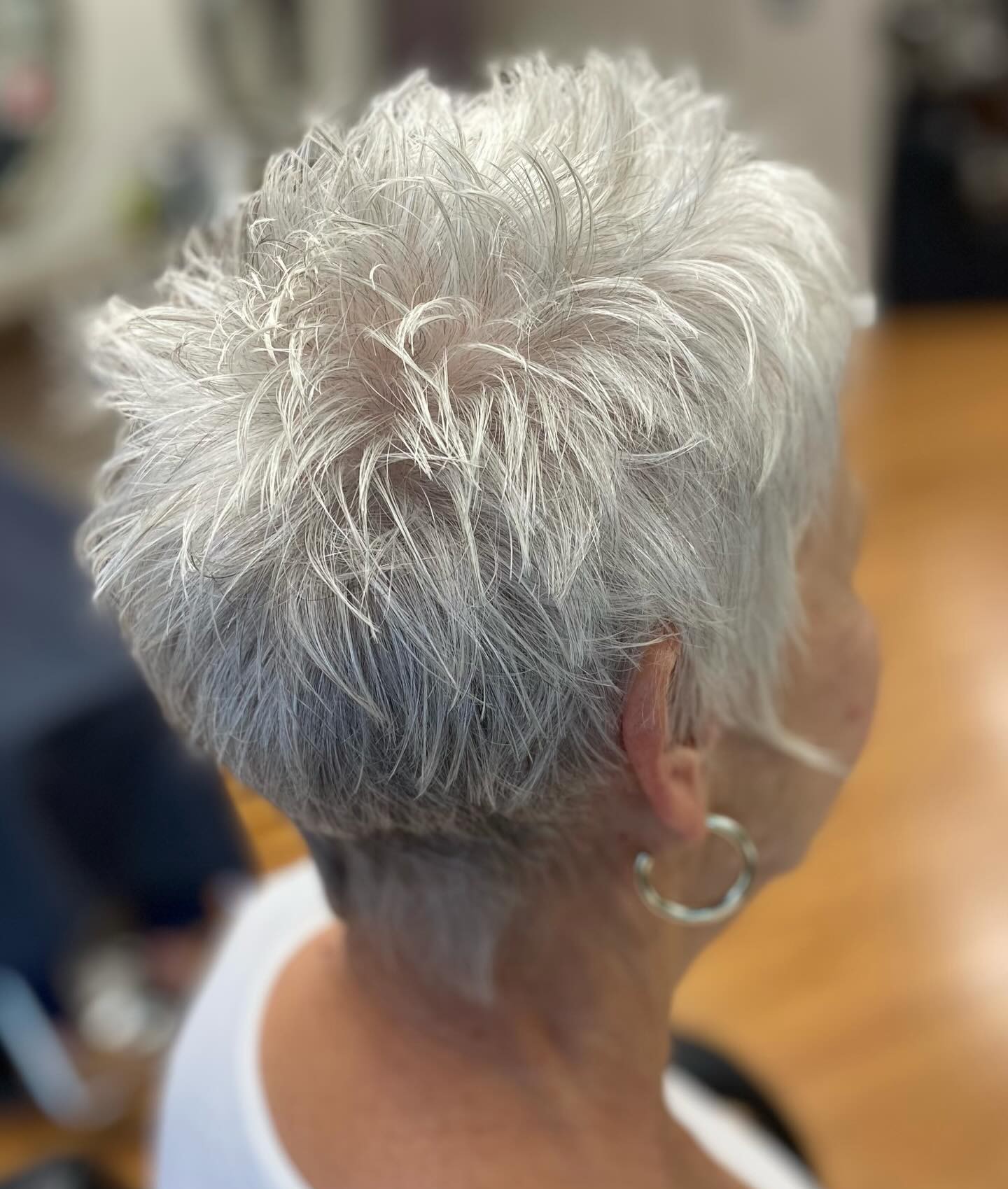
2. Silver Textured Pixie with Side Sweep
A long side-swept crown section gives silver or white hair real movement and dimension. Ask for point cutting through the top to soften any bluntness in the cut.
3. Pixie with Wispy Bangs
Soft, piece-y fringe at or just above the brows softens the forehead without making the cut feel heavy. This works especially well for women with fine or thinning hair at the front.
4. Undercut Pixie
The undercut removes bulk at the nape and sides while a longer top is styled forward, the result is surprisingly feminine despite the contrast. This cut needs a trim every three to four weeks to hold its structure.
5. Soft Rounded Pixie for Fine Hair
A rounded silhouette with no severe tapering creates the illusion of volume at the crown without much product. Ask for internal layers rather than razor cutting, which thins fine ends further.
6. Bold Cropped Pixie with Long Top
Closely cropped sides and a notably longer top give this cut a fashion-forward edge that remains practical. It suits strong bone structure, square, oval, and diamond face shapes especially.
7. Feathered Pixie Cut
Light, tapered layers cut with scissors or a razor create soft movement throughout rather than the flat look a blunt pixie can have. This technique is great for medium-density hair that tends to lie flat at the sides.
8. Pixie with Layered Crown
Stacked layers at the crown give height to naturally flat hair, making the face appear longer and more lifted. A small amount of volumizing mousse and a round brush finishes it well.
9. Natural Gray Pixie with Defined Texture
A pixie built around gray hair’s actual texture, whether that’s a new wave or coarser strands, looks intentional rather than low-effort. A light pomade or texture paste through damp hair sets the definition without stiffness.
10. Bixie Cut
The bixie lands between a pixie and a bob and is one of the most face-shape-neutral options in this gallery. It’s an ideal first step for women who want pixie ease but aren’t ready to lose all the length.
Short Bob Styles for Older Women
The short bob haircut is consistently one of the most requested styles among women over 50. Bobs frame the face beautifully, work well with fine and thinning hair, and offer enough variation that there’s genuinely a version for every face shape and lifestyle.

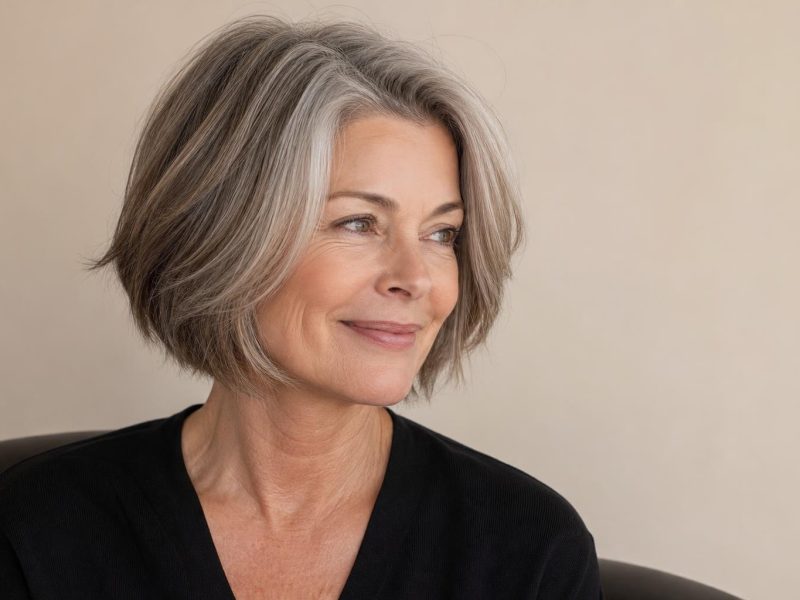
11. Classic Chin-Length Bob
Cut straight across at chin level, this bob creates a clean frame around the face and is one of the most versatile styles in the gallery. A deep side part adds softness and avoids the too-symmetrical look.
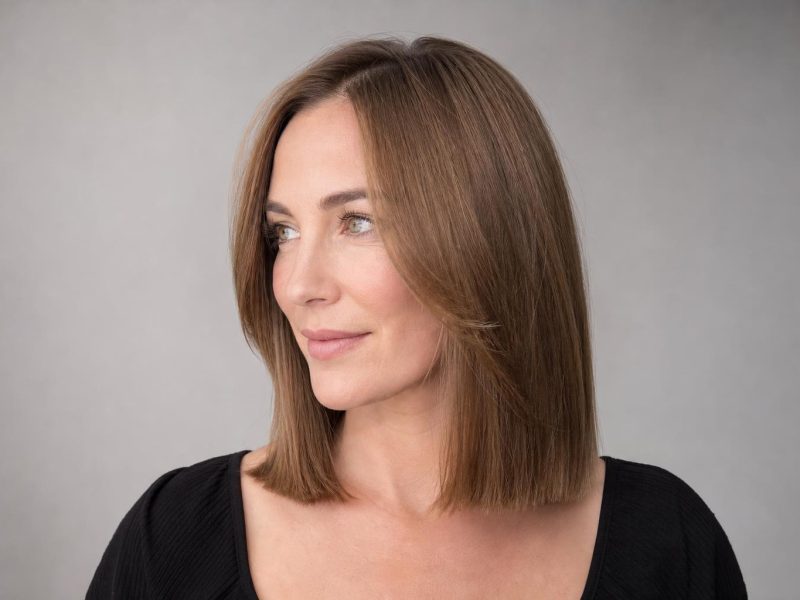
12. Blunt Bob with Deep Side Part
The blunt perimeter creates the appearance of thickness, which makes this ideal for fine hair. A deep side part adds the asymmetry that softens square and angular jaw lines.
13. Graduated Bob for Fine Hair
Graduation, where the back is cut shorter and builds length toward the front, creates natural volume at the nape without much product. Women with fine, flat hair consistently cite this as one of the most impactful cuts they’ve had.
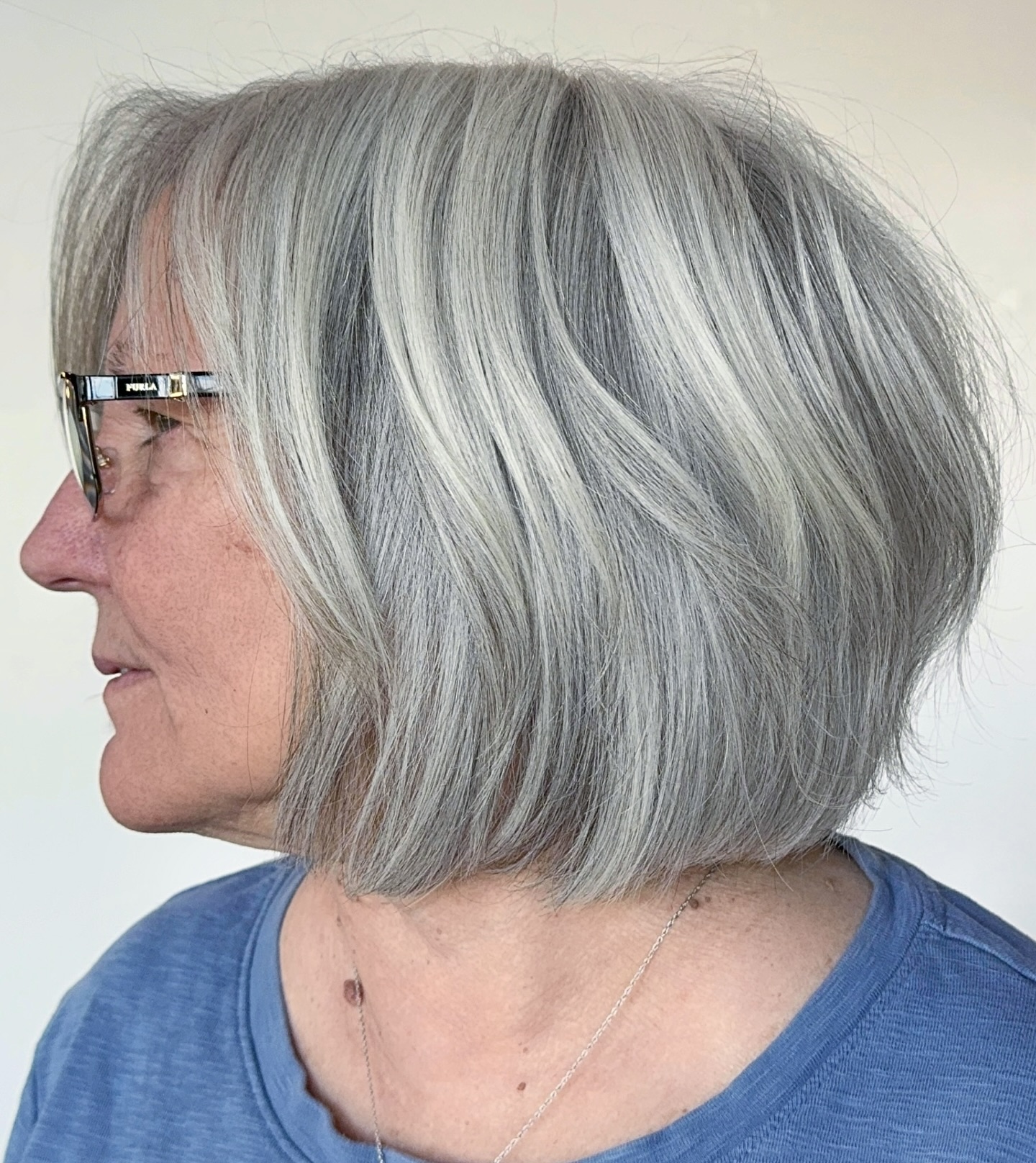
14. Textured Lob
Sitting at collarbone length, the lob is the longest style in this gallery and particularly flattering for longer or narrower face shapes. Ask for face-framing layers and subtle internal texture to keep it from looking like a single-length cut.
15. Bob with Side-Swept Bangs
Long, sweeping fringe that blends into the sides of the bob softens a high or wide forehead and adds a flattering diagonal line across the face. These bangs grow out gracefully without the frequent trims blunt fringe demands.
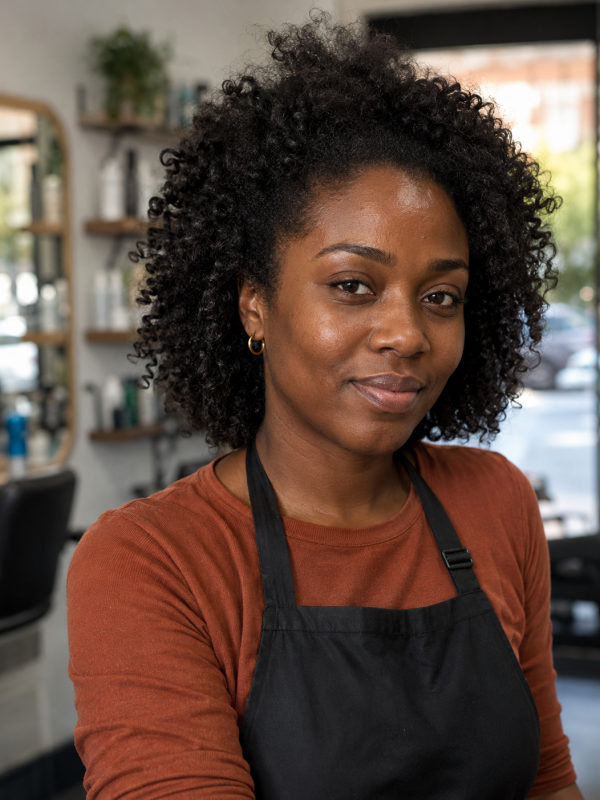
16. Curly Bob with Volume
Curly hair going short gets denser and rounder, so a skilled stylist always cuts it dry to see the true shape and account for shrinkage. A DevaCut or curl-specific technique removes interior weight while keeping curl definition intact.
17. Asymmetrical Bob
One side cut noticeably longer than the other creates visual movement and draws the eye across the face rather than straight down, flattering for rounder face shapes. Keep the longer side angled just below the jaw for the best softening effect.
18. Bob with Subtle Internal Layers
Internal layers cut underneath the top section remove weight and encourage movement without disrupting the clean outer shape of the bob. This is the right approach when you want a classic silhouette but need to manage thick or coarse hair.
19. French Bob
Short and blunt just below the ear, the French bob reads as intentional and confident, it suits oval faces and strong jaw lines particularly well. The lack of layers makes it extremely easy to maintain between salon visits.
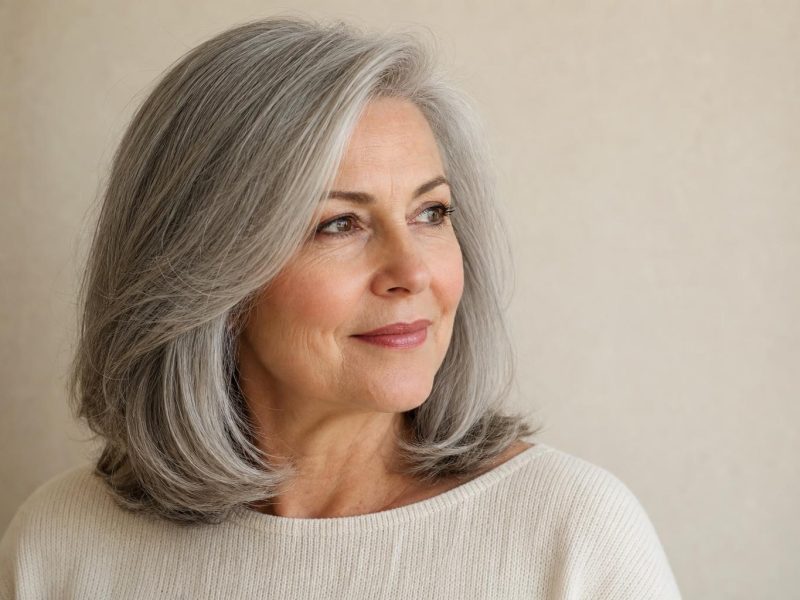
20. Silver Bob with Money Pieces
Face-framing money pieces, lighter strands placed directly around the face, give a silver or gray bob dimensional quality that avoids the flat single-color look. Ask for balayage-applied pieces rather than highlights for a softer result.
Textured and Choppy Cuts
Not every woman over 50 wants a polished, smooth finish. Textured and choppy cuts have real movement, wear beautifully with natural gray, and require less styling than sleek styles because the texture does the work for you.
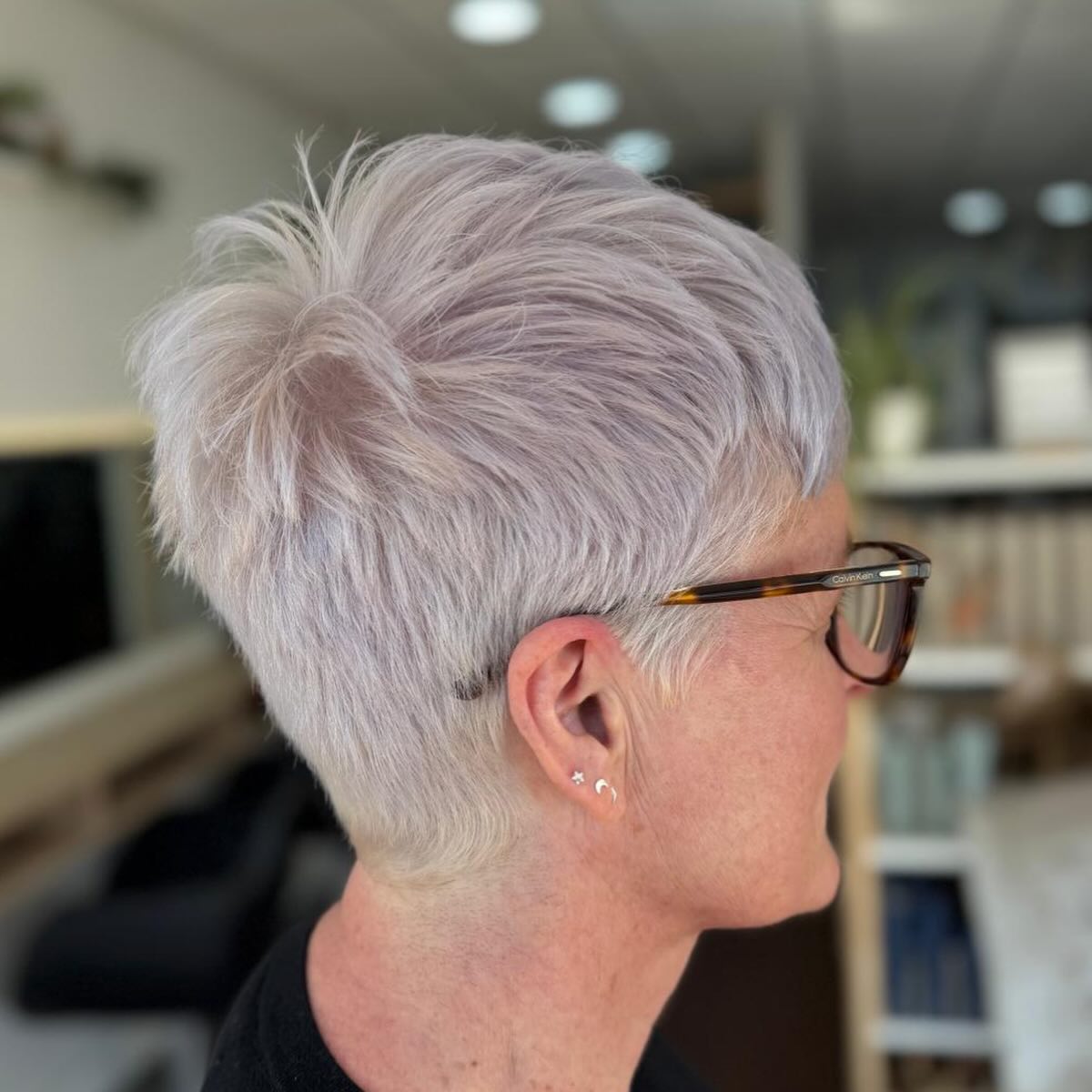
21. Choppy Pixie with Defined Texture
Point cutting through the top creates soft, broken ends that look effortless rather than overdone. Run a small amount of light wax through the tips once dry to enhance the separation.
22. Messy Crop with Soft Layers
A deliberately undone layered crop styled with a light texturizing spray and fingers looks like healthy, casual hair rather than a “done” style. The texture draws attention away from changes in density.
23. Razor-Cut Bob for Thick Hair
Razor cutting removes significant bulk from thick or coarse hair and gives the ends a feathered, airy quality scissors alone rarely achieve. Not recommended for fine or damaged hair, as it causes fraying at fragile ends.
24. Piece-y Top with Tapered Sides
A longer, textured top styled with separated strands above tightly tapered sides has both structure and dimension. This works best on oval, oblong, and heart face shapes where adding crown height is a natural flattery move.
25. Choppy Crop with Face-Framing Layers
Shorter choppy layers through the top graduate into longer face-framing pieces at the front, softening the jaw and creating a natural frame around the cheekbones. Keep the front pieces at least two inches longer than the shortest crown point.
26. Tousled Pixie-Bob
A loosely layered pixie-bob diffused or scrunched while damp gives wavy and naturally textured hair a lived-in, modern quality. The key is to stop touching it once dry, over-handling flattens the texture that makes this cut work.
27. Micro Crop with Clean Lines
Very closely cropped all over with cleanly defined edges at the hairline and nape, the micro crop is one of the most striking and lowest-maintenance cuts available. It requires strong cheekbones and a defined jaw line to carry well.
28. Shattered Bob for Volume
The shattered bob technique creates uneven, multi-length ends that give the illusion of density, a real advantage for fine or thinning hair. Unlike blunt bobs, the shattered finish moves naturally and doesn’t need daily styling to look polished.
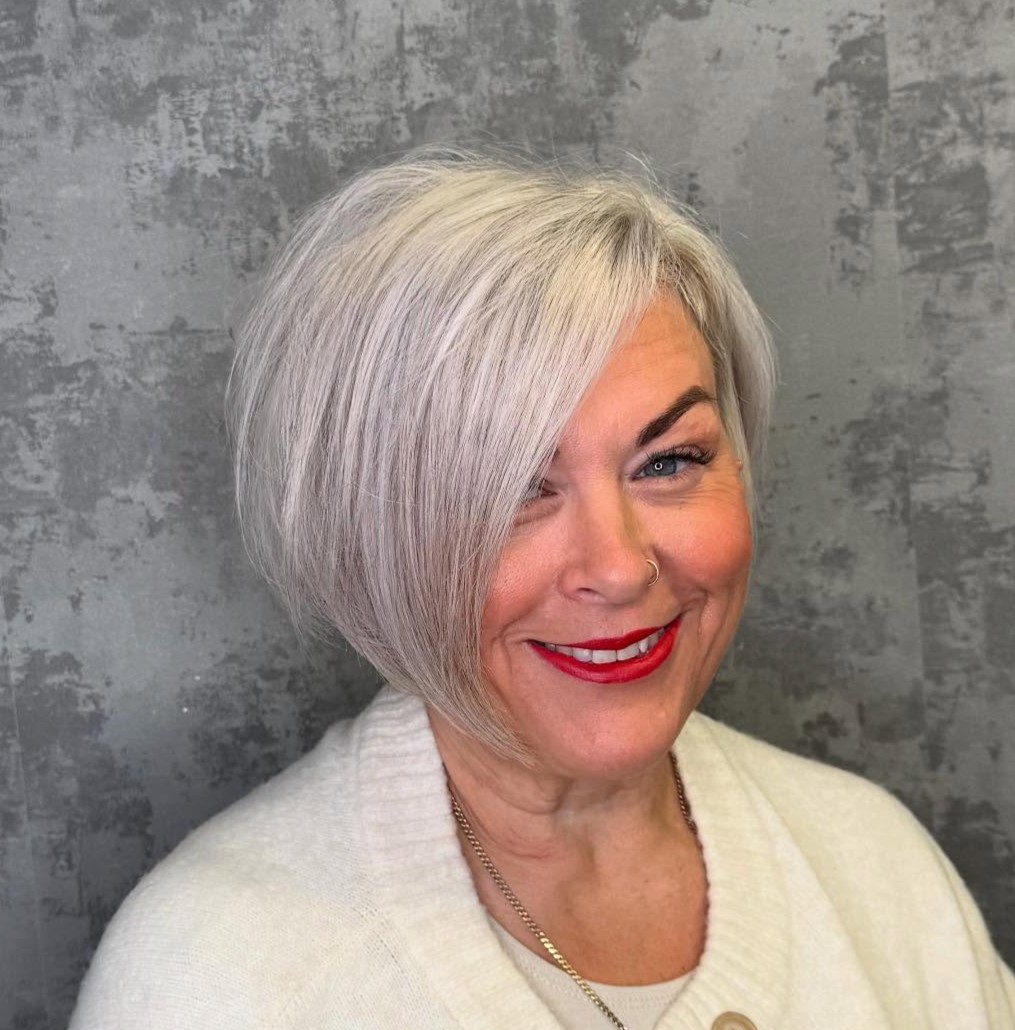
29. Textured Wedge Cut
A wedge creates volume at the back through a stacked, graduated layer structure, while a textured finish softens the traditionally boxy silhouette into something more modern. Fine and straight hair types benefit most from this cut’s built-in volume mechanics.
30. Choppy Fringe with Short Sides
A bold, piece-y fringe paired with closely cropped sides draws the eye directly to the eyes and cheekbones. This works for women who want something with genuine personality and can handle minimal daily styling.
Short Shags and Layered Styles
The shag haircut has had a genuine resurgence, and for good reason, its layered structure adds volume and movement while curtain bangs soften the face in a way that’s particularly flattering after 50.
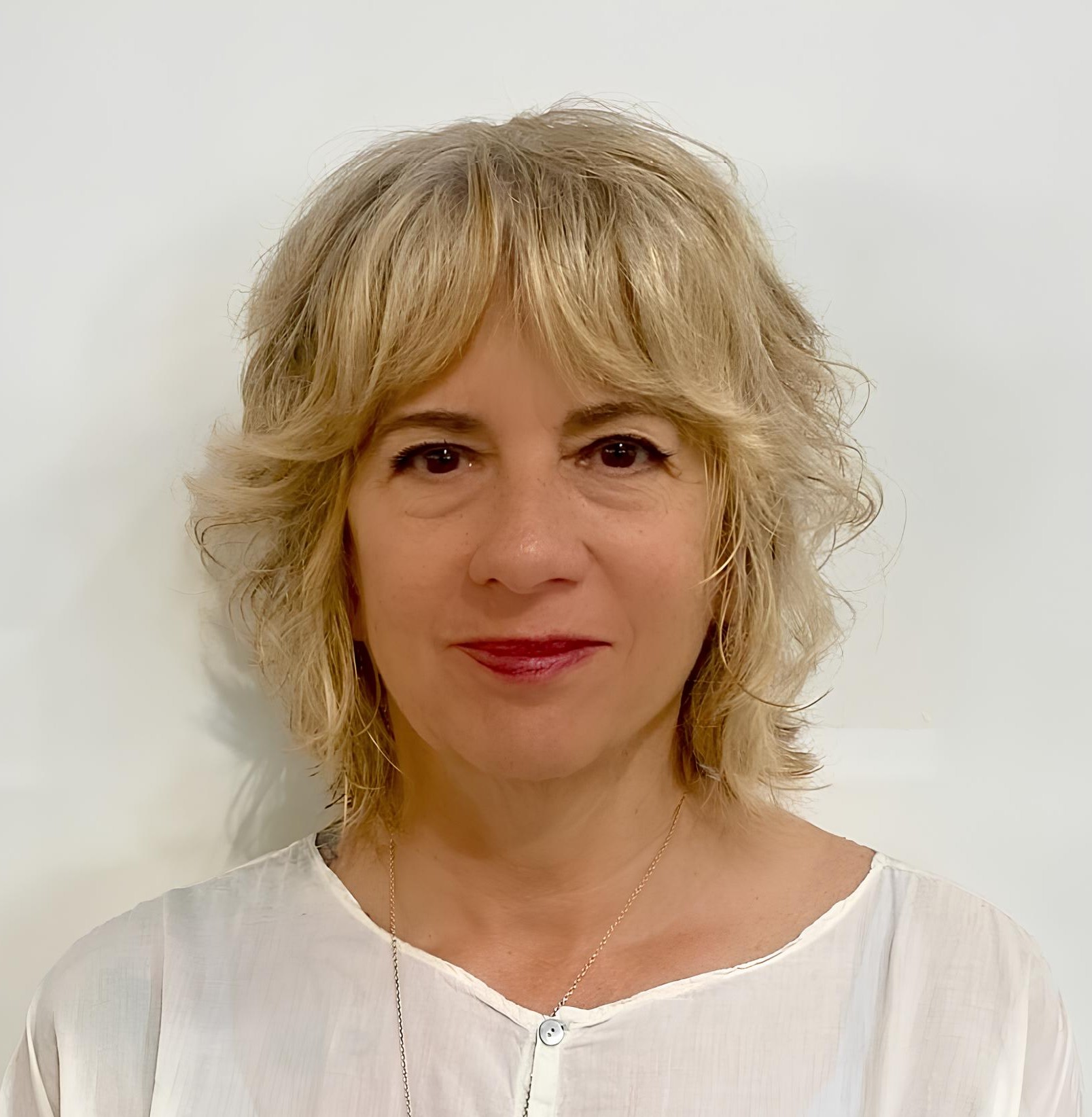
31. Short Shag with Curtain Bangs
Curtain bangs, parted in the center and swept outward, frame the face symmetrically and soften the forehead without committing to high-maintenance blunt fringe. They grow out gradually without an awkward in-between stage.
32. Wolf Cut at Short Length
A short wolf cut at ear to chin length combines the shag’s layered body with a heavier crown and wispy ends, the result is full of movement. It’s best on medium to thick wavy or naturally textured hair.
33. Feathered Shag
Long feathered layers radiate from the crown outward, cut with a razor or point-cut scissors for maximum lightness, this is the most classic version of the shag. It softens angular features and adds volume to flat hair.
34. Layered Pixie Shag
Shorter overall but cut with the shag’s graduation from a close nape to longer crown, this style has movement and dimension rather than the uniform length of a standard crop. Curly and naturally wavy hair wears this especially well.
35. Shag with Wispy Fringe
A light piece of fringe, more of an elongated sweep than a real bang, adds a soft, romantic element without the maintenance burden. Fine hair benefits particularly since the fringe adds the appearance of front density.
36. Short Layered Cut with Movement
Less dramatic than a full shag but with the same movement benefits, this suits women who like the look of layered haircuts with real dimension but prefer something office-appropriate. It holds its shape well between trims.
37. Retro Shag with ’70s Inspiration
Longer side sections, a full feathered crown, and face-framing pieces that nearly reach the jaw reference the Farrah Fawcett-era shag in a way that reads fresh rather than dated. Ask for blowout layers and a slight flick at the ends.
38. Loose Layered Nape-Length Cut
Sitting just at the nape, loose layers keep this cut from looking boxy or flat despite the short overall length. A quick blowout with a round brush is all it typically needs.
39. Long Pixie Shag
A pixie reaching the upper jaw on the longest layers, with shag-like layering that gives the sides movement rather than a blunt taper. Useful for oval, square, and round face shapes that might find a shorter pixie too severe.
40. Shag with Internal Layers Only
All the layering concentrated underneath preserves a smooth outer silhouette while eliminating interior bulk and weight, you get the shag’s volume benefits without the fully deconstructed exterior appearance. A good middle ground for hesitant shag converts.
Wispy, Soft, and Modern Short Styles
For women who prefer a softer, less structured finish, this section covers the most wearable, gentle short cuts available, styles that prioritize a light, natural look and work well without a long morning routine.
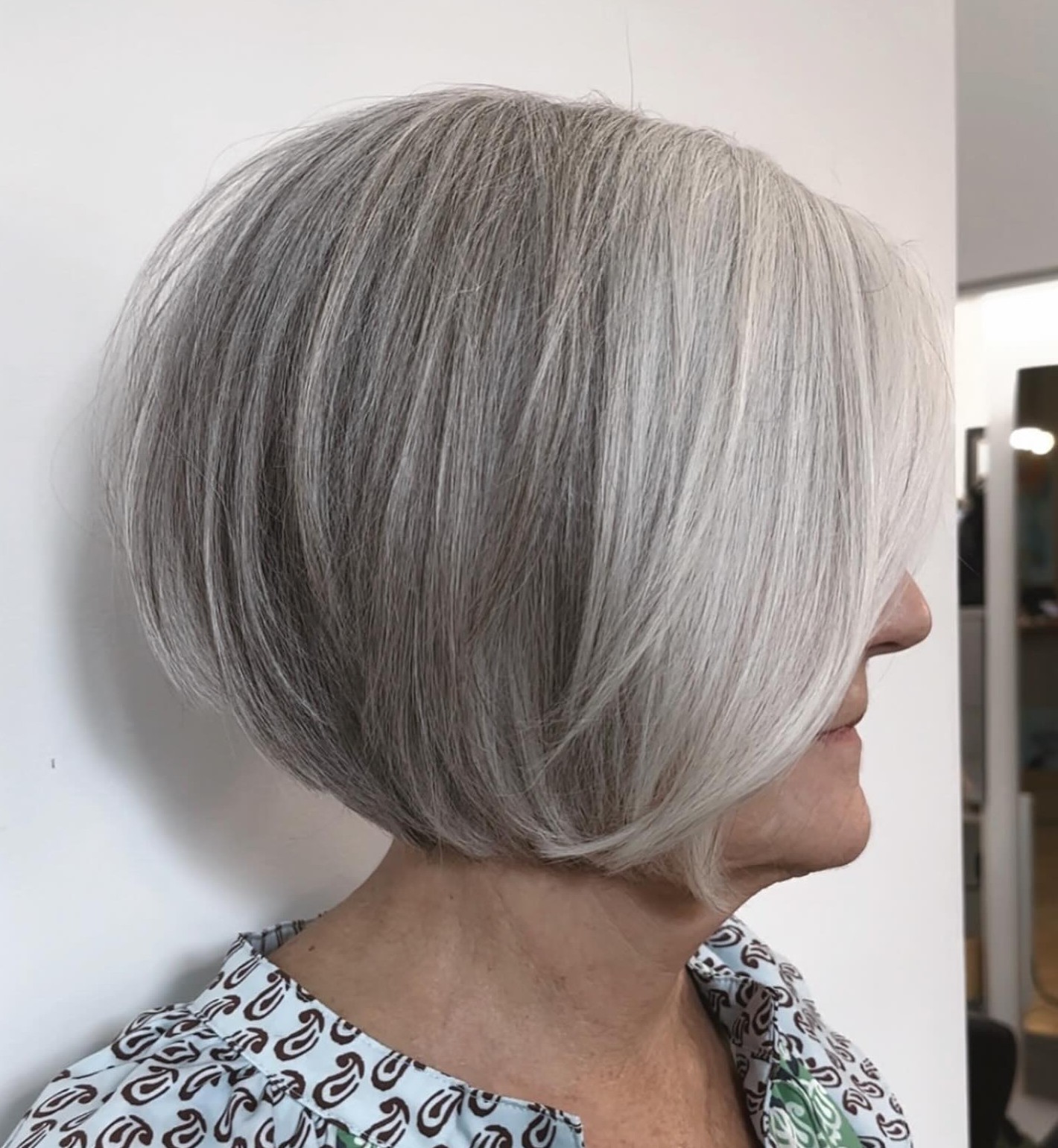
41. Soft Ear-Length Cut with Wispy Tips
Cut to just below or at ear level with softly point-cut ends, this style suits nearly every face shape and looks polished even air-dried. A small amount of light serum through damp ends is all the styling it needs.
42. Feathered Bob with Airy Layers
Light feathering through the perimeter gives a classic bob movement and a softer finish without the bulk that heavier layering creates in fine hair. This version remains flattering as hair texture shifts over time.
43. Romantic Pixie with Softened Edges
No sharp clipper edges, just a curved silhouette with a soft, rounded finish, this pixie reads delicate and feminine rather than bold. Fine wavy hair adds to the romantic, natural quality without any extra effort.
44. French-Inspired Short Cut
Short, clean sides and a softly rounded top styled with a natural part and minimal product give this cut an effortless, casual quality. Medium-to-fine hair that air-dries smoothly is the ideal texture.
45. Modern Dorothy Hamill Cut
An updated take on the classic wedge uses modern layering to soften the rounded back while keeping the flattering lift through the crown and nape. This is a reliable, face-framing option for straight to slightly wavy hair.
46. Butterfly Bob
Longer face-framing pieces at the front contrast with a shorter back, creating a soft open frame around the face, more dynamic than a standard bob but gentler than an asymmetrical cut. Fine hair with some natural movement carries this well.
47. Soft Shingle Bob
A shingle bob has a tightly graduated back that steps from longer crown to a close nape, and a wispy finish at the perimeter softens the structure significantly. Straight to slightly wavy hair shows off the graduation line best.
48. Wispy Layered Nape-Length Style
Just barely clearing the nape, this soft cut creates an airy quality at the ends, a good transitional style for women moving from shoulder-length hair to something shorter. The lightness suits fine hair well since there’s no blunt line exposing thinning ends.
49. Wispy Fringe Crop
A single long wispy piece swept across the forehead rather than a full fringe adds graphic interest while keeping the overall look soft. It’s especially effective on straight or fine hair where the piece lies flat and defined.
50. Effortless Short Cut with Natural Texture
Cut to work with the hair’s actual growth pattern rather than fight it, this style celebrates how hair behaves after 50, whether that’s new wave, increased coarseness, or finer strands. The key is a stylist who reads growth patterns and builds the cut around them.
How Hair Changes After 50, and What Short Cuts Do About It
Hair doesn’t just go gray with age, it also changes in density, texture, and behavior. Research published in the International Journal of Women’s Dermatology notes that hormonal shifts during and after menopause commonly cause changes in hair thickness, strand diameter, and curl pattern. What was straight may develop a wave; what was thick may become noticeably finer at the temples and crown.
Short cuts address these changes directly. Less weight means better volume and improved ability to hold a shape. Internal layering removes bulk without disrupting surface texture, one of the most effective tools for managing hair that has become denser in some areas and finer in others. If your hair has developed new texture, ask your stylist to cut it dry first so they can see exactly how it falls naturally.
Stylist tip: If your hair is growing in with a new wave or curl pattern, resist the urge to fight it with heat every day. A cut that works with that natural movement will always be easier to live with than one that requires a blowout to look right.
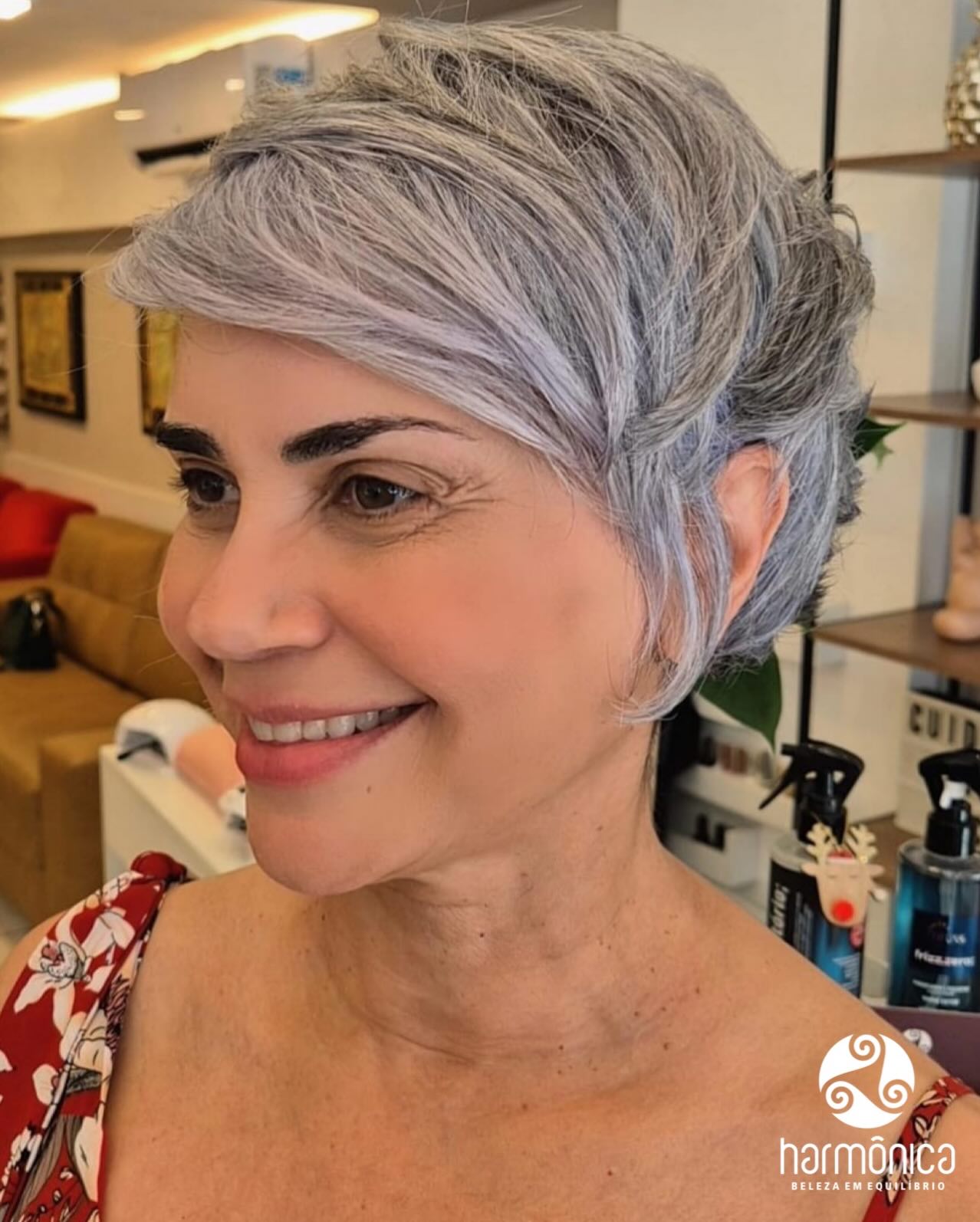
What to Tell Your Stylist
Walking in with clear, specific language makes a real difference in the result you get. Here are a few phrases that communicate exactly what many of the styles in this gallery require.
For soft texture without bulk: “I’d like internal layers to remove weight, but I want to keep the outside shape clean.” Useful for thick or coarse hair getting a bob or pixie.
For natural texture: “Can you cut this dry first so we can see how my natural texture falls?” Dry cutting is standard for curly hair and increasingly common for wavy hair that behaves differently when wet.
For thinning areas: “I have some thinning at the temples, can we work with that rather than against it?” A good stylist will adjust layering and graduation to work around thin spots rather than expose them.
FAQ
Find the answers to the most common questions about short hairstyles for older women.
What short hairstyle is most flattering for older women?
There isn’t one universal answer, face shape, hair texture, and lifestyle all factor in. That said, feathered bobs, textured pixies, and shag-influenced cuts tend to be broadly flattering because they use softness and layers rather than sharp lines that can emphasize changes in the jaw line or face contour.
Should women over 60 go shorter as they age?
Not necessarily, this is a style myth worth challenging. Short hair can look fantastic after 60, but so can longer styles with the right cut. The real variable is whether the cut flatters the face shape and works with the current hair texture. It’s a personal decision, not a rule.
What short cuts work best for fine or thinning hair?
Graduated bobs, rounded pixies with internal layers, and shattered bobs all create the visual impression of volume without adding product weight. Avoid razor cutting on fine hair, as it thins the ends further. A blunt single-length bob can also work well, the solid perimeter gives the appearance of more density than the hair actually has.
Is gray hair easier to style short?
Generally, yes, short styles dry faster and a polished short shape shows off gray or silver color better than longer, flatter styles. Gray hair can also run coarser and drier than pigmented hair, so a regular conditioning routine matters regardless of length.
How often do short hairstyles need trimming?
Most short styles, pixies, cropped bobs, undercuts, need a trim every four to six weeks. Softer, less structured styles like wispy crops and textured shags can often stretch to eight weeks. Ask your stylist which schedule your specific cut requires, since some styles have a strict maintenance window and others are very flexible.
There are genuinely more great short hairstyles for older women available today than at any point in recent memory, the gallery above covers fifty of the most wearable options, from classic pixies and polished bobs to relaxed shags and soft, natural-texture styles. The right cut is the one that works with your actual hair, your face shape, and the amount of time you want to spend styling it each morning.
The styles in this article are intended for inspiration and general guidance only. Hair texture, density, face shape, and personal preference vary widely, consult a licensed hairstylist before making changes to your cut or color. Results will vary based on individual hair characteristics and the skill of the professional performing the service.