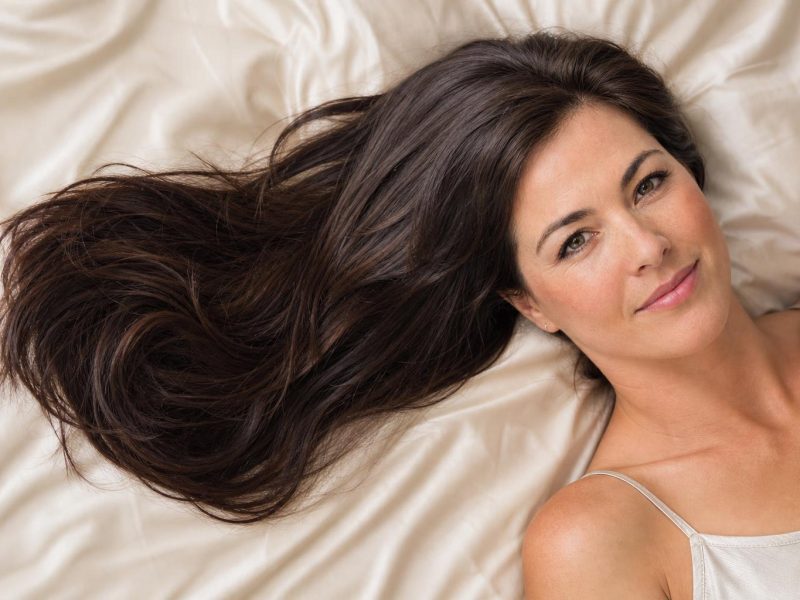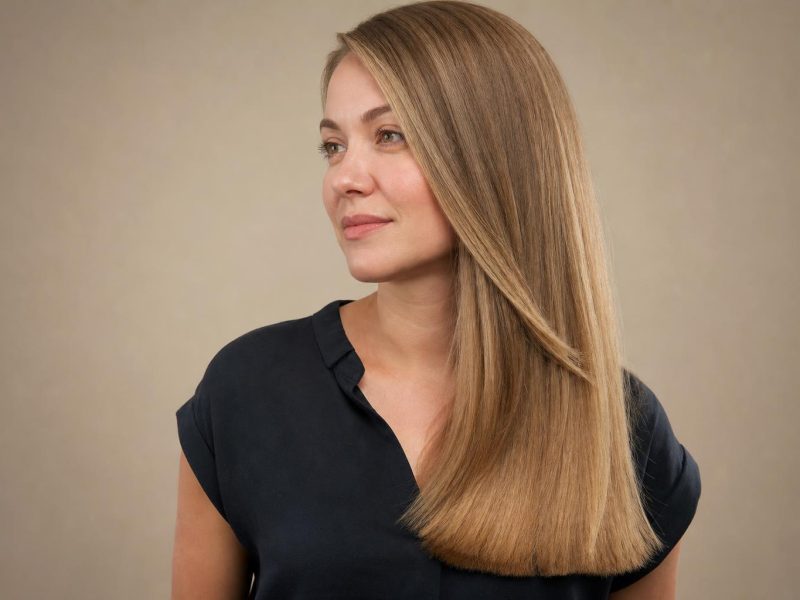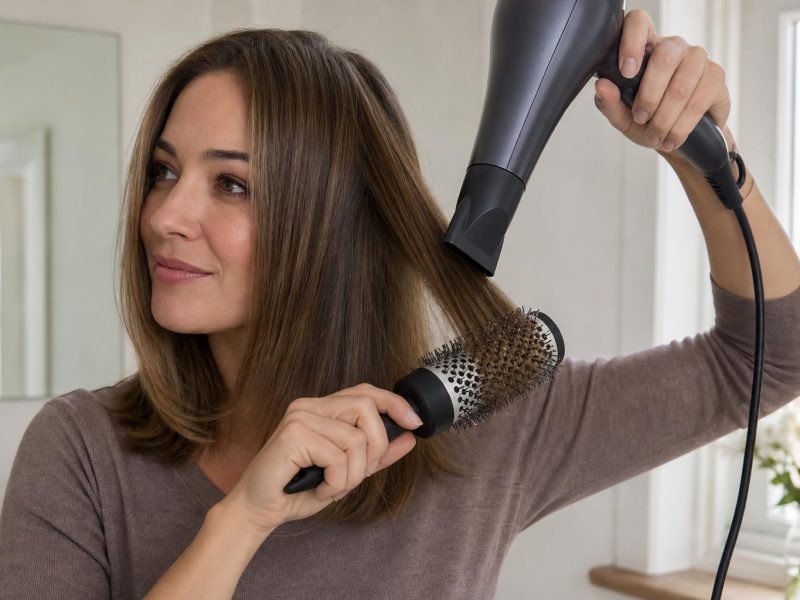

Long hair is not damaged by sleeping. It is damaged by eight hours of friction and by being tied in the same tight spot every night.
The fix is to contain the length so it stops dragging across the pillow, and to do it without putting tension on any single point of the strand. A loose braid, a high pineapple, a soft top knot, and a silk wrap all achieve this in different ways, and which one suits you depends on your texture and how long your hair actually is. The wrong choice creates a crease, a dent, or a weak spot exactly where the tie sat.
This guide covers the two forces that cause overnight damage, the four protective styles compared side by side, how to choose by hair type and length, a ten-minute bedtime routine, the truth about pillowcases, and the point at which morning tangles are telling you something other than a sleep problem.
Friction and Tension Are Two Different Problems
Friction is what happens when your hair moves against a surface all night. Cotton has a rough weave at the microscopic level, and every turn of your head drags the cuticle across it in the wrong direction, lifting the scales and roughening the surface. That is where the morning frizz and the tangles at the nape come from, and it is entirely a surface problem.
Tension is the opposite kind of damage: a specific point on the strand held under load for hours. An elastic in the same spot every night wears a weak line into every hair passing through it, and that line eventually snaps. This is why people who sleep in a tight ponytail often find breakage at one consistent height on their hair, which is a genuinely useful diagnostic if you spot it.
Almost every piece of overnight hair advice targets one of these two and ignores the other. A silk pillowcase handles friction and does nothing for tension. A tight bun handles friction beautifully and creates tension. The routine that works addresses both, which means containing the hair loosely and changing where you secure it.
Stylist tip: Move your tie position by an inch every few nights, and use a different style two or three times a week rather than the same one every night. Rotating the stress point is the cheapest breakage prevention available, and it costs nothing but the habit.
The Four Sleep Styles Compared
Each of these contains the hair, and each has a trade-off. The last column matters more than people expect, because a style that leaves you with a bend you have to heat out in the morning has cost you more than it saved.
| Style | How to Do It | Best For | Morning Trade-Off |
|---|---|---|---|
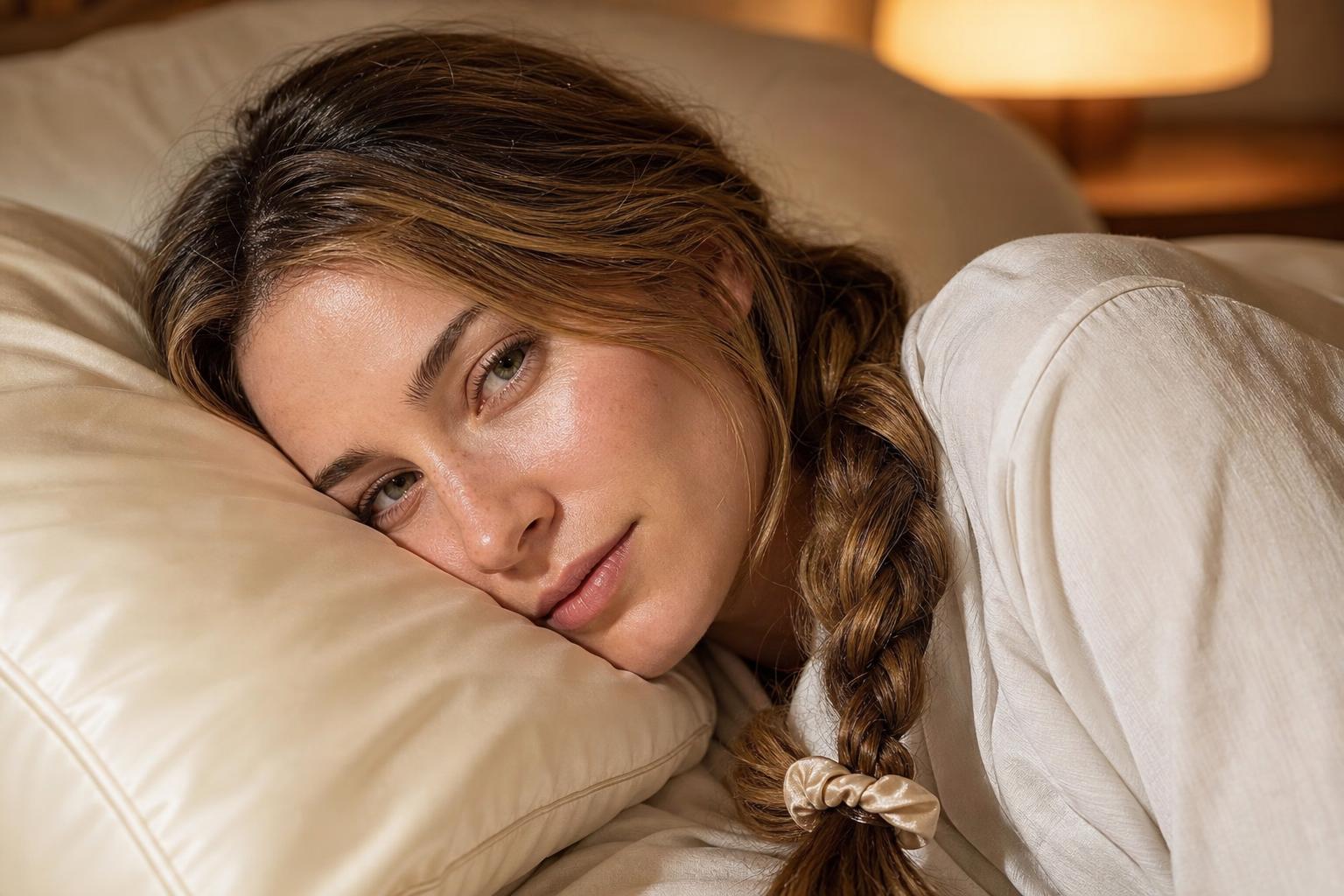
| Loose braid | One loose three-strand braid, started below the ears, tied with a silk scrunchie | Straight and wavy hair, any length past the shoulders | Leaves a soft wave, which most people like and some do not |
| Pineapple | Gather everything to the very top of the head, secure loosely at the base of the gather | Curls and coils, and anyone protecting a wash-day set | Roots can flatten on the side you sleep on |
| Loose top knot | Twist loosely and coil high on the crown, secured with a soft claw clip or scrunchie | Very long hair that would otherwise end up under your shoulder | A visible bend where the coil sat, unless it is loose enough |
| Silk wrap or bonnet | Contain the hair loosely, then cover the whole head with a silk scarf or bonnet | Coily and textured hair, and anyone with a fabric-heavy bed | Can slip off overnight, so a fitted bonnet beats a loose scarf |
| Two low braids | Split down the middle, braid loosely on each side, secure at the ends only | Very thick hair that overheats in a single braid | A center part you may need to move in the morning |
Notice what is missing from that list: a plain ponytail. It is the most common way people tie their hair at night and the worst of the options, because it concentrates all the tension at one point while leaving the entire length loose to move against the pillow. It gets you the tension damage without the friction benefit.
Choosing by Hair Type and Length
Texture decides more than length does, because different patterns fail in different ways overnight. Find the description that matches and start there, then adjust if you wake up with a dent or a flat side.
Fine Straight Hair Does Best in a Single Loose Braid
Fine strands tangle at the nape faster than any other type, since there is less weight holding them in place as you move. A single loose braid contains the whole length in one direction and stops the nape section from working itself into a knot. Secure it with a silk scrunchie at the very end rather than partway up, and start the braid low so you do not flatten the crown.
Curls Keep Their Pattern in a High Pineapple
Gathering curls to the top of the head lifts the whole set off the pillow, so the pattern is preserved rather than crushed. Keep the tie loose enough that you could pull it out without unwinding it, and use a large silk scrunchie rather than an elastic. Done properly, a pineapple buys you an extra day or two between washes, which pairs directly with knowing how to refresh curls between wash days.
Very Long Hair Needs the Weight Off the Nape
Past mid-back, the real enemy is your own shoulder pinning the length while your head turns, which pulls at the roots all night. Anything that lifts the bulk to the crown solves this, so a loose top knot or a high pineapple beats a braid at that length. If you wake with tenderness at the hairline, your tie is too tight or too low.
Coily Hair Benefits Most From a Full Wrap
Tightly coiled textures lose moisture fastest and have the most cuticle surface exposed to friction, so covering the hair entirely does more than positioning alone. A fitted bonnet stays put better than a scarf, and layering a wrap over a loose pineapple gives you both containment and coverage. Apply a leave-in first, since the wrap also stops the product evaporating overnight.
The Ten-Minute Night Routine
The routine matters as much as the style, and most of it is about what you do before you tie anything. Ten minutes, four steps, and the morning is a different experience.
Step 1: Detangle From the Ends Upward
What you need: A wide-tooth comb, and a detangling spray if your hair is prone to knots.
How: Start at the last two inches and work up in short sections, holding the hair above where you are combing so any resistance pulls against your hand rather than your scalp.
Why: Every knot you go to bed with becomes a much larger knot by morning, because a night of movement tightens it. The AAD’s own healthy hair guidance makes the same point about wide-tooth combs over brushes.
Common mistake: Starting at the roots and dragging down, which pushes every small tangle into one large one at the ends.
Step 2: Add Moisture to the Ends Only
What you need: A pea to almond-sized amount of leave-in conditioner, light oil, or serum depending on your density.
How: Warm it between your palms and press it into the last three or four inches, then rake through with your fingers.
Why: Overnight is the longest uninterrupted window your hair gets, so it is the most efficient time to condition. The ends are the oldest hair and the part that actually needs it.
Common mistake: Applying anywhere near the roots, which flattens the crown and leaves you washing sooner.
Step 3: Contain It Loosely
What you need: A silk or satin scrunchie, or a soft claw clip. No thin elastics, and nothing with a metal join.
How: Build whichever style suits your texture, then test it by sliding a finger under the tie. If it does not fit easily, the tie is too tight.
Why: Containment stops the friction and the loose tie prevents the tension, which are the two problems from the top of this guide.
Common mistake: Securing at the same height night after night, which is how you get a break line at one consistent length.
Step 4: Take It Down Gently in the Morning
What you need: Two hands and thirty seconds of patience.
How: Unwind rather than pull, unpick the braid from the bottom up, and shake the hair out with your fingers before any comb touches it.
Why: More overnight-style damage happens during removal than during the night itself, because people are in a hurry.
Common mistake: Pulling a scrunchie down over the length instead of stretching it open and lifting it off.
Never Go to Bed on Soaking Wet Hair
Wet hair is at its weakest and most stretchable, because water breaks the hydrogen bonds that give a dry strand its rigidity. Add eight hours of friction against a pillow to a strand in that state and you get far more breakage than the same night on dry hair. This is the single highest-cost overnight habit, and it is also the most common one.
Damp is a different matter and is genuinely useful. Hair that is roughly 80 percent dry sets into whatever shape you put it in as the last of the water leaves, which is the entire mechanism behind an overnight heatless curl set. Braiding damp hair gives you a wave in the morning without a hot tool anywhere near it.
If you genuinely cannot wash earlier in the evening, rough dry to at least 80 percent before bed, keep the style very loose, and use a silk cover. The scalp side matters too, since a consistently damp scalp under a wrap is an environment that encourages the yeast overgrowth behind flaking, which is worth knowing if you are also managing a flaky scalp.
What a Pillowcase Actually Changes
A smoother pillowcase reduces friction, and reduced friction means less cuticle roughening, less frizz, and fewer surface tangles. That is a real and noticeable benefit, and anyone with long hair will feel the difference within a week. What it does not do is prevent breakage caused by tension, repair existing damage, or make up for going to bed with knots already in your hair.
Silk and satin are not the same thing, and the distinction gets blurred constantly in marketing. Silk is a natural fiber; satin is a weave that can be made from polyester, and a polyester satin is smooth but far less breathable. Both beat cotton for friction. Whether the price gap between them is worth it depends on how much you care about breathability and washing durability rather than on any difference in how they treat your hair.
Stylist tip: If you are not ready to buy anything, turn your regular pillowcase inside out and iron it smooth, or lay a silk scarf flat across the pillow. Most of the benefit is in the surface texture rather than the item, and this tells you within a few nights whether the upgrade is worth your money.
When Morning Tangles Are Not a Sleep Problem
If you have fixed the style, the tie, and the pillowcase and still wake to a knotted nape, the cause is probably somewhere else. Work through these before buying another accessory.
- Damaged, high-porosity ends tangle regardless of what you do, because a roughened cuticle catches on itself. That is a condition problem, and it usually means splits that need trimming out rather than a new sleep routine.
- A protein and moisture imbalance makes hair either brittle or mushy, and both tangle. Diagnose which before treating it.
- Mineral buildup from hard water coats the strand and stops it sliding past itself. If your hair feels coated as well as tangled, that is the likelier cause.
- A very layered cut tangles more at night because short and long lengths move at different rates. It is a trade-off of the cut rather than a fault in your routine.
- Washing too infrequently for your scalp lets sebum and product build to the point where the hair clumps. Adjusting how often you wash sometimes solves the whole thing.
FAQ
Is It Bad to Sleep With Your Hair Down?
It is not damaging in itself, but it does maximize friction, since the full length spends the night moving against the pillow. If you prefer it down, a silk pillowcase and a leave-in on the ends recovers most of the benefit. Anyone with hair past mid-back generally does better containing it, purely because of the amount that ends up trapped under a shoulder.
Do Silk Scrunchies Really Make a Difference?
Yes, though the fabric matters less than the width and the tension. A wide, soft tie distributes pressure over a larger area of the strand, which is what prevents a break line. A thin silk elastic pulled tight is still a thin elastic pulled tight.
Will Sleeping in a Braid Damage My Hair?
Not if it is loose and you vary where you secure it. Damage from braiding comes from tightness at the root, from braiding hair that is still soaking wet, and from tugging it apart in the morning. A loose braid started below the ears avoids all three.
How Do I Stop Waking Up With a Flat Crown?
Move the gather forward toward the front of your head rather than sitting it directly on top, so you are not lying on it. A claw clip holds a loose coil higher than a scrunchie does. Dry shampoo at the roots before bed, rather than in the morning, also helps hold lift overnight.
Should I Brush My Hair Before Bed?
Comb rather than brush, and do it to remove tangles rather than for the traditional hundred strokes, which is a myth that mostly just creates friction. A wide-tooth comb from the ends up takes two minutes and prevents most overnight knotting. Save the brush for dry, already-detangled hair.
Does Sleeping With Long Hair Cause Hair Loss?
It causes breakage rather than loss, and consistently tight styles can cause traction damage at the hairline over years. Broken hairs are short with blunt ends; shed hairs come out full length with a white bulb. If you are seeing the second kind in increasing numbers, that is a question for a doctor rather than a change of pillowcase.
Working out how to sleep with long hair is really about managing friction and tension at the same time, and most routines only handle one of them. Contain the length loosely, move the tie position regularly, detangle before bed rather than after, and never lie down on soaking wet hair. Those four habits protect more long hair over a year than any product you can buy.
Hair results vary based on your natural hair type, texture, density, and condition. Always consult with a licensed hairstylist before making significant changes, especially with chemical treatments or dramatic length changes. Photos may show styled results that require professional tools and products to replicate.