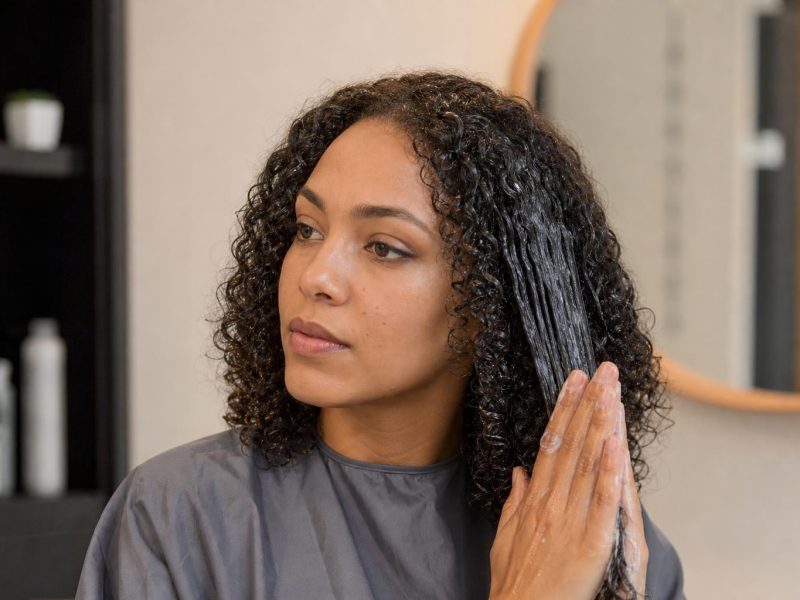

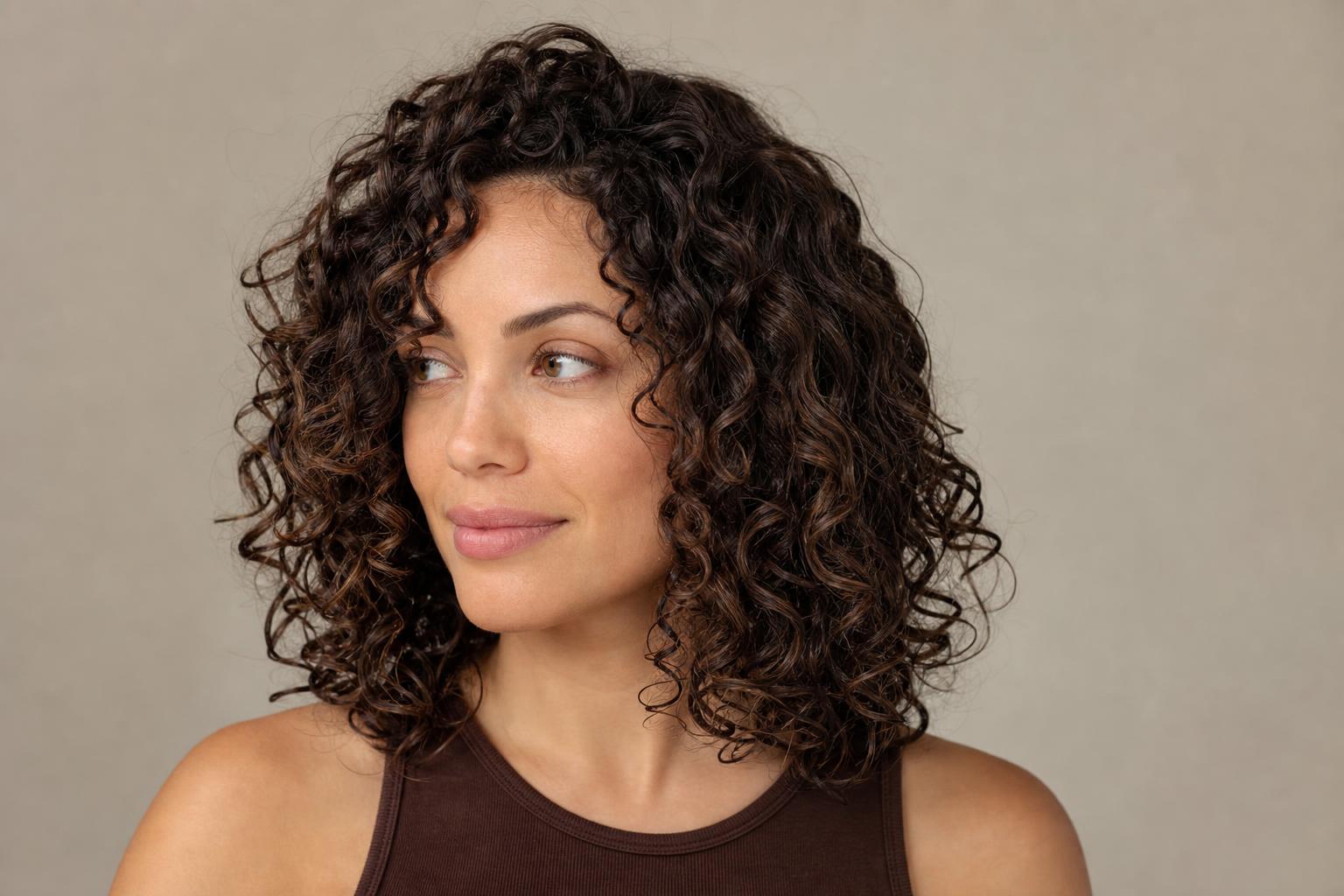
A curl refresh is a water job first and a product job second, and most people get that order backwards.
Refreshing curls without washing means adding back just enough water to reactivate the gel or cream already sitting in your hair, then reshaping the curls that flattened while you slept. Day 2 hair usually needs a light mist and 30 seconds of scrunching. Day 3 hair needs water applied in sections along with a little leave-in conditioner. Day 4 hair needs to be genuinely wet again, either under the shower head or with soaked hands, before a single drop of new product goes near it.
This guide sorts five refresh methods by how much water each one uses, matches them to day 2, day 3, and day 4 hair, sets the water amount by curl pattern, and covers the night prep that decides how much work your morning takes. It also names the point where refreshing stops working and a wash becomes the faster route.
| Day | What the Hair Looks Like | Water Level | Time Needed |
|---|---|---|---|
| Day 2 | Definition intact, roots flat, slight frizz halo | Barely damp mist on the surface only | 2 to 3 minutes |
| Day 3 | Clumps breaking apart, ends dry, shape uneven | Damp through the mid-lengths and ends | 8 to 12 minutes |
| Day 4 | Curls merged into loose waves, texture feels rough | Fully wet, roots included | 15 to 25 minutes with drying |
| Day 5 plus | Scalp itching, product film, curls will not reform | Wash instead of refresh | Full wash day |
Refreshing Reactivates Old Product Rather Than Adding New Product
The gel, foam, or curl cream you applied on wash day is still in your hair on day 3. Water is what softens it and lets the strands regroup into their original clumps, which is why a refresh that starts with product on dry hair almost always ends in a sticky, separated mess. Treat the water as the switch and the product as a small top-up for the sections that lost the most moisture, usually the ends and the crown where your pillow did the most damage.
Curl memory works in your favor here. Hair that dried into a defined clump wants to return to that clump when it gets wet again, so you are re-forming an existing shape rather than building one from scratch. That is also why the refresh gets harder each day, since every night of friction pulls more strands out of their groups and there is less structure left to revive.
Stylist tip: Mist the hair, then wait 20 seconds before you touch it. Water needs a moment to travel into the strand, and scrunching immediately just pushes the droplets off the surface and creates frizz where you wanted definition.
Five Refresh Methods, Sorted by How Much Water They Use
Every refresh method is a variation on the same two moves, wet the hair and reshape it. What changes is the volume of water, how you deliver it, and whether the curls get re-cast with fresh product. Start at the lightest method that fixes the problem in front of you, because using a day 4 technique on day 2 hair strips out the definition you already had and leaves you restyling from zero.
The Mist and Scrunch Takes Two Minutes on Day 2
Fill a continuous fine-mist bottle with plain water and hold it about a foot from your head, then mist the surface of the hair until the curls look slightly darker but still feel dry underneath. Cup a handful of curls in your palm and scrunch upward toward the scalp three or four times, working around the head. Finish by flipping your head forward and shaking gently at the roots for lift.
This method preserves the gel cast that formed on wash day, so it works best when day 2 curls have held their shape and only the top layer looks fuzzy. Fine, low-density curls get the most out of it because they collapse under any extra product weight.
Sectioned Leave-In Refresh Rebuilds Definition on Day 3
Clip the hair into four sections, then work one section at a time. Mist the section until the mid-lengths and ends feel properly damp, rub a dime-sized amount of leave-in conditioner between your palms, and glide it down the length before scrunching upward. Move to the next section and repeat, leaving the roots alone unless they feel dry.
Sectioning is what separates a day 3 refresh that works from one that leaves half your head defined and the other half fluffy. It takes roughly ten minutes on shoulder-length hair and is the most reliable method across the whole 2a to 4c range, which is worth knowing if you are still learning where your curl pattern falls on the type chart and how much moisture it actually needs.
The Wet Hands Method Suits Coily Textures That Hate Spray Bottles
Run your hands under the tap, shake off the excess, and smooth them over the outside of the hair, then rake gently through a section and scrunch. Repeat with freshly wet hands for each section. The water goes exactly where you place it, which matters on tight coils that fall out of formation when a spray bottle soaks the roots and the shrinkage pulls everything flat.
Coily hair also loses moisture faster than looser patterns, so pair this with a light oil or butter on the ends rather than a water-based leave-in that will evaporate by lunchtime. The differences in how curly and coily textures hold water explain why a routine that works on a friend’s 3a hair can flop on 4b.
A Spot Gel Cast Fixes One Bad Section Without Redoing Everything
Sometimes only the front two pieces have gone wrong. Wet just those pieces, apply a pea-sized amount of gel, twist each one around your finger, and let it set while you get on with the rest of your routine. Once it dries, break the cast by scrunching. You get a fresh, defined frame around the face in under five minutes and the back of your head stays untouched.
The Full Rinse Refresh Is the Day 4 Reset
Step into the shower without shampoo, let warm water run over the hair for 30 to 60 seconds, and squish a small amount of conditioner through the lengths with your head tipped forward. Rinse most of it out, then apply your usual styler to soaking wet hair the same way you would on wash day. Plop or diffuse as normal.
This is a wash day minus the shampoo, so budget the time accordingly. It buys another two or three days without stripping the scalp, and it rescues hair that has passed the point where misting does anything useful. If you go this route, the same drying rules from air-drying curls without frizz apply, since a rinse refresh leaves hair just as vulnerable in the first hour as a full wash does.
Water Volume Changes by Curl Pattern and Density
The instruction to mist until damp means very different things on wavy hair and on tight coils. Looser patterns waterlog quickly and lose their wave under too much moisture, while coils can absorb a surprising amount before they even register as wet. Density matters just as much as pattern, since a thick head of 3b curls needs the water divided across more sections than a fine head of the same pattern.
| Curl Pattern | How Wet to Go | Best Refresh Product | Common Mistake |
|---|---|---|---|
| 2a to 2c wavy | Surface mist only, never damp to the touch | Light mousse or a diluted gel spray | Over-wetting, which drops the wave into a straight-ish bend |
| 3a to 3b curly | Damp through mid-lengths and ends | Watered-down leave-in in a spray bottle | Skipping sections and refreshing only the front |
| 3c curly | Damp everywhere including near the roots | Creamy leave-in with a light gel over the top | Raking with fingers, which splits the clumps apart |
| 4a to 4c coily | Wet hands on each section rather than a spray | Butter or oil sealed over a water-based cream | Water with no sealant, so the moisture is gone by noon |
Stylist tip: Dilute your leave-in conditioner three parts water to one part product and keep it in its own spray bottle. Undiluted leave-in applied to day 3 hair stays on the outside of the strand and turns white as it dries, which is the streaky cast most people blame on their gel.
Night Prep Decides How Long the Morning Refresh Takes
Almost every difficult refresh traces back to what happened between midnight and 7am. Loose hair rubbing against cotton for eight hours flattens the crown, roughs up the cuticle, and pulls clumps apart at the ends, which is the frizz halo you wake up to. Gathering the hair high on the head in a loose pineapple with a satin scrunchie, or wrapping it in a satin bonnet, removes most of that friction and can cut the morning refresh from ten minutes to two.
Length changes the approach. Anything shorter than chin length will not stay in a pineapple, so a satin bonnet or a satin pillowcase does the work instead. Very long or heavy curls do better in two loose braids than one high bundle, since a single pineapple pulls at the roots overnight and leaves a dent. How a cut behaves on the second and third day varies more than most people expect, and second-day hair by cut type is worth checking before you blame your products.
Refresh Troubleshooting by Symptom
Most refresh failures have one of four causes, and the fix is rarely a new product. Match what you see in the mirror to the row below before you spend money on another curl spray.
| What You See | Likely Cause | Fix |
|---|---|---|
| Frizz halo along the top | Under-wetting, plus overnight friction | Mist more, not less, then smooth with damp palms and add a bonnet at night |
| Flat, greasy roots | Product migrating down from the crown | Keep refresh product off the first two inches and clip the roots up while the hair dries |
| Curls feel crunchy and stay that way | Fresh gel applied over an unbroken cast | Scrunch firmly once the hair is completely dry to break the cast |
| White flakes through the lengths | Buildup of layered product across several days | Clarify at the next wash and refresh with water alone for a week |
| Hair dries rough within minutes | Flash drying on high-porosity or hard-water hair | Add a creamy leave-in to damp hair before any gel, and consider a shower filter |
When a Refresh Is Not the Right Call
Refreshing has a ceiling, and pushing past it wastes a morning and usually ends in a bun anyway. Wash instead when any of the following is true.
- Your scalp itches or feels tight, which means buildup and sweat have gone past what water can move.
- The curls have merged into thick, rope-like sections that do not separate when wet, a sign the strands have matted rather than clumped.
- You worked out hard, since salt from sweat dries on the strand and blocks water from getting in.
- You used a heavy oil or butter yesterday and the hair now feels coated, because water cannot pass through a fresh occlusive layer.
- You are heading somewhere humid and the hair already feels swollen, in which case a fresh gel cast on genuinely wet hair holds far better than a refreshed one.
There is also a limit on how many refresh days a single wash can carry. Most curly and wavy heads get three to four good days from one wash, coily hair often stretches to seven or more, and fine wavy hair frequently taps out on day 2. Chasing an extra day for the sake of it is how people end up with irritated scalps and hair that will not hold a curl at all.
What to Tell Your Stylist
A cut that refreshes well has enough weight in the interior to keep clumps together and enough separation at the surface to let the curls move. Ask for it in those terms. Useful wording sounds like this, “I wash once a week and refresh in between, so I need the interior kept dense enough that the clumps do not fall apart by day 3.” If your curls collapse on the second day, say so directly and ask whether the layers are starting too high for your particular pattern.
Ask for a dry cut if nobody has offered you one. Seeing where each curl actually lands is the whole point, and a stylist trained in a curl-by-curl dry cutting method will shape around your existing clump pattern rather than cutting through it. Bring a photo of your hair on day 3 rather than day 1, because that is the version you live with most of the week. A full range of curly and wavy cut ideas gives you a starting point for that conversation.
FAQ
Short answers to the questions that come up most often about stretching a wash.
How Many Days Can I Go Without Washing Curly Hair?
Most curly and wavy hair goes three to five days between washes, and coily hair regularly goes seven to ten. The limit is set by your scalp, not your curls, so an itchy or flaking scalp means wash day has arrived regardless of how the lengths look. Oily scalps paired with dry ends do better with a targeted scalp-only cleanse than a full wash.
Can I Refresh Curls With Just Water?
Yes, and on day 2 water alone is usually the better choice because the styler from wash day is still active. Water-only refreshes start failing around day 3, when the original product has been broken down by friction and there is nothing left to reactivate. At that point a diluted leave-in gives the water something to hold onto.
Should I Refresh Curls at Night or in the Morning?
Morning refreshes give a cleaner result because the hair dries in its reshaped position instead of being flattened by a pillow. Night refreshes work if you have low-porosity hair that dries slowly and you can genuinely let it dry fully before bed. Going to sleep on damp curls is the fastest route to a dented crown and a musty smell at the nape.
Does Dry Shampoo Work on Curly Hair?
Dry shampoo handles oily roots but does nothing for curl definition, so treat it as a scalp product rather than a refresh product. Apply it straight to the parting at the roots, wait two minutes, and massage in with fingertips before you mist the lengths. Overuse builds up quickly on textured hair, so cap it at two applications between washes.
Why Do My Curls Get Frizzier After I Refresh Them?
The usual culprit is touching the hair while it dries, which lifts the cuticle at exactly the wrong moment. Mist, scrunch, then leave it completely alone until it is dry to the touch. The second culprit is too little water rather than too much, since half-damp hair swells unevenly and the strands separate instead of grouping.
Can I Refresh Curls Without a Spray Bottle?
Wet hands work as well as a bottle and give you more control over placement, which is why many stylists prefer them on tight coils. Dampen your palms, smooth them over one section, and scrunch upward, refreshing your hands between sections. A damp microfiber towel pressed over the surface is a decent third option for wavy hair that goes limp with any real moisture.
Is It Bad to Refresh Curls Every Single Day?
Daily refreshing is fine when you are only using water, but daily product layering is not. Each application leaves a film that the next one lands on top of, and by day four that stack blocks water from reaching the strand at all. Alternate water-only days with product days, and clarify every three to four weeks to reset.
Learning to refresh curls without washing is mostly a matter of matching the water to the day rather than buying another spray. Start with the lightest method that fixes what you can see, keep product off the roots, and protect the shape overnight so the morning starts from a better place. Give one method a full week before you judge it, since curls respond to a routine over several cycles rather than a single good hair day.
Hair results vary based on your natural hair type, texture, density, and condition. Always consult with a licensed hairstylist before making significant changes, especially with chemical treatments or dramatic length changes. Photos may show styled results that require professional tools and products to replicate.