

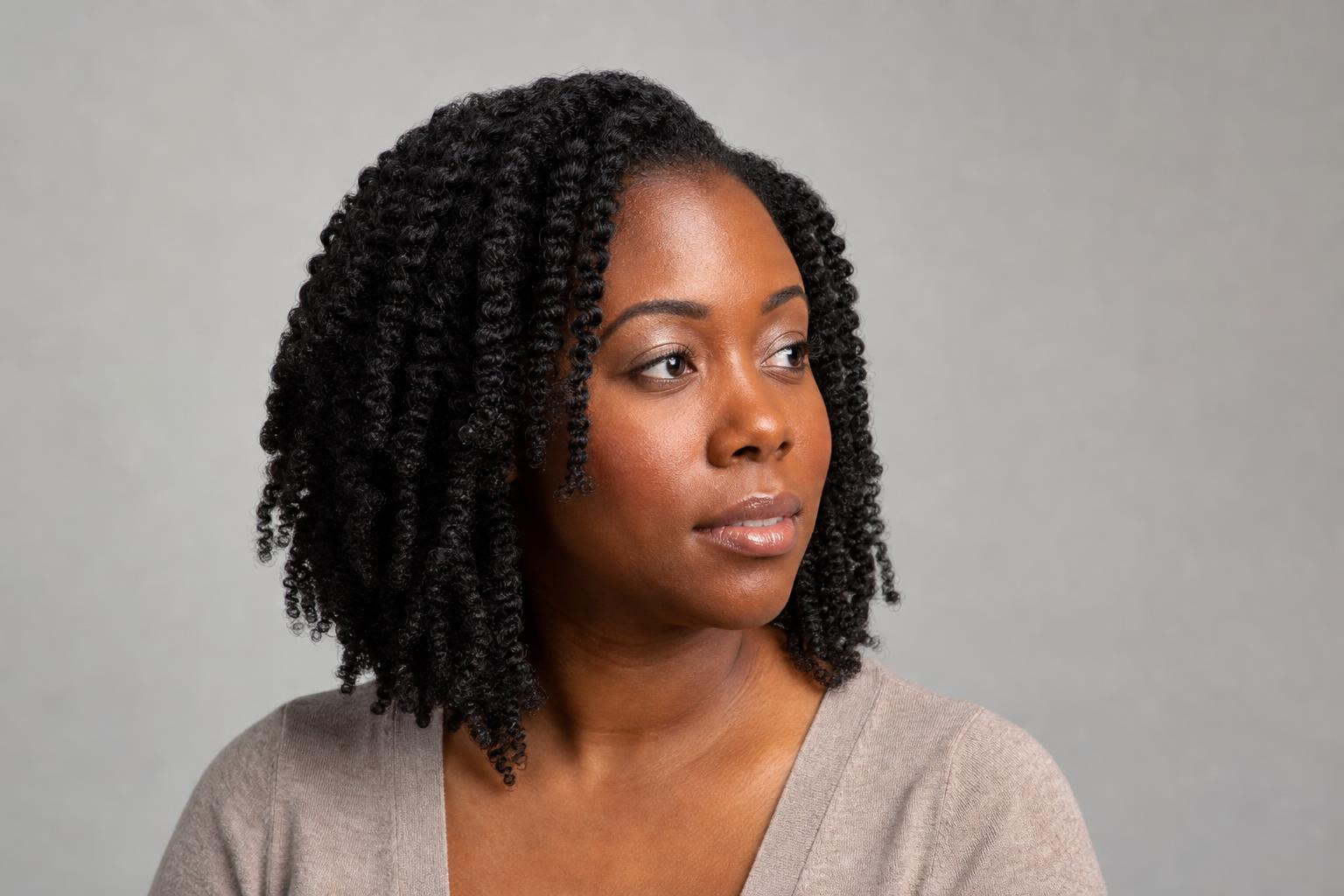
Almost every style that fails on kinky hair failed at the preparation stage, not at the styling stage.
Kinky 4b and 4c hair styles best when it has been stretched and is still holding water, and it resists almost everything when it is dry and fully shrunken. That single fact explains why the same twist-out looks defined one week and frizzy the next, and why a style that took an hour falls apart by lunchtime. The technique that fixes it is a sequence rather than a product: stretch first, add water, seal, then set.
This guide covers why definition and stretch work against each other, three ways to stretch without heat, the order to layer water and product so it lasts, which style to choose for each goal, and the four styles that cover most weeks with the least effort.
| Factor | Details |
|---|---|
| The sequence | Stretch, wet, seal, set, dry completely, then release |
| Shrinkage range | Commonly 60 to 80 percent of true length on 4c hair |
| Where breakage starts | At the twists along the shaft, worked on dry and unstretched |
| Avoid | Combing dry, releasing a set before it is bone dry, daily product stacking |
| Wash rhythm | Every 7 to 14 days, with a midweek water refresh rather than a wash |
Definition and Stretch Pull in Opposite Directions
The two things most people want from a kinky hair style are competing goals, and understanding that saves a lot of frustration. Definition comes from letting the coil form its natural shape, which means accepting the shrinkage that comes with it. Stretch comes from holding the coil open, which necessarily flattens some of the definition. No product delivers both at maximum, and a style promising defined coils plus visible length is quietly choosing a midpoint.
Deciding which one a given week calls for makes every other choice simpler. If you want your length to show, set on stretched hair with larger sections and accept a looser pattern. If you want a tight, springy result, set on shrunken hair with small sections and accept that it will read shorter than your hair actually is. Choosing neither is what produces the undefined, medium result nobody was aiming for.
Stylist tip: Measure your real length once so you stop guessing. Pull one strand at the back of your head straight down against a tape measure while it is damp, and note the number. Most people with 4c hair find they have several inches more than they thought, and knowing the figure changes which styles seem worth attempting.
How to Stretch 4B and 4C Hair Without Heat
Stretching is the step that makes everything downstream easier, because stretched hair detangles with less breakage, takes product more evenly, and sets into a cleaner pattern. Heat does the job fastest and costs the most over time. The three methods below reach a similar result using drying time instead of temperature, and all of them are done on damp hair and left until fully dry.
Banding Stretches More Than a Blow-Dryer and Costs Nothing
Section damp hair into six to eight parts, then place satin-covered elastics down the length of each section at roughly one-inch intervals, snug rather than tight. As the hair dries it is held in an extended position, and the result on 4c hair is usually a longer stretch than a cool blow-dry achieves. Leave it overnight and remove the bands from the ends upward in the morning.
The one caution is the elastic itself. A plain rubber band grips individual strands and snaps them at the exact point it sits, and doing that at the same intervals repeatedly creates a line of breakage down the length. Use satin-covered or seamless bands only, and shift the positions slightly each time.
Threading Holds the Most Stretch per Hour of Effort
Wrapping each damp section tightly in cotton thread from root to tip holds the hair fully extended while it dries, and it is the method that produces the most stretch of the three. It applies no pull to the follicle, unlike a braid, because the tension sits along the shaft rather than at the root. Sections take a couple of minutes each once the wrapping motion becomes familiar.
Wrap firmly but stop short of pinching, and leave the last half inch of the ends free so they are not folded under the thread. Unwrap by unwinding rather than sliding the thread off, and expect the hair to relax slightly within a few hours, which is normal.
Twisting Damp Gives Stretch and a Set in One Step
Two-strand twists installed on damp hair do double duty: they stretch as they dry and they leave behind a defined wave pattern when released. This is the most efficient option for anyone who wants both, which is why twist-outs remain the default kinky hair style. The trade is that the stretch is moderate rather than maximal, since a twist holds the hair in a spiral rather than straight.
Water First, Then the Sealer
Moisture in hair is water, and every cream, butter, and oil on the shelf is there to slow the rate at which that water leaves. The order therefore matters more than the products do. Apply water or a water-based leave-in to genuinely wet hair, follow with a cream if your hair needs body, then seal with a small amount of oil or butter as the last step. Applying oil to dry hair skips the water entirely and produces hair that feels coated and still snaps.
Two adjustments cover most people. If your hair feels coated and never seems to absorb anything, you are likely sealing too heavily for your porosity, so drop the butter and use a light oil; a quick porosity test settles it. If your hair feels dry again within a day, the seal is too light or you skipped the water step. Keep the routine to three products at most, since a longer stack builds up faster than a weekly wash removes it, and the cleanser side of that balance is covered in our guide to pairing a shampoo and conditioner for curly hair.
Pick the Style by What You Want It to Do
Choosing by goal rather than by photograph removes most of the trial and error, because each style family solves a specific problem and does poorly outside it. The table below is the shortest useful version, with the preparation each one needs and how long it realistically holds before it needs redoing.
| Goal | Style | Preparation Needed | Realistic Wear |
|---|---|---|---|
| Maximum definition | Small two-strand twist-out | Set on damp shrunken hair, dry fully | 3 to 4 days |
| Visible length | Braid-out on banded or threaded hair | Stretch first, then set in large sections | 2 to 3 days |
| A full week untouched | Flat twists or cornrows, no extensions | Stretch and detangle fully first | 1 to 2 weeks |
| Zero effort today | High puff on stretched hair | Whatever was done the night before | 1 day, refreshable |
| Volume and shape | Shaped afro picked out from the roots | Damp hair, leave-in, no combing through | 1 to 2 days |
| A month off styling | Mini twists or a braided install | Wash, deep condition, stretch, arrive dry | 3 to 4 weeks maximum |
Four Styles That Cover Most Weeks
Rather than learning twenty styles badly, most people do better with four done well, rotating between them so the scalp gets varied tension and the hair gets varied handling. The four below cover definition, length, a low-effort week, and a reset, which is the full range of what a normal month asks for.
A Twist-Out Needs Two Nights of Planning, Not One
The twist-out that disappoints was almost always released while slightly damp at the roots, which collapses the pattern within an hour. Install the twists on wash night, leave them a full twenty-four hours if your hair is dense, and release with oiled fingers rather than a comb, separating each twist into two or three pieces at most. Over-separating turns definition into frizz, and it cannot be undone.
To carry it past day two, re-twist only the front sections at bedtime rather than the whole head, and cover with satin. The front is what shows and what loses definition first, so eight or ten twists buy another two days for five minutes of work.
A Stretch Style Buys Length and Versatility for the Week
Banded or threaded hair that has been released but not set can be worn as a low bun, a puff, a half-up style, or a ponytail on consecutive days without redoing anything, because the stretch is the style. This is the quietly most useful option in the rotation and the one people overlook while chasing definition. Refresh with a light water mist and a little oil each morning rather than re-wetting the whole head.
Flat Twists and Cornrows Cover a Full Week
Braided-down styles with no extensions ask for an hour once and then nothing, which is the best effort-to-days ratio available. Flat twists use two strands where a cornrow uses three, so they install faster and sit under less tension, though they loosen a few days sooner. For layouts and row counts, our guide to all back cornrow styles covers what a given density can carry.
A High Puff Is the Reset Between Everything Else
Every rotation needs a low-tension day, and a puff gathered loosely with a satin scrunchie on stretched hair is it. Vary the height and the gather point each time rather than placing it identically, since the same gather point used daily is where thinning shows up first. Treat it as a rest day for the scalp instead of a fallback.
Four Mistakes That Undo the Work
Kinky hair is not fragile by nature so much as fragile in specific circumstances, and four habits account for most of the damage people attribute to their hair type itself. The twists along a coily shaft create points where the fibre is naturally thinner, and every one of the habits below concentrates force at exactly those points.
Mistake: Detangling Dry Hair
Reality: Dry, shrunken coils interlock, so a comb pulled through them is tearing rather than separating. Always detangle on damp hair with conditioner or a slippery leave-in, in sections, starting at the ends and working upward. Fingers first, then a wide-tooth comb only if needed.
Mistake: Releasing a Set Before It Is Dry
Reality: Hair holds a shape as it dries, and any moisture left at the roots means that section never set at all. If you are short on time, sit under a hooded dryer on cool or use a diffuser on low rather than releasing early. A half-dry twist-out cannot be rescued once opened.
Mistake: Layering Five Products for More Moisture
Reality: Beyond a leave-in, a cream, and a sealer, additional products sit on top of each other rather than adding moisture, and the resulting film blocks water from reaching the hair on the next wash day. Hair that feels dry despite heavy product is usually coated rather than thirsty. Clarify, then rebuild with three products.
Mistake: Treating Shrinkage as Damage
Reality: Shrinkage is a sign of healthy elasticity, and hair that has stopped shrinking has often lost its ability to spring back, which is the actual warning sign. Losing sixty to eighty percent of visible length when wet is normal for 4c hair. The difference between coily and looser curly textures, and what each does when it dries, is covered in our look at curly versus coily hair.
Wash Rhythm and Trims
Wash every seven to fourteen days, and use a midweek water refresh rather than a full wash when the hair feels dry. Coily textures do not get oily quickly, since the coils prevent scalp sebum from traveling down the shaft, so over-washing costs more than it gains. Do the full detangle on wash day while conditioner is in the hair, never before.
Trim every three to four months, and judge by the ends rather than the calendar: single-strand knots and ends that catch on each other during detangling are the signal. Trimming on stretched or threaded hair gives a far more accurate line than trimming shrunken hair, where a stylist cannot see where the length actually falls. Keep the trim light, since removing damaged ends prevents splits from traveling upward and costing more length later.
Stylist tip: Do your deep conditioning with heat, not time. Twenty minutes under a plastic cap with a warm towel over it does more than two hours at room temperature, because the warmth lifts the cuticle enough for the conditioner to reach past the surface. Leaving a mask on overnight adds almost nothing and can leave coily hair limp.
FAQ
Why Does My Twist-Out Only Look Good on Day One?
Day two frizz almost always comes from friction overnight or from over-separating on day one. Cover with satin and gather the hair loosely at the very top of the head before bed so the pattern is not crushed. Separate each twist into two pieces at most when you release it, since every extra split trades definition for volume permanently.
How Do I Grow 4C Hair Longer?
Growth happens at the follicle at roughly half an inch a month regardless of what you apply, so length retention rather than growth is the real variable. Retention comes from reducing breakage: detangle damp, keep ends tucked away in protective styles, sleep on satin, and trim damage before it travels. Most people who report a growth breakthrough changed their handling, not their growth rate.
Is Heat Ever Acceptable on Kinky Hair?
Occasionally and with a protectant, though the heat-free stretching methods above reach a similar result without the cumulative cost. The risk with tightly coiled hair is heat training, where the coil stops reverting after repeated blow-drying or pressing, which is permanent. Limit direct heat to a few times a year and keep a diffuser or hooded dryer on cool for routine drying.
What Is the Difference Between 4B and 4C Hair?
4b hair bends in sharp angles and forms a Z-shaped pattern, while 4c coils tightly enough that no defined pattern is visible without product. In practice the styling approach is identical, though 4c shrinks more and needs slightly more stretching before any set. Do not spend long on the classification, since density and porosity change your routine far more than the letter does.
How Often Should I Wash Kinky Hair?
Every one to two weeks suits most people, moving to weekly during hot weather or regular exercise. Refresh with water and a little leave-in in between rather than washing more often. If your scalp itches or flakes, that is a sign to wash more, not less, since scalp buildup is a separate issue from hair dryness.
Can I Wear Kinky Hair Down Every Day?
You can, though the ends take the wear, and exposed ends are where length is lost. A workable compromise is three or four days out followed by a few days in a low-manipulation style with the ends tucked. Rotating in this way protects length without giving up the look. Air-drying between styles helps too, and our notes on air-drying textured hair without frizz apply directly.
Do I Need to Big Chop to Go Natural?
No, transitioning by growing out the natural texture while trimming relaxed ends gradually is a legitimate route, and it takes twelve to eighteen months. The difficulty is the line between the two textures, which is a weak point where breakage concentrates, so protective and low-manipulation styles matter more than usual during that period. Cutting in stages every few months is easier to manage than one dramatic cut for most people.
Getting a kinky hair style for ladies to work reliably is mostly about sequence: stretch the hair, add water while it is genuinely wet, seal it, set it, and leave it alone until it is bone dry. Decide each week whether you want definition or length, because chasing both at once is what produces neither. Four styles rotated well will serve you far better than twenty attempted once.
Hair results vary based on your natural hair type, texture, density, and condition. Always consult with a licensed hairstylist before making significant changes, especially with chemical treatments or dramatic length changes. Photos may show styled results that require professional tools and products to replicate.



1 response